Graphic Organizer Templates
Printable graphic organizers: Cornell notes, KWL charts, plot diagrams, T-charts, Frayer models, story maps and Venn diagrams.
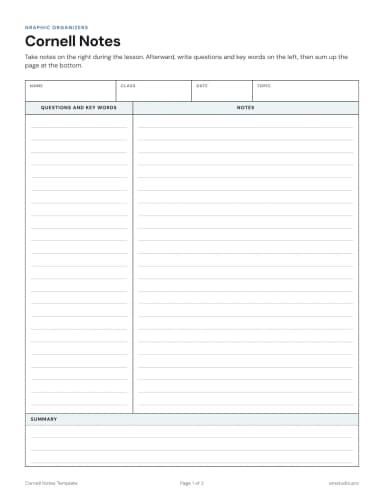
Cornell Notes Template
PDF · Google Docs · Word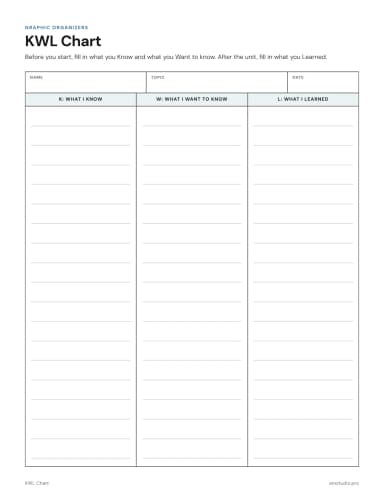
KWL Chart
PDF · Google Docs · Word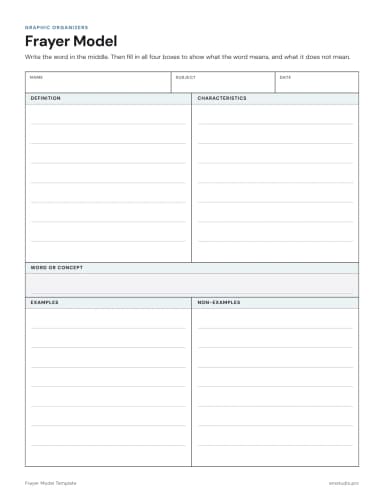
Frayer Model Template
PDF · Google Docs · Word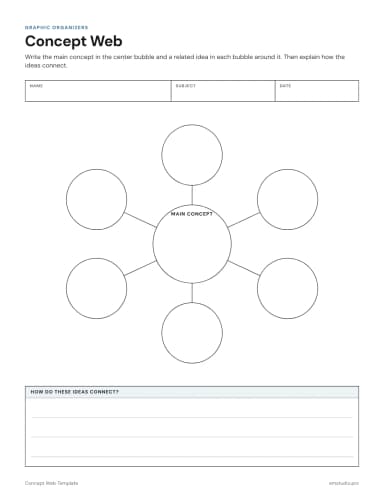
Concept Web Template
PDF · Google Docs · Word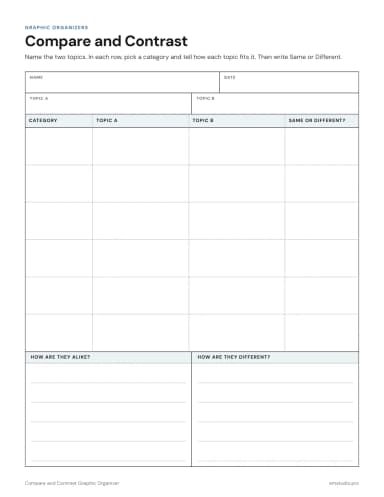
Compare and Contrast Graphic Organizer
PDF · Google Docs · Word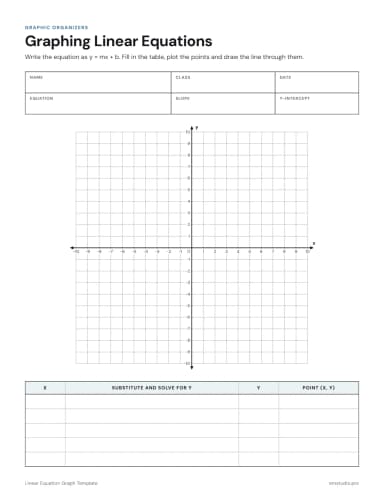
Linear Equation Graph Template
PDF · Google Docs · Word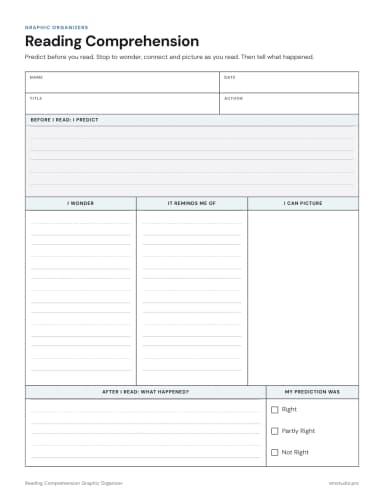
Reading Comprehension Graphic Organizer
PDF · Google Docs · Word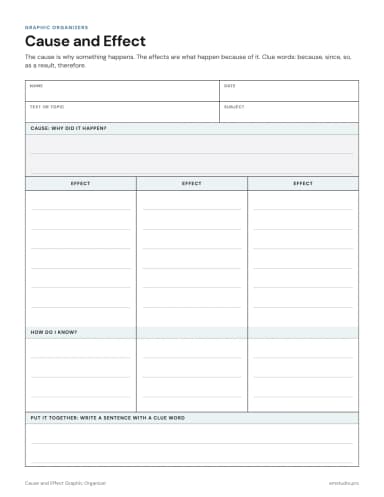
Cause and Effect Graphic Organizer
PDF · Google Docs · Word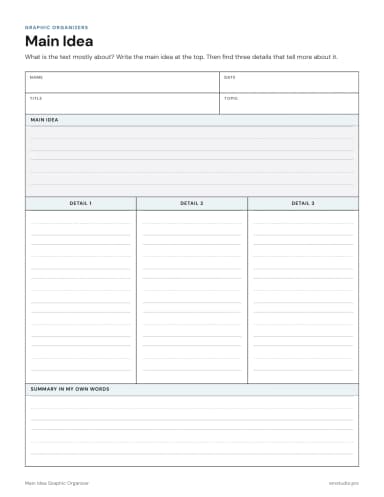
Main Idea Graphic Organizer
PDF · Google Docs · Word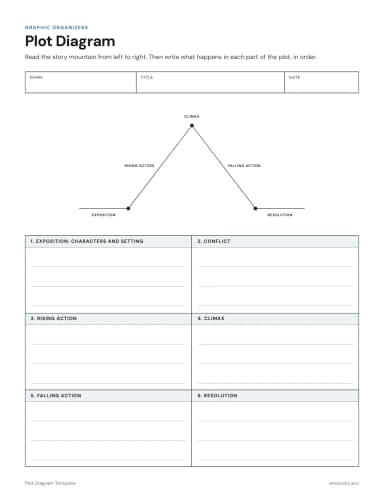
Plot Diagram Template
PDF · Google Docs · Word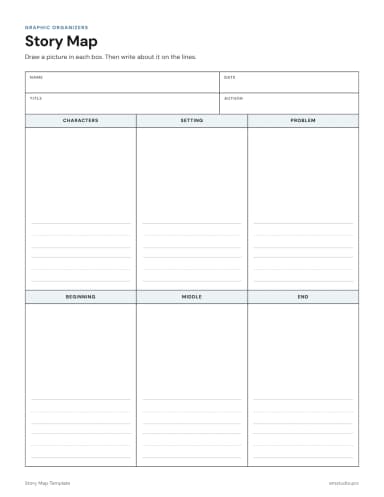
Story Map Template
PDF · Google Docs · Word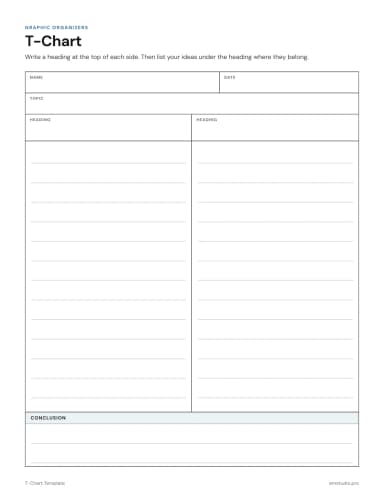
T-Chart Template
PDF · Google Docs · Word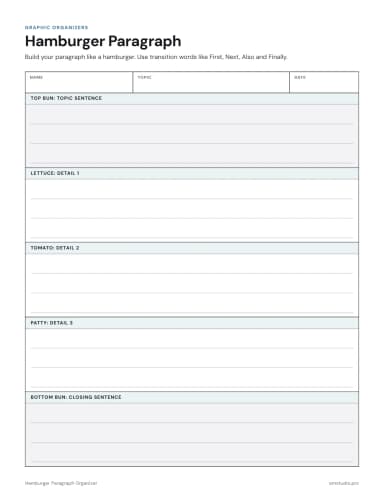
Hamburger Paragraph Organizer
PDF · Google Docs · Word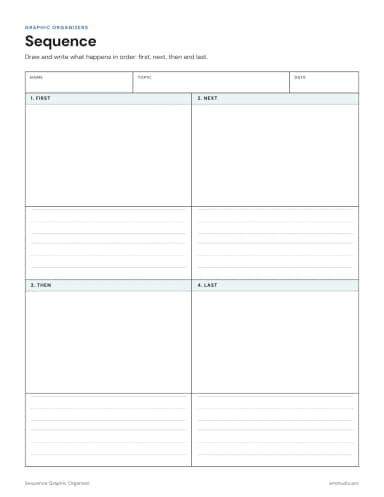
Sequence Graphic Organizer
PDF · Google Docs · Word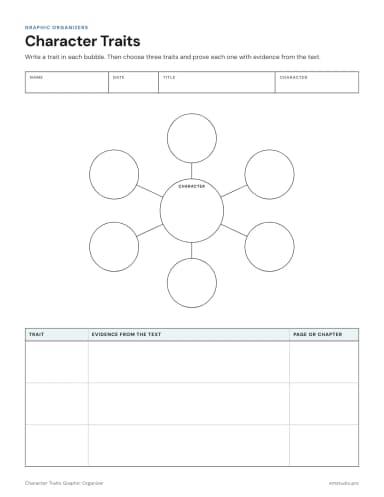
Character Traits Graphic Organizer
PDF · Google Docs · Word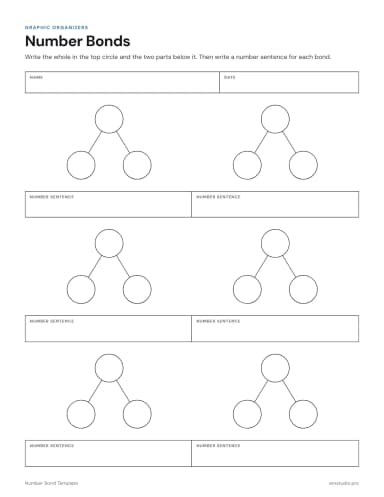
Number Bond Template
PDF · Google Docs · Word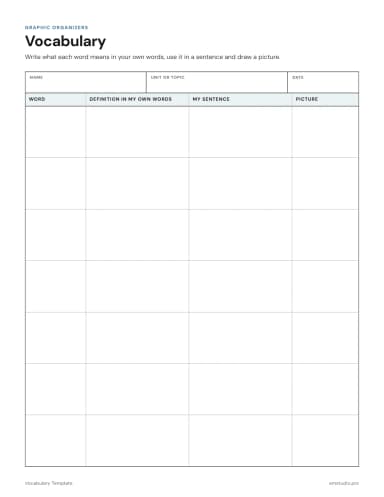
Vocabulary Template
PDF · Google Docs · Word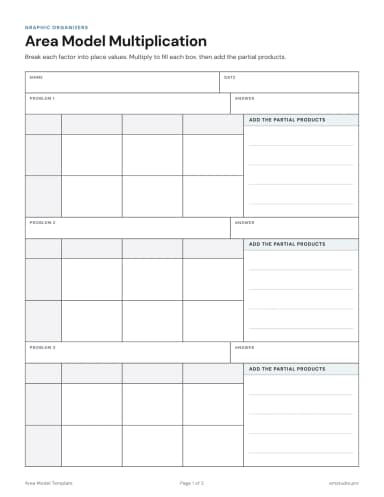
Area Model Template
PDF · Google Docs · Word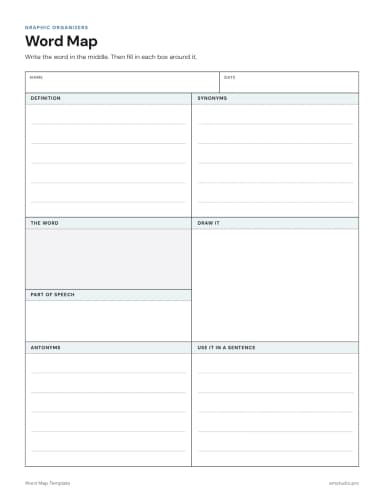
Word Map Template
PDF · Google Docs · Word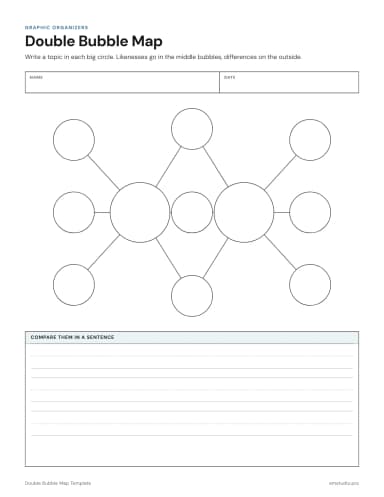
Double Bubble Map Template
PDF · Google Docs · Word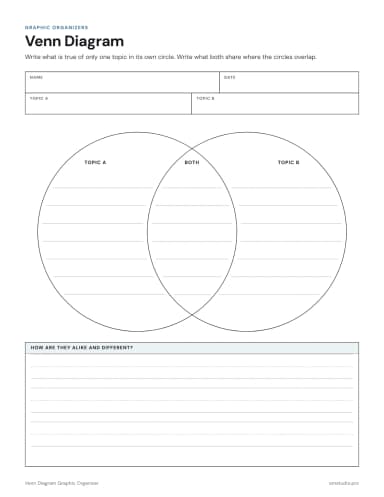
Venn Diagram Graphic Organizer
PDF · Google Docs · WordMore to Browse
Which Graphic Organizer Should I Use?
Match the organizer to the thinking students need to do.
| Organizer | Use It When Students Need To | Try It With |
|---|---|---|
| Venn Diagram | Compare two things and find what they share | Two characters, two animals, two countries |
| Double Bubble Map | Describe how two things are alike and different, trait by trait | Two stories, two historical figures |
| Compare and Contrast Organizer | Compare two things point by point before writing about them | A compare and contrast essay |
| T-Chart | Sort ideas into two columns | Pros and cons, facts and opinions, before and after |
| KWL Chart | Share what they know before a topic and track what they learn | The start of a science or social studies unit |
| Cornell Notes | Take notes, then turn them into questions for review | Lectures, textbook chapters, videos |
| Frayer Model | Understand a new word or concept in depth | Key vocabulary at the start of a unit |
| Word Map | Learn a word through its meaning, related words and use | Weekly vocabulary words |
| Concept Web | Brainstorm ideas around one topic and connect them | Planning writing, reviewing a unit |
| Main Idea Organizer | Find the main idea and the details that support it | Nonfiction paragraphs and articles |
| Story Map | Name the characters, setting, problem and solution | Picture books and short stories |
| Plot Diagram | Track how a story builds to a climax and resolves | Short stories and novels |
| Sequence Organizer | Put events or steps in order | Retelling, how-to writing, timelines |
| Cause and Effect Organizer | Link events to what caused them | Science processes, historical events |
| Character Traits Organizer | Describe a character, with evidence from the text | Novel studies, book reports |
| Hamburger Paragraph | Plan a paragraph: topic sentence, details, closing sentence | First paragraphs in the early grades |
| Number Bond | See how a number splits into two parts | Addition and subtraction facts |
| Area Model | Multiply larger numbers by breaking them into parts | Two-digit multiplication |
Graphic Organizers by Subject
The same few organizers do most of the work in every subject.
- ReadingStory maps and plot diagrams for fiction, main idea organizers for nonfiction, character trait maps for novels.
- WritingHamburger paragraphs for early writers, concept webs for brainstorming, compare and contrast organizers before an essay.
- MathNumber bonds for facts, area models for multiplication and T-charts for sorting and input and output tables.
- ScienceKWL charts to open a unit, cause and effect organizers for processes, Venn diagrams to compare living things.
- Social StudiesSequence organizers for timelines, cause and effect for events and T-charts for weighing two sides.
- VocabularyFrayer models and word maps for the few words that matter most in a unit.
- Note-TakingCornell notes from the upper grades on, for lectures, chapters and videos.
- Students Who Need SupportOrganizers cut the writing and memory load, which is why they are a common IEP and 504 accommodation.
How to Teach with a Graphic Organizer
Students learn an organizer like any skill: you show it, they try it with help, then they use it alone.
Pick the Thinking First
Decide what students need to do, like compare, sequence or explain, then choose the organizer that fits it.
Model It Out Loud
Fill one in on the board while you think aloud, so students hear why each idea goes where it does.
Fill One In Together
Complete a second one as a class, with students suggesting each entry and explaining their choice.
Let Partners Try
Partners fill one in on a new text or topic while you listen in and catch mistakes early.
Use It Alone
Students complete it on their own. Check a few entries for real thinking, not only for blanks filled.
Turn It into Writing or Talk
Use the finished organizer to plan a paragraph, a discussion or a study guide, so it leads somewhere.
What a Good Entry Looks Like
An organizer only helps when the entries do real thinking. Push students past the obvious.