Behavior Chart Templates
Printable behavior charts for the classroom: ABC data charts, clip charts, sticker charts, behavior logs, contracts and think sheets.
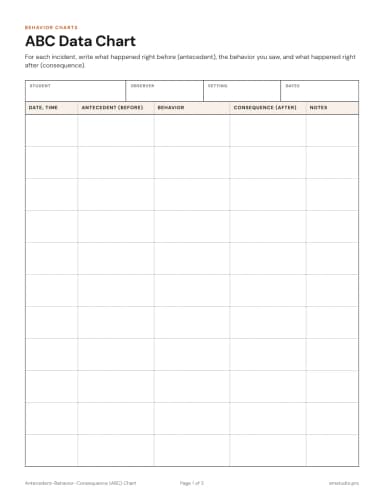
Antecedent-Behavior-Consequence (ABC) Chart
PDF · Google Docs · Word
Behavior Tracking Sheet
PDF · Google Docs · Word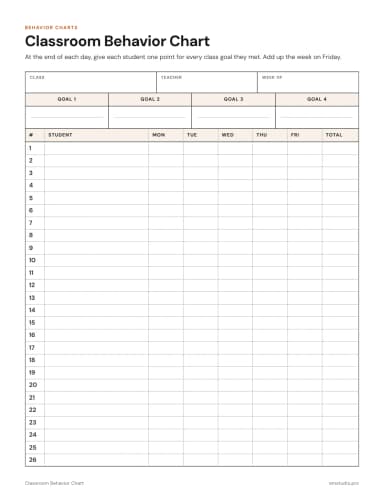
Classroom Behavior Chart
PDF · Google Docs · Word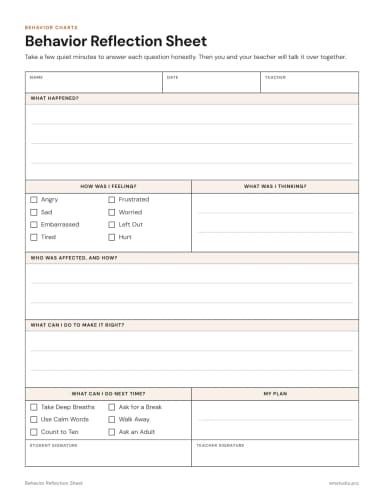
Behavior Reflection Sheet
PDF · Google Docs · Word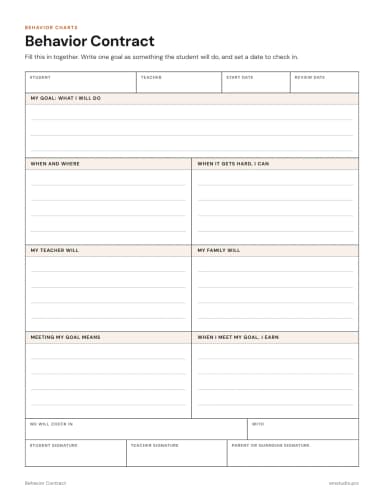
Behavior Contract
PDF · Google Docs · Word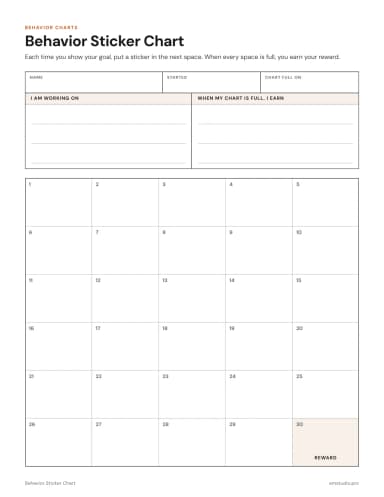
Behavior Sticker Chart
PDF · Google Docs · Word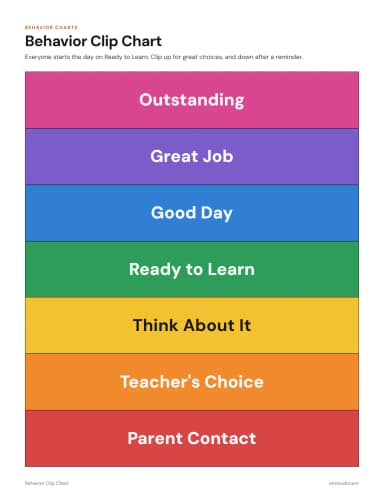
Behavior Clip Chart
PDF · Google Docs · Word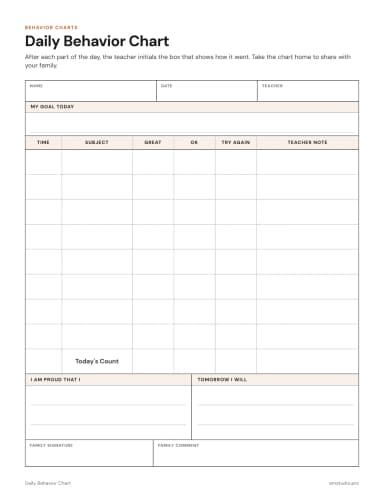
Daily Behavior Chart
PDF · Google Docs · Word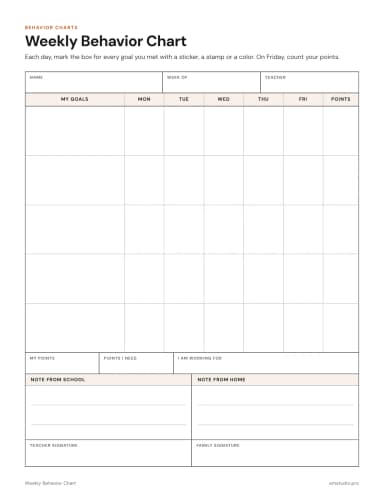
Weekly Behavior Chart
PDF · Google Docs · Word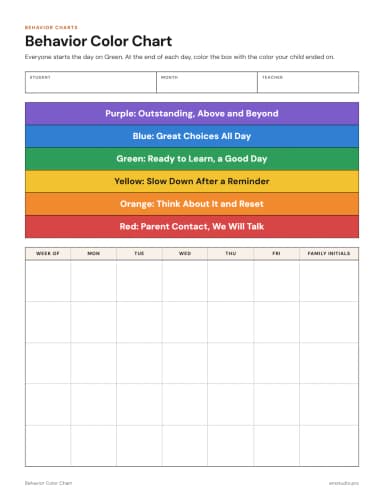
Behavior Color Chart
PDF · Google Docs · Word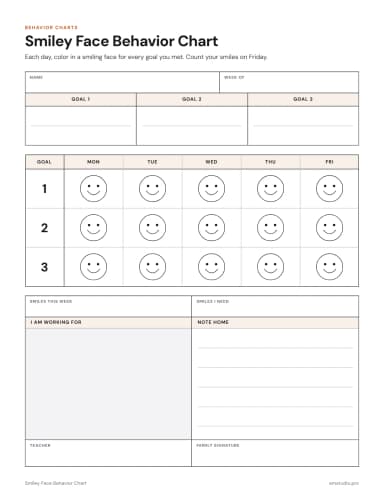
Smiley Face Behavior Chart
PDF · Google Docs · Word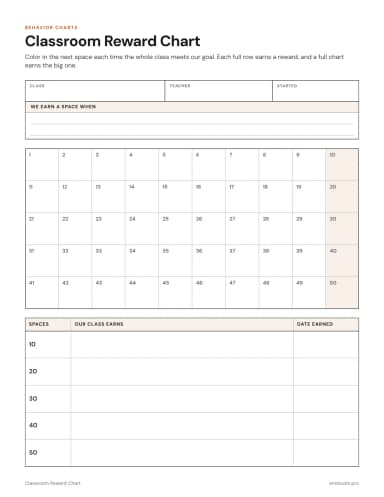
Classroom Reward Chart
PDF · Google Docs · Word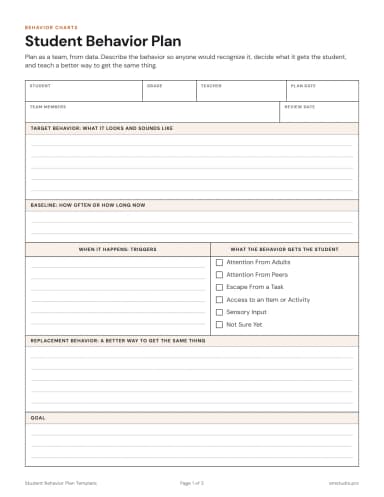
Student Behavior Plan Template
PDF · Google Docs · Word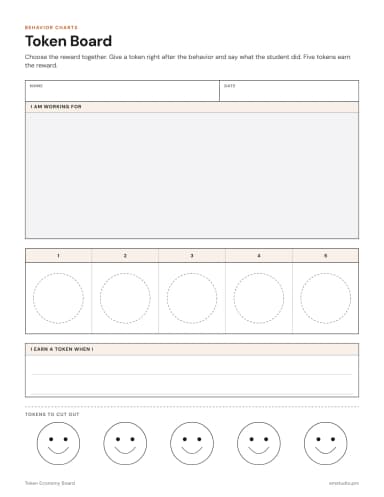
Token Economy Board
PDF · Google Docs · WordMore to Browse
Which Behavior Chart Should I Use?
Pick by who the chart is for, and whether you want to change a behavior or understand it.
| Chart | Best For | How It Works |
|---|---|---|
| Sticker Chart | Young students working on one new habit | A sticker each time the student meets the goal, and a reward after a set number |
| Smiley Face Behavior Chart | Preschool and kindergarten students who cannot read yet | A face for each part of the day, colored in with the student |
| Token Economy Board | Students who need small, frequent rewards, including many in special education | The student earns tokens toward a reward chosen ahead of time |
| Daily Behavior Chart | Checking goals across the school day | A rating for each goal in each part of the day, often sent home |
| Weekly Behavior Chart | Older students and goals that change slowly | One row per day, reviewed together at the end of the week |
| Behavior Clip Chart | Whole-class behavior in the early grades | Each student's clip moves up or down a ladder of levels during the day |
| Behavior Color Chart | Whole-class behavior in the early grades | Colors stand for levels, from great day to time to reset |
| Classroom Reward Chart | Whole-class goals | The class fills the chart together and earns a shared reward |
| Behavior Contract | Older students, with families on board | Student, teacher and parent agree on goals, rewards and consequences, then sign |
| Behavior Reflection Sheet | After an incident, once the student is calm | The student writes or draws what happened and what to do next time |
| ABC Chart | Finding out why a behavior keeps happening | You record what came before the behavior, the behavior and what came after |
| Behavior Tracking Sheet | Counting how often a behavior happens | Tallies or notes by day and time, so you can see whether it is changing |
| Student Behavior Plan | A student who needs a written plan the whole team follows | Target behaviors, supports, rewards and who does what |
What Goes in a Behavior Chart
A chart for one student works best when it covers these seven things.
- Target BehaviorOne behavior to work on, named as what the student should do.
- GoalHow often the student needs to show it, set low enough to win in the first days.
- Time BlocksThe parts of the day you check: subjects, periods, or before and after lunch.
- MarksA sticker, check, token or rating for each block, so progress is easy to see.
- RewardWhat the student earns and how many marks it takes, agreed on in advance.
- Check-In NotesSpace for a quick comment, so the chart tells a story, not only a score.
- Home SignatureA line for a parent to sign, so home and school see the same chart.
How to Use a Behavior Chart in the Classroom
A behavior chart is a short-term tool. Six steps from the first day to the day you stop using it.
Choose One Behavior
Start with the behavior that gets in the way of learning the most. One goal at a time keeps the chart simple.
Say It as a Positive
Describe what the student should do, like stay in your seat during reading, instead of what they should stop.
Set a Goal They Can Reach
Make the first goal easy enough that the student succeeds in the first few days, then raise it slowly.
Agree on the Reward
Let the student help choose it. Small rewards that come soon work better than one big prize a month away.
Check In Often and Privately
Mark the chart at the end of each time block with a word of praise, and keep it between you and the student.
Fade the Chart Out
Once the behavior is steady, check in less often, then stop. Tell the student they do not need the chart anymore.
Writing Behavior Goals Students Can Meet
A good goal names one action you can see and when it should happen.