Reference Charts for Teachers
Printable reference charts: multiplication, hundreds, place value, fractions, the alphabet, sight words and reading levels.
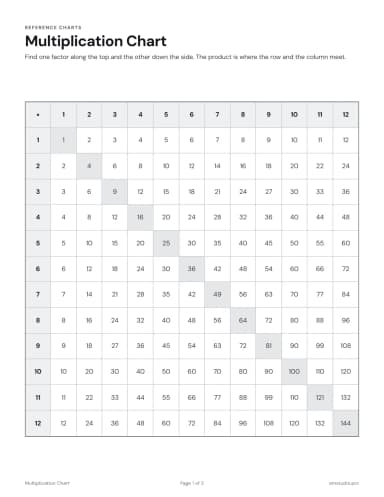
Multiplication Chart
PDF · Google Docs · Word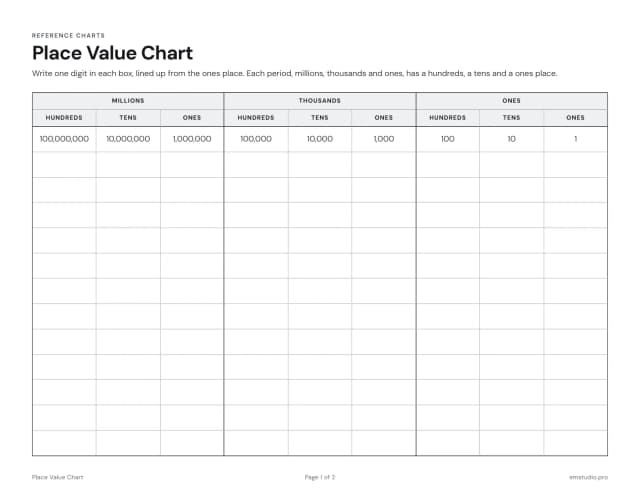
Place Value Chart
PDF · Google Docs · Word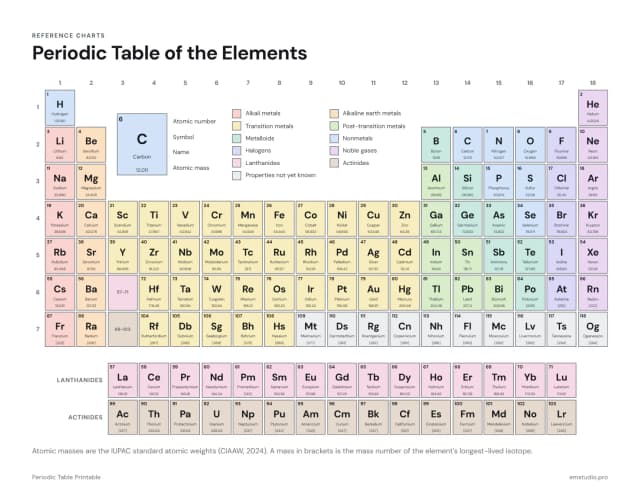
Periodic Table Printable
PDF · Google Docs · Word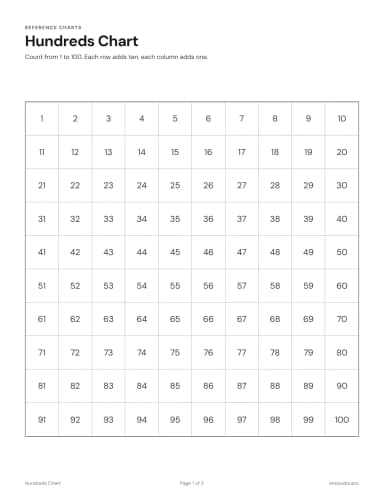
Hundreds Chart
PDF · Google Docs · Word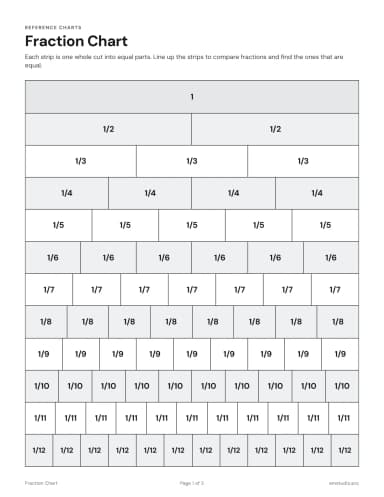
Fraction Chart
PDF · Google Docs · Word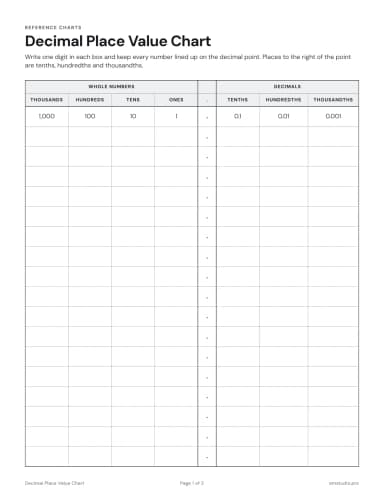
Decimal Place Value Chart
PDF · Google Docs · Word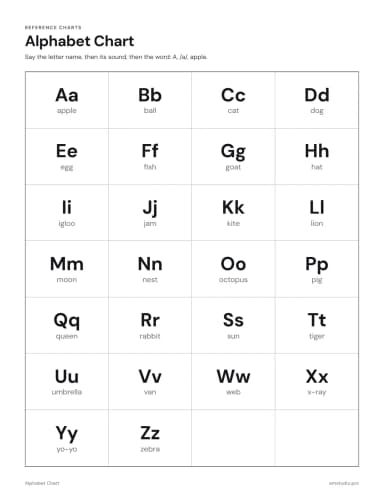
Alphabet Chart
PDF · Google Docs · Word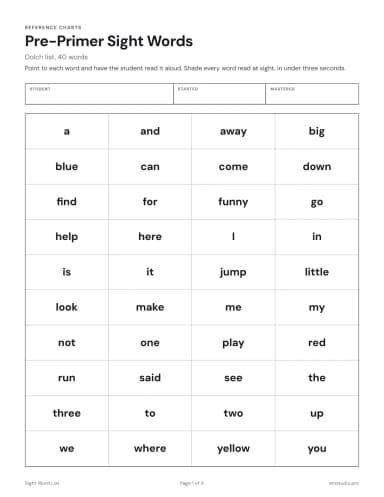
Sight Word List
PDF · Google Docs · Word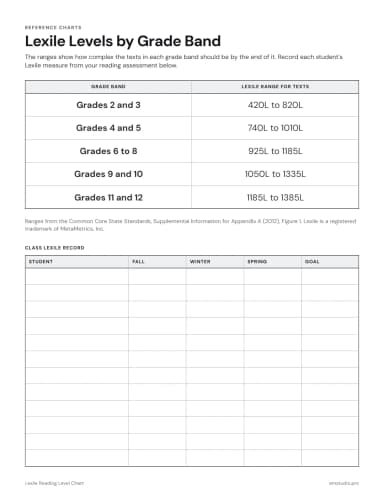
Lexile Reading Level Chart
PDF · Google Docs · Word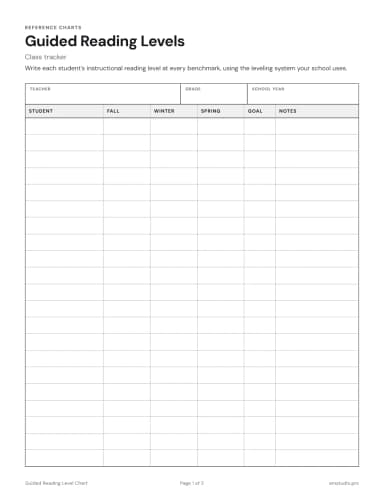
Guided Reading Level Chart
PDF · Google Docs · Word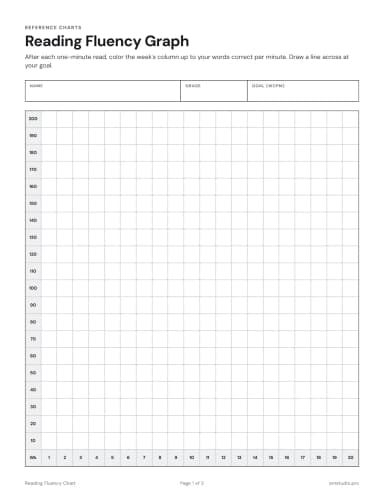
Reading Fluency Chart
PDF · Google Docs · Word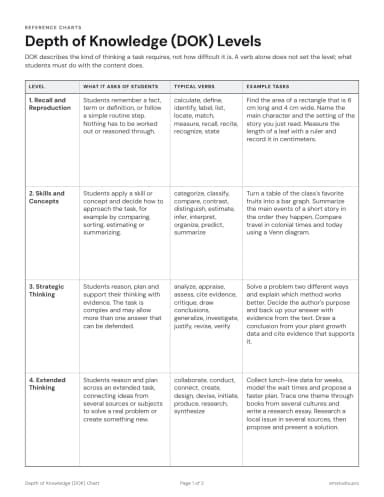
Depth of Knowledge (DOK) Chart
PDF · Google Docs · Word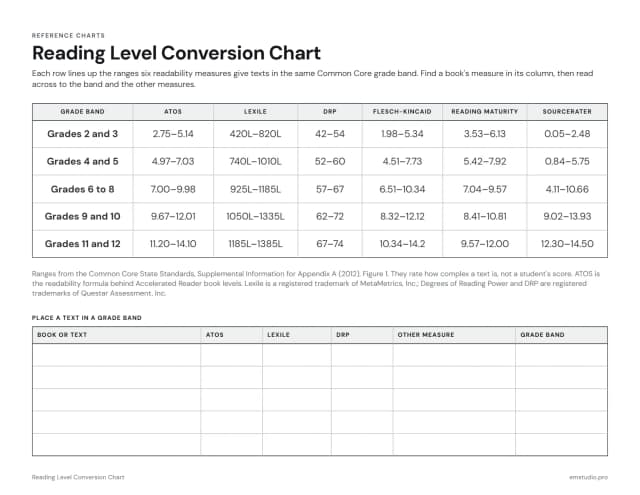
Reading Level Conversion Chart
PDF · Google Docs · WordMore to Browse
Which Chart for Which Grade?
A chart helps most in the grades where students are still learning the skill.
| Chart | Grades | Students Use It To |
|---|---|---|
| Alphabet Chart | Preschool to grade 1 | Match letters to their sounds and practice writing them |
| Sight Word List | Kindergarten to grade 3 | Practice common words until they read them on sight |
| Hundreds Chart | Kindergarten to grade 2 | Count, skip count and add or subtract tens |
| Place Value Chart | Grades 1 to 5 | Read, write and compare large numbers |
| Multiplication Chart | Grades 3 to 5 | Find facts quickly and see patterns while they learn the times tables |
| Fraction Chart | Grades 3 to 6 | Compare fractions and find equivalent ones |
| Decimal Place Value Chart | Grades 4 to 6 | Read, write and compare decimals |
| Periodic Table | Grades 6 to 12 | Look up elements, their symbols and their atomic numbers |
| Depth of Knowledge (DOK) Chart | Teachers, any grade | Plan questions at each of the four levels of thinking |
Reference Chart, Anchor Chart or Graphic Organizer?
Three classroom visuals that are easy to mix up.
| Reference Chart | Anchor Chart | Graphic Organizer | |
|---|---|---|---|
| What It Is | A printed chart of facts that do not change | A poster the class builds during a lesson | A blank frame students fill in with their own ideas |
| Who Makes It | Printed ahead of time | The teacher and students, together | Each student, or partners |
| Examples | Multiplication chart, periodic table | Steps for long division, parts of a story | Venn diagram, KWL chart |
| Where It Lives | On the wall or in a folder, all year | On the wall for the unit it was made in | In a notebook or folder |
How to Make a Chart Students Actually Use
A chart on the wall only helps when students know to look at it. Six habits that make that happen.
Introduce It in a Lesson
Walk the class through the chart the first time: what it holds, how to read it and when to use it.
Hang It Where Eyes Go
Post it at student eye level, near where the skill is used, not high above the board where it is hard to read.
Give Each Student a Copy
Print a smaller copy for each desk or folder, so students can use it at their seats and at home.
Point to It Before You Answer
When a student asks for a fact the chart holds, point to the chart. Students learn to look before they ask.
Use It for Warm-Ups
Spend two minutes on chart games: find the pattern, guess the covered number, spot the mistake.
Take It Down When It Is Learned
When most students no longer need it, move it from the wall to the folder, so the wall shows what is new.