Assessment and Grading Templates
Check understanding and track progress with formative assessment templates, rubrics, exit tickets, reading logs, running records and report cards.
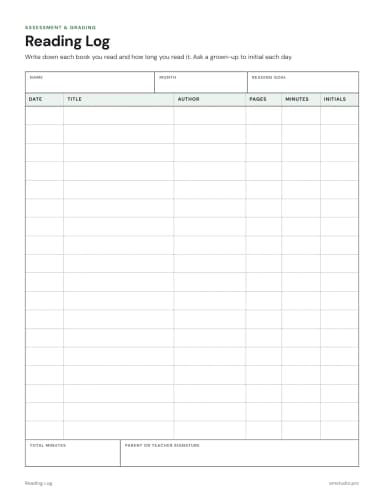
AssessmentFree
Reading Log
PDF · Google Docs · Word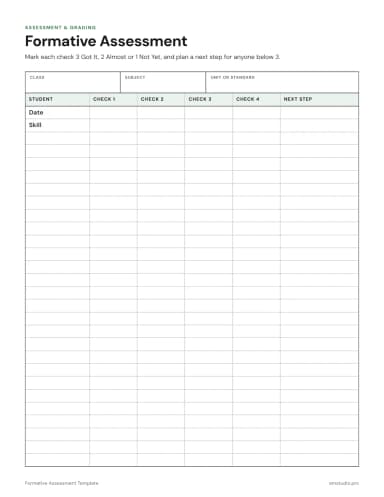
AssessmentFree
Formative Assessment Template
PDF · Google Docs · Word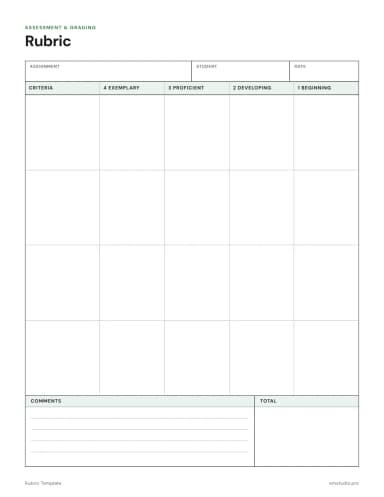
AssessmentFree
Rubric Template
PDF · Google Docs · Word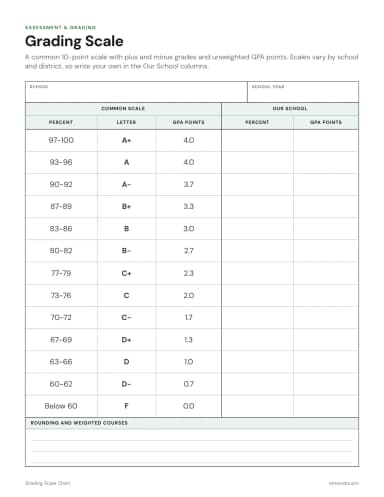
AssessmentFree
Grading Scale Chart
PDF · Google Docs · Word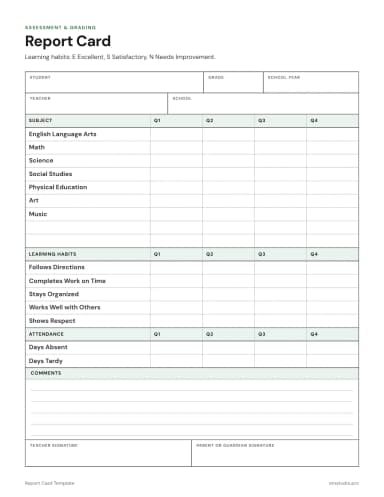
AssessmentFree
Report Card Template
PDF · Google Docs · Word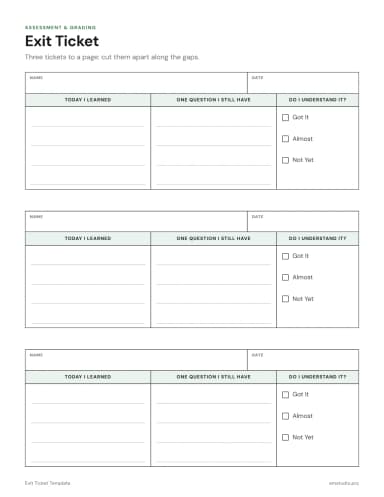
AssessmentFree
Exit Ticket Template
PDF · Google Docs · Word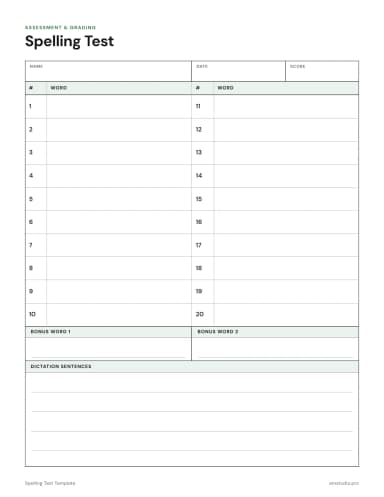
AssessmentFree
Spelling Test Template
PDF · Google Docs · Word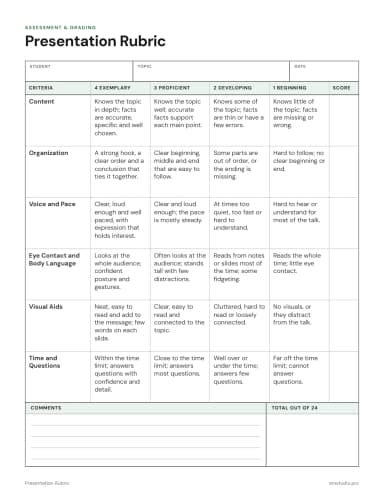
AssessmentFree
Presentation Rubric
PDF · Google Docs · Word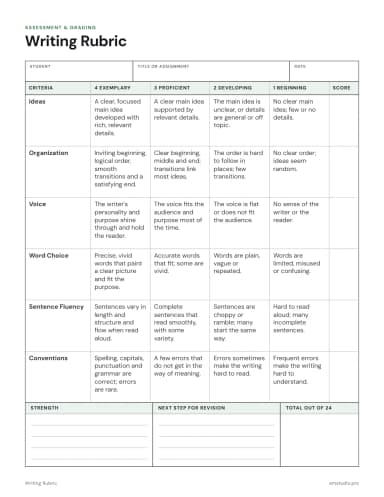
AssessmentFree
Writing Rubric
PDF · Google Docs · Word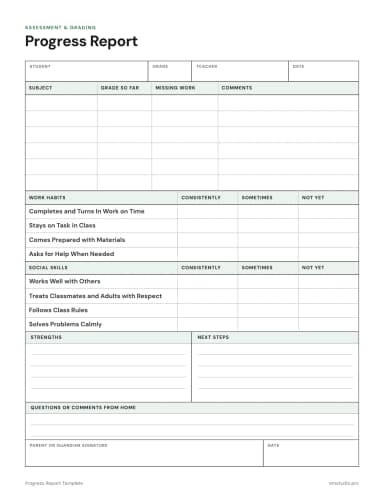
AssessmentFree
Progress Report Template
PDF · Google Docs · Word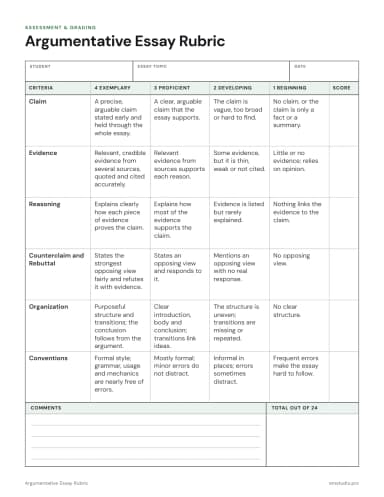
AssessmentFree
Argumentative Essay Rubric
PDF · Google Docs · Word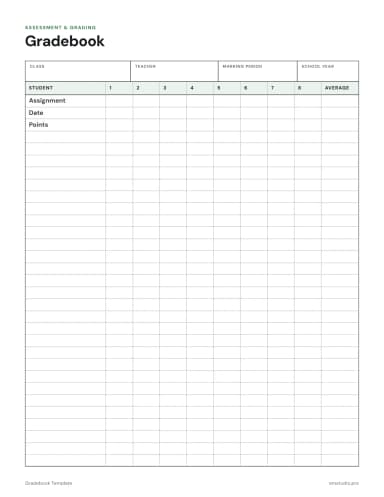
AssessmentFree
Gradebook Template
PDF · Google Docs · Word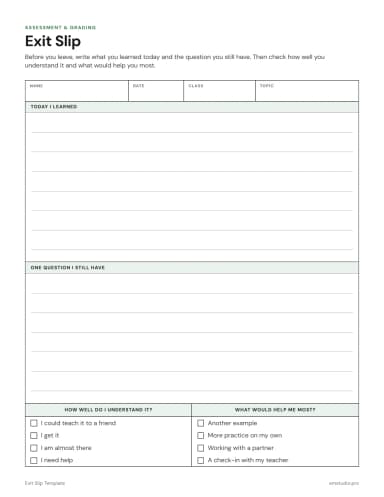
AssessmentFree
Exit Slip Template
PDF · Google Docs · Word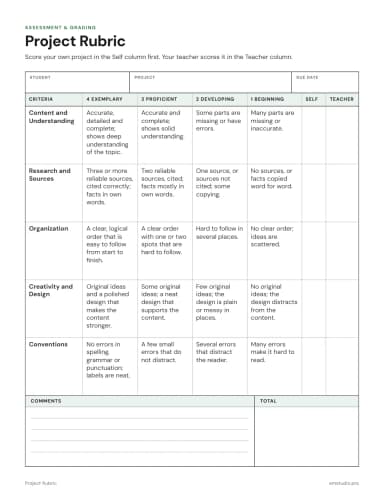
AssessmentFree
Project Rubric
PDF · Google Docs · Word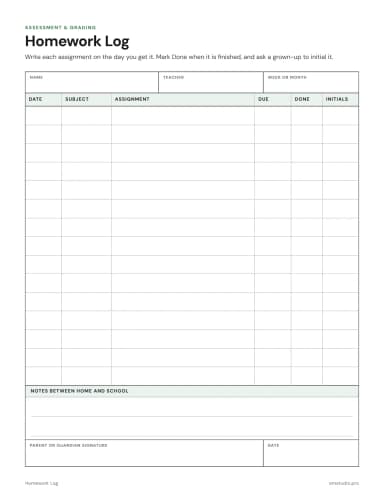
AssessmentFree
Homework Log
PDF · Google Docs · Word
AssessmentFree
Student Data Tracking Sheet
PDF · Google Docs · Word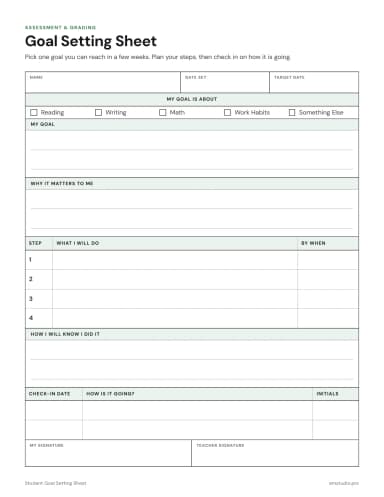
AssessmentFree
Student Goal Setting Sheet
PDF · Google Docs · Word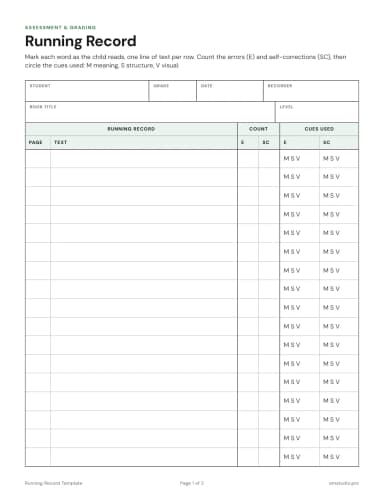
AssessmentFree
Running Record Template
PDF · Google Docs · Word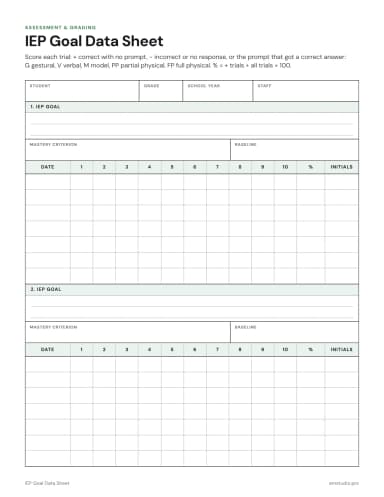
AssessmentFree
IEP Goal Data Sheet
PDF · Google Docs · Word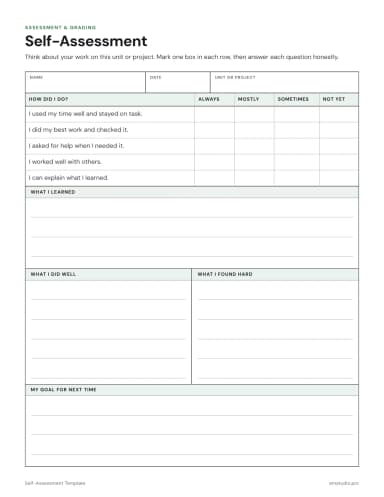
AssessmentFree
Self-Assessment Template
PDF · Google Docs · Word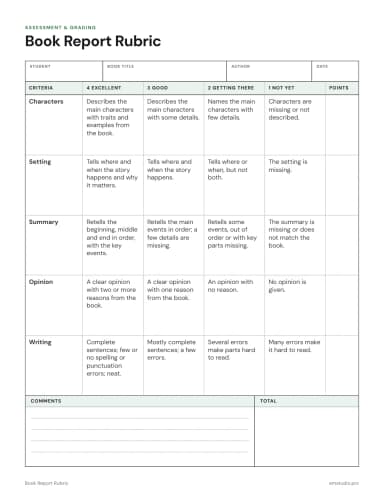
AssessmentFree
Book Report Rubric
PDF · Google Docs · Word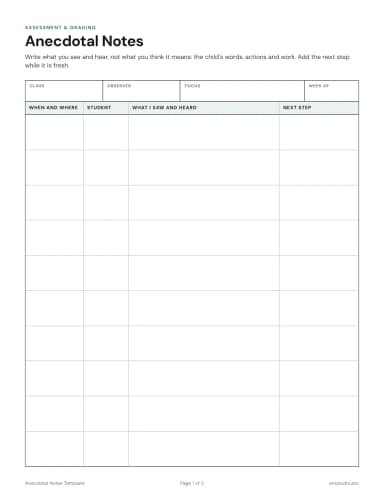
AssessmentFree
Anecdotal Notes Template
PDF · Google Docs · WordMore to Browse
Kindergarten Assessment and Grading Templates14Elementary Assessment and Grading Templates21Middle School Assessment and Grading Templates21High School Assessment and Grading Templates17Lesson Plan Templates28Unit and Curriculum Plan Templates9Behavior Chart Templates14Classroom Organization Templates16
Formative vs Summative Assessment
Both matter. They answer different questions at different times.
| Formative Assessment | Summative Assessment | |
|---|---|---|
| Purpose | Checks learning while it is happening, so you can adjust the next lesson | Measures what students learned at the end |
| When | During and between lessons, often daily | At the end of a unit, term or year |
| Graded? | Usually not, or for very few points | Yes, it counts toward the grade |
| Examples | Exit tickets, mini whiteboards, observation notes, self-assessment | Unit tests, final projects, essays, end-of-year exams |
| Templates Here | Exit ticket, exit slip, self-assessment, anecdotal notes, running record | Rubrics, spelling test, grading scale chart, report card |
Quick Formative Assessment Ideas
Ways to check the whole class in a few minutes, with or without a template.
- Exit TicketOne or two questions at the end of the lesson. Sort the answers into got it, almost and not yet.
- Mini WhiteboardsEvery student writes an answer and holds it up, so you see the whole class at once.
- Thumbs Up, Sideways, DownA five-second check of how sure students feel before you move on.
- Think, Pair, ShareListen in while partners talk to hear who understands and who is guessing.
- One-Minute PaperStudents write the most important thing they learned and one question they still have.
- Traffic Light CupsGreen, yellow and red cups on desks show who needs help during independent work.
- Hinge QuestionOne multiple-choice question at the turning point of a lesson, with wrong answers that reveal common mistakes.
- Self-AssessmentStudents rate themselves against the learning goal, which shows how they see their own progress.
Which Template Should I Use?
Pick by what you need to know and who needs to see it.
| Template | Use It To | Type |
|---|---|---|
| Exit Ticket | Check one learning goal at the end of a lesson | Formative |
| Formative Assessment Template | Plan and record quick checks during a unit | Formative |
| Self-Assessment | Let students rate their own progress toward a goal | Formative |
| Anecdotal Notes | Write short, dated notes on what you see students do | Formative |
| Running Record | Record a student's oral reading, word by word | Formative |
| Rubric | Grade a project, essay or presentation against clear criteria | Summative |
| Spelling Test | Give a numbered weekly spelling test | Summative |
| Gradebook | Record every score for a class in one grid | Grading |
| Grading Scale Chart | Show how percentages convert to letter grades | Grading |
| Progress Report | Tell families how a student is doing partway through a term | Reporting |
| Report Card | Report final grades and comments at the end of a term | Reporting |
| Reading Log | Track independent reading at school and at home | Tracking |
| Student Data Tracking Sheet | Chart a student's scores on one skill over time | Tracking |
| IEP Goal Data Sheet | Record progress on IEP goals between progress reports | Tracking |
Writing Rubric Criteria Students Can Understand
Each level should describe what the work does, so students can see the difference between a 3 and a 4.
Too VagueGood organization.
Clear and ObservableEach paragraph has one main idea, and transition words connect the paragraphs.
Too VagueUses evidence.
Clear and ObservableSupports each reason with at least one quote or fact from the text.
Too VagueNeat graphs.
Clear and ObservableEvery graph has a title, labeled axes and units.
Too VagueSpeaks well.
Clear and ObservableSpeaks loudly enough to be heard at the back of the room and looks at the audience.