Unit and Curriculum Plan Templates
Plan whole units and the year ahead: unit plans, curriculum maps, scope and sequence, pacing guides, calendars and planners.
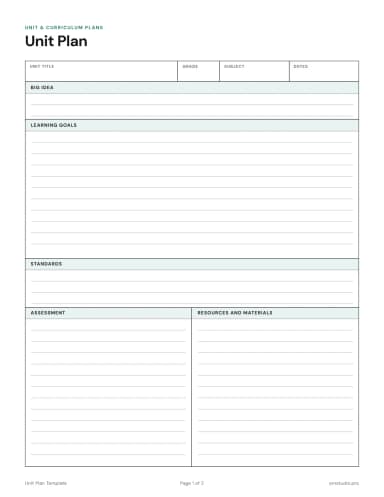
Unit Plan Template
PDF · Google Docs · Word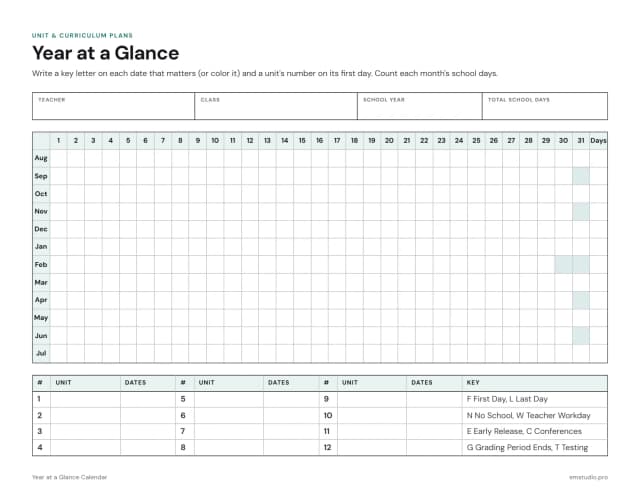
Year at a Glance Calendar
PDF · Google Docs · Word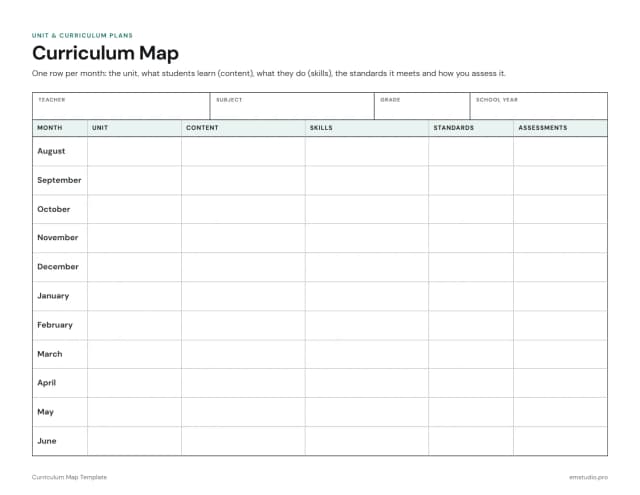
Curriculum Map Template
PDF · Google Docs · Word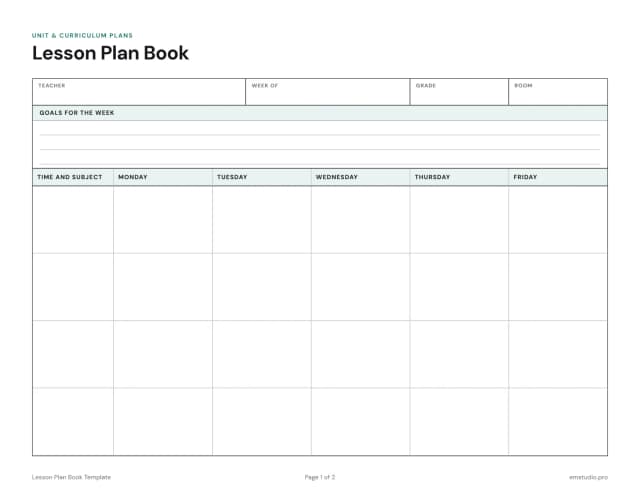
Lesson Plan Book Template
PDF · Google Docs · Word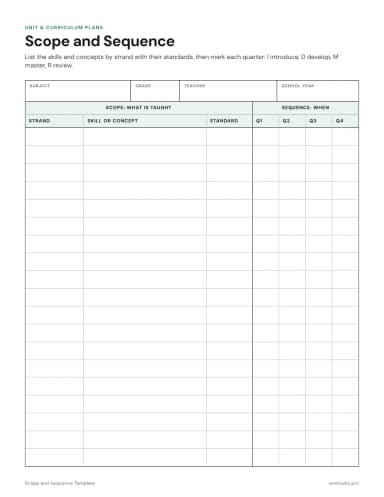
Scope and Sequence Template
PDF · Google Docs · Word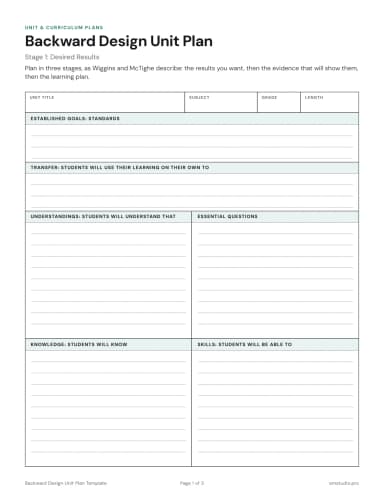
Understanding by Design (UbD) Template
PDF · Google Docs · Word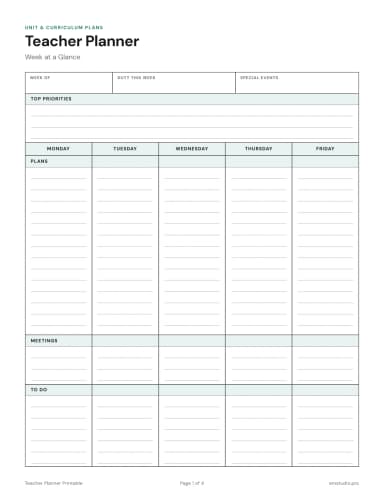
Teacher Planner Printable
PDF · Google Docs · Word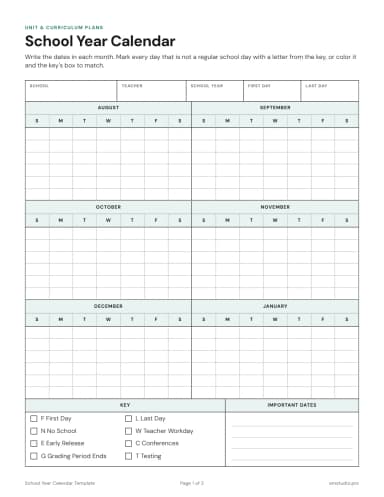
School Year Calendar Template
PDF · Google Docs · Word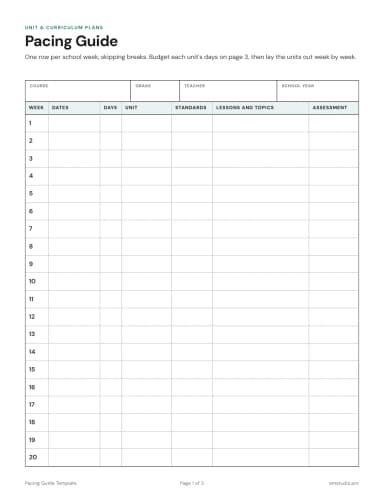
Pacing Guide Template
PDF · Google Docs · WordMore to Browse
What Goes in a Unit Plan
A unit plan holds the big picture for a few weeks of teaching. Most cover these ten parts.
- Big IdeaThe one understanding students should keep long after the unit ends.
- Essential QuestionsTwo or three open questions the unit keeps coming back to.
- StandardsThe standards the unit covers, so nothing is taught twice or missed.
- Learning GoalsWhat students will know and be able to do by the end.
- Final AssessmentThe test, project or performance task that shows what students learned.
- CheckpointsQuick checks along the way, so you can reteach before the final assessment.
- Lesson SequenceThe lessons in order, with a rough number of days for each.
- ResourcesTexts, materials, trips and tech the unit needs, gathered before it starts.
- DifferentiationSupports and extensions planned once for the whole unit.
- ReflectionNotes after teaching: what to keep, cut or change next year.
Unit Plan, Curriculum Map, Scope and Sequence or Pacing Guide?
They sound alike, but each one answers a different planning question.
| Document | The Question It Answers | Time It Covers |
|---|---|---|
| Unit Plan | What will students learn in this unit, and how will I know? | One unit, usually two to six weeks |
| Understanding by Design (UbD) | What should students understand, and what evidence will show it? | One unit, planned backwards from the goal |
| Curriculum Map | What is taught each month, with which standards and assessments? | A whole year, for one subject or grade |
| Scope and Sequence | Which skills are taught, and in what order? | A year, or several grades |
| Pacing Guide | How many days or weeks does each unit get? | A year, week by week |
| Year at a Glance Calendar | When do units, holidays and testing fall? | A whole school year on one page |
| School Year Calendar | Which days are school days, and what happens on them? | A school year, month by month |
| Lesson Plan Book | What am I teaching each period this week? | Week by week, all year |
| Teacher Planner | What do I need to teach, do and remember? | A school year, day by day |
How to Plan a Unit with Backward Design
Start from the goal and the final assessment, then plan the lessons. Six steps.
Name the Big Idea
Write the one understanding the unit is for. Every lesson and assessment in the plan should lead back to it.
Pick the Standards
List the standards the unit covers, and check them against your curriculum map so none are skipped.
Write the Essential Questions
Choose two or three open questions students will think about all unit. Post them where everyone can see.
Design the Final Assessment
Decide how students will show what they learned before you plan a single lesson, and write the rubric now.
Plan the Lessons in Order
Work out what students need to learn first, then build the lessons and checkpoints that lead to the final task.
Review After Teaching
Note what worked, what ran long and what to change while the unit is fresh. Next year's plan starts there.
Writing Good Essential Questions
An essential question has no quick answer. Students should still be thinking about it at the end of the unit.