Jigsaw Teaching Strategy: A Guide to Cooperative Learning

Jump to section
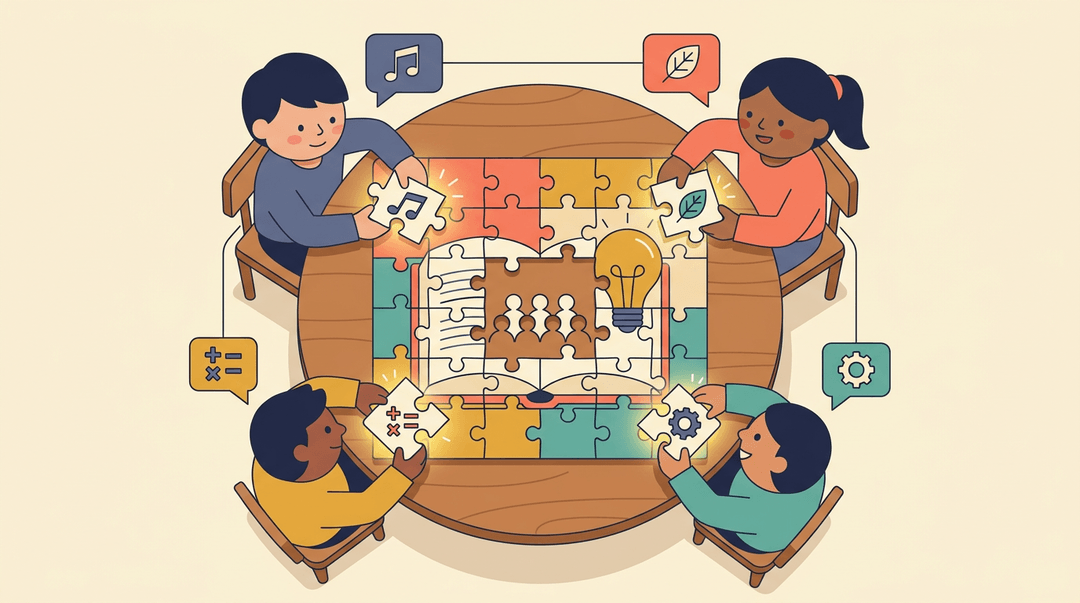
Think about a jigsaw puzzle spread across the kitchen table. Nobody can finish the picture alone, and every piece matters. The jigsaw teaching strategy works the same way.
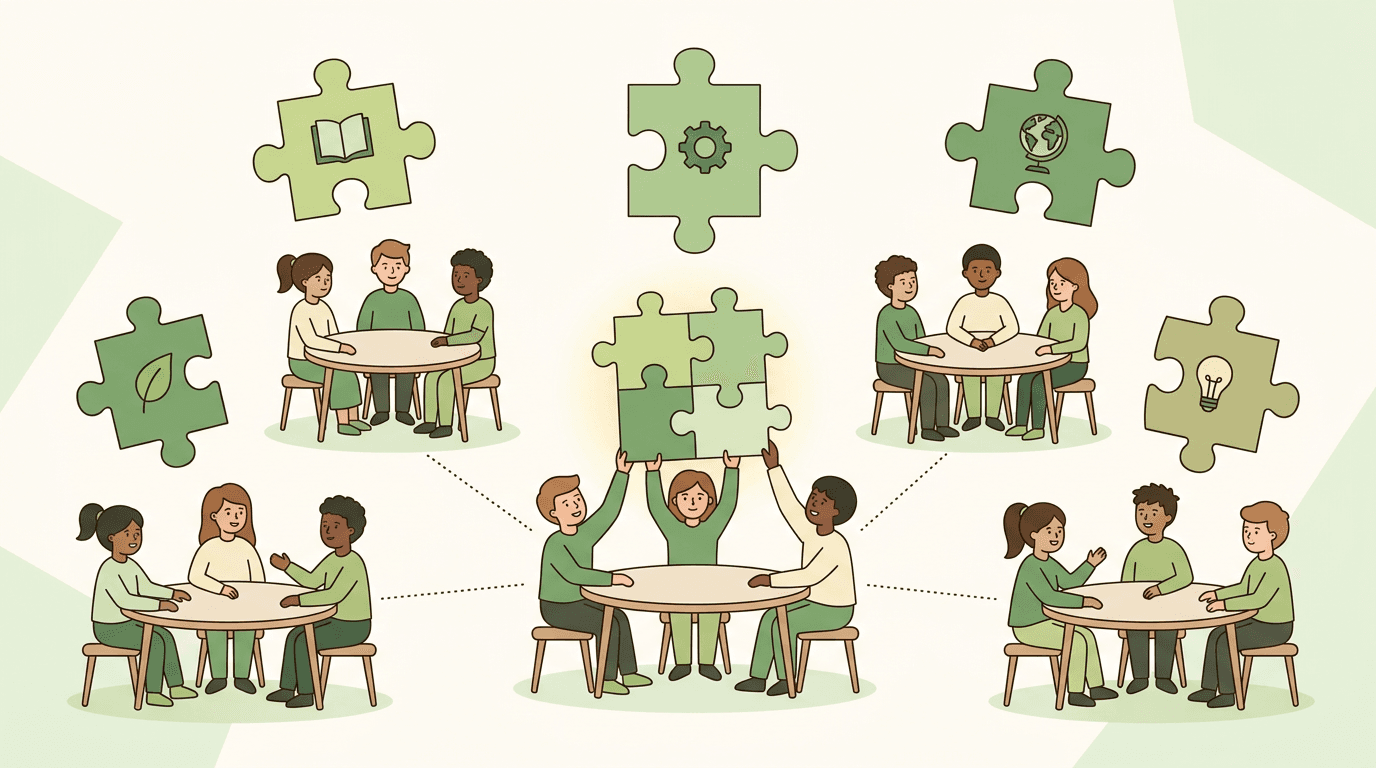
Each student owns one piece of the content, becomes an expert on it, and then teaches it to classmates who are holding the other pieces.
In short, jigsaw is a cooperative learning strategy where students learn in small home groups, then regroup as experts on a single topic. It keeps every learner responsible for the lesson and builds real teamwork along the way.
In this post, we'll look at where the strategy came from, walk through how to run it step by step, and share a practical planning checklist you can use right away. We'll also cover classroom and online applications, plus the real downsides to watch for.
What Is the Jigsaw Teaching Strategy?
Ever finished a puzzle with a friend, each holding different pieces? That's the jigsaw method in a nutshell.
Each student masters a piece, then teaches it
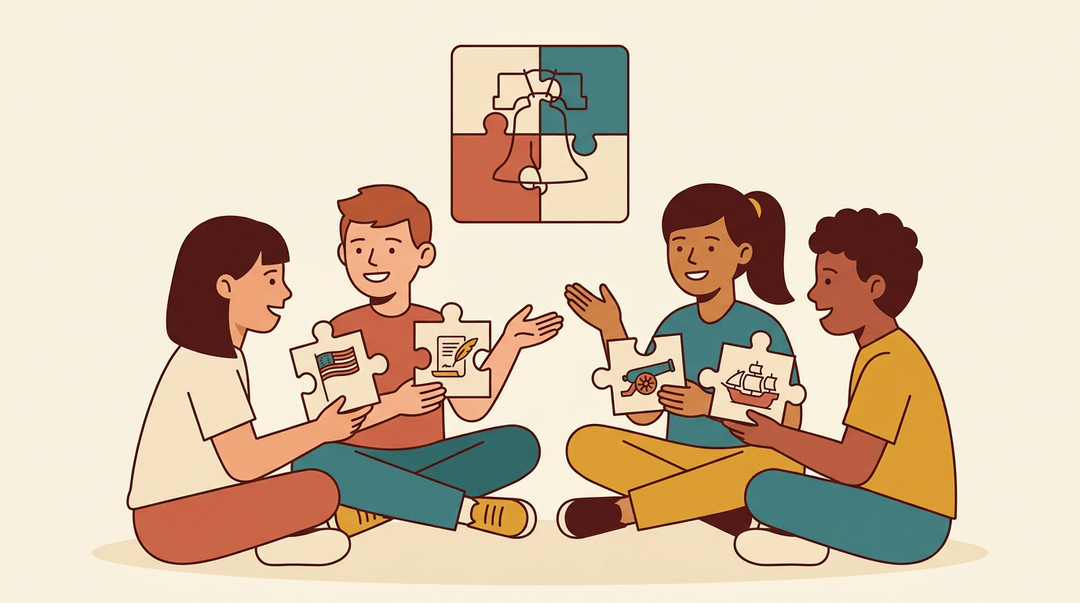
The jigsaw method is a cooperative learning strategy. Students each become experts on one part of a topic, then teach it to their groups. Picture a seventh-grade history teacher splitting the American Revolution into four topics.
It's student-centered and active, and no one holds the full picture alone.
A historical review of collaborative learning credits Elliot Aronson with inventing the method in the early 1970s, after school desegregation in Texas. Unlike lecture, where you do most of the talking, jigsaw is a cooperative strategy type.
Why the jigsaw method works so well
- Cooperation and shared responsibility. Harvard's ABLConnect notes that the benefits of cooperative assignments like jigsaw are widely documented.
- Listening and communication. A Frontiers study found jigsaw led to higher listening proficiency.
- Critical thinking and engagement. Explaining ideas in their own words sharpens thinking and keeps motivation high.
- Informal, formative assessment. As students teach, you can check understanding as you go, and a study on jigsaw formative assessment recommends it.
- Multiperspectivity and problem-solving. A PMC study found it encourages the accountability problem-solving needs.
It's less about what students memorize and more about how they explain it.
How to Run a Jigsaw Activity Step by Step
Running a jigsaw is less about complicated logistics and more about clear handoffs. Each student owns one piece, and the whole lesson depends on how well those pieces come back together.
Jigsaw II and the reverse jigsaw are variations worth exploring once the basic version feels comfortable.
Choosing and splitting your content
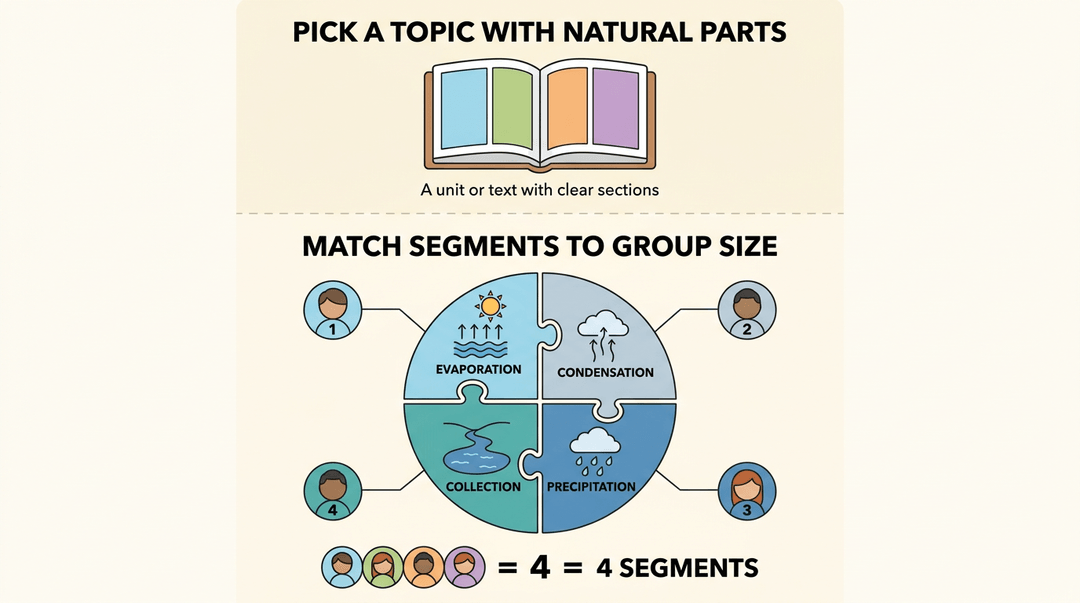
Pick a topic that divides naturally into parts, such as a unit with distinct chapters or a text with clear sections. Then split it into segments that each stand on their own. If your source is a single book, a reading circle is another way to discuss it in small groups.
Match the number of segments to your group size so every student has exactly one part to master. For example, a seventh-grade science teacher with four-person groups might divide a water cycle unit into:
- evaporation
- condensation
- precipitation
- collection
Setting up student groups
Form home groups of 2 to 6 students. Heterogeneous grouping works well here, mixing strengths, backgrounds, and abilities so each group has a range of perspectives. Appoint a group leader to keep things on track, then assign each member a segment.
Use your grade band guide to settle on the final size within that range.
Consider a middle school history teacher whose home group includes a student who reads slowly and a student who loves maps. Each takes a different segment, and each becomes the expert the group needs.
The expert group phase
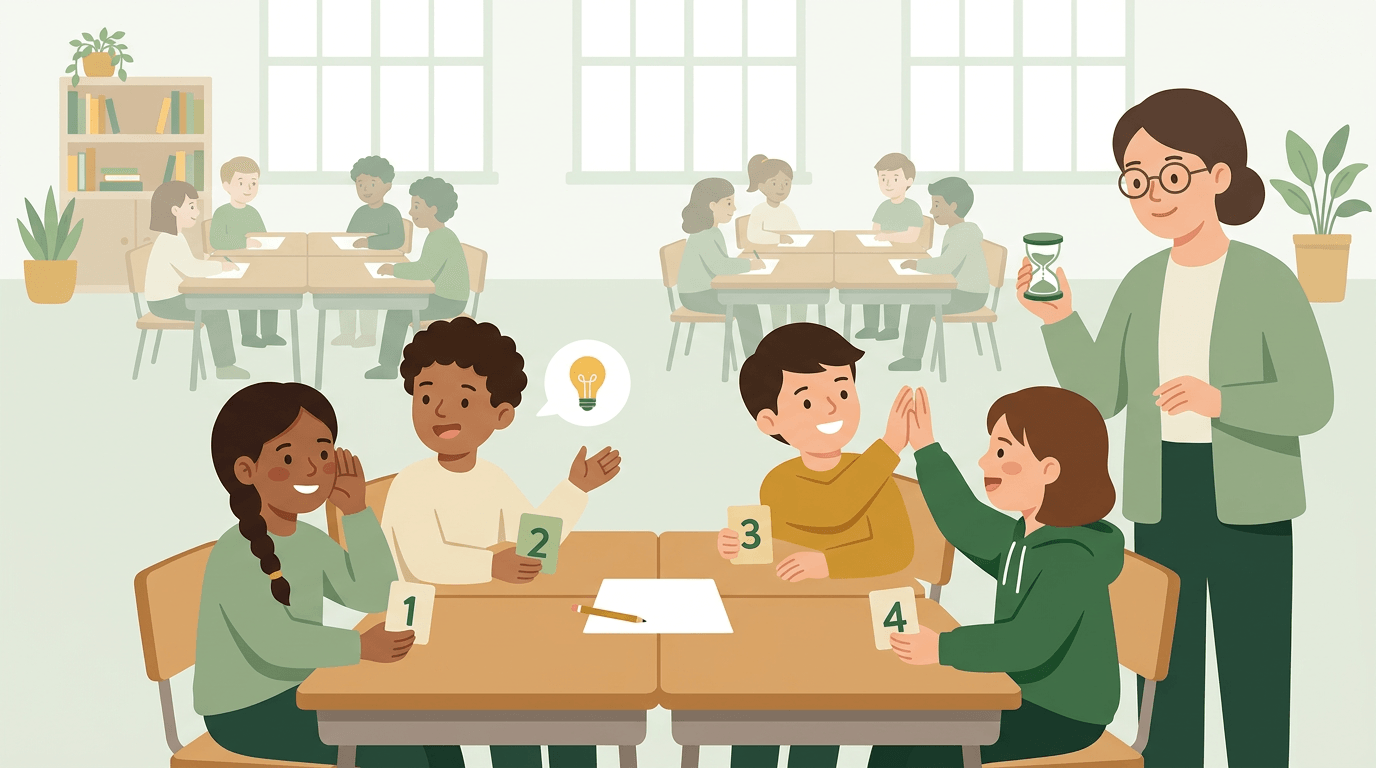
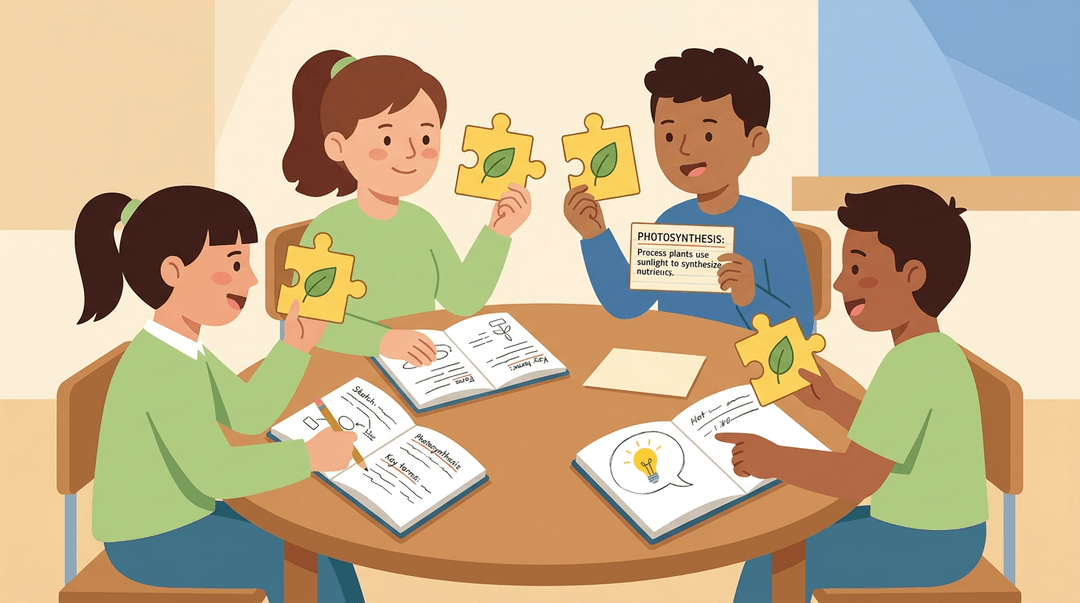
Students leave their home groups and meet with classmates who drew the same segment. These expert groups research their part, discuss it, and master the content together.
Ask them to take notes, define key terms, and illustrate the big ideas with a quick sketch or example so they're ready to teach.
Teaching back in home groups
Students return to their original home groups, and each expert teaches their segment. Sentence stems keep the conversation moving, such as "The main idea of my part is..." or "Can you explain how this connects to...?" Students aren't just presenting.
They're explaining, which is a different skill from reciting. Members take notes during each presentation to consolidate what everyone learned.
Wrapping up with assessment
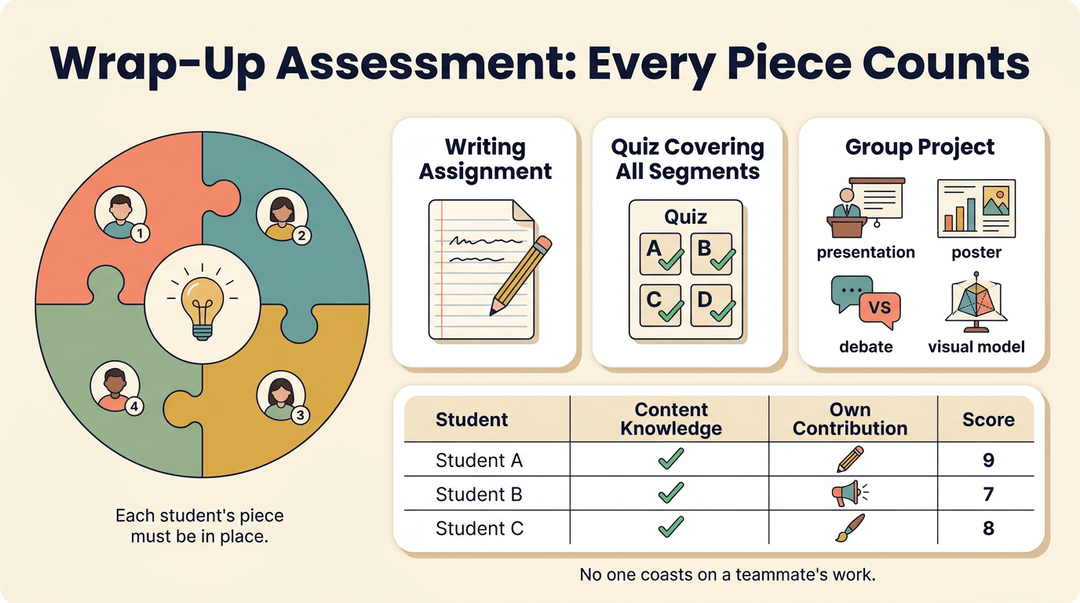
Close with an individual check so every student is accountable for the full content. Options include a writing assignment, a quiz or task covering all segments, or a group project such as a presentation, poster, debate, or visual model. Finished posters can go up on a classroom bulletin board where the whole class can revisit them.
Score each student with a grading rubric that rewards their own contribution, so no one can coast on a teammate's work. Every piece counts.
A Teacher's Checklist for Jigsaw Lessons
Use this as a three-phase playbook: set up before class, run the clock during class, and review afterward. Print it and keep it on your desk while the groups work.
Before class: confirm it's ready
Setup checklist. Tick each one before students walk in.
- Dividable topic: every section makes sense on its own, and together they complete the picture.
- Expert-group materials: one short, matching packet per section, plus a note-catcher.
- Group size of 4 to 6: one student per section, so the home group is the right size.
- Roles assigned: name a leader for each group ahead of time.
- Try: "Leaders, your job is keeping us on time and on task."
Topic check. Compare these two splits of the same unit.
- ✅ Four causes of a war, each readable without the others.
- ❌ A timeline where section 3 only makes sense after section 2.
The difference is independence: a student who hasn't read the other sections can still teach theirs.
During class: guide the groups
Jigsaw runs on the clock, so keep the timer visible and call each switch aloud.
- Launch with roles and timer
- Show the phase times on the board before anyone moves.
- Monitor the expert groups
- Listen for accurate understanding, not just finished notes.
- Move students to home groups
- Each expert teaches their section while the others take notes.
- Guide the home-group teaching
- Sit in briefly, then step back out.
- Hand out sentence stems
- Post them where every group can see them.
Sentence stems: "The main idea of my section is..." "The most important detail is..." "Can you say more about..." "So what you're saying is..."
⚠️ Watch out: If an expert group leaves with a mistake, every home group inherits it. Check understanding before the switch.
After class: assess and adjust
Score two things. Grade each student individually (a short quiz on all sections), then add a group score for the combined product. That way experts can't carry a group, and no one coasts.
| When you see... | Try... |
|---|---|
| Younger students stalling in expert groups | Shorter segments and fewer sections |
| Older students finishing early | Longer segments or a synthesis question |
| One section taught poorly | Rewrite that packet before the next run |
Save the plan. Keep your topic split, packets, timings, and stems together so you can reuse them next term and only tweak the segments for each grade.
Build, time, and reuse your jigsaw lesson plan in one place with EMStudio's lesson planner.
Using the Jigsaw Strategy in Your Classroom
Jigsaw adapts to nearly any subject, but the moves shift with your students.
Supporting English language learners with jigsaw
For English language learners (ELLs), jigsaw offers a few built-in advantages:
- Breaks up long, difficult texts into manageable chunks.
- Reduces reading load per student, since each person owns one piece.
- Practices academic speaking as students explain their section to peers.
- Informal assessment walk-around: as you circulate, listen for who can explain clearly and who needs another pass.
What teachers do during the activity
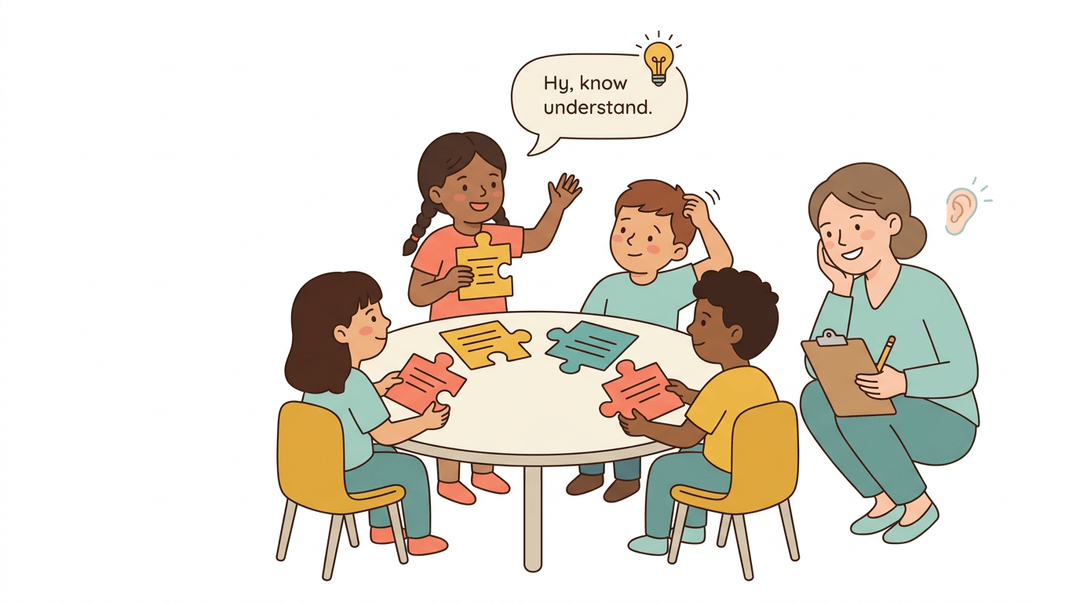
Your role shifts from presenting to observing. Monitor groups for understanding, provide scaffolds like sentence frames when students stall, and guide anyone needing extra support.
Each exchange is also a formative assessment opportunity, showing you misconceptions before any quiz does.
The main downsides are groups drifting off task, a student who misses the expert session leaving their home group with a gap, and handoffs eating class time. Build a quick check at each stage so one missed piece doesn't sink the lesson.
Jigsaw examples across different subjects
Jigsaw adapts across the curriculum:
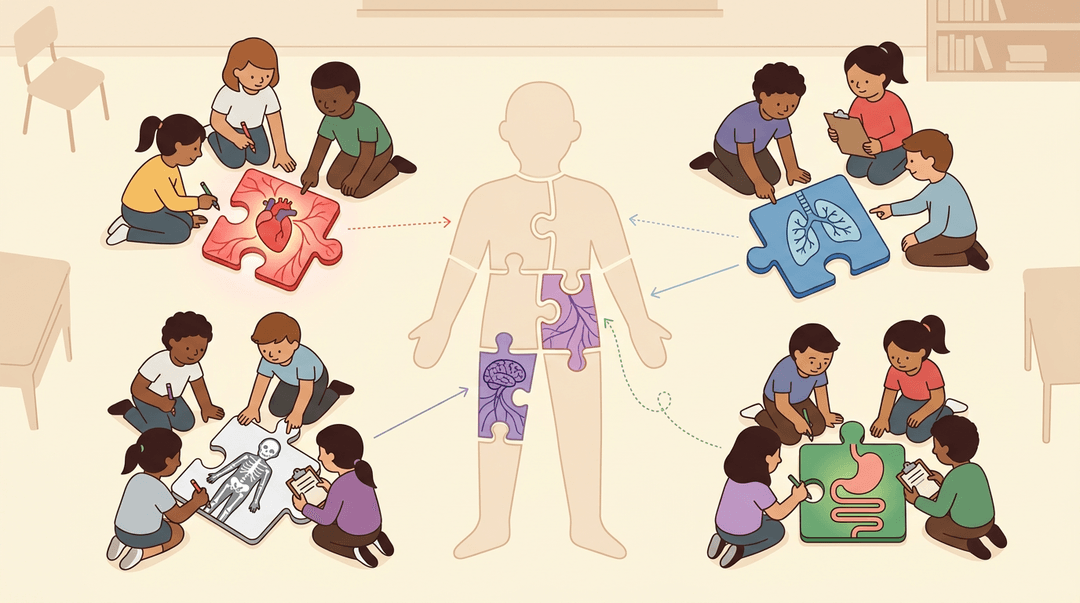
- Science: groups become experts on one body system, then teach the rest.
- History: each group reads a different perspective on the same event.
- Literature: each group analyzes one character, then compares notes.
- Math: each group masters one problem-solving approach.
- Arts and dance: each group practices one skill, then teaches it to peers.
Consider a middle school science teacher who assigns each group a body system. Everyone leaves knowing a piece they can teach.
Adapting Jigsaw for Online Classes
Jigsaw works online too, but the logistics shift. Here's how to run it live, run it without class time, and prep so it goes smoothly.
Running jigsaw live over video calls
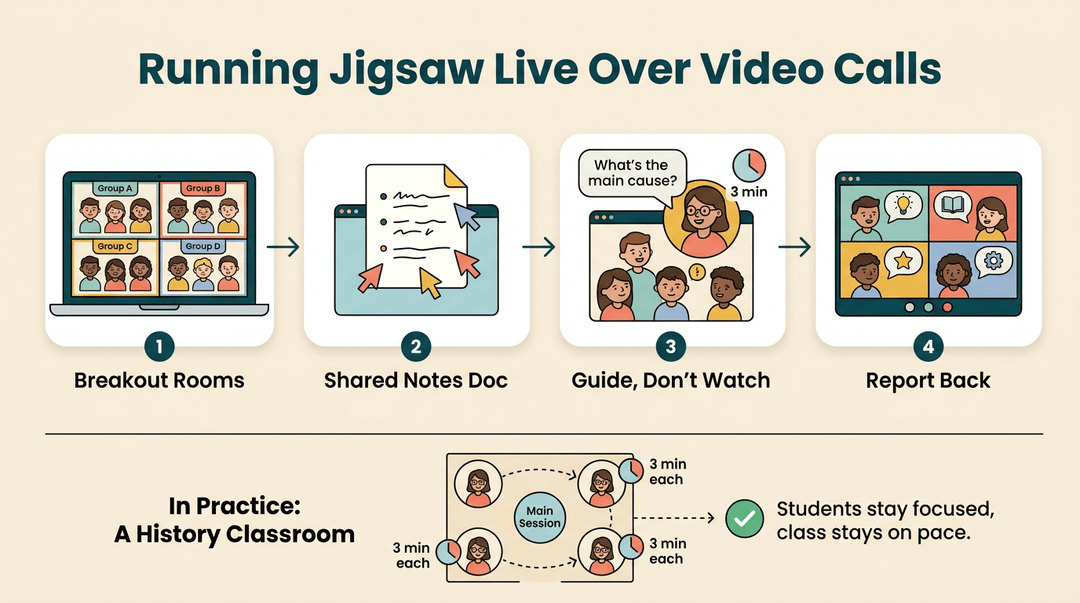
- Use Zoom breakout rooms to send each expert group to its own space.
- Create shared documents so every group has one place to build its notes.
- Visit rooms to guide discussion rather than watch from the sidelines.
- Return to the main session so groups can share what they learned.
Consider a high school history teacher who drops into each room for three minutes. One well-timed question keeps the talk on track. Her students stay focused, and the whole class stays on pace.
Running jigsaw without live class time
- Use Canvas discussion boards as the home base for each expert group.
- Record Zoom meetings for review, so students can revisit the talk later.
- Let students coordinate outside class on their own schedule.
- Post key points online so the whole class can see what each group learned.
Without live time, students need a clear shared space. That's where the boards earn their keep.
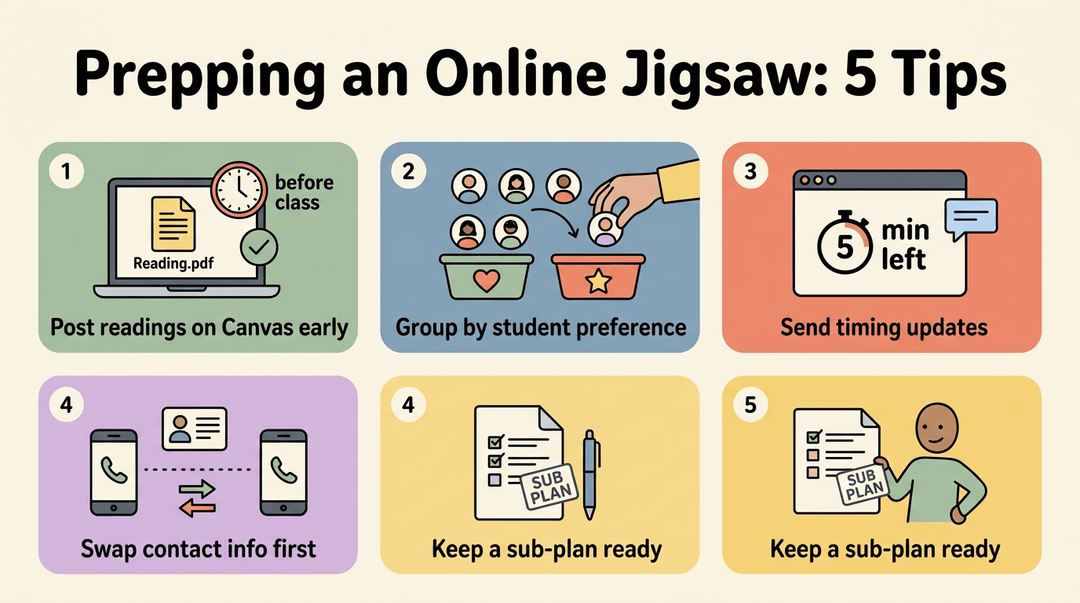
Tips for prepping an online jigsaw
- Post readings on Canvas before class so everyone arrives prepared.
- Consider student group preferences when forming expert groups.
- Send timing updates in breakouts so students know how much time remains.
- Exchange contact info beforehand so teammates can reach each other.
- Keep a printable sub-plan ready template on hand, so a substitute can run the jigsaw if you're out.
Where to Learn More About Jigsaw
Ready to go deeper? Think of a middle school teacher who wants to check the original setup before redesigning her unit. A few well-chosen sources can save her an evening of guessing, so here's where to look.
Helpful guides and further reading
Each of these is a solid next stop, depending on what you need:
- Jigsaw Classroom official site. Go here when you want the approach described at its source.
- Penn State jigsaw strategy guide. A university resource that walks through the process in a structured way.
- Student Engagement Techniques handbook. Useful for seeing jigsaw alongside other cooperative techniques you can mix into your planning.
- Cult of Pedagogy article. A quick, classroom-focused read you can scan during a planning period.
- Academic journal study on jigsaw. For when you want the research behind the strategy, not just the classroom routine.
Start with the practical guides when you need a plan, and turn to the research when you need evidence rather than advice. Pick one and start reading.
Jigsaw turns a single lesson into a team effort, where every student has something important to contribute. When you plan with clear roles, a checklist, and a little structure, the strategy can work in a face-to-face room or a virtual one.
Ready to build your next jigsaw lesson? Check out our Lesson Planner to write, organize, and reuse your plans across multiple classes in one place.
References
- Frontiers | Empowering teacher education with jigsaw techniques: insights from language learners’ listening tasks — frontiersin.org (2025)
- Effects of the Jigsaw Formative Assessment Technique on Primary Grade Students’ Academic Achievement in General Science — ojs.mul.edu.pk (2025)
- A Historical Review of Collaborative Learning and Cooperative Learning — pmc.ncbi.nlm.nih.gov (2023)
- Jigsaw — ablconnect.harvard.edu
- Jigsaw Classroom: Perceptions of Students and Teachers — pmc.ncbi.nlm.nih.gov
- Application of the Jigsaw Technique to Enhance Student Motivation and Engagement in Vocabulary Learning — ukinstitute.org (2025)
- Jigsaw — saltise.ca
Frequently asked questions
What is the jigsaw theory?
The jigsaw theory, commonly called the jigsaw method, is a cooperative learning strategy developed by Elliot Aronson in the early 1970s. Students each master one part of a topic in an expert group, then return to home groups to teach their section and help assemble the complete understanding.
What are the four instructional strategies?
The four instructional strategies are dividing content into independent segments, forming home groups, creating expert groups, and teaching the segments back in home groups. The lesson typically ends with an individual check or group assessment to confirm understanding and accountability.
What are the downsides of using the jigsaw teaching method?
Jigsaw can allow groups to drift off task, and a student who misses the expert session may leave their home group without an important piece of information. Handoffs between groups can also take valuable class time, and an expert who misunderstands a segment may pass inaccurate information to the entire home group.
What are the 5 methods of teaching with examples?
Five common teaching methods are lecture, discussion, demonstration, cooperative learning, and inquiry-based learning. For example, a teacher might explain a concept in a lecture, lead a class discussion, demonstrate a lab procedure, assign a jigsaw group task, or have students investigate a question and develop their own conclusions.