Reading Circle Guide: How It Works and How to Run One

Jump to section
Think about the last time you sat in a book club. Someone asked an unexpected question, a quiet member finally spoke up, and the talk went somewhere you never would have reached alone. That's the spirit behind a reading circle.
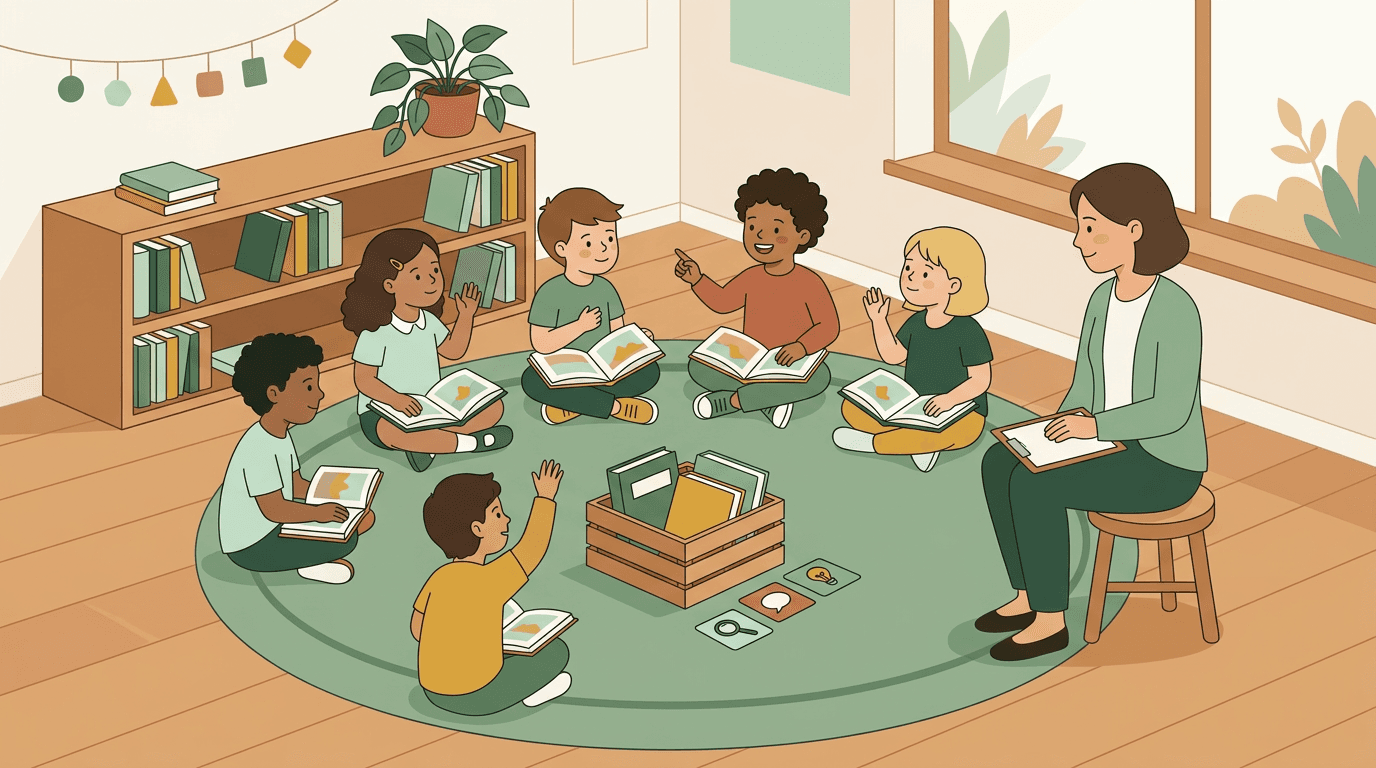
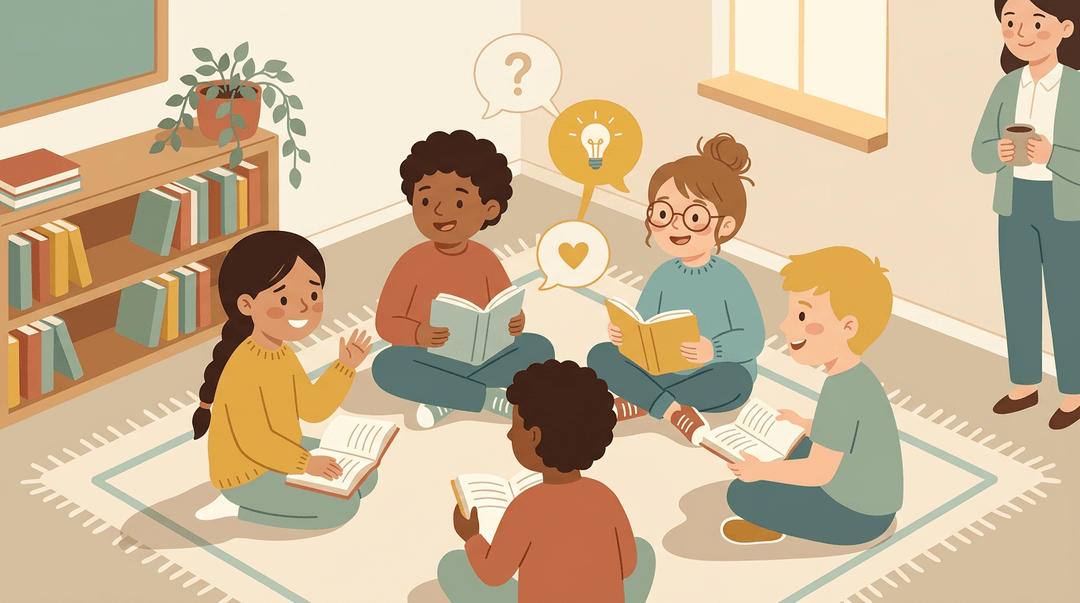
A reading circle is a small group of students who read the same text and talk it through together. Students share the work of asking questions and building on each other's ideas, so the discussion belongs to them, not just the teacher. Sharing the work this way is a form of cooperative learning, and the jigsaw teaching strategy builds on that idea.
Here, we'll cover how reading circles work, how to run one step by step, and a lesson plan structure you can adapt for any grade band.
How to Plan a Reading Circle Lesson
Use this guide to plan a reading circle lesson from prep to exit ticket. Set up the circle once, then run the same four-part lesson each cycle.
Before the lesson: set up the circle
Confirm these four things before students sit down:
- Texts are leveled. Offer two or three options so every group reads something it can handle.
- Groups are small. Keep them small enough that everyone gets airtime.
- Every student has a role. For example: Discussion Leader, Summarizer, Word Finder.
- Norms are posted. Keep them short and visible.
Here's a norms set you can lift:
One voice at a time. Point to the page. Build on a classmate's idea.
The lesson, start to finish
- Write the objective on the board.
- Try: "Today we'll find evidence that shows how a character feels."
- Open with a warm-up.
- A bell ringer, such as one question about yesterday's reading.
- Run group reading and discussion.
- Students read, then talk in their roles while you circulate and listen.
- Say: "Show me the page that made you think that."
- Close with an exit ticket reflection.
- Students finish: "One thing our group figured out today is..."
Example: A fourth-grade teacher writes the objective above, then asks a warm-up question about the last chapter. Groups read and discuss, and the Word Finder in each group brings one tricky word to the circle. Each student leaves with a completed exit ticket sentence, which the teacher skims to see who found real evidence.
Adapt by grade band
The four-part lesson stays the same. What changes is how students carry the talk.
| Grade band | Talk is carried by | What it looks like |
|---|---|---|
| Early grades | Picture-led talk | Students point to an illustration and say what they notice |
| Upper elementary | Role sheets | Each student holds a sheet with prompts for their role |
| Middle school | Written responses | Students jot a response before or after discussing |
Keep it working week to week
- Save the plan as a template. Next time, swap the text and objective, and keep the rest.
- Rotate groups weekly. Students hear new voices, and roles get a fresh start.
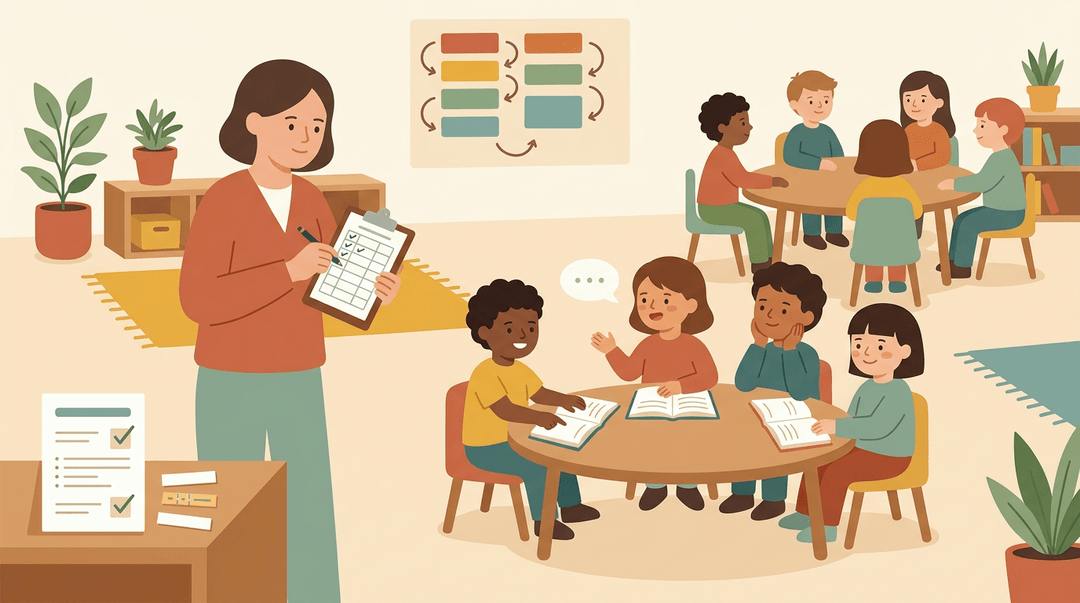
- Note participation observations. Jot who spoke, who pointed to the text, and who stayed quiet.
💡 Tip: Keep a clipboard roster nearby during discussion. Two or three quick marks per group are enough to guide next week's grouping.
Save your reading circle plan as a reusable template in EMStudio's online lesson planner.
A reading circle works best when students own the conversation and you guide from the side. With clear roles and a plan you can reuse, it becomes a rewarding routine in your reading block.
The goal isn't just a finished book. It's students who think out loud, listen closely, and read with purpose.
Ready to put this into practice? Explore Lesson Planning to write, organize, and reuse your reading circle plans across multiple classes from one place.
Frequently asked questions
What is the 5 finger rule for books?
The five-finger rule helps readers choose a book at a comfortable difficulty level. Read a page and hold up one finger for each word you don’t know; around five unknown words suggests the book may be too challenging, while fewer may indicate a good fit. It is a quick guideline, not a strict test.
What are reading circles?
Reading circles are small groups of students who read the same text and discuss it together. Students take roles, ask questions, and build on one another’s ideas, while the teacher guides the discussion rather than leading it.
How to conduct a reading circle?
Choose a book or reading selection, set a meeting schedule, and agree on how much participants will read before each meeting. During the circle, take turns sharing reactions, questions, and passages, and use open-ended questions to guide discussion. Make sure everyone has a chance to contribute, then agree on the next reading and meeting date.