Ideas for Teacher Bulletin Boards That Teach

Jump to section
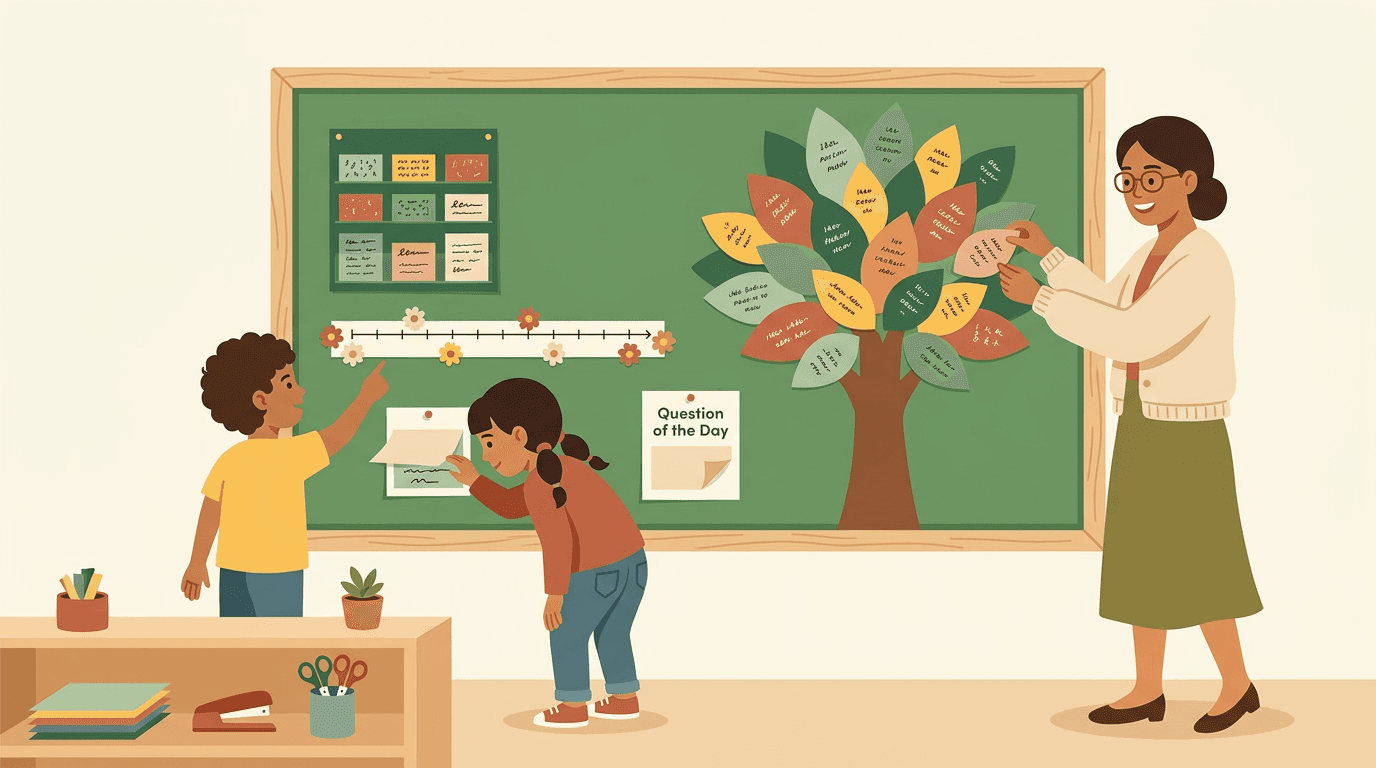
Walk into any classroom and your eyes tend to land on the walls before you ever sit down. A bulletin board is often the first thing students notice, and it can either quietly pull them in or fade into the background.
A bulletin board is a display space where you post student work, key vocabulary, and class reminders. Done well, it becomes a teaching tool rather than wall decor.
In this post, we'll cover what makes a board effective, how to plan one, and ideas organized by season, subject, and grade band.
Back-to-school Ideas for Teacher Bulletin Boards
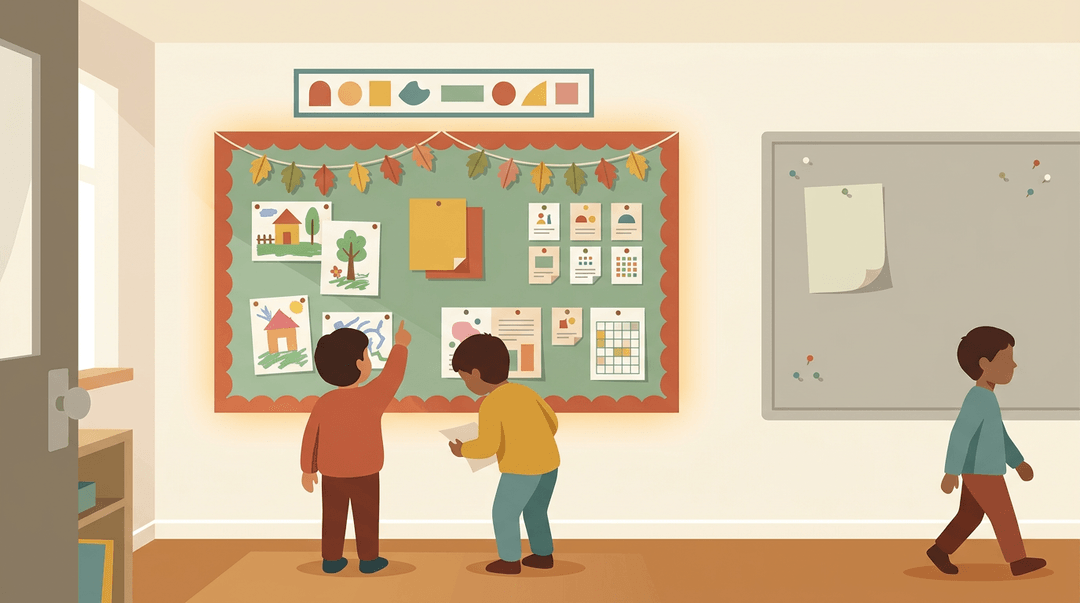
Your bulletin board can do some welcoming before you say a single word.
Welcoming boards for the first week
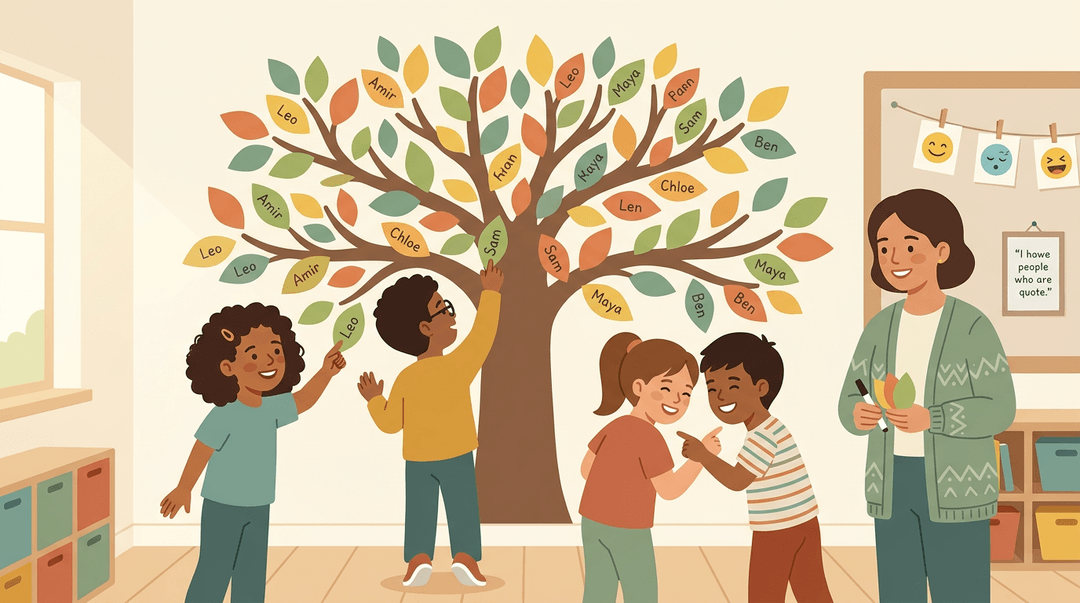
- Name-on-leaf welcome wall. Students write names on paper leaves for a wall tree.
- Motivational quote boards. Post a year-setting quote and let students add favorites.
- Emoji and clipboard walls. Students clip up a card showing how they feel, a quick read on the room.
- People who help us learn. Feature photos and names of adults students can go to for help.
Picture a third-grade teacher who hangs the leaf tree on Monday. By lunch, students are hunting for friends' names. Kids notice.
Boards that celebrate kindness and gratitude
These boards shift the focus from mistakes to moments of kindness.
- Kindness chain. Students link paper strips of kind acts into a growing chain.
- Staff appreciation wall. Students post thank-you notes for the adults who keep school running.
- Rainbow of helpful behaviors. Assign each color a helpful behavior and add a strip when you spot it.
- Friendship unit board. Pair friendship prompts with examples of good friend moves.
Boards that encourage a growth mindset
A growth mindset board isn't about being right. It's about getting better.
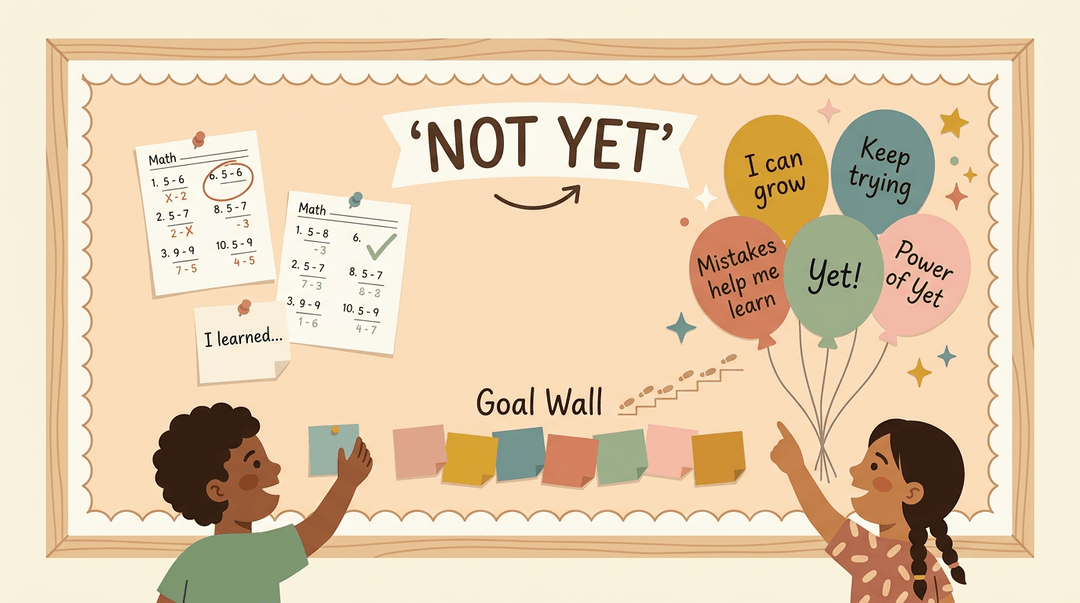
- Growth mindset board. Pair a 'not yet' reminder with examples of learning from mistakes.
- Balloon success mantras. Write a mantra on each balloon cutout and cluster them.
- Positive vibes. Post encouraging phrases where students will see them.
- Testing-season encouragement. Share calm, confident reminders before big tests.
- New Year goal wall. Students post a goal for the new year and check progress later.
Boards That Tie Directly to Your Lessons
These ideas tie each display to what you're teaching, so the board backs up your lessons instead of sitting beside them.
Science boards about nature and space
Science boards show change over time. A recycling and Save the Earth board tracks what goes in the bin, and a frog life cycle display lets students order each stage as the unit unfolds.
Add an insects and weather chart and a solar system board for space units. Consider a fourth-grade teacher who adds one frog stage each week. By the end, the board has been reviewing the unit all along.
Display reading and vocabulary boards
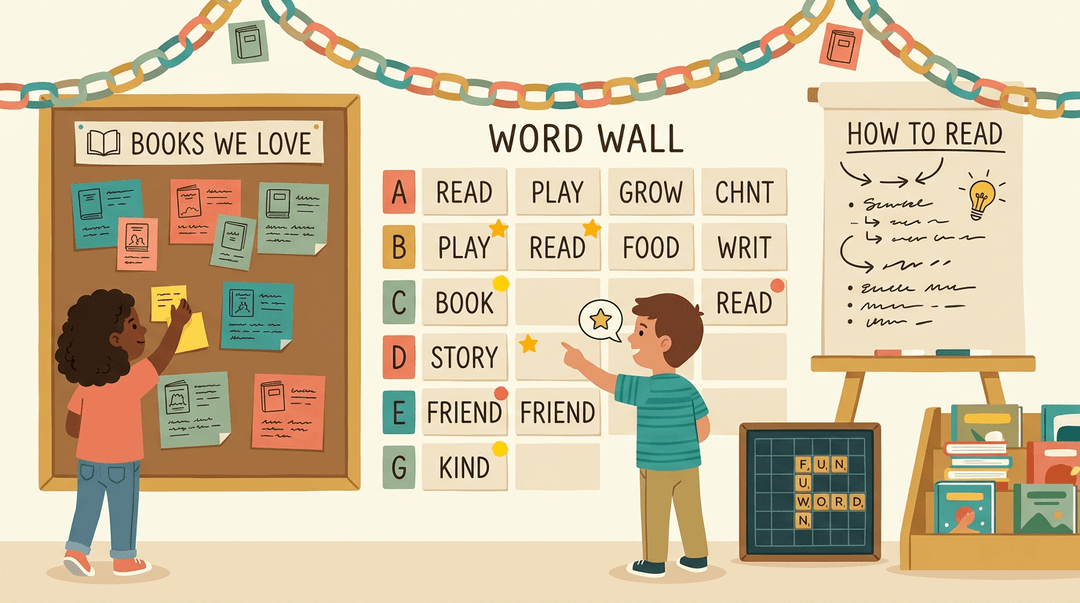
Reading boards keep books in view after story time. A book recommendation board lets students post a title and one sentence on why it's worth reading. A story-time garland adds a paper link for each book you read aloud.
Word walls and anchor charts are classics:
- a word wall holds target vocabulary
- an anchor chart captures a strategy in students' own words
A Scrabble vocabulary board adds game-style review. Treat every board as a review tool: a word wall is for using words, not just seeing them.
Social studies boards on careers and communities
Social studies boards connect learning to real jobs and real neighbors. A career collage lets students pin jobs they're curious about, and career pathways link each job to the subjects behind it. For a community helpers unit, feature:
- a firefighter
- a mail carrier
- a nurse
Immigration and ancestry boards can invite family stories, shared with permission. A college and career wall shows college logos, trade brochures, and local workers, so students see several next steps, not just one.
Track data, math and health on boards
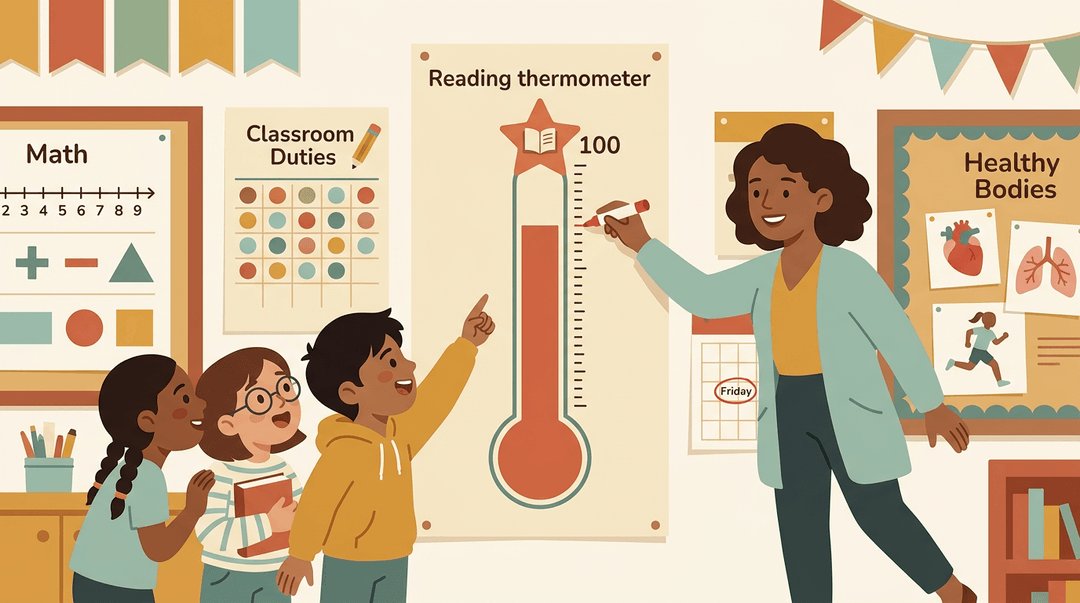
Boards can also make numbers and habits visible. A data wall with live numbers, like class reading goals, shows progress rather than a final grade. A math board rotates a problem of the day or a number line.
A healthy bodies board can label body systems or post daily movement ideas. Consider a sixth-grade teacher who keeps the class reading thermometer on the data wall current every Friday. Students start asking about it on Thursday.
A classroom duties board turns responsibility into routine, so everyone sees who's on pencil duty this week.
Turn Your Boards into Hands-on Learning Tools
A board students touch, read, and add to teaches more than one they walk past. Use this guide to build each board around a single lesson, make it interactive, and check it before it goes up.
Plan the board
- Pick one learning objective
- Write it the way students will read it: "I can sort shapes by number of sides."
- Match the board to your unit topic
- A fractions unit gets a fractions board, not a general math board.
- Schedule setup in your weekly plan
- Add "update board" to the day you already prep materials.
⚠️ Watch out: A board with no objective turns into decoration. If you can't say what students should learn from it, hold off on hanging it.
Make it something students use
Each of these gives students a job on the board, so they're doing more than looking.
- Vocabulary pockets. Give each word its own pocket; students slip in a definition or sketch, then flip through for review.
- Student work with feedback. Post a piece of work beside a sticky note naming one strength and one next step.
- Exit ticket response wall. Students stick their exit ticket under "Got it" or "Still wondering," and you read the wall before planning tomorrow.
Board ideas by grade band
| Grade band | Board | How students use it |
|---|---|---|
| PK-2 | Tactile sorting board | Move picture cards into labeled groups, like big and small |
| 3-5 | Reading recommendation wall | Post a card with title and one-line reason |
| 6-8 | Goal-tracking board | Move a clip along a goal line as they progress |
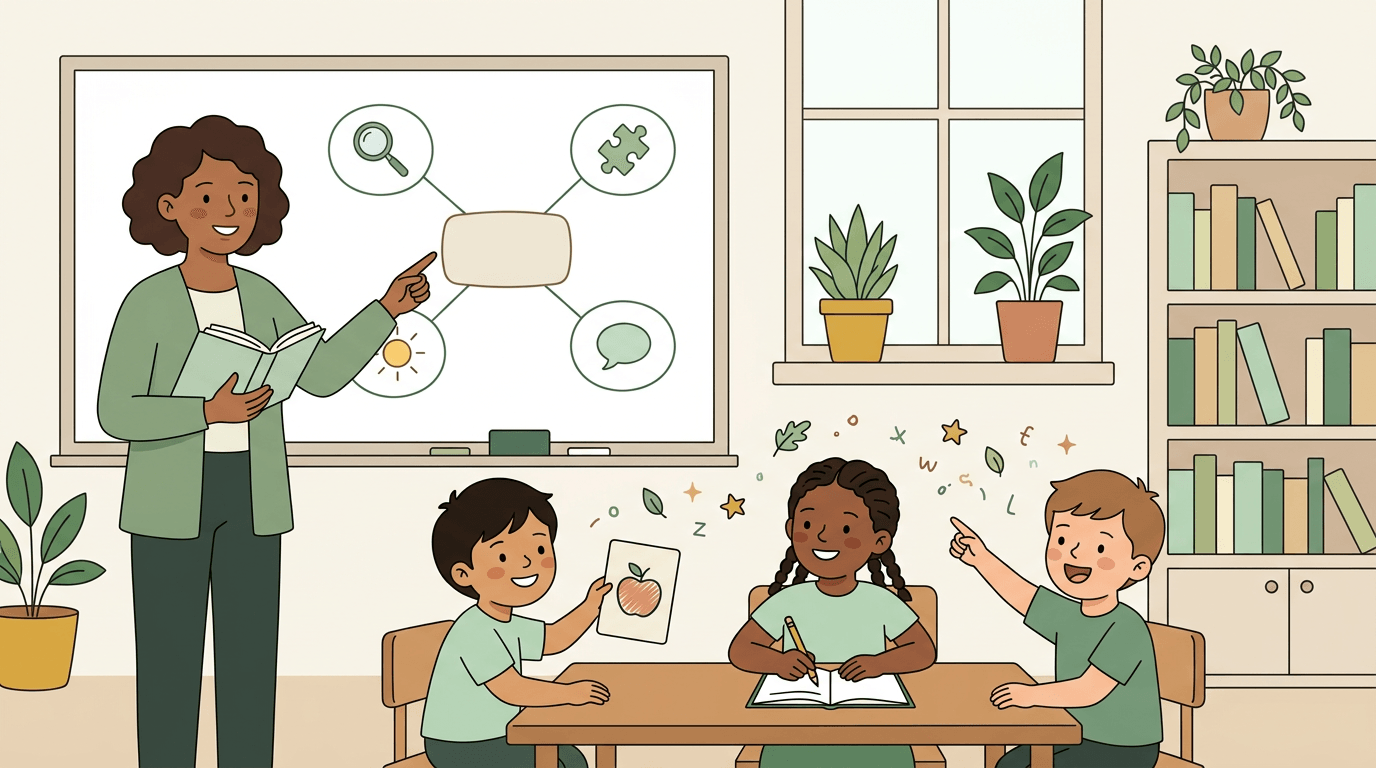
| 9-12 | Concept map wall | Add terms and label the lines linking them |
Example: A seventh-grade teacher starting a persuasive writing unit sets up a goal-tracking board with three marks: "Claim," "Evidence," "Revision." Students move their clips as drafts improve, and the teacher sees at a glance who needs a conference.
Check before you hang it
Run through these once the board is built:
- Objective stated. The learning goal appears on the board in student-friendly words.
- Readable from three feet. Stand back and check that titles and labels are legible.
- Student input included. There's a spot for students to add, move, or respond.
- Refresh date set. A swap date sits on your calendar, tied to the end of the unit.
Map board refreshes to your unit calendar with EMStudio's lesson planner so displays stay in sync with what you teach.
What Are Some Seasonal Bulletin Board Ideas?
Seasonal boards keep your room fresh all year. Here's a set of ideas we've gathered, with school themes woven in where they fit.
Leafy fall and Thanksgiving boards
- Gratitude leaves. Students write one thing they're grateful for on a leaf, then gather the leaves on a bare trunk.
- Falling and handprint leaves. Trace hands on fall-colored paper and let them drift down the wall.
- Fall reading boards. Let leaves fall as students finish books.
- Turkey and Thanksgiving facts. Students research facts for a turkey's feathers and note each source.
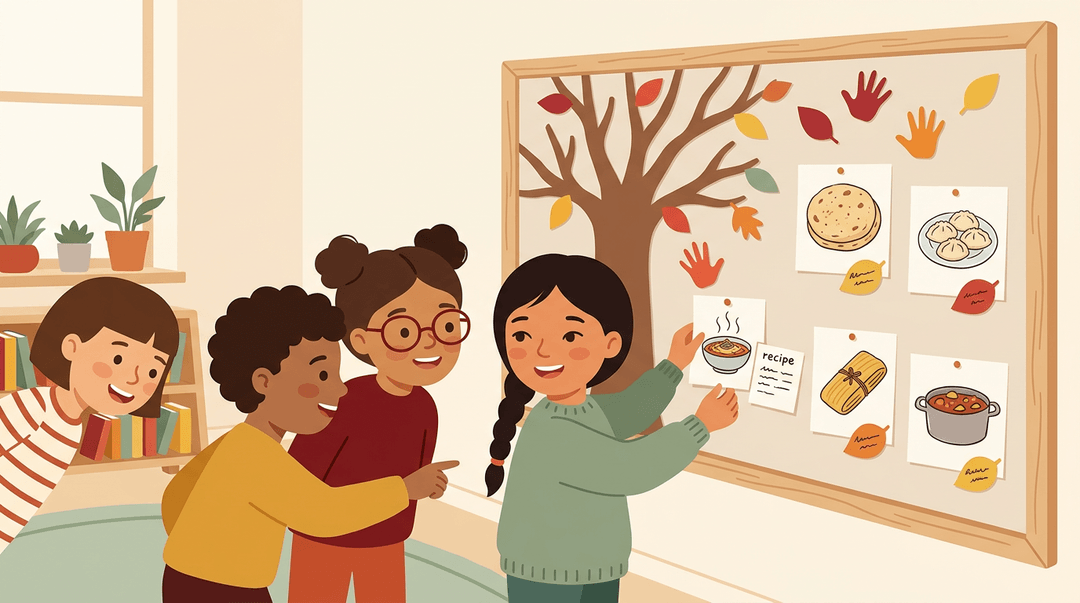
- World cuisine notes. Post dishes from different families' celebrations, and invite students to share foods from home.
Think of a newcomer student who shares a family recipe on the world cuisine board. Classmates learn a dish they've never heard of, and that student feels seen.
Cozy winter and Christmas boards
Snowflake and mitten themes are low-prep. Have students write a strength on each snowflake, and hang mittens on a line for counting practice. Winter reading boards can frame a cozy nook with favorite books on mitten cutouts.
For an evergreen forest, each paper tree carries a goal, and an ornament goes up when it's met. Secret Santa, stockings, and carols can become an anonymous compliment exchange, but check your school's holiday guidelines first.
Blooming spring and Easter boards
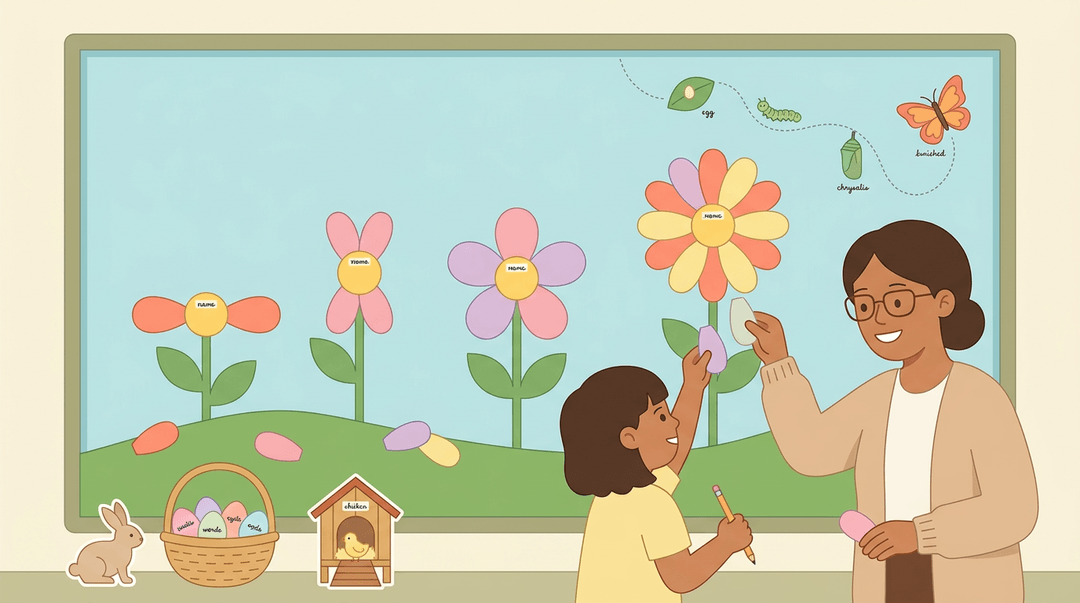
Give each student a flower and add a petal for every goal met. Growth walls celebrate progress rather than perfection, and a fourth-grade teacher's class garden can show families how far students have grown by spring break.
Pair a butterfly display with your science unit: students draw each stage in order along a path across the board.
Reading Is Blooming garden: each flower is a finished book with a one-line review. Use a school theme, such as a reading challenge, a kindness campaign, or a growth mindset focus, as the garden's title.
Easter candy, bunny, and chicken: bunnies, baskets, and a chicken coop make cheerful backdrops, with paper eggs holding sight words instead of real candy. Keep it simple.
Summer beach and end-of-year boards
Beach and sea creatures: each student decorates a fish with their name and a favorite memory from the year. Popsicle colors and fish names: arrange colored sticks into a rainbow frame, with paper fish holding classmates' names.
See You Next Year memory wall: add photos, notes, and a letter to next year's class. Check photo permissions first.
Halloween and patriotic holiday boards
Batty and pumpkin patch: bats can carry reading strategies, and pumpkins can hold weekly goals. Costume photo board: pair each photo with a caption about the character. For a US flag board, use stars that hold student names or a class goal.
How to Make a Pretty Bulletin Board?
A bulletin board is the wall display where your class shares learning and student work. A pretty one comes down to color, balance, and a clear focal point, the spot the eye lands on first.
For beautiful decoration, repeat two or three colors across the room.
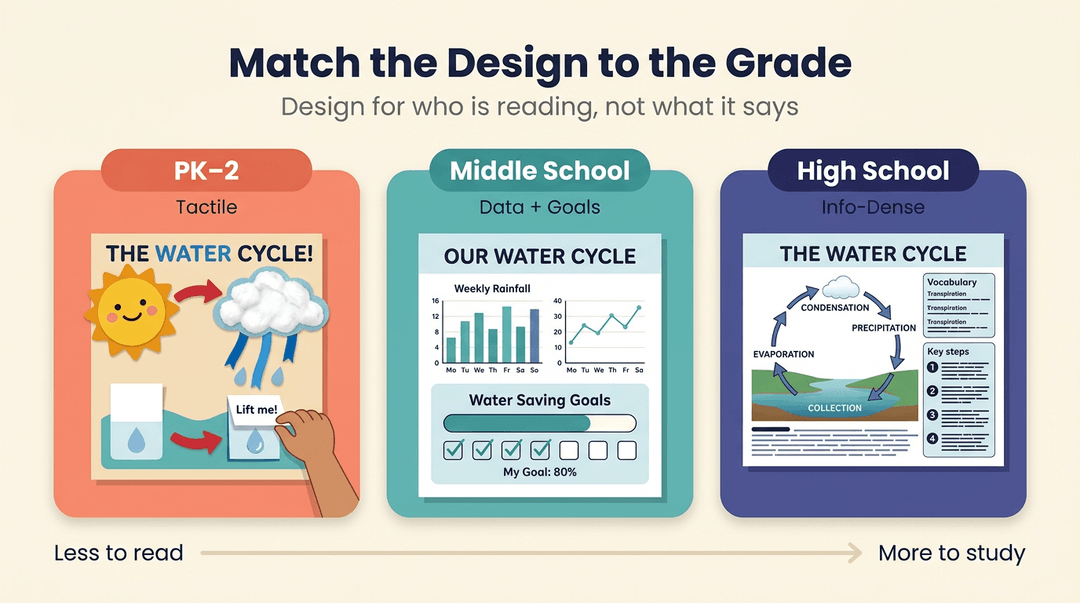
Match the design to each grade
The right design depends on who is reading it, not what it says.
- PK-2: Go tactile, with textured pieces and flaps students can lift.
- Middle school: Go with data and goals, like charts and personal goal trackers.
- High school: Go info-dense, with vocabulary, diagrams, and key steps students can study on their own.
Build boards you can reuse easily
Build for lasting rather than perfect.
- Reusable border and backing: Pick a frame you'll keep up all year.
- Rotating center section: Keep the frame and swap only the middle each unit or season.
- Laminate items for reuse: Laminate titles and cutouts so they survive storage and go back up next time.
- Fabric instead of paper backing: Fabric handles repeated pinning better than paper.
Consider a third-grade teacher who keeps one border and backing all year and changes only the center monthly. Each monthly update takes a fraction of the time.
Layout tricks that keep text readable
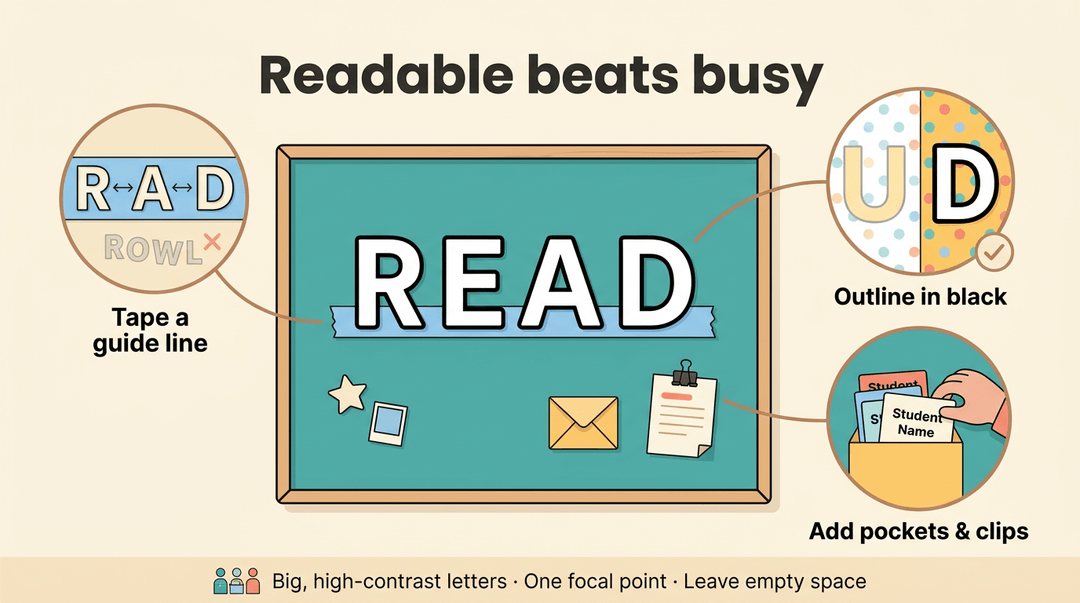
Text that's hard to read gets skipped, no matter how lovely the board looks. Readable beats busy.
- Painter's tape letter alignment: Use painter's tape as a guide so letters sit level and evenly spaced.
- Black outline on letters: A black outline helps letters pop against bright or patterned paper.
- Interactive pockets and clips: Add pockets or clips for student cards, so the board invites touch.
Use large, high-contrast letters, one focal point, and only a few supporting pieces. Leave some empty space.
Let students help build the board
Sharing the work also reduces your workload. Use student-made content like vocabulary cards or problem solutions, and display student artwork for personality. Invite families to help too, with materials or setup.
Think of a fifth-grade teacher who asks each student to design one vocabulary card for the unit. The board fills with their work, and the teacher spends one planning period on it instead of a whole weekend. Less solo work, more ownership.
Pick the Right Materials and Printing Tools
Before you pin up a single title, settle your materials and printing tools.
Sizing your board, border and backing
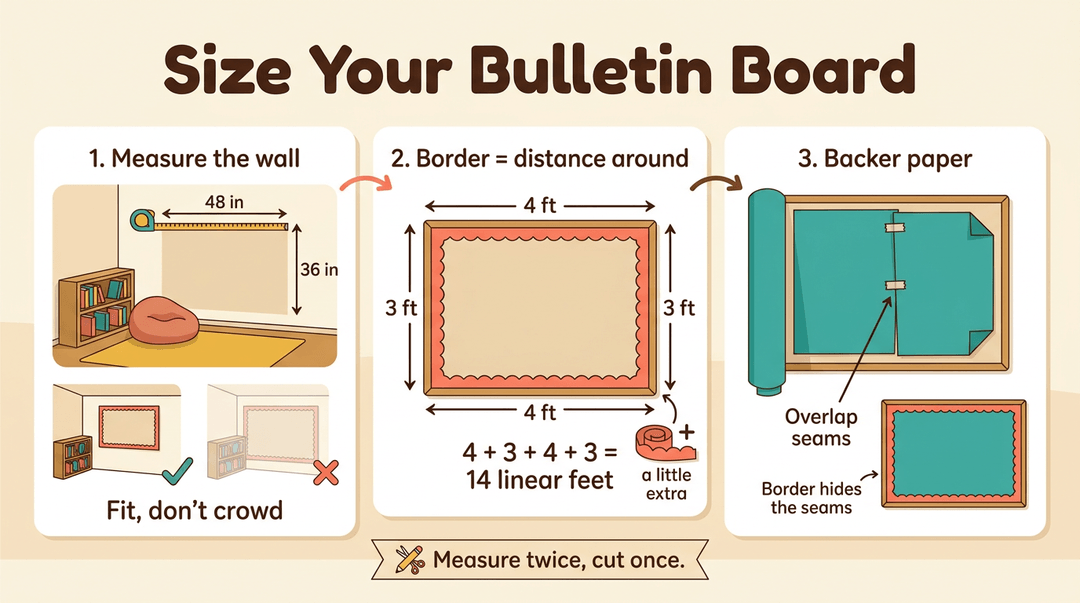
Measure your wall space, then choose a board to match. Common board dimensions are a good starting point, but the right board fits your wall instead of crowding it.
Next, work out your linear feet of border: the distance around the edge. You'll want a little extra to cover mistakes.
Backer paper comes on a roll. Cut sections to fit your board, overlap the seams slightly, and tape them on the back. Picture a first-grade teacher building a reading corner.
One roll covers the board, and the border hides the seams. Measure twice, then cut once.
Make your own printed board pieces
Printing your own pieces lets you build the board around your lesson:
- Wide-format poster maker. A printer built for large sheets prints titles and captions at board size.
- Design library templates. Start from a finished layout and swap in your own words.
- Smart tools for charts. Turn class data into a clean graph you can print in minutes.
- Printable templates per board. Save a layout for each board so next time is quick.
Think of a fifth-grade teacher who rotates a vocabulary board monthly. With a saved template, they swap the words and print in one planning period.
Basic supplies for building a board
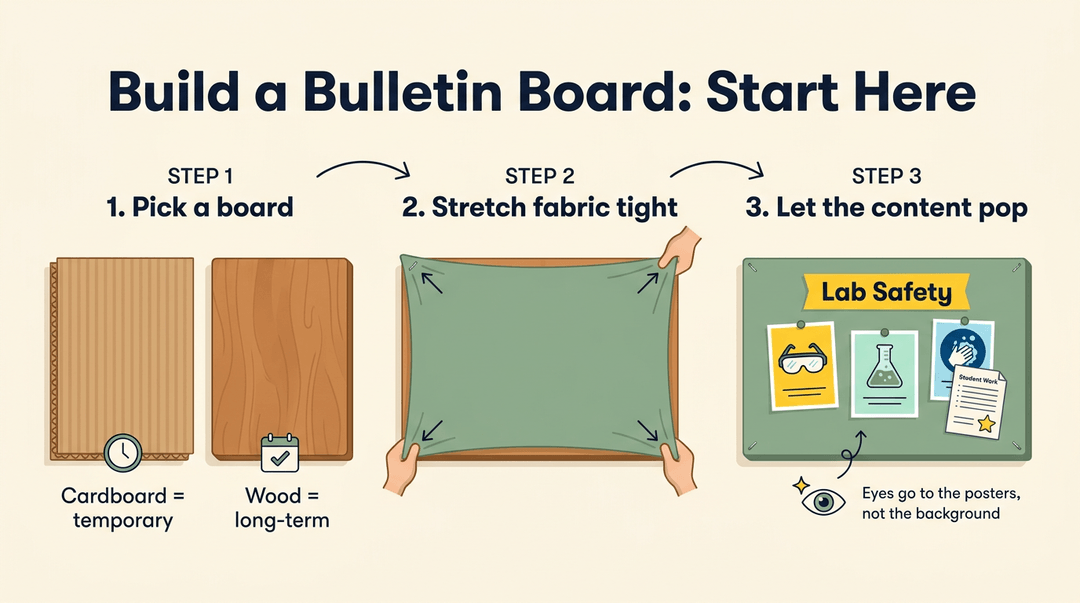
Start with a cardboard or wooden board. Cardboard suits a temporary display, while wood suits a long-term one.
Next, add a plain fabric cover. Stretch it tight over the board so titles and student work stand out.
Consider a middle school science teacher who builds a lab-safety board. Students notice the posters first, not the background.
Keep Boards Fresh with a Regular Schedule
A board that never changes quickly fades into the wall. Here's a simple rhythm that keeps yours current without turning it into another weekend project:
Swap boards every 4 to 8 weeks
Your swap cadence is how often the board changes. Most classrooms do well with a schedule like this:
- Every 4 to 8 weeks: The default for most themed boards. Pick a point in that window that fits your pacing and stick with it.
- Weekly for data boards: Boards that track progress, like reading goals or class totals, need a quick update each week to stay useful.
- Seasonal or unit cadence: Change the display with the seasons or as each new unit begins, so it reflects what students are learning right now.
- General themes if short on time: Choose a neutral theme, like a class motto or a word of the week, that doesn't need new content each time you swap.
- Align changes to unit calendar: Mark your swap dates on the same calendar you use for unit planning, so the board supports the lesson instead of lagging behind it.
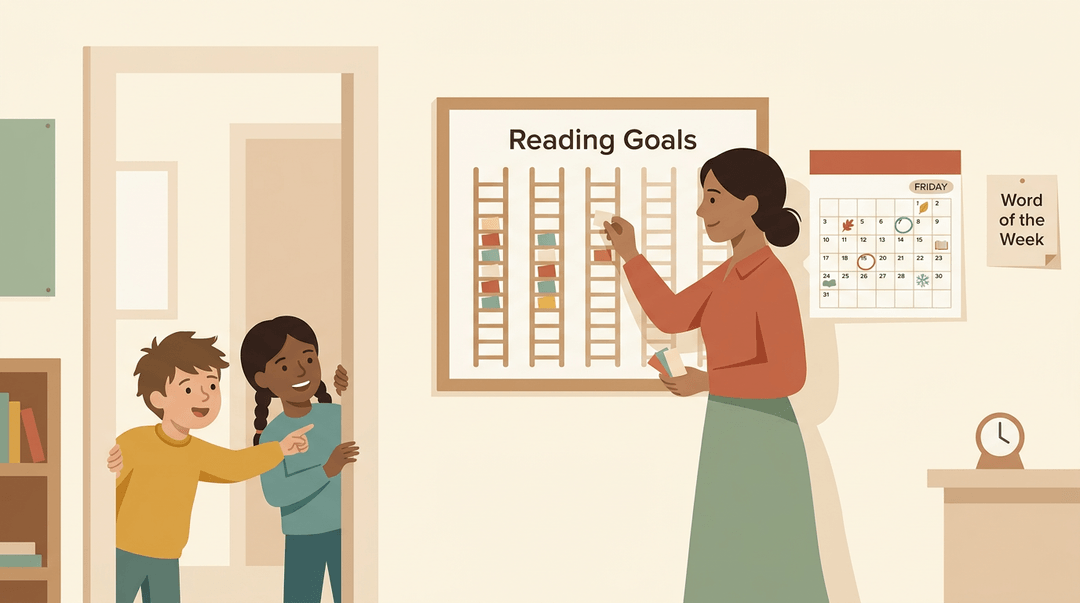
Consider a fifth-grade teacher with a reading tracker by the door. Every Friday, they spend a few minutes moving student names up the progress columns, and by Monday the class is already asking who's closing in on their goal. That's a board doing its job.
A board doesn't need to be perfect to work. It needs to be current, so aim for freshness rather than perfection. Less scrambling. More teaching.
A great bulletin board does more than brighten a hallway. It reinforces what students are learning, shows them their work matters, and gives you a visual anchor for this week's lesson. Keep it simple, keep it current, and let it grow with your class.
Ready to tie your boards to your lessons? Check out our Lesson Planner to write, organize, and reuse lesson plans across multiple classes from one place.
Frequently asked questions
What is a bulletin board in school?
A school bulletin board is a display space for student work, key vocabulary, class reminders, and other learning materials. It can also serve as an interactive teaching tool when students add to or use what is posted.
What are some beautiful classroom decoration ideas?
Beautiful classroom decorations can include a coordinated two- or three-color palette, student artwork, seasonal displays, and a welcoming name wall. Use large, high-contrast titles, one clear focal point, and a little empty space so the room feels colorful without looking cluttered.
What are some ideas for school themes?
School themes can focus on kindness, gratitude, growth mindset, reading, science, community helpers, careers, or seasonal events. For example, a class can create a kindness campaign, a reading challenge, a nature display, or a goal-tracking wall tied to what students are learning.
How to make a pretty bulletin board?
Choose one clear theme or learning goal, then select two or three coordinated colors and a focal point. Add a large, readable title, student work or interactive pieces, and a few supporting decorations; leave some open space so the board does not feel crowded. Use a reusable backing and border, and check that text is easy to read from a few feet away.