Anticipatory Set: What It Is, Examples, and How to Use It

Jump to section
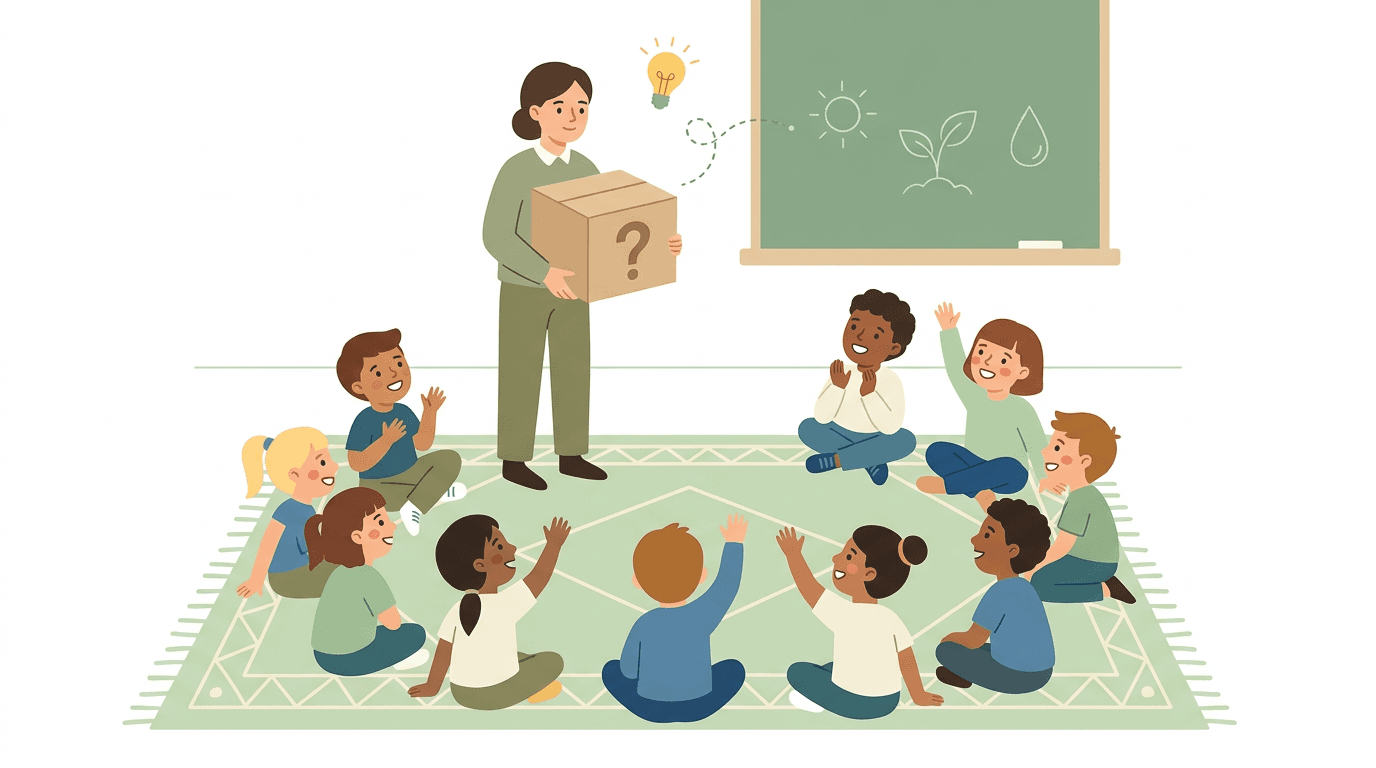
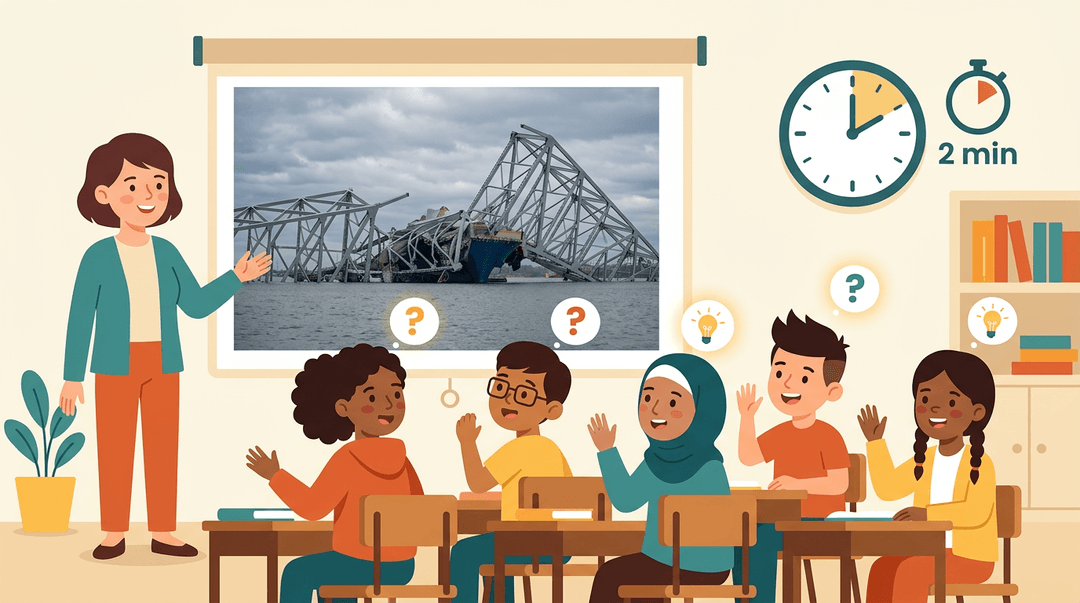
Think about the first two minutes of a class you love. Maybe a teacher shows a photo of a bridge that just collapsed, or asks a question that makes everyone sit up.
That quick opener is an anticipatory set: a short activity that gets students' minds ready for what's coming. Put simply, it's the hook that connects what students already know to the lesson you're about to teach.
In this post, we'll cover what it is, where it fits, example activities, and common mistakes, plus a quick checklist you can use tomorrow.
What an Anticipatory Set Is and Does
Every strong lesson needs a strong start, and the anticipatory set is where that start happens. It's a quick opener that gets students ready for what's coming, so the rest of the lesson lands.
How it kicks off a lesson
An anticipatory set is the beginning-of-lesson segment that comes before any new content. It activates prior knowledge, grabs attention, and sets the stage for new material.
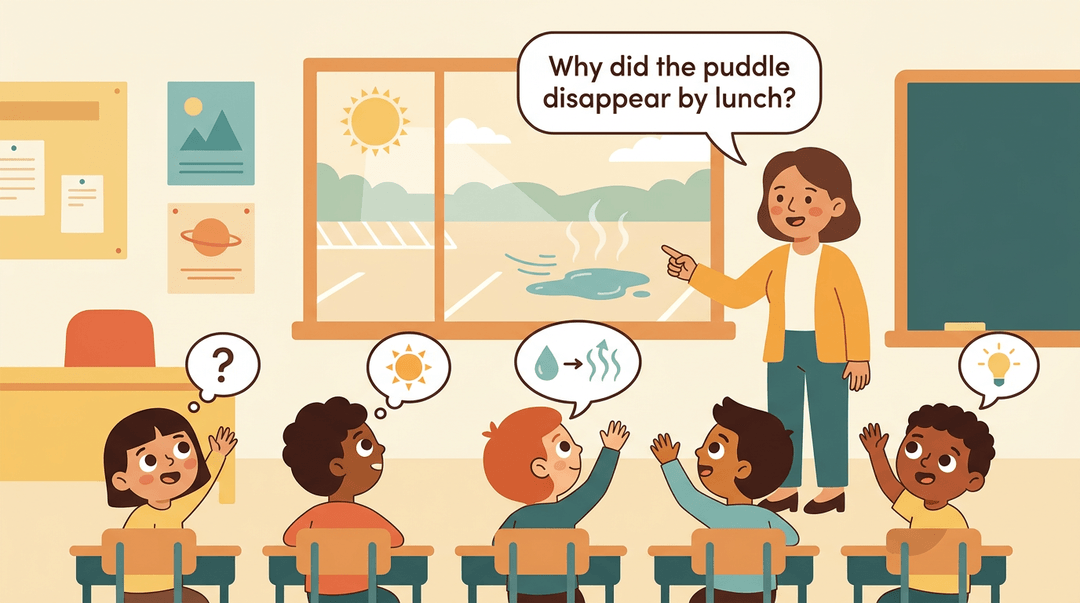
Picture a fifth-grade teacher starting a weather unit by asking, "Why did the puddle in the parking lot disappear by lunch?" Students who have never heard the word evaporation are already thinking about it, and the teacher just learned what they know.
Different names for the same hook
You'll see this opener called several things: a hook, a bridge, an advance organizer, a set induction, or an attention-grabber. The labels vary, but the job stays the same.
Use whichever term your school or training program prefers, and focus on what the opener does.
What a good hook achieves
The real test is what the opener accomplishes. It piques curiosity, so students want the answer. It gauges background knowledge, showing you what students already understand.
It connects new and past lessons, and it previews objectives so students know where the lesson is headed. It also wakes up brains that spent the last period sitting still. Teachers can reach for classroom attention-getters to wake those brains up before the lesson begins.
The aim is curiosity rather than coverage. Curiosity wins.
Examples of Anticipatory Set Activities
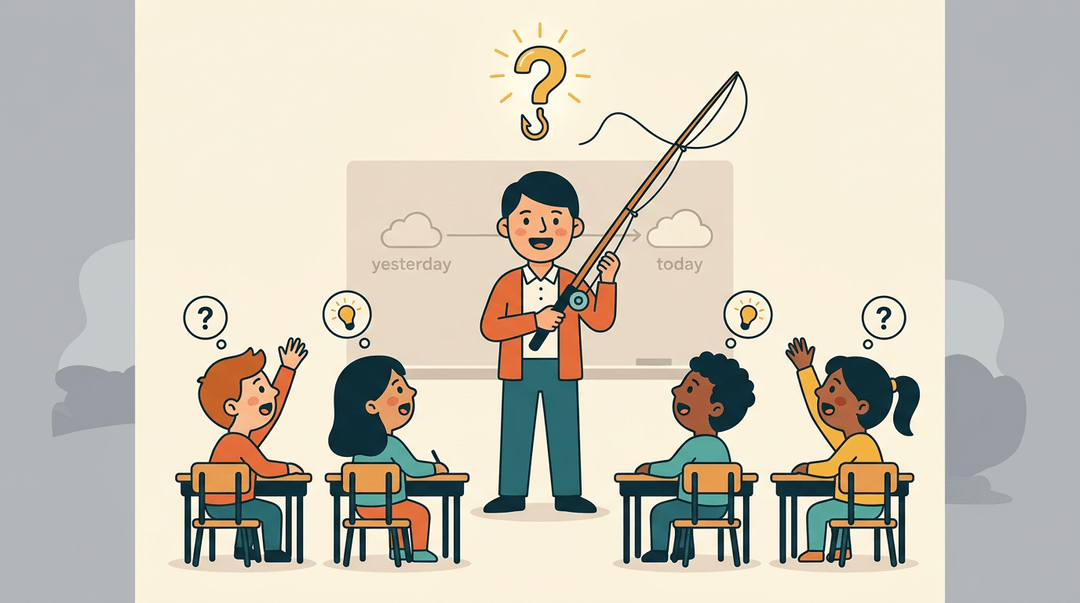
Here's a menu of go-to hooks, grouped by how students engage.
Starting with questions and discussion
Open-ended questions get students thinking before you teach: 'What happens when ice melts in a warm room?' A class brainstorm casts a wider net.
A KWL chart (what students Know, Want to know, and later Learn) shows where they're starting. In Think-Pair-Share, students:
- think alone,
- talk with a partner,
- then share.
Ask why before what.
Using stories, images, and sounds
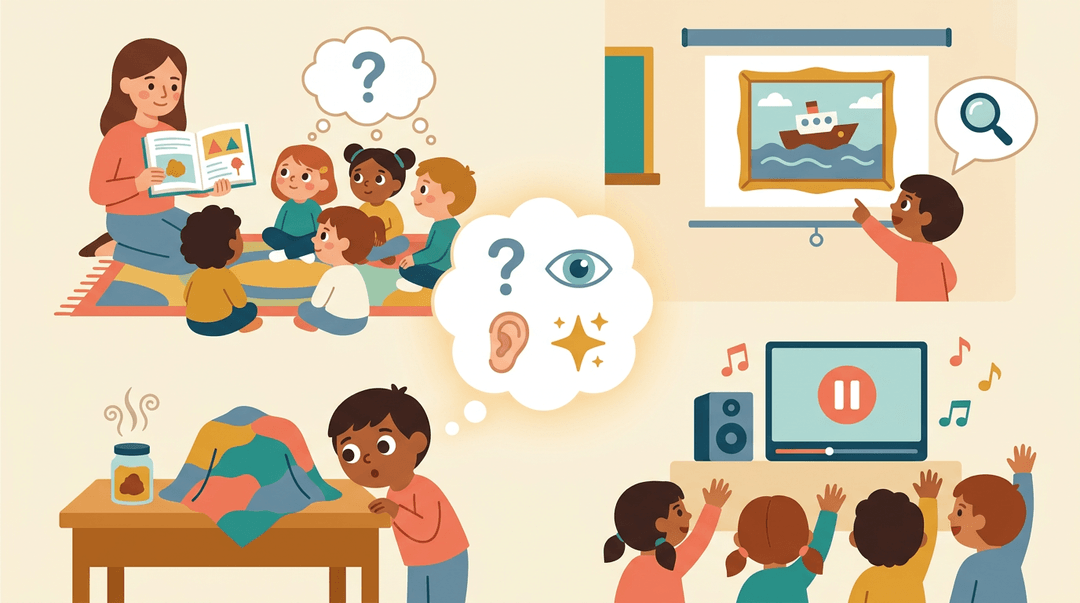
Read a picture book and pause before the ending so students can predict it. Project a painting and ask, 'What clues tell you what's happening?' Place a mystery object on each desk, or bring in a familiar scent tied to the topic (check allergies first).
Play a song that fits the theme, or show a short video and stop before the reveal. Students start guessing before you've said a word.
Hands-on games and quick activities
Play charades or Pictionary with key vocabulary before you define it. For skim and infer, students skim a text and guess its main idea before reading closely. Reread a familiar book to activate prior knowledge, or write one prompt on the board.
A substitute in an unfamiliar room can do exactly that and have students answering before attendance is done.
Virtual lessons can use:
- polls,
- chat,
- breakout pairs,
- or a shared image.
In tutoring or homeschool, have your learner predict or sketch before you explain, using one object or favorite book for a couple of minutes.
Where It Fits in Your Lesson Plan
The anticipatory set is the opening move of your lesson, and its placement matters as much as its content. Here's where it belongs and how to keep it working.
When to use it during a lesson
Place it right after you state your objective. Students need to know where they're headed, and the set gives them a reason to care about getting there.
Run it before direct instruction, so students are primed to receive new content instead of hearing it cold.
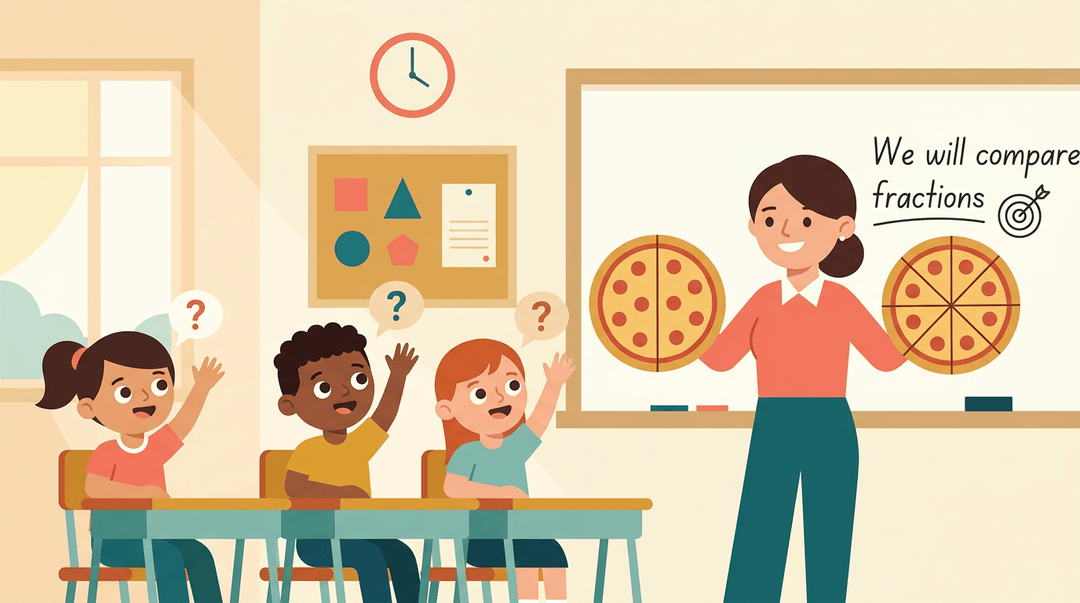
Consider a fourth-grade teacher who writes "We will compare fractions" on the board, then holds up two identical pizzas, one cut in halves and one in eighths. Students start asking questions before she explains a thing.
That moment is the bridge that links what they already know to the objective.
The hook doesn't have to disappear once instruction starts. Bring it back mid-lesson when attention drifts, pointing to the pizzas as you introduce new material.
If you're writing sub plans, spell out the hook clearly. A substitute who doesn't know the opening question can't launch the lesson, so write the exact words to say and list the materials to have ready.
A 5-Minute Anticipatory Set Checklist for Teachers
Use this guide when you're planning a lesson and need a hook that works without eating your prep time. It's a playbook of five moves, followed by examples you can adapt for your setting.
Build it in five moves
- Pick a hook type
- Choose one: a question, a story, a mystery object, an image, or a short case.
- Pick the type that fits your students today, not the fanciest one.
- Link it to the objective
- Write the objective first, then ask what question it answers.
- Objective: "I can compare fractions with unlike denominators." Hook: "Would you rather have 3/4 or 5/8 of a pizza?"
- Time-box it to 3 to 5 minutes
- Set a visible timer so a good hook doesn't swallow the lesson.
- Draft the bridge statement
- Say: "Today we'll learn how to compare fractions, so we can settle this pizza debate."
- Plan a callback moment
- Return to the hook near the end of the lesson.
- Say: "Remember our pizza question? Who can answer it now?"
⚠️ Watch out: A hook that's fun but unrelated leaves students excited about the wrong thing. If it doesn't point at the objective, swap it out.
What it looks like by setting
| Setting | Hook | Points toward |
|---|---|---|
| Elementary | Picture book hook: show the cover, ask for predictions | Making predictions |
| Middle school | Real-world question: "Which store has the better deal?" | Unit rates |
| High school | Provocative case study: a city bans a popular app | Arguing with evidence |
| Tutoring | Personalized warm-up built on the student's favorite game | The skill you're targeting |
Example: A tutor working on percentages opens by asking a student to calculate the discount on a game they've been eyeing. The bridge is one sentence: "That's the exact skill we're practicing today." The callback at the end is a new price to figure out, which tells the tutor right away whether it stuck.
Before you teach, confirm:
- The hook matches the objective. Students could guess the target from it.
- The timer is set. You know when you'll stop, whatever the room's energy.
- The bridge is written down. You aren't improvising the hardest sentence.
- The callback has a spot. It's noted in your plan, not left to memory.
Build it once, then save and reuse your best hooks across every class with EMStudio's lesson planner.
How Long Should an Anticipatory Set Be?
For most classes, an anticipatory set should run two to five minutes: long enough to spark curiosity, short enough to leave room for learning.
Keep it relevant, not just fun
According to GCU's teaching blog, these openers should be brief and focused, tied to students' background knowledge, interests, or real-life experiences.
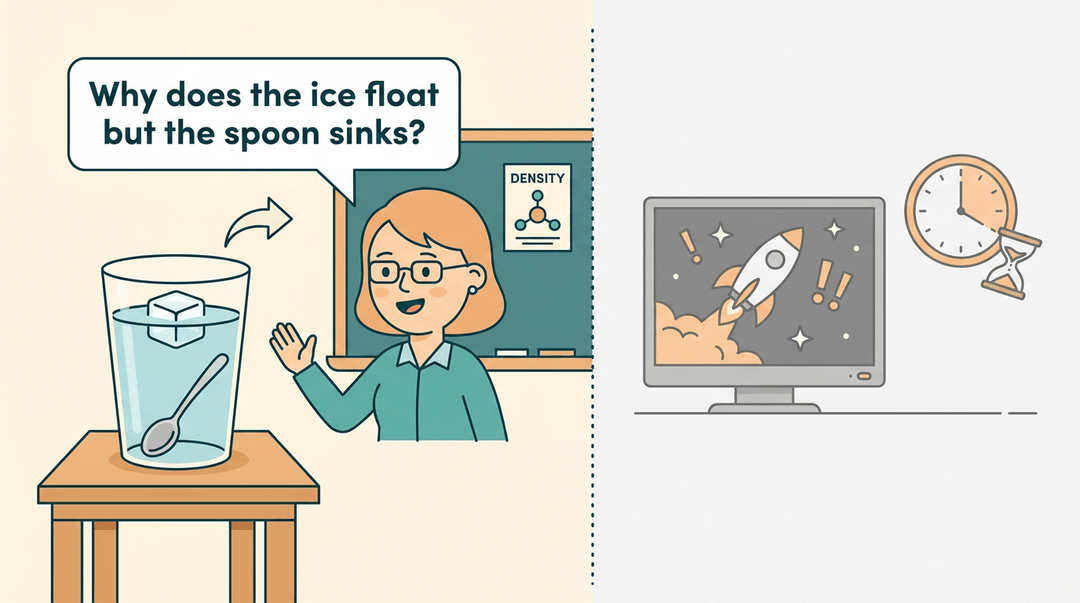
Picture a middle school science teacher who asks, 'Why does an ice cube float when a metal spoon sinks?' That question is relevant rather than merely flashy, and it leads straight into density.
A surprising video with no link to the objective only eats minutes.
How to plan one effectively
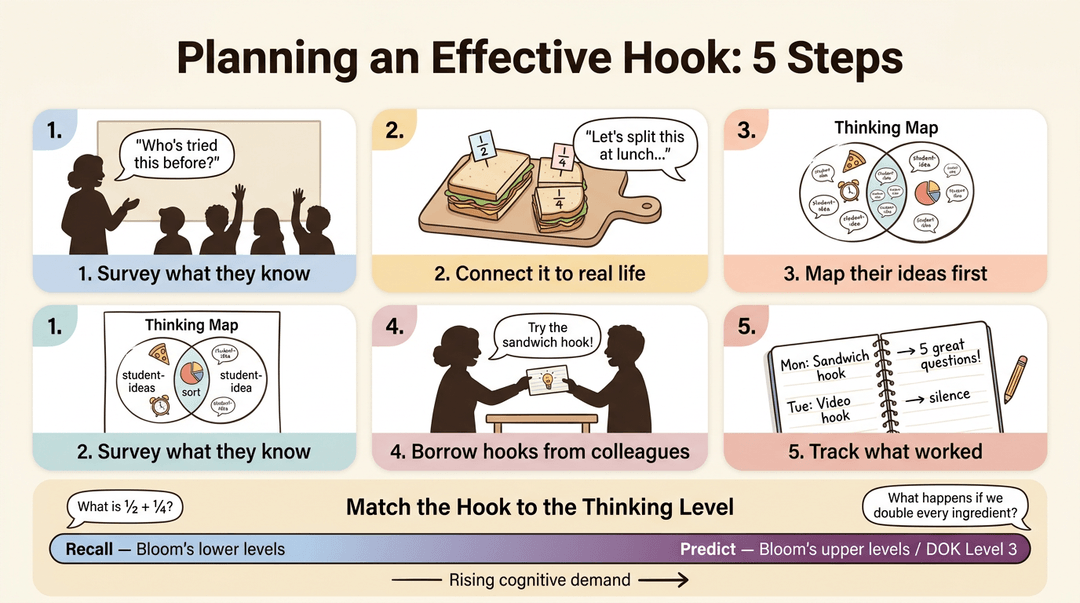
Work through five steps:
- Survey background knowledge. A show of hands shows where to begin.
- Relate to real life. A fractions lesson can open with splitting a sandwich at lunch.
- Map what students know. A thinking map or Venn diagram lets them sort their ideas first.
- Collaborate with colleagues. Teachers who share your students often have hooks that work.
- Keep a journal. Note which openers drew real questions.
Match the hook's cognitive level to the lesson, too. A recall question suits the lower levels of Bloom's Taxonomy, while a prediction question pushes students toward the upper levels, much like a Depth of Knowledge (DOK) level 3 task.
Circling back to it later
Close the hook with a bridge statement, such as 'So today, we're going to find out why.' Then point back to the ice cube when students reach the key idea. Each callback builds an expectation of relevance.
Students learn that the opening matters, so they start listening for it. That's the real payoff.
Where the Idea Came From
Every lesson has a first few minutes, and the anticipatory set is the opener that shapes them. Its roots go back to a 1960s teaching model, and the research behind it is more solid than you might expect.
Madeline Hunter and its origins
The term is associated with Madeline Hunter's mastery teaching model, where the teacher focuses students' thoughts on what will be learned.
The anticipatory set originated as part of a 1960s lesson plan model, and it became one of the core steps within mastery teaching. As the Hunter lesson plan format grew popular in the late 1970s and 1980s, it stayed in use well beyond that window.
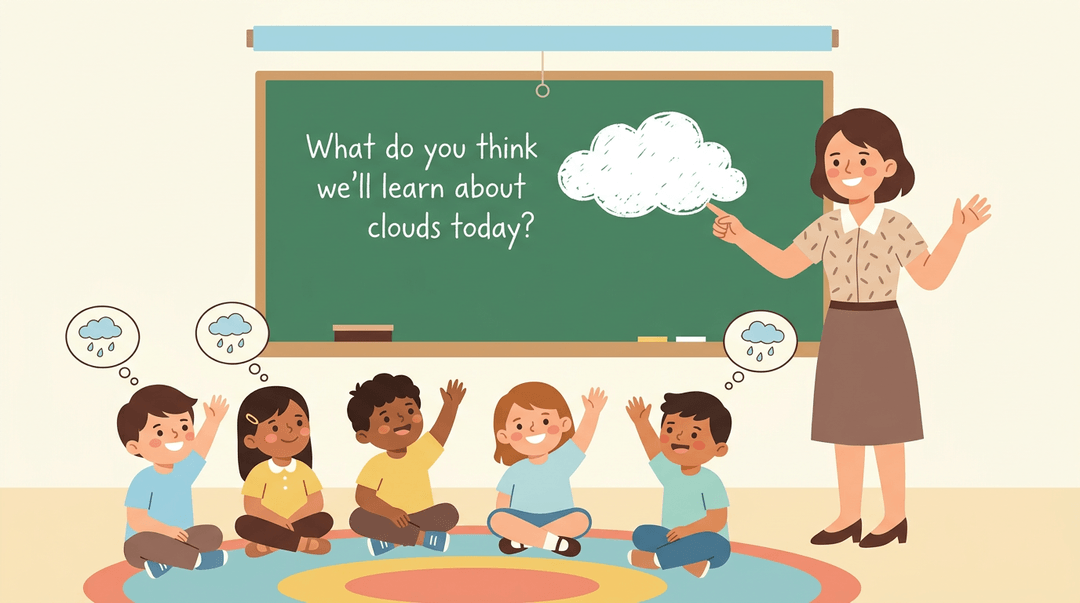
Consider a second-grade teacher who starts a weather unit by asking, 'What do you think we'll learn about clouds today?' Her students know where the lesson is headed before the first reading begins.
What research says about it
Research on openers is less about whether they help and more about why they work. David Ausubel advocated advance organizers, which give learners a framing idea before new material arrives.
A meta-analysis by Luiten examined 135 published and unpublished studies on advance organizers and learning. Schuck's 1969 study looked at set induction, the broader family of classroom openers.
Marzano reports percentile gains of 9 to 29 points, and Townsend and Clarihew studied comprehension effects.
Small openers, real gains.
Common Mistakes Teachers Make
Most teachers know an anticipatory set matters. The trouble usually lies in how it's delivered, and a few common slips quietly drain its power.
Why it often gets skipped
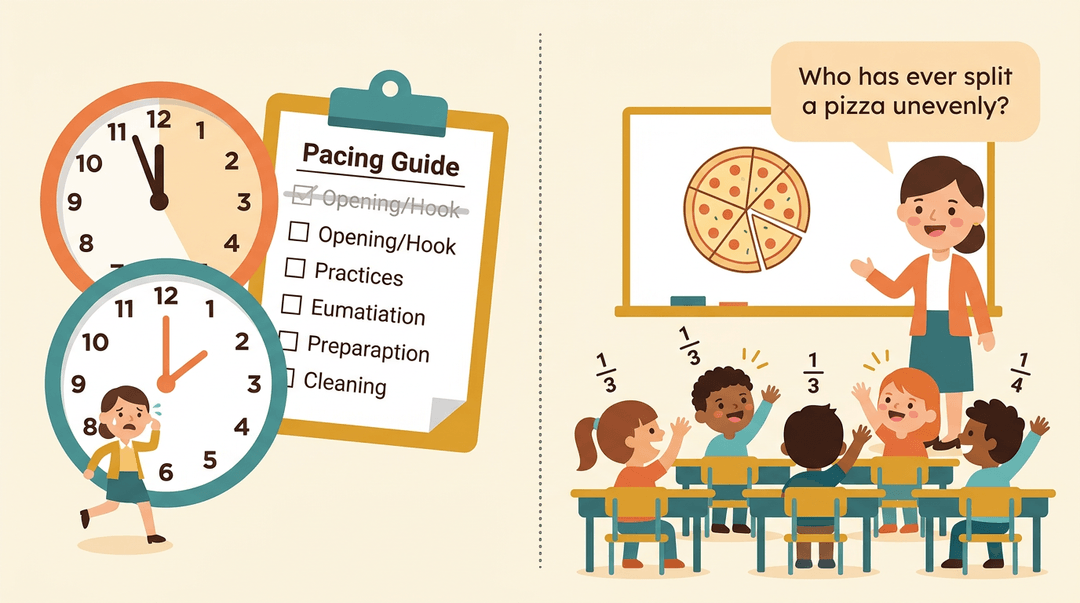
Time is the usual culprit. When the bell rings and the pacing guide is already behind, the opening feels like the first thing to cut. Many teachers also overlook it as a lesson component, treating it as a warm-up instead of a deliberate part of the plan.
Another slip is simply stating the topic: "Today we're learning about fractions." That tells students what's coming but gives them no reason to care. Consider a fifth-grade teacher who asks, "Who here has ever split a pizza unevenly?"
Hands go up, and the fraction lesson suddenly has a purpose. Keep it short.
Meeting different students' needs
Students walk in with different backgrounds, and those backgrounds shape how engaged they are. A hook that lights up one student can fall flat for another with no connection to it.
Some students are also confused or unconfident, so they go quiet rather than say so.
- Differentiate the entry point. Offer more than one way in, such as a picture, a short story, or a choice of prompt.
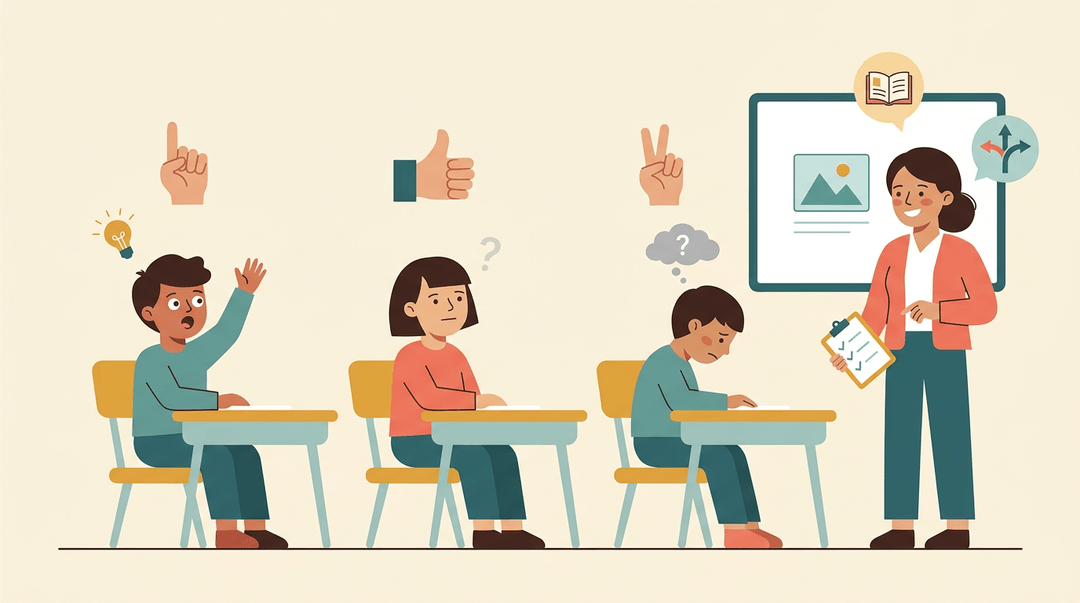
- Check that the hook landed. A quick formative check, like a thumbs-up or a two-question poll, confirms it worked. A substitute who asks students to show one finger for "got it" and two for "lost" spots the gaps immediately.
A strong anticipatory set doesn't need to be fancy. It needs to be purposeful: short, connected to the goal, and designed to get every learner thinking before the main lesson begins.
Use the checklist, trim anything that doesn't serve the objective, and you'll see students settle in faster and engage sooner.
Ready to build your next opener alongside the rest of your plan? Check out our Lesson Planning feature to write, organize, and reuse lesson plans across multiple classes from one place.
References
- The Madeline Hunter Model of Mastery Learning — pryor.mathcs.wilkes.edu
- Using Anticipatory Sets for Student Engagement — gcu.edu
- Planning for Learning: Limitations of Teaching Algorithms — cornerstone.lib.mnsu.edu (2020)
- Do Advance Organizers Facilitate Learning? Recommendations for Further Research Based on an Analysis of 32 Studies — doi.org (1975)
- A Meta-analysis of the Effects of Advance Organizers on Learning and Retention — doi.org (1980)
- Facilitating Children's Comprehension through the Use of Advance Organizers — doi.org (1989)
- Lesson Openers That Captivate: Engaging Students from the Start • Teachers Institute — teachers.institute (2025)
- el_196905_schuck — ascd.org
Frequently asked questions
What is another word for anticipatory set?
Another word for an anticipatory set is a hook. Other common terms include bridge, advance organizer, set induction, and attention-grabber.
What is the meaning of anticipatory set?
An anticipatory set is a short beginning-of-lesson activity that activates students’ prior knowledge, captures their attention, and prepares them for new content. It connects what students already know to the lesson objective.
How long should an anticipatory set be?
An anticipatory set usually lasts two to five minutes. It should be long enough to spark curiosity but brief enough to leave most of the class period for instruction and practice.
What is an example of an anticipatory set?
For a lesson on evaporation, ask, “Why did the puddle in the parking lot disappear by lunch?” Students predict and discuss possible explanations before learning the science behind evaporation.