Pay Attention in Class: A Complete Guide to Staying Focused


Jump to section
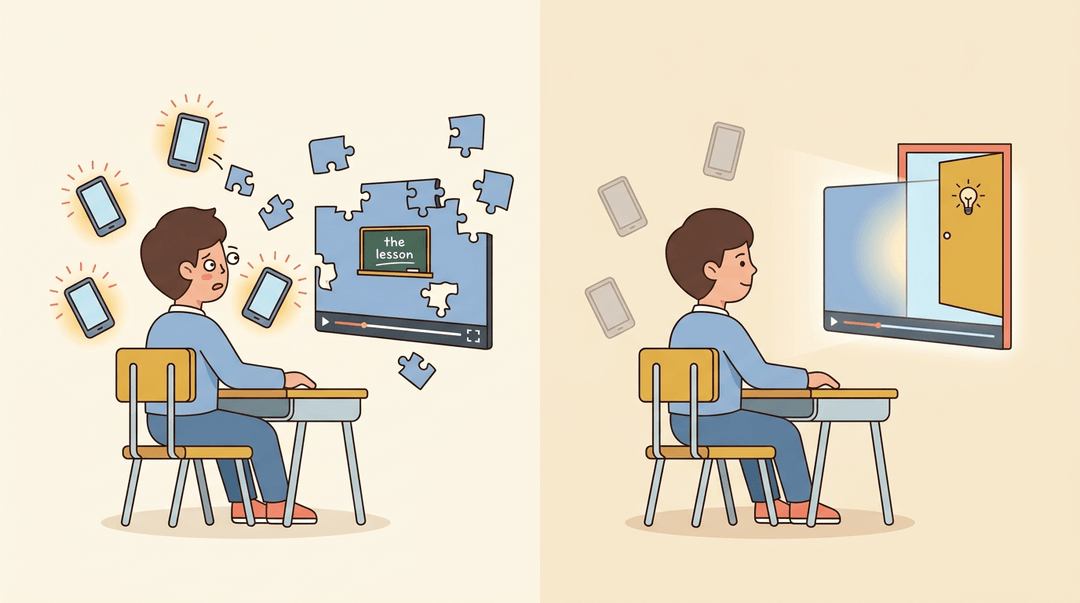
Think about trying to watch a movie while your phone buzzes every thirty seconds. You catch the plot in fragments, never the whole story. Sitting in class works the same way when focus keeps slipping: the lesson turns into fragments too.
Paying attention in class simply means keeping your mind on the lesson instead of everywhere else it wants to go. It matters because attention is the doorway learning walks through.
Here, we'll cover why focus wanders, what actually helps students refocus, and a teacher's plan for spotting inattention before it spreads.
Why It's Hard to Pay Attention
So why should you pay attention in class in the first place? Because attention is the doorway to everything else: you can't remember, practice, or apply what you never actually took in.
Attention spans also shift with age, and even the most motivated student runs into real limits on how long focus can hold.
The Real Reasons You Lose Focus
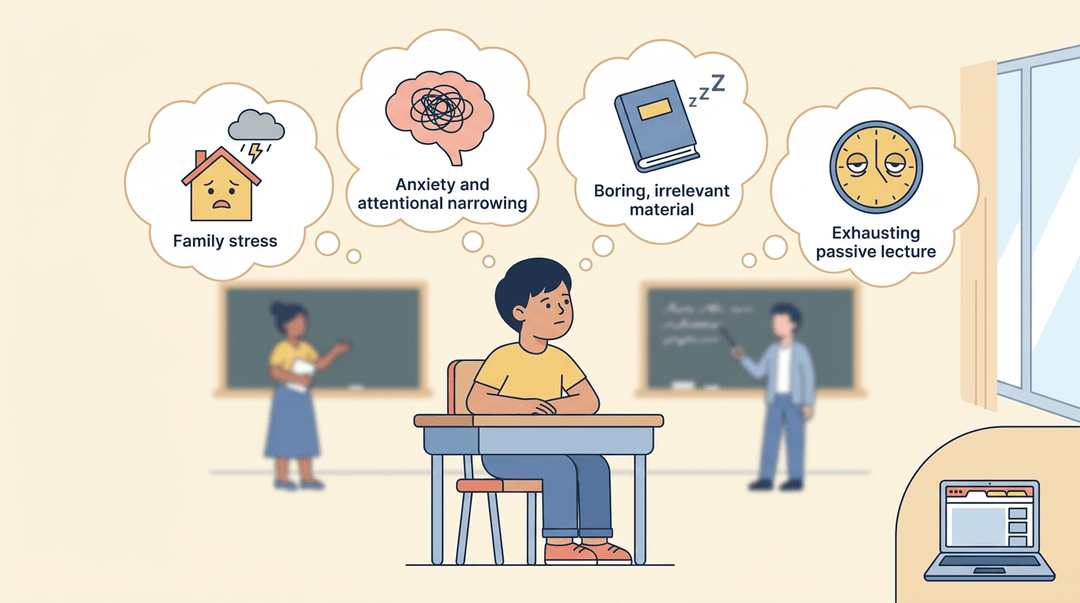
A student staring out the window isn't necessarily being defiant. Often, something specific is pulling focus away, and it's rarely just one thing.
- Stress and overwhelm. A student juggling a family issue or a looming test can't fully show up mentally, even when they're sitting right in front of you.
- ADHD or anxiety. These aren't willpower problems. According to ReachLink, "stress and anxiety create their own focus problems through a process called attentional narrowing," which crowds out everything but the immediate worry.
- Boring or irrelevant material. If a lesson doesn't connect to anything a student cares about, the brain quietly checks out and looks for something more interesting.
- Passive lecture format. Sitting and listening for 40 straight minutes asks more of working memory than most students, of any age, can sustain.
That last point matters even more in a virtual classroom, where there's no hallway energy, no shoulder tap from a teacher walking by, and a dozen browser tabs one click away. Distance makes passive instruction even harder to sit through.
What to Do When Students Lose Focus
Wandering attention isn't a discipline problem: it's information. Here's how to respond in the moment, plan lessons around what students can actually sustain, and track patterns so you catch the real cause.
Refocus in the moment
Work down this list from least to most disruptive. Most drift dies at step one or two.
- Give your attention signal. Use the same one every time so it's automatic.
- Say: "Clap once if you can hear me."
- Move near the distracted student. Keep teaching as you walk; proximity alone usually works.
- Pause and redirect calmly. Name the next action, not the misbehavior.
- Say: "Marcus, eyes on the board. We're on question three."
- Insert a 60-second brain break. Stand and stretch, or turn-and-talk on one quick question.
Key principle: Stay neutral. A calm redirect takes five seconds; a public battle costs the whole class ten minutes.
Chunk lessons to match real attention spans
If you're refocusing the same class every ten minutes, the fix is usually the lesson's shape, not the students. Waterford.org's rule of thumb is two to three minutes of attention per year of age, which maps roughly to:
| Grade band | Typical focus window | Chunk your lesson into... |
|---|---|---|
| Early elementary | ~5 to 10 minutes | 5-minute segments with movement between |
| Upper elementary | ~10 to 15 minutes | 10-minute blocks ending in a quick check |
| Middle/high school | ~15 to 20 minutes | 15-minute blocks with a task switch |
Edutopia's guidance on designing instruction for attention backs the upper-elementary window: build a predictable reset, like retrieval practice, every 10 to 15 minutes.
And with consistent routines, Edutopia reports that most secondary students reach 15 to 20 minutes of sustained focused work.
Spot the patterns over time
One distracted afternoon means nothing. The same student drifting at the same time every day means something. Run this loop for a week or two:
- Review the seating chart. Check what the student sits next to.
- Common culprits: a window, the door, a best friend, the back corner.
- Log behavior across classes. Ask colleagues whether they see the same drift.
- Note timing and subject trends. Write down when it happens, not just that it happens.
- Example entry: "Zones out ~10 min into math, right after lunch, daily."
- Loop in support staff if the pattern holds. Bring your notes; specific data speeds up real help.
Keep rosters, seating charts, and behavior notes organized by class and section in EMStudio's Class Management tool so attention patterns are easy to spot.
Getting Ready Before Class Starts
Attention doesn't switch on when the bell rings. It's built in the minutes and hours before class even starts, and a little prep goes a long way toward keeping your mind in the room once the lesson begins.
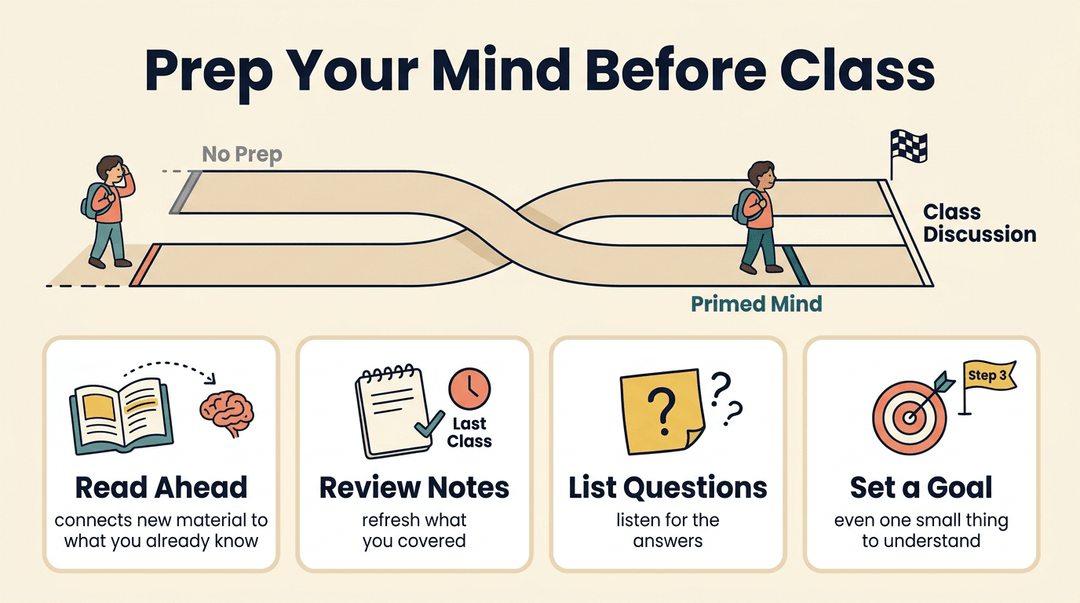
Prep Your Mind Before Class
Think of a student who skims tonight's reading before walking into tomorrow's discussion: the material already sounds familiar, so it's easier to follow along. Priming your mind means giving your brain a head start. Before class, try to:
- Read ahead so new material connects to something you've already seen.
- Review prior notes to refresh what you covered last time.
- List questions you want answered, so you're listening for the payoff.
- Set a goal for class, even something small like understanding one specific step.
Physical Habits That Help You Focus
Your body sets the stage for your attention.
Aim for eight hours of sleep: the Centers for Disease Control and Prevention notes that teenagers who sleep less than that are considered sleep-deprived, and a tired brain has little left to give a lesson. Beyond sleep:
- eat a snack so hunger doesn't compete for your attention
- stay hydrated
- get moving beforehand: even a short walk between classes can shake off the fog
Calm Your Nervous System First
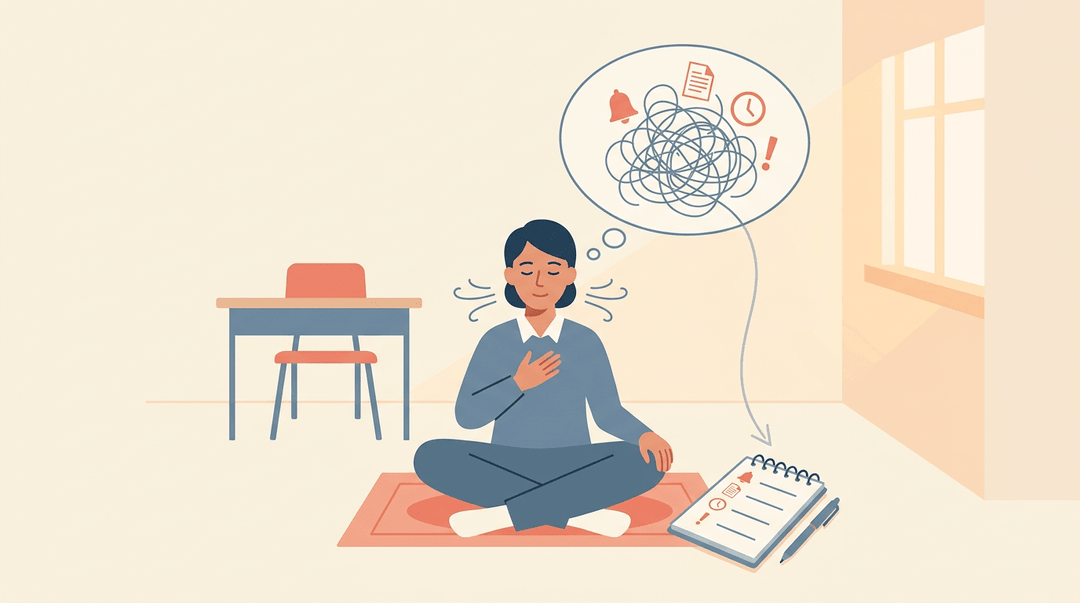
A racing mind can't focus. Try a quick grounding ritual:
- a few deep breaths
- a deliberate shift out of whatever mental gear the last class left you in
- a fast brain dump of anything distracting onto paper so it's parked, not looping
Setting up Your Classroom Environment
A classroom's layout can do half the work of holding attention before a lesson even starts. It's part of what's often called the 5 C's of classroom management:
- consistency
- clarity
- caring
- communication
- consequences
and a well-set-up room touches nearly every one of them.
Choosing Where to Sit
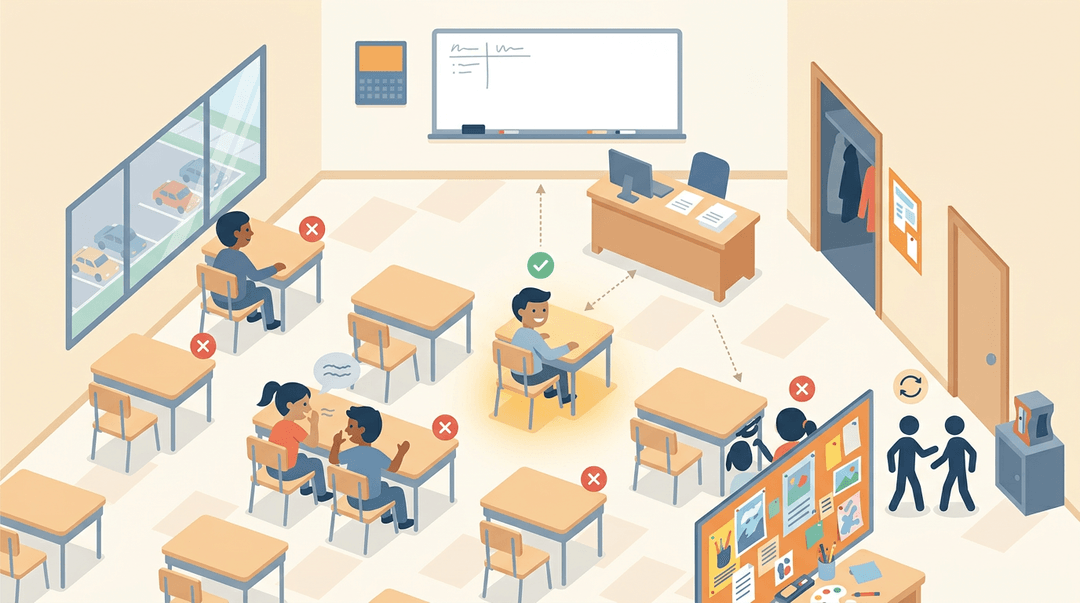
Seat placement isn't random. A student near the front stays closer to the action and within easy eye contact of the teacher, which keeps them accountable.
Sitting next to a best friend or a window invites side conversations and staring contests with the parking lot, so both are worth avoiding. A desk facing a blank wall beats one facing a busy bulletin board or hallway: less to look at, more to listen to.
According to guidance in Supporting and Responding to Behavior: Evidence-Based Classroom Strategies for Teachers, congestion near spots like the coat closet, pencil sharpener, or teacher's desk creates its own pull on attention, so seats away from that foot traffic tend to hold focus better.
Plenty of teachers skip the guesswork and assign seats using behavior data, moving a student who drifts in one spot to a quieter one.
Cutting Out Phone Distractions
The phone is usually the loudest distraction in the room. Turn it off, not just to silent, and keep it out of sight: a bag pocket beats a desk corner every time. On a laptop or tablet, close every browser tab except the one the assignment actually needs.
Blocking apps can handle the rest automatically, locking out social media and games for the length of class.
Pack Comfort Items for Class
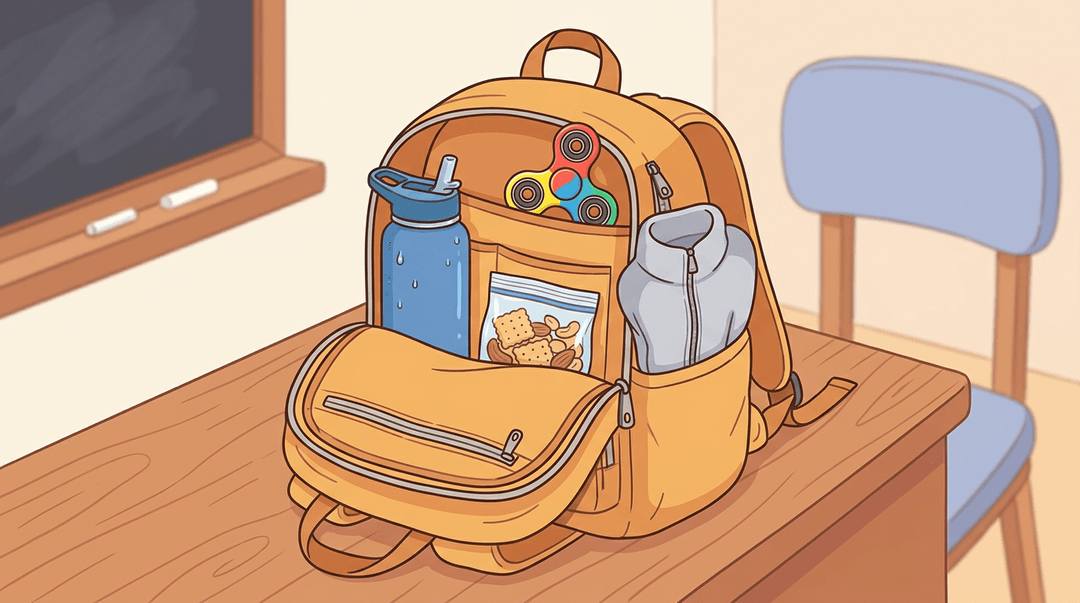
A rumbling stomach or dry throat pulls focus fast, so a water bottle and a small snack solve that quietly. A light jacket covers the classroom that's always a few degrees too cold. A fidget tool gives restless hands something to do that isn't a phone.
Staying Actively Engaged in Class
Paying attention isn't passive. It's something students do, and the more actively they do it, the more it sticks.
Take Notes That Actually Help
Handwritten notes beat typing for retention, mostly because they force a student to slow down and choose what matters. Diagrams and color-coding turn a wall of text into something the eye can actually follow. Encourage shorthand in the student's own words rather than copying the board verbatim: active notes (summaries, questions, arrows connecting ideas) work harder than a transcript ever will.
Ask Questions and Speak Up
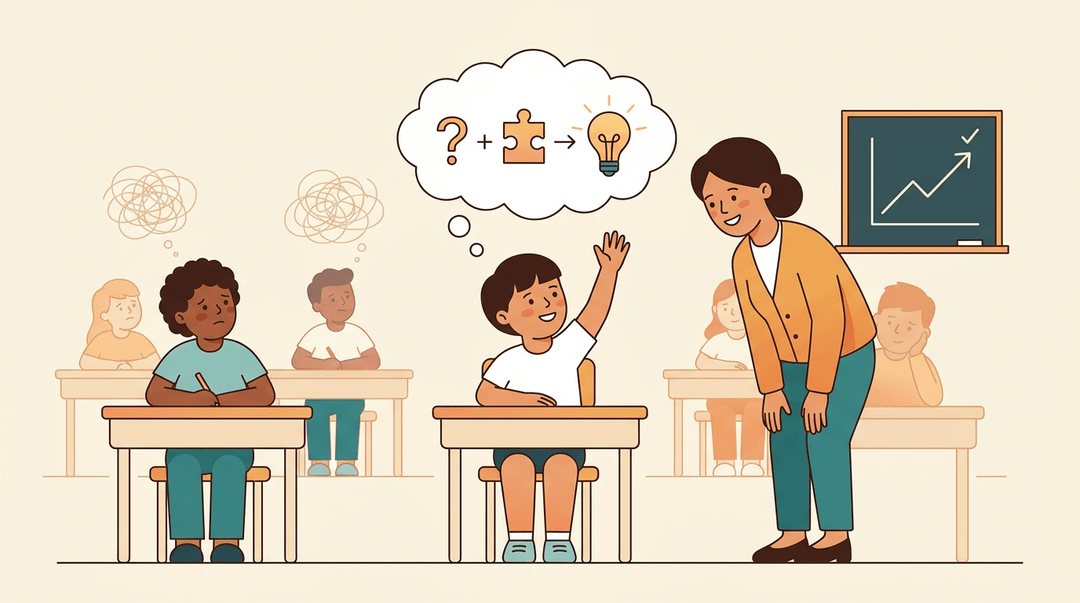
A raised hand in the moment, or a quick word with the teacher after class, closes gaps before they widen into confusion. Students should also practice internal questioning: silently asking "Does this make sense?" or "How does this connect?" as the lesson moves. The habit of clarifying confusion right away, instead of nodding along, is what keeps a small gap from becoming a lost week.
Process Information as You Go
A quick mental recap every 10 to 15 minutes helps information move from short-term to lasting memory. Active reading (asking what a passage means, not just scanning it) and connecting new material to prior knowledge both do the same job: turning input into understanding.
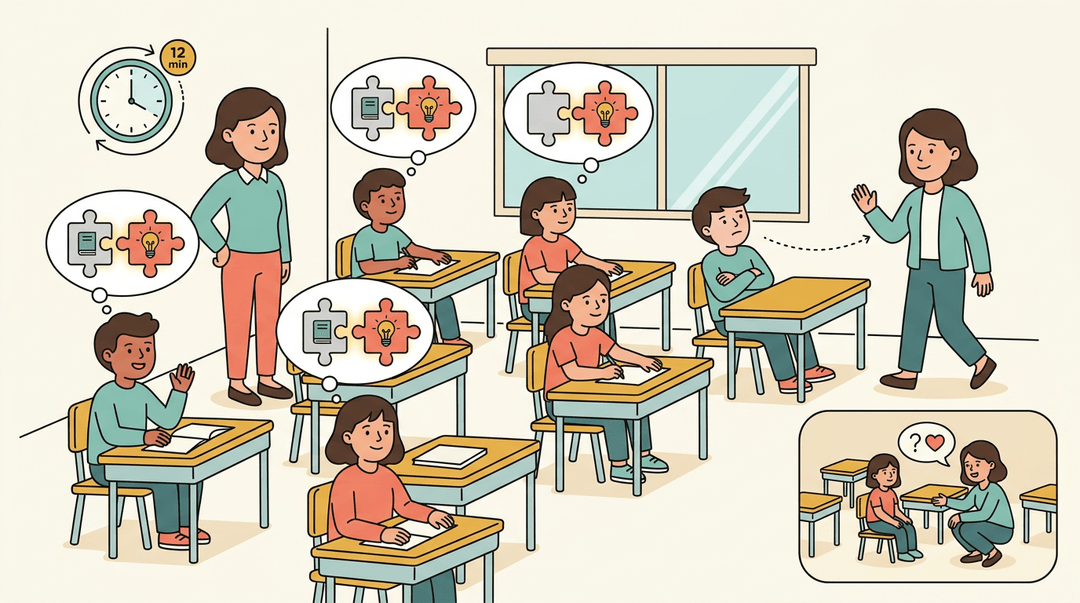
So what should a teacher do if a student's clearly checked out? A light attention-getting signal (a name, a proximity check, a quick question) usually works better than calling it out.
Pair that with a brief one-on-one after class to ask what's going on: sometimes it's boredom, sometimes it's something else, but you won't know until you ask.
Fidgeting and Movement That Help
Sometimes the fix for a wandering mind isn't more willpower. It's letting the body move a little so the brain can settle.
Quick, class-wide brain breaks (a thirty-second stretch, a stand-and-shake) work the same way: they burn off restlessness before it turns into a distraction.
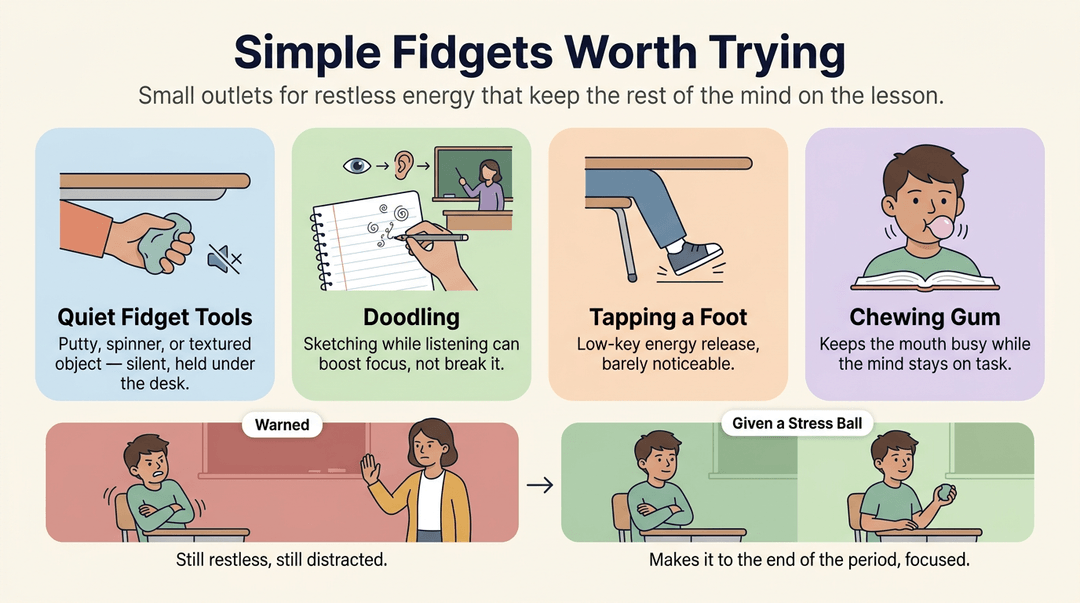
Simple Fidgets Worth Trying
For a lot of students, a small outlet for restless energy is enough to keep the rest of them focused on the lesson. Worth trying:
- Quiet fidget tools: a putty, a spinner, or a textured object held under the desk, silent enough not to pull in neighbors.
- Doodling: sketching in the margin while listening actually helps some students retain more, not less.
- Tapping a foot: a low-key outlet that channels extra energy without disrupting the room.
- Chewing gum: the repetitive motion gives the mouth something to do while the mind stays on task.
Consider a middle schooler who can't sit still through a lecture: handed a stress ball instead of a warning, that same student often makes it to the end of the period.
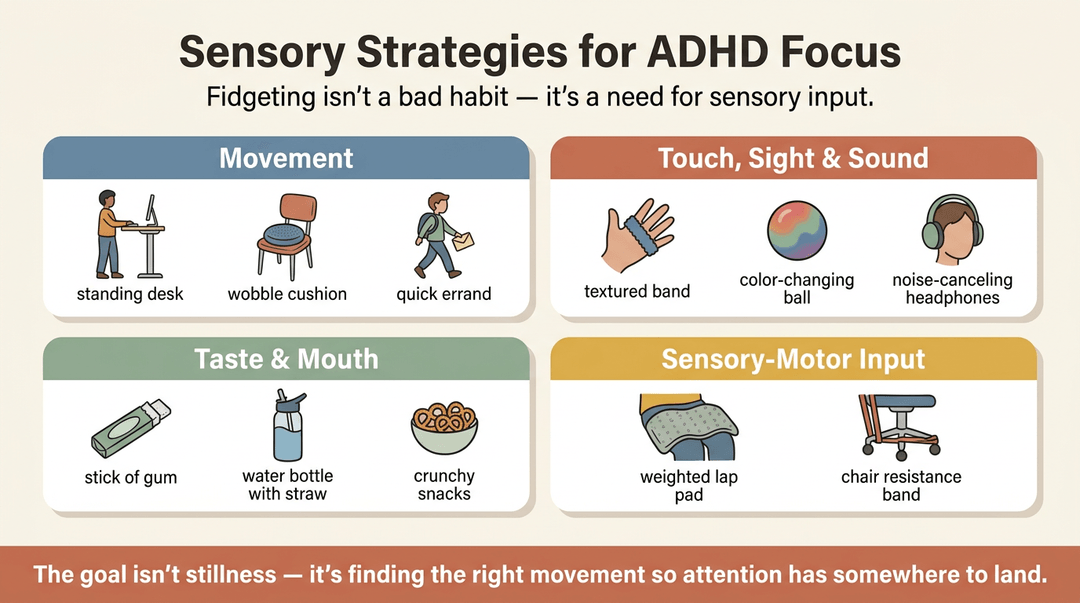
Sensory Strategies for ADHD Focus
For students with attention-deficit/hyperactivity disorder (ADHD, a condition that affects focus and impulse control), fidgeting isn't a bad habit. It's often a genuine need for sensory input. A few categories to draw from:
- Movement strategies: standing desks, wobble cushions, or a quick errand across the room.
- Touch, sight, and sound fidgets: textured bands, color-changing objects, or noise-canceling headphones.
- Taste and mouth strategies: gum, a water bottle, or crunchy snacks during independent work.
- Sensory-motor input: weighted lap pads or resistance bands under the desk.
The goal isn't stillness. It's finding the right kind of movement so attention has somewhere to land.
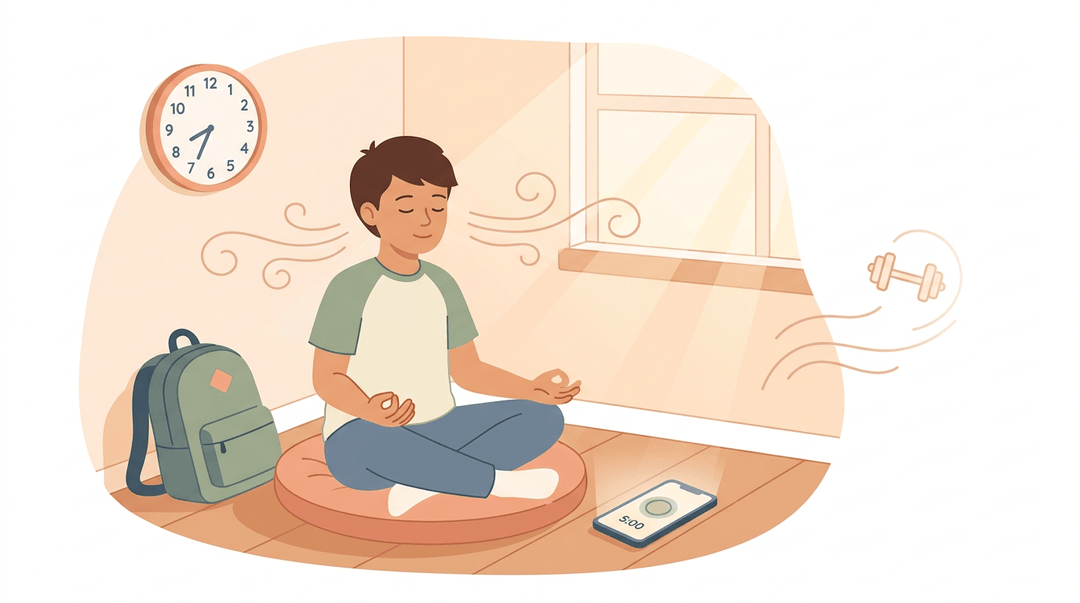
Training Attention Through Mindfulness
Attention isn't fixed. It's a skill, and like any skill, it strengthens with practice. Mindfulness gives students (and teachers) a way to build that muscle on purpose.
Build a Daily Meditation Habit
A daily meditation habit doesn't need to be long to work. Even five quiet minutes of sitting still and noticing the breath counts as focused attention training: the mental equivalent of reps at the gym.
Consider a middle schooler who starts each morning with a short guided session before homeroom. Over a few weeks, staying on task through a lesson gets a little easier.
Free meditation apps make this simple to start, offering short, guided sessions students can use before school or during a calm-down break.
Mindfulness Tricks for Class Focus
When focus slips mid-lesson, a few quick moves pull it back:
- Name the distraction. Silently labeling it ("phone," "hungry," "bored") drains some of its pull.
- Use the breath as an anchor. One slow inhale and exhale gives the mind somewhere steady to land.
- Notice thoughts drifting, without judging them. Drifting is normal, not a failure.
- Return to the present. Gently redirect attention back to the teacher or task, then repeat as needed.
Train Your Brain to Focus
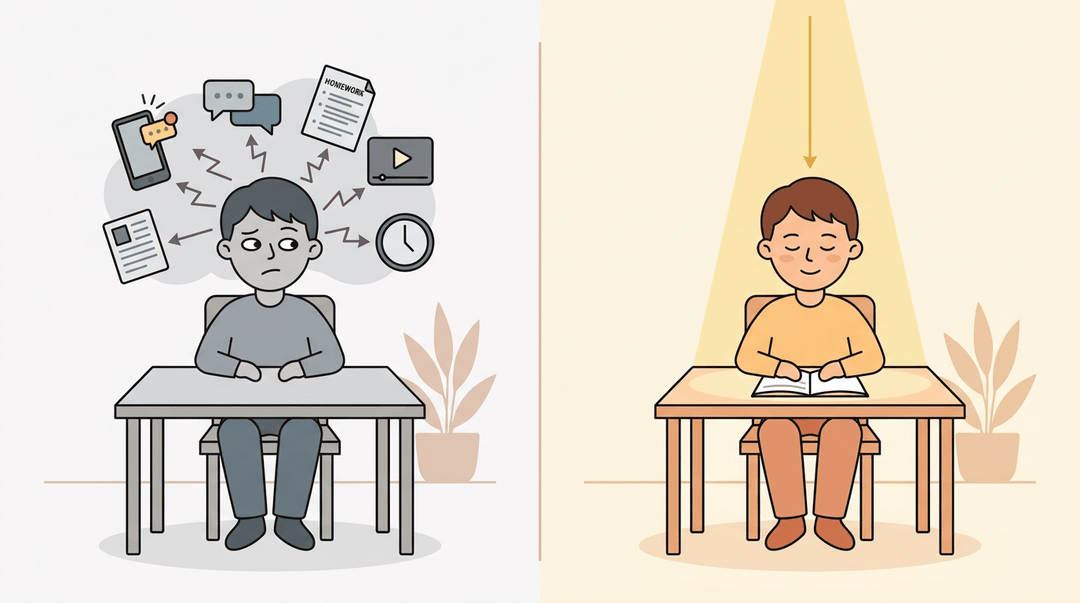
Switching between apps, chats, and homework trains the brain to expect constant change, so it's harder to focus. Single-tasking practice, working on one thing at a time, reverses that.
It's how you actually train your brain to focus: fewer switches, more depth. It also helps students avoid attention residue, that lingering pull from the last task that keeps stealing focus from the one in front of them now.
Motivation and Mindset Matter Too
Attention isn't just a skill you build. It's also a choice you renew, class after class. Share these mindset shifts with your students, and watch "I can't focus" turn into "here's my plan."
Set a Clear Goal for Class
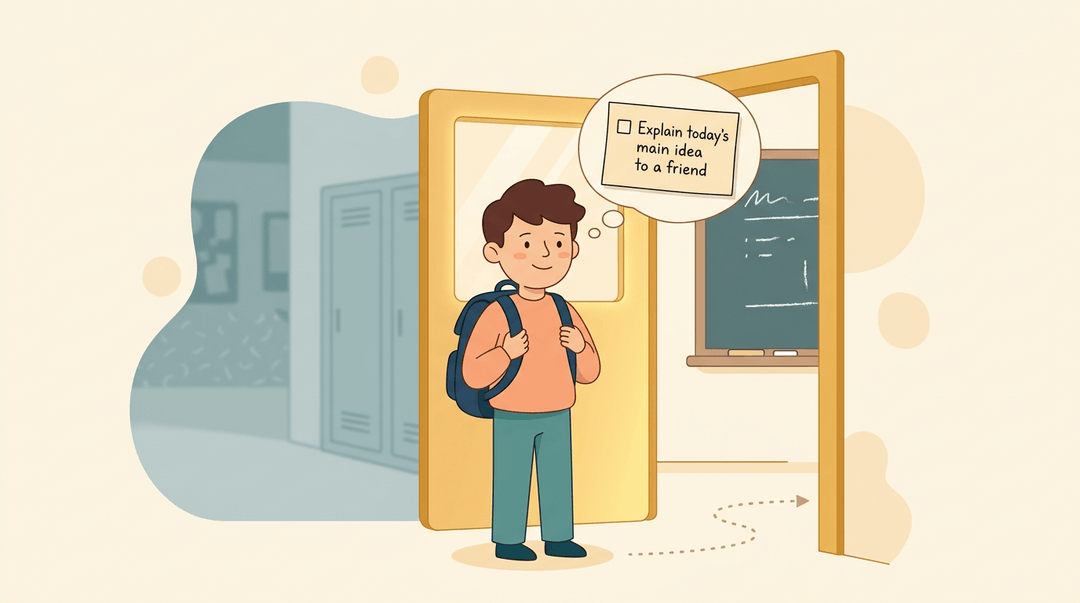
Walking into a room with no destination makes it easy to drift. Encourage students to set a specific class goal before the bell even rings: not "pay attention," but something they can actually check off.
Aiming to catch the main idea of the lesson, rather than every word, keeps the target realistic. A student might decide, "I'll be able to explain today's main idea to a friend after class."
Clarifying that purpose ahead of time turns a vague hope into a low-pressure target they can hit.
Reward Yourself for Staying Focused
Motivation sticks better when it's paired with something to look forward to. A student who stays locked in through a tough lecture might treat themselves to a favorite snack afterward, or an episode of a favorite Netflix show once homework's done.
That small reward after class becomes a real motivator for attendance and effort, especially on the days when focus feels hardest to find.
Beat Boredom With Better Self-Talk
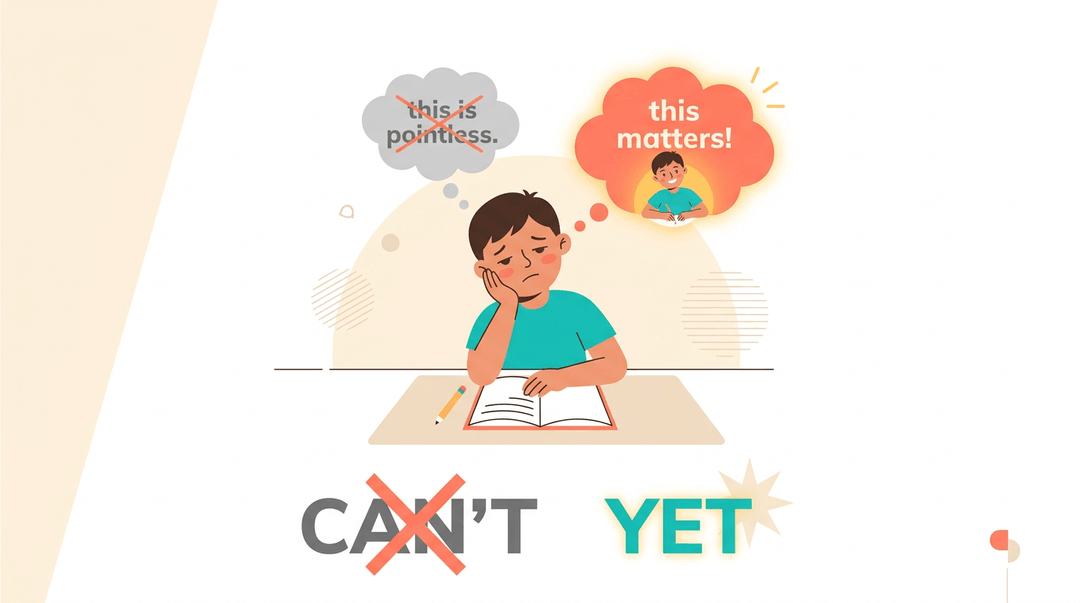
Boredom is often a thought, not a fact. When it creeps in, students can remind themselves why the material matters (even if that reason is just "this is on Friday's test").
Challenging that instinctive "this is pointless" reaction with something more useful builds the habit of positive self-talk.
It also helps to reframe the fear of failure: instead of "I'll never get this," try "I don't get this yet." That single word changes everything.
Be Kind to Yourself on Off Days
Some days, focus just won't come easily, and that's normal. Normalizing bad focus days matters as much as any strategy on this list. Rather than spiraling into self-criticism, encourage students to reflect and adjust: What threw off today's focus?
What might help tomorrow? Swapping the inner critic for a little curiosity keeps motivation intact for the next class, instead of letting one rough day snowball into a rough week.
Reviewing What You Learned After Class
Attention in the room only gets a student halfway there. What happens in the hours right after class often decides whether that information sticks or slips away by the weekend.
Review Your Notes Soon After Class
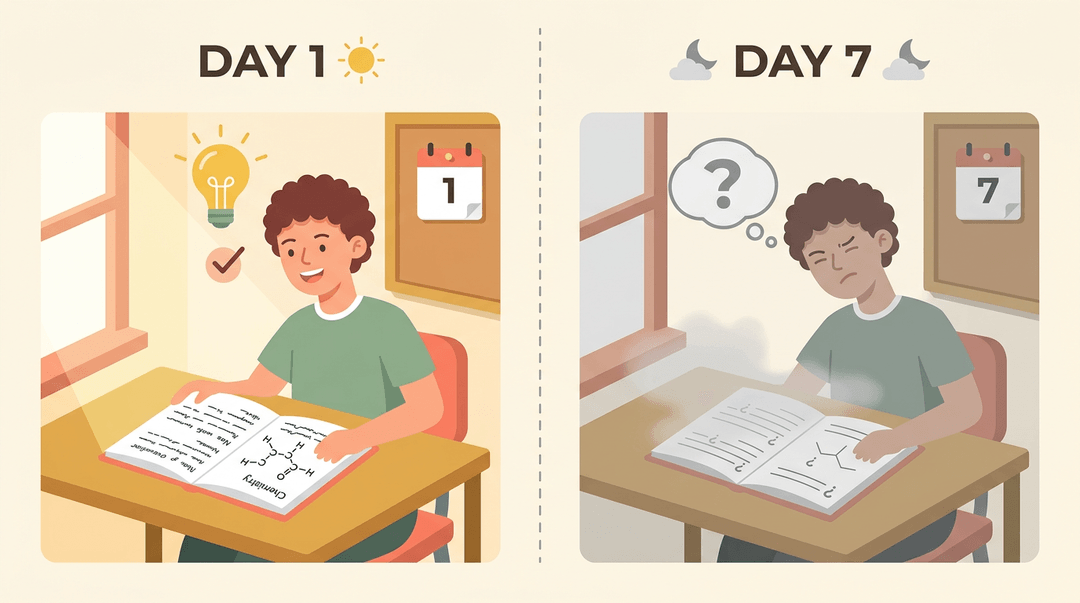
Memory fades fast, and it fades fastest in the first day. Encourage students to skim their notes within 24 hours of class, while the lecture is still fresh enough to fill in any shorthand or half-finished thoughts.
Wait a week, and even the best notes start to read like someone else wrote them.
Rewriting or summarizing notes in their own words does more than tidy up a page.
It forces a student to process the material a second time, which is exactly the kind of active recall that turns a passive listener into someone who actually understands the lesson.
That second pass is also where gaps show up. For example, a student who breezed through a chemistry lecture might sit down that evening and realize half a diagram makes no sense without the missing labels.
Catching that gap the same day means a quick question to a classmate or a teacher, not a scramble the night before a test.
Spacing these reviews out, rather than cramming once before an exam, is what researchers call spaced practice: short, repeated look-backs over days and weeks instead of one long session.
It's less exciting than an all-nighter, but it's what actually makes learning stick.
Attention isn't a fixed trait some students have and others lack. It's a skill built through preparation, environment, movement, mindset, and honest review, and it grows stronger with practice on both sides of the room.
When you pair those student strategies with a clear plan for spotting and responding to wandering focus, class time stops slipping away. Ready to make that easier to manage day to day?
Check out our Classroom Management feature to keep your classes, rosters, and timetables organized in one place.
References
- Sleep in Middle and High School Students | Healthy Schools — archive.cdc.gov
- Supporting and Responding to Behavior: Evidence-Based Classroom Strategies for Teachers — uvm.edu
- Attention Span: What Science Actually Says About Focus — reachlink.com (2026)
- Designing Instruction for Student Attention — edutopia.org
- Improving Students’ Attention Span — edutopia.org
- Maintain Your Students' Attention in Class — waterford.org
Frequently asked questions
What is the best way to focus in class?
The best way to focus in class is to prepare beforehand, remove distractions, and stay actively engaged. Review earlier notes, set a specific goal, sit away from distractions, take notes in your own words, ask questions, and use brief movement or breathing breaks when your attention drifts.
What are the 5 C's of classroom management?
The 5 C's of classroom management are consistency, clarity, caring, communication, and consequences. Together, they create predictable expectations while supporting respectful relationships and accountability.
How do people with ADHD focus in class?
People with ADHD may focus better when they use movement, sensory input, and clear structure. Helpful strategies can include a quiet fidget, standing or movement breaks, noise-canceling headphones when appropriate, chunking work into shorter tasks, and reducing distractions.
Why should you pay attention in class?
You should pay attention in class because attention is the first step toward learning. You cannot reliably remember, practice, or apply information that you did not take in, and active attention helps identify confusion before it grows.
Why do I struggle focusing in class?
You may struggle to focus in class because of stress, anxiety, ADHD, tiredness, hunger, boredom, irrelevant material, distractions, or long passive lectures. Focus can also vary with the subject, time of day, classroom environment, and how well you prepared.
What does it mean to pay attention in class?
Paying attention in class means keeping your mind engaged with the lesson or assigned task rather than unrelated thoughts, devices, or surroundings. It includes listening, processing information, taking useful notes, asking questions, and returning your attention when it wanders.
Can people with ADHD pay attention in class?
Yes, people with ADHD can pay attention in class, although maintaining attention may require effective supports and strategies. ADHD affects focus and impulse control, but structured lessons, movement, sensory tools, reduced distractions, and appropriate professional support can make classroom attention easier.
Does ADHD make it hard to focus in class?
Yes, ADHD can make it harder to focus in class because it can affect sustained attention, impulse control, and sensitivity to distractions. This is not simply a lack of willpower, and strategies such as shorter lesson segments, movement, sensory input, and clear routines may help.