Note Passing in Class, Explained: Causes, Scenes, and Fixes

Jump to section
Long before a phone could buzz under a desk, students had a workaround: fold a scrap of paper, catch a friend's eye, and let it travel hand to hand across the room.
That's note passing in class, and it's been part of school life nearly as long as school itself.
It's easy to lump it in with phone use or chatter during passing period, but it's its own thing, with its own causes and its own fixes.
This post breaks down what a note passing scene actually looks like, why it happens, and how to handle it without losing your lesson.
What a Note Passing in Class Scene Looks Like
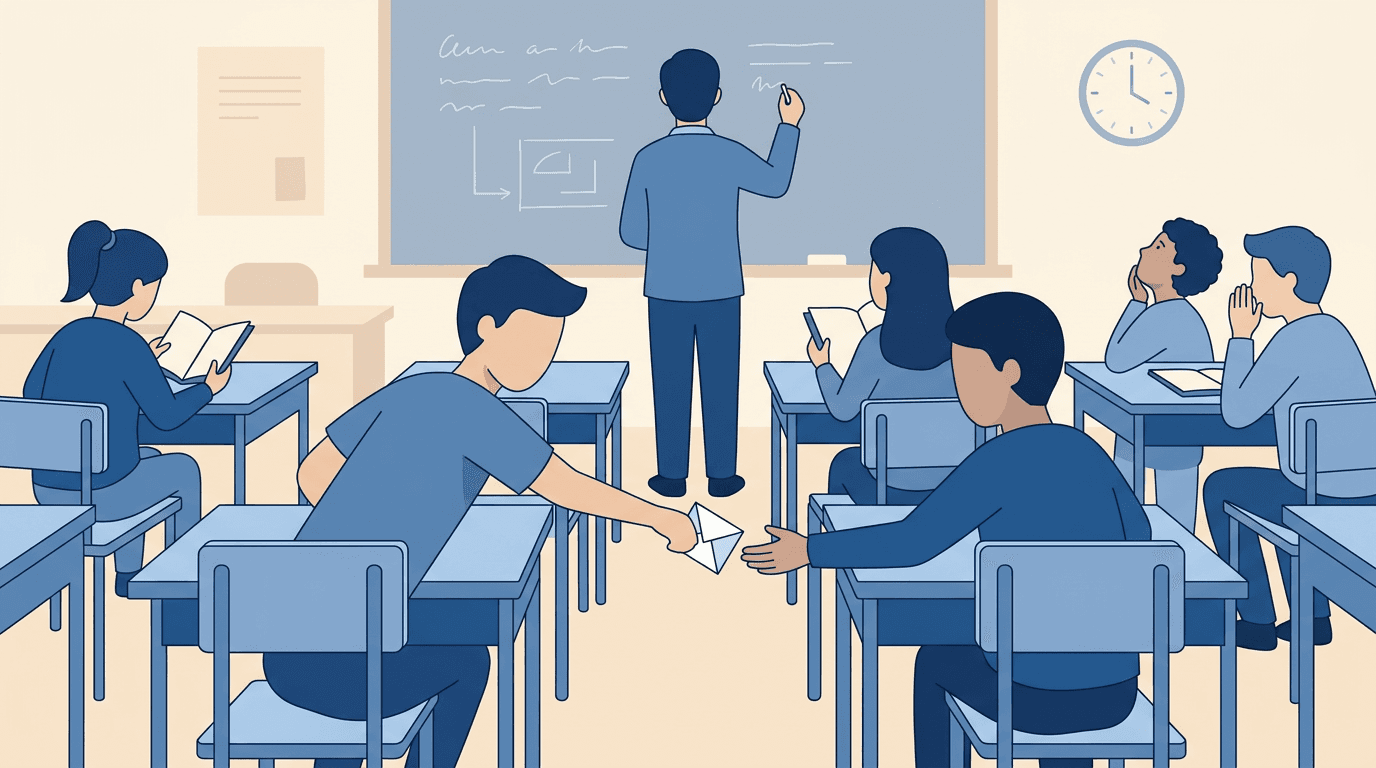
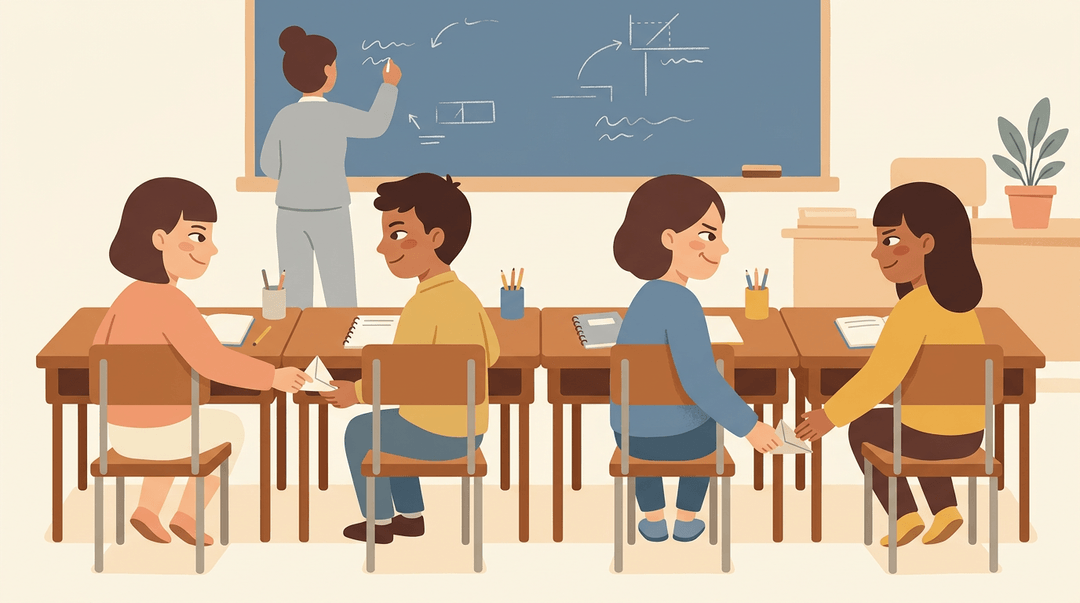
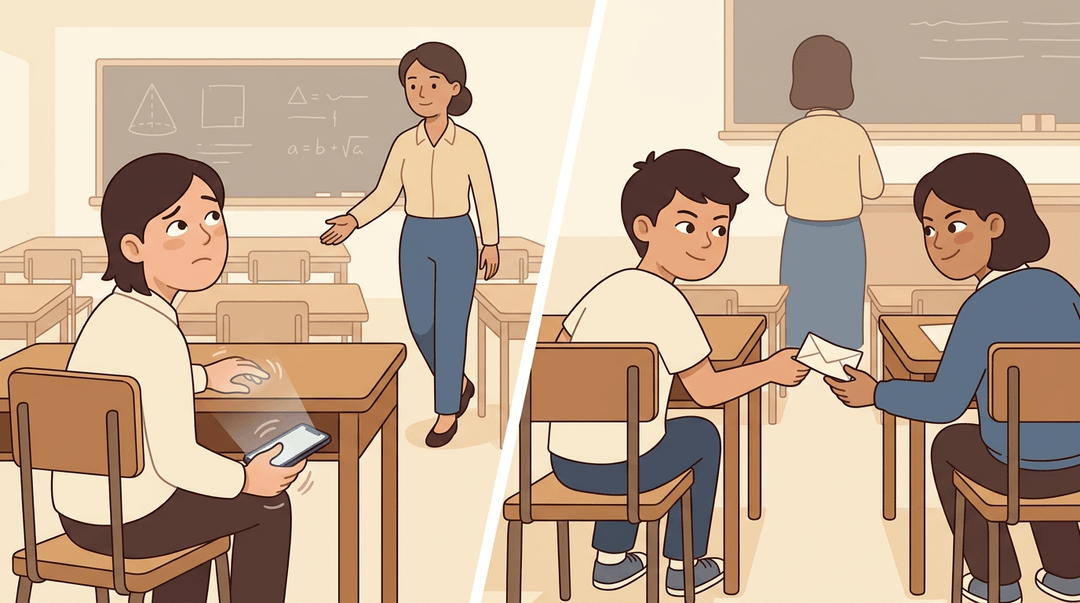
Picture the classic classroom snapshot: two students trading a folded scrap of paper while the teacher's back is turned.
That's note passing, the simple act of sliding a handwritten message to a classmate during instructional time, almost always without permission. Breaking the scene down piece by piece helps explain why it happens and how you can handle it when it does.
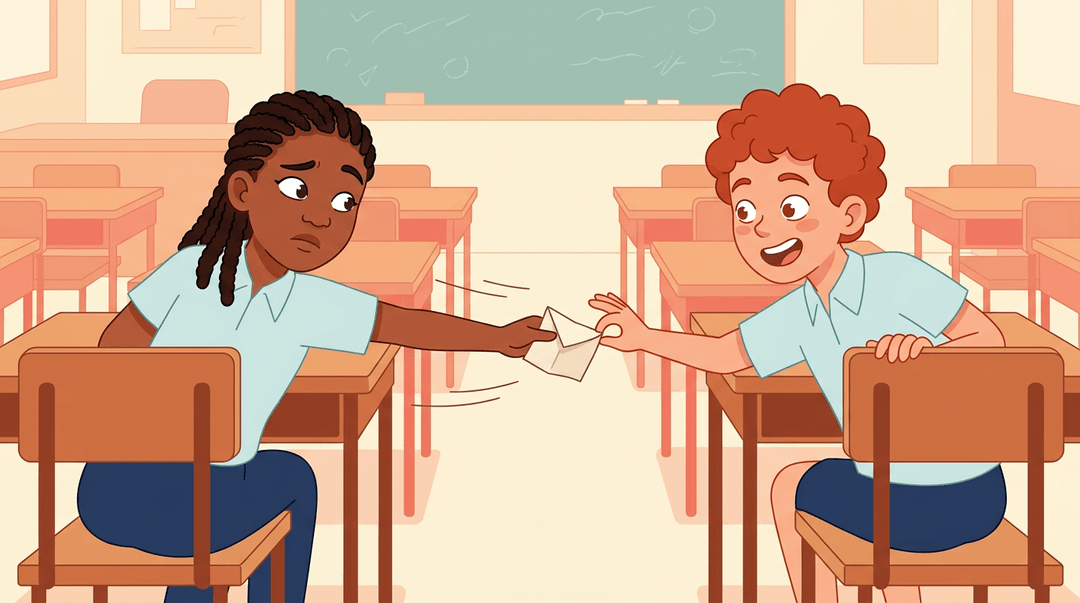
Who's in the note passing scene
Most versions of this moment feature two students: one reaching across the aisle with the note, the other waiting to grab it. The student passing it usually wears a nervous, over-the-shoulder glance, checking who's watching. The one receiving it has wide, curious eyes, caught between excitement and the thrill of getting away with it. Strong illustrations show diverse students, different skin tones and hair textures, all in matching school uniforms, a detail that signals this could be any classroom, anywhere. As for why they bother at all:
- boredom
- a joke
- a crush
- gossip that can't wait until the bell
For a lot of kids, it's just easier than whispering.
What does a passed note actually look like
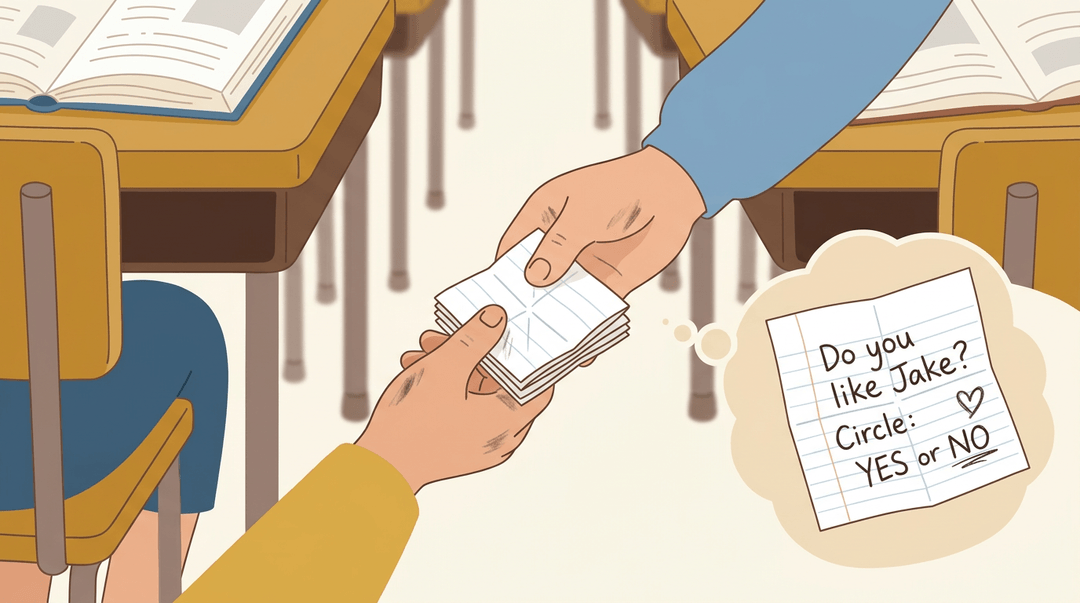
The note itself is rarely glamorous: a small square of white paper, folded down again and again until the creases multiply and it could survive a drop. Those folds are part of the visual shorthand, proof the note traveled through a few nervous hands. The handoff happens low, under a desk or behind a book, a quick covert motion meant to dodge notice, passed along by small, slightly grimy hands. As for what's written inside, a real note might read something like "Do you like Jake? Circle yes or no" or "Meet me at the lockers after class!": short, casual, and dashed off in a hurry.
Does the teacher notice the note
In the classic scene, the teacher is turned toward the chalkboard, mid-sentence, completely unaware the exchange happened. Her expression, once she turns around, often reads stern: eyebrows drawn, mouth set. In real classrooms, a private word beats a public call-out: "Let's talk after class" keeps the moment small. For younger grades, a quiet reminder or a seat change usually solves it. For older students, a short note home or a lunch detention fits the offense without turning it into a bigger deal than it is.
Technical specs for generating this image
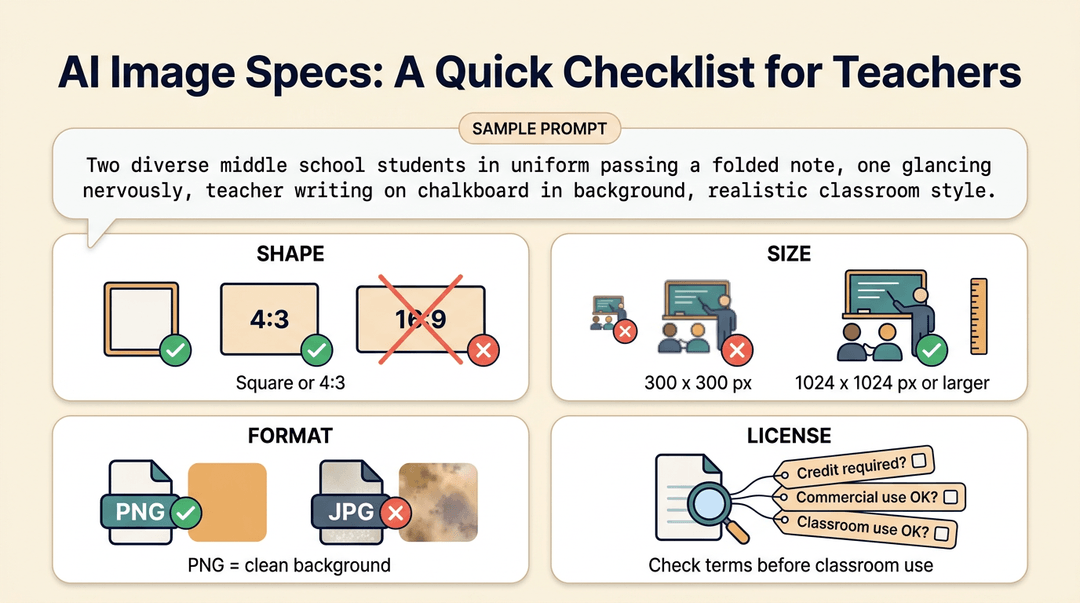
A workable AI image prompt reads something like: "two diverse middle school students in uniform passing a folded note, one glancing nervously, teacher writing on chalkboard in background, realistic classroom style." Aim for:
- a square or 4:3 aspect ratio
- a high resolution, at least 1024x1024 pixels
- save it as a PNG for a clean background
Most scenes like this come from a general-purpose text-to-image model, so check its licensing terms (some require crediting the generator or restrict commercial reuse) before using it in classroom materials.
How to Handle Note Passing in Your Classroom
A passed note is a small disruption, and your response decides whether it stays small. Here's what to do when you spot one mid-lesson, how to adjust by age, and how to make notes rarer in the first place.
In the moment: three quiet moves
- Stay calm and keep teaching.
- A visible reaction gives the note more attention than it ever earned.
- Drift toward the desk, not at the student.
- Proximity ends most notes without a word; keep the lesson going as you move.
- Redirect quietly if it continues.
- A glance, a tap on the desk, or a soft line works.
- Say: "Eyes up here, we're on question three."
⚠️ Watch out: Never read a note aloud. It humiliates the writer, entertains the class, and turns a two-second fix into a standoff you can't win. Collect it unread or ask the student to put it away.
Match the response to the student
Once the moment has passed, the right follow-up depends on who's holding the pen.
| If it's... | Then... |
|---|---|
| An elementary student | Quick redirect plus one clear warning, then move on |
| A middle or high schooler | A short private conversation after class, never a public call-out |
| A repeat offender (any age) | A logical consequence: a new seat, or the note finished at break |
For that private conversation, lead with curiosity, not accusation. Try: "I noticed the notes today. What's going on?" You'll often learn the note was a symptom: boredom, a friendship drama, a seat next to the wrong person.
Prevent it before it starts
Notes thrive in dead time. Before your next lesson, confirm:
- Pacing stays tight. No stretch runs longer than attention does; have the next task ready.
- Seating breaks up chatty pairs. If two students keep writing to each other, the fix is a seating chart, not a speech.
- Brain breaks are built in. A 60-second stretch or turn-and-talk gives the social urge a legal outlet.
- Routines fill the transitions. Students who know exactly what comes next don't invent their own entertainment.
Example: A seventh-grade teacher kept catching notes during the last ten minutes of class. She swapped her end-of-class lecture recap for a two-minute partner quiz. The social energy now had somewhere to go, and the notes mostly stopped.
If the same names keep coming up, you can track recurring behavior patterns like note passing right inside your class roster with EMStudio's classroom management tools.
Other Classroom Scene Ideas
Note passing is only one slice of classroom life, and it's often confused with the passing period: the few minutes between classes when students move through hallways, not the quiet exchange of folded paper mid-lesson.
Once that distinction is clear, a whole set of related scenes opens up for anyone picturing a real classroom.
Other sneaky classroom behaviors to depict
Phones have become the modern version of the note, and texting is really just digital note passing: same impulse to connect, different device. Picture a student angling a phone below desk height, thumbs moving fast, eyes flicking up between texts.
Or the moment a teacher catches it: walking the room, spotting the glow, and quietly holding out a hand.
A middle school boy passing a note is another classic variant, especially during the awkward stretch when kids are testing boundaries but haven't fully switched to screens yet.
Everyday classroom learning scenes
Not every moment is about sneaking something past the teacher.
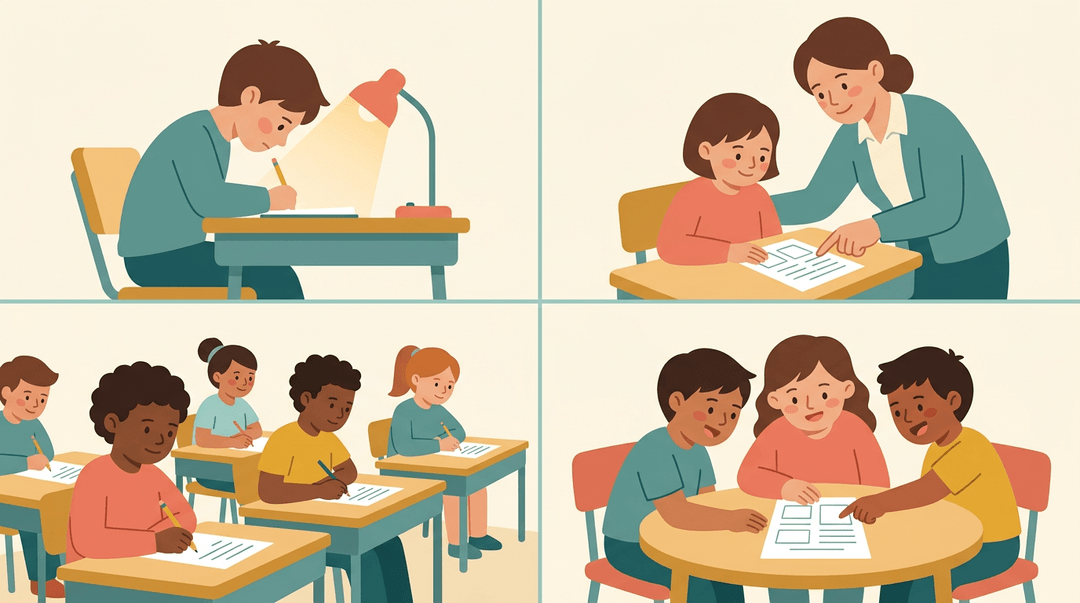
- Students studying individually at their desks, heads down and focused, show the quieter side of class.
- A teacher leaning in to help one student with a tricky problem captures the one-on-one moments that make up most of a school day.
- Diverse students taking exams, pencils moving at different paces, reflect the real mix of any classroom.
- And collaborative activities, small groups leaning over a shared worksheet, show learning that doesn't need a note at all.
If you've ever wondered how to make 20 minutes pass fast in class, these same scenes answer it: a quick group task, a short individual assignment, or a round of peer helping fills the time with actual learning instead of boredom.
Note passing isn't new, and it isn't going away just because phones exist too. It's a small, human moment of connection that happens to collide with your lesson plan.
Spot it early, respond calmly, and keep a routine ready, and you'll keep that moment from derailing your class.
Ready to build routines that make classroom management second nature? Check out our Classroom Management feature to keep your classes, rosters, and routines organized in one place.
Frequently asked questions
What is passing note?
A passing note is a handwritten message secretly handed or slid from one student to another during class, usually without the teacher’s permission. Students may pass notes to share a joke, gossip, discuss a crush, or arrange to meet after class.
How to pass 20 minutes fast in class?
To make 20 minutes pass quickly, stay engaged with a short assignment, group task, or peer-helping activity. You can also review notes, organize your work, read quietly, or break the time into small goals, while following your teacher’s rules.
Can you give me an example of a note?
An example of a note is: “Do you like Jake? Circle yes or no.” Another example is: “Meet me at the lockers after class!” Passing notes usually contain short, casual messages written quickly.
What does passing period mean in school?
A passing period is the short break between classes when students leave one classroom and travel through the hallways to their next class. It is different from passing a folded note during instructional time.