Call and Response Classroom Cues: A Complete Guide

Jump to section
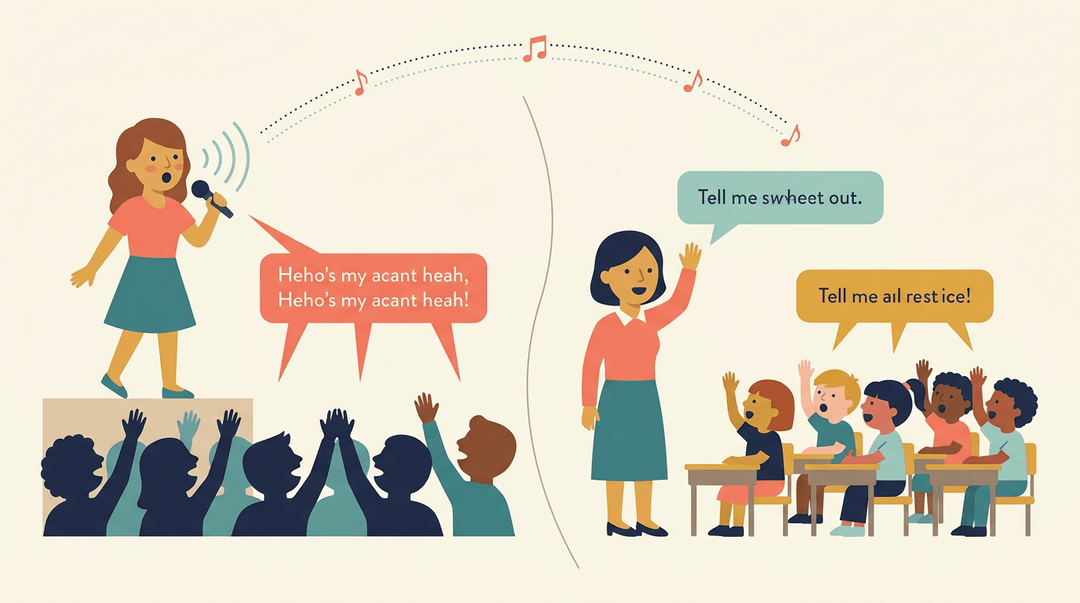
Think of a concert crowd echoing a singer's line back to her, word for word, without anyone handing out instructions. That's rhythm, not memory. Classrooms can run on that same rhythm.
Call and response is a classroom cue system: you say a phrase, students answer with a set response, and everyone's attention lands in the same place at once. It's simple, it's fast, and it works from kindergarten through high school.
Below, you'll find the cues, the chants, the attention-getter types, and a checklist to get it running in your room this week.
Call and Response Classroom Cues Explained
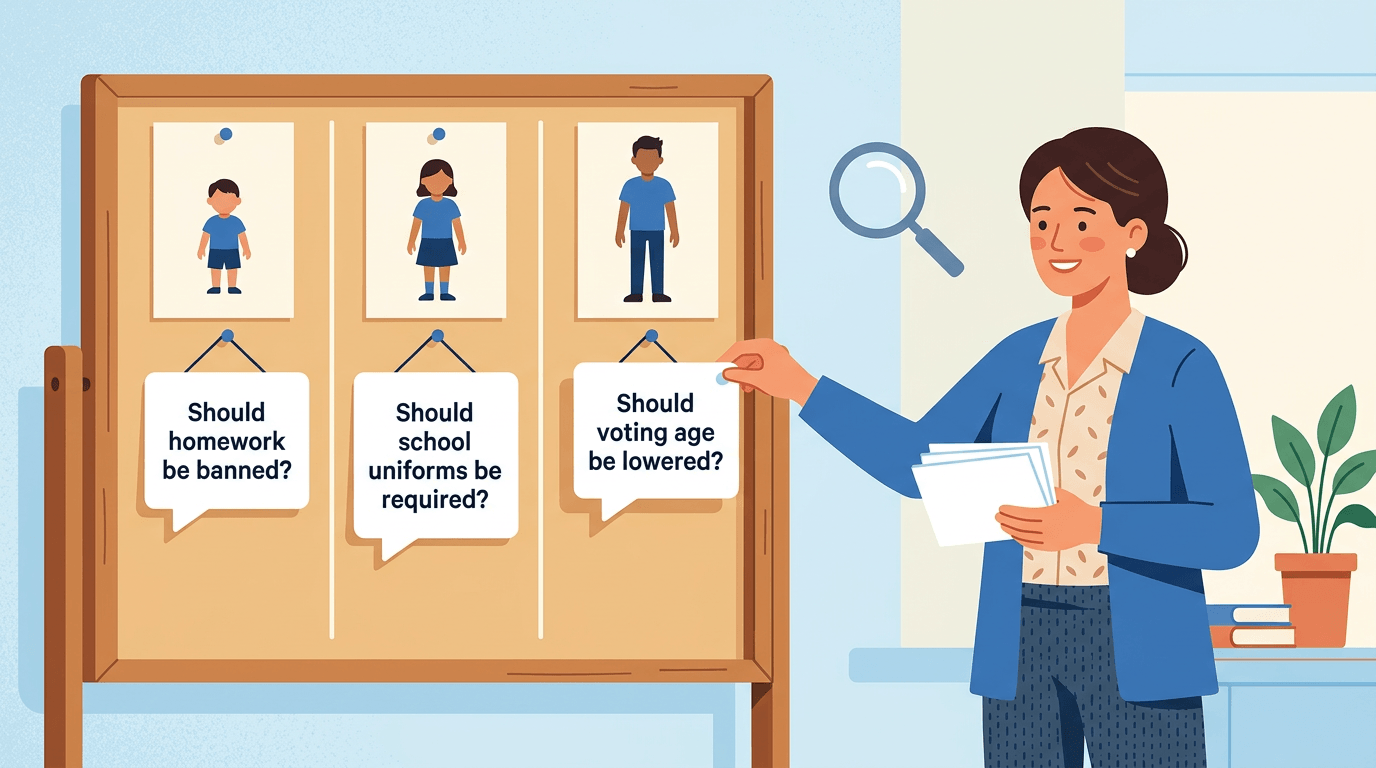
Say "class class" and hear "yes yes" bounce back, and you're using one of the oldest attention cues in teaching. Here's where the technique comes from, why it refocuses a room so fast, and how it fits alongside other classroom management tools.
Where the call and response tradition began
Call and response works on one simple rule: one voice calls, and the group answers together. A teacher offers a short phrase, students reply in unison, and that reply is often nicknamed a call back. The pattern isn't new to schools.
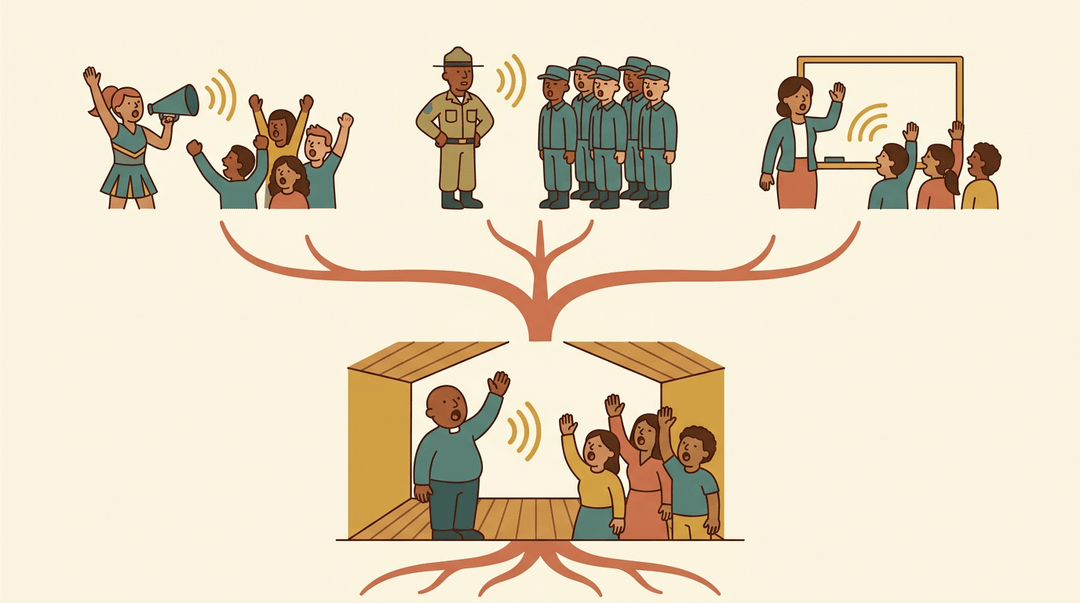
It's borrowed from music, sports chants, and military drills, all of which use the same one-voice-many-voices rhythm to sync a group's attention.
Its deepest classroom roots, though, trace to African American oral tradition, where a call from one voice draws a response from a group or another voice, a pattern that turns up in games, songs, and sermons alike.
Why this cue helps refocus students
A call and response cue works because it asks for something students can't do halfway: they either answer or they don't.
According to foundational classroom management research, a verbal prompt that gets a unison reply is one of the most reliable ways to get every student to stop and listen at the same moment.
It's a classroom management tool that costs nothing and takes seconds to run, which is exactly why it shows up so often inside broader frameworks like the 5 C's some schools use to structure daily routines: it's quick, repeatable, and clear.
Verbal cues versus nonverbal signals
Call and response sits squarely in the verbal cue category: it depends on a spoken phrase and a spoken reply. It rarely works best alone, though.
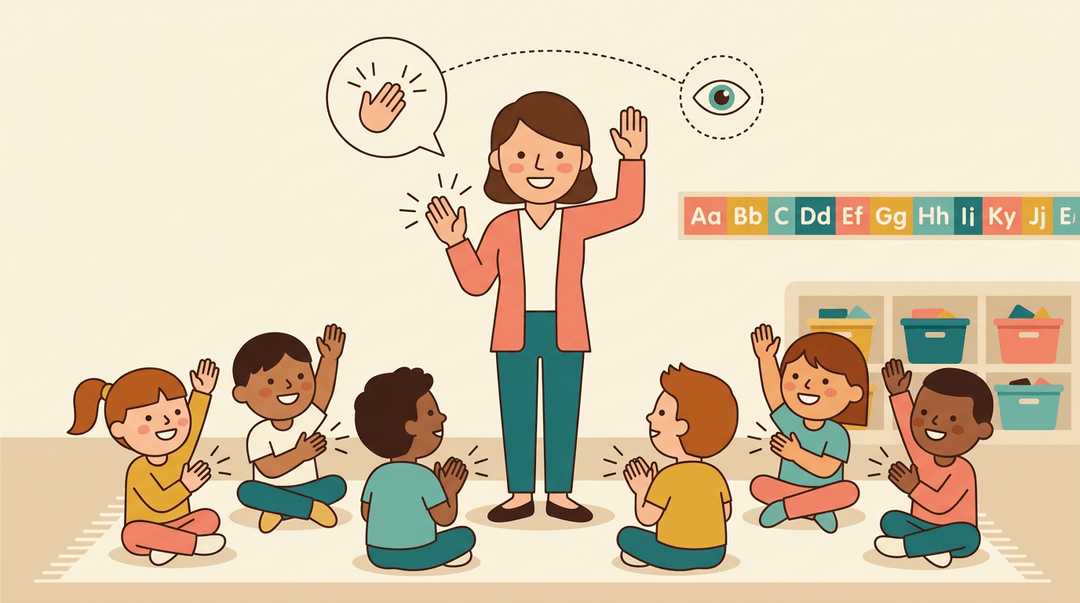
Pair it with a clap, a raised hand, or a specific gesture, and you've layered a nonverbal signal on top, giving students two channels to catch the message instead of one.
Think of a kindergarten teacher who claps a rhythm, waits for it echoed back, then raises a hand as the room settles. Mixing both is worth doing, especially for younger classes or students who catch a visual cue faster than a verbal one.
What Are Some Funny Teacher Call and Responses?
Ask any class what makes a call and response worth answering, and they'll tell you: the sillier it sounds, the faster they'll shout it back.
The funniest classroom calls borrow from songs, movies, and sports chants kids already love, then repurpose them to grab attention in seconds flat. Here's a rundown organized by where each one comes from.
Classic phrases for everyday use
These are the workhorses: simple enough for kindergarten, funny enough that older students still answer without rolling their eyes.
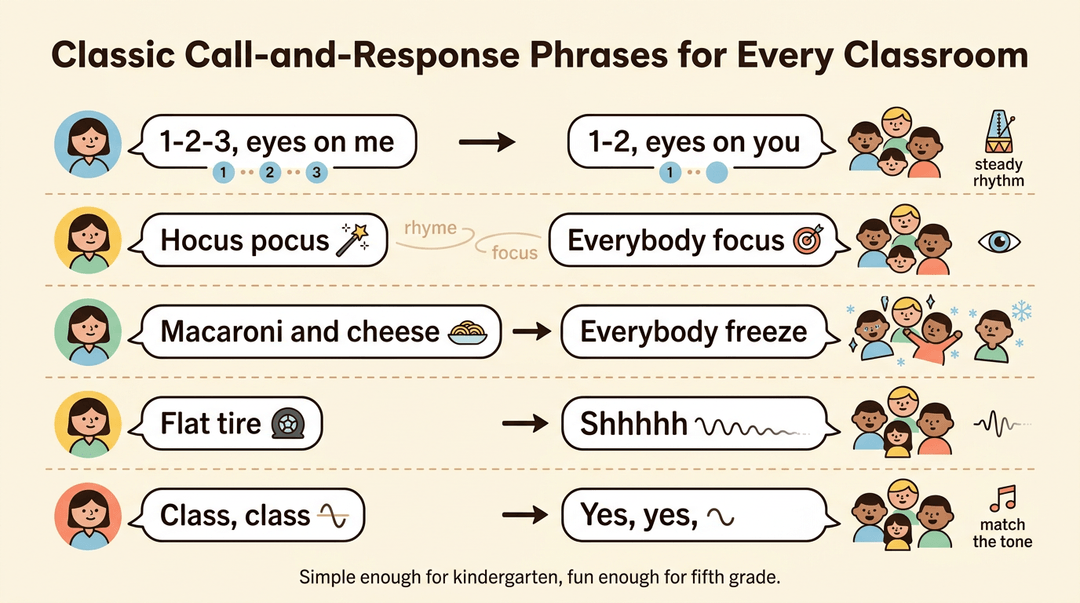
- "1-2-3, eyes on me" gets "1-2, eyes on you," a steady rhythm that doubles as a countdown.
- "Hocus pocus" answered with "everybody focus" works because the rhyme practically finishes itself.
- "Macaroni and cheese" answered with "everybody freeze" is great for a room that's gotten a little too wiggly.
- "Flat tire" answered with a long "shhh," mimicking a tire losing air, gets a laugh the first time every year.
- "Class, class" answered with "yes, yes," matched to whatever tone the teacher uses, turns quieting down into a small game.
Song lyrics kids love to echo
Pop songs already come with a hook, so borrowing one is an easy win.
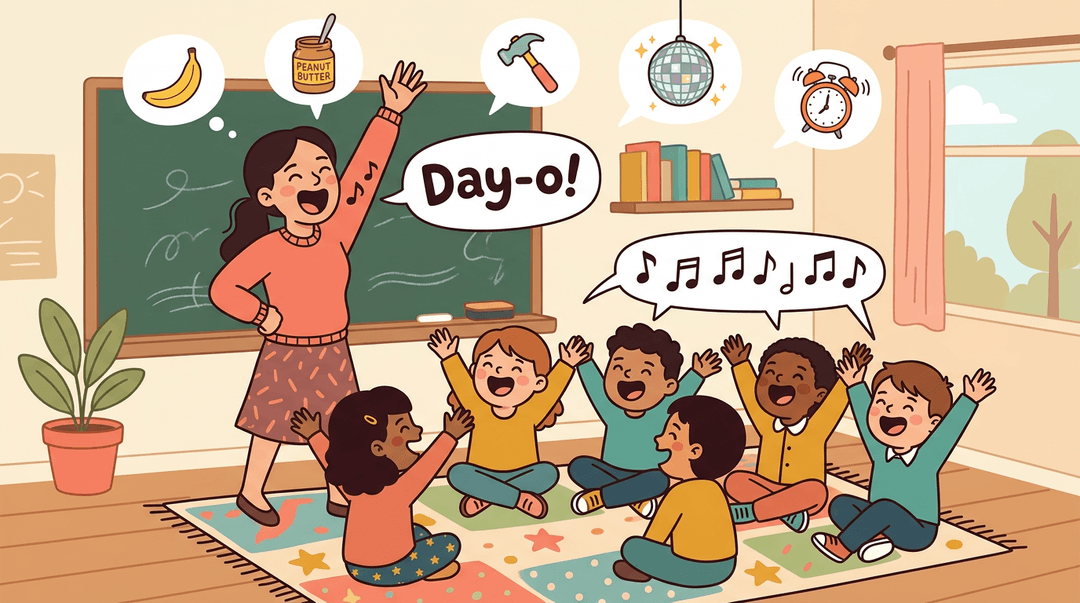
- The Day-O call from the Banana Boat Song lands because most kids know the tune before they know its name.
- "Peanut butter jelly time" turns a snack reference into a singsong rally cry.
- A quick "Hammer time" call answered with "stop" borrows MC Hammer's most famous line to bring a room to a halt.
- A Gangnam Style hook, adapted for the classroom, gets an instant giggly echo from anyone who's heard the song.
- "Wake me up before you go-go" doubles as a transition cue, sung just enough to earn a chorus back.
Movie lines kids love shouting back
A shared movie quote works like an inside joke the whole class gets to be part of.
- "To infinity and beyond" from Toy Story gets an enthusiastic echo every time, especially from younger grades.
- "Hakuna matata" turns a transition into a mini singalong.
- "Shark bait, ooh ha ha" from Finding Nemo is short enough to call across a noisy room.
- "Wax on, wax off" pairs naturally with a wiping hand motion.
- "May the force be with you" lands especially well with older students who catch the reference.
Sports chants and team spirit calls
Team chants bring stadium energy into a classroom, which is exactly the point on pep rally days.
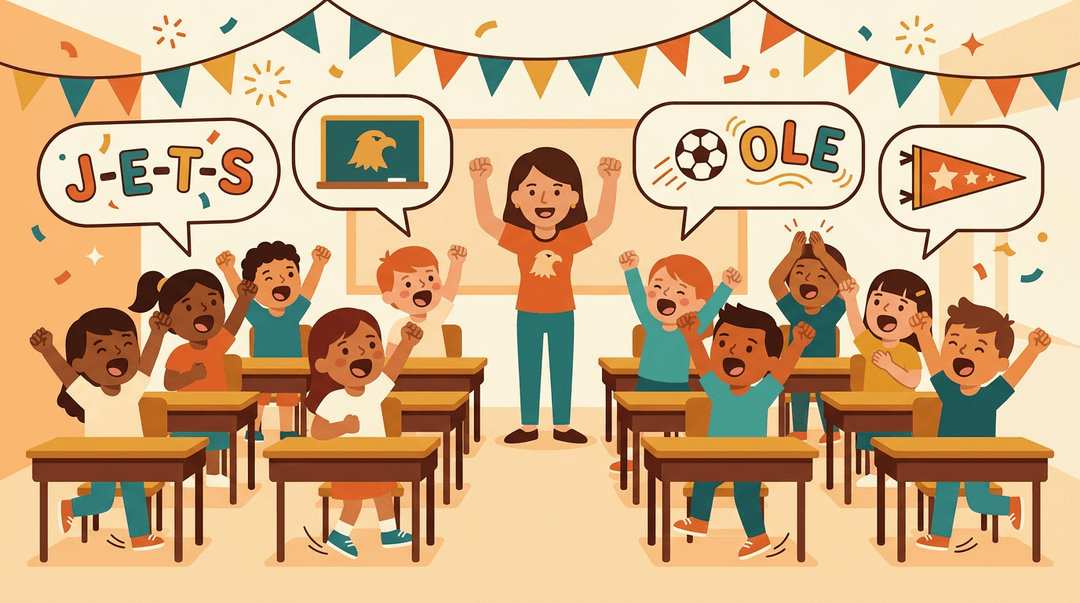
- The J-E-T-S chant, spelled out and answered with the team name repeated, adapts to any mascot.
- "Rock chalk, Jayhawk" travels well as a rhythmic call even for classes with no tie to Kansas.
- General school pride chants, swapping in a school's own colors or mascot, turn the exchange into a shared identity moment.
- The "Ole, ole, ole" chant, borrowed from soccer stadiums, invites stomping and clapping right along with it.
Multi-step call and response routines
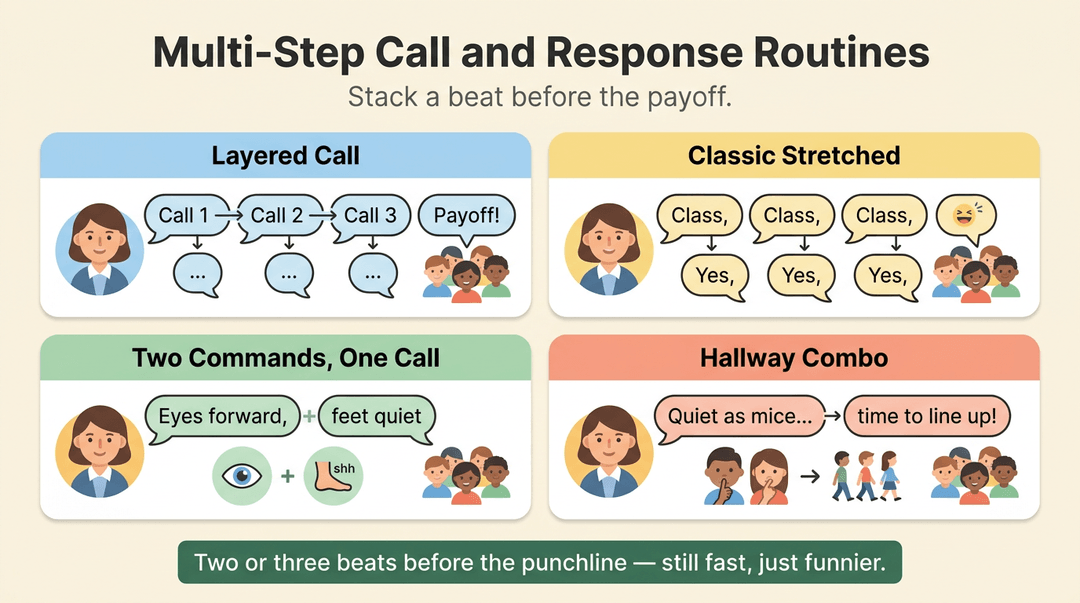
Not every call needs to be one line. Stacking a beat or two before the payoff keeps things funny without losing the function.
- A multi-line call and response layers two or three phrases in sequence, each with its own quick answer.
- "Class, class, class" answered with "yes, yes, yes" stretches the classic version into a longer, sillier exchange.
- An eyes forward, feet quiet routine chains two commands into one call, so the response is a matching two-part action.
- Hallway and transition routines often pair a call for quiet with a call for an action, like lining up, so one exchange does two jobs.
Whole Brain Teaching style calls
Whole Brain Teaching is an instructional approach built around fast, energetic call and response, and its calls have become classroom staples in their own right.
- "Classity class" answered with "yessity yes" is the method's playful spin on the standard "class, yes."
- "Ready to teach?" answered with "ready to learn" signals a lesson is about to begin.
- "Ready to talk?" answered with "ready to listen" resets a discussion before it turns into cross-talk.
- A give me five countdown, five fingers down to zero, adds a visual cue that helps everyone land on quiet at the same moment.
What Are the Five Attention Getters?
Not every call needs words. Some of the most reliable ways to pull a class back together lean on rhythm, silence, or a simple gesture. Five common attention-getter types cover most of what you'll need:
- clapping patterns
- the silent look paired with proximity
- hand signals or sound tools like chimes and bells
Clap and snap rhythm patterns
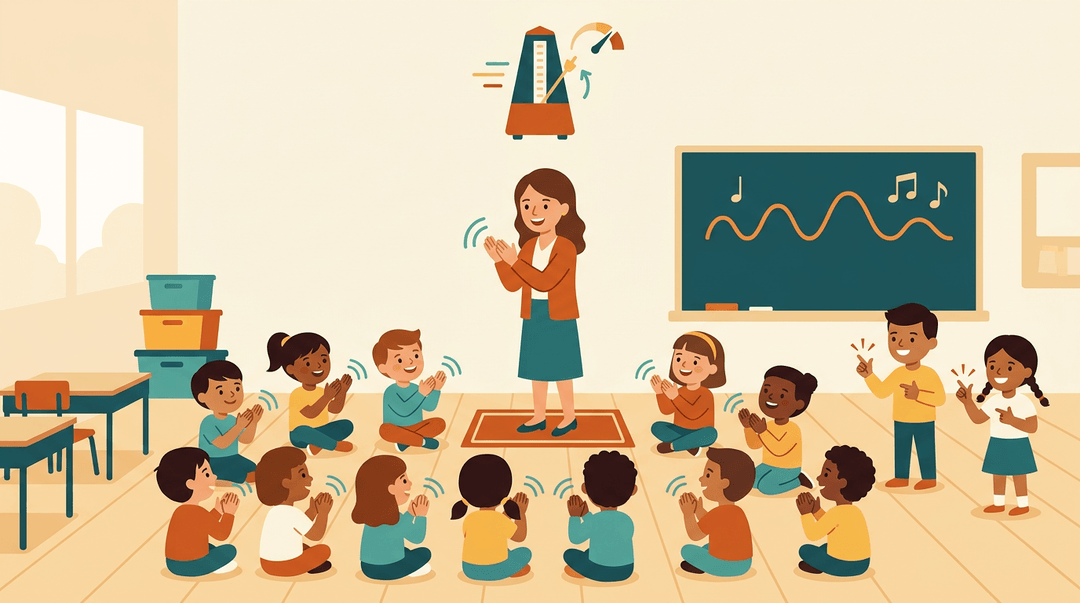
- Clap a short rhythm and let students clap it back. It's playful and instant: no words to follow, just pattern-matching.
- Try a snap-in pattern too: snap, snap, clap, and watch the room join in one beat at a time.
- For a fifth-grade teacher managing a chatty transition, speed variation practice keeps it fresh: speed the rhythm up one day, slow it down the next, so students stay alert instead of tuning it out.
Using the look and proximity
Sometimes the quietest move is the strongest one. A silent expectant gaze, paired with 15 to 30 seconds of quiet, tells a class you're waiting without saying a word.
As the Teaching Wiki explains, "When a room is noisy and a teacher stops talking and waits, remaining calm, making eye contact with students, most students will notice the silence and attend."
Add an eye contact cue, and move teacher proximity toward a distracted student for backup. Pairing this with your seating chart makes proximity even quicker to use.
Hand signals, chimes, and bells
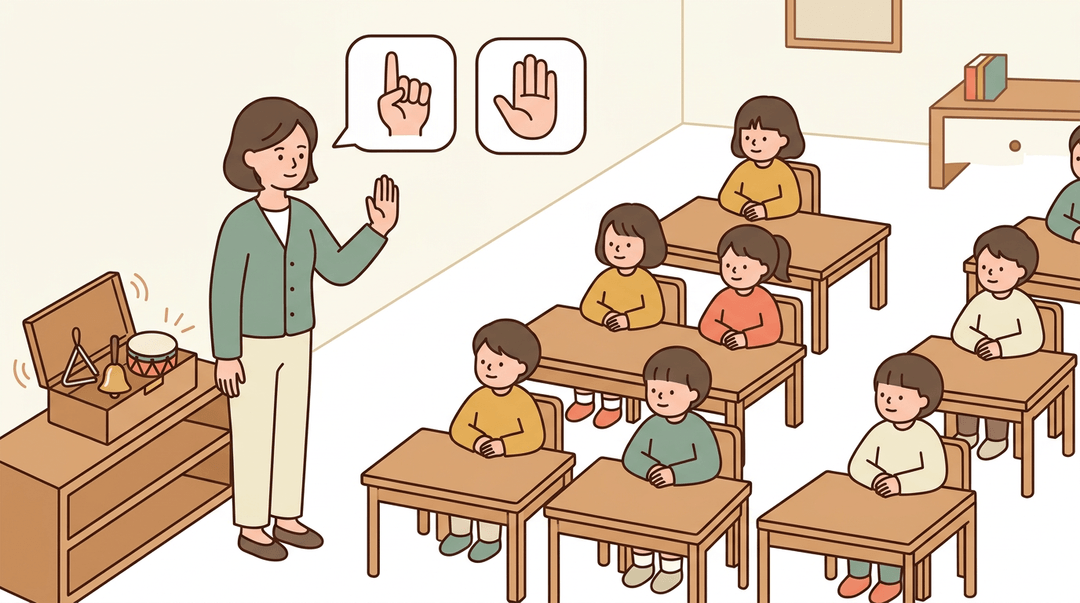
A raised hand for the bathroom sign, a flat palm for sit down: hand signals cut down on interruptions fast. A chime, bell, or drum beat works the same way for a whole class. Keep a small instrument box nearby so the cue is ready whenever you need it.
Bringing Call and Response into Your Classroom
You don't need a full chant library to start: you need one cue matched to your students' age, a one-week rollout plan, and a card that keeps everyone else consistent. Here's all three.
Pick your starter cue by grade band
Younger students need rhythm and repetition; older students need subtlety. Find your row and start there.
| Grade band | Starter cue | What it sounds like |
|---|---|---|
| Preschool | Simple rhythm clap | You clap clap-clap-clap-clap-clap, they echo it back |
| Elementary | "1-2-3, eyes on me" | You say the call, they respond "1-2, eyes on you" |
| Middle/high | Subtle nonverbal signal | A raised hand or lights dimmed; students quiet and mirror it |
💡 Tip: Teens tune out anything that feels babyish. A nonverbal signal respects the room while doing the same job as a chant.
Roll it out in five steps
A cue only works once it's a reflex. That takes explicit teaching, not just repetition.
- Introduce the cue explicitly. Name it and explain its job.
- Say: "When you hear me clap this pattern, you clap it back and freeze. It means I need everyone's attention."
- Model it, then practice the response. Show both halves, then run it live.
- Do three quick reps in a row; make the last one playful so it lands as fun, not drill.
- Reinforce daily for the first week. Use it at least a few times every day.
- Praise fast responses specifically: "Four seconds to quiet, nice."
- Rotate cues to keep novelty. Swap in a fresh call before the old one goes stale.
- Teach the new cue the same way; keep the old one as a backup.
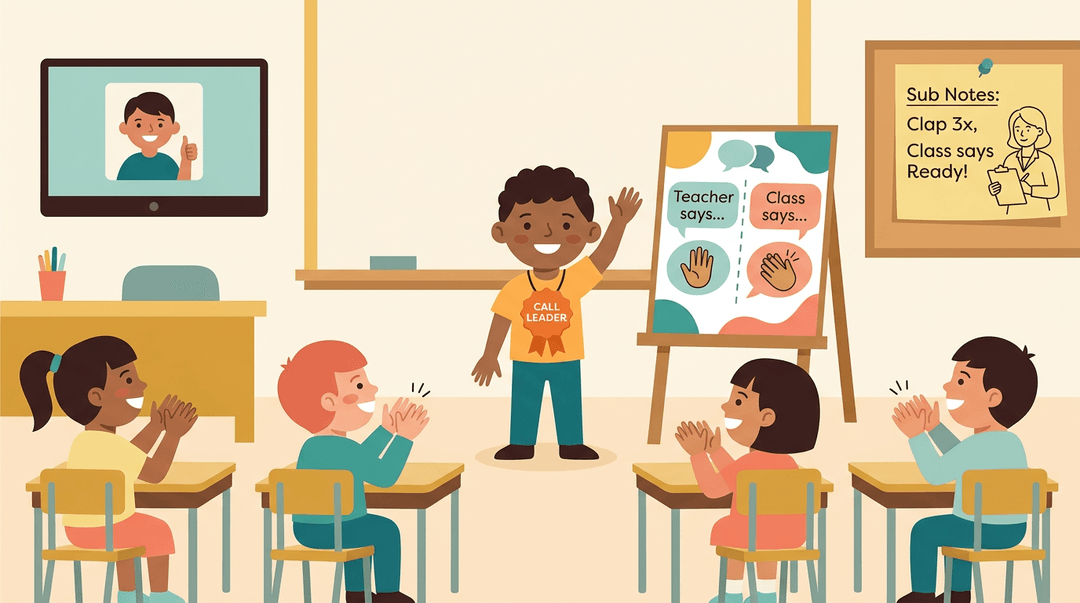
- Post the cue on a visual chart. Call on one side, response on the other, where everyone can see it.
⚠️ Watch out: The most common failure is skipping straight to step 3. If students never practiced the response, the cue is just you making noise.
Make a cue card for substitutes
Your cues only work when every adult uses the same words. Write a cue card and attach it to your lesson plan, listing every go-to cue with its exact response script. Here's a filled-in card to copy:
Attention cues for Room 12
- Teacher says: "1-2-3, eyes on me" → Students say: "1-2, eyes on you"
- Teacher claps: clap-clap, clap-clap-clap → Students echo the pattern and freeze
- Backup: raise one hand silently → Students raise theirs and stop talking
Save your go-to cues and routines inside EMStudio lesson plans so substitutes and co-teachers stay consistent.
How Age Affects Attention Span
Call and response only works if it lands inside a student's actual attention window, and that window changes a lot between a five-year-old and a fifteen-year-old.
How long kids can focus by age
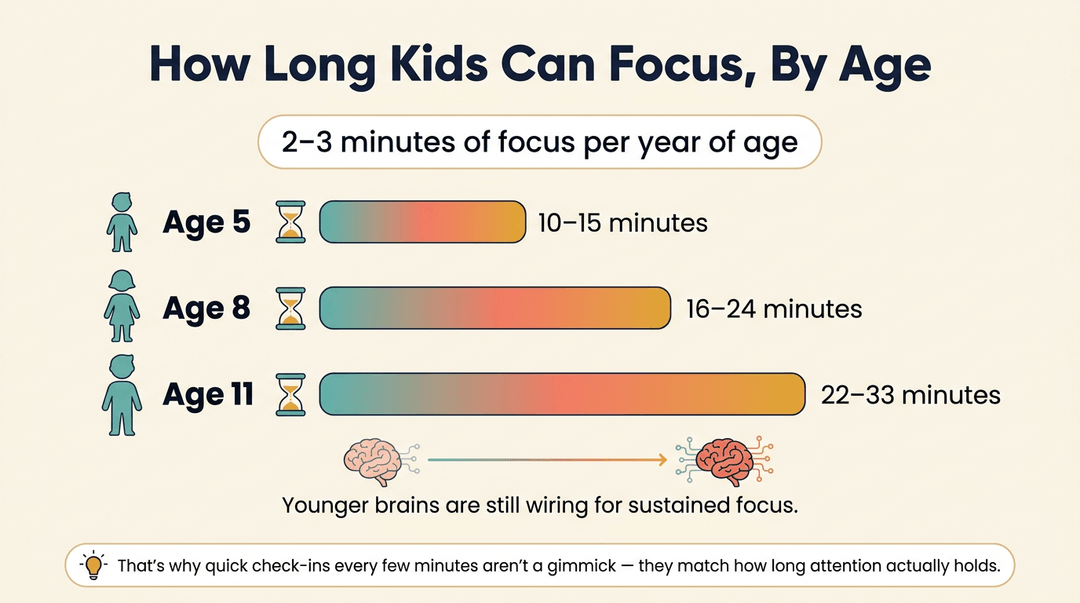
A commonly cited rule of thumb from research on English-language pop-up media for young learners puts a child's attention span at roughly two to three minutes per year of age, and ECH Counseling echoes the same guideline. That means:
- Age 5: about 10 to 15 minutes
- Age 8: about 16 to 24 minutes
- Age 11: about 22 to 33 minutes
Younger kids land on the short end of that range every time, since their brains are still developing the wiring for sustained focus. A quick, punchy call and response every few minutes isn't a gimmick here.
It's matched to how long attention actually holds.
Which grade levels this works best for
This strategy is strongest in preschool through elementary school, where short attention spans and a love of rhythm make a call and response feel natural rather than forced.
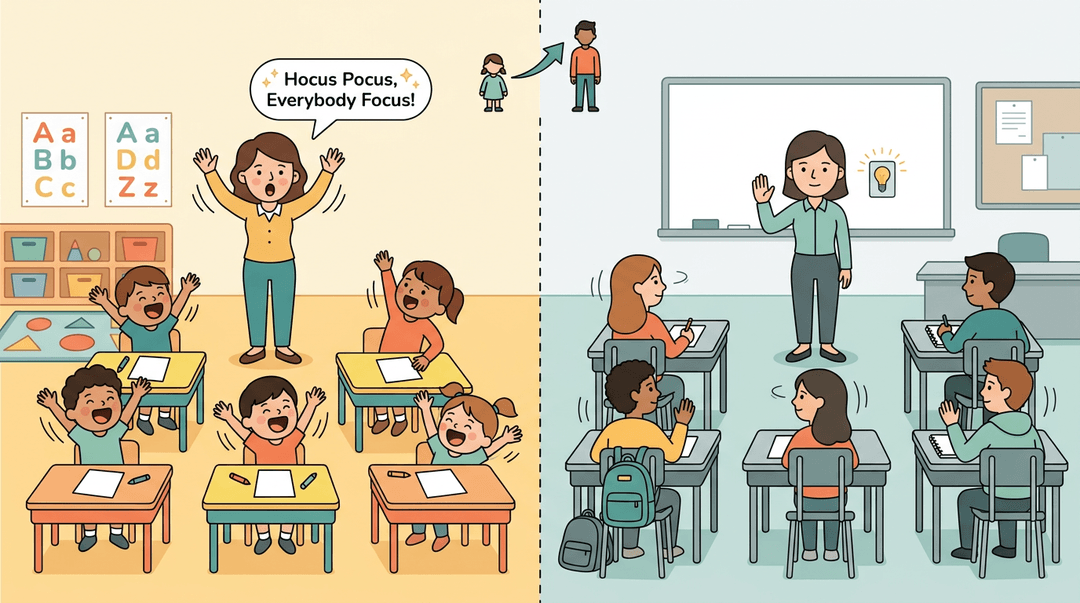
Think of a kindergarten teacher chanting "Hocus pocus, everybody focus": the room snaps back instantly.
By middle and high school, a sing-song verbal cue can feel childish, and older students often respond better to a quiet nonverbal signal like a raised hand or a light switch.
Before picking a cue, weigh the grade level in front of you: what pulls a first grader back in can lose a ninth grader's buy-in completely.
Tips for Putting It into Practice
A great call and response phrase is only half the job. The other half is making it a habit your students can count on, one that still works in week twenty the way it did in week two.
Building a reliable daily routine
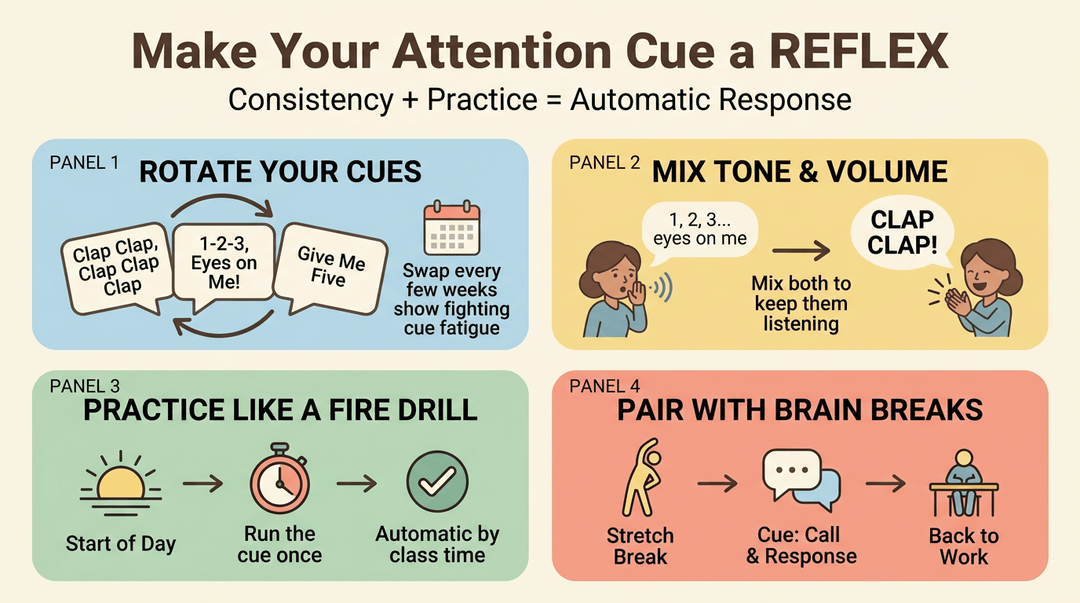
Consistency turns a fun phrase into a reflex. A few habits help it stick:
- Keep multiple cues ready. Rotate through two or three go-to calls so none of them wears out, and swap in a fresh one every few weeks to fight cue fatigue.
- Vary tone and volume. A whispered "1, 2, 3, eyes on me" pulls focus differently than a booming clap pattern; mixing both keeps students actually listening.
- Practice before lesson start. Run the cue once at the start of the day, like a fire drill, so it's automatic by the time you need it.
- Pair cues with brain breaks. A quick call and response after a stretch signals "we're back to work" without a jarring transition.
Getting students involved in the routine
The routine sticks best when students help build it, not just follow it.
- Ask students for their routines. Let them help choose or invent a class chant; ownership boosts buy-in.
- Invite student feedback. Check in occasionally on whether a cue still lands or needs retiring.
- Adapt it for substitutes. Leave the call and response written out so a substitute teacher can keep the room's rhythm intact.
- Use visual posters for cues. A small poster with the call and expected response supports visual learners, and gives remote students something to follow on screen.
- Assign it as a classroom job. Rotate a student "call leader" so the routine becomes something the class owns.
For virtual classrooms, swap the clap for a chat emoji or a "thumbs up on camera," so the same rhythm carries over online.
Call and response works because it turns quieting a room into a habit, not a battle. Once your students know the cue, they know the response, and you get your class back in seconds instead of minutes.
That kind of consistency is easier to build when your routines live somewhere organized. Ready to bring more structure to your classroom day? Check out our Classroom Management feature to keep your classes, rosters, and routines organized in one place.
References
- Foundational classroom management resources handbook — research.bond.edu.au (2024)
- DEVELOPING POP UP MEDIA FOR EL FIVE PARTICIPANTS OF ENGLISH FOR HOLIDAYS PROGRAM OF YOGYAKARTA STATE UNIVERSITY — eprints.uny.ac.id (2013)
- An examination of English speaking rhythmic games and plays of African American children — digitalcommons.auctr.edu (1996)
- Sustained Attention - What’s the average attention span for children? — echcounseling.com
- Non-Verbal Cues in Teaching - Teaching Wiki — flipeducation.ai (2026)
Frequently asked questions
What is call and response classroom?
A call and response classroom uses a spoken cue from the teacher followed by a set response from students. The shared reply brings the class’s attention together quickly and can be used from kindergarten through high school.
What are some good call and response chants?
Good chants include “1-2-3, eyes on me” with “1-2, eyes on you,” “Hocus pocus” with “everybody focus,” “Macaroni and cheese” with “everybody freeze,” and “Class, class” with “yes, yes.” Clap-and-echo rhythms, movie lines, sports chants, and short song hooks can also work well.
What are the five attention getters?
Five common attention-getter approaches are clap-back rhythms, snap-and-clap patterns, a silent expectant look, teacher proximity or eye contact, and hand signals or sound tools such as chimes and bells. These can be used separately or combined.
What are the four types of attention getters?
The four broad types are verbal cues, rhythm or musical cues, nonverbal visual cues, and sound-based signals. Verbal cues use spoken phrases, rhythm cues use clapping or chants, visual cues use gestures or raised hands, and sound signals use tools such as bells or chimes.
What are some funny teacher call and responses?
Funny options include “Flat tire,” answered with a long “shhh,” “Hocus pocus,” answered with “everybody focus,” and “Macaroni and cheese,” answered with “everybody freeze.” “Class, class, class” with “yes, yes, yes” and playful movie lines such as “Shark bait” with “ooh ha ha” are other choices.
What are some engaging call-back ideas for teachers?
Teachers can use student-created chants, clap-and-echo patterns, countdowns, movie quotes, sports chants, or multi-step routines such as “Eyes forward” followed by “Feet quiet.” A student call leader, visual cue poster, or a rotating set of two or three cues can keep the routine engaging.
What are some good song call-backs for the classroom?
Song call-backs can include “Day-O,” “Peanut butter jelly time,” “Hammer time” with “stop,” “Wake me up before you go-go,” and an adapted “Gangnam Style” hook. Use short, recognizable sections and choose music appropriate for the students’ age and school setting.
What are examples of call and response?
Examples include “Class, class” and “Yes, yes”; “1-2-3, eyes on me” and “1-2, eyes on you”; “Hocus pocus” and “Everybody focus”; and “Ready to teach?” and “Ready to learn.” Nonverbal examples include a clap pattern that students echo, a raised hand that students mirror, or a chime followed by students becoming quiet.