Self-Regulation Strategies: A Complete Guide for All Ages

Jump to section
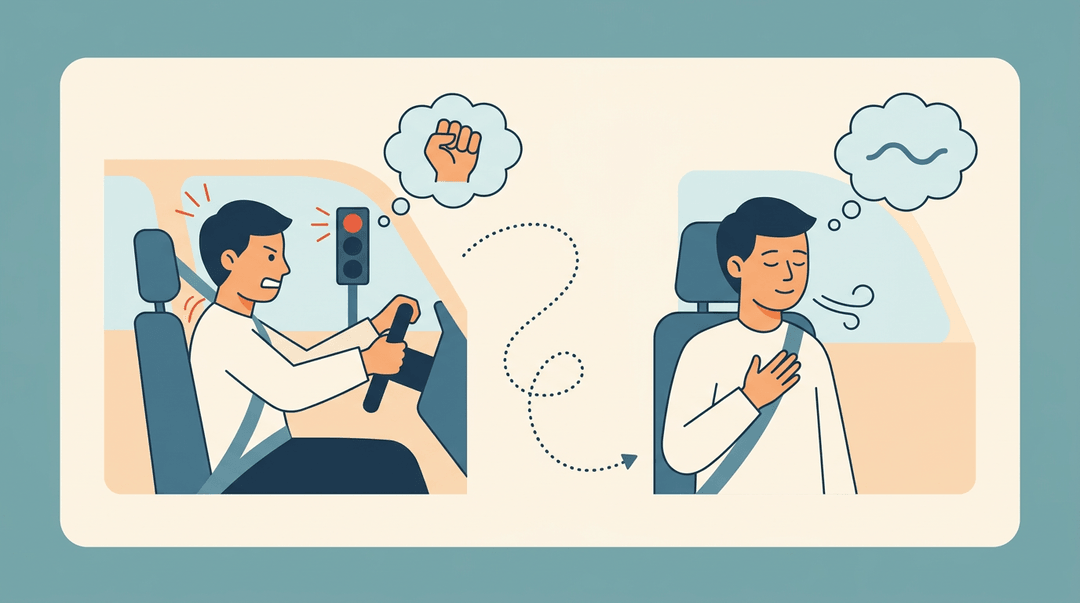
Think about the last time you sat in traffic, jaw tight, and talked yourself down before you said something you'd regret.
That pause, that choice, is self-regulation: the ability to manage emotions, attention, and behavior instead of letting them manage you. For teachers, it's a survival skill for the classroom and a lesson worth teaching every student who walks in.
In this post, we'll cover what self-regulation looks like, who struggles most, and the routines that make it stick.
Understanding Self-regulation Strategies
So what exactly is self-regulation, and why does it come up in nearly every conversation about classroom behavior? At its core, it's the ability to manage your thoughts, feelings, and actions, so you can meet the moment instead of being run by it.
What are the three main types of self-regulation?
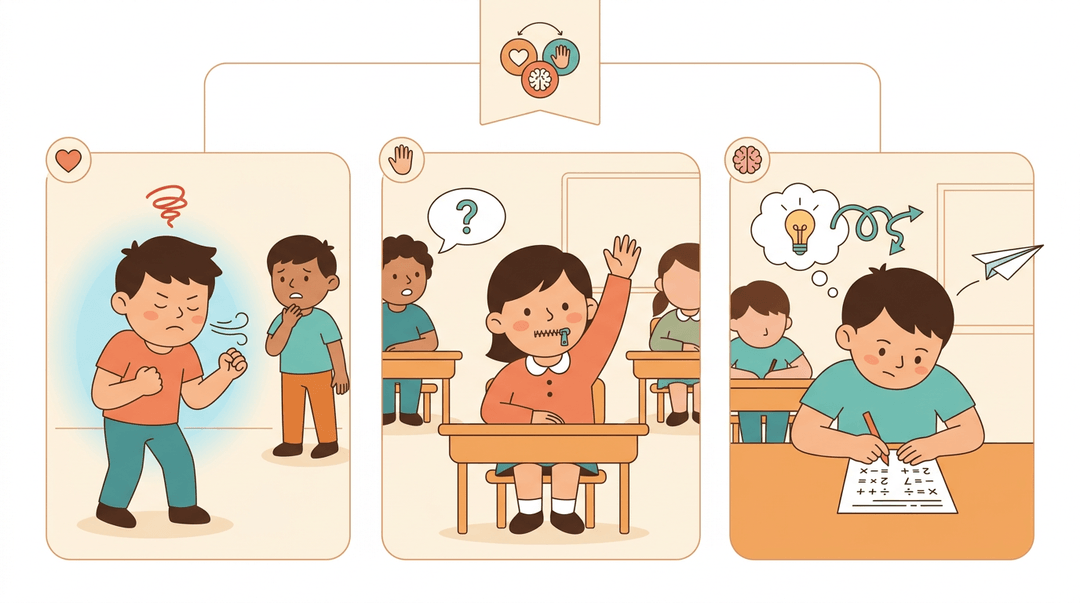
Self-regulation breaks into three main types: emotional, behavioral, and cognitive.
- Emotional self-regulation is managing feelings so they don't take over: calming a frustrated student before he snaps at a classmate is a classroom-sized example.
- Behavioral self-regulation is impulse control, the everyday work of suppressing the urge to blurt out an answer or shove back when someone cuts in line.
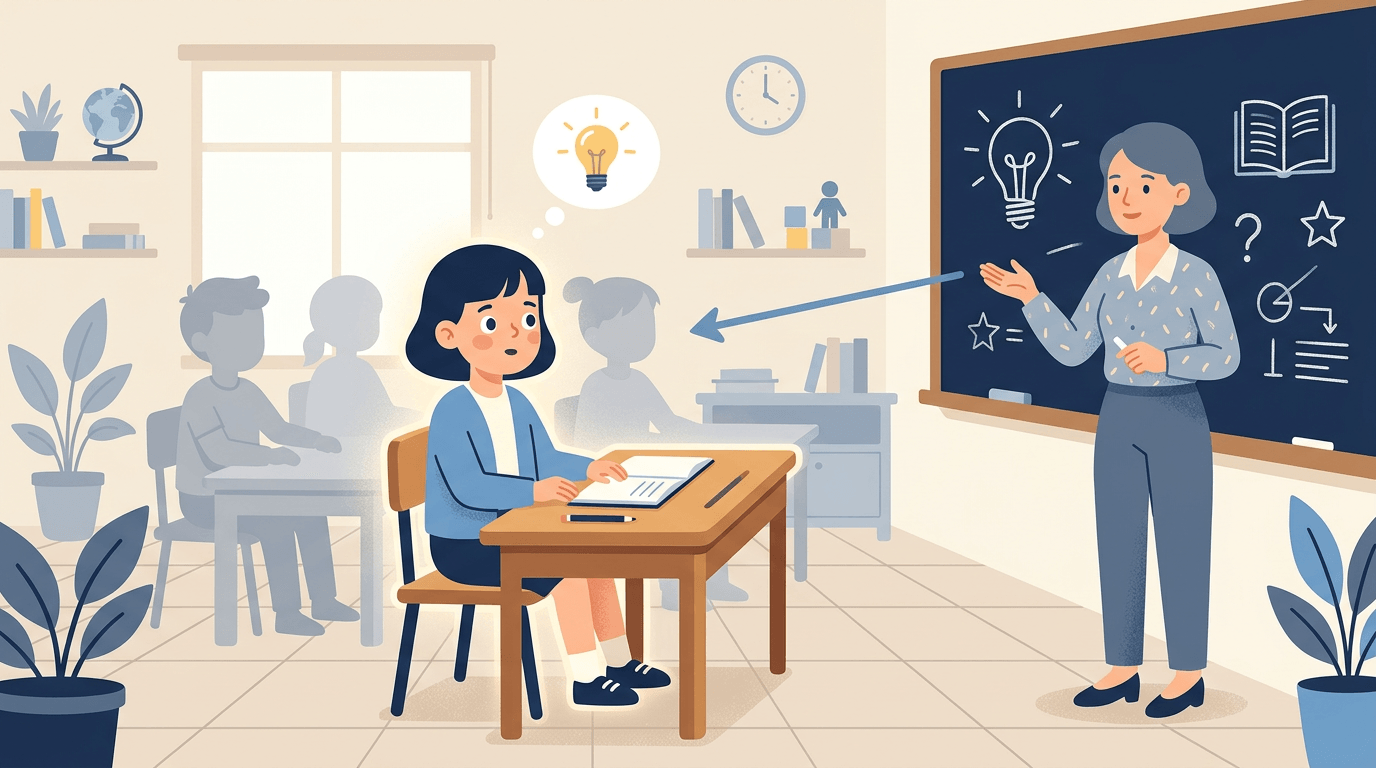
- Cognitive self-regulation governs attention and thinking, staying on task once a lesson gets hard.
All three are forms of self-control, and all three connect closely to emotional intelligence: research on emotion regulation traditions shows the two are deeply intertwined, since reading your own emotional state well is often step one in managing it.
Why self-regulation matters so much
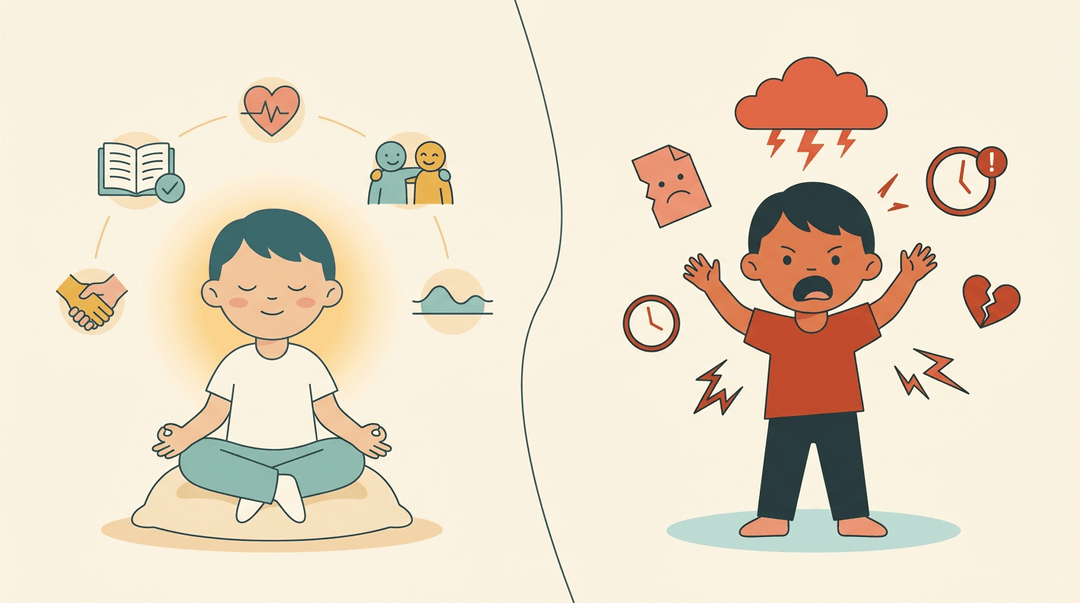
The payoff shows up almost everywhere. A study on self-regulation in Islamic higher education found it significantly predicts academic achievement, and the pattern holds well before college. It also supports mental and physical health: Harvard Health notes that people with strong emotion regulation skills tend toward healthier behaviors overall. It strengthens relationships too, since research on self-regulation and close relationships links regulatory strength to relationship quality. And it reduces stress and anxiety by helping you keep negative emotions in check and think before you react, according to Harvard Health, while building the resilience students need to recover from setbacks rather than get stuck in them.
Poor self-regulation looks like the opposite:
- quick-to-erupt outbursts
- trouble waiting a turn
- difficulty calming down once upset
- schoolwork that stalls the moment it gets hard
Those are the warning signs worth watching for.
Self-regulation Strategies for Adults
Teachers spend the whole day managing everyone else's emotions. These strategies help you manage your own, so there's still something left in the tank by the final bell.
Practicing mindfulness to stay present
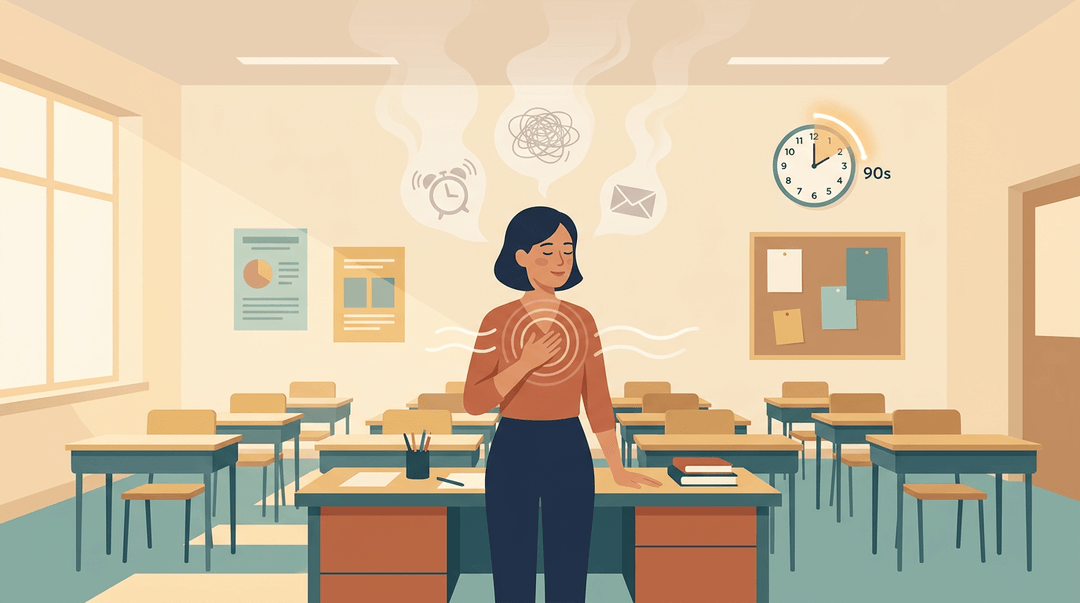
Mindfulness means practicing present-moment awareness: noticing what's happening right now instead of replaying this morning's chaos or drafting that parent email in your head. It also means nonjudgmental observation.
You notice the tightness in your chest without deciding it's good or bad. You just notice it.
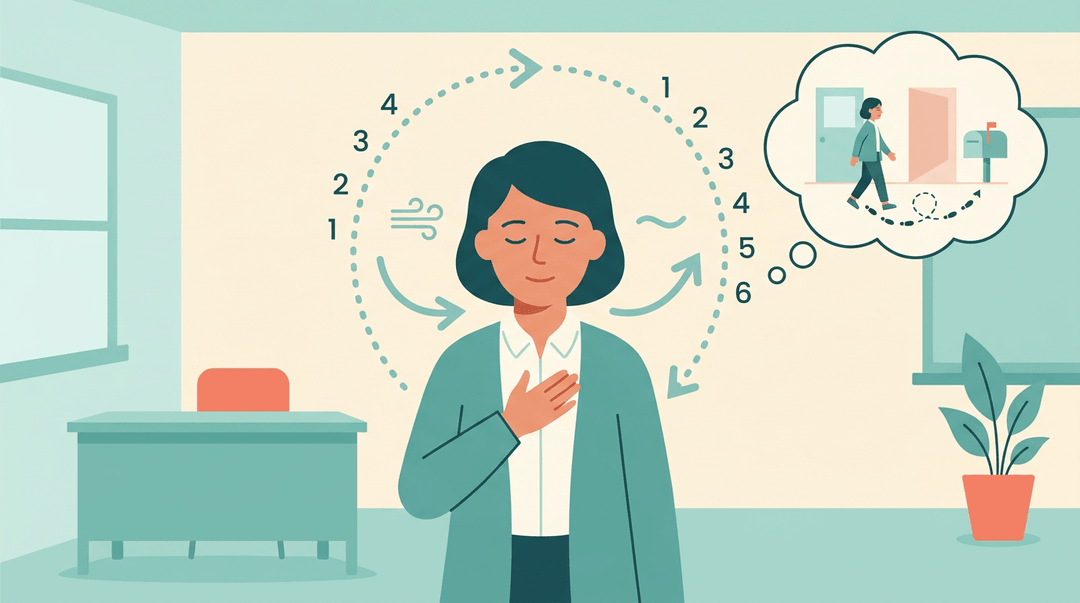
Breath-focused attention is the easiest way in. Consider a middle school teacher who takes 90 seconds between classes to just breathe and reset before the next group walks in.
For persistent negative thought patterns, mindfulness-based cognitive therapy (MBCT, a structured approach that pairs mindfulness with cognitive therapy) takes this further with real clinical support.
Reframing negative thoughts with CBT
Cognitive behavioral therapy (CBT, a talk-therapy approach focused on the link between thoughts, feelings, and actions) offers a set of techniques for catching thoughts before they spiral.
Cognitive reappraisal means you challenge negative thoughts as they surface instead of accepting them as fact.
For example, a teacher who thinks "I'm failing this class" after one rough lesson can pause and replace that unhelpful thought with something closer to the truth: one lesson isn't a verdict.
Labeling and examining the emotion underneath (frustration, not failure) makes it easier to see clearly.
Using breathing to calm your body
Deep breathing exercises calm the body fast, and they don't require privacy or props.
- Try slow inhale and exhale cycles: in for four counts, out for six.
- Counting to ten works the same muscle.
- So does taking a walk, even just to the mailbox and back, when a room needs to clear before you respond.
Naming your emotions clearly
Emotional literacy starts with naming specific emotions instead of a vague "I'm fine" or "I'm stressed." Frustrated, overwhelmed, and disappointed each call for a different response.
Naming the feeling helps you identify triggers and understand what's actually causing it, which is the first step toward doing something about it.
Pausing before you react
The stop-breathe-reflect-choose method builds in a beat before you respond.
- Stop
- Breathe
- Reflect
- Choose your next move instead of reacting on autopilot
Pausing before you react gives you room to consider consequences first, which matters most in the moments that feel the most urgent.
Setting boundaries without guilt
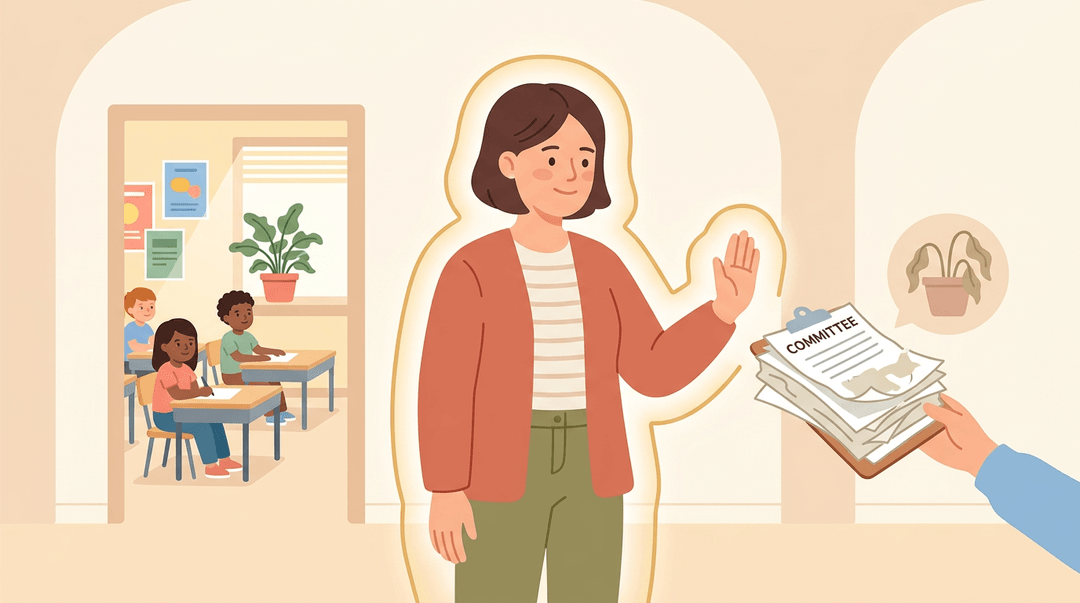
Saying no kindly isn't unkind. It's how you protect your personal energy so there's something left for your students.
A teacher who declines one more committee this year isn't falling short: they're preventing burnout, which serves everyone in the classroom better than an empty tank ever could.
Weaving Self-regulation into Classroom Routines
Self-regulation sticks when it's built into the school day, not bolted on after a meltdown. Here's how to match the routine to your grade, set up the space, handle the hot moment, and track what's working.
Match the strategy to the grade
| Grade band | Go-to routine | What it looks like |
|---|---|---|
| Pre-K/K | Sensory calm tools | Squeeze ball or glitter jar at a designated spot |
| Elementary | Emotion check-in charts | Students move a name magnet to a feelings chart at arrival |
| Secondary | Reflective journaling breaks | Three quiet minutes after a transition, one prompt on the board |
The tool changes; the goal doesn't. Each routine gives students a predictable way to notice and name what they're feeling before it drives behavior.
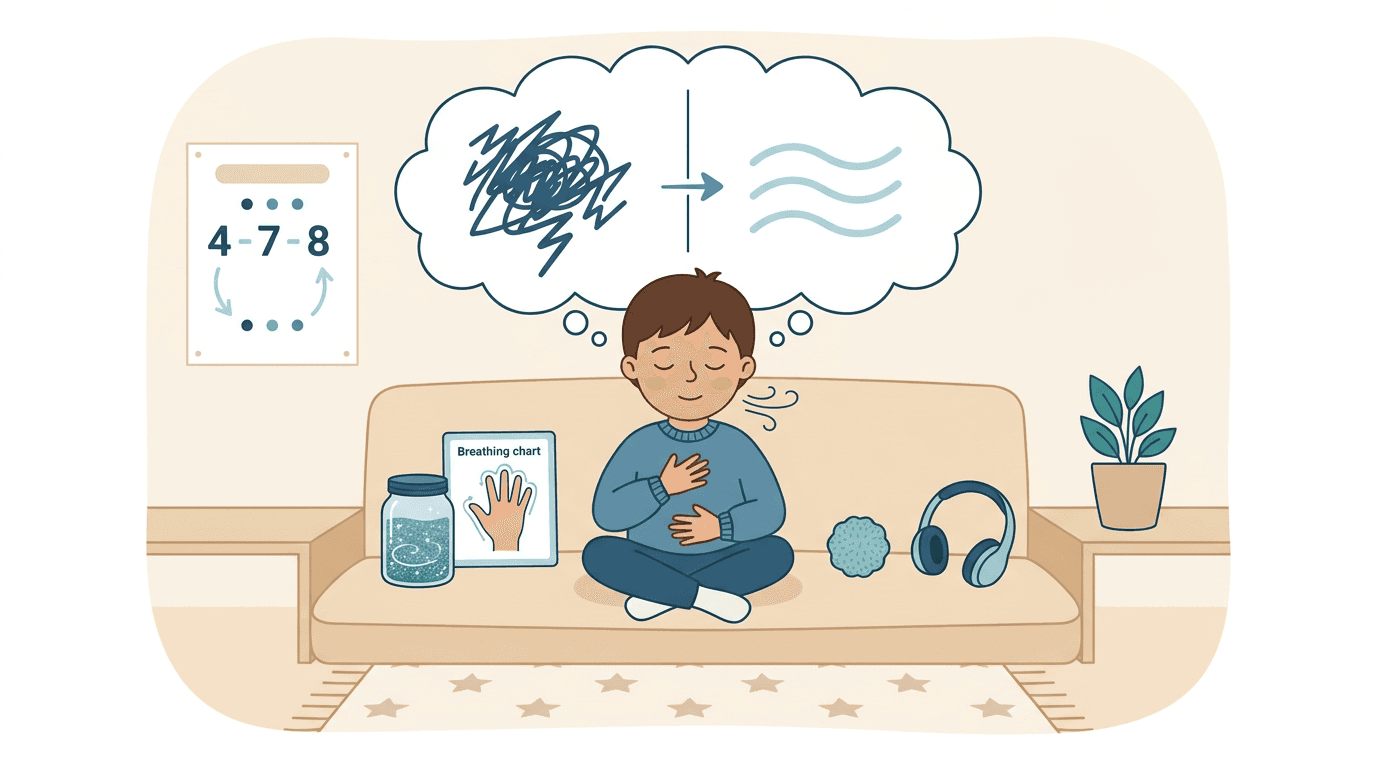
Set up a calm-down corner
- Designate a quiet space. A corner away from the door and foot traffic, one student at a time.
- Add breathing visuals. A poster students can trace, like five-finger breathing: inhale up a finger, exhale down.
- Stock a timer and sensory items. A 3 to 5 minute sand timer, a stress ball, noise-reducing headphones.
- Set a clear re-entry cue. Post it in the corner so the exit is as predictable as the entrance.
- Try: "When the sand runs out, take one deep breath and rejoin us at your seat."
⚠️ Watch out: Introduce the corner during a calm moment and let every student try it once. If its first use is mid-crisis, students read it as a punishment spot.
What to say when a student escalates
- Stay calm and lower your voice. Students tend to match your volume, so give them something quiet to match.
- Name the emotion. Say: "You look really frustrated right now."
- Offer two choices, both acceptable to you. Try: "You can take the calm corner or get a drink of water. You pick."
- Follow up once the student is calm. Later, privately: "What happened back there, and what could we try next time?"
The follow-up is where the learning happens; the moment itself is just about safety and de-escalation.
Track patterns, not just incidents
- Log every incident per student. Date, time, one line on what happened.
- Note the trigger and time of day. Transitions, hunger windows, and specific subjects show up fast.
- Review the log weekly. You're looking for repeats, not one-offs.
Example log entry: "Oct 3, 10:15, Maya: transition back from recess, refused to line up, calm corner 4 min, rejoined fine."
Three weeks of entries like that will tell you more than any single conversation: maybe Maya's tough moments all cluster right after recess, which means the fix is a transition routine, not a consequence.
Log behavior check-ins and calm-down breaks right inside your EMStudio class roster to spot patterns over time.
Teaching Self-regulation to Young Children
Young kids aren't born knowing how to manage big feelings: that skill builds gradually, often stretching well into elementary school. So should a four-year-old be able to self-regulate? Partly.
Expect brief pauses before a blowup, not a fully steady response every time, and that's typical, not a warning sign.
How to calm a dysregulated child
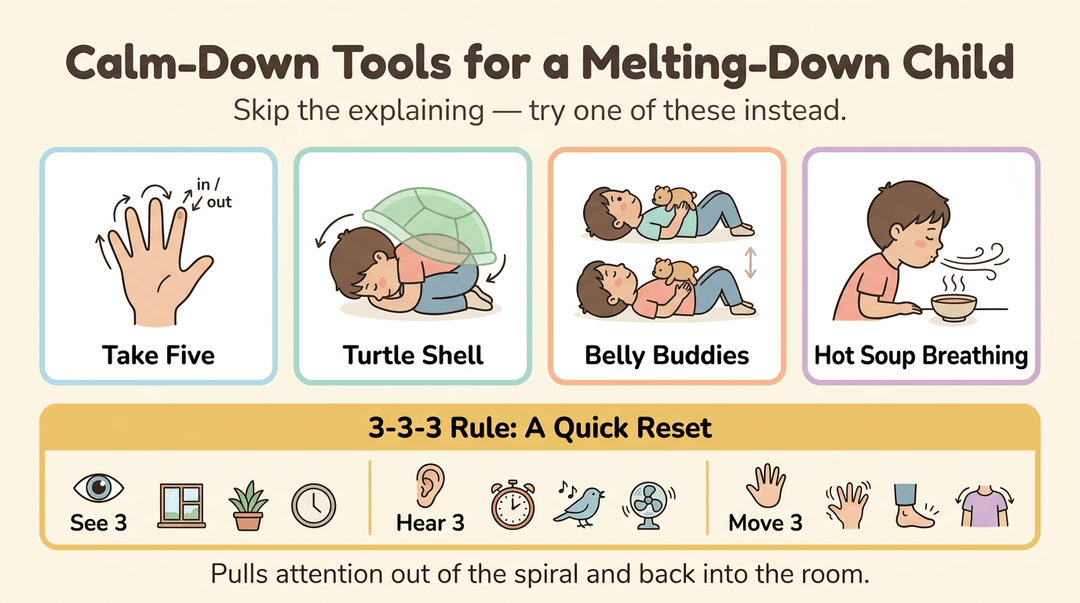
Once a child is already melting down, calming tools beat explanations. A few that work well with young kids:
- Take Five finger breathing. Trace up and down each finger while breathing in and out, slowing the body one finger at a time.
- Turtle Shell technique. Have the child curl inward like a turtle retreating into its shell, a physical cue to pause before reacting.
- Belly Buddies. Lay a small stuffed animal on the belly and watch it rise and fall with each breath, making deep breathing visible.
- Cooling hot soup breathing. Pretend to blow gently across a hot bowl of soup, which naturally slows the exhale.
The 3-3-3 rule works as a quick reset too: name three things you see, three things you hear, and three things you can move. It pulls attention out of the spiral and back into the room, which is often exactly how to calm a dysregulated child right now.
Using routines and cues to help kids
Consistent daily routines cut down on the surprises a young child has to process, so there's less to react to in the first place. Simple physical or verbal cues (a raised hand, a quiet phrase) give kids a heads-up before a transition.
Predictable schedules aid regulation for the same reason: when kids know what's coming next, they don't have to brace for it.
Teaching self-regulation through play
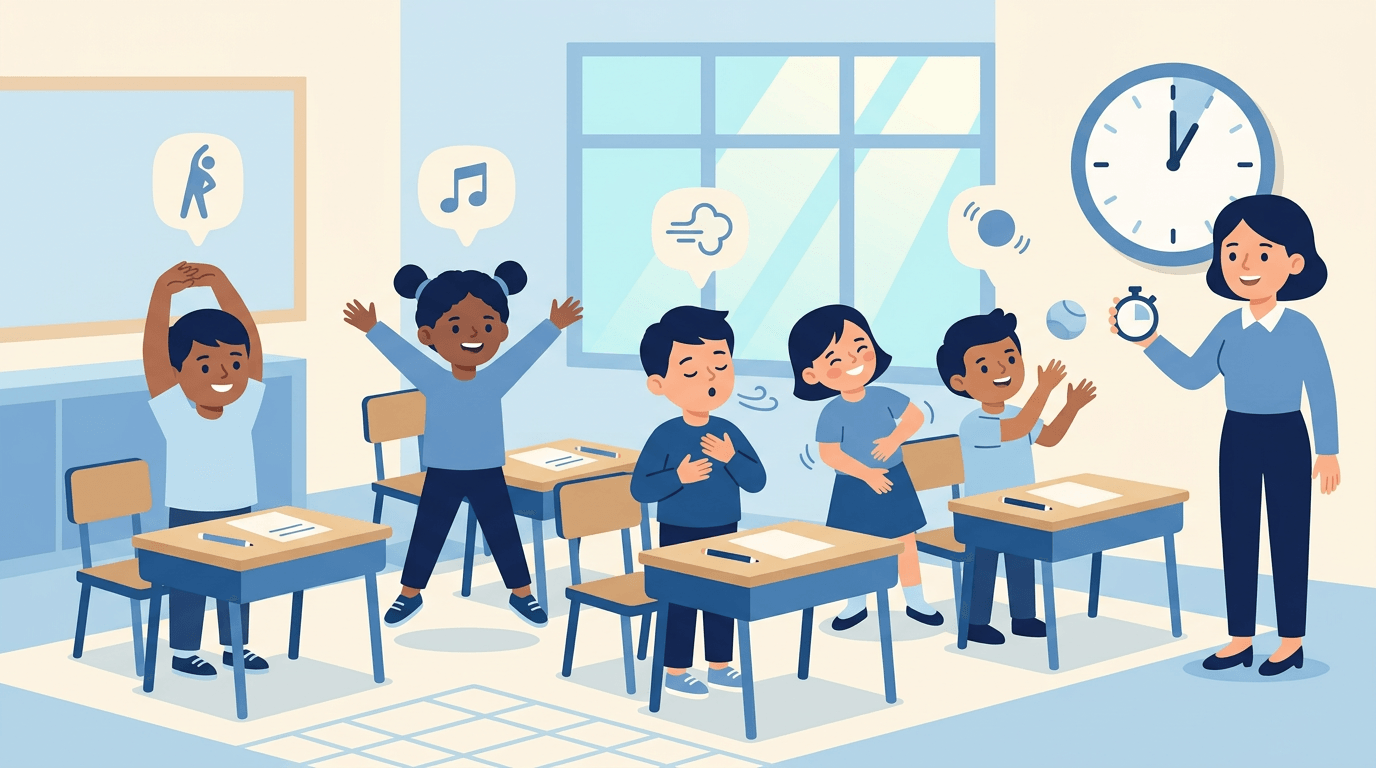
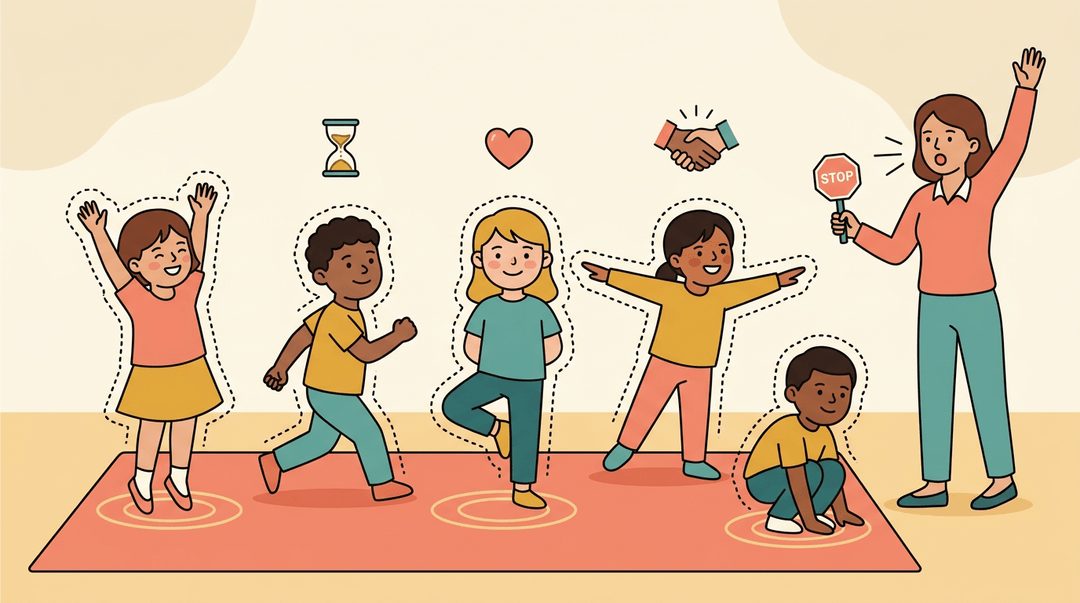
Pretend play lets kids rehearse waiting, sharing, and taking turns in a low-stakes setting. Simon Says and freeze games build the same muscle: reward stillness, and kids practice pausing before acting.
Red light, purple light works the same way, turning impulse control into a game instead of a lecture.
Building skills through small steps
Dry run rehearsals before a tricky moment (a fire drill, a doctor's visit) give kids a preview instead of a surprise. Break bigger tasks into small steps so no single ask feels overwhelming, and pair early attempts with reward-based practice.
Independence should build gradually, not all at once.
Classroom strategies teachers can use
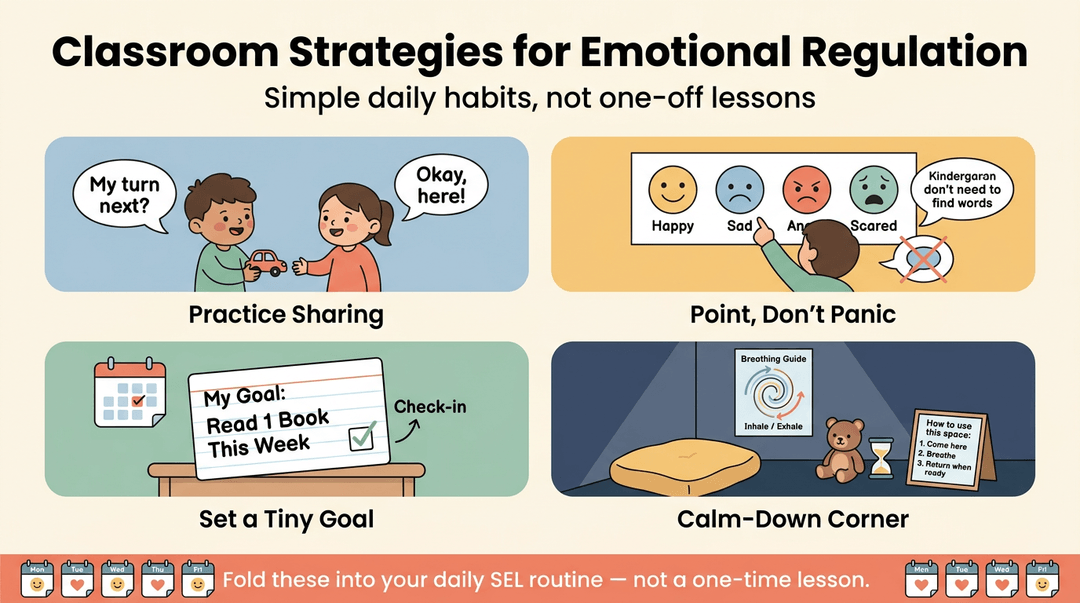
A kindergarten teacher might run short role-play activities where students practice trading a toy or waiting a turn. Emotion charts help nonverbal or overwhelmed students point to how they feel instead of finding the words.
Goal-setting exercises, even simple ones, plant the seeds of self-regulated learning: setting a small goal and checking in on it builds early metacognition.
Folding these into your SEL (social-emotional learning) curriculum keeps regulation part of the daily routine, not a one-off lesson.
A calm-down corner helps too. A quick setup checklist:
- A soft, low-stimulation spot away from the main activity
- A visual breathing guide or emotion chart
- One or two calming tools (a stuffed animal, a sand timer)
- A simple sign reminding students how to use the space
How parents model self-regulation
A child's nervous system takes cues from the adults around it, so a parent's own regulation models the child's. Rushing to over-soothe every tantrum can backfire, teaching a child that big feelings always bring rescue rather than recovery.
Parent training programs often teach a press-pause-and-wait approach instead: staying steady, waiting a beat, and letting the child work through the feeling with support close by.
Who Struggles Most with Self-regulation
Some students hit this wall harder than others, and it rarely comes down to effort. Temperament, wiring, and environment all shape who needs more support to build these skills.
How ADHD and anxiety affect self-control
Students with attention-deficit/hyperactivity disorder (ADHD) or anxiety often have a harder time managing their emotions than their classmates. Their brains process stress and impulse differently, so frustration surfaces faster and patience runs thinner.
These students usually need extra coaching: more modeling, more practice, more reminders before a skill sticks. Some of this simply comes down to temperament.
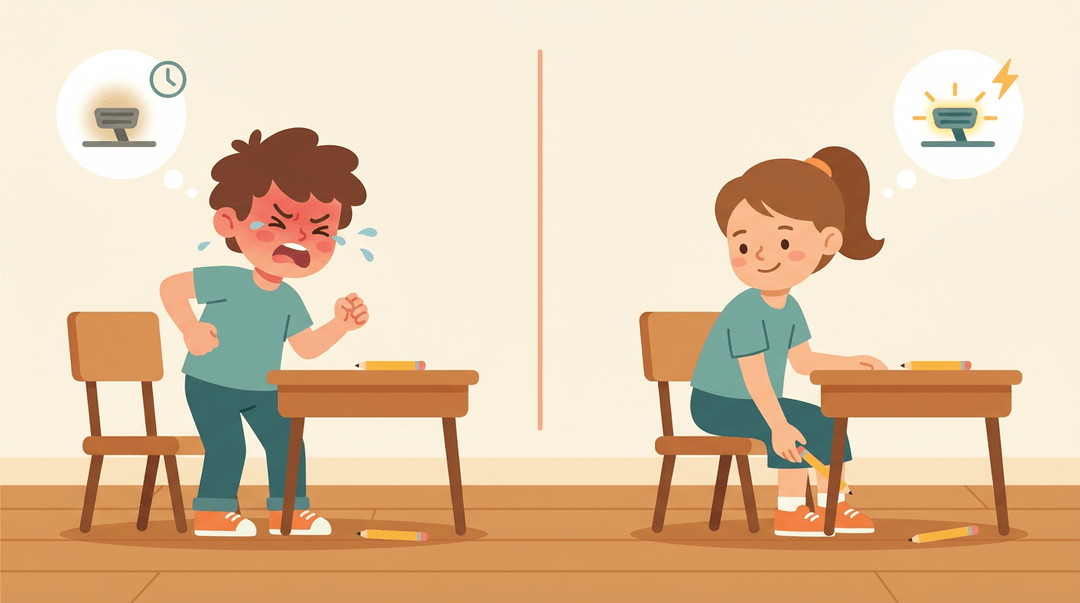
Consider a second grader with ADHD who melts down over a dropped pencil, not because the moment is catastrophic, but because his brakes are slower to engage than a calmer classmate's.
The link between self-regulation and addiction
The stakes extend well beyond childhood. A comparative study published in PMC found that "self-regulation and self-control skills in drug dependent individuals are lower than those without substance dependence individuals."
That's a sobering reminder that these skills matter for a lifetime, not just for a calmer classroom.
The same researchers pointed out that building self-regulation early is one of the clearest paths to prevention, noting that "it is necessary to work out and exploit strategies that include the improvement of self-regulation."
Teaching this now is prevention, not just classroom management.
Common barriers to teaching self-regulation
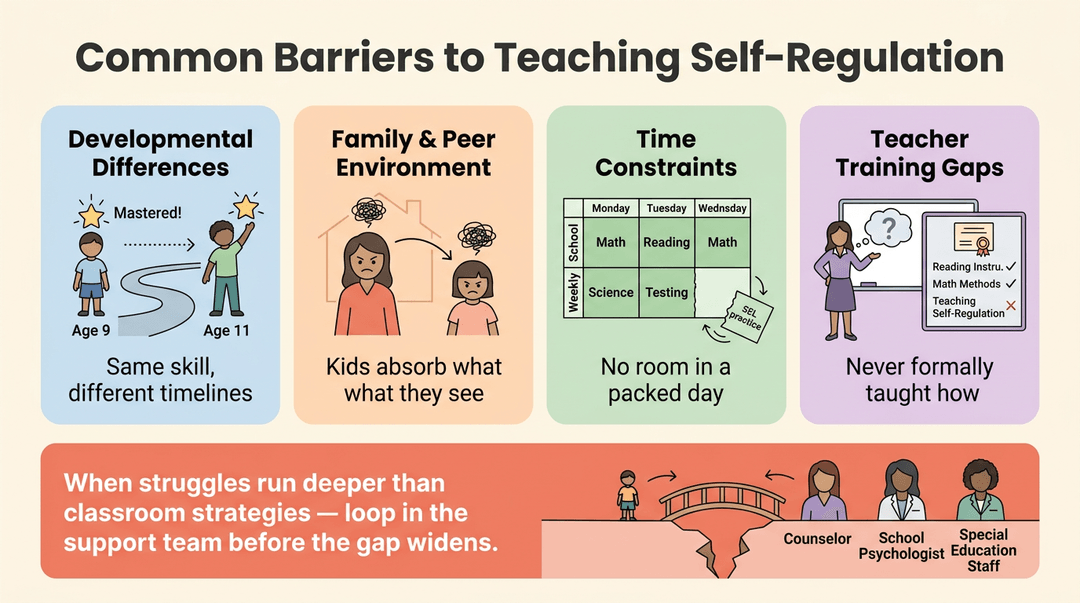
A few obstacles show up again and again:
- Developmental differences. A skill that clicks for one nine-year-old may take another child two extra years to master.
- Family and peer environment. Students absorb regulation habits, good or bad, from the adults and friends around them.
- Institutional time constraints. A packed curriculum leaves little room for explicit practice.
- Teacher training gaps. Many educators never received formal instruction in teaching these skills.
When a student's struggles run deeper than what classroom strategies can address, it's time to loop in the support team: a counselor, school psychologist, or special education staff, before the gap widens.
Formal Support for Self-regulation Strategies
Some self-regulation struggles don't resolve with a calm-down corner and a good routine, and that's not a failure on your part.
When a student's (or your own) reactions feel bigger than the tools at hand can manage, it's worth knowing what formal support actually looks like.
Therapy and coaching options that help
Cognitive behavioral therapy (CBT) helps people spot the thought that fires right before the meltdown and swap it for one that doesn't hijack the moment.
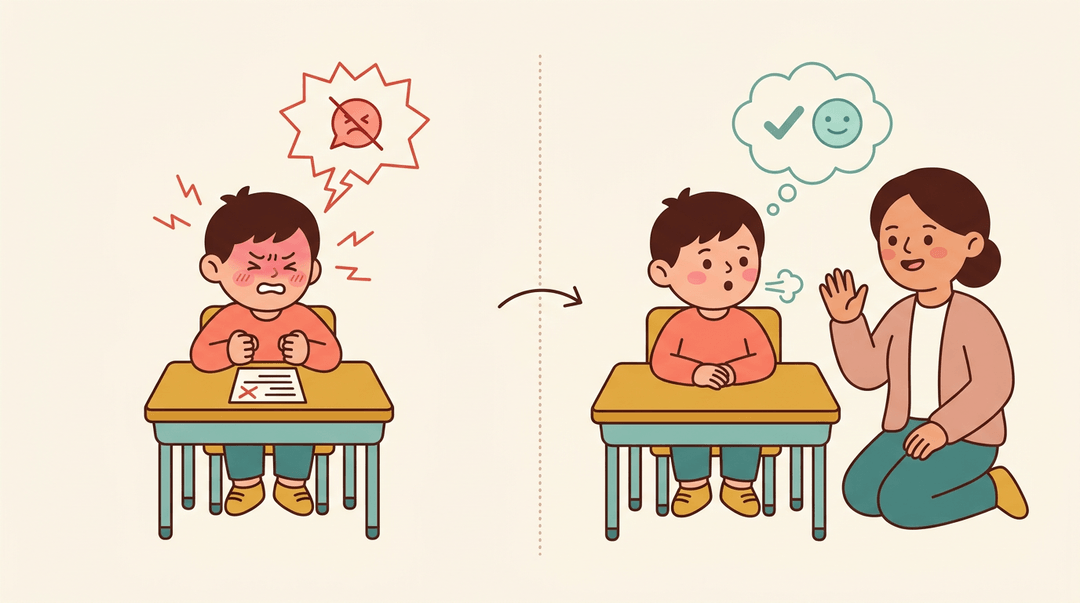
A student who spirals over a wrong answer, for instance, can learn to catch the thought "I'm terrible at this" and challenge it before it takes over.
Dialectical behavior therapy (DBT) builds on that with a specific focus on emotional intensity: it teaches distress tolerance and mindfulness skills for kids and adults whose feelings run hot and fast.
Think of a student who goes from calm to furious in seconds. DBT-based skills give them a way to ride out that spike instead of acting on it.
Parent training programs shift the work outside the therapy room entirely.
Parents and caregivers learn the same regulation language and routines a therapist would use, so a child gets consistent support at home and at school instead of two different systems pulling in different directions.
Therapist-guided practice is where skills actually stick. A therapist models a coping strategy, watches the child (or adult) try it in a low-stakes moment, and adjusts before it's needed in a high-stakes one.
That guided repetition is often the difference between knowing a calming technique and reaching for it automatically when it counts.
Self-regulation isn't a personality trait some students have and others lack. It's a skill, built through modeling, practice, and the right routines, for adults and children alike.
When you weave it into your classroom instead of treating it as an afterthought, calmer days follow for everyone in the room.
Ready to build routines that make this easier every day? Check out our Classroom Management feature to organize your classes, rosters, and timetables so self-regulation becomes part of the structure, not an extra task.
References
- SELF-REGULATION AS A PREDICTOR OF STUDENT ACADEMIC ACHIEVEMENT IN ISLAMIC HIGHER EDUCATION | Al-Ibrah : Jurnal Pendidikan dan Keilmuan Islam — ejournal.stital.ac.id (2026)
- Integrating emotion regulation and emotional intelligence traditions: a meta-analysis — pmc.ncbi.nlm.nih.gov
- Self-regulation for adults: Strategies for getting a handle on emotions and behavior — health.harvard.edu
- SELF-REGULATION AND RELATIONSHIPS 1 The Effects ... — faculty.wcas.northwestern.edu
- Relationship between Resilience and Self-regulation: A Study of Spanish Youth at Risk of Social Exclusion — pmc.ncbi.nlm.nih.gov
- A Comparative Study of Self-Regulation in Substance Dependent and Non-Dependent Individuals — ncbi.nlm.nih.gov
Frequently asked questions
What is the 3-3-3 rule for children?
The 3-3-3 rule is a quick sensory grounding exercise for children who feel overwhelmed. Ask the child to name three things they see, three things they hear, and three things they can move. This redirects attention from the emotional spiral to the present moment.
What are the 5 steps to self-regulation?
A practical five-step process is to notice what is happening, name the feeling, pause and breathe, choose a coping strategy, and reflect on what happened afterward. With practice, these steps help children manage thoughts, emotions, and actions instead of reacting automatically.
What are signs of poor self-regulation?
Signs of poor self-regulation include quick outbursts, difficulty waiting for a turn, trouble calming down after becoming upset, impulsive behavior, and losing focus when work becomes difficult. These behaviors can vary by age and may be influenced by temperament, ADHD, anxiety, or the child’s environment.
What are the three main types of self-regulation?
The three main types are emotional, behavioral, and cognitive self-regulation. Emotional regulation manages feelings, behavioral regulation controls impulses and actions, and cognitive regulation supports attention, thinking, and staying on task.
How can I teach my child self-regulation?
Teach self-regulation by modeling calm behavior and practicing skills during calm moments, not only during meltdowns. Use predictable routines, emotion charts, breathing exercises, role-play, turn-taking games, a calm-down space, and simple choices. Praise small pauses and gradually build independence.
Can you give me some examples of emotional regulation?
Examples of emotional regulation include taking slow breaths when frustrated, naming disappointment instead of yelling, pausing before responding to criticism, and reframing an unhelpful thought. A child might use finger breathing or ask for a short break before returning to an activity.
What are some real-life examples of self-regulation?
Real-life self-regulation includes waiting in line without pushing, staying focused on difficult schoolwork, taking a walk before responding angrily, declining an extra commitment to prevent burnout, and using a calm-down routine during a stressful transition. Each example involves managing thoughts, feelings, or behavior to meet the situation effectively.
Am I emotionally dysregulated?
Feeling emotionally dysregulated may involve emotions that become unusually intense or change quickly, difficulty calming down, impulsive reactions, racing thoughts, or feeling unable to control your response. Occasional dysregulation is normal, but frequent episodes that disrupt relationships, work, school, or daily life are worth discussing with a mental-health professional.