Attention-Getters: The Complete Guide to Types and Uses

Jump to section
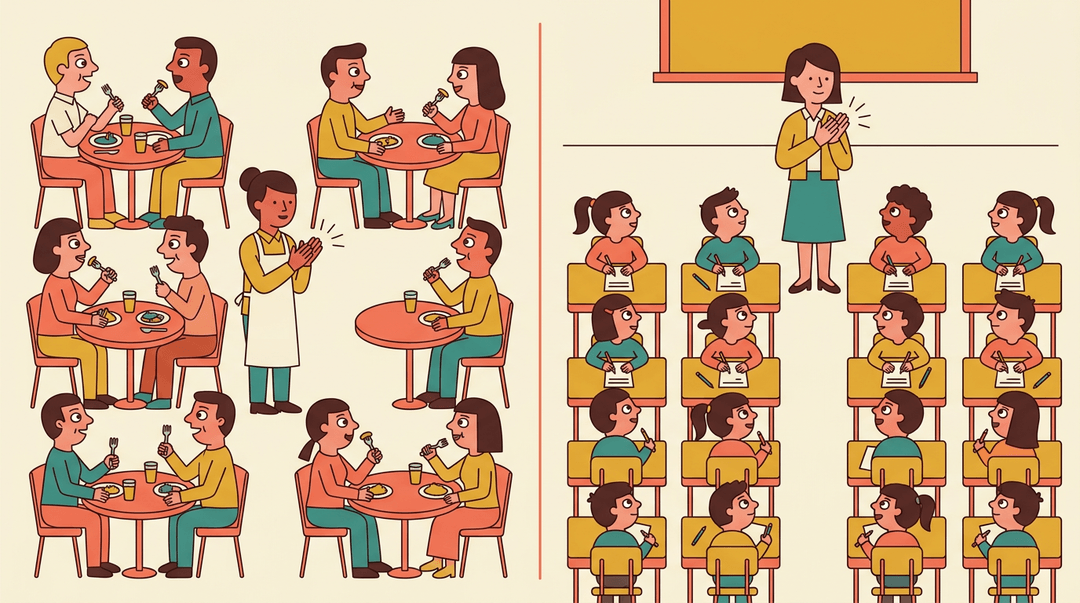
Think about a noisy restaurant when a server suddenly claps twice near your table: every head turns, mid-bite. Classrooms work the same way.
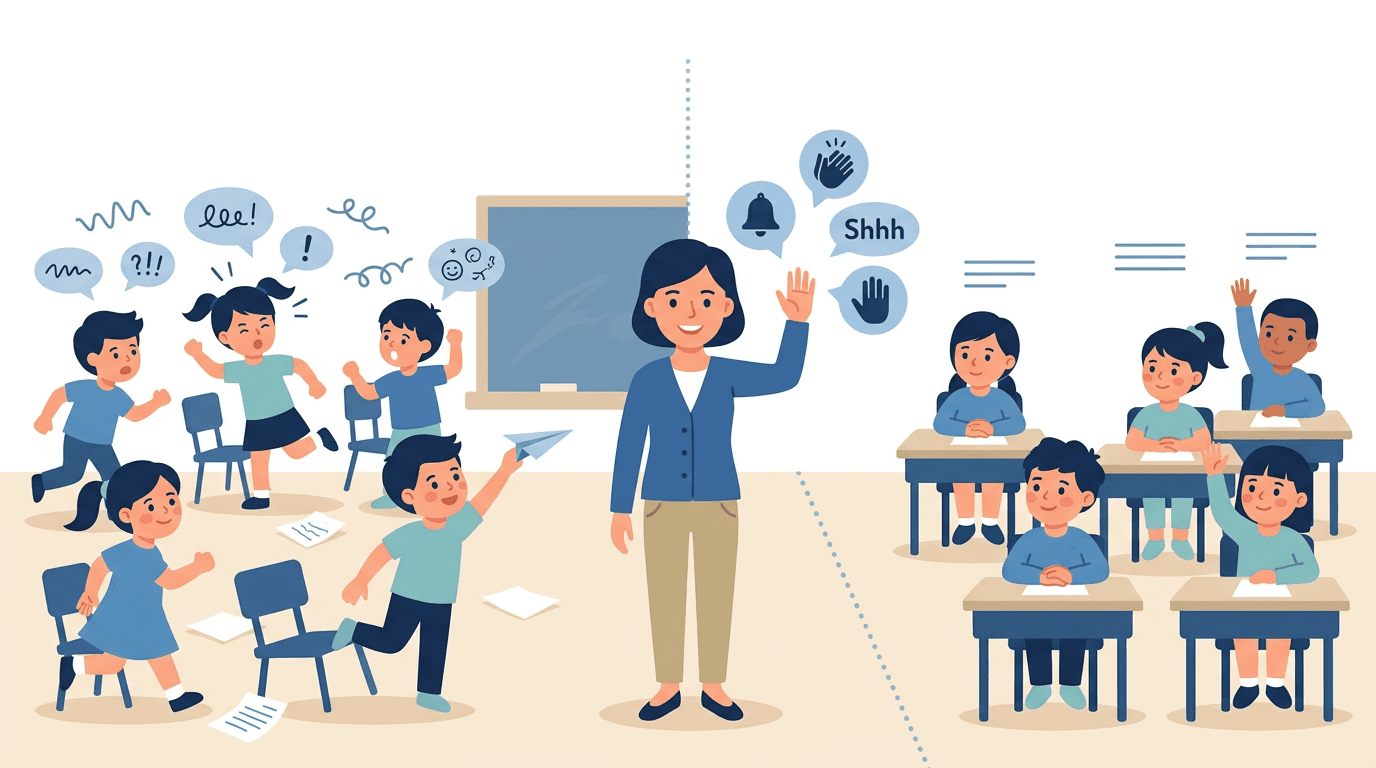
A room full of twenty-five kids needs its own version of that clap, a quick signal that pulls scattered attention back to one point. That signal is an attention-getter: a short verbal or nonverbal cue that resets focus fast.
This post breaks down the types, the grade-by-grade options, and how to make them actually stick.
Why Attention-getters Matter in Class
So what exactly is an attention-getter? At its simplest, it's a short verbal or physical cue, a clap pattern, a call-and-response, a raised hand, that pulls a room's focus back to you in seconds.
Understanding why it works starts with attention itself: psychologists generally sort it into four types:
- sustained
- selective
- divided
- executive
and every attention-getter is really just a shortcut to that last one, the kind of attention that lets a brain switch tasks on command.
Skip the shouting to get quiet
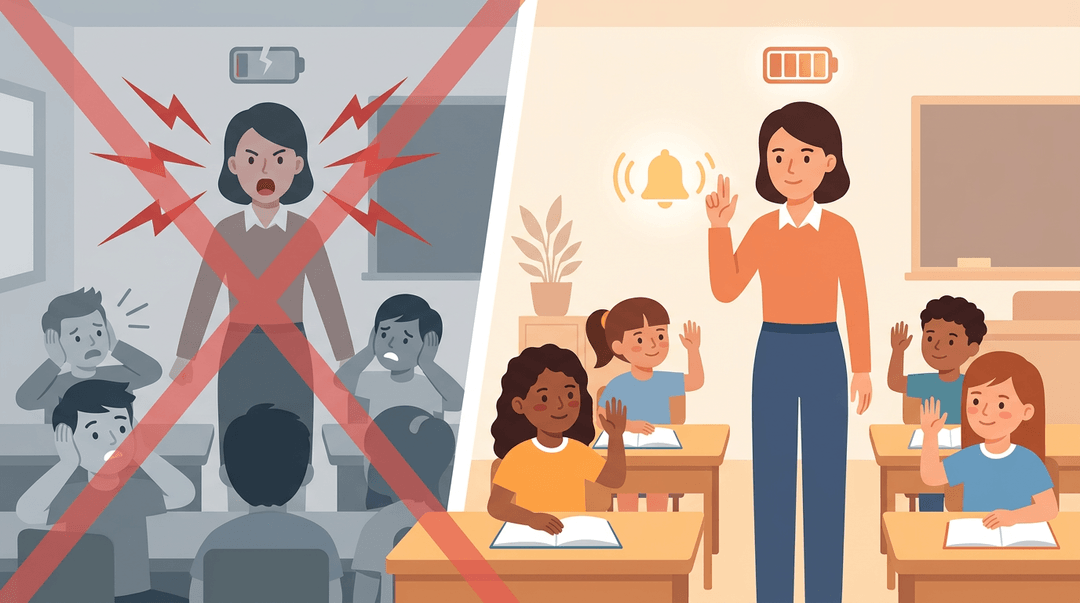
Raising your voice might feel like the fastest fix, but it trains a class to listen only when you're loud. That wears down your voice and your energy by third period, let alone by June.
A consistent, calm cue protects both, and it keeps the room's tone positive instead of tense.
Save instructional time with quick quiet
The payoff shows up on the clock. As Edutopia points out, a signal like clapping "provides an equally noticeable but far more positive way to get students' attention," and a good cue can settle a room in fifteen to thirty seconds.
Multiply that across a school day, and those saved minutes add up to real instructional time. Some teachers even turn it into a friendly contest, timing how fast the class can go quiet.
Building teamwork and classroom culture
Attention-getters do more than quiet a room: they build listening skills students carry into every subject. When most of the class responds right away, the few stragglers usually get a nudge from a neighbor instead of from you.
Over time, that shared response becomes part of a classroom's identity, something students recognize as theirs.
What Are the Four Types of Attention-getters?
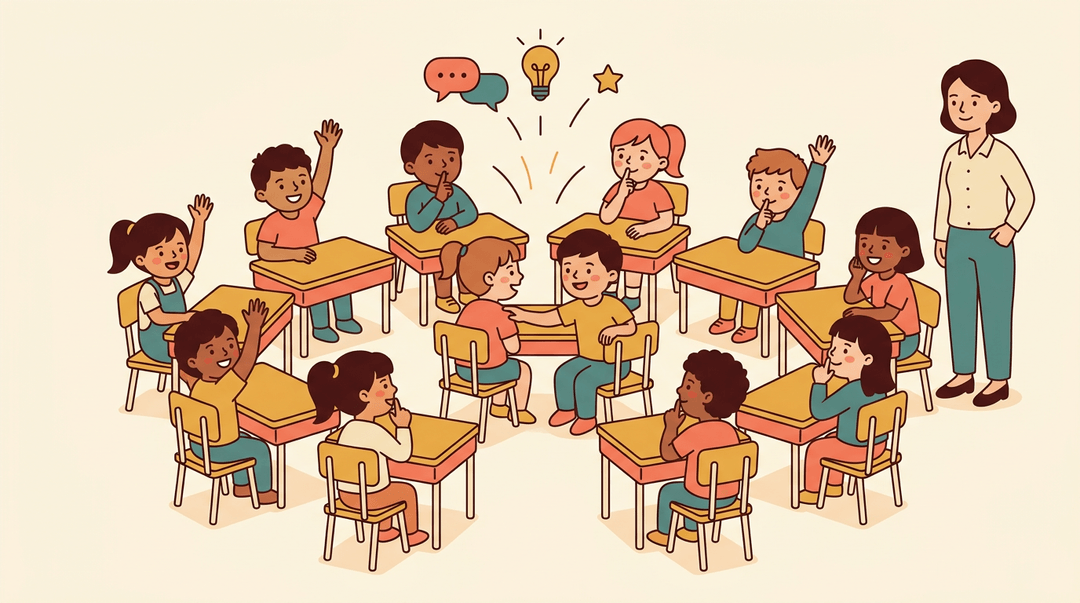
Attention-getters break down into four types:
- Verbal
- Nonverbal
- Visual
- Auditory
A classroom cue like a call-and-response phrase is built for a room full of kids who need a reset button.
A speech or essay attention-grabber is a different animal entirely: a striking opening line, a surprising statistic, or a short story meant to hook one reader or one audience, not signal a group to quiet down. Here's how the classroom versions break down.
Classic call-and-response phrases to try
These verbal cues work because the response takes almost no thought, so it gets in ahead of whatever else is competing for attention. Some tried-and-true options:
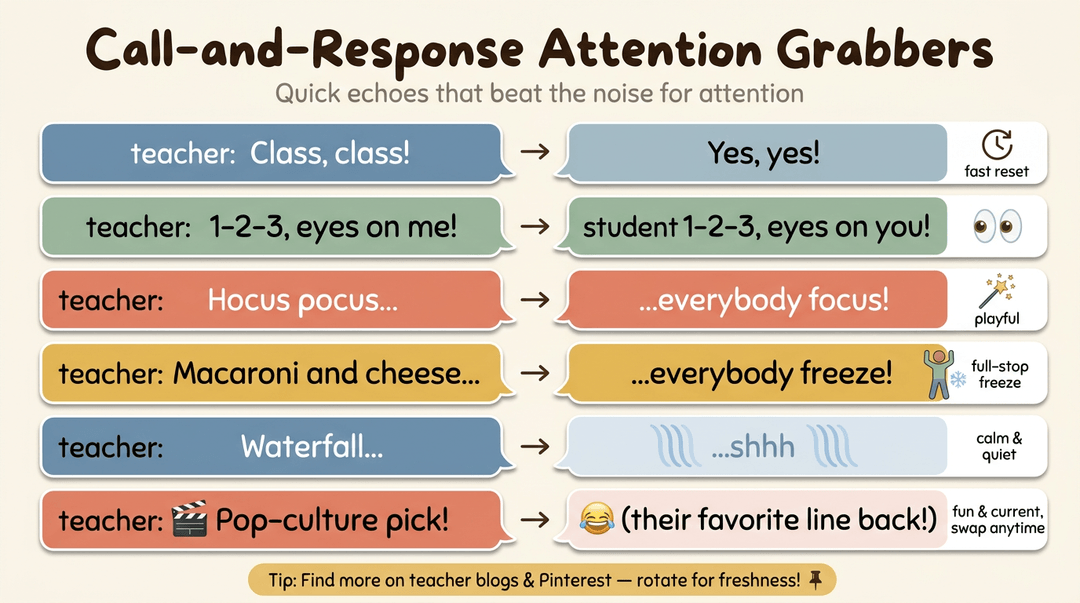
- Class class / yes yes: a simple echo that resets focus fast.
- 1-2-3 eyes on me: kids reply "1-2-3 eyes on you."
- Hocus pocus, everybody focus: playful and easy to remember.
- Macaroni and cheese, everybody freeze: doubles as a full-stop, hands-still cue.
- Waterfall, shhh: a quieter, calming option for softer transitions.
- Pop-culture or movie-themed phrases: swap in a current favorite for a laugh (a solid answer if you're after funny attention getters).
- Large curated phrase lists from teacher blogs and Pinterest boards, worth skimming for a fresh rotation.
Countdown cues that grab attention
Countdowns are auditory cues that give kids a visible endpoint, which is part of why they work so well:
- 5-4-3-2-1 countdown: silence expected by "1."
- Class-wide countdown from 10: a longer runway for bigger transitions.
- Give me five: eyes, ears, mouth, hands, and body all checked off.
- Voices off in 5-4-3-2-1: names the goal, not just the number.
Chants that get kids moving
Nonverbal and visual chants pair movement with sound, which helps wiggly learners burn off energy while resetting:
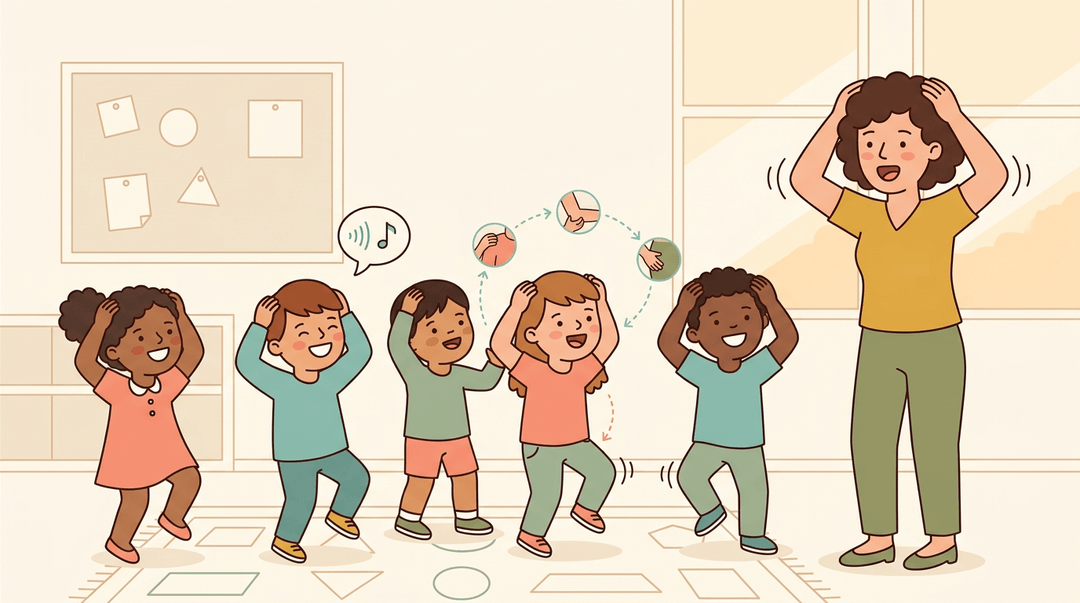
- Hands on head sequence: a simple physical cue that's easy to spot from across the room.
- Touch shoulder, elbow steps: a short movement chain kids follow together.
- Body-movement call and response: you model a motion, they mirror it back.
Which grades these cues work best
These cues are strongest with elementary students, who respond well to rhyme, rhythm, and repetition. Older kids often find sing-song chants childish, and by middle and high school, students tend to prefer a quieter nonverbal signal, like a raised hand or a light switch, over a call-and-response. By high school and college, attention-getters in this playful sense are rare; a better answer to what makes a good attention grabber for a speech is an opening hook (a question, a fact, a brief story) rather than a classroom chant.
Non-verbal Ways to Grab Attention
Some of the most reliable attention-getters never need a voice at all. A rhythm, a gesture, or even a well-timed pause can pull a room back together just as fast as any chant.
Clap and snap patterns
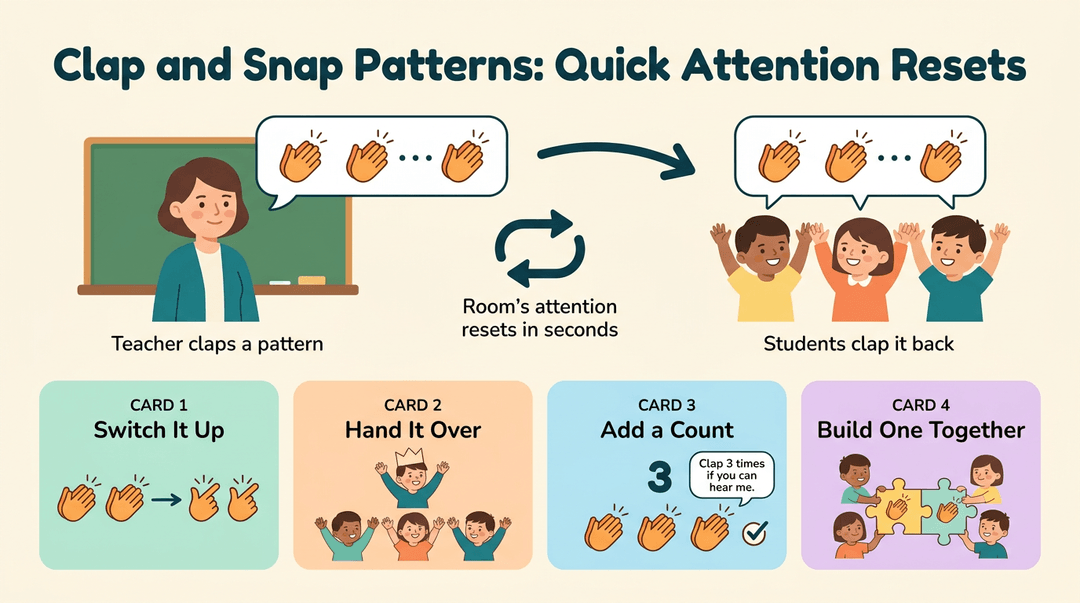
A simple call-and-response clap does the heavy lifting here. You clap a short rhythm, students clap it back, and the room's attention resets in seconds. A few ways to keep it fresh:
- Switch it up. Move from clapping to snapping once the pattern gets predictable.
- Hand it over. Let a student lead the pattern for the day.
- Add a count. "Clap three times if you can hear me" turns it into a quick, self-checking cue.
- Build one together. Design a custom pattern with the class so it feels like theirs, not just yours.
Hand signals students can follow
Hand signals work because they're silent, visible, and fast. The classic "give me five" (raise a hand, count down fingers) is a staple, but it's worth rotating a few others in:
- The quiet coyote sign (thumb and two fingers up) as a silent "stop and look."
- Simple sign language for common needs like bathroom or sit down, so a lesson never has to pause for a spoken request.
- A "5 things" checklist gesture, cueing eyes, ears, mouth, hands, and feet all at once.
Using silence and presence
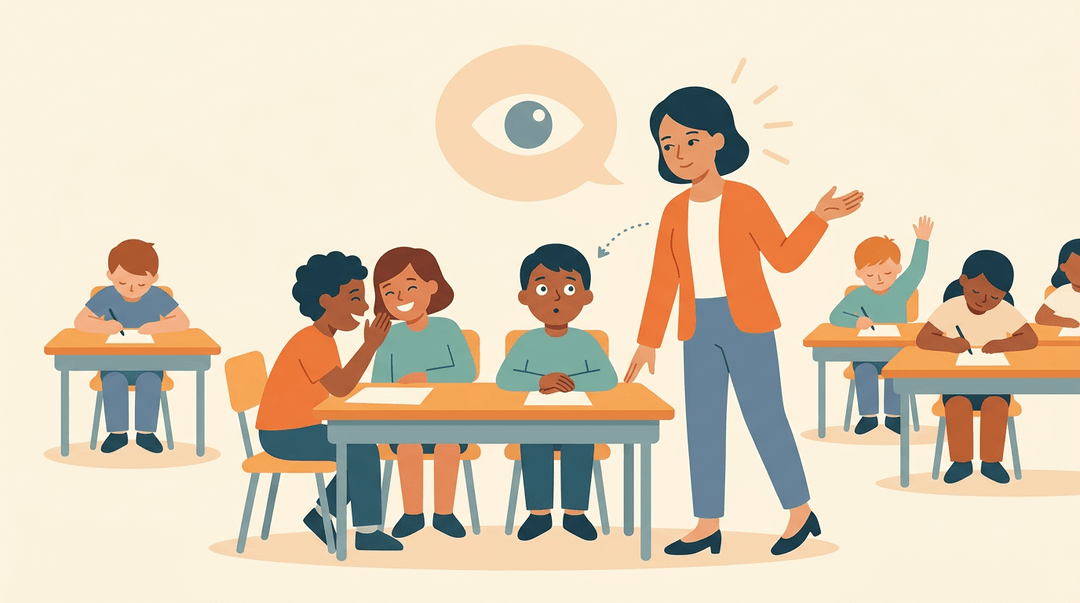
Sometimes the most powerful cue is no cue at all. The look (an expectant, silent gaze) tells a class you're waiting without a word. Walking toward a distracted table while continuing to teach, sometimes called teacher proximity, works the same way: your presence does the redirecting.
Sound and light cues
A chime, bell, or drum tap gives students a consistent auditory anchor, and a meditation chime works well for a calmer reset. A timer or the end of a song can double as a built-in "wrap up" signal, while flashing the lights or playing a distinct sound effect cuts through noise fast. In a virtual classroom, the same logic holds: a chat ping, a shared screen flash, or a "mute all" moment can serve as your non-verbal cue when you can't walk the room.
Attention-getters by Grade Level
The right cue depends on who's in front of you: the chant that delights second graders makes tenth graders cringe. Pick one cue per group below, teach it explicitly, and use it the same way every time.
Elementary: make it playful and physical
Young students respond to call-and-response, so give them a part to perform:
| Cue | You do | Students do |
|---|---|---|
| Class-Class | Say "Class, class!" in any voice | Answer "Yes, yes!" matching your tone |
| Give Me Five | Raise an open hand, fingers spread | Raise hands, voices off, eyes on you |
| Clap-back | Clap a rhythm: clap, clap, clap-clap-clap | Echo the exact rhythm back |
| Countdown | Count aloud: "5, 4, 3, 2, 1" | Silent and hands empty by zero |
Middle and high school: keep it low-key
Older students respond to cues that respect them, so skip the chants and lower the volume.
- Direct verbal cue. The same calm line every time. Say: "Eyes up here in ten seconds."
- Silent hand raise. You raise a hand; students raise theirs and stop talking.
- No voice needed, which keeps the room's tone steady.
- Timer plus music. Music plays during group work; when it stops, talk stops.
- Peer-led signal. A rotating student gives the cue; ownership beats compliance.
Virtual classrooms: cues that beat the mute button
Screens hide half your nonverbal toolkit, so every cue needs a digital anchor.
- Chat reaction prompt. Say: "Drop a thumbs-up in the chat when you're with me."
- Mute-all chime. Play the same short sound, then mute all; the chime becomes the signal.
- Shared-screen countdown. Share a visible 10-second timer; talk ends at zero.
- Camera-on cue. Cameras on means we're back together; make that the regroup signal.
Key principle: No cue works untaught. Whatever the age or platform, practice it on day one, then wait for the full response every single time before you speak.
Setting up a substitute
A sub can't lean on your relationship with the class, so hand them the cue ready-made:
- Post the cue on the board. Write it verbatim, not as a summary.
- Example: "Attention signal: I say 'Class, class,' you say 'Yes, yes.'"
- Have students demo it. Tell the sub to open with: "Who can show me the attention signal?"
- Default to the clap-back. Nearly any class echoes clap, clap, clap-clap-clap unprompted.
- Keep it simple and short. One move, one response; no multi-step routines with a stranger up front.
Once you've matched a cue to your class, save your go-to attention-getters right inside each lesson plan in EMStudio's classroom management app so they're there every time you plan.
How to Make Attention-getters Work
An attention-getter only works if students know what it means and trust that everyone will respond to it the same way. We can build that trust through a few deliberate habits, from teaching the signal to keeping it fresh.
Teach the expectation first
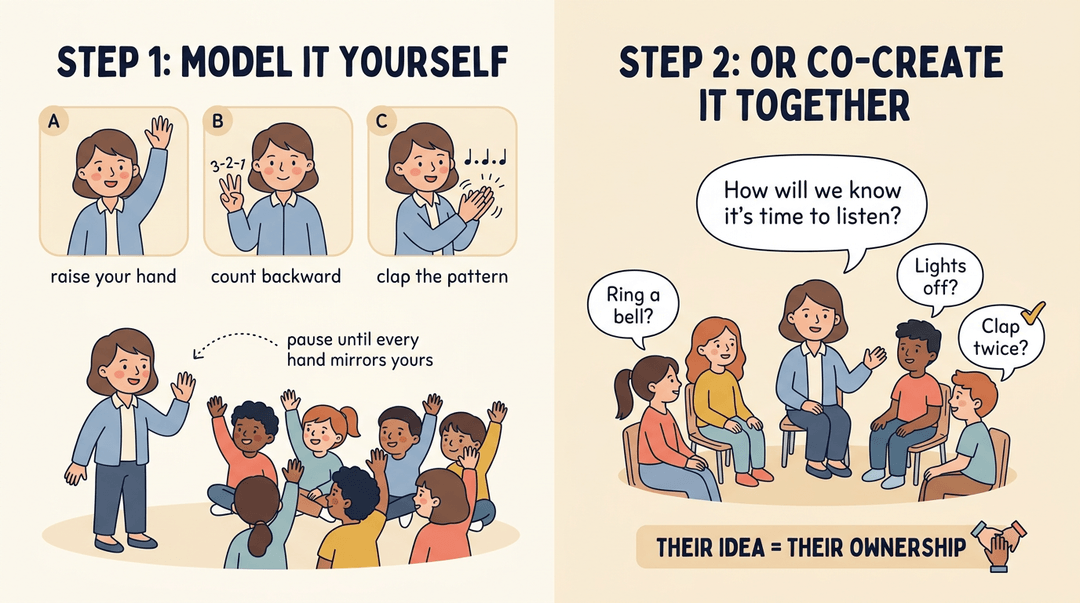
Before you ever use a cue, show students exactly what it looks like. Model the expected response yourself:
- raise your hand
- count backward
- clap the pattern
then pause until every hand mirrors yours. Some teachers frame the cue as a class dilemma, asking, "How will we know when it's time to listen?" and letting students work out the answer together.
Co-creating the signal, especially with older students, gives them ownership and makes them far more likely to honor it.
Practice the cue often
A cue is only as strong as the habit behind it. Rehearse it before the first real lesson, the same way you'd walk through a fire drill.
Practice during low-stakes moments, like transitions or free time, so the response becomes automatic rather than a surprise.
Timing students ("Let's see if we can get quiet in five seconds") turns practice into a quick game and builds speed without pressure.
Mix up your cues
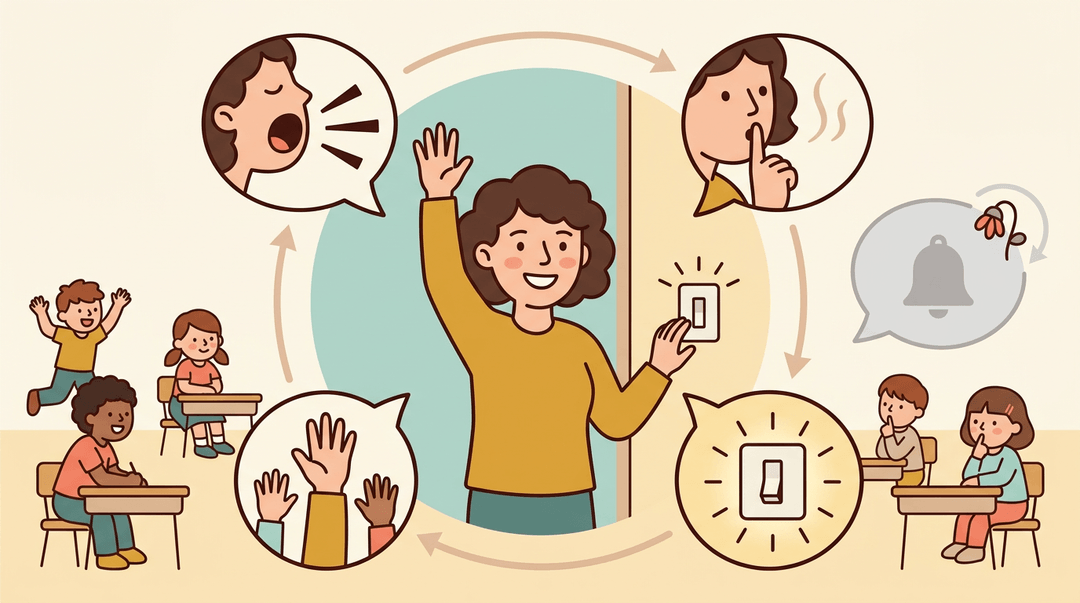
No single cue survives a whole school year unscathed. Rotate between verbal calls and nonverbal signals like a raised hand or a light switch, and match the cue's energy to the activity: a chant suits a high-energy transition, a whisper suits quiet work.
This is also where cue fatigue creeps in: if a signal gets ignored, it's usually overused, not broken. Refresh it every few weeks, and retire the one that's stopped landing before it turns into background noise.
Ask students for feedback
Students are honest critics of what actually gets their attention. Ask them directly what already works, and invite quieter feedback through a quick note or exit ticket for students who won't speak up in front of the class.
Keep in mind that a clap or gesture that lands for most students might not work for one with a motor difference, or may clash with a cultural norm, so build in an alternative response for anyone who needs it.
Add visual reminders
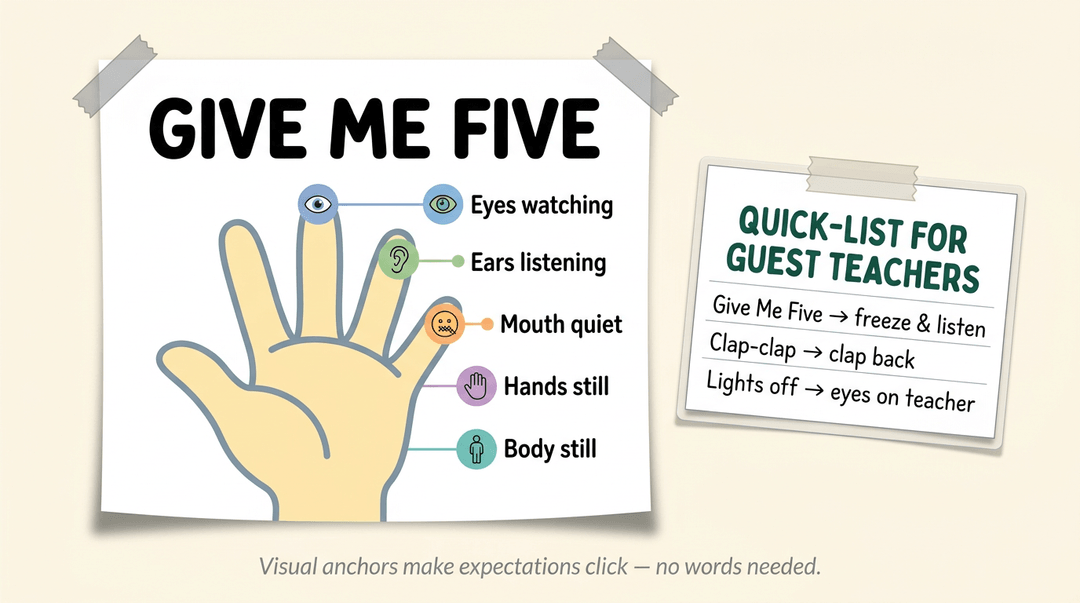
A visual anchor helps a cue stick, especially for younger learners. A simple poster showing the signal, like a hand with five raised fingers for give me five:
- eyes watching
- ears listening
- mouth quiet
- hands still
- body still
reminds students what's expected without you saying a word. Keep a laminated version of that chart, plus a one-line list of your go-to cues, taped near the board.
It doubles as a substitute-friendly cue quick-list, so a guest teacher can run the same signals your class already knows.
Using Cues During Transitions
Transitions eat more class time than most teachers realize: lining up, cleaning up, switching from carpet to desks. A well-placed cue turns that dead time into something automatic, so you're not repeating yourself five times a day.
Chants for lining up fast
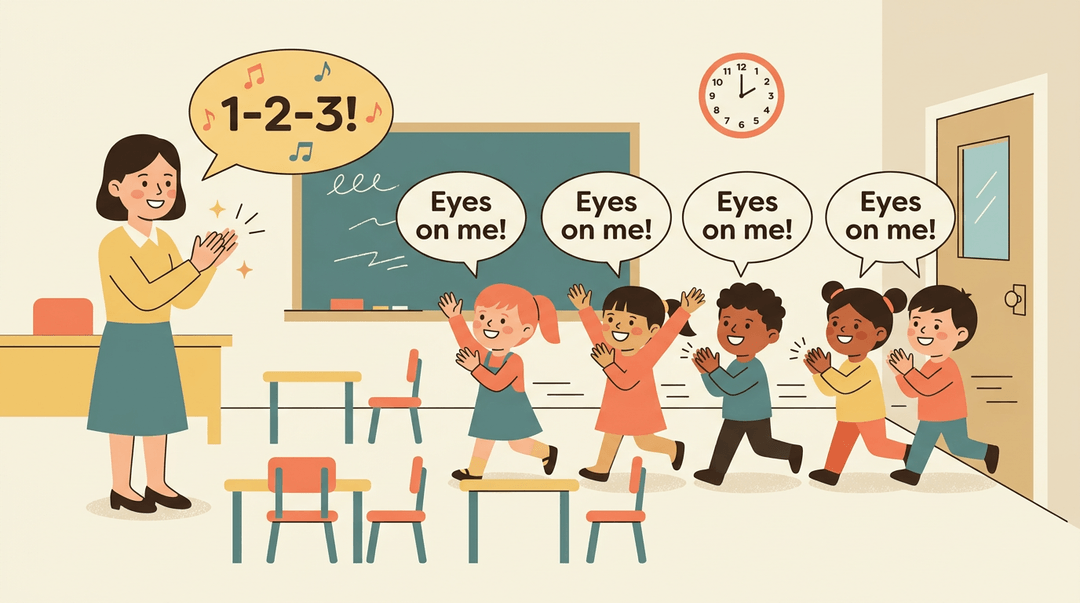
A short, rhythmic call-and-response chant gets a class moving without a single "hurry up." Think of a kindergarten teacher who claps out "1-2-3, eyes on me" and waits for the matching reply before giving the next instruction.
Because the chant is predictable, students know exactly what's expected and start moving before you've finished the phrase.
That predictability is what actually reduces transition delays. Once a chant is practiced, it replaces a string of individual reminders with one shared cue everyone responds to at once, shaving real minutes off the trip from desks to the door.
Songs that signal transitions
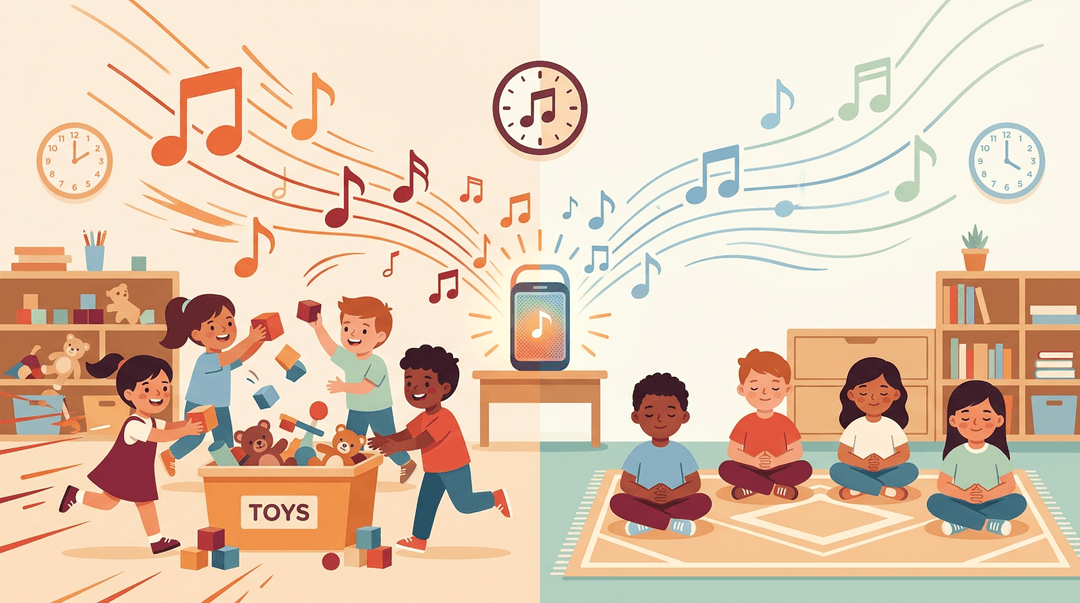
Music works the same way, just stretched over more time. Build a short activity playlist: a couple of minutes per song, matched to what's happening in the room.
An energetic track can push a clean-up along, while a mellow one signals it's time to settle back down after recess. A portable speaker makes this easy to run in any room, or outside for a transition between the playground and the classroom.
Pair each song directly with a task's end: when the music stops, the task stops too, whether that's blocks put away or chairs pushed in. Used as a built-in timer, the song does the reminding so you don't have to.
Attention-getters aren't a gimmick. They're a small, repeatable habit that turns scattered energy into a room that's ready to listen, whether you're using a call-and-response, a raised hand, or a quiet visual cue.
Pick a few that fit your students, use them consistently, and transitions get smoother almost overnight. Ready to build routines like this into every class period?
Check out our Classroom Management feature to organize your classes, rosters, and timetables in one place.
References
Frequently asked questions
What is a good attention grabber?
A good attention grabber is a short, consistent cue that quickly brings people’s focus back to you. In a classroom, examples include a clap pattern, a raised hand, a countdown, or a call-and-response phrase such as “Class, class” followed by “Yes, yes.”
What is give me five attention getter?
“Give me five” is one effective attention-getter. The teacher raises an open hand, and students respond by raising their hands, quieting their voices, and focusing their eyes and bodies on the teacher.
What are the five attention getters?
Five common attention-getters are “Class, class / Yes, yes,” “1-2-3, eyes on me,” “Hocus pocus, everybody focus,” “Macaroni and cheese, everybody freeze,” and a 5-4-3-2-1 countdown.
What are the four types of attention getters?
The four types of classroom attention-getters are verbal, nonverbal, visual, and auditory. A call-and-response is verbal, a raised hand is nonverbal and visual, and a chime or clap is auditory.
What are some fun attention getters for 3rd graders?
Fun attention-getters for third graders include “Hocus pocus, everybody focus,” “Macaroni and cheese, everybody freeze,” a clap-back rhythm, and a movement sequence such as hands on head or touching shoulders and elbows. Countdown cues and student-led call-and-response motions can also keep transitions playful.
What are some funny attention getters?
Funny attention-getters include playful phrases such as “Hocus pocus, everybody focus” and “Macaroni and cheese, everybody freeze.” You can also use a silly pop-culture or movie-themed call-and-response, provided students can respond quickly and understand what the cue means.
What are some attention grabbing phrases?
Attention-grabbing phrases include “Class, class” followed by “Yes, yes,” “1-2-3, eyes on me,” “Hocus pocus, everybody focus,” “Macaroni and cheese, everybody freeze,” and “Waterfall, shhh.” For older students, a calm phrase such as “Eyes up here in ten seconds” may work better.
What is an example of an attention getter?
An example of an attention-getter is a teacher clapping a short rhythm, such as clap, clap, clap-clap-clap, and students echoing it back. Once practiced, the response signals students to stop, listen, and focus.