Class Guidelines: A Complete Guide to Setting Them Up

Jump to section
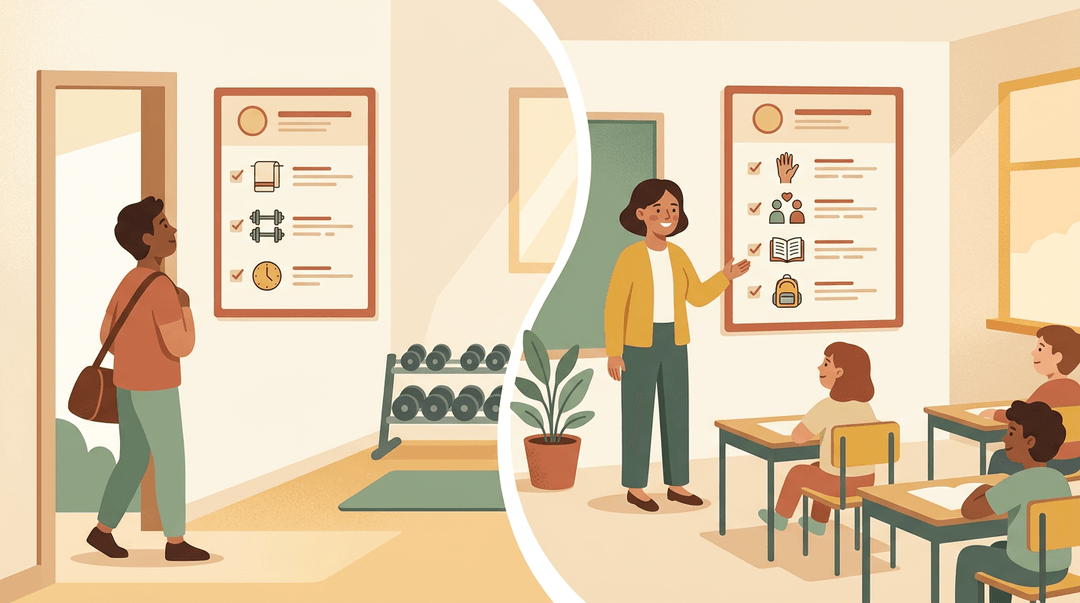
Think about walking into a new gym. A few posted rules on the wall tell you what's expected before you ever pick up a weight. Your classroom needs that same clarity.
That's exactly what class guidelines do. They're the short set of expectations that tell students how to behave, treat one another, and show up ready to learn. Get them right, and you'll spend less time correcting and more time teaching.
We'll cover what guidelines are, how many to have, and how to write, teach, and enforce them. We'll finish with a first-week plan you can run in any setting.
Why Simple Class Guidelines Work Best
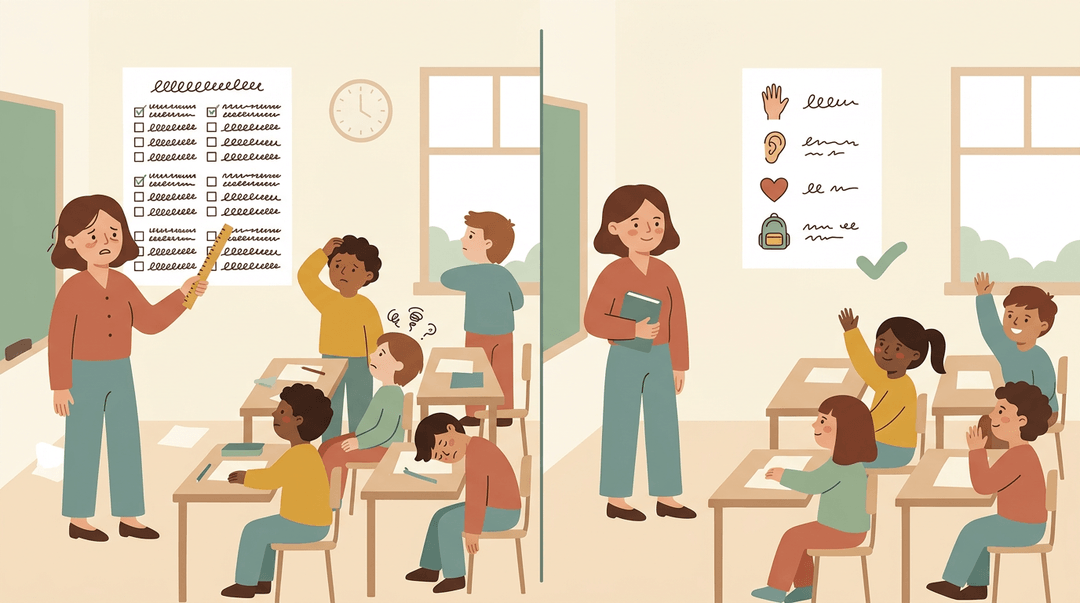
Most classrooms need fewer guidelines than teachers expect. Here's why a short set works better.
Why fewer rules tend to work
- Students struggle to find the right rule. A long list means a long search, so kids guess or tune it out.
- Kids already know most of the basics. A short list reminds them of what they know instead of lecturing.
- Too much to remember. When the list is long, very little actually sticks.
- Rules change every year. Shifting rules never become habits.
Consider a fifth-grade teacher who posts twelve rules on day one. By October, she's spending more time pointing at the poster than teaching. She trims it to four, and the reminders fade. Simple wins.
Fit every rule under two big ideas
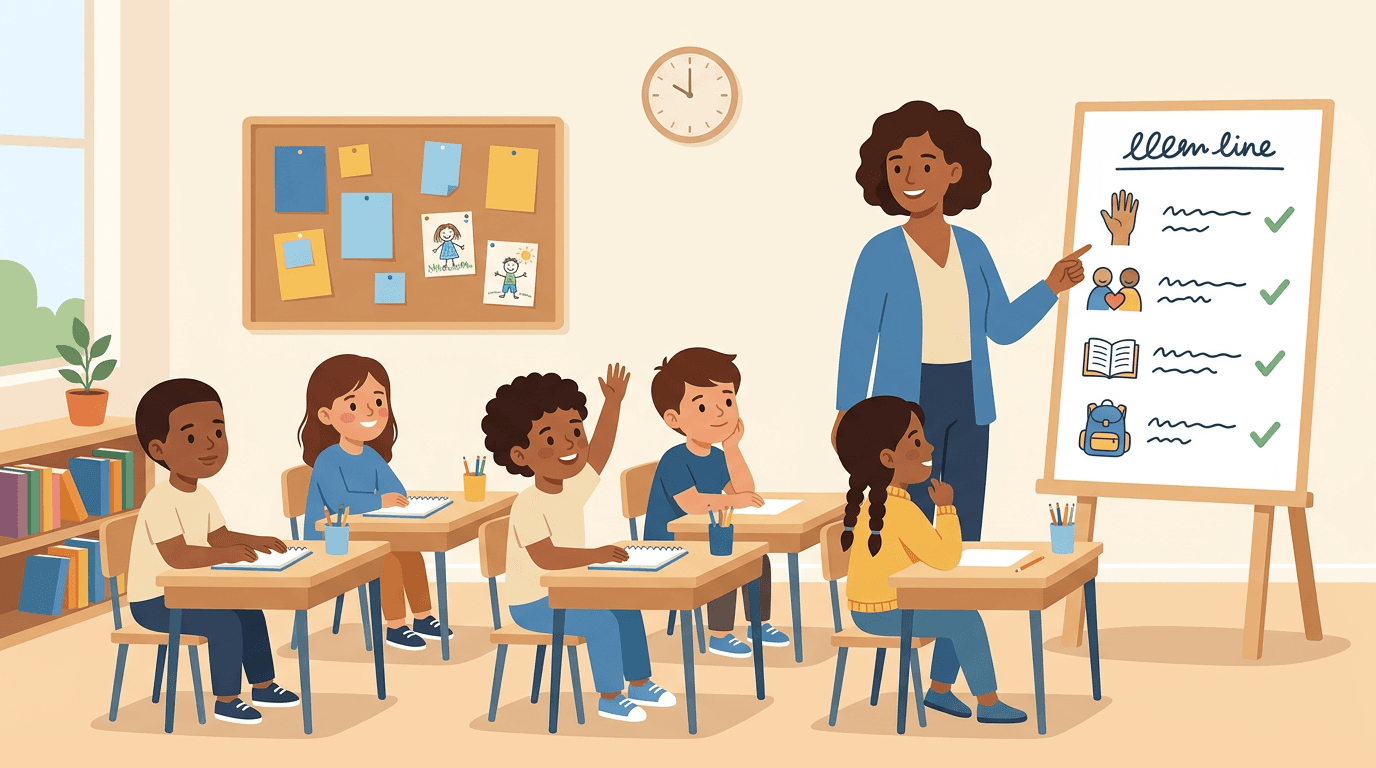
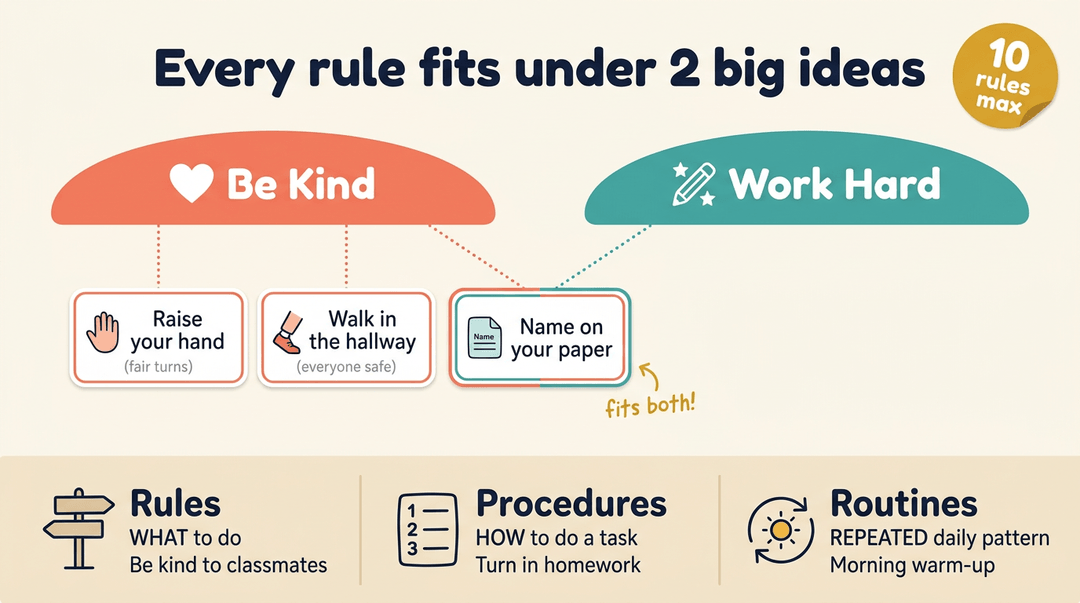
Every rule can fit under one of two big ideas: Be Kind and Work Hard. Putting your name on your paper fits under both: it shows pride in your work and saves your teacher time sorting stacks. Raising your hand gives classmates a fair turn, so it's Be Kind.
Walking in the hallway keeps everyone safe, which is Be Kind too.
The big 5 classroom rules are five broad expectations that each sit under Be Kind or Work Hard. The 10 rule means your full list should stay at ten or fewer.
Rules tell students what to do, like being kind to classmates. Procedures tell them how to get a task done, like turning in homework. Routines are repeated patterns that run your day, like a morning warm-up.
Set up Class Guidelines in Week One
Use this plan to go from a blank wall to a working set of class guidelines in five days. It runs in any grade and any setting, and the heavy lifting happens on days one to three.
Days 1 to 3: draft, teach, post
Day 1: draft the rules together. Students follow rules they helped build, so start with their ideas.
- Brainstorm what makes learning work
- Say: "What helps you learn best in this room?"
- Collect every answer on sticky notes or the board.
- Group ideas into 2 to 5 rules
- Sort similar notes: "no calling out" and "let people finish" become one rule.
- Keep the list short enough to recite from memory.
- State each rule positively
- Say what to do, not what to avoid.
| ❌ Negative | ✅ Positive | What changed |
|---|---|---|
| No running | Walk inside | It names the behavior you want to see |
| Don't interrupt | Listen when others speak | Students know the action to take |
Days 2 and 3: teach and practice. A rule isn't taught until students have seen it, done it, and seen it done wrong.
- Model and role-play examples
- Show "Listen when others speak" yourself: eyes up, pencil down.
- Then invite two students to demonstrate.
- Practice non-examples too
- Act out the wrong version, then ask: "Is this following our rule? How do you know?"
- Post a visible class chart
- Hang it at eye level, in the students' words, where everyone can read it.
Example: On day two, a fourth-grade teacher plays a student who calls out an answer, then freezes. The class names which rule was missed and replays the moment correctly. Laughing at the non-example makes the real rule stick.
⚠️ Watch out: Don't skip the non-examples. Students who've only seen the ideal version often can't tell what a "miss" looks like.
Rules by grade level
Same process, different format. Pick the row that matches your students.
| Grade band | Format | What it looks like |
|---|---|---|
| K-2 | Picture-based rules | A drawing per rule with a short caption |
| 3-5 | Student-written rules | Small groups word the rules, then vote |
| 6-12 | Shared class agreement | A one-page agreement the class discusses and signs |
Your week-one checklist
Before Friday, confirm each item is done:
- Rules phrased positively: every rule says what to do.
- Consequences explained calmly: you've said them once, plainly, without a lecture.
- Family letter sent home: it lists the rules and how families can reinforce them.
- Substitute copy prepared: a one-page version sits in your sub folder.
For the consequences conversation, try: "Here's what happens if we forget a rule: a quiet reminder first, then a short chat."
Keep your class guidelines, rosters, and weekly timetables together in EMStudio's classroom management tools.
Sharing Your Rules with Students and Families
Rules only work when students and families both understand them. Here's how to share yours.
Teach students the rules through sorting
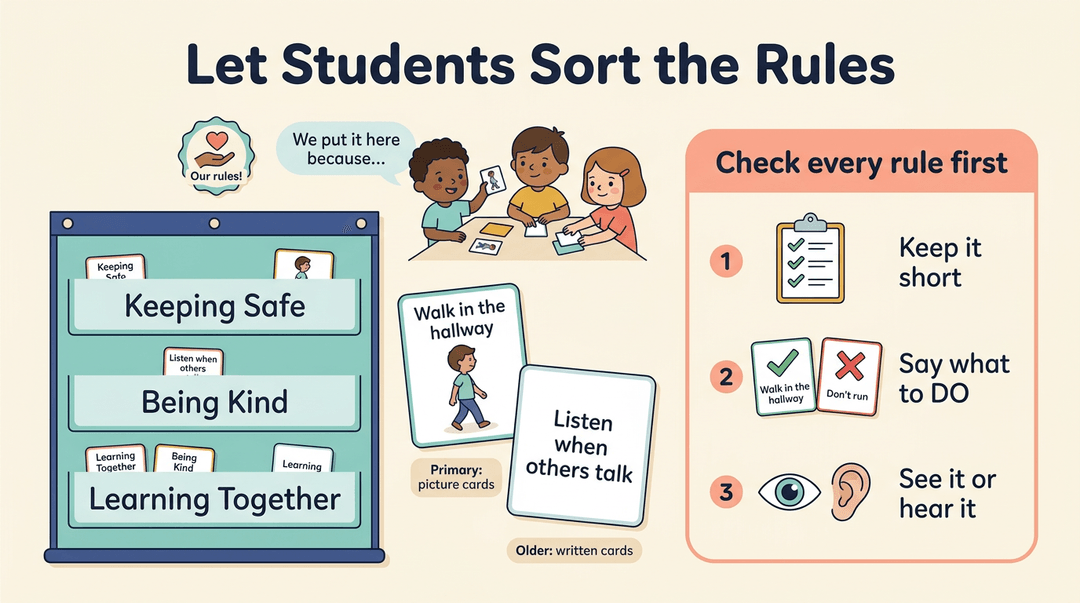
Let students shape the rules. In a pocket chart sorting activity, write each rule on a card and have students sort the cards into labeled pockets.
A second-grade teacher might have small groups sort the cards, then explain their choices. The rules start to feel like ours, not yours. Ownership sticks. Classroom jobs give students a regular role in keeping that ownership going.
That collaborative sorting builds a caring classroom climate, because students practice listening to classmates. Pair it with first-days review pages that repeat the rules.
Adapt the sort by grade band: primary students sort picture cards, while older students sort written statements.
Before anyone sorts, check that each rule meets three guidelines for establishing classroom rules:
- Keep the list short. A handful of rules beats a long list nobody remembers.
- Say what to do. 'Walk in the hallway' tells students what to do, while 'Don't run' only names what to avoid.
- Make it observable. Pick rules you can see or hear, so you can tell right away whether they're followed.
Display and adapt your rules
Post the sorted rules as a rule poster where everyone can see it. Use the editable template to reword any rule for your room, and add new rules for students to sort.
Post a digital copy for virtual lessons, and keep a printed one in your substitute folder for anyone covering your class. The template is reusable across years.
Link your rules to home and behavior
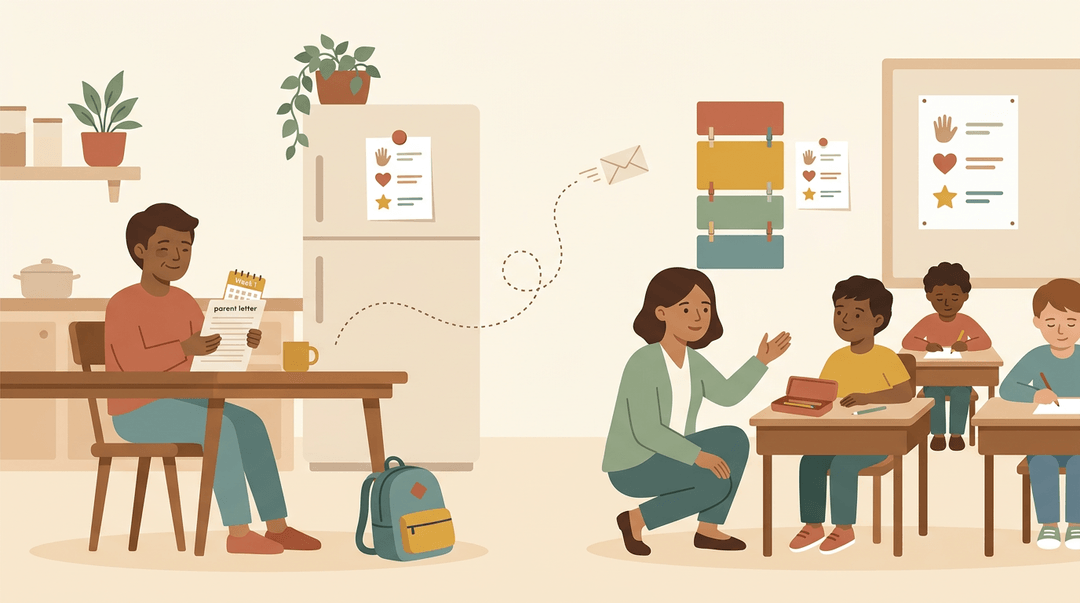
Send the sample parent letters home early, before any concern comes up. Consider a fifth-grade teacher whose families got the letter in week one. When a student forgot a materials rule, a quick reminder was enough.
Your rules pair naturally with a clip chart, so every change ties to a specific rule.
Pair every rule with a consequence you apply the same way each time, so students know what to expect. Agree on core rules with your grade-level team so students hear one set of expectations.
Licenses for one classroom and extras
The packet covers one classroom. Extra licenses for a co-teacher or grade-level team are discounted.
North Carolina Class Size Rules for K-3
Class size in kindergarten through third grade (K-3) is set by state law. Here's how that law came about and what it means for your roster.
How HB90 became law in 2018
House Bill 90 was introduced in 2018 and became Session Law 2018-2. The governor didn't approve it within the time the law allows, so it became law without the governor's signature.
The bill amends G.S. 115C-301, the General Statutes section that sets class size requirements, beginning with the 2018-2019 school year.
How big K-3 classes can get
These limits come in several layers:
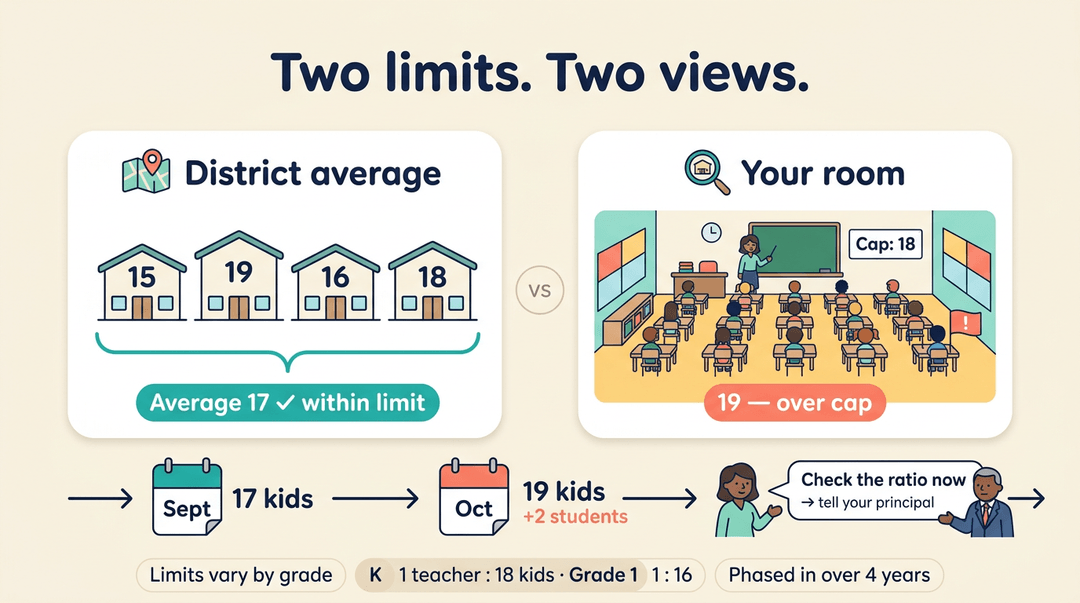
- District average limits. The average class size across a district has to stay within a set number.
- Individual maximum limits. Each classroom also has its own cap.
- Four-year phase-in. The changes roll out over four years.
- Limits by grade and year. LegalClarity notes that limits vary by grade and year, with examples like one teacher per 18 kindergartners and one per 16 first-graders.
A district average looks at the whole school system, but the individual maximum looks at your room. Consider a kindergarten teacher whose class grows by two students in October.
Checking the ratio right away gives her time to raise it with her principal before the problem grows.
How PET funding supports specialist teachers
The law also funds PETs, specialist teachers in arts, physical education (PE), health, and languages. Funding is tied to a 1:191 student ratio, meaning one specialist for every 191 students, and it phases in by set percentages rather than all at once.
Two more rules matter: the law restricts how the classroom teacher allotment can be used, and it exempts these specialist classes from the class size caps. Read the fine print: the exact percentages are spelled out in the statute itself.
Speaking up for Arts and Raising Concerns
Arts programs rarely vanish in one vote. They shrink quietly, one budget line at a time, so speaking up early matters.
Why arts belong in basic education
School arts classes give every student a chance to create, perform, and see their own work displayed, whatever their family can afford outside school. That's equitable access, and it's worth protecting.
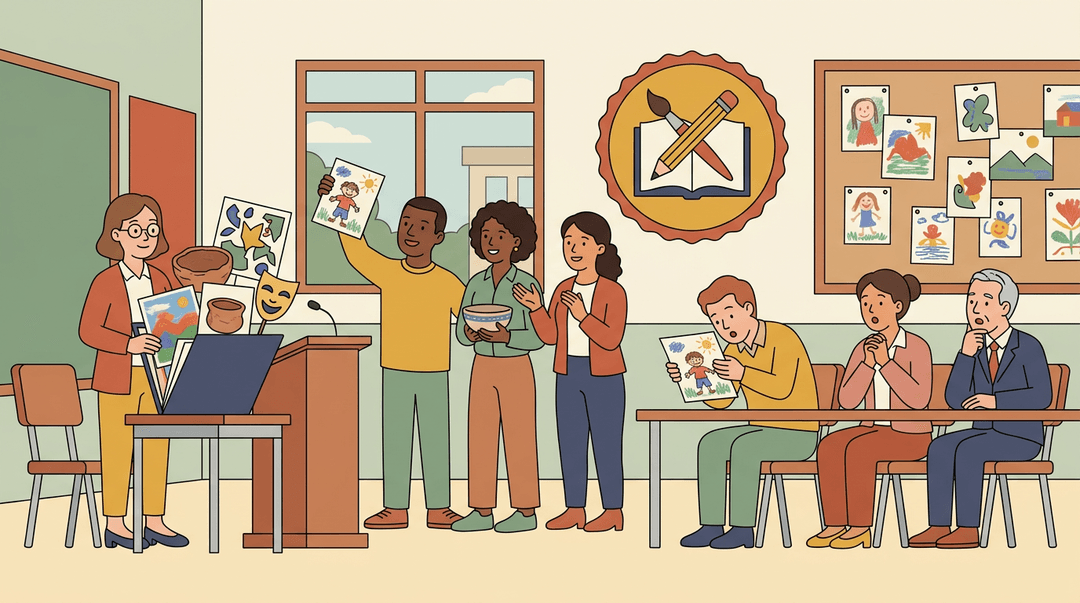
Strategic alliances and coalitions carry more weight than any single voice. Think of an arts teacher who brings a portfolio of student work to a school board meeting with a few parents.
The conversation shifts from “Is this nice to have?” to “Look at what students built.”
Arts are part of the core of a complete education, not an extra. Frame them that way, and the debate shifts from whether arts can be afforded to what students would lose. Arts are basic education.
Where the law could hurt arts classes
Here's where the pressure will land:
- Funds may shift to classroom teachers. Money meant for arts could move toward general classroom teachers, leaving the arts room to compete for what's left.
- No added funding for grades 6 through 12. Middle and high school arts must stretch existing budgets.
- Facilities needs not addressed. Without targeted support, a ceramics teacher still has to find a working kiln somehow.
- Likely cuts in middle and high school arts. Taken together, these gaps make cuts in those grades likely.
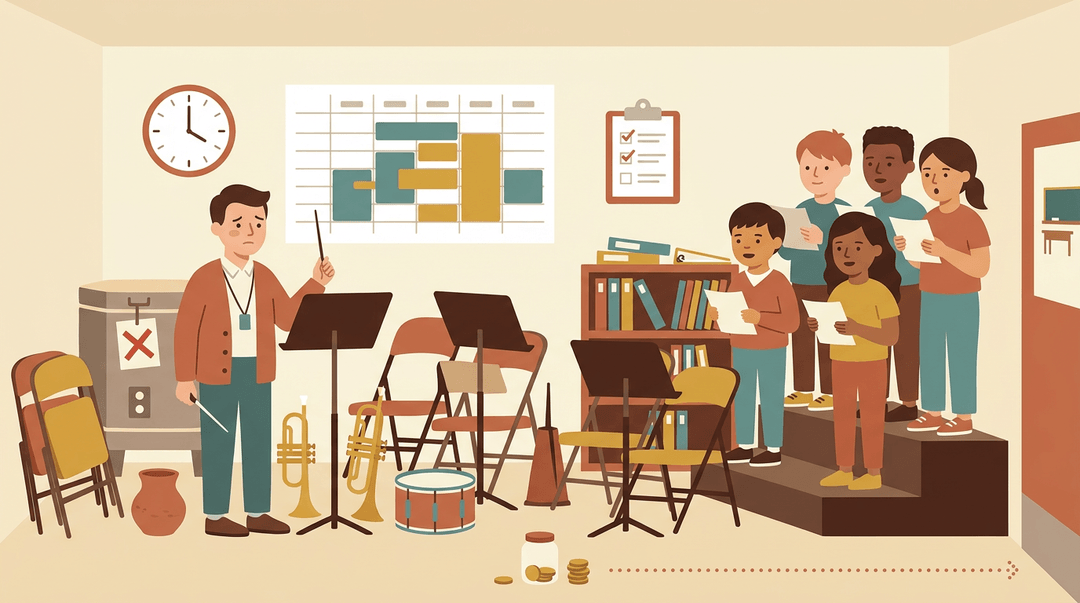
Picture a middle school band director who already shares one practice room with the chorus teacher. When budgets tighten, that director is asked to make do, and every student loses a little more practice time.
Document these specifics now, including room schedules, so you have concrete evidence to bring to the table.
Clear, simple guidelines give your students a steady place to learn. Keep them short, teach them directly, and enforce them consistently, and your room runs with less friction and more focus.
Ready to bring that same structure to your day? Check out Classroom Management to keep your classes, sections, rosters, and timetables in one organized workspace.
References
- SL 2018-2 (HB 90) — ncleg.net
- NC Special Education Class Size Regulations: Limits by Level — legalclarity.org (2026)
Frequently asked questions
What is the 10 rule for school?
The 10 rule means keeping the full list of classroom rules to ten or fewer. A shorter set is easier for students to remember and follow.
What are some good rules for a classroom?
Good classroom rules are short, positively worded, and describe behaviors that can be seen or heard. Examples include “Be kind to classmates,” “Listen when others speak,” and “Walk in the hallway.”
What are three guidelines for establishing classroom rules?
Keep the list short, state what students should do rather than what to avoid, and make each rule observable. These guidelines make expectations easier to remember and apply consistently.
What are the big 5 classroom rules?
The Big 5 are five broad classroom expectations organized under two ideas: Be Kind and Work Hard. Specific rules should fit under one or both of those expectations.