Guided Reading: A Complete Guide to Planning and Grouping

Jump to section
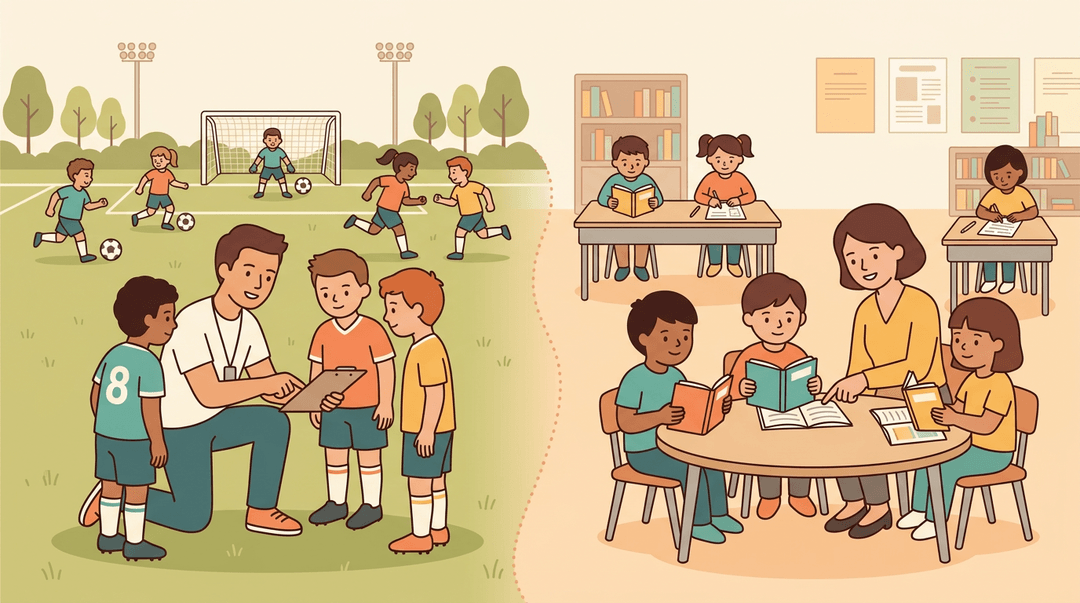
Think of a coach pulling three players off the field for a few focused minutes while the rest of the team keeps practicing. Each player gets exactly the help they need, right when they need it. That's the heart of guided reading.
Guided reading is a small-group lesson where you support students as they read a text matched to their level. In this post, we'll cover what it is, how long it should run, your role, and how to plan, choose books, and group students.
What Guided Reading Is
Guided reading meets readers where they are.
Small-Group Teaching to Build Independent Readers
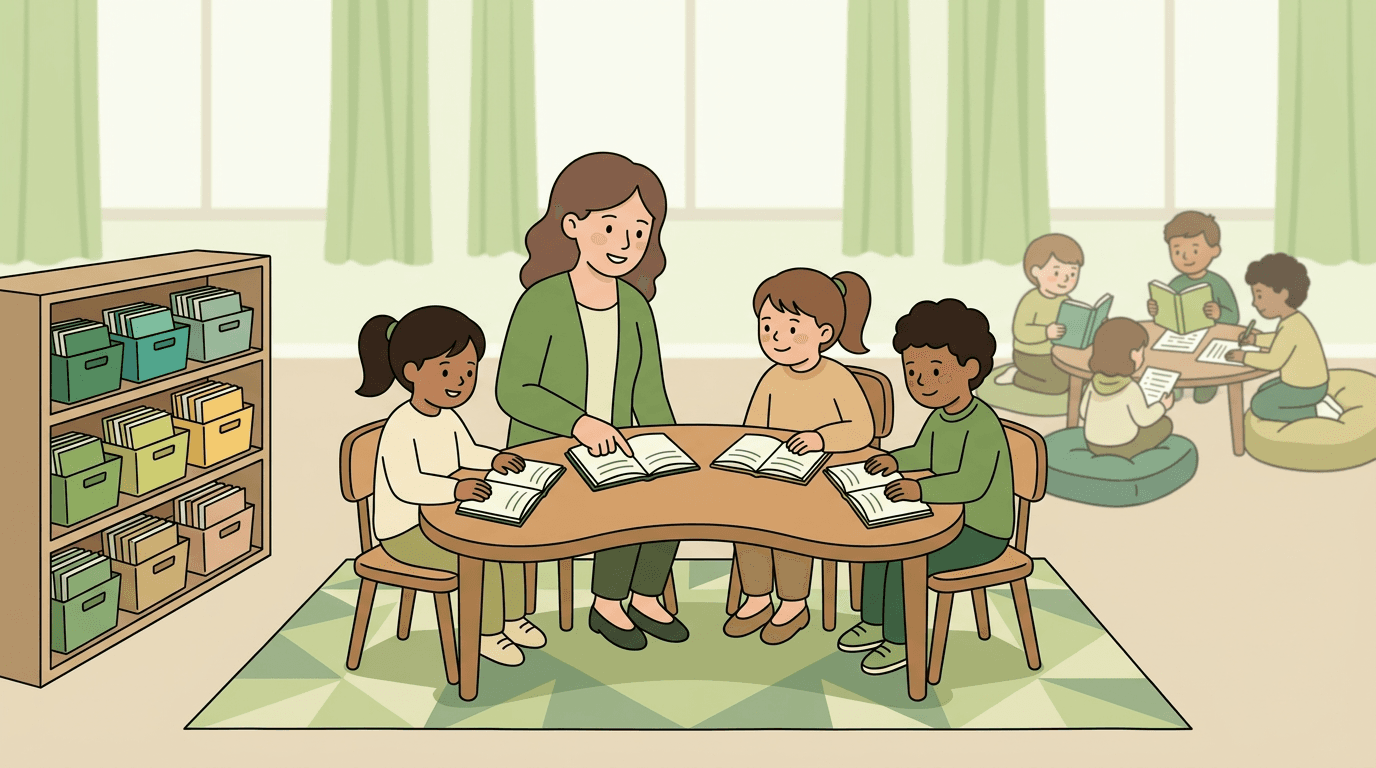
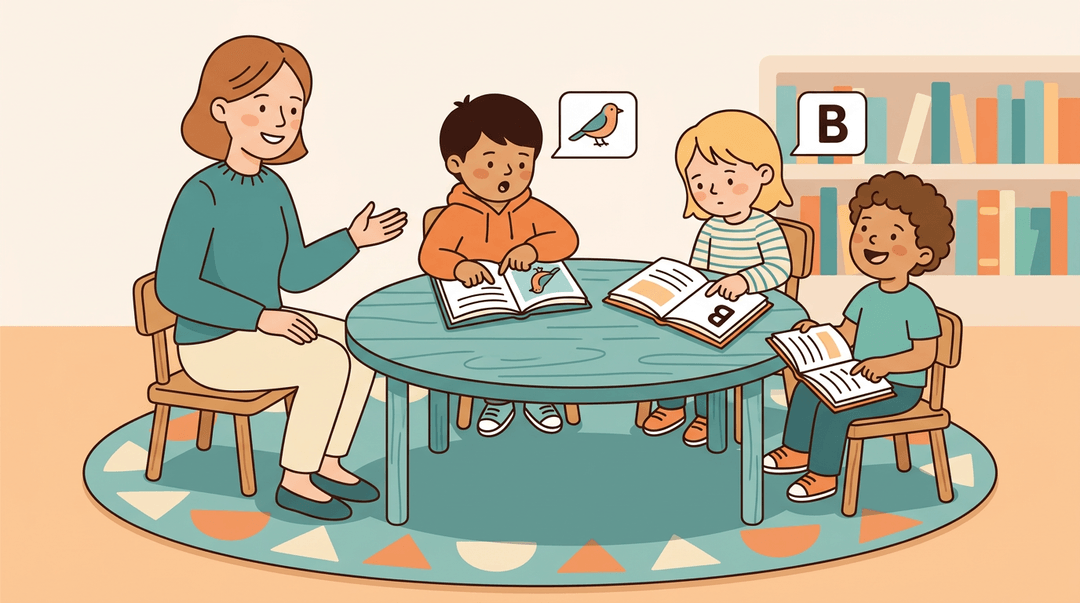
Guided reading is a small-group, teacher-led lesson for readers working at a similar level. You explicitly model strategies, prompt students to try, then step back. Picture a second-grade teacher whose three readers keep stalling on unfamiliar words.
She coaches them to check the picture and first letter, and soon they solve tricky words on their own.
That's why guided reading fosters independent reading skills: students learn strategies they can use without you.
It also supports inclusive classroom needs, since a small group lets you adjust pace and text for a student who needs more support or one ready for a challenge.
How It Fits Into Your Literacy Program
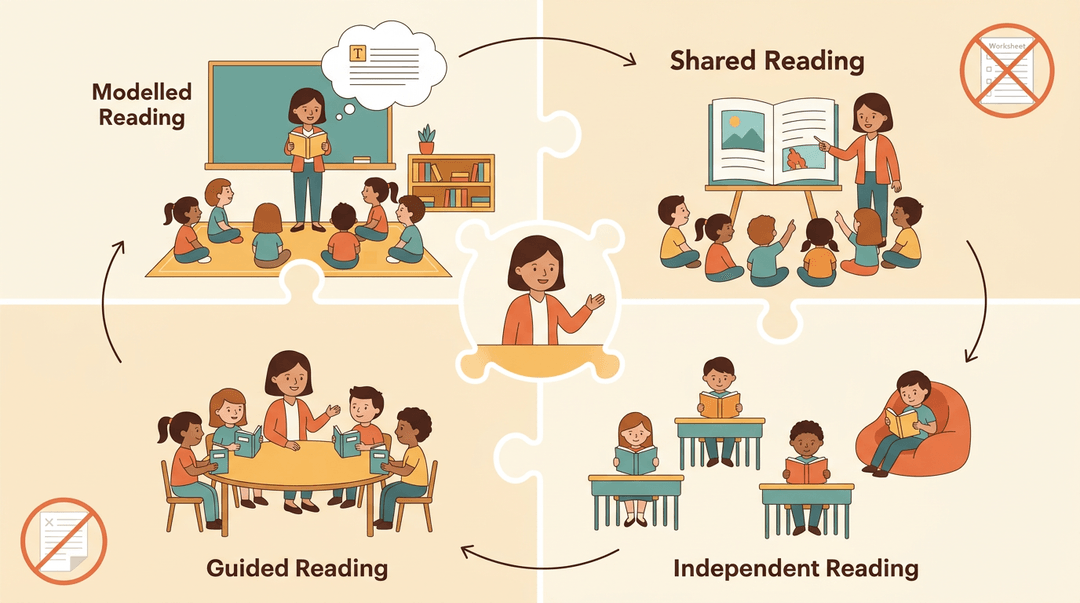
Guided reading sits alongside the rest of your literacy block. It links to modelled reading, where you think aloud through a text for the whole class, and to independent reading, where students apply what they practiced in the group.
It also connects to shared reading: the whole class reads the same text together, often a large-format book everyone can see, and students join in as they're able.
Guided reading also avoids isolated skill drills. Rather than worksheets with no real text, skills are taught inside actual reading. Fewer drills, more reading. The aim is less about finishing a book and more about how each reader builds meaning.
It isn't perfect for every classroom, though. Rotating groups takes planning, the rest of the class must work independently while you're with one group, and you need books at different difficulty levels.
How Long Should a Guided Reading Lesson Last?
A guided reading lesson is a short, focused block, and its length depends on your group's stamina, the text, and what each reader needs. Plan a session that fits your schedule and leaves room to teach, not a fixed clock.
Getting Ready Before You Read
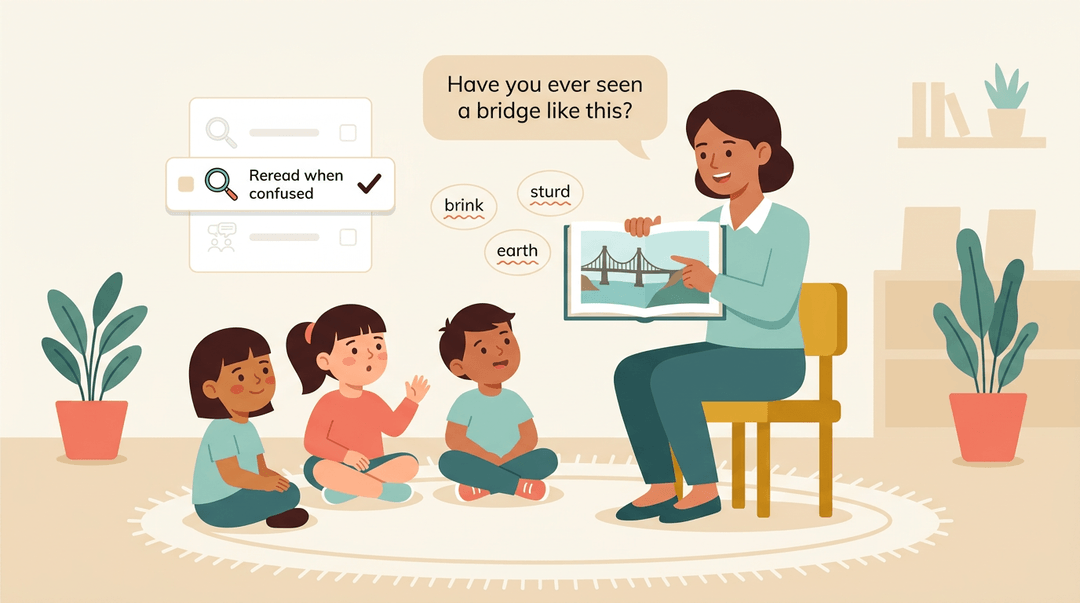
Start by introducing the book so readers know what to expect. Preview the title, pictures, and tricky vocabulary, then check which strategy you're focusing on today.
Think of a second-grade teacher who names one goal, like rereading when a sentence stops making sense, before the group opens the book.
Note likely challenges ahead of time, and activate prior knowledge with a quick question such as, "Have you ever seen a bridge like this one?"
Guiding Students While They Read
Listen in quietly as each reader works, so you hear exactly where they slip. When someone gets stuck, prompt problem-solving instead of supplying the word: "What would make sense here?"
Monitor independent reading so your next move is informed, and support word-matching and phonics focus by pointing readers to letter patterns they can check against the picture and sentence. The goal is thinking through the word, not telling it.
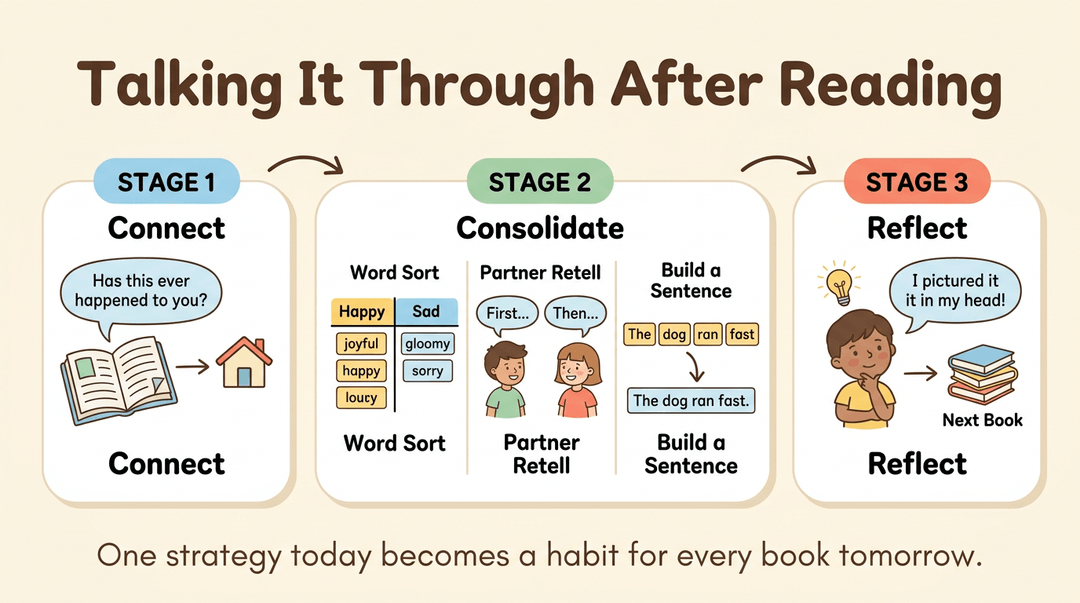
Talking It Through After Reading
Open a follow-up discussion with a question that connects the story to readers' own lives. Then consolidate learning with a short activity such as:
- a quick word sort
- a partner retell
- building a sentence from a key phrase in the text
Finish by reflecting on strategies used, asking students to name what helped them. That habit lets a reader carry one skill to the next book.
The Teacher's Role in Guided Reading
Your role shapes every guided reading group. Here's how to plan, when to step in, and what to understand about your readers.
Planning Ahead for Each Lesson
Strong groups start before the children arrive. Study the book's demands, such as unfamiliar vocabulary and tricky sentences. Then choose your teaching points: the one or two skills this group needs most. Plan for where readers will stumble.
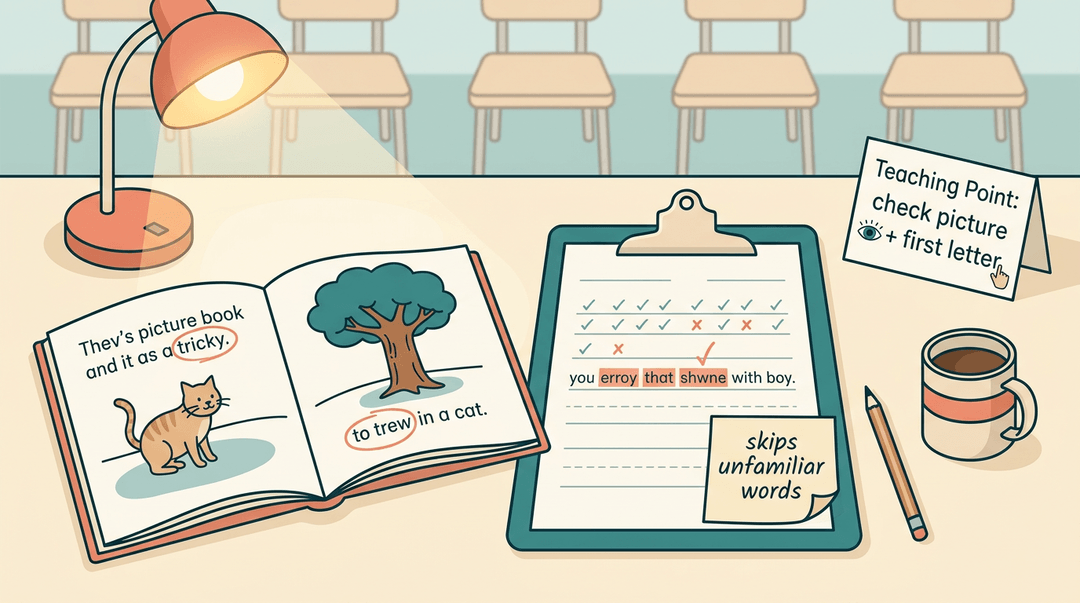
Lean on assessment data. Consider a second-grade teacher whose notes show three readers repeatedly skipping unfamiliar words. She plans a teaching point on checking the picture and first letter, so the lesson targets what the group actually needs.
Running records provide that evidence by showing exactly what each reader does with the text.
Knowing When to Step Back
Early on, you take the lead, modeling and prompting so readers see strong reading. Over time, step back so they practice on their own, with a gradual hand-over of responsibility.
Your job is less about doing the reading and more about watching the reader do it. When a reader gets stuck, pause before rescuing. That short wait builds resilience for harder books.
What Teachers Need to Know
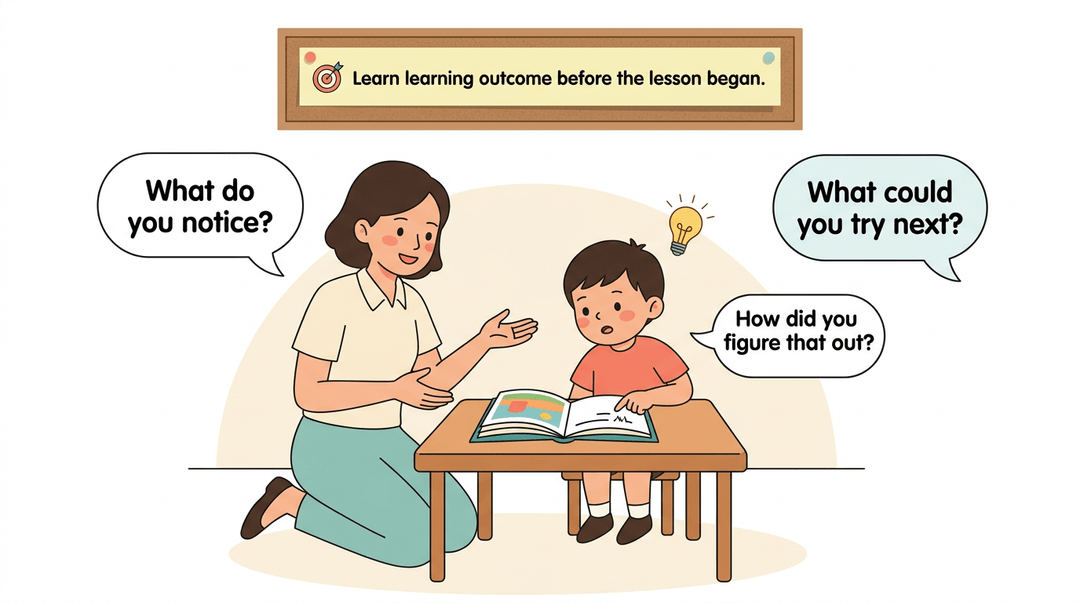
Understanding how children learn to read shapes every prompt you give. Name the learning outcome in one clear sentence before each lesson, then use prompts that build independence:
- "What do you notice?"
- "How did you figure that out?"
- "What could you try next?"
A Quick-Start Guide to Lesson Planning
Use this when you need a guided reading plan in minutes. It gives you a 20-minute timeline, a text match for each grade band, and a simple way to track what you see.
The 20-minute timeline
| Minutes | Move | What it looks like |
|---|---|---|
| 2 | Warm-up and activation | Reread a familiar page or review a strategy |
| 5 | Book introduction | Preview the cover, name the topic, preview 2-3 key words |
| 10 | Reading and prompting | Students read quietly while you listen in and prompt |
| 3 | Wrap-up discussion | Retell, then talk about one strategy they used |
Say: "What can you try when you get stuck on a word?" (warm-up)
Say: "Show me where you checked the picture." (during reading)
⚠️ Watch out: The book introduction is the easiest block to stretch. Hold it to five minutes so students get their full ten minutes of reading.
Match the text to the grade band
| Grades | Choose | Teaching focus |
|---|---|---|
| K-2 | Decodable, picture-supported texts | Decoding and using picture clues |
| 3-5 | Chapter excerpts | Inference |
| 6-8 | Complex multi-paragraph passages | Following ideas across paragraphs |
Track what you observe
Keep one slot per student on a clipboard or in a notes file. Jot while they read, then tidy up after.
- Strategies used. Write what you saw, like "reread to fix a stumble."
- Words to reteach. List the exact words, like "thought, through."
- Accuracy and fluency rate. Record from your running record, so you can compare week to week.
Example: A fourth-grade teacher plans a chapter excerpt for a small group. She spends two minutes rereading the last page, then five minutes previewing the setting and two tricky names. While students read, she notes that one used context to work out ancient. She flags “ancient” and “bridge” for reteaching. In the last three minutes she asks, "What do you think the character is feeling, and what makes you say that?"
Save this structure as a reusable template in EMStudio's lesson planner so every group's plan is one click away.
Choosing the Right Books
The right text can make or break a guided reading group. Here's how to check whether a book fits your readers and whether it's worth building a lesson around.
What Is the 5-Finger Rule for Books?
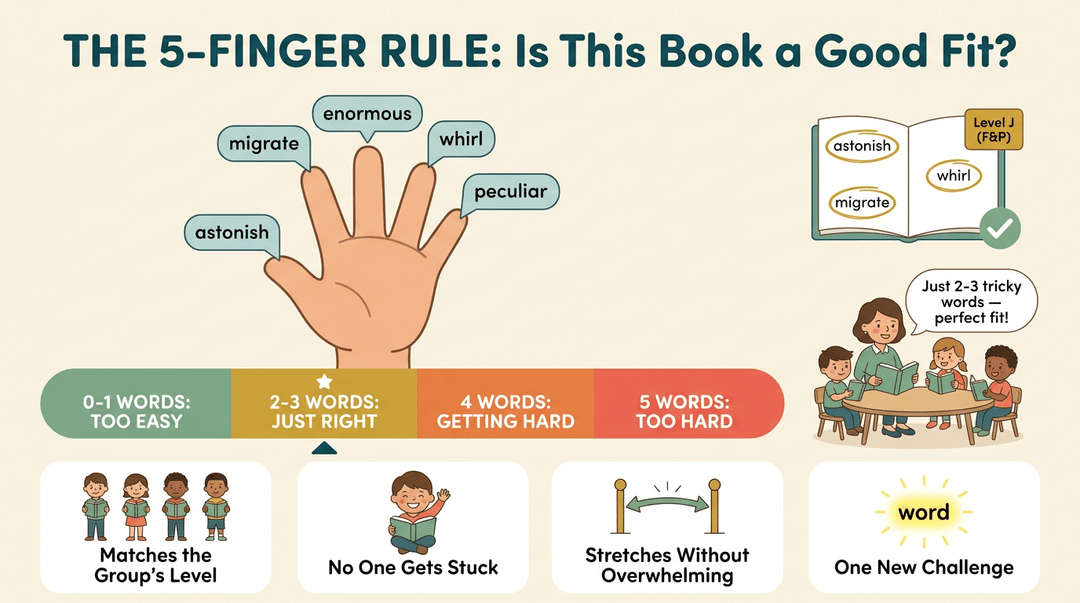
The 5-finger rule is a quick fit check. Hold up one finger for each unfamiliar word on a page. If you're at five, the book is likely too hard for the group. A good guided reading book:
- Matches the group's achievement level, so everyone can read it with the same support.
- Is appropriate for all, with no one stuck on the words or ideas.
- Stays within current capability, stretching readers without overwhelming them.
- Includes an element of challenge, like a new vocabulary word or text feature.
To find a starting point, many teachers use text leveling systems such as the Fountas & Pinnell (F&P) system. Consider a second-grade teacher whose small group reads at a similar level.
She finds two or three tricky words per page, knows her readers can handle them with a little coaching, and has a book worth bringing to the table.
Deciding If a Book Is Worth Teaching
Fit tells you whether readers can read a book. Worth tells you whether it deserves a lesson. Look for two things:
- Opportunity to apply skills: Does the text give readers a real chance to use the strategy you're teaching, like tracking characters or checking predictions?
- Ample practice opportunities: Does the book repeat patterns or offer enough text to practice that skill again and again?
Think of a fourth-grade teacher who wants to teach summarizing. A book with clear chapter structure gives her readers plenty of practice. A book with one short twist ending doesn't. Choose the book that keeps the skill working.

Grouping Students for Guided Reading
Guided reading only works when the right readers sit together. Here's how to build groups that fit the students in your room.
How to Form Your Reading Groups
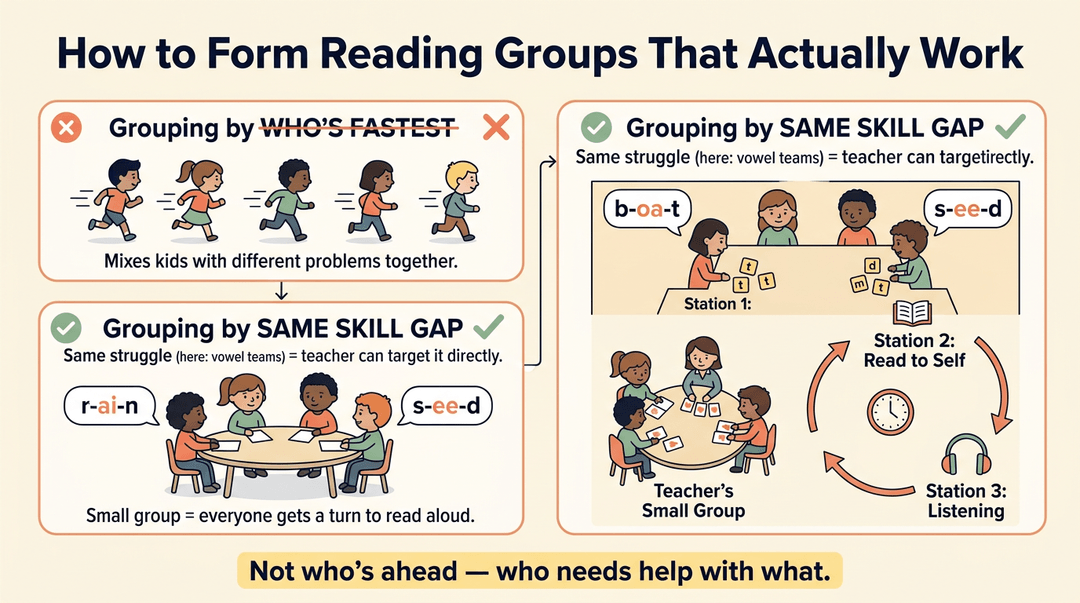
Start by grouping students by similar needs rather than by who reads fastest. Pull together readers who struggle with the same skill, such as decoding multisyllabic words or tracking meaning across a paragraph, and you can teach that gap directly.
Build each group around a similar achievement level too, so every student can handle the text with support instead of drowning in it.
Keep each group small enough that every reader gets a turn to read aloud and be heard. Then plan what the rest of the class does: rotate literacy stations while you meet, so other students stay busy with purposeful work.
Consider a second-grade teacher with a small table of readers who all stumble over vowel teams. She meets with them while the class cycles through stations, and the group gets focused time without the room falling apart.
This is about who needs help with what, not who is ahead. Small groups make that possible.
Making It Work for All Learners
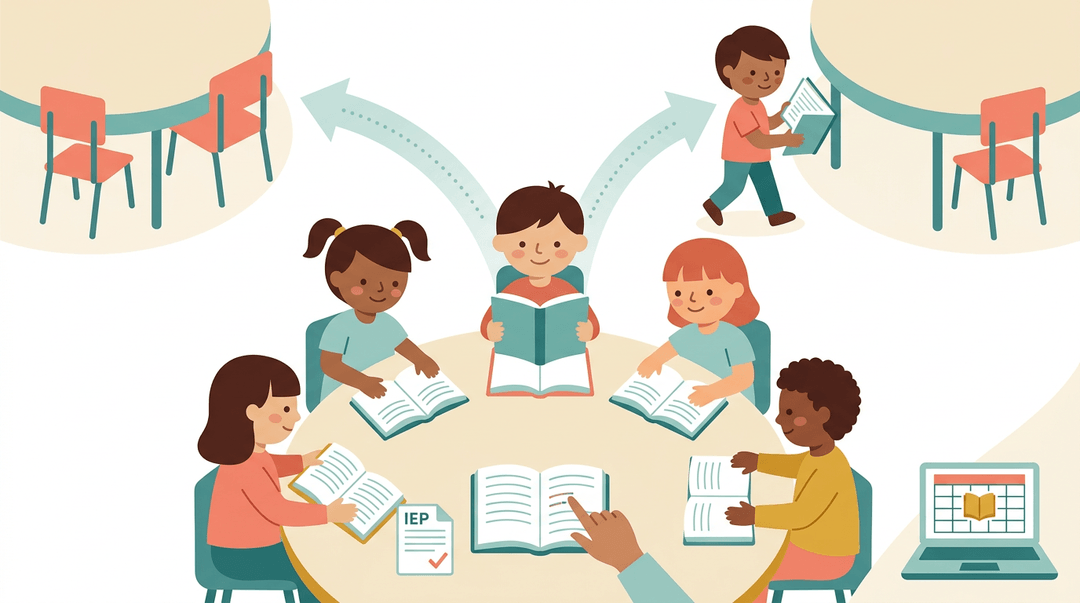
Flexible groups keep up with growth. Reassess regularly and move readers when their needs change.
For students with learning disabilities, add explicit support inside the group, such as a clearer model of the strategy or a text they can read with help, and align their goals with their Individualized Education Program (IEP).
Inclusion also works classroom-wide: every student belongs to a group, and no reader is labeled by level.
Guided reading works because it meets each reader where they are. With the right grouping, well-matched texts, and a steady lesson rhythm, you give every student the chance to build real reading confidence.
Ready to put the timeline into practice? Check out our Lesson Planning feature to organize and reuse your guided reading plans across all your classes from one place.
Frequently asked questions
What is the 5 finger rule for books?
The 5-finger rule is a quick way to check whether a book is an appropriate difficulty. A reader holds up one finger for each unfamiliar word on a page; if they reach five, the book is probably too difficult. It is a useful starting check, but teacher judgment and the reader’s comprehension also matter.
What is the best program to teach reading?
There is no single best reading program for every learner. Effective instruction usually combines explicit phonics and word-reading instruction, vocabulary and fluency practice, comprehension, writing, and plenty of meaningful reading. The program should be evidence-based and adapted to students’ assessed needs.
What is shared reading?
Shared reading is a whole-class activity in which the teacher and students read the same text together. The text is often displayed in a large format, and students participate as they are able while the teacher models fluent reading, comprehension, and reading strategies.
What are the disadvantages of guided reading?
Guided reading can require substantial planning, flexible grouping, and books at multiple difficulty levels. The rest of the class must also work independently while the teacher meets with a group, which can be difficult to manage. Groups may also oversimplify students’ needs if they are not reassessed and adjusted regularly.
How long should a guided reading lesson last?
A guided reading lesson should be short and focused, with the exact length adjusted to the group, text, and students’ stamina. A practical structure is about 20 minutes: two minutes for a warm-up, five minutes to introduce the book, ten minutes for reading and prompting, and three minutes to wrap up.
What are some activities that can help develop reading skills?
Activities that develop reading skills include shared reading, independent reading, partner retells, word sorts, sentence building, rereading for fluency, vocabulary work, prediction, summarizing, and discussions about evidence and meaning. Phonics and decoding practice are most useful when connected to real reading rather than taught only through isolated worksheets.
Can you give me some examples of guided activities?
Examples of guided reading activities include predicting from the title and pictures, identifying unfamiliar words, sequencing events, answering literal and inferential questions, summarizing a section, and making text-to-self connections. Teachers may also use partner reading, repeated reading, graphic organizers, and brief discussions to support understanding.