Teacher Survival Kit Ideas, From Checklist to Packaging

Jump to section
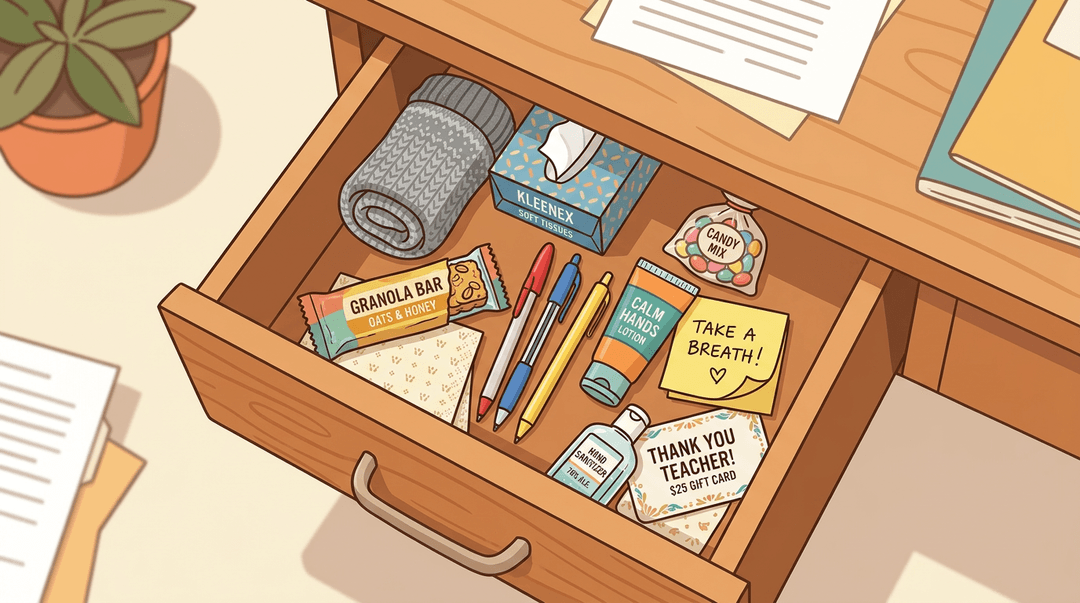
Picture the bottom drawer of a teacher's desk. There's a spare pair of socks, a box of tissues, a granola bar that's been waiting since September, and three pens that may or may not work.
That drawer is a survival kit in the making, and it's one of the most useful things you can build for yourself or a colleague.
A teacher survival kit is a collection of practical items that help someone get through the hard days with a little more comfort, health, and ease.
In this post, we'll walk through ideas for personal care, health, snacks, office supplies, and encouragement, plus gift cards, etiquette tips, and a checklist you can use right away.
Teacher Survival Kit Ideas for Encouragement
Some of the best survival kit items don't fix a single problem. They remind a teacher that someone sees the work. Here's what to tuck inside.
Small gratitude and positivity gifts
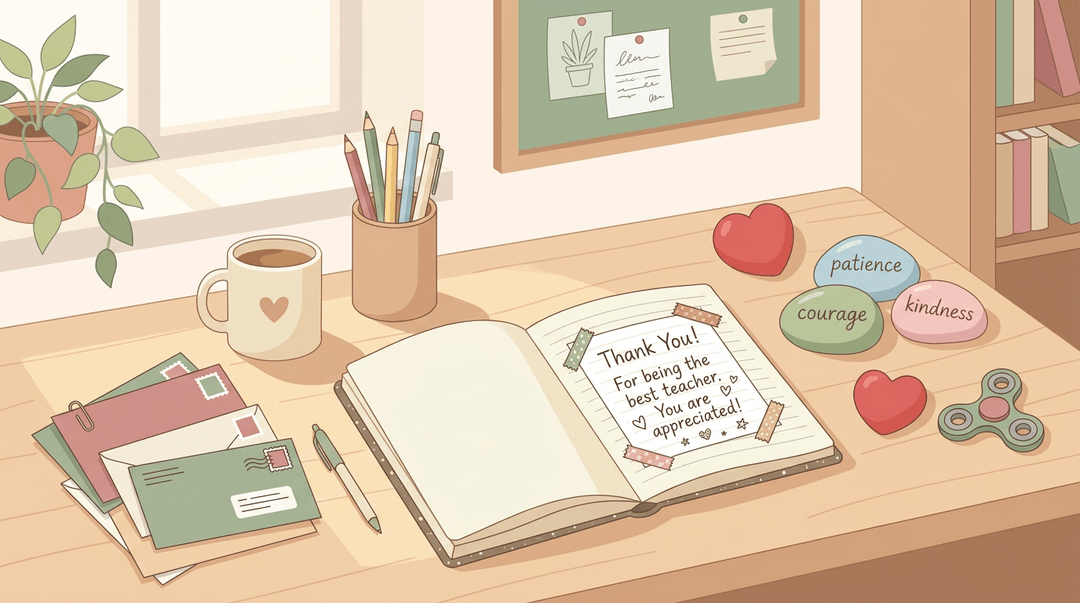
Start with gratitude cards. A handwritten note from a colleague or a family member can sit on a desk for weeks, ready for a hard Thursday. Pair it with a gratitude journal, a simple notebook where you jot down one good moment each day.
Think of a middle school teacher who has a rough morning with a class and later finds a student's thank-you note in her mailbox. She can tape it into the journal and reread it during the next tough week.
Add a few inspirational rocks, smooth stones with a single word like "patience" or "courage" painted on them. They fit in a pocket, so they're always within reach.
Fidgets for stress, such as a squishy ball or a spinner, give your hands something to do during a tense meeting.
These gifts also work well for burnout check-ins. A quick note or a rock left on a colleague's desk says you're thinking of them and checking in.
Why these gifts matter
Appreciation is more than a nice gesture. A small token of thanks can be the reminder that keeps a teacher going on a long week.
These items also provide practical daily support. A fidget or a journal isn't glamorous, but it helps a teacher reset between classes, not just on the weekend.
The goal is reducing teacher stress before it piles up. A steady stream of small moments of encouragement adds up. Keep the kit close, and use it often.
Personal Care and Hygiene Essentials
A long day under fluorescent lights, hand washing on repeat, and a steady stream of questions can leave anyone worn down. The items below are the small things that help you feel put together from first bell to last, and they fit in one drawer or bag.
Lip balm and skin care basics
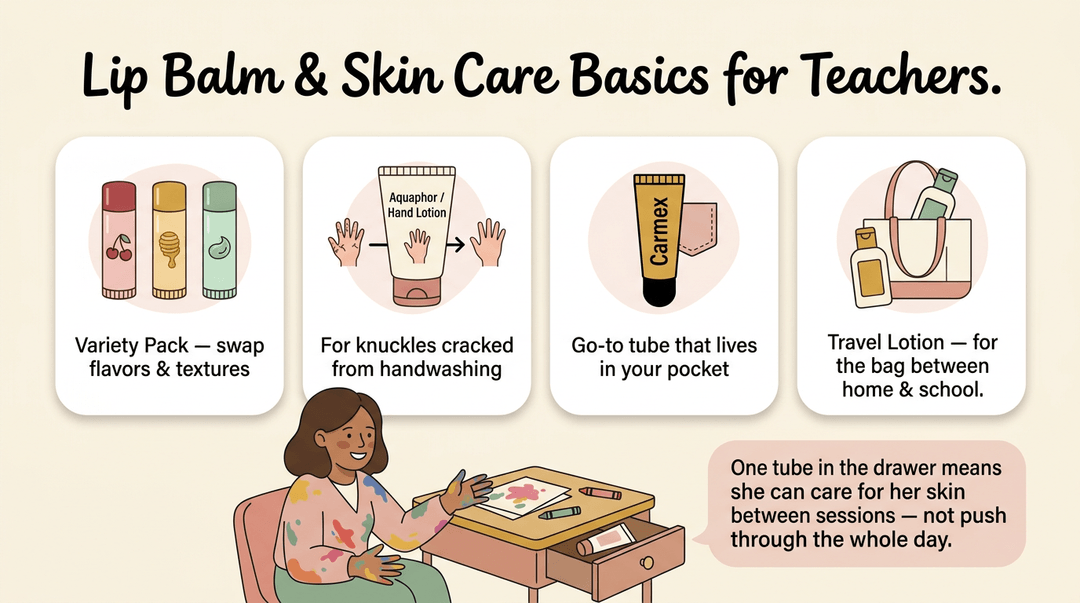
Dry lips and cracked hands add up fast when you're washing them all day. Keep a few options on hand:
- Lip balm variety packs so you can swap flavors and textures
- Hand lotion or Aquaphor for knuckles that crack after a long week at the sink
- Carmex comfort care lip balms for a go-to tube that lives in your pocket
- Travel lotion for the bag you carry between home and school
Think of a kindergarten teacher who spends the morning with paint-covered hands. One small tube of lotion in her desk drawer lets her care for her skin between sessions instead of pushing through the rest of the day.
Oral care on the go
A quick lunch or a late parent meeting can leave you wanting a fresher mouth. Pack:
- Travel toothbrush and toothpaste in a small set for your bag or desk
- Travel mouthwash for a quick rinse when brushing isn't an option
- Mini flossers for the spot a toothbrush can't reach
These fit in a pencil pouch, so they're always there when you need them.
Deodorant and freshness fixes
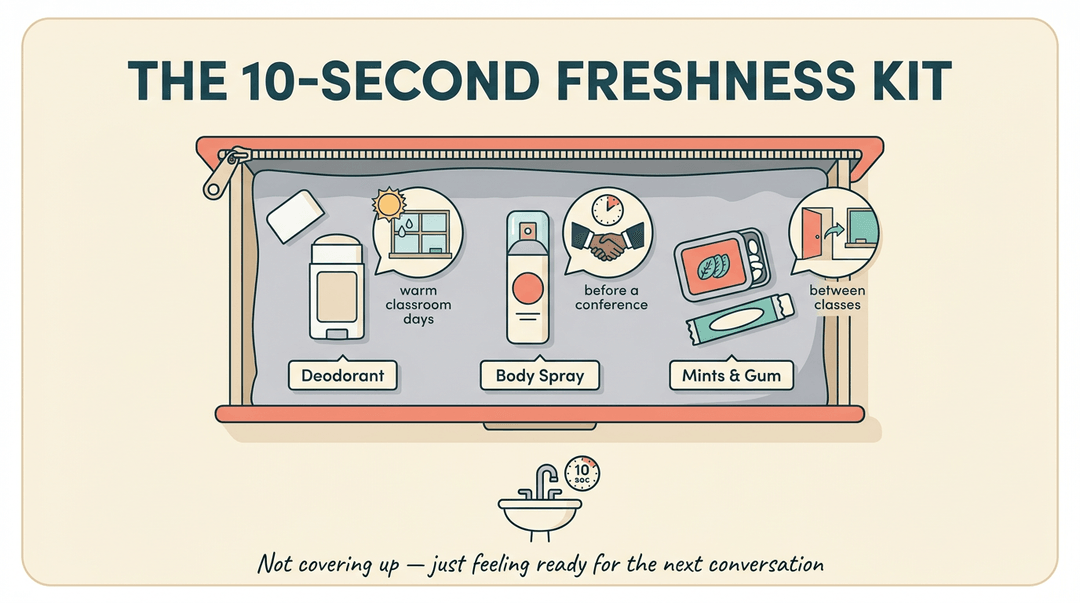
Long days and warm classrooms are part of the job. Keep:
- Deodorant in a travel stick
- Body spray for a quick refresh before a conference
- Mints and gum for the moment between one class and the next
It's less about covering up and more about feeling ready for the next conversation. Ten seconds at the sink and you're set.
Stain and cleaning quick fixes
Coffee, marker, and glue will find your blouse eventually. Keep:
- Stain remover wipes or a stain pen for the spill you didn't see coming
- A lint roller for chalk dust and the sweater that picked up everything
- Lens wipes for glasses or a screen smudged by sticky fingers
- Tissues for runny noses, sneezes, and the student who forgot theirs
First aid basics to pack
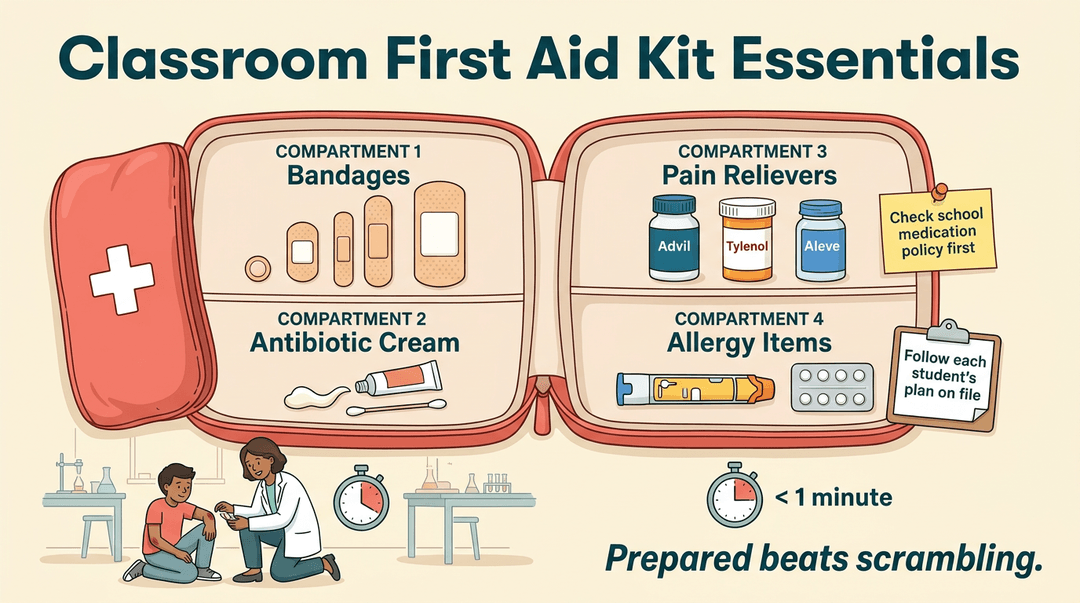
Scraped knees and headaches happen in every classroom, and a well-stocked kit lets you respond quickly. Include:
- Bandages in a few sizes
- Antibiotic cream for minor scrapes
- Pain relievers such as Advil, Tylenol, or Aleve for headaches (check your school's medication policy before stocking anything)
- Kid-safe allergy items, and always follow each student's plan on file
Consider a middle school science teacher who keeps a labeled first aid pouch in her lab cabinet. When a student scrapes an elbow during an experiment, she can clean and cover it in under a minute and get the class back on track. Prepared beats scrambling.
Health and Wellness Essentials
Long days drain you faster than you'd expect, and a scratchy throat in October can derail a whole week. This kit covers the basics so you can handle minor issues without leaving your room.
Immunity boosters and cold relief
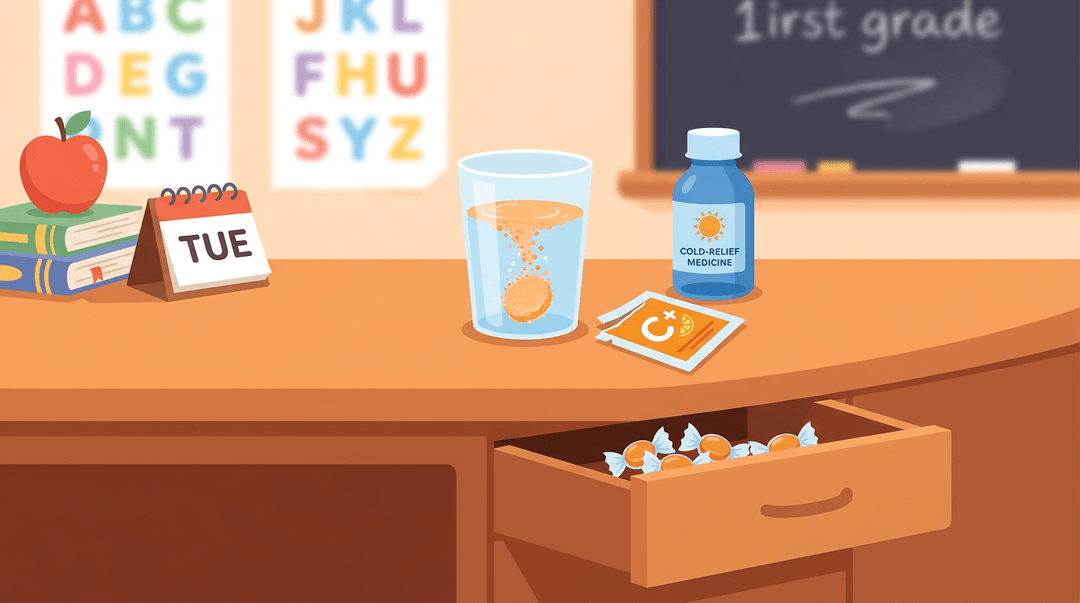
Think of a first-grade teacher who wakes up with a sore throat on a Tuesday.
A packet of Emergen-C stirred into water and a few cough drops in your desk drawer can get you through the morning, while a bottle of DayQuil covers the stretch when symptoms hit hardest.
Vitamin C drink mix is an easy way to build the habit before you feel run down rather than after. Always check the label and your school's policy on keeping medication at school.
Energy boosters for long days
Consider a high school chemistry teacher with three lab sections and a stack of quizzes before lunch. Coffee or a few tea bags in the staff room can help, and a 5 Hour Energy or an energy drink mix packet can carry you through the last period.
Pick the option that fits your body and your caffeine limits. Pacing matters more than the jolt. Keep the kit stocked, and you won't be scrambling at 2 p.m.
Staying hydrated all day
A reusable water bottle is the simplest tool in this whole kit, and it works best when it's always full. Here's a tip: fill it before the first bell and keep it where you can see it from your desk.
A bottle within reach is a reminder you won't have to think about.
Hand sanitizer and wipes
Classrooms are shared spaces, and a bottle of hand sanitizer by the door gives students an easy habit to build. Keep hand wipes nearby for sticky desks, art supplies, and the lunch spills you didn't see coming.
Think of a kindergarten teacher after finger painting: a quick wipe and a squirt of sanitizer, and the next group is ready in a minute. Small habits, big difference.
Treats and Snacks Teachers Love
Nothing lifts a rough Tuesday like a little something within reach. Here are the treats that earn a spot in your kit.
Candy and sweet treats
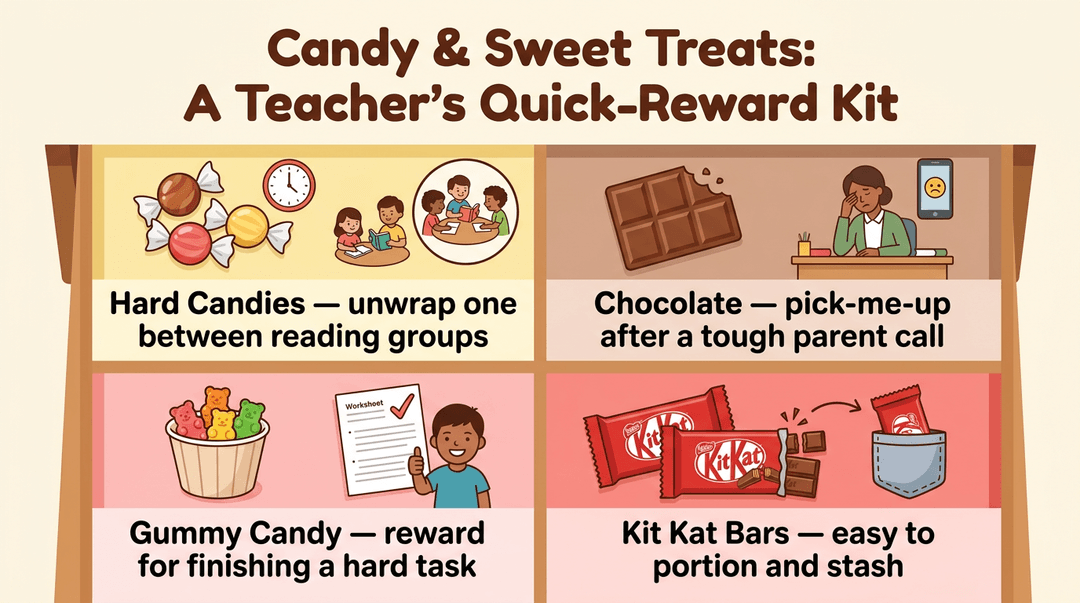
Candy works best in small, grab-and-go portions:
- Hard candies last all day in a desk drawer, so you can unwrap one between reading groups.
- Chocolate is a dependable pick-me-up after a tough parent call.
- Gummy candy works well as a small reward for a student who finished a hard task.
- Kit Kat bars are individually wrapped, so they're easy to portion and stash.
Snack foods to keep handy
Savory snacks keep you going when candy leaves you crashing. Think satisfying rather than sugary.
- Pretzels are crunchy, salty, and easy to grab with one hand.
A snack organizer box keeps everything in one place. Consider a third-grade teacher who keeps one by her desk. When a hungry student walks in, she can hand over a granola bar without leaving the room.
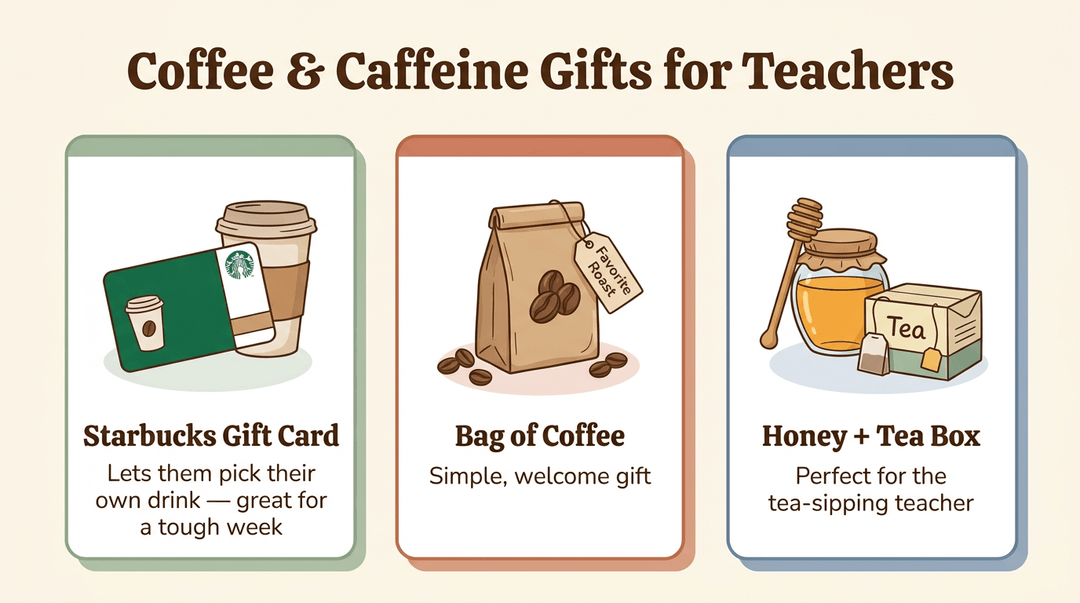
Coffee and caffeine treats
- Starbucks gift card lets a colleague choose their own drink, which is a nice pick for a coworker covering a hard week.
- Coffee in a bag of your favorite roast makes a simple, welcome gift.
- Honey for tea pairs well with a box of tea bags for the teacher who sips tea through the day.
Classroom and Office Supplies
Your kit is only as useful as what's inside it, so start with the supplies you reach for all day. Here's how to pack them and keep them sorted.
Writing and organizing tools
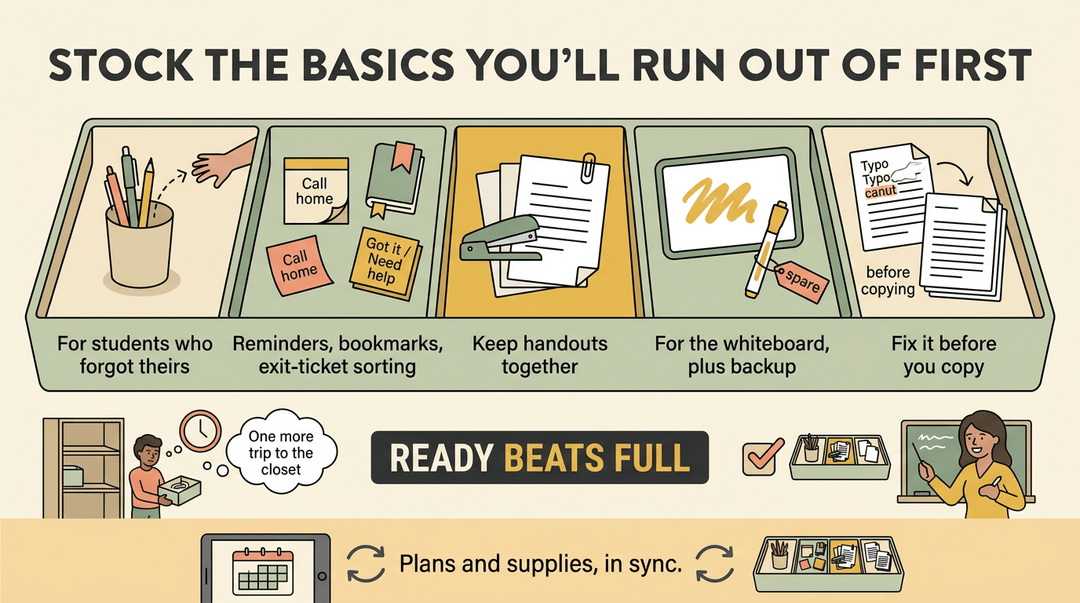
Stock the basics you'll run out of first:
- Pens and spare pencils for students who forget theirs
- Sticky notes for reminders, bookmarks, and quick exit-ticket sorting
- Staples and paper clips to keep handouts together
- Dry-erase markers for the whiteboard, plus a spare
- Whiteout for fixing a typo before you copy a worksheet
A kit that's ready beats one that's full. Consider a first-year teacher who runs out of paper clips on the first day of handouts. A small stash means one less trip to the supply closet.
Digital planning tools are a staple too: a shared calendar or lesson planner keeps your to-do list in one place, so your physical supplies and your plans stay in sync.
Pick a container for the kit
Choose a container you can grab on your way out the door. A snacklebox organizer keeps granola bars and crackers separate and easy to reach. A pencil case container holds pens, markers, and sticky notes and slides into a desk drawer.
If you teach several periods, label each kit by class period so a substitute or a student can find what they need without asking. Picture a high school science teacher with five periods and one labeled container per class: lab supplies never get mixed up.
Small fix-it tools to include
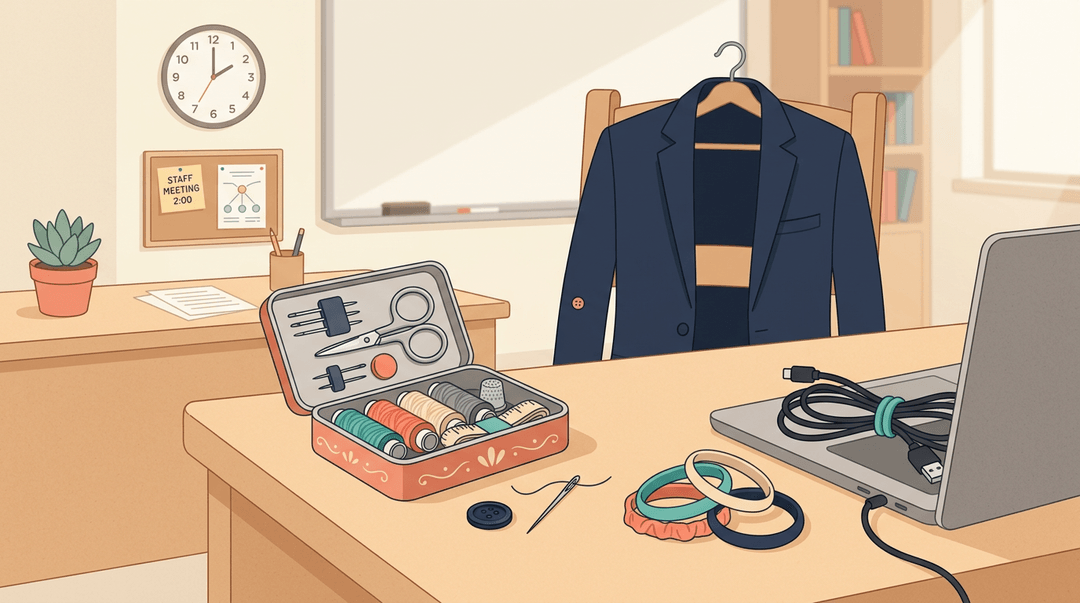
A sewing kit saves the day when a button pops off right before a parent conference. Picture a homeroom teacher who spots a loose button minutes before the first meeting. Two minutes with a needle and thread, and nobody notices.
Hair bands cover quick fixes too, from tying back hair to bundling loose cords.
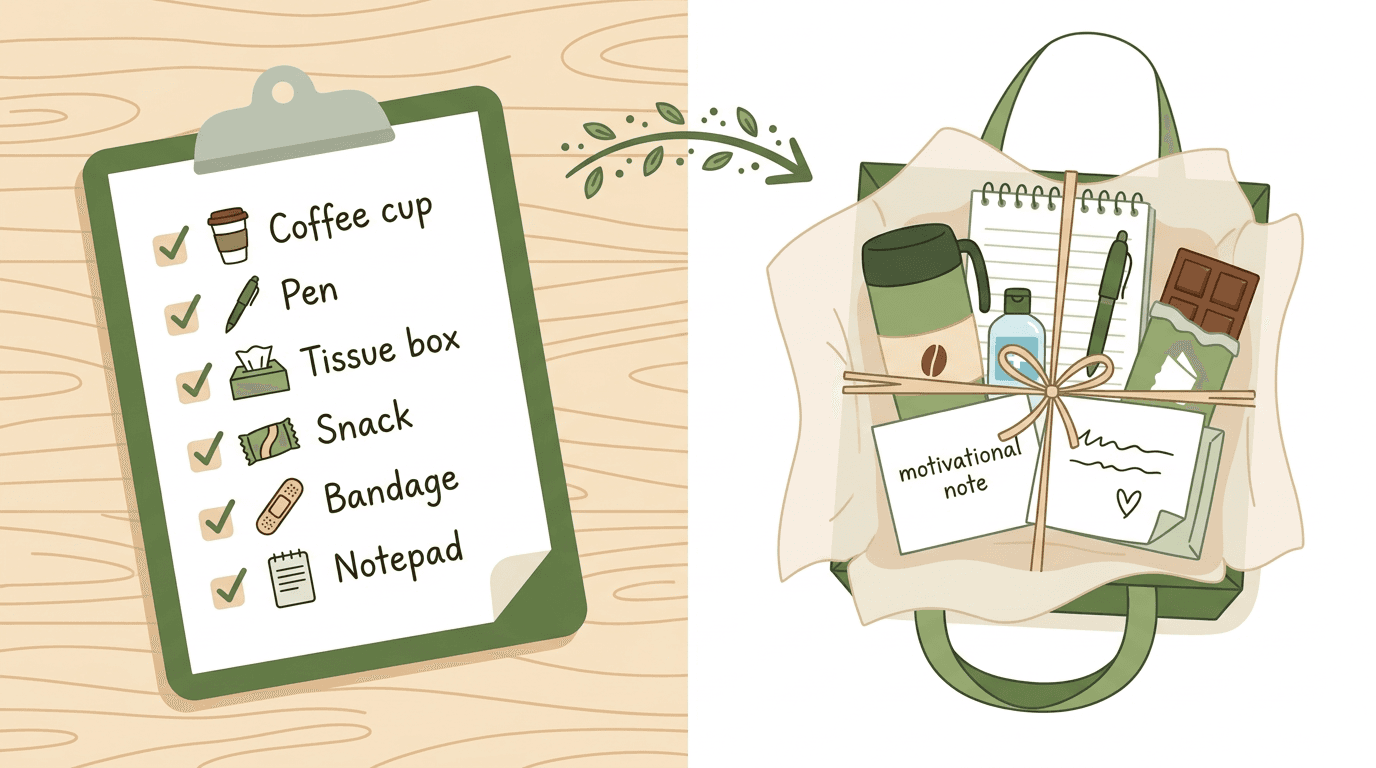
Build Your Own Teacher Survival Kit Checklist
Use this as a packing list for one small bin and one digital drawer. Fill both once, and a rough Tuesday won't cost you your planning time.
Pack the physical kit
Start with the bin. Pick one row per item and keep it within arm's reach of your desk.
| Item | What to pack | Why it earns space |
|---|---|---|
| Lip balm & lotion | One of each, desk-sized | Talking all day dries out lips and hands |
| Oral care basics | Travel toothbrush, toothpaste, mints | Fresh after lunch, before conferences |
| Pain relievers | Small, clearly labeled pack | Headaches don't wait for your planning period |
| Pens & sticky notes | A few colors, one pad | Quick notes, grading, reminders |
| Dry-erase markers | One spare, fresh set | A dead marker mid-lesson stalls everyone |
| Snack organizer box | Divided box of shelf-stable snacks | Fuel between classes without leaving the room |
⚠️ Watch out: Check your school's rules on storing medication before you stock the bin. Keep it out of students' reach either way.
Set up the digital drawer
These three take about an hour once and save you far more later. Do them in this order.
- Save a ready-made sub plan.
- Make it complete enough that a stranger could run your day.
- Include the schedule, routines, class list, and where materials live.
- Build reusable lesson templates.
- Start with one skeleton you can copy for any subject.
- Try: Objective, Warm-up, Practice, Exit check.
- Pin a quick weekly planner view.
- Set it to one screen, Monday through Friday.
- You should see the whole week in ten seconds.
Sub plan page, as it would read: Bell schedule. Attendance routine. Seating chart. Where the markers live. Who to call with questions. One backup activity if the lesson finishes early.
Example: A fifth-grade teacher wakes up with a migraine at 6 a.m. Instead of writing plans from bed, she opens her saved sub plan, swaps in today's page numbers, and sends it before her first coffee.
Add the encouragement layer
This part is a checklist, not a sequence. Do any of it in any order, and confirm it's actually happening.
- Gratitude journal entry. One line a day, such as "One thing that went right today."
- Stress-relief fidgets. A squeeze ball or putty in the drawer, ready for a tense moment.
- Hydration reminder habit. Refill your bottle at the same cue daily, like after the bell.
💡 Tip: Tie each habit to something you already do. Your journal line can happen while the copier warms up.
At a glance:
| Layer | Key move | What you get |
|---|---|---|
| Physical bin | Stock six everyday items | Fewer mid-day scrambles |
| Digital drawer | Save sub plans, templates, weekly view | Hours back on rough days |
| Encouragement | Three small daily habits | Steadier energy through the week |
Keep sub plans and reusable lesson templates ready year-round with EMStudio's online lesson planner.
How to Package the Gift
Your kit is only half the gift. The packaging shows teachers you thought about them before they even open the lid, and it doesn't take a crafting marathon. A budget-friendly DIY kit can look just as thoughtful as a store-bought one.
Choosing a container
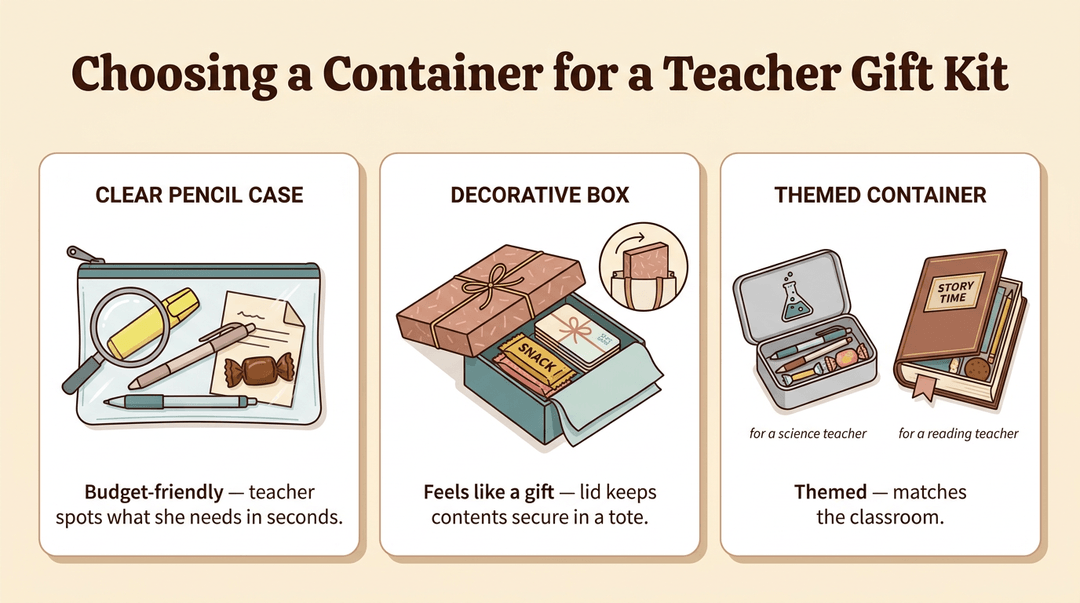
A clear pencil case is the easiest budget pick. It shows what's inside instead of hiding it in a bag, so a teacher can spot the highlighter they need in seconds.
Consider a parent who fills a clear case with a few supplies and a small treat. Keep it simple.
A decorative box feels more like a present, and it suits a bigger kit with snacks or a gift card. Pick one with a lid so the contents stay put in a teacher's tote.
A themed container ties the kit to the classroom. Think of a science teacher receiving a lab-style tin, or a reading teacher getting a book-shaped box.
Decorative touches to add
Small details turn a pile of supplies into a gift. Try:
- Ribbon details tied around the lid or handle
- Varsity letter patches that spell out THANKS or the teacher's first name
- Star garland draped around the container
- Pennant flags for a festive touch on a desk or shelf
A few well-chosen touches beat a box buried in glitter, which is hard to clean out of a classroom.
Personal notes and gift tags
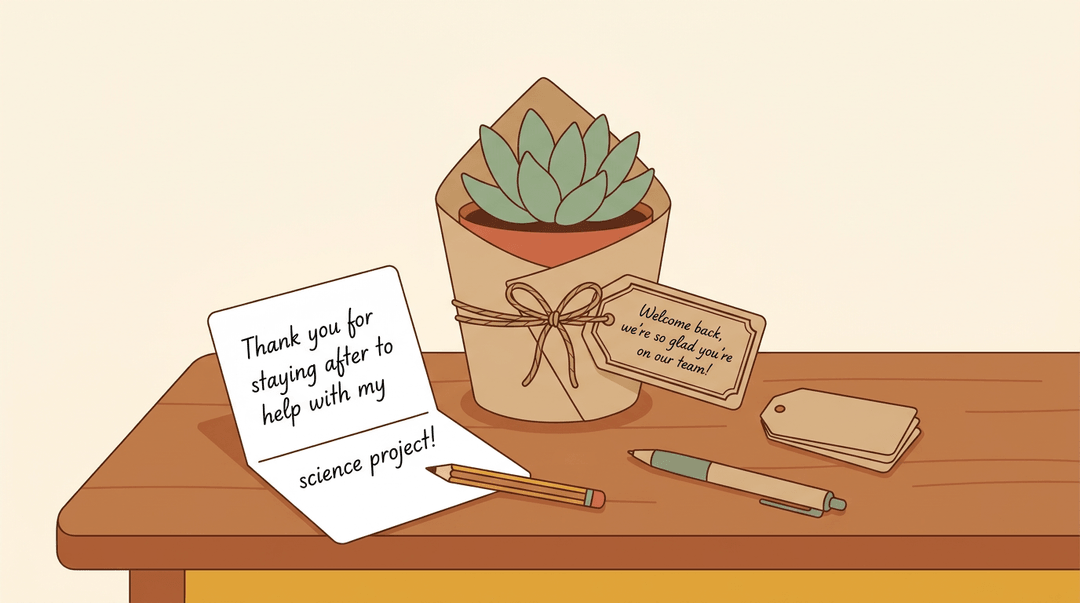
A handwritten note is the most meaningful part of the package. Two or three sentences about a specific moment from the year, like thanks for staying after to help with a science project, will mean more than any card. Students can write these too.
Short on time? A printable gift tag looks polished in seconds. Print a few on cardstock, then add a line by hand.
A back to school tag works well at the start of the year. Something like Welcome back, we're so glad you're on our team tells the teacher you're looking forward to the year ahead.
Steps to put it together
- Choose container. Pick a clear case, box, or themed option based on your budget and time.
- Shop items. Fill it with a few practical supplies and one small treat.
- Add note. Tuck in a handwritten note or printed tag.
- Deliver at meet the teacher. Hand it over during open house or meet-the-teacher night, when the teacher has a moment to appreciate it.
Kits aren't only for back to school. Swap the theme for a holiday or the end of the year, and the same steps still work.
Gift Cards and Money Gifts
Gift cards are one of the easiest ways to show appreciation, but they raise a fair question: what's the best thing to gift a teacher?
For most families, a gift card the teacher can spend on whatever they need is a safe, thoughtful choice, and it's our top single pick.
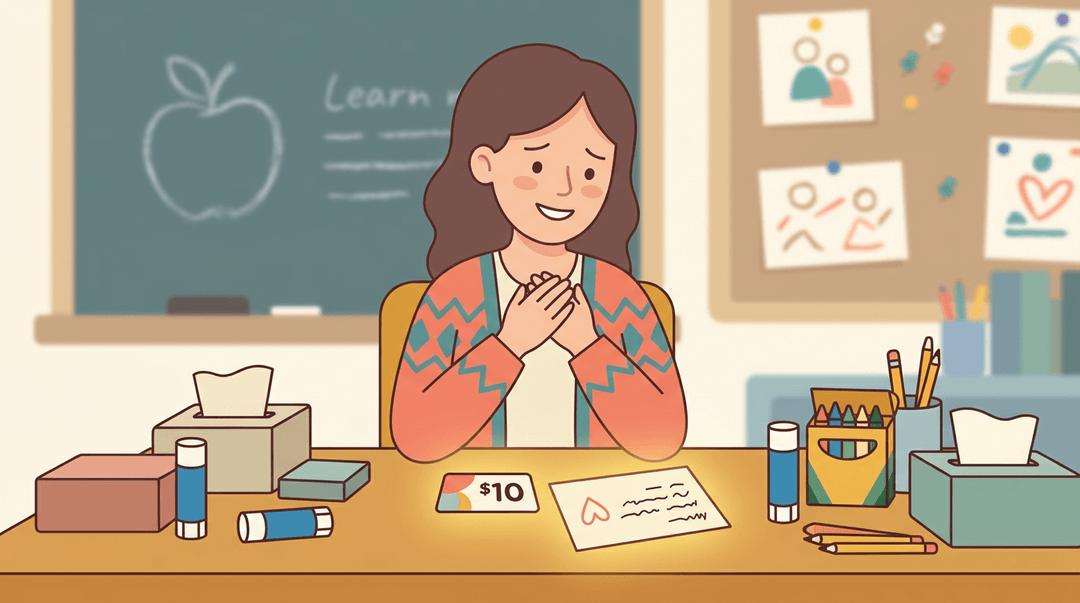
Is a $10 gift card too cheap for teachers?
Not at all. The amount matters less than the thought, and even a small card tells a teacher their effort was noticed. Consider a third-grade teacher who buys glue sticks and tissues with her own money all year.
A $10 card to a supply store covers a few of those costs, and that's a real help.
Three options work well:
- Target eGift card: Sent by email, so it arrives instantly and works for a teacher who's busy after school.
- General gift card: Lets the teacher choose anything, from groceries to a coffee run on a rough Monday.
- Treat or supply store card: Ideal if you know the teacher stocks the classroom from their own budget.
Gift card amount etiquette is simple: match your budget and skip the pressure to spend more. A class can pool funds for a larger card, while a family giving alone can keep it small and personal.
Add a handwritten note, and the card becomes something a teacher remembers long after it's spent. Thoughtfulness wins.
A well-stocked kit says, "We see how hard you work." Whether you're putting one together for yourself, a colleague, or a new teacher down the hall, the best kits fit real needs and feel personal.
When the small stuff is covered, you have more energy for the moments that matter most: your students.
Ready to take some of the planning off your plate too? Check out our Lesson Planner to write, organize, and reuse lesson plans across all your classes from one place.
Frequently asked questions
What is the best thing to gift a teacher?
A gift card the teacher can use as they choose is often the best single gift. Target, general-purpose, coffee, or classroom-supply gift cards are practical choices, and a handwritten note makes the gift more personal.
How to make an extra $1000 a month as a teacher?
Teachers can make an extra $1,000 a month through tutoring, selling lesson plans or classroom resources, teaching online courses, freelance writing or editing, summer programs, or substitute teaching. The exact amount depends on rates, available time, demand, and local rules, so combine one or two options and track your income and expenses.
What should I include in a survival kit?
Include practical personal-care items such as lip balm, lotion, tissues, mints, and stain wipes; health items such as bandages, cough drops, and hand sanitizer; shelf-stable snacks; pens, sticky notes, staples, dry-erase markers, and paper clips; and encouragement items such as a gratitude card, journal, or fidget. Store everything in a labeled pencil case, box, or organizer, and follow school rules for medication and student access.
Is a $10 gift card too cheap for teachers?
No, a $10 gift card is not too cheap. The thought matters more than the amount, and even a small card can help with coffee, groceries, or classroom supplies. Add a handwritten note, and give what fits your budget without feeling pressured to spend more.