FBA in Special Education: A Complete Guide to the Process

Jump to section
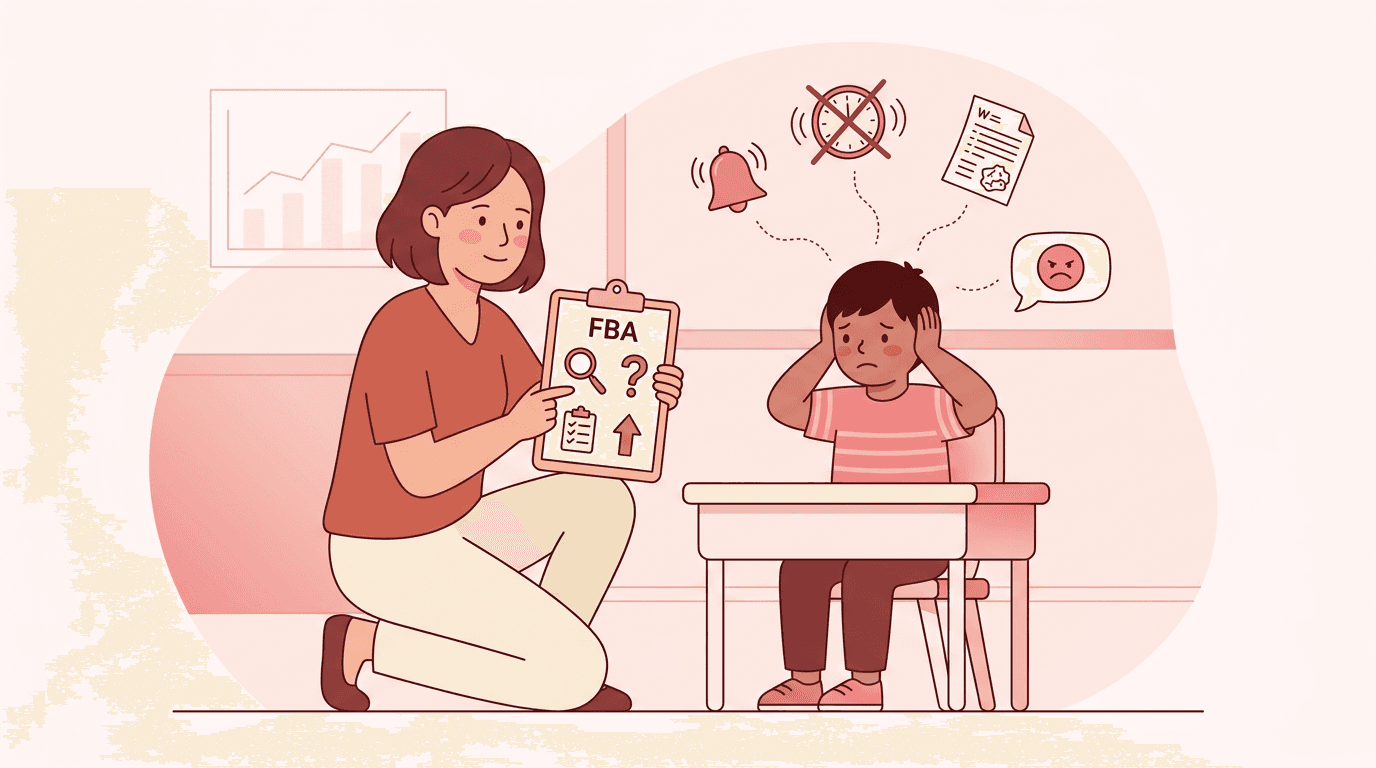
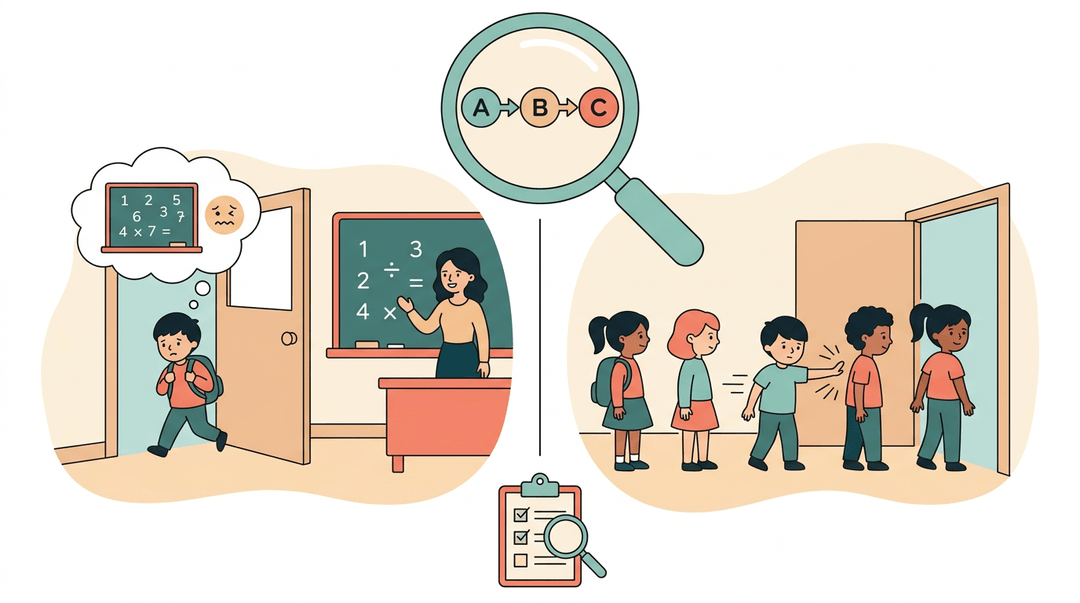
Think about the last time you tried to figure out why a student keeps leaving the room during math, or why a quiet kid suddenly starts shoving in line. Behavior is rarely random.
It usually serves a purpose, and a functional behavior assessment (FBA) is the process that helps you uncover it.
In special education, an FBA is a structured way to identify what triggers a behavior, what keeps it going, and what the student gains from it. The good news is that you don't need to be a behavior specialist to understand the basics.
In this post, we'll cover the ABC model, how an FBA gets done, your role as a teacher, and how to read the data.
Understanding FBA in Special Education
Every behavior is trying to tell us something, and a functional behavior assessment (FBA) finds out what. In an IEP (individualized education program), the FBA is the evaluation that explains a behavior before the team writes goals for it.
What an FBA is designed to find
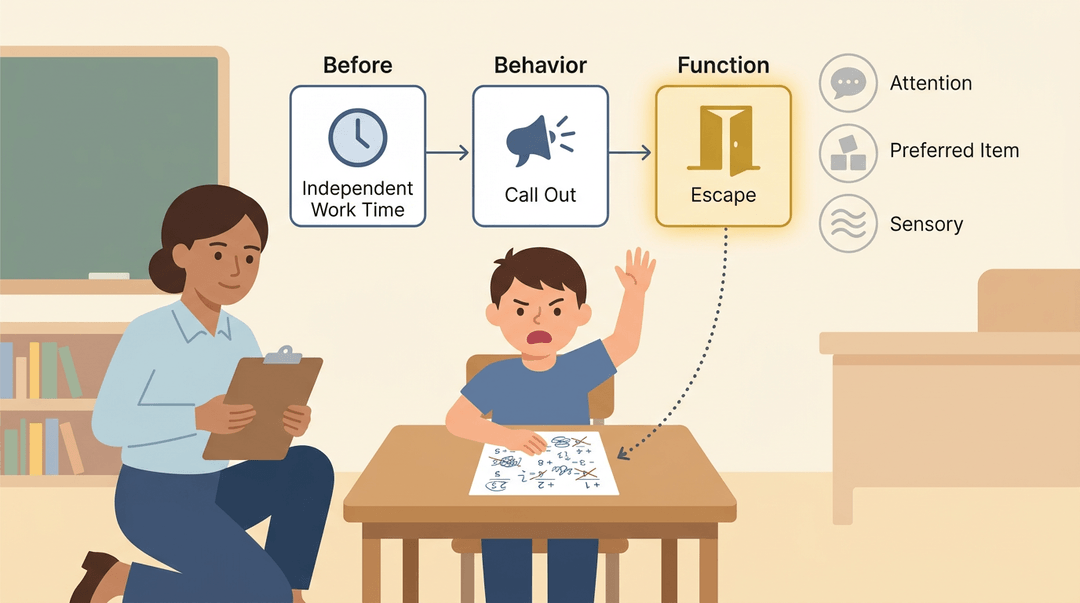
An FBA looks at what comes before a behavior and what it gets the student, not just the consequences that follow. The goal is to identify the function of the behavior:
- escape
- attention
- a preferred item
- sensory input
Once the team knows the function, it can teach a better way to meet that need. The same approach is common in autism evaluations, where function varies widely from student to student.
Take a fourth grader who calls out every day during math. The FBA shows it always comes right before independent worksheets. He's avoiding work he finds confusing, and that changes the fix. When independent work is the trigger, task boxes for special education are one option worth trying.
How FBA results shape the BIP
The FBA informs the behavior intervention plan (BIP). If the FBA determines why a behavior happens, the BIP addresses how adults will respond and teach. It names the behavior, lists replacement skills, and spells out consistent strategies.
Many teams add it to the IEP or Section 504 plan so every adult follows it.
Who's qualified to conduct an FBA
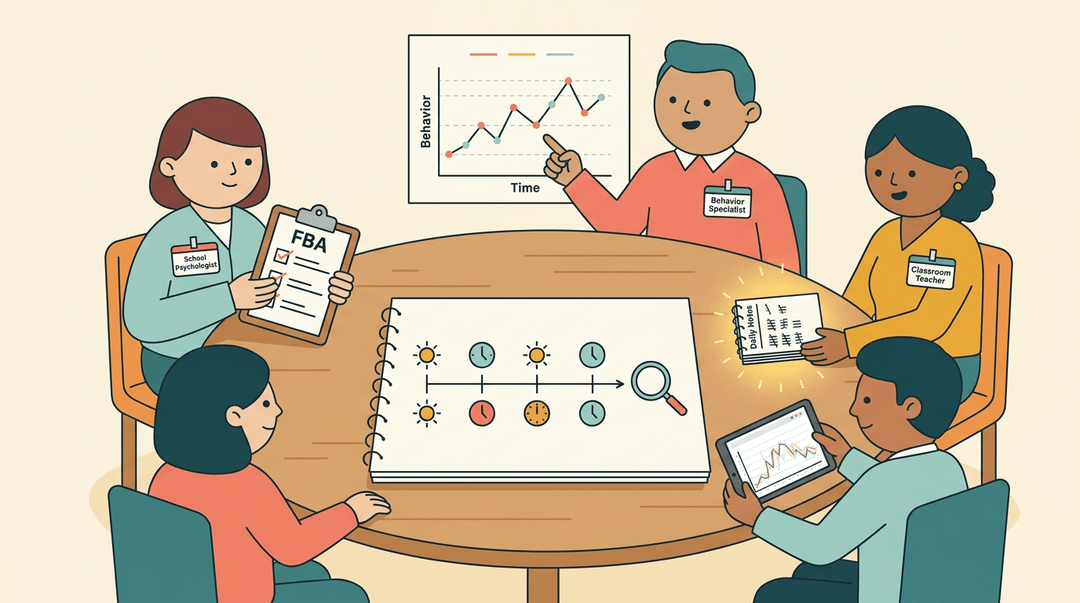
A school psychologist or behavior specialist usually leads the assessment, working with a team of specialists that includes the classroom teacher. Assessors must meet the credential requirements set by their district and state.
Your daily notes on when problems happen give the team patterns no single observation could show. Complex cases may add a board certified behavior analyst (BCBA). ABA (applied behavior analysis) is the broader field, and an FBA is one tool within it.
The ABC Model of Behavior
The ABC model gives you a simple way to ask what came before a behavior and what followed. That's often where the why shows up.
Breaking down antecedent, behavior, and consequence
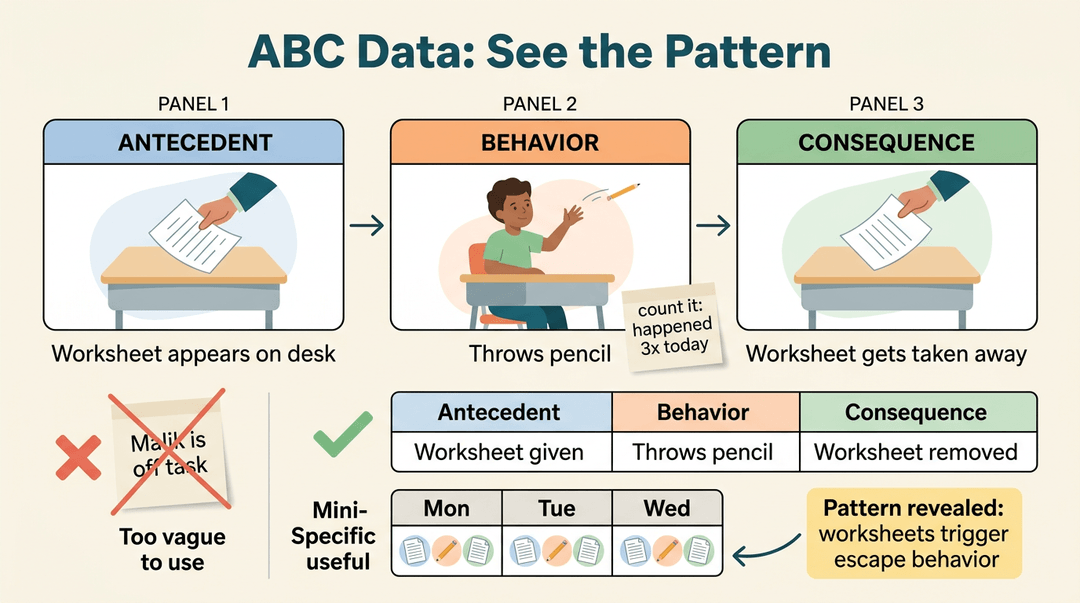
- Antecedents come right before a behavior: a demand, a noisy transition, a peer grabbing a turn.
- The behavior needs a specific description. “Disruptive” is a judgment; “calls out three times in a 10-minute reading block” is something you can count.
- Consequences follow the behavior: attention, a break, or a task taken away. A fourth-grade teacher notices Malik throws his pencil whenever a worksheet appears, and that worksheet gets removed afterward. Those three parts make one clear data row, far more useful than another “Malik is off task” note.
Record all three parts on observation and data forms, one row per episode, so patterns show up across days.
The common functions behind behavior
Next, ask what the behavior is doing for the student. Four common functions show up again and again:
- Escape or avoidance: getting out of a task or demand.
- Attention-seeking: getting a response from adults or peers.
- Access to an object or activity: getting something specific.
- Self-stimulation or sensory: the behavior itself feels calming or regulating.
Same behavior, different reason. If Malik's pencil throw is escape, a break card may help more than a warning.
How an FBA Actually Gets Done
A functional behavior assessment (FBA) is a structured way to figure out why a behavior happens rather than just what it looks like, so the support you build targets the real cause.
What are the 6 parts of an FBA?
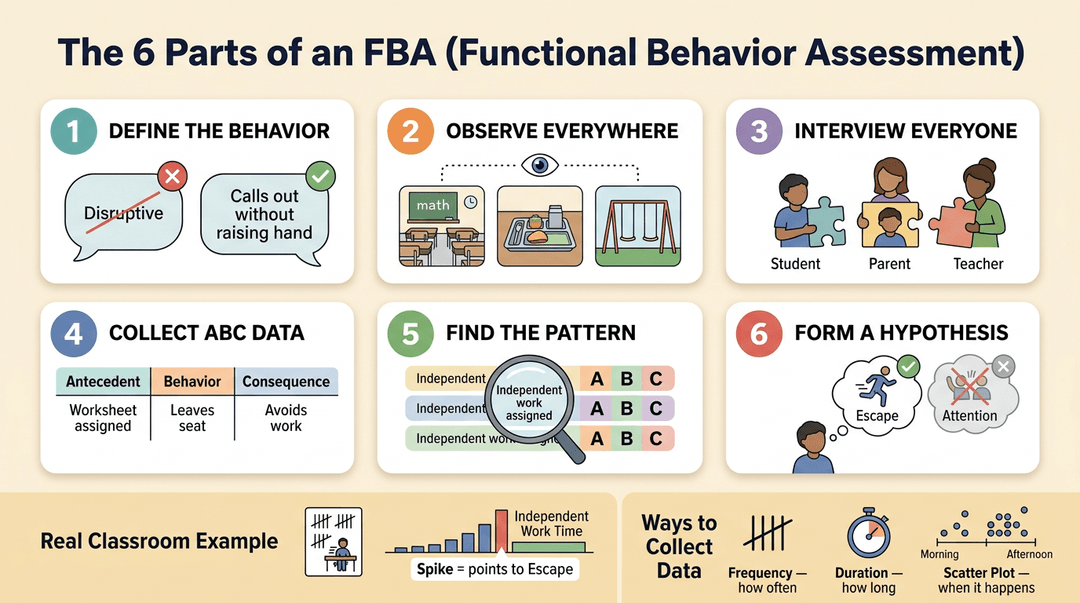
Most FBAs move through six core parts:
- Define the target behavior objectively. Describe what the student does, not your interpretation. "Calls out without raising a hand" beats "disruptive."
- Observe across multiple settings. Watch math, lunch, and recess, not just one class.
- Interview the student, parents, and staff. Each person sees a different piece.
- Collect ABC data. Note the antecedent (what came just before), the behavior, and the consequence (what followed).
- Analyze patterns and triggers. Look for what the ABC notes share.
- Form a hypothesis of behavior function. Decide what the behavior gets the student, like escape or peer attention.
Teachers are the primary daily observers, so your notes often shape the whole assessment. Consider a fourth-grade teacher who tallies how often a student leaves his seat during writing.
The counts reveal a spike right before independent work, pointing the hypothesis toward escape.
For data collection:
- frequency counts how often a behavior occurs
- duration measures how long it lasts
- a scatter plot charts when it happens across the day to reveal time-of-day patterns
What goes into the written report
Results are documented in a written report, which informs the behavior intervention plan (BIP) so the team's findings become the blueprint for support. Template and format vary by district, so check yours before you start.
What Teachers Do During the FBA Process
You see the behavior more than almost anyone on the team, so your notes carry real weight. Here's what to do in each phase, with wording you can lift.
Before the FBA starts
Document incidents objectively. Write what you could see and hear, not what you think it means.
✅ "Tuesday, 10:15, math. Jaylen put his head down and tore his worksheet after independent work was handed out."
❌ "Jaylen was defiant and seeking attention again."
The difference: the first describes observable actions, while the second guesses at motive.
Then add two habits:
- Note triggers and times. Jot the activity, setting, and clock time next to each incident.
- Share concerns with the IEP team. Bring your notes early, not after things escalate.
Say: "I'm seeing this most during independent math work, usually in the first ten minutes."
While data is being collected
Once the FBA is underway, your job is steadiness. Use one simple log and fill it the same way every time.
| Time | Antecedent (before) | Behavior | Consequence (after) |
|---|---|---|---|
| 10:15 | Worksheet handed out | Tore paper, head down | Moved to quiet table |
- Track ABC data consistently. Fill every column, even for small incidents.
- Use simple frequency or duration logs. Tally marks for how often; start and stop times for how long.
- Stay consistent across class periods. Same definition of the behavior, same tool, every period.
⚠️ Watch out: Logging only the worst incidents skews the picture. The team needs the ordinary days too.
After the BIP is finalized
The behavior intervention plan (BIP) only works if it's run as written. Think of it as a loop.
- Apply strategies with fidelity.
- Do each strategy as written, every day, including the busy ones.
- Track progress against targets.
- Use the same log, then compare it to the goal in the plan.
- Flag ineffective supports quickly.
- Tell the team when data stalls; don't wait for the next review.
Say: "I've followed the plan for two weeks and the numbers haven't moved. Can we look at it?"
Example: A fourth-grade teacher's BIP calls for a break card during independent work. After two weeks of tallying, tears and walkouts are down, but the card is only used after a blowup. She flags it, and the team adds a quick check-in at the start of work instead.
Log behavior notes and accommodations right alongside your unit plans in EMStudio's curriculum planner.
When an FBA Is Required
Not every behavior concern needs a functional behavior assessment (FBA), but some situations require one. Know those triggers, and you'll keep classroom supports strong while an FBA is pending.
When discipline removals trigger an FBA
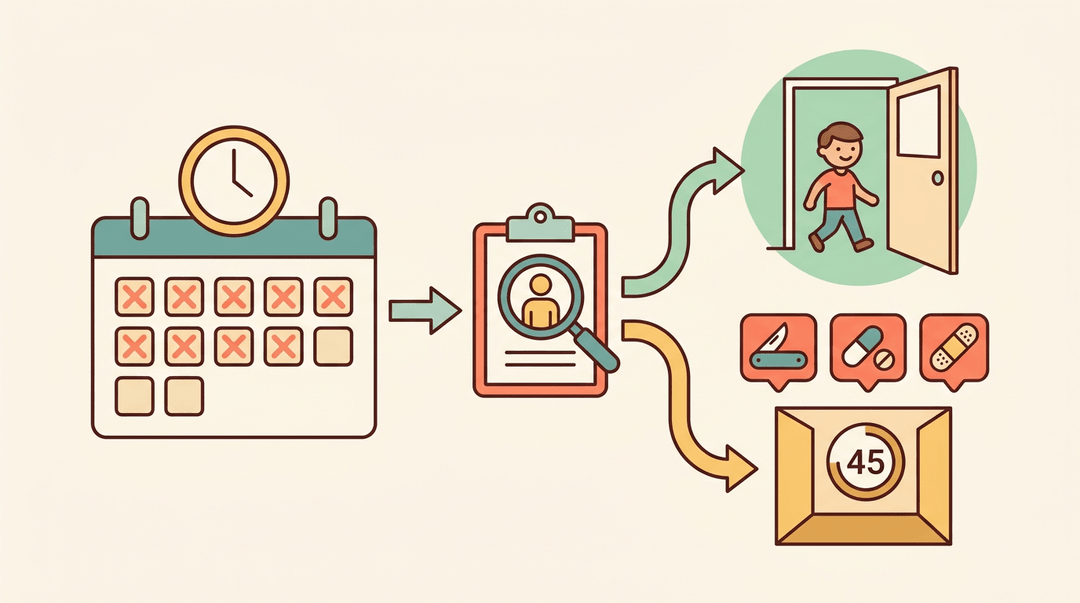
Once a student's removal reaches 10 school days, an FBA is required.
If the behavior is a manifestation of the disability, the IEP team must return the student to placement unless the parent and school agree otherwise, as Wisconsin's manifestation determination guidance explains.
Weapons, drugs, and injury cases are the exception. According to a Congressional Research Service summary of IDEA, schools can use an interim alternative setting for up to 45 school days in these situations.
Discipline Essentials Under the IDEA and Section 504 lists the triggers:
- Carrying or possessing a weapon at school
- Knowingly possessing or using illegal drugs
- Inflicting serious bodily injury at school
When it's part of the evaluation process
An FBA also fits when behavior impedes learning, and it can be included in an initial evaluation or reevaluation. The IEP team weighs behavior as a special factor when planning services.
Skipping the assessment can risk denying a student free appropriate public education (FAPE), the right every eligible student has.
When behaviors keep getting worse
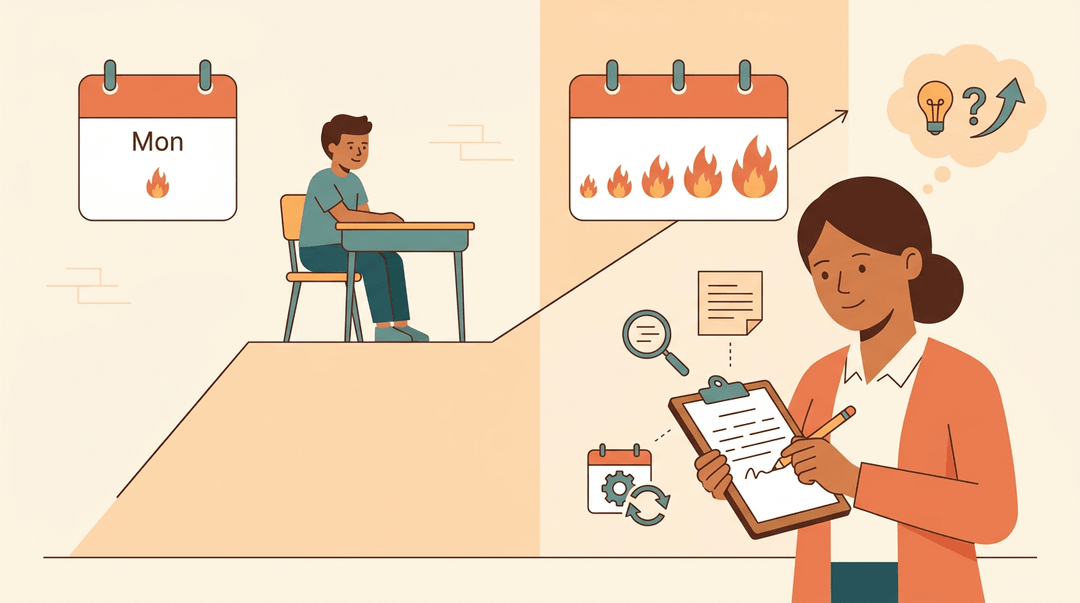
Ask for an FBA when behaviors worsen or current supports stop working. Parents can also request one at any time. Consider a fifth-grade teacher whose student's outbursts climb from weekly to daily after a schedule change.
Her written notes, not guesses, give the team evidence to act on. The goal is to understand the behavior, not just stop it.
How Parents Can Request and Stay Involved
Parents have more say in this process than many expect. Here's how to ask for an FBA, what you'll agree to, and how you can help once it begins.
How to request an FBA
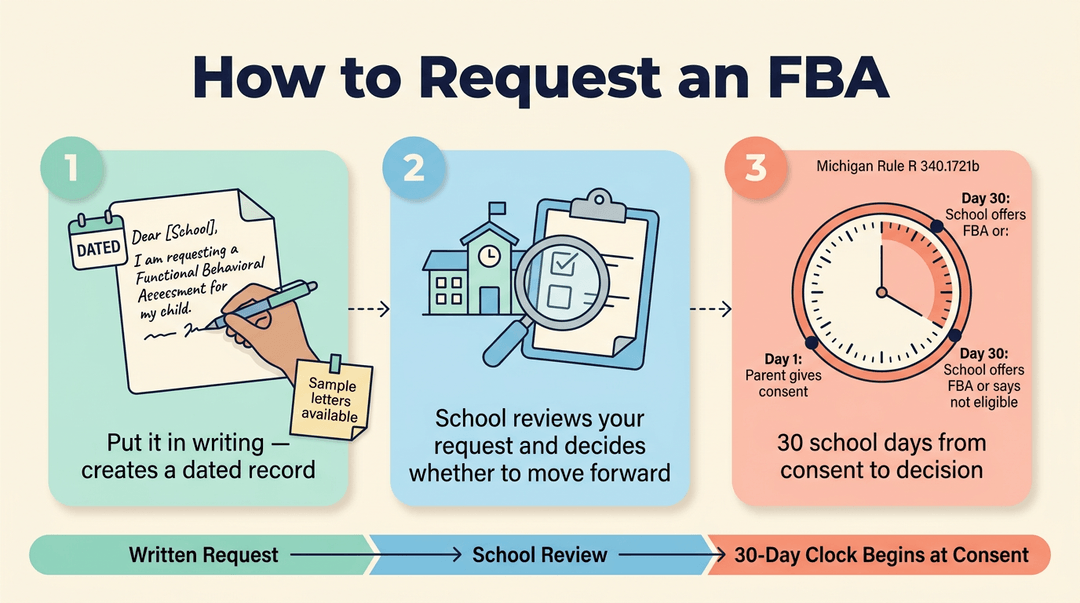
Start with a written request to your child's school, so there's a dated record of what you asked for. Sample request letters are available if you want help with the wording. The school reviews your request and decides whether to move forward.
Under Michigan's rule R 340.1721b, where that timeline applies, the clock runs 30 school days from receipt of parental consent for an evaluation to the notice of an offer or a determination of ineligibility.
What parents consent to and can expect
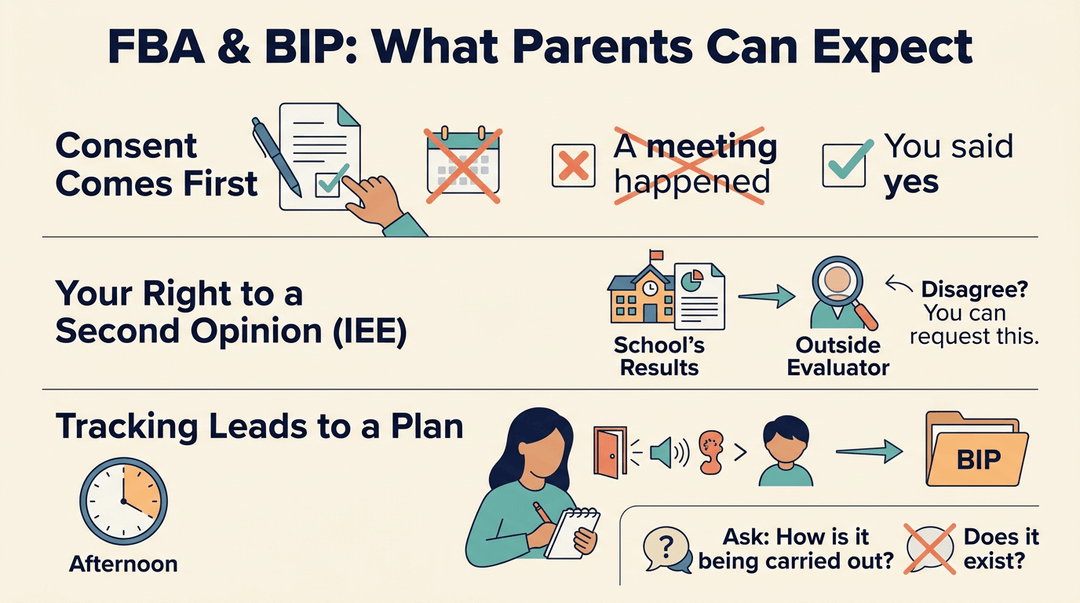
The school needs your parental consent before an FBA begins. Consent is required, not assumed because a meeting happened, so you'll know exactly what you're agreeing to.
You also have the right to an independent educational evaluation (IEE), an assessment by someone outside the school. If you disagree with the school's results, you can request one. Consider a parent whose son melts down every afternoon.
She tracks what happened just before each episode, and the team gets a pattern to work from instead of a guess. Once a behavior intervention plan (BIP) is in place, ask how it's being carried out, not just whether it exists.
How families can support the process
- Observe at home. Notice when behaviors show up, what came before, and what followed.
- Share what you see. Send the team your notes so they aren't relying on school data alone.
- Use a tracking tool. A simple log or behavior-tracking app keeps everything in one place.
- Advocate if the BIP isn't followed. Raise it with the team in writing and ask for a meeting.
Your observations matter. Keep them coming.
Making Sense of the Data
Raw notes only become useful when you look for what repeats. Here's how to spot the patterns that reveal a behavior's purpose, and how to track whether your plan is working.
Spotting patterns in the behavior
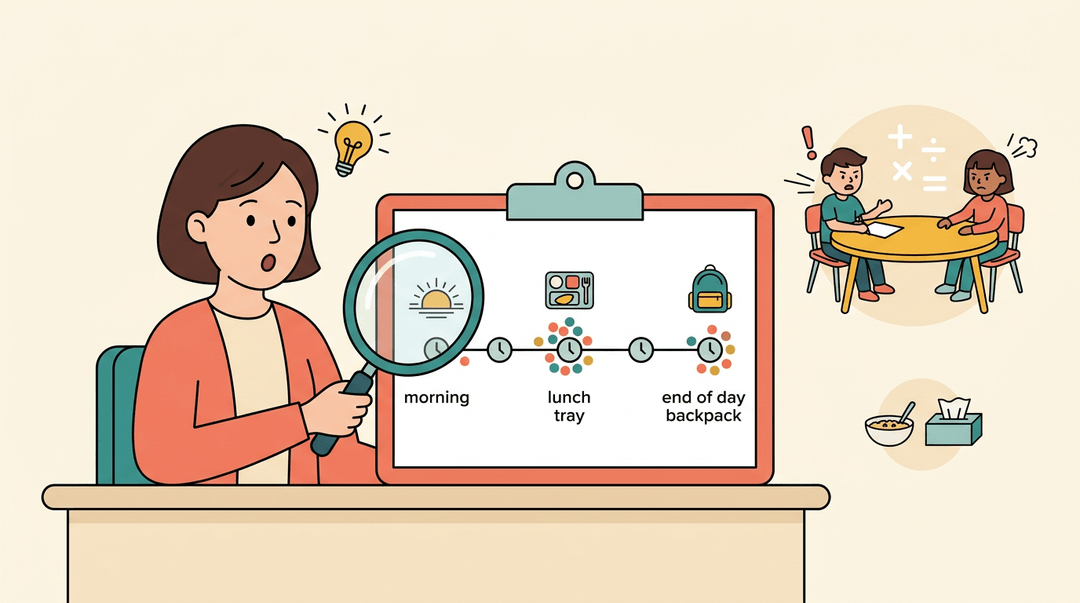
Start by scanning your ABC notes for timing. Does the behavior cluster before lunch, during independent reading, or near the end of the day? A pattern like that often points to the schedule rather than the student.
Look at who and where, too. Consider a fifth-grade teacher who notices Marcus escalates mostly during small-group math with one particular peer. That shifts the question from why Marcus is acting out to what is happening in that setting.
Note consequences consistently. If a student leaves the room every time a demand is made, that escape is data. Personal factors count too: a student who skipped breakfast or is recovering from illness may simply be running on empty.
Tools for tracking progress
Use progress monitoring tools that have been tested for reliability, so your numbers mean what you think they mean. Ask your school psychologist or special education team which measures your district already uses.
A behavior progress monitoring chart works well too. Track frequency or duration daily, and review it weekly with your team. A basic chart you fill in consistently beats a sophisticated one you abandon.
Watch for the limits of FBA data. It captures what was observed in a limited window, not everything that happened, so treat it as a hypothesis to test rather than a final verdict.
Equity and the Bigger Picture
Behavior support is about more than one student's data. It's also about whether every student gets a fair shot, and that's where equity comes in.
Why discipline isn't always fair
Discipline doesn't land evenly.
According to the U.S. Department of Education's August 2026 guidance on pupil discipline, Black, Latino, and Native American students receive substantially more discipline than white peers, often with harsher and longer punishments for like offenses.
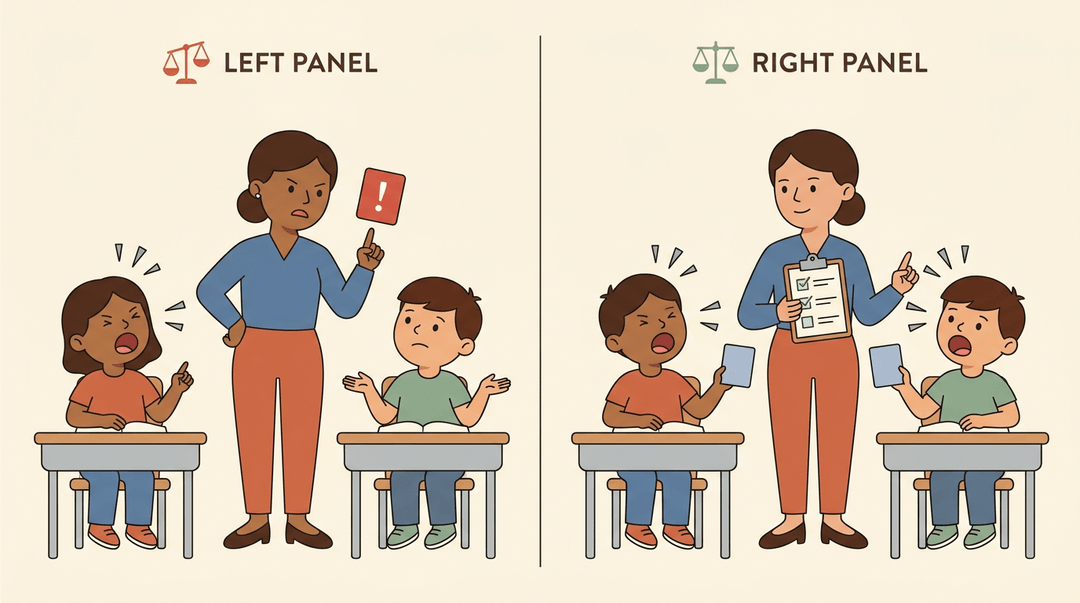
A behavior intervention plan (BIP) helps close that gap. Built from functional behavior assessment (FBA) data, it ties responses to what the behavior serves, not to whoever is closest in the moment.
Picture a fifth-grade teacher whose student shouts during reading: the plan spells out the response in advance.
Teacher bias can shape decisions too, often without anyone meaning it. Two students doing the same thing may get different consequences based on who they are rather than what they did. A written plan is your best check against that.
When an FBA isn't the right tool
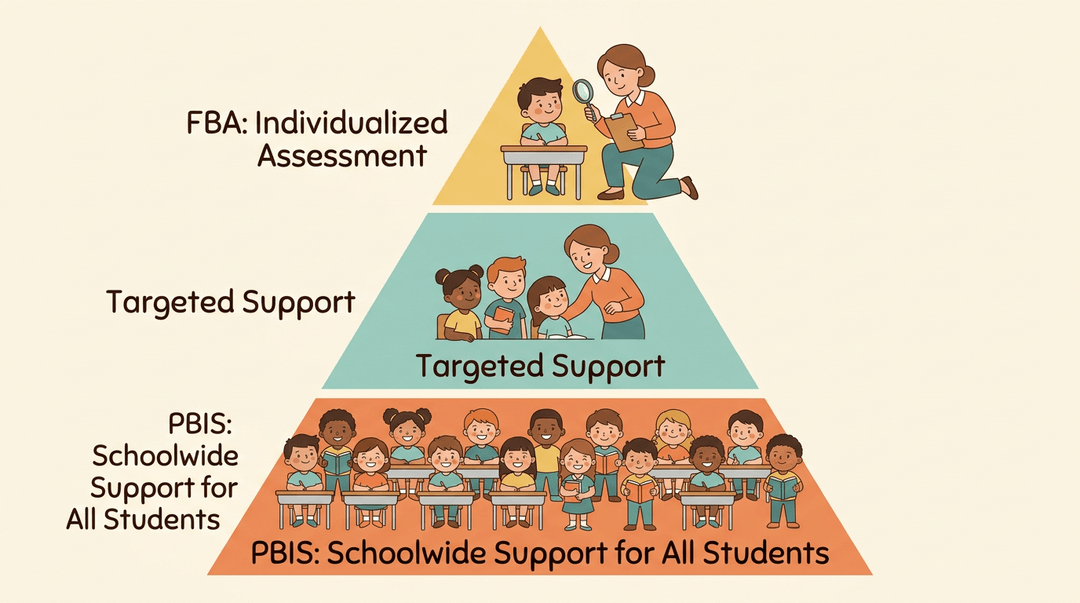
Not every struggling student needs an FBA. Many schools start with positive behavioral interventions and supports (PBIS), a schoolwide framework for all students, including those without an individualized education program (IEP) or Section 504 plan. Many schools organize that schoolwide support into tiers, a structure covered in MTSS in education.
An FBA isn't required for every concern. It's tied to specific legal triggers, so check with your special education team before assuming one is needed.
An FBA isn't a form to file away. It's a practical way to understand why a student behaves the way they do, so you can respond in ways that actually help.
When you focus on the function behind the behavior, you give students a fairer shot at success and give yourself a clearer path forward.
Ready to plan lessons that support every learner? Check out our Curriculum Planning feature to map out units, lessons, and standards across the whole school year.
References
- The Individuals with Disabilities Education Act (IDEA), Part B — congress.gov (2026)
- R 340.1721b — michigan.gov
- August 18, 2026 Guidance on Pupil Discipline and ... — ed.gov (2026)
- Forms Guide I-12: Manifestation Determination Review — dpi.wi.gov
- Discipline Essentials Under the IDEA and Section 504 (and ... — casciac.org
Frequently asked questions
What is FBA in autism?
FBA stands for functional behavior assessment. In autism, it is a structured process for identifying what happens before and after a behavior and determining its likely function, such as escape, attention, access to an item or activity, or sensory input. The results help the team teach replacement skills and develop effective supports.
What is FBA vs ABA?
FBA is a specific assessment process, while ABA, or applied behavior analysis, is the broader field that uses behavioral principles to understand and teach behavior. An FBA is one tool that may be used within ABA, but conducting an FBA does not by itself mean a person is receiving ABA therapy.
What are 6 parts of a functional behavior assessment?
The six common parts are: objectively defining the target behavior, observing it across multiple settings, interviewing the student, parents, and staff, collecting ABC data, analyzing patterns and triggers, and forming a hypothesis about the behavior’s function. The assessment may also use frequency, duration, or time-of-day data to clarify patterns.
What does FBA mean in an IEP?
In an IEP, FBA means functional behavior assessment. It is an evaluation used to understand behavior that affects learning, including its triggers, observable form, consequences, and likely function. Its findings can guide behavior goals, supports, accommodations, and a behavior intervention plan.