PLC Education Meaning: A Complete Guide for Educators

Jump to section
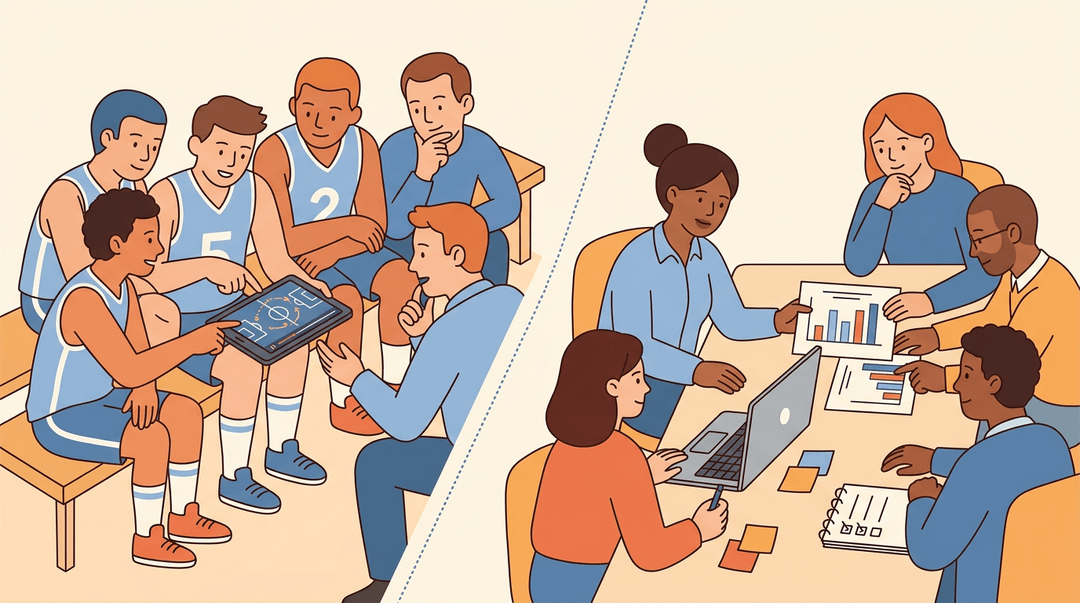
Picture a sports team reviewing game film together after a tough loss. They don't point fingers. They look at what happened, figure out what to change, and try again together.
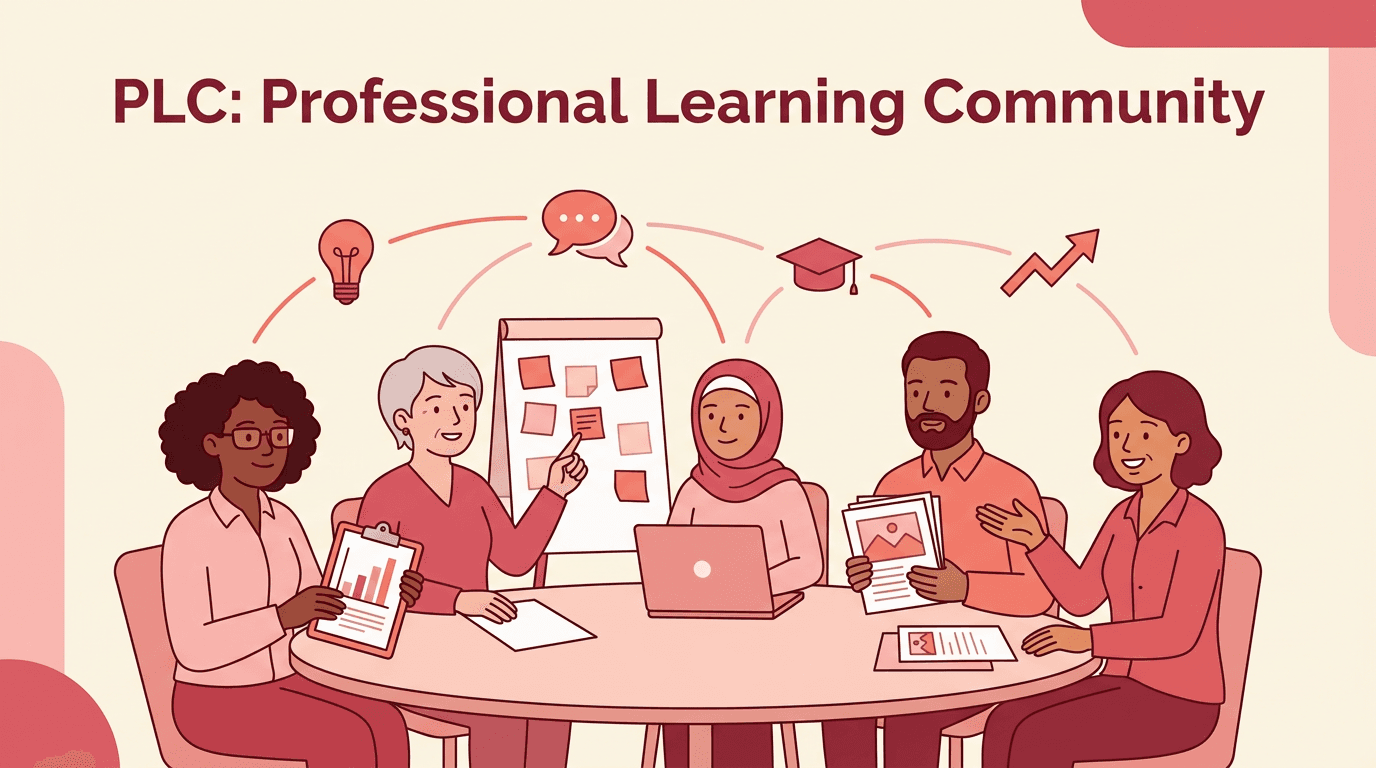
A professional learning community (PLC) works the same way for educators: a group of teachers who meet regularly to examine student data, share what's working, and plan next steps as a team.
You'll see that idea in action throughout this post. We'll cover the definition and history of PLCs, their core principles and structures, who takes part, how to build a strong one, the benefits, and the common barriers.
We'll finish with a meeting checklist you can use right away.
What Does PLC Mean in Education?
Ever sat through a staff meeting that ended with everyone nodding and nothing changing? A professional learning community (PLC) is designed to fix that.
Here's what the term means, where it came from, and how it differs from the training days you already know.
What a PLC actually is
A PLC is a group of educators who collaborate on a shared goal for student learning. They meet regularly, look at evidence from their classrooms, and adjust what they do next.
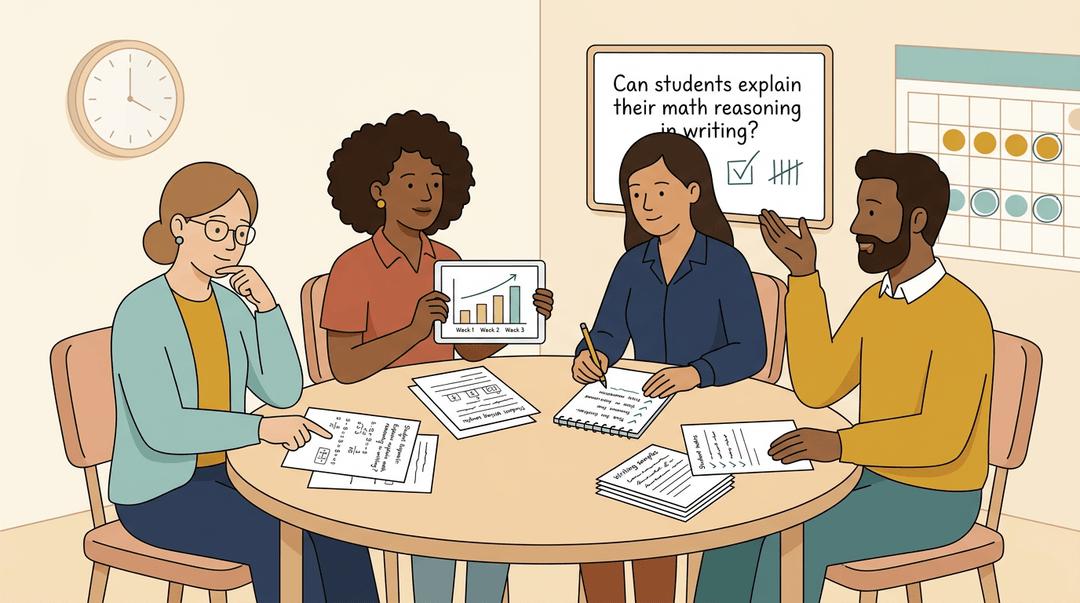
Consider a fourth-grade team that agrees to track how many students can explain their math reasoning in writing. They meet every other week, review the samples, and rework next week's lesson together.
The payoff is concrete: they spot a gap in week two instead of on the unit test.
A PLC is an ongoing process, not a single event. It keeps running year after year, which is what changes how teachers work, not just what they attend.
What a PLC is not
A PLC isn't a program you purchase, and it isn't a single meeting. It also isn't stand-alone professional development (PD), where teachers sit through one workshop and go home. And it's more than dividing up tasks.
Teams that split the planning to save time are cooperating, which is useful, but that alone doesn't make them a learning community.
Where the PLC concept came from
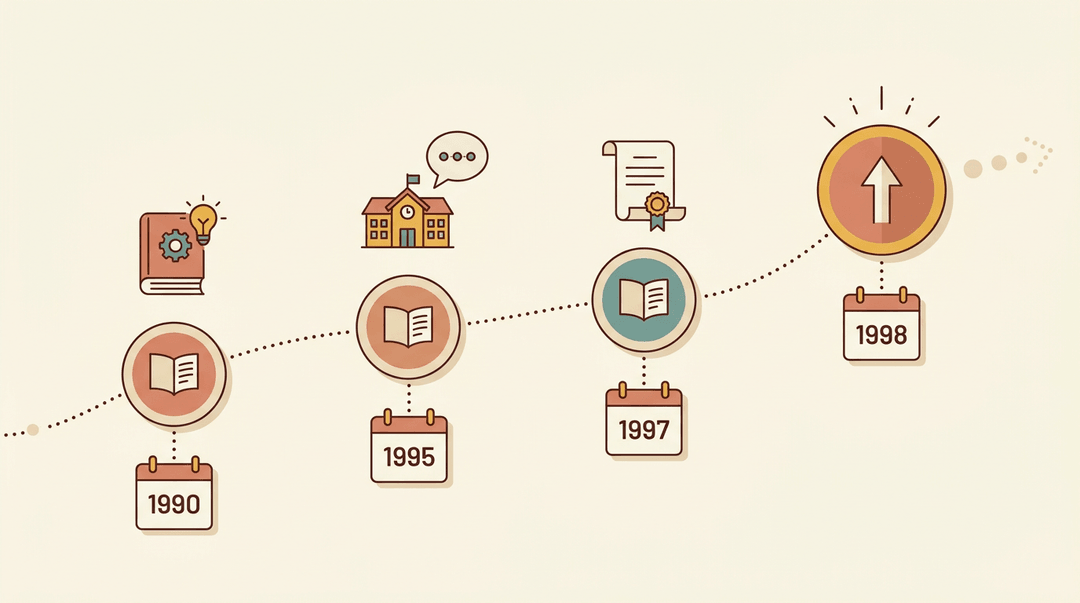
The roots go back further than many teachers expect. Peter Senge's 1990 book The Fifth Discipline introduced the idea of a learning organization, and that thinking shaped later talk about PLCs.
Charles Myers coined the term professional learning community for schools in 1995, as noted in his work on schools as professional learning communities. Shirley Hord followed with a 1997 white paper on professional learning communities.
The concept took off with Rick DuFour and Bob Eaker's 1998 book on PLCs. Interest has only grown since: research notes that PLCs have received considerable attention since the late 1990s.
How a PLC differs from professional development
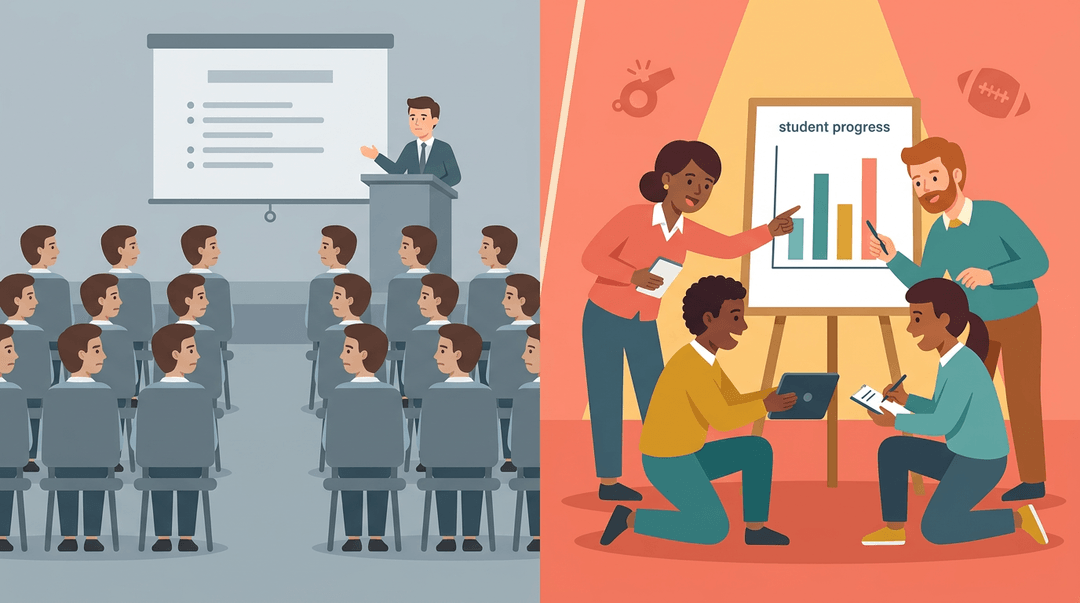
Traditional PD is often one-size-fits-all: the same session for every teacher, regardless of grade or need. A PLC is ongoing and customized. The team chooses what to study based on its own students, and teachers keep their agency over the work.
Think of it as a team sport rather than a lecture hall. Players don't just attend practice. They review the game film, adjust their plays, and run them again.
Don't confuse a PLC with a professional learning network (PLN), a looser web of connections where you swap ideas with colleagues across schools or online. A PLC has a shared student-learning goal and a regular meeting schedule.
That's what makes it a community with a job to do.
How big is a PLC
A PLC can span a whole school or district, but the building blocks are usually collaborative teams: a grade level, a department, or a course team.
Smaller, purposeful groups tend to work best because members can meet often and talk honestly about student work. Picture a middle school math department of five teachers. They can review each other's common assessments in a single planning period.
What Are the Four Main Components of PLC Education?
What makes a professional learning community (PLC) more than a regular staff meeting? It comes down to the three big ideas behind it and the working parts that carry them out.
A study of the PLC at Work® process in Texas describes those ideas as a focus on learning, a focus on collaboration, and a focus on results. Shirley Hord's framework of four components shows how those ideas fit together in daily practice.
Teachers working together, not alone
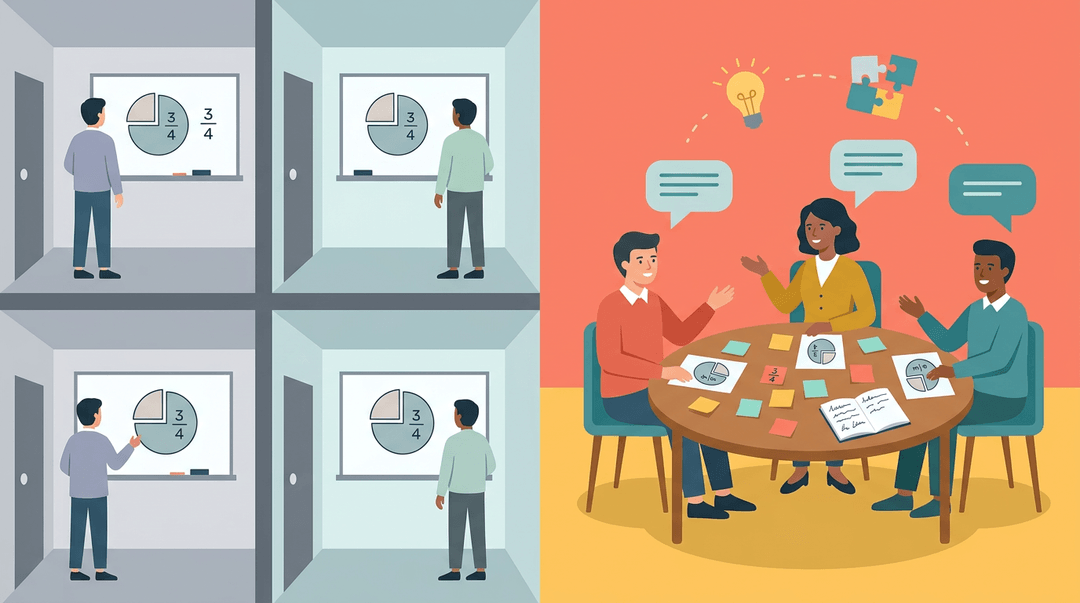
Picture a fourth-grade team that plans in isolation, each teacher reteaching the same fractions unit behind a closed door. In a PLC, teachers work interdependently, relying on each other to plan, teach, and solve problems.
That only works with shared norms and values, the agreed-upon ways your team talks and makes decisions. Everyone also needs respect for all voices, so the newest teacher's idea gets as much attention as the veteran's.
Leadership is collective, shared across the team rather than held by one person.
Questioning and reflecting on practice together
Teams that inquire into best practice ask what works and why, not just what sounds good. Reflective dialogue means talking through lesson results with colleagues.
This is the de-privatization of practice, where classroom doors open and teaching becomes a shared conversation. The goal is shared knowledge, not opinions.
Letting data drive the work
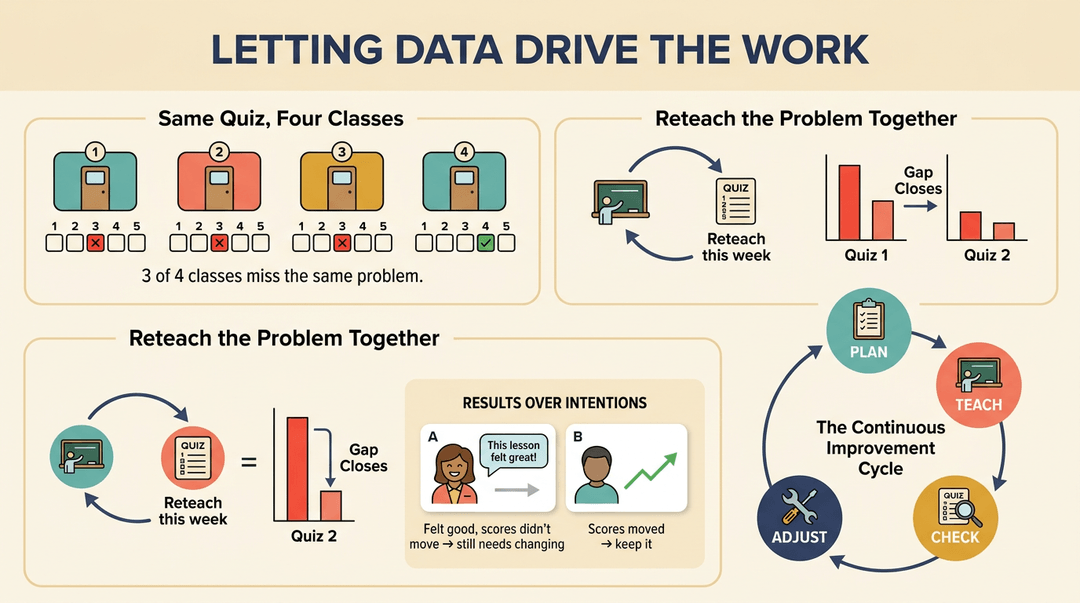
Teams give common formative assessments, short checks that every teacher on the team uses. Then they analyze student data together. Consider a middle school math team whose five-question quiz shows three of four classes missing the same problem.
They reteach it together that week, and the next quiz shows the gap closing. That's results over intentions: a lesson that felt great but didn't move scores still needs changing. Good intentions don't show up on the data.
Each round follows a continuous improvement cycle of:
- plan
- teach
- check
- adjust
Learning by doing, not just talking
Teams can talk about strategies for hours, but PLCs focus on learning by doing. A special education teacher and a reading specialist might agree to try a think-aloud routine on Monday, then compare notes on Thursday about which students stayed with it.
Teams apply strategies quickly so the conversation stays grounded in real classrooms. Data and dialogue become catalysts for action, moving the team from discussion to change.
A shared commitment to every student
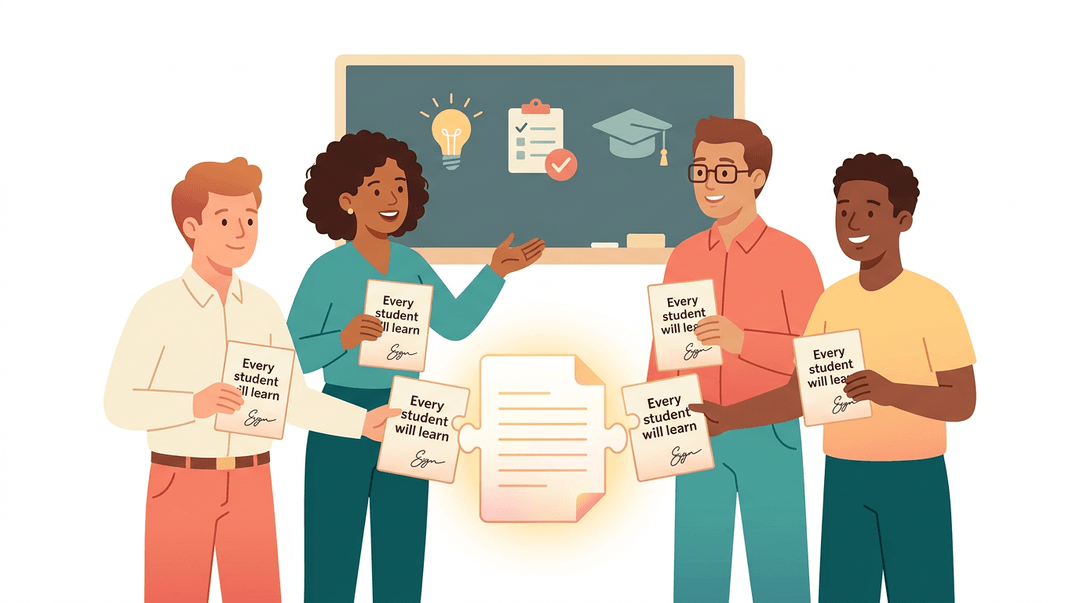
Everything above points to one goal: a focus on student learning for all. Teams make collective commitments, written promises about what every student will learn and how the team will check.
Staff grow through job-embedded learning, development that happens during the real work of teaching rather than in a one-off workshop. The commitment is what keeps the team going.
Running an Effective PLC Meeting: a Teacher's Checklist
Use this guide to run a professional learning community (PLC) meeting that ends with decisions, not just conversation. It moves through three phases: prepare, meet, follow through.
Before the meeting: get ready
Confirm these three things before you sit down together:
- Agenda is set. One focus question, shared ahead of time.
- Prior data is reviewed. Everyone has seen last cycle's results and action items.
- Goals match the curriculum. The focus ties to a specific standard or unit in your pacing guide.
A strong agenda focus is narrow enough to answer in one sitting:
Agenda focus: Which students missed the "compare fractions" standard on Friday's quiz, and what will we reteach?
Not "Talk about fractions." The first can be answered; the second just fills the time.
During the meeting: do the work
These moves run in order, so keep them where you can glance at them.
- Open with the focus question.
- Say: "Here's what we're solving today, and what we'll leave with."
- Run a discussion protocol.
- Each person shares one observation, with no solutions yet. Then the group discusses.
- Analyze student work together.
- Bring three samples: one strong, one partial, one off-track.
- Assign action items before you leave.
- Each item gets an owner and a date: "Priya reteaches comparing fractions by Friday."
A protocol feels stiff at first, but it keeps one voice from steering the whole room. Looking at real student work keeps the talk about learning, not opinions.
⚠️ Watch out: A meeting that ends without owners and dates feels productive and changes nothing. Don't adjourn until every action item has both.
After the meeting: follow through
What happens next decides whether the meeting mattered. Find your move and read across.
| Move | What it looks like |
|---|---|
| Document decisions | Shared notes listing each decision, owner, and due date |
| Track follow-up actions | Open the next meeting by checking each item off or carrying it over |
| Measure impact on learning | Re-check the same skill and compare it to the first results |
Example: A sixth-grade math team finds that many students confuse numerators and denominators. They agree on a short reteach, and each teacher gives the same three-question check the following week. At the next meeting, they compare the new results to the original quiz and decide whether to move on or reteach again.
The re-check is the part teams skip most often, and it's the only way to know the work paid off.
At a glance:
| Phase | Key move | What you get |
|---|---|---|
| Before | One focus question, data in hand | A meeting with a purpose |
| During | Protocol, student work, owners | Decisions you can act on |
| After | Notes, follow-up, re-check | Proof of impact |
Map PLC goals to pacing guides and standards right inside your curriculum planner.
Who Takes Part in a PLC
Ask who belongs in a professional learning community (PLC), and the answer is broader than you might expect. A PLC is any group of educators working to improve student learning.
Who's in the room
Teachers are the heart of most PLCs, but they're rarely the only voices. Administrators and instructional coaches often join too. Your role depends on the goal, not just your title. A reading-growth team needs different voices than a math-planning one.
Picture a fourth-grade teacher whose class keeps missing the same fraction problems. A special education teacher on her team suggests a visual model that helps everyone, so the group plans one fix instead of four. Everyone has a meaningful role.

Different ways PLC teams are grouped
- Grade-level teams include teachers who serve the same students at the same stage.
- Subject or department teams focus on one content area, like middle school science.
- Building-level PLCs bring the whole school together around one shared goal.
- District-level PLCs connect schools across a district to align curriculum and practice.
- Leadership team PLCs bring principals and lead teachers together to guide the work.
- New-teacher PLCs support early-career educators as they find their footing.
The structure should follow the question you're trying to answer, not the org chart.
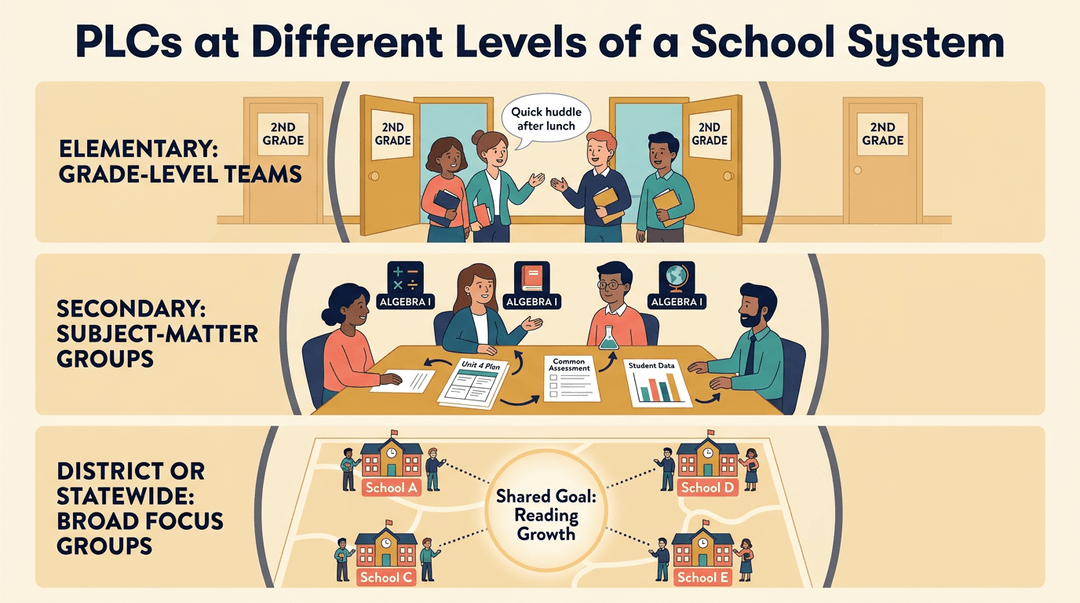
PLCs at different levels of a school system
- Elementary grade-level model: teachers on the same grade meet regularly, often down the same hallway.
- Secondary subject-matter groups: teachers of the same course share plans, assessments, and student data.
- District or state-wide groups: educators from many schools gather around a broad, shared focus.
Specialized PLC teams you might see
- Exploratory teams test a question, such as a new classroom technology, before anyone commits.
- Externally-facilitated PLCs bring in an outside facilitator to guide discussion and keep the group focused.
- Web-facilitated or online PLCs meet through video calls and shared documents, connecting teachers who lack a same-subject colleague down the hall.
A middle school math teacher with no advanced-algebra peers in her building can join an online PLC and plan with colleagues across the state.
Building and Sustaining a Strong PLC
A professional learning community (PLC) runs on more than good intentions. It needs a clear focus, a predictable rhythm, and leaders who keep the work moving. Here's how to build all three.
Setting a clear goal and focus
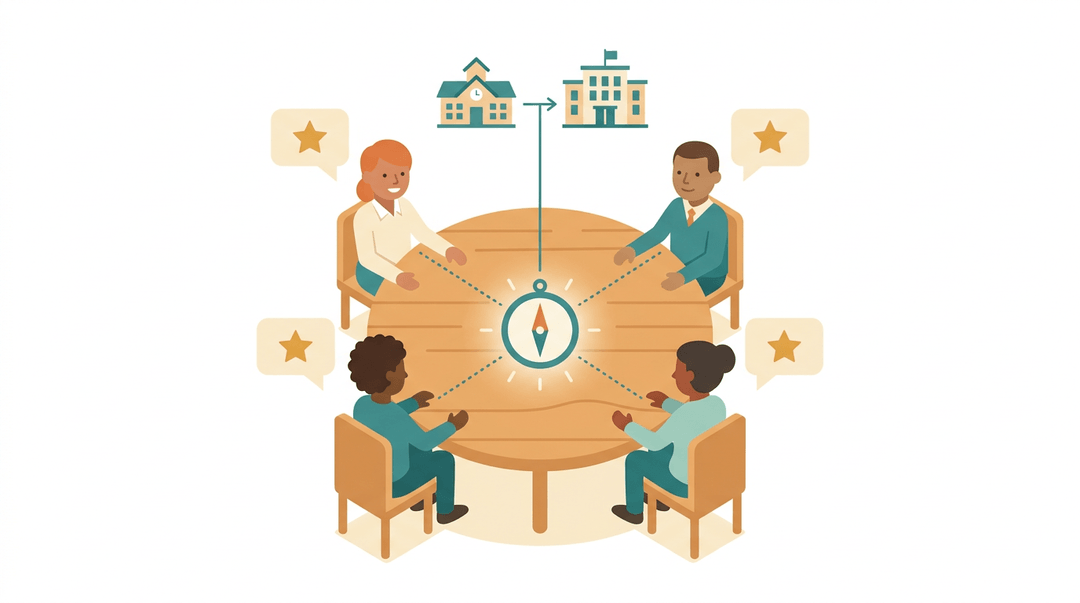
Start by identifying a common goal that every member can name in one sentence. Then align it with school and district initiatives so teachers aren't juggling competing priorities.
Finally, establish a shared vision of what students should know and do by year's end. When everyone answers that question the same way, meetings have a compass. Shared purpose beats good intentions.
What do teachers do during PLC?
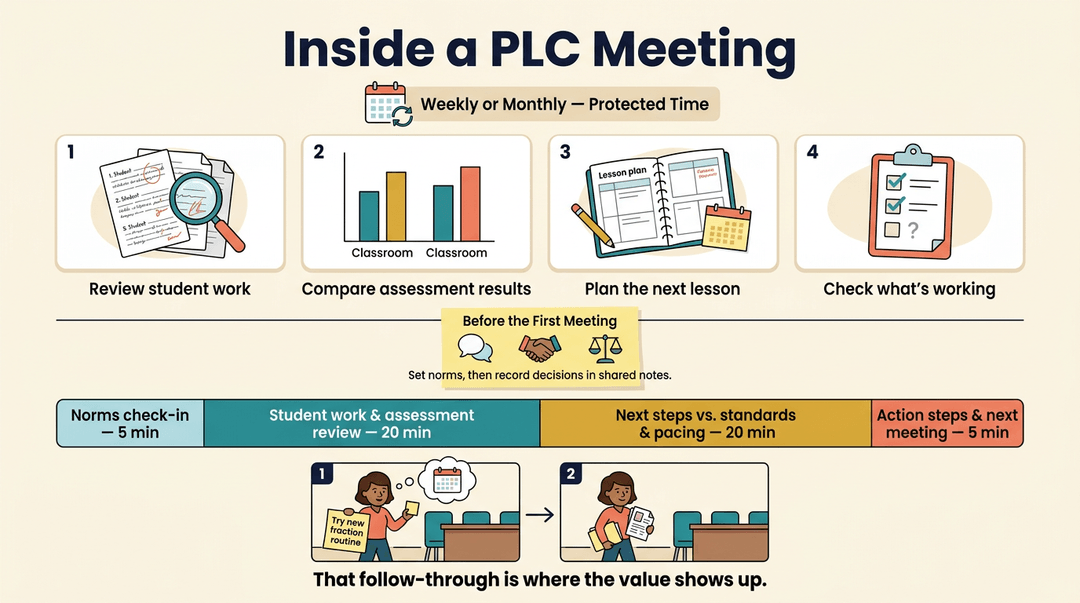
Teachers meet on a protected schedule, usually weekly or monthly. Typical activities include:
- reviewing student work
- comparing common assessment results
- planning the next lesson
- checking what's working
Before the first meeting, the group sets norms for listening, decision-making, and disagreement, then records decisions in a shared notes document.
Consider a fourth-grade teacher who leaves a meeting with one action step: try a new fraction routine. She returns the next week with student samples to discuss. That follow-through is where the value shows up.
An agenda keeps things focused, but it should bend to the data. A simple starting template:
- Norms check-in (5 minutes)
- Student work or assessment review (20 minutes)
- Next instructional steps, checked against standards and pacing guide (20 minutes)
- Action steps, owners, and next meeting date (5 minutes)
Choosing protocols for looking at data
Choose an analysis protocol that gives every voice a turn, so one loud opinion doesn't steer the room. Discussion protocols keep the conversation moving from what the data shows to what it means.
Simple decision tools, like a class-by-skill chart, help teams spot patterns fast. The goal is better conversations, not more data.
The role leaders play
Strong PLCs use shared leadership, so rotating facilitator and note-taker roles builds ownership. The principal acts as a community member, attending and learning alongside teachers rather than inspecting from the doorway.
School leaders also protect meeting time, provide training, and remove obstacles that stall the work.
Tools that keep discussions on track
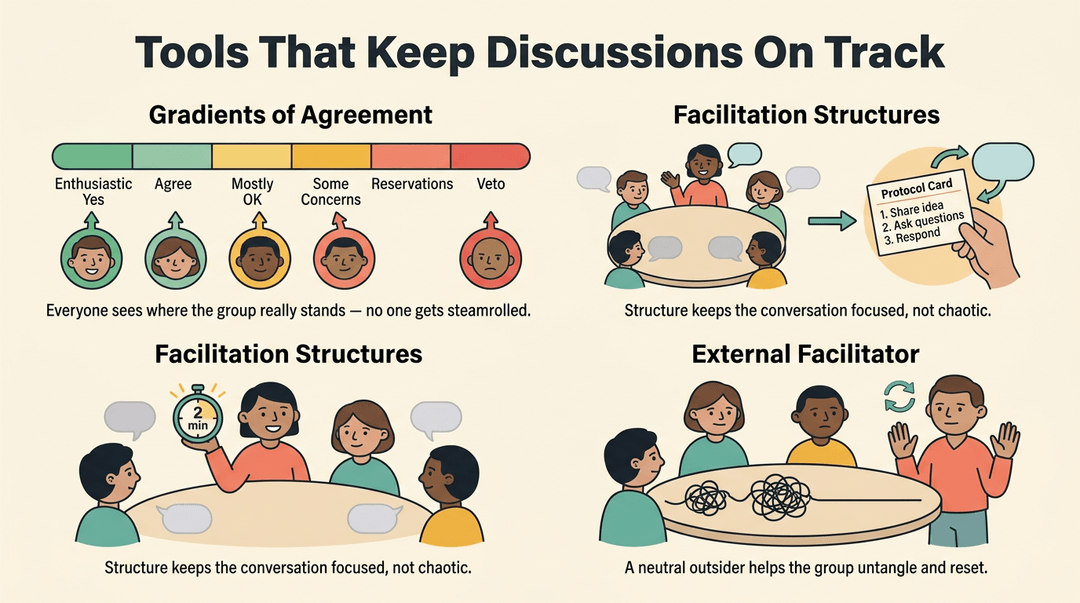
Gradients of Agreement helps a team see where each member stands on a proposal, so decisions move forward without anyone feeling steamrolled. Facilitation structures, like timed rounds or protocol cards, keep talk focused.
When a team gets stuck, an external facilitator offers a neutral perspective and helps the group reset.
The Benefits of a PLC
A PLC pays off for students, teachers, and the whole school. Here's what that looks like.
Better outcomes for students
When teachers work through the same questions together, students feel it. A review from Georgia Southern University notes that PLC participation is associated with improved achievement for students.
Those academic gains are clearest when teams track results together.
Consider a fourth-grade team that writes a SMART goal (specific, measurable, achievable, relevant, and time-bound): more students will pass the fractions check by the end of six weeks than did last month. The focus shifts from teaching to learning.
Growth and retention for teachers
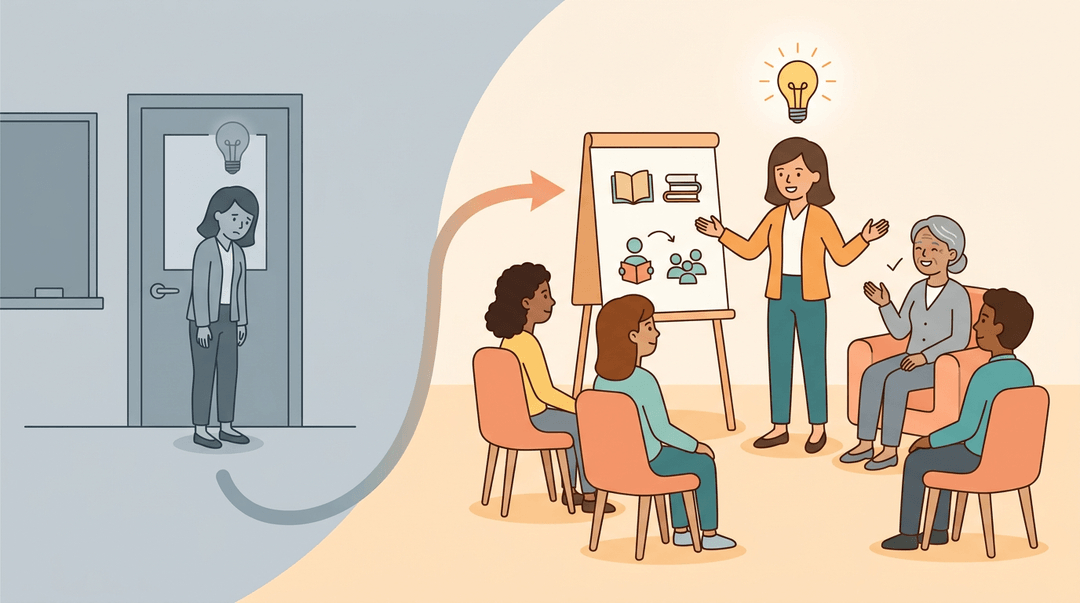
Teaching can feel lonely behind a closed door. PLCs help reduce teacher isolation by keeping educators engaged in continuous improvement. Retention matters too.
According to studies by Susan Kardos and Susan Moore Johnson, pairing novice and veteran teachers can improve retention and satisfaction.
Think of a second-year teacher unsure about small-group reading. After a few sessions trying strategies with colleagues, her confidence grows, and she ends up leading the next session herself.
That's a real leadership opportunity she might never have taken alone.
A stronger, more collaborative culture
Strong PLCs build relationships that last beyond meeting time, and the workload gets shared. One teacher drafts a unit, and three teammates adapt it. Brainstorming also produces innovative ideas no one would reach alone.
Trust ties it together: when colleagues trust each other, saying 'That lesson flopped' gets easier. That honesty is where growth starts.
Sharing knowledge beyond your school
Your network doesn't have to stop at the school door. Online and social media PLCs connect a rural science teacher with peers across the country, and cross-district or global networks widen that circle. You also gain fast access to new research and tools.
Common Challenges and Barriers
Starting a PLC is rarely hard on paper. The friction shows up in the schedule, the building, and the mindset.
Obstacles to getting started
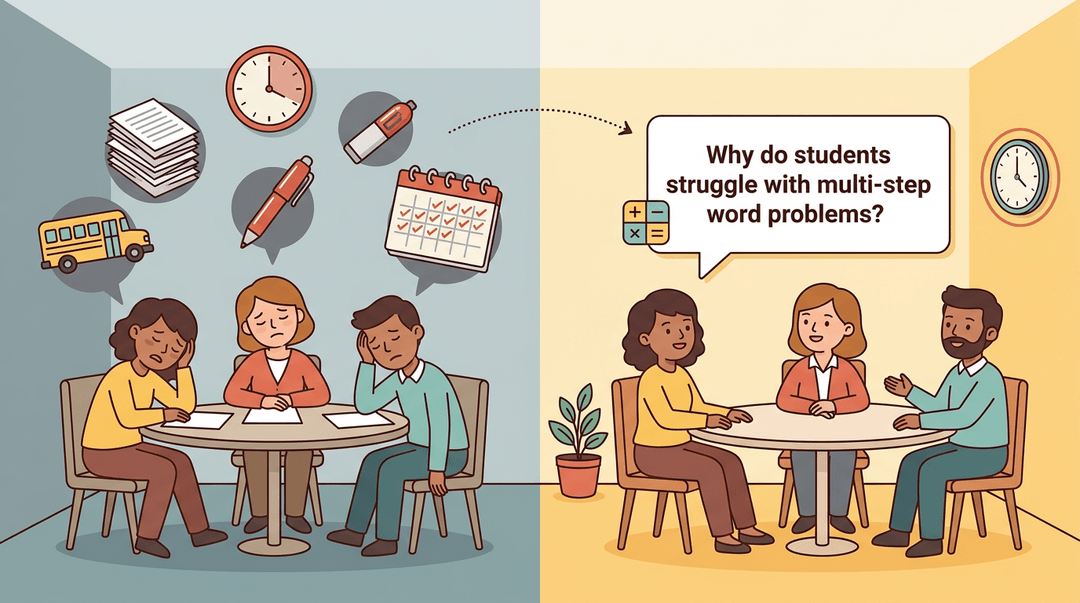
Picture a fourth-grade team already stretched by lesson plans, grading, and bus duty. A weekly professional learning community meeting feels like one more task. Protect a recurring time slot and let the meeting replace something rather than pile on.
Teams also stall without a clear focus: one shared question, like why students struggle with multi-step word problems, gives the group a next step.
Expect consistency to take time, and remember that a collaborative culture has to come first, or meetings become a place to hide.
Structural and physical barriers
Many schools still sort teachers into subject silos, so the math and science teams never discuss the same students. Physical layout adds friction when classrooms sit at opposite ends of the building. Top-down mandates cause trouble too.
A PLC handed down without input feels like paperwork, so give teachers a say in goals and schedule to build ownership rather than compliance.
Mental and psychological barriers
- Confirmation bias is sneaky: a teacher sure a class is unmotivated will overlook data that says otherwise.
- Hesitation to act turns three meetings into endless analysis with no new strategy tried.
- Avoiding vulnerability keeps failed lessons private.
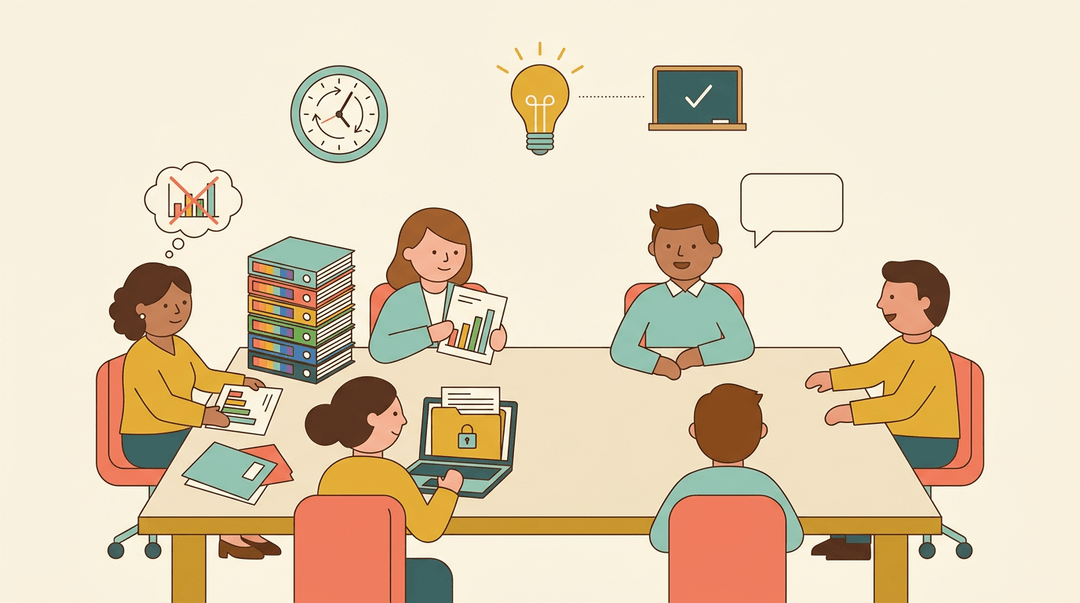
- And watch for the activity trap, where color-coded binders fill a meeting without any talk about learning.
Busy isn't the same as better.
A strong PLC isn't about adding more meetings to your week. It's about making the time you already spend with colleagues focus on student learning, with clear questions, honest data, and shared next steps.
When teachers learn together, students benefit too.
Ready to bring that same clarity to your planning? Check out our Curriculum Planning feature, an all-in-one online teacher planner that helps you map units, lessons, and standards across the whole school year.
References
- A Global Measure of Professional Learning Communities — doi.org (2022)
- ED410659 — files.eric.ed.gov
- THE FIFTH DISCIPLINE — doi.org (1997)
- ED400227 — files.eric.ed.gov
- Effect of professional learning communities on teachers and students: reporting updated results and raising questions about research design — scholars.georgiasouthern.edu
- Overcoming Barriers to Professional Learning Communities: A School Leader’s Guide to Lasting Impact — citygov.com
- Part 2: Evaluating the Effectiveness of the PLC at Work® Process and Student Achievement in Texas — files.eric.ed.gov
- A Handbook for Professional Learning Communities at ... — otb.ie
- The benefits of teacher collaboration — districtadministration.com
Frequently asked questions
What is the meaning of PLC in teaching?
1. PLC in teaching means professional learning community. It is a group of educators who meet regularly to examine student evidence, share effective practices, and plan instructional improvements together.
What are the three big ideas of a PLC?
2. The three big ideas of a PLC are a focus on learning, a focus on collaboration, and a focus on results. Together, they keep educators centered on student learning, teamwork, and evidence of progress.
What are the four main components of PLC education?
3. The four main components are shared values and vision, collective responsibility, reflective professional practice, and a focus on student learning and results. In practice, these involve collaboration, examining teaching, using assessment data, and continuously improving instruction.
What do teachers do during PLC?
4. During a PLC, teachers review student work and assessment results, discuss instructional practices, and plan next steps. They try strategies, assign action items with owners and deadlines, and later check whether those changes improved student learning.