Education Alternatives: A Complete Guide to Your Options

Jump to section
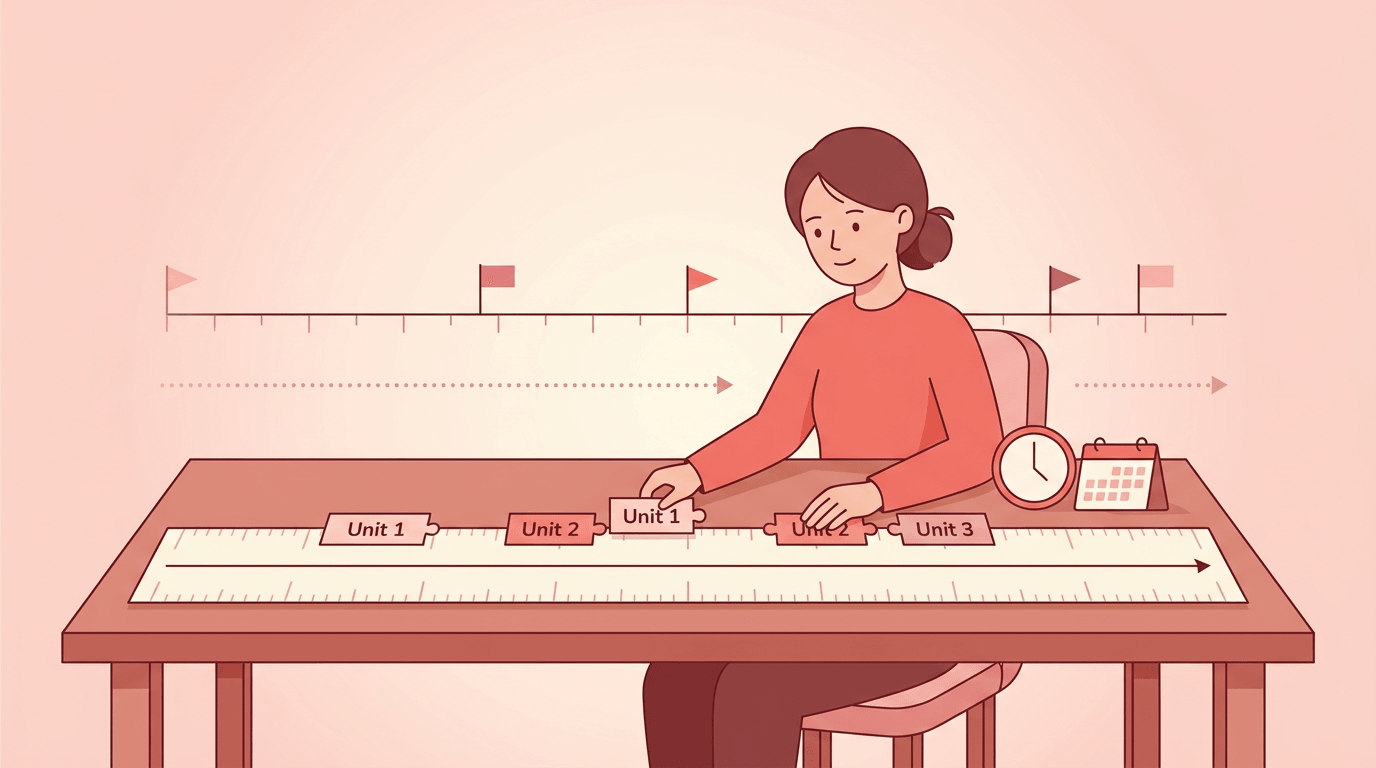
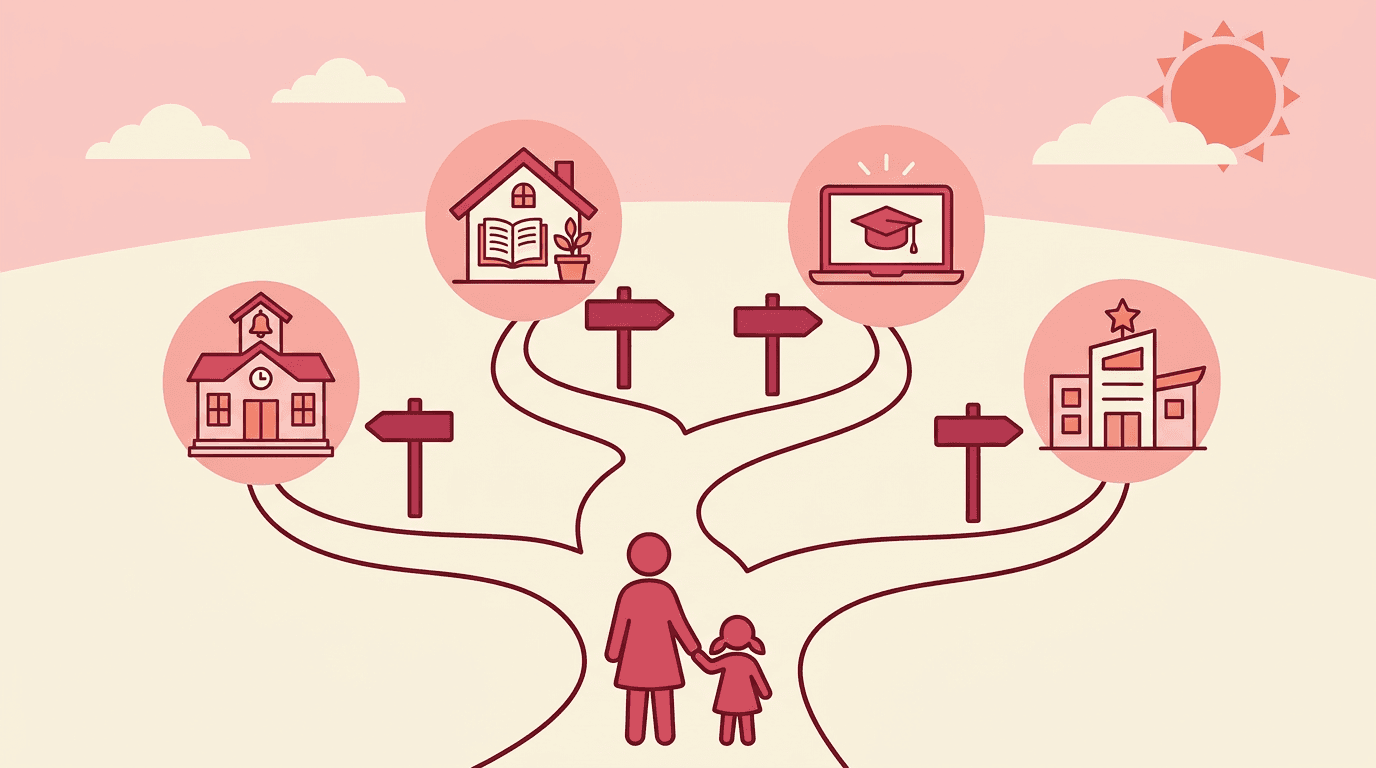
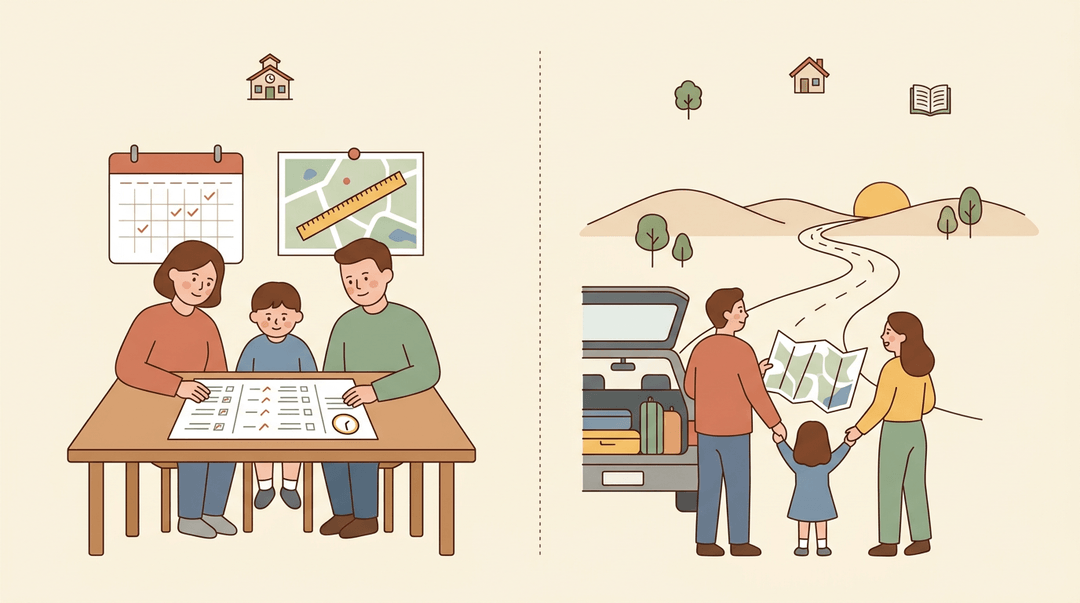
Picture two families planning a trip. One builds a tight day-by-day itinerary, while the other picks a destination and lets the road decide the rest.
Schooling works much the same way: there's no single route, and many students thrive on paths that look nothing like a traditional classroom.
Education alternatives are approaches that step outside the conventional school model, from worldschooling and Montessori classrooms to programs built for students who are struggling.
In this post, we'll explain what these options are, how they're structured and funded, and how you can support students as they move between them.
Education Alternatives for Struggling Students
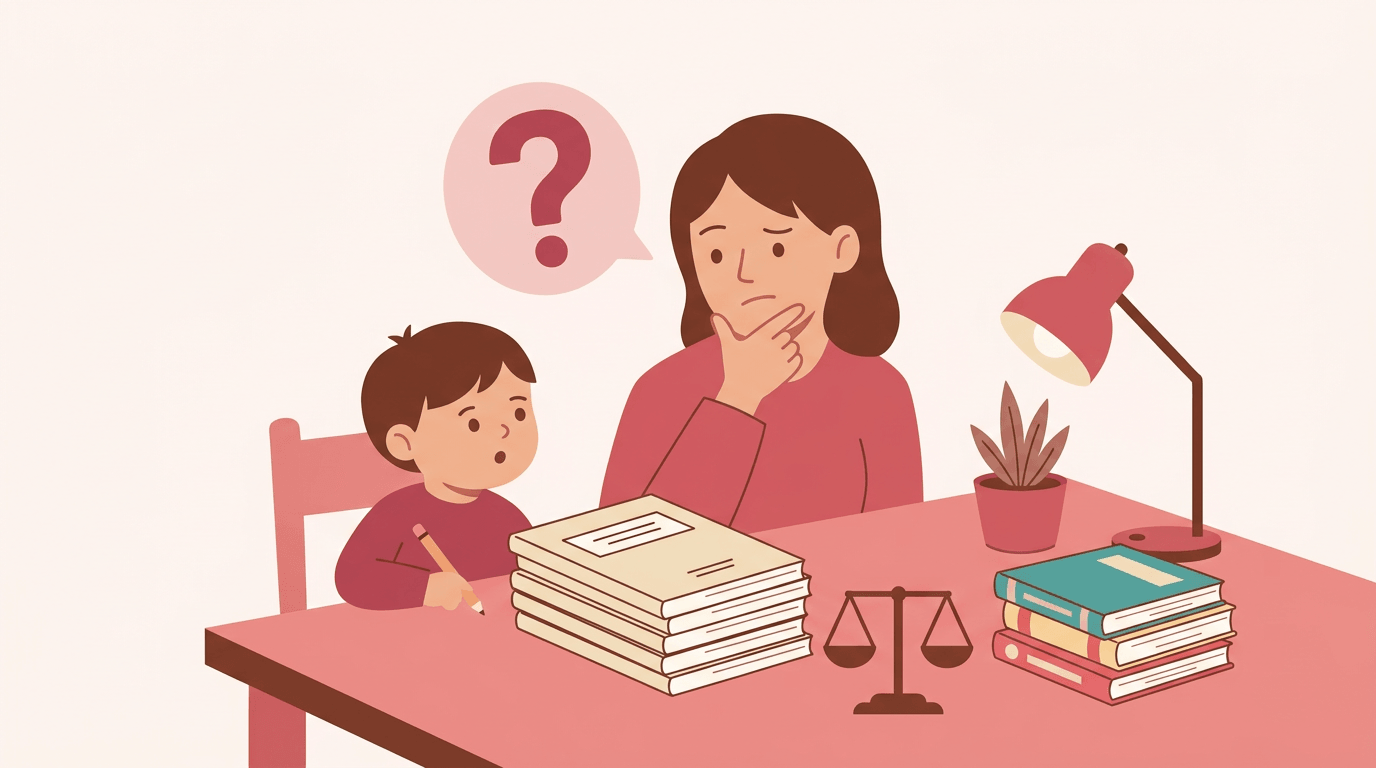
When a student keeps struggling in a traditional classroom, an alternative program may offer a different route forward.
These options give students more structure, support, or flexibility than a standard school day, and funding and eligibility rules determine which ones a family can actually reach.
Why Students Get Referred to These Programs
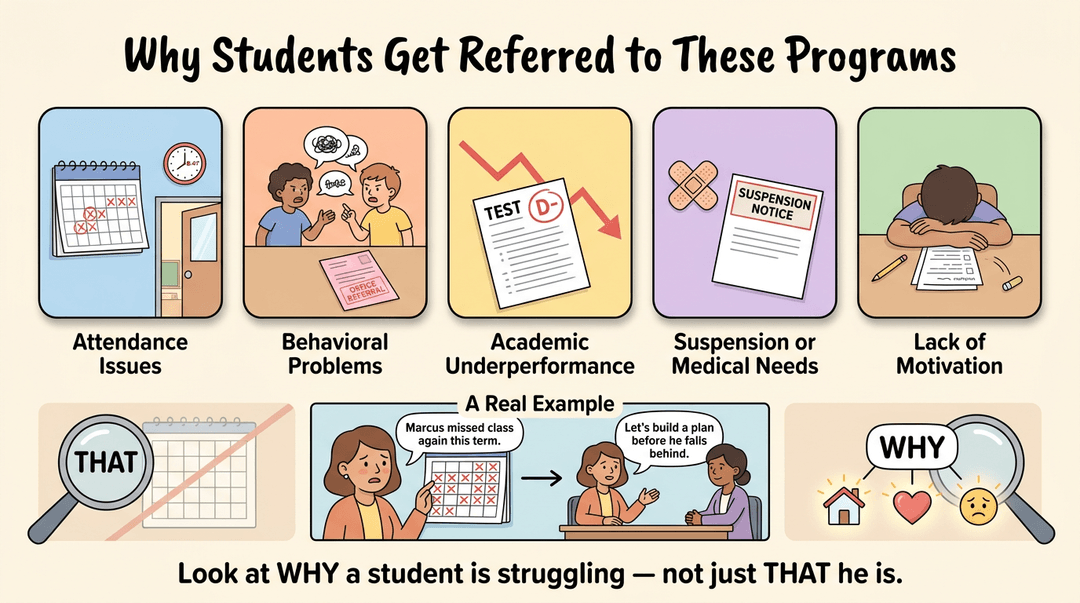
Referrals usually start with a pattern you've noticed in your own room. Common triggers include:
- Attendance or tardiness issues
- Behavioral or disciplinary problems
- Academic underperformance
- Suspension or medical needs
- Lack of motivation
Think of a seventh-grade math teacher who notices Marcus has missed class again and again this term. She flags him to the counselor early, so the team can build a plan before he falls too far behind. Attendance is rarely the whole story, though.
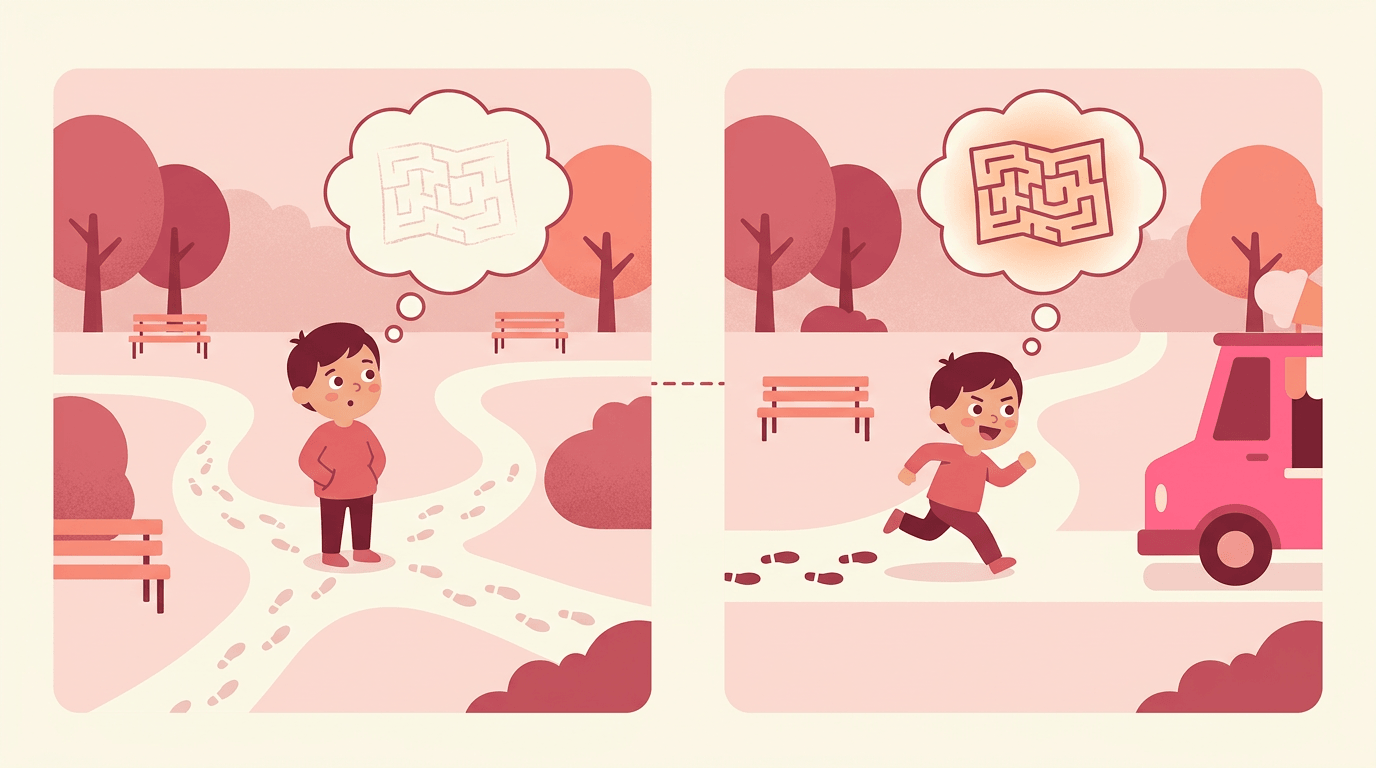
Look at why a student is struggling, not just that he is.
Common Program Formats You'll Find
These alternatives come in several shapes:
- Full-day in-person academies
- Fully virtual program options
- Home or hospital instruction
- Out-of-school suspension programs
- Smaller specialized school sites
Each format fits different needs. A student recovering from a medical stay may need home instruction, while a student who thrives in small groups may do better at a specialized site. Don't assume the most restrictive option is the right one.
Funding matters here too. Education savings accounts (ESAs), which give families funds for approved education expenses, and vouchers can open doors to some programs, though the rules vary by location.
Support Services Students Can Access
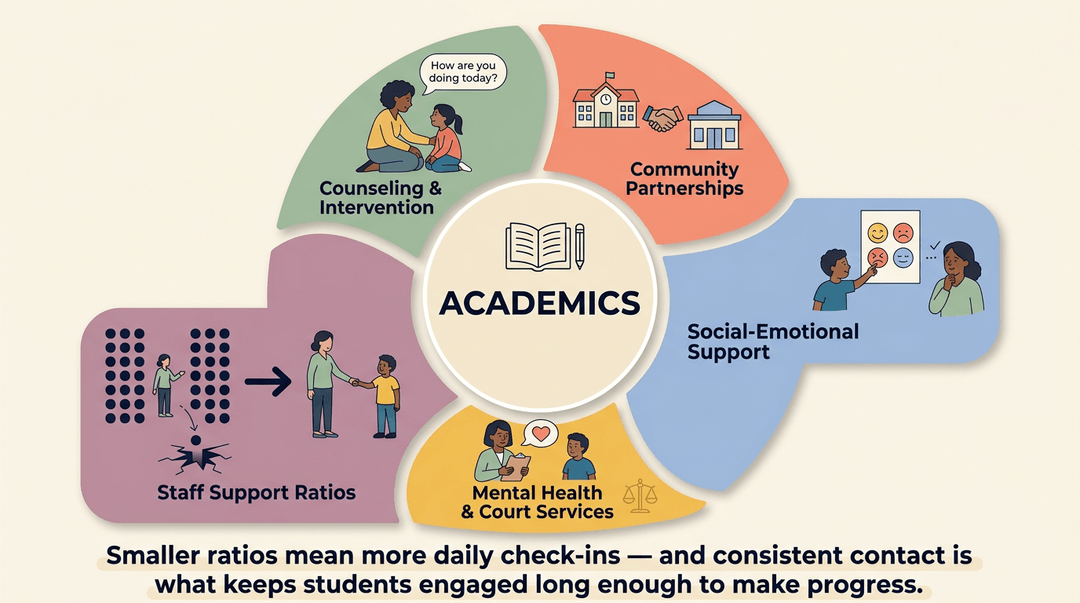
Strong programs wrap support around the academics:
- Counseling and intervention services
- Community partner collaborations
- Social-emotional support
- Increased staff support ratios
- Mental health and court services
Smaller staff ratios mean a student who used to slip through the cracks gets a daily check-in. That consistent contact is often what keeps a student engaged long enough to make progress.
How the Curriculum Stays on Standard
Students in these programs still need to meet grade-level expectations, so the curriculum typically includes:
- Core subject instruction
- State standards alignment
- Life skills coursework
- Vocational assessment
- Personalized reading and math programs
Mapping standards across formats means a student in a virtual course and a student in a hospital room are working toward the same outcomes, even if their days look completely different.
Tracking Progress and Moving Back to School
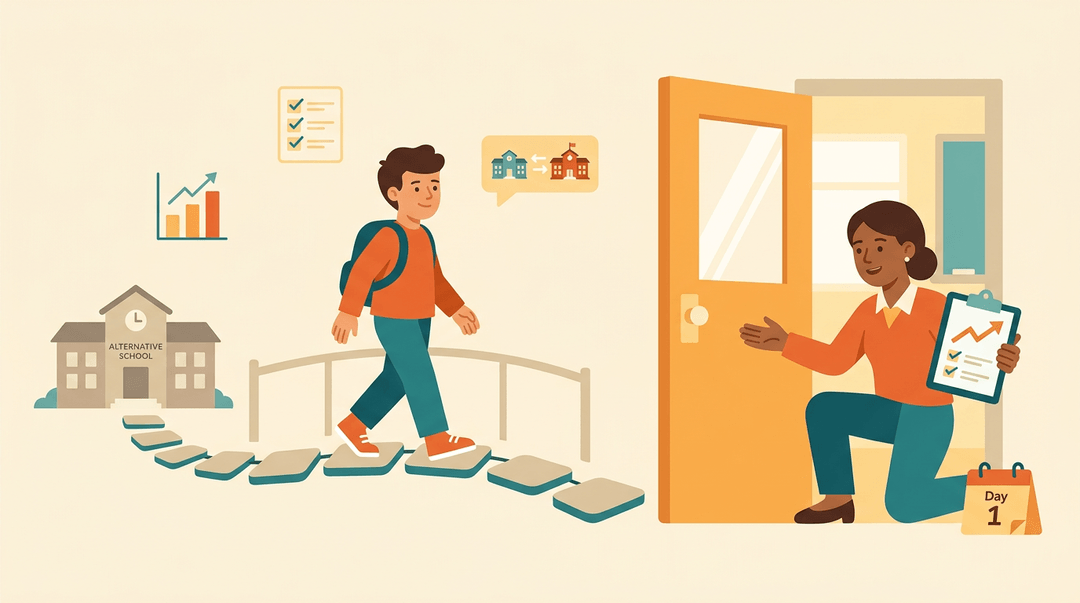
The goal is always a return. Regular progress reports and goal tracking keep everyone informed, and clear communication with the home school makes the transition smoother. Students typically return once their behavior or grades improve.
A high school English teacher who reads the latest progress report before the student comes back can plan a quick check-in on day one, and that small step helps the student land well.
What It Takes to Get Admitted
Admission usually involves a few requirements. Families are typically expected to take part in the process, and programs may set behavioral thresholds or residency rules.
Some students also need treatment running alongside their schooling, so coordinate with the counselor and family early. Knowing these requirements up front saves everyone time and keeps the placement on track.
Helping Students Through Alternative Education Transitions
Use this guide when a student is moving into, through, or back from a non-traditional setting, such as a micro-school, online program, or alternative placement. It runs in three moves: choose the fit, keep the learning aligned, and plan the way back.
Move 1: Find the right fit
Start with the student's record, not the program brochure. Before you recommend anything, confirm you've reviewed:
- Learning style: what format helps this student work, not just behave?
- Attendance history: when absences started and what was happening then
- Behavior history: which settings and times of day go well, and which don't
Then match what you found to the program's strengths:
| When you see... | Look for... |
|---|---|
| Thrives hands-on, shuts down on worksheets | Project-based or Montessori-style setting |
| Absences tied to anxiety or health | Flexible online or hybrid schedule |
| Incidents cluster in large, loud settings | Small-group alternative program |
Move 2: keep curriculum aligned
Learning shouldn't reset when the setting changes. Work through it in this order:
- Map standards to the new setting.
- Ask the program: "Which of our grade-level standards will you cover, and when?"
- Adjust the pacing guide.
- Move partly covered skills earlier; compress what the student has already mastered.
- Track skill gaps as you go.
- Keep one running sheet, updated whenever work comes back.
A simple gap tracker you can copy:
| Skill | Covered in new setting? | Next step |
|---|---|---|
| Multiplying fractions | Partly | Two practice sessions before unit test |
| Paragraph structure | No | Add to week 2 pacing guide |
Move 3: Track progress toward returning
If the goal is to return to the school, build the road back on day one.
- Set measurable goals.
- Name the behavior, the amount, and the date.
- Share regular progress reports.
- Agree on a rhythm (weekly or biweekly) and keep it short.
- Coordinate with the home school.
- Confirm who owns grades, credits, and the re-entry meeting.
Goal, as written: "By the end of six weeks, Maya will attend four of five days each week and complete 80% of assigned math tasks."
Weak: "Maya will do better with attendance." Strong: the goal above. The difference is a number and a date, so everyone can see whether it's working.
⚠️ Watch out: Don't let the home school and the program each keep their own version of the goals. One shared document keeps the student from being measured two different ways.
Example: A seventh-grade teacher sends a student to an online program after months of missed school. She maps the remaining units to the program's schedule and finds fractions uncovered. She asks the program to add them, and the student returns with no gap in that unit.
Build standards-aligned pacing guides for any learning format with EMStudio's Curriculum Planner.
What Is Considered Alternative Schooling?
Alternative education covers any path that steps away from the standard classroom, schedule, or method. Some families travel, some learn outdoors, and some choose a different school philosophy altogether.
Here's how the main pathways work and what they mean when one of these students lands in your room.
Learning Through Travel With Worldschooling
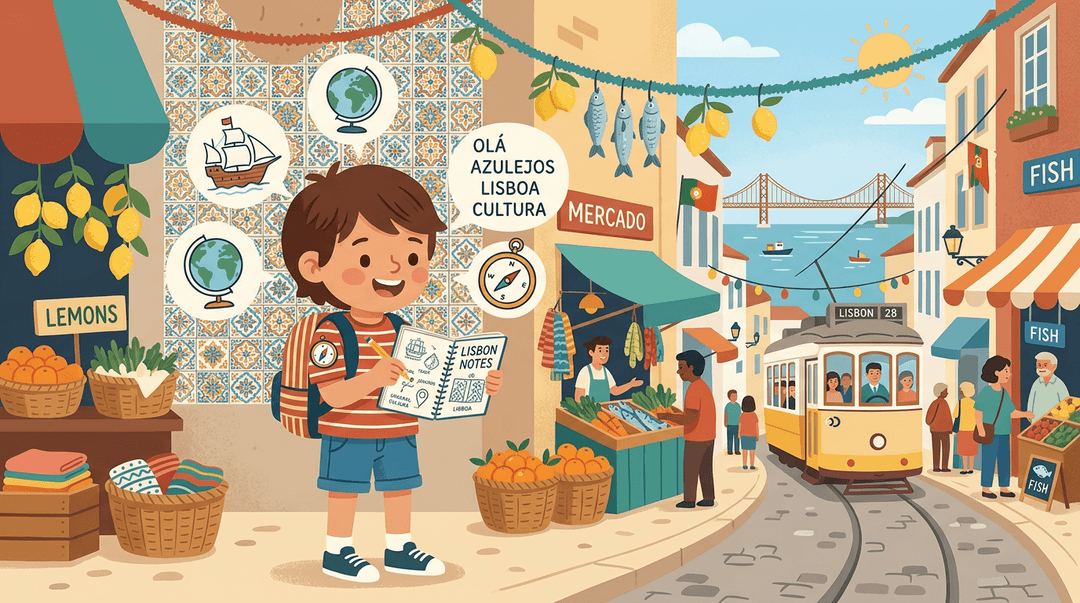
Worldschooling treats travel as the classroom. Families build lessons around history, language, and geography, so a visit to a local market becomes a lesson in culture and trade.
Consider a sixth grader who spends a month exploring Lisbon and returns with a notebook full of questions about ports, tiles, and shipping. That curiosity is something you can build on.
Students meet new languages and customs firsthand, which builds perspective more than a textbook chapter ever could. When travel isn't possible, virtual field trips offer a practical alternative that brings distant places into your room.
The curriculum also flexes around each child's pace and interests.
How Unschooling Lets Kids Direct Learning
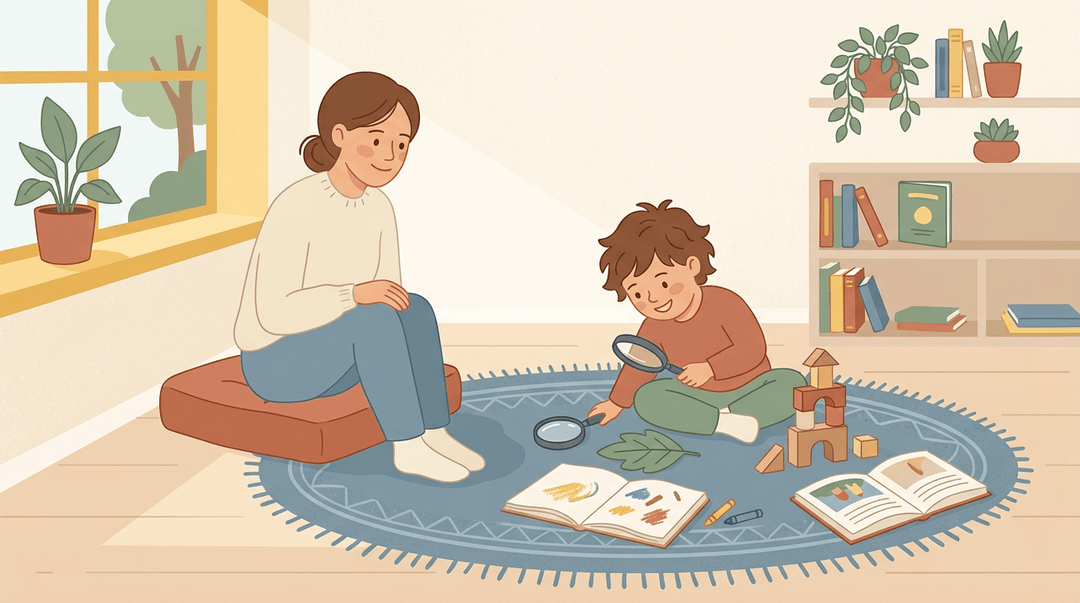
Unschooling lets students choose what and how they learn, with adults acting as guides rather than lesson planners.
Free schools like Summerhill and democratic, unstructured classrooms build on the same idea, giving students a real voice in daily decisions.
Supporters often point to lower pressure. According to a case study of two parents' motivations for unschooling, unschooling is perceived to create a stress-free and non-competitive environment where children's interests drive their education.
College outcomes are less settled. A narrative case study of unschoolers' sense of belonging at university notes that research on outcomes, especially for those pursuing higher education, is still limited.
Hands-On Learning Through Outdoor Education
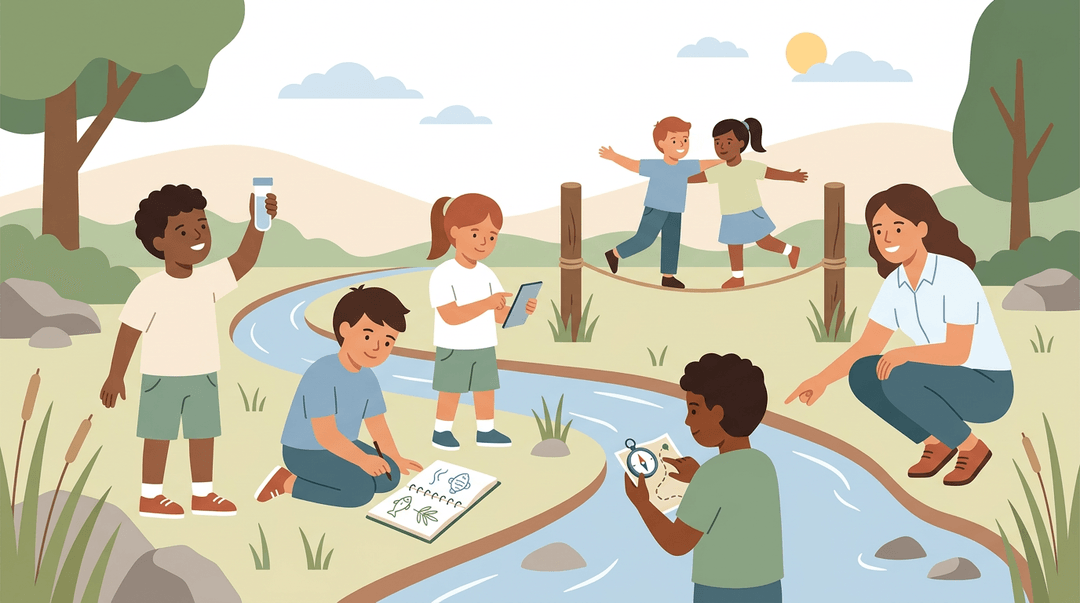
Outdoor education takes learning into nature, where students measure, observe, and build in real settings. A group might practice navigation with a map and compass, then calculate the distance they've walked.
Ropes courses add a team-building element, asking students to solve problems together.
The evidence on engagement is encouraging. A systematic review of nature-specific outdoor learning reports increased student engagement and ownership of learning, some evidence of academic improvement, and stronger social and collaborative skills.
Consider a fifth-grade teacher who takes a watershed unit to a creek bed. Students test water samples and sketch what they find, and the lesson sticks in a way a worksheet rarely does.
What Is an Alternative Learning System in Education?
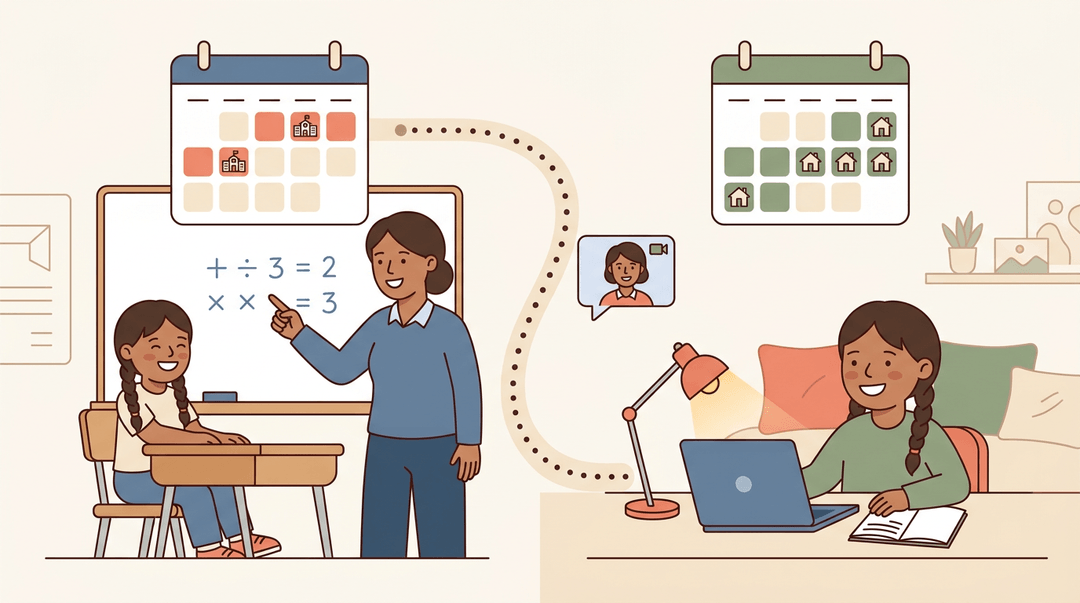
An alternative learning system is a structured program that offers coursework outside the traditional school day or building.
Accredited virtual schools deliver full courses online, and programs range from hybrid models that mix campus time with home study to fully remote options. Many also build tech skills as students learn, and most allow a personalized, customizable pace.
Charter and magnet schools sit in this space too, offering public options with specialized missions.
Pacing matters most for hybrid learners. Consider a middle schooler who attends in-person math twice a week and works remotely the rest of the time.
Her teacher schedules short check-ins between campus days, so she stays on track instead of falling behind. Requirements for enrollment, credits, and homeschooling vary by state and country, so check local rules before advising a family.
How Montessori Builds Independent Learners
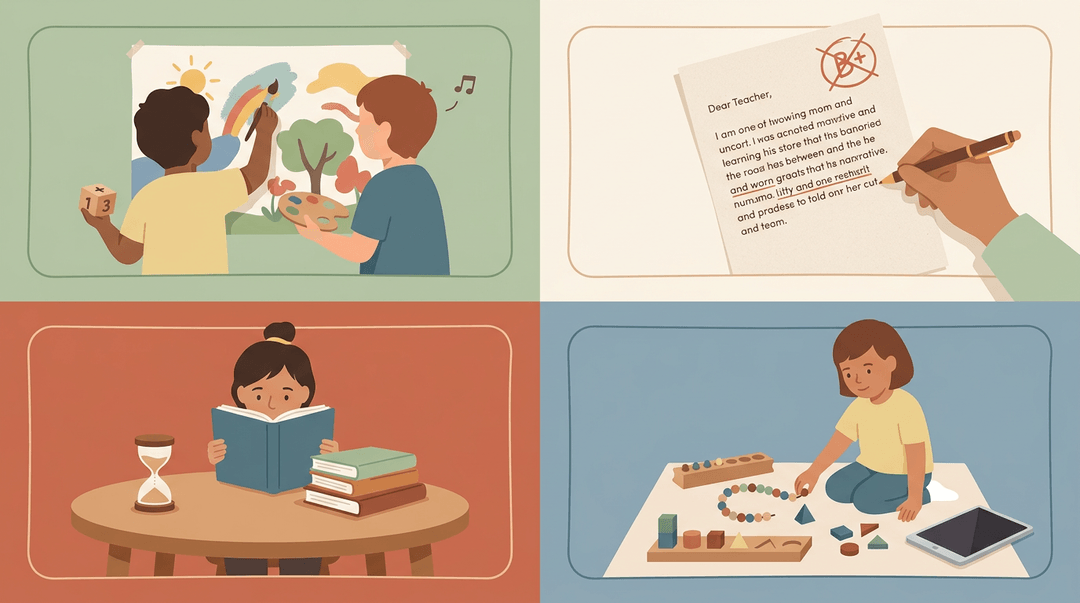
Montessori education puts independence at the center. Its self-correcting hands-on materials let children spot their own mistakes, and the teacher acts as a guide rather than the main source of answers.
Instruction follows developmental stages, so each child works at a level that fits.
Think of a kindergartner who finishes a counting activity and checks the work against a tray of beads. There's less waiting for correction and more time practicing. The teacher steps back so the child can discover rather than be told.
What Are Some Schools Similar to Montessori?
Schools that share the Montessori approach tend to include a few common features:
- Arts and creativity integration. Art, music, and movement run through core subjects rather than sitting in a separate block.
- Narrative assessments, not grades. Teachers describe growth in written detail, which can make progress easier to see.
- Main lesson blocks. Students spend extended stretches on one subject, which allows deeper focus.
- Limited early tech use. Early years emphasize concrete materials and face-to-face interaction.
A second-grade teacher who swaps a letter grade for a short written narrative might describe how a student's reading stamina grew over the term. That description gives families a richer picture than a single letter ever could.
Alternative education isn't one thing. It's a wide range of paths, each designed to meet learners where they are.
When you understand how these models differ, you're better equipped to help a student make a smooth transition, whether that means a new program, a different schedule, or a fresh approach in your own room.
Ready to plan for every learner? Check out our Curriculum & Standards tools to map units, lessons, and standards across the whole school year.
References
- Unschooled but not uneducated: A case study of two parents’ motivations and perceptions for unschooling their children — doi.org (2025)
- Unschoolers in Higher Education: A Narrative Case Study of Unschoolers’ Sense of Belonging at University — digscholarship.unco.edu (2025)
- Getting Out of the Classroom and Into Nature: A Systematic Review of Nature-Specific Outdoor Learning on School Children's Learning and Development — pmc.ncbi.nlm.nih.gov
Frequently asked questions
What is considered alternative schooling?
Alternative schooling is any educational path that moves away from the standard classroom, schedule, or teaching method. Examples include worldschooling, unschooling, outdoor education, Montessori programs, virtual or hybrid schools, charter schools, magnet schools, and specialized programs for students who need additional support.
What is an alternative learning system in education?
An alternative learning system is a structured education program that provides coursework outside the traditional school day or school building. It may be fully online, hybrid, home-based, or offered through a charter or magnet school, and it often allows more flexible pacing and personalized learning.
What are some alternative schools in Virginia?
Examples of alternative schools and programs in Virginia include Virginia Virtual Academy, K12-powered online schools, Governor’s Schools, regional alternative education centers, and public charter schools such as Richmond Community High School. Availability, eligibility, and enrollment requirements vary by location, so families should check with their local school division.
What are some schools similar to Montessori?
Schools and approaches similar to Montessori include Waldorf or Steiner schools, Reggio Emilia programs, progressive schools, democratic or free schools, and some project-based learning schools. They commonly emphasize student independence, hands-on learning, creativity, extended work periods, and less reliance on traditional grades or teacher-led instruction.