Describing Words for Teachers: The Complete List and Guide

Jump to section
Think about the report cards you've read over the years. A few words always stick: "patient," "inspiring," "strict." Single words that somehow capture a whole school year.
Describing words for teachers work the same way: they're the shorthand we reach for when a report card, a parent conference, or a behavior note needs to say something true, fast.
This post walks through the best words, the positive and negative ones, and how to turn any of them into language you'll actually use Monday morning.

Why Describing Words for Teachers Matter
A single adjective can shape how a parent reads a report card or how a student feels about a compliment. Before you reach for a list, it helps to know what these words are actually doing on the page.
What an adjective actually does
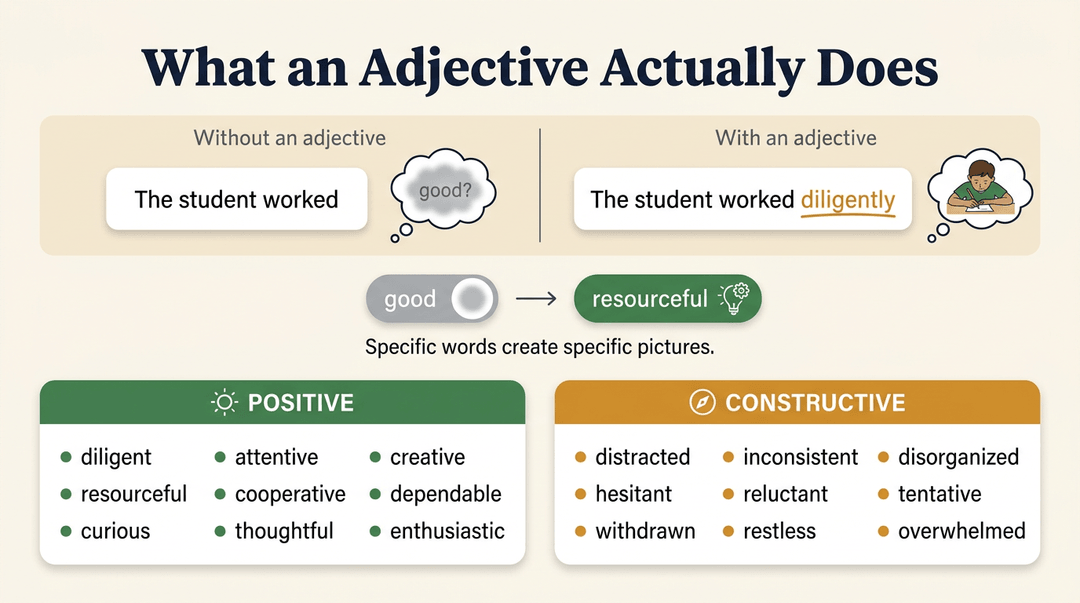
An adjective is a word that describes a noun or pronoun: it tells you more about a person, place, or thing. In a classroom note, that's the difference between "the student worked" and "the student worked diligently."
Adjectives build a mental picture: say "resourceful" instead of "good," and the reader pictures a specific trait instead of a vague grade.
Here are 20 describing words you can put to use right away:
- Positive: diligent, resourceful, curious, resilient, attentive, cooperative, thoughtful, creative, dependable, enthusiastic
- Constructive: distracted, hesitant, withdrawn, impulsive, inconsistent, reluctant, restless, disorganized, tentative, overwhelmed
Why thoughtful words matter to teachers
Words carry weight beyond the page. The right adjective can turn a routine evaluation into gratitude and feedback a student actually feels.
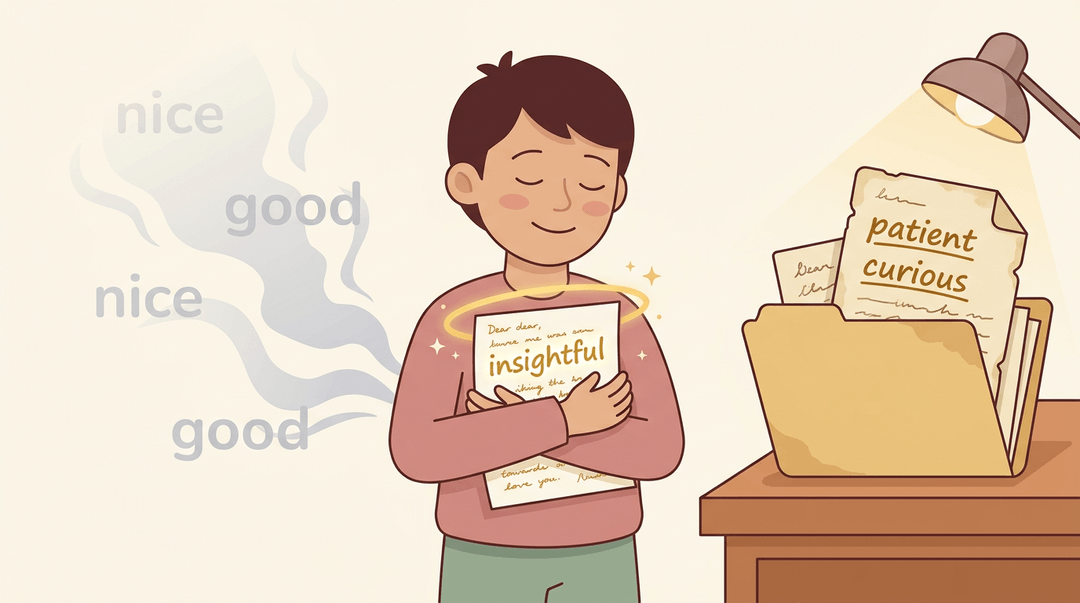
Think of a thank-you note from a teacher that calls a student "insightful" rather than "nice": the specific word tells the student exactly what was noticed.
Generic words like "good" and "nice" are easy to write but just as easy to forget. Authenticity beats convenience: a student who hears they're "resourceful" remembers it, because it names something real about them.
Consider a fifth-grade teacher who keeps a folder of old student letters; the ones that stuck years later used precise words like "patient" and "curious," not blanket praise.
What's the Best Word to Describe a Teacher?
Ask ten people for the best word to describe a teacher, and you'll get ten different answers. That's because the right word depends on whether you're praising character, skill, or personality in that moment.
If you had to defend a single word on a report card or in a parent conference, dedicated comes closest to covering it all, but context always wins. Here's how the vocabulary breaks down so you can match the word to the moment.
Core character traits great teachers show
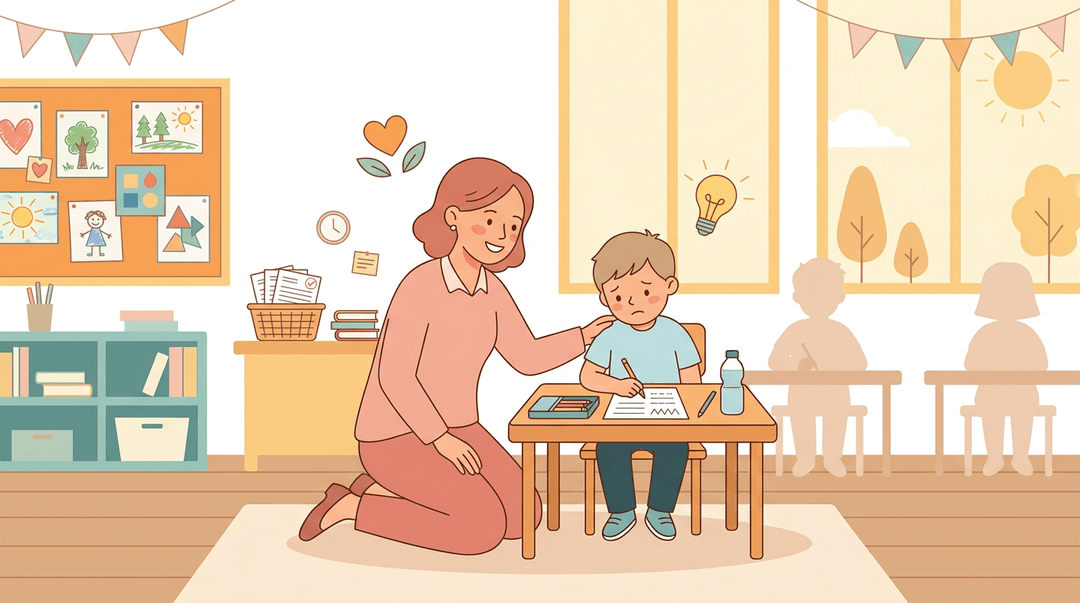
Great teachers show up with heart, not just a lesson plan. Caring and compassionate describe a teacher who notices when a student's had a rough morning before anyone says a word. Patient fits the one who explains a concept a fourth time without sighing.
Dedicated and hard-working capture the hours spent grading and planning after the bell rings, while empathetic points to a teacher who understands a struggling reader's frustration before it turns into a shutdown.
Supportive and encouraging describe a cheerleader-in-chief, and enthusiastic or passionate nails the teacher whose excitement for the subject is contagious.
Skills that make a teacher effective
Character sets the tone, but skill is what makes a lesson actually land. An organized teacher keeps materials, grades, and routines running smoothly, and a resourceful one finds a workaround when the projector dies mid-lesson.
Creative and innovative fit the teacher who turns fractions into pizza slices instead of worksheets. Articulate describes clear explanations, while knowledgeable and experienced speak to subject mastery built over years in the classroom.
Adaptable and flexible round it out: a substitute walking into an unfamiliar room needs both.
Words that highlight a teacher's intellect
Some teachers stand out for sheer intellectual horsepower. Astute and clever describe a teacher who spots a misconception before it spreads through the room. Analytical fits someone who reads assessment data and adjusts instruction accordingly.
Bright and brilliant are reserved for genuine standouts, while scholarly and academic suit a teacher deeply immersed in their subject. Meticulous and thorough describe the one whose lesson plans and feedback leave nothing to chance.

Words that describe a fair teacher
Fairness is one of the traits students notice fastest. Fair-minded and just describe a teacher who applies the same rules to every student, no exceptions. Objective and unbiased fit grading that rewards the work, not the student's reputation.
Tough but fair captures high expectations paired with consistency, and scrupulous describes a teacher careful never to let favoritism creep in.
Words for a calm, composed teacher
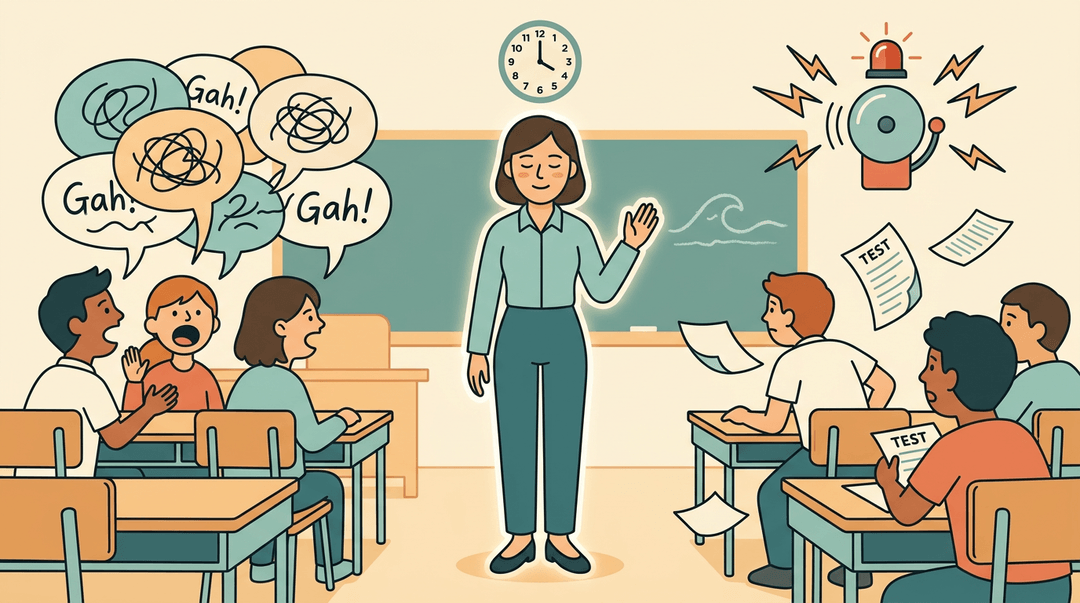
When a lesson goes sideways, composure is what keeps a classroom from unraveling. Composed and calm describe a teacher who doesn't raise their voice even when three students talk at once.
Level-headed and cool-headed fit the one who handles a fire drill mid-test without missing a beat, and good under pressure sums up a substitute managing an unfamiliar class on day one.
Fun, engaging personality words
Not every great teacher is serious all the time, and that's part of the point. Humorous and amusing describe the teacher whose jokes make a Monday morning bearable.
Lively and animated fit big gestures and energy that pull wandering attention back to the board.
Easy-going suits a relaxed classroom manager, and charismatic or engaging describe the teacher students remember years later simply because being in their class felt good.
Turning Descriptive Words into Classroom Action
A word list only pays off when the words leave the list. Here's how to turn adjectives into behavior notes parents trust and report card comments that actually sound like the student.
Write behavior notes a parent can picture
- Pick an adjective you could film. "Distracted" is observable; "lazy" is a verdict.
- Pair it with one specific action. The moment you saw, with a time or place attached.
- Formula: adjective + action + when.
- Log it the day it happens. Dated notes become your parent-update evidence; memory fades by Friday.
Here's the formula filled in, exactly as you'd jot it:
Persistent: reworked her fractions problem three times during Tuesday's math block without asking for the answer.
- ❌ "Marcus was disruptive today." A label with no picture: the parent hears a judgment.
- ✅ "Marcus started two side conversations during silent reading." Same concern, but now it's a fact you both can act on.
The difference is that the second note describes what a camera would have caught; the first describes your frustration.
Phrases for report cards and conferences
Match the phrase to the grade band, then attach the evidence. These are lift-and-adapt starters:
| Grade band | Example phrase |
|---|---|
| K–2 | "Curious: asks 'why' during science stations and listens to the answer." |
| 3–5 | "Organized: keeps her math notebook tabbed and finds past work without prompting." |
| 6–8 | "Analytical: compared two primary sources and named the bias in each." |
| 9–12 | "Self-directed: drafted his essay outline a week early and asked for feedback." |
Before a comment goes home, confirm:
- Every adjective has evidence attached. The word sits next to something you saw or counted.
- It couldn't describe another student. Swap in a classmate's name; if it still fits, personalize it.
- Positive and growth language are mixed. One strength, one next step, in that order.
For the strength-plus-growth pairing, try: "Maya is articulate in class discussions; our next step is getting that same voice into her written work."
💡 Tip: Reuse your best phrases. Once you've written a strong "organized" or "persistent" comment, keep it in a running phrase bank and adapt the evidence per student instead of starting from blank.
In a conference, this structure does the heavy lifting for you: lead with the observable strength, show the dated note, then name the growth step. The parent leaves with a picture, not a label.
Save and reuse your phrase bank right inside EMStudio's gradebook and behavior-tracking tools, so next term's comments start half-written.
Specialized Adjectives for Unique Teaching Contexts
Some classroom moments call for a sharper vocabulary than "kind" or "patient" can offer.
This section covers the specialized language for voice, teaching style, professors, and students, plus how to carry that language into behavior notes and IEP documentation.
Words that describe a teacher's voice
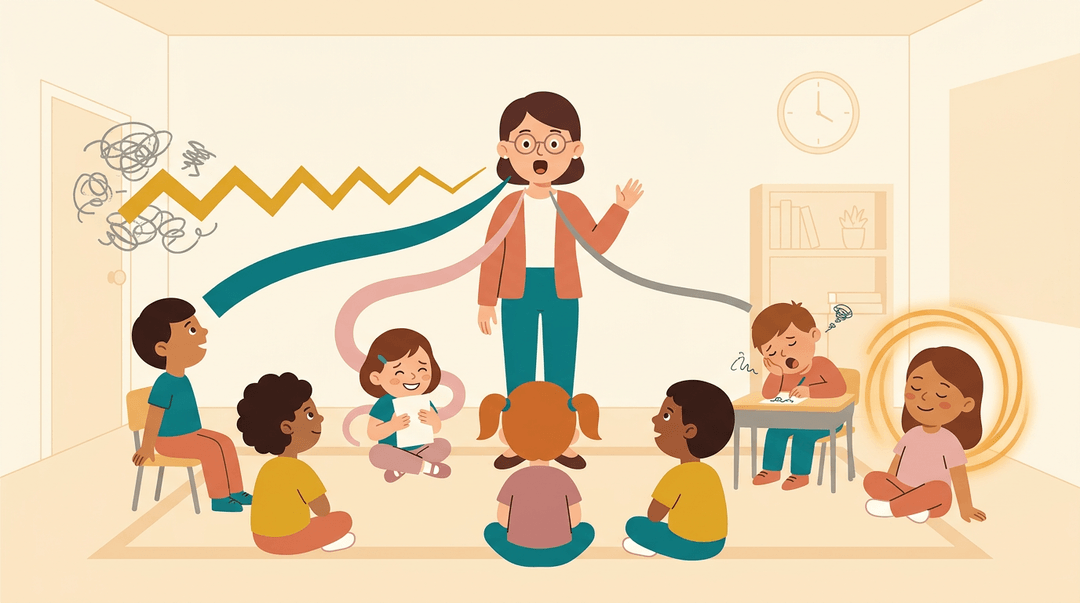
A teacher's voice does a lot of invisible work, settling a room before a single instruction is given. An authoritative voice carries confidence without volume, while a warm, gentle tone reassures a nervous student before a presentation.
Clarity matters too: a crisp, clear voice cuts through hallway noise, whereas a monotone or gravelly voice can lose a class's attention within minutes.
A resonant, soothing voice, the kind that settles a room during a read-aloud, works best for calming transitions.
Words that describe teaching styles
Style vocabulary explains how a lesson runs, not just what's in it. A constructivist, progressive teacher builds lessons around students discovering ideas themselves, while a business-like teacher runs a tight, efficient agenda with little downtime.
Energy matters here too: a passive teacher lectures from the front; an active one circulates, questions, and adjusts on the fly. A versatile, systematic teacher moves between both, depending on what a given lesson calls for.
Words that describe professors specifically
Some words fit higher education better than a K-12 classroom. An erudite, sage professor brings decades of scholarship into office hours.
Pedagogical and scholarly describe someone whose teaching is grounded in research, while revered, mentorial professors are the ones students still credit years later.
Prolific, eloquent professors publish widely and still explain complex ideas without losing their audience.

Words teachers use to describe students
Student-facing adjectives need precision, because they often end up in a parent conference or an IEP. Attentive, ambitious students rarely need redirection; inquisitive, resilient ones push through setbacks instead of around them.
On the other end, unmotivated or disorganized students need a plan named, not a label stapled to a report card.
Argumentative and distracted work the same way: useful shorthand in a behavior note, but strongest when paired with specifics, like "distracted during independent reading" rather than "distracted" alone.
That small shift turns a vague adjective into language an IEP team or a parent can actually act on.
Negative Words to Describe a Teacher
Not every word belongs on a glowing letter of recommendation, and that's fine. Knowing the vocabulary for what isn't working is just as useful as knowing what is, especially when you're writing an honest peer review or flagging a concern before it grows.
Here's that language, sorted by the kind of problem it points to:
Harsh and cold personality traits
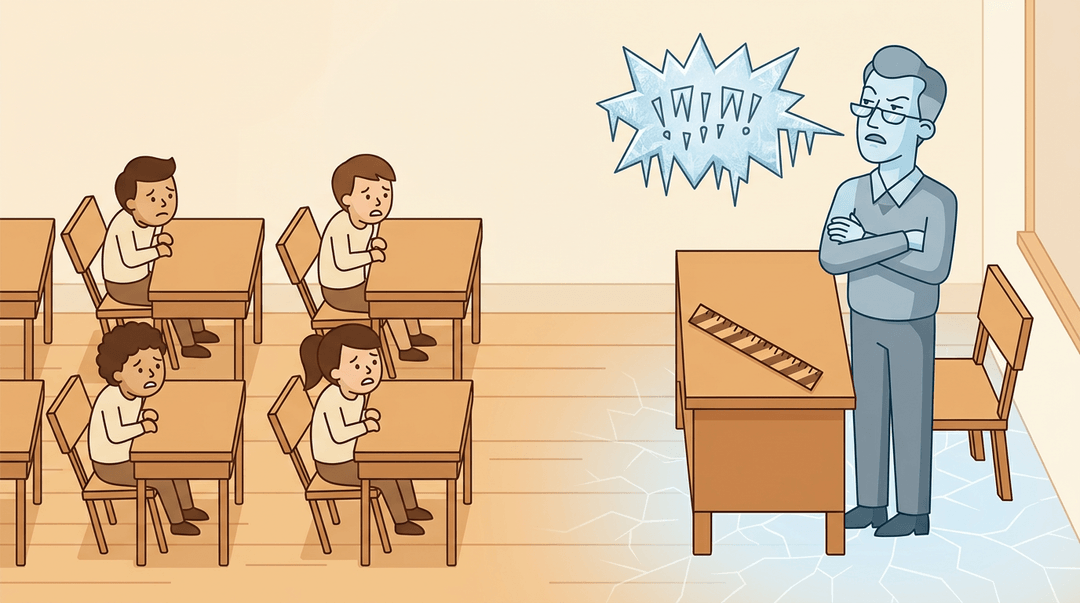
Abrasive and callous describe a teacher whose words land like sandpaper: quick to criticize, slow to soften. Aloof and distant cover someone who keeps students at arm's length, present in the room but never quite there. Condescending and patronizing traits show up when a teacher talks down to students instead of with them, and harsh or severe describe discipline that tips past firm into punitive.
Unfair and biased behavior traits
A teacher who's biased or prejudiced grades or calls on students unevenly, favoring some over others for reasons that have nothing to do with the work. Arbitrary decisions feel random to students, since the rules seem to shift depending on the day. Hypercritical teachers find fault in nearly everything a student submits, and being too blunt means honest feedback lands without any cushioning.
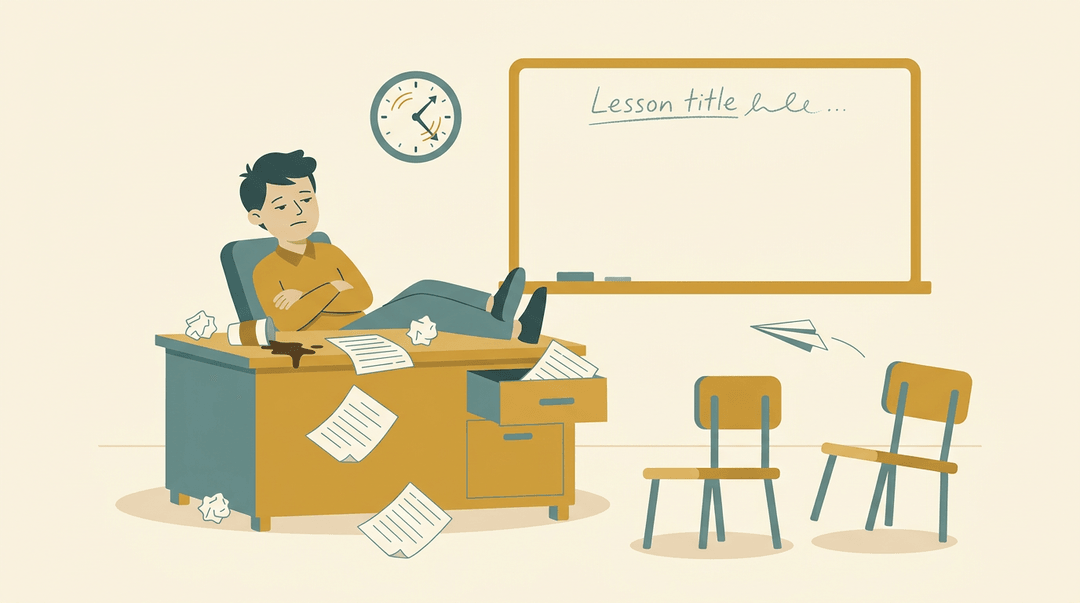
Lazy and unprepared traits
Apathetic and indifferent describe a teacher who's checked out, going through the motions without much investment in whether students actually learn. Lazy and unprepared point to walking into class without a real plan. Careless and disorganized show up in lost assignments, missed deadlines, and lessons that never quite come together.
Boring and dull teaching traits
Boring and dry lessons leave students watching the clock instead of the board. Tedious and unimaginative describe a teacher who recycles the same worksheet year after year and never tries a new angle. A monotone voice can sink even solid content, since delivery matters almost as much as the material itself.
Controlling and domineering traits
Bossy and domineering teachers run the room through command rather than connection. Overbearing and rigid describe someone who leaves no room for a student's own judgment. Manipulative and controlling sit at the sharp end of this list: leaning on guilt or favoritism instead of clear expectations.
Use negative words carefully
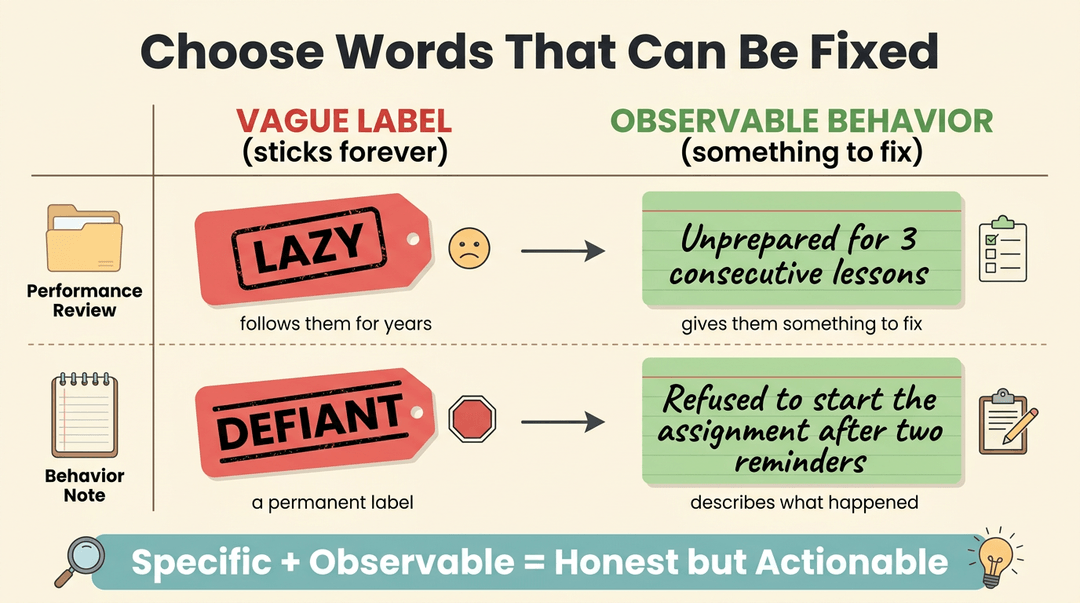
These words carry real weight, and how you use them matters as much as which one you pick. Calling a colleague "lazy" in a formal review can follow them for years; noting that they were "unprepared for three consecutive lessons" gives them something to actually fix. That's the gap between vague judgment and objective behavior language.
The same caution applies to behavior notes and parent conferences. Instead of writing that a student is "defiant," describe what happened: "refused to start the assignment after two reminders."
Specific, observable language balances honesty with empathy, and it turns a label into constructive feedback that a teacher, student, or parent can actually act on.
How Do You Describe Teachers?
The honest answer? It depends on who's doing the describing and why.
A parent writing a thank-you note reaches for different words than a principal filling out an evaluation, and picking the right word starts with asking what the moment calls for: the audience, the occasion, and the specific thing you want to praise or improve.
Writing thank-you notes and feedback
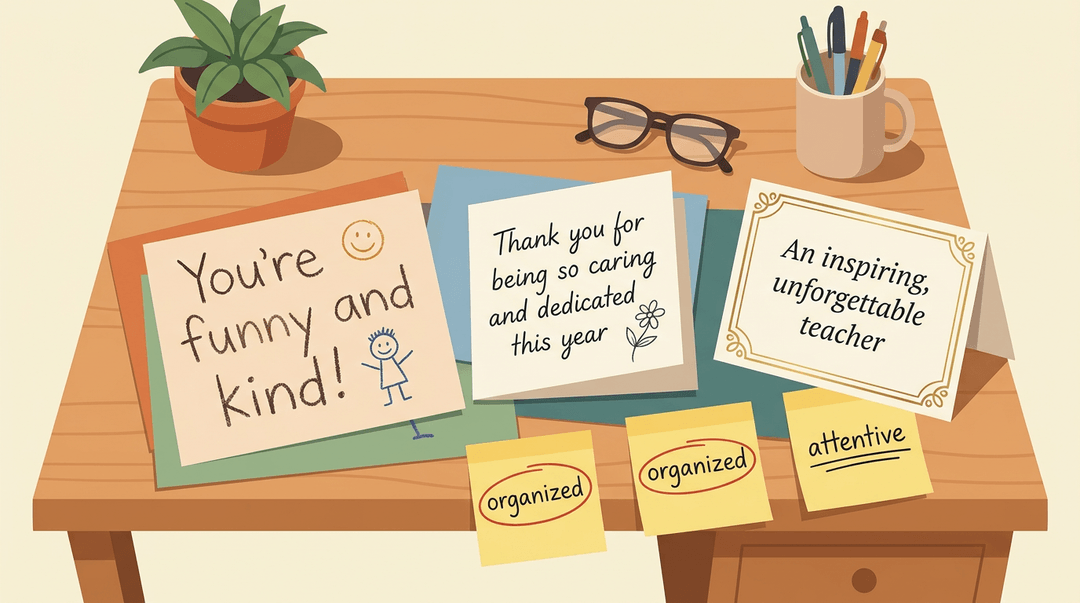
Students often keep it simple. Words like "funny," "kind," and "patient" show up again and again in handwritten notes, and that's exactly as it should be. Parent messages tend to lean warmer and more personal, with words like "caring" or "dedicated" showing gratitude for a whole year, not just one lesson.
End-of-year appreciation calls for something bigger: "inspiring," "unforgettable," "tireless." These sum up a year's worth of effort in a single word. Constructive feedback works differently.
Instead of a vague compliment, name the specific behavior: "organized" for a teacher who runs a tight schedule, "attentive" for one who catches a struggling reader early.
Choosing words for different audiences
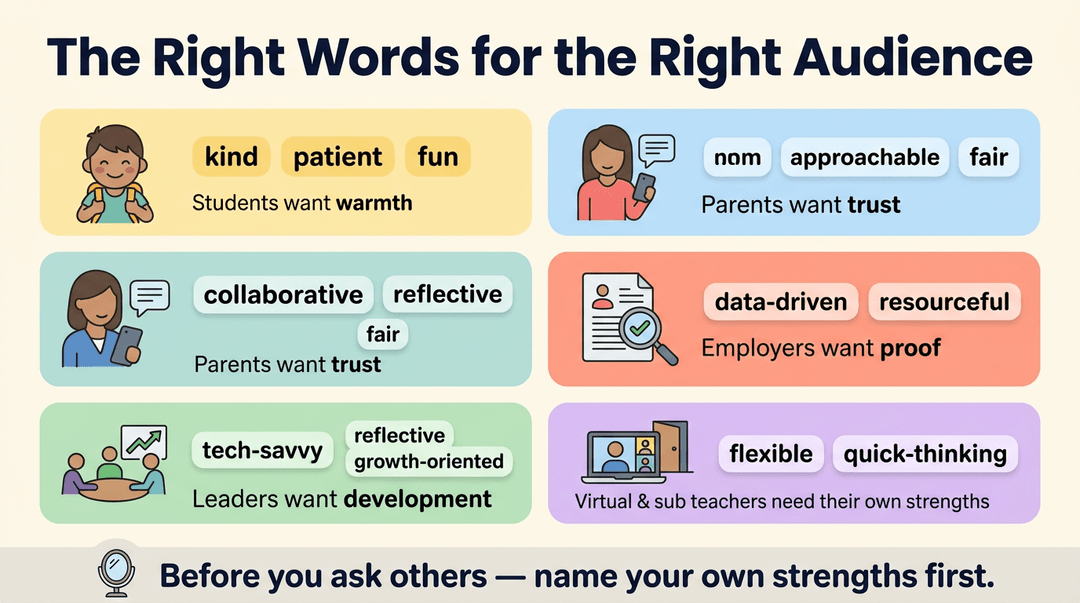
Words for students should stay concrete and friendly. Words for parents can get more specific: "communicative," "approachable," "fair." Leadership feedback language shifts again, favoring terms like "collaborative," "reflective," and "growth-oriented" that speak to professional development, not just classroom charm.
On a resume or in an interview, swap warmth for proof: "adaptable," "data-driven," and "resourceful" signal skill, not just personality.
Virtual and substitute teachers need their own vocabulary too: "tech-savvy," "flexible," and "quick-thinking" describe strengths unique to teaching without a permanent classroom or a face-to-face room.
Whatever the audience, teachers benefit from reflecting on their own words, too. Naming your own strengths builds the same clarity you're asking others to offer you.
Qualities of Truly Inspiring Teachers
Think about the teacher you still mention by name years later. Chances are it wasn't one trait that stuck, it was a whole cluster of them working together.
Qualities of teachers you look up to
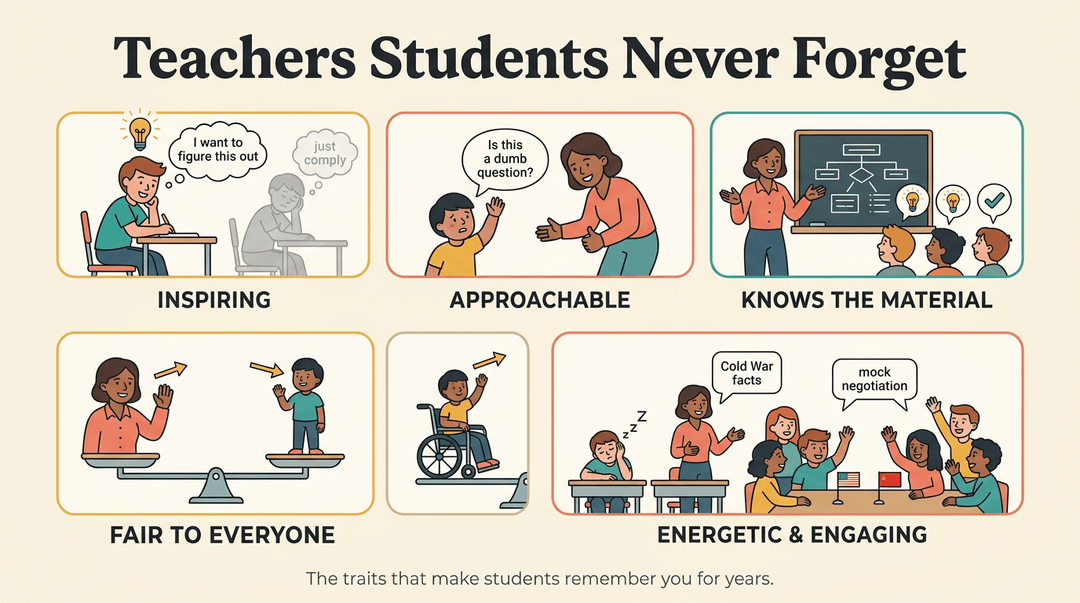
The teachers students talk about for years tend to share a recognizable set of traits:
- Inspiring. They make students want to try harder, not just comply.
- Approachable. Students feel safe asking a "dumb" question.
- Knowledgeable and confident. They know the content cold, so class time goes to understanding it, not just covering it.
- Fair and respectful. Every student gets the same shot, win or lose.
- Energetic and engaging. Think of a history teacher who turns a lecture on the Cold War into a mock negotiation: suddenly the whole room leans in.
What are the 10 qualities of a good teacher?
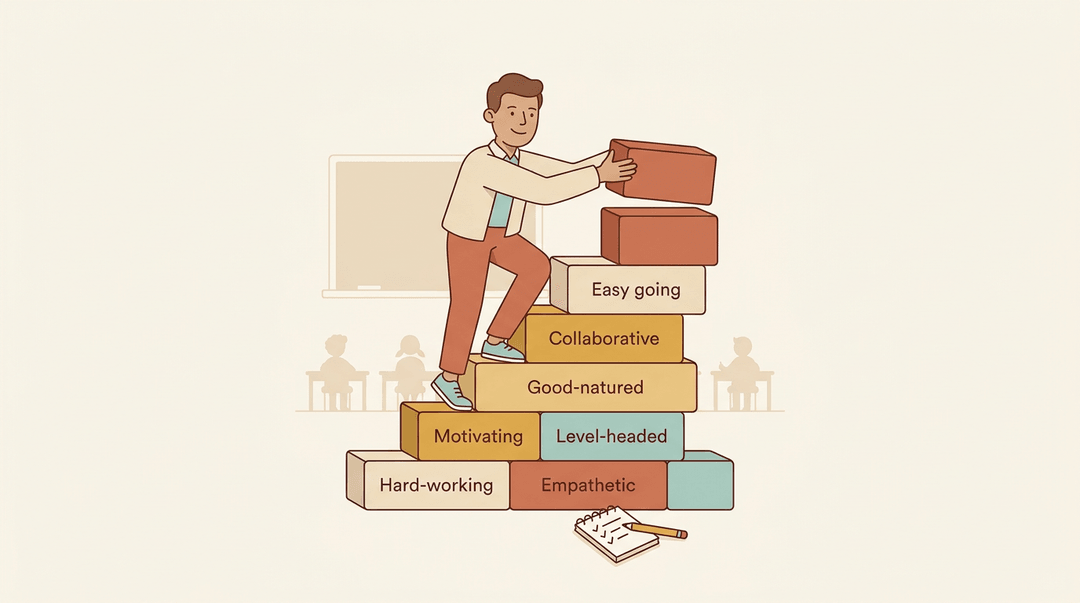
Ask ten educators this question and you'll hear a familiar core list. Alongside the traits above, add these to round out the full ten:
- Hard-working. Shows up prepared, even on the rough weeks.
- Motivating. Pushes students past "good enough."
- Empathetic. Reads the room and adjusts.
- Awe-inspiring. Makes a subject feel bigger than a textbook.
- Good-natured. Keeps a sense of humor when the lesson goes sideways.
- Collaborative. Works well with co-teachers, aides, and parents alike.
- Level-headed. Stays steady when a lesson, or a student, derails.
- Easy going. Flexible without losing structure.
Together, these ten qualities describe less a personality type and more a practice: habits any teacher can build on purpose.
The right word does more than sound nice. It clarifies what's working, what isn't, and what a student or parent needs to hear next. Once you've got that language, the real win is using it consistently, in notes, report cards, and conferences alike.
Ready to put that consistency into your routine? Check out our Classroom Management feature to keep your rosters, notes, and observations organized in one place.
Frequently asked questions
What is the best word to describe a teacher?
The best single word is **dedicated**, because it captures a teacher’s commitment, preparation, and care. Depending on the situation, words such as caring, patient, inspiring, knowledgeable, or supportive may be more precise.
What are 20 descriptive words?
Twenty descriptive words are: diligent, resourceful, curious, resilient, attentive, cooperative, thoughtful, creative, dependable, enthusiastic, distracted, hesitant, withdrawn, impulsive, inconsistent, reluctant, restless, disorganized, tentative, and overwhelmed.
What are the 10 qualities of a good teacher?
Ten important qualities of a good teacher are inspiring, approachable, knowledgeable, fair, energetic, hard-working, motivating, empathetic, collaborative, and level-headed. Good teachers also tend to be respectful, patient, organized, and adaptable.
How do you describe teachers?
Describe teachers with specific words that match their character, skills, teaching style, or classroom behavior. Useful examples include caring, patient, dedicated, organized, resourceful, creative, articulate, fair-minded, calm, engaging, and knowledgeable. Pair the word with an observable example, such as “organized: keeps materials and grades up to date,” to make the description clear and meaningful.