Preschool Curriculum: How It's Built, Delivered, and Taught

Jump to section
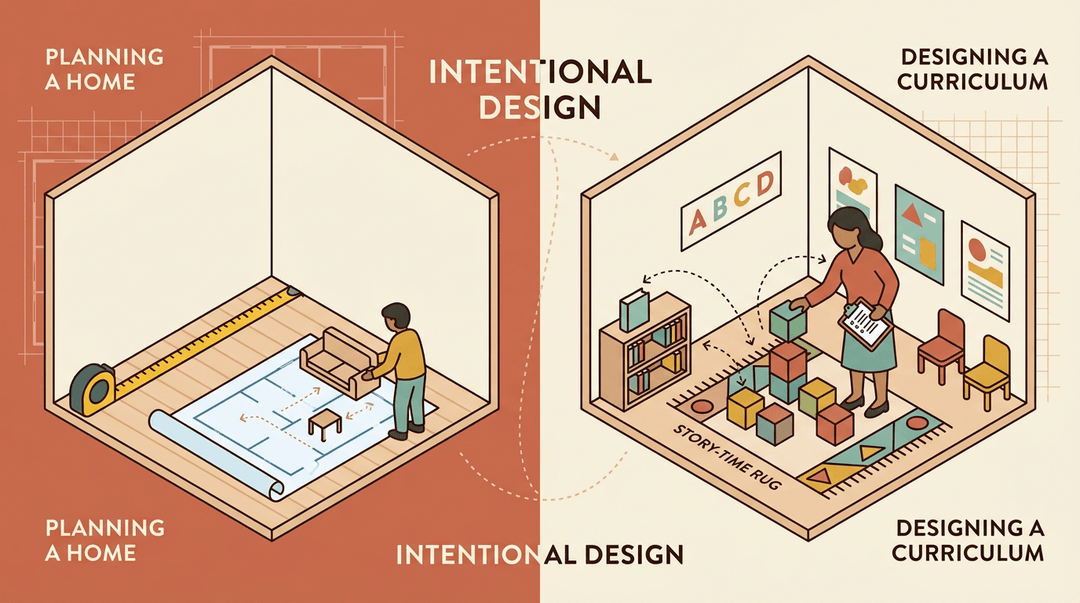
Think about setting up a new home. You don't just toss furniture into empty rooms: you plan where things go, so daily life flows without a second thought. A preschool curriculum works the same way.
It's the plan behind the play, the structure that turns blocks and story time into real learning.
With so many programs out there, it's worth knowing what actually belongs in one, what makes it age-appropriate, and how to turn it into lessons you can teach tomorrow.
What Is the Most Popular Preschool Curriculum?
So what is the most popular preschool curriculum? There isn't one single winner: popularity splits across three broad camps, and once we line them up side by side, each has its own rhythm.
Some lean hands-on and child-led, some fold in faith, and others build around great books. Here's how each one actually plays out in your classroom:
Play-based or structured lessons
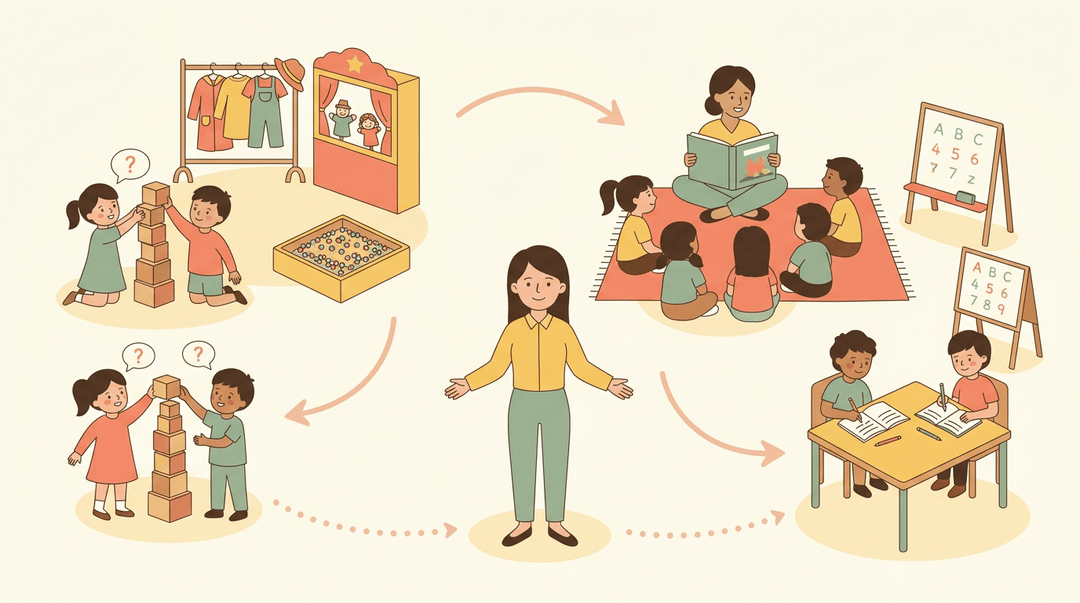
Play-based programs fill the day with hands-on activities: sensory bins, block towers, dramatic play, all anchored by open-ended questions that let a child's curiosity lead ("What happens if we stack it higher?").
Most still weave in a daily read-aloud to build rhythm and vocabulary. More structured tracks add workbook practice for older preschoolers heading toward kindergarten.
Either way, your job as the teacher is running smooth center rotations: enough structure that children move confidently between stations, without smothering the free play that makes this approach work.
Faith-based or secular lessons
Secular curricula are built to be values-flexible, so any classroom or family can use them without adjustment. Many still offer optional Bible verse add-ons for programs that want a light faith touch.
Faith-based tracks go further once children reach elementary grades, folding in direct Bible lessons alongside the standard content.
At the preschool level, that faith usually shows up gently, through read-alouds and short prayers woven into the daily rhythm.
Classical and literature-based approaches
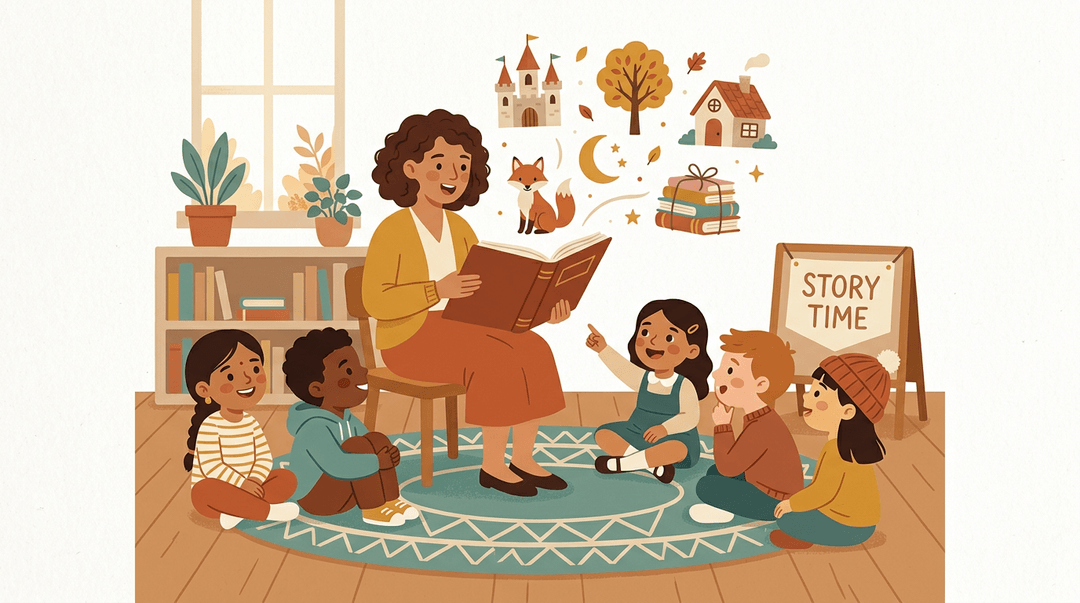
Classical curricula build lessons around a foundation of great books and language-rich instruction rather than worksheets. Teachers lean on curated unit read-aloud lists, grouping titles around a theme like seasons or fairy tales.
The result is a literature-based daily rhythm: story time isn't a break from learning, it is the learning.
What Is an Appropriate Curriculum for Preschoolers?
An appropriate curriculum for preschoolers is one that matches the child's actual skills, not just their birthday.
The best programs build in age-appropriate pacing: attention spans that grow gradually, activities that shift in complexity, and enough flexibility to meet a child wherever they are on a given day.
Which ages each program covers
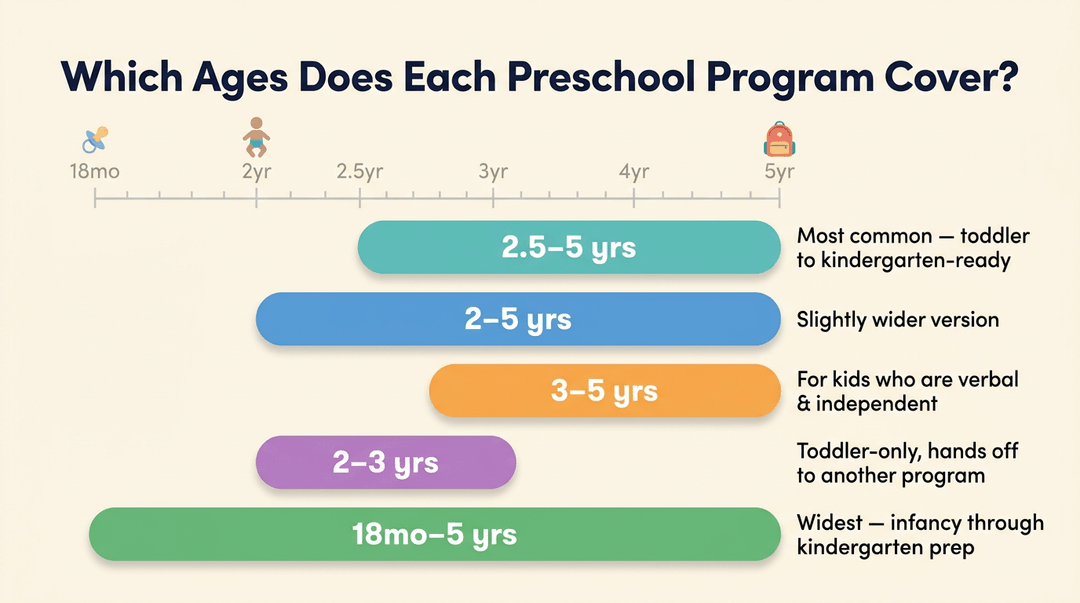
Preschool programs don't all define "preschool age" the same way, and the range you pick matters. Common bands include:
- 2.5 to 5 years old: the most typical span, covering early toddlerhood through kindergarten readiness.
- 2 to 5 years old: a slightly wider version of the same idea.
- 3 to 5 years old: a tighter band for programs that start once a child is more verbal and independent.
- 2 to 3 years: a narrow, toddler-focused slice for programs that hand off to a separate preschool track later.
- 18 months to 5 years: the widest range, built for centers that want one curriculum to stretch across infancy into kindergarten prep.
How to know when your child is ready
Readiness isn't about hitting a birthday. It's about attention span and a handful of skill prerequisites: can the child sit for a short activity, follow a simple direction, separate from a caregiver without distress?
Each age tier inside a curriculum offers different activities to match those shifting skills.
Here's the reassuring part: there's no single correct starting age. A three-year-old and a four-year-old can both be
How the Curriculum Is Structured and Paced
Pacing is where a curriculum either fits your classroom or fights it. Before you commit to one, look at how long it runs, how much daily time it asks for, and how much material actually lands on your desk.
How long each program runs
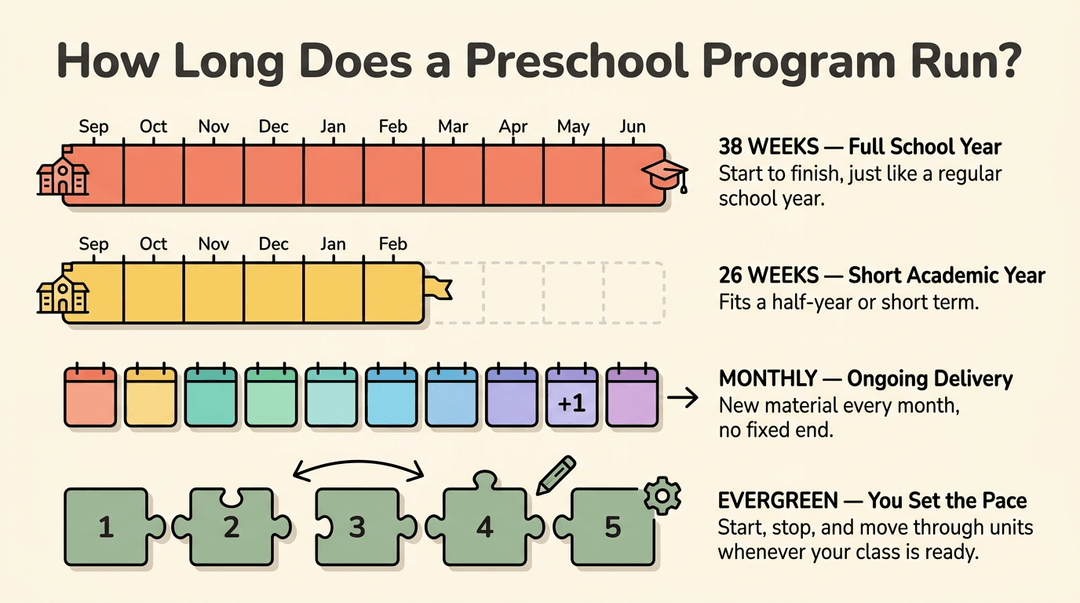
Preschool curricula are built on a handful of different calendars:
- 38-week full year program. Mirrors a standard school year, start to finish.
- 26-week short academic year. Fits a half-year schedule or a shorter preschool term.
- Monthly ongoing delivery model. New material arrives each month with no fixed end date.
- Evergreen, non-calendar-based pacing. You set the start and stop points yourself, working through units whenever your class is ready.
How much time lessons take daily
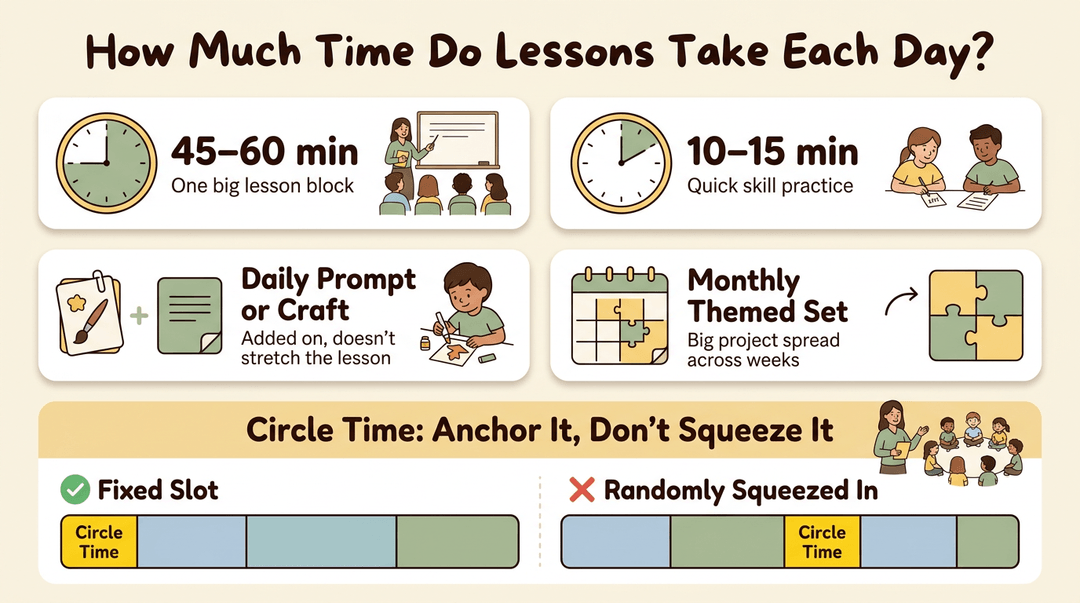
Daily time commitment varies just as much as the yearly calendar:
- 45-60 minute daily lessons for programs built around one substantial block of instruction.
- 10-15 minute short lessons for classrooms squeezing in quick, focused skill work.
- Daily prompts and crafts that add a hands-on activity without extending the lesson itself.
- Monthly themed activity sets that spread bigger projects across several weeks.
Circle time is where pacing shows up fastest. Consider a preschool teacher who opens each morning with a 10-minute circle time before the day's main lesson: it works best as a fixed, predictable slot, not squeezed in wherever there's a gap.
How much material comes included
What's actually in the box matters as much as the schedule:
- 300+ page lesson manual covering the full sequence of lessons.
- 400+ page student workbooks for daily practice pages.
- Full themed book collection to read alongside each unit.
- Monthly delivered kit box with materials shipped as you go, rather than all at once.
Turning Preschool Curriculum into a Weekly Lesson Plan
Whatever curriculum you've chosen, it becomes teachable the moment you pour it into a repeatable weekly frame. Build that frame once, then swap the theme each week and the plan writes itself.
Key principle: The schedule stays the same all year; only the theme changes. Predictable structure is what lets three-year-olds handle new content.
Set your daily blocks
These four blocks are the spine of every day. Keep the order fixed so transitions become automatic.
| Block | Keep it working |
|---|---|
| Circle time (15 to 20 min) | Song, calendar, one theme book: stop before wiggles win |
| Centers/rotations (30 min) | 3 to 4 stations tied to the theme, small groups rotate |
| Outdoor/gross motor break | Daily, rain plan ready (hallway obstacle course counts) |
| Snack and transitions | Same cue every time: "Clean hands, find your spot" |
Map the week to one theme
Pick one theme per week and rotate the subject focus daily, so every domain gets a turn without cramming them all into each day. Repeat the same books across the week: the third read is where preschoolers start predicting and retelling.
End with a review day that revisits, rather than introduces.
| Day | Focus | Theme week example: Bugs |
|---|---|---|
| Mon | Literacy | Read the bug book, chart words we know |
| Tue | Math | Count and sort plastic insects by legs |
| Wed | Science | Magnifying-glass hunt outside |
| Thu | Art & music | Fingerprint bugs, movement song |
| Fri | Review | Reread the book, kids retell it with props |
Adjust for age and ability
Plan the middle, then tier up and down so one activity serves the whole room.
- Write tiered options into each center. For a cutting activity: tear paper, cut straight lines, cut out shapes.
- Use centers time for small-group pull-outs. Pull 3 to 4 kids for five focused minutes while others rotate.
- Post visual routine supports. A photo strip of the day's blocks lets pre-readers answer "what's next?" themselves.
⚠️ Watch out: Don't tier by making strugglers do less. Give them a different entry point to the same skill, not a worksheet on the side.
Track progress as you go
Verify learning with tools you can run mid-lesson, not paperwork after hours. Before Friday, confirm you have:
- Quick observation notes. One sticky note per moment: "J. counted to 10 unprompted, 10/14."
- A weekly skill checklist. Roster down the side, this week's target skill across the top, check as you see it.
- Photo work samples. Snap the block tower or fingerprint bug before cleanup; date it for the portfolio.
At a glance: fix the daily blocks, theme the week, tier the centers, capture evidence Friday. Once the frame works, save this weekly structure as a reusable template in EMStudio's lesson planner so next week starts half-planned.
What Does Preschool Curriculum Consist Of?
A solid preschool curriculum blends three things: academic content, whole-child skill-building, and daily routines, all held together by clear objectives. Instead of tests, teachers rely on ongoing observation to see what's sinking in.
Core academic subjects covered
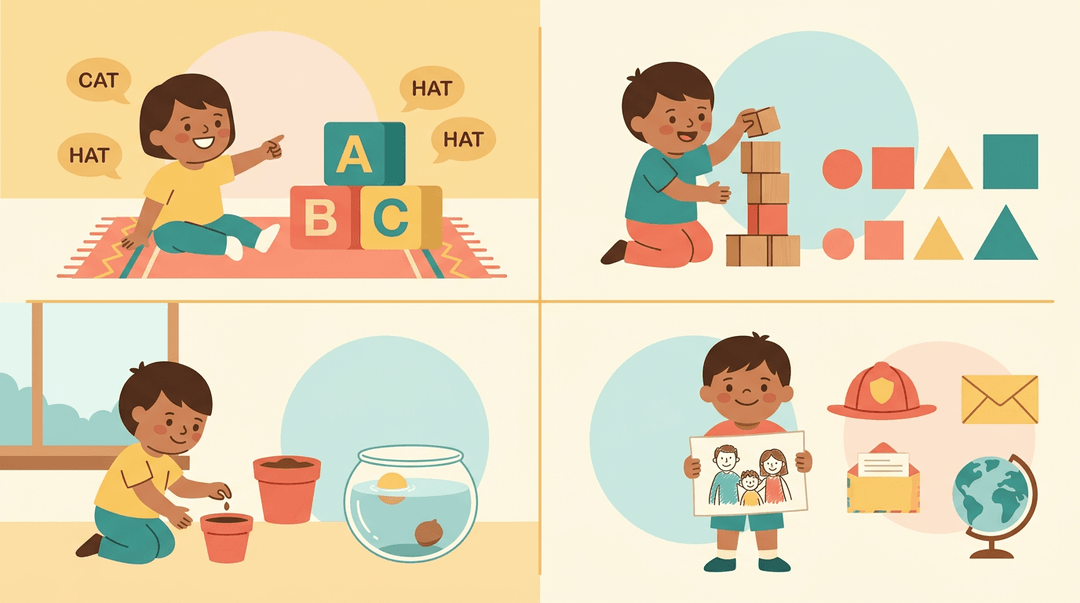
Most programs organize learning time around a few core subjects:
- Early literacy and phonics, like letter sounds and rhyming games that build pre-reading skills.
- Math and number sense, from counting blocks to sorting shapes by size.
- Science exploration, such as planting seeds or observing what floats and what sinks.
- Social studies themes, including family, community helpers, and simple geography.
Building whole-child skills
Academics are only half the picture. A strong curriculum also grows:
- Fine and gross motor skills: cutting with scissors, climbing, and balancing.
- Social-emotional development: sharing, naming feelings, and resolving small conflicts.
- Approaches to learning: curiosity, persistence, and following through on a task.
- Critical thinking over memorization: a child who figures out why a tower keeps falling learns more than one who just recites an answer.
Aligning with standards and readiness
Quality programs don't build lessons from scratch each year.
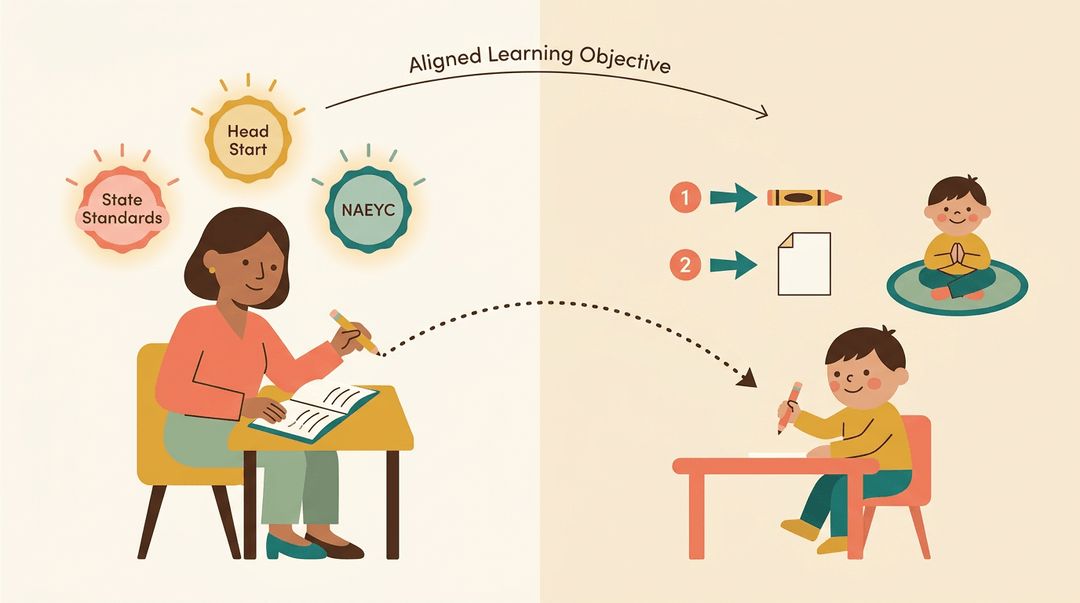
They align to state early learning standards, Head Start Early Learning Outcomes, or NAEYC (National Association for the Education of Young Children) guidelines, and they keep an eye on kindergarten readiness: can a child hold a pencil, follow two-step directions, and sit for a short group activity?
Clear learning objectives guide every lesson, so teachers always know what a child should walk away understanding, not just what activity filled the hour.
What's Included in the Materials
A good preschool curriculum isn't just a scope and sequence: it's a full box of tools you can open on Monday morning. That box usually breaks down into three parts: what you read, what your students touch, and what goes home to families.
Book lists and read-alouds
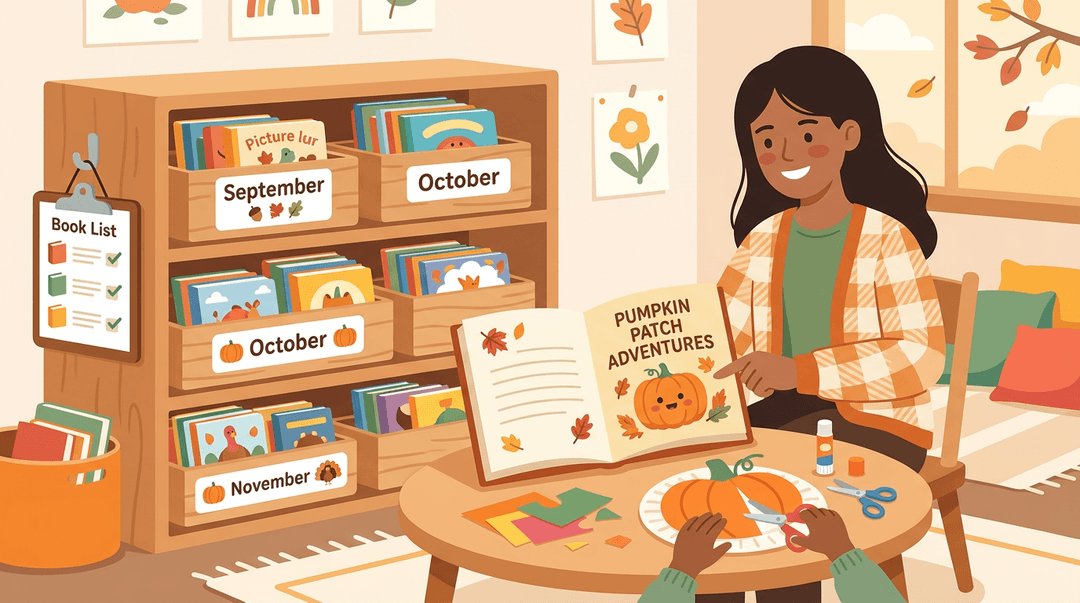
Most curricula anchor each unit to a full book list, so you always know what's next on the shelf.
Many also include a classic storybook collection for the read-alouds every classroom leans on, plus monthly themed books that rotate with the season or topic.
For example, a teacher running a fall harvest unit can pull that month's titles straight from the kit instead of making a library run.
- A daily book and craft pairing turns each story into a hands-on activity, so the lesson doesn't end when the book closes.
Hands-on materials and manipulatives
Reading covers half the day; the other half runs on things little hands can touch.
- Math manipulatives and games build number sense before students ever see a worksheet.
- Flashcards and activity kits give quick, low-prep practice for letters, shapes, and vocabulary.
- Unit supply lists tell you exactly what to gather before the unit starts, so there's no last-minute scramble.
- Workbooks and cutouts give students something to color, cut, and keep.
Tools for family engagement and tracking
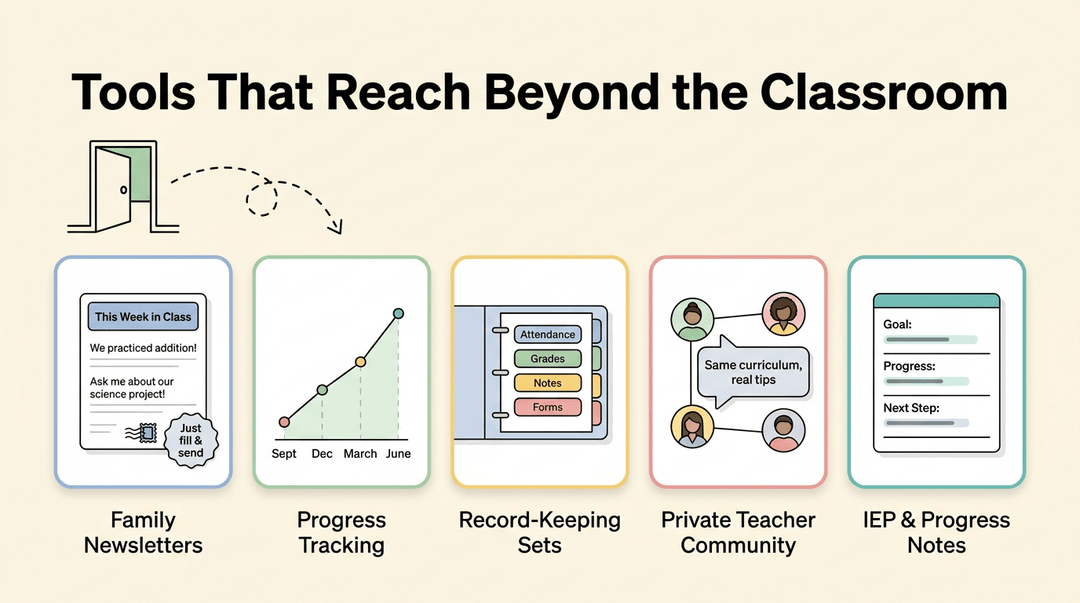
The strongest kits don't stop at the classroom door.
- Family update newsletters keep parents in the loop without extra writing on your end.
- Milestone and progress tracking sheets show growth over the year, not just a single score.
- Record-keeping sets keep it all organized in one place.
- Private community group access connects you with other teachers using the same curriculum.
- IEP and progress note templates make it easier to document growth for students receiving special education services.
How It's Delivered and Purchased
Once you've settled on a curriculum, the next question is practical: how does it actually get into your hands, and what will it cost you? The answers vary more than you'd expect.
Digital or printed delivery options
Most publishers offer a PDF-only digital download for teachers who want instant access and don't mind printing pages themselves.
Others give you a choice of digital or printed bundle, so you can decide between screen-based planning and a binder on your shelf.
Some let you print-at-home or have books shipped instead, and a few send a physical kit shipped monthly, arriving in sync with your pacing.
Pricing and refund policies
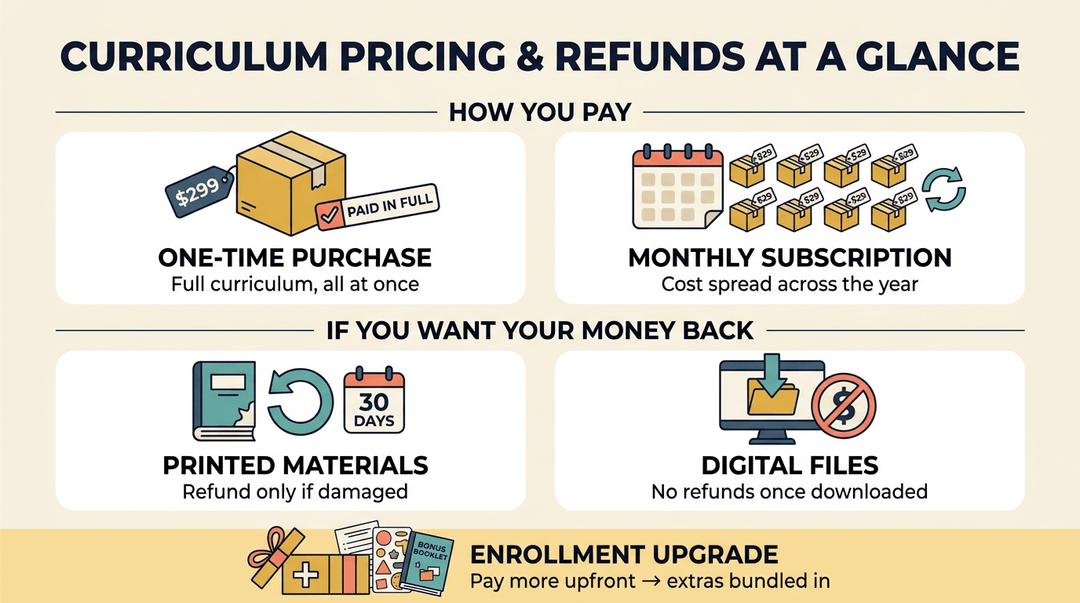
Pricing tends to follow the delivery format. Expect either a one-time purchase price for the full curriculum or a monthly subscription kit price that spreads the cost across the year.
Return policies differ too: printed materials usually carry a 30-day return for damaged print, while a non-refundable digital purchase is standard once the files are downloaded.
Some programs also offer an enrollment upgrade with add-ons, letting you pay more upfront for extras bundled in.
Customizing it for your needs
A good curriculum shouldn't force your classroom to fit it. Look for one that's adjustable for classroom size, whether you're teaching six students or twenty-six.
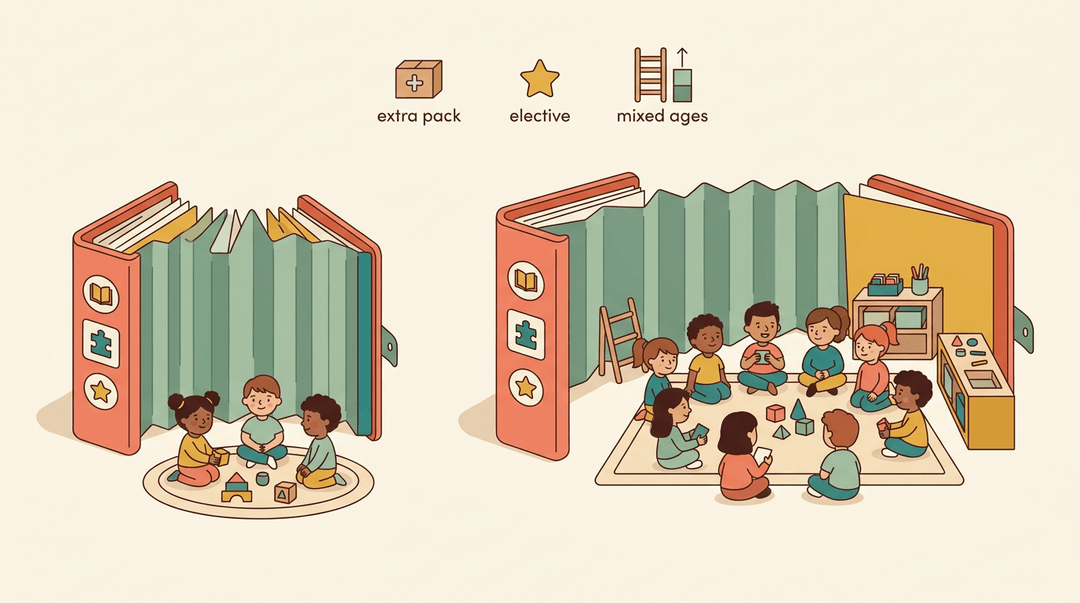
Many let you add extra student packs as enrollment grows, offer optional companion electives for extra enrichment, and stay adaptable across multiple ages so mixed-age groups aren't left behind.
A strong preschool curriculum isn't just a binder of activities. It's age-appropriate content, clear structure, and materials that meet young learners exactly where they are, turned into something you can actually teach day to day.
Get that foundation right, and the classroom follows.
Ready to turn curriculum into daily practice? Check out Lesson Planning to write, organize, and reuse your weekly plans from one place.
Frequently asked questions
What is the curriculum for preschoolers?
A preschool curriculum is a planned framework for learning through play, lessons, read-alouds, centers, and daily routines. It should use age-appropriate pacing while supporting early literacy, math, science, social studies, motor skills, social-emotional development, curiosity, and kindergarten readiness.
What is the most popular preschool curriculum?
There is no single most popular preschool curriculum. Popular approaches include play-based or structured programs, faith-based or secular curricula, and classical or literature-based programs centered on great books and language-rich instruction.
What does preschool curriculum consist of?
A preschool curriculum consists of academic learning such as early literacy, phonics, math, science, and social studies, along with whole-child development. It also includes activities for motor skills, social-emotional growth, critical thinking, daily routines, clear learning objectives, read-alouds, manipulatives, crafts, family resources, and progress-tracking tools.