Pocket Chart Classroom Guide: Styles, Uses, and Buying Tips

Jump to section
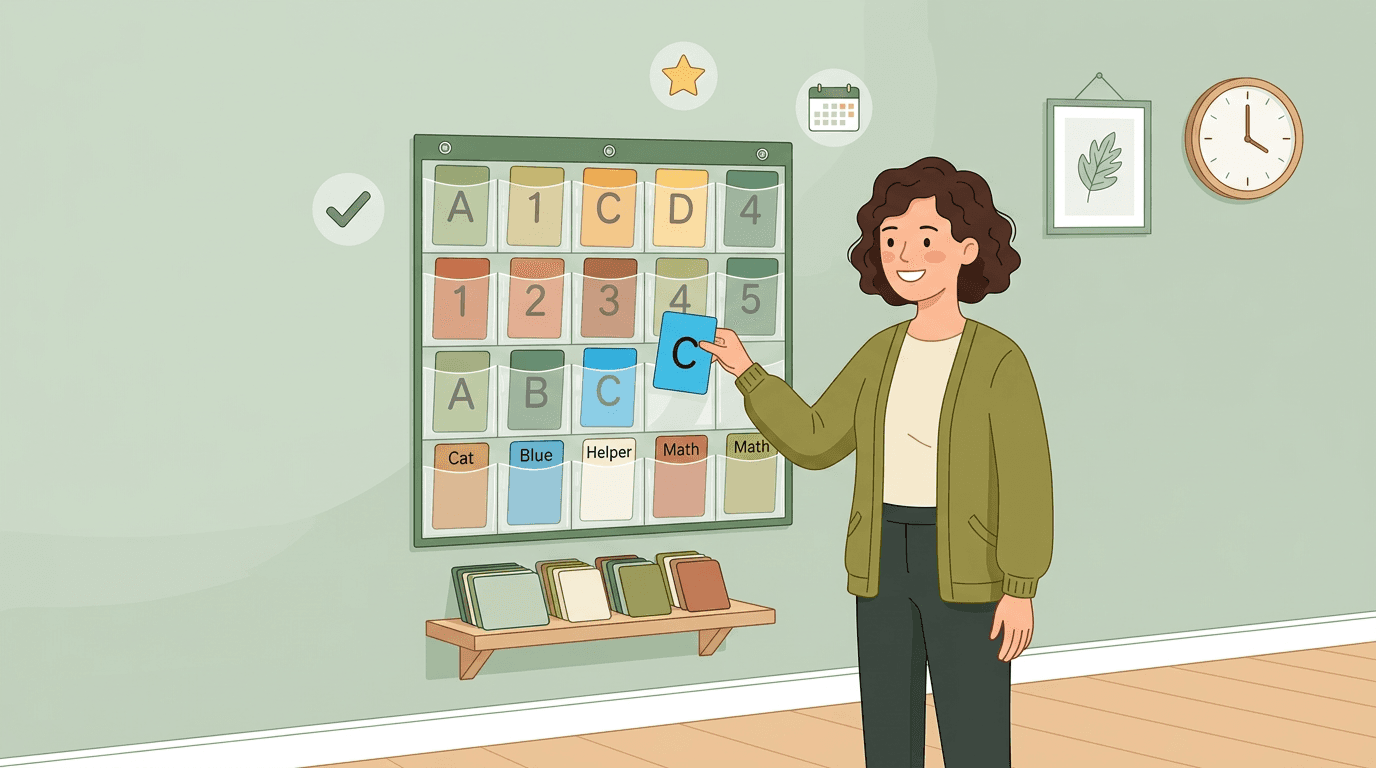
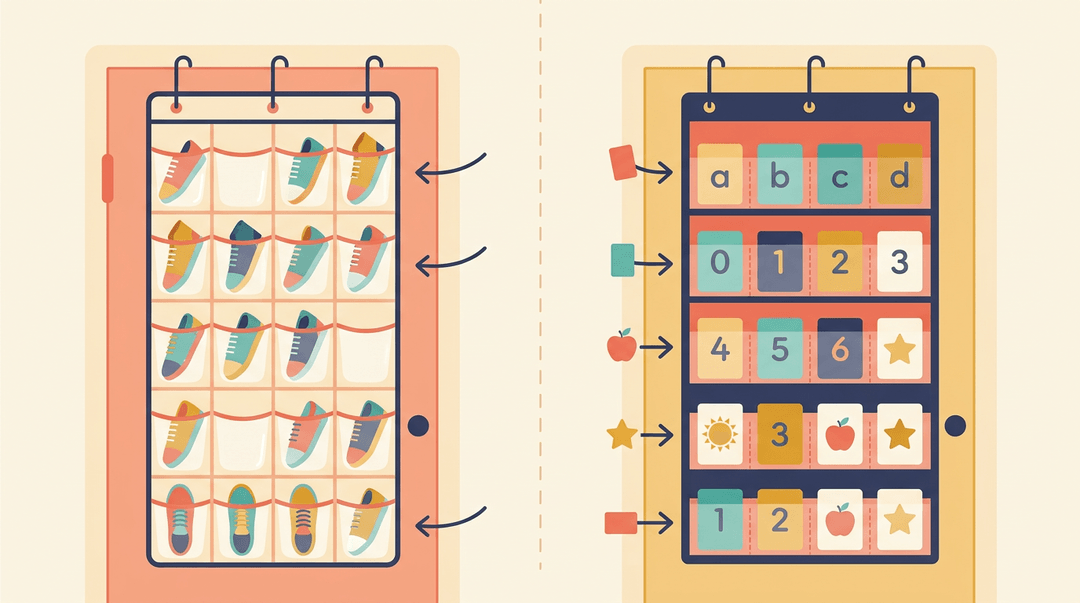
Picture a shoe organizer hanging on the back of a closet door. Every pair has its own pocket, and you can see at a glance what's where.
A pocket chart works the same way in your classroom, just with word cards, number cards, and picture cards instead of sneakers.
A pocket chart is a sturdy plastic sheet with rows of clear sleeves, and you slide cards in and out as learning unfolds. Because the cards move, students can sort, build sentences, and practice patterns with their hands and eyes.
Let's walk through the main styles, the grade levels they suit best, how to fold them into your lesson plans, the accessories worth considering, where to buy, and how to make your own.
Pocket Chart Styles for Every Classroom
Pocket charts come in more shapes and looks than you might expect. If you don't have one yet, a clipboard or shoe organizer can do similar work. Here's how to match a chart to your room and your task.
Picking the right pocket chart size
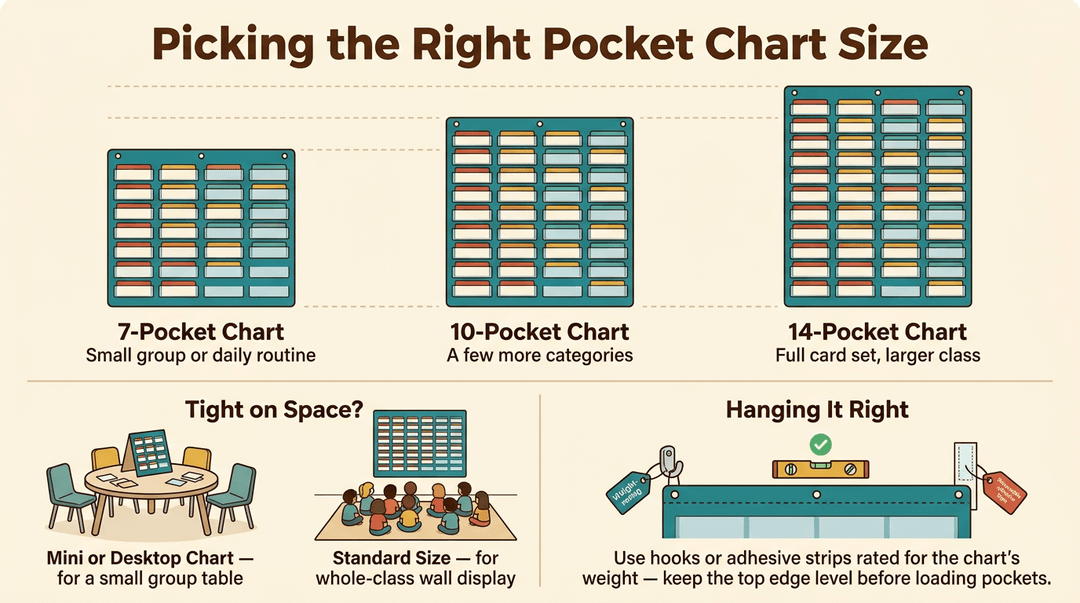
Pocket count comes first. A 7-pocket chart suits a small group or a daily routine, a 10-pocket chart adds a few more categories, and a 14-pocket chart holds a full set of cards for a larger class. Tight on space?
A mini pocket chart or a desktop or tabletop version keeps word cards within reach of a small group table. A standard size works best as a whole-class wall display.
To hang a chart without a stand, use sturdy wall hooks or removable adhesive strips rated for its weight. Check that the top edge is level before you load the pockets.
Colors and designs to fit your room
A black classic design looks sharp against bright bulletin boards, while burlap texture adds warmth. Chalkboard brights and a confetti pattern bring energy to a primary room, and calming colors suit a quieter corner. Prefer natural tones?
A woven or painted wood look blends into a cozy reading nook. Style matters less than function, so pick a look your students can read easily.
Specialty pocket charts for specific tasks
Some charts are built for one job:
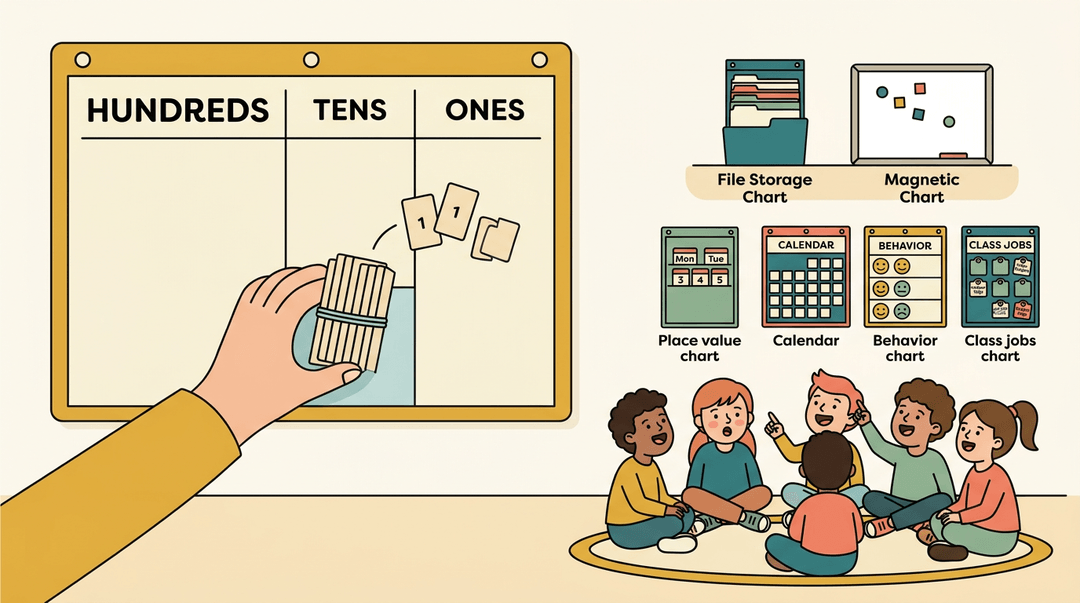
- A file storage chart keeps papers sorted.
- A magnetic mini chart moves from desk to whiteboard.
- A calendar chart tracks dates.
- A behavior chart shows students their progress.
- A class jobs chart rotates helper roles so everyone gets a turn.
Consider a second-grade teacher who slides ten single cards into a "tens" pocket on a place value chart, so students watch regrouping happen before they write a single number. The payoff is a clear picture before the worksheet ever comes out.
What Age Is a Pocket Chart For?
Pocket charts are most at home in early elementary rooms, where students are learning letters, numbers, and routines. The short answer is young learners, but the tool stretches further than you'd think, because the cards do the heavy lifting.
Keep your daily schedule and calendar organized
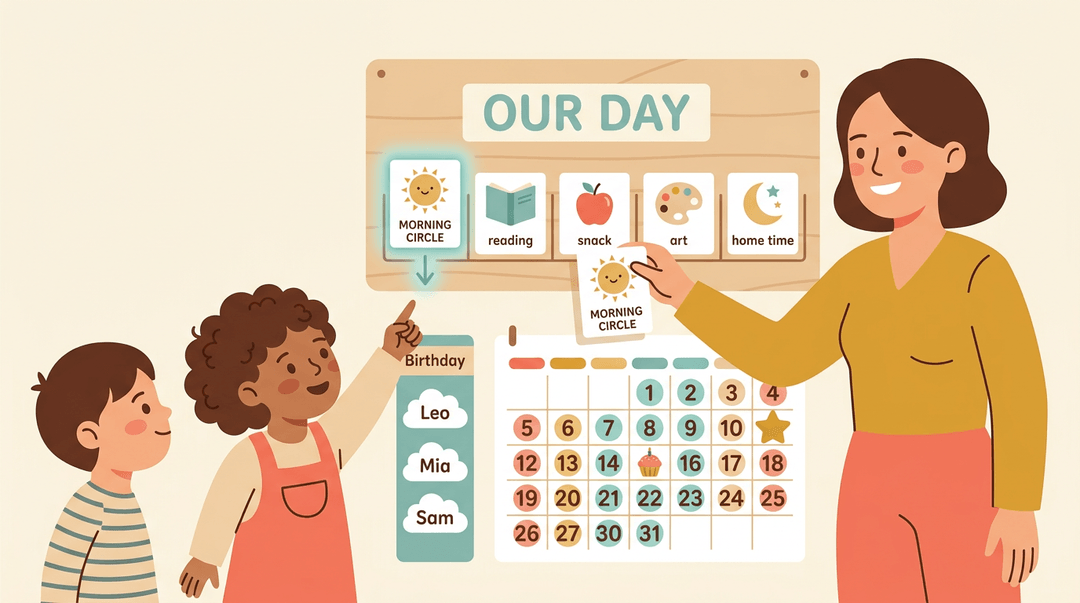
Consider a kindergarten teacher who slides a picture card for each part of the day into the chart every morning. Students can see what's next, so transitions stop feeling like surprises.
A visual daily schedule works best when students can read it, and a monthly calendar display gives them a running view of the school year. Wall displays like these are a good start, and ideas for teacher bulletin boards can help you plan more.
Add a birthday strip or a date card, and the chart becomes a classroom organization tool that keeps the room running without another reminder from you.
Track behavior and classroom jobs
A behavior tracking chart works on the same idea: each student has a card that moves up or down. Keep it private where you can. Rotate class job assignments through the pockets each week so every student has a role.
That builds responsibility, because students see their name, their job, and what comes next.
Teaching reading skills with pocket charts
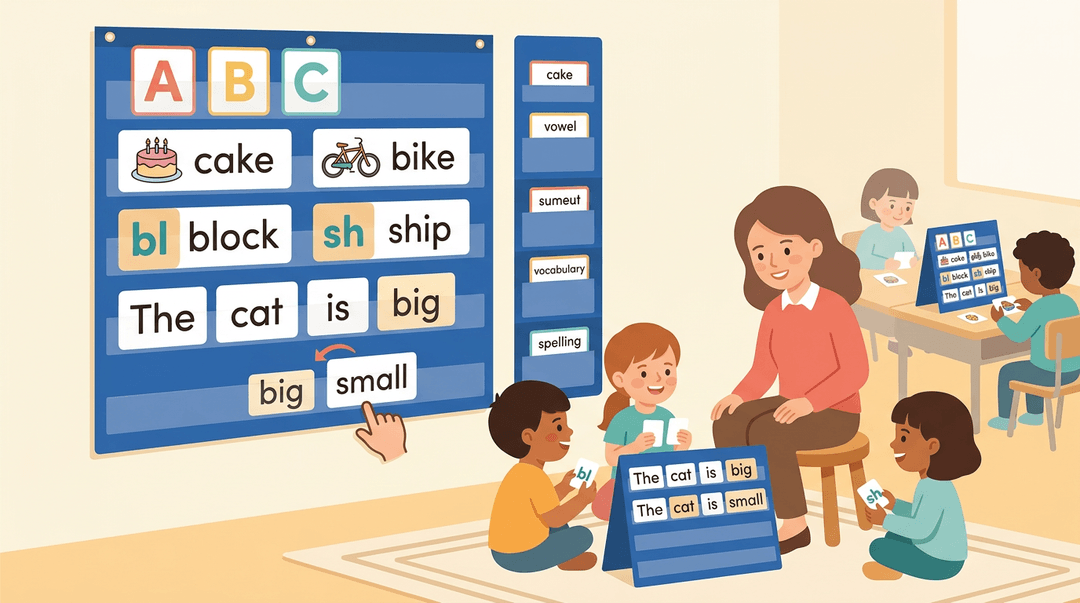
Pocket charts shine in reading. Use alphabet cards for letter recognition, sort picture cards for long vowels practice, and build word families for consonant blends and digraphs like bl and sh.
Sentence strips let you model how a sentence works by swapping words in and out. Post vocabulary and spelling words in the pockets so students can find them fast.
Pair these with guided reading groups: a second-grade teacher can pull a small group, build the day's sentence strips with them, and have the rest of the class match the same words on their own charts.
Teaching math concepts with pocket charts
Math is where the pocket chart earns its keep. The shift is from reciting numbers to building them. Use place value cards to show that a ten is a bundle of ten ones.
A counting caddie holds ones, tens, and hundreds so students can build a number they can see. Keep numbers 0-20 cards nearby for quick number sense, and post a hundreds chart to show patterns across rows and columns.
For a daily routine, add one card to a strip for counting days of school each morning.
Running centers and small groups
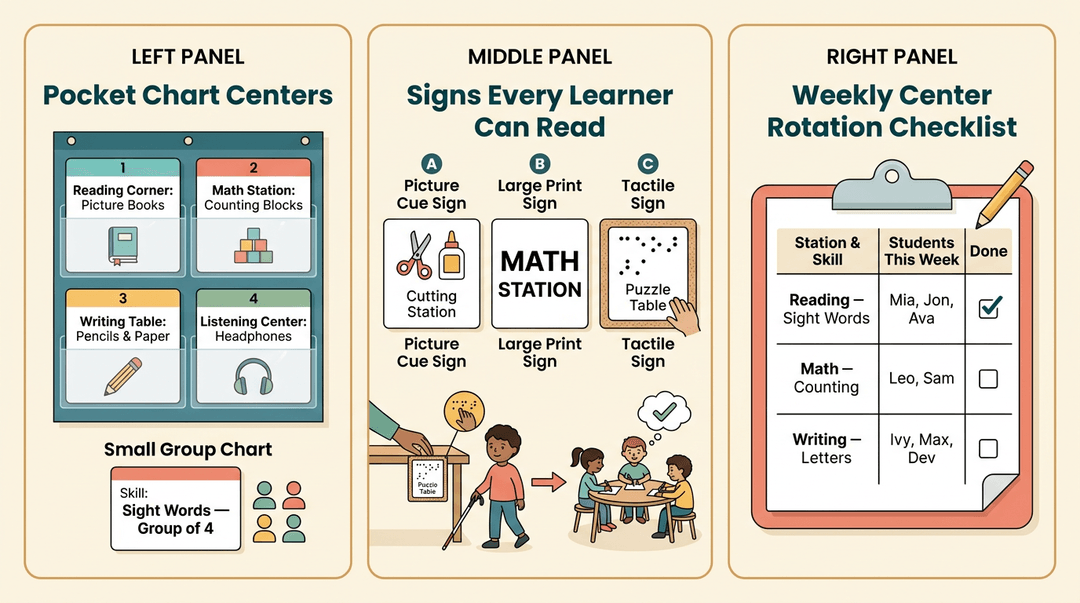
Pocket charts make learning centers easy to rotate. Post a card at each station with the activity and its materials. Small group activities work the same way: one chart, one skill, a few students.
Use differentiated station signs with picture cues, larger print, and tactile cards so every learner can start without asking for help. Consider a special education teacher who tapes a tactile sign to a table for a student with low vision.
The student finds the task alone and joins the group without waiting. Finish with a weekly center rotation checklist:
- Station name and skill
- Students assigned this week
- A check box for each completed rotation
Using Pocket Charts in Your Lesson Plans
Here are three plans you can run as written: a literacy routine, a math center, and a sub plan. Swap in your own cards and they're ready to go.
Kindergarten literacy routine
Run these four moves in order each morning. The chart stays up, and only the cards change.
- Post the morning message cards
- Put one sentence on strips: "Today is Monday. We have music."
- Read it together, then hunt
- Say: "Who can find a word we know?"
- Rotate in sight word cards
- Use three to five words, and have students point and chant.
- Close with daily calendar review
- A helper places the day, date, and weather cards.
Elementary math center
Place value cards (digits, plus ones, tens, and hundreds headers) do the heavy lifting here. Students build numbers instead of just reading them.
| Rotation | At the pocket chart |
|---|---|
| Chart station | Students build a posted number with digit cards |
| Teacher group | You call a number; they build it and explain |
| Independent work | Practice sheet matching the chart's numbers |
Quick exit-ticket check. As students leave, each one builds a number in the chart. You see who's secure at a glance.
Example: A second-grade teacher says, "Show 482 in the chart." One student puts the 8 in the tens pocket. That tells the teacher exactly who to pull into tomorrow's small group.
Quick sub plan
A sub needs cards that are already made and steps they can follow in a minute. Nothing here needs a screen.
Before you leave, confirm:
- Card sets are pre-made. Each set sits in a labeled envelope.
- Steps are written simply. One page, numbered, no jargon.
- No digital setup is needed. The chart and cards are the whole lesson.
Here's a sample sub note you can copy:
- Hang the chart. Put the "Morning Message" strips in the pockets.
- Read the message aloud with students.
- Hand out the sight word envelope. Students match cards to the chart.
- Leave the completed chart up for me.
⚠️ Watch out: Unlabeled card sets are the most common sub-day snag. Mark each envelope with the day and activity.
Save these pocket-chart routines as reusable lesson plans in EMStudio's online lesson planner.
Pocket Chart Accessories and Add-ons
The chart is only the start. A few well-chosen add-ons turn a plain grid of pockets into a tool you'll use every day, and they're easier to set up than you might think.
Cards and labels for your chart
Most charts come with a basic set of cards, but you'll likely want more.
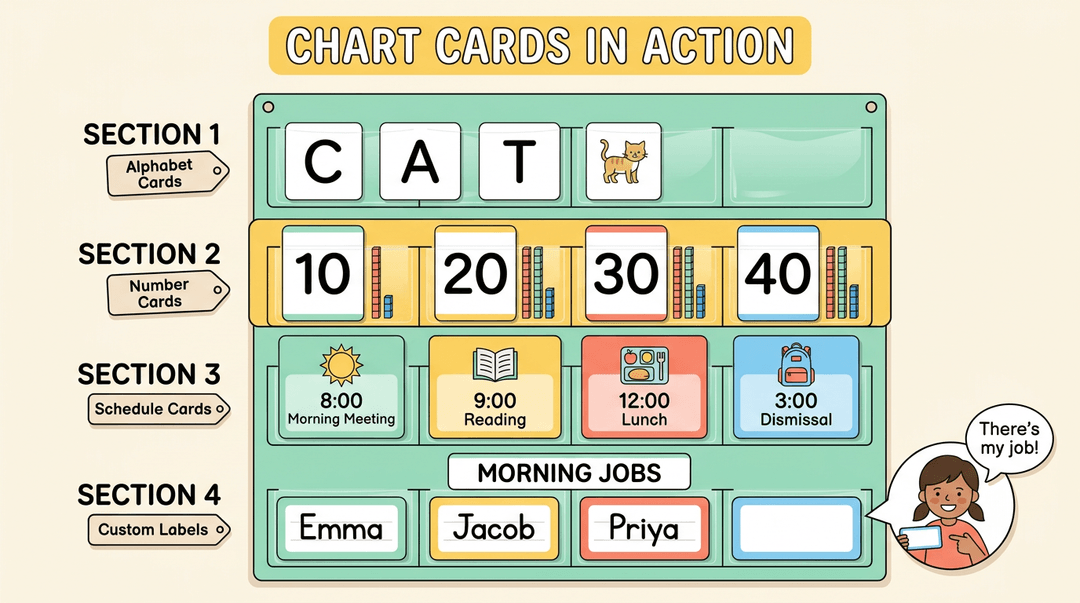
- Alphabet pocket chart cards let students build words, match letters, and practice sounds.
- Numbers and counting cards do the same for math, such as ordering values or building place value.
- Schedule card add-ons make the daily routine visible at a glance.
- Custom labels let you tailor the chart to your room.
Consider a first-grade teacher who writes each student's name on a blank label for morning jobs. Students find their own names, and you spend less time directing traffic.
Storage and organizer pocket options
Loose cards have a way of disappearing, and that's where storage helps.
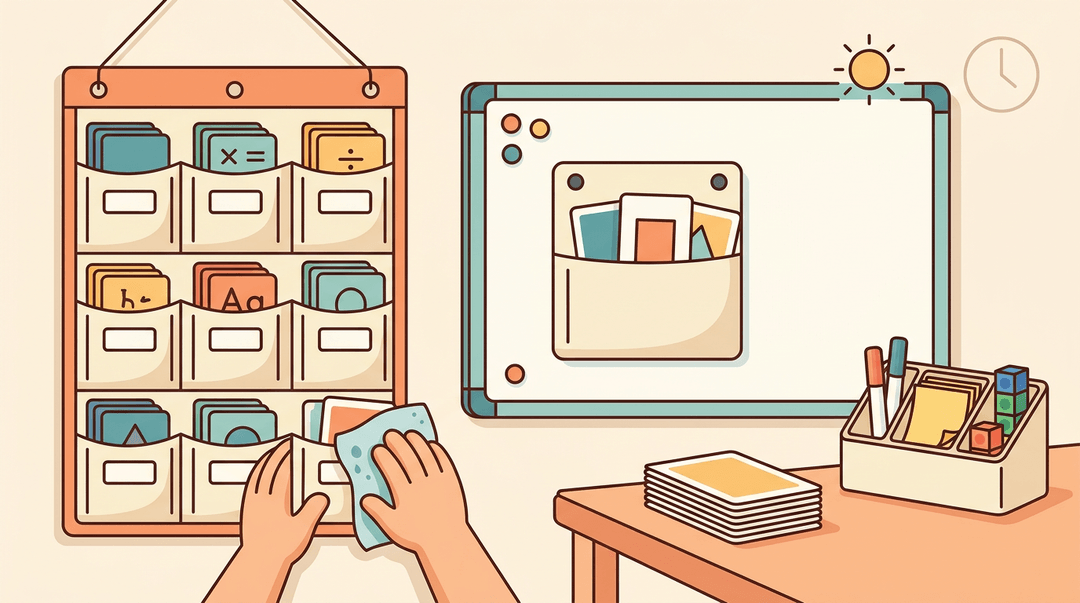
- A file storage pocket chart keeps sets sorted by subject.
- A magnetic storage pocket holds cards on a whiteboard or metal surface, so they're always within reach.
- Organizer add-ons keep markers, sticky notes, and small manipulatives in one place.
The goal is keeping cards sorted rather than searching for them. Sorted cards save time.
For durability, wipe pockets with a damp cloth, let them dry fully, and store cards flat so the edges don't bend. Avoid overstuffing pockets, and your chart will stay in good shape for the whole year.
Where and How to Buy Pocket Charts
Buying a pocket chart is simpler than it looks, but the sticker price is only part of the story. Here's how to compare your options so you get the right chart without overspending.
Pricing and discount options
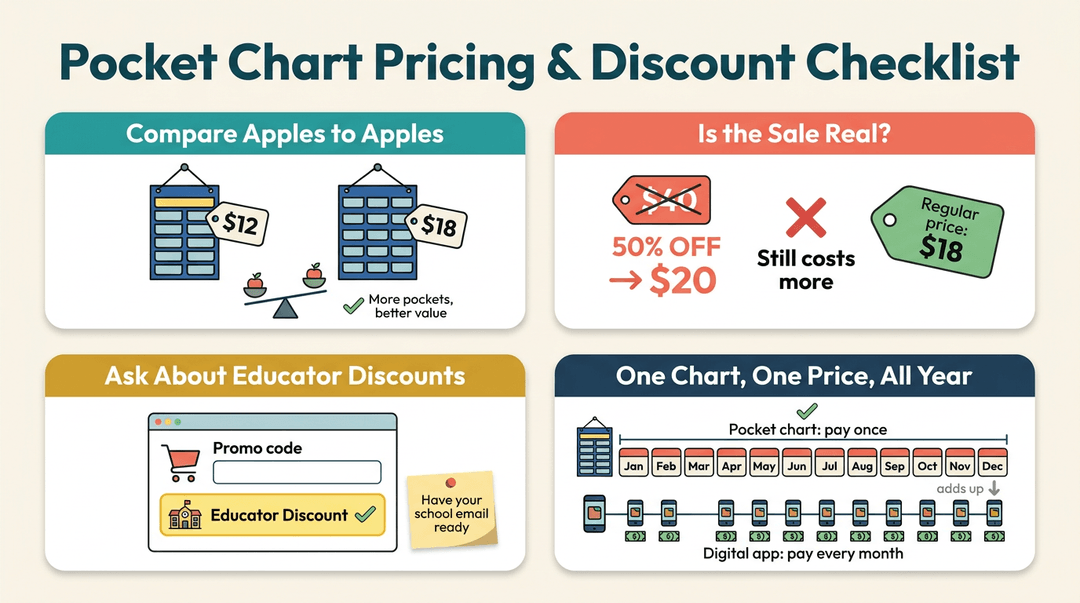
Start with retail price listings, the full price a seller lists before any savings. Compare charts with the same size and pocket count, since a cheaper chart with fewer pockets may not do the job.
Next, watch for percent-off savings on a chart you already planned to buy. A sale is only a real saving if the discounted price beats the regular price, so check that before you add it to your cart.
Educator discount offers are worth a few minutes of your time. Some suppliers offer them, so check the checkout page before you pay, and have your school details handy.
A pocket chart is a one-time purchase, while many digital tools charge a recurring subscription. Think of a second-grade teacher running daily sentence-building: one chart and a box of strips covers the whole year.
Browsing pocket chart shopping pages
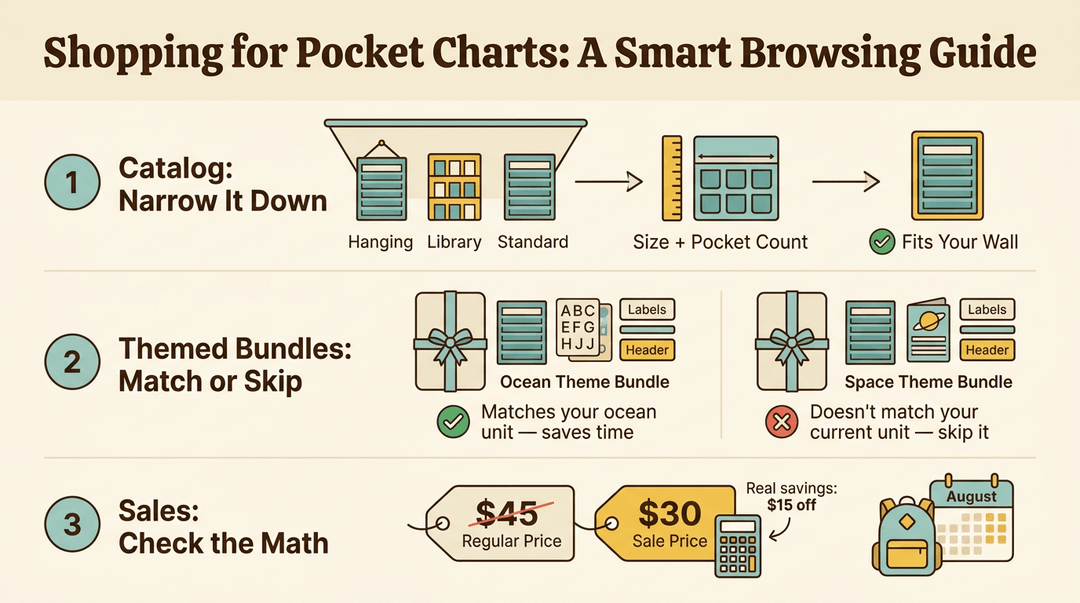
Start with the teacher store catalog, the main listing of charts and accessories a shop sells. Browse by type first (hanging, library, or standard pocket charts), then narrow by size and pocket count so you only review what fits your wall.
Themed product collections bundle charts with matching cards, labels, and headers. They save you from hunting down pieces separately, but only choose one if the theme fits your unit. Bundles save time only when you'll actually use them.
If a seasonal back-to-school promotion is running, it's a good time to stock up. Before you buy, compare the sale price against what you'd normally pay so you know the deal is real.
Make Your Own Pocket Chart
Store-bought charts work, but a homemade one can match your room exactly.
Materials you'll need
- File folder base: a sturdy folder gives the chart its backbone
- Transparency strips: these become the pockets for your signs
- Washi tape border: colorful tape frames the edges
- Velcro attachments: stick these to the back so signs stay put
Steps to build your chart
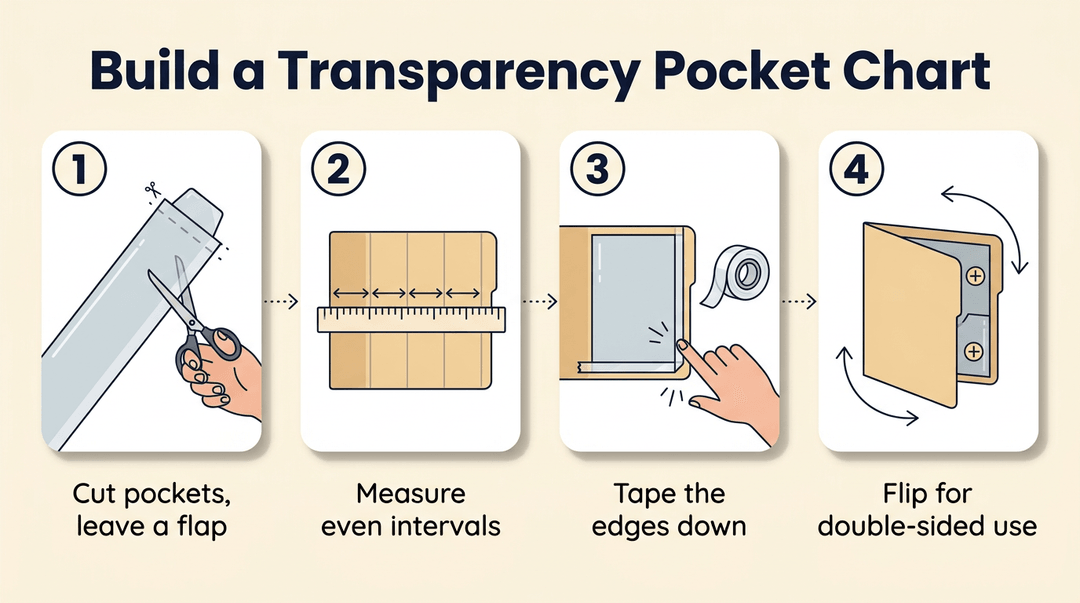
- Cut the transparency pockets from your strips, leaving a flap at the top.
- Measure even intervals across the folder so every pocket is the same width.
- Attach each strip with clear tape, pressing the edges firmly.
- For a double-sided design, add pockets to both sides so you can flip the chart.
Why customize your pocket chart
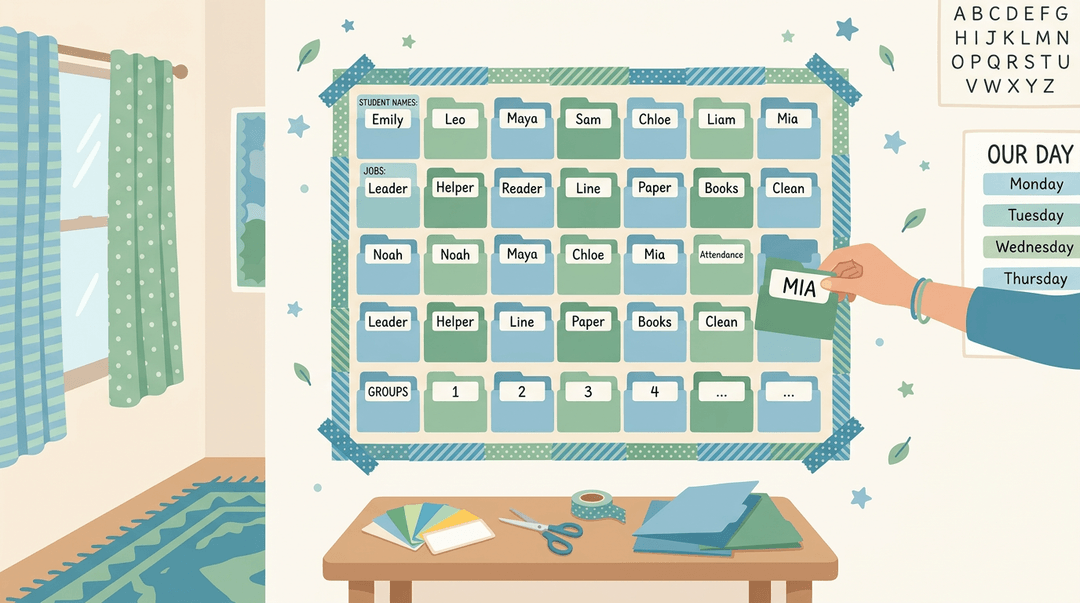
Picture a second-grade teacher whose classroom runs on blue and green accents. A homemade chart in those exact colors fits right in.
- Matches your classroom color scheme: choose folders and tape that fit the room
- Low-cost alternative: basic supplies cost far less than a commercial chart
- Removable, swappable signs: update labels whenever your lesson changes
This is less about buying a chart and more about building one that fits. Swap the signs, keep the chart.
A pocket chart is one of the simplest tools in your room, and it earns its spot because it's flexible, hands-on, and easy to rearrange as your students grow.
Whether you choose a store-bought model or build one from materials you already have, the real payoff comes when it's part of a plan you can count on.
Ready to make lesson planning easier? Check out our Lesson Planner to write, organize, and reuse your plans across all your classes from one place.
Frequently asked questions
How do you hang a pocket chart without a stand?
Hang the pocket chart from sturdy wall hooks or removable adhesive strips rated for its weight. Make sure the top edge is level, and attach the chart securely before adding cards or other contents.
What can I use instead of a pocket chart?
A clipboard or a shoe organizer can serve as a simple substitute for a pocket chart. You can also make one from a sturdy file folder, transparency strips, clear tape, and optional Velcro attachments.
What age is a pocket chart for?
Pocket charts are especially useful for young learners in preschool and early elementary school, including kindergarten through about second grade. They can also support older students for routines, vocabulary, reading, math, centers, and organization when the cards and activities match their needs.