Different Learning Styles: What the Science Really Says
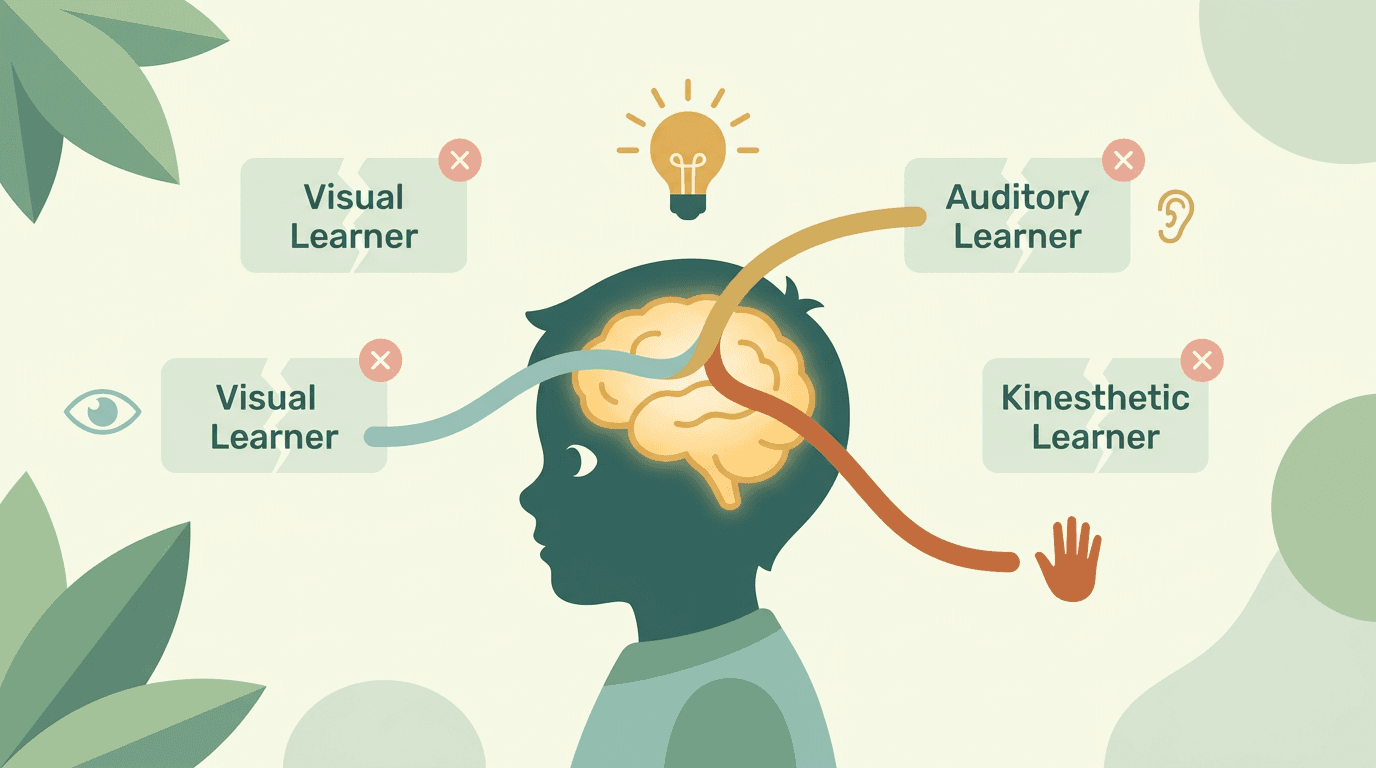

Jump to section
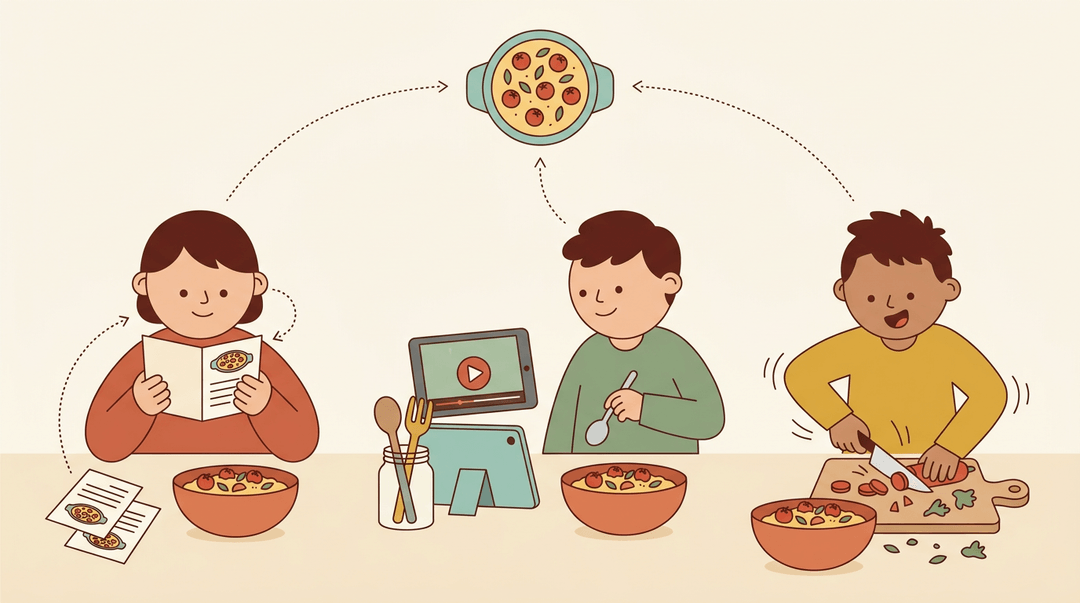
Think of a favorite recipe passed between three cooks. One reads every step twice, one wants a video demo, and one just starts chopping and learns by doing. Same dish, three different routes to it.
That's the essence of learning styles: the idea that students take in and process information in different ways.
In this post, we'll map the major frameworks, weigh the debate over how solid the science is, and turn it all into moves you can use in class tomorrow.
Understanding the Four Different Learning Styles
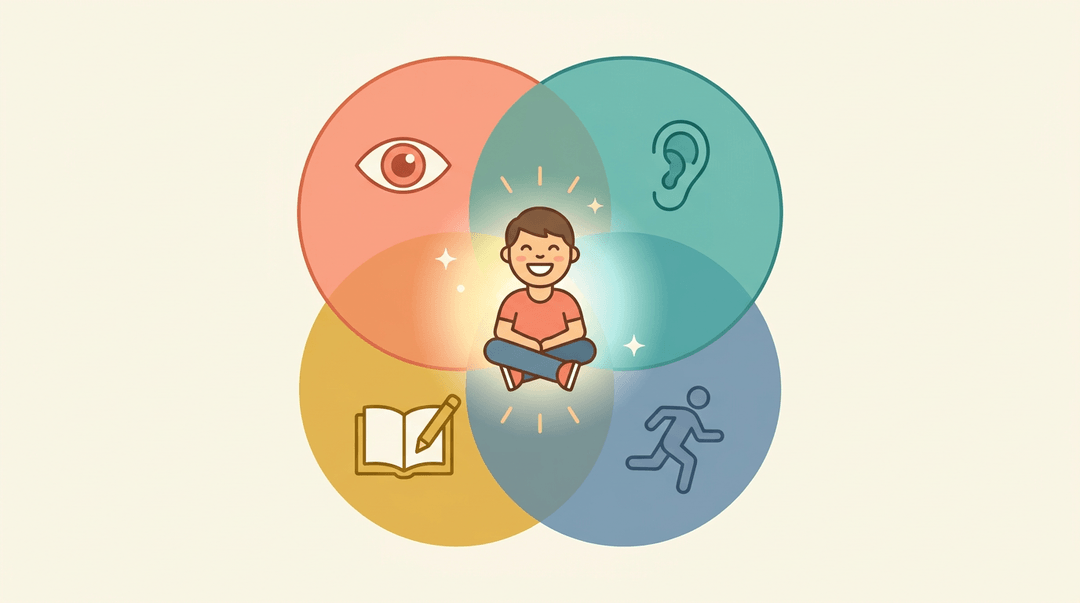
Most conversations about learning styles start with the same four buckets: visual, auditory, reading/writing, and kinesthetic. Knowing what each one actually looks like in a classroom is the first step to using them well.
How visual learners take in information
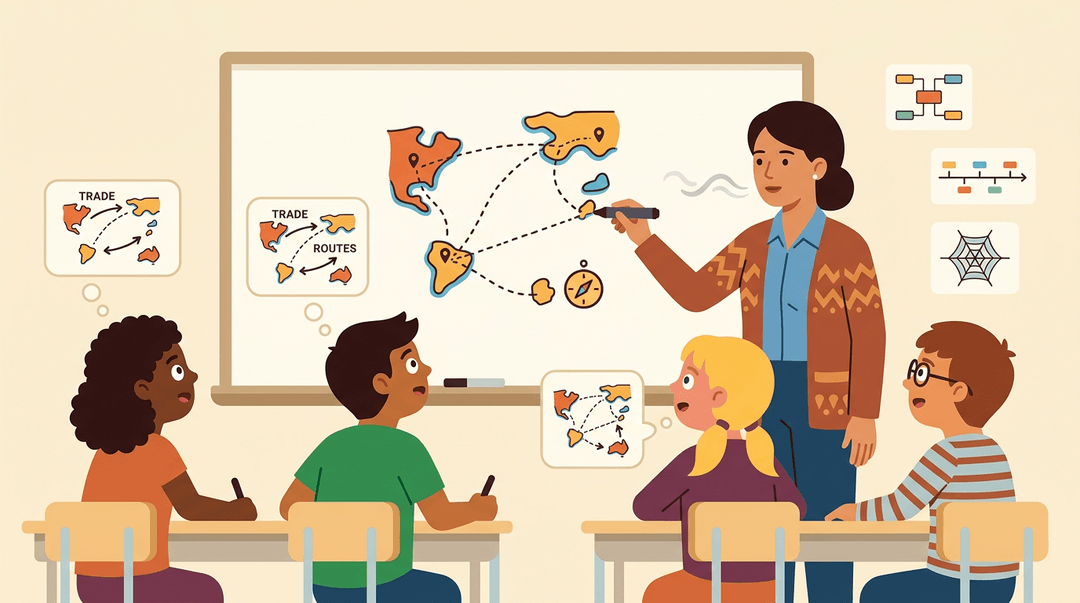
Visual learners lean on their eyes before their ears. A visual learner reaches for charts, diagrams, and maps because a picture of the relationship between ideas sticks better than a spoken description of it.
Graphic organizers work the same way: a web, a timeline, or a labeled diagram gives these students a structure they can actually see.
For example, a middle school geography teacher who sketches a quick map on the board while explaining trade routes will usually reach more students than one who describes the routes aloud.
When you have a choice, lead with the visual aid and let the verbal explanation support it, not the other way around.
Why auditory learners learn best by listening
Other students absorb material best through their ears. Auditory learners thrive in lectures and class discussions, where hearing an idea explained out loud helps it click.
Podcasts and audiobooks work in their favor for the same reason, and these learners tend to carry a strong verbal memory: they can often repeat back a discussion almost word for word days later.
Think of a student who barely takes notes during a read-aloud but nails every follow-up question; that's verbal memory doing the heavy lifting.
Why kinesthetic learners need hands-on practice
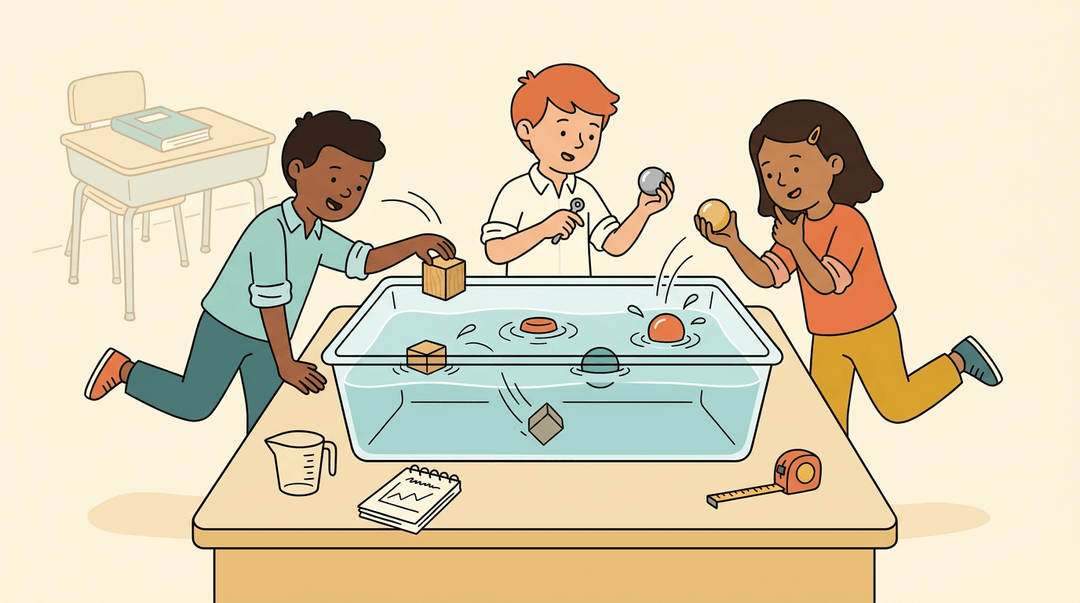
Kinesthetic learners need to move to learn. Hands-on experiments, lab work, and any task that gets a student out of their seat tend to land far better than a lecture on the same material.
Simulations and real-life practice, like measuring ingredients in a cooking activity or building a model, give these students a way to learn by doing rather than by watching.
Consider a science teacher who lets students physically test buoyancy with objects in water instead of just reading about density: that's the difference between a concept staying abstract and it becoming real.
How reading and writing learners prefer text
Reading/writing learners prefer information in text form: textbooks, handouts, and written instructions over a spoken explanation.
They also tend to do their best thinking through writing, so strong written assignments, structured note-taking, and essays give them room to work through ideas on the page.
Most learners actually blend several styles
Here's the twist: most learners don't fit neatly into just one box. A study of VARK learning preferences in undergraduate health science students found that 87% of learners were multimodal, blending two or more styles rather than relying on a single one.
Even so, many students still lean toward one dominant style, which is exactly why it's worth planning lessons that touch more than one mode at once.
Turning Learning Styles into Everyday Lesson Plans
You don't need a new curriculum to teach across modalities: you need a few repeatable moves. Use this page when you plan the week, and keep the tweaks table handy for mid-lesson rescues.
Start with your grade band
Pick the pairing that fits your students, then rotate it through the week.
| Grades | Modality moves that land |
|---|---|
| K-2 | Color-coded visuals and songs for routines |
| 3-5 | Hands-on stations paired with read-alouds |
| 6-8 | Group debates and sketchnotes |
| 9-12 | Independent research and student-made podcasts |
Example: A fourth-grade fractions lesson: students fold paper strips at a hands-on station, then you read a word problem aloud while they mark answers on their strips. Two modalities, one objective, zero extra prep.
Run the weekly planning checklist
Before Monday, confirm:
- Modality varies lesson to lesson. If Monday was visual-heavy, make Tuesday verbal or kinesthetic.
- At least one lesson pairs visual with kinesthetic. Label a diagram, then act it out.
- Every lesson carries one reflection prompt. Try: "Which part of today helped the idea stick for you?"
- Strong activities get saved as templates. Sketchnotes worked Tuesday? Reuse the shell with Friday's content.
Quick tweaks when a lesson isn't landing
Find your row, read across, adjust on the spot.
| When you see... | Try... |
|---|---|
| Eyes glazing during a lecture | Sketch a quick diagram as you talk |
| Fidgeting through note-taking | Turn the notes into a movement task |
| Students missing key points | Offer an audio recap they can replay |
| Uneven products on the same task | Let students choose their output format |
For the movement task, a gallery walk works in any subject: post four key terms on the walls and have students rotate, adding one note under each.
These moves compound when you don't rebuild them every week: save these modality-based activities as reusable blocks in your online lesson planner.
The Theories Behind Learning Styles
Ask five education researchers to define a learning style and you'll likely get five different answers.
Over the past century, psychologists and educators have proposed dozens of frameworks to explain why students take in information differently, and no single one has settled the debate for good.
Where the VARK model came from
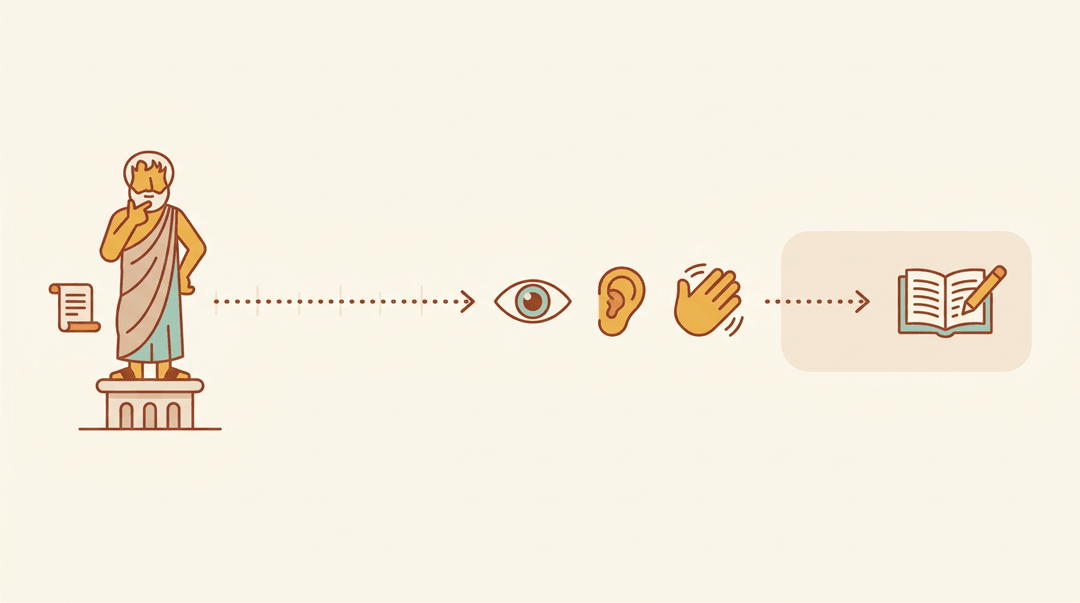
The most recognizable of these frameworks starts with three letters: VAK, for visual, auditory, and kinesthetic. Its roots run further back than most teachers realize.
A 2023 study tracing the model's origins found that the visual, auditory, and kinesthetic typology has a long history attributed all the way back to Aristotle, who first proposed that people learn through distinct sensory channels.
The VAK model leaves out one channel entirely: reading and writing. That's where VARK comes in, adding a fourth category for learners who absorb information best through text.
Despite decades of debate over whether the underlying theory holds up, VARK remains one of the most widely used tools in teacher training programs and workplace onboarding alike.
Kolb's experiential learning model
Kolb's experiential learning model takes a different approach, built around four learning methods: concrete experience, reflective observation, abstract conceptualization, and active experimentation.
Kolb argued that real learning happens through active participation, not passive absorption.
From those four methods come four resulting styles: accommodating, converging, diverging, and assimilating, each describing a different combination of how a student prefers to experience and process new material.
Honey and Mumford's four learning styles
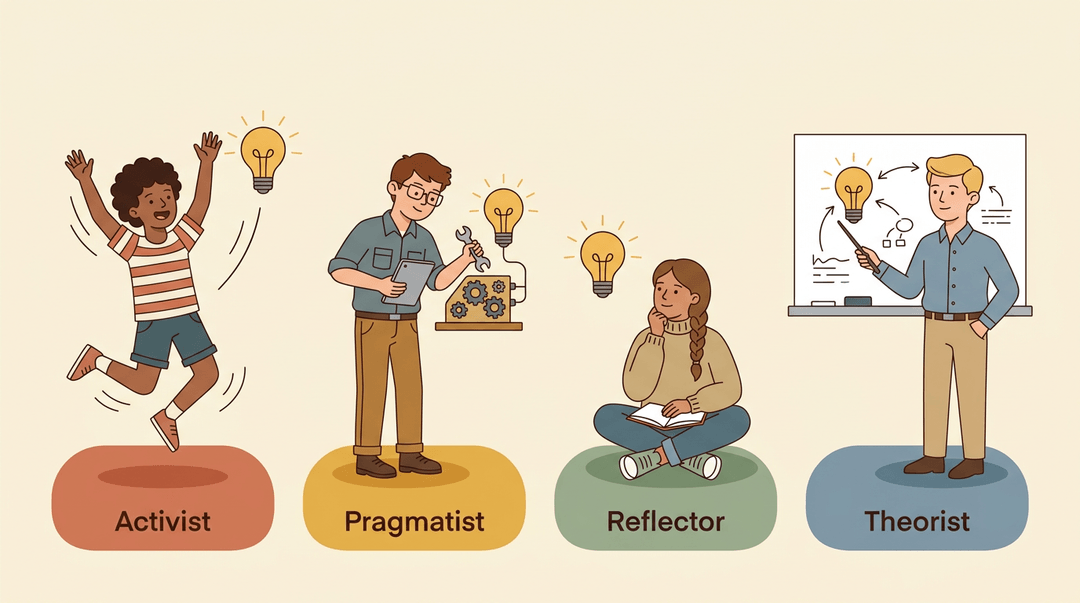
Honey and Mumford's model takes Kolb's stages and reframes them as four preference-based styles: activist, pragmatist, reflector, and theorist.
Rather than describing how learning happens, it describes how a person prefers to approach it, which makes it useful for grouping students by the kind of activity that actually draws them in.
Gregorc's mind styles model
Gregorc's mind styles model splits learners along two axes instead: concrete versus abstract thinking, and sequential versus random processing. A concrete-sequential thinker wants clear, step-by-step instructions.
A random-abstract thinker would rather explore a topic in whatever order makes sense to them.
The Felder-Soloman learning style index
The Felder-Soloman learning style index adds even more nuance, sorting learners along three separate dimensions: sensory versus intuitive, active versus reflective, and sequential versus global.
A student can land anywhere along each spectrum rather than fitting neatly into a single box, which is part of why the index has held up well in classroom-level teaching research.
The NASSP task force model
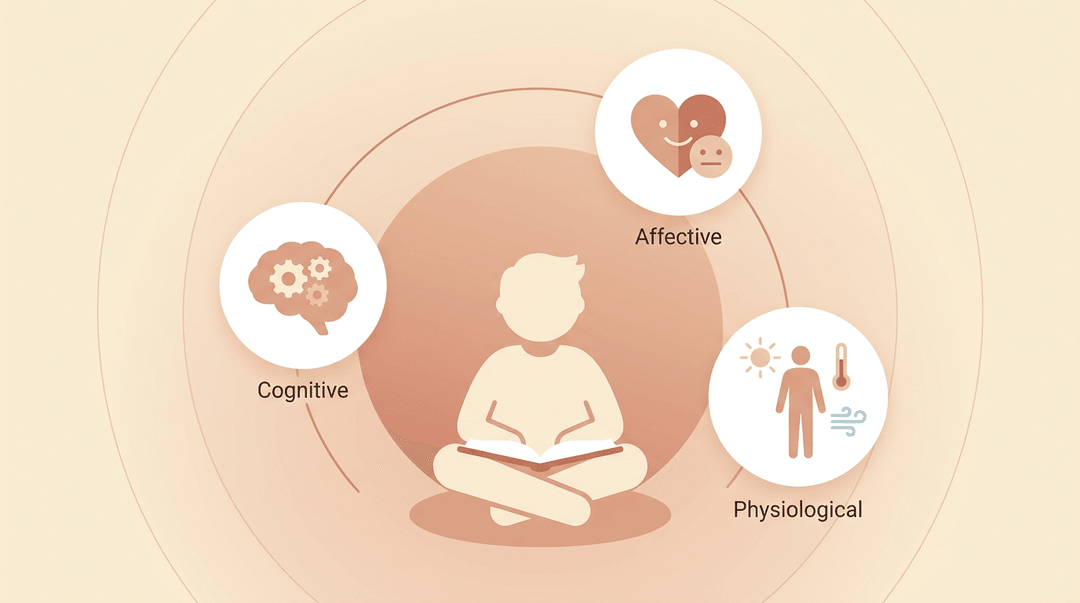
The National Association of Secondary School Principals (NASSP) task force model takes a broader view still, folding in cognitive, affective, and physiological factors: how a student thinks, how they feel about the material, and how their body responds to the environment they're learning in.
Strengths-based and mindset-focused models
Not every framework insists on sorting students into a fixed box.
Gardner's multiple intelligences theory argued that intelligence isn't one general ability but several: linguistic, logical-mathematical, spatial, musical, bodily-kinesthetic, interpersonal, and intrapersonal, seven distinct ways of being smart.
Gardner never called these learning styles himself.
He framed them as a theory of ability, not a preferred channel for taking in information, and that distinction matters: a learning theory explains how the mind processes information, while a learning style claims a person learns best through one particular channel.
That same shift toward flexibility shows up in strengths-based coaching, which starts with what a student already does well instead of diagnosing a deficit.
It shows up again in the difference between a growth mindset and a fixed mindset: whether a student believes their ability can improve with effort, or believes it's locked in place.
And it shows up in a growing focus on metacognitive strategy, teaching students to notice and adjust their own thinking, which treats learning style as something a student can build rather than something fixed at birth.
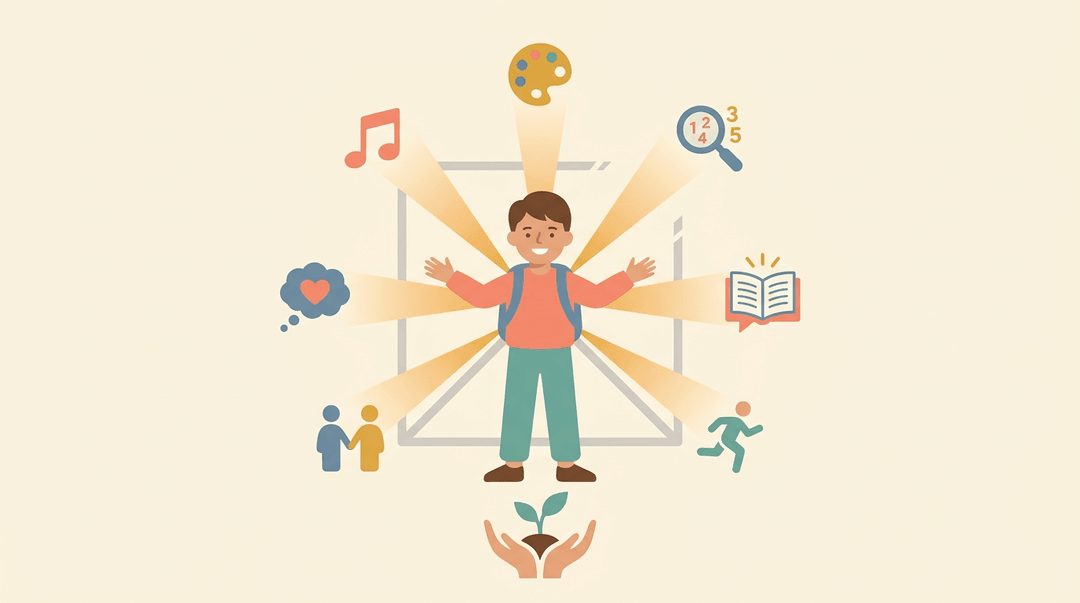
Learning Styles Beyond the VARK Model
VARK gets most of the attention, but it's far from the only lens for understanding how students learn.
A handful of other frameworks split learning styles into categories that show up in almost every classroom: the pattern-spotter, the group thinker, the quiet worker, and a few more worth knowing.
How logical learners solve problems
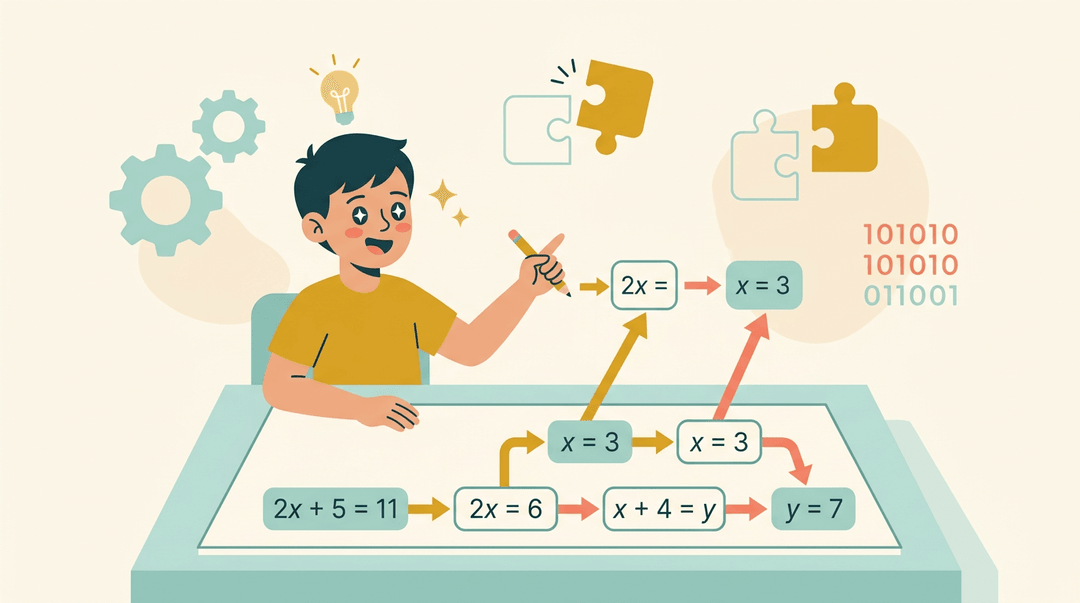
Logical learners gravitate toward pattern and logic. Give them a puzzle, a proof, or a coding challenge and watch them light up. Problem-solving tasks work best when they can spot the "why" behind a rule rather than just memorize it.
Consider a middle school math teacher who hands out a chart mapping how each new formula connects to the last: for a logical learner, that visual thread of cause and effect does more than any worksheet of isolated problems.
Why social learners thrive in groups
Some students do their best thinking out loud, with other people in the room. Social learners thrive in group work, where peer discussion lets them test an idea before committing to it.
Role-playing activities, like acting out a historical debate or a science scenario, give them a way to learn through interaction instead of despite it.
How solitary learners prefer to study
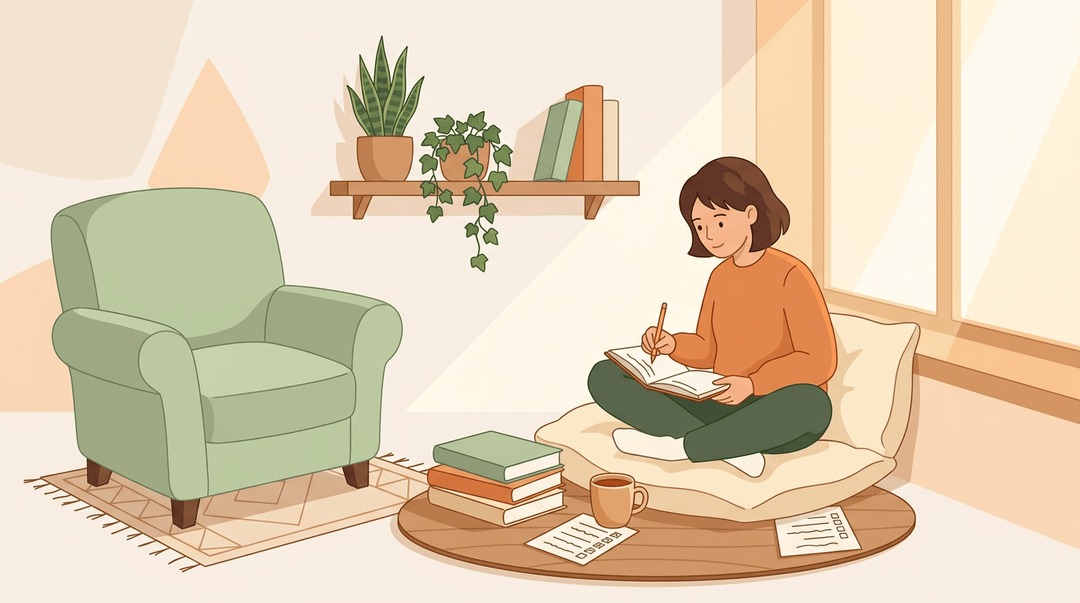
Other students need the opposite. Solitary learners prefer independent study, working through material at their own pace without the noise of a group.
Self-reflection is central here: journaling, self-quizzing, or simply thinking a problem through in silence. Individual goal-setting, where a student maps out their own targets for the week, keeps this style productive rather than isolating.
Why nature learners need the outdoors
Nature learners learn best outdoors, in a calm natural environment away from fluorescent lights and hallway noise.
For instance, a science teacher who moves a lesson on ecosystems to the school garden often sees more focus in twenty minutes outside than in an hour at a desk.
Field trips and gardening projects aren't just a nice break: for this learner, they're where the material actually clicks.
How spatial learners think in pictures
Spatial learners have strong visual-spatial skills and a knack for mental rotation, picturing how an object looks from another angle without seeing it directly. Maps, diagrams, and models are their native language.
A geography teacher who leans on a map instead of a paragraph of directions is speaking straight to this strength.

How sensory learners use multiple senses
Sensory learners don't rely on just one channel; they process information through a mix of auditory, tactile, and visual input at once.
Hands-on stimuli, like building a model while listening to an explanation and reading the steps alongside it, help these students anchor a concept in more than one sense at a time.
What Shapes Your Learning Preferences
No two learners take in information the same way, and it rarely comes down to one neat label.
Several forces work together to shape those preferences, and that's exactly what makes the question of Gen Z's learning style tricky to answer in a single sentence: it runs through cognitive wiring, emotional state, physical environment, and neurodivergence all at once.
Here's how each of those pieces fits together:
How cognitive factors affect learning
Some students move step by step through a problem, building each piece before moving to the next. Others need the big picture first, then work backward to fill in the details.
According to a comprehensive breakdown from BAU, "cognitive styles, such as sequential versus global processing, contribute significantly to learning preferences," and that same overlap of cognitive, emotional, environmental, and neurodivergent factors is what shapes Gen Z's learning style too, rather than any single fixed type.
For example, a middle school math teacher might notice one student wants the formula first, while another needs to see the finished graph before the formula makes sense.
Attention span and working memory capacity matter just as much: a student who can hold four steps in mind approaches a word problem differently than one who can hold only two.
How emotions affect learning
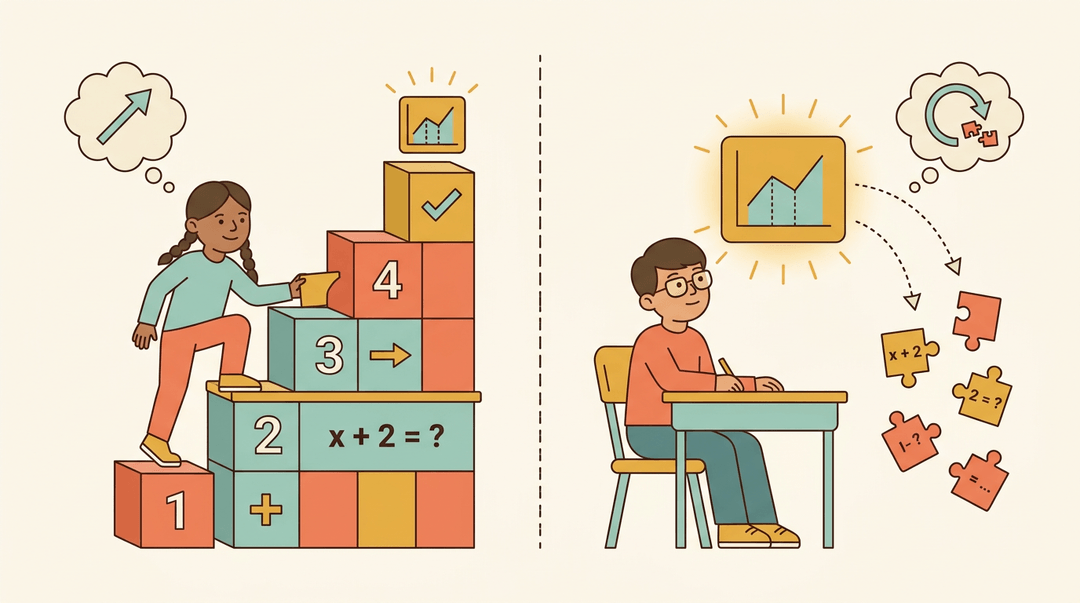
Emotions steer learning as much as cognition does. A student with low self-esteem often hesitates to raise a hand even when they know the answer, while a motivated student pushes through a hard problem simply to reach the other side of it.
Confidence works the same way outside academics: a student who feels safe making mistakes will try a new approach, while one who fears being wrong sticks to what's familiar and rarely stretches.
How your environment affects learning
Physical surroundings matter more than most lesson plans account for. Some students focus best in near silence under bright, even lighting; others need background hum and softer light to settle in.
Consider a student who reads better curled up in a reading corner than seated at a desk under fluorescent lights: flexible study locations, whether that's a quiet corner, a standing desk, or a spot near a window, can be the difference between a wandering mind and a focused one.

Learning barriers and neurodivergence
Neurodivergent students often process all of the above differently.
A student with attention-deficit/hyperactivity disorder (ADHD) might need movement breaks to sustain focus, while a student with autism might rely on predictable routines and clear sensory boundaries to feel ready to learn.
Add in real-world barriers like limited time at home or a lack of support outside school, and it's easy to see why one label never tells the whole story.
Adaptive strategies close that gap: shorter work intervals, visual schedules, and pre-teaching new vocabulary all help.
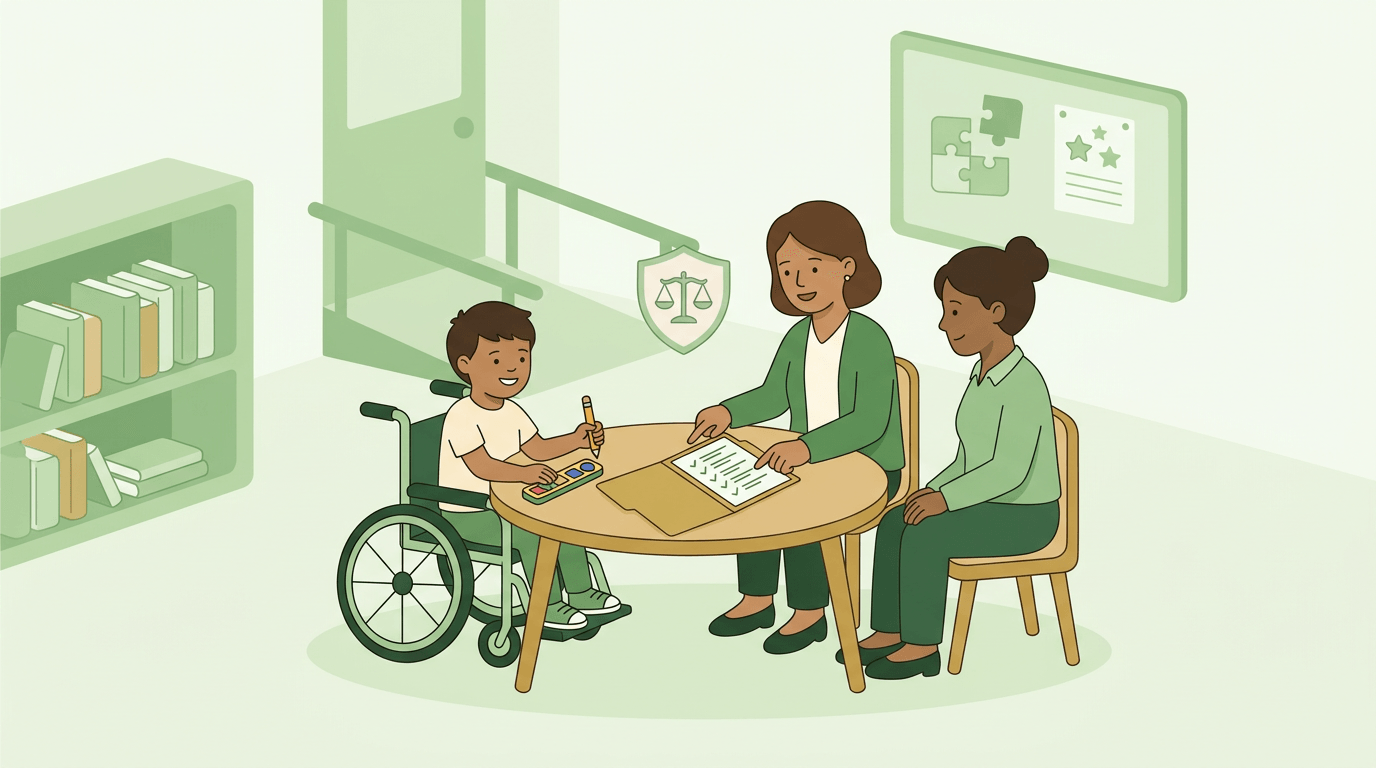
Whenever a student has an individualized education program (IEP) or a 504 plan (a legal plan for accommodations outside special education), align those supports directly with the barrier you're seeing: extended time, seating changes, or assistive technology should match the specific challenge, not just the diagnosis on paper.

How to Teach Different Learning Styles
Knowing the theory is one thing. Putting it to work on a Tuesday morning is another. Here's how to translate learning styles into moves you can actually use, without overhauling every lesson you own.
Classroom techniques for each learning style
Small shifts go a long way. A visual learner benefits from diagrams, charts, and short videos that turn an abstract idea into something they can see. An auditory learner picks up more from a class discussion or a think-aloud than from a worksheet.
A kinesthetic learner needs to build, move, or manipulate something before it sticks.
Instead of picking one lane, rotate modalities across the week: a diagram-heavy Monday, a discussion-driven Wednesday, a hands-on project on Friday. Every student gets a turn in their comfort zone, and everyone gets practice stretching beyond it.

Using technology to support every learner
Technology makes rotating modalities far easier than it used to be. Interactive multimedia (simulations, animations, clickable diagrams) covers visual and kinesthetic learners in one tool.
Online forums give quieter, more reflective students a place to process ideas in writing before speaking up in class.
And recording lectures means an auditory learner can replay a tricky explanation as many times as they need, instead of catching it once and hoping it lands.
Balancing group work and independent tasks
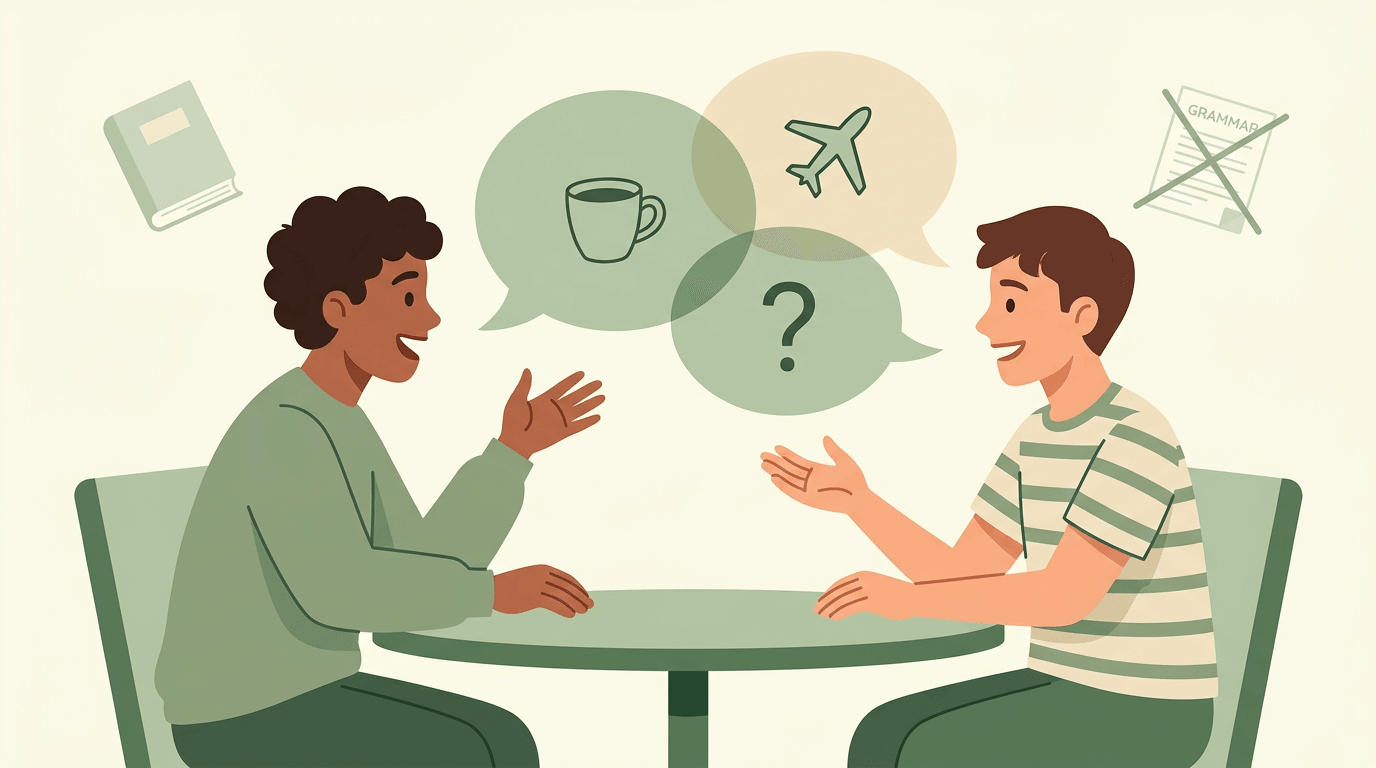
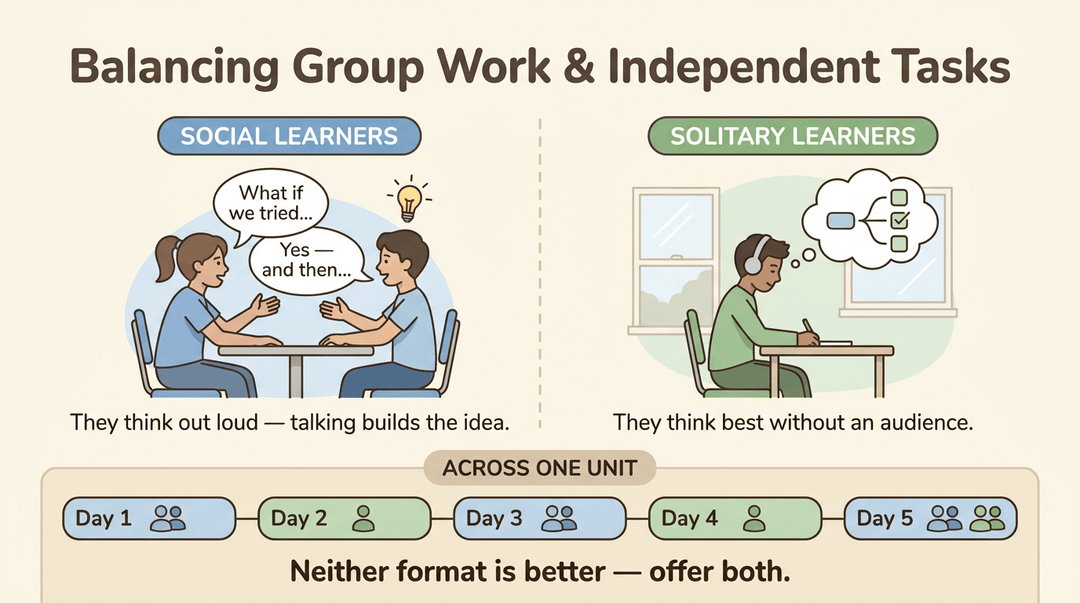
Some students think out loud with a partner. Others need quiet to think at all. Group work suits social learners: they process ideas by talking them through and building on someone else's point.
Independent tasks suit solitary learners, who do their best thinking without an audience. Neither format is better; the fix is offering both across a unit, not defaulting to one.
Assessment and feedback that adapts
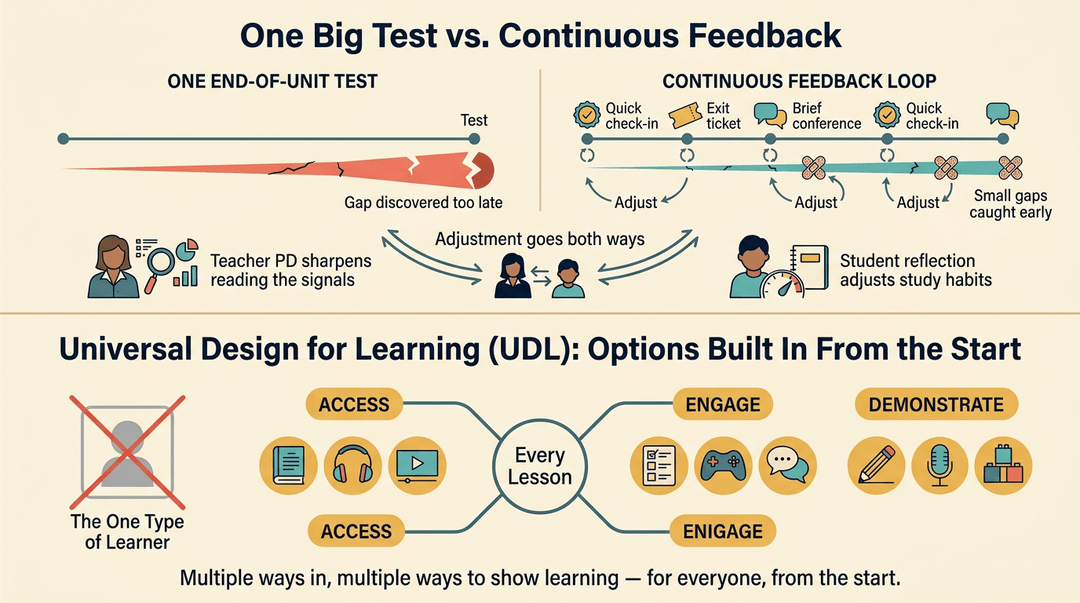
A single end-of-unit test tells you little about how a student got to their answer. A continuous feedback loop, quick check-ins, exit tickets, brief conferences, tells you far more, and lets you adjust before a small gap becomes a big one.
That adjusting works both ways: teacher professional development sharpens how you read those signals, and students benefit from reflecting on their own study habits and adjusting what isn't working.
This is also where Universal Design for Learning (UDL), a framework that builds multiple ways to access, engage with, and demonstrate learning right into a lesson, offers a sturdier alternative to matching activities to a single fixed style.
Rather than labeling a student as one type of learner, UDL builds in options for everyone from the start.
Benefits for both teachers and students
Done well, this pays off twice over. Students see better engagement and outcomes when a lesson meets them where they are. They also build communication skills that carry into future careers, from group projects to independent problem-solving.
For teachers, it means a classroom that feels genuinely inclusive: one where no student is stuck waiting for a format that never comes around.
The Debate over Learning Styles' Validity
Not every model in this guide holds up under scrutiny, and it's worth addressing that head-on before you build a lesson plan around one. So what's the actual disagreement, and where does that leave you as a teacher?
Why scientists doubt learning styles
The core criticism is that learning-style frameworks are oversimplified: real learning rarely sorts neatly into a single category.
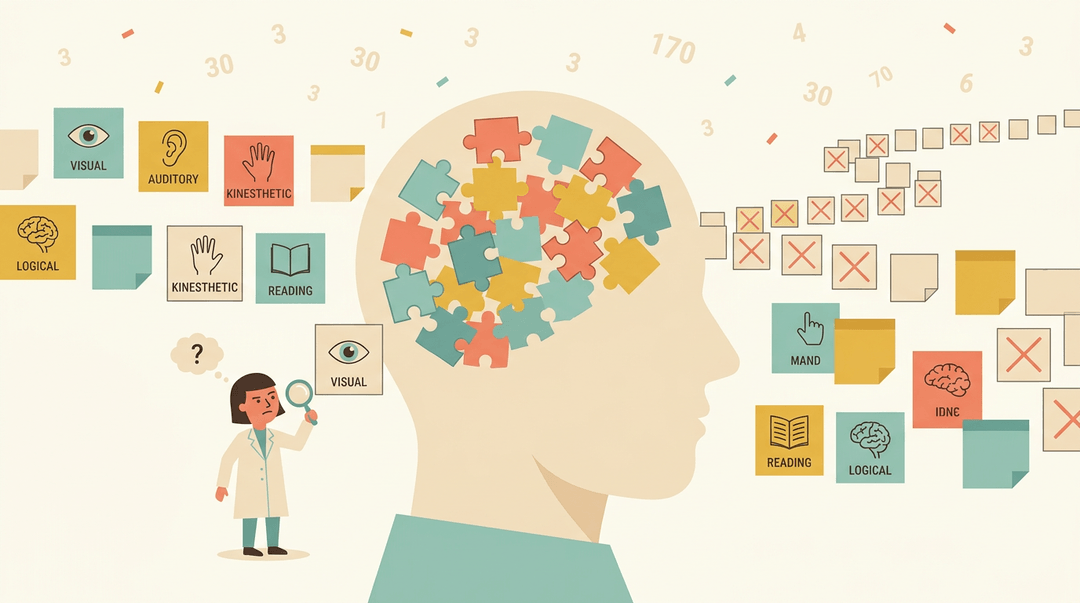
According to a Scientific American piece on the topic, learning-style models have been counted anywhere from 3 to 170 distinct styles, a spread often cited as evidence the field lacks a clear, testable definition.
That kind of inconsistency is exactly why researchers have pushed back on treating any single model as settled science.
Why most people use multiple styles
In practice, most students blend approaches rather than sticking to one. Think of a student who reads a diagram, talks it through with a partner, and then sketches it out to make it stick: visual, auditory, and hands-on, all in the same ten minutes.
That mix shifts over time too, so a student who leaned on hands-on activities in third grade might do better with reading and discussion by seventh. Rigid labels box learners in when what they actually need is flexibility.
There's no single best learning style
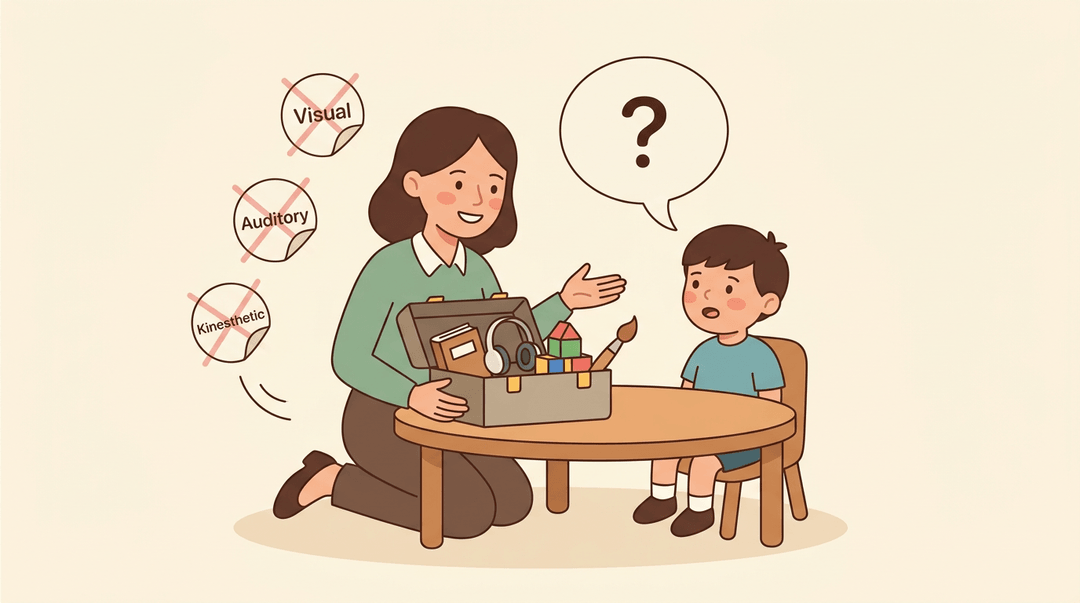
No style wins across the board. What works for one student in one lesson can fall flat for another, so the more useful question isn't "what's their style?" but "what does this learner need right now?"
Tailoring instruction to the individual, not the label, is what actually helps.
Finding and Using Your Own Learning Style
Knowing the theory behind learning styles is one thing; figuring out your own is another. Here's how to land on an answer you can actually use, whether that's in your classroom or across a table in a job interview.
How to answer what your learning style is
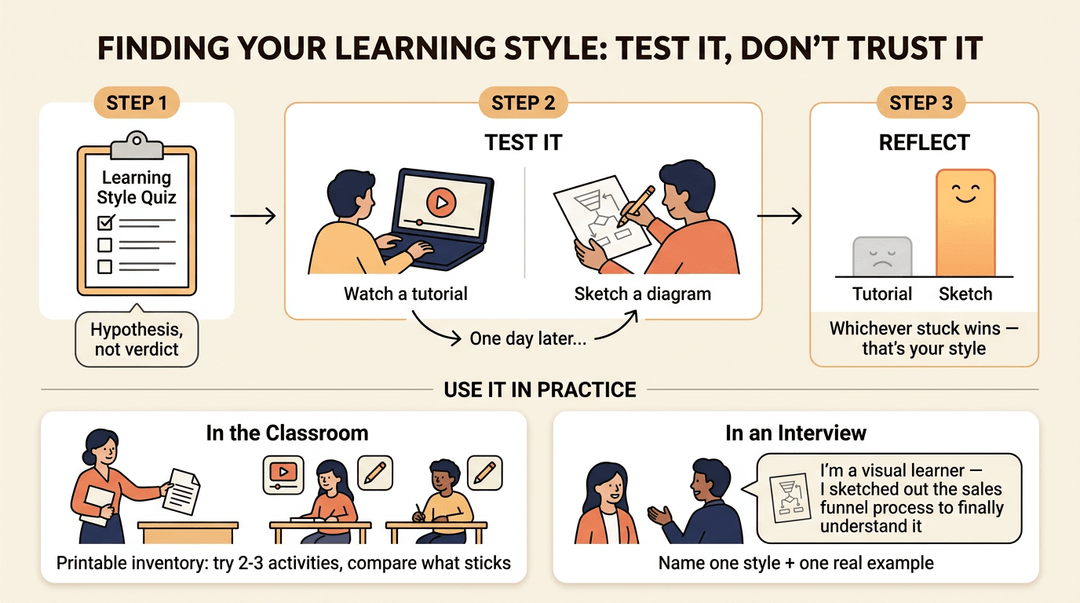
Start with a learning style quiz or questionnaire: quick to take, but treat the result as a hypothesis, not a verdict.
Test it by experimenting with a few methods, say watching a tutorial versus sketching a diagram, then reflect on which one actually helped you retain the material afterward.
A printable in-class style inventory works the same way for students: hand it out, let them try two or three activities, and compare what stuck a day later.
That same reflection carries over when you're asked what your preferred learning style is in an interview: name one, then back it up with a concrete example of how you've used it to learn or teach something well.
Steps to discover how you learn
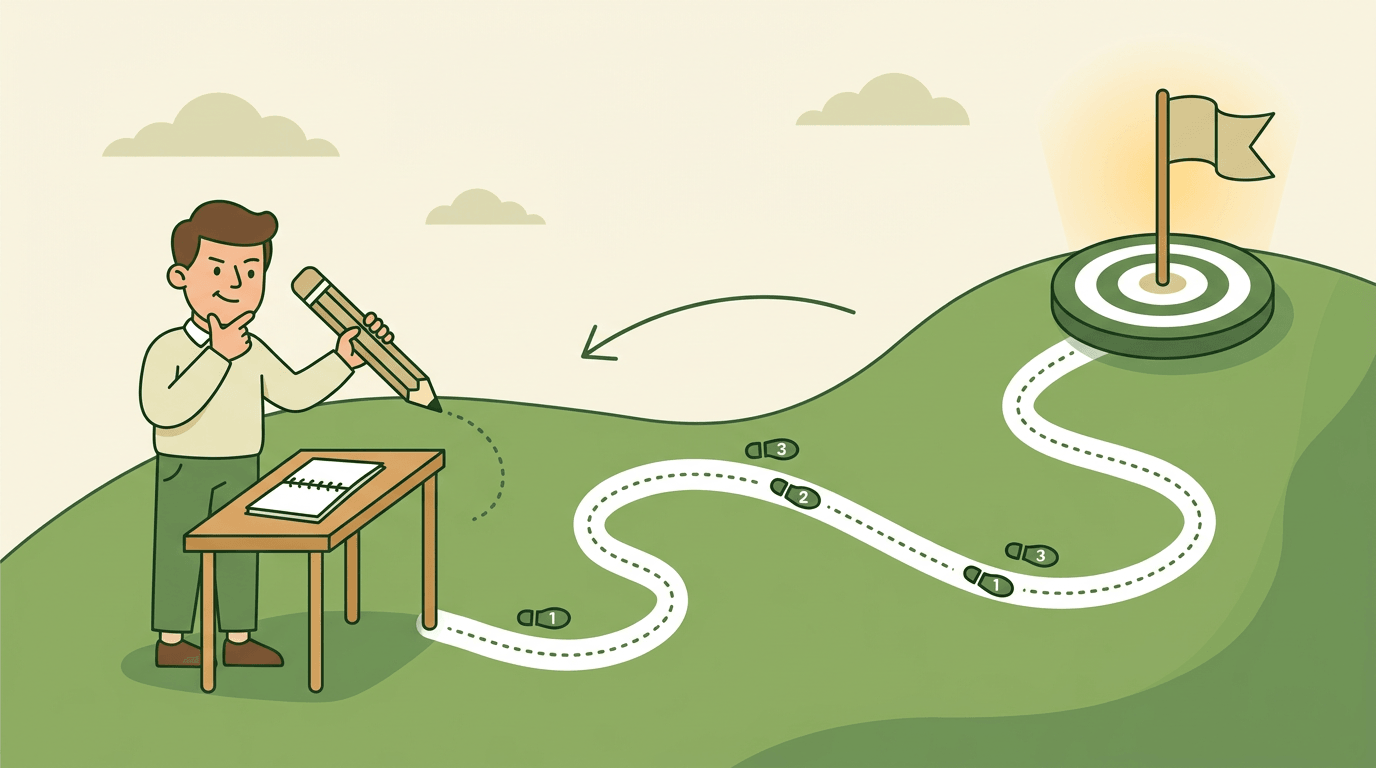
Three steps make the process stick:
- Activate prior knowledge by asking what's already familiar about the topic
- Apply a growth mindset by treating a method that flops as data rather than failure
- Learn strategies you can share with colleagues or students so the discovery becomes collective, not solo
Study strategies worth trying
- Change your study location. A new room, or even a different corner of the classroom, can refresh focus.
- Space out study sessions. Short, spaced sessions beat one long cram for retention.
- Vary your note-taking. Outlines, sketches, or mind maps each surface different strengths; try one you'd actually reread.
Learning styles aren't a magic key, but they are a useful lens. Used well, they push you toward variety: multiple entry points into the same lesson, so more students find one that clicks.
That's the real payoff, not a label for each student, but a habit of teaching that reaches more of them.
Ready to build that variety into your week? Check out our Lesson Planning tool to write, organize, and reuse lesson plans that meet every learner where they are.
References
- Study of VARK learning preferences in undergraduate health science students at Hetauda, Nepal — nepjol.info (2026)
- The long origins of the visual, auditory, and kinesthetic learning style typology, 1921-2001 — pubmed.ncbi.nlm.nih.gov
- 8 Types of Learning Styles — bau.edu
- Enough with the "Learning Styles" Already! — blogs.scientificamerican.com
Frequently asked questions
What is Gen Z's learning style?
Gen Z does not have one fixed learning style. Their preferences vary, but many benefit from flexible, multimodal learning that combines visual content, technology, interaction, short activities, and opportunities for hands-on practice. Learning preferences are shaped by cognitive, emotional, environmental, and neurodivergent factors, not by generation alone.
What is a kinaesthetic learning style?
A kinesthetic learning style is a preference for learning through movement, hands-on practice, and direct experience. Experiments, simulations, building models, role-play, and real-world tasks can help kinesthetic learners understand and remember concepts.
What are the 12 learning styles?
There is no single universal list of 12 learning styles. Commonly cited categories across different frameworks include visual, auditory, reading/writing, kinesthetic, logical, social, solitary, spatial, naturalistic, verbal, reflective, and experiential learners, but these labels come from different models and should not be treated as fixed scientific types.
What are the 7 types of learning?
There is no universally accepted list of seven types of learning. One common seven-part classification is visual, auditory, reading/writing, kinesthetic, social, solitary, and logical learning, although other frameworks use different categories.
What are the 8 different types of learners?
One commonly used list of eight learner types is visual, auditory, reading/writing, kinesthetic, logical, social, solitary, and naturalistic. These describe preferences or strengths rather than permanent categories, and many people use more than one approach.
What are the five ways of learning?
The five common ways of learning are seeing, hearing, reading or writing, doing or moving, and interacting with others. Effective learning usually combines several of these rather than relying on only one.
What are the 7 learning techniques?
There is no single standard set of seven learning techniques. Highly supported techniques include retrieval practice, spaced practice, elaboration, dual coding, interleaving, self-explanation, and practice with feedback.
How do I identify my learning style?
Identify your learning preferences by trying different methods and observing which help you understand, remember, and apply information. Compare approaches such as diagrams, spoken explanations, reading and writing, hands-on practice, group discussion, and quiet independent study. Questionnaires can suggest preferences, but they should not determine how you learn or limit the strategies you use.