Classroom Poster Rules: Themes, Frameworks, and a Checklist


Jump to section
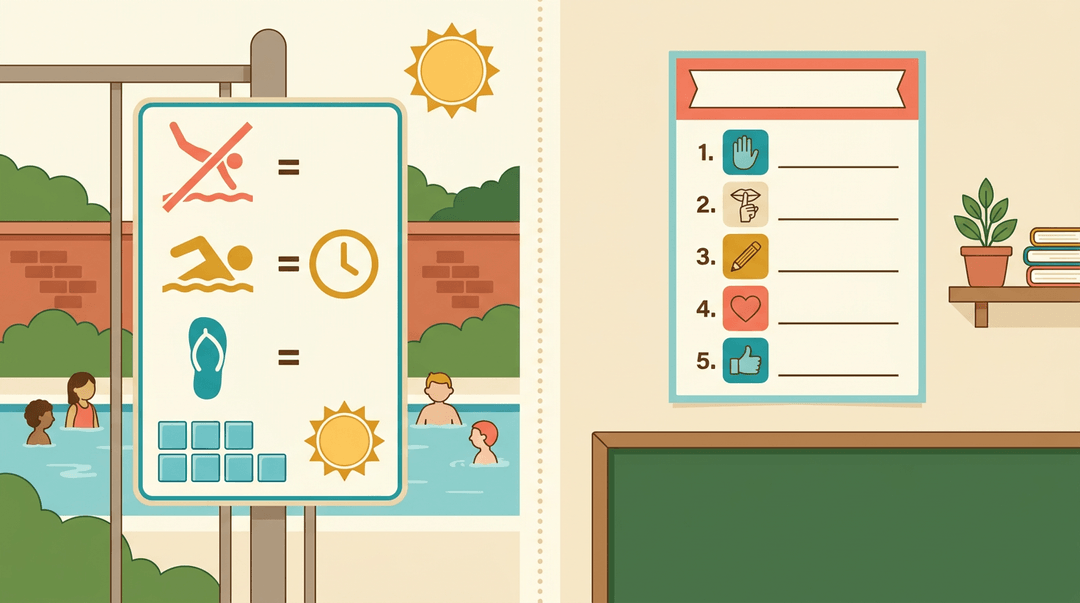
Think about the rules posted at a public pool: short, visible, and impossible to miss the moment you walk in. A classroom works the same way.
Classroom poster rules are the guidelines you display on the wall so students know exactly what's expected, without you repeating yourself every five minutes. They matter more than ever in busy rooms with mixed grade levels and shifting routines.
Below, we'll cover popular poster themes, the rule frameworks people search for (like the 5 P's and 4 P's), and a practical checklist for making and hanging your own.
Popular Themes for Classroom Poster Rules
Once you've picked a poster style, the next question is what goes on it. A few themes and rule frameworks turn up again and again, and each one solves a different classroom problem.
What are the big 5 classroom rules?
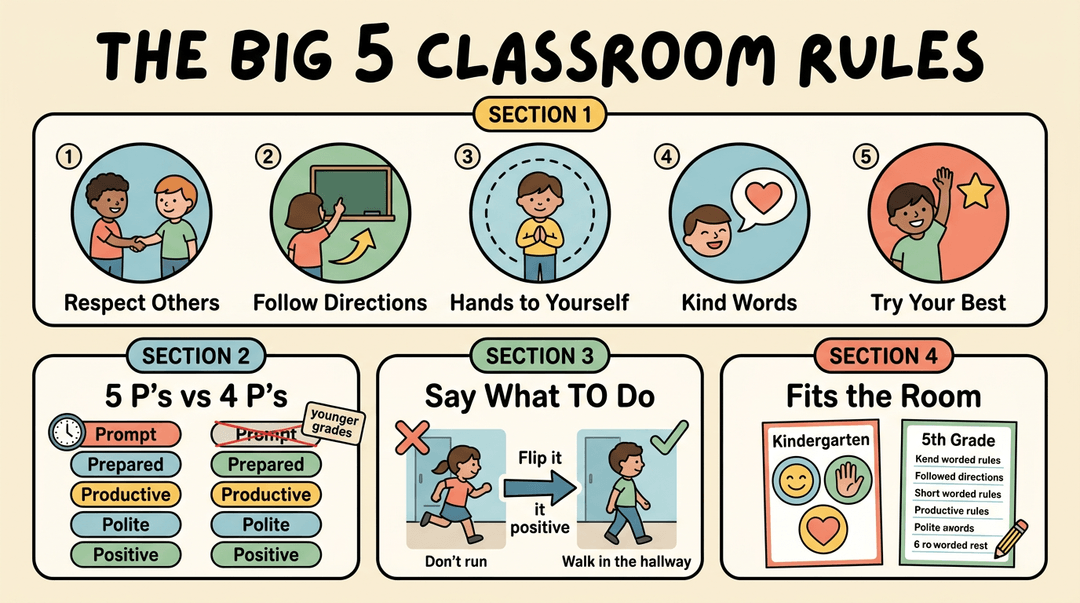
Many teachers skip a long list and boil expectations down to five: respect others, follow directions, keep hands to yourself, use kind words, and try your best. That's the Big 5 classroom rules, and five sticks in a way that ten doesn't.
Two related frameworks turn up often in searches. The 5 P's frame rules as habits: be prompt, prepared, productive, polite, and positive. Drop "prompt" for younger grades and you get the 4 P's: prepared, productive, polite, positive.
Either way, word the rules positively. "Walk in the hallway" beats "don't run," because it tells students what to do instead of just what to avoid.
On the wall, that often shows up as good behaviour flashcards (one rule, one picture), classroom routines cards that walk through a transition step by step, and etiquette illustrations for kids that pair a "do" with a "don't."
Kindergarten rooms lean on rules decoration for kindergarten built almost entirely from characters and pictures, since many students recognize an image before they can read the word under it.
How many rules actually fit depends on the room. As the Iris Center at Vanderbilt Peabody puts it, "Just as every teacher and classroom is different, so, too, will classroom rules differ across teachers and grade levels."
A kindergarten poster might hold three picture rules; a fifth grader's room can carry six worded ones. The same Big 5 or 5 P's framework carries over to a virtual classroom, too: swap "raise your hand" for "use the chat" and the rest still holds.
Anti-bullying and kindness posters
Anti-bullying posters and bullying prevention templates give students language for a hard moment: what to say, who to tell, and how to help a friend who's struggling.
Kind words themed designs work as a softer companion, filling a wall with phrases like "that was really kind" that students can borrow when they don't know what to say themselves.
Health and safety signage for classrooms
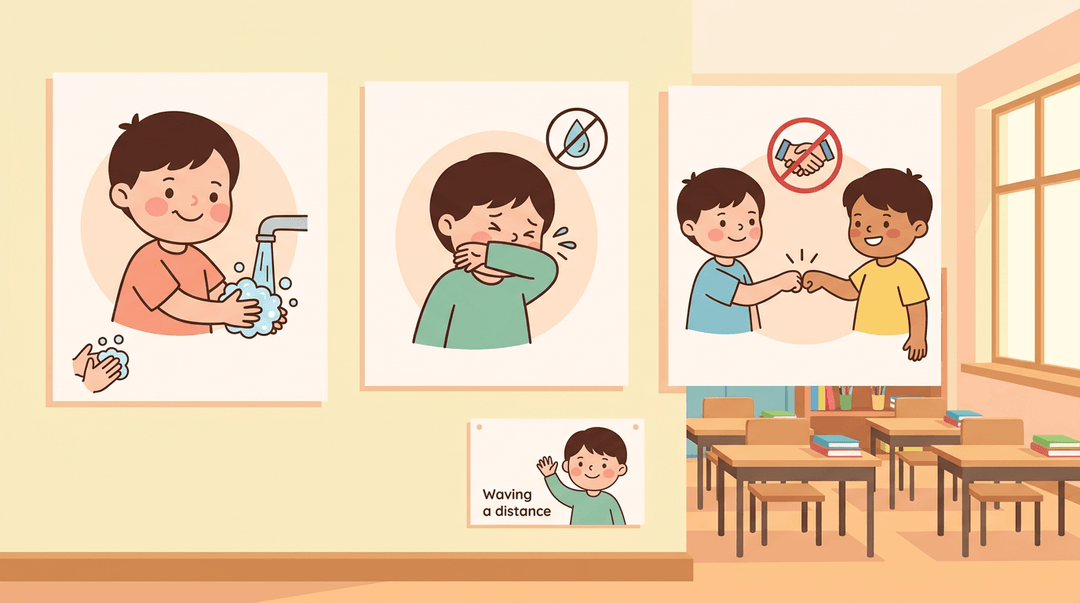
Preventive measures posters and protect-yourself signage cover the basics: wash your hands, cover a cough, stay home when you're sick.
Non-contact greeting signs and coronavirus prevention templates suggest a fist-bump or a wave instead of a handshake, a small swap that keeps the ritual of greeting each other while cutting down on contact.
Quiet and study zone signs
Quiet please signs and studying zone signage mark off a corner of the room, or a whole library, as a lower-volume space.
They work best paired with a specific expectation, like "voices at a whisper" rather than just "quiet," so students know exactly what the sign is asking of them.
Motivational decor for classrooms
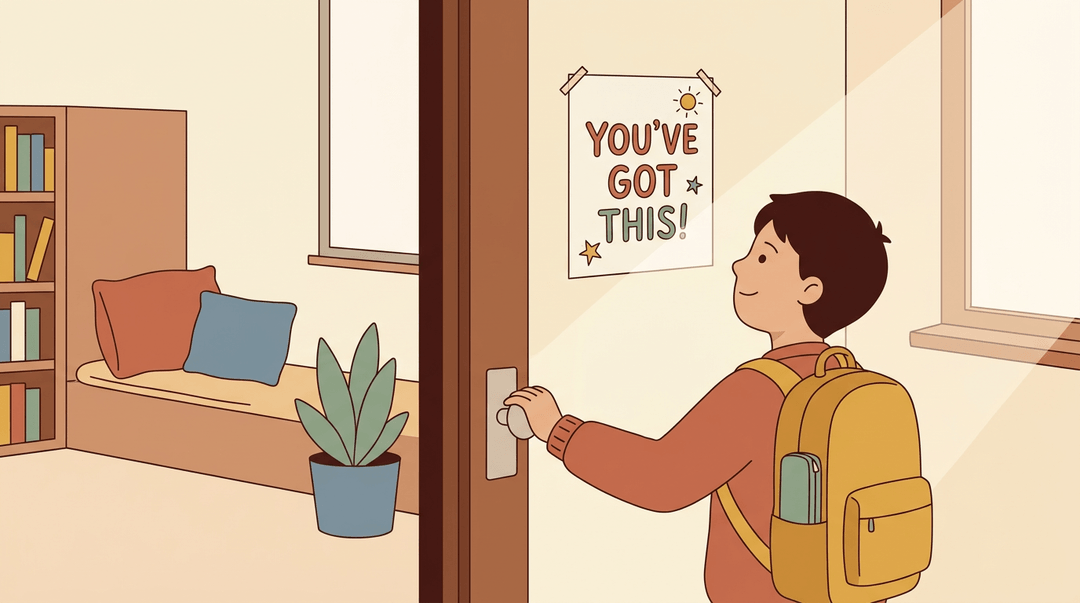
Positive motivational poster designs and cool motivational graphics round out the room with a different job: not a rule, but a nudge.
A short line above a reading corner or by the door can be the last thing a student sees on the way to a tough test, and sometimes that's exactly what sticks.
What Are the Rules of a Poster?
At its core, a classroom poster follows a few dependable rules: one clear message, type big enough to read from the back row, and a visual hierarchy that tells the eye where to look first. Placement matters as much as design.
A beautifully designed poster taped behind a bookshelf helps no one, so hang key posters at student eye level and near where kids actually look:
- word walls by the reading corner
- behavior expectations by the door
- anchor charts near the whiteboard
Illustration and art style options
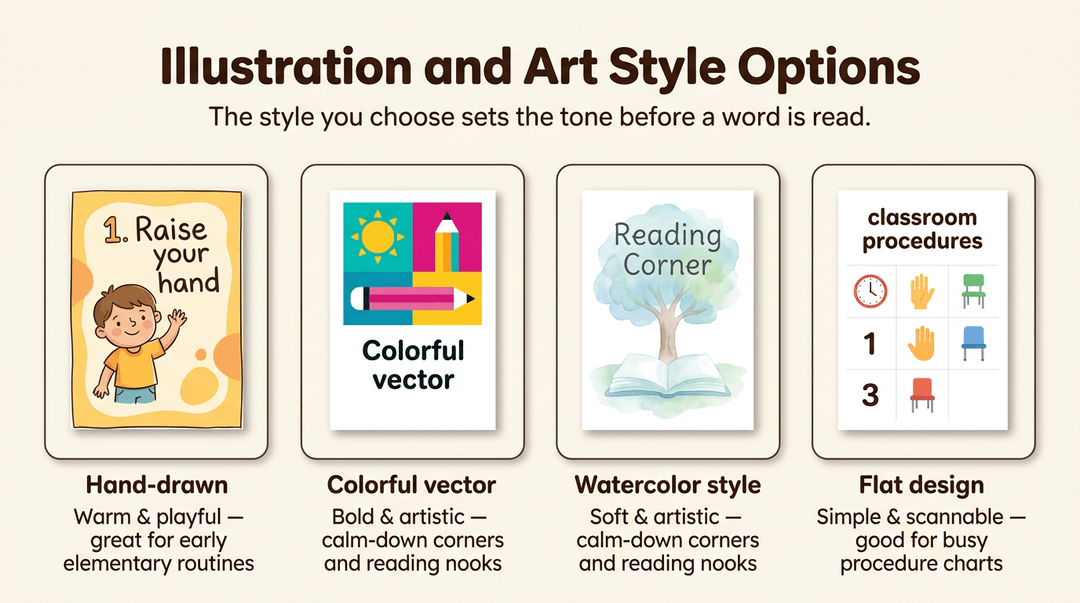
The art style you choose sets the tone before a single word gets read.
- Hand-drawn cartoon illustrations feel warm and playful, a natural fit for early elementary rules and routines posters.
- Colorful vector designs give clean, bold shapes that stay crisp whether you print at letter size or blow them up to poster size.
- Watercolor style templates bring a softer, artistic look that works well for reading nooks or calm-down corners.
- Flat design graphics use simple shapes and solid colors, which keeps a busy topic (like a classroom procedures chart) easy to scan.
Downloadable file formats to choose
The file format decides how much you can customize before it ever reaches the wall.
- PSD templates let you edit text, colors, and images layer by layer if you use Photoshop or a similar editor.
- Vector files (like SVG or EPS) resize without losing quality, ideal for scaling a poster up for a bulletin board.
- Printable worksheets pair a companion activity with the poster's theme, useful for reinforcing the same rule in a notebook.
- Mockup formats show the poster in a realistic classroom setting, handy for previewing how it'll actually look before you print.
A Teacher's Checklist for Classroom Rules Posters
You've seen the styles and the frameworks; now it's time to make one. Use this guide when you're drafting a new poster or refreshing a tired one, and keep it handy through the first month of display.
Draft it with your students
- Draft the rules together as a class.
- Ask: "What helps everyone in this room learn?" and shape the answers into rules.
- Students follow rules they helped write; ownership does half your enforcement.
- Cap the list at 5 to 8 rules.
- A 12-rule poster becomes wallpaper; a 6-rule poster gets remembered.
- Phrase every rule as a positive action.
- ✅ "Raise your hand to speak." ❌ "No shouting."
- The difference: the first names the behavior you want, so students can picture doing it.
- Pair each rule with a simple icon.
- A raised-hand icon beside the hand-raising rule, an ear beside "Listen when others talk."
- Icons let pre-readers and scanning eyes catch the rule without reading a word.
Match the format to your grade band
The same four steps apply everywhere, but the poster itself should look different at 6 and 16:
| Grade band | What the poster looks like | Sample rule |
|---|---|---|
| K-2 | Big icons, minimal words | 🖐 "Quiet hands" |
| 3-5 | Short positive statements | "We help our classmates" |
| 6-12 | Co-created norms, signed by the class | "Critique ideas, not people" |
Example: One seventh-grade class drafts five norms in week one, votes on final wording, and every student signs the poster. When someone talks over a peer, the teacher just points at the signatures. No lecture needed.
Hang it, then keep it alive
A poster only works if students actually see it. Before you call this done, confirm:
- It hangs at student eye level. Kneel or sit at a desk to check; if you're craning up, so are they.
- You've scheduled a monthly revisit. Try: "Which rule did we nail this month? Which one needs work?"
- A virtual version exists. Adapt the poster into a slide or pinned image so remote students see the same rules.
💡 Tip: Referencing a rule beats repeating it. "Check rule 3" takes two seconds and points students back to the poster, which keeps it a living document instead of decoration.
Once the poster's up, pair its rules with EMStudio's class management tools to keep rosters, sections, and daily routines organized alongside them.
Other Classroom Poster and Material Ideas
Rules posters are only part of the picture. A classroom runs smoother when a handful of other materials are ready to go alongside them, from the first day of the year to the everyday worksheets that keep young learners busy.
Back-to-school and teacher materials
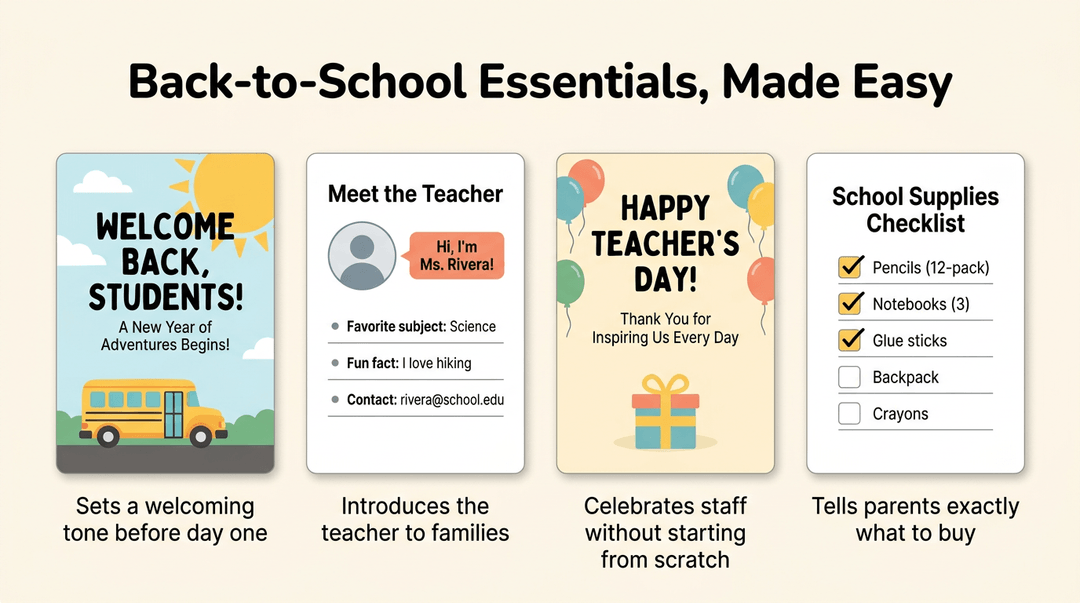
The start of the year brings its own set of needs. Back to school posters set a welcoming tone before students even find their seats, and pairing one with a meet the teacher template gives families a quick, friendly introduction to who's running the room.
For staff appreciation, teacher's day flyers are an easy way to mark the occasion without starting from scratch. And a school supplies checklist saves parents the guesswork, listing exactly what belongs in a backpack come the first bell.
Learning aids and worksheets
Beyond posters, a few worksheet staples do a lot of quiet work in daily lessons:
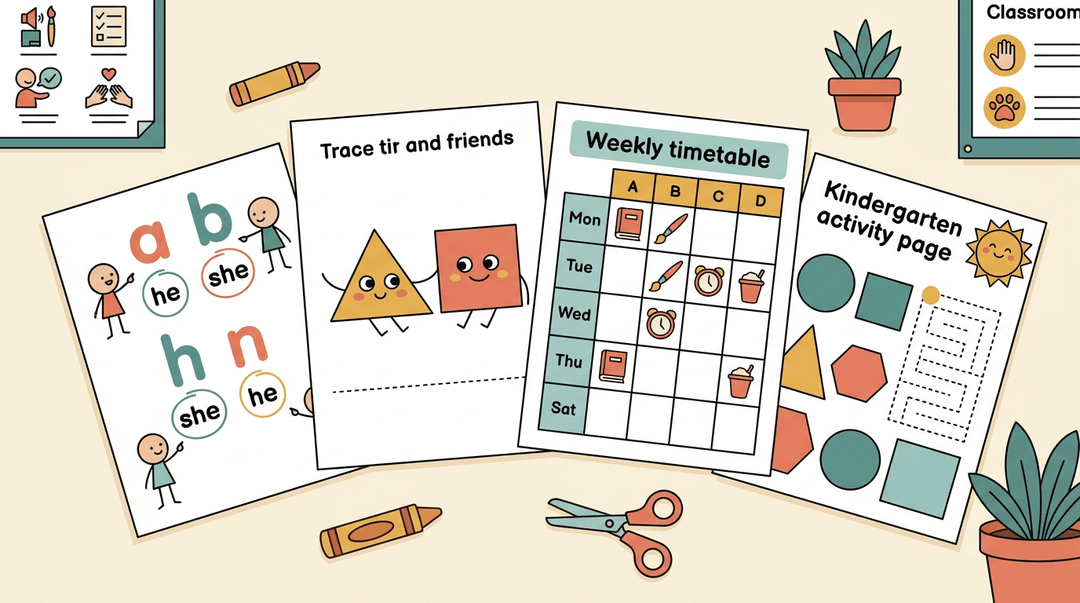
- Pronoun worksheets for practicing grammar basics in language arts.
- Shape identification worksheets for early math, where a triangle and a square first become recognizable friends rather than abstract terms.
- School timetable templates to keep a week's schedule visible and predictable for students who thrive on routine.
- Kindergarten activity sheets for the youngest learners, built around short, hands-on tasks that match their attention spans.
Together, these fill the gaps that rules posters alone can't cover, rounding out a classroom that's ready for whatever the day brings.
Good classroom poster rules aren't about decoration. They're about giving students a clear, visible reminder of how the room runs, so you can spend less time repeating instructions and more time teaching.
Whether you lean on the Big 5, the 5 P's, or your own wording, the goal stays the same: clarity that sticks.
Ready to bring that same structure to the rest of your classroom? Check out our Classroom Management feature to organize your classes, rosters, and timetables in one place.
References
- Page 4: Rules — iris.peabody.vanderbilt.edu
Frequently asked questions
What are the 5 P's classroom rules?
The 5 P's classroom rules frame expectations as habits: be Prompt, Prepared, Productive, Polite, and Positive. This framework helps students understand desired behaviors in various classroom settings. For younger students, the "Prompt" rule is sometimes omitted, creating the 4 P's.
What are the rules of a poster?
Classroom posters should convey one clear message with text large enough to be read from a distance. Placement is crucial, with posters hung at student eye level and near relevant areas, such as word walls by a reading nook or behavior expectations near the door. The visual style, like hand-drawn cartoons or flat designs, also sets the tone and aids comprehension.