Jobs Classroom Guide: Setup Tips and Ideas by Age Group

Jump to section
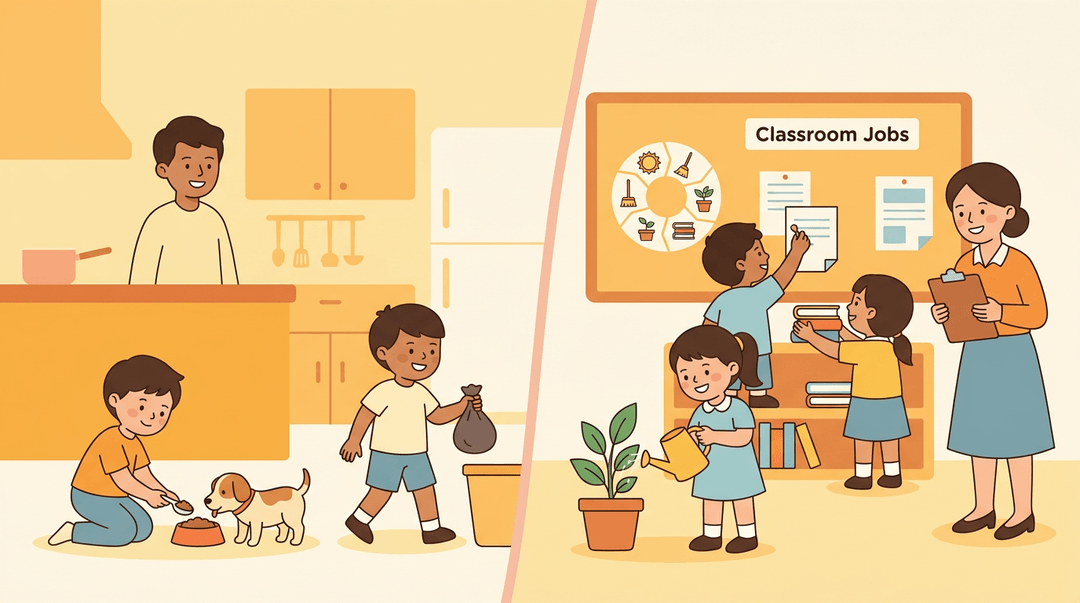
Think about a household running smoothly: everyone has a chore, from feeding the dog to taking out the trash, and the place just works better for it. Classrooms run the same way.
Classroom jobs are simple, rotating responsibilities that give students real ownership over their shared space.
Done right, they build responsibility, ease your daily load, and even reinforce behavior expectations. This guide covers why jobs matter, how to set them up fairly, and job ideas for every age group, plus a checklist to roll it all out.
Why Classroom Jobs Matter
Hand a student a real job, one with a name tag and a task nobody else does that day, and you'll watch them carry themselves differently. That's the quiet power behind classroom jobs: small responsibilities that add up to a stronger classroom.
How classroom jobs build confidence and community
A classroom job turns a bystander into a contributor. Give a student the role of line leader or supply monitor, and they start showing up differently: more accountable, more invested, more theirs.
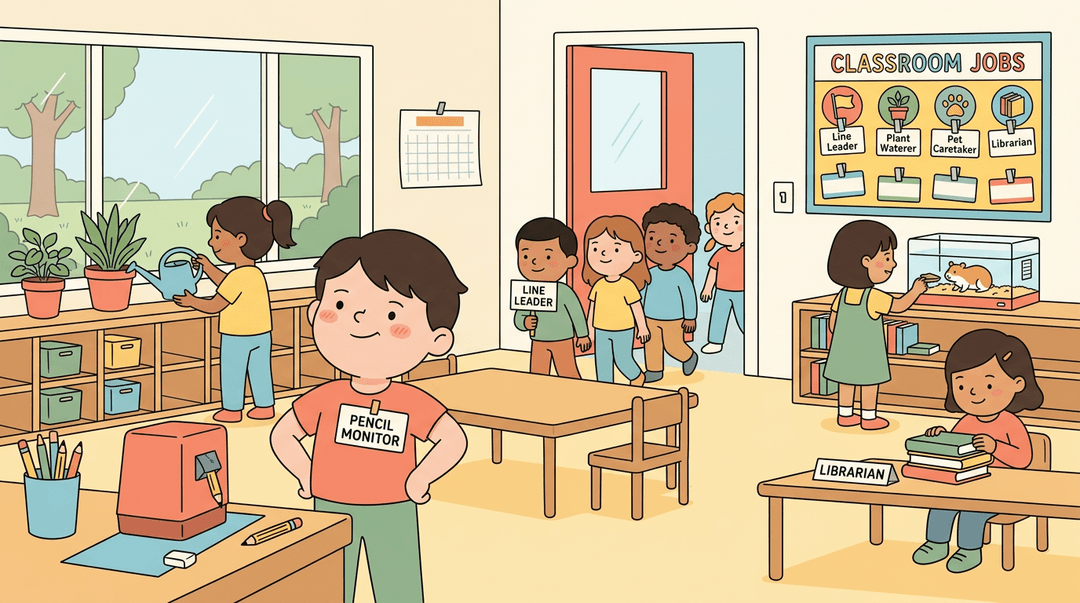
- Responsibility. A plant waterer who forgets on Monday learns fast why Tuesday's job matters.
- Belonging. Every student has a role, so every student has a reason to feel like part of the room.
- Teamwork. Jobs like table captain or line leader only work when classmates cooperate, not compete.
- Confidence. Even a shy student can feel like an expert once they own the pencil-sharpening station.
- Leadership. A weekly "class president" or supply manager gets small-scale practice making decisions that others follow.
- Life skills. Watering plants, feeding a class pet, or organizing books mirrors chores and tasks kids will handle for the rest of their lives.
Skills kids gain from classroom jobs
Beyond the social payoff, jobs quietly build academic skills too.
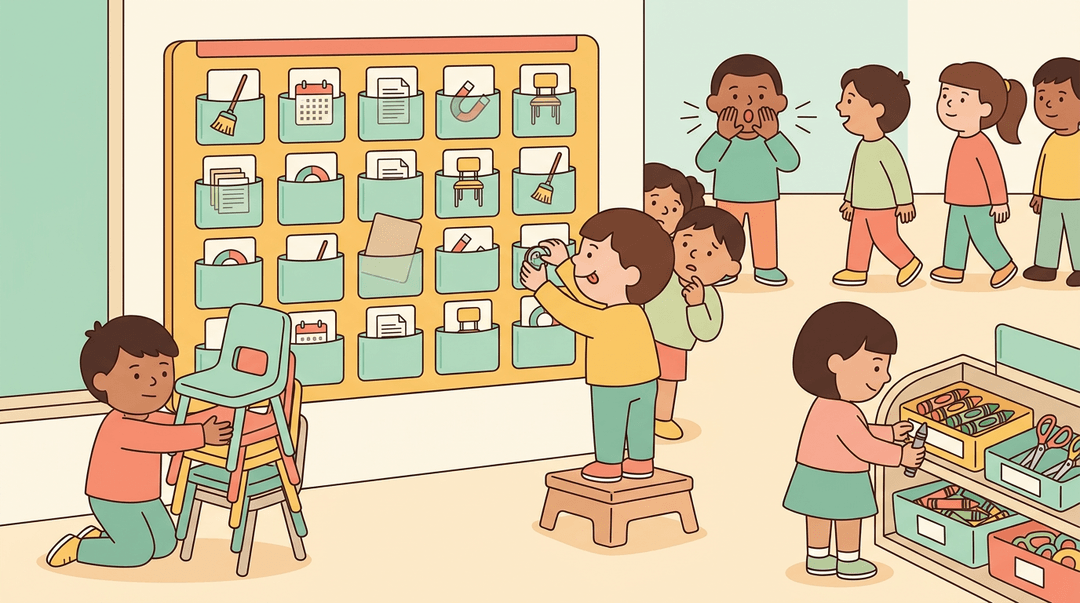
- Fine motor and cognitive skills. Passing out papers, stacking chairs, or clipping a magnet to a job chart all sharpen small-muscle control and sequencing.
- Early literacy. Reading job names and matching them to a chart gives early readers low-stakes practice with words they'll see again and again.
- Organization. Keeping the supply bin tidy or the calendar current teaches kids to manage a task from start to finish.
- Communication. A messenger or line leader has to relay instructions clearly, out loud, to real people.
- Accountability. When a job goes undone, the whole class notices, which teaches follow-through faster than any lecture could.
How to Set up Classroom Jobs
Setting up classroom jobs doesn't need a complicated system. Get the structure right from the start, and jobs practically run themselves for the rest of the year. Here's how to build that structure, step by step:
Introducing and assigning classroom jobs
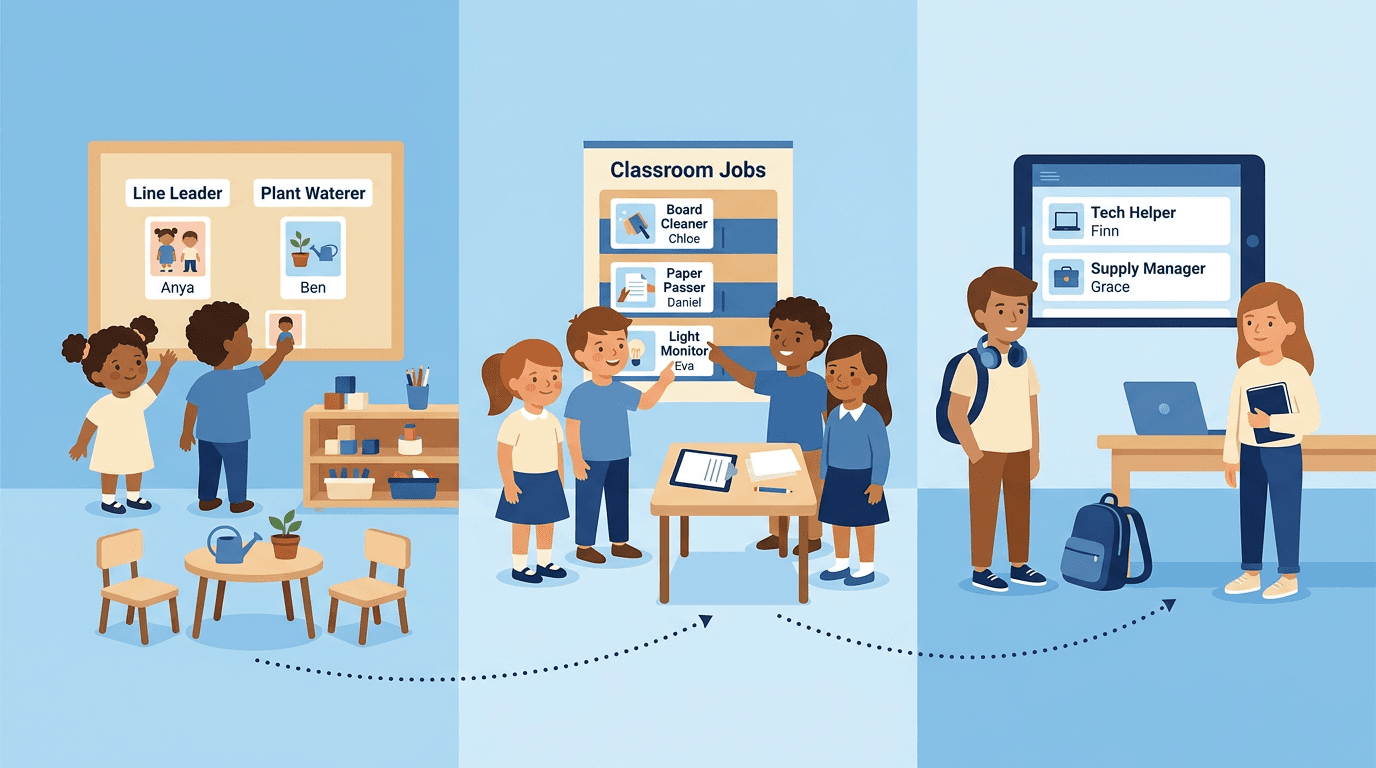
Start with a class conversation: why do jobs matter, and what do they teach us about working together? From there, define the roles that fit your room's real needs, not just a list pulled from somewhere else.
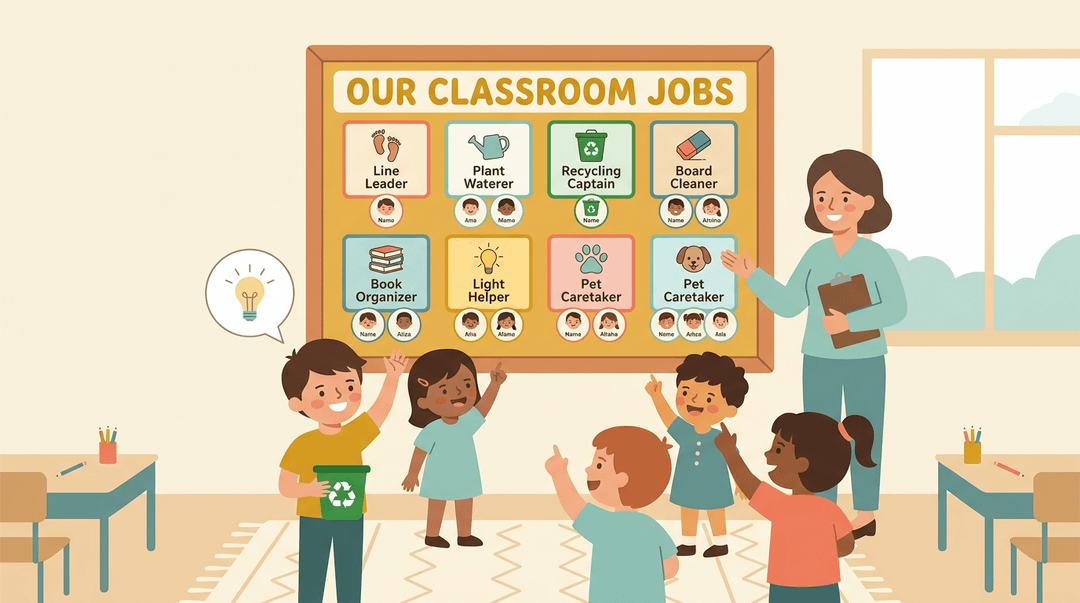
Make sure every student has a job, even if that means grouping two or three students under one title so nobody's left out.
For example, a fourth-grade teacher might ask students to pitch their own job ideas, like a "recycling captain," turning ownership into buy-in before the first rotation even starts.
Writing clear job descriptions
A job with no description is just a title on a chart. Write out what each job description actually involves:
- the specific tasks
- the skills it calls on
- roughly how much time it takes each day
Post those descriptions where students can see them, right next to the job chart, so there's never a question about what "line leader" or "supply manager" really means.
Letting students apply for jobs
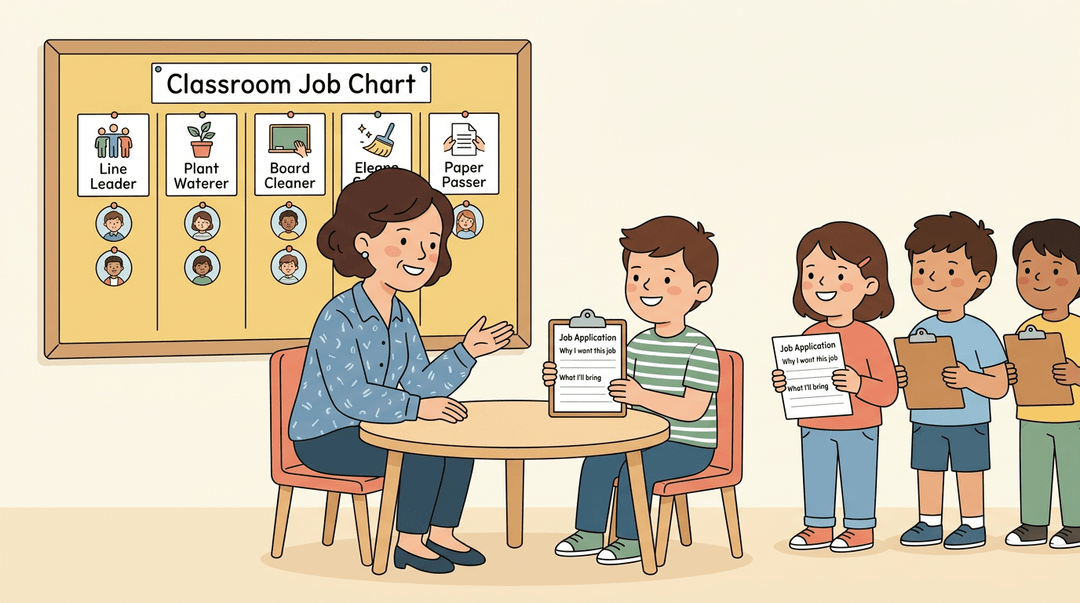
For older students, turn job selection into a real process. A short job application form asking why they want the role and what they'd bring to it works well, followed by a quick, low-stakes interview. Post the results on the job chart.
This keeps rotation feeling earned rather than arbitrary, and it gives students practice with a skill they'll use again outside your classroom.
How often to rotate jobs
There's no single right answer here. It depends on your class and the job itself:
- Daily rotation spreads the workload quickly and keeps things fresh.
- Weekly rotation is the most common choice, giving students enough time to settle in.
- Monthly or quarterly rotation suits jobs that take real practice to master.
- Rotating by mastery or interest lets a student keep a role they're good at.
Align changes with the start of a new grading period, and keep the schedule consistent and visible so no one feels skipped over or favored.
Using job charts and visual tools
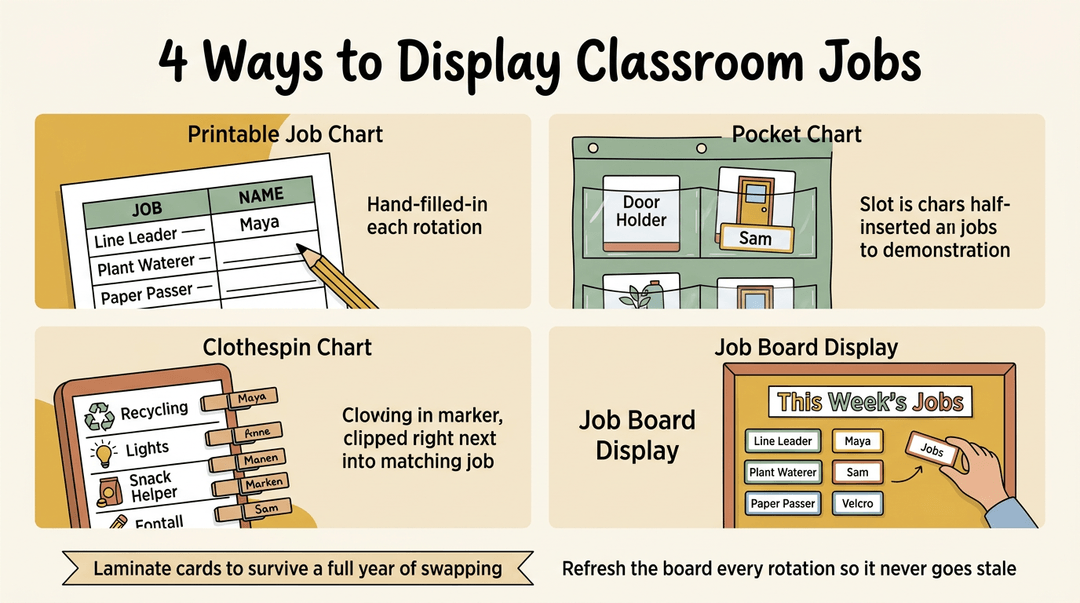
A visual system keeps jobs from becoming an afterthought. A few options work well:
- A printable job chart template you fill in each rotation.
- A library pocket chart, with cards slotted into place.
- A clothespin chart, with names clipped next to each role.
- A simple job board display, updated as jobs change.
Laminate the cards so they hold up to a full year of swapping, and revisit the board each rotation so it never goes stale.
Keeping kids motivated and solving problems
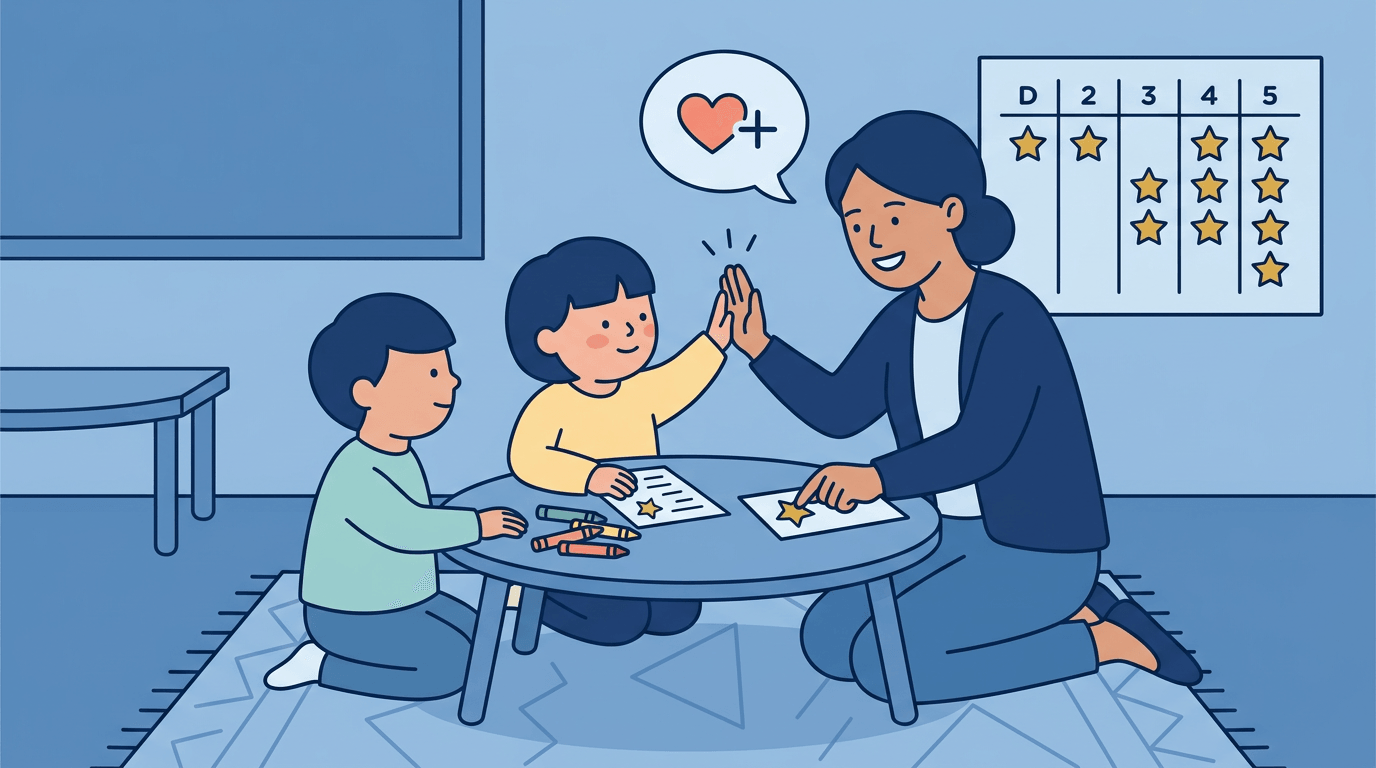
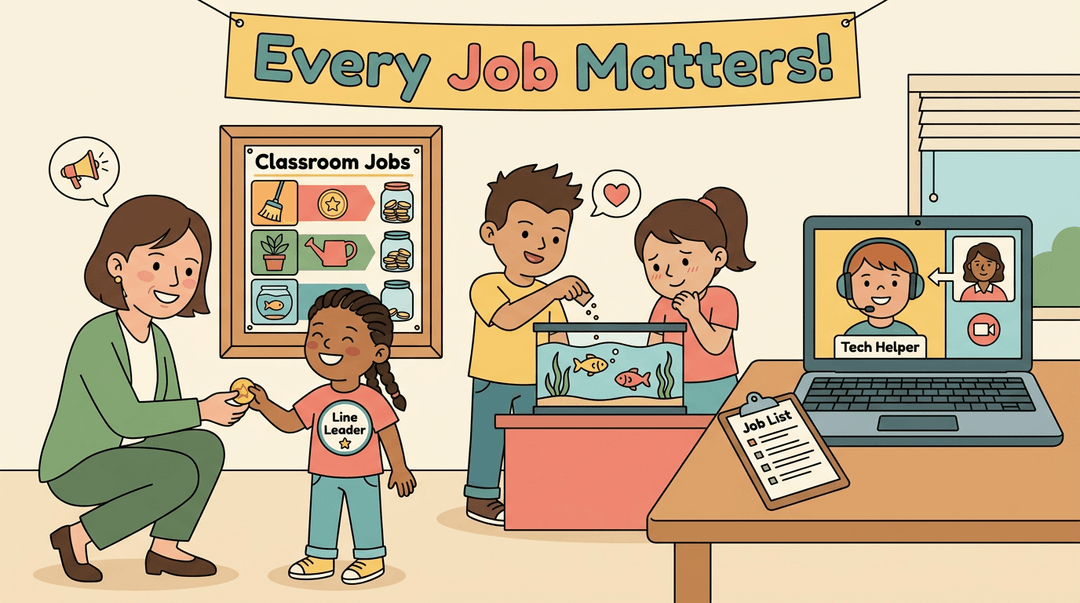
Small rewards go a long way: a token system, a shout-out during morning meeting, or a note home can turn a chore into something a student looks forward to.
Jobs can double as a behavior tool, too: a student working on responsibility might earn a coveted role as part of that goal, while a student who resists a task often does better paired with a peer who's already comfortable in it.
On a virtual or substitute day, jobs don't have to disappear either: a "tech helper" can screen-share, or a sub can hand out a printed job list to keep routines familiar. Whatever the job, remind students it matters. The room doesn't run without it.
Your Classroom Jobs Setup Checklist
Everything above comes down to this one-pager: a five-step rollout, grade-level starter jobs, and the weekly routine that keeps the system alive. Print it, pin it, run it.
Roll out jobs in five steps
- Introduce jobs on day one. Frame them as real responsibilities, not chores.
- Say: "This classroom runs because of us, and everyone here has a job."
- Model each role live. Demonstrate it yourself before anyone applies.
- Walk the greeter's route, run the timer, pass out papers the way you want it done.
- Post the job chart visibly. Eye level, near the door, names next to roles.
- If students can't check it without asking you, it's in the wrong spot.
- Rotate weekly for the first month. Everyone samples several jobs early.
- Fast rotation prevents "that's HER job" territory before it forms.
- Review and adjust monthly. Cut dead jobs, add ones students request.
- Ask the class: "Which job actually helps us? Which one does nothing?"
⚠️ Watch out: the most common failure is skipping step 2. A job you never modeled becomes a job done wrong, then a job you quietly take back.
Quick-start jobs by grade
Not sure where to begin? Start with these, then expand once the routine holds.
| Grade band | Start with |
|---|---|
| PreK | Line leader, greeter |
| Elementary | Tech helper, DJ |
| Middle school | Timekeeper, announcer |
Your Monday five-minute routine
Once jobs are running, this weekly check keeps them from fading by October. Confirm each one:
- Chart updated every Monday. New names posted before students walk in.
- New hires checked in. Thirty seconds with anyone starting a job this week: "Any questions about your role?"
- Absences and no-shows noted. Jot who missed their job so you can follow up, not guess.
- Behavior swaps made. Move a struggling student toward a high-responsibility job, not away from all of them.
- Completed jobs praised. Name the job and the impact: "Our tech helper saved us five minutes today."
Example: A fourth-grade teacher scans the chart each Monday during morning work, moves two name cards, and checks in with her new DJ. Total time: four minutes, and the system has run itself since September.
Track rosters, rotations, and job assignments alongside attendance in one place with EMStudio's class management tools.
Classroom Job Ideas by Age Group
The right job for a five-year-old isn't the right job for a seventh grader, and matching roles to your students' age keeps the whole system running smoothly. Here's a bank of ideas organized by grade band, plus a few crowd-pleasers along the way.
Preschool and early childhood job ideas
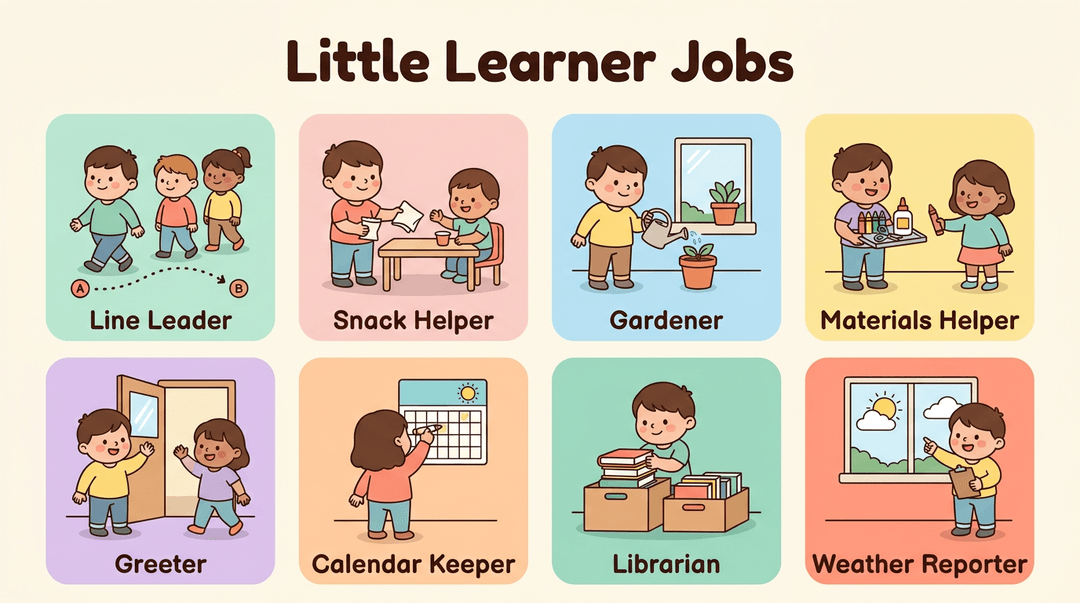
Little learners thrive on simple, visible tasks:
- Line leader. Leads the class from point A to point B.
- Snack helper. Passes out napkins and snacks.
- Gardener/plant caretaker. Waters the classroom plants.
- Materials helper. Hands out crayons, scissors, and glue.
- Greeter. Welcomes classmates and visitors at the door.
- Calendar keeper. Updates the day, date, and season.
- Librarian. Straightens the book bin.
- Weather reporter. Checks the window and reports the forecast.
What are some funny classroom jobs?
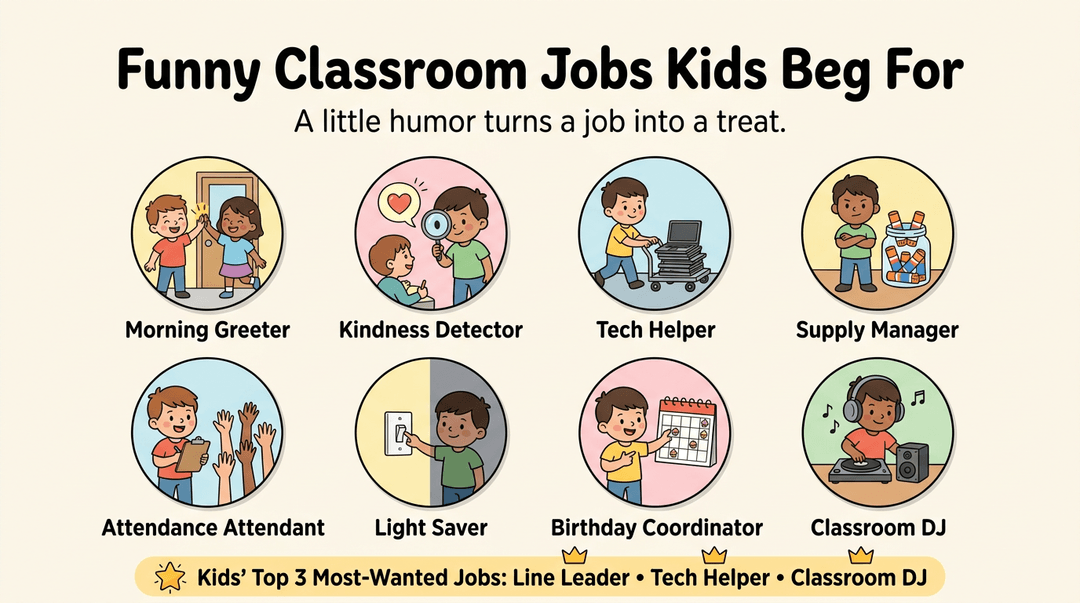
A little humor keeps jobs feeling like a treat instead of a chore, and these are consistently the ones kids beg for:
- Morning greeter, with a silly handshake or high five.
- Kindness detector, on the lookout for good deeds.
- Tech helper, in charge of the class laptop cart.
- Supply manager, guarding the glue sticks.
- Attendance attendant, taking the count.
- Light saver, flicking switches on and off.
- Birthday coordinator, tracking who's up next.
- Classroom DJ, picking transition music.
Across every grade, roles like line leader, tech helper, and classroom DJ tend to top any informal list of the jobs kids want most: novelty and a bit of visible responsibility beat anything that feels like paperwork.
Middle school classroom job ideas
Older students can handle more ownership:
- Attendance monitor
- Board manager/cleaner
- Classroom announcer
- Homework/paper collector
- Technology assistant
- Timekeeper
- Substitute helper, who briefs a guest teacher on routines
- Pencil manager
Subject-specific classroom roles
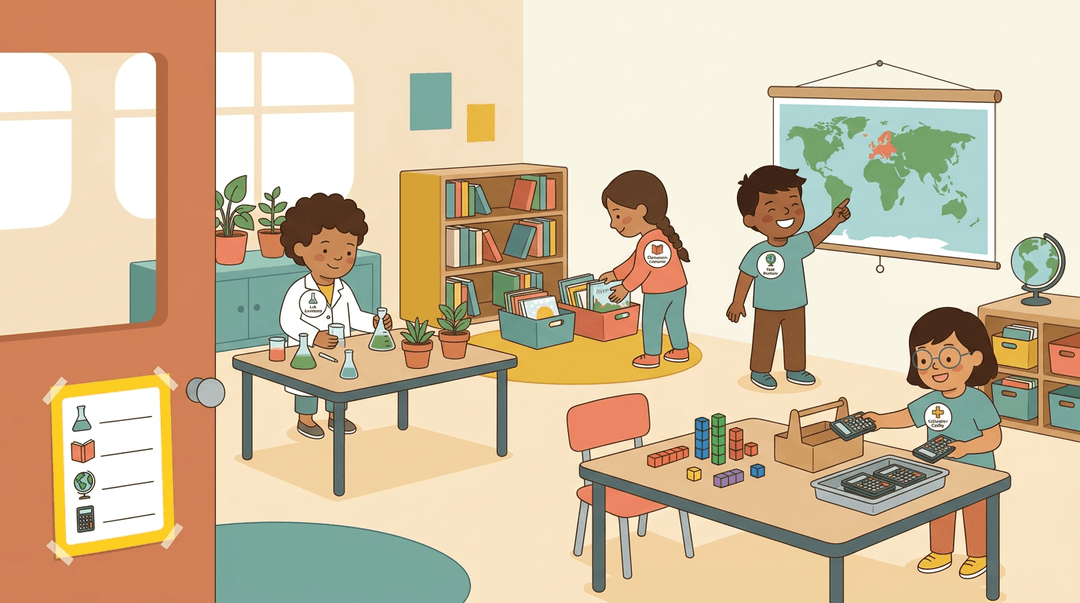
Jobs can flex to match the subject: a lab assistant preps and resets science stations, a classroom librarian manages the classroom book collection in ELA, and content-area tasks (a map monitor in social studies, a calculator caddy in math) reinforce the subject itself.
Whatever the mix, keep a short, laminated sub-day job list taped by the door so any substitute can hand out roles without missing a beat.
Classroom jobs aren't just a cute bulletin board display. They're a quiet system that builds responsibility, eases your daily routines, and gives every student a stake in the room, from the line leader to the substitute-day helper.
Get the rotation fair, the roles age-appropriate, and the expectations clear, and the payoff shows up in fewer headaches and a classroom that runs itself a little more each week.
Ready to keep your rosters, sections, and daily routines just as organized? Check out our Classroom Management feature to bring the same structure to your whole classroom.
Frequently asked questions
What are some funny classroom jobs?
Funny classroom jobs can include a kindness detector, light saver, birthday coordinator, classroom DJ, supply manager, or attendance attendant. A morning greeter with a silly handshake is another playful option.
What are the top 10 jobs kids want?
Commonly popular jobs for kids include line leader, tech helper, classroom DJ, greeter, supply manager, materials helper, librarian, timekeeper, announcer, and gardener. The most appealing roles usually combine novelty with visible responsibility.
What are common classroom jobs?
Common classroom jobs include line leader, greeter, materials helper, plant caretaker, calendar keeper, librarian, tech helper, supply manager, attendance monitor, timekeeper, and paper collector. Jobs should match the class’s actual needs and be rotated fairly.
What are different types of teaching jobs?
Teaching jobs include preschool teacher, elementary teacher, middle school teacher, high school teacher, special education teacher, English-language learner teacher, art or music teacher, career and technical education teacher, adult education instructor, and college professor. Teachers may also work as tutors, instructional coaches, curriculum specialists, or substitute teachers.
How to make an extra $1000 a month as a teacher?
Teachers can potentially earn an extra $1,000 per month through tutoring, test preparation, curriculum writing, selling educational resources, teaching online courses, summer programs, workshops, or substitute teaching. The exact amount depends on local rates, available hours, taxes, and school or district policies.
What are examples of classroom jobs?
Examples of classroom jobs include line leader, snack helper, greeter, calendar keeper, weather reporter, plant caretaker, materials helper, classroom librarian, tech assistant, timekeeper, announcer, and homework collector.
What side hustle can I do as a teacher?
A teacher side hustle could be tutoring, online teaching, curriculum development, educational resource sales, test-prep instruction, proofreading, freelance writing, or leading workshops. Choose work that fits your schedule and check any employer rules about outside employment.
What jobs can I do instead of teaching?
Jobs outside traditional classroom teaching include instructional designer, curriculum specialist, education consultant, academic advisor, school administrator, corporate trainer, learning-and-development specialist, educational sales representative, tutor, writer, and nonprofit program coordinator. Teaching skills such as communication, planning, assessment, and leadership transfer well to these roles.