Inclusive Education: Meaning, Laws, and Strategies That Work

Jump to section
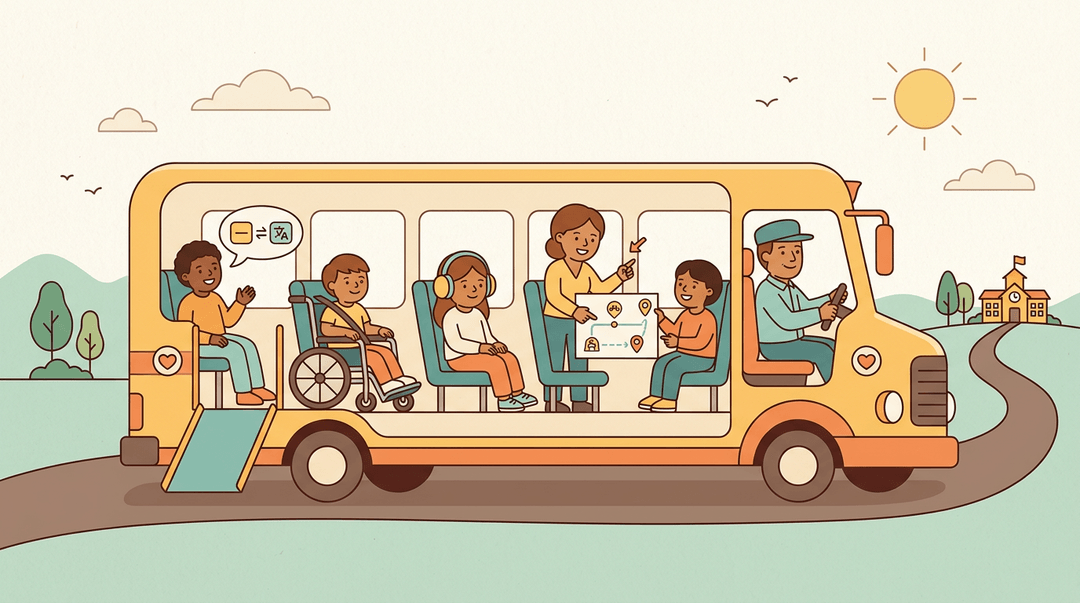
Picture a school bus where every seat is different: one student needs a ramp, another needs quiet headphones, and a third needs the route explained twice.
Everyone still gets where they're going, but only because the bus was built to fit them. Inclusive education works the same way.
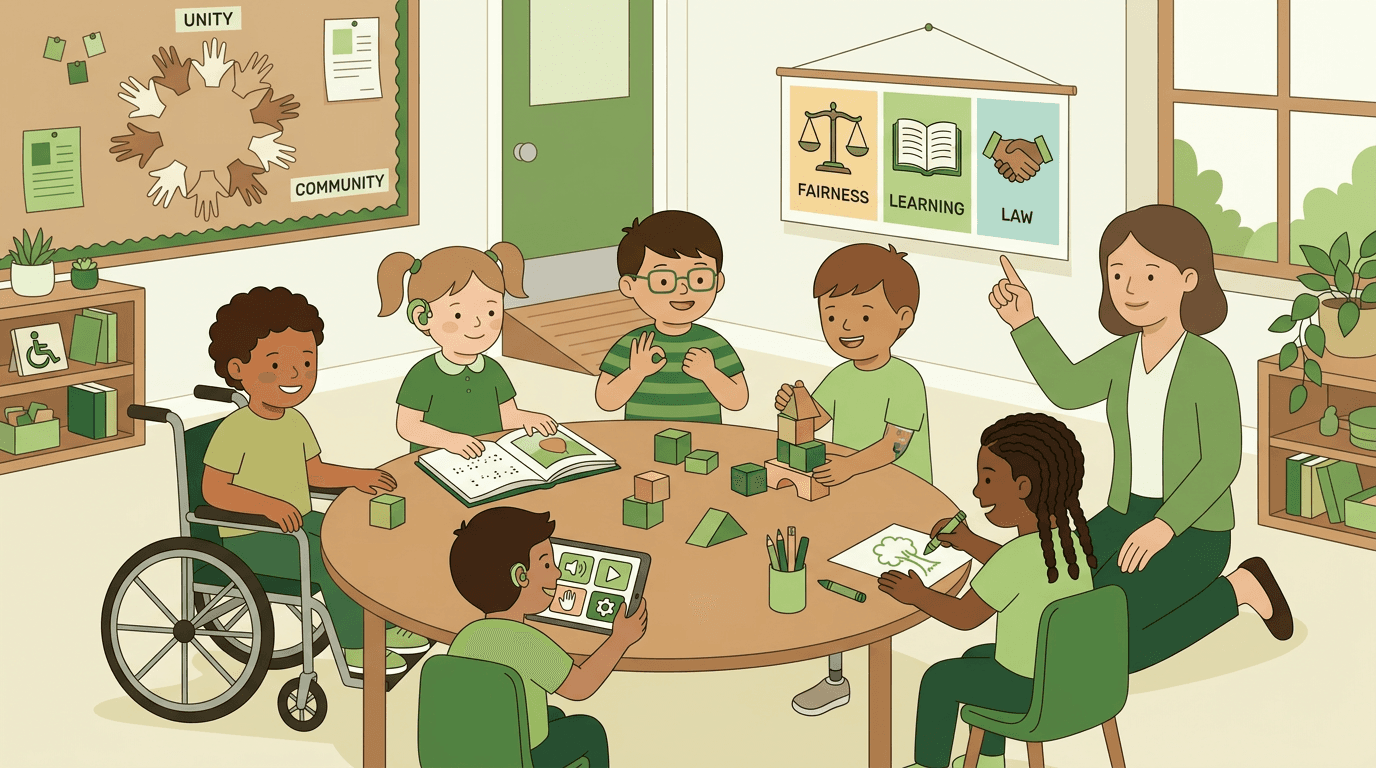
Inclusive education means every student, including those with disabilities, learning differences, and diverse language or cultural backgrounds, learns alongside peers in general classrooms with the supports they need.
In this guide, we'll cover what it really means, the laws behind it, practical steps for your lessons, and an action plan you can use right away.
What Inclusive Education Really Means
Inclusive education gets tossed around a lot, but it's easy to get fuzzy on what it actually asks of you. Here's the core idea, plus a look at how it plays out in a real classroom. Inclusion also comes in four main types, and we'll look at those next.
What is inclusive teaching?
Inclusive teaching is an all-embracing societal ideology, a belief that every student belongs in the classroom. It rests on a few core ideas:
- Students are valued and included. Every learner is part of the class community, not a visitor in it.
- Learning happens in the general education setting, with support. Students stay in the regular classroom and get the help they need right there.
- Learning happens alongside peers. Students with diverse needs work with their classmates rather than apart from them.
The goal is less about where a student sits and more about whether they truly belong and learn.
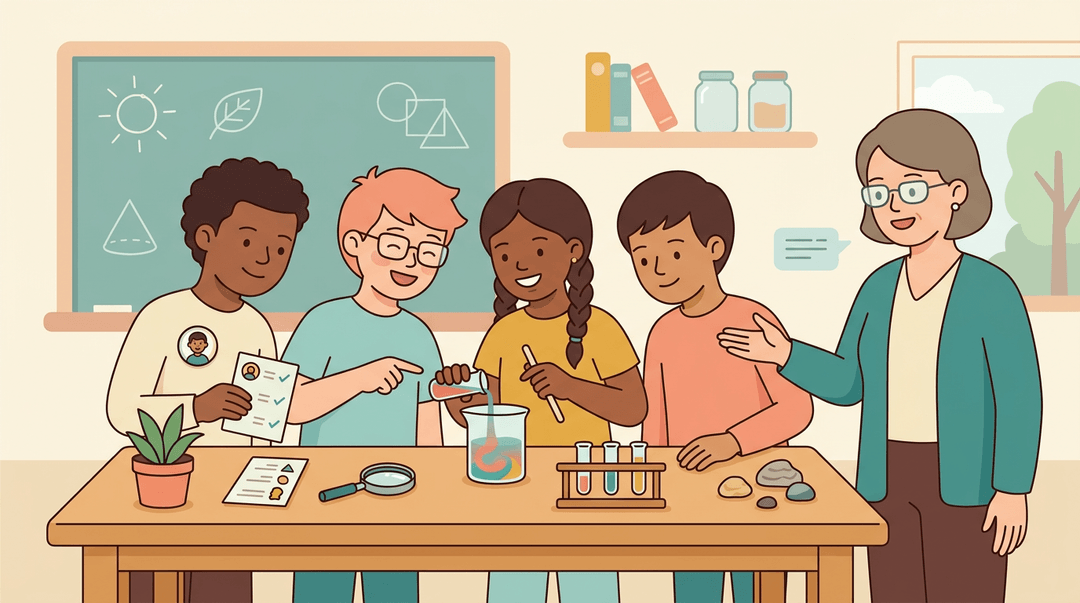
Think of a sixth-grade science teacher with a student who needs extra time on written tasks. Instead of moving that student to a separate room, she offers the same lab with a spoken option and a simple checklist.
The student stays with the group, and the whole class gets clearer directions. Everyone benefits. That's the point.
The Laws Behind Inclusive Education
Inclusion is written into federal law, so knowing the rules helps you advocate for your students.
What is the 80/20 rule in special education?
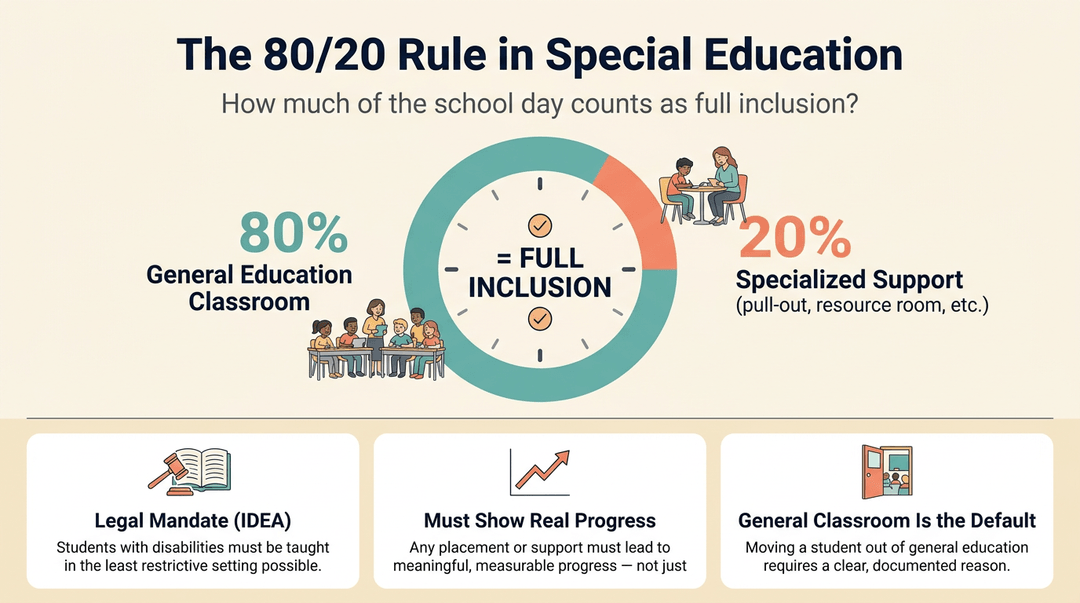
The 80/20 rule is shorthand for how much of the day a student spends in general education. The Federation for Children with Special Needs defines full inclusion as 80% or more of the day in a general education classroom.
It rests on the Individuals with Disabilities Education Act (IDEA), which requires education in the least restrictive environment (LRE):
- IDEA legal mandate. Students with disabilities must be educated in the least restrictive setting.
- Meaningful benefit standard. Placements and supports must produce real progress.
- General classroom as default. Moving a student out of the general classroom needs a clear reason.
Giving students the right supports
Placement is only the start. Accommodations change how students access learning, like extra time. Modifications change what they're expected to learn.
Academic supports target grade-level content, while functional supports build everyday skills. The goal is whole-child education: academic, social, and emotional needs met together.
Consider a third-grade teacher whose student with ADHD gets a checklist for multi-step tasks. He starts assignments without waiting to be prompted.
Why implementation varies by state
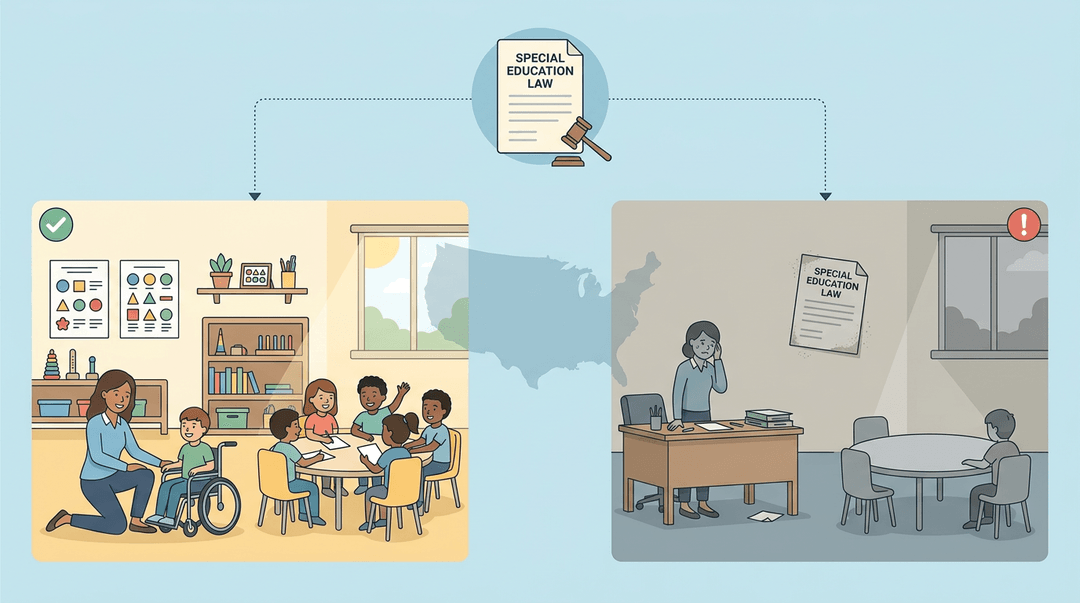
Laws set the floor, but a 2015 California task force found implementation gaps.
ED100 quotes the report describing "a failure in schools and classrooms to consistently use the very evidence-based practices that are being used successfully in other parts of the country."
Good intentions aren't enough: execution is inconsistent statewide.
Building Inclusive Education into Your Lessons
Use this guide when you're drafting a lesson and want to build access in from the start, not patch it in later. Pick strategies for your grade band, then run the planning checklist before you teach.
Elementary: supports to set up
- Visual schedules and supports. Post the day as picture-and-word cards.
- Say: "Check the schedule. What's coming next?"
- Peer buddy systems. Pair students and give each buddy a clear job.
- Try: "Show your partner where the materials live."
- Multi-sensory activities. Let students see, hear, and touch the idea.
- Students trace spelling words in a sand tray while saying them aloud.
- Flexible seating options. Offer a rug spot, a wobble stool, or a standing desk.
- Teach each choice first, then let students pick.
Middle and high school: strategies to build in
| Strategy | What it looks like |
|---|---|
| Co-taught lesson segments | Your co-teacher leads a 10-minute small-group mini-lesson while you run the rest |
| Tiered assignments | One goal, three entry points: sentence starters, a graphic organizer, or open response |
| Self-advocacy skill practice | Students rehearse: "I focus better when I can have extra time." |
| Flexible assessment formats | Students show learning by essay, oral explanation, or labeled diagram |
Before you teach: planning checklist
- Accommodations defined upfront. Write them into the plan, not into your memory.
- IEP goals aligned. Each activity ties to at least one student's goal.
- Peer supports planned. Buddies, partners, or groups are named before class.
- Student choice built in. Offer at least two ways to practice or show learning.
- Progress monitoring scheduled. Decide when you'll check, such as a quick exit ticket.
Example: A seventh-grade science teacher plans a lesson on ecosystems. The goal is the same for everyone. Students choose a labeled diagram, a short written explanation, or a spoken explanation to a partner. A student whose IEP goal is organizing ideas gets a graphic organizer, and the co-teacher checks in with that group for the first ten minutes.
⚠️ Watch out: Accommodations added mid-lesson tend to single students out. Decide them in advance so every option feels like a normal choice in your room.
Build and reuse inclusive lesson plans quickly with EMStudio's lesson planner.
How Inclusive Education Benefits Everyone
Inclusive education isn't a trade where one group gains and another loses. Here's what each group gains.
How students with disabilities benefit
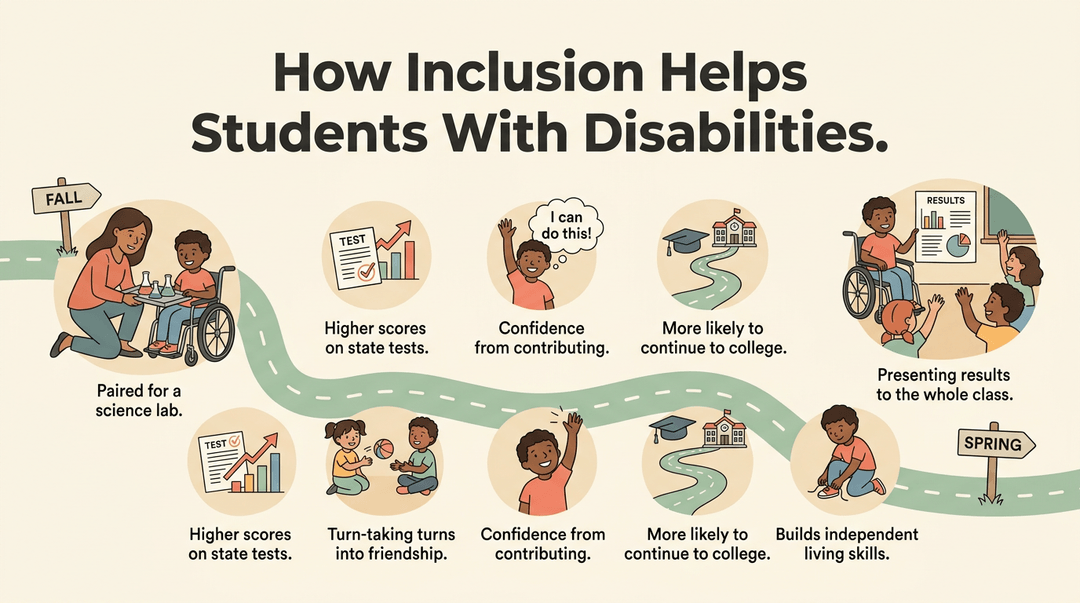
- Academic achievement gains. IU News reports that students with more inclusion scored significantly higher on state assessments, whatever their disability category.
- Social skills and peer relationships. Daily interaction gives students steady practice with turn-taking, and real friendships form along the way.
- Confidence building. Each successful group contribution tells students they're capable learners.
- Improved post-secondary outcomes. A recent study found that inclusive academic education was a consistent predictor of postsecondary education.
- Independent living skills. A review of personal, social and vocational outcomes links inclusion to increased independent living skills.
Consider a fourth-grade teacher who pairs a student who uses a wheelchair with a partner on a science lab. By spring, that student is presenting results to the class.
How classmates without disabilities benefit
- Empathy development. Students learn to see school through a classmate's eyes.
- Cooperation skills. Sharing roles with peers who have different strengths builds compromise.
- Appreciation of diversity. Regular contact makes differences feel ordinary and interesting.
- A more compassionate school culture. When kindness becomes routine, it spreads beyond a single class.
Why everyone wins in inclusive classrooms
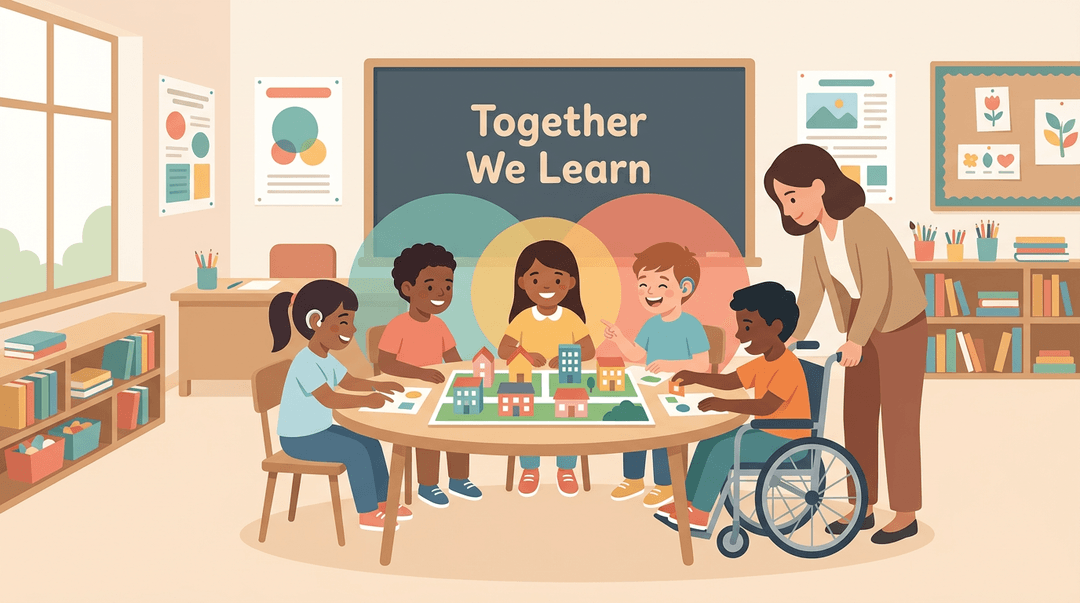
Inclusive classrooms aren't about where students sit, but about how they learn together.
- Outcomes for all students. A systematic review found that most studies show students without disabilities aren't disadvantaged in inclusive settings, though class makeup seems to matter.
- Both groups benefit. Everything above happens in the same room, so teachers don't have to choose whose learning comes first.
Everyone wins.
What Are Some Effective Strategies for Inclusive Teaching?
Inclusive teaching isn't a single technique. It's a set of habits that make learning work for every student, and the strategies below reach past the lesson itself.
Preparing students for careers after school
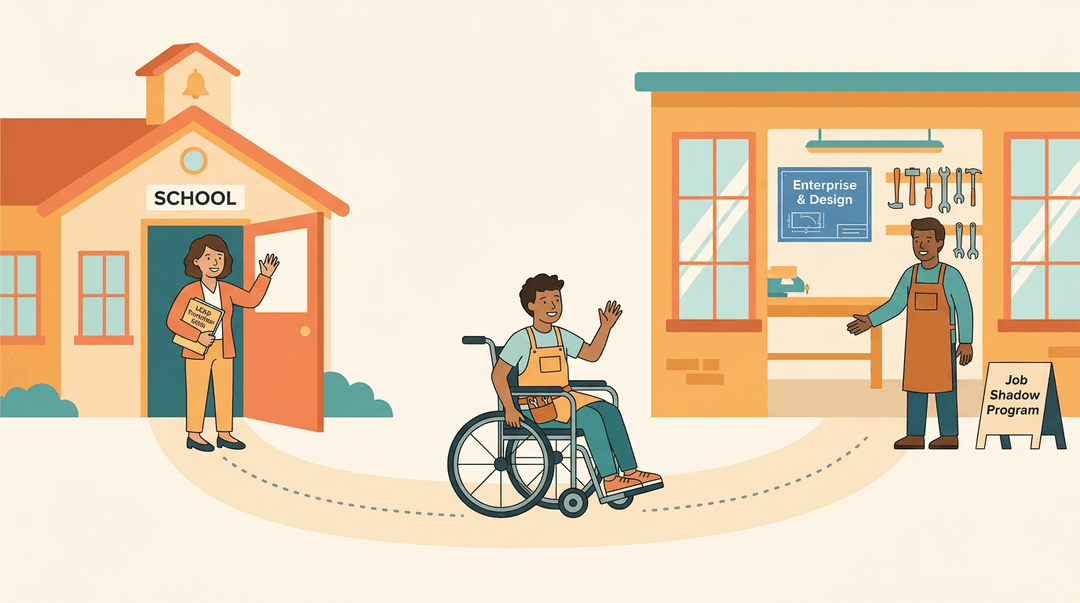
Inclusion should point toward the future. Schools can connect students to the LEAD Transition Skills Program, which builds the skills students need to move from school into work or further training.
Career center trade programs and real-world work experience give students hands-on exposure to jobs, and the Enterprise & Design collaboration brings outside partners into the planning.
Consider a special education teacher who pairs a student with a job shadow in a field the student already enjoys. The payoff is a student who leaves school knowing what comes next, not just what they've finished.
Including students in school life beyond class
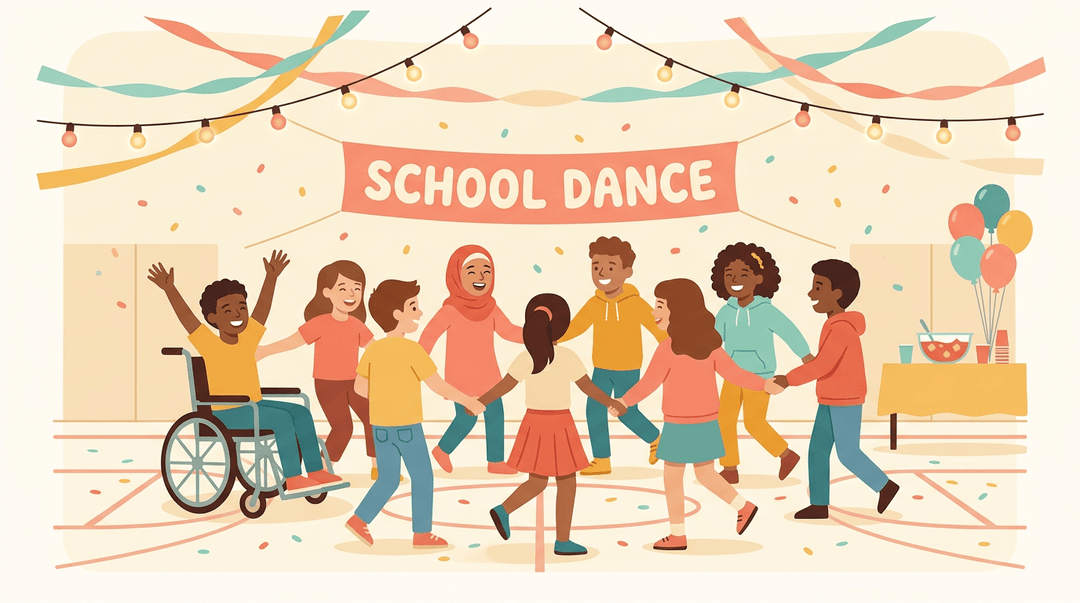
Belonging happens outside the classroom door, too. Invite students into athletic events and school dances so they're cheering and dancing alongside everyone else.
Peer group projects and shared extracurricular memories build the friendships that make a class feel like a community. What works depends on grade band:
- elementary students might share a class celebration or buddy reading time
- middle schoolers might join a lunchtime game or club
- high schoolers might serve on a dance committee
The goal is belonging rather than attendance.
Co-teaching makes this sustainable. When a general education teacher and a special education teacher plan and deliver lessons together, each student gets two sets of expertise.
That only works with proper teacher training and support, so ask your school for planning time and professional development. Support is what keeps inclusion from stalling.
Common Objections to Inclusive Education
You've probably heard, 'My students can't keep up with the rest of the class.' Here's how to answer the two objections teachers raise most.
When content doesn't match a student's level
The worry is that a student below grade level will fall further behind. Inclusion doesn't ignore the gap; it meets the student where they are.
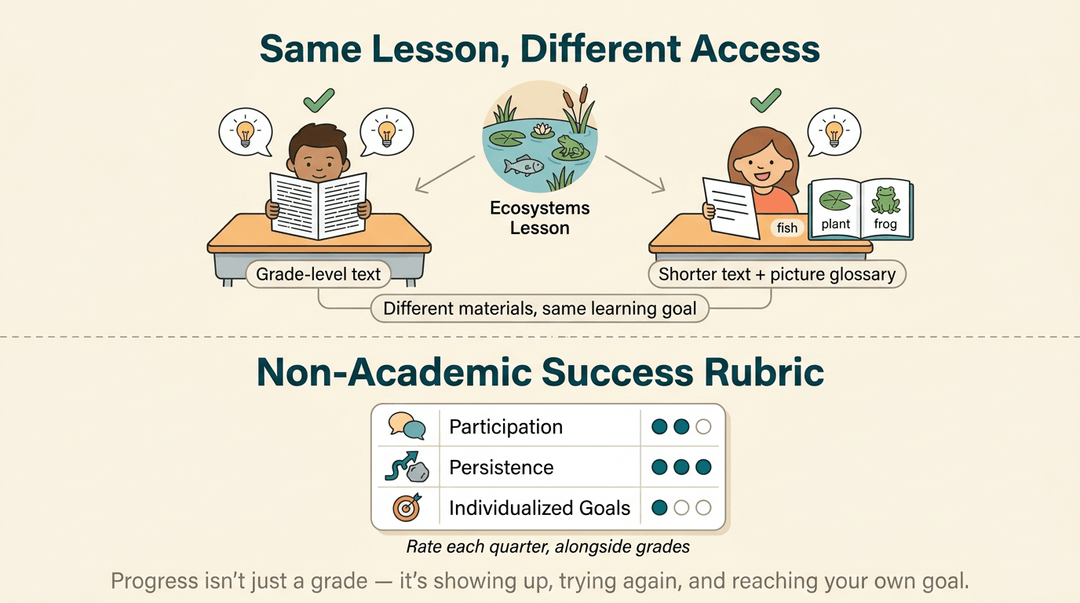
Take a fourth-grade teacher whose student reads at a second-grade level. She gives that child a shorter text and a picture glossary on the same ecosystems lesson, and the child learns alongside peers. Progress is visible.
Track non-academic measures of success, like:
- participation
- persistence
- individualized goals
Value beyond grades shows up in skills like asking for help and staying with a hard task.
A simple non-academic success rubric helps: rate three or four observable behaviors on a basic scale and review it alongside grades each quarter.
What students lose when they're excluded
Exclusion costs everyone, not just the students pulled out.
Students with disabilities lose positive peer models, classmates whose habits they can copy. A child with a language delay learns to ask questions by listening to a confident partner.
Separation also sends a negative message: some learners don't belong. Over time, that can create second-class student status, a sense of being a guest in one's own school.
Communities set expectations too. When inclusion is the norm, everyone learns that every child belongs.
Inclusive education isn't a separate program or a special favor for a few students. It's a way of planning that gives every learner a real chance to belong, participate, and grow.
When you build flexibility into your lessons, your whole classroom benefits.
Ready to put this into practice? Check out our Lesson Planner to write, organize, and reuse inclusive lesson plans across all your classes from one place.
References
- Inclusive educational and vocational predictors of postsecondary ...: Ingenta Connect — ingentaconnect.com (2025)
- The benefits of inclusive education: a systematic review of student achievement in secondary schools — doi.org (2025)
- High school students with disabilities achieve better outcomes in inclusive academic settings: IU News — news.iu.edu
- Personal, Social and Vocational Outcomes of Inclusive ... — pmc.ncbi.nlm.nih.gov
- Special_Ed_Task_Force_Report W CONTACTS — casponline.org
- Special Education Placement Options — fcsn.org (2025)
- What is the IDEA? — californiaspecialedlaw.com
- Schools Should Include Everyone — ed100.org
Frequently asked questions
What is inclusive teaching?
Inclusive teaching is an approach in which every student is valued as a full member of the classroom community. Students learn alongside their peers in general education settings, with accommodations, differentiated instruction, and other supports matched to their needs.
What is the 80/20 rule in special education?
The 80/20 rule is shorthand for full inclusion when a student with a disability spends at least 80% of the school day in a general education classroom. It reflects the preference for educating students in the least restrictive environment, with removal from the general classroom requiring a clear educational reason.
What is inclusion in special education?
Inclusion in special education means educating students with disabilities alongside students without disabilities in general education classrooms whenever appropriate. Students receive the accommodations, modifications, academic supports, and functional supports needed to participate and make meaningful progress.
What is inclusion and its importance?
Inclusion means ensuring that all students belong, participate, learn, and grow together, regardless of disability, learning difference, language, or cultural background. It is important because it supports academic, social, emotional, and independence outcomes while building empathy, cooperation, and a stronger school community.
What is called inclusive?
A person, classroom, or practice is called inclusive when it welcomes and meaningfully supports people with different abilities, backgrounds, identities, and needs. In education, being inclusive means removing barriers so every learner can participate and belong.
What are the four main types of inclusion?
The four main types of inclusion are physical, social, academic, and systemic inclusion. Physical inclusion provides access to shared spaces, social inclusion supports relationships and belonging, academic inclusion involves learning together with appropriate supports, and systemic inclusion embeds inclusive policies and practices throughout the school.