General Education, Explained From Core Courses to Outcomes

Jump to section
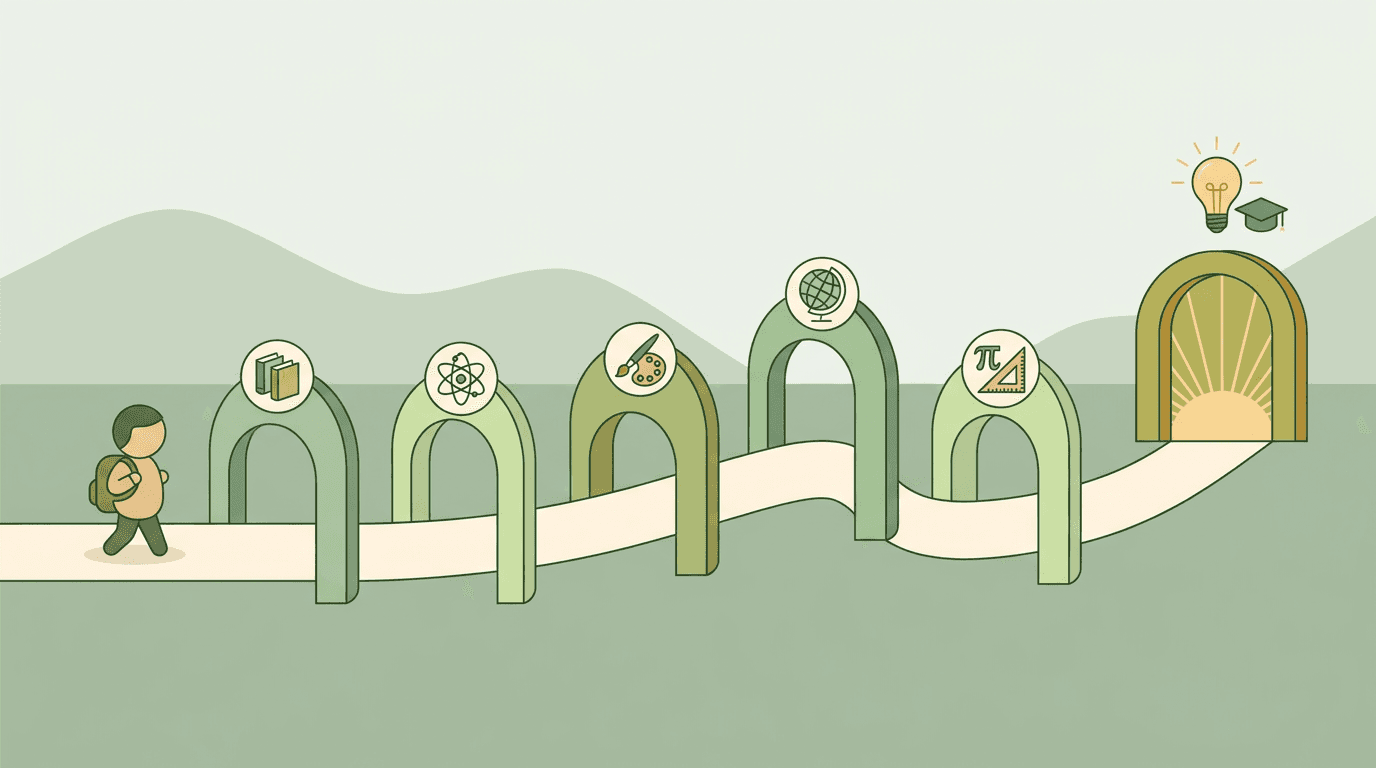
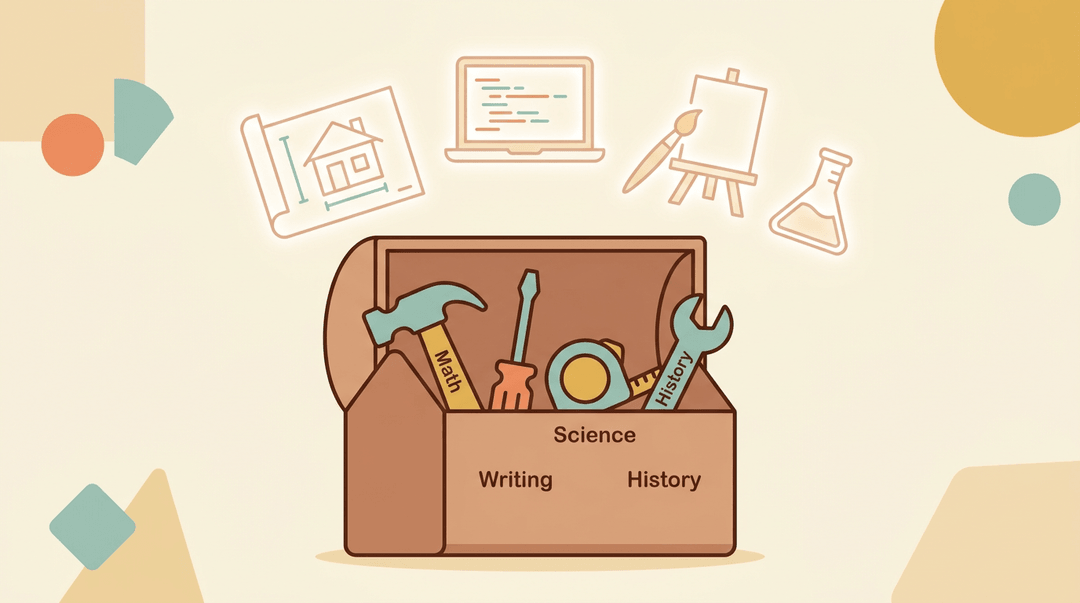
Think of packing a toolbox before starting any home project. You grab a hammer, a screwdriver, a tape measure: basics that work no matter what you build next.
General education works the same way, giving students a shared foundation of core courses before they specialize.
It's more important than ever, as students move between subjects and need skills that carry over.
In this post, we'll walk through what general education looks like, how colleges structure it, and how you can turn those outcomes into lesson plans you'll actually reuse.
Understanding General Education and Its Purpose
General education has deep roots in the liberal arts tradition, long before it became a fixture on every college transcript, and it still shapes how schools define a well-rounded education today.
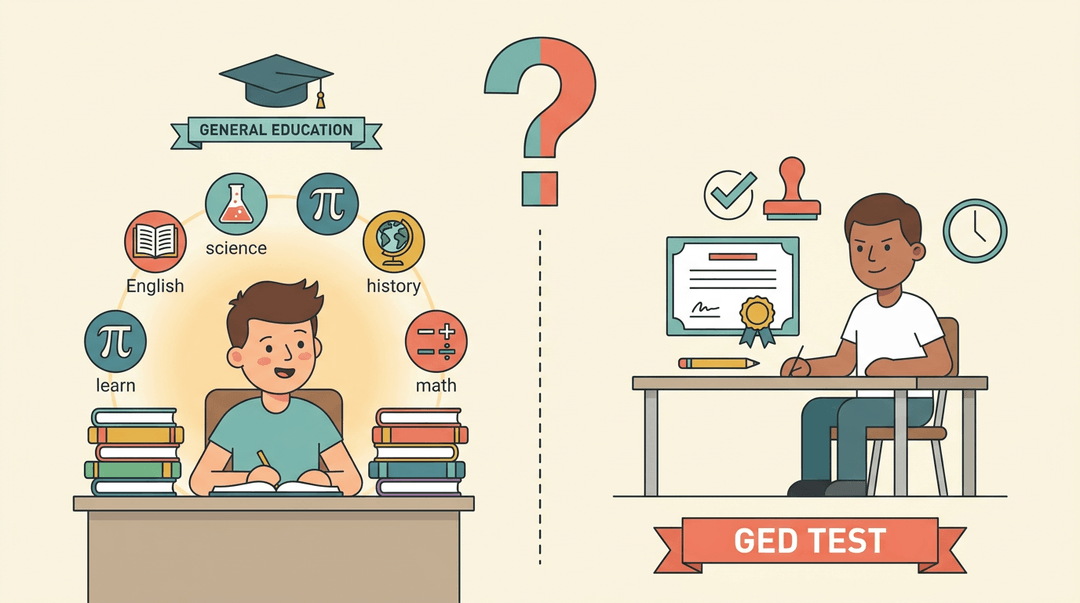
Is general education the same as GED?
No, and the mix-up is common enough to clear up. General education (often shortened to gen ed) refers to the required courses outside your major: English, math, science, history, and more, meant to give every student broad exposure across subjects.
The GED (General Educational Development) test is something else entirely: a credential certifying high school-level skills for people who didn't finish high school.
General education is mandatory for most college students and rests on a liberal arts foundation, the idea that a well-rounded thinker makes a stronger specialist. You'll also hear it called core curriculum, distribution requirements, or liberal studies.
The core goals general education aims for
Most gen ed programs chase the same handful of goals:
- Critical thinking skills
- Effective communication
- Informed citizenship
- Lifelong learning
- Problem-solving ability
Those aren't abstract ideals, they translate directly into lesson objectives.
For example, a high school English teacher targeting effective communication might build a lesson objective around structuring a persuasive argument, something students can practice and be assessed on that same week.
How many credits general education takes
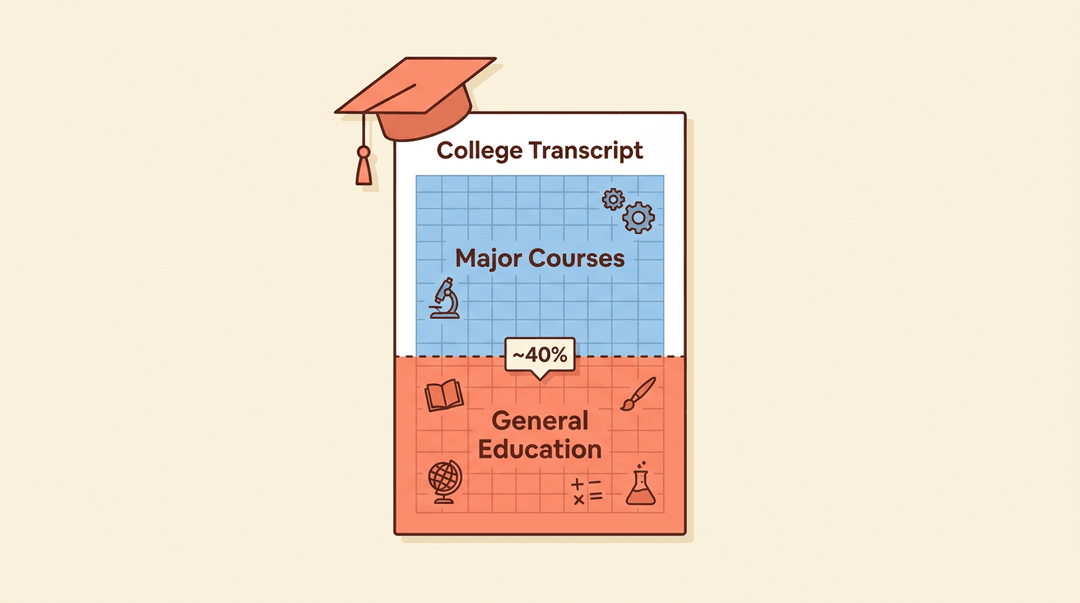
How much of a transcript does it fill? According to a national survey of colleges and universities, the median general education requirement lands at roughly 40% of a typical bachelor's degree, essentially half the credits a student earns.
Research on course distribution in research university general education programs confirms the same range, noting it often consumes more than 40% of the curriculum.
The exact share varies by school, but nearly every institution builds it into the degree in some form.
What Is an Example of a General Education Class?
Picture a syllabus for Introduction to Philosophy, a Composition I class, or a College Algebra course, and you've got a clear picture of what a general education class actually looks like: a foundational course outside a student's major that builds broad, transferable skills.
General education spans several core areas, and each one shows up in a real classroom in its own way:
Arts and humanities courses
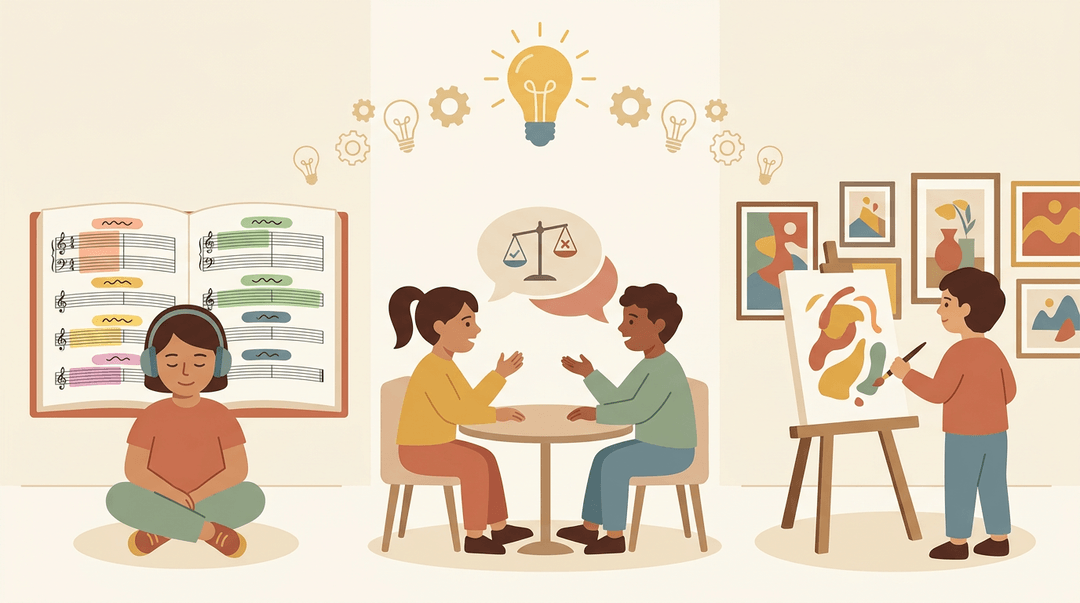
Think of a music appreciation class where a student learns to identify a symphony's structure, or a philosophy course that asks freshmen to debate what makes a choice ethical. Courses like these, alongside visual arts surveys, aren't about turning every student into a painter or a philosopher. They build an appreciation for creative works and the kind of abstract thinking that carries into any career.
English and communication skills
A first-year composition course is one of the most common gen ed classes on any campus. Students draft essays, revise them, and get feedback, the same cycle a teacher might run in a middle school writing workshop. Literature analysis courses add another layer, asking students to read a novel and argue for its meaning. Together, these classes sharpen writing and speaking skills that show up in every other course a student takes.
History and social studies courses
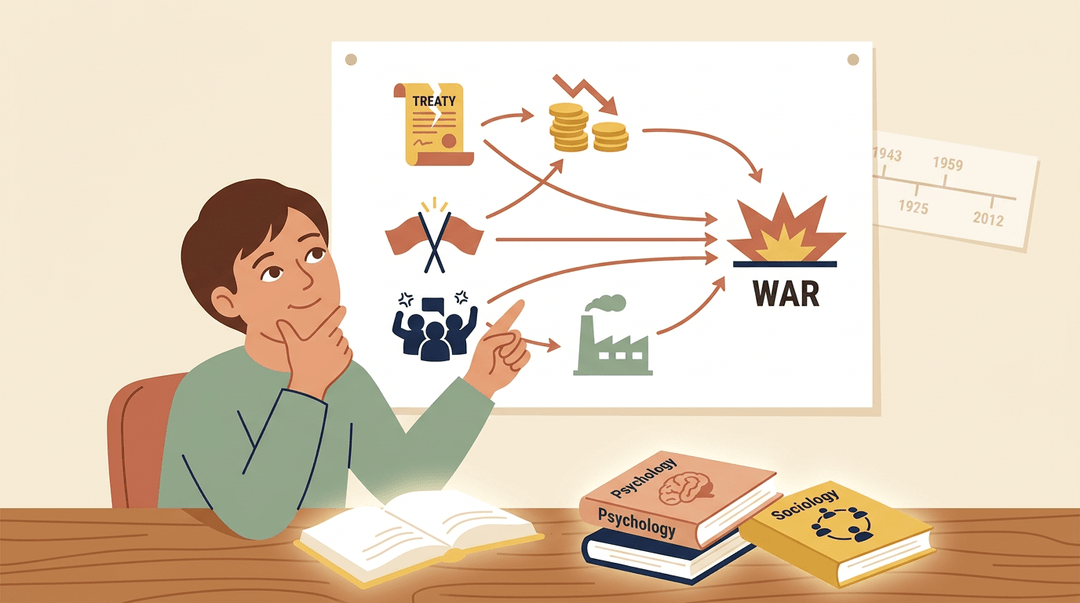
Many colleges require a Western civilization survey or a US history course to graduate. Consider a student working through the causes of a war rather than just memorizing its dates: the goal is understanding why it happened, not just when. Social science topics like introductory psychology or sociology round this out, giving students a framework for how people and societies behave.
Math and science courses
An algebra or statistics class is the math side of general education. That's where we see quantitative reasoning in action: reading a chart, calculating a tip, or judging a claim in the news. Biology and chemistry courses cover the science side, often through a lab component that lets students test a hypothesis firsthand instead of just reading about one.
Foreign language requirements
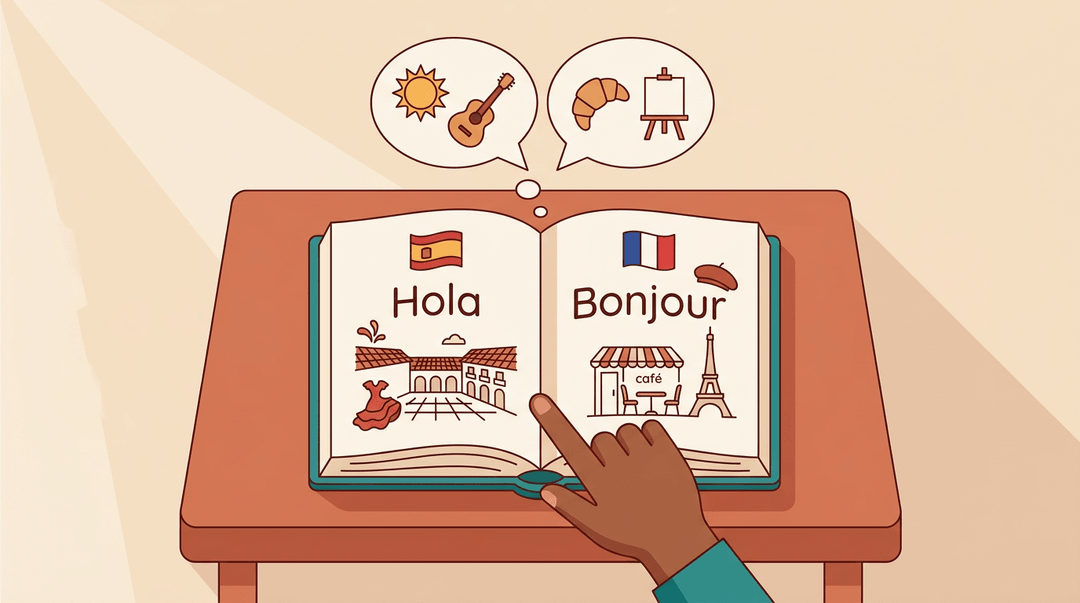
A two-semester Spanish or French sequence is a familiar example, but the point isn't fluency alone. These language proficiency options build global cultural awareness, helping a student see how word choice and grammar carry a culture's worldview, not just its vocabulary.
Diversity, ethics, and global studies
A course like Introduction to Ethics or Global Diversity Studies rounds out the list. These classes ask students to reason through an ethical dilemma or examine their own assumptions about another culture. The payoff is intercultural competence: the ability to work alongside people whose backgrounds differ from their own, a skill that matters well beyond graduation.
How Different Colleges Structure Their Core Curriculum
Every college builds its general education requirements a little differently, but the underlying goal stays the same: give students a common foundation before they specialize.
Looking at how five very different schools structure that foundation gives us a set of ready-made templates you can adapt into your own lesson plans and course sequences.
How University of Arizona structures gen ed
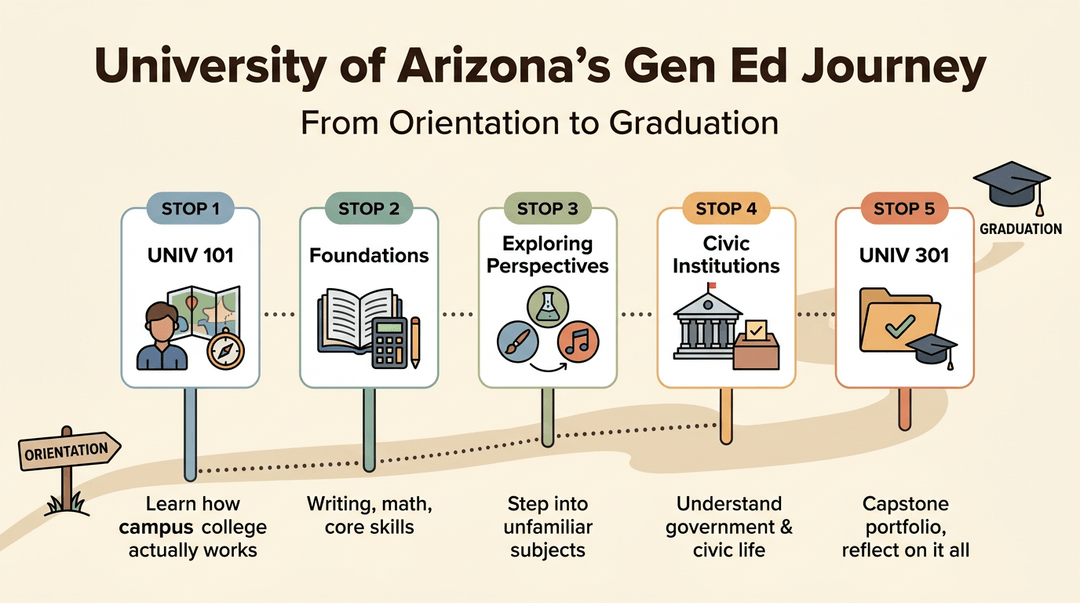
University of Arizona breaks its gen ed into six program segments that carry a student from orientation through graduation.
- UNIV 101, an introductory course that teaches first-year students how to actually navigate college life and academic expectations.
- Foundations core classes covering writing, math, and other basic skills.
- Exploring Perspectives requirement that pushes them into unfamiliar disciplines.
- Civic Institutions requirement builds understanding of government and civic life.
- UNIV 301, a capstone course where students assemble a portfolio reflecting on everything they've learned.
American University's AU Core program
American University's AU Core starts with foundation courses in writing and quantitative reasoning, then organizes upper-level requirements around five Habits of Mind inquiry areas:
- creative
- ethical
- global and intercultural
- scientific
- social inquiry
Students take integrative courses that draw connections across those areas, and finish with a capstone signature project that ties their coursework to a real question or problem.
Auburn University's core curriculum
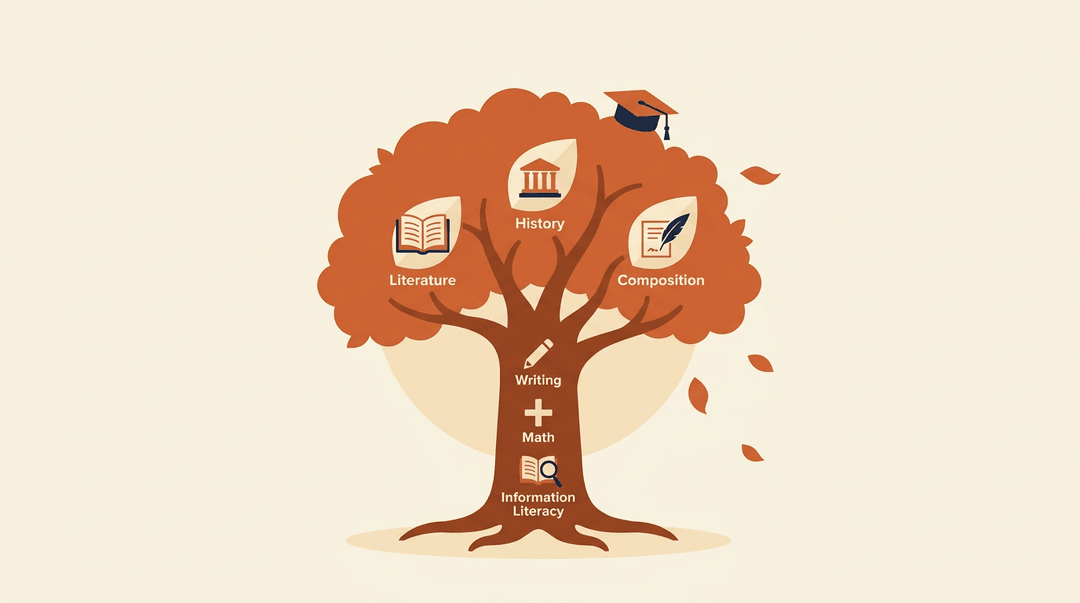
Auburn keeps things a little more traditional. Students choose from history or literature courses, work through composition and humanities requirements, and build a set of foundational skill outcomes in writing, math, and information literacy. Underneath it all sits a simple lifelong learning goal: give students habits they'll keep using long after graduation.
Gonzaga University's four-year core curriculum
Gonzaga spreads its core across all four years instead of front-loading it, with each year built around a different theme. The whole structure reflects a Jesuit humanistic framing that asks students to think about ethics and the human condition alongside their major. Broadening courses expose students to disciplines outside their major, and the program is anchored by five outcome competencies students should demonstrate by graduation.
University of Utah's core curriculum model
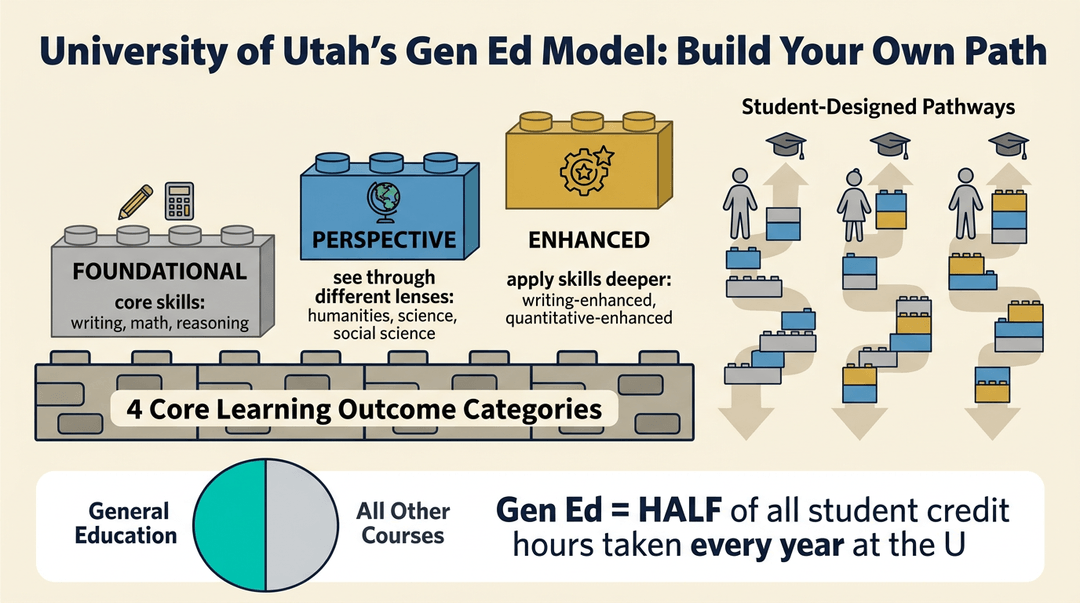
Utah organizes its gen ed around four learning outcome categories, then lets students build student-designed pathways through foundational, perspective, and enhanced course types. That structure carries real weight: as a report from @theU notes, the general education curriculum "accounts for half of the student credit hours taken annually at the U."
Customizing gen ed to fit your career
Across all five schools, the same pattern shows up: students combine required and elective courses into combinations tailored to their career goals, choosing from flexible path options rather than one fixed sequence. That flexibility isn't just for students planning a major. Take the shape of a requirement, whether it's a capstone, a perspectives requirement, or a themed year, and adapt it into a lesson template you can reuse across units.
Planning Lessons Around Core Outcomes
A gen-ed outcome like "quantitative reasoning" is too big to teach in a day, but it's exactly the right size to anchor a lesson. Here's how to turn one outcome into one plan, then make that plan pay off every semester.
Build the lesson from one outcome
- Pick one core outcome to anchor the lesson.
- One outcome per lesson: "written communication" is workable, "communication skills" is not.
- Translate it into a measurable objective.
- Formula: students will + observable verb + evidence. "Explain" and "revise" work; "understand" doesn't.
- On the board: "You'll revise one paragraph to fix two clarity problems you find yourself."
- Choose a framework that fits the content.
- Understanding by Design (UbD): plan backward from the final assessment; best for skill outcomes.
- 5E (engage, explore, explain, elaborate, evaluate): best for inquiry and new concepts.
- Close with a quick formative check.
- One question, two minutes, and the answer must show your objective's verb in action.
- Try an exit ticket: "In one sentence, what makes your revision clearer than the original?"
Example: For the outcome "quantitative reasoning," a stats instructor writes the objective "You'll interpret a misleading graph and explain what makes it misleading." She picks 5E (students explore the graph before she explains), then checks with an exit ticket asking for one flaw in a new graph. Outcome, objective, framework, check: one clean line.
⚠️ Watch out: Don't pick the framework first and squeeze the outcome into it. The outcome decides the framework, not the other way around.
Make it reusable across sections
You just did the hard thinking once. A few habits keep you from redoing it every term:
| Move | What it looks like |
|---|---|
| Save a master template | Slots for outcome, objective, framework outline, and check, content left blank |
| Tag by outcome area | Label each plan "written communication," "quantitative reasoning," and so on |
| Adjust for course level | Keep the objective, swap the text or dataset for intro vs. advanced sections |
| Reuse each semester | Pull the tagged plan, refresh dates and examples, teach |
The tags matter most: when an assessment report asks how you address an outcome, you search the tag and the evidence is already there.
Draft, tag, and reuse these gen-ed lesson plans right in EMStudio's online lesson planner.
Why General Education Matters
Ask why a future engineer needs a history class, and you'll bump into a debate that's followed general education for decades. Some call it filler. Others see it as the foundation everything else stands on.
The real value shows up less in any single course and more in what students carry out of the whole sequence.
Skills you build along the way
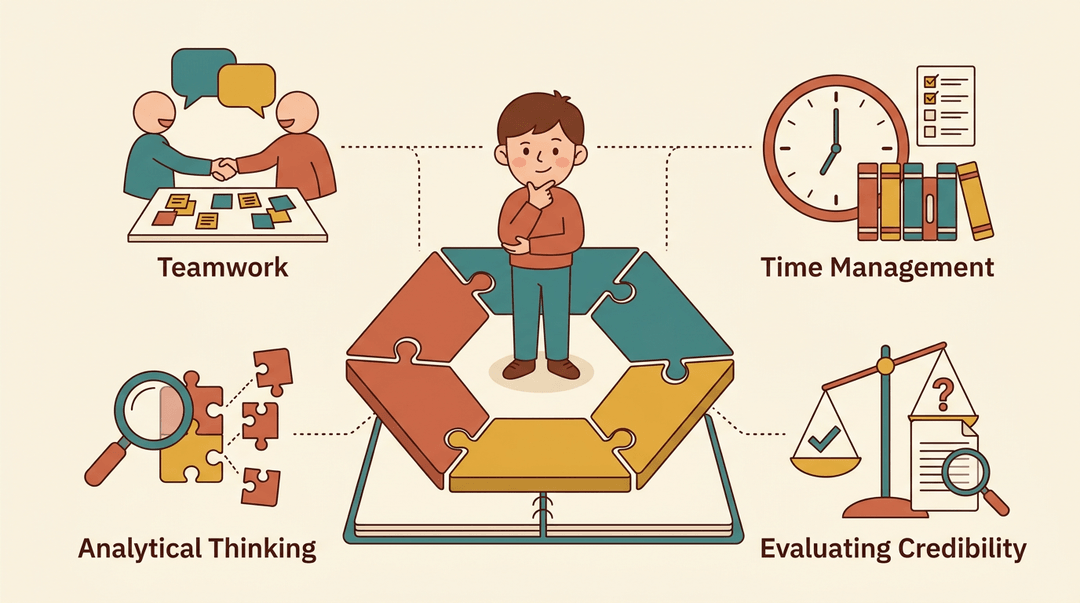
General education courses stack skills that no single subject teaches alone. Group projects in a humanities seminar build teamwork, while juggling five different courses at once forces real time management.
A philosophy class sharpens analytical thinking: breaking an argument into its parts and testing whether it holds up.
And a research methods course teaches something even more basic, evaluating information, deciding what's credible before deciding what's true.
Getting ready for career and life
Consider a nursing student who takes a required ethics course alongside anatomy.
That student graduates ready for a complex world, not just a clinical one, and walks into a first job with the confidence that comes from wrestling with hard questions before the stakes were high.
General education supports career goals indirectly, too: employers consistently value graduates who can write, reason, and adapt, skills no single major builds on its own.
Broadening your perspective
A literature course from another culture, a global history survey, a comparative religion class: each gives students exposure to diverse viewpoints they might never meet inside their major.
That exposure challenges assumptions students didn't know they were carrying, and it builds a genuine appreciation for other cultures, one that pays off well beyond graduation.

Classroom Environment and Teaching Style
General education isn't just what's taught, it's how the room feels and how the teacher shows up in it. Ask any student what they remember about a great class, and it's rarely the worksheet.
Hands-on classroom spaces
General education comes alive when students can touch, build, and test ideas instead of just reading about them.
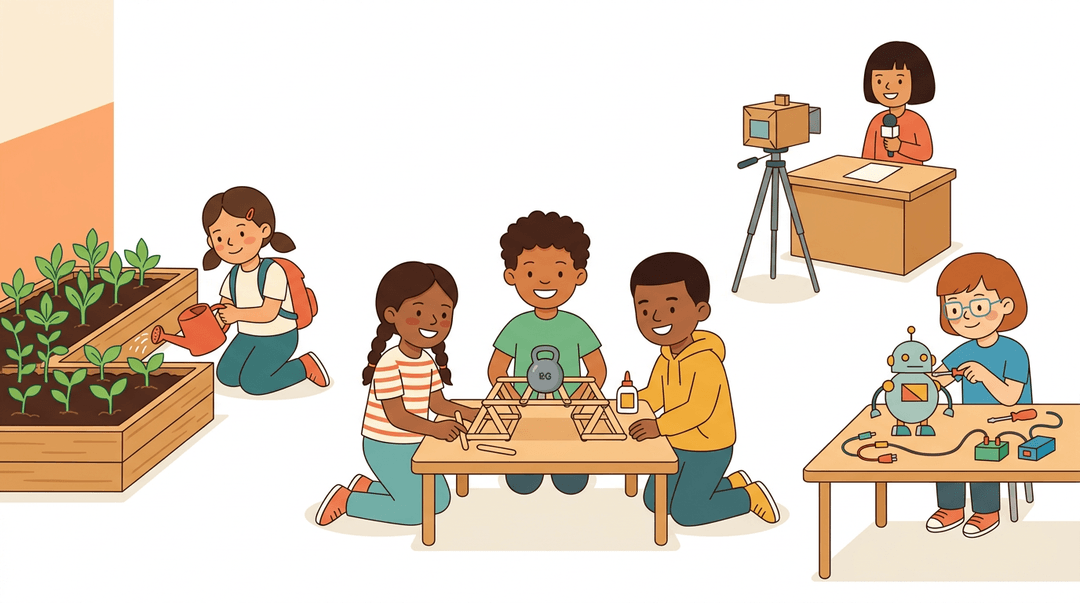
Hands-on learning spaces turn abstract concepts into something a student can hold, whether that's a lab bench for a chemistry demo or a makerspace stocked with tools for building prototypes.
Consider a middle school teacher who turns a geometry unit into a bridge-building challenge with popsicle sticks and glue: students see load and tension instead of just memorizing formulas.
Real-world surroundings, a school garden, a robotics corner, a classroom set up like a mini newsroom, help general education feel less like theory and more like practice.
Faculty involvement and class engagement
Small classes give that teaching style room to work. A low student-to-faculty ratio means a teacher can circulate the room, catch confusion early, and adjust on the fly rather than lecturing at thirty faces at once.
That's where active faculty involvement matters: it's not just walking students through a syllabus, it's checking in, asking follow-up questions, and noticing who's stuck before it shows up on a quiz.
In-class participation tends to grow out of that attention. Students speak up more when they trust someone's actually listening.
Practical Tips for Students
General education can feel like a maze of boxes to check, and a few smart moves early on save your students real time and real money.
Meeting requirements without wasting credits
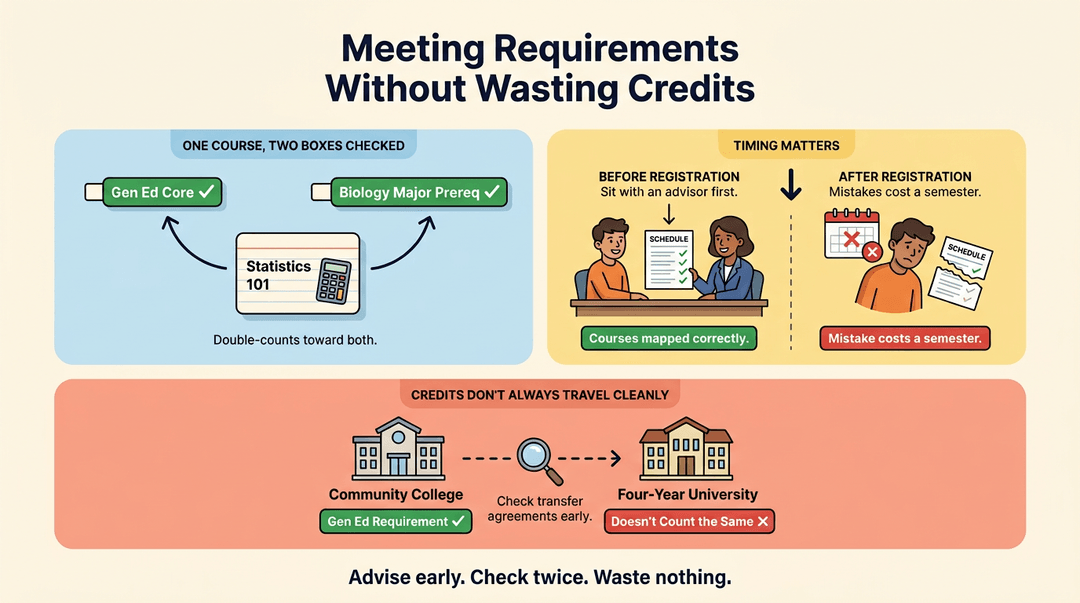
Here's a fact worth passing along: many general education courses double-count toward a student's major.
A future biology major who takes a gen ed statistics course, for example, might satisfy both a core requirement and a prerequisite for the major, in one class instead of two.
That's exactly why academic advising matters so much. An advisor can map out which courses pull double duty, flag ones that don't transfer, and catch a scheduling mistake before it costs a semester.
Encourage your students to sit down with an advisor before registration, not after.
Credits don't always travel cleanly between schools, either. A student transferring from a community college may find that a course counted as a gen ed requirement there doesn't count the same way at a four-year school.
Checking transfer agreements early avoids retaking a class that already checked a box.
How requirements differ by class year
Not every student is working from the same rulebook. Colleges regularly update their general education requirements, and those changes usually apply to newer incoming cohorts rather than everyone at once.
Students who enrolled under an older set of rules often stay on a legacy program: the requirements in place when they started, even if the school has since revised its curriculum.
That's good news for continuity, but it means two students in the same graduating class can have different checklists.
One requirement that's shown up more often in newer programs is a capstone project or portfolio: a culminating piece of work that ties general education learning together.
Make sure students know early whether their program includes one, so it doesn't arrive as a surprise senior year.
General education isn't a hurdle to clear before the "real" classes start. It's the shared foundation that makes everything after it easier: for students moving between subjects, and for you, planning lessons that build toward outcomes that last.
Ready to turn those core outcomes into lessons you can reuse across every class? Check out our Lesson Planning feature to write, organize, and reuse your plans from one place.

References
- Examining College Students' Gains in General Education — files.eric.ed.gov
- General Education Reimagined: How the new requirement structure benefits students — attheu.utah.edu
- Liberal Learning in Research Universities: Course Distribution in General Education Programs — d-scholarship.pitt.edu (2004)
Frequently asked questions
What is another word for general education?
Another word for general education is **core curriculum**. It may also be called gen ed, distribution requirements, or liberal studies.
What is an example of a general education class?
Examples of general education classes include Composition I, College Algebra, Introduction to Philosophy, biology, history, sociology, and foreign language courses. These foundational classes are generally taken outside a student’s major.
What does general education mean?
General education means the required foundational courses that give college students broad exposure to subjects such as English, math, science, history, and the humanities. It develops transferable skills including critical thinking, communication, problem-solving, and informed citizenship.
Is general education the same as GED?
No. General education, often called gen ed, refers to required college courses across several subject areas. The GED is a test and credential that certifies high school-level knowledge for people who did not complete high school.