Problem-Posing Education Explained: Freire's Core Ideas

Jump to section
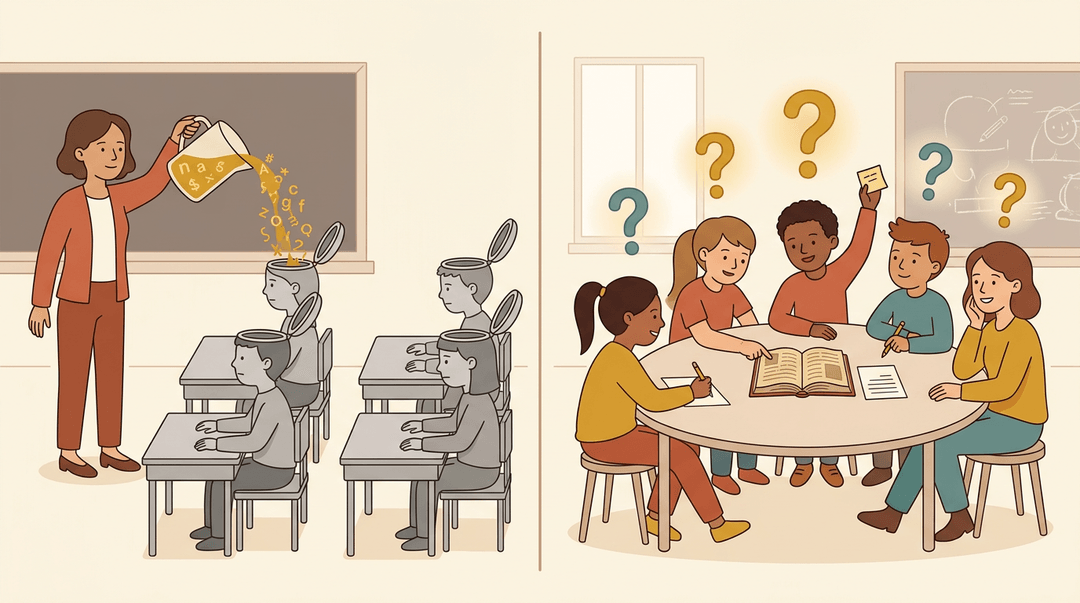
Picture a lecture where the speaker reads every slide aloud, then expects you to memorize the handout. You'd likely leave with a few facts and little else. Plenty of classrooms still run that way.
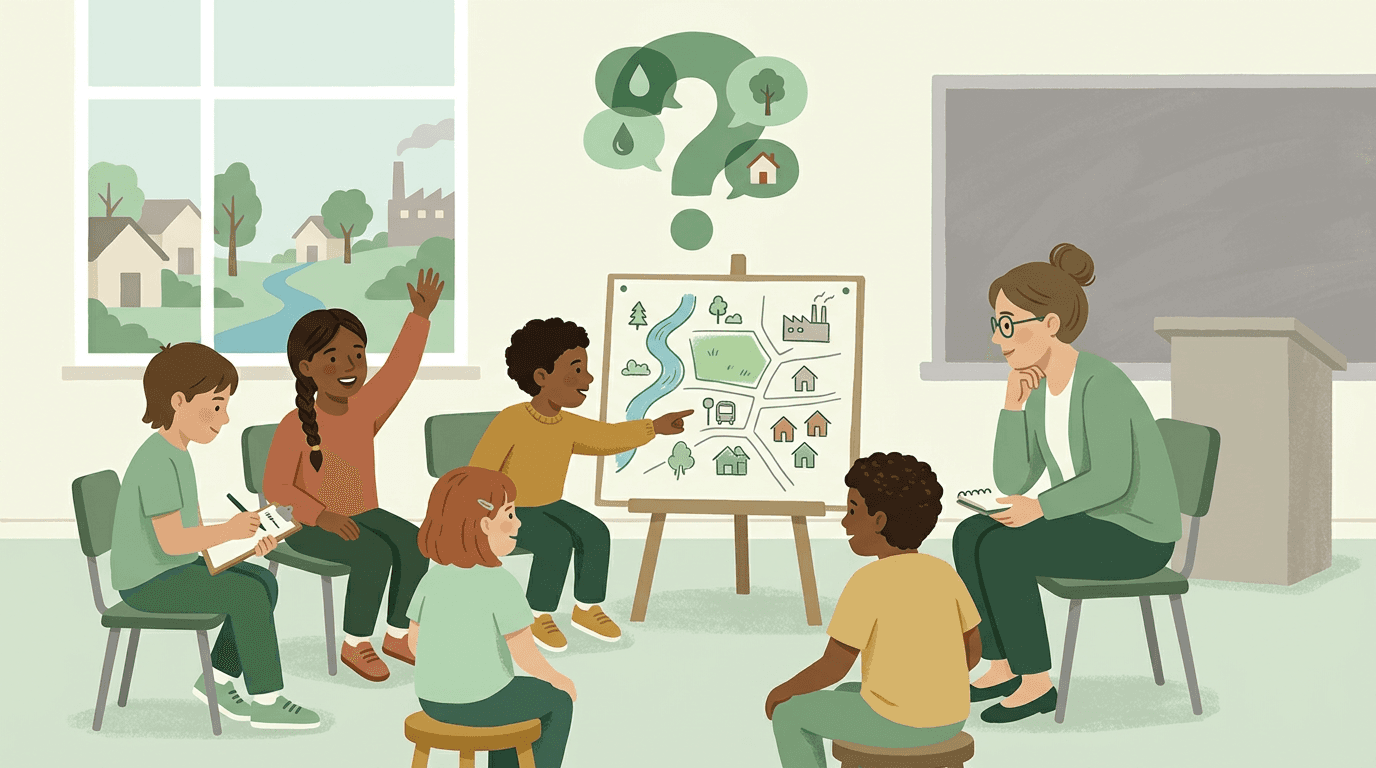
Problem-posing education offers another path. Instead of treating students as empty containers, it makes teachers and learners partners who investigate real problems together.
In this post, we'll look at how it differs from the traditional model and how to plan lessons around it.
What Problem-posing Education Is About
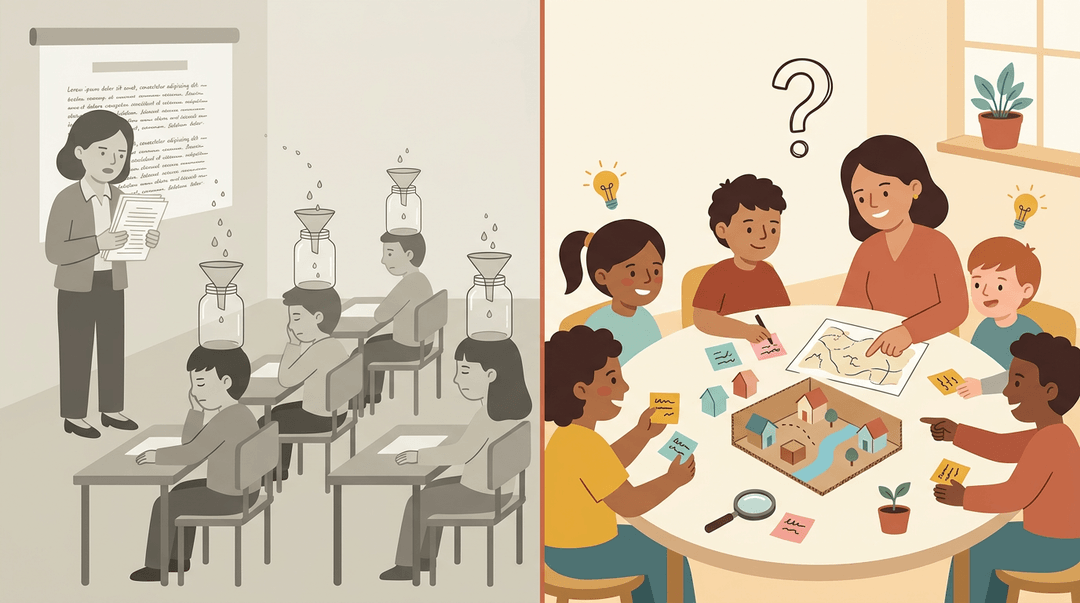
Problem-posing education shifts the teacher's role from delivering answers to posing better questions. It's the opposite of banking education, where knowledge gets deposited into students like coins into a bank account. Teachers who want to practice posing better questions can look to the Socratic method of teaching.
The core principles that guide it
- Students as active knowledge creators. Learners build understanding through their own thinking, not by absorbing what they're told.
- Education as cognition, not transfer. The focus is on how students come to know, not on moving information from one head to another.
- Posing real-world problems. Questions grow from students' actual lives. Inquiry and project-based learning also pursue questions, but problem-posing pushes further: why does this exist, and can it change?
- Students as critical co-investigators. You and your students examine problems together.
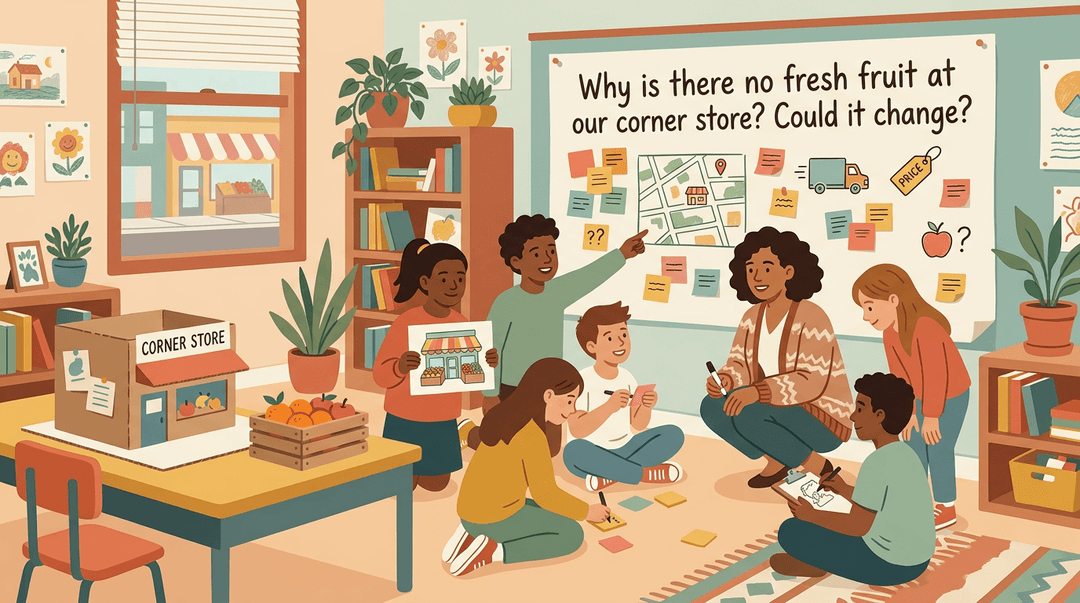
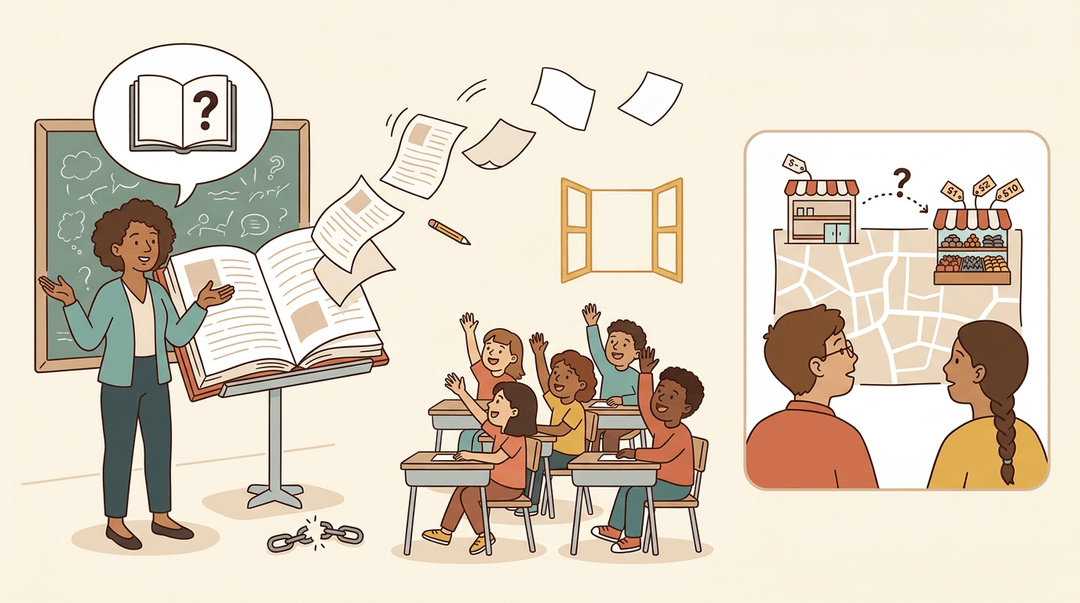
Picture a sixth-grade teacher whose students keep complaining that the corner store never has fresh fruit. She turns that complaint into a class question: why does this happen, and could it change?
Why talking things through matters
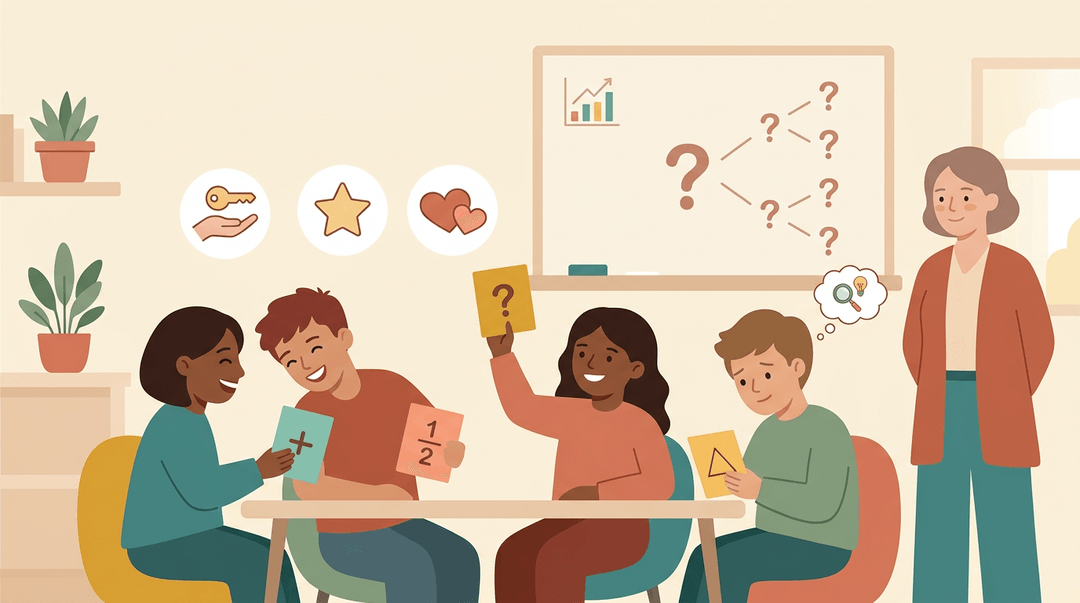
In problem-posing classrooms, dialogue is central to thinking itself. Students say their ideas out loud, hear how others respond, and sharpen their reasoning.
Teachers and students also teach each other, and students voice and challenge ideas respectfully, with evidence.
Consider a fourth grader explaining how she'd divide donations from a class book drive. A classmate challenges her method, so she has to defend her reasoning.
By the end, the whole class understands the problem more deeply. Talk gives learning its meaning.
Starting with what students already live
Problem-posing starts where learners already are: their neighborhoods, families, and routines. Their prior knowledge and experience become the raw material, and you problematize context first by presenting the familiar as a question.
The here-and-now is the starting point, not a distant example from a textbook.
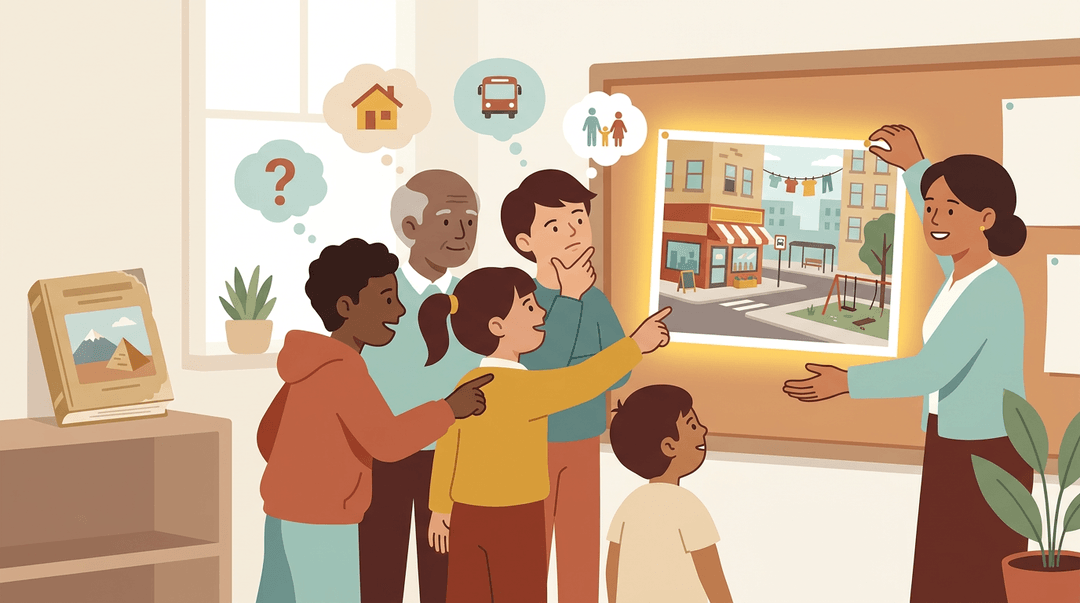
The first stage, codification, presents that situation in a concrete form, like a photo, story, or drawing, so students can step back and examine it critically.
Building critical awareness of the world
Problem-posing treats reality as a process, not a finished product, so what looks fixed can be questioned and changed. Students also practice demythologizing reality, challenging explanations like 'that's just how things are.'
They develop consciousness of consciousness, thinking about how they think.
Praxis, the third stage, joins action and reflection: students act on a problem, then reflect on what happened. Reflection alone stays just talk, while action without reflection rarely teaches much.
Becoming more fully human through learning
Problem-posing aims at humanization, helping people become more fully themselves. Its opposite, dehumanization, is what unfair conditions create.
People are incomplete beings, always becoming. Education is less a destination than an ongoing activity, and it doesn't stop at the final bell. Our historical vocation is to become more fully human, together.
Learning never really finishes, and that's the point.
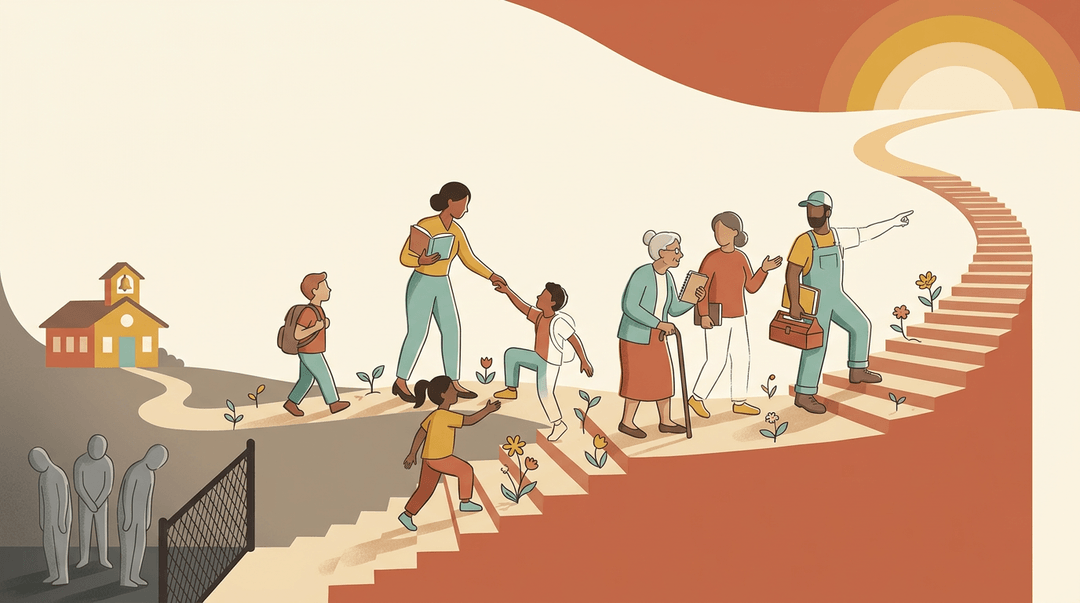
The Banking Model It Pushes Back On
Problem-posing education makes more sense once we see what it's reacting against. That target is the banking model.
What the banking metaphor describes
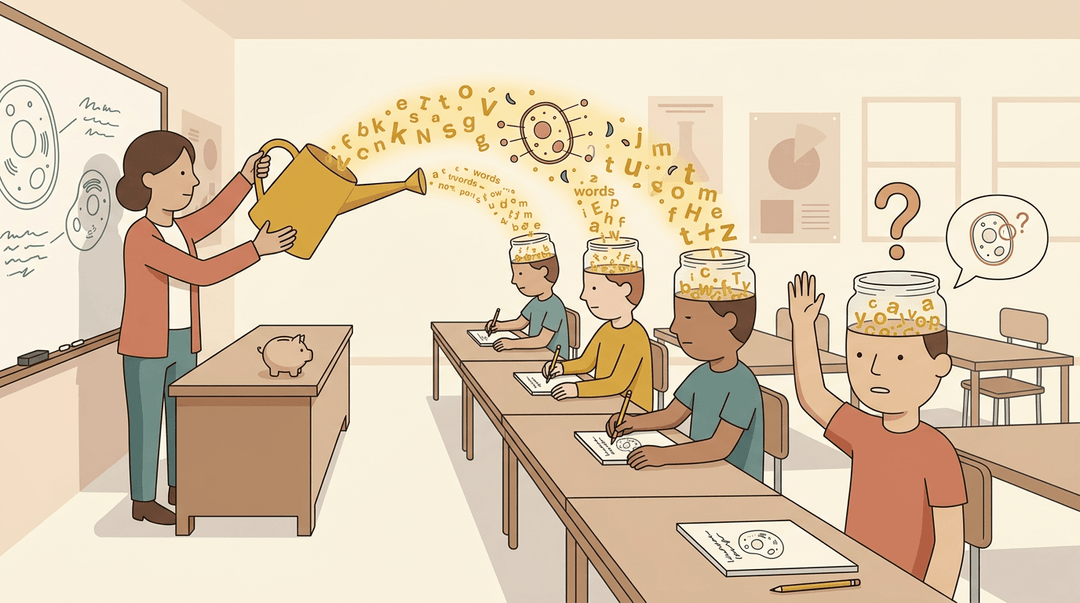
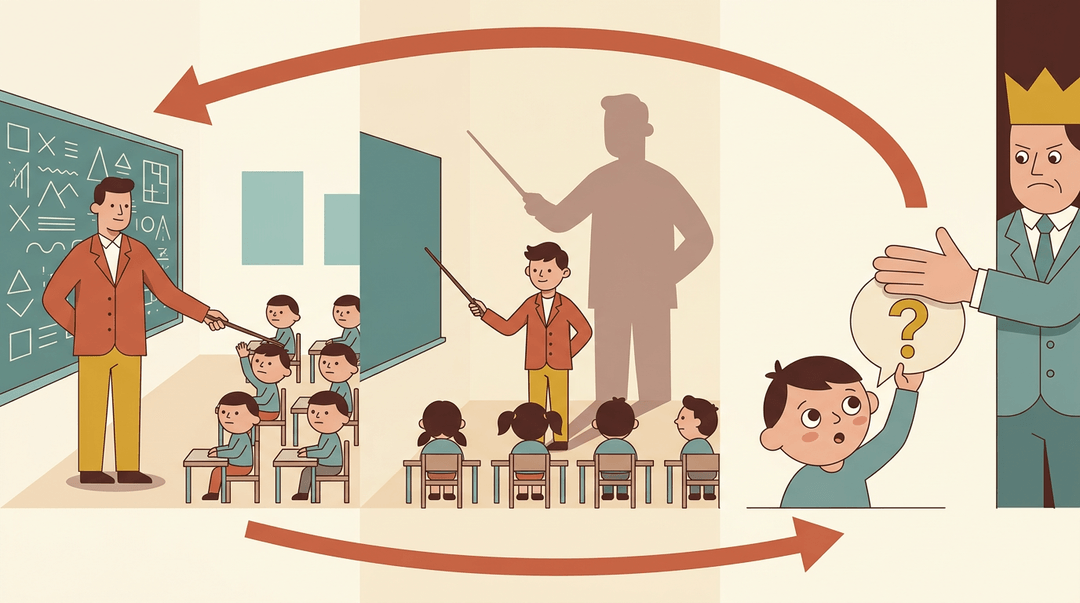
The banking metaphor treats teaching as a deposit: the teacher is the depositor, and the student is the depository. Students memorize and repeat, becoming containers to be filled.
Picture a seventh-grade science teacher who has students copy the parts of a cell into their notebooks. Most ace Friday's quiz. Ask one of them why a cell needs a membrane, though, and you may get a blank stare.
A related habit, narration sickness, turns lessons into lectures. The room stays quiet, but students are receiving rather than thinking.
Who holds power in the classroom
The teacher knows, and students know nothing. The teacher chooses what gets learned, when, and how, while students comply. Students become passive objects, and the teacher acts while students react.
Authority stays unchallenged, so questions that push back on the teacher are rare.
What banking teachers assume about students
Underneath the model, students are seen as incapable, so the teacher does their thinking. They're treated as a blank slate with nothing worth building on, and ignorance gets projected onto them: whatever students don't know is assumed to be all there is.
The result is a dehumanizing view that treats learners as empty vessels rather than people who think.
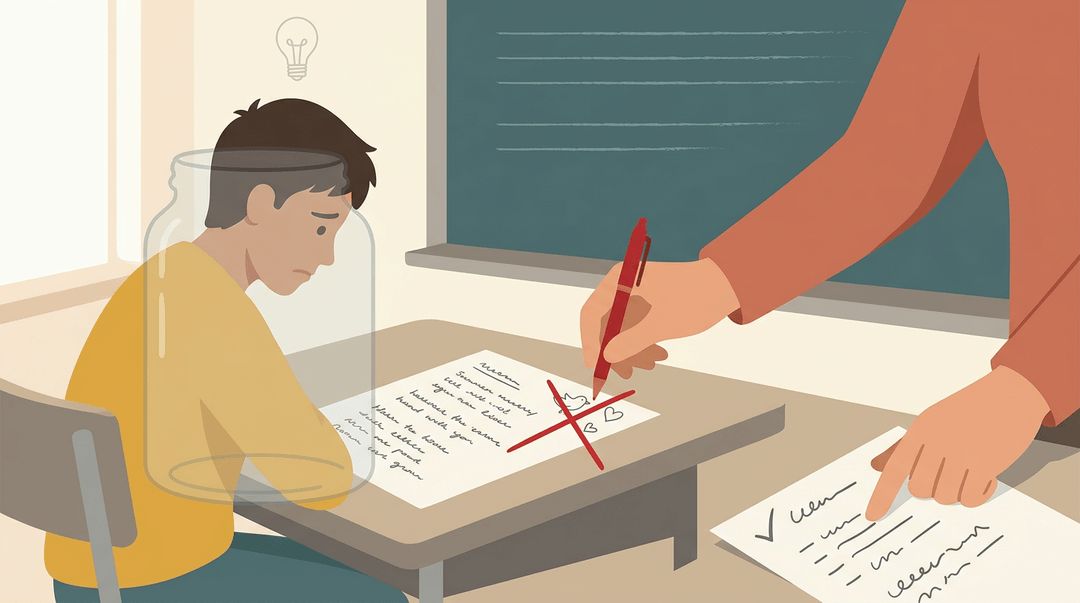
A high school English teacher who marks a student's own reading of a poem wrong, because it doesn't match the answer key, teaches that student their interpretation doesn't count.
How banking dulls students' thinking
The model costs students in four ways:
- Creativity shrinks. When every answer is already written down, there's little reason to imagine another.
- Critical thinking stalls. Students rarely get the chance to ask 'how do we know?'
- Facts become unquestioned truth. They arrive as settled, so there's nothing to examine.
- Fatalism sets in. Students learn to adapt to the world as it is, rather than question why it's that way.
How banking education props up oppression
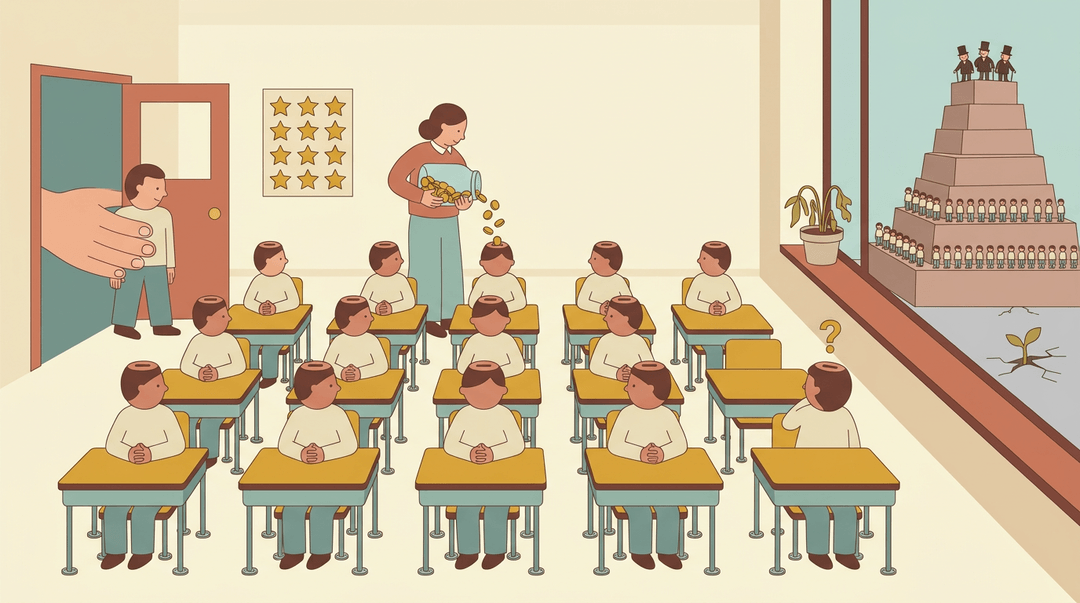
The banking model doesn't stay inside the classroom. It benefits oppressors, since a population that doesn't question is easier to keep in place. Students who never ask why the world is arranged as it is are less likely to challenge it.
The model also carries necrophily, a love of control and fixed order over growth and life. Quiet, predictable classrooms can look like success. Order isn't freedom.
Finally, there's paternalistic 'integration' of marginals: help that brings people into the existing system on terms set by those already in power. It sounds generous, but the goal is to fit people into the system rather than change it.
Where Freire's Problem-posing Approach Began
Before you put problem-posing education to work, it helps to know where it came from.
Freire's life and lasting influence
Paulo Freire was a Brazilian educator and theorist who became a critic of the teaching methods common in the 1960s and 1970s.
A paper titled Contribution of Paulo Freire: An Enduring, Eclectic Educator calls him one of the most influential educators of the 20th century.
The 30th anniversary edition of Pedagogy of the Oppressed, published in 2000, boasted on its cover that the book had sold over 1,000,000 copies worldwide. That's a remarkable run for a book about how we teach.
Reading Pedagogy of the Oppressed closely
Chapter 2 is where Freire lays out the banking concept. In this model, the teacher holds the knowledge and deposits it into students, who are expected to receive, memorize, and repeat it. Students become containers to fill rather than thinkers to engage.
Problem-posing education offers the contrast: teacher and students investigate real problems together, so learning becomes inquiry rather than transfer.
Freire saw education as a tool for liberation, a way for learners to question the world rather than accept it as given. That's the whole shift.
Think of a high school history teacher who hands students a chapter summary and the original passage side by side. Each student writes one question the summary leaves open, and the class picks the ones worth chasing.
Students leave with questions they care about, and you've got a ready-made discussion for next week.
Ask students how the banking concept sounds to them, and where they notice it in their own school days. Summaries help, but the original text is where the real thinking happens.
How Teachers and Students Share Roles
In problem-posing education, the line between talker and listener blurs. Here's what that asks of you.
Easing the tension between teacher and students
You become a teacher-student, teaching while still learning from the room. Your students become student-teachers, sharing what they notice. Think of a fifth-grade teacher who asks why the cafeteria line moves so slowly.
Her students test ideas she'd never considered.
Growth is a shared responsibility, not yours alone. Your authority sits on the side of freedom rather than control, so you guide thinking instead of policing answers. In a leveled classroom, no one stands above the conversation. Everyone keeps growing.
What teachers need to prepare beforehand
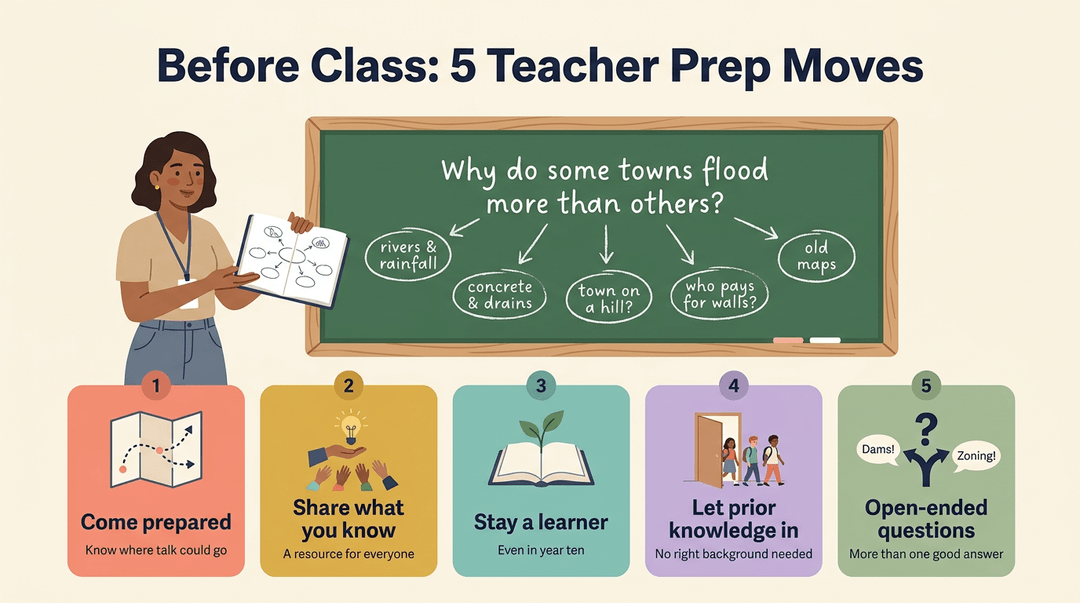
Picture a biology teacher who writes 'Why do some towns flood more than others?' on the board. She spends her prep period mapping follow-ups, so she can follow any student's idea without losing the room. Before class, you'll want to:
- Come prepared. Know where the talk could go.
- Knowledge isn't private property. Share it as a resource for the whole room.
- Stay a learner. You're always thinking, even in year ten of the same unit.
- Let prior knowledge in. Students don't need the right background to join.
- Plan open-ended questions in advance. Write ones with more than one defensible answer.
Why love and trust matter here
Love between teacher and students anchors everything. Trust in people's creative power means assuming every student has ideas worth examining. That also makes you a partner, working alongside students rather than doing things to them.
Take a struggling reader who stayed silent all semester. When her teacher asks what a character might be hiding and waits through the pause, she offers a guess. The teacher writes it on the board as a real idea.
When lecturing still has a place
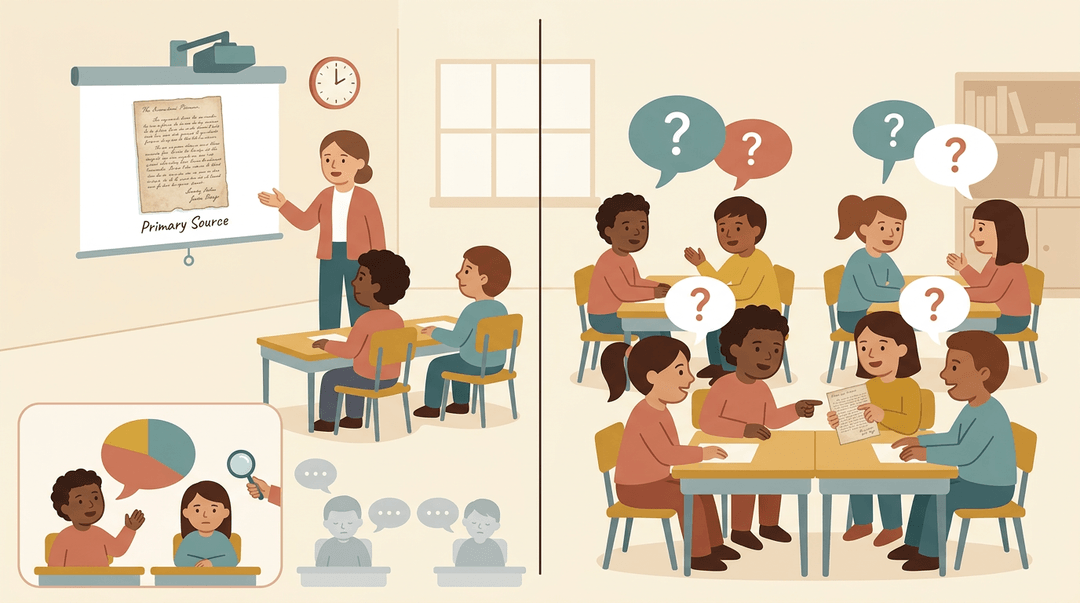
A lecture isn't rejected outright. Consider a history teacher who spends eight minutes on a primary source's background, then gives pairs three open questions.
The risk comes when lecture is the only method, because students get good at listening and quiet about thinking.
A lecture can also slide into indoctrination, pressing one set of answers on students until their questions stop.
Dialogue can also oppress when a discussion tilts toward the loudest voices or the answer you already have in mind. Keep checking who's really talking.
Planning a Lesson That Poses Real Problems
Use this guide when you want a lesson built around a problem your students care about, not a topic you deliver. Work through the five steps, then check the grade-band examples.
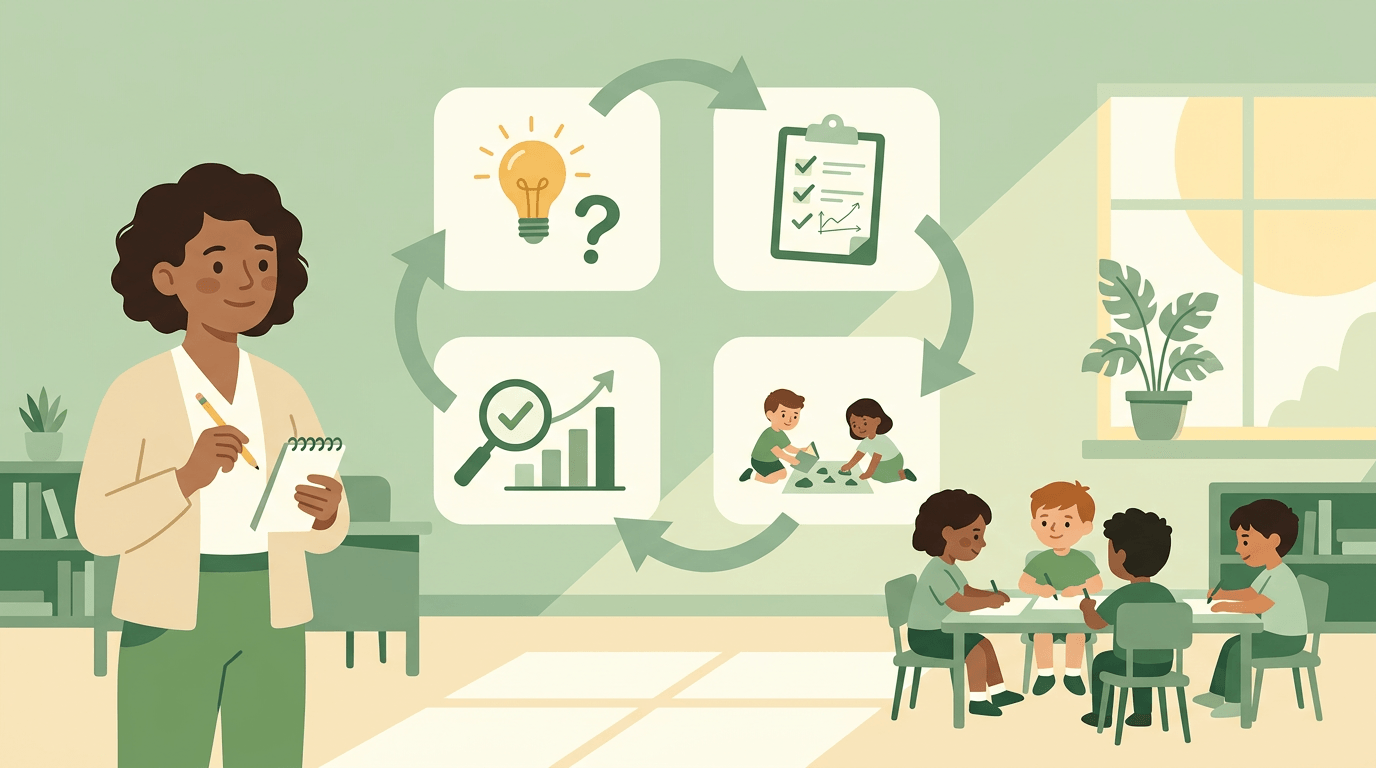
Build it in five steps
- Choose a real student issue
- Start with what students already notice, complain about, or ask.
- Jot it down plainly: "Recess games keep ending in arguments."
- Write a guiding problem question
- Make it open, with no answer you could look up.
- ✅ "Who decides what's fair at recess?" ❌ "What are the recess rules?"
- The difference: the first needs student thinking, while the second only needs recall.
- Prepare a codification
- A codification is an image, story, or data set that puts the issue in front of students.
- Try a photo of the playground, a short story, or a tally of recent arguments.
- Plan dialogue prompts
- Write three or four open questions in advance.
- Say: "What do you see? Who is affected? Why might it be this way? What could we do?"
- Design a reflection and action step
- Students choose one small, doable response, like a letter, a poster, or a changed rule.
- Then they reflect on what the action taught them.
⚠️ Watch out: If you already know the "right" answer and are steering toward it, you're back to banking education. Pose only questions you're genuinely curious about.
What it looks like at each grade
| Band | Real issue | Guiding question | Codification |
|---|---|---|---|
| Elementary | Fairness on the playground | "Is our game fair to everyone?" | Photo or drawing of recess |
| Middle | A local community issue | "What should change near us, and why?" | Short data table or news clip |
| High school | History source analysis | "Whose voice is missing from this source?" | Two sources that disagree |
| Homeschool or tutoring | Learner-chosen problem | "What do you want to understand?" | Something the learner brings |
Example: A fifth-grade teacher hears recess arguments and posts a photo of the kickball game. Students list who's playing and who's watching, then ask why. They draft a new rule together, try it for a week, and report back.
Quick checks during class
Run these while the dialogue is live, not afterward.
- Students voice questions. They ask as well as answer; if only you are asking, pause and invite theirs.
- You listen and learn. You hear something you didn't know, and you change course because of it.
- It connects to their context. Students link the problem to their own streets, school, or family.
- Exit ticket closes the loop. Ask: "What did we change, in our thinking or our plans?"
Draft and reuse problem-posing lessons in EMStudio's online lesson planner.
Freedom, Politics, and Social Change
Problem-posing education asks who gets to ask the questions, not just what students memorize. Here's what that looks like in your room.
Learning as a way to practice freedom
Picture a fourth-grade teacher asking, "Who decided which stories make it into our textbook?" That question starts the work of liberation, the opposite of domination, where one person decides for everyone else.
Learning becomes a practice of freedom, not a path to compliance.
Literacy works the same way: reading becomes liberation when students read the conditions of their own lives, not just the page.
Your job shifts from teaching what to think to teaching how to think. A middle school class asking why grocery prices differ between two neighborhoods shows that shift at work.
Why it looks toward hopeful change
Problem-posing looks toward a future that isn't here yet, one people can build through action. This is revolutionary futurity. Its hope is grounded in history, not wishful thinking.
Leaders must be dialogical, meaning they speak with people rather than to them. A revolution can't deposit slogans into passive listeners and expect change. Change needs participants, not spectators.
Consider a high school teacher whose students research a problem in their own school, like a lunch line that takes too long, then present a plan to school leaders. They practice shaping their future instead of waiting for it.
How the oppression cycle keeps repeating
Oppression doesn't always end when power changes hands. People shut out of decisions may become oppressors themselves, repeating what they once resented.
Traditional schooling reinforces submission when it rewards silence and memorization. Students learn the teacher's word is final.
Those who benefit from the current order often resist critical education, since questions can expose who holds power.
Where It Helps and Where It's Criticized
Problem-posing education has real strengths and real critics.
What students gain from it
Problem posing shifts focus from answers to questions, building critical thinking. A systematic literature review in the journal Venn found that problem posing “contributes positively to mathematical critical thinking.”
Students also build metacognitive awareness as they reflect on their own questions. A meta-analysis found a large, positive effect (Hedges’s g = 0.53) on cognitive mathematics outcomes, a promising sign for lasting learning.
Under self-determination theory (SDT), posing and solving your own problems can be expected to foster autonomy, competence, and relatedness, according to a Springer study. In class, that can mean more comfort, confidence, and friendships.
Real examples in classrooms and film
Dead Poets Society and a good mentor both push students to think for themselves. In your own classroom, which lessons had students asking, and which had them waiting?
Students used to banking education, where teachers deposit facts, may struggle at first. Consider a fifth-grade teacher who asks for one question about a story.
After a long silence, one student finally asks, “Why did she leave?” and the whole class starts talking.
Math isn’t the only home for it. A high school biology student might pose a question their lab can’t yet answer.
Where this approach falls short
Critics argue that Freire ignores student feelings. Problem posing can also impose thinking when teachers steer questions toward their own conclusions.
Percy’s view on dialogue is worth weighing too.
Banking and problem-posing are interdependent: students need foundational knowledge before they can pose good questions.
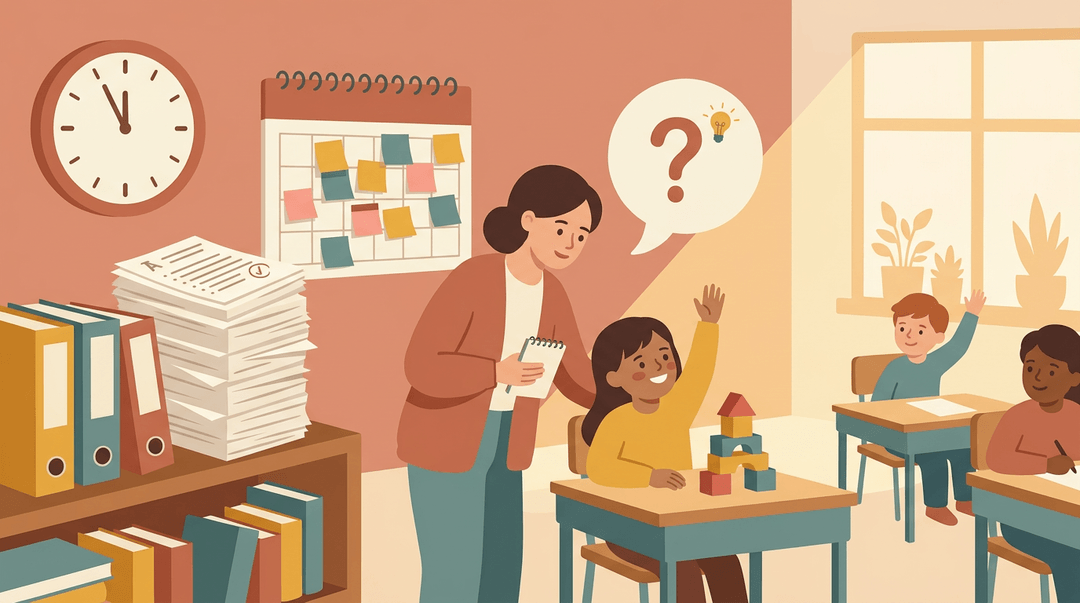
Time is the real constraint. Crowded curricula, testing pressure, and limited class time are among the issues facing education today, leaving little room for open questioning. Easing those pressures raises questions of education reform and policy.
At its heart, problem-posing education asks you to see learners as thinkers who can examine the world and help change it. It moves students away from passive memorization and toward questioning, dialogue, and action.
That shift takes planning, and it's worth the effort when students start seeing their ideas matter.
Ready to put this into practice? Check out our Lesson Planner to write, organize, and reuse lesson plans across multiple classes from one place.
References
- A Systematic Literature Review: Efektivitas Model Problem Posing Terhadap Kemampuan Berpikir Kritis | Venn: Journal of Sustainable Innovation on Education, Mathematics and Natural Sciences — journal.web.id (2026)
- Effects of Engaging in Problem-Posing Interventions on Learners’ Cognitive Mathematics Outcomes: A Comprehensive Meta-Analysis — doi.org (2025)
- Problem posing and motivation: the effects of posing and solving one’s own modelling problems on autonomy, competence, relatedness, and self-efficacy | ZDM – Mathematics Education — link.springer.com (2026)
- Contribution of Paulo Freire: An Enduring, Eclectic Educator — pdfs.semanticscholar.org
- The dialectical materialism of Paulo Freire’s critical pedagogy — doi.org (2017)
Frequently asked questions
What are the 7 domains of PPST with explanation?
The seven domains of the Philippine Professional Standards for Teachers (PPST) are: **Content Knowledge and Pedagogy**, teachers’ subject knowledge and teaching methods; **Learning Environment**, creating safe, fair, and supportive classrooms; **Diversity of Learners**, responding to learners’ varied backgrounds, needs, and abilities; **Curriculum and Planning**, designing and delivering relevant, well-sequenced instruction; **Assessment and Reporting**, monitoring learning and communicating progress; **Community Linkages and Professional Engagement**, working with families and communities and following professional ethics; and **Personal Growth and Professional Development**, continually improving through reflection and learning.
What are some issues facing education?
Education faces issues such as crowded curricula, pressure from testing, and limited class time, which can leave little room for open questioning and dialogue. More broadly, schools also contend with unequal access and resources, teacher workload and shortages, and the challenge of meeting students’ diverse needs.
What does Paulo Freire mean by problem posing education?
Paulo Freire’s problem-posing education treats students as active thinkers rather than empty containers for facts. Teachers and learners investigate real problems together through dialogue, connect questions to students’ lived experiences, and critically examine how the world works and how it might change.