Education Reform Explained: History, Policy, and Practice

Jump to section
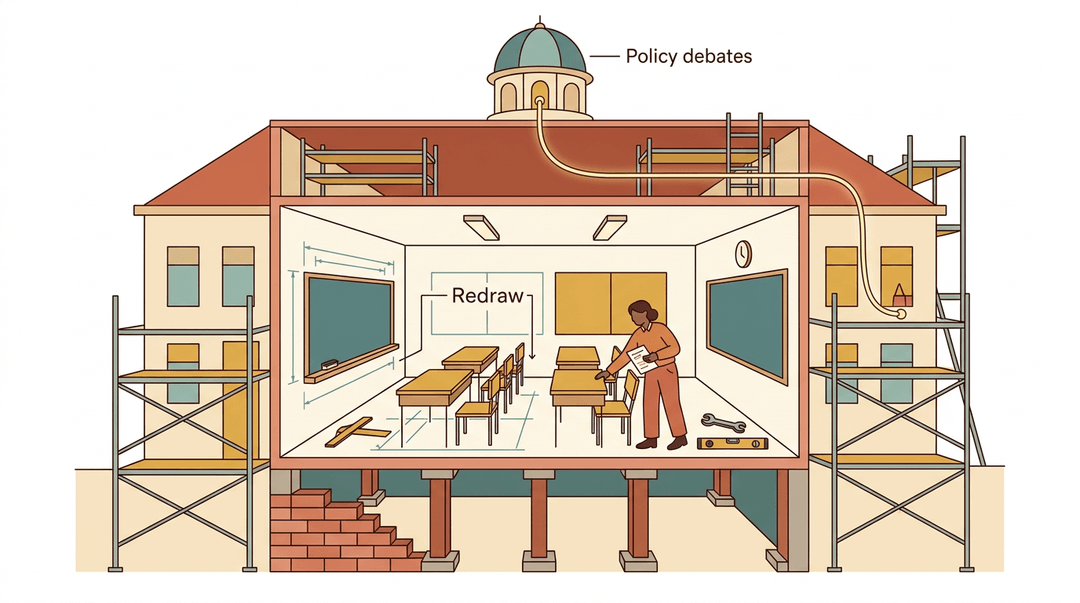
Think about renovating an old house. You don't just repaint one wall and call it done: you rethink the wiring, the layout, the foundation, all at once. Education reform works the same way.
It's the ongoing effort to rebuild how schools teach, test, and support students, from policy debates in Washington to the choices you make each morning in your own classroom.
In this post, we'll trace where reform ideas came from, where they stand today, and how you can put them to work in your lesson plans.
What Education Reform Actually Means
Ask ten people to define education reform and you'll get ten different answers. At its core, though, it's the ongoing effort to change how schools operate so students actually learn more, not just attend more.
Judging schools by results, not inputs
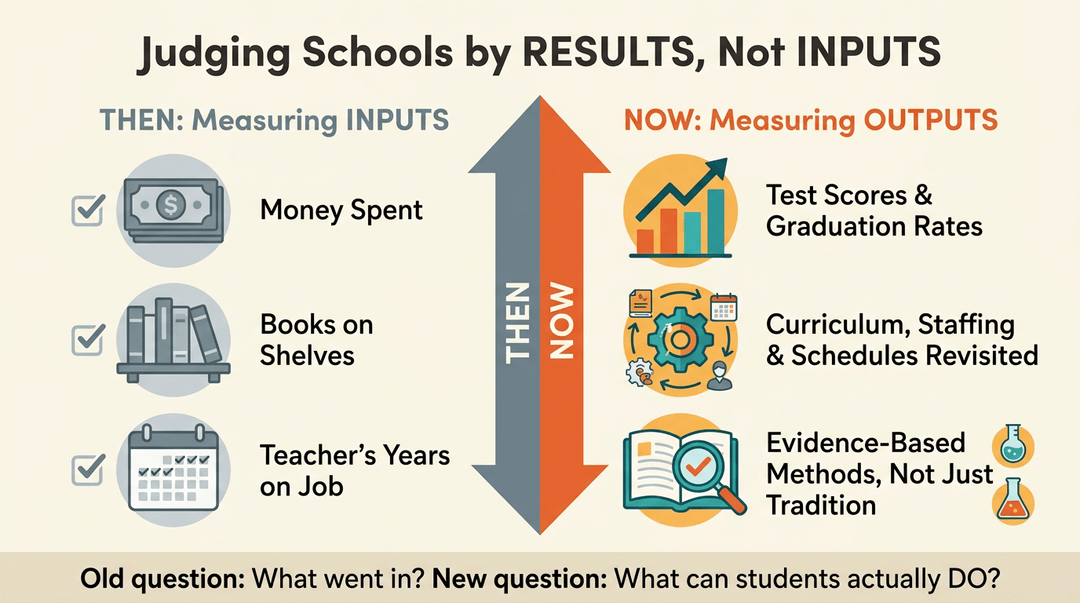
For decades, reformers measured schools by inputs: how much money went in, how many books sat on shelves, how many years a teacher had logged. That's shifted toward outputs: what students can actually do. This means:
- Student achievement takes center stage, tracked through test scores, graduation rates, and skills gained.
- Schools face continual modification: curricula, staffing, and schedules all get revisited when results fall short.
- Decisions lean on evidence-based methods: strategies proven to work in real classrooms, not just tradition.
Why people push for education reform
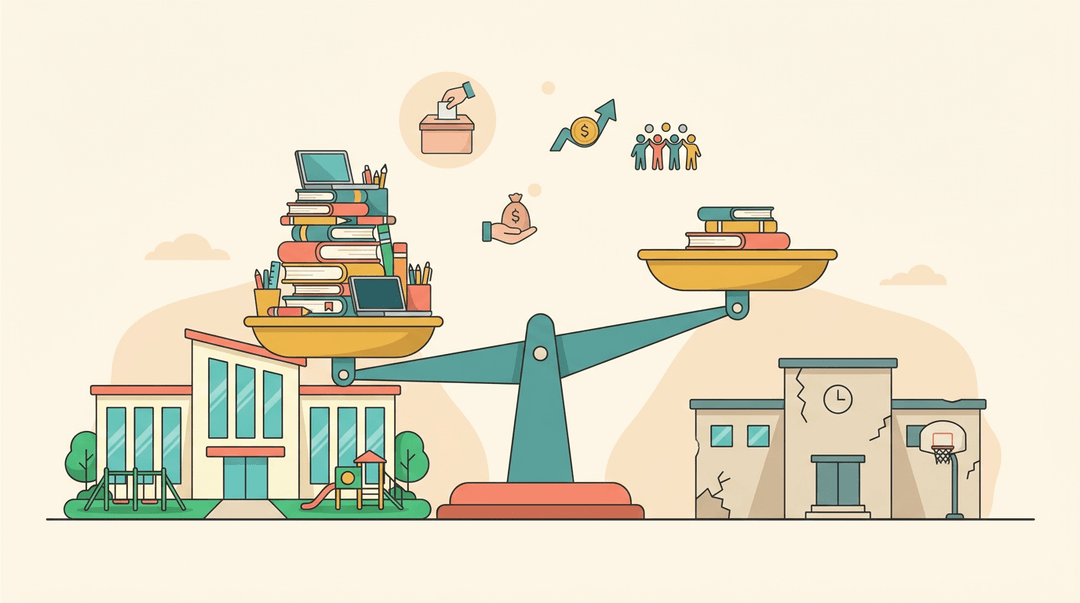
Reform rarely happens in a vacuum. People push for it because schools sit at the center of bigger fights over fairness and opportunity.
- Equity drives much of it: addressing poverty, gender, and class gaps, including uneven school funding that leaves some students with far fewer resources than others.
- Reformers point to achievement gaps and other societal ills schools alone can't fix, but might help narrow.
- Strong schools build democracy and civic capacity: informed voters and engaged citizens don't happen by accident.
- There's an economic case too. According to the Open Knowledge Repository, returns on investment in education based on human capital theory have been tracked since the late 1950s.
- Some reform efforts even tie back to national unity, using shared schooling to knit together a country's identity.
Standards, Testing, and Accountability
Standards set the target, but testing decides how hard schools chase it, and that's where reform gets messy. Accountability sounds good on paper. In practice, it shapes what happens in your classroom every day.
When testing narrows what gets taught
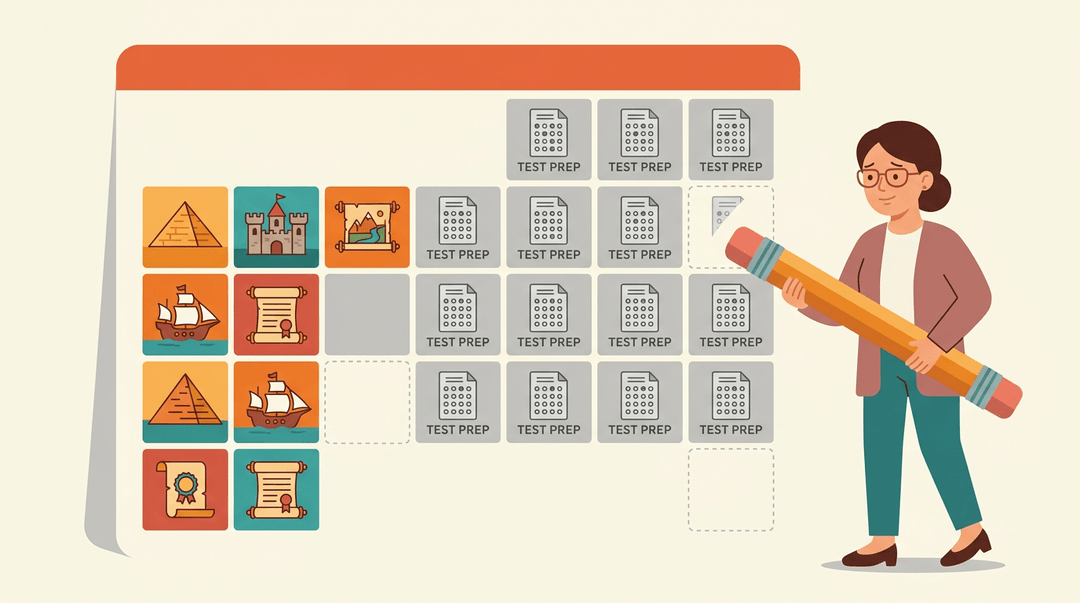
Consider a fifth-grade teacher who once spent a month on a rich history unit, now trimmed to a week to make room for test prep. That's test coaching in miniature, and it repeats in schools nationwide.
A study published in the International Journal of Assessment Tools in Education found that test-based accountability has "contributed to greater transparency and measurability in education systems and has stimulated student achievement," but it has also driven curriculum narrowing and teaching to the test.
The gap that opens up is between test scores and real learning: students who can bubble in an answer but struggle to apply it. Aligning curriculum with assessments should mean the test reflects what you already teach, not the other way around.
Holding every student to high expectations
Standards-based reform rests on one belief: every student can succeed with the right support. That's a sharp break from grading on a bell curve, which assumes some students will fail no matter what.
Achievement gaps across race, income, and language groups show how far that promise still has to travel, and rigorous graduation requirements only help if the support underneath them is just as rigorous.
The trouble with top-down mandates
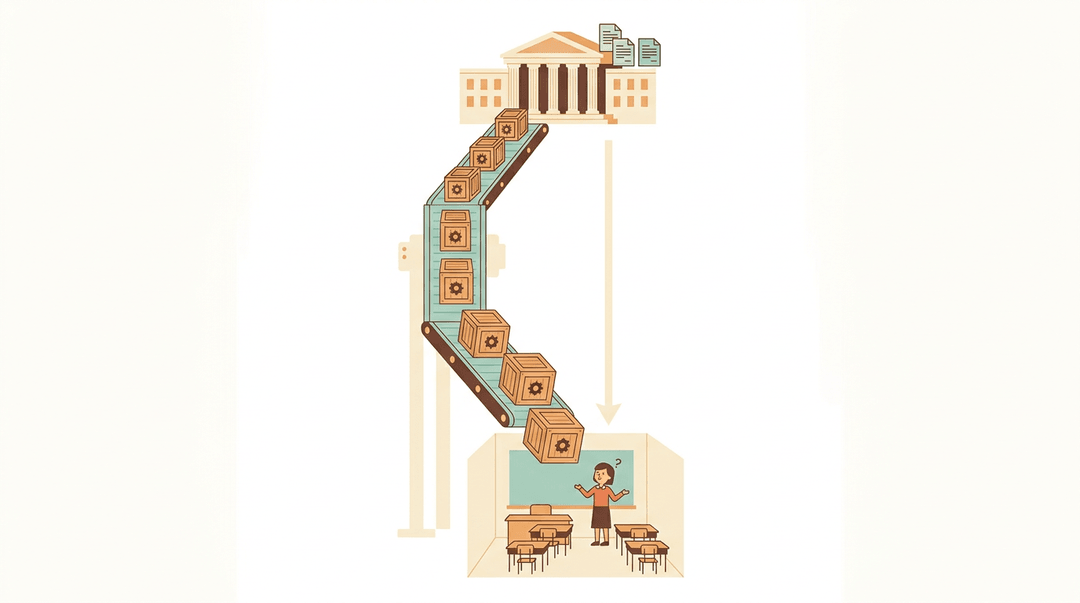
Much of this gets decided far from your classroom: state legislation and district rules hand down mandates with little local judgment.
Critics trace this to the factory model of schooling, built to standardize instruction the way an assembly line standardizes parts, and to reform's first wave, which leaned on compliance over teacher expertise.
Some of the pressure comes from nostalgia for a "traditional" schooling that never quite matched reality. School choice, charters, and vouchers grew partly as a release valve, though evidence on whether choice actually lifts outcomes remains mixed.
Bringing Education Reform into Your Lesson Plans
Reform stays abstract until it shows up in tomorrow's plan. This routine turns it into three moves you can run in a single planning period: audit what you have, pick one framework, then check every lesson against a short list before you teach it.
Start with a 15-minute audit
Pull up next week's plans and scan for three things:
- Inputs vs. outputs. "Cover chapter 4" is an input; "students explain erosion in a diagram" is an output.
- If the plan only lists what you'll do, it's input-heavy.
- Test-driven narrowing. Count the tasks that simply mirror the test format.
- If every activity is multiple-choice practice, the test is writing your curriculum.
- Equity gaps in materials. Ask: who can't access this as written?
- One reading level, one language, one way to respond is a gap.
Pick the framework your audit points to
Your audit results choose the framework for you. Adopt one, not all three: each fixes a different problem. (UDL is Universal Design for Learning, a framework for building in multiple ways to access and show learning.)
| If your audit showed... | Start with... |
|---|---|
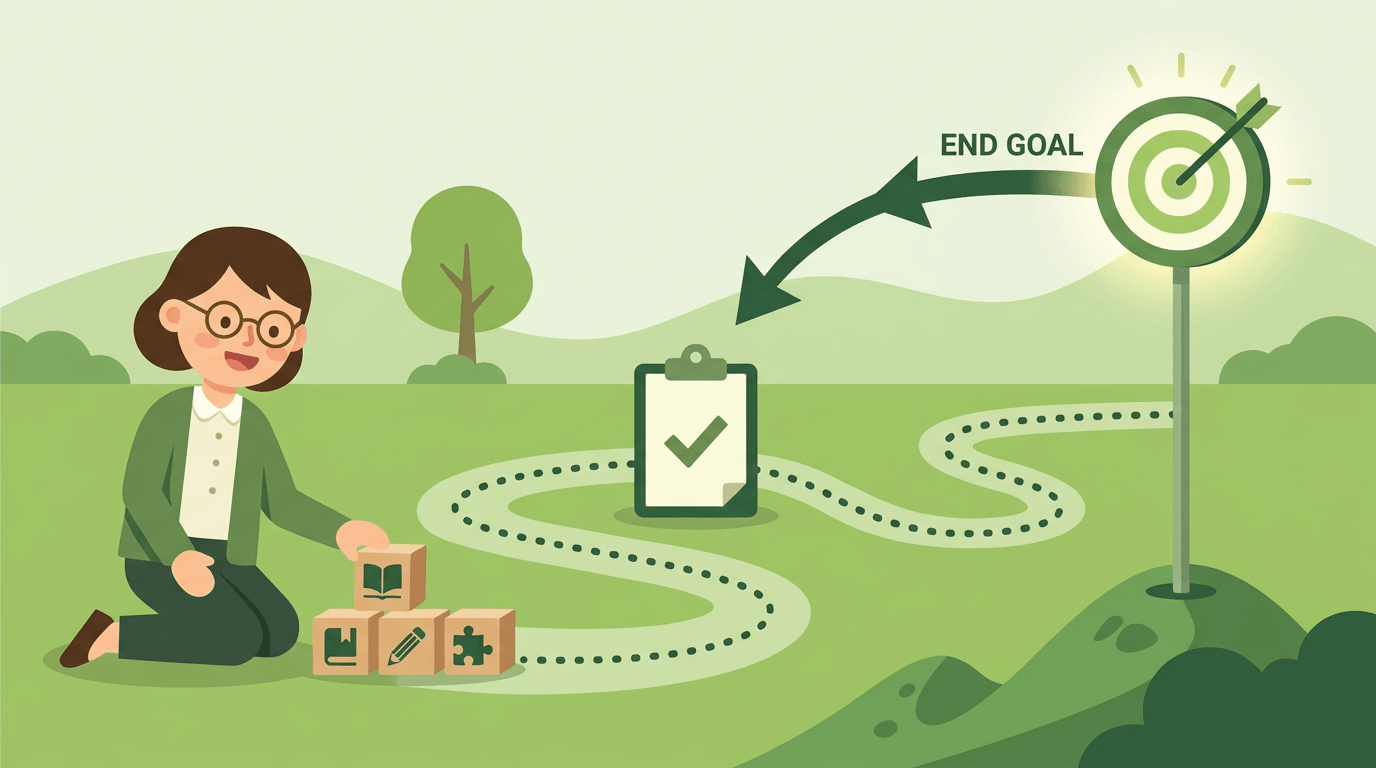
| Plans full of inputs, fuzzy outcomes | Backward design: name the outcome, plan back from it |
| One-size-fits-all materials | UDL: multiple ways in, multiple ways to respond |
| Test prep crowding out engagement | Inquiry: open with a question students investigate |
Example: A fifth-grade teacher using backward design starts with "students can compare two ecosystems in a labeled diagram," then plans only the activities that build toward it. The opening video she always used gets cut: it never fed the outcome.
Run every plan through a reform checklist
Before you teach, confirm all four:
- Clear objective stated. Written where students can see it and read it back.
- ✅ "You can name two causes of erosion." ❌ "Today we'll cover erosion."
- The difference: the first names what students can do, not what you'll present.
- Differentiated tasks included. At least two ways to work with the content.
- For instance: show it in a diagram or explain it in a paragraph.
- Evidence-based practice used. Name one in the plan itself.
- Retrieval practice, worked examples, or spaced review, written next to the activity.
- Reflection and closure built in. Protect the last five minutes.
- Say: "On your exit ticket, one thing that clicked and one that didn't."
A plan that passes all four is reform in practice, whatever's happening in the policy debate. Once yours does, save these frameworks as reusable templates in EMStudio's lesson planner so next week starts from the checklist, not from scratch.
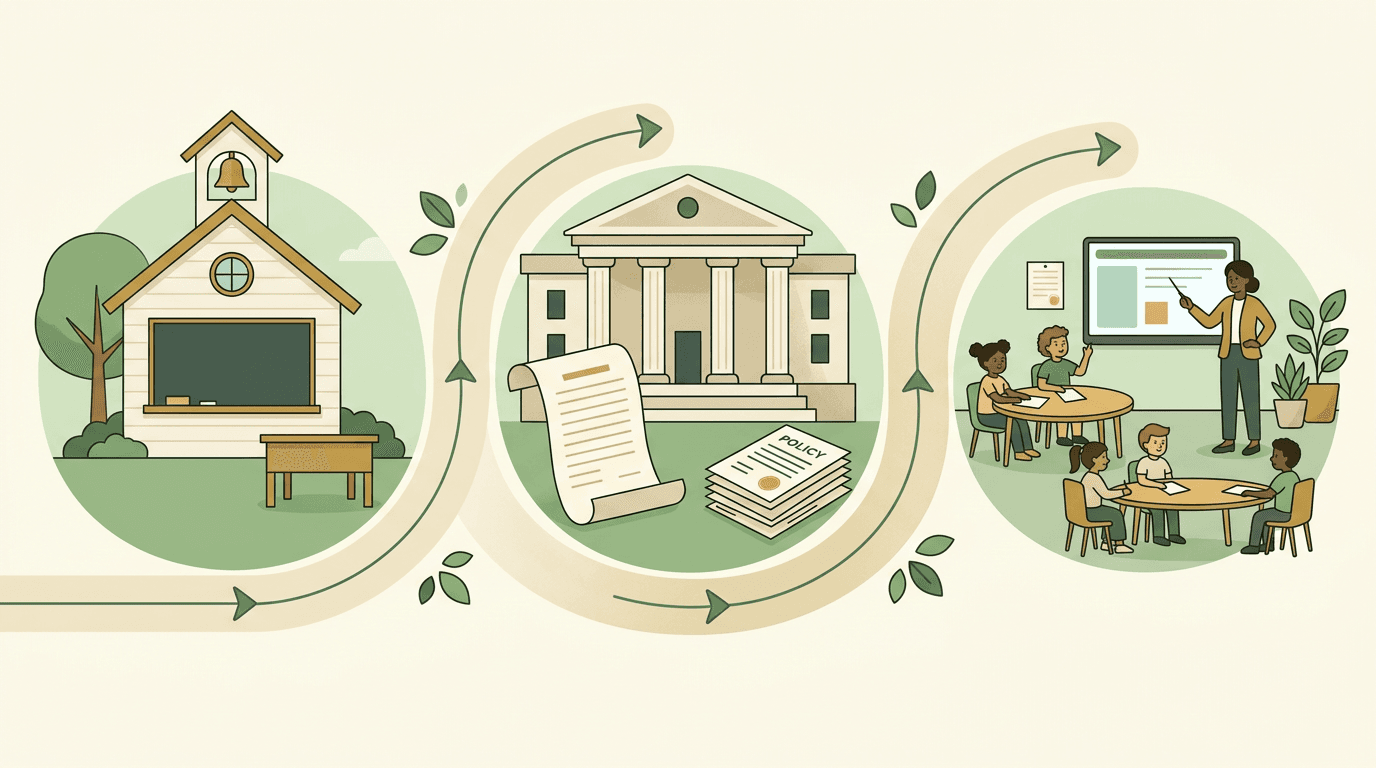
Where Education Reform Ideas Started
Long before "reform" became a buzzword in school board meetings, teachers and thinkers were already arguing over what a classroom should look like.
Tracing that history helps explain why today's debates over testing, funding, and school choice still feel so familiar.
Early schooling models before reform
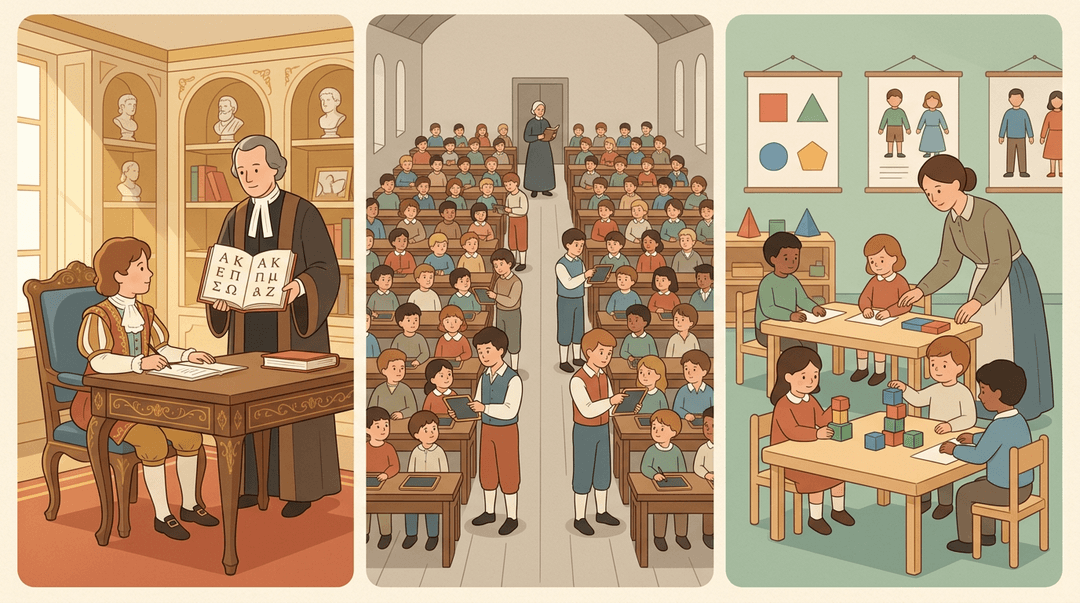
Before any formal reform movement, schooling was scattered and unequal. Wealthy families hired tutors for a classical curriculum built on Greek and Latin, while charity schools and grammar schools offered basic literacy to poorer children, if they offered anything at all. The monitorial system, developed by Joseph Lancaster and Andrew Bell, let one teacher instruct hundreds of students by training older pupils to relay lessons to younger ones: a cheap fix for a real shortage of teachers. Prussia's early kindergarten model introduced structured, age-appropriate instruction that later reformers would borrow directly.
How public schools first began
Horace Mann pushed hardest for what he called common schools: publicly funded, open to all children regardless of background. His work helped spread compulsory education laws across states, turning school from a privilege into an expectation. The goal wasn't just literacy. It was a shared, non-sectarian education that could hold a diverse young country together.
Progressive thinkers who shaped classrooms
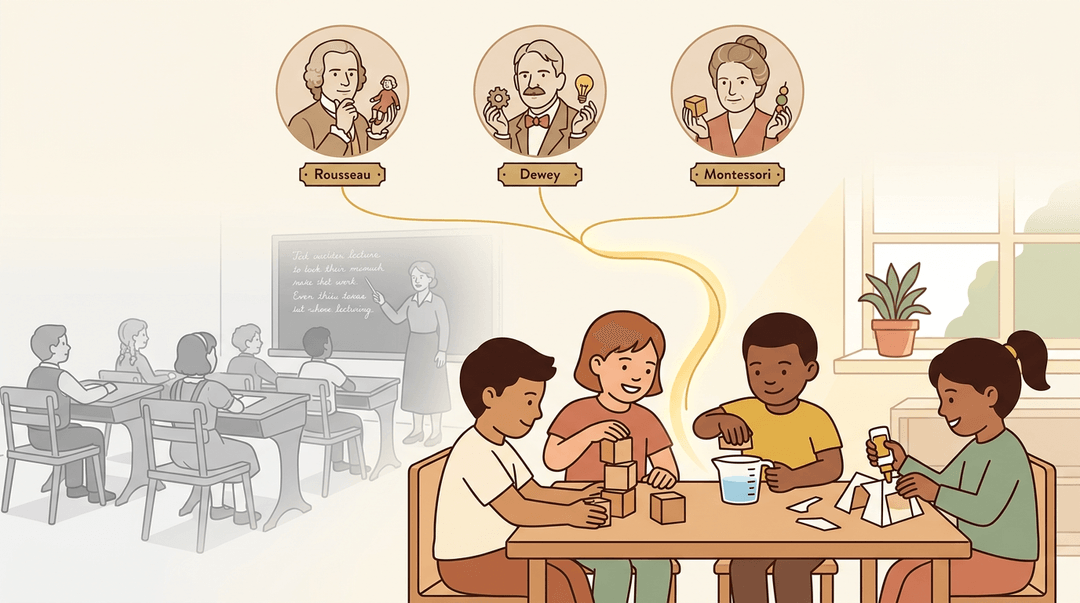
- John Dewey argued that students learn best by doing, not by memorizing, an idea now called experiential learning.
- Jean-Jacques Rousseau's earlier child study movement insisted that children weren't small adults and needed teaching suited to their own development.
- Maria Montessori built a humanistic approach around that same insight, prioritizing independence and hands-on materials.
Dewey's influence faded mid-century as standardized testing rose, but his fingerprints are still visible any time you plan a lesson around a hands-on project instead of a lecture.
Rise of big, centralized school systems
As enrollment grew, small schoolhouses gave way to large, centralized high schools with tracking and electives, sorting students onto different paths. That growth brought more state and federal bureaucracy, and with it, less control for individual schools and teachers: a tension that still shapes reform debates today.
Teacher Professionalism and Labor Battles
Reform doesn't just reshape curriculum and testing. It reshapes the working life of the person standing in front of the class, and that's sparked some of the fiercest fights in education history.
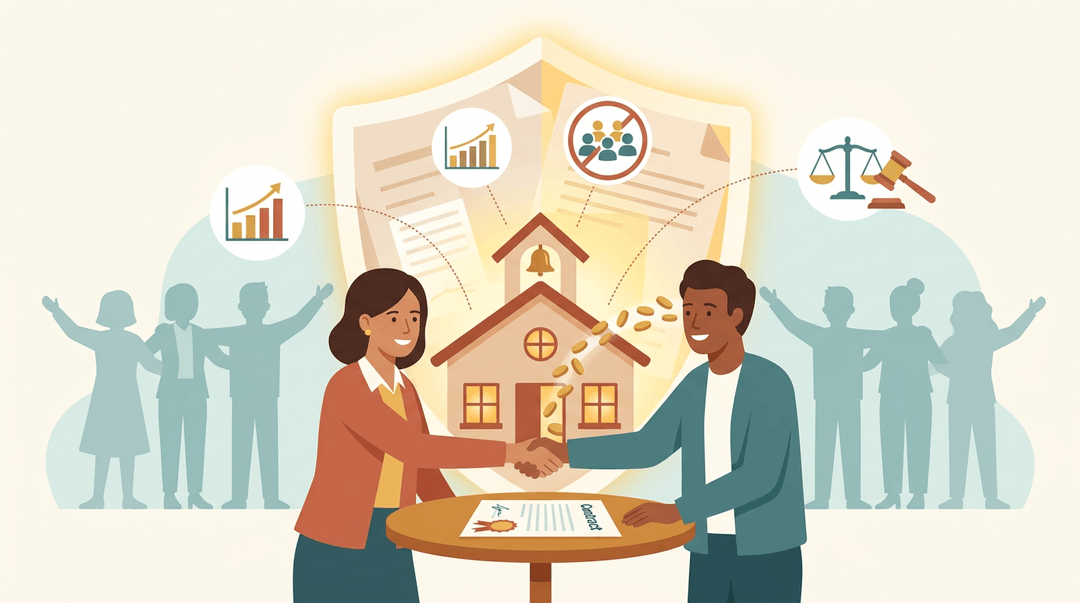
How unions pushed for better teaching conditions
Teaching used to carry little formal protection or standing. Unions changed that, pushing the job toward a true profession with credentials, tenure, and a voice in policy.
Collective bargaining became the main lever: contracts that set class sizes, prep time, and pay scales, won through negotiation rather than granted as a favor.
Due-process protections followed, giving teachers a fair hearing before dismissal instead of being let go on a whim.
Unions also fought for steady funding streams for salaries and student services, the budget lines that keep a school staffed and supported.
When reform undermines teacher autonomy
Not every reform has landed well with teachers. Critics point to:
- "Teacher-proofing," scripted programs designed to work no matter who's delivering them, as a vote of no confidence in the profession.
- Merit pay schemes tie salary to test scores, often ignoring what actually happens in a classroom.
- Detailed evaluation checklists, sometimes nicknamed "snoopervision," turn observation into box-checking.
Put together, these approaches can quietly strip away teacher autonomy rather than build it.
Teacher-led reform from the ground up
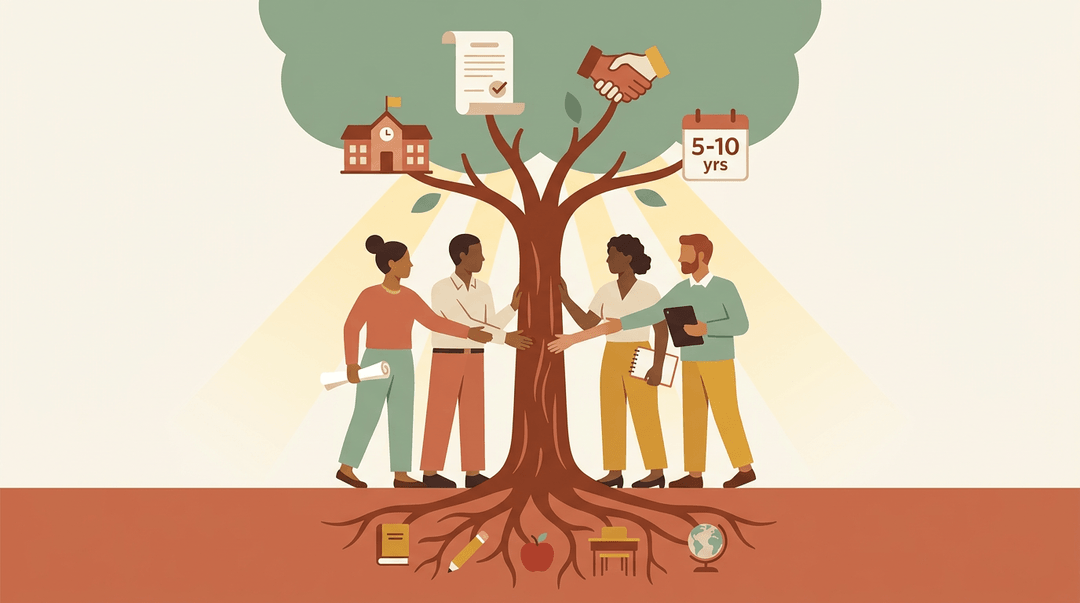
Some of the most promising change starts with teachers themselves. Education researcher Larry Cuban describes this as bottom-up reform, where:
- teacher-led school proposals
- participative governance
- waivers from union contract provisions
- five- to ten-year school commitments
let classroom practice shape policy instead of the other way around.
Technology's Growing Role in Education
Any honest look at reform has to reckon with the screens now sitting on every desk. Technology hasn't just changed what's taught: it's changed how a lesson gets built in the first place.
Computers changing the classroom
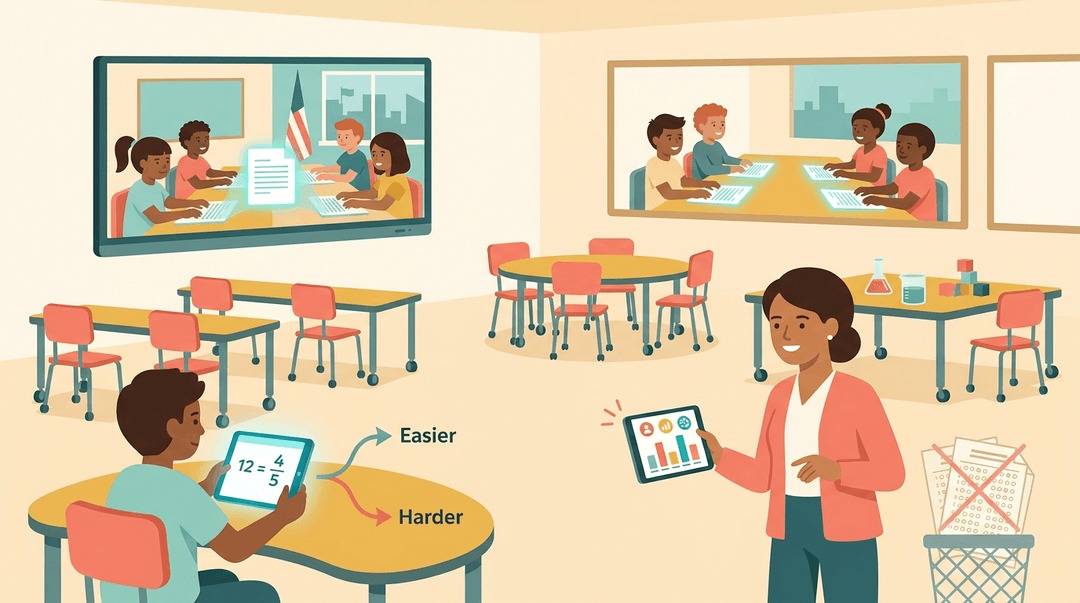
Computer-based math instruction now adjusts problems in real time based on a student's answers, something a worksheet can't do.
Electronic test-taking has replaced bubble sheets in most districts, cutting grading time and giving teachers faster data on who's struggling.
The internet turned group work into something bigger than the four walls of a room: students can collaborate with a class across the country on a shared document.
Some schools have even experimented with 3D classroom design, building flexible spaces that reconfigure for lecture, lab work, or small-group discussion in the same period.
Mixing online and in-person learning
K-12 online course enrollment has grown steadily, and the flipped classroom trend, where students watch instruction at home and use class time for practice, has grown alongside it.
That mix, known as blended learning, holds up under scrutiny: a systematic review and meta-analysis found it has a consistent positive effect compared with no intervention, and performs as well as or better than nonblended instruction.
Wikis, blogs, and social networking tools have become everyday ways for students to write, reflect, and respond to each other outside class time.
AI tools for personalized learning
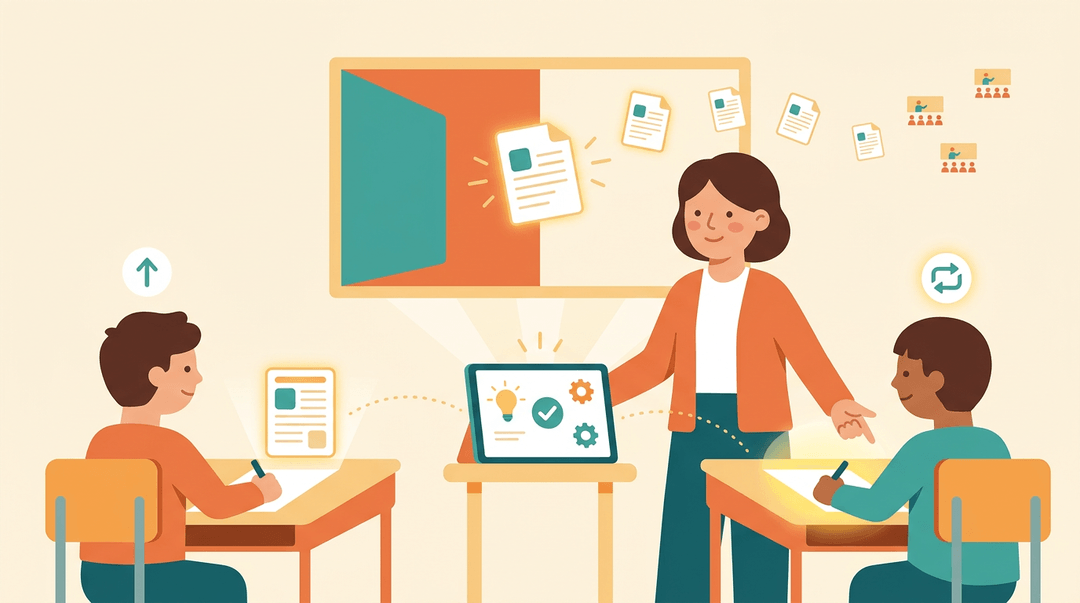
Expert systems can guide practice and flag gaps, but they're built to support teachers, not replace them.
Multiple intelligences assessments and self-paced, individualized courses let a student who finishes early move ahead while a classmate gets another pass.
Open-format course sharing extends that reach further, letting one well-built unit serve classrooms far beyond the one it was written for.
Education Reform Around the World
Reform isn't just a local fight over budgets and testing. It plays out on a global stage too, and some of the sharpest lessons for your own classroom come from watching how other countries handle it.
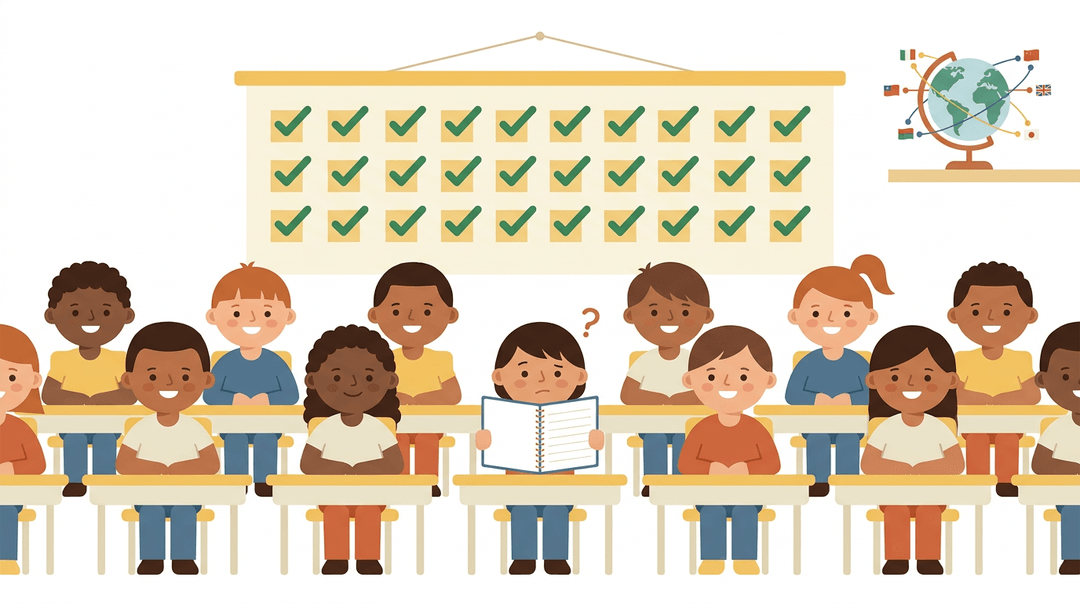
Global pushes for education for all
The Education for All movement pushed nations to track something simple but urgent: how many children actually made it into a classroom at all.
That assessment fed directly into the Education 2030 Incheon Declaration, which set an ambitious international agenda aiming to "ensure inclusive and equitable quality education and promote lifelong learning" for every learner.
The catch is that showing up isn't the same as learning. Many low-income countries still face a real learning crisis: kids sit in school for years without gaining basic reading or math skills.
That's why UNESCO spends so much energy coordinating governments, NGOs, and donors around one shared scoreboard.
Reform lessons from other countries
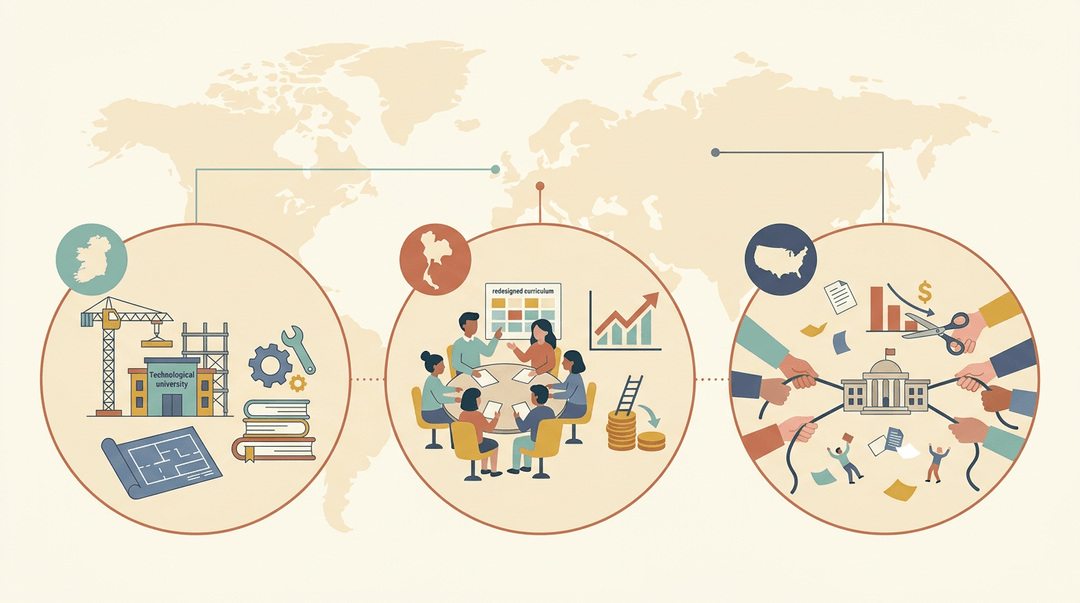
Ireland rewrote statutory education law and curriculum, then built out technological universities that blend hands-on training with academic depth.
Thailand took a different route, retraining classroom teachers around a redesigned curriculum, and the payoff is measurable: better initial education there has helped lower poverty and lift social mobility, according to OECD research.
Back in the US, reform politics look messier. The Trump administration laid off roughly 90% of one federal education institute's staff as part of 2025 governmentwide cuts, letting tens of millions in funding expire, per Education Week.
Lawmakers pushed back hard: one representative called the broader attempt to dismantle the Department of Education one of the administration's most harmful moves.
Outside groups keep pulling in their own directions too, including the Center for Education Reform and Democrats for Education Reform, founded in 2007 by a group of New York hedge fund managers to promote charter schools.
Education reform isn't just a policy debate happening far above your classroom. It's history, testing, funding, technology, and labor all pulling at the same question: how do we help students learn better?
Once you see the pattern, it's easier to spot which reform ideas are worth bringing into your own teaching.
Ready to turn reform thinking into real lesson plans? Check out our Lesson Planning feature to write, organize, and reuse plans across every class you teach.
References
- From measurement to meaning: Reconsidering test-based accountability and educational quality — dergipark.org.tr (2026)
- Larry Cuban on School Reform and Classroom Practice: From the Bottom Up: Teachers as Reformers — nepc.colorado.edu
- The Effectiveness of Blended Learning in Health Professions: Systematic Review and Meta-Analysis — pubmed.ncbi.nlm.nih.gov
- Case Decries Trump Attempt To Dismantle U.S. Department Of Education — case.house.gov
- International legal instruments for the right to education — unesco.org (2025)
- Strengthening the skills of youth in initial education ... — oecd.org (2025)
- What Now for Democrats for Education Reform? — buckscountybeacon.com (2025)
- Open Knowledge Repository — openknowledge.worldbank.org
- Trump's Education Department Is Letting Tens of Millions of Dollars Expire — edweek.org
- Grant: Center for Education Reform — communities.grantsoffice.com
Frequently asked questions
What is education reform?
Education reform is the ongoing effort to improve how schools teach, assess, organize, and support students. It can involve curriculum, testing, funding, staffing, technology, school choice, and teacher policy, with increasing emphasis on student outcomes, equity, and evidence-based practice.
Why did Trump dismantle the Department of education?
Trump sought to dismantle the U.S. Department of Education as part of a broader effort to reduce federal involvement in schooling and return more authority to states, districts, and families. However, the department was created by Congress, so abolishing it would require congressional action. The administration also pursued major staffing and funding reductions, including cuts affecting federal education research and support programs.
What has Trump cut from education?
Trump's education cuts included major reductions in Department of Education staffing and proposed or implemented reductions to federal education programs and research. In 2025, roughly 90% of the staff at one federal education institute was laid off, and tens of millions of dollars in funding were allowed to expire. The broader effort also threatened federal oversight, grants, and other support for schools and students.
What was the educational reform movement?
The educational reform movement was a broad historical effort to make schooling more public, accessible, organized, and effective. In the United States, Horace Mann's common-school movement promoted publicly funded education for all children, while later thinkers such as Rousseau, Dewey, and Montessori emphasized developmentally appropriate, experiential, and hands-on learning. Reform later expanded to include compulsory schooling, centralized systems, standards, testing, accountability, equity, teacher professionalism, and technology.