Outcome Based Education Meaning, Principles & How It Works

Jump to section
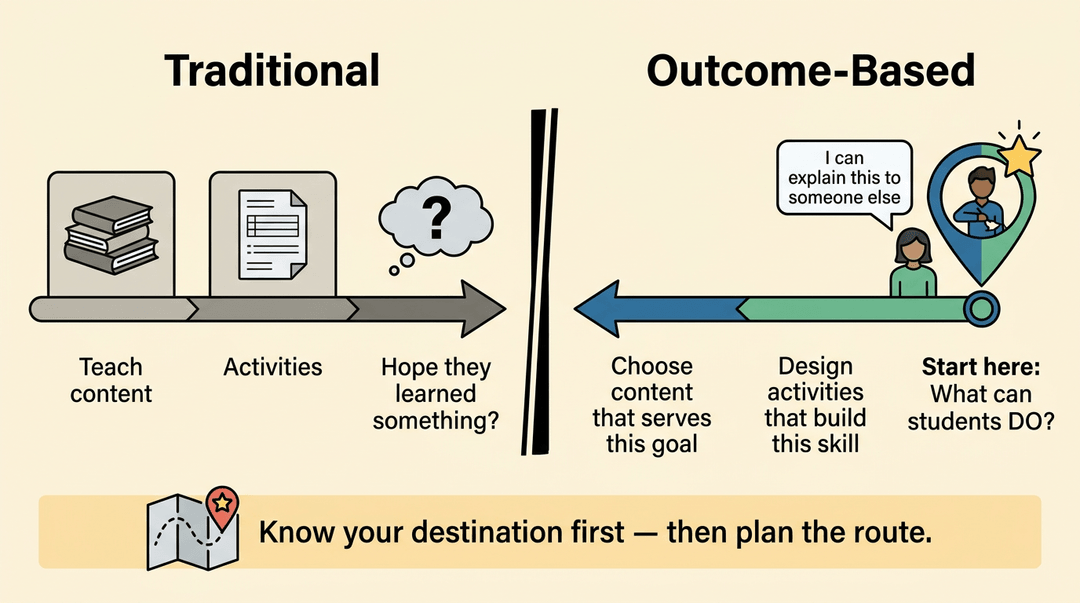
Think about the last time you planned a trip somewhere new. You probably started with one question: what do I want to get out of this? Once you knew the destination, everything else fell into place, what to pack, which route to take, how long to stay.
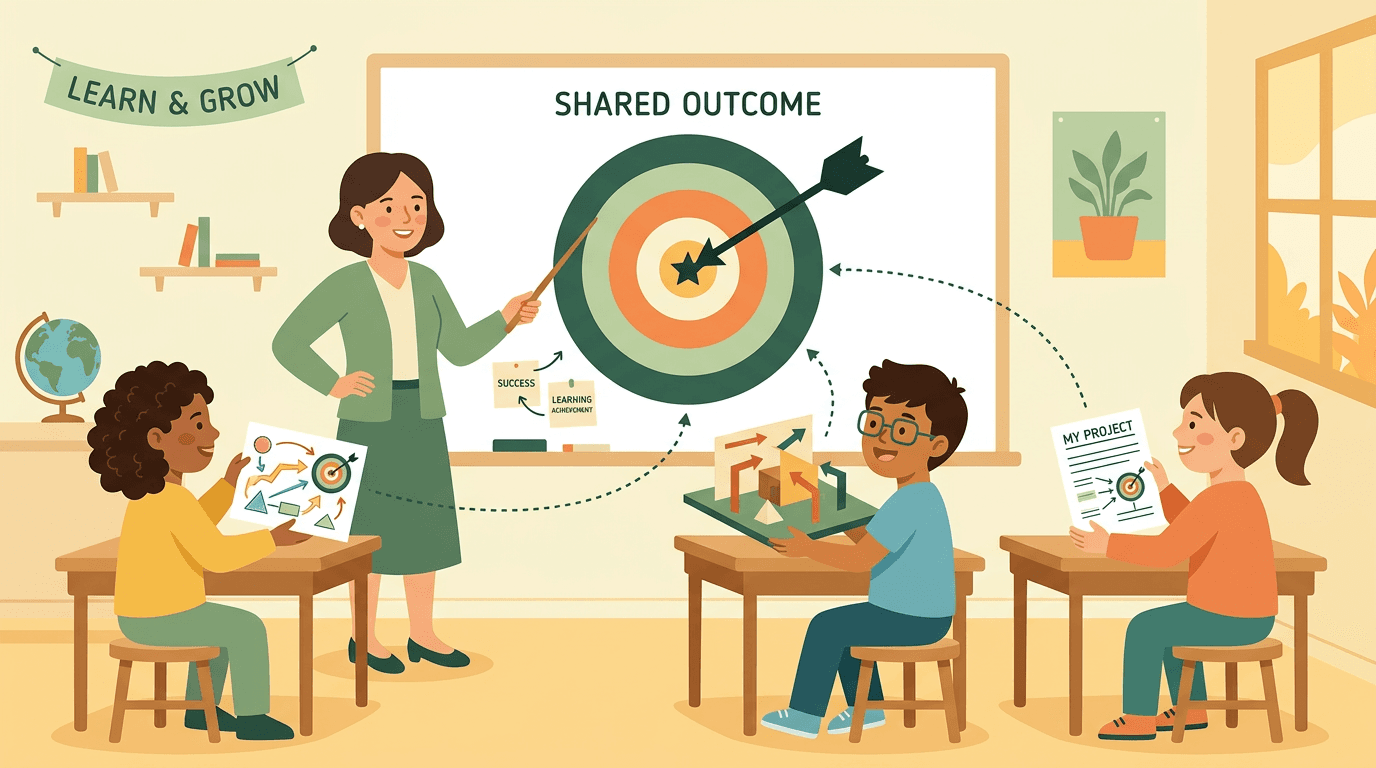
Outcome-based education (OBE) works the same way. Instead of starting with content and hoping learning happens, you start with a clear picture of what students should be able to do by the end, then build everything backward from there.
In this post, we'll unpack what OBE actually means, walk through its core principles and features, and show you how it translates into lesson planning decisions you can act on right away.
Outcome Based Education Meaning and Core Idea
At its core, outcome-based education (OBE) flips the usual question. Instead of asking "what will we teach?", it asks "what should students be able to do when they're done?"
Everything else, the content, the activities, the assessments, works backward from that answer.
What outcome based education actually means
OBE is a student-centred educational philosophy built on measurable learning outcomes. It puts results ahead of inputs: less emphasis on how many chapters you covered, more on what students actually know and can do.
A student who completes a unit on persuasive writing, for example, doesn't just study the genre. They produce an essay assessed against a defined rubric, and that essay is the evidence of learning.
How OBE differs from traditional education
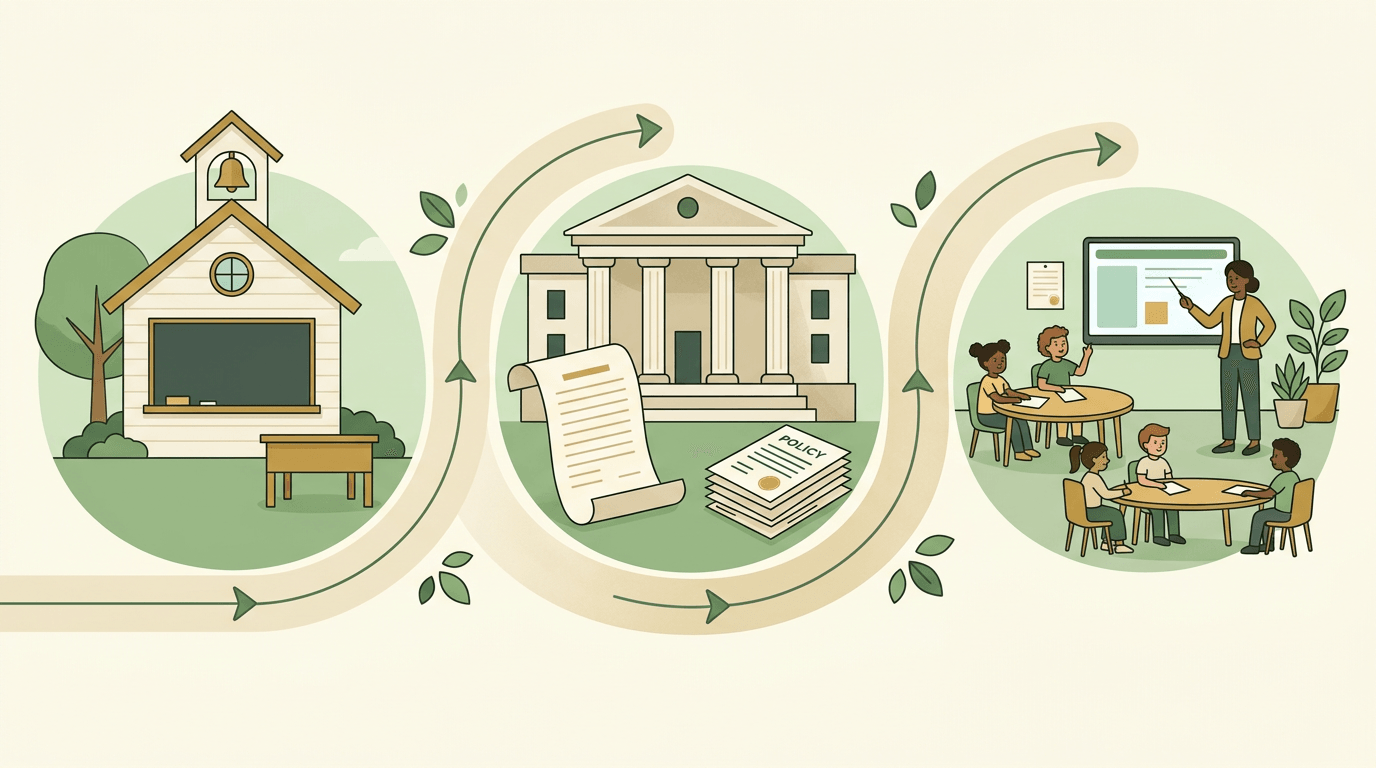
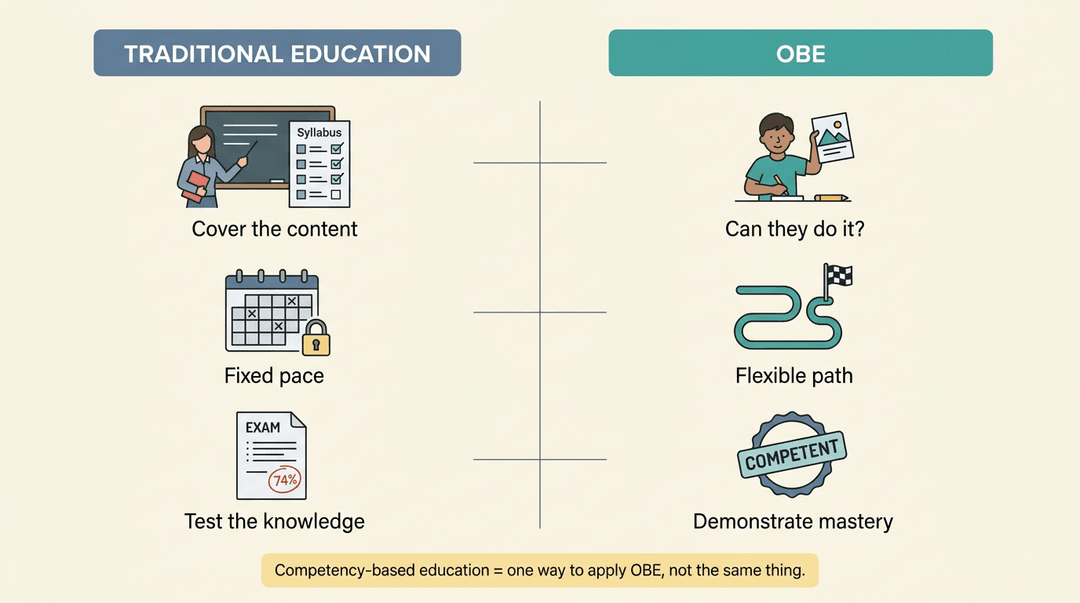
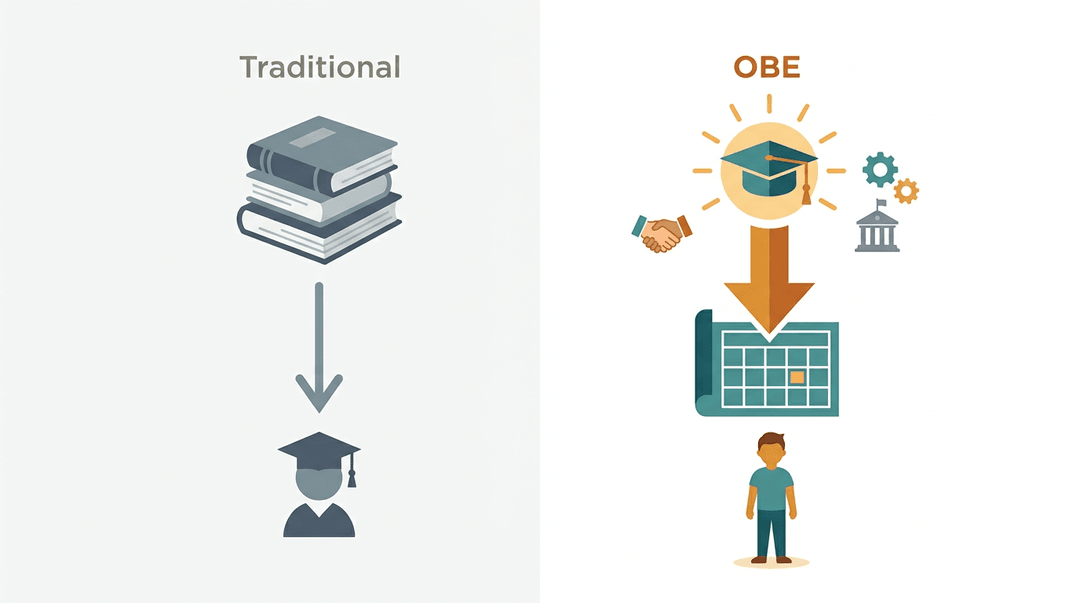
Traditional education tends to be teacher-centred and content-driven: cover the syllabus, sit the test. OBE is the opposite. It's flexible rather than rigid, practical rather than rote, focused on demonstrated competency rather than content delivery.
You may hear competency-based education used interchangeably with OBE. The terms overlap, but OBE is the broader framework; competency-based models are often one specific way to apply it.
Where OBE came from
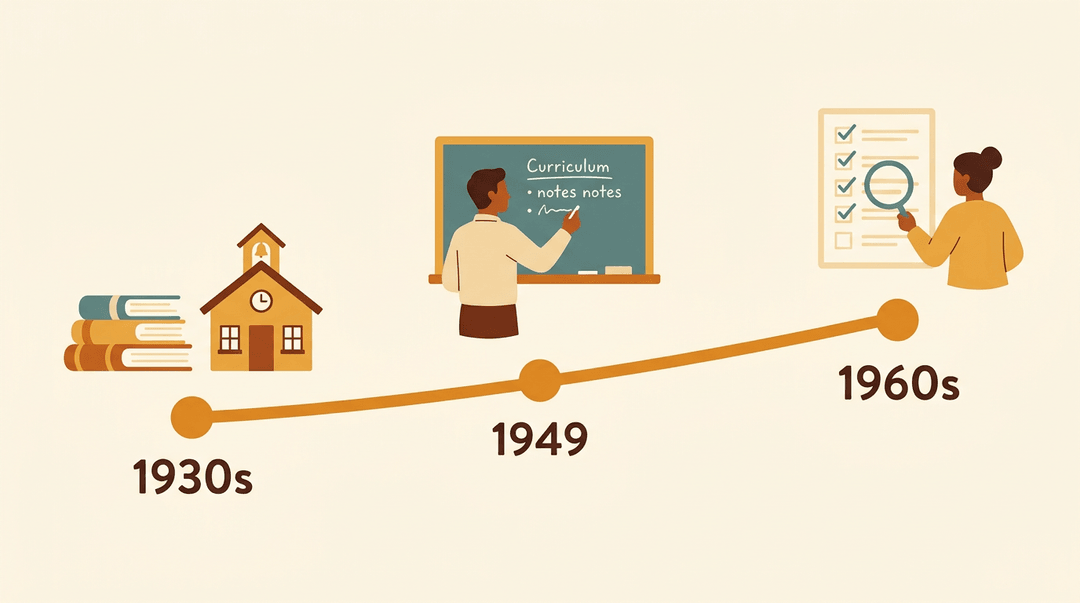
The roots go back further than most teachers realise. The Education Commission of the States traces OBE to the 1930s and a study involving 300 colleges and 30 high schools.
Ralph Tyler formalised the thinking in 1949 with his landmark curriculum principles. Later, Benjamin Bloom is credited with coining the term "OBE" in the 1960s.
His work gave rise to Mastery Learning, a specific OBE model where students progress only after demonstrating mastery of each outcome.
The Guiding Principles Behind OBE
OBE isn't one fixed model. William Spady, who formalized the framework, identified three types:
- Traditional OBE, which improves existing structures
- Transitional OBE, which redesigns curriculum around real-world competencies
- Transformational OBE, which rebuilds the entire system around life-role outcomes
Most schools operate somewhere on that spectrum.
Five principles hold it together regardless of where you land.
What are the three types of OBE?
The three types sit on a continuum from modest reform to full systemic redesign. What unites all three is a shared commitment to the principles below: outcomes drive every decision, not the other way around.
- Clarity of learning outcomes. Every student, teacher, and parent knows exactly what success looks like before the unit begins.
- Backward curriculum design. You start with the destination, then plan the route. Define the outcome first; build the lessons second.
- Alignment of teaching and assessment. What you teach, how you teach it, and how you assess it all point at the same target. No surprises on the test.
- High expectations for all students. OBE rejects the idea that some learners simply won't get there. The question is when, not whether.
- Expanded opportunities for learners. When a student hasn't mastered an outcome yet, you create another path rather than moving on without them.

How outcomes are organised by level
Outcomes don't exist in isolation.
They form a chain: an institution's vision and mission set the direction, program-level competencies translate that vision into measurable graduate attributes, and course-level learning objectives break those competencies into the concrete skills students build lesson by lesson.
Every outcome must be mission-driven: if you can't trace it back up the chain, it probably doesn't belong.
Key Features of Outcome Based Education
OBE has a distinctive shape: every feature connects back to the same question: what do students need to be able to do when they leave?
How OBE shapes curriculum design
In a traditional curriculum, the subject comes first. In OBE, the intended outcome comes first, and the curriculum is built backward from there.
This design-down approach asks: what does a student need to reach this outcome, and what experiences will get them there?
That shift makes the curriculum needs-driven rather than content-driven. It's also flexible: outcomes can cut across subject boundaries, so learning doesn't have to stay inside rigid subject silos.
Societal demands, real-world skills, civic participation, and workplace readiness all shape what outcomes are worth pursuing.
Putting the learner at the centre
OBE moves the teacher out of the role of lecturer and into the role of facilitator. Your job is to design conditions where students can reach the outcomes, not simply deliver information and hope it lands.
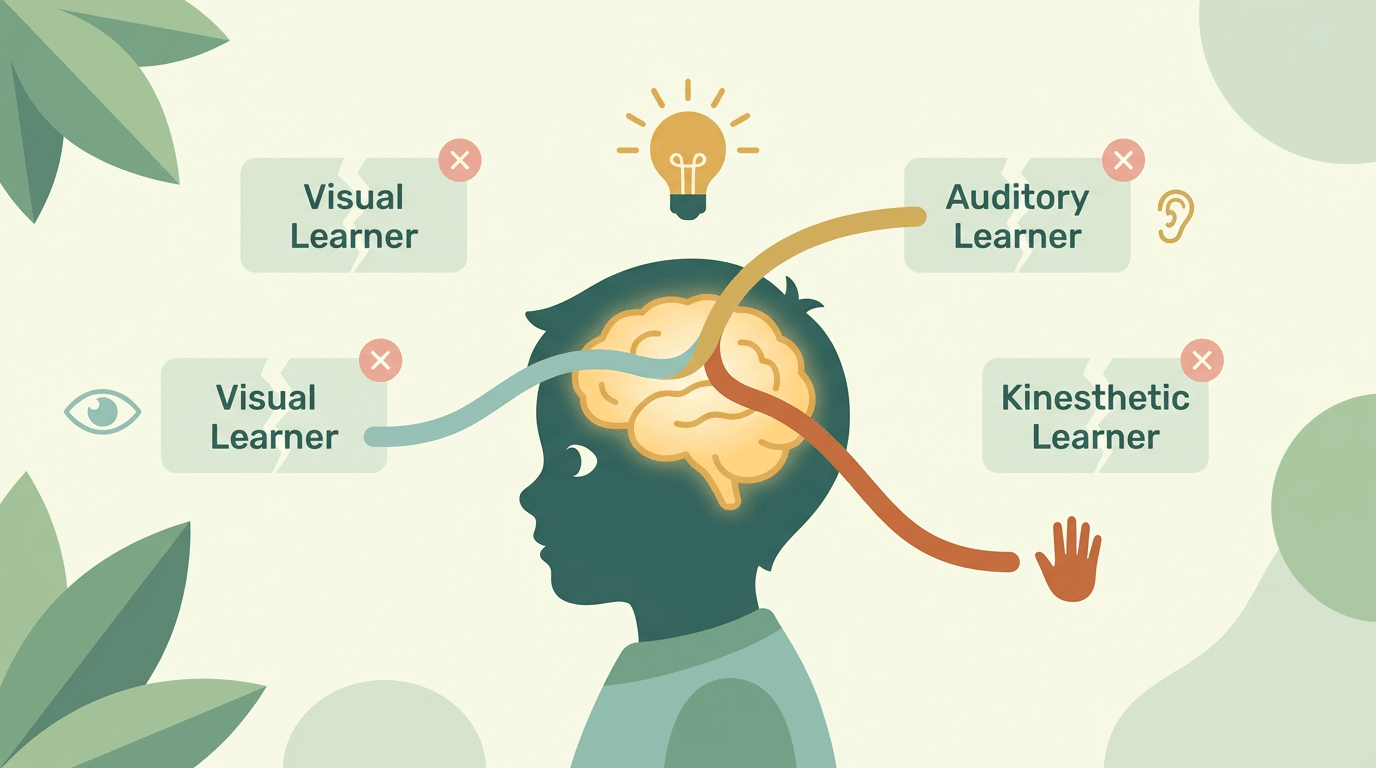
That requires space for self-directed learning: students take some ownership of how they get there. It also means accommodating different learning styles.
For example, a student who struggles with written explanations might demonstrate mastery through a practical task or a short presentation instead. One outcome, multiple paths.
How assessment works in OBE
Assessment in OBE is tied directly to the outcomes, not to a bell curve or a class ranking. That's the core of criterion-referenced assessment: a student either meets the standard or they're not there yet, regardless of how others performed.
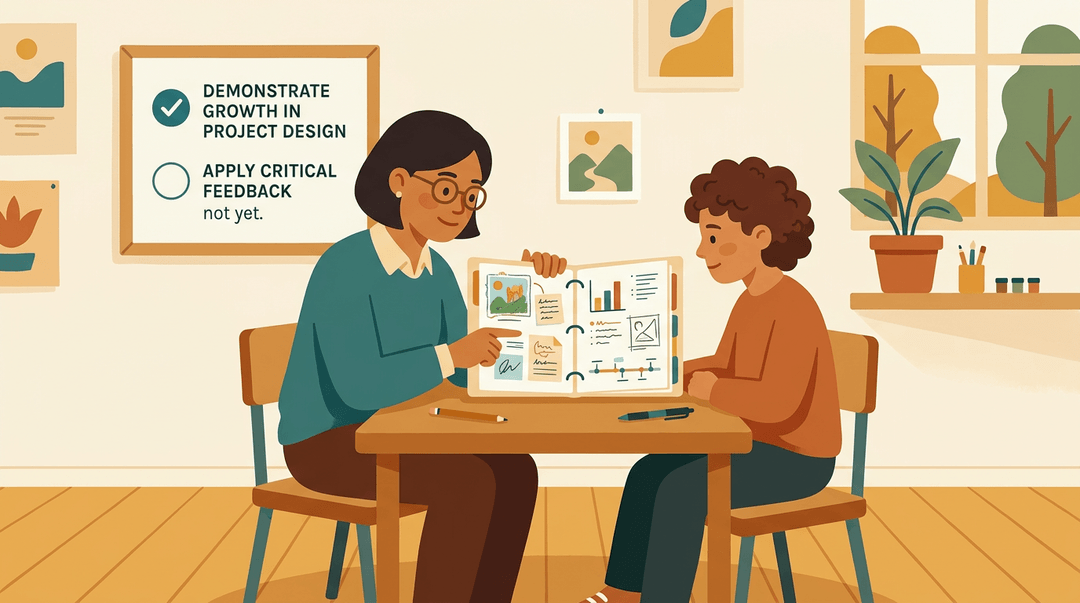
Multiple assessment formats matter here. Projects, portfolios, and real-world tasks are common because they show what a student can actually do, not just what they can recall.
A portfolio is especially useful in lesson planning: it gives you a running record of growth across a unit rather than a single data point at the end.
Building in continuous improvement
OBE isn't a set-and-forget system. It asks teachers and schools to monitor student progress regularly and use that data to refine what they're doing. Feedback loops drive curriculum updates when outcomes aren't being met.
That makes OBE a dynamic, responsive approach: if something isn't working, the evidence surfaces quickly, and you adjust.

Applying OBE to Your Lesson Plans
This is the part you can use tomorrow: a short routine for building any lesson backward from one outcome, plus a quick check that everything in the plan earns its place.
Write the outcome before anything else
Before you pick an activity, a worksheet, or a video, do this:
- State one measurable student outcome
- Start with "Students will be able to..." and finish with something you can observe.
- Choose an action verb from Bloom's taxonomy
- Verbs like sort, argue, and design are visible; "understand" and "know" aren't.
- Limit the lesson to one clear outcome
- Two outcomes split your teaching and muddy your assessment. Save the second for tomorrow.
The verb is where most outcomes go wrong:
- ❌ Students will understand the water cycle.
- ✅ Students will label each stage of the water cycle on a diagram.
Align every activity to that outcome
With the outcome written, audit the rest of the plan against it. Confirm:
- Guided practice rehearses the outcome. Students practice the same verb they'll be assessed on.
- The assessment proves mastery. If the outcome says argue, a multiple-choice quiz can't show it.
- Every activity serves the outcome. If it doesn't move students toward the verb, cut it, even if you love it.
⚠️ Watch out: the most common misalignment is a beautiful activity attached to the wrong verb. Engaging isn't the same as aligned.
What this looks like across grade bands
The routine is the same at every level; only the verb's complexity changes.
| Grade band | Sample outcome | Bloom's verb |
|---|---|---|
| K-2 | Identify and sort objects by one attribute | Identify, sort |
| Middle school | Argue a position with supporting evidence | Argue |
| High school | Design a solution to a local problem | Design |
Example: A middle school social studies teacher sets the outcome "argue a position with evidence." She swaps a planned vocabulary worksheet for a ten-minute evidence hunt, because the worksheet practiced recall, not argue.
Once this becomes routine, the hardest part is keeping alignment visible across a full week of plans. EMStudio's lesson planner lets you attach outcomes to each lesson component, so alignment is visible at a glance.
Putting OBE into Practice at Your School
The theory is straightforward. The harder part is the sequence: where do you actually start, and who decides what "mastery" looks like?
Steps to make the transition to OBE
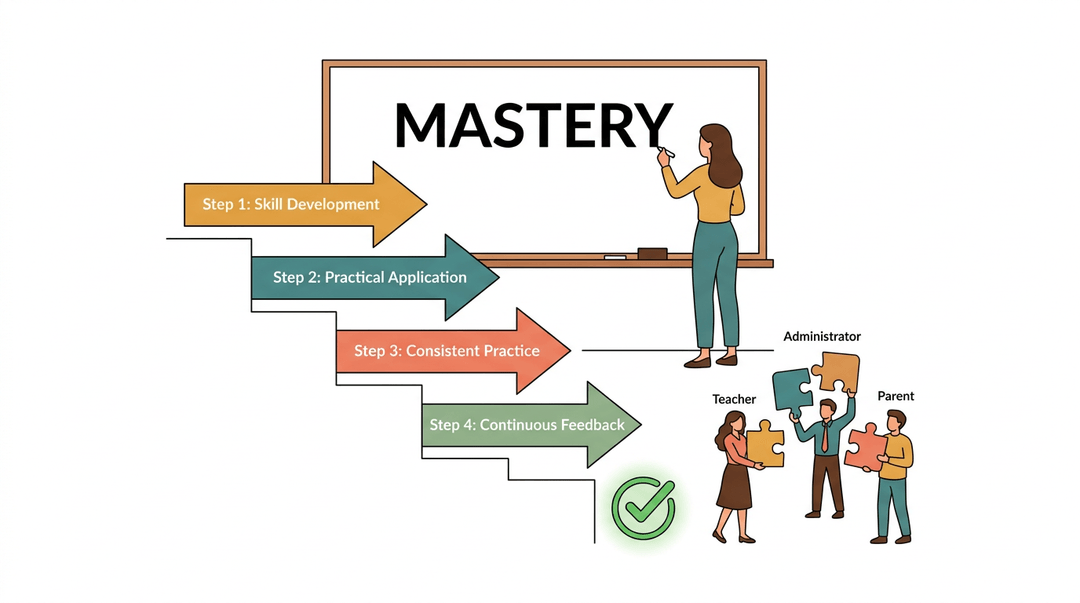
Start at the end. Before you write a single lesson plan, define what mastery looks like for your students. That exit ticket clarity shapes everything that follows.
From there, the transition moves through four steps:
- Define outcomes with all stakeholders: teachers, administrators, and where possible, families.
- Align teaching and assessment methods to those outcomes, not the other way around.
- Develop an outcomes-mapped curriculum so every unit connects to a stated competency.
- Train teachers through ongoing professional development so the shift sticks in practice.
Note the distinction from standards-based grading: OBE drives the whole curriculum design process, while standards-based grading is primarily a reporting approach. They overlap, but aren't the same thing.
Mapping your curriculum and syllabus
A curriculum map plots outcomes across courses so you can see gaps and overlaps at a glance. Your syllabus then aligns each course to its specific competencies.
Think both vertically (skills building year over year) and horizontally (consistency across subjects at the same level). Constructivist teaching approaches, where students build understanding through active tasks, fit naturally here.
Who sets the outcome standards
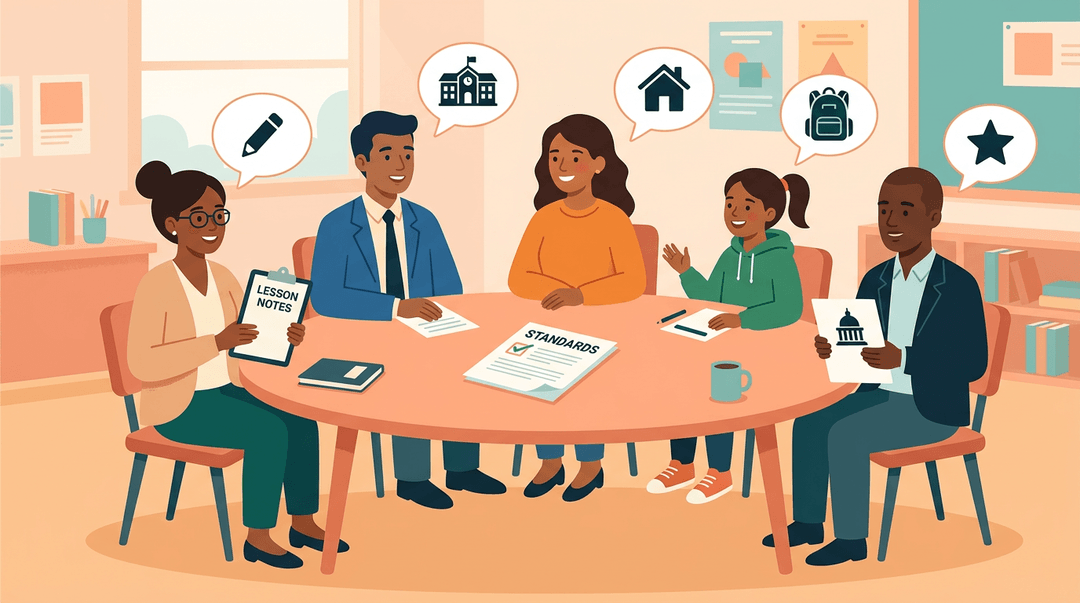
Outcomes are typically set at the school district or state level, though national bodies can define them too. The key distinction is between a mandate (required) and a guideline (recommended).
Either way, broad stakeholder involvement, including teachers, not just administrators, leads to standards that are realistic and classroom-ready.
What OBE Delivers for Students and Schools
When the whole system points toward clearly defined outcomes, both students and schools feel it. Here's what that looks like in practice.
How students benefit from OBE
Students in outcome-focused classrooms tend to perform better academically, and it's not hard to see why: they know exactly what they're working toward. That clarity drives effort.
Beyond test scores, OBE builds real-world skills like critical thinking and problem-solving, because lessons are designed around applying knowledge, not just storing it.
A student who can analyze a source, construct an argument, or troubleshoot a process is ready for life outside the classroom.
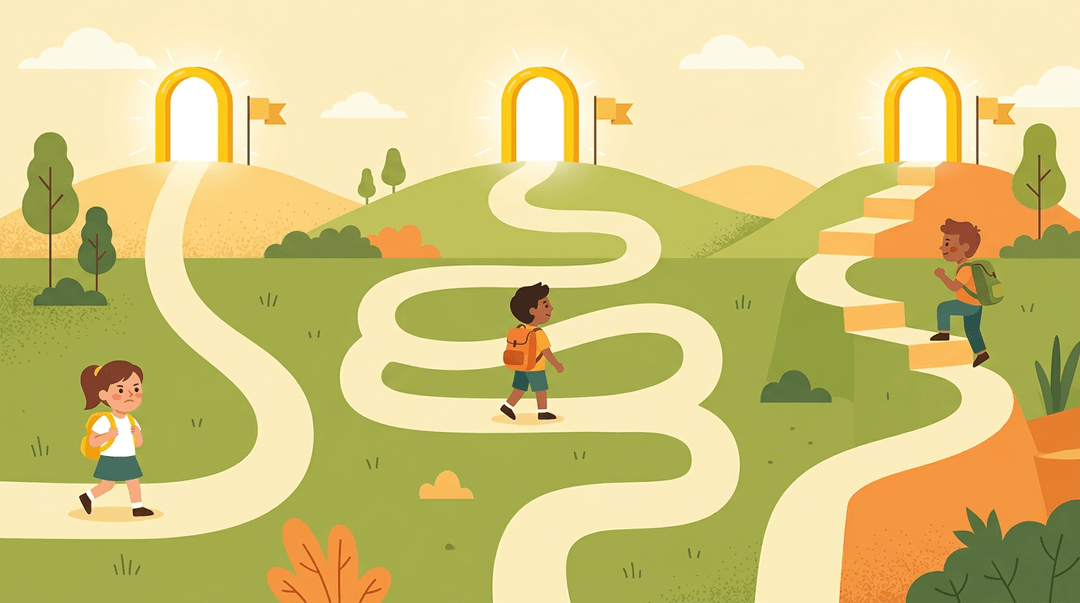
OBE also opens the door to personalised learning pathways. Because success is defined by reaching the outcome (not by moving in lockstep with the class), students who need more time get it, and students who are ready to go further can.
The destination is fixed; the route is flexible.
What is the purpose of an OBE?
At its core, OBE exists to prepare learners for real roles and lifelong competencies, not just the next exam. It does that by making expectations visible to everyone:
- students know what's required
- teachers know what to teach toward
- school leaders can measure whether it's happening
That transparency creates educator accountability for outcomes rather than just for coverage. It also builds a results-oriented culture where the question isn't "Did we teach fractions?" but "Can our students use them?"
Measurable learning goals make that question answerable, and answering it honestly is how schools get better over time.
Challenges and Drawbacks of OBE
OBE isn't without its critics, and some of the concerns are worth sitting with. Here's an honest look at where the friction tends to show up.
Why OBE is hard to implement
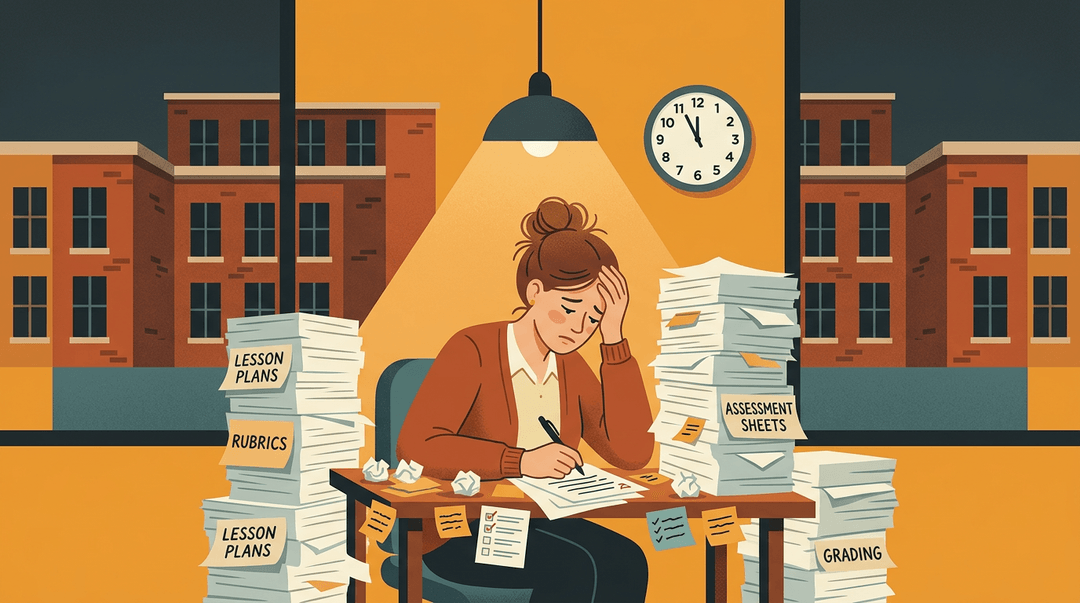
For many teachers, the shift to OBE means a heavier planning and documentation load, not just a change in mindset. Writing clear, measurable outcomes for every lesson, then designing assessments to match, takes real time.
So does evaluating student work against those outcomes consistently. Without dedicated training and support, most teachers are left to figure it out alone, and that's a recipe for burnout, not transformation.
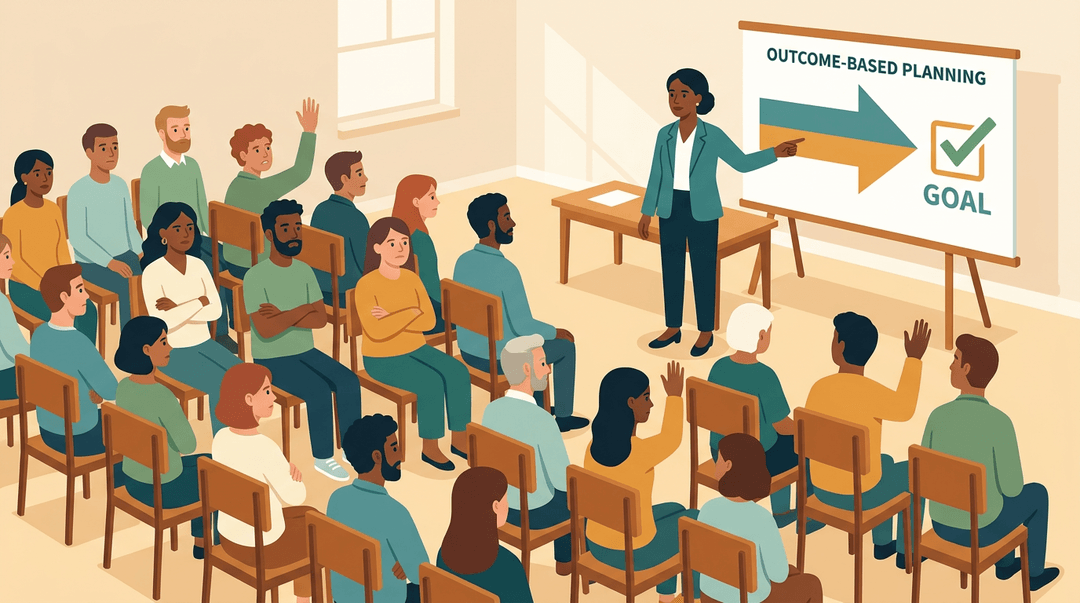
Institutional resistance adds another layer. Schools and districts built around traditional grading and coverage-based curricula don't retool quickly. Change at that scale needs buy-in at every level.
Academic concerns worth taking seriously
When the focus narrows to what's measurable, some of what matters most in education can slip through the cracks. Critics argue that OBE can reduce depth of knowledge, pushing teachers to cover defined outcomes rather than explore ideas fully.
There's also a real concern about creative thinking: open-ended inquiry and genuine curiosity don't always fit neatly into a rubric.
And outcomes-based systems don't automatically close gaps between students. Without careful design, they can quietly reinforce unequal results.
Political and community pushback against OBE
OBE has faced significant public opposition in the United States.
A report from American Experiment documents the uproar in states including Pennsylvania and Minnesota, where communities feared that OBE frameworks would impose non-academic values on students and strip local control from schools.
A persistent misconception, that OBE eliminates traditional grades entirely, has fueled much of that opposition.
OBE isn't a silver bullet, and it takes real work to implement well. But the core idea is hard to argue with: know where you're going before you start, and design every step to get students there.
When that clarity drives your planning, students spend less time covering material and more time building skills that last.
Ready to put it into practice? Our Lesson Planning tool is built to help you design backward, stay focused on outcomes, and save time doing it.
References
- Outcome-Based Education outcome based — cga.ct.gov
- USC: Museum of Education — museumofeducation.info
- OUTCOME BASED EDUCATION — rnbglobal.edu.in
- Outcome-Based Education: Has It Become More Affliction Than Cure? — americanexperiment.org
Frequently asked questions
What is the purpose of an OBE?
The purpose of Outcome-Based Education (OBE) is to prepare learners for real-world roles and lifelong competencies, rather than just passing exams. It aims to make educational expectations transparent for students, teachers, and school leaders.
What is the meaning of outcome-based education?
Outcome-based education (OBE) is a student-centered educational philosophy focused on measurable learning outcomes. It prioritizes what students should be able to "do" by the end of a learning period, designing all content, activities, and assessments backward from those desired results.
What are the aims of OBE?
The primary aim of OBE is to ensure students achieve clearly defined, measurable learning outcomes. This involves making expectations transparent, aligning all teaching and assessment to those outcomes, and setting high expectations for all students while providing expanded opportunities for them to succeed.
What are the four basic principles of Outcome-Based Education?
The four basic principles of Outcome-Based Education are clarity of learning outcomes, backward curriculum design, alignment of teaching and assessment, high expectations for all students, and expanded opportunities for learners. These principles emphasize starting with a clear vision of what students should achieve and designing the educational process to meet those goals.
What are the three types of OBE?
William Spady identified three types of OBE: Traditional OBE, which improves existing structures; Transitional OBE, which redesigns curriculum around real-world competencies; and Transformational OBE, which rebuilds the entire system around life-role outcomes.
What is an example of outcome-based learning?
An example of outcome-based learning is a student completing a unit on persuasive writing by producing an essay assessed against a defined rubric. This essay provides evidence of their ability to apply persuasive writing skills, rather than merely studying the genre.
What is an example of Outcome-Based Education?
An example of Outcome-Based Education in practice is a middle school social studies teacher setting the outcome "argue a position with evidence." To align activities with this outcome, the teacher might replace a vocabulary worksheet (which practices recall) with an evidence hunt task, ensuring students practice the specific skill they need to master.
Does OBE focus on student needs?
Yes, OBE explicitly focuses on student needs by putting the learner at the center and rejecting the idea that some students cannot achieve mastery. It emphasizes providing expanded opportunities and flexible pathways to ensure all learners can meet defined outcomes, rather than moving on without them.