What Is Equity in Education? A Complete Guide for Everyone

Jump to section
Think about a shoe store. Two customers walk in, one a size 6 and one a size 11, and handing both the same pair won't get either of them walking out comfortably.
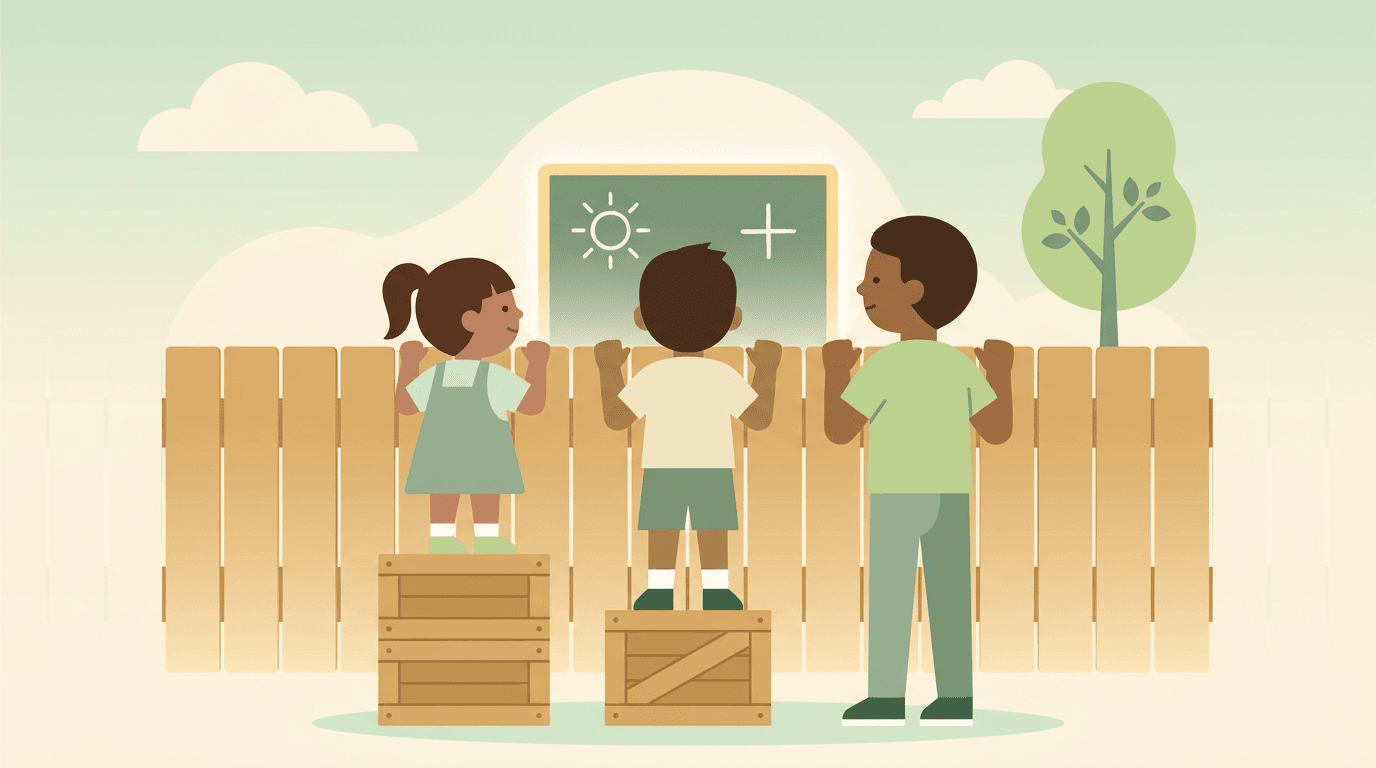
Equity in education works the same way: it's about giving each student what they need to succeed, not identical treatment for everyone.
In this post, you'll learn what equity means, where it came from, the barriers that get in the way, and how to measure it. We'll also share a practical, grade-banded checklist you can use when you build your lesson plans.

What Is Equity in Education?
Equity gets tossed around a lot, so let's pin down what it actually asks of you. At its core, it's about making sure every student has a real chance to learn, and that chance can look very different from one learner to the next.
What does equity mean in a classroom?
In a classroom, equity means fairness, and fairness doesn't mean every student gets the same thing. It means each learner gets what they need to succeed. The goal isn't identical outcomes where everyone finishes with the same score.
It's meeting individual needs so the playing field is more level for everyone.
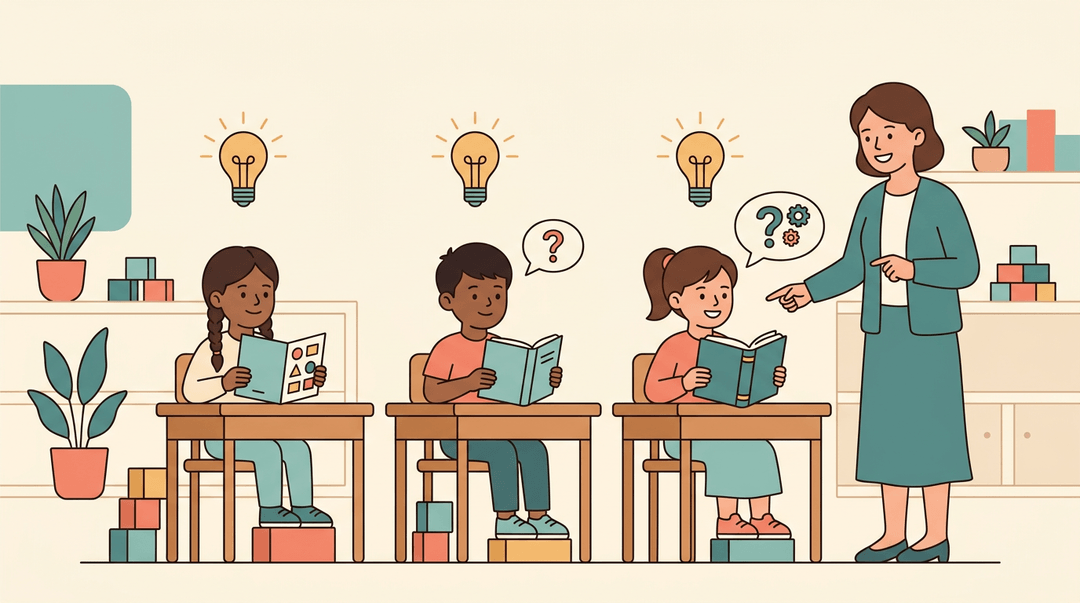
Think of a fourth-grade teacher with three students reading at very different levels.
She gives the struggling reader a decodable text with picture supports, the middle reader a chapter book with a guiding question, and the advanced reader a novel with a deeper discussion prompt.
Each student gets the support that fits, and each has a fair shot at the same goal: understanding the story.
If you're wondering how this connects to the core principles of education, equity runs through them. Each principle asks you to treat every learner as capable of growing.
How equity differs from equality
Equality means same treatment: the same worksheet, the same time limit, the same seat. Equity means needs-based treatment: each student gets the tools that help them reach the same destination.
That's why equal access and equal outcomes are different goals. Identical results aren't required.
Why is equality important? It still matters a great deal. It guarantees that every student starts with the same basic rights: the same access to instruction, the same respect, and the same opportunity to show what they know.
Equity builds on that foundation rather than replacing it.
Where the idea of equity began
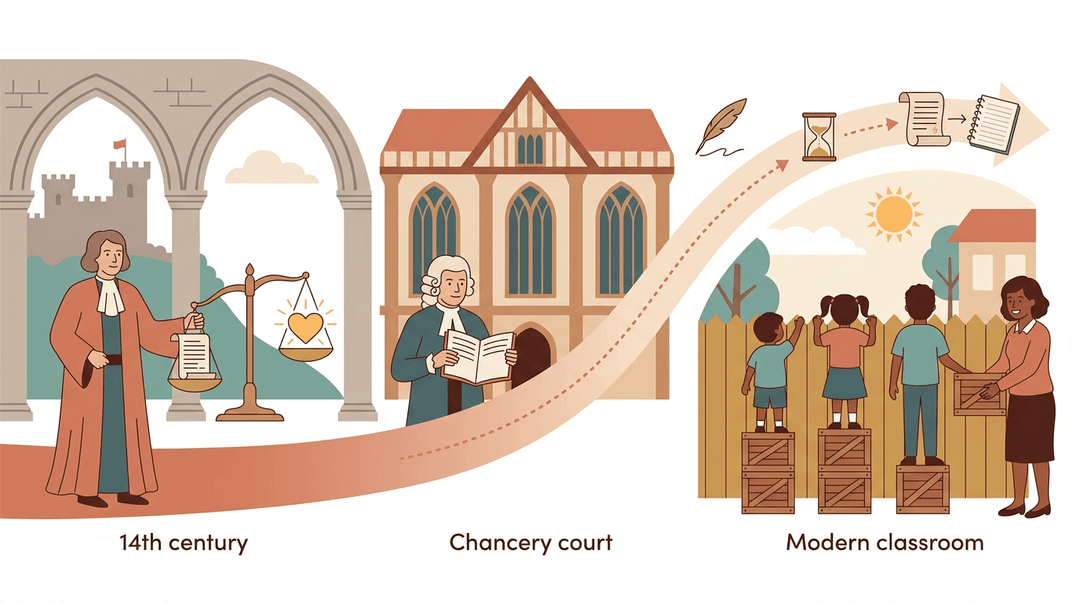
The word has deep roots. A study of access to justice in the fourteenth century traces how equity became a legal term in the 14th century, tied to looking past the strict letter of the law toward underlying morality.
Later, the English Courts of Chancery expanded the idea. According to Wex at Cornell's Legal Information Institute, the Court of Chancery offered more adaptable remedies based on moral fairness than the increasingly rigid common law courts.
Over time, that philosophy of fairness beyond rigid rules made its way into how we think about schools.
Access alone isn't the same as equity
Access means entry and participation: a seat in the room and a name on the roster. Equity asks whether the conditions are fair once students arrive, and whether they achieve meaningful outcomes.
Barriers exist both before and after entry, so enrollment is never the sole measure.
Consider a high school student who attends every day but can't keep up because nobody checked her prior skills. She's in the room, but she's not really in the lesson. That's the gap equity closes.
Why equity means more than demographics
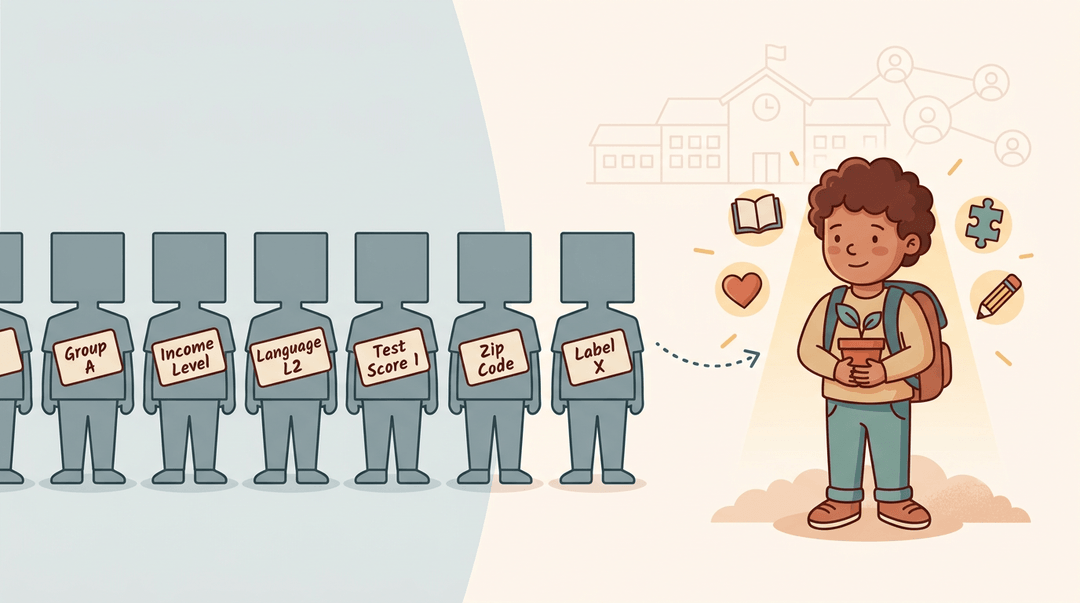
Equity isn't only about group labels like race, income, or language. It's student-level, looking at each learner's actual needs. Group data can be useful, but reductive labels flatten a student into a category and hide what that child needs.
The issue is also systemic and global. Unfair conditions show up across schools and systems, so lasting fixes must address structures, not just individual students. Labels describe groups. Equity is about the student in front of you.
Barriers That Get in the Way of Equity
Equity stalls when obstacles stand between students and learning, and many of those obstacles are easy to miss.
How poverty and background create gaps
Poverty shapes students' days long before they reach your door. Race and ethnicity, English language learners, students with disabilities, and family income can each create gaps too.
Picture a fifth-grade teacher with a Friday reading assignment: one student is still learning English, another has a learning disability, and a third shares one phone with two siblings. The same worksheet lands very differently for each.
The homework gap and remote learning
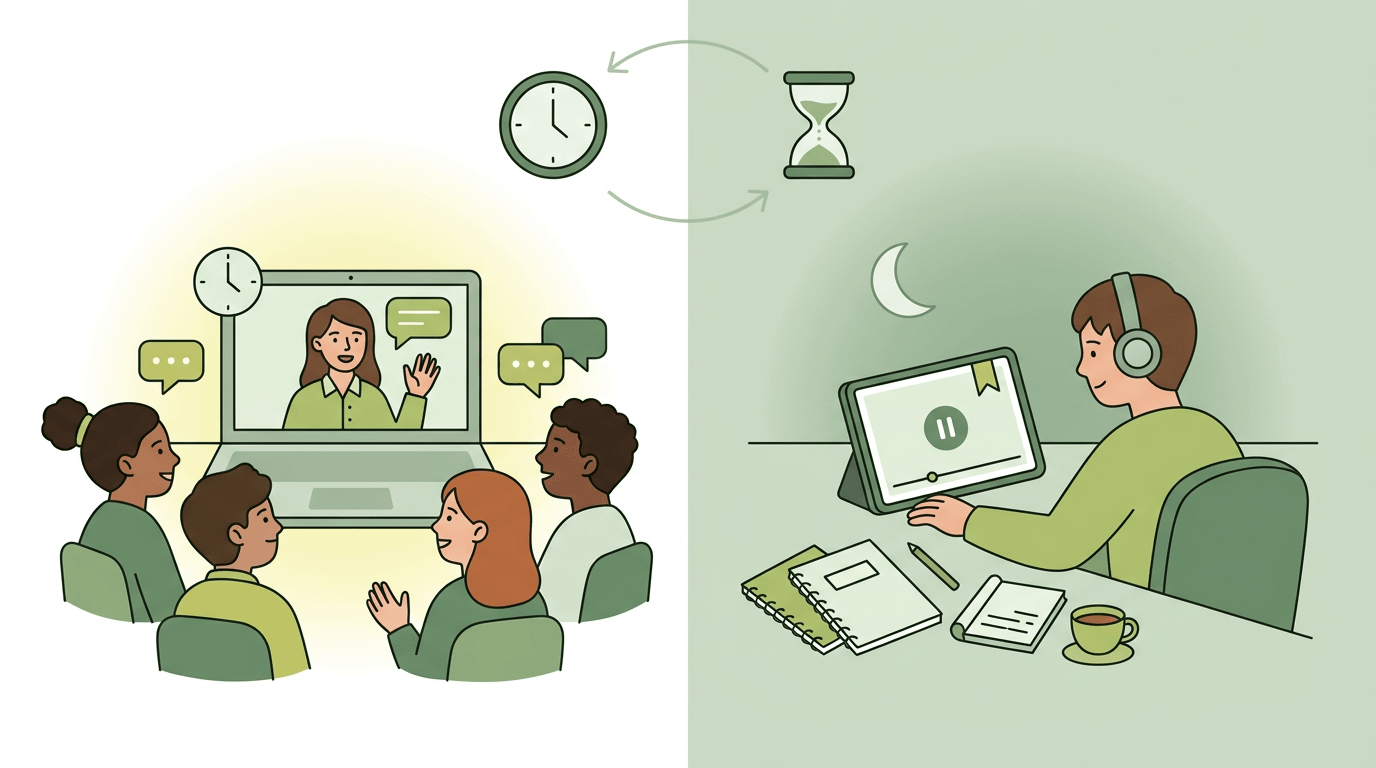
Remote learning exposed a problem many teachers already suspected. Access to devices and reliable internet varies by income and by whether a family lives in a rural or urban area, and each setting brings its own obstacles.
The homework gap describes students who can't finish digital work at home. Assigning an online quiz without checking access quietly widens it.

Why factors outside school matter most
Teachers matter, but much of what drives results happens outside school.
Haertel, as cited by Stanford's Graduate School of Education points to research estimating that out-of-school elements account for 60 percent of the variance (how much student scores differ from one another), while teachers account for around 9 percent.
Family background, community and peer effects, and early childhood experiences shape readiness long before a student walks in. Context counts.
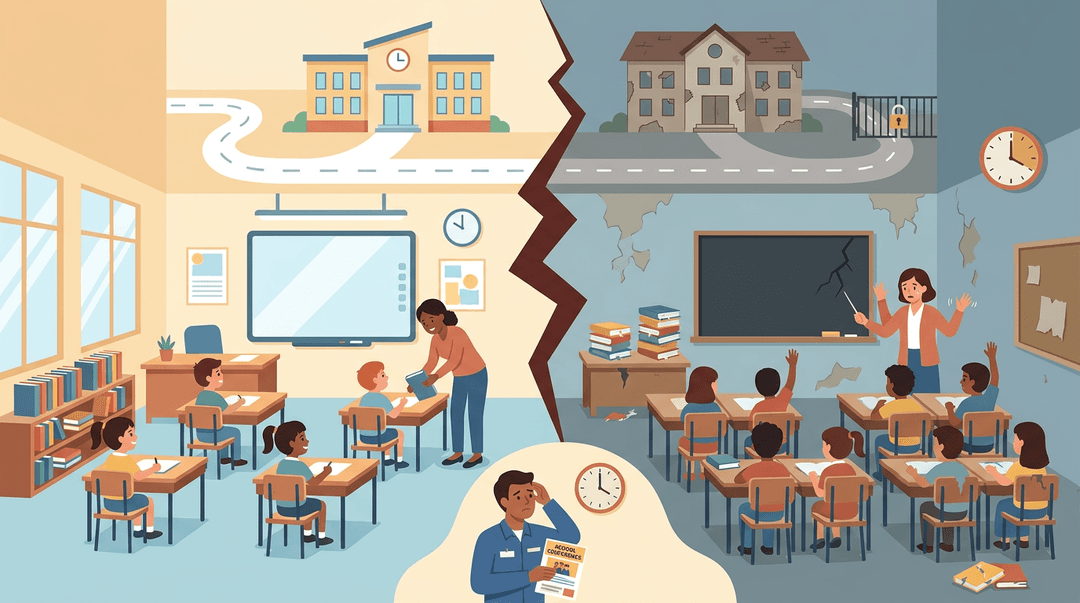
Funding gaps and other systemic barriers
School funding disparities mean some schools have far more resources than others, and that shows up in materials, class sizes, and support staff. Historical segregation still shapes where many students attend school.
Procedures can add friction too: enrollment forms and meeting schedules are hard to navigate without time or transportation, and a paid field trip or a conference during a parent's shift can keep families out.
Spotting barriers without assuming why
When a student struggles, it's tempting to assume why: laziness, low interest, or no family support. Resist that. Data alone doesn't explain cause. A low score tells you that something is wrong, not why.
Consider a teacher who notices three students missing every Monday assignment. Instead of assuming motivation is the problem, she asks and learns one works weekend shifts. Ask first.
Strategies That Promote Equity in Schools
Equity shows up in daily choices: how you assess, who you call when a student struggles, and what your room feels like on day one.
Equity strategies inside the classroom
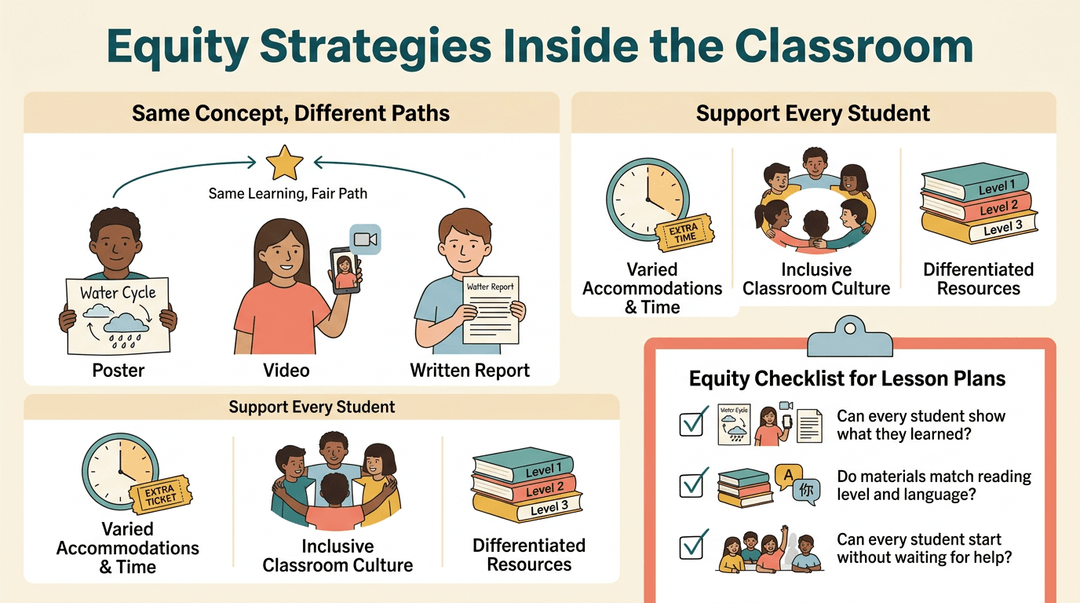
Start with flexible assessment formats. A middle school science teacher who lets students show a concept through a poster or a short recording gets the same learning on a fairer path.
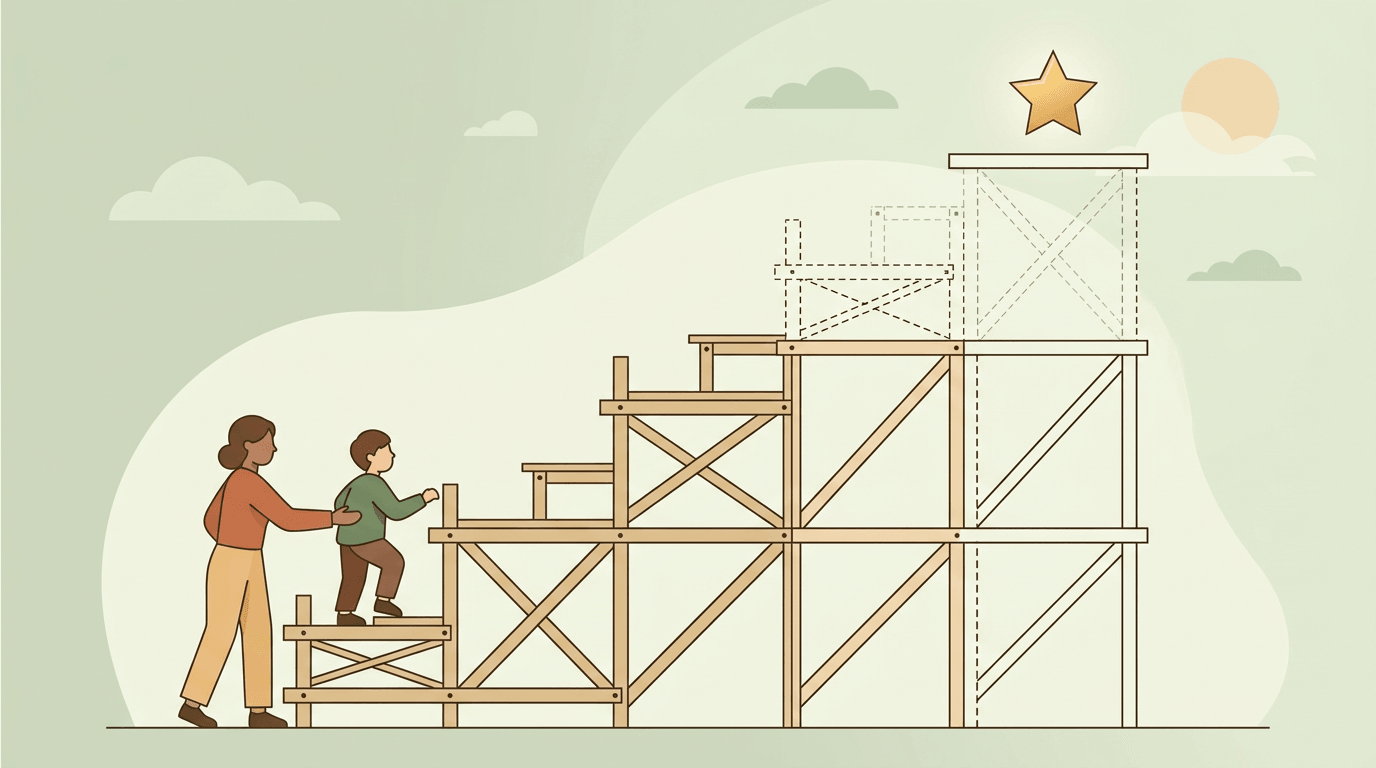
Pair that with varied accommodations and time and an inclusive classroom culture, plus differentiated resources at every reading level.
Before you teach, run this equity checklist for lesson plans: - Can every student show what they learned? - Do materials match your students' reading levels and languages? - Can every student start without waiting for help?
Partnering with families and communities
Families know their children well. A kindergarten teacher who sends home a weekly prompt about what the child taught the family learns what no report card shows.
Strengthen parent involvement through culturally responsive engagement: meetings at times families can attend, and invitations to share their knowledge. Offer translation and accommodation for families so language never blocks a conversation.
Strong school-family partnerships grow from steady contact. How families are invited matters more than whether they are.
Building trust between teachers and students
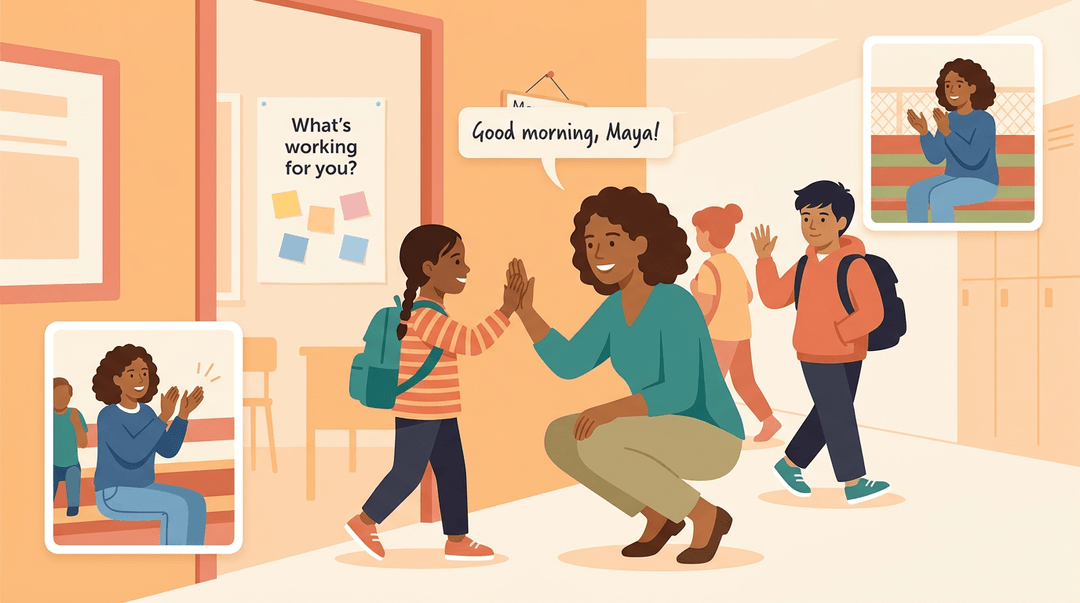
Trust is built in small moments, like greeting students by name at the door. Be present in the community by attending games and neighborhood events.
Practice relational trust building and listening to student voice by asking what's working, then acting on the answers. Give extra attention to support for underserved groups, who may need a trusted adult before they ask for help.
Early childhood approaches that build equity
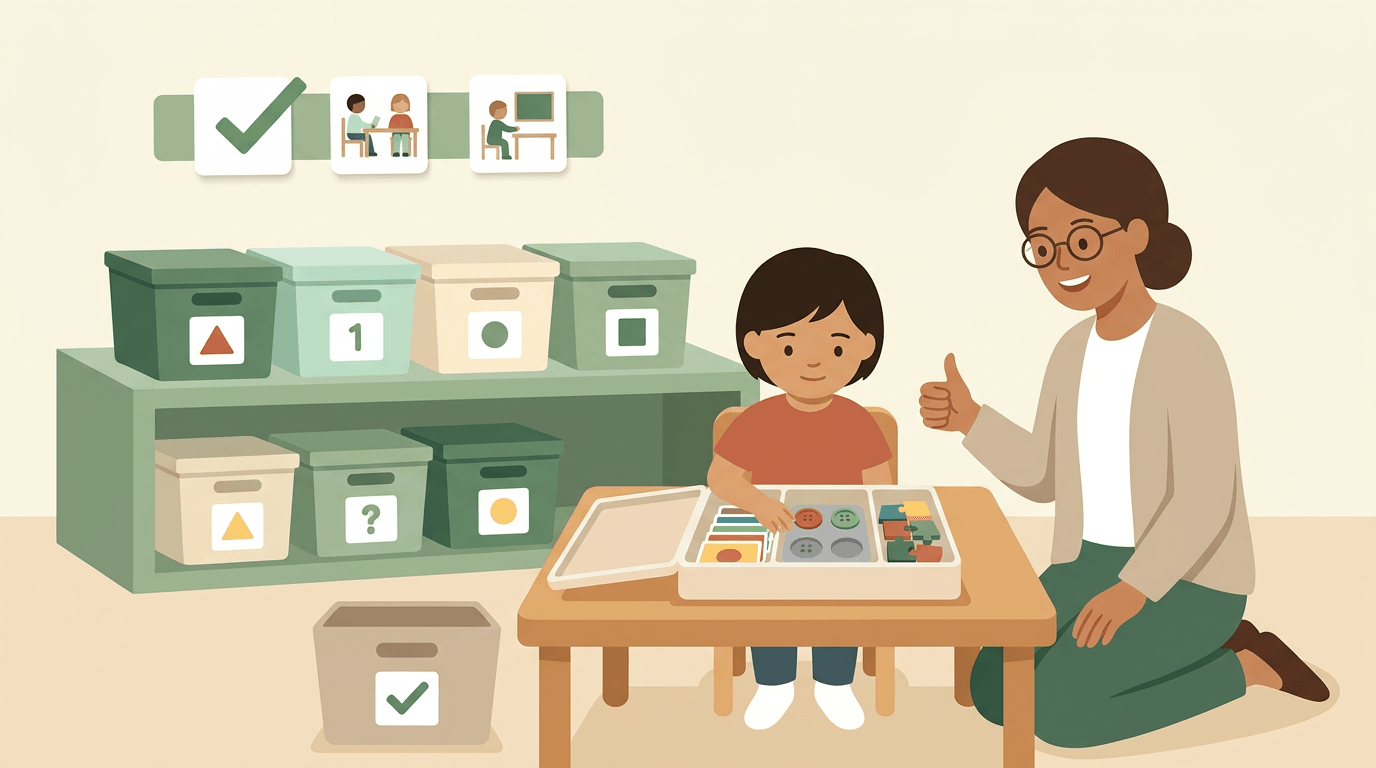
Gaps often appear early. Play-based learning gives every child a way in: a pre-K teacher who turns the block corner into a grocery store has children counting coins and practicing new words at once.
Weave socio-emotional skill building into routines like naming feelings and taking turns, and support oral language and executive function by encouraging children to talk through a plan before they act.
What is culturally responsive teaching?
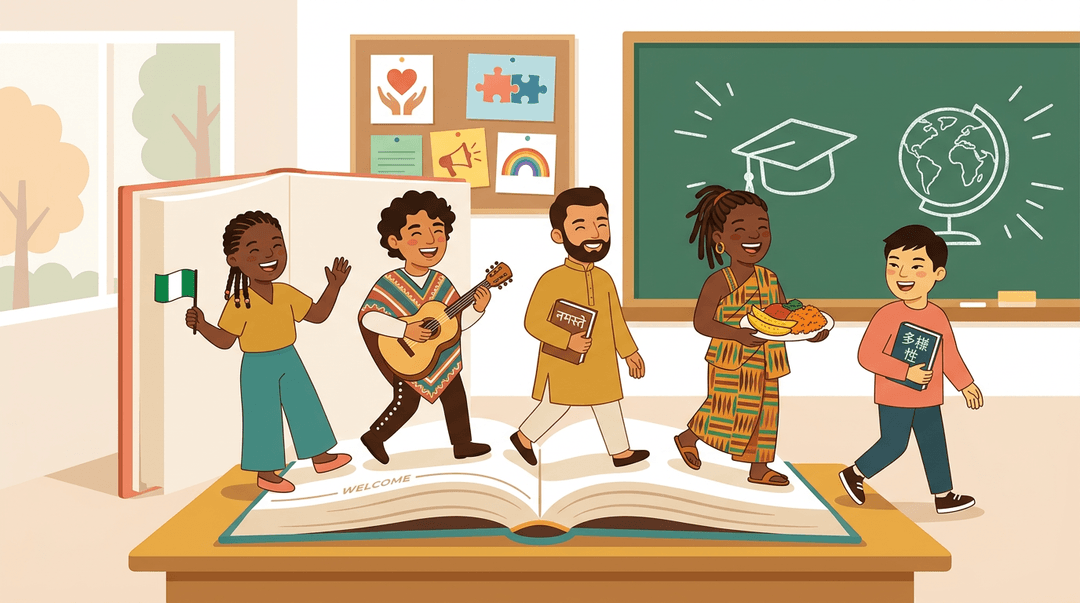
Culturally responsive teaching uses students' cultures, languages, and experiences as assets for learning. Instead of asking students to leave their backgrounds at the door, you draw on them.
Start with diverse texts and examples so students see themselves in the curriculum.
Historically Black Colleges and Universities (HBCUs) offer inclusive models worth learning from, and diversity and inclusion resources through your district can supply materials and training.
Putting Equity into Your Lesson Plans
Use this guide when you're drafting a lesson and want to build in access from the start. Pick the strategies for your grade band, then run the checklist before you teach.
Elementary: three moves
- Flexible reading levels. Keep the topic the same and vary the text.
- Try three versions of one water cycle passage, with the same questions for everyone.
- Visual supports. Pair every key word or direction with a picture.
- Put a labeled diagram or picture schedule beside the written directions.
- Choice boards. Let students choose how they show learning.
- Use a 3x3 grid: draw, write, or act out the main idea. Students pick three in a row.
Middle and high school: three moves
Older students notice quickly whether a lesson sees them. These moves keep the standard high and widen the doors in.
| Strategy | In your lesson plan |
|---|---|
| Multiple assessment formats | Offer an essay, a recorded talk, or a poster for one standard |
| Culturally relevant texts | Pair a core text with one reflecting your students' communities |
| Peer mentoring | Pair students for a unit; give mentors three guiding questions |
Example: A 7th-grade ELA teacher keeps one objective for a unit on argument: "I can support a claim with evidence." Students choose a written essay or a recorded two-minute talk. Both are scored on the same rubric, so the standard stays put while the route varies.
Before you teach, confirm
- Clear objectives for all. One target, posted in student-friendly words.
- Varied scaffolds. Sentence starters, word banks, or graphic organizers are ready.
- Accessible materials. Print is clear, and directions are both written and spoken.
- Bias-free examples. Names, settings, and scenarios fit your whole class.
The last item is the easiest to miss, so here's what the difference looks like:
- ❌ "Your family flies to Hawaii for vacation. If the tickets cost..."
- ✅ "A bus route has 12 stops. If 5 riders get off at each of..."
The first assumes every student has shared a family experience that costs money. The second asks for the same math without that assumption.
⚠️ Watch out: Equity doesn't mean lowering the bar. If your scaffold changes the objective, adjust the scaffold, not the goal.
Build and reuse equity-focused lesson plans easily with EMStudio's online lesson planner.
Why Equity Matters for Students
When every student gets what they need, the whole classroom changes. Here's what the evidence says about why equity matters.
Better test scores and smaller gaps
Equity isn't a favor to a few students. It's a better lesson for everyone. A study of Race to the Top found a consistently positive effect on test scores, with average effects of .06 to .11 standard deviations.
A systematic review of equity-focused mathematics research reports reductions in the achievement gap, the difference in performance between groups of students.
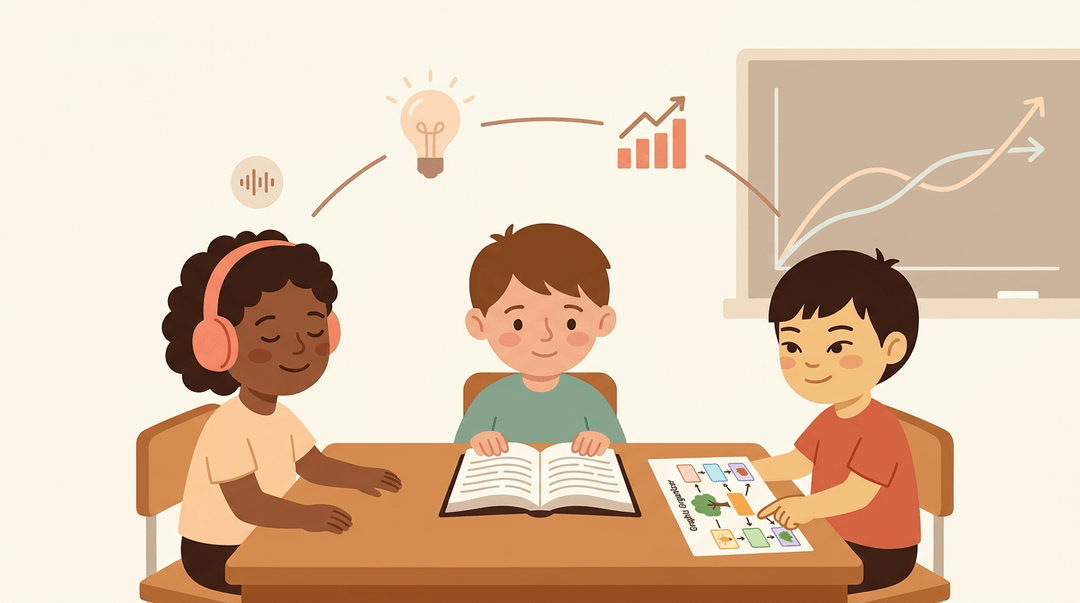
Think of a fourth-grade teacher who offers one reading passage as audio, text, and a graphic organizer. Every student gets a way in.
Social and societal benefits of equity
Equity shapes more than scores. Students who see classmates' needs met respectfully practice empathy and compassion daily.
Attendance tells a similar story: a study of whole-school inclusion programs linked longer participation to reduced absenteeism and suspensions, particularly for students with intellectual disabilities.
What the achievement gap data shows
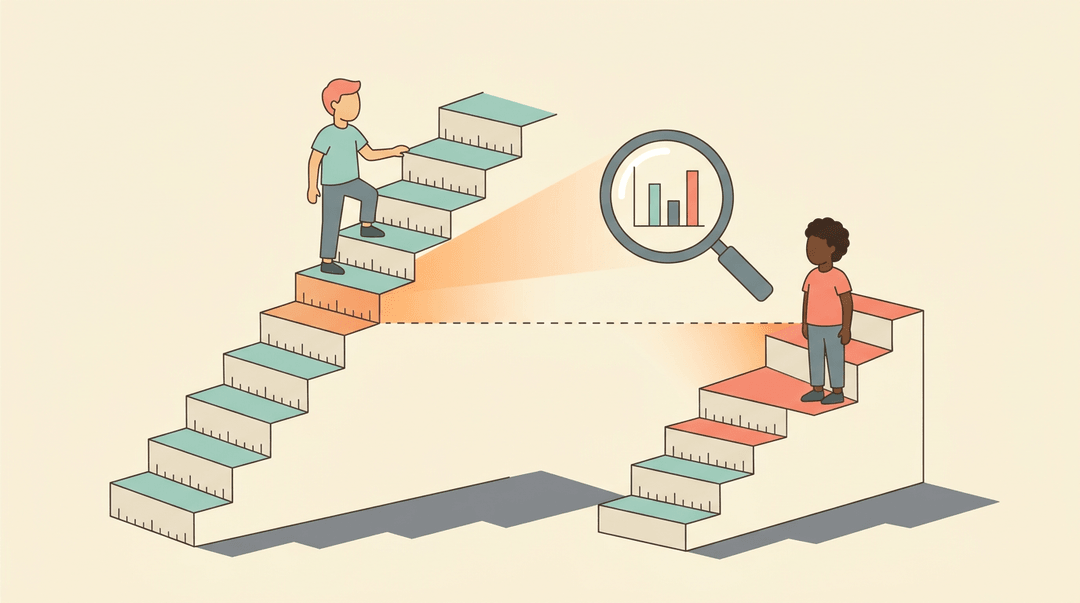
The Black-White achievement gap appears clearly in U.S. data. A study of its drivers notes that test scores substantially predict economic and non-economic outcomes later in life, so racial inequalities in school performance need direct attention.
The Educational Opportunity Project at Stanford University has searched for factors beyond poverty that may be shaping that gap, and it documents the difference in years of learning.
Equity as a national policy priority
Equity is also a national policy goal, and that changes how we read gaps. When a group of students consistently falls behind, it signals structural failure in how schools are funded, staffed, and scheduled, not a flaw in the kids.
Excellence requires equity. Global benchmarks like PISA offer a wider lens on how systems compare.
How to Measure Equity in Schools
Measuring equity means looking past averages to see who gets access, support, and results.
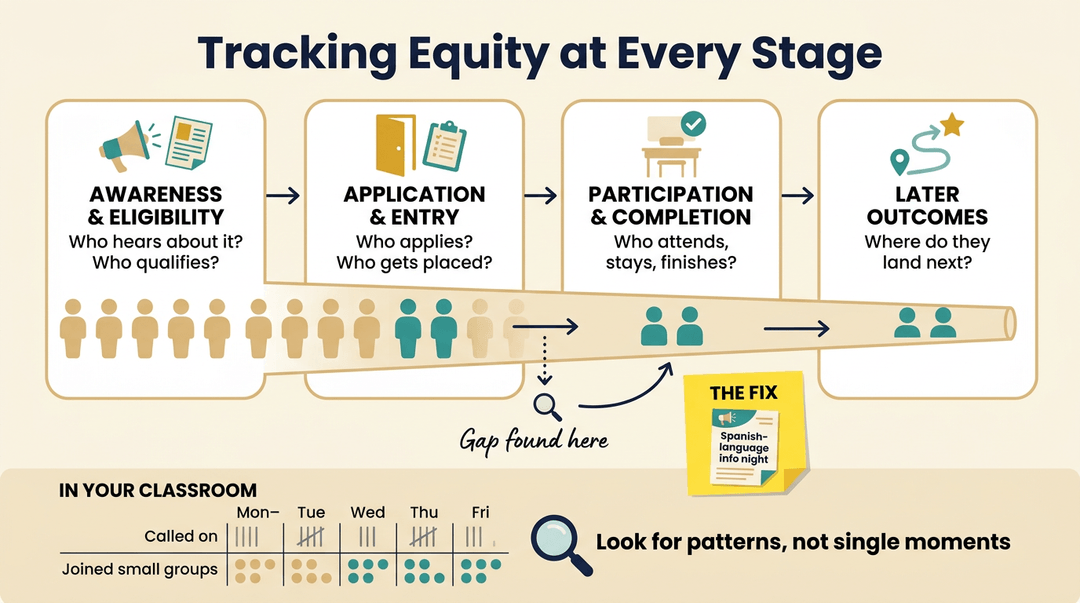
Tracking equity at every learning stage
Think of a middle school counselor who notices few multilingual students apply for advanced math. Tracking means checking each step:
- Awareness and eligibility: Who hears about the program, and who qualifies?
- Application and entry: Who applies, and who actually gets placed?
- Participation and completion: Who attends, stays enrolled, and finishes?
- Later outcomes: Where do those students land afterward?
She spots the application gap and adds a Spanish-language info night. In your classroom, log who gets called on and who joins small groups. Look for patterns over single moments.
Collecting equity data the right way
Start with the decision, not the data: what will you do differently with it?
- Consistent definitions: Use the same meaning of 'English learner' in every program.
- Privacy and consent: Collect only what you need, and explain why.
- Avoiding inferences: Don't guess sensitive traits from clues like names.
Less data, used well, beats more data gathering dust.
Listening to student voices and experiences
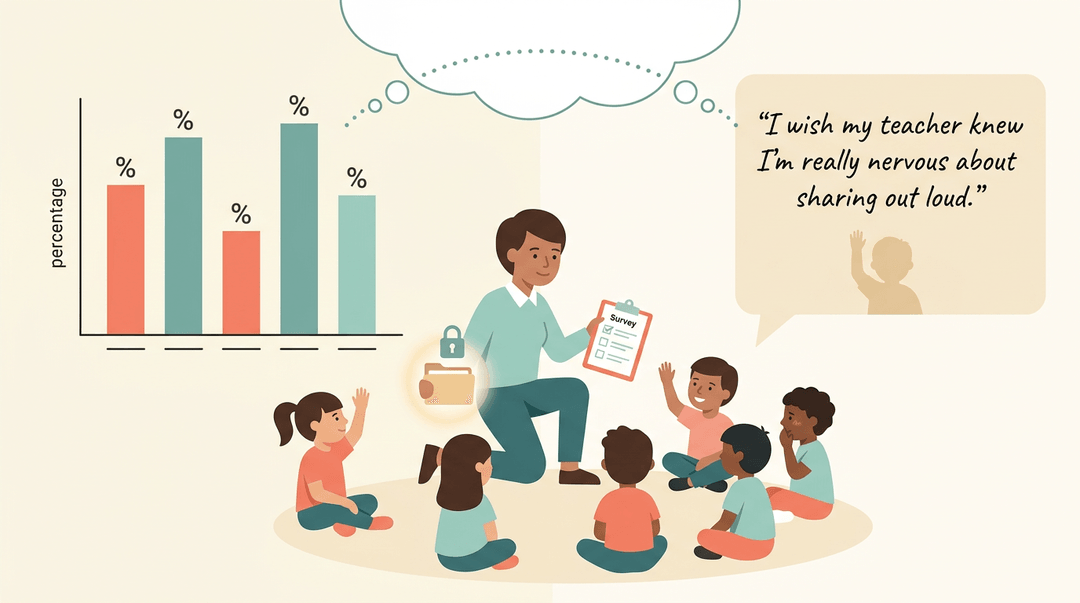
Numbers show what; students explain why. Surveys and interviews fill that gap. A seventh-grade teacher with strong test scores but quiet discussions runs an anonymous survey and learns students feel unsafe speaking up.
Pair percentages with a few quotes through qualitative-quantitative integration. Protect responses with confidentiality and disclosure risk planning: report only groups too large to identify anyone.
Invite students in as partners. Make participation optional and share what changed.
The Legal and Policy History Behind Equity
Equity didn't arrive in classrooms by accident. Courts and Congress have shaped it for generations.
Landmark court cases that shaped equity
According to the National Archives, the 1954 Brown v. Board of Education ruling legally ended decades of racial segregation in public schools. A Library of Congress guide describes **San Antonio Independent School District v.
Rodriguez** (1973) as holding that the Constitution does not guarantee equal educational opportunity. NPR notes that Milliken v. Bradley is "not nearly as well-known as Brown" yet has had just as much impact.
Federal laws that protect equal access
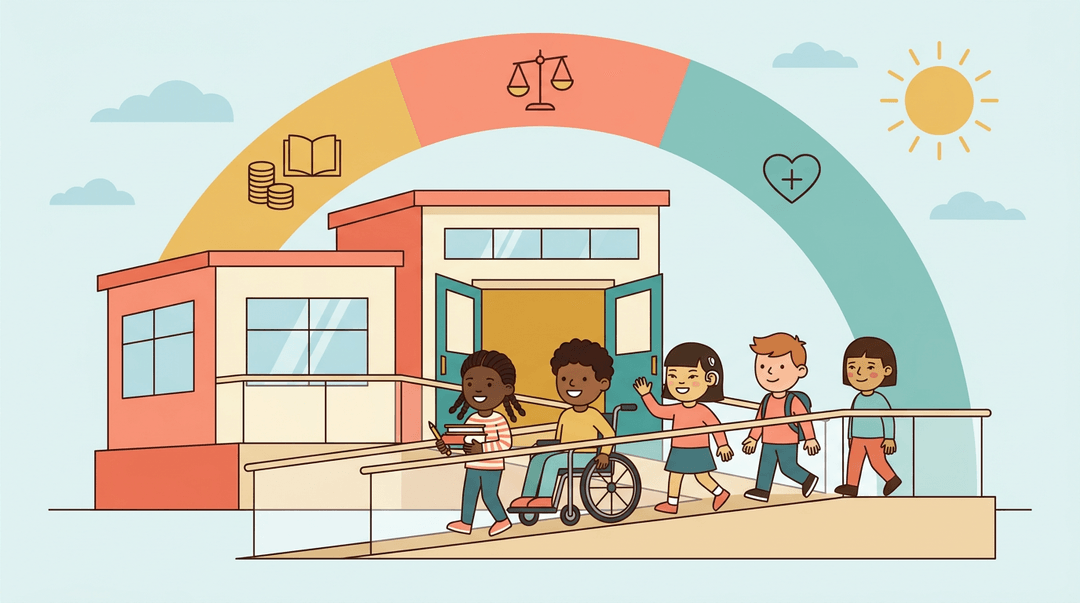
The Elementary and Secondary Education Act (ESEA) and its Title I funding target schools serving low-income students. The Department of Justice explains that Title IX prohibits sex discrimination in federally funded education programs.
The U.S. Department of Education says the Individuals with Disabilities Education Act (IDEA) protects the rights of children and youth with disabilities and their families.
How school funding creates inequities
Schools that rely on local property taxes mirror their neighborhoods' wealth, and state funding formulas decide how the rest is divided. Consider a sixth-grade science teacher whose district spends less per pupil than the one across the county.
When she needs microscopes, she's fundraising while her neighbor's class already has a set. Knowing the source of that per-pupil spending gap helps her make a clearer case to the school board.
Funding reform efforts aim to narrow these gaps, though progress varies by state. Context matters.
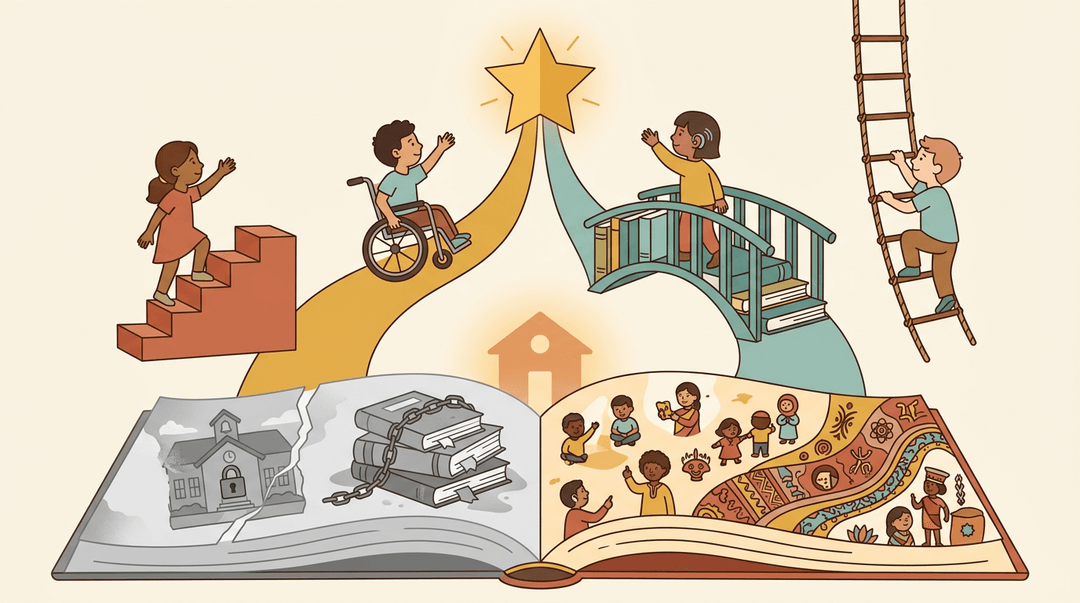
The history of whose stories get taught
Whose stories get taught has a history too. Government and church-run Indigenous boarding schools aimed to strip students of their languages and cultures.
The 1968 Ocean Hill-Brownsville uprising in New York City put community control of schools in the spotlight. For years, whitewashed textbooks left out or distorted the experiences of people of color.
Culturally responsive teaching responds by treating students' backgrounds as a starting point for learning.
Equity versus merit debates run through all of this. The more useful question is whether every student has a path to a high bar, not only whether the bar exists.
Equity isn't a one-time fix or a single policy. It's a daily habit of noticing who's getting left behind and adjusting your plan so every learner has a real path forward. Reviewing your scope and sequence is a practical place to start.
When fairness shapes what you teach and how you teach it, students gain more than skills. They gain the confidence that their classroom was built with them in mind.
Ready to put equity into practice? Check out our Lesson Planning feature to write, organize, and reuse your lesson plans across all your classes from one place.
References
- The Effects of Race to the Top on Student Achievement: Evidence From National Data — doi.org (2025)
- TRACING THE EVOLUTION AND IMPACT OF EQUITY-FOCUSED MATHEMATICS EDUCATION RESEARCH: A SYSTEMATIC REVIEW — doi.org (2026)
- Whole-School Inclusion Programs and Student Academic and Behavioral Outcomes — doi.org (2025)
- In the News — edopportunity.org (2026)
- Brown v. Board of Education — archives.gov
- chancery | Wex | US Law — law.cornell.edu
- Black-White Achievement Gap: Role of Race, School Urbanity, and Parental Education — pmc.ncbi.nlm.nih.gov
- State of the Union 2017: Education — inequality.stanford.edu
- Do student test scores provide solid basis to evaluate teachers? — ed.stanford.edu
- 1973: San Antonio ISD v. Rodriguez - A Latinx Resource Guide: Civil Rights Cases and Events in the United States — guides.loc.gov
- titleixreport — justice.gov
- About IDEA — sites.ed.gov
- Social exclusivity or justice for all? Access to justice in the fourteenth century — hdl.handle.net (2001)
- Milliken v. Bradley: Supreme Court Case Has Helped Keep Schools Segregated : NPR — npr.org
- Understanding and Improving Title I of ESEA — all4ed.org
- A century of trauma at U.S. boarding schools for Native American children — nationalgeographic.com
Frequently asked questions
What is culturally responsive teaching?
Culturally responsive teaching uses students’ cultures, languages, and lived experiences as assets for learning. It includes diverse texts, examples, and activities so students can see themselves in the curriculum while connecting new ideas to what they already know.
Why is equality important?
Equality is important because it gives every student the same basic rights, respect, access to instruction, and opportunity to demonstrate learning. It provides a common foundation, while equity adds the individualized support students may need to succeed.
What are the 7 principles of education with examples?
Seven commonly recognized principles of education are learner-centeredness, inclusivity, equity, high expectations, active learning, relevance, and continuous assessment. For example, a teacher might use student interests to shape projects, provide accessible materials, maintain challenging goals for all learners, connect lessons to real life, and use regular feedback to adjust instruction.
What does equity mean in a classroom?
Equity in a classroom means fairness based on students’ individual needs rather than identical treatment. A teacher may provide different reading levels, visual supports, extra time, accommodations, or assessment formats while keeping the learning goal consistent for everyone.