What Is Scope and Sequence in Education? A Full Guide

Jump to section
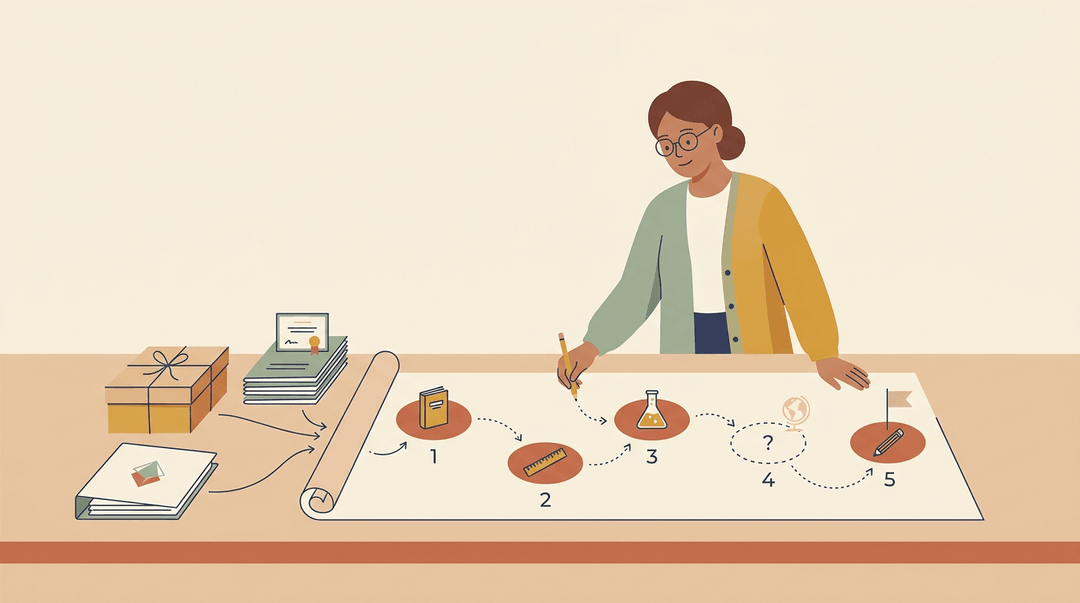
Picture building a staircase. Each step has to come before the next, or the whole thing wobbles. A school year works the same way. A scope and sequence is the map that lays out what you'll teach across a course and the order you'll teach it in.
It isn't only for reading teachers. Math, science, social studies, and every other subject can use one. In this post, we'll cover what it includes, how to write one step by step with a worked example, and how to turn it into unit and daily lesson plans.

Defining Scope and Sequence in Education
Every subject raises two questions: what gets taught, and in what order? A scope and sequence answers both. It's one tool inside curriculum development, which moves through several stages.
How scope and sequence differ
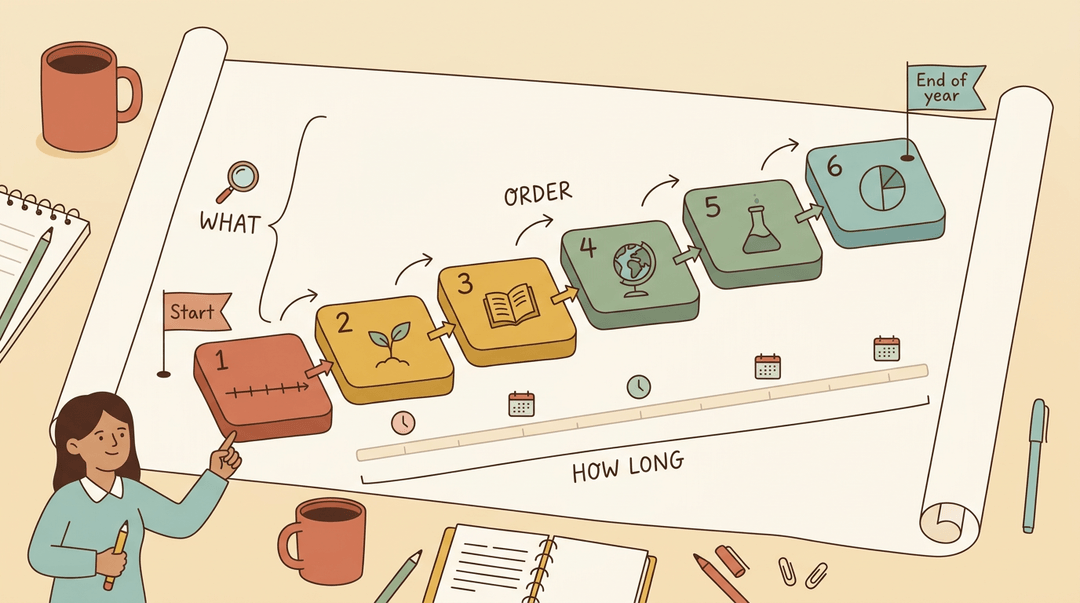
Scope answers what gets taught. Sequence answers in what order, so each new idea builds on what came before.
Together, they form a roadmap or blueprint: a list of topics in order that shows the whole year before anyone starts teaching. Each unit on that map becomes a unit plan.
A pacing guide sets how long each unit takes, while scope and sequence sets what and in what order.
Where you'll find one
Many textbooks and courses include one, and your district may have one for each grade level. Reading programs often include a reading instruction plan, plus phonics and vocabulary plans.
The same logic works in math and science: counting comes before place value, and observation comes before experiments.
Consider a science teacher who spots a cell unit scheduled after the lesson it depends on. She swaps the two units, and no student gets lost.
To write one yourself:
- List the skills your grade and subject require.
- Group related skills into units.
- Order the units so the foundations come first.
Why a planned order helps students
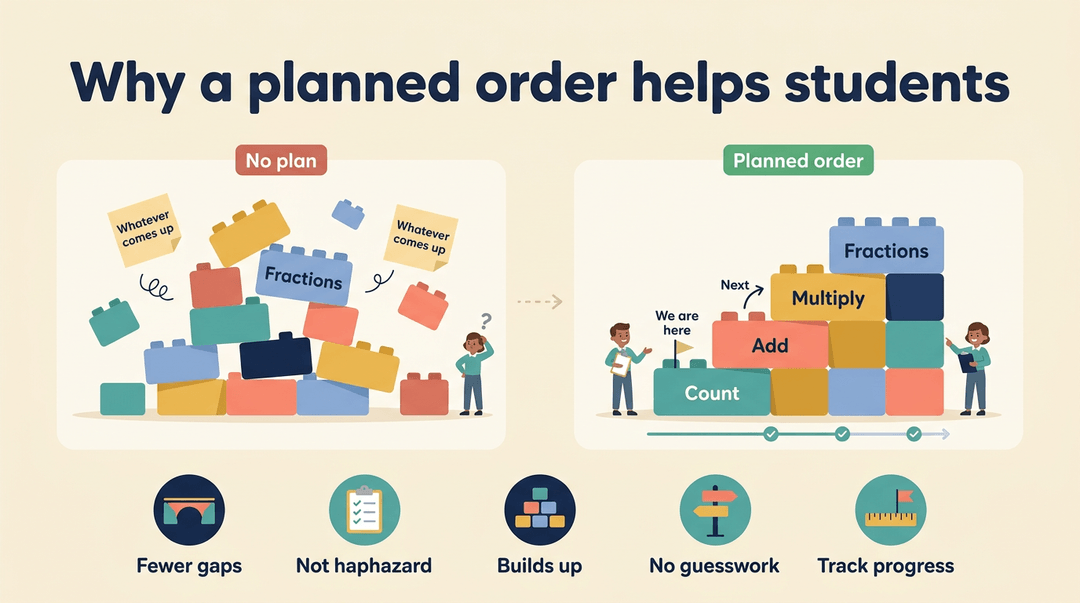
A planned order does more than tidy your calendar. Order matters.
- Fewer learning gaps. Students aren't asked to use skills they haven't learned.
- No haphazard teaching. Lessons follow a plan, not whatever comes up that week.
- Systematic, cumulative learning. Each skill rests on the one before it, so knowledge stacks up.
- No teaching guesswork. You always know what comes next.
- A benchmark for progress. You can check where students stand against the plan.
What a Scope and Sequence Covers
A scope and sequence is your year's map: it names what students will learn and the order they'll learn it in. Reading and vocabulary make that clearest, so we'll look there first.
The core parts of reading instruction
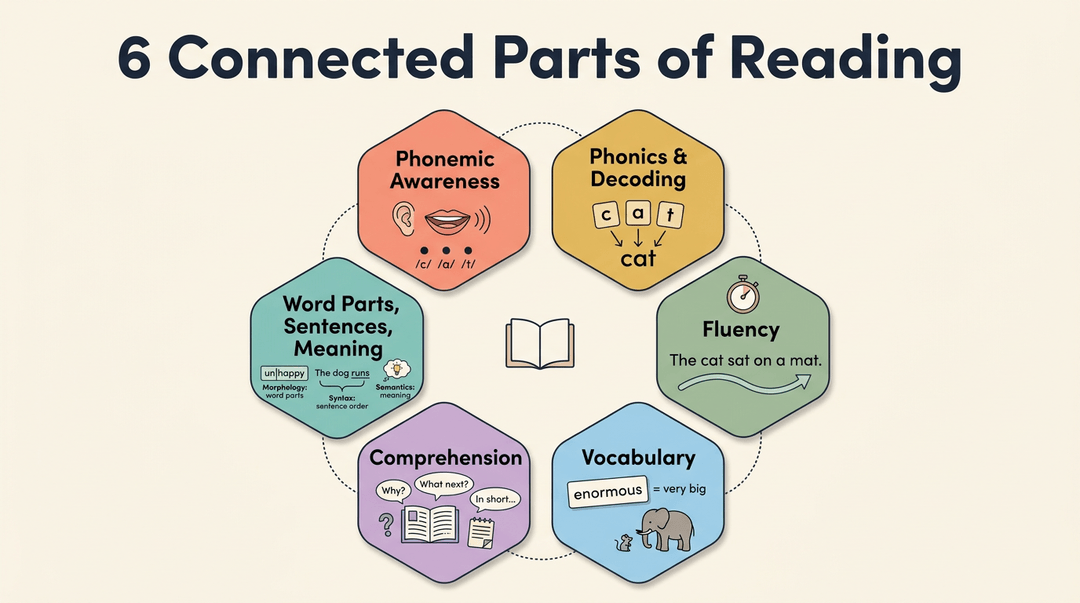
Reading rests on six connected parts:
- Phonemic awareness. Students play with spoken sounds rather than letters.
- Phonics and decoding. Students link those sounds to letters and sound out words.
- Fluency with decodable text. Students read smoothly from texts built on patterns they already know.
- Vocabulary instruction. Students learn what words mean and how to use them.
- Comprehension strategies. Readers question, predict, and summarize to make sense of text.
- Morphology, syntax, semantics. Morphology is word parts, syntax is sentence structure, and semantics is meaning.
What is the sequence of teaching reading?
Here's the order:
- Consonants and short vowels come first.
- Digraphs, such as sh and ch, come next, then blends like st and bl.
- Long vowels come after, along with silent e, which changes the vowel sound before it.
- Vowel pairs and vowel-r patterns come last.
Consider a first-grade teacher whose group keeps stumbling on short a words. She holds off on new patterns until those are solid, so each new sound builds on one students already know. Building each new skill on what students already know is the idea behind scaffolding in education.
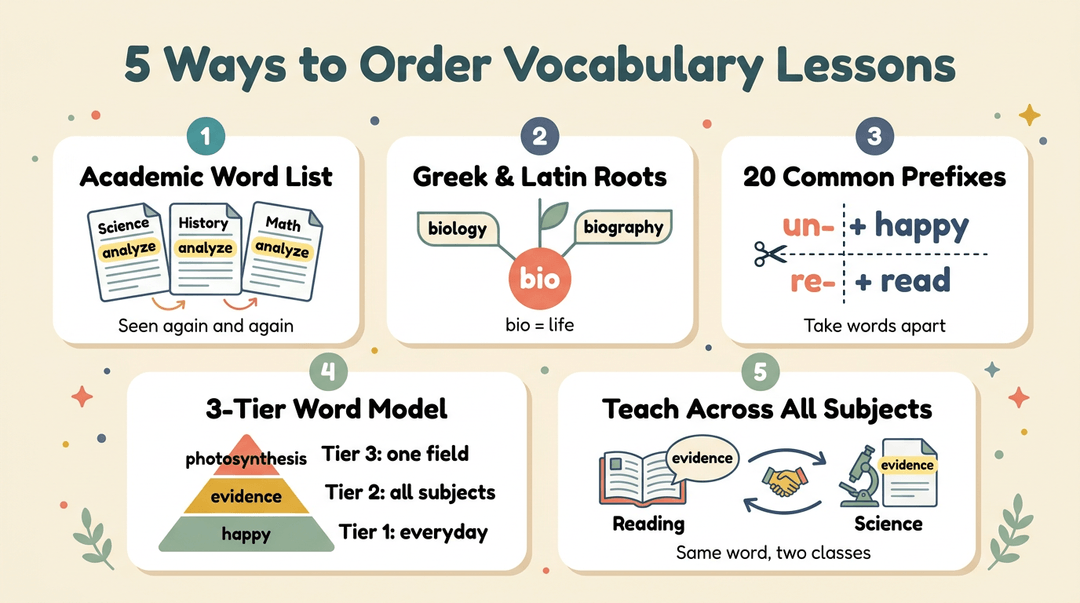
Ways to order vocabulary lessons
- Academic Word List. Words that appear across academic texts, so students meet them repeatedly.
- Common Greek and Latin roots. One root unlocks a family of words, like bio (life) in biology and biography.
- Twenty common prefixes. Learning these twenty, like un- and re-, helps students take apart new words.
- Three-tier word model. Tier one words are everyday, tier two words cross subjects, and tier three words belong to one field.
- Teach across all subjects. Consider a fourth-grade teacher who introduces evidence in reading, then teams up with the science teacher so students hear it again in a lab write-up and start using it in both classes.
Why comprehension is hard to sequence
Comprehension doesn't sequence as neatly as phonics. There's no known research sequence for it, and it's an unconstrained skill that shifts with every text and reader.
Your lesson plan does the heavy lifting here. Most lesson plans can be organized into five parts:
- an objective
- a warm-up
- direct instruction
- practice
- a check for understanding
Previewing a text might open the warm-up, and students retell the main idea at the check. Comprehension gets built one lesson at a time.
Turn Your Scope and Sequence into Lessons
Use this playbook to map your year into units, then break each unit into lessons you can teach on Monday. It works for any subject.
Build the year map
Start wide. You're deciding what gets taught and when, before any single lesson exists.
- List your end-of-year goals.
- Write them as things students can do: "Add and subtract fractions."
- Chunk the content into units.
- Group goals that belong together, such as "Division" and "Fractions."
- Order units by prerequisite skills.
- Ask of each unit: "What must students already know?"
- Assign weeks to each unit.
- Give harder, heavier units more weeks.
- Build in review and assessment.
- Put a check at the end of every unit, not only the year.
Break each unit into lessons
Now zoom in on one unit at a time.
- Write one objective per lesson.
- Board-ready: "Students will divide a two-digit number by a one-digit number."
- Plan daily and weekly pacing.
- Spread the unit's objectives across its weeks, one main objective per day.
- Add an exit ticket as a check.
- One question matched to the objective: "Solve 48 ÷ 4 and show how you know."
- Reserve flex days for reteaching.
- Leave open days in each unit, and let exit ticket results decide who needs them.
Example: A fourth-grade teacher sequences division before fractions. Her fractions unit gets its own weeks, one objective per day, an exit ticket each afternoon, and a flex day at the end. When the tickets show students still shaky on equal groups, she spends that flex day there instead of rushing on.
See how the sequence shifts by level
| Level | What the sequence looks like |
|---|---|
| K-2 | Letter sounds first, then blends |
| 3-5 | Fractions after division |
| 6-8 | Science units organized by skill |
| Homeschool | Flexible weekly pacing, not fixed daily slots |
Review your plan
Before you commit, confirm:
- No skipped prerequisites. Every unit builds on something already taught.
- No unplanned repetition. If a skill returns, it's on purpose, as review.
- Matches the real calendar. Weeks reflect actual school days, breaks, and testing.
- Revisit after each unit. Adjust the remaining weeks based on what happened.
⚠️ Watch out: Pacing that looks perfect on paper often ignores holidays and assemblies. Count real days before you lock in unit lengths.
Map your scope and sequence into reusable unit and daily plans with EMStudio's online lesson planner.
How Learners Benefit
A solid scope and sequence does more than organize your year. It shapes how struggling students experience learning.
How it helps students with dyslexia
Students with dyslexia often struggle in ways that aren't obvious. A clear scope and sequence gives them a predictable, explicit progression: they know what comes next and how it connects to what they've learned.
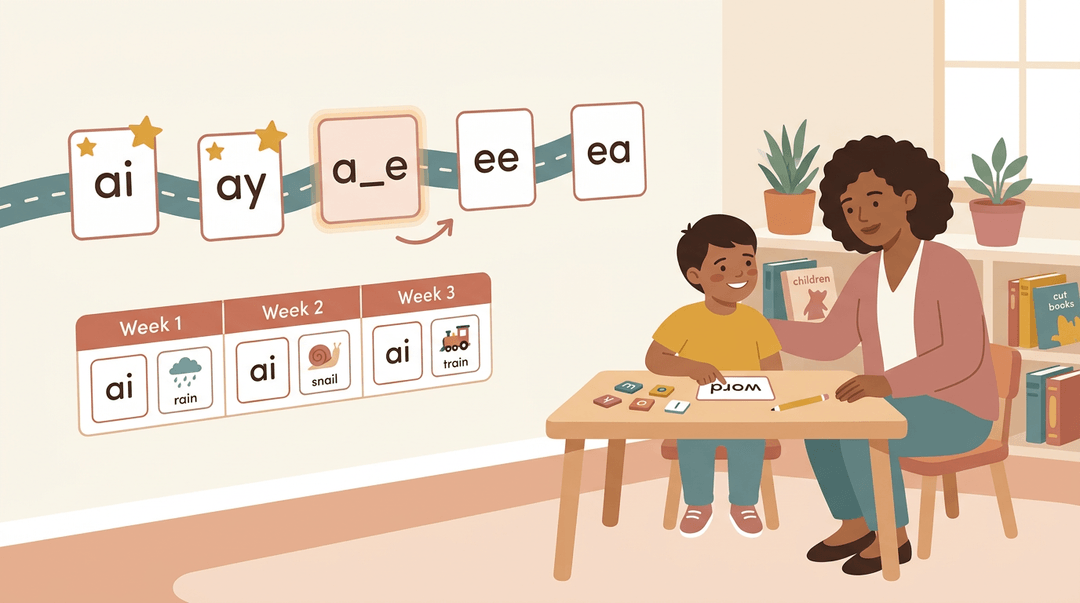
Repetition helps too. Key skills return on a set schedule, so students practice without the lesson feeling like a rerun. Picture a second-grade teacher who revisits the same letter-sound pattern each week in new words.
For a struggling student, that repetition builds confidence. Less panic. More practice.
For students with phonological difficulties (trouble noticing and working with the individual sounds in spoken words), this sequencing is essential. Sounds arrive in a deliberate order, so students aren't asked to separate two sounds before they're ready.
The question becomes what comes next rather than what went wrong.
Helping every learner catch up
A scope and sequence also works as quality control for instruction. When every teacher on a grade team follows the same planned order, you can check whether a skill was actually taught, not just planned.
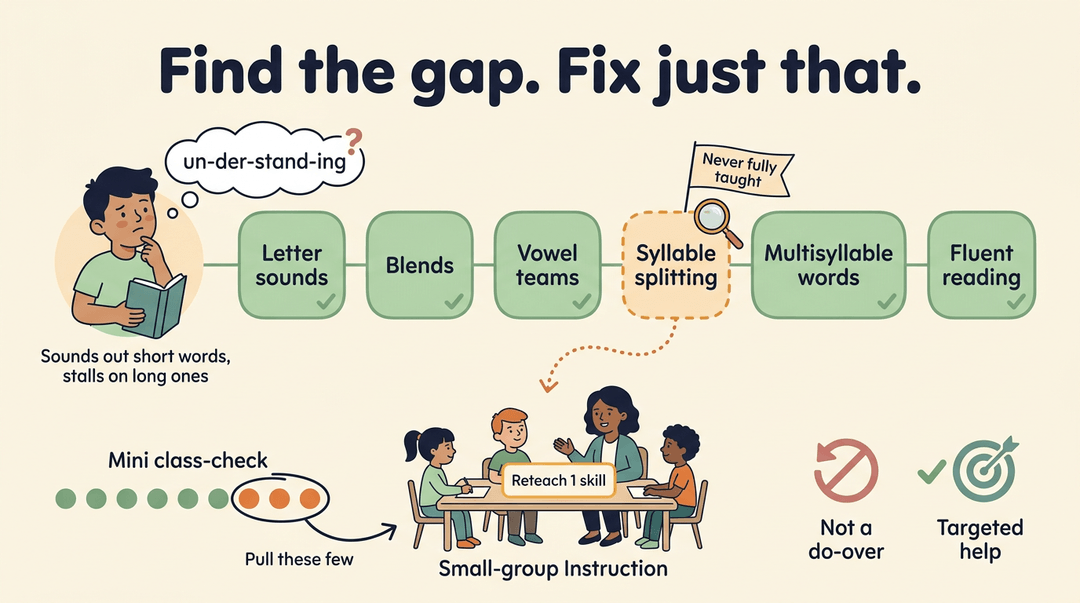
It also shows who needs support. If most of the class has a skill but a few students don't, you know exactly who to pull into a small group before the gap grows.
For struggling readers, the sequence pinpoints gaps. Consider a fifth grader who sounds out most words but stalls on longer ones. Looking back through the sequence, you find that syllable splitting was never fully taught.
You can reteach that one skill instead of starting the year over. Targeted help, not a do-over.
What Research Says About Sequences
Does the order you teach skills really matter? The research says yes, with more room to choose than you might expect.
Why a set plan beats winging it
An exploratory quantitative analysis in Discover Education suggests that a pre-planned phonics sequence can be more effective than teaching phonics without a plan. The goal isn't more phonics. It's phonics in an order that builds.
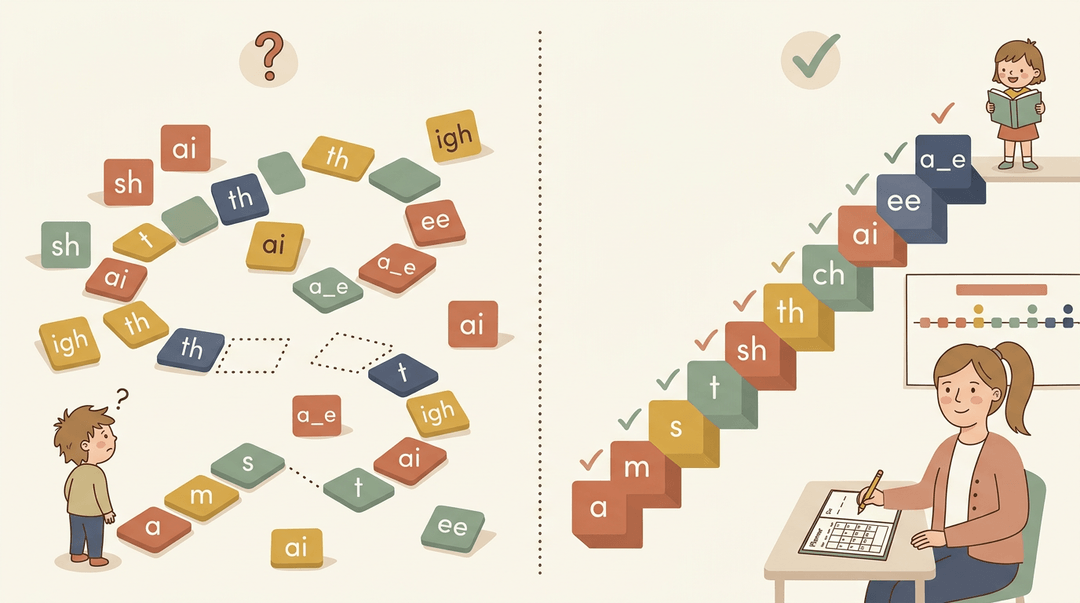
Winging it also leaves gaps. When phonics is haphazard, important skills get missed or repeated, and students who struggle with reading are especially harmed.
A systematic tertiary review of teaching for children with reading difficulties points out that these students often need something additional or alternative to phonics alone.
Think of a second-grade teacher planning next week. They know exactly what comes next, so nothing gets skipped or taught twice.
Many sequences can work well
You don't need one official order. Reading Rockets makes the point that there's more than one way to teach something. The National Reading Panel studies didn't establish one universally best sequence for teaching reading skills.
Choosing a sequence matters more than choosing the perfect one. Pick one that fits your district's students and materials, then keep it consistent across grades, so students moving up aren't left out of step with what's next.
How it fits the Science of Reading
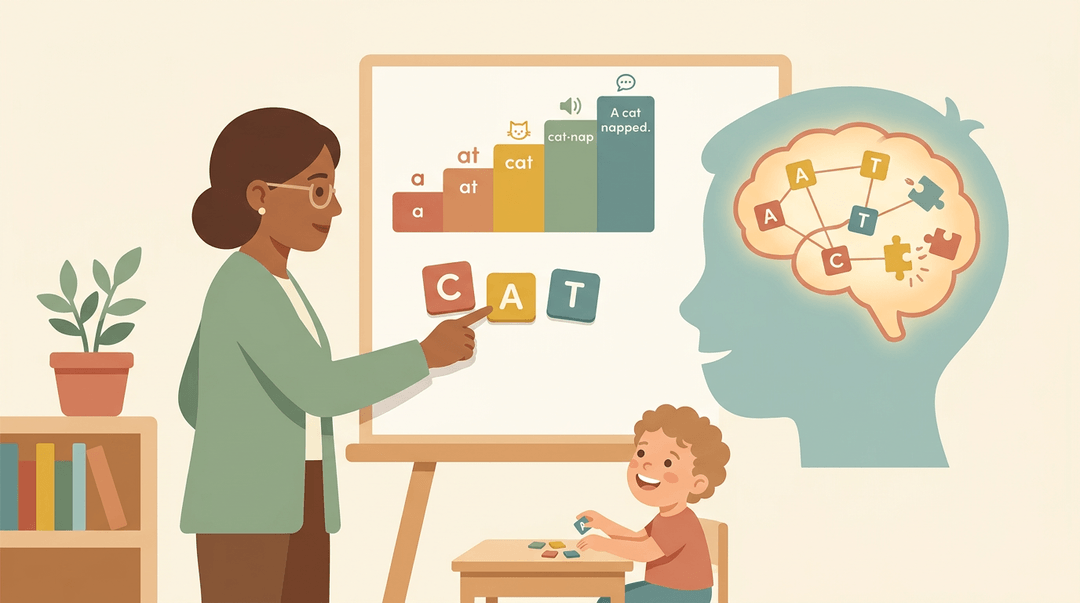
The Science of Reading is the research base on how children learn to read. Structured literacy is an evidence-based framework informed by decades of brain research.
A review of neural and genetic processes in learning to read highlights that structured instruction helping students reach the smaller parts of words is critical to training the brain to read. Your scope and sequence is where that structure lives.
Where Structured Literacy Fits In
Structured literacy comes up often in reading conversations, so we'll walk through what it asks of you and how it differs from approaches you may already use.
What structured literacy involves
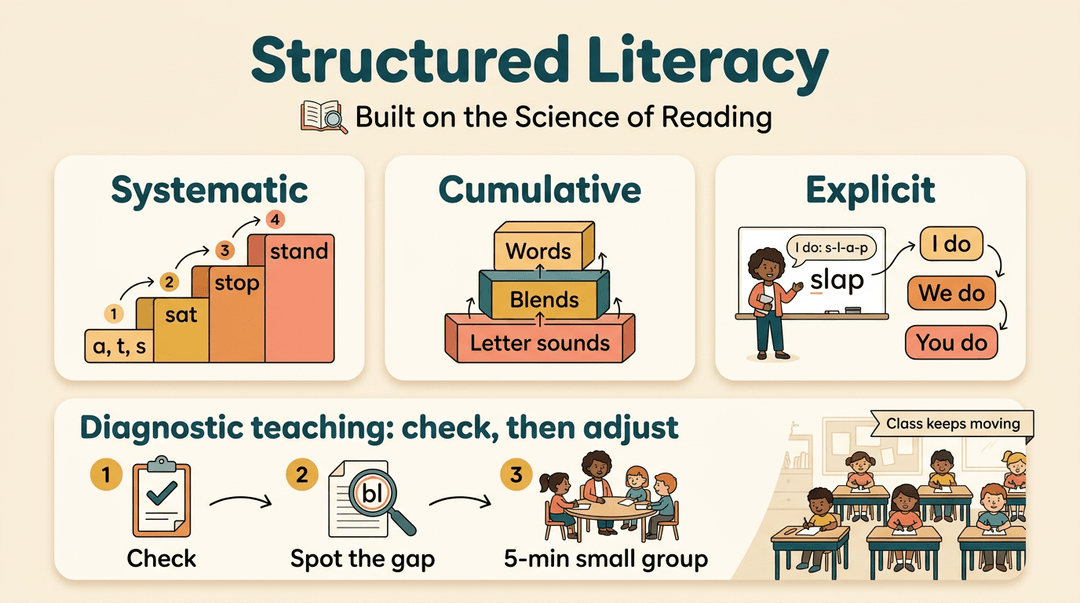
Structured literacy is a research-based instructional framework for reading and spelling. It draws on the Science of Reading, the research on how children learn to read, so its choices rest on evidence.
Three features define it:
- Systematic. Skills follow a logical sequence, so nothing is taught out of order.
- Cumulative. Each skill builds on the one before it.
- Explicit. You model the skill out loud, then guide students through it, rather than hoping they'll pick it up on their own.
Diagnostic teaching means checking what each student can do, then adjusting your instruction to match. Consider a second-grade teacher who notices three students stumbling on the same consonant blend.
She pulls them aside for five minutes while the rest of the class keeps moving. Nothing is left to chance.
Related methods and how they compare
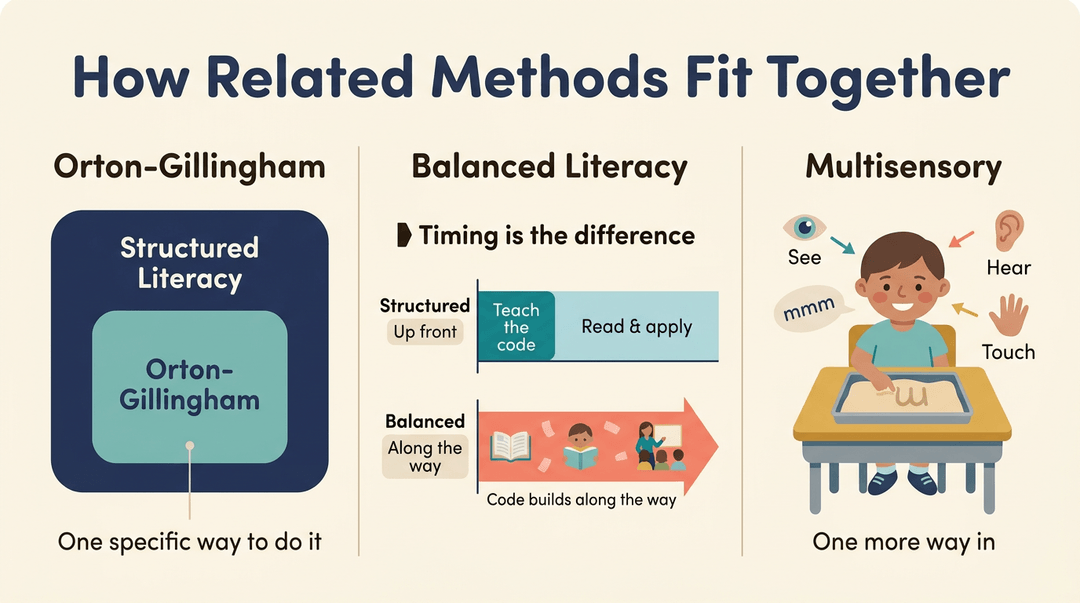
Orton-Gillingham is a specific method for teaching reading and spelling that applies the explicit, systematic principles above. Structured literacy is the broad framework, and Orton-Gillingham is one specific way to put it into practice.
Balanced literacy takes a different route, blending several approaches such as guided and independent reading. The biggest difference is timing: structured literacy teaches the code up front, while balanced literacy builds it along the way.
Multisensory instruction engages sight, sound, and touch together. Picture a first-grade teacher having students trace the letter "m" in a tray of sand while saying its sound aloud. The student who struggles to hold letters in memory gets one more way in.
Choosing a Quality Plan and Using It
A good plan removes guesswork when it fits your class and you know how to use it.
What to look for in a plan
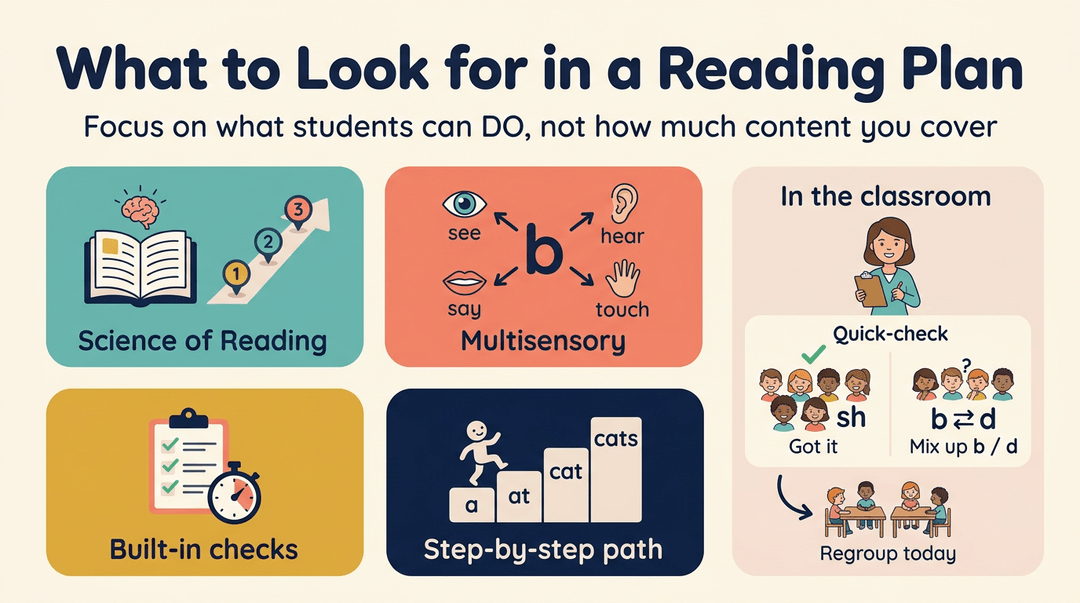
Strong plans focus on what students can do, not how much content they cover.
- Alignment with the Science of Reading. Its research on how children learn to read shapes the order.
- Multisensory instruction. Students see, hear, say, and touch letters together, opening more paths into each skill.
- Built-in assessments. Quick checks reveal who's ready for the next step.
- A cumulative and systematic path. Skills follow a deliberate order, each building on the last.
Think of a second-grade teacher with a wide range of readers. Built-in checks show six students have a sound pattern down while four still mix up two letters, so she regroups them that afternoon.
Common roadblocks when rolling it out
- Teacher training needs. Teachers need time to learn the program well.
- Adapting individual pacing. Groups move at different speeds, so slow one and speed another without losing the sequence.
- Resistance to change. Colleagues who've taught the old way for years may hesitate.
- Limited time and resources. Materials run thin and schedules are already full.
- Adjusting pacing for homeschool and tutoring. A homeschool parent can speed past mastered skills or linger on tough ones. A tutor needs a sequence that fits short sessions.
The sequence is a guide, not a rulebook.
Actions and routines that make it work
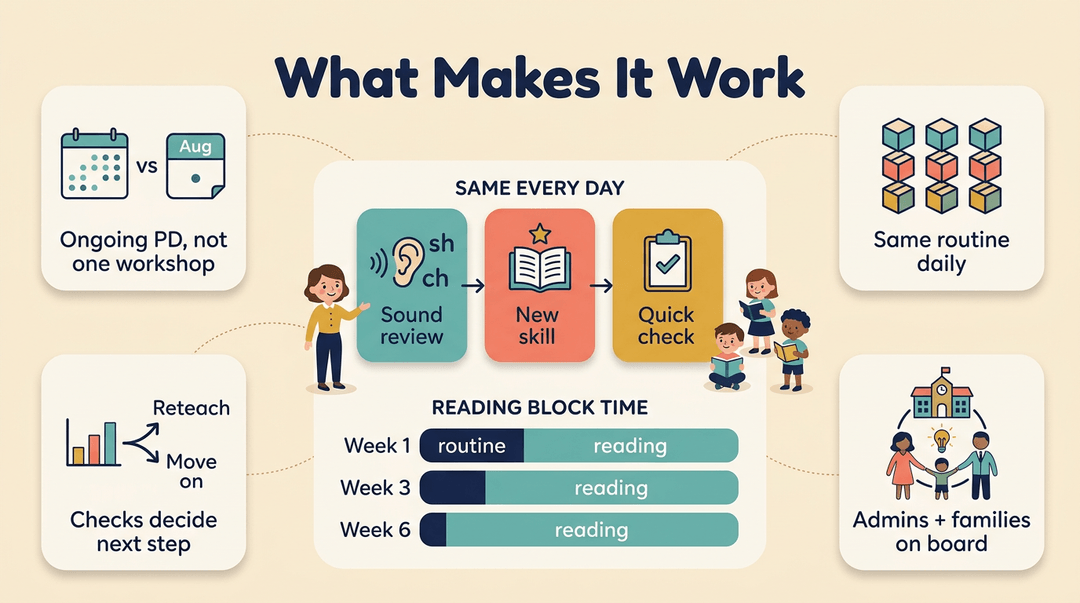
- Professional development. Ongoing support beats one August workshop.
- Consistent lesson routines. The same structure each day lets students focus on the skill rather than the format.
- Assessment-guided teaching. Let the checks decide what to reteach and when to move on.
- School and community support. When administrators and families understand the plan, it has more backing.
Consider a fourth-grade teacher who opens each reading block the same way: a sound review, the new skill, then a quick check. Within weeks, students know the routine by heart and more of the block goes to reading.
Where to get a ready-made sequence
- Purchased commercial programs. Published programs often include a full sequence and materials.
- District-developed plan. Ask your curriculum coordinator before you start rebuilding.
- Following the program's own sequence. Its order works as a whole, so skipping ahead creates gaps.
- Training courses and ready-made curricula. Courses build your skills, and curricula give you a starting point to adapt.
A scope and sequence gives every subject a clear path: what matters most, where it fits, and when it gets taught. Built well, it keeps your year focused and turns each unit into a natural next step instead of a guess.
Ready to turn your map into lessons? Explore Lesson Planning to write, organize, and reuse your plans across multiple classes from one place.
References
- An exploratory quantitative analysis of research on balanced literacy and structured literacy | Discover Education — link.springer.com (2025)
- Mapping the Field of Effective Teaching and Interventions for Children With Reading Difficulties: A Systematic Tertiary Review, Qualitative Meta‐Synthesis, and National Survey — doi.org (2025)
- Readers, Instruction, and the NRP — doi.org (2004)
- The Role of Neural and Genetic Processes in Learning to Read and Specific Reading Disabilities: Implications for Instruction — pmc.ncbi.nlm.nih.gov (2021)
- How Would You Schedule the Reading Instruction? — readingrockets.org (2026)
Frequently asked questions
What is the 3-2-1 reading rule?
The 3-2-1 reading rule is a comprehension routine: after reading, students identify three things they learned, two interesting details, and one question they still have. It helps readers summarize and reflect on a text.
What is the sequence of teaching reading?
Reading is commonly taught in a systematic progression: phonemic awareness, phonics and decoding, fluency, vocabulary, and comprehension, with word structure and language knowledge developed as well. In phonics, teach consonants and short vowels first, then digraphs and blends, followed by long vowels and silent e, then vowel pairs and vowel-r patterns.
What are the 4Cs of literacy?
The 4Cs of literacy commonly refer to critical thinking, communication, collaboration, and creativity. These skills help learners analyze texts, express ideas, work with others, and create meaning.
What are the 5 major parts of a lesson plan?
Five common parts of a lesson plan are an objective, a warm-up, direct instruction, practice, and a check for understanding. Together, they clarify the goal, introduce or model the learning, let students apply it, and show whether they have understood.
What are the 7 stages of curriculum development?
A common seven-stage curriculum-development cycle is needs assessment, setting goals and objectives, selecting content, organizing content, selecting learning experiences, organizing learning experiences, and evaluation. Schools may use different labels or combine stages, and evaluation often informs revisions to the curriculum.
How to write a scope and sequence?
Start by listing the skills and end-of-year goals students need to master. Group related skills into units, order those units by prerequisites, assign realistic time based on the school calendar, and build in review and assessments. Then break each unit into lesson objectives, add checks for understanding, and revise the plan based on student progress.