What Is a Lesson Plan? A Complete Guide for Every Educator
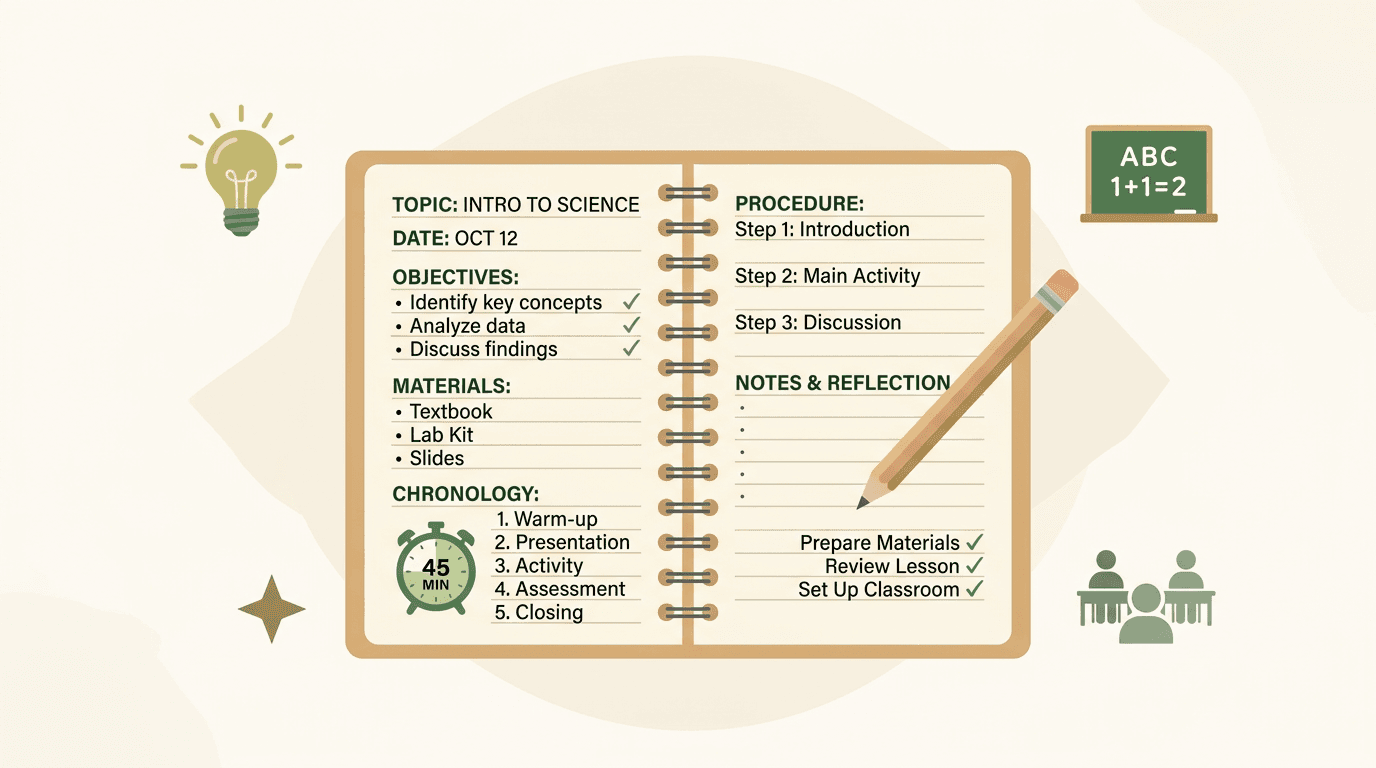

Jump to section
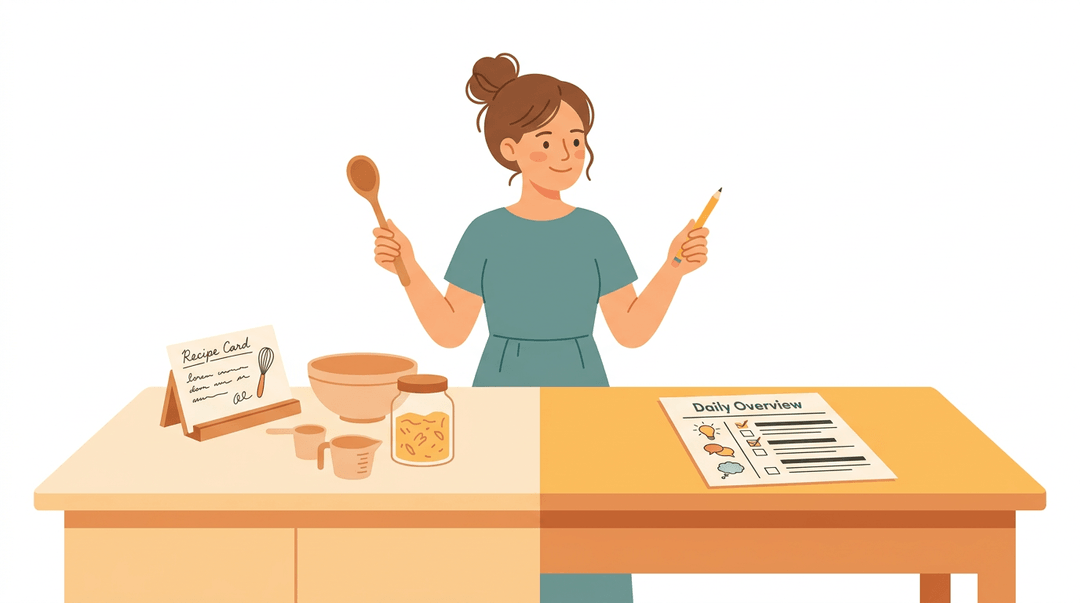
Think about the last time you cooked a meal you'd never made before. You probably didn't just start throwing ingredients into a pan.
You had a recipe: something that told you what you needed, in what order, and what the finished dish was supposed to look like. A good lesson plan works the same way.
It's your recipe for a productive class, giving you a clear path from "here's the topic" to "here's what students can now do."
In this post, we'll cover what a lesson plan actually is, why it matters, how to write one step by step, and the practical moves that make planning work harder for you: types, formats, differentiation, and how to adapt across grade levels.
What Is a Lesson Plan
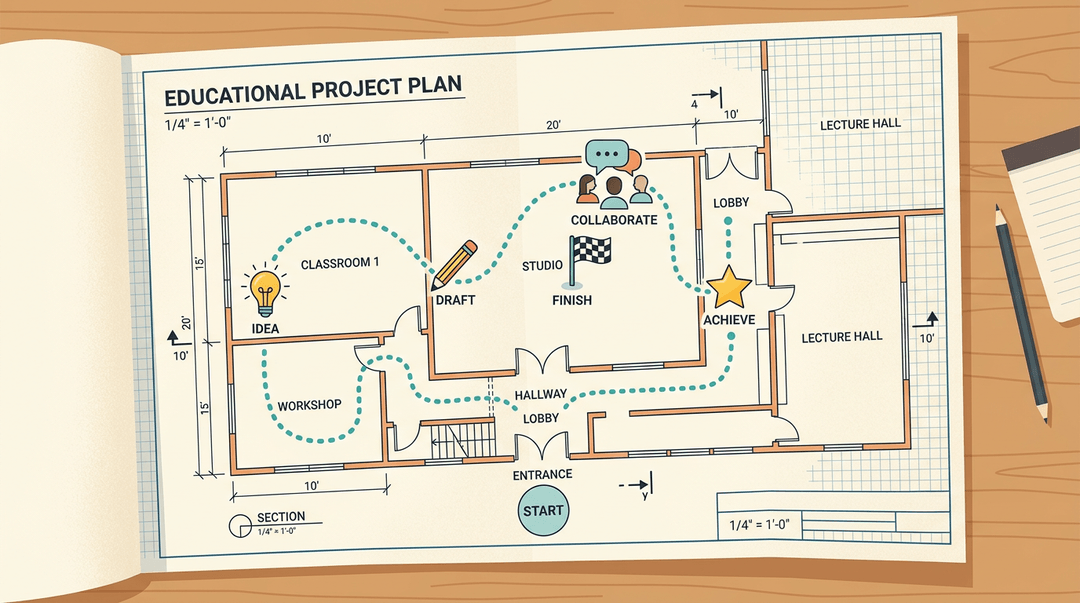
A lesson plan is your road map for what happens in the classroom: where you're headed, how you'll get there, and how you'll know students arrived. Most plans fall into one of five broad types: daily, weekly, unit, subject-specific, and grade-level plans.
The type you reach for depends on your purpose, but every one of them shares the same core DNA.
The core purpose of a lesson plan
At its most basic, a lesson plan outlines your goals and the activities that move students toward them. It's the foundation of an efficient classroom because it turns your intentions into a sequence anyone (including a substitute) can follow.
More than logistics, though, it's proof of design: a well-built plan demonstrates both what mastery looks like and how students will reach it.
Key components every lesson plan needs
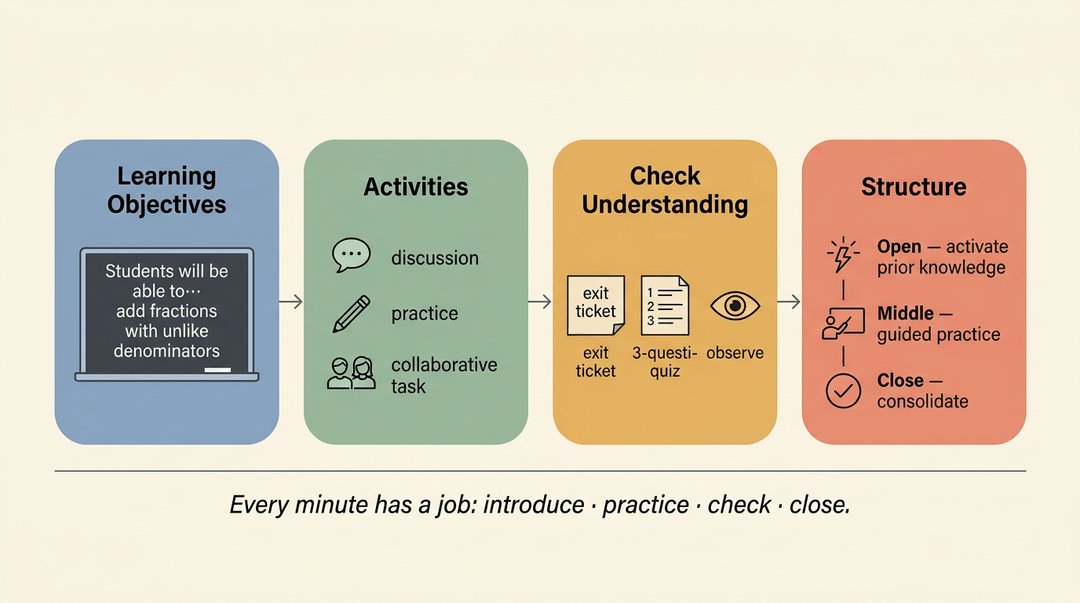
Regardless of format, a solid lesson plan has four things working together:
- Learning objectives: what students will know or be able to do by the end
- Learning activities: the tasks, discussions, and practice that build toward those objectives
- Assessment of understanding: how you'll check whether learning actually happened, whether that's an exit ticket, a quick quiz, or observation
- A clear beginning, middle, and end: an opening hook that activates prior knowledge, guided instruction in the middle, and a closing that consolidates the learning
Think of a fifth-grade teacher wrapping up a fractions unit. Without a plan, the lesson drifts. With one, every minute has a job: introduce, practice, check, close. That structure is what turns a room full of activity into a room full of learning.
Why Lesson Planning Makes You a Better Teacher
A good lesson plan doesn't just organize your class time. It makes you a more confident, responsive teacher, and it gives your students a better shot at actually learning something.
How planning builds teacher confidence
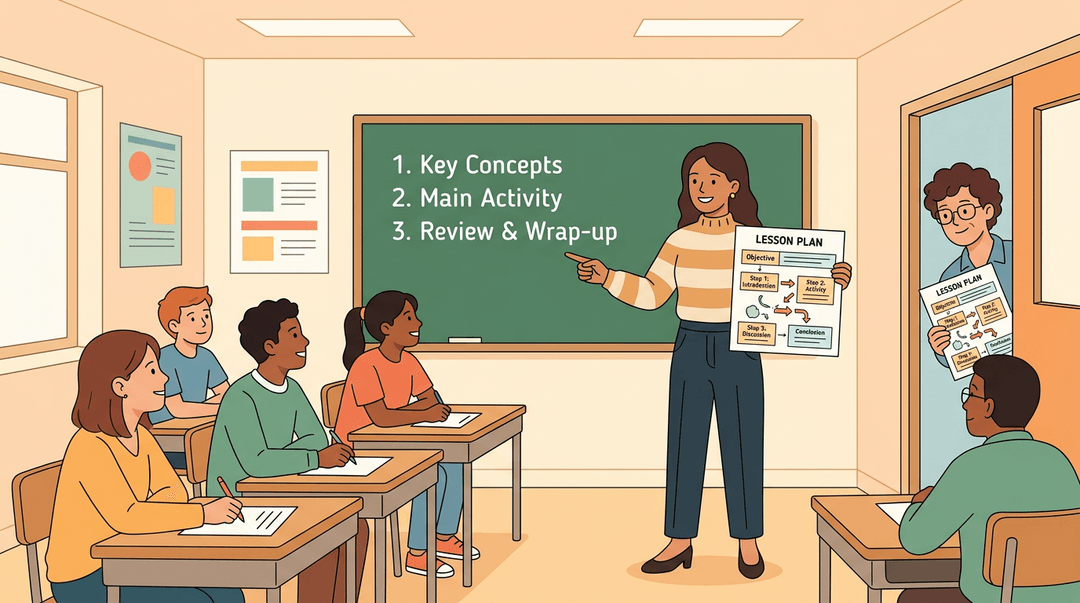
When you've mapped out where a lesson is going, you walk in ready. That preparation shows: students sense structure, and it keeps the class on track instead of drifting.
A clear plan also means a substitute can pick up your room without losing the thread of what you're teaching.
More than that, planning pushes you to think about what your students need, not just what you'll cover. That shift, from delivering content to designing an experience, is where meaningful learning happens.
What teachers gain from planning ahead
Planning isn't a one-time act. Done well, it becomes a feedback loop:
- Evaluate student performance by comparing what you planned against what students actually produced.
- Adjust instruction when results show a concept didn't land, before the next unit builds on it.
- Understand student capabilities more deeply, because planning forces you to anticipate where learners will struggle.
- Integrate new tools and resources deliberately, rather than reaching for them in the moment.
Each of these habits compounds over time. The teacher who plans reflectively in October teaches differently, and better, in March.
And the students feel it. Organized, well-paced lessons reduce confusion, keep engagement higher, and give every learner a clearer path through the material. Planning is how you take care of your class before you ever set foot in the room.
Lesson Plan Structure and Format
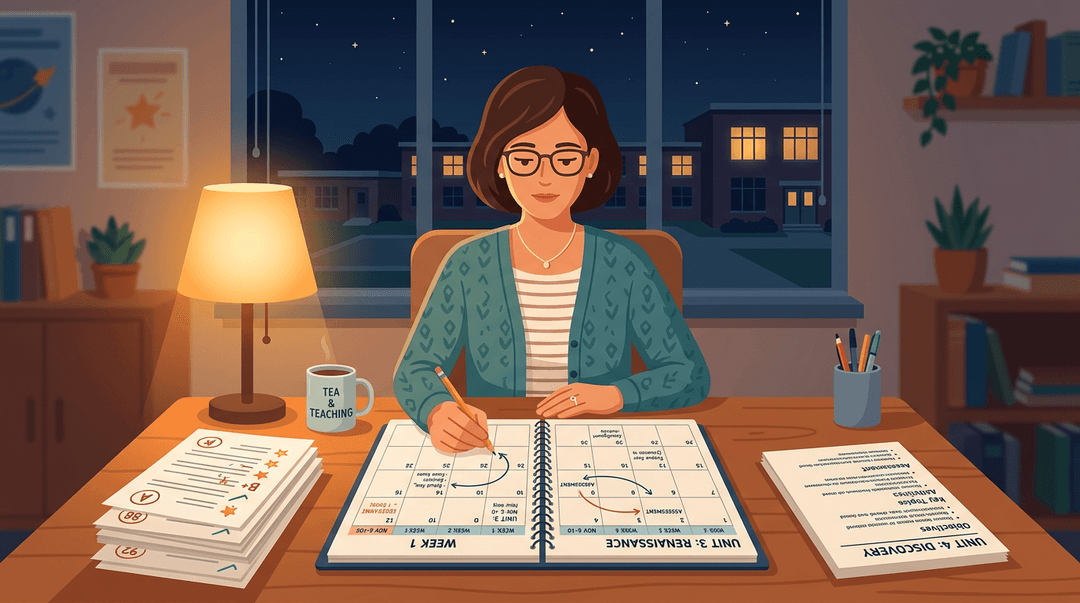
A solid lesson plan follows a predictable shape, and that predictability is a feature. When every part has its place, you spend less time second-guessing and more time teaching. Here's what a complete plan includes and how to use it well.
Standard parts of a lesson plan
Most plans share the same core components:
- title, grade level, and content area at the top
- standards addressed
- a materials list
- key vocabulary to pre-teach
- formative assessment methods (exit tickets, thumbs-up checks, quick polls) so you can gauge understanding before the lesson ends
For example, a fourth-grade math teacher planning a decimals lesson might note the relevant Common Core standard, list graph paper and base-ten blocks under materials, flag tenths and hundredths as vocabulary, and end with a three-question exit ticket.

How to open a lesson with a strong hook
The first few minutes decide whether students lean in or tune out.
A strong hook captures attention and does real instructional work: a short video, a surprising question, or a quick quiz can activate prior knowledge and surface common misconceptions at the same time.
Stories work especially well when the concept feels abstract. Once students are curious, the new content has somewhere to land.
Reflecting on your lesson after class
The plan isn't finished when class ends. Log reflection notes immediately after: what worked, what fell flat, where engagement dipped. A sentence or two is enough.
Those notes are what turn a one-time lesson into a resource you'll reuse with confidence, revised and ready for next year.
How to Write a Lesson Plan Step by Step
A solid lesson plan isn't built in one sweep. It moves through deliberate stages, and each one feeds the next. You've probably heard of the 5 P's of lesson planning: Prior knowledge, Purpose, Plan, Practice, and Payoff. That framework holds here.
The steps below map onto it and give you the practical detail to make each stage work.
Write learning objectives that actually measure growth
Start with what you want students to know and do by the end of class, not what you plan to teach. That's the shift.
Good objectives align to your state or curriculum standards and use specific action verbs.
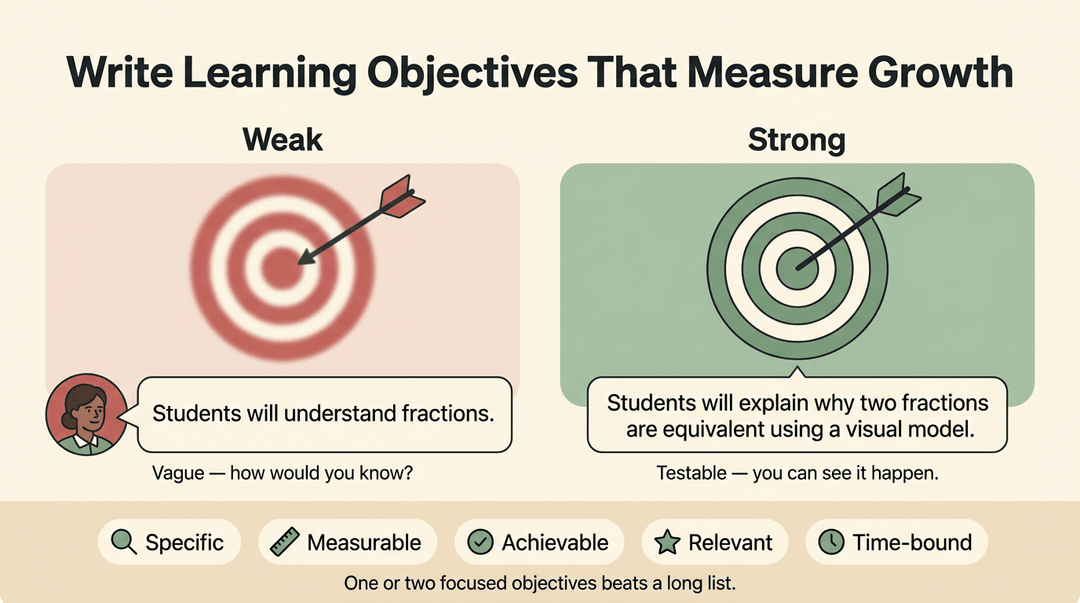
Bloom's Taxonomy of Measurable Verbs makes this concrete: by writing objectives with measurable verbs, you make explicit what students must do to demonstrate learning. "Understand fractions" is vague.
"Explain why two fractions are equivalent using a visual model" is testable.
Apply SMART criteria: objectives should be Specific, Measurable, Achievable, Relevant, and Time-bound. One or two focused objectives per lesson beats a long list that nothing fully covers.
Plan activities that reach every learner
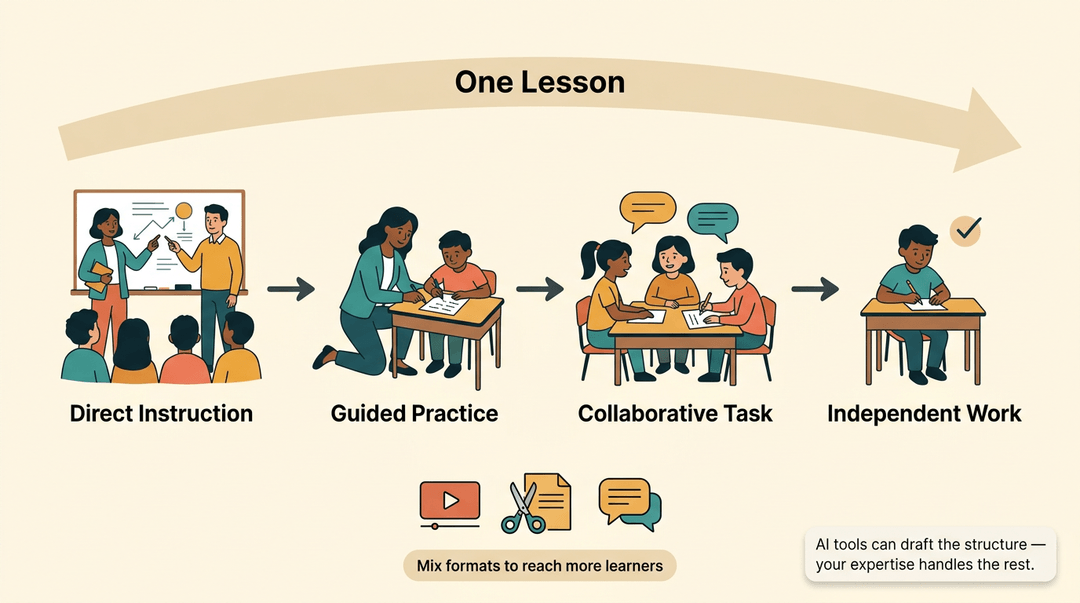
Once objectives are set, build the activities around them. Rotate through direct instruction, guided practice, and independent work so you're not asking students to go it alone before they're ready.
Collaborative tasks (a pair discussion, a group problem) add another layer and catch learners who stay quiet during whole-class instruction.
Variety matters here. A short video clip, a hands-on task, a written response, a quick discussion: these engage different learner types without requiring you to redesign the lesson for every student.
The goal is one lesson that genuinely reaches most of the room.
AI lesson-planning tools and free platforms like Google Docs templates can speed up this drafting stage considerably, freeing your attention for the differentiation decisions that actually need your expertise.
Build assessments into your lesson
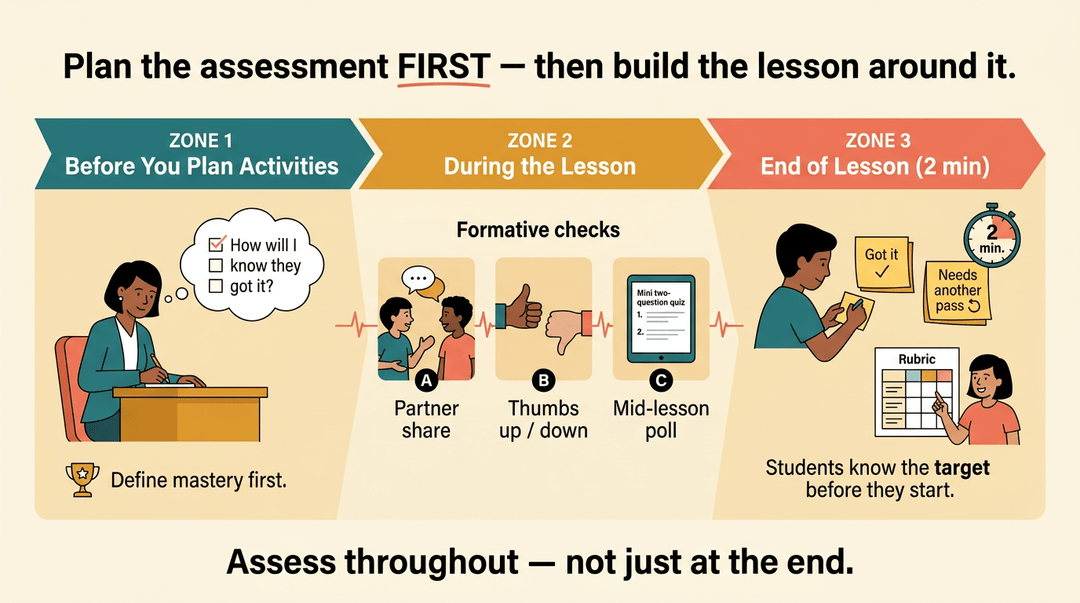
Don't save assessment for the end. Backward design means you decide how you'll measure mastery before you plan the activities, so everything points the same direction.
Weave in formative checks throughout: a quick partner share, a thumbs-up/thumbs-down, a two-question poll mid-lesson.
Exit tickets are a reliable formative close: in two minutes you find out who got it and who needs another pass, before it shows up on a test. Rubrics give students a clear target and make feedback faster to deliver.
Sequence your lesson and manage time
Ordering matters as much as content.
Gagne's 9 events of instruction, developed by educational psychologist Robert Gagné, offer a proven sequence: gain attention, state the objective, activate prior knowledge, present new content, guide practice, elicit performance, give feedback, assess, and transfer.
You won't always use all nine, but the sequence keeps instruction from jumping ahead of student readiness.
Estimate time for each activity, then build in a buffer. Prioritize the two or three concepts that are non-negotiable if time runs short.
Close the lesson so learning sticks
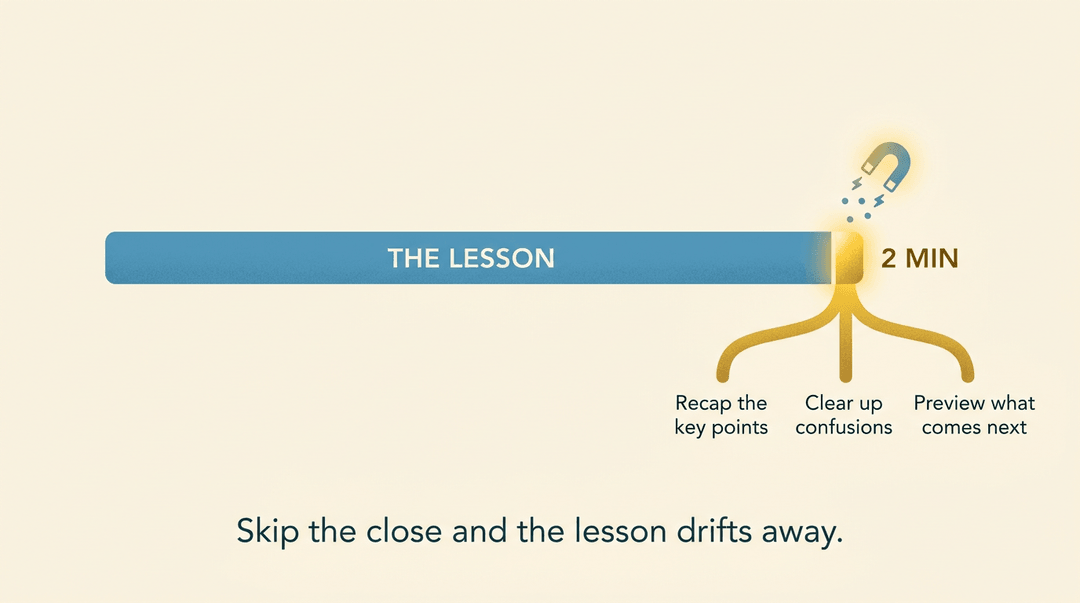
A strong close does three things: it summarizes the key points, surfaces and corrects any lingering misunderstandings, and previews what's coming next. That preview is what consolidates learning, connecting today's work to tomorrow's.
Don't skip it when the clock gets tight: it's often the two minutes that make everything before it stick.
Lesson Plan Checklist for Teachers
A finished lesson plan isn't the same as a ready one. Run this checklist three times: before the bell, during the lesson, and after the room clears. Each pass takes under a minute.
Before you teach: confirm it's ready
- Objective uses an action verb. "Students will compare two characters," not "students will understand."
- Materials and tech are staged. Copies counted, links tested, devices charged before students arrive.
- Hook or bell ringer is planned. Students should have something to do the moment they sit down.
⚠️ Watch out: the tech check is the one teachers skip most. A dead link costs you five minutes and the room's attention.
While you're teaching: keep it on track
- Pacing matches your time estimates. Glance at the clock at each transition, not just at the end.
- Checks for understanding are built in. A quick poll, exit question, or "show me on your fingers" every segment.
- Differentiation notes are visible. Keep extensions and supports written on the plan itself, not in your head.
Example: A middle school science teacher writes her differentiation moves in the plan's margin: an extension question for fast finishers, a sentence starter for students who stall. When a group finishes the lab early, she doesn't improvise; she reads the margin.
After the lesson: capture it while it's fresh
- Reflection logged immediately. Two sentences on what worked and what dragged, before your next class.
- Adjustments noted for next time. Mark the step that ran long or the question that confused everyone.
- Plan saved for reuse or sub coverage. A clean, annotated copy means next year (or a substitute) starts from your best version.
At a glance:
| Phase | One question to ask |
|---|---|
| Before | Could someone else run this plan as written? |
| During | Do I know, right now, who's lost? |
| After | Will future-me thank present-me for these notes? |
That last phase is where most plans die in a folder. EMStudio's lesson planner lets you build, annotate, and reuse plans across classes in one place.
Differentiating Instruction in Your Lesson Plan
No two students walk in with the same background, learning style, or pace. Differentiation starts in the planning, not the moment things go sideways.
Know your students before you plan
Before you write a single objective, take stock of who's in the room.
Students with IEP (Individualized Education Program) or 504 plan accommodations need those specifics noted directly in your template: extended time, preferential seating, modified tasks. Don't leave them as a mental footnote.
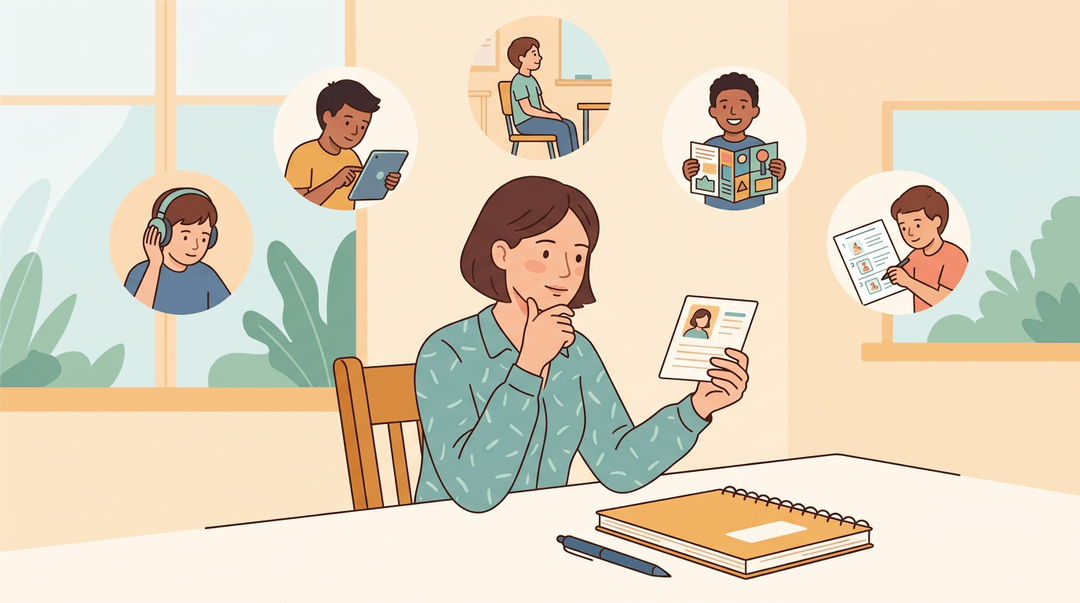
Beyond formal accommodations, think about the spread. Gifted learners need extension work that stretches them; remedial learners need scaffolded entry points that build confidence.
And most classrooms hold a mix of visual, auditory, and kinesthetic learners, so plan at least one activity that moves beyond reading and listening.
Today's students also grew up with screens, and ignoring that is a missed opportunity. Build in moments that speak to how they already engage with information.
Bring technology into your lessons
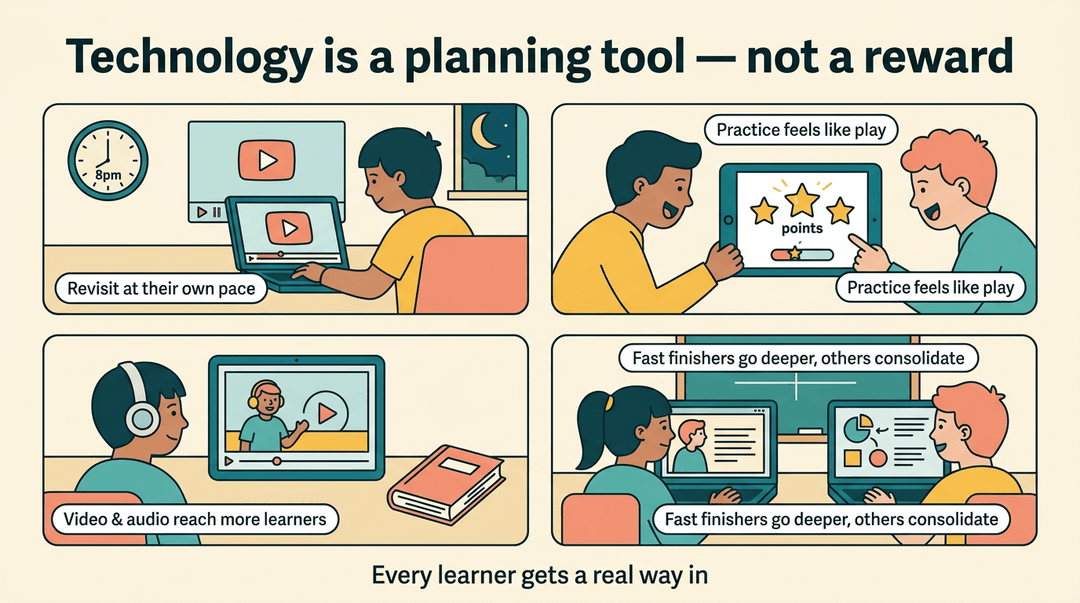
Technology isn't a reward for finishing early. It's a planning tool. A few ways to weave it in:
- Online learning platforms let students revisit content at their own pace after class.
- Interactive games and challenges turn practice into something students actually want to do.
- Multimedia and digital tools (short videos, audio clips, visual simulations) reach learners who tune out text-heavy instruction.
- Student-paced learning paths let fast finishers go deeper while others consolidate the core idea.
The goal isn't tech for its own sake. It's making sure every learner in the room has a real way in.
Adjusting Lesson Plans Across Grade Levels
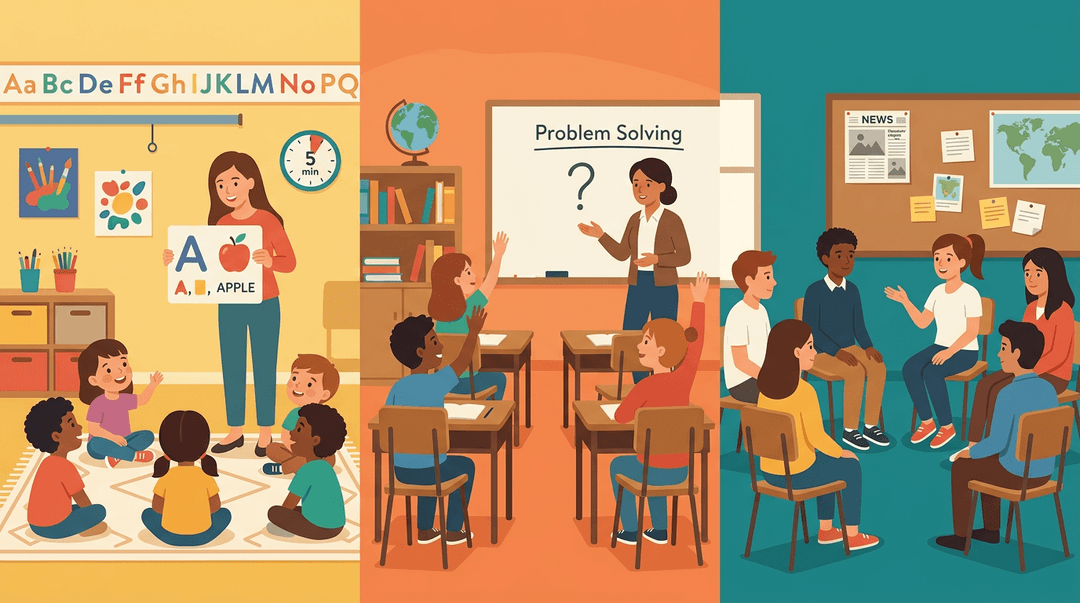
A lesson plan that works brilliantly for a third grader will fall flat in a high school classroom, and vice versa. The grade level shapes everything: the pacing, the cognitive demands, even how much time you leave for questions.
Planning for elementary school classrooms
Elementary teachers often cover several content areas in a single day, so transitions between subjects need to be built right into the plan.
At this stage, lessons lean on the early Bloom's Taxonomy stages: remembering and understanding, with application woven in as students are ready.
Short, focused activities work best, and a clear transition signal keeps the room from unraveling between math and reading.
What changes in middle school lesson plans
Middle schoolers need more than a correct answer; they need to understand why it's correct. Build in extra time for questions and plan at least one alternate explanation for tricky material, because the first version won't land for everyone.
Time management becomes a genuine teaching target at this stage, too. Students are developing the habit of pacing themselves, and your lesson structure models exactly that.
High school lessons that build real skills
By high school, the plan should push critical thinking to the front. That means flexible teaching: if discussion takes the lesson somewhere useful, follow it.
Connect content to real situations your students already recognize, and keep college readiness and assessment prep on your radar. The goal isn't just covering material. It's making sure students leave knowing how to use it.
A lesson plan isn't just paperwork. It's the quiet thing behind every class that feels purposeful, focused, and worth your students' time.
When you know where you're headed before you walk through the door, you spend less energy reacting and more energy teaching.
Ready to plan smarter? Explore our Lesson Planning tool and build lessons you can reuse, adapt, and share without starting from scratch every time.
References
- Bloom's Taxonomy of Measurable Verbs — utica.edu
- Gagne's 9 Events of Instruction — citt.it.ufl.edu
Frequently asked questions
What is the meaning of lesson plan?
A lesson plan is essentially a roadmap for what will happen in the classroom. It outlines the destination (where you're headed), the journey (how you'll get there), and the indicators of arrival (how you'll know students understand). It functions like a recipe, turning your intentions into a clear sequence of learning.
What is the main purpose of a lesson plan?
The core purpose of a lesson plan is to outline your goals and the activities that will help students achieve them. It establishes the foundation for an efficient classroom by converting your intentions into a sequence that anyone, including a substitute, can follow. Beyond logistics, it serves as proof of design, showing what mastery looks like and how students will attain it.
What is a basic lesson plan format?
Regardless of the specific format, a basic lesson plan includes four key components working together: learning objectives (what students will know or do), learning activities (tasks and discussions), assessment of understanding (how you'll check learning), and a clear beginning, middle, and end. It typically begins with an opening hook, features guided instruction in the middle, and concludes with a closing activity.
What are the 5 parts of a lesson plan?
A solid lesson plan includes learning objectives, learning activities, an assessment of understanding, and a clear beginning, middle, and end. Additionally, standard parts comprise the title, grade level, content area, standards addressed, materials list, key vocabulary, and formative assessment methods.
What are the 5 types of lesson plans?
The five broad types of lesson plans are daily, weekly, unit, subject-specific, and grade-level plans. Each type serves a different purpose, helping educators organize instruction over various timeframes and for specific subjects or student demographics.
How do you write a lesson plan step by step?
To write a lesson plan step by step, you first define learning objectives using action verbs and SMART criteria. Next, plan varied activities that accommodate different learners, incorporating direct instruction, guided practice, and independent work. Then, integrate assessments throughout the lesson and meticulously sequence activities, managing time carefully, possibly using a framework like Gagne's 9 events of instruction. Finally, close the lesson effectively to summarize key points, address misunderstandings, and preview future content.
How to prepare a good lesson plan?
To prepare a good lesson plan, start by writing clear learning objectives that specify what students should know or do, using measurable verbs and SMART criteria. Then, design activities that cater to diverse learners, incorporating direct instruction, guided practice, collaborative tasks, and independent work. Build assessments directly into your plan, deciding how to measure mastery before activities, and sequence your lesson logically while managing time effectively. Always conclude with a strong close to summarize and preview future learning.
What are the 5 steps in a lesson plan example?
The five steps in a lesson plan example, often referred to as the 5 P's of lesson planning, are Prior knowledge, Purpose, Plan, Practice, and Payoff. These steps guide the creation of a structured and effective learning experience.