Bell-ringer: A Complete Guide to Its Many Meanings

Jump to section
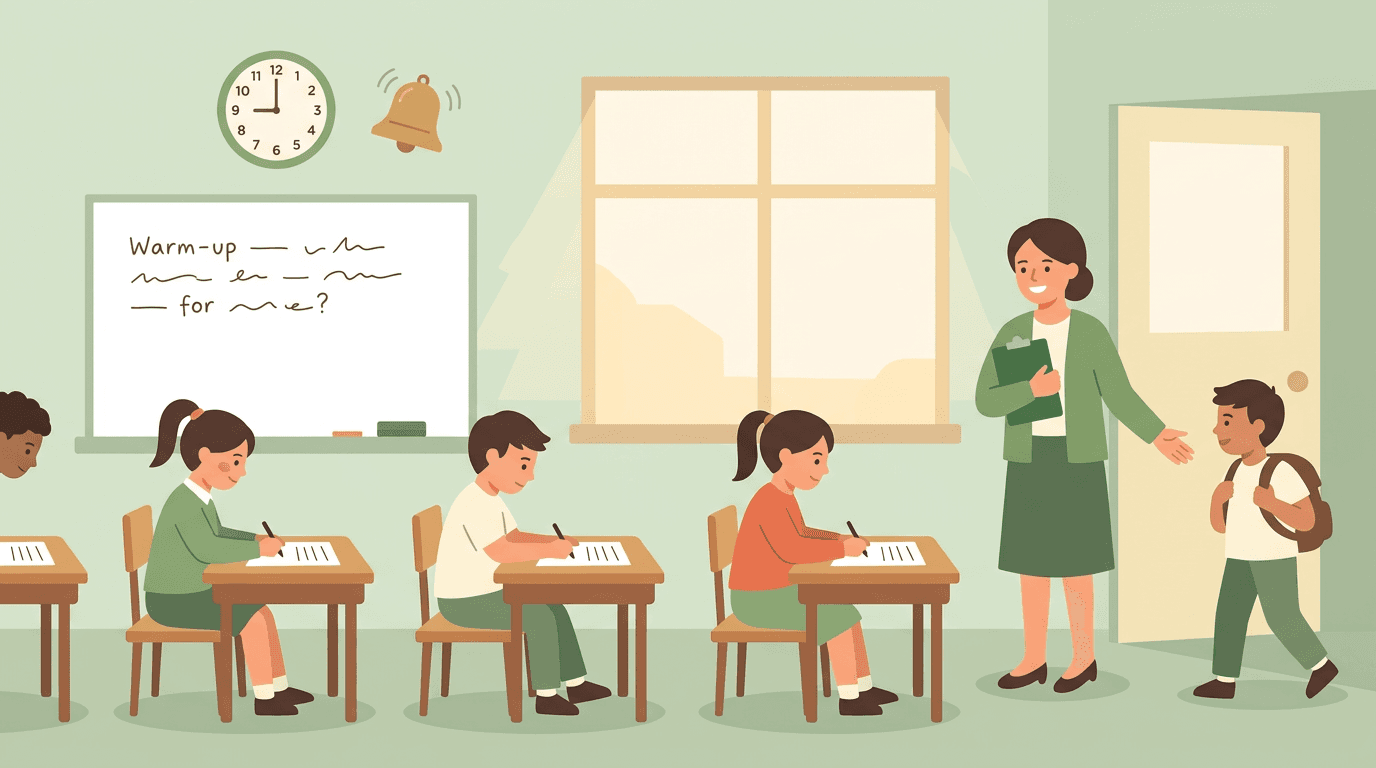
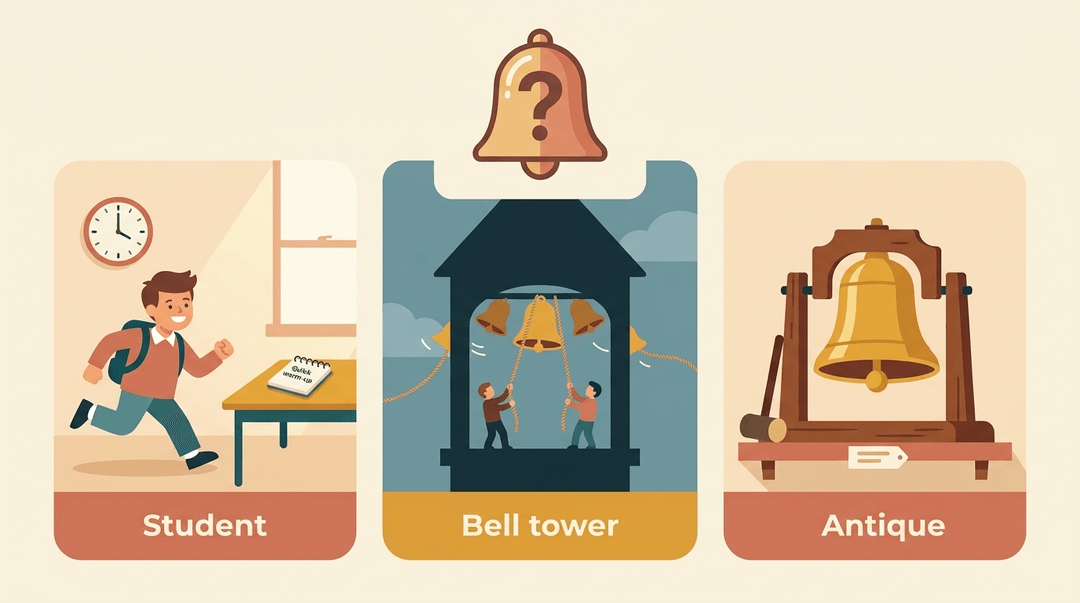
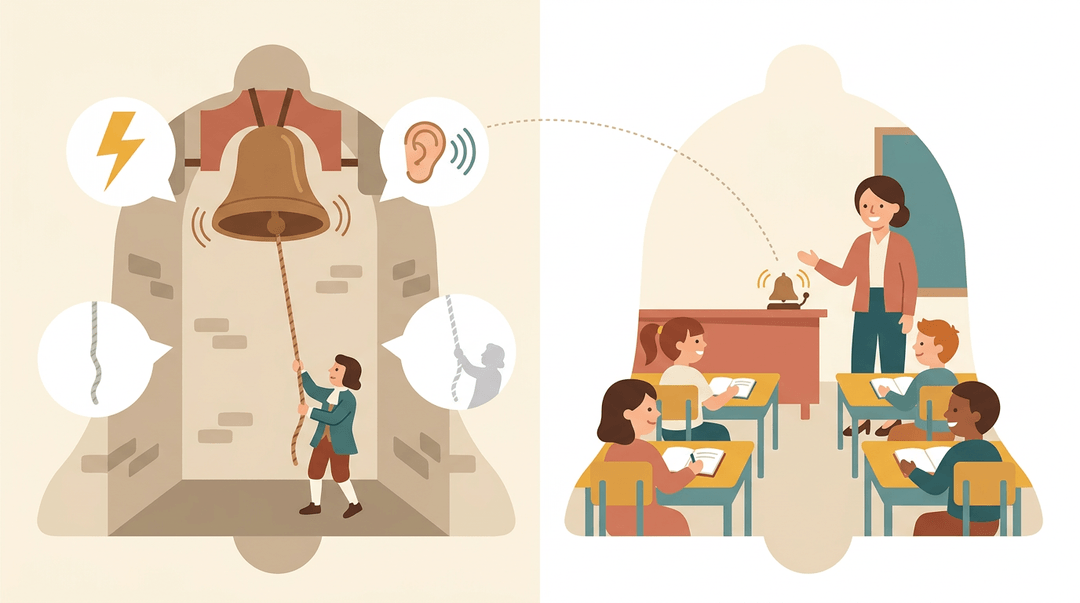
Hear the words "bell ringer" and you might picture a student hurrying to the front of the room the moment class begins. Or a team pulling ropes high in a church tower. Both meanings are real, and so is a third one you may have heard in slang.
A bell ringer can refer to a dictionary term, a common classroom strategy, or a traditional craft. This post covers all three so you know exactly which one you're looking for.
In this post, we'll walk through each meaning, then give you a practical checklist for setting up a bell-ringer routine in your own room.
What Does the Term Bell-ringer Mean?
Here's the quick answer: the term means different things depending on where you hear it. Let's sort out the main senses so you know which one you're dealing with.
What is the ringer on a bell called?
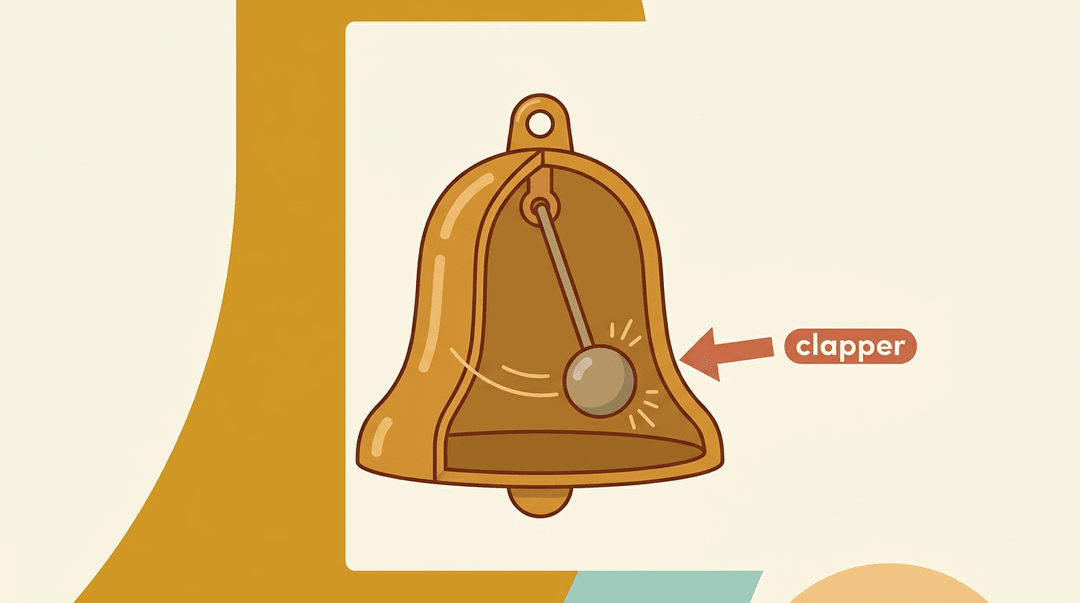
The part that makes a bell sound is the clapper, the piece hanging inside that strikes the bell. The clapper is the ringer, so a bell-ringer is someone who sets the bell in motion.
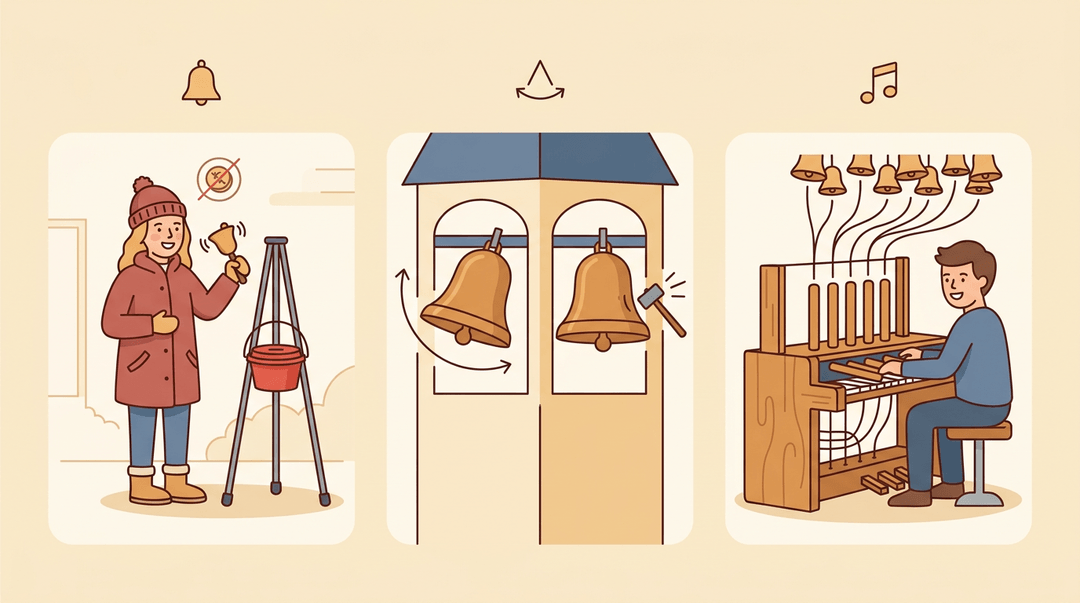
In church towers, a bell ringer swings the bell and often takes part in change ringing, a style where bells ring in set patterns. Hand bell performers play small bells, and in slang, "bell ringer" can mean a hit or a success.
What bell-ringer means in classrooms
In a classroom, a bell-ringer is a short start-of-class task that students complete while the lesson is still getting going. Some schools use other names for it, so ask a colleague what they call it.
Consider a seventh-grade science teacher who projects one question as students walk in: "What changed in the lab yesterday?"
Those few minutes give students something to do right away, so the lesson starts with less scrambling. Settled minds, faster start.
Do you get paid for being a bell ringer?
Often, no. Charity bell ringers, for example, often volunteer their time unpaid. The title is also easy to mix up with related roles. A campanologist studies bells, while a carillonneur plays a carillon, a set of tuned bells played from a keyboard.
The main difference is chiming versus swinging. Chiming means striking a bell, while swinging means moving the whole bell through its arc. Know which one you're talking about before you sign up.
Bell Ringers as a Classroom Teaching Strategy
Ever wondered how to get twenty-five students settled in under a minute? A bell ringer answers that question before the bell stops ringing.
How a classroom bell ringer works
A bell ringer is a short entry task students complete as soon as they walk in, usually in the first three to five minutes. Many teachers call the same routine a warm-up or a do-now, and in most schools the names are interchangeable.
It's not just roll-call filler. A well-chosen prompt sets the tone for the class, signaling that learning starts the moment students sit down.
A bell ringer is a routine, while a do-now is a single opening task tied to the day's lesson. An anticipatory set is a hook meant to spark interest in new content. Think of a high school English teacher who posts one question about last night's reading.
Students answer it while she takes attendance, and the discussion flows straight into the day's lesson.

Why bell ringers help teachers and students
Bell ringers work as a classroom management routine: students know exactly what to do when they enter, so transitions run smoother. They also provide spiral review, revisiting older skills so they stick.
They offer a mental transition from hallway chatter to focused thinking, and they act as an engagement booster from the first minute. Most importantly, they set an immediate expectation. Work starts now.
Mistakes that sink bell ringer routines
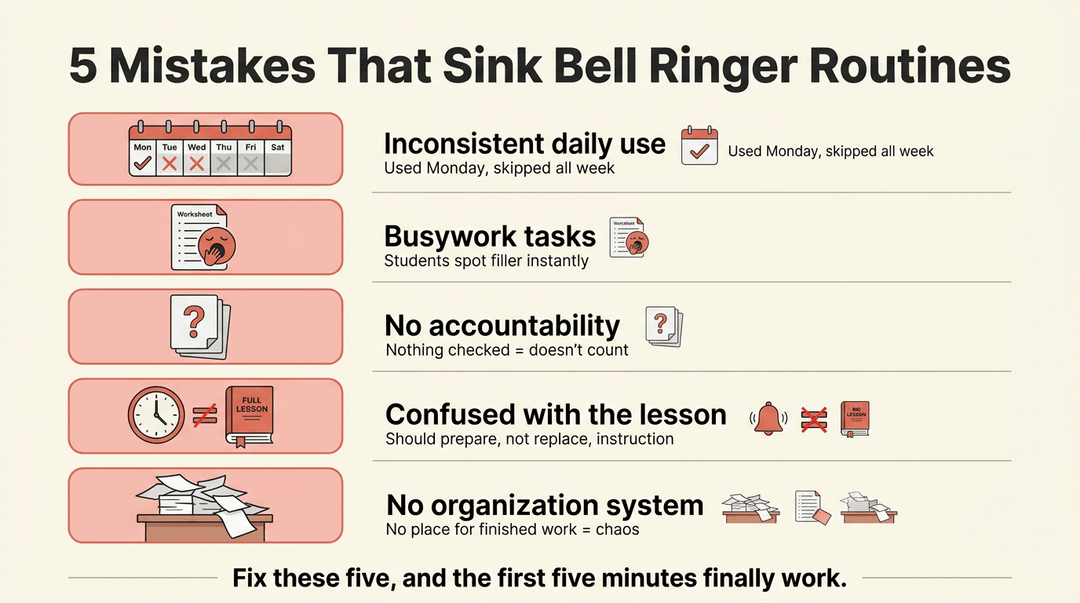
Most bell ringers fail for predictable reasons:
- Inconsistent daily use. A routine used on Mondays and skipped the rest of the week stops feeling like a routine.
- Irrelevant or busywork tasks. Students spot filler quickly and tune out.
- No accountability. If nothing is checked or graded, students learn that the first five minutes don't count.
- Confusing it with the lesson. A bell ringer should prepare students, not replace direct instruction.
- No organization system. Without a designated place for finished work, papers pile up and the routine collapses.
How to set up a bell ringer routine
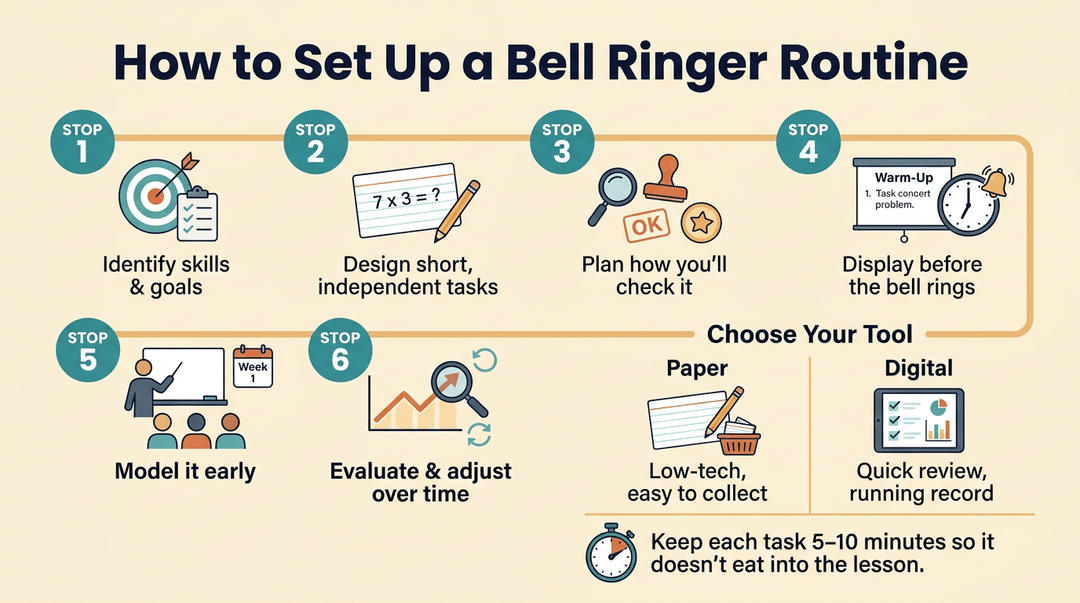
Start with the skills you want to reinforce, then design short, self-contained tasks students can finish without help. Plan how you'll check them, whether that's a quick scan, a stamp, or a participation point.
Display the task before the bell rings, and model the procedure during the first week.
Here's a sequence to follow:
- Identify the skills and goals first.
- Design short, self-contained tasks.
- Plan your accountability method.
- Display the task before the bell rings.
- Model the procedure early.
- Evaluate and adjust over time.
Choose your tool too. Paper is low-tech and easy to collect, while digital prompts let you review responses quickly and keep a running record. Keep each task to 5 to 10 minutes so it doesn't eat into the lesson.
Bell ringer ideas by subject
- Grammar practice: a sentence to correct or a punctuation puzzle.
- Spiral math review: a few problems from an earlier unit.
- Spanish openers: a vocabulary recall or a short question answered in the target language.
- History prompts: a primary source image with one question to answer.
- Journalism and yearbook tasks: a headline to rewrite or a photo caption to draft.
- Inspirational quote prompts: a quote to reflect on in two sentences.
- Homeschool and tutoring variants: a one-question check-in that takes three minutes or less.
A Teacher's Checklist for Bell Ringer Routines
Use this guide to set up a bell ringer (the short task students start as class begins) in one planning session, then keep it running without extra prep.
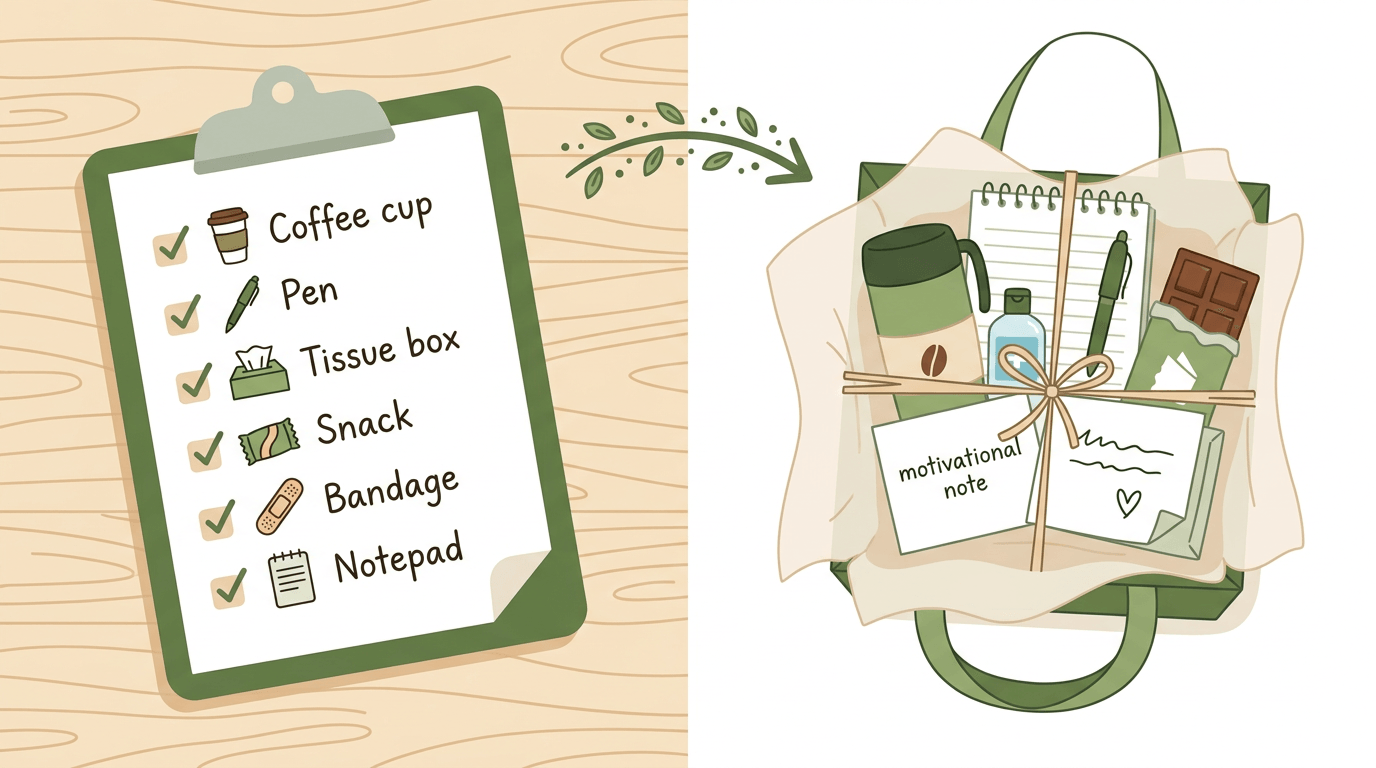
Set it up in five moves
- Pick a weekly skill focus
- Write it as one line: "This week: finding the main idea."
- Set a consistent time limit
- Say: "You've got five minutes. Start when you sit."
- Display the task before the bell
- Have it on the board or slide as students walk in.
- Decide how you'll grade it
- Pick one: a completion check at the door, or one answer scanned.
- Review results weekly
- On Friday, note which skill students missed most.
Step 5 feeds step 1: what the review shows becomes next week's focus.
Example: A sixth-grade math teacher picks fractions as the weekly focus. Each day, three spiral review problems are on the slide before the bell. Students get five minutes, and she does a completion check while taking attendance. On Friday she sees most students missed one problem type, so it's next week's focus.
Match the task to your setting
| Setting | Bell ringer format | What it looks like |
|---|---|---|
| Elementary | Picture prompt | "What's happening here? Write two sentences." |
| Middle school | Spiral review | Three quick problems from earlier units |
| High school | Analysis question | "Why might the author open with this line?" |
| Tutoring | Skill drill | A short set of facts or words to practice |
Fix it when it stalls
| When you see... | Try... |
|---|---|
| The routine feels stale | Rotate formats: swap a prompt for a review set |
| Low completion | Add accountability: a check at the door or a quick score |
| It's running too long | Cut it to 5 minutes and hold the line |
Keep the routine boring on purpose. The predictability is what gets students working before you've said a word.
Store and reuse bell ringer routines across every class with EMStudio's lesson planner.
The Traditional Craft of Church Bell Ringing
Church bell ringing is a craft with its own styles, history, and risks. Here's what it looks like, and why it still matters.
Different styles of church bell ringing
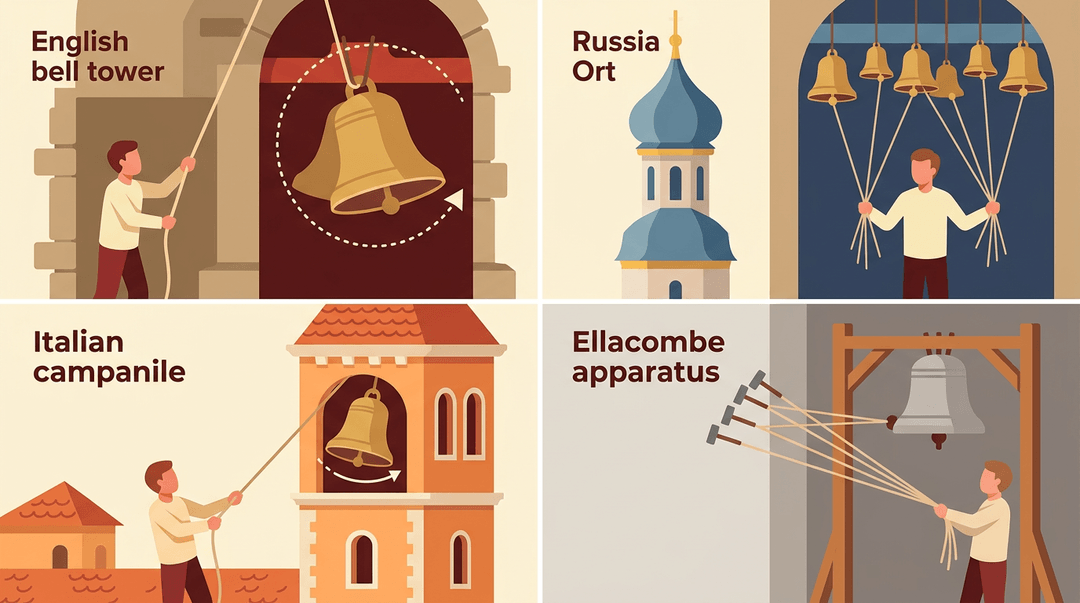
In England, ringers practice full-circle ringing, where each bell swings through a complete turn under the ringer's control. Russia has its own chiming tradition, and Italy has a full-circle method of its own.
Some towers use an Ellacombe apparatus, a set of hammers worked from ropes. That's a different thing from automated swinging, because in traditional ringing, people do the work.
Where did the term bell ringer come from?
Bell ringing reaches back to the Middle Ages, and the name is plain English for the person who rings the bells. The craft was perfected in the 19th century.
By 1891, the ringing societies had grown so much that they 'felt the need to band together,' which led to the Central Council of Church Bellringers, now representing all major change ringing societies worldwide.
Russia's path was slower. Training took place only at workshops until 2008, when the first permanent traditional bell-ringing school opened in Moscow.
The skill it takes to ring bells well
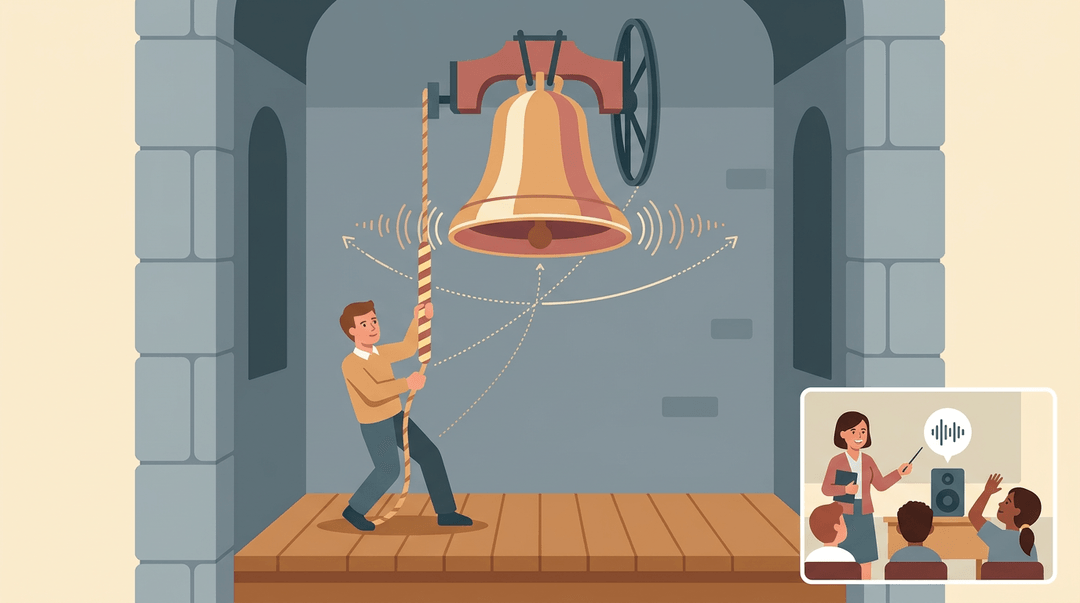
Ringing well is less about ringing fast and more about steady timing. Ringers use rope and foot techniques to keep each bell moving at the right pace, and that human touch is why the craft is so difficult to automate.
The Doppler effect, the shift in pitch as a sound source moves, is part of what gives a ringing bell its unique sound.
Consider a music teacher who plays a recording of a rung peal and asks her students to listen for changes in speed. Once they hear the pattern, they start noticing the control behind it, and the lesson on sound and timing sticks.
The risks and decline of bell ringing
Ringing has come with real hazards. Historic accounts include lightning strikes, and the CCCBR's lightning guidance warns that if a metal bell frame is not connected to a lightning tape, lightning may strike through the tower.
Politics has also shaped the practice. On February 21, 1795, all bell ringing as an outward symbol of religion was prohibited in France, as a study on bells and political power explains.
Ringing also takes a toll on the ears. A study of bell ringers in Valencia's cathedral examined how sound exposure affects their hearing.
As more towers switch to automated swinging, fewer people are employed to ring by hand. Fewer ringers means fewer people keeping the craft alive.
Whether you're looking up a word, planning the first five minutes of class, or curious about a centuries-old craft, the phrase covers more ground than most people expect.
A strong bell-ringer routine works the same way: a predictable start that frees you up to teach.
Ready to build the rest of your lessons around that start? Check out our Lesson Planning tool to write, organize, and reuse plans across all your classes from one place.
References
- Valencia’s Cathedral Church Bell Acoustics Impact on the Hearing Abilities of Bell Ringers — ncbi.nlm.nih.gov
- Full article: Reverberating Silence: The Termination of Bells and Bell Ringing as an Exercise of Political Power — tandfonline.com (2021)
- Religion:Russian Orthodox bell ringing — handwiki.org (2026)
- The History of Ringing — cccbr.org.uk
- CCCBR Lightning Conductors — belfryupkeep.cccbr.org.uk
- The sound of the Christmas season: A history of the lost art of bell-ringing — americamagazine.org
Frequently asked questions
What is the ringer on a bell called?
The part inside a bell that makes it sound is called the clapper. It hangs inside the bell and strikes the inner wall when the bell moves.
What is a bell ringer in slang?
In slang, a “bell ringer” can mean a hit, success, or something that is especially effective or impressive. The exact meaning depends on context.
What is the proper name for a bell ringer?
A person who rings bells is properly called a bell ringer or bellringer. A campanologist studies bells, while a carillonneur plays a carillon from a keyboard.
What is a bell ringer in school?
In school, a bell ringer is a short task students complete at the beginning of class, usually during the first three to five minutes. It is also commonly called a warm-up or do-now.
What is another name for a bellringer?
Common alternatives include warm-up, do-now, opening task, entry task, and starter. Schools and teachers may use different names for the same routine.
What does the term bell ringer mean?
“Bell ringer” can mean a person who rings a bell, a short beginning-of-class assignment, or slang for a hit or success. The intended meaning depends on the setting.
Do you get paid for being a bell ringer?
Sometimes, but not always. Charity bell ringers often volunteer without pay, while professional or hired church bell ringers may be paid depending on the organization and role.
Where did the term bell ringer come from?
The term comes from plain English and means a person who rings bells. Bell ringing dates back to the Middle Ages, and organized ringing societies expanded substantially in the 19th century.