Roll Call Explained: What It Means and How It Works

Jump to section
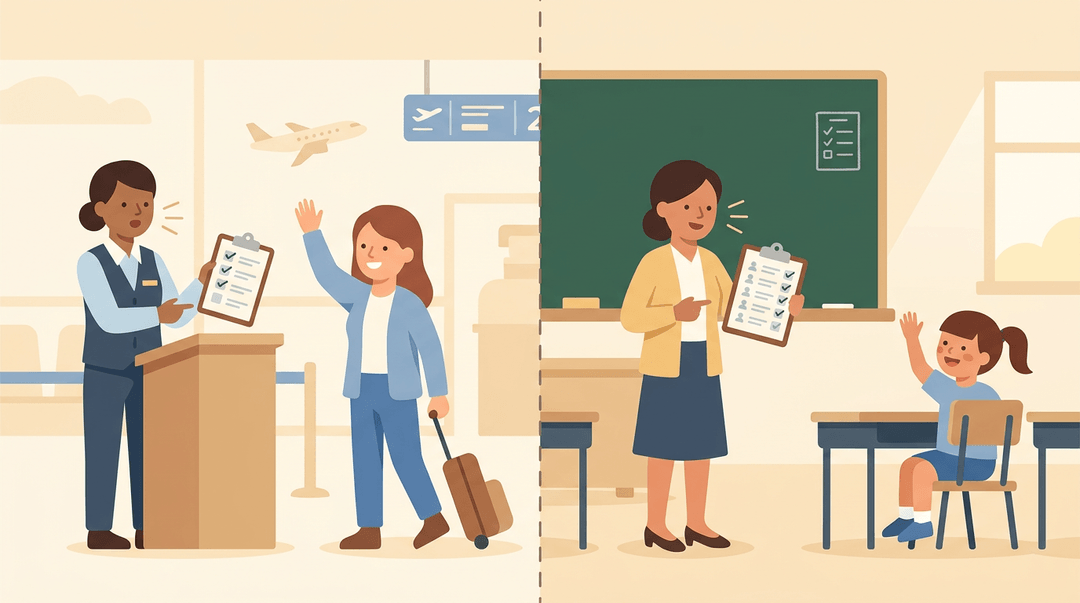
Think about the last time you checked in at an airport gate: someone reads a list, you answer, and the flight knows exactly who's aboard before it takes off. Roll call works the same way.
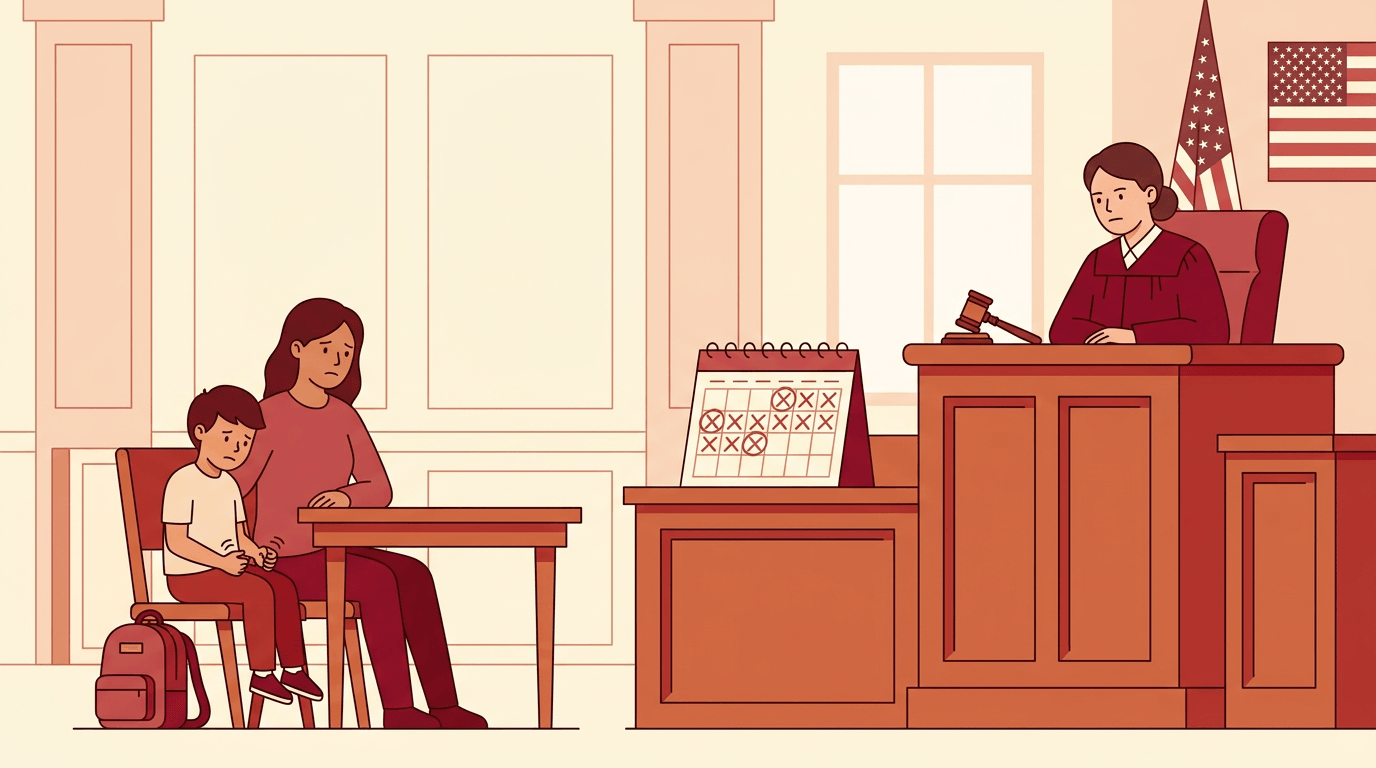
It's simply the act of calling names to confirm who's present, whether that's in a courtroom, a legislature, or your first-period classroom. It's a small habit with a surprisingly long reach, and it matters more than a quick head count might suggest.
Here's what it means, where it shows up, and how to run it well.
What Does Roll Call Mean?
Roll call sounds like a simple habit: reading names aloud. But the phrase covers a few distinct senses, from a courtroom quorum to your third-period classroom. Here's what it means, where it comes from, and how to use it well today.
All the meanings of roll call
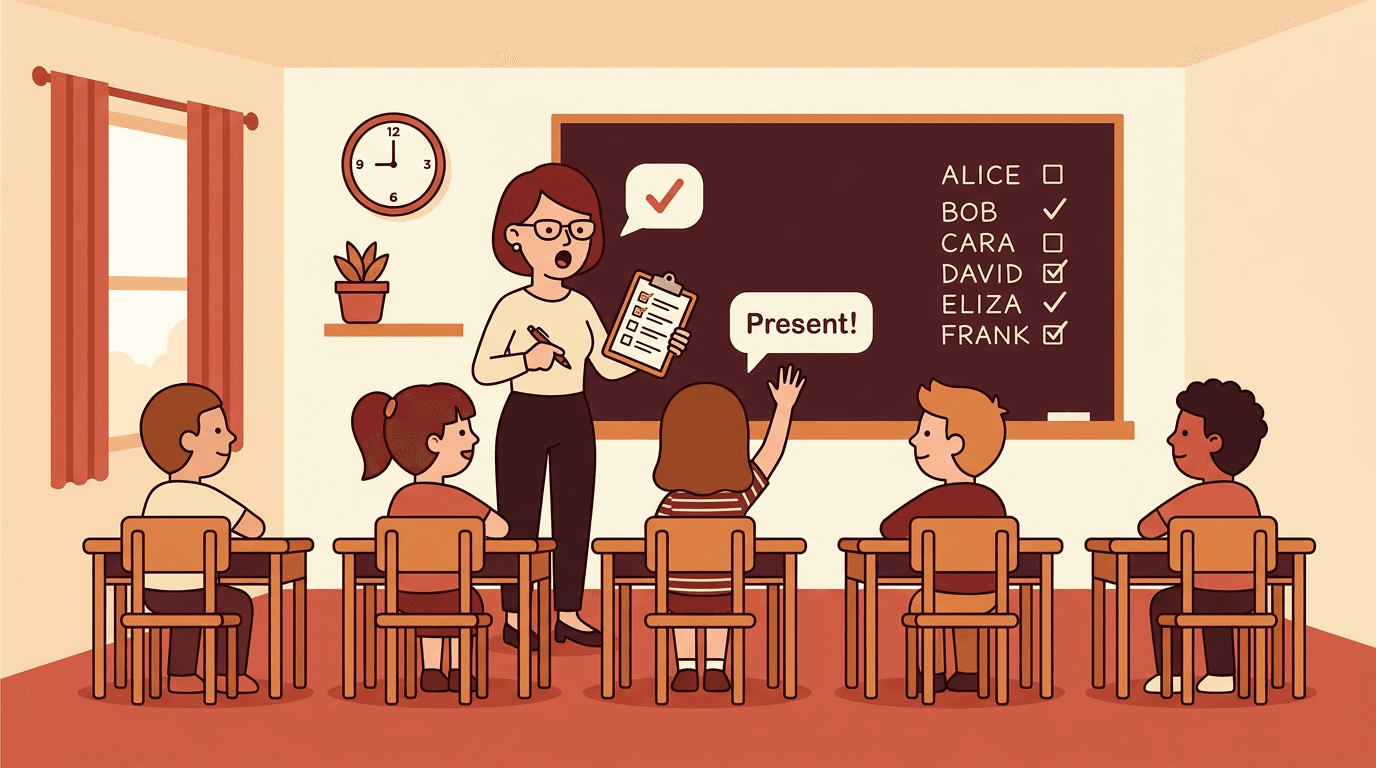
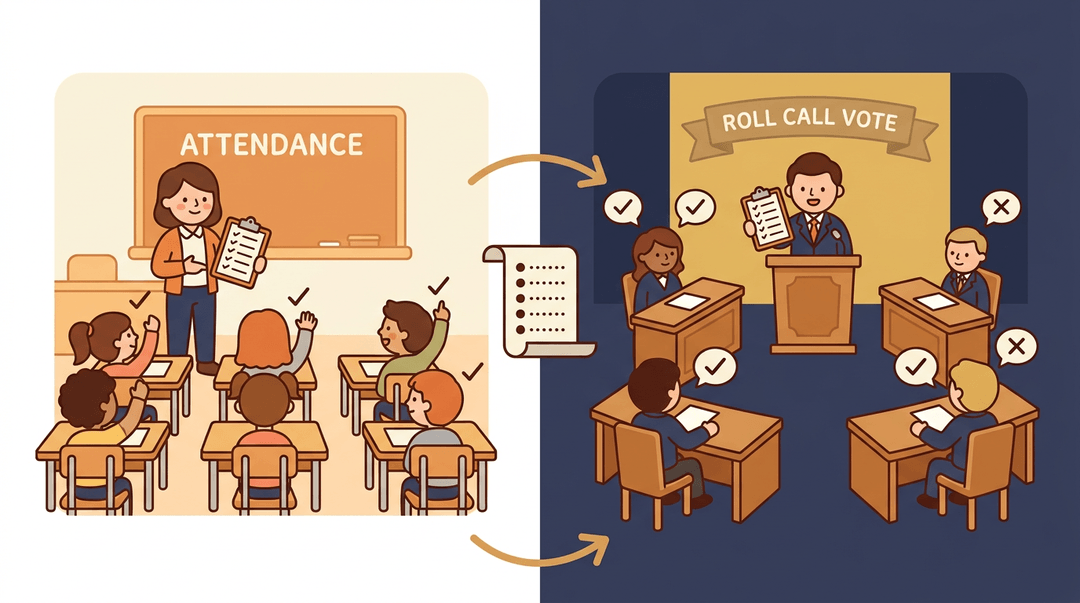
At its core, roll call means calling off a list of names to check who's present. In a classroom, that's attendance. In Congress or a city council, it's a quorum check or a recorded vote, where each member's yes or no gets logged by name.
The phrase also works as a noun for the list itself: the roll being called.
Where the term roll call came from
The term dates to 1763, when it first appeared in print for this practice of naming people one by one. Roll traces back to the rolled paper once used to record names; call is simply announcing them.
The purpose hasn't shifted since: confirming who showed up and who didn't.
What is an example of a roll call?
Roll call shows up everywhere.
- At a memorial service, an officer reads the names of the fallen, deliberately leaving the last one unanswered.
- In Congress, a roll call vote means each member's yes or no is read and logged by name.
- A sheriff's office runs roll call before every patrol shift to brief officers, and movies even borrow the term, rattling off a cast list like a roll call of stars.
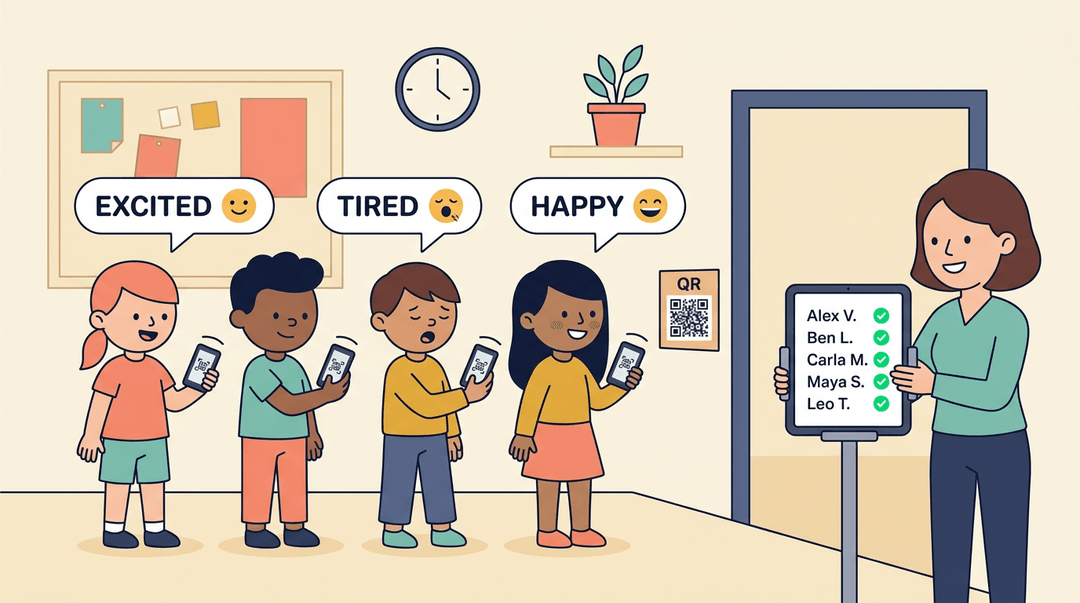
Is roll call still used today? Yes: classrooms now run it with QR-code check-ins, letting students scan in instead of waiting for their name, which speeds up large classes considerably.
It also works as a quick icebreaker: pair each name with a short question, like What's one word for how you're feeling today? Good roll call questions stay quick and answerable in a few words, so the routine moves fast even in a full room.
Words related to roll call
For synonyms, list and listing are the closest matches. Rhyming words include ball, hall, and small, handy for a classroom chant. And nearby dictionary entries like roll and rolling are worth a glance for the fuller word history.
How to Run Roll Call Effectively
The right roll call routine depends on where you're teaching, not on tradition. Find your setting in the table, then run the matching routine below.
| Your setting | Reach for... |
|---|---|
| In-person, standard class | Verbal call-and-answer |
| In-person, large or fast-moving | QR code sign-in |
| Virtual class | Chat, poll, or camera check |
| Homeschool | A simple attendance log |
Verbal call-and-answer
The classic method still works because it doubles as a connection moment. Keep it tight:
- Read names aloud in roster order.
- Same order every day; students learn when they're next and respond faster.
- Require a spoken answer, not a raised hand.
- Say: "Answer 'here' so I can hear you." Voices carry; hands get missed.
- Mark absences the instant you hear silence.
- One symbol per name as you go: P present, A absent. Never "fix it later."
⚠️ Watch out: the routine breaks when you pause mid-list to chat. Finish the roster first, then circle back to conversations.
QR code sign-in
Best for large groups, where reading forty names eats class time. Before you rely on it, confirm:
- The code is posted at the door, at eye level, so students scan as they walk in.
- Each scan is auto-timestamped, logging the name and arrival time with no writing from you.
- Your roster matches the scan list, since removing manual entry removes misheard names and skipped rows.
Virtual check-ins
Online, presence has levels: logged in isn't the same as paying attention. Pick the check that matches how much verification you need:
| You need... | Do this |
|---|---|
| A quick pulse | Everyone types "here" in chat, or answers a one-question poll |
| Real verification | Cameras on for the first minute; match faces to your roster |
| A permanent record | Export the platform's join-time log after class |
Example: One quick opener covers two levels at once. Post "Type one word for how you're feeling today" in chat: you get a presence record and a read on the room in the same thirty seconds.
The homeschool attendance log
At home there's no roster to call, but the record still matters. Keep one simple log with three columns and fill it every session:
- Date: every session, even short ones.
- Hours completed: the number your records may need to show.
- What was covered: one phrase is enough.
Sample line: Tue, Mar 4 | 3.5 hrs | fractions and silent reading
The habit that makes it work: log at the end of the session, not the end of the week. A week-old memory produces a guess; a same-day entry produces a record.
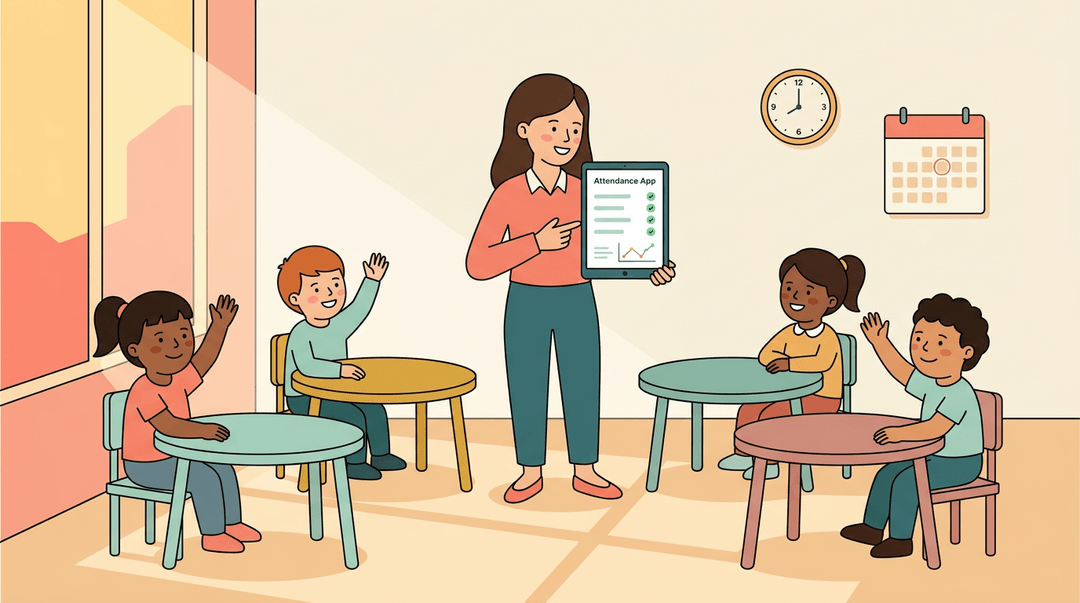
Whichever setting you teach in, the routine gets lighter with the right tool: see how EMStudio's attendance tracker turns roll call into a one-tap routine with automatic pattern insights.
Is Roll Call Republican or Democrat?
Here's the short answer: neither. Roll Call is a nonpartisan Capitol Hill news outlet, not a political party or a campaign arm.
The name confuses people because it borrows the same phrase teachers use to check attendance, but this Roll Call is a publication that covers Congress, elections, and the executive branch from a reporting standpoint rather than a partisan one.
Its job is to track what's happening on the Hill, not to push a side.
News on Congress and legislation
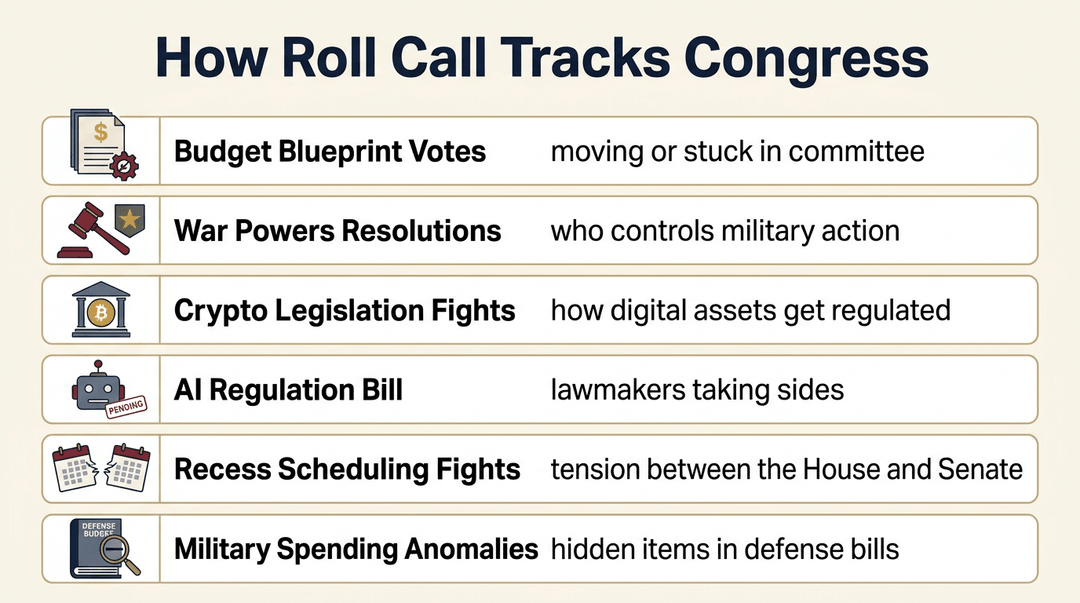
Much of Roll Call's daily coverage tracks the mechanics of lawmaking itself:
- Budget blueprint votes and how they move (or stall) through committee
- War powers resolutions and the debates over presidential military authority
- Crypto legislation fights over how digital assets should be regulated
- The emerging AI regulation bill and where lawmakers land on it
- Recess scheduling fights that reveal deeper tension between chambers
- Military spending anomalies buried in defense appropriations bills
Tracking campaigns and elections
Roll Call also functions as a campaign tracker, following the races that will reshape Congress:
- Senate primary contests in competitive states
- How gubernatorial races ripple into down-ballot outcomes
- Special election runoffs that fill vacant seats
- DCCC targeting strategies aimed at flipping House seats
- Fresh candidate announcements as they land
Inside the White House and executive branch
Beyond Congress, coverage extends to the executive branch:
- Trump-Congress tensions over legislative priorities
- Political appointments and confirmation battles
- How the administration frames its economic record
- Scrutiny of policy promises against what actually gets delivered
Life and culture on Capitol Hill
Not everything is legislative. Roll Call also covers the human side of the Hill:
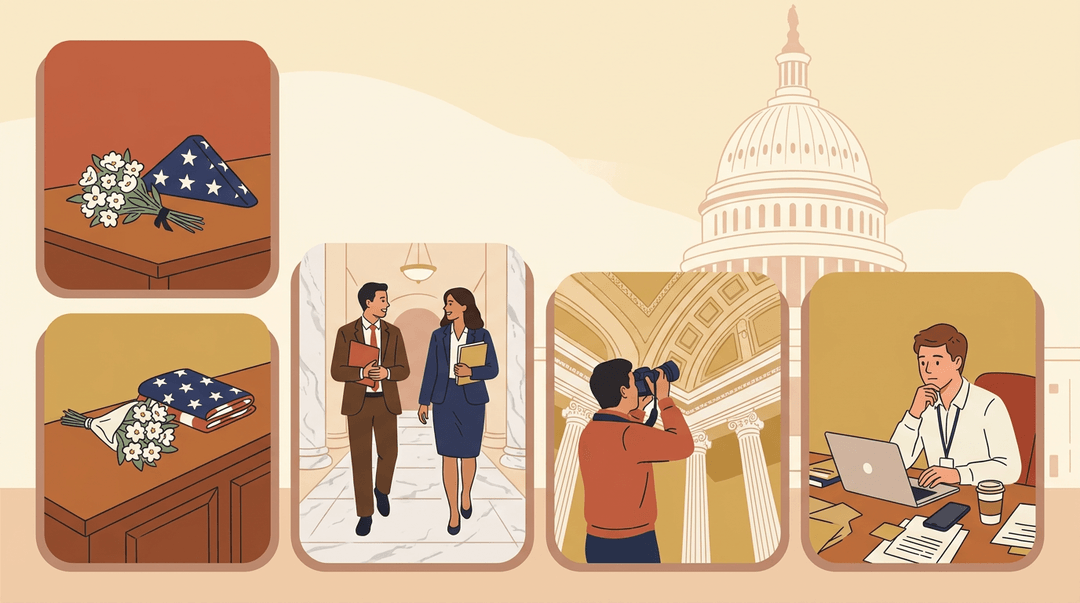
- Senator funeral tributes honoring colleagues who've passed
- Reporting on sexual misconduct issues among members and staff
- Staff career profiles spotlighting the aides who keep Congress running
- Photo features of the Capitol building itself
Recurring columns and features
A few regular features give readers a shorthand for what's trending:
- Heard on the Hill, a column of Capitol gossip and asides
- At the Races, a roundup of election news
- Capitol Lens, a photography feature
- A weekly hits and misses video recapping the week's winners and losers
Taken together, that range is what makes Roll Call useful: it's reporting on both parties, not rooting for one.
Roll call is a simple idea with real staying power: a quick, deliberate way to know who's in the room, whether that room is a courtroom, a statehouse, or your third-period class.
Once you see it that way, the daily habit feels less like a chore and more like a small anchor for the whole day. Ready to make attendance effortless?
Check out our Attendance & Records feature to mark roll call in seconds and spot patterns across your classes over time.
Frequently asked questions
What is the meaning of roll call?
Roll call is simply the act of calling names from a list to confirm who is present. This practice is used in various settings, such as classrooms, courtrooms, or legislatures, to verify attendance or recorded votes. The term also refers to the list itself from which names are called.
What is the purpose of a roll call?
The primary purpose of a roll call is to confirm who is present in a given setting. It serves as a method for checking attendance, ensuring a quorum for official proceedings, or recording individual votes in legislative bodies. This practice provides a clear and deliberate count of participants.
What is a roll call list?
A roll call list is the roster or document containing names that are called out during a roll call. This list is used to systematically confirm the presence or participation of individuals. The term "roll" itself traces back to the rolled paper once used to record names.
What are good roll call questions?
Good roll call questions are quick and easily answerable, allowing the routine to move efficiently. Examples include asking for a single word to describe feelings, a brief thought, or an opinion on a simple topic. The goal is to make the check-in engaging without taking too much time.
What is an example of a roll call?
An example of a roll call is a teacher reading student names aloud in a classroom, with each student responding to confirm their presence. Another example is a legislator in Congress calling out each member's name to record their 'yes' or 'no' vote on a bill. Additionally, a memorial service might include an officer reading names of the fallen, with the last name left unanswered.
Is Roll Call Republican or Democrat?
Roll Call is neither Republican nor Democrat; it is a nonpartisan news organization that reports on Capitol Hill, politics, and elections. Its role is to cover Congress, the executive branch, and campaigns from a journalistic perspective, not to align with a political party. The publication tracks legislative processes, election dynamics, and D.C. culture without partisan bias.
What does it mean to take a roll call?
To take a roll call means to systematically call out names from a list to verify who is present or to record individual responses. This action confirms attendance, logs votes, or checks for a quorum in various environments like classrooms, legislative bodies, or official meetings. It ensures an accurate and documented record of participation.
Is roll call still used today?
Yes, roll call is still widely used today across various settings. While traditional verbal call-and-answer methods persist, modern approaches include QR-code check-ins for large classes and virtual check-ins via chat, polls, or camera verification. It continues to be an effective method for confirming presence and participation.