Arts in Education: Why It Matters and How It Works

Jump to section
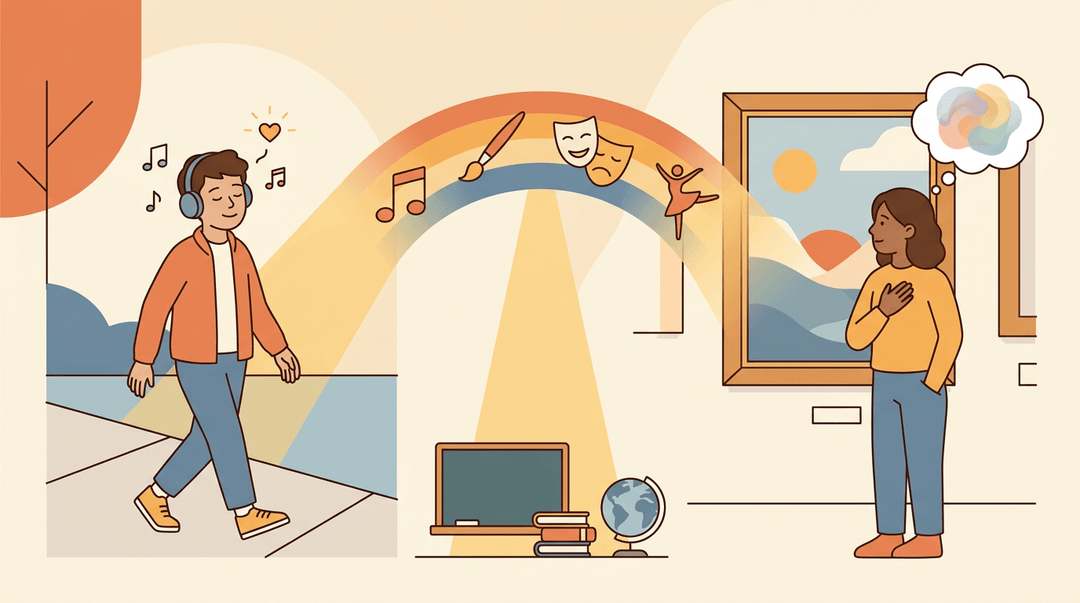
Think about the last time a song stuck in your head for days, or a painting made you pause and feel something you couldn't quite name.
That's the kind of power the arts hold, and it belongs in every classroom, not just the ones with a music room down the hall.
Arts in education means learning through music, visual art, dance, drama, and other creative forms, both as subjects in their own right and as tools for teaching everything else.
In this post, we'll look at why it matters, how to weave it into any subject, where access and funding fall short, and how other countries approach it.
Why Arts in Education Matters so Much
Arts education is learning in, through, and about the arts, so students make and respond to creative work as part of core schooling. "The arts" covers visual arts, music, dance, theatre, and media arts. Here's why that matters.
Better grades and classroom engagement
Arts coursework is linked to stronger academic results. A study using the High School Longitudinal Study of 2009 found more pronounced positive associations between arts coursework and GPA for Black students than for White students.
Engagement follows: Education Next reports that arts learning has positive effects on school engagement and writing achievement.
Arts can also help curb summer learning loss: a randomized field trial of KindergARTen Summer Camp found summer effects on reading assessments that were of both practical and statistical significance.
Kindergarten readiness benefits too, since a scoping review in Early Childhood Education Journal links early arts learning to:
- creativity
- critical thinking
- self-regulation
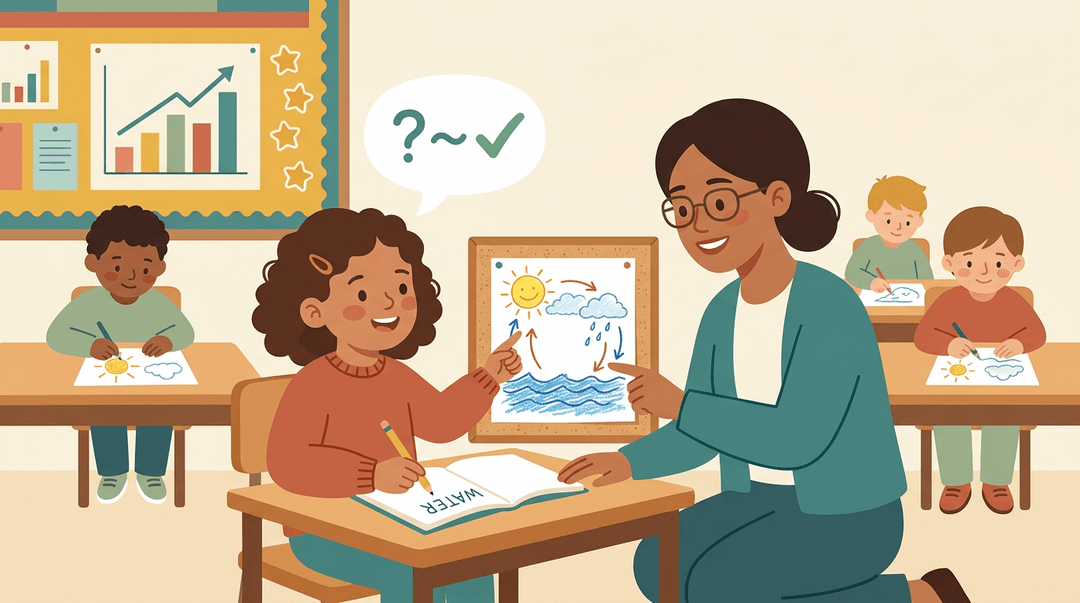
Consider a second-grade teacher who has students sketch the water cycle before writing about it. The students who struggled with vocabulary now have a picture to point to. You can track that growth with a simple rubric or draft portfolio.
Building thinking and motor skills
Arts work asks students to think, not just recall. Critical thinking and problem-solving grow when students explain their choices and revise their work. Visual literacy helps students read images, from science diagrams to maps.
Brushes, clay, and instruments build fine motor skills, and arranging a stage builds spatial reasoning.
Boosting confidence and emotional wellbeing
Arts give students an emotional outlet for feelings they can't yet name. Sharing finished work builds confidence and self-esteem, and creative tasks with no single right answer can ease stress.
Ensembles foster social connectedness and reflect students' own community and identity.
Growing civic awareness and life skills
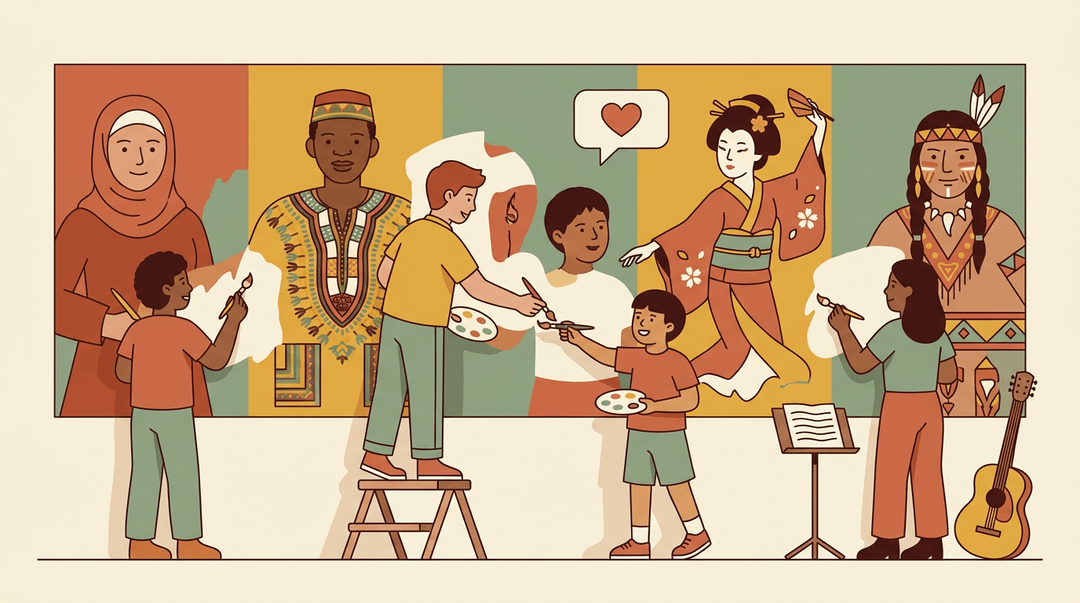
Arts classes build civic engagement by asking students to consider whose stories get told, and studying many traditions builds cultural awareness. Education Next also links arts learning to empathy.
Bands, casts, and mural crews build collaboration and teamwork, plus career-ready soft skills like reliability and accepting feedback.
Supporting the whole child
The arts serve the whole child. Students engage multiple learning styles, some through movement, sound, or images, and play and creativity fuel learning. The arts ask how students learn, not only what they know.
A student who loves drama may get hooked on history through a script about a real event. Creativity isn't extra. It's core.
Weaving Arts into Every Subject
Arts integration doesn't need its own period. Here's how it works in everyday teaching, and why it's harder than it sounds.
Mixing art into other subjects
Arts integration uses art forms as a tool for learning in other subjects. The arts span:
- visual arts
- music
- dance
- theater
- media arts
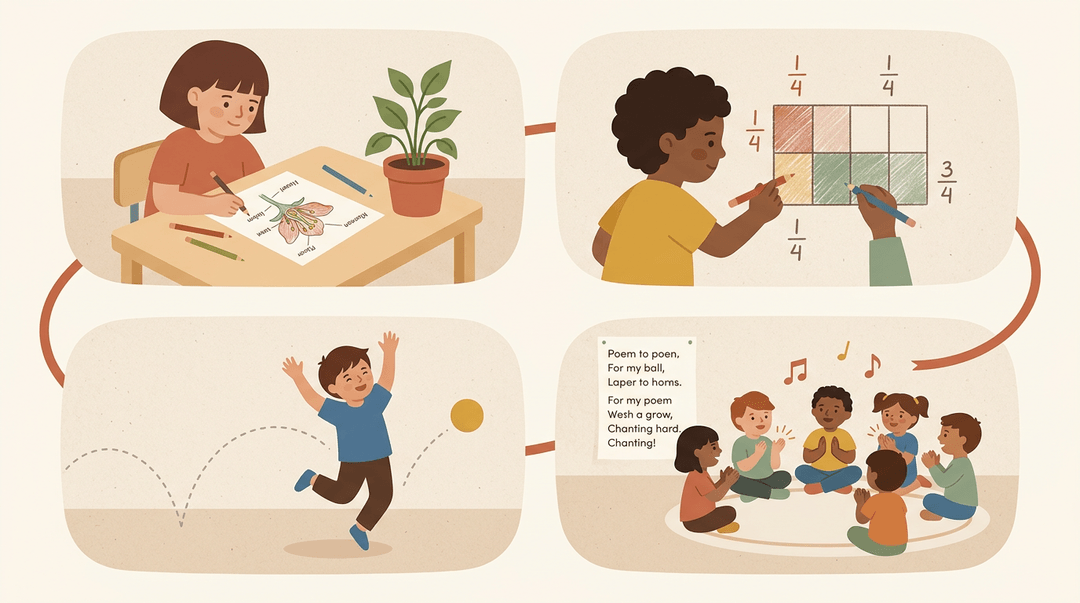
In science, a fifth-grade teacher might have students sketch a plant's cross-section before labeling it, so the drawing becomes the thinking. In math, shading parts of a rectangle makes fractions visible.
Dance can even teach physics: students who act out a ball's rise and fall feel force in their own bodies.
Music and visual art also fit core subjects. A reading teacher can have students chant a poem's rhythm, and a history class can analyze a painting from the era they're studying.
The strongest approach is interdisciplinary collaboration. When a math and art teacher plan a symmetry unit together, students see one idea from two angles.
Once you build a reusable arts-integration lesson template with a standard, an art form, a student product, and an exit check, you can swap in new content in minutes.
Why arts integration challenges teachers
Many teachers want this and still struggle. Often they were never trained to plan arts-based lessons, so they're left guessing.
Overwhelm is real. Think of a second-year teacher juggling pacing guides, testing, and grading. One more initiative feels impossible, even when the idea is good.
Arts are also treated as electives rather than core content, so when schedules tighten, music and art shrink first. A reusable template is how that time comes back.
A Checklist for Planning Arts Lessons
Use this card when you're pairing an art form with a content standard. Work top to bottom, and each part ends with something you can write down.
1. Set the two goals
Pair one content goal with one art goal. Then choose the thinking level both should reach, using Bloom's taxonomy or DOK (Depth of Knowledge). Write the objective like this:
Students will [content verb] [concept] by [art verb] [product].
✅ Students will sequence the four stages of the water cycle by designing a labeled mural panel.
❌ Students will make a poster about the water cycle.
The difference: the strong version names the thinking students must show (sequence), not just the thing they'll make.
2. Pick how art fits
Match the art form to the kind of idea you're teaching.
| If your topic is... | Try... |
|---|---|
| A STEM pattern (fractions, ratios, waves) | Music or visual art that makes the pattern audible or visible |
| A physics concept (force, momentum, orbits) | Dance: students move to show the idea |
| A big idea needing sustained thinking | A project-based art task over several days |
Example: A middle school science teacher has students choreograph a 30-second dance showing planets orbiting a sun. They have to decide who moves faster and why, so the physics reasoning happens inside the art-making.
3. Scaffold for every learner
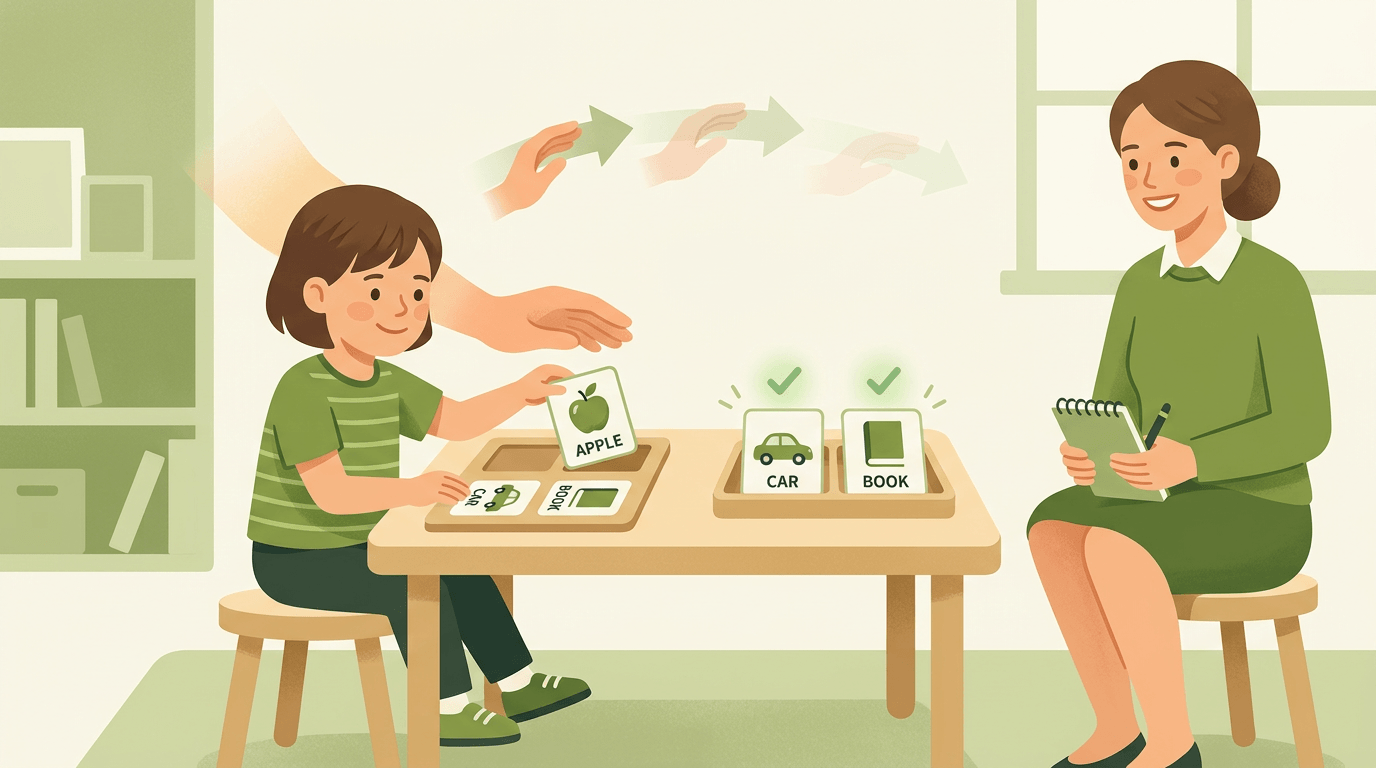
Release control gradually, so the creative leap feels small at each stage.
- Model the technique first.
- Say: "Watch how I choose a color to show speed."
- Try one together.
- Students copy your move on a shared example.
- Let them create independently.
- You circulate and ask questions.
Then build in options, so every student can reach the goal:
- Offer UDL choices. UDL is Universal Design for Learning: let students draw, build, record, or perform.
- Tier materials by skill. Offer pre-cut shapes for beginners and blank paper for confident artists.
⚠️ Watch out: Keep the goal the same for everyone. Vary the materials and the path, not the content expectation.
4. Check what students learned
Confirm before you move on:
- Exit ticket on the concept. Ask: "How does your piece show the water cycle's second stage?"
- Peer or self critique. Use the frame "I notice... I wonder... "
- Simple rubric or portfolio. Two rows are enough, shown below.
| Criterion | Meets the goal when... |
|---|---|
| Content | The concept is accurate and explained |
| Art craft | Choices (color, movement, rhythm) support the idea |
A portfolio works the same way: keep a piece and a one-line reflection from each unit.
Build and reuse arts-integrated lesson plans across classes with EMStudio's online lesson planner.
Who Gets Left Out of Arts Programs
Arts education is meant to reach every child, but in practice, access depends heavily on where a student lives and what their school can afford. Let's look at where the gaps show up and why they tend to stick.
Access gaps across race and region
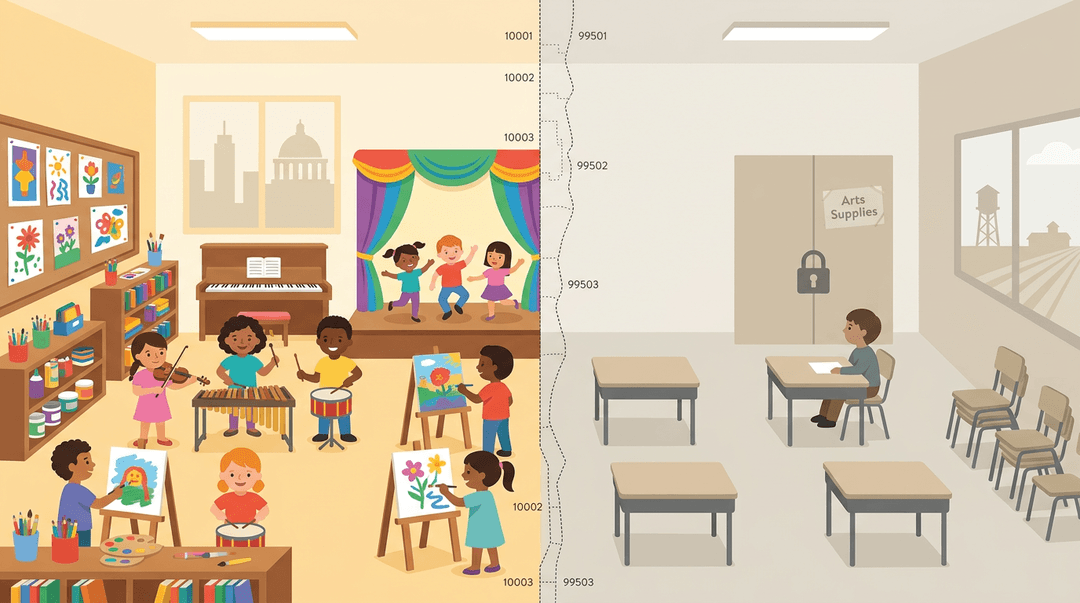
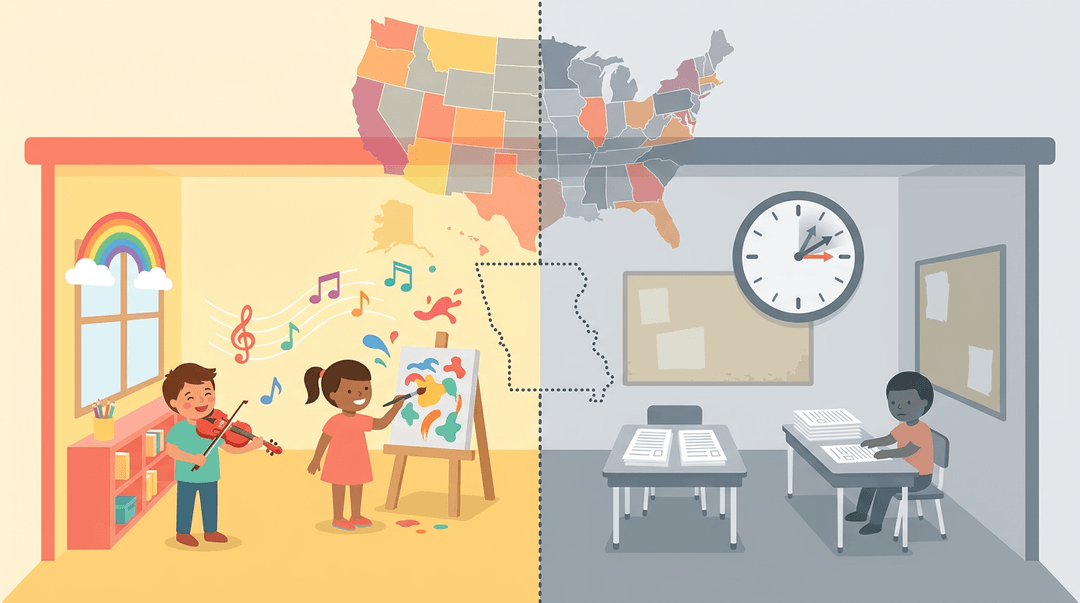
Not every student has the same shot at a music room, a drama club, or a visual arts teacher. Access shifts from state to state and district to district, so a child's opportunity can depend more on their zip code than on their interests.
Income and race add another layer. Schools serving lower-income communities and Black and Brown students are too often the ones left with the fewest arts options, even though those students stand to gain a lot from creative outlets.
Rural and urban schools face different hurdles. Urban schools may sit near museums and theaters but lack space or budget, while rural schools may be hours from a teaching artist or performance venue. Either way, the gap is real.
How funding widens the arts gap
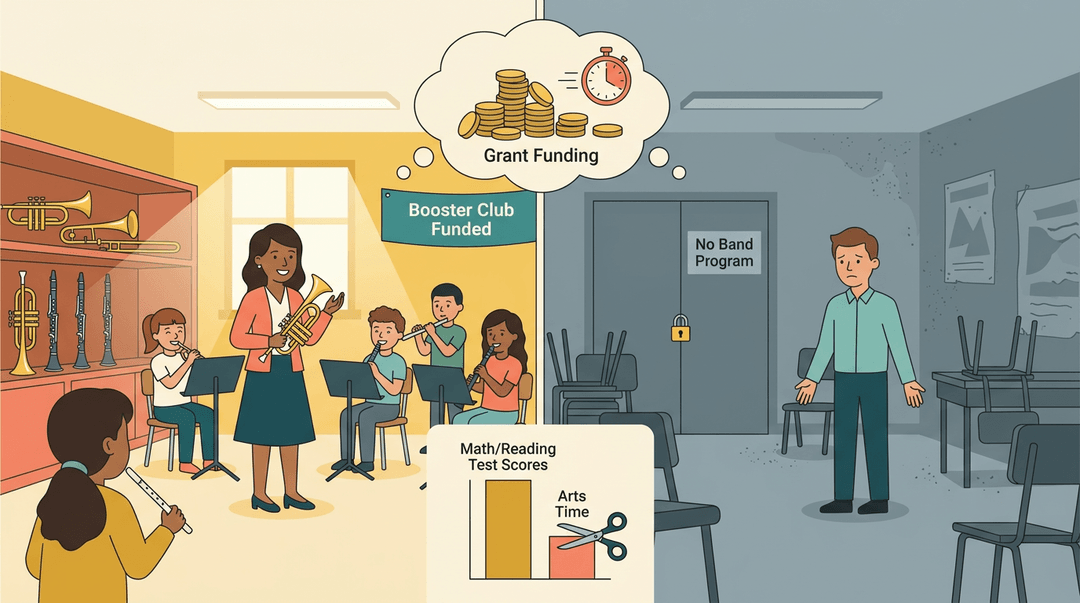
Funding is where these gaps get locked in. Think of a middle school band director in a district with a strong booster club, who can replace worn instruments every year. Across town, a school without that support may have no band at all.
Many programs also depend on grants, which are one-time or short-term awards. When the money runs out, so does the program, and teachers are left scrambling to keep students engaged. Grants are a lifeline, not a foundation.
Budgets also get reshaped by testing. When schools feel pressure to raise reading and math scores, arts time is often the first thing cut. Remember that what gets tested tends to get the time and money.
Funding and Policy Hurdles Facing Arts
Arts programs don't survive on enthusiasm alone. Budgets and policy decide what gets funded and how much room the arts get in the school day, so here's where the pressure points sit.
Budget cuts hitting arts programs
Schools have felt the squeeze since COVID-era relief money began to wind down.
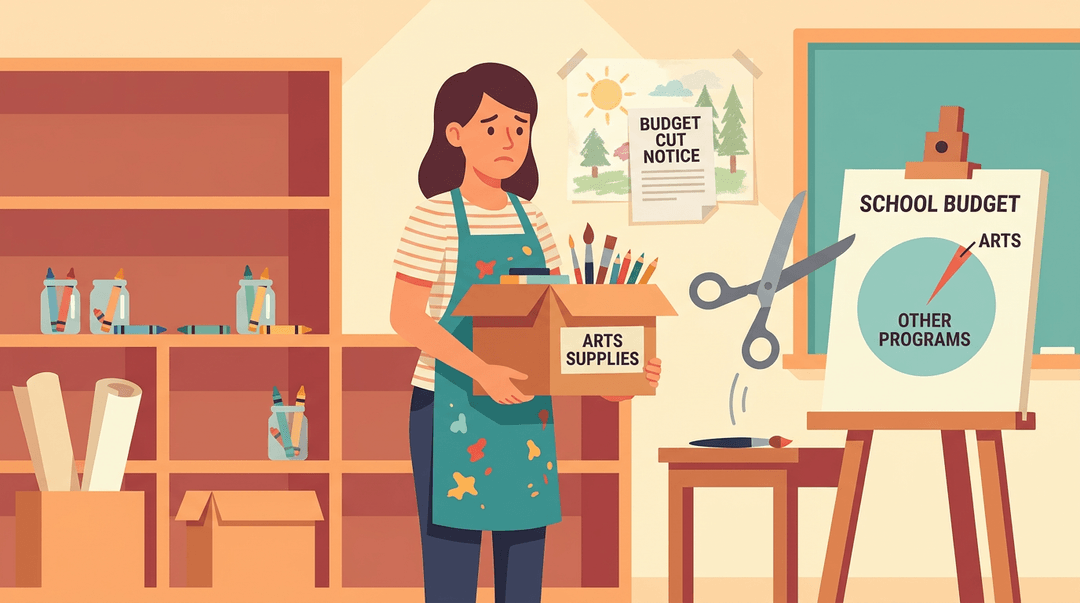
In Oregon, Eugene School District 4J was forced to cut $20.7 million from its 2025-26 budget because of declining enrollment, the end of COVID-era federal grants, and rising costs.
Think of an elementary art teacher in that district, where schools are now being asked to absorb arts costs themselves. That shift lands on the teacher's desk first.
When belts tighten, arts positions can be eliminated, and the arts get treated as optional rather than core.
Other budget lines, including policing, compete for the same dollars, so the real question becomes whether the arts fit, not how they strengthen learning.
Pushing policy to support the arts
Advocacy isn't a sideline. Advocates push for dedicated funding, and policymakers are discussing ways to elevate the arts. A national arts standards framework gives them a shared reference point when they make the case to decision-makers.
Many teachers and arts education advocates point to No Child Left Behind as a turning point.
According to EdWeek, the law led to more focus on math and English/language arts, the subjects tested by the state, which left less room for electives, including the arts. Tests set the schedule. The electives paid for it.
How Educators Advocate for the Arts
Advocacy often starts in your own building and grows from there. Here's how educators, nonprofits, and community groups keep the arts in front of students and decision-makers.
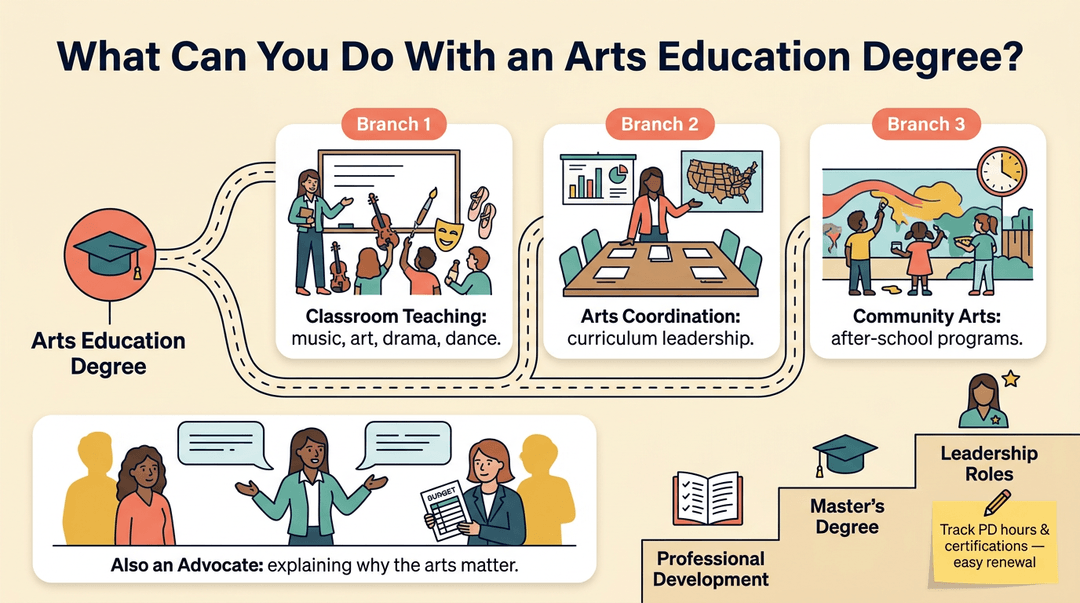
What can you do with an arts education degree?
A bachelor of arts in education prepares you to teach the arts directly, but it opens doors beyond the classroom too.
Think of a music education graduate who starts as a classroom teacher and becomes the school's go-to voice at budget meetings. Common paths include:
- Classroom teaching in music, visual art, drama, or dance
- Arts coordination or curriculum leadership at the school or district level
- Community arts work that brings programs to students outside school hours
You'll also be an advocate as much as a teacher. Educators as advocates explain why the arts matter to parents, administrators, and families.
Professional development keeps your skills current, and a master's program for art teachers is an option if you want to deepen your expertise or move into leadership. Teacher shortages in some areas can make certified arts teachers especially valuable.
Keep a running log of your PD hours and certifications so renewal paperwork stays painless.
Nonprofits and community arts programs
Nonprofit arts education providers often work alongside schools, bringing in artists and instructors a single classroom can't offer on its own. Community partnerships connect those providers to your students.
For example, a middle school art teacher might partner with a local arts nonprofit to bring a visiting muralist in for a week, giving students a hands-on project and a visible result for the whole neighborhood.
Many of these programs have a long track record and have earned awards and recognition, which can strengthen your case when you ask for support. Advocacy is part of the job.
Social Justice and Representation in the Arts
Art is never neutral. Classrooms are where students learn to read whose stories it tells and to tell their own.
How does art reflect culture?
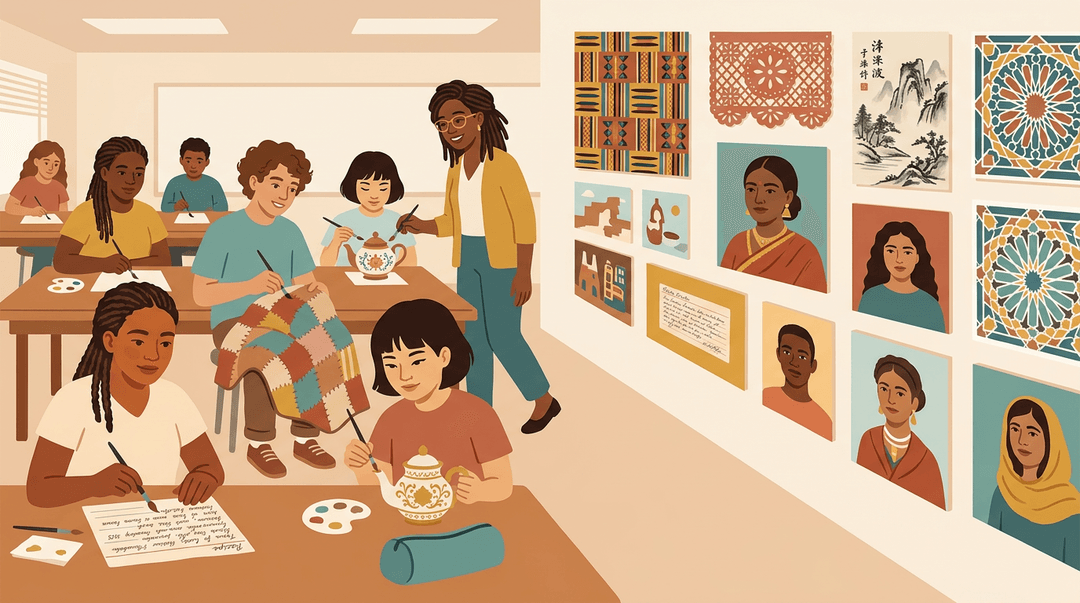
Art reflects culture: the values, histories, and daily lives of the people who make it. That's the heart of cultural reflection. Think of a high school art teacher who asks students to paint a family object, like a recipe card or a worn quilt.
Suddenly art isn't only what hangs in museums. It's what families actually live with.
When textbooks show the same few faces, students learn whose work counts. Adding artists from many cultures and eras fixes that. Anti-racist classrooms start with the walls: whose images hang there and whose voices guide critique.
Socially just environments give every student equal access to materials and a real say. In a New York City (NYC) classroom, serving diverse students means treating their differences as strengths.
Using art to process social issues
Art also helps students process hard feelings. A student who can't yet name a painful week may find sketching helps, the core of art for emotional healing.
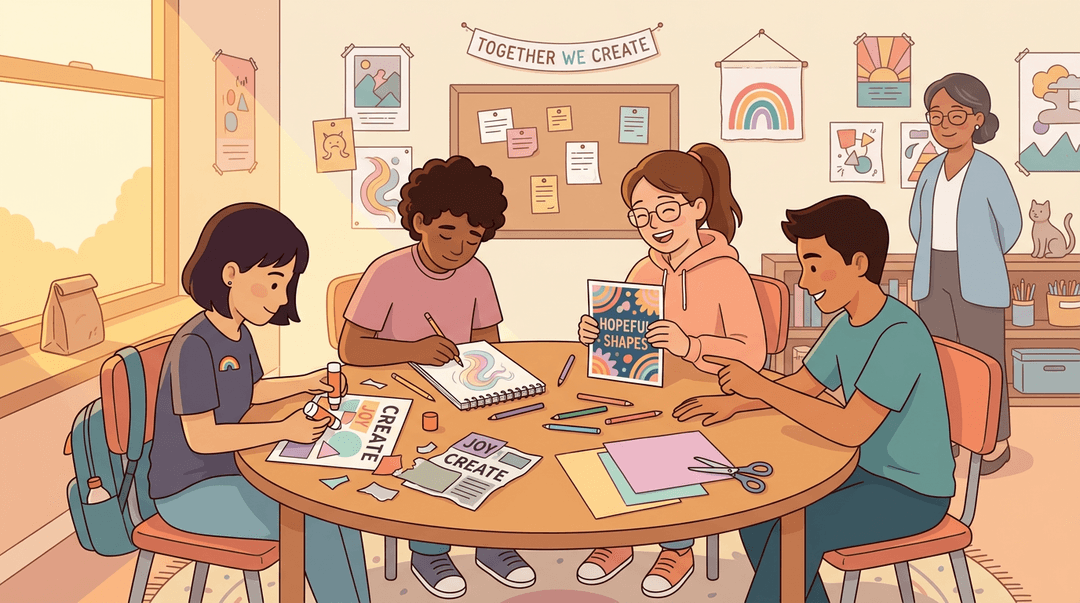
Students can respond to current events and race through collage or poster work, with clear ground rules. Picture a middle school art teacher who opens a lunchtime studio for LGBTQ+ students (lesbian, gay, bisexual, transgender, and queer).
Those who once ate alone now have a regular place to make work about their own lives.
Growth here is less about what students make and more about who feels safe making it. Representation opens the door. Belonging keeps students in the room.
How Other Countries Approach Arts Education
Arts education looks different around the world, and comparing systems can show you what's possible. Here's how a few places handle it and where the U.S. stands.
Arts education across Europe
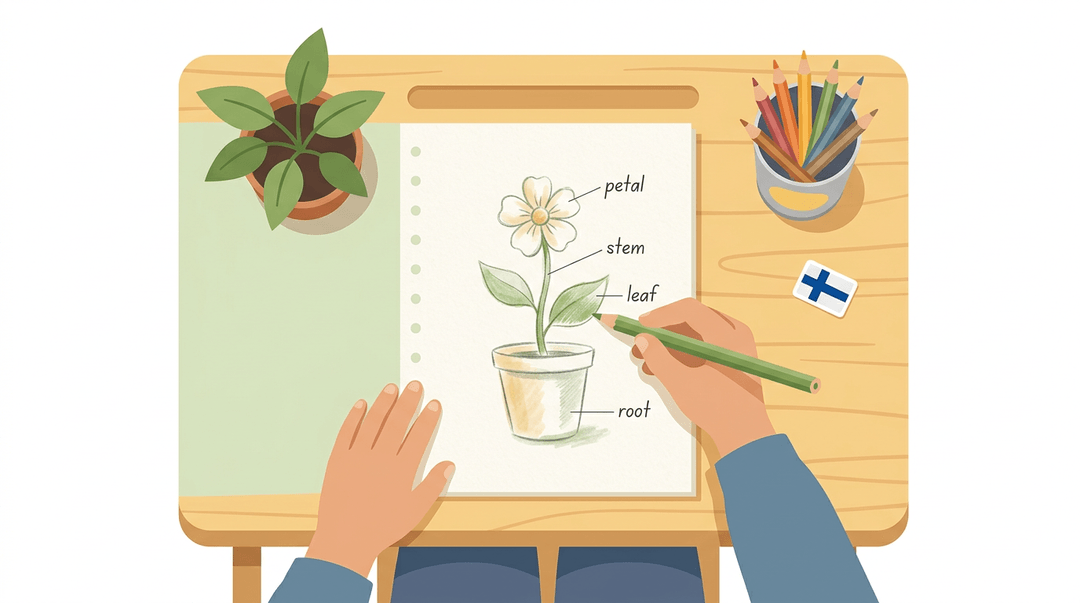
Finland offers a useful model. Its integrated curriculum includes arts education, and artistic methods can also be woven into the teaching of other subjects. Consider a science teacher who has students sketch a plant before labeling its parts.
The drawing isn't a break from learning. It's part of the learning.
Across the region, arts are valued equally with academics, so a student's painting or choir practice carries the same weight as a math test. Public funding helps keep these programs running, and music programs have been spreading into parts of Asia too.
How the U.S. compares globally
The picture in the U.S. is more uneven. Americans for the Arts reports that U.S. arts funding has declined, noting that "This leaves 29 states receiving a cut."
Where you teach matters, too. Arts access can vary from one district to the next, so a music teacher in one school may have a full program while a colleague a few miles away has none.
Test prep often takes priority over the arts. Under pressure to raise scores, arts time is the first to shrink. It's less about whether the arts matter and more about how much time they actually get.
The arts build more than talent. They build confidence, curiosity, and the kind of thinking students carry into every subject. When we make room for them, we give every learner a way to show what they know and discover what they can do.
Ready to bring more creativity into your planning? Check out our Lesson Planning feature to write, organize, and reuse arts-rich lesson plans across all your classes from one place.
References
- Arts Education and Black and Latinx Student Achievement and Attainment: Evidence from the High School Longitudinal Study of 2009 — doi.org (2025)
- Arts Education and Cognitive and Socio-emotional Development in Early Childhood Education: A Scoping Review | Early Childhood Education Journal — link.springer.com (2026)
- Art subjects in comprehensive school and upper secondary ... — artpro.uniarts.fi (2025)
- Educating Ourselves about Childhood Arts Experiences—and Why They Matter — arts.gov
- Halting the Summer Achievement Slide: A Randomized Field Trial of the KindergARTen Summer Camp — doi.org (2009)
- Budget cuts force 4J elementary schools to absorb arts ... — lookouteugene-springfield.com (2025)
- Arts Education Advocates Talk About How to Elevate Their Discipline — edweek.org (2026)
- The Fine Art of School Engagement — educationnext.org
- State Arts Funding: A Scattered Forecast — americansforthearts.org
Frequently asked questions
What is the concept of art education?
Art education is learning in, through, and about the arts. It enables students to create and respond to visual art, music, dance, theatre, media arts, and other creative work, both as subjects and as tools for learning other subjects.
What is a definition of the arts?
The arts are creative forms through which people make, interpret, and communicate ideas, experiences, and emotions. They commonly include visual art, music, dance, theatre, and media arts.
How does art reflect culture?
Art reflects culture by expressing a community’s values, histories, identities, beliefs, and everyday experiences. The artists, subjects, symbols, materials, and styles used can reveal whose stories are valued and how people understand their world.
What can you do with a bachelor of arts in education?
A bachelor of arts in education can lead to classroom teaching in music, visual art, drama, or dance. Other options include arts coordination, curriculum leadership, community arts work, nonprofit program roles, advocacy, and further study for advanced teaching or leadership positions.