What Is Pedagogy in Education, and How Does It Shape Learning?

Jump to section
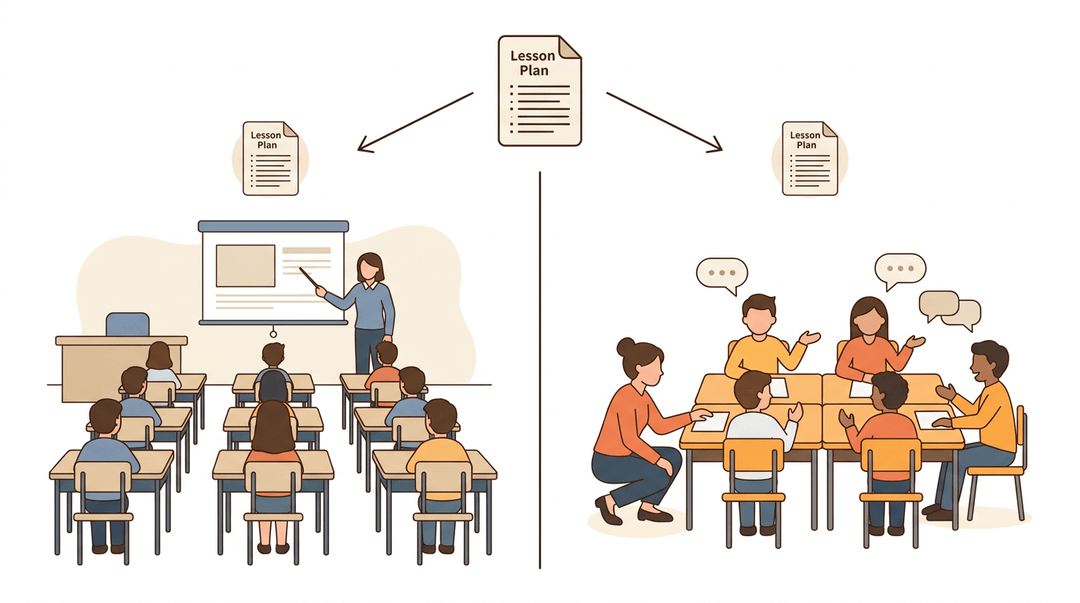
Hand two teachers the same lesson plan and the same standards, and you'll often get two completely different classrooms. One lectures through slides while the other has students debating in small groups: same content, entirely different approach.
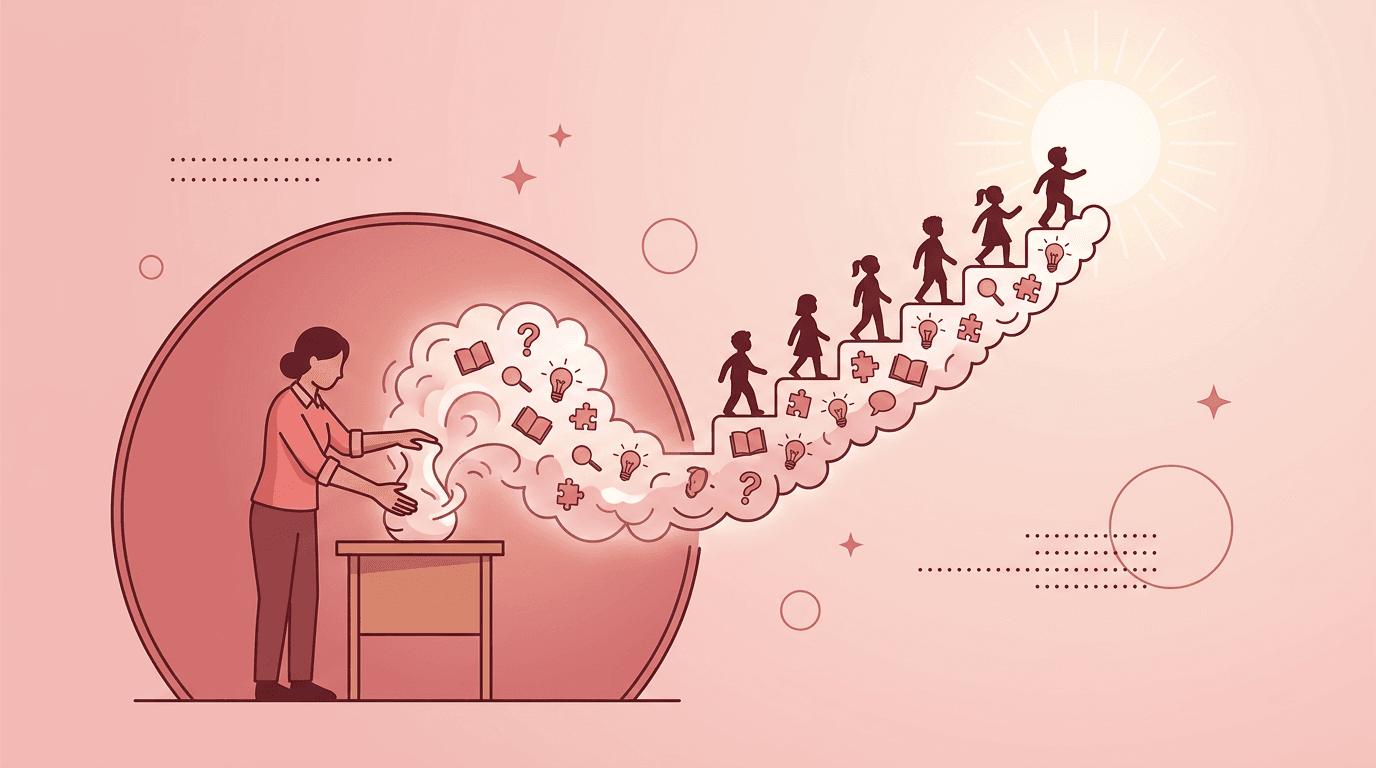
That difference is pedagogy. Pedagogy is the method and practice of teaching: the how behind the what, shaped by theory, experience, and the real students sitting in front of you.
In this post, we'll unpack where pedagogy comes from, the approaches and learning theories behind it, and how to build a version that actually works in your own classroom.
What Is Pedagogy in Education?
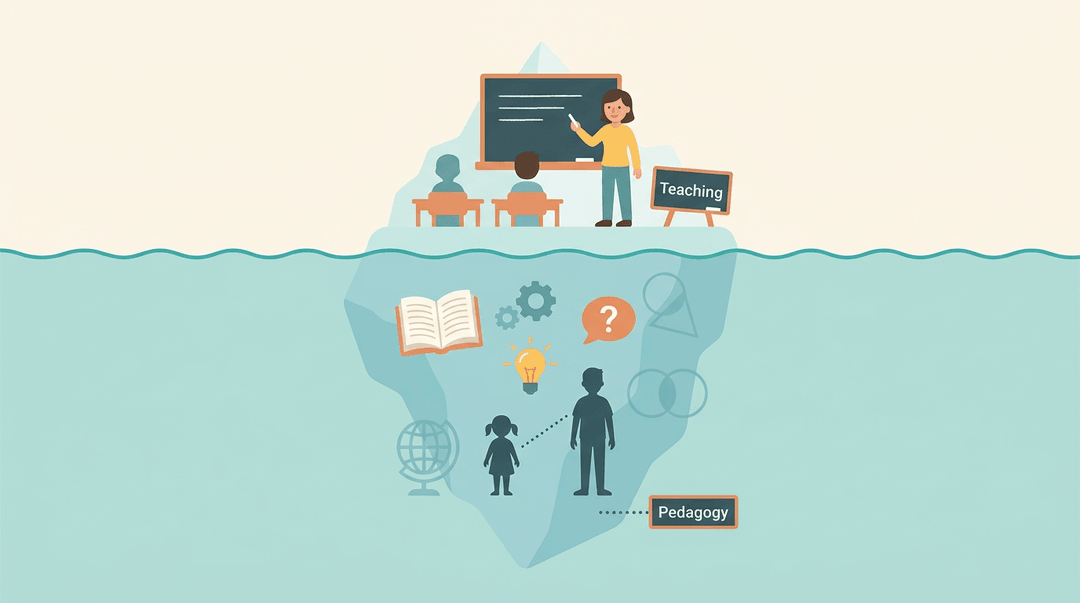
Ask ten teachers what pedagogy means and you'll likely get ten different answers. If you want it in one word, though, it's simply how: if the curriculum is what you teach, pedagogy is how you teach it.
What's the difference between pedagogy and teaching?
Teaching is the act itself: standing in front of a class and delivering a lesson.
Pedagogy is the study of teaching methods behind that act, the theory and practice of educating, and the reasoning for why one approach works better than another for a given group of students.
Many call it the art and science of teaching, since it blends creativity with evidence. It also covers pedagogical content knowledge: knowing your subject and knowing how to make that subject click for a ten-year-old versus a high schooler.
Pedagogy also reflects the relationship between culture and learning techniques, since a strategy that works in one classroom won't automatically transfer to another.
(Pedagogy usually refers to teaching children; andragogy is the parallel term for teaching adults.)
Where the word pedagogy comes from
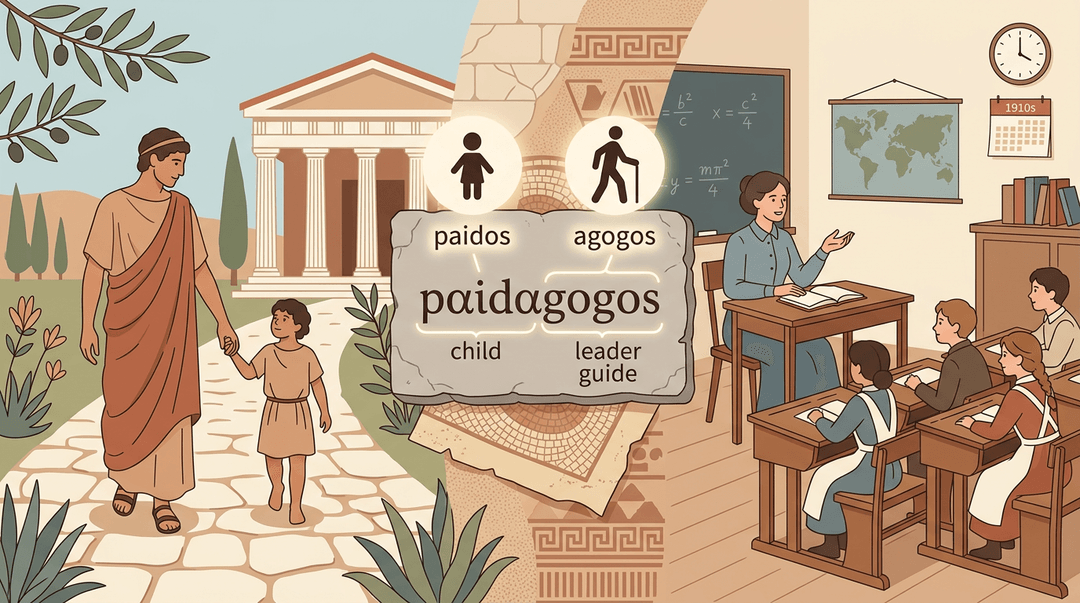
The word traces back to Greek roots. According to A.T. Still University's guide to pedagogy and andragogy, it combines "paidos" (child) and "agogos" (leader), literally to lead the child.
The idea has roots in ancient Greece, where thinkers like Socrates shaped how educators guide a child's thinking rather than just filling it with facts.
Back then, a pedagogue was actually a slave whose job was to escort a child to school and supervise his conduct, a far cry from today's classroom teacher.
Pedagogy didn't become a formal field of study until much later: empirical, experimental educational science took shape starting in the 1910s, and it's been evolving ever since.
The core elements of pedagogy
At its core, pedagogy rests on three moving parts:
- the educator
- the learner
- the subject matter
plus everything that happens between them. It's less about the content on the page and more about the relationships and interactions in the classroom that bring that content to life.
Good pedagogy also builds on what students already know, layering new ideas onto prior learning rather than starting from scratch.
And because every classroom carries its own culture, effective pedagogy flexes to match the learning styles already in the room.
The Main Pedagogical Approaches Teachers Use
No single method works for every lesson, which is why most teachers end up drawing from several approaches depending on the goal. A handy way to think about the range is the widely cited 5 C's of pedagogy:
- communication
- collaboration
- critical thinking
- creativity
- citizenship
Each approach below leans into one or more of those.
Teaching through repetition and rewards
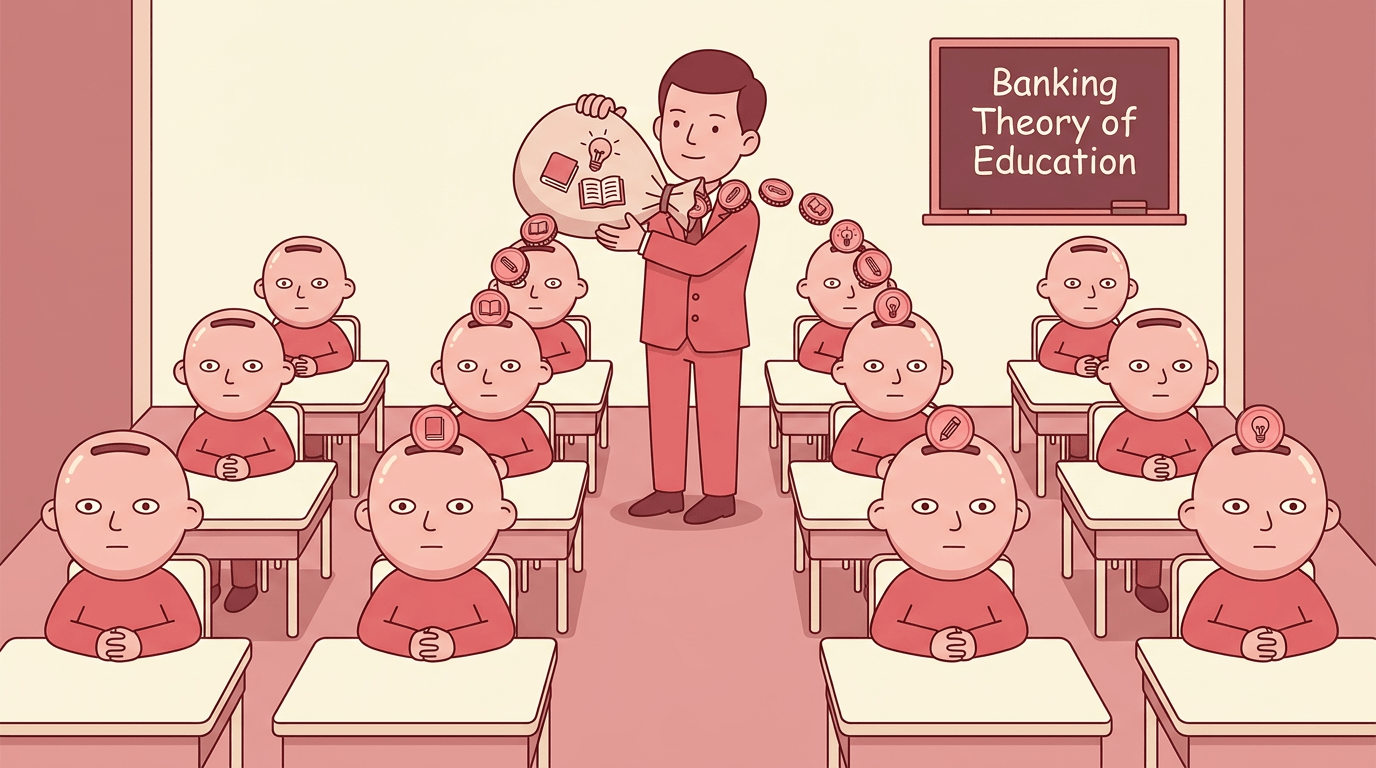
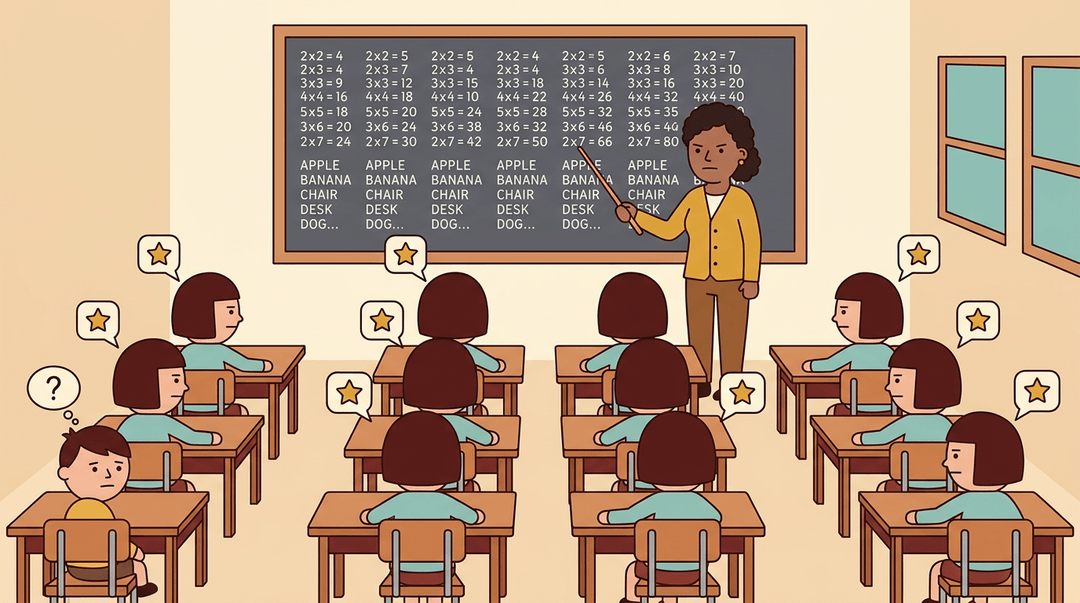
The teacher-centered lecture model puts the teacher at the front delivering content, with students absorbing it through repetition and reinforcement. It leans on classic conditioning: rewards for correct answers, consequences for missed ones. It still earns its place for facts and formulas (times tables, vocabulary, grammar rules) where drilling genuinely helps. But as the sole approach, it's lost mainstream support: students end up memorizing rather than understanding.
Letting students discover through experience
Here, students build understanding by doing rather than by being told. Discovery learning puts inquiry and firsthand experience first: a hypothesis, a test, a conclusion. Some call this the invisible pedagogy framework, because the teacher's structure is there, just not obvious to the student. Projects and experiments are the vehicle. Consider a middle school science teacher who hands out seeds, soil, and one question, "what makes a plant grow faster?" instead of a textbook answer: that's pedagogy in action, not just a lesson plan.
Learning through group work and dialogue
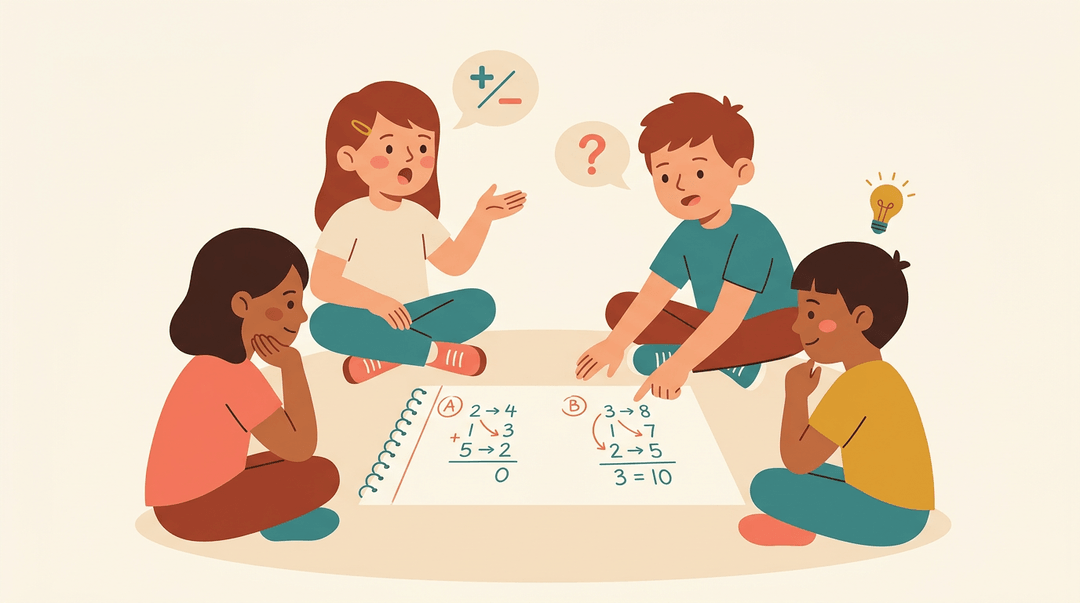
Learning doesn't only happen between a student and a textbook; it happens between students. This approach centers group work and dialogue, treating social interaction as part of how understanding forms. A small-group discussion prompt, like debating two solutions to the same math problem, does more than fill time: it forces students to explain their thinking aloud, and teamwork turns peers into teachers for each other.
Building a student-led democratic classroom
A student-centered democratic classroom shifts some decision-making power to students themselves. Its roots trace back to Brazilian educator Paulo Freire, whose Pedagogy of the Oppressed argued that students shouldn't be passive recipients of knowledge but active participants in creating it. In practice, that looks like students:
- helping set class rules
- acting as co-teachers for a peer lesson
- taking on creative and performance-based assignments like debates and skits
Connecting lessons across subjects
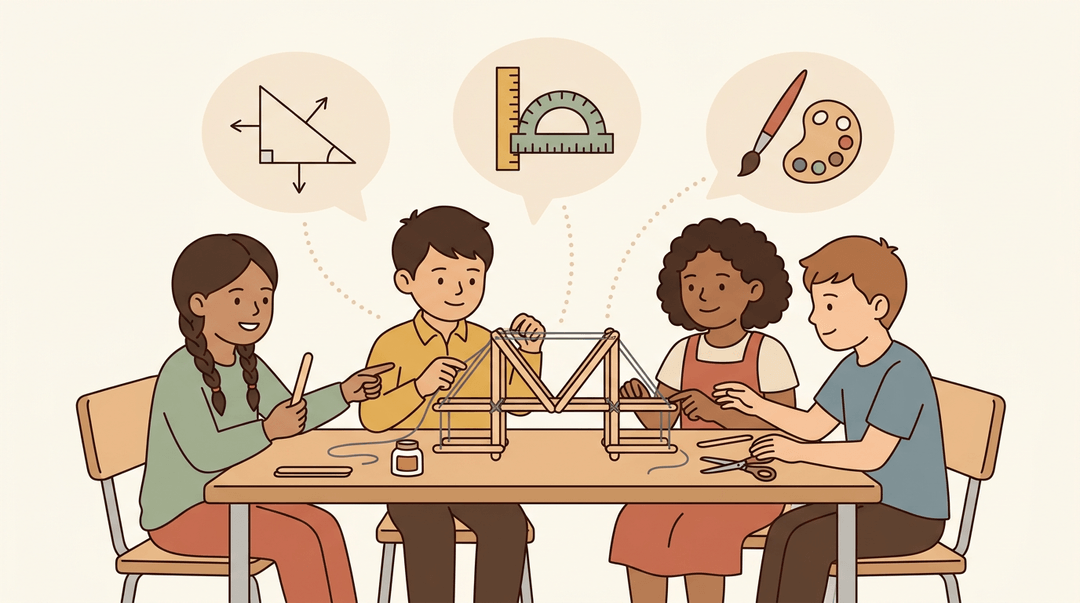
Cross-curricular learning removes the artificial walls between subjects. A STEM project that has students design a bridge pulls in physics, math, and art at once, and that kind of real-world application sticks better than any single-subject worksheet because it mirrors how problems actually show up outside school.
Teaching through questions and reflection
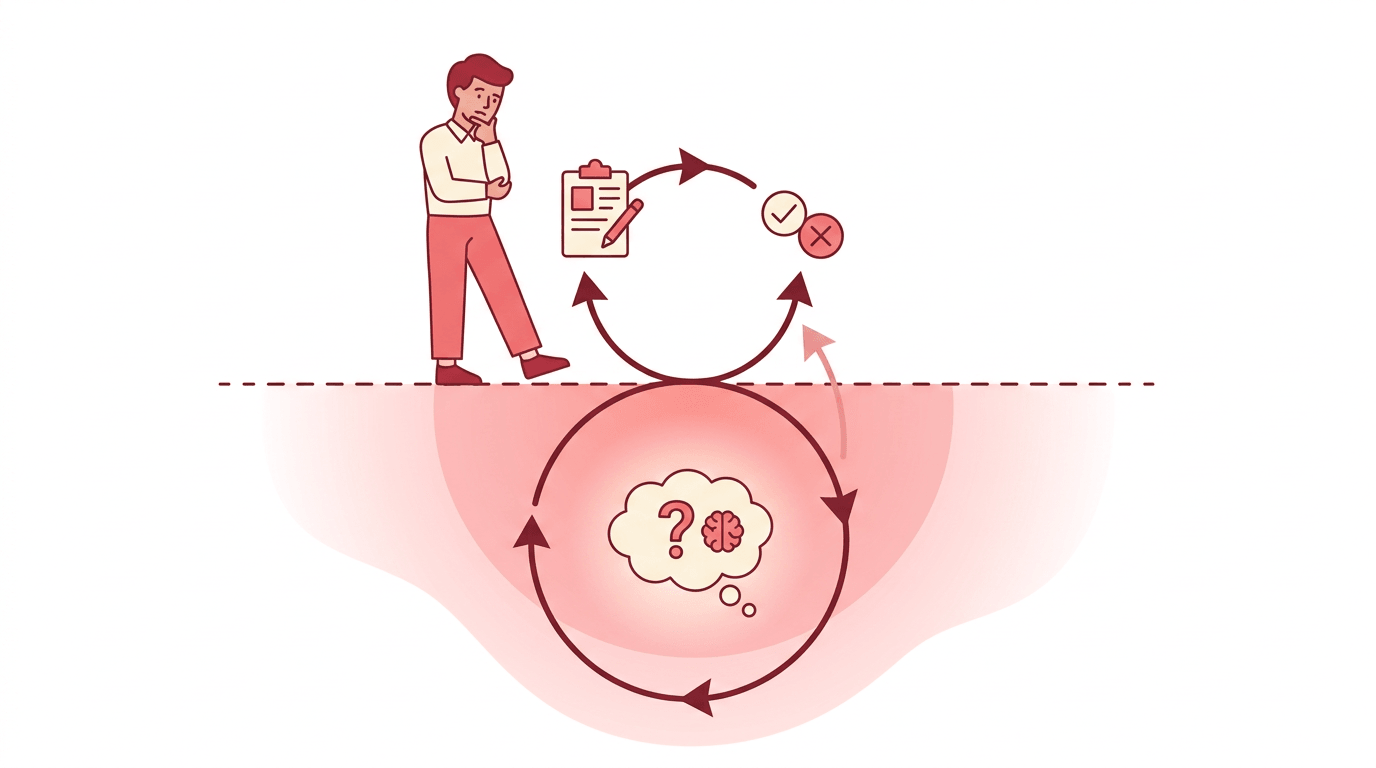
This approach treats questions, not answers, as the main event. Students practice metacognition, thinking about their own thinking, through self-evaluation and open questioning that invites exploration rather than a single correct response. Teachers reflect too, regularly checking their own assumptions about what's working. The payoff is a classroom that keeps asking why, not just what.
The Learning Theories Behind Pedagogy
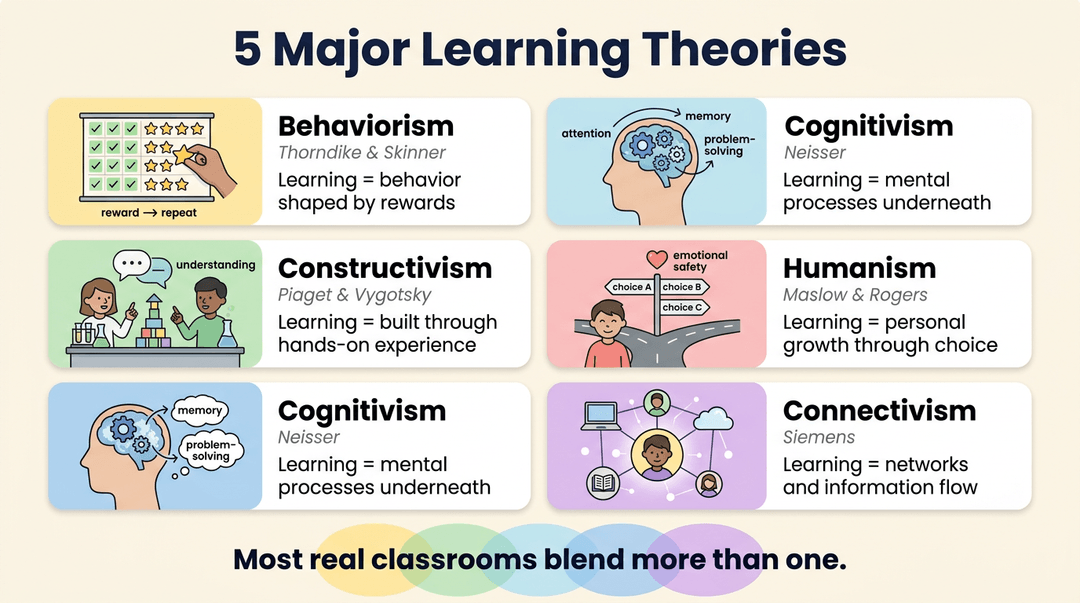
Every pedagogy borrows from a theory of how people actually learn, even when the teacher using it couldn't name the theory. Five of them show up again and again in classrooms:
The five major learning theories
- Behaviorism. Rooted in the work of Edward Thorndike and B. F. Skinner's operant conditioning, this theory treats learning as a change in observable behavior, shaped by reinforcement. It's the logic behind sticker charts and point systems: reward the behavior you want repeated.
- Constructivism. Jean Piaget and Lev Vygotsky's social constructivism argue that students build understanding through experience, not passive reception. A hands-on science lab or a peer debate both lean on this idea.
- Cognitivism. Named for the mental processes learning actually involves, this theory traces back to Ulric Neisser, the father of cognitive psychology. It's less about what a student produces and more about how memory, attention, and problem-solving work underneath.
- Humanism. Abraham Maslow and Carl Rogers framed learning as a deeply personal act tied to fulfilling one's potential, which is why student choice and emotional safety matter so much to this camp.
- Connectivism. The newest of the five, George Siemens's connectivism treats networks, technology, and the flow of information as central to how students learn today, not just what's in one teacher's head.
Most real classrooms blend more than one.
Different Types of Pedagogy
Once you know what pedagogy means, the next question is which kind fits your classroom. A few well-known families cover most of what you'll encounter, and each answers a different classroom need.
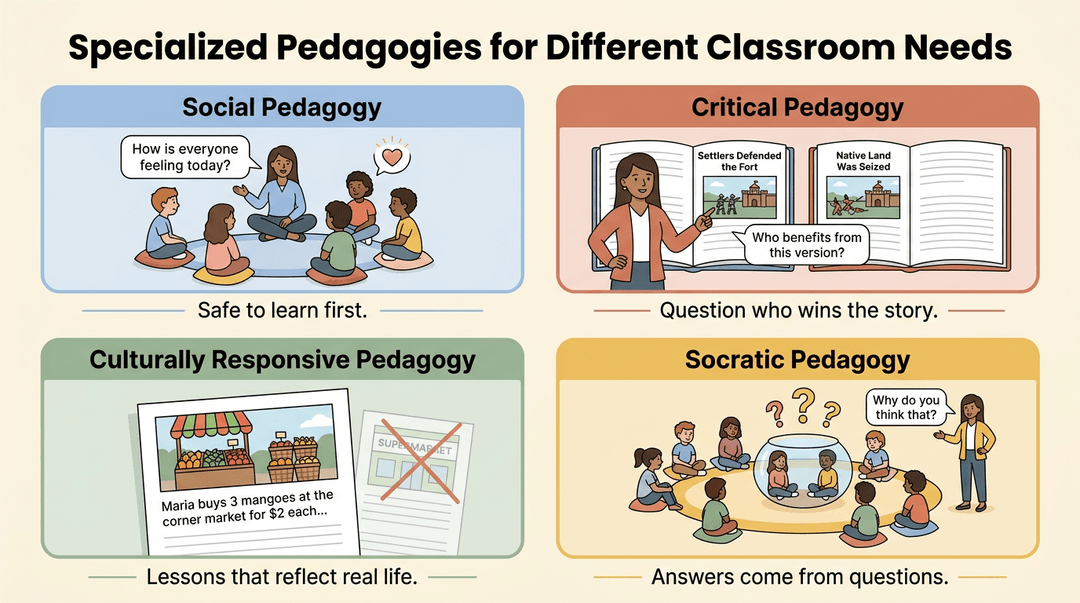
Specialized pedagogies for different classroom needs
- Social pedagogy centers on a student's well-being and relationships, not just content. A homeroom teacher who opens class with a check-in circle is practicing this: the goal is a student who feels safe enough to learn.
- Critical pedagogy pushes students to question power and assumptions in what they're taught. Think of a high school history teacher asking students to compare two textbook accounts of the same event and decide who benefits from each version.
- Culturally responsive pedagogy builds lessons around students' own backgrounds and experiences, so a math word problem might use a neighborhood market instead of a generic store.
- Socratic pedagogy drives learning through questions rather than answers. A teacher running a fishbowl discussion, asking "why" instead of confirming "correct," is using it to spark inquiry.
How an approach differs from a technique
An approach is the unified philosophy behind your teaching: your beliefs about how students learn best. A technique is a specific classroom action you use to carry that philosophy out.
Flipped learning is a clear example: the approach might be student-centered learning, and the technique is having students watch a lecture at home so class time is freed for hands-on practice.
Techniques are simply more granular: an approach shapes your whole year, while a technique is one tool you might swap out tomorrow without changing your philosophy at all.
Choosing Pedagogy for Your Classroom
You don't need to adopt a whole new philosophy to teach with intention. You need to name what you already do, see where it fits your students, and plan each lesson so the approach matches the goal. This guide walks you through all three.
Name the pedagogy you already use
- Sketch your typical lesson structure.
- Jot the beats as they actually happen: "warm-up → I explain → students practice → exit ticket."
- Match that sketch to a named approach.
- Explain-then-practice points to direct instruction; question-then-explore points to inquiry; groups building something points to constructivism.
- Write one strength and one blind spot.
- ✅ Strength: "My direct instruction gives struggling students clear models."
- ❌ Blind spot: "Students rarely generate their own questions."
- The difference to notice: who's doing the thinking, you or them.
💡 Tip: Sketch three recent lessons, not your ideal one. Your dominant style is what you do on an ordinary Tuesday.
Match the approach to your students
Your grade level shifts which pedagogy pays off most. Use these as defaults, then adjust for your class.
| Grade band | Approach that fits | What it looks like |
|---|---|---|
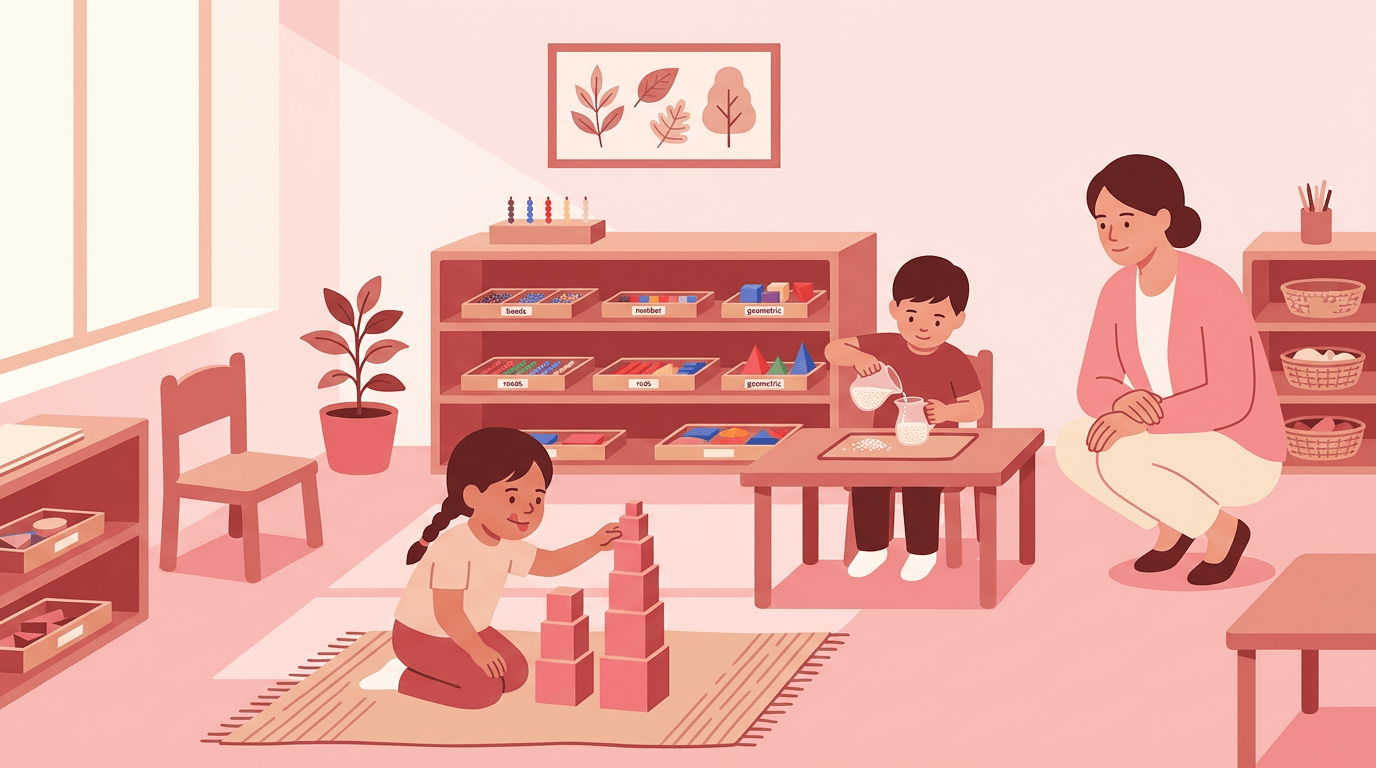
| Early elementary | Play-based constructivism | Sorting real objects before naming the concept |
| Middle school | Inquiry and collaboration | Small groups investigating a driving question |
| High school | Socratic seminar and debate | Students defending claims with textual evidence |
Example: A high school English teacher swaps her lecture on a novel's theme for a Socratic seminar. She opens with one question: "Is this character free, or trapped?" Students carry the discussion; she tracks who cites evidence and steps in only to redirect.
Plan each lesson from the goal backward
- Start with the learning objective.
- Write it as students will see it: "I can explain why the seasons change."
- Pick the approach that matches the goal.
- New skill needing accuracy: direct instruction. Concept needing sense-making: inquiry.
- Build in feedback checkpoints.
- Try: "Show me on your whiteboard before you move on." One check midway, one at the end.
- Align your choice with the pacing guide.
- A three-day inquiry won't fit a one-day slot; scale to a structured discovery instead.
At a glance: name your style, match it to your students, then let each lesson's objective pick the approach. Once you've chosen, map your pedagogy right into unit and lesson sequences with EMStudio's curriculum planner.
Why Pedagogy Matters in Education
Pedagogy isn't just theory for its own sake: it's the difference between a lesson that lands and one that falls flat.
How pedagogy improves student learning
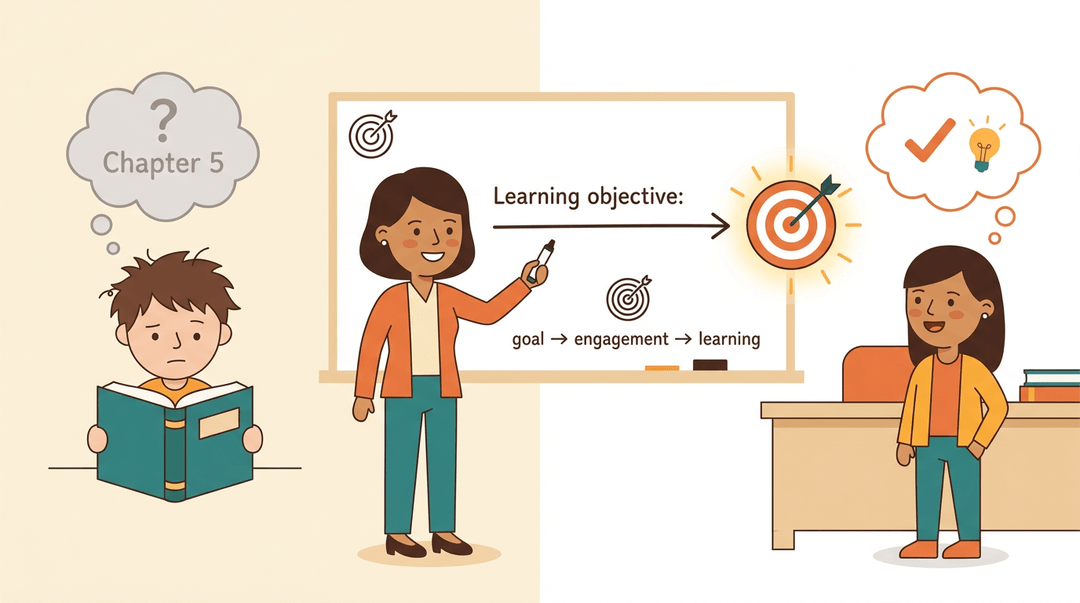
A clear pedagogy sharpens teaching quality, keeps students engaged, and builds the cognitive skills they'll need long after the lesson ends. For example, a middle school teacher who plans around clear learning objectives, not just "covering the chapter," gives students a target to aim for. That clarity boosts engagement, because students know why they're doing the work, not just what they're doing.
Meeting the needs of diverse learners
Every classroom holds a range of learning styles, paces, and needs, and pedagogy is how you meet them. Think of a special education teacher who scaffolds the same lesson three different ways for three students: the pedagogy stays consistent, only the path changes. Strong pedagogy also builds a cooperative environment, where students learn from each other, and sharpens teacher-student communication so misunderstandings surface early instead of at test time.
Shaping everyday classroom decisions
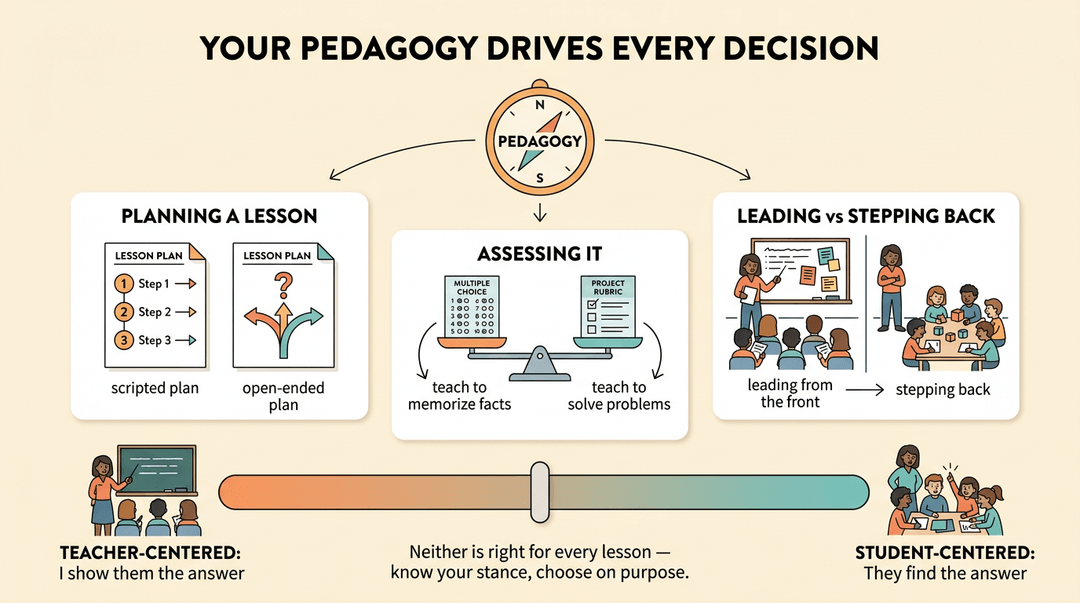
Your pedagogy quietly drives every choice you make:
- how you plan a lesson
- how you assess it
- how you decide when to lead from the front versus stepping back
Assessment isn't separate from pedagogy either; it shapes it, since how you measure learning determines what you teach toward.
That's the real tension underneath most classrooms: teacher-centered instruction versus student-centered discovery, direct instruction versus letting students find the answer themselves.
Neither is right for every lesson, but knowing your stance helps you choose on purpose, not by accident.
Pedagogy in Everyday Teaching Practice
Pedagogy isn't something you study once and shelve. It shows up every time you decide how to open a lesson, respond to a wrong answer, or group your students for a task.
Building your professional teaching practice
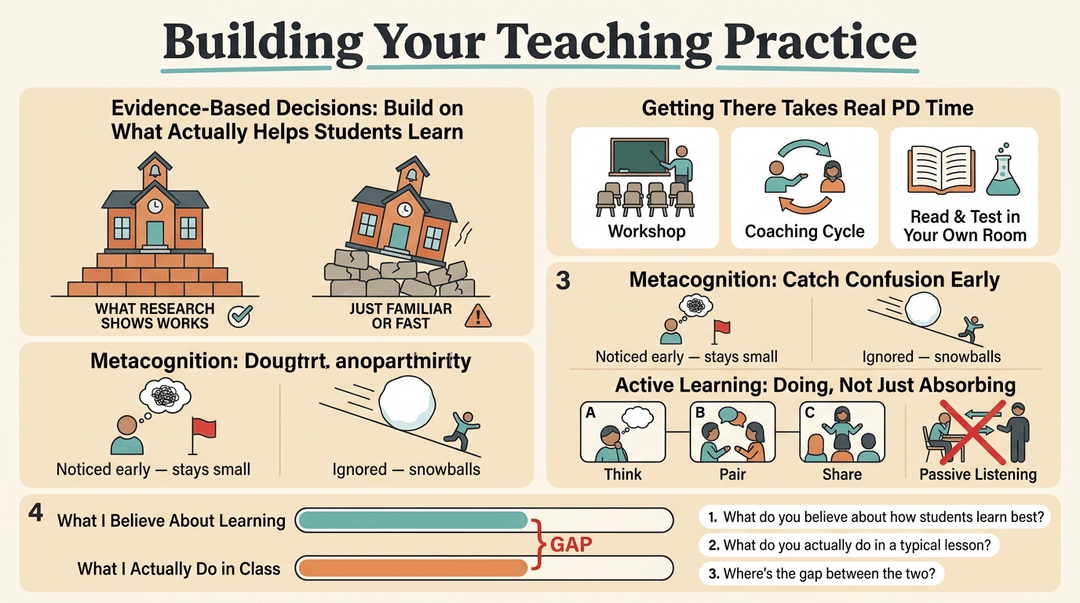
A strong pedagogy rests on evidence-based instructional decisions: choices grounded in what research shows actually helps students learn, not just what's familiar or fast.
Getting there takes real professional development time, whether that's a workshop, a coaching cycle, or simply reading and testing new strategies in your own room.
Part of that practice is teaching metacognition, helping students notice how they think and learn, so they can catch confusion before it snowballs.
Pair that with active learning strategies like think-pair-share or hands-on problem solving, and students stop passively absorbing and start doing.
Try this quick self-audit to name your own pedagogy:
- What do you believe about how students learn best?
- What do you actually do in a typical lesson?
- Where's the gap between the two?
Using feedback and productive struggle
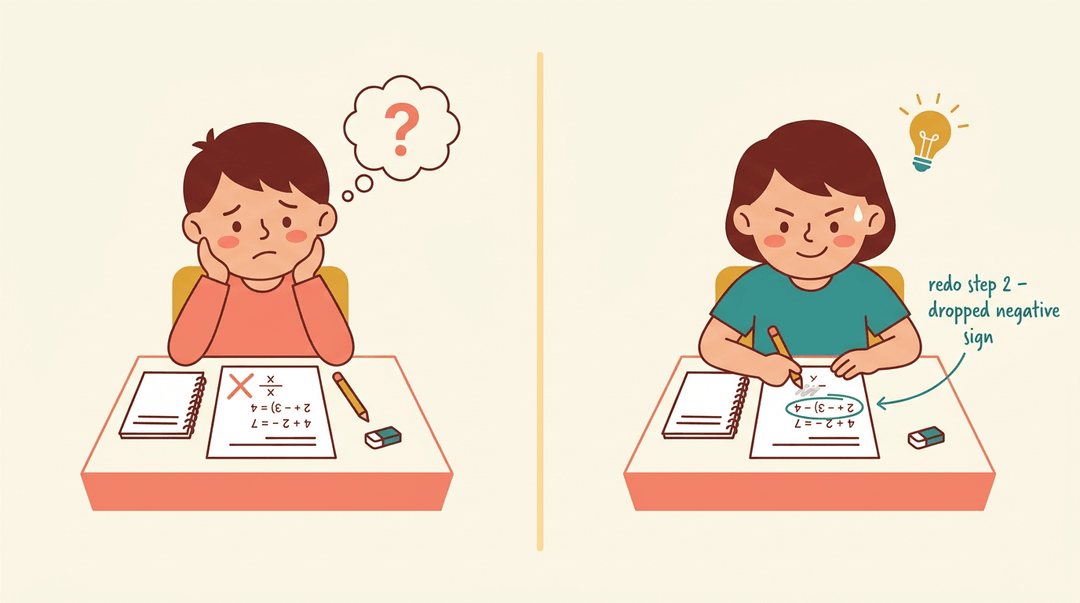
For instance, a middle school math teacher who gives explicit, actionable feedback ("redo step two, you dropped a negative sign") helps students improve faster than one who just marks answers wrong.
Good pedagogy also means letting students hit productive struggle: challenging them enough to push through frustration and build real problem-solving muscle. The key is limiting struggle before it turns overwhelming and shuts learning down.
Done well, this builds both critical thinking and self-regulation, students who can push through hard problems and know when to ask for help.
Pedagogy isn't a concept you shelve after your first year of teaching. It's the daily choices you make about how students learn best, and those choices shape engagement, understanding, and everything in between.
The more clearly you can name your own pedagogy, the more intentional every lesson becomes.
Ready to put that intentionality into your planning? Check out our Curriculum Planning feature to map your pedagogy across every unit and lesson, all year long.
References
- Home - Pedagogy and Andragogy — guides.atsu.edu
- Theories of learning. — doi.org
- Social Constructivism — gsi.berkeley.edu
- The Humanistic Learning Theory: A Complete Guide for Educators — wgu.edu
- Connectivism Learning Theory: A Guide for Educators — wgu.edu
- The pedagogue in antiquity — doi.org (1985)
- Psychologism in Finnish Educational Science: From Herbartianism to Constructivism — doi.org (2012)
- Paulo Freire’s Pedagogy of the Oppressed at Fifty — daily.jstor.org
- Remembering the Father of Cognitive Psychology – Association for Psychological Science — psychologicalscience.org
Frequently asked questions
What is the difference between pedagogy and teaching?
Teaching is the act of delivering instruction, while pedagogy is the theory, reasoning, and practice behind how instruction is designed and delivered. Teaching is what happens in the classroom; pedagogy explains why a particular method may work for particular learners and goals.
What is pedagogy in one word?
How.
What are the four types of pedagogy?
There is no single universally accepted set of four types. A common grouping is teacher-centered pedagogy, student-centered pedagogy, culturally responsive pedagogy, and critical pedagogy, although other classifications use different categories.
What are the five approaches to pedagogy?
Five broad approaches are teacher-centered lecture and reinforcement, discovery learning, collaborative and dialogic learning, student-centered democratic learning, and cross-curricular learning. Questioning and reflection, including metacognition, can also be integrated across these approaches.
What are the five types of pedagogy?
Five commonly discussed types are social pedagogy, critical pedagogy, culturally responsive pedagogy, Socratic pedagogy, and constructivist pedagogy. These categories overlap, and teachers often combine several in one classroom.
What is an example of pedagogy?
A science teacher might give students seeds, soil, and a question about what makes plants grow faster, then have them form a hypothesis, run an experiment, and draw conclusions. This uses discovery learning by having students build understanding through firsthand experience.