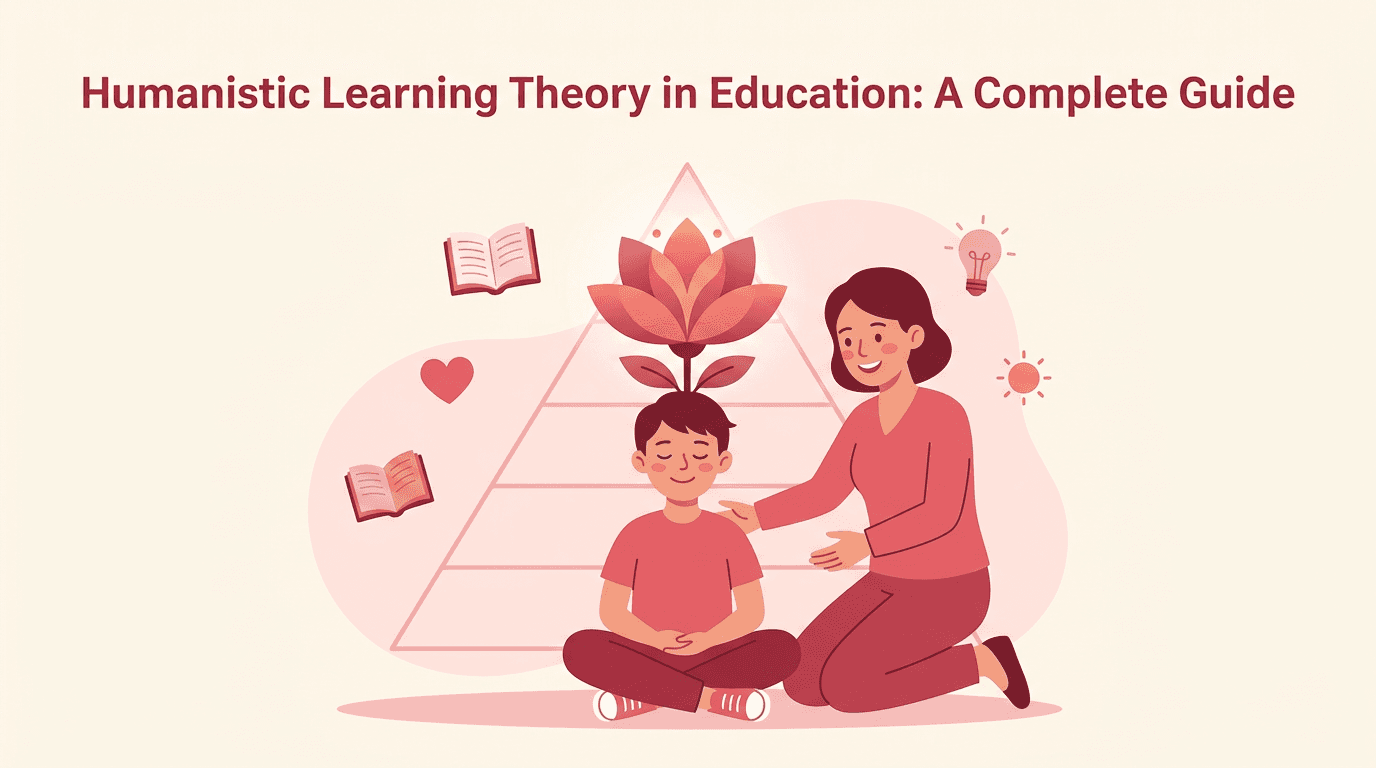
Humanistic Learning Theory in Education: A Complete Guide

Jump to section
Think about the last time you did something well because someone trusted you to figure out how. Maybe you picked a book on your own, or learned a skill at your own pace, and it stuck. That feeling is the heart of humanistic learning theory.
In plain terms, it's the idea that learning works best when students feel safe, respected, and free to grow as whole people, not just as test scores.
In this post, we'll explore where the theory came from, what it asks of you as a teacher, and how to put it to work in real classrooms. We'll also share a practical checklist you can use by grade band.
What Is Humanistic Learning Theory in Education
Ever watched a student light up because a lesson finally connected with who they are? That moment is what humanistic learning theory is built around. Here's what it means and where it came from.
Learning as a path to self-betterment
Humanistic learning theory focuses on the whole person, not just test scores or observable behavior. Every learner is unique, and the goal is self-betterment: growing into the best version of oneself. The theory assumes a natural human desire to learn.
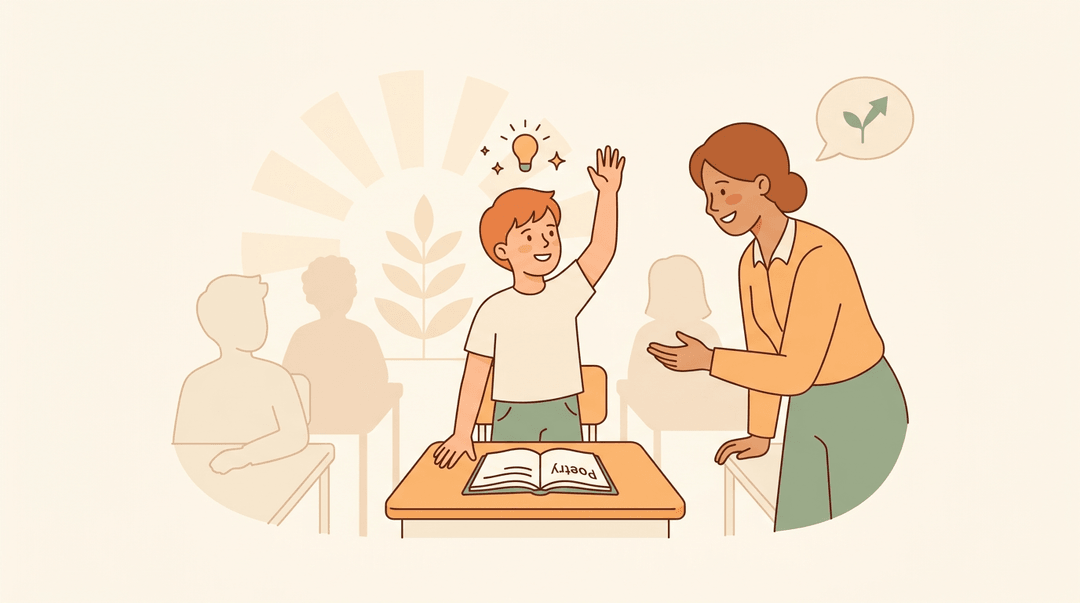
For example, a seventh grader who asks why a poem matters is showing that drive, and a good teacher builds on the question instead of shutting it down.
The thinkers who shaped humanistic theory
The approach emerged in the mid-20th century, when psychologists began pushing for a more human-centered view of the mind.
Bugental was the first president of the Association for Humanistic Psychology (1962-63), and his leadership helped steer the new group in a positive direction.
Two figures stand out. Abraham Maslow's work, including his hierarchy of needs, helped form what became known as the "Third Force" in psychology.
Carl Rogers's person-centered therapy shaped student-centered educational thought, which influenced a whole generation of educators.
What are the four learning theories?
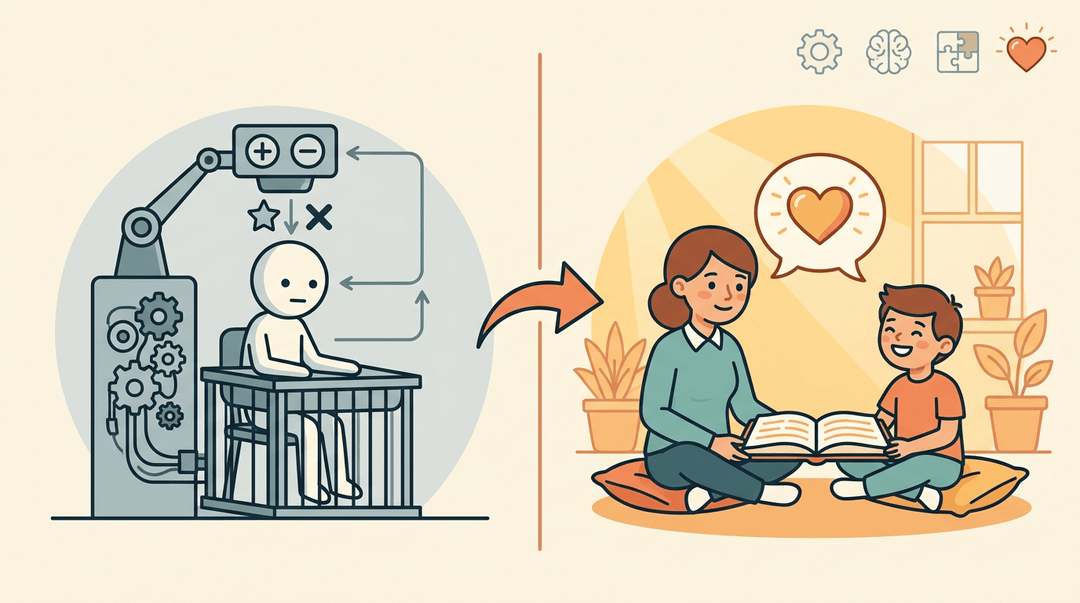
Humanism is one of the four major learning theories, and it's easiest to understand by what it pushes back against. It was a reaction against behaviorism and against Freud's psychoanalysis.
It also rejects the reward and punishment model, which treats learning as something done to a student rather than by one. Skinner's influence is acknowledged, but humanists contrast their view with his.
A comparative look at Freud, Skinner, and Rogers shows where those differences lie.
Core beliefs behind the humanist approach
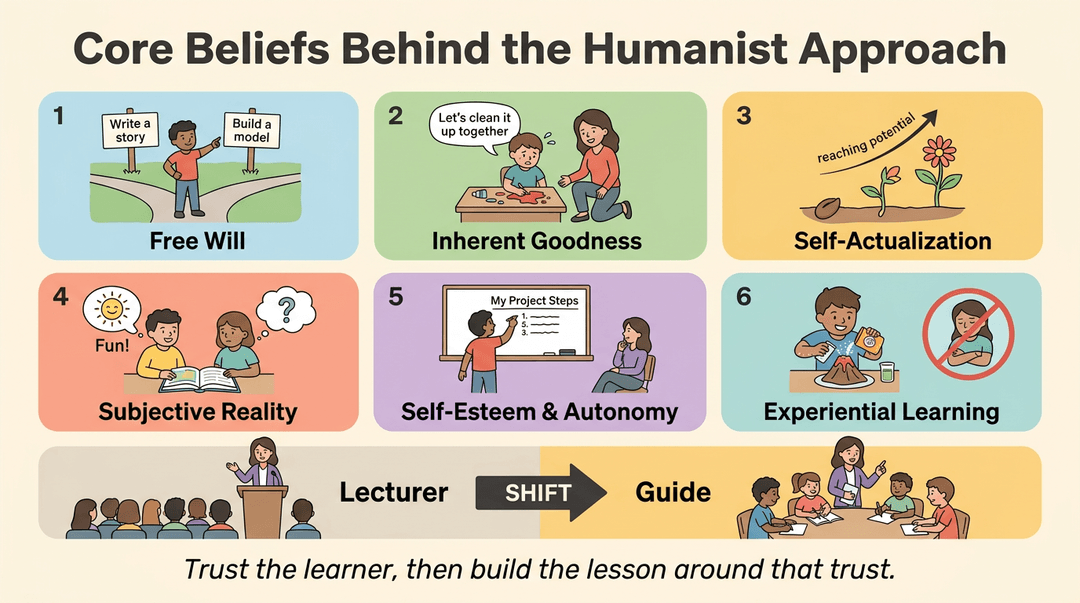
Humanists hold a set of beliefs that shape how they teach:
- Free will. Learners make real choices about their own growth.
- Inherent goodness. Humans are basically good and want to do well.
- Self-actualization. Every person has a drive toward reaching their full potential.
- Subjective reality. How a student experiences a lesson matters as much as the content itself.
- Self-esteem and autonomy. Confident learners who own their decisions learn more deeply.
- Experiential learning. Students learn best by doing and reflecting, not just listening.
These beliefs shift the teacher's role from lecturer to guide. Trust the learner, then build the lesson around that trust.
The Teacher's Role in Humanistic Education
In a humanistic classroom, your job shifts from directing every step to creating the conditions where students can grow. Two priorities carry that work: guiding students toward their own goals, and building a room where they feel safe enough to try.
Guiding students instead of directing them
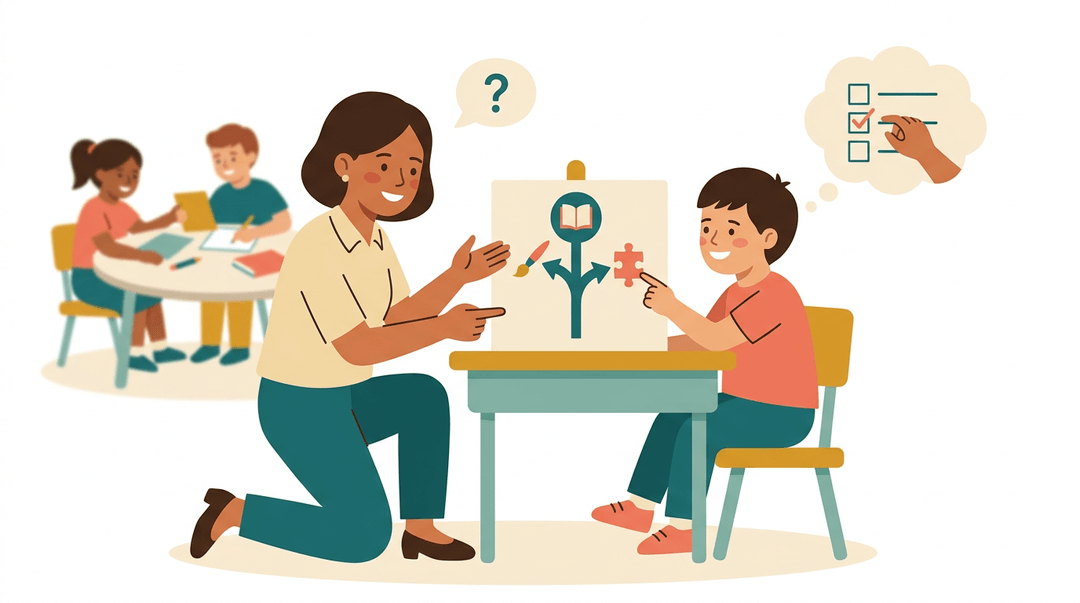
Your role is to guide rather than dictate. Instead of telling students exactly what to do next, ask questions, offer options, and help them see the path.
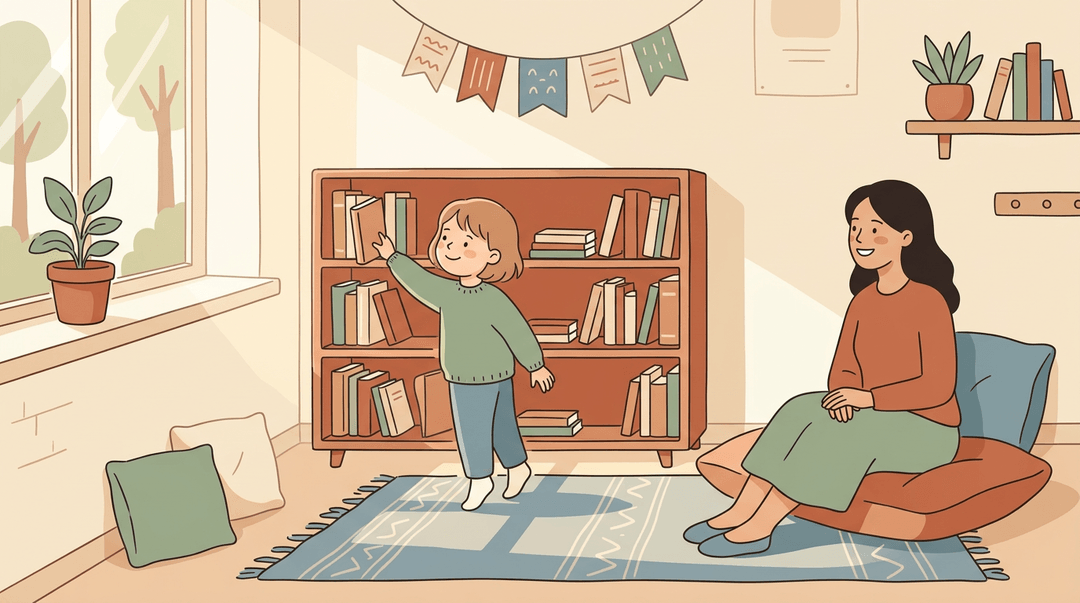
Offer student choice where you can. Let students pick a research topic, a format for showing what they learned, or the order of tasks in a station rotation. Choice keeps them invested because they own the decision.
Support self-directed goals by helping students set their own targets. For example, a seventh-grade math teacher might ask a student who struggles with fractions to choose one skill to master by the end of the month, then check progress together.
Group work also fits here. Collaborative projects let students learn from peers and practice the give-and-take that real work requires.
Try weekly student choice check-ins. Once a week, sit down with each student for a few minutes and ask what they'd like to do differently. The goal is to support students in their learning, not to control every step.
Students who help shape the plan usually take more ownership of it.
Creating a safe, judgment-free classroom
In a judgment-free classroom, mistakes are part of learning, not a reason for embarrassment. Students won't take risks if they're worried about being laughed at.
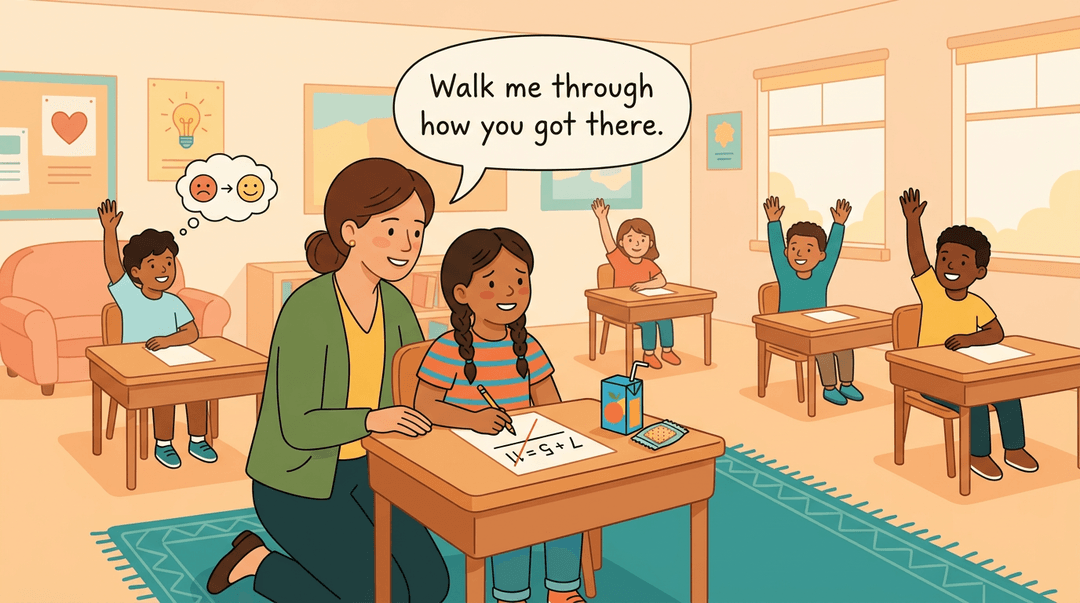
Consider a fourth-grade teacher who responds to a wrong answer with, 'Walk me through how you got there.' The student shows their thinking, and the class learns that effort counts. Over time, more hands go up.
Basic needs come first. A student who is hungry, exhausted, or anxious has little room left for learning. Connect them with the school counselor or make sure a snack is available before expecting focus.
Respecting learner emotions matters too. Name frustration out loud: 'This problem is tough, and it's okay to feel stuck.' Acknowledging a feeling makes it easier to move past it. Feelings come first. Learning follows.
Core Strategies for Humanistic Learning
Humanistic learning puts the learner at the center, so every strategy starts with one question: how do you give students more ownership without losing the structure your class needs? Here are the moves that make it work.
Letting Students Direct Their Own Learning
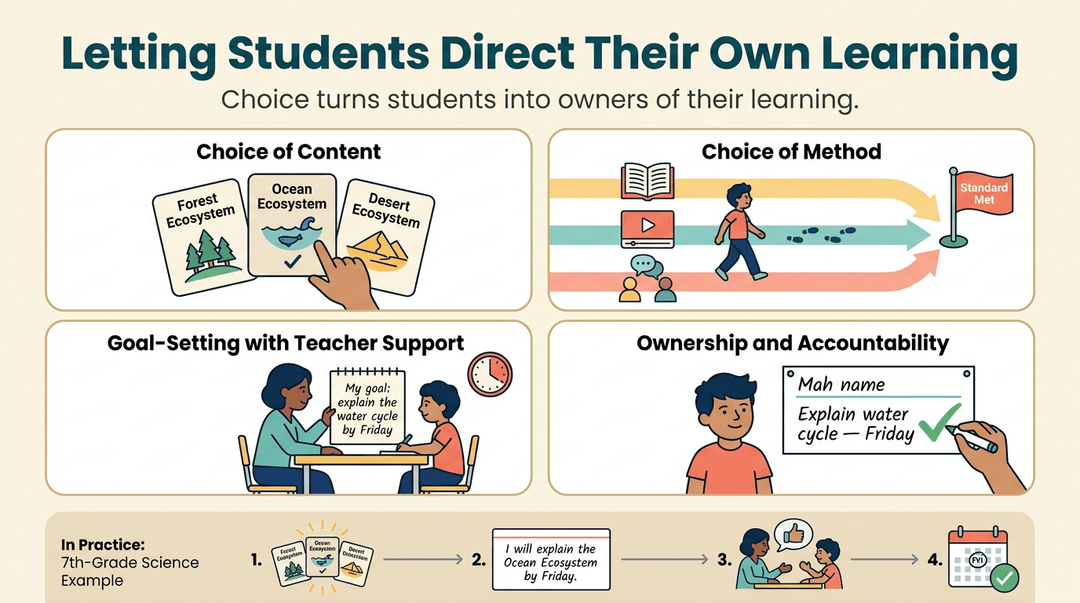
Choice is where humanistic learning starts. When students have a say in what and how they learn, they're more invested in the outcome:
- Choice of content: Students pick from a short menu of topics that all meet the same standard.
- Choice of method: Students decide whether to learn through a reading, a video, or a group discussion.
- Goal-setting with teacher support: You and each student agree on a realistic goal, then check in on it together.
- Ownership and accountability: When students set the target, they feel responsible for reaching it.
For example, a seventh-grade science teacher lets each student choose one of three ecosystems, then asks for a written goal naming what they'll explain by Friday. A quick conference at the desk keeps the goal realistic.
Why Self-Evaluation Beats Grades
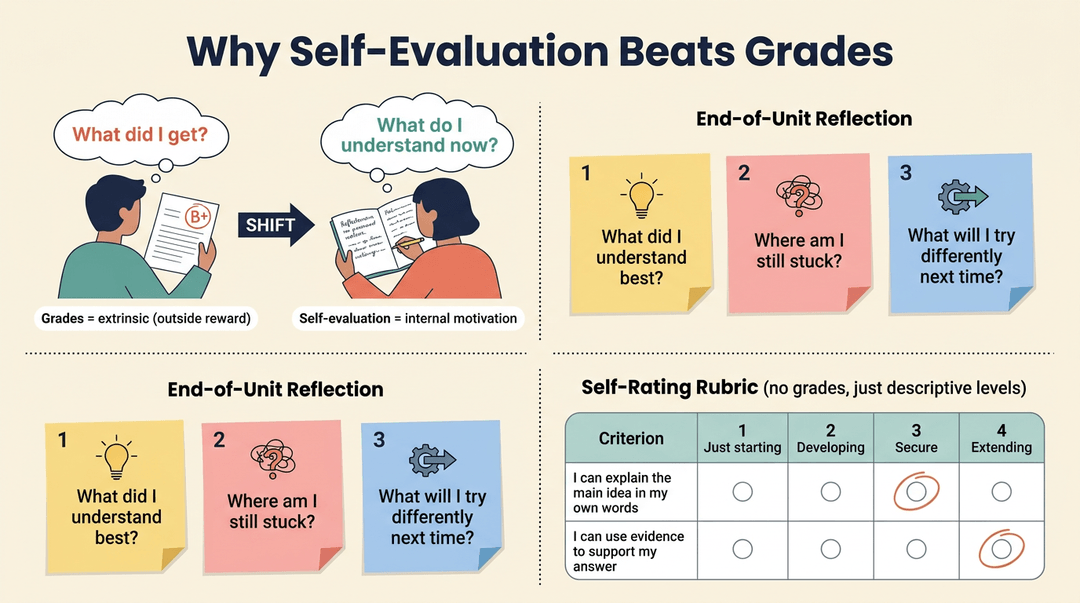
Grades are extrinsic rewards: they come from outside the learner and often track compliance more than understanding. Self-evaluation shifts the judgment inward and builds internal motivation, the drive to learn because the learning matters to the student.
Students stop asking "What did I get?" and start asking "What do I understand now?"
Reflection questions make this routine. At the end of each unit, have students answer three prompts:
- What did I understand best?
- Where am I still stuck?
- What will I try differently next time?
Peer evaluation helps too. Students swap drafts and use two prompts: one thing that works, and one thing to sharpen.
Assessing learning without traditional grades doesn't mean skipping assessment. It means using descriptive feedback and student self-ratings. Students circle one box per row on a simple rubric:
| Criterion | 1 (Just starting) | 2 (Developing) | 3 (Secure) | 4 (Extending) |
|---|---|---|---|---|
| I can explain the main idea in my own words | ||||
| I can use evidence to support my answer |
Tapping Into Intrinsic Motivation
Intrinsic motivation grows when learning connects to personal growth. Stickers and points can help briefly, but they pull attention away from the learning itself.
Students who see how a skill serves their own lives have a reason to keep going that doesn't depend on a reward.
For instance, a ninth-grade English teacher asks students to explain how persuasive writing could help them at home or at a part-time job. The payoff isn't a grade. It's the moment a student realizes the skill is theirs.
Personalizing Learning for Each Student
Every class holds a range of knowledge gaps, so one worksheet rarely fits everyone. Personalizing means finding where each student is and offering the next step.
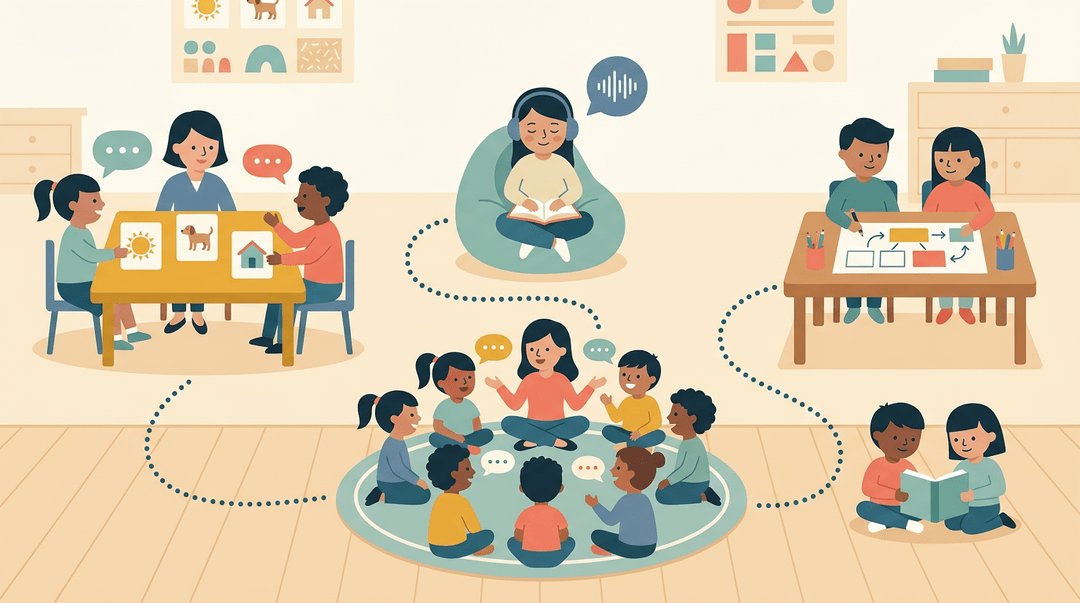
Varied formats help: the same reading can appear as text, audio, and a graphic organizer, so students can take the route that suits their learning preferences.
A special education teacher, for instance, pre-teaches key vocabulary to one small group while another reads the passage independently. Both groups still meet for the same discussion.
Encouraging Critical Thinking and Creativity
Humanistic classrooms make room for questions. When students construct understanding by asking, testing, and revising, they're exploring ideas rather than memorizing them.
Start with open prompts like "Why do you think this worked?" and wait for answers before you step in.
Consider a fifth-grade teacher who asks students to predict what a plant will do in a dark closet before testing it. The prediction, the surprise, and the revision become the lesson.
Connecting Lessons to Real Life
Students engage more when they can see where a lesson leads. Project-based learning gives them a real problem to solve, and the theory becomes a tool. Group discussions help too, as students talk through how a concept applies to their world.
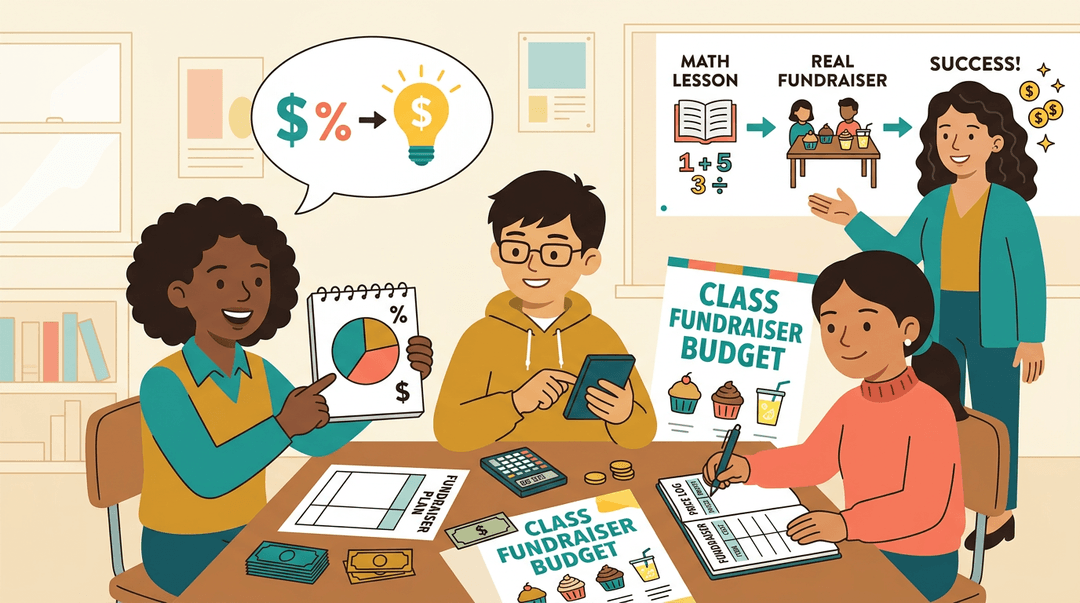
Practical relevance boosts motivation. A high school math teacher has students plan a budget for a class fundraiser. Percentages and unit costs stop feeling abstract once the money is real, and students want to get the numbers right.
Putting Humanistic Theory to Work in Class
This guide walks you through three shifts, in order, then shows what they look like at each level. Start with safety. Choice and reflection only work once students trust the room.
Shift 1: Make the room safe
- Meet basic needs first.
- Keep water and a snack bin handy, no questions asked.
- Build trust at the door.
- Greet every student by name, every day.
- Allow mistakes without judgment.
- Say: "Great mistake. What did it teach us?"
⚠️ Watch out: Offering choice before trust exists. Unsure students tend to pick the easiest option, not the most meaningful one.
Shift 2: Hand over real choices
Start small, then widen the circle as students get comfortable.
| Choice lever | What it looks like |
|---|---|
| Topics | "Investigate any one of these three questions." |
| Goals | Students write a goal in their own words. |
| Formats | Poster, podcast script, or written report. |
For goals, try: "What do you want to be able to do by Friday?" Then post the answer beside the required objective, so both are visible.
Shift 3: Change what assessment is for
Move from judging students to helping them see their own growth.
| Instead of... | Try... |
|---|---|
| Grading every task | Comments first, with grades saved for key pieces |
| Feedback only from you | Peer feedback: two strengths and one question |
| Silent submission | A short reflection journal entry |
A journal prompt you can lift: "What am I proud of, and what's still tricky?"
Example: A second-grade teacher sets up three stations: building, drawing, and storytelling. Students choose where to start. They rotate through all three by Friday, then finish a one-line journal entry: "My favorite station was..., because..." She reads the entries before giving any marks.
What it looks like by level
At a glance:
| Level | Move | Try this |
|---|---|---|
| Elementary | Choice stations | Three stations, student picks the order |
| Middle school | Project menus | A menu of formats for one shared goal |
| High school | Self-paced units | Students set pace and check in on milestones |
| Tutoring / homeschool | Goal contracts | Learner and adult sign a short, shared goal |
Whatever the level, the sequence holds: safety, then choice, then reflection.
Map these student-centered units alongside required standards in EMStudio's Curriculum Planner.
Emotional and Engagement Benefits
Humanistic learning theory pays off in feelings as much as in test scores. Here's what that looks like in practice.
Building an Emotional Connection to Learning
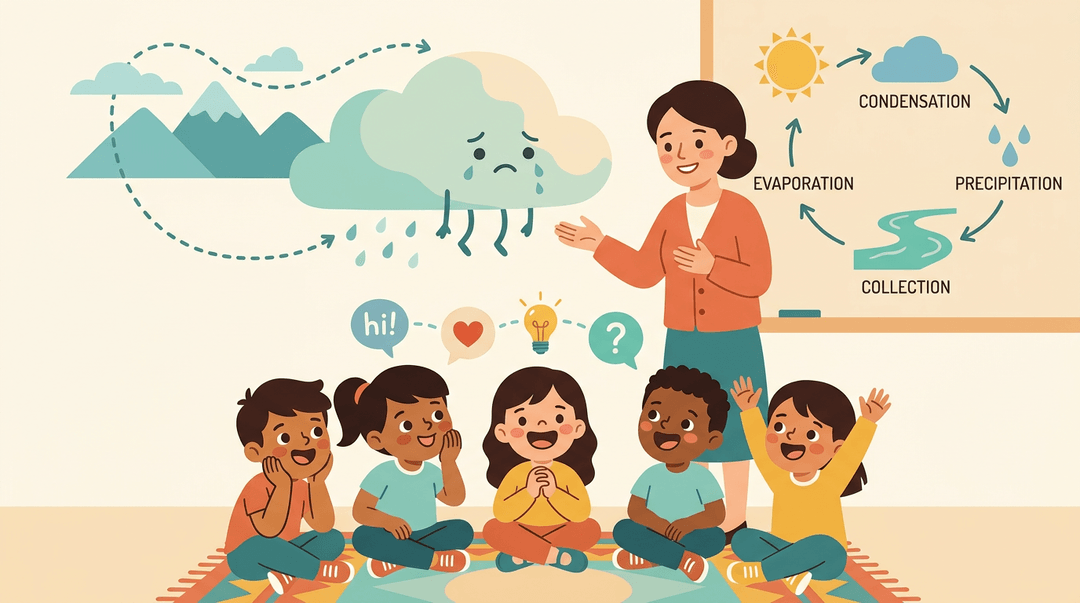
Storytelling and humor make content personal. Consider a fifth-grade teacher who opens a water cycle unit with a tale about a lost rain cloud. Students lean in, and the vocabulary sticks.
Collaborative learning builds connection too, as students listen to each other and share ideas. Reflection aids memory, too. It's less about what students recall and more about how they make sense of it.
Why Engagement Rises With This Approach
Learner-centered lessons that start from student questions increase engagement. Autonomy boosts motivation. When a high school English teacher lets students choose a podcast or an essay for the same novel, effort climbs because the choice belongs to them.
A safe environment increases participation, since students who fear a wrong answer stay quiet. Fear shuts participation down.
Fostering a Love of Lifelong Learning
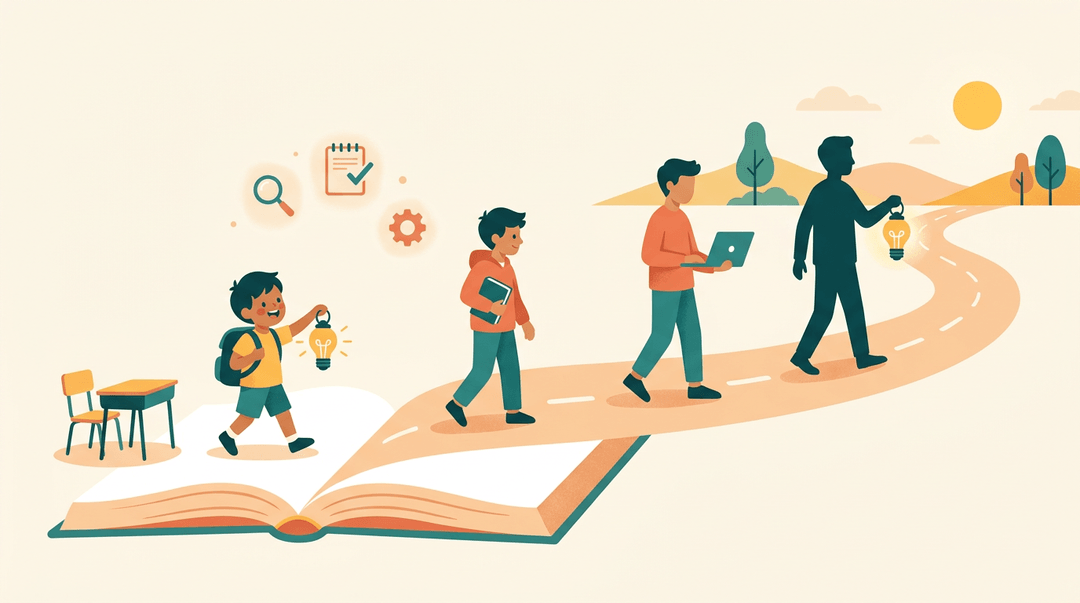
Autonomy-rich classrooms create self-motivated learners who want to learn rather than wait to be told. Students also gain knowledge of how to learn, understanding their own strategies for studying and checking what they understand.
The real goal is continued learning after formal schooling ends.
How Humanism Shows up in Classrooms
Humanism isn't only a philosophy on paper. It shows up in how you set up your room, plan your week, and check in with each student.
Educational Models Inspired by Humanism
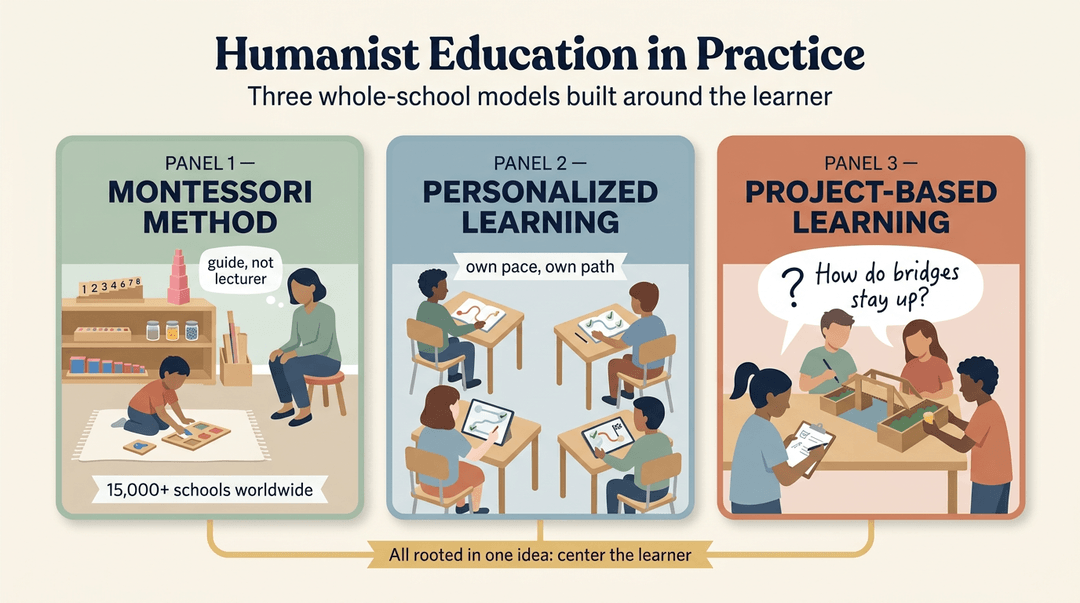
Some whole-school models grew directly from humanist ideas. The Montessori method was developed by Maria Montessori and now guides over 15,000 schools in dozens of countries. Its focus on the learner makes it a clear example of humanism in action.
Two other models carry the same spirit:
- Personalized learning programs let each student move at a pace that fits their needs and goals.
- Project-based learning programs center student inquiry, so learners build knowledge by working through real questions.
Examples You Can Use in Class
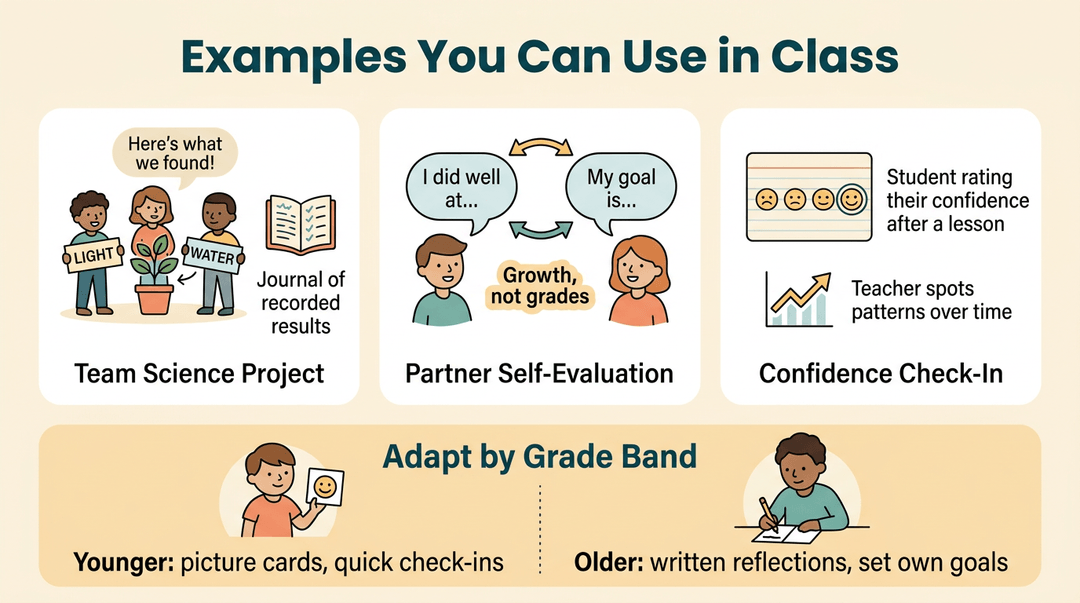
Think of a fifth-grade teacher who hands student teams a plant-growth project. Each team picks one variable, like light or water, records results in a journal, and shares findings with the class. The payoff?
Students own the question, and the science sticks.
Pair students for a self-evaluation exercise. Each partner names one thing they did well and one goal for next time, then they swap feedback. Partners reflect on growth rather than grades, and nobody feels put on the spot.
For ongoing tracking, try a journal or card rating system where students rate their confidence after each lesson. You spot patterns quickly, and students see their own progress.
Adapt by grade band. Younger learners need picture-based cards and short check-ins. Older students can write fuller reflections and set their own goals.
Balancing Humanism with Standards
Humanism doesn't mean ignoring standards. Your students still need to meet the outcomes your curriculum requires. The trick is keeping the standard fixed while giving learners choice in how they reach it. Student voice and standards can coexist.
Humanistic learning theory comes down to a simple idea: students learn best when they feel seen, respected, and supported as people. You don't need to overhaul your whole year to act on that.
Start with one routine that gives students more voice, more choice, or more encouragement, and build from there.
Ready to plan it out? Check out our Curriculum Planner to map your units, lessons, and standards across the whole school year.
References
- Pioneers of Humanistic Psychology — psy.dmu.ac.uk
- The Growth Hypothesis in Psychology: The Humanistic Psychology of Abraham Maslow and Carl Rogers — ci.nii.ac.jp (1991)
- Some Educational Implications of the Humanistic Psychologies — doi.org
- Maria Montessori (Stanford Encyclopedia of Philosophy) — plato.stanford.edu
- Rogers' Humanistic Educational Thought and Its Significance — en.cnki.com.cn (2003)
- Three Psychologies: Perspectives from Freud, Skinner, and Rogers — ci.nii.ac.jp (1981)
Frequently asked questions
What is the main focus of humanistic theory?
1. Humanistic theory focuses on the whole person and on helping learners grow toward their full potential. It emphasizes self-betterment, autonomy, emotions, personal meaning, and the learner’s experience rather than only test scores or observable behavior.
What is humanism in simple terms?
2. Humanism is the belief that people are capable of growth and naturally want to learn and improve. In education, it means treating students as whole people and giving them respect, safety, choice, and support.
What are the four learning theories?
3. The four major learning theories are behaviorism, cognitivism, constructivism, and humanism. They explain learning through behavior and reinforcement, mental processes, active construction of knowledge, and whole-person growth, respectively.
Who is the proponent of humanistic learning theory?
4. The main proponents of humanistic learning theory are Abraham Maslow and Carl Rogers. Maslow contributed the hierarchy of needs and the idea of self-actualization, while Rogers developed person-centered ideas that strongly influenced student-centered education.