What Is the Hidden Curriculum and Why Does It Matter?

Jump to section
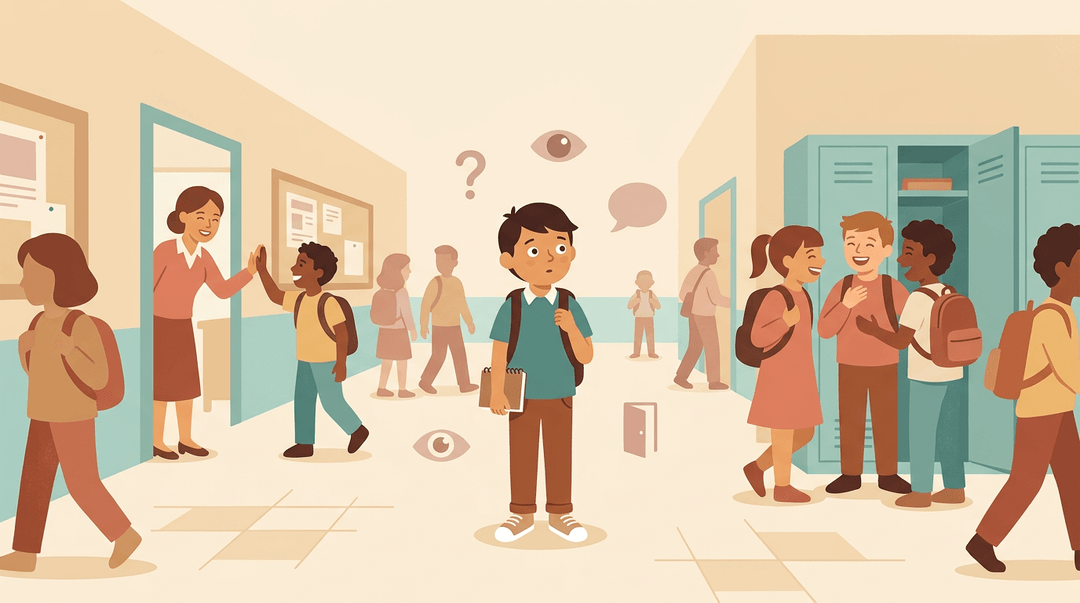
Think about the first week you ever walked into a new school, a new job, or a new social situation. Nobody handed you a rulebook.
But somehow, you picked up the cues: how to address the person in charge, where it was safe to speak up, whose voice got taken seriously. Some of it you caught quickly. Some of it took longer, and a few lessons stung a little.
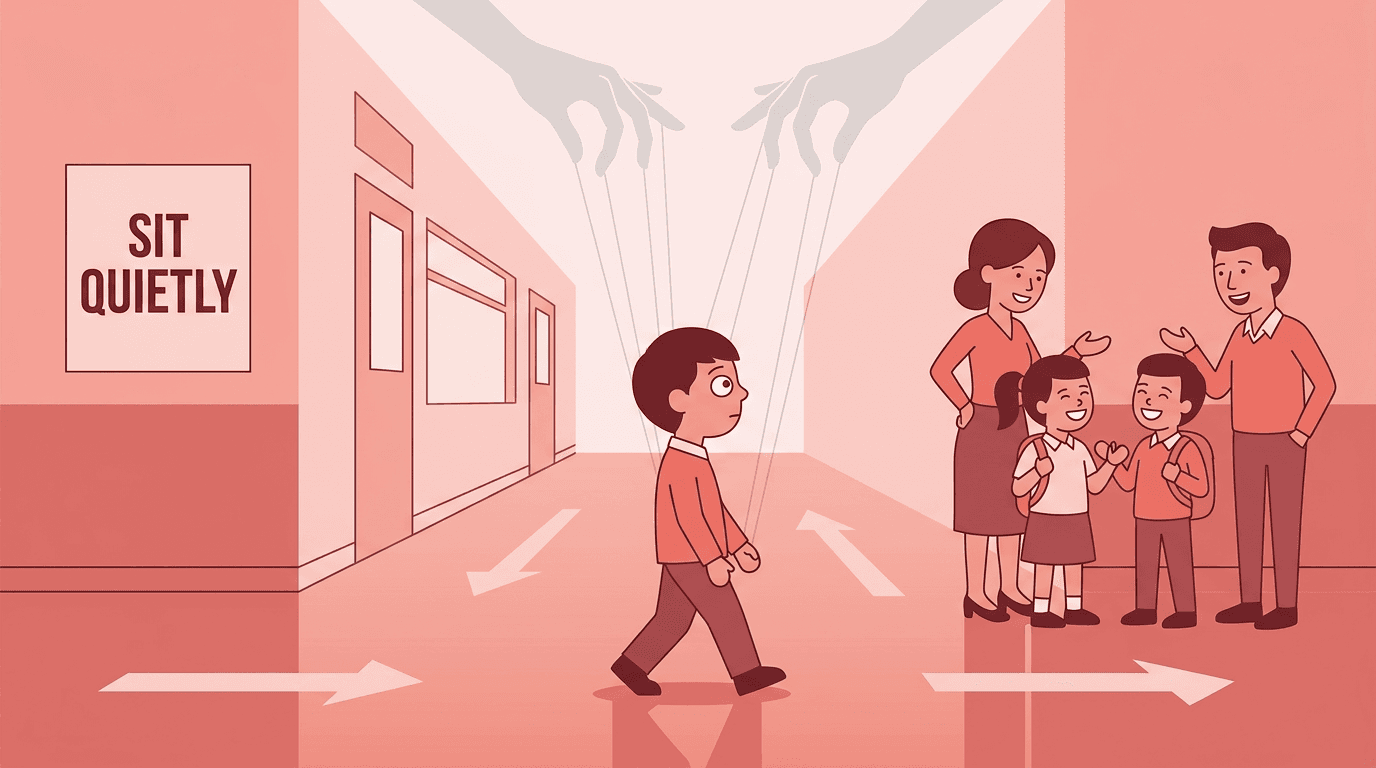
That invisible instruction is what educators call the hidden curriculum: the unwritten norms, values, and expectations students absorb just by moving through a school day. No lesson plan covers it. No standard lists it.
But it shapes students just as surely as anything on the syllabus.
In this post, we'll unpack what the hidden curriculum actually is, where it shows up in real classrooms, what researchers say about it, and how you can start making the implicit explicit for every student you teach.
What the Hidden Curriculum Actually Is
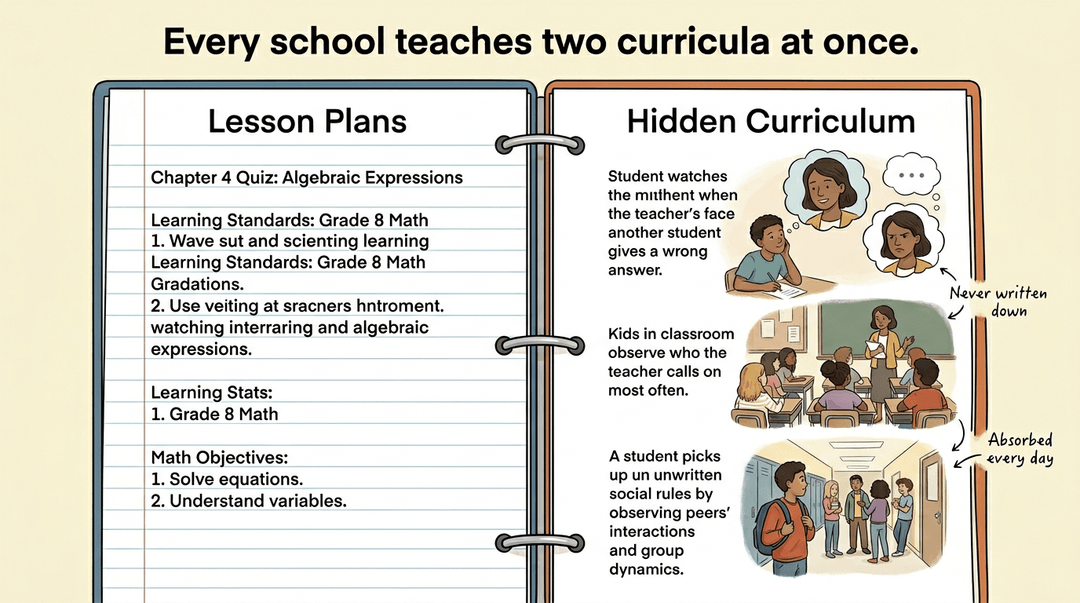
Every school has two curricula running at once. One lives in your lesson plans and standards documents. The other is never written down anywhere, yet students absorb it every single day.
That second layer is the hidden curriculum: the unwritten norms, values, and behaviors schools teach informally, alongside the official content. You'll also hear it called the implicit curriculum or the informal curriculum: different labels, same idea.
The unwritten lessons schools teach
Think about what students learn that never appears in a syllabus: how to wait your turn, how to address authority, what counts as "appropriate" participation, whose knowledge gets centered.
These unspoken expectations shape behavior just as powerfully as any lesson plan. The hidden curriculum is that entire layer of informal learning: the messages embedded in routines, rules, relationships, and even what a school leaves out.
Where the term came from
Philip W. Jackson coined the term "hidden curriculum" in 1968 in his book Life in Classrooms, examining how students learn to navigate their school's unstated expectations.
Sociologist Émile Durkheim laid the groundwork earlier with his concept of secondary socialization: the idea that institutions transmit values and social norms beyond their stated purpose.
How it relates to the official curriculum
The hidden curriculum and the official curriculum aren't always pulling in the same direction. A school's vision statement might celebrate creativity, while its daily routines reward compliance.
Crucially, omissions carry as much weight as inclusions: what a curriculum leaves out sends its own message about whose stories and experiences matter.
Hidden Curriculum Examples in Real Schools
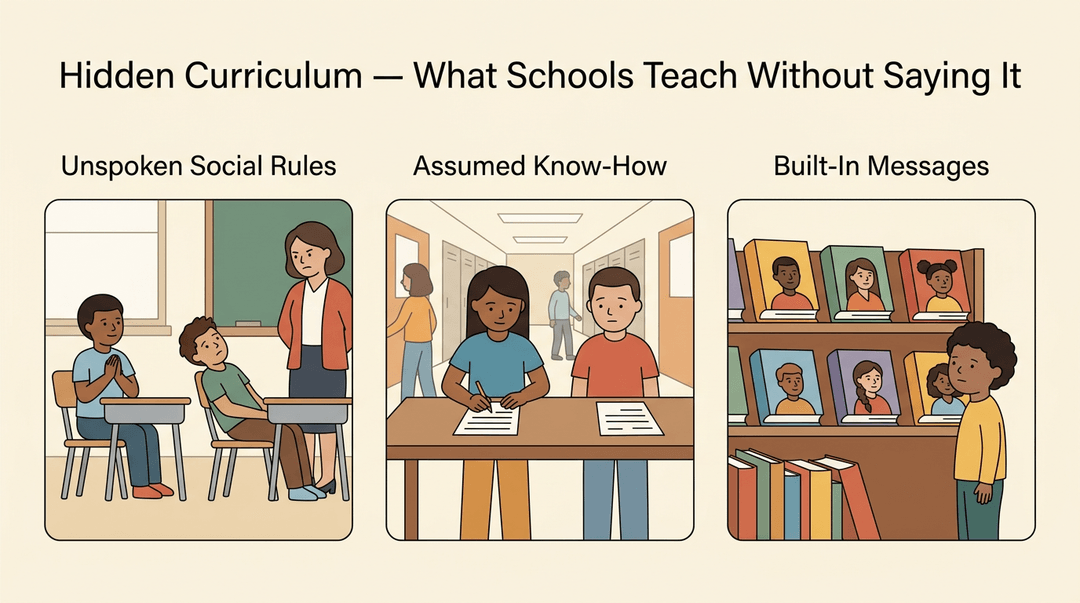
Hidden curriculum shows up in three broad categories:
- The social norms students are expected to absorb
- The institutional knowledge schools assume they already have
- The cultural messages embedded in structures and materials
The examples below make each one concrete.
Unspoken rules in the classroom
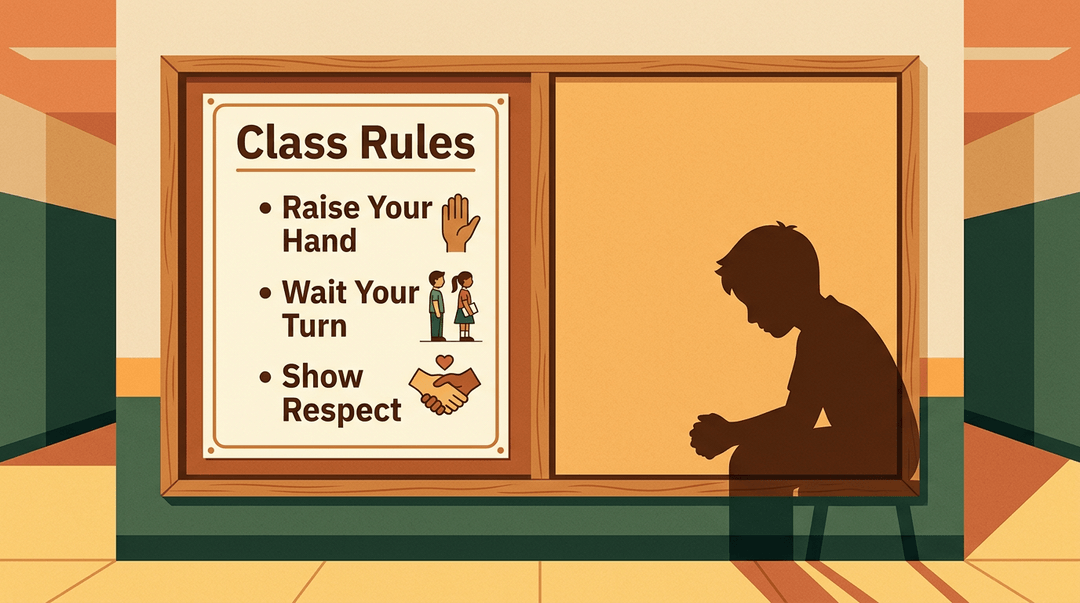
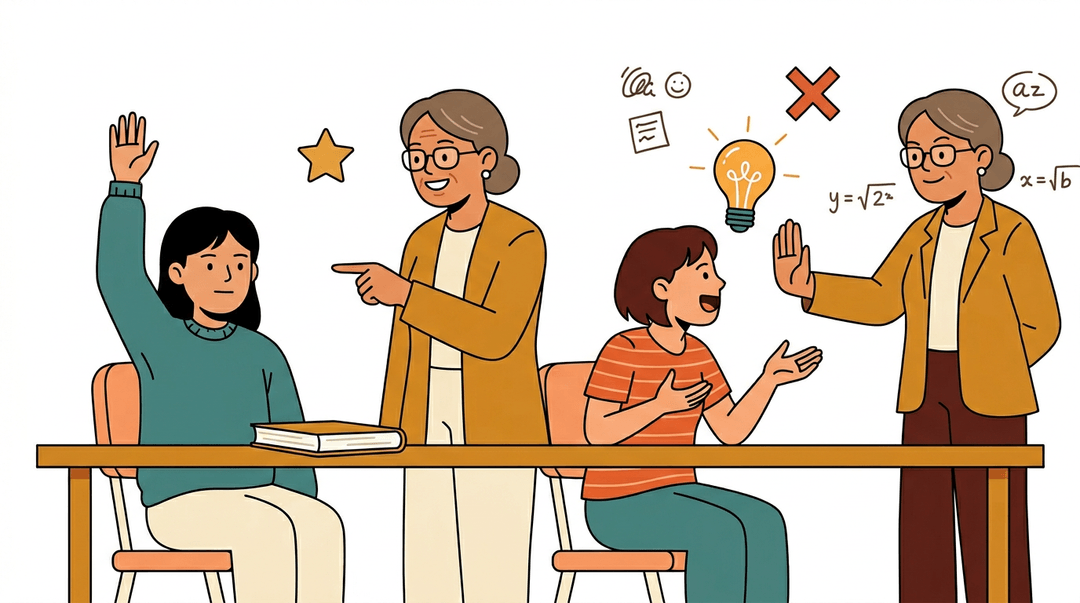
Students quickly learn that raising your hand before speaking, arriving on time, and following a dress code aren't just preferences; they're performance criteria.
Compliance and deference to authority get rewarded even when the lesson says nothing about them.
A student who blurts out a brilliant answer may still get corrected for breaking the protocol, signaling that how you participate matters as much as what you contribute.
Navigating academic institutions unguided
Knowing how to email a teacher professionally, read a syllabus, use office hours, or find a credible source in the school library feels obvious to students who grew up watching adults do it.
For students whose families haven't navigated these systems, it isn't obvious at all. Schools rarely teach these skills directly, so students who lack them fall behind in ways that have nothing to do with intelligence.
Cultural bias in teaching and materials
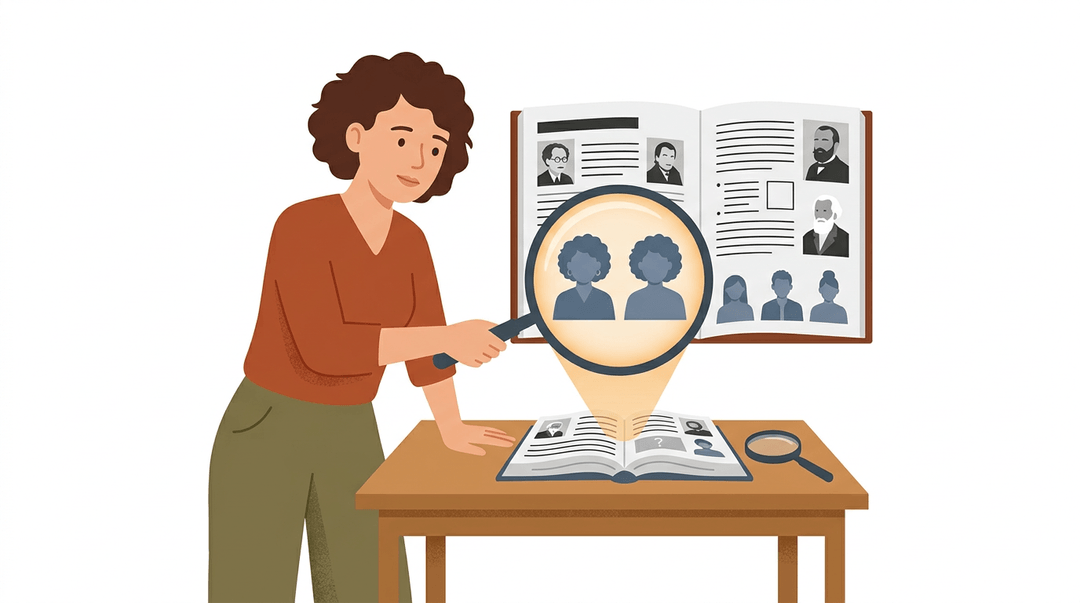
High expectations tend to cluster around certain students; compliance-based tasks cluster around others. Whose history gets centered in the curriculum, and whose gets a footnote, sends a message about whose knowledge counts.
A class reading list drawn entirely from one cultural tradition tells students something before a single discussion starts.
Auditing your materials for implicit cultural bias, checking author diversity, representation in examples, and whose perspectives frame a topic, is a practical first step toward a more equitable classroom.
How school structures send silent messages
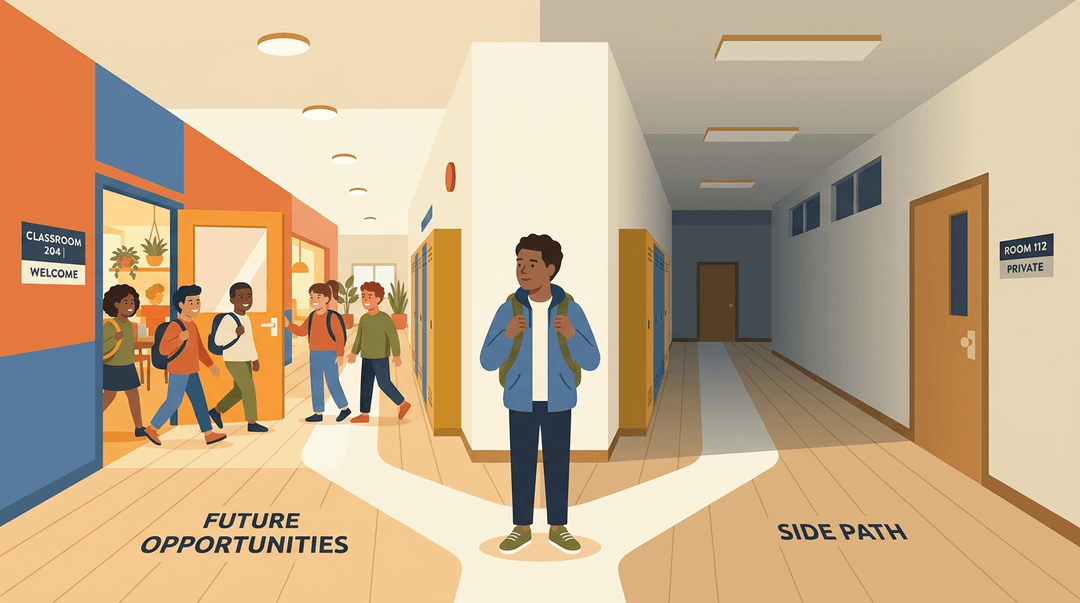
Ability grouping and academic tracking can sort students as early as elementary school, and research consistently shows those placements correlate with race and income.
Pulling English language learners (ELL) or students with disabilities out of the general classroom for separate instruction can reinforce a sense of being "other."
Disciplinary policies enforced unevenly across student groups, and extracurricular activities dominated by students with more social capital, extend the same quiet lesson: some students belong more than others.
Make the Implicit Explicit in Your Classroom
Every classroom runs on unwritten rules. This guide walks you through three audits, of your norms, your lessons, and your materials, so the implicit lessons students absorb become ones you chose on purpose.
Audit the norms you quietly enforce
Spend ten minutes naming the rules you've never said aloud, then ask who each one rewards.
- List the norms you enforce without stating them. Write them as you'd actually catch them.
- "Raise your hand before speaking," "Make eye contact when I talk," "Finish fast means smart"
- Ask who each norm advantages. Name the student it quietly favors.
- Eye contact rewards some cultural backgrounds over others; speed rewards the already-confident
- Decide which to state, soften, or drop. Sort each into one column.
| The norm | Your call |
|---|---|
| Raise hand to speak | State openly, explain why |
| Eye contact = respect | Soften: offer alternatives |
| Fast = smart | Drop: it's not a skill you teach |
⚠️ Watch out: The norms that feel like "common sense" are the ones doing the most hidden work. Common sense is usually one culture's sense.
Design lessons with transparent expectations
A procedure students can't explain is a procedure they're guessing at. Make the reasoning visible.
- Name the why behind every procedure. Say the purpose, not just the rule.
- Say: "We work in silence for the first five minutes so everyone gets a clear start, not because quiet is the goal."
- Put grading criteria in front of students first. Show what "good" looks like before they begin.
- Hand out the rubric with one ✅ strong answer and one ❌ near-miss, and name the single difference between them.
- Revisit expectations at the unit's midpoint. Pause and restate, don't assume it stuck.
- Ask: "What are we actually being graded on here?" and correct any drift.
Check your materials for hidden bias
Your text selection teaches whose stories count, whether you mean it to or not.
- Map whose voices appear. Tally authors and perspectives across the unit's texts.
- Five sources, five from the same group, is a message students hear.
- Flag stereotypes before you teach, not after. Read for them first.
- Mark any portrayal a student might see themselves shrunk by.
- Swap or supplement the gaps. Add a counter-voice rather than only cutting.
- Pair the canonical text with one that talks back to it.
Example: A high-school history teacher noticed every primary source in her westward-expansion unit came from settlers. She added two Indigenous accounts alongside them. Same topic, but students now read the period as contested rather than settled.
At a glance:
| Audit | The move | What you get |
|---|---|---|
| Norms | List, then ask who's advantaged | Rules you chose, not inherited |
| Lessons | State the why and the criteria | Students who aren't guessing |
| Materials | Map voices, flag, supplement | A curriculum that includes more students |
Map where hidden norms surface across your units and flag them for intentional revision with EMStudio's Curriculum Planner.
What Sociologists Say About Hidden Curriculum
Sociologists don't all agree on what the hidden curriculum does or who it serves. Some see it as a necessary part of growing up in society; others see it as a tool that keeps existing inequalities in place.
And a few researchers have watched students resist it entirely. The perspective you start from shapes everything else, so here's how the main schools of thought break it down.
Functionalist view: school as socializer
For functionalists, school is a socialization agent: a place where young people absorb the shared values, norms, and expectations they'll need to function as adults.
Sitting still, following a schedule, deferring to authority figures, working alongside people you didn't choose: none of that appears on a report card, but all of it prepares students for the workforce.
From this view, the hidden curriculum isn't a problem. It's the school acting as a microcosm of society, quietly passing on the rules of the game.
It's worth noting: not everything hidden is harmful. Some of what school transmits implicitly, like perseverance or civic responsibility, carries genuine value for students and communities.
How critical theory links school to inequality
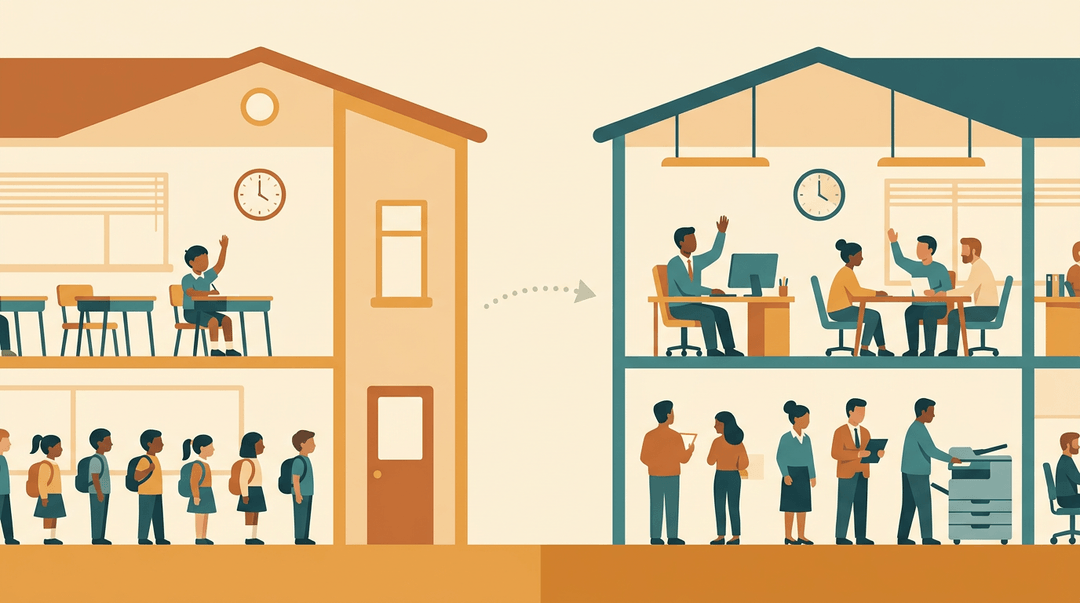
Critical theorists read the same transmission and reach a very different conclusion. The hidden curriculum, in their view, reproduces class inequality by embedding the values and habits of dominant groups into everyday school life.
Samuel Bowles and Herbert Gintis called this the correspondence principle: the idea that schools mirror workplace hierarchies, conditioning working-class students to accept subordination.
Pierre Bourdieu took it further, arguing that cultural capital shapes which students thrive inside those structures and which ones don't, quietly reinforcing ruling-class ideology without anyone having to say so out loud.
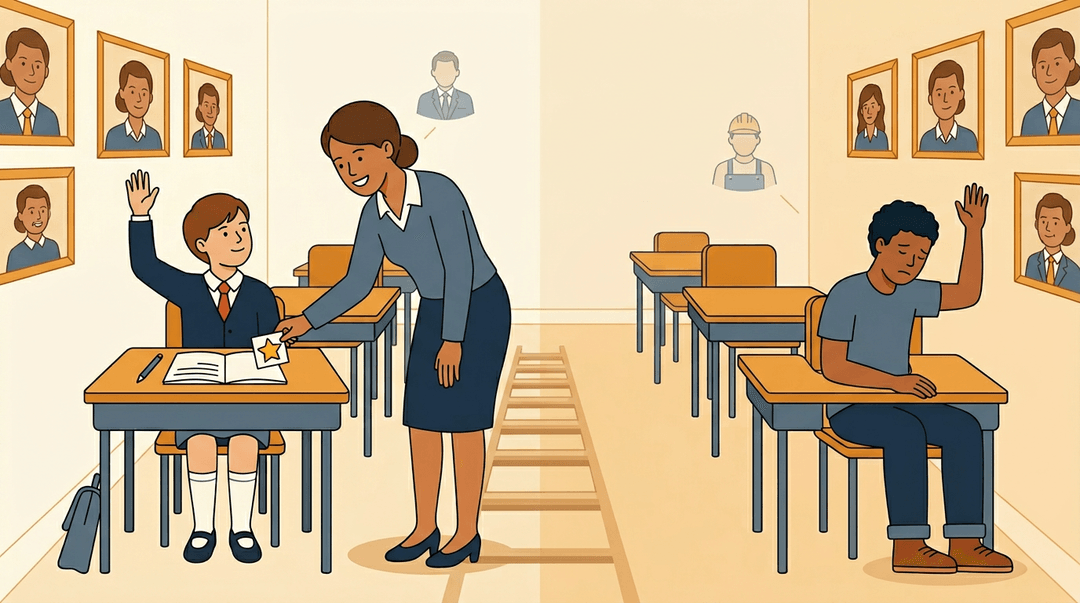
The interactionist perspective adds a finer grain: it examines how meaning gets built in individual classroom exchanges, in a look, a seating arrangement, whose answer gets praised.
Gender socialization through schooling
School also teaches students what it means to be a boy or a girl. Textbooks have historically reflected gender stereotypes, and differential teacher attention to boys and girls is a well-documented feature of classroom life.
Boys tend to receive more direct instruction and correction; girls, more praise for compliance. These patterns, repeated daily, add up to a lesson about who gets to take up space, and who doesn't.
When students push back against it
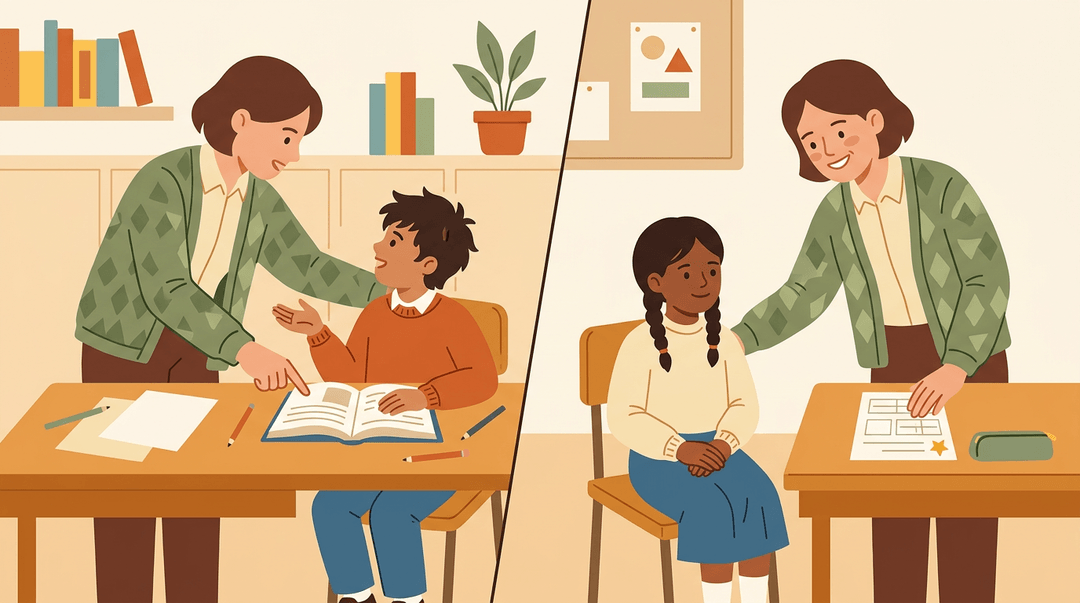
Not all students absorb the hidden curriculum quietly. Paul Willis's landmark study, Learning to Labor, followed working-class boys in England who rejected school's implicit messages and formed an anti-school subculture instead.
Their resistance was real, but Willis showed it came at a cost: by rejecting school, they funneled themselves toward the same manual-labor futures the system had prepared for them anyway.
Student countercultures can push back against the hidden curriculum; they don't always escape it.
Who the Hidden Curriculum Hurts Most
The hidden curriculum doesn't land equally. For some students, it's a minor adjustment. For others, it's a wall.
Why marginalized students bear the biggest burden
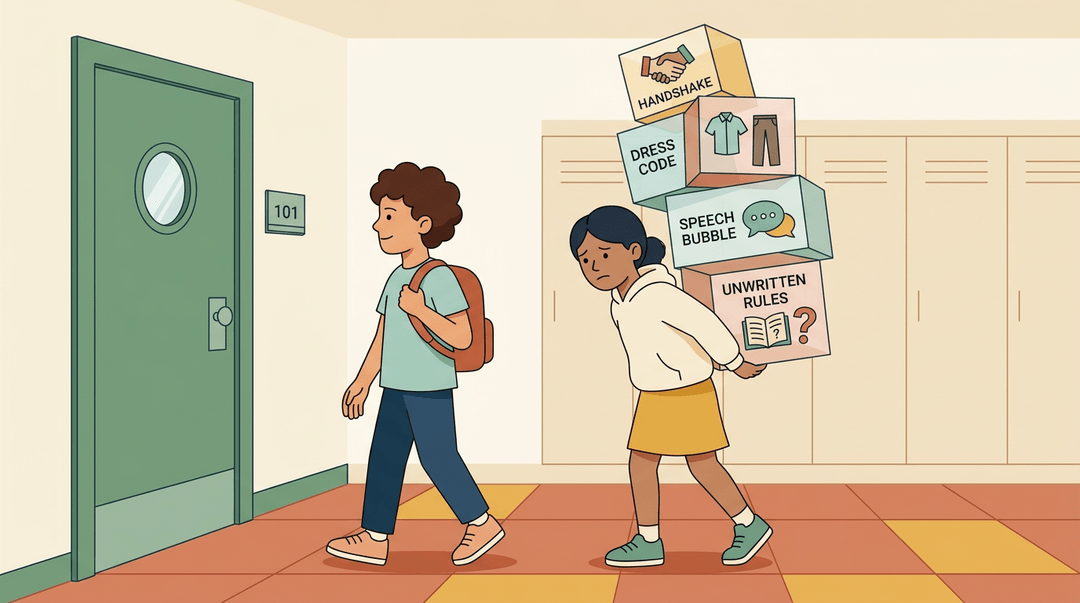
According to University of Notre Dame Learning, first-generation college students, multilingual learners, and students from lower socioeconomic backgrounds feel the hidden curriculum's impact most sharply.
They face extra barriers deciphering unwritten rules that peers from more privileged backgrounds absorbed long before arriving in the classroom.
Students of color often carry the additional weight of assimilation pressure: conforming to norms that weren't designed with them in mind.
Belonging gaps and feelings of exclusion
When you don't know the rules, you don't just struggle academically. You feel like you don't belong.
A University of California report notes that not knowing these unwritten expectations is a direct barrier to success for first-generation students navigating a brand-new environment.
Watching peers move confidently through systems you can't read can feel alienating rather than motivating. Faculty assumptions rooted in implicit bias can deepen that isolation further.
Cultural capital and college readiness gaps
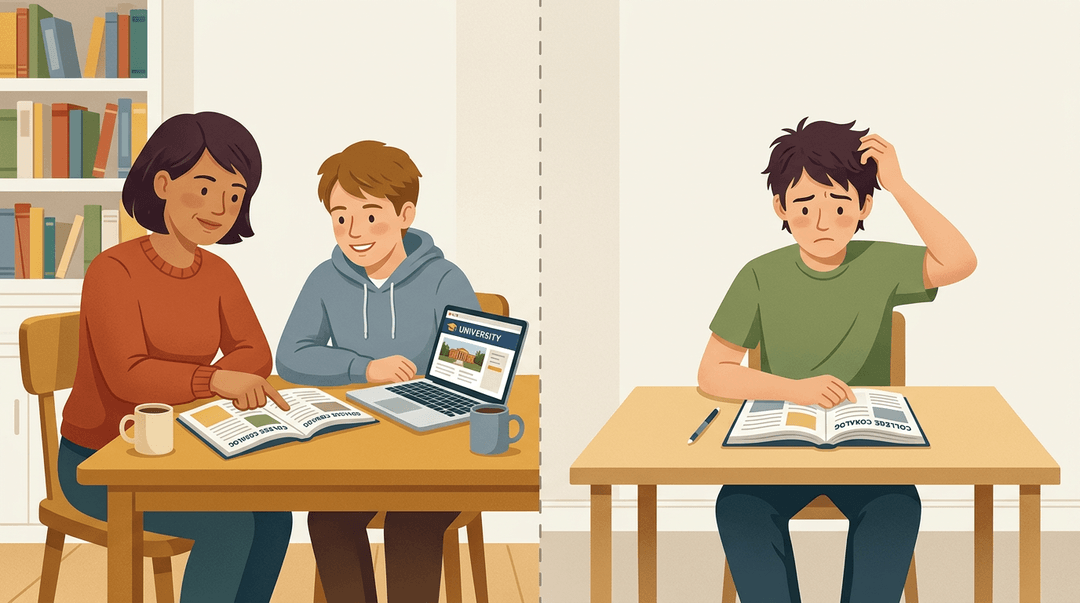
Well-resourced families pass institutional knowledge down informally: how to read a course catalog, how GPA calculations work, how to advocate with a professor. Under-resourced schools rarely fill that gap.
Sociologist Pierre Bourdieu's concept of cultural capital explains why.
Research published in Collegiate Cultural Capital and Integration into the College Community found that cultural capital shaped students' ability to navigate core readiness tasks, from registration to computer literacy.
The cost of that gap is real: research from Bangor University shows working-class students often show reluctance to apply to university at all, already sensing they won't fit.
Practical Ways to Address the Hidden Curriculum
Knowing the hidden curriculum exists is only half the work. The other half is doing something about it. Here are concrete ways to make the unspoken visible, starting day one.
Build transparency into your syllabus from day one
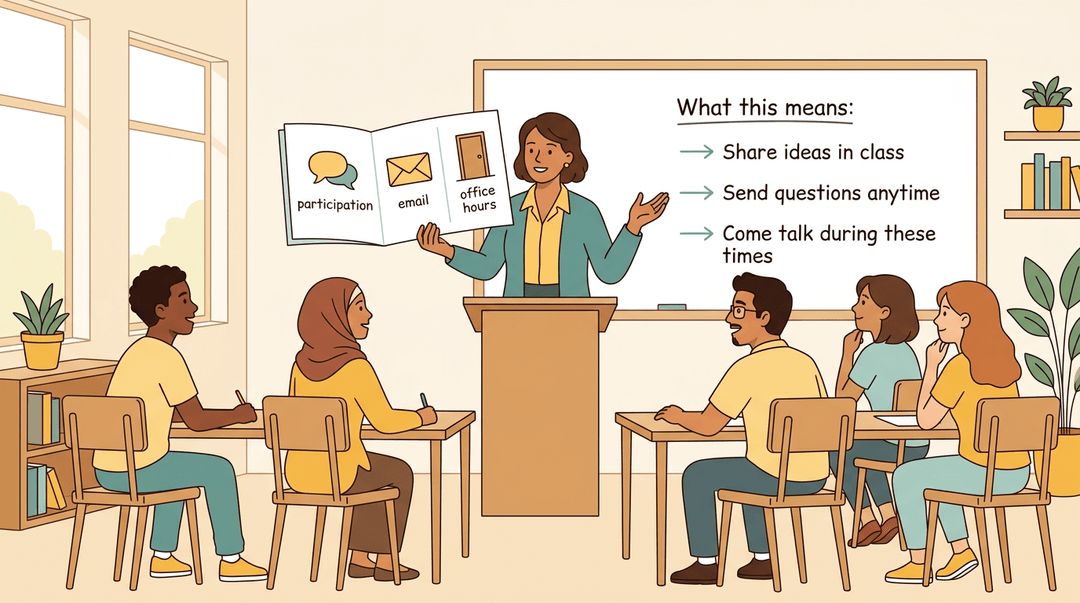
Consider adding a short section to your syllabus that names the hidden curriculum directly: the unwritten expectations around participation, communication, and academic norms that many students figure out only by stumbling.
Define terms like "active participation," "professional email," and "office hours" in plain language. Make your learning objectives specific and observable, not just aspirational.
On the first day, model the norms you expect rather than simply listing them. And revisit the syllabus at key points in the semester, not just week one, so students can reconnect expectations to what's actually happening in class.
A curriculum audit can help here, too. Read back through your materials and ask: what assumptions am I making about what students already know?
Reframe office hours so students actually come
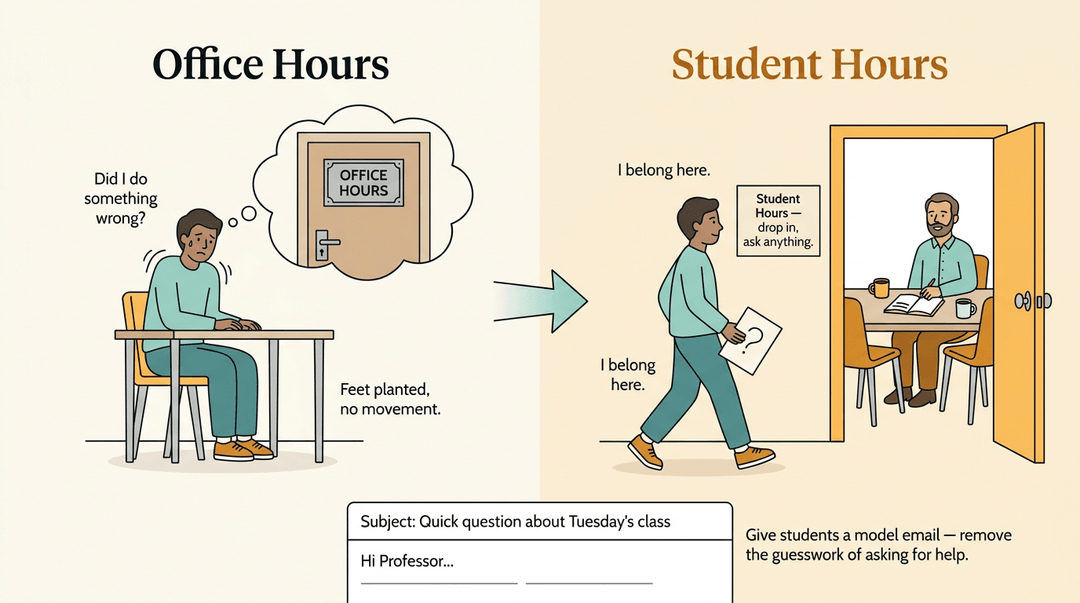
For many first-generation students, "office hours" sounds like a disciplinary summons. Renaming them student hours signals that the time belongs to them. Explain where you are, what students can bring, and what a typical visit looks like.
Share a model email so students who've never written to a professor have a template to work from. Normalizing help-seeking, out loud, in class, removes the shame that keeps students at their desks when they need support.
Proactively share resources students don't know exist
Don't wait for students to discover the tutoring center, writing center, or emergency financial aid fund on their own. Name these resources explicitly, explain what they're for, and tell students who qualifies.
First-generation and low-income students are least likely to know what's available and least likely to ask. Proactive sharing is an equity move, not a nice-to-have.
Peer mentoring and programs that fill the gaps
Peer mentoring programs and dedicated first-generation student courses create spaces where the hidden curriculum gets named openly. Students learn the rules from people who've recently navigated them.
At the school or district level, faculty reflection on their own assumptions, and honest alignment between stated values and actual practice, closes the gap between what institutions say they offer every student and what students experience.
The hidden curriculum doesn't disappear just because we don't name it. It keeps running quietly in the background, teaching students lessons about power, belonging, and who school is really for.
The good news: once you see it, you can do something about it.
Naming the unwritten rules, examining your routines, and creating space for students to ask questions are small moves with real reach. Every student deserves to be in on what school is actually asking of them.
Ready to bring more intention to your planning? Explore Curriculum & Standards to build courses where nothing important stays hidden.
References
- The Influence of Cultural Capital on Students' Perceptions and Experiences of Hidden Curriculum — dergipark.org.tr (2024)
- Beyond the Ivory Tower: Transforming Academia for Working-Class People — research.bangor.ac.uk (2025)
- The Hidden Curriculum: Helping Students Learn the ‘Secret’ Keys to Success — edspace.american.edu
- The Hidden Curriculum Revisited: A Literature Review on Power, Ideology, and Social Reproduction in Education — influence-journal.com
- Beaman-et-al-2006-Differential-teacher-attention-to-boys- ... — multilit-ecomm-media.s3.ap-southeast-2.amazonaws.com
- A Review of Class-Based Theories of Student Resistance in Education: Mapping the Origins and Influence of Learning to Labor by Paul Willis — journals.sagepub.com
- Navigating the Hidden Curriculum | News | Notre Dame Learning — learning.nd.edu
- DISCUSSION ITEM For Meeting of May 18, 2022 F — regents.universityofcalifornia.edu
- COLLEGIATE CULTURAL CAPITAL AND INTEGRATION INTO THE COLLEGE COMMUNITY — files.eric.ed.gov
- Hidden Curriculum [Sociology] — simplypsychology.org (2023)
Frequently asked questions
What is another name for the hidden curriculum?
The hidden curriculum is also known as the implicit curriculum or the informal curriculum. These terms all refer to the same concept of unwritten norms and expectations in educational settings.
What is another word for hidden curriculum?
Another word for hidden curriculum is implicit curriculum or informal curriculum. These terms are used interchangeably to describe the unwritten norms, values, and expectations that students learn in school.
What is the hidden curriculum in a level sociology?
In A-level sociology, the hidden curriculum refers to the unwritten rules, norms, and values that students learn during their schooling, beyond the official curriculum. It can include lessons on social roles, compliance to authority, and the reproduction of social inequalities. Sociologists explore how these informal teachings prepare students for society and the workforce.
What is the hidden curriculum in simple terms?
In simple terms, the hidden curriculum refers to the unwritten lessons that students learn in school, such as how to behave, how to interact with authority figures, and what is considered appropriate. These are expectations and norms that are not formally taught but are absorbed through daily routines and interactions.
What is an example of a hidden curriculum?
An example of a hidden curriculum is students learning to raise their hand before speaking in class. While not explicitly taught in a lesson plan, this norm is reinforced through classroom routines and teacher feedback, shaping how students participate.
What best describes the hidden curriculum?
The hidden curriculum is best described as the unwritten norms, values, and expectations that students absorb just by moving through a school day. It shapes students' behavior and understanding of social cues without being part of the formal lesson plan or syllabus.
What does it mean if a school teaches a hidden curriculum?
If a school teaches a hidden curriculum, it means that students are absorbing unwritten rules, values, and behaviors informally alongside the academic content. These are messages embedded in routines, rules, relationships, and even what the school omits from its official teaching.
Is hidden curriculum always negative?
The hidden curriculum is not always negative; some implicit lessons, like perseverance or civic responsibility, can be genuinely valuable for students and communities. However, it can also perpetuate inequalities or biases, making it a complex aspect of education that merits critical examination.