What Does Inquiry-Based Learning Look Like in Practice?

Jump to section
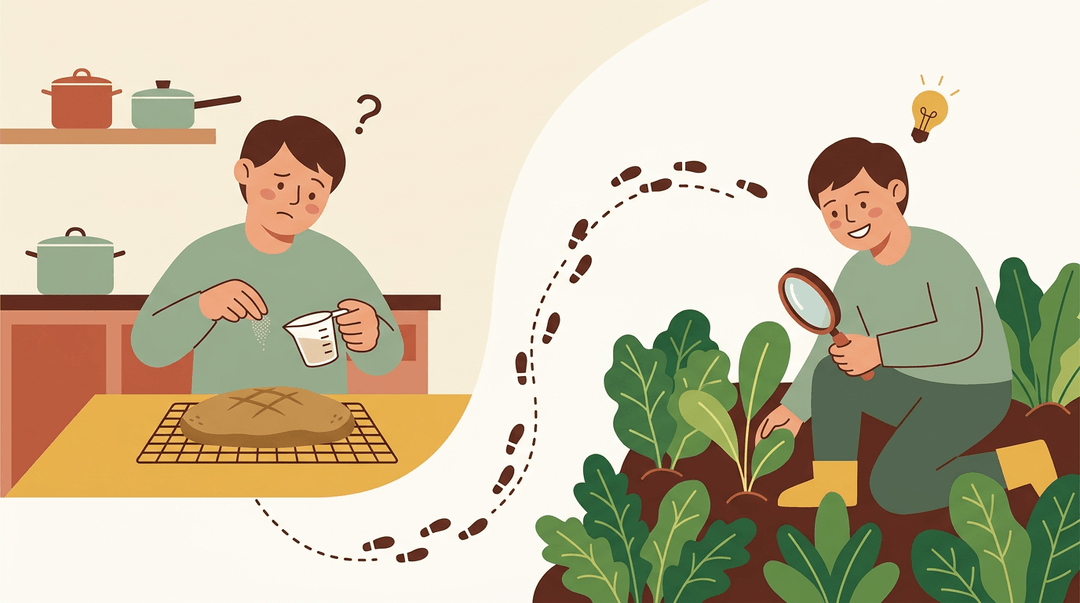
Think about the last time you got curious about something, like why your bread didn't rise or how a neighbor's garden stays so green. You probably didn't wait for someone to hand you the answer.
You poked around, asked questions, and tested a few ideas until something clicked.
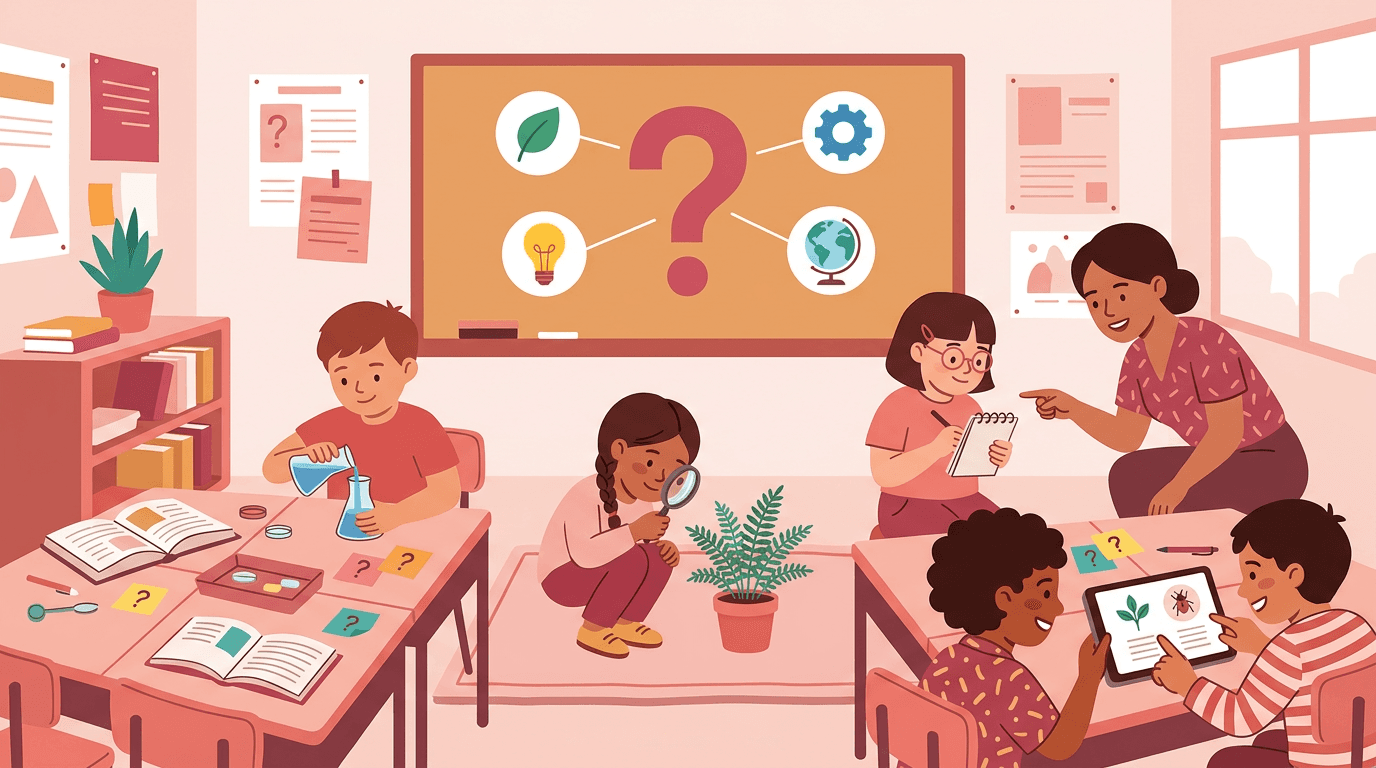
That's the heart of inquiry-based learning, an approach where students learn by asking questions, investigating, and building their own understanding, with you guiding the process rather than delivering every answer.
In this post, we'll cover what inquiry-based learning is, its main types, how to put it into practice, and a classroom checklist to help you plan your first unit.
What Is Inquiry-based Learning?
Inquiry-based learning (IBL), also known as discovery or active learning, flips the usual order: students start with a question, not an answer.
Why learning starts with a question
Learning starts with a question and builds understanding rather than memorization. Student-led questioning and curiosity-driven exploration keep learners engaged.
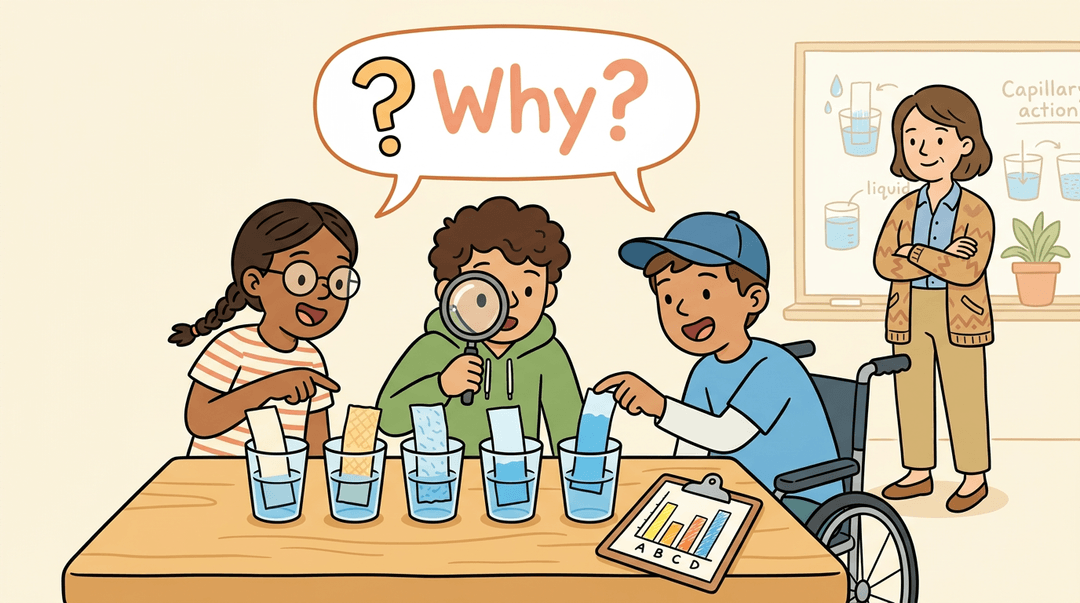
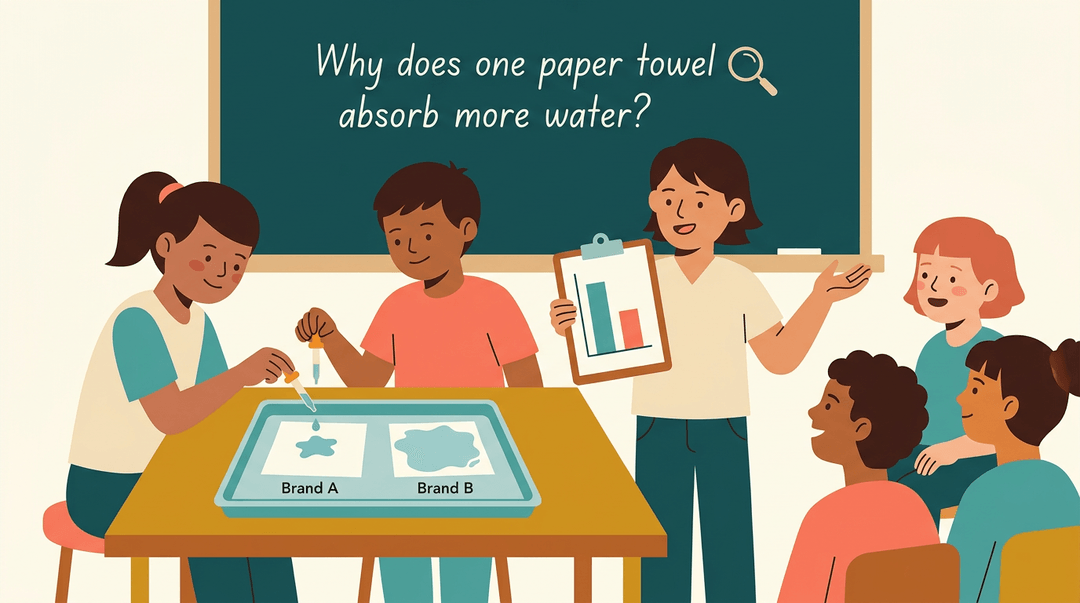
Think of a fifth-grade teacher who asks, "Why do some paper towels soak up water faster?" Students test brands and argue over their results. Nobody memorized a definition, yet by Friday they can explain absorption.
Unlike project-based learning (PBL), which centers on a finished product, IBL centers on the question itself.
The teacher's new role as guide
You shift from lecturer to facilitator, a designer of learning experiences who guides rather than drives. Much of that work is scaffolding you plan but don't always announce.
A high school science teacher might ask a stuck group, "What evidence would change your mind?" The students revise their own hypothesis, and you never had to correct it.
What is John Dewey's inquiry-based learning theory?
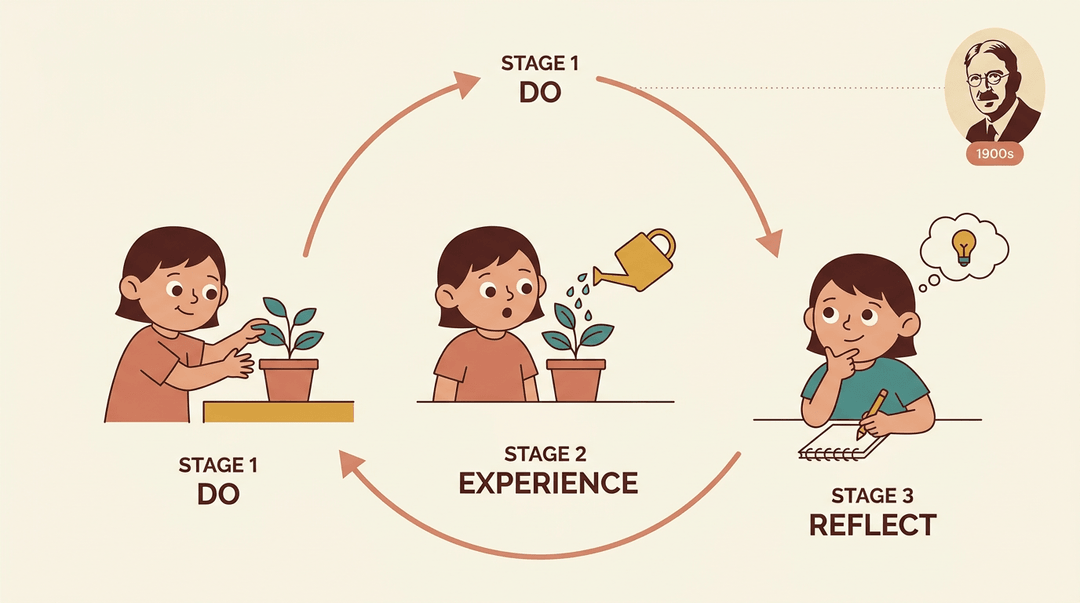
In short, people learn best by testing ideas through experience and then reflecting on what happened. The roots go back to John Dewey's work from the early 1900s, and according to a New Zealand summary report, the concept itself emerged in the 1960s.
John Dewey believed that learning came not merely from experience, but by reflecting on that experience. That's experiential learning in action, and it's why IBL pauses for reflection.
Types of Inquiry-based Learning
Inquiry doesn't look the same in every classroom. Some lessons hand students a clear path, while others let them chart their own course.
Grade band matters too: younger students usually benefit from more structure, while older students can handle more openness. Here's how the main types differ along the continuum, a spectrum running from teacher-directed to student-directed.
Structured inquiry gives students a clear path
In structured inquiry, you provide both the question and the procedure. Students follow a set process to reach a result they can check.
Think of a second-grade teacher who asks, 'What happens to the ice cube on the windowsill?' and hands students a chart, a timer, and step-by-step directions.
The clear process keeps everyone on track, which makes this a good starting point for beginners, especially in the early grades.

Guided inquiry builds student independence
With guided inquiry, you offer the question but not the method. Students design how they'll investigate it, and you supply checkpoints and feedback.
Consider a middle school teacher who asks, 'Which paper towel soaks up the most water?' and lets groups decide what to test and how to measure it. Each unit gets a little more open, so students build independence over time.
Open inquiry puts students in charge
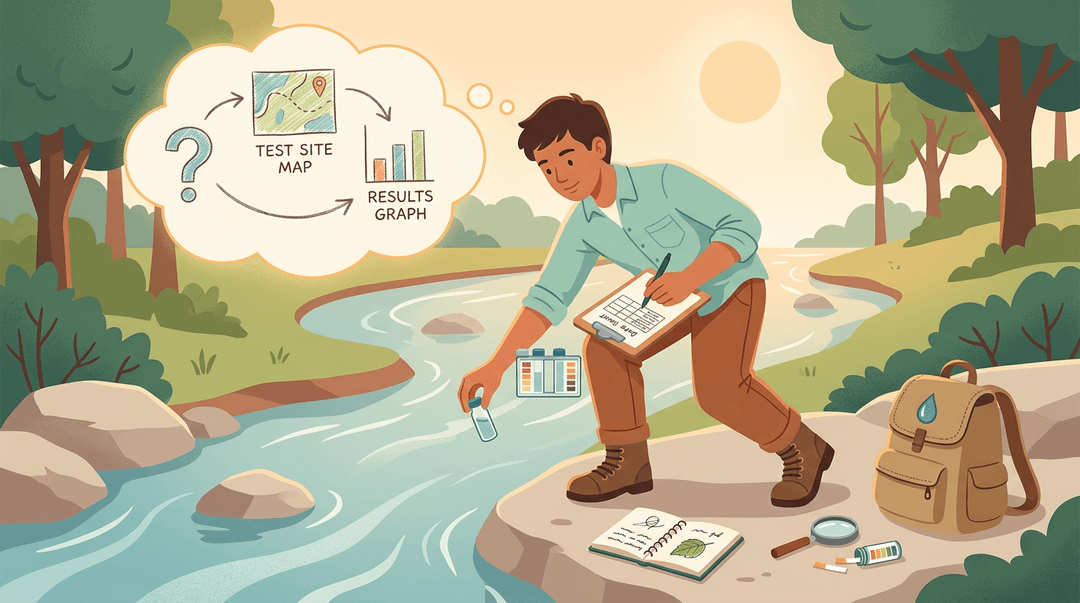
In open inquiry, students generate their own questions and own the whole process, from planning to conclusions. A high school student studying local water quality might pick a question no one assigned and design the investigation from scratch.
This type requires experience and confidence, so it works best once students have practiced the earlier forms. Full ownership is the goal, not the starting line.
Problem-based inquiry tackles real-world issues
Problem-based inquiry starts with a real-world problem, such as a school parking jam or a neighborhood flooding issue. There's no single right answer, so students weigh evidence and defend their solutions.
You curate a shortlist of questions that are rich enough to explore but manageable for your class, so students aren't lost in a problem too big to tackle.
Confirmation inquiry checks a known concept
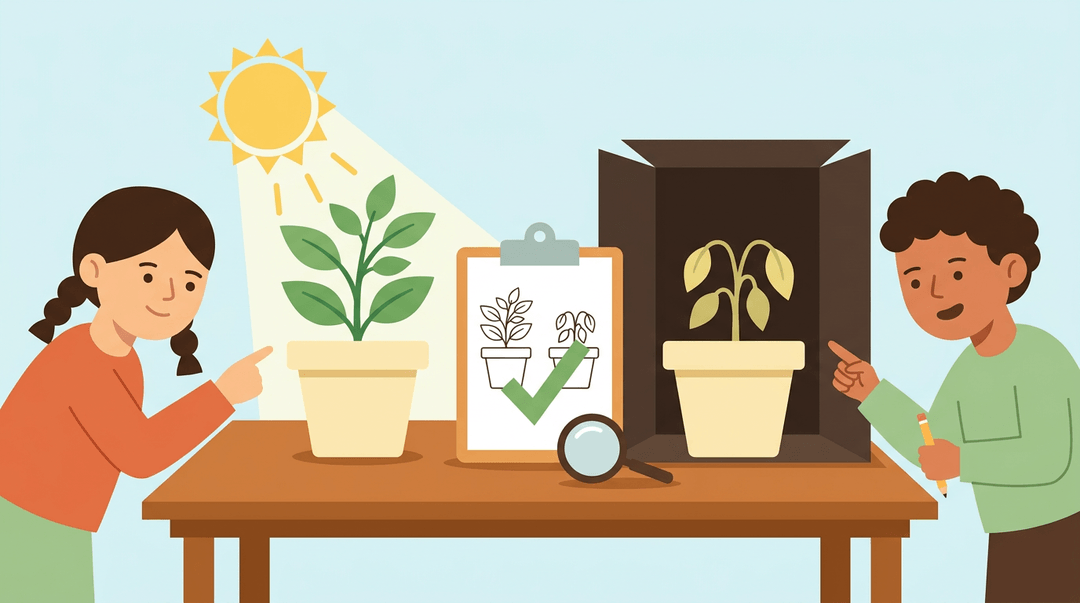
Confirmation inquiry asks students to verify something they already know, such as showing that plants need light to grow. The answer is known, but the process of testing it builds understanding.
It's the most structured starting point on the continuum, with open inquiry at the other end. Use it when you want students to experience the process before they explore unknown territory.
How to Put Inquiry-Based Learning into Practice
Inquiry works best when you build its pieces first: a strong question, a steady ramp of support, and a classroom where students feel safe to wonder out loud. Here's how to set each one up.
Start with a question that sparks curiosity
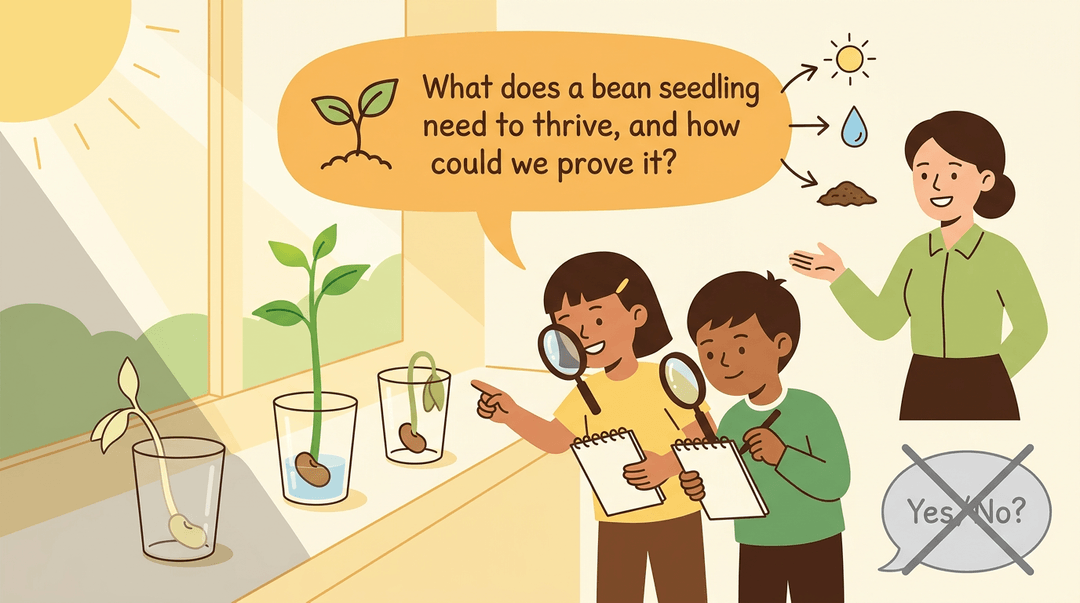
Your question does most of the heavy lifting. Avoid yes/no questions, which close thinking before it starts. Compare “Did the Roman Empire fall because of economics?” with “What pressures weakened Rome, and which one do you think mattered most?”
The second invites evidence, debate, and a clear position.
Tie the question to your standards so the inquiry stays purposeful.
In science, connect it to explicit NGSS (Next Generation Science Standards) inquiry practices, such as asking questions and planning investigations, so students know which skills they're building.
Consider a fifth-grade teacher planning a unit on plant growth. Her question, “What does a bean seedling need to thrive, and how could we prove it?” sparks curiosity, supports a standard, and leaves students designing their own test.
Scaffold support, then gradually step back
Students rarely arrive knowing how to inquire, so start with structure. Graphic organizers give them a place to record questions, sources, and findings.
Picture a sixth-grade teacher handing out a three-column organizer labeled “What we wonder,” “What we found,” and “What we still need.” Early on, you choose the sources and set the steps.
Then move from structured to open. Once students handle the process well, remove a layer: let them pick their sources, then let them pick the question. You're stepping back, not walking away. Confidence grows with practice.
Bring in tech and varied resources
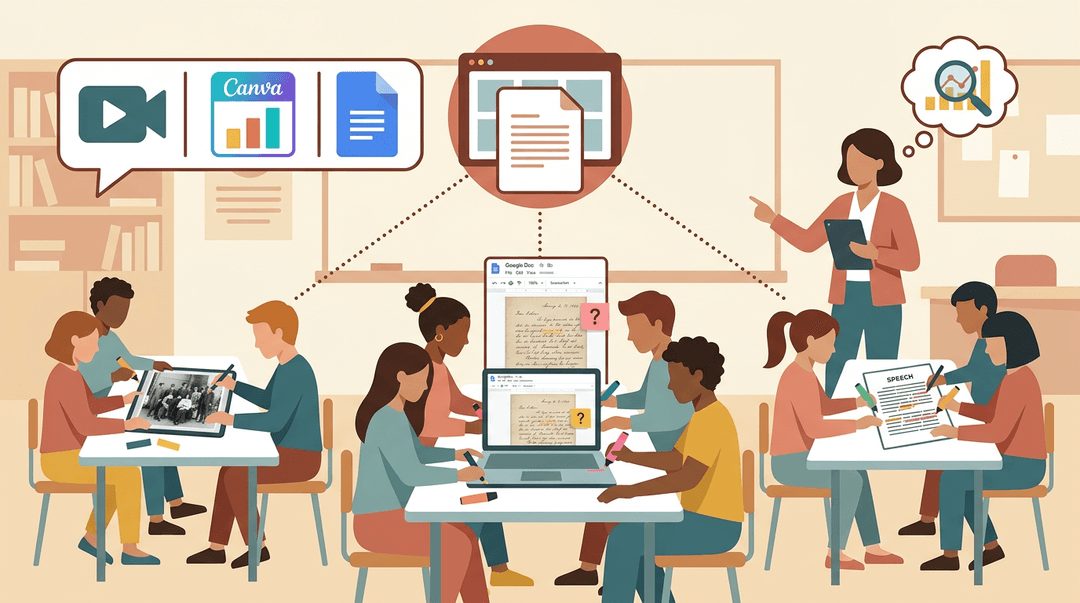
Digital tools give students new ways to show their thinking. Flipgrid lets them record short video responses, Google Docs makes shared drafting easy, and Canva helps them design posters or infographics for their findings.
Use these to support the inquiry, not replace the thinking.
Go beyond the textbook. Primary documents such as letters, photographs, or original speeches put students in direct contact with evidence, and data sets let them spot patterns on their own.
Digital learning platforms can organize these resources and show you who needs a nudge. Take a high school history teacher who posts three primary documents from the same event to a shared Google Doc.
Each group annotates one, then the class compares findings. The payoff: arguments rooted in evidence, not summaries.
Create a safe space for collaboration
Inquiry gets messy, and students need to feel safe being wrong. Set respectful dialogue norms together:
- listen fully
- build on others' ideas
- critique the idea rather than the person
Make room for mistakes by saying out loud that a failed experiment still produces data.
Think-pair-share structures help quieter students join in. Students think alone for a minute, talk with a partner, then share with the group.
A special education teacher might use this so every student rehearses an answer before speaking to the whole class. The result is more voices in the discussion, not fewer.
Teach research and questioning skills directly
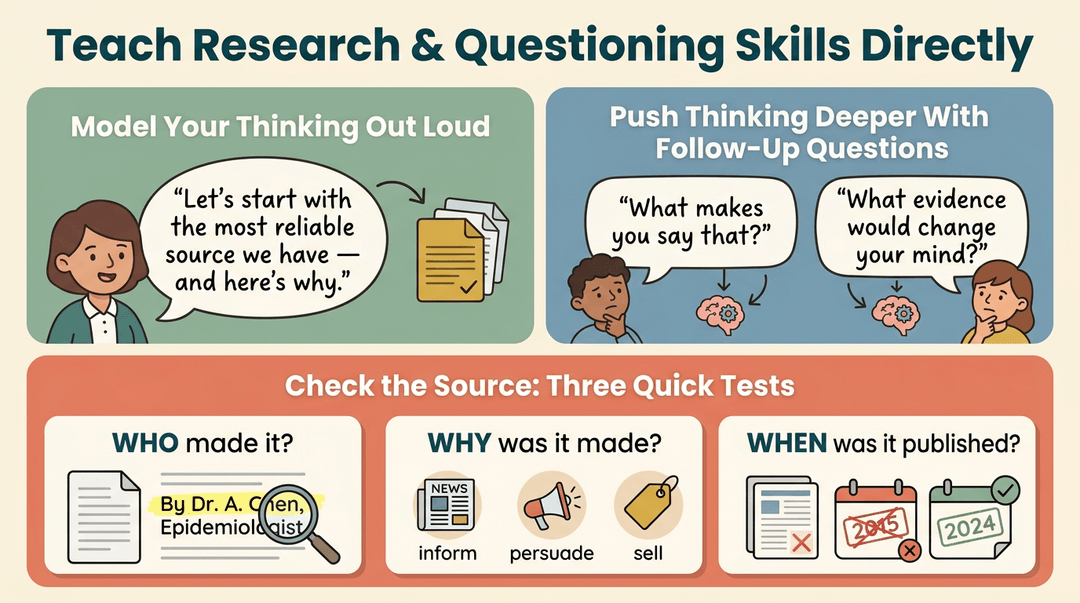
Students don't automatically know how to research, so teach it explicitly. Model your own process out loud: “Let's start with the most reliable source we have, and here's why.” Then teach questioning techniques.
Follow-up prompts like “What makes you say that?” and “What evidence would change your mind?” push thinking deeper.
Source credibility is a skill too. Give students three quick checks:
- Who made it? Look for the author's expertise and affiliation.
- Why was it made? Notice whether it informs, persuades, or sells.
- When was it published? Check whether the information is still current.
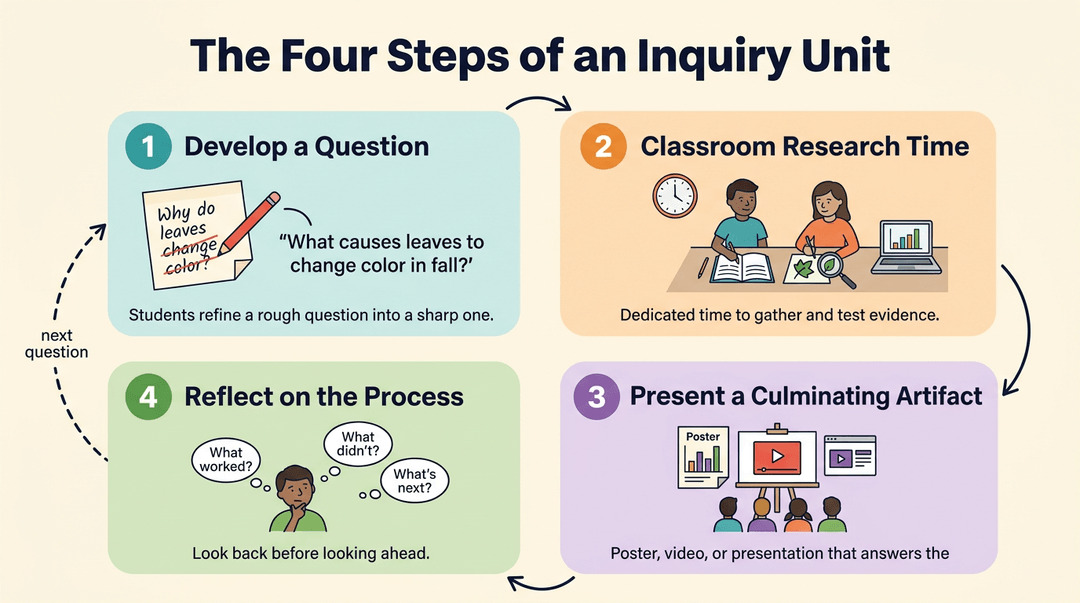
The four steps of an inquiry unit
If you've met the five-stage inquiry cycle, these four steps give you a practical way to plan it. A unit moves through four steps:
- Develop a question. Start with the question you built earlier, and let students refine it.
- Classroom research time. Protect dedicated time for students to gather and test evidence.
- Present a culminating artifact. Students share a poster, video, or presentation that answers their question.
- Reflect on the process. Ask what worked, what didn't, and what they'd investigate next.
Classroom Checklist for Planning an Inquiry Unit
Use this card to plan an inquiry unit from the first question to the final debrief. Work top to bottom, and check each item off before you move on.
Before you start
Standards-aligned question. Pick the standard first, then write the question it answers. A strong question can't be settled by one quick lookup.
- ✅ "How does the water cycle shape where our town gets its drinking water?"
- ❌ "What is the water cycle?"
The first needs evidence and reasoning. The second ends at a definition.
Inquiry type that fits readiness. Match the amount of freedom to what your students have already done.
| If your students... | Start with... |
|---|---|
| Are new to inquiry | Structured: you set question and method |
| Have a few inquiries behind them | Guided: you set the question, they plan the method |
| Work independently and confidently | Open: they pose question and method |
Starter resources. Gather a few sources at mixed reading levels so no one stalls on day one.
During the unit
Three moves keep an inquiry on track. Run them in whatever rhythm your class needs.
- Scaffold research skills. Teach one skill per mini-lesson, just before students need it.
- Say: "Which of these two sources would you trust more, and why?"
- Check in on progress. Visit each group at least once per work session.
- Say: "What have you found so far, and what's your next step?"
- Use think-pair-share norms. Post the routine and hold to it:
- Think alone for one minute.
- Talk with a partner, and each person speaks.
- Share one idea with the class, yours or your partner's.
⚠️ Watch out: Open work time can drift without check-ins. If you only circulate when hands go up, quiet groups get missed.
Example: A fifth-grade teacher running a guided unit on local water pauses on day two for a ten-minute mini-lesson on judging sources. During check-ins, she asks the script question above. Groups that were stuck on "where do we look?" leave with a next step.
Wrapping up and assessing
- Score with a rubric. Share it on day one so students know the target. Rows might be question quality, use of evidence, and strength of conclusion.
- Collect reflection journals. Short written prompts show thinking a final product hides.
- Try: "What surprised you, and what would you ask next?"
- Debrief as a class. Close the loop together while the work is fresh.
- Say: "What worked in how we investigated, and what would we change next time?"
At a glance:
| Phase | Key move | What you get |
|---|---|---|
| Before | Question, type, resources | A unit that fits your standards and students |
| During | Scaffold, check in, think-pair-share | Steady progress and shared thinking |
| After | Rubric, journals, debrief | Evidence of learning and a better next unit |
Map each inquiry unit to your standards and pacing guide right inside your curriculum planner.
Benefits of Inquiry-based Learning
Once students start asking their own questions, the payoff shows up in more places than you might expect. Here's what the research and classroom experience point to.
Building critical thinking and communication skills
When students investigate a question instead of memorizing an answer, they dig deeper into the content. Think of a seventh-grade science teacher who asks, 'Why does one brand of paper towel soak up more water than another?'
Students have to test, compare, and explain, which builds critical thinking far better than a worksheet ever could.
Their reasoning is evidence-based: they point to their own data to defend a claim, then present findings clearly to classmates instead of just turning in a lab sheet.
Sparking engagement and curiosity
Worksheets struggle to hold attention. Inquiry combats disengagement because students work on questions they genuinely want answered.
Over time, a student who keeps probing one topic can become the class expert on it, and that status does wonders for confidence. Curiosity wins.
Connecting subjects and building independence
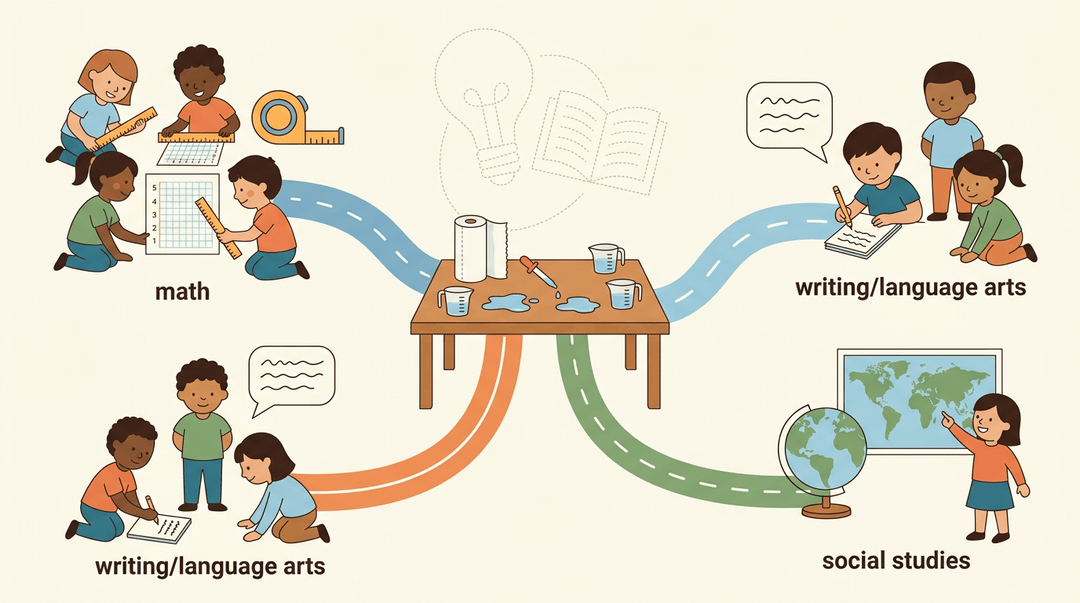
A good question rarely stays in one subject. The paper towel investigation pulls in math for measuring, writing for the report, and maybe social studies if students research where the products are made. Inquiry bridges subject areas naturally.
Because students choose their own angles, you can offer differentiated learning paths: one group might chase a deeper chemistry question while another runs a simpler test.
Along the way, students take ownership of their learning, deciding what to investigate next rather than waiting for instructions.
Creating a positive classroom culture
Inquiry changes who talks in class. Students lean on collaborative peer support, asking a partner to check a procedure before they ever raise a hand. Student voice gets valued because their questions drive the lesson.
Risk-taking is encouraged too: when a hypothesis turns out wrong, that's data, not failure. Students who feel safe to guess are the ones who keep trying.
Long-term gains in student achievement
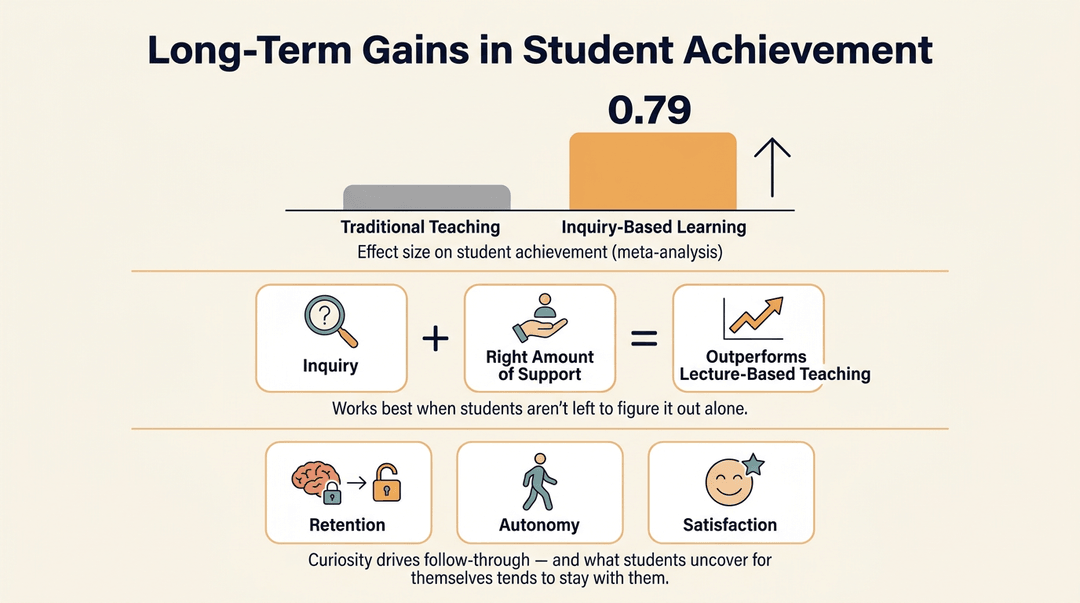
The benefits show up on tests. A meta-analysis of process-oriented guided inquiry learning reported an effect size of 0.79 for student achievement compared with traditional teaching.
Ard Lazonder and Ruth Harmsen's 2016 meta-analysis of inquiry-based learning found that inquiry can be more effective than expository instruction, as long as students get enough support. Retention matters too.
A study in medical education found that an inquiry framework significantly improved content retention, autonomy, and satisfaction.
Students who care about the answer are also more likely to see the investigation through, and what they learn tends to stick.
Inquiry-based Learning Examples by Subject
Inquiry looks different in every classroom, but the core move stays the same: students ask the questions, then go find the answers. Here's how that plays out across subjects.
Science inquiry in action
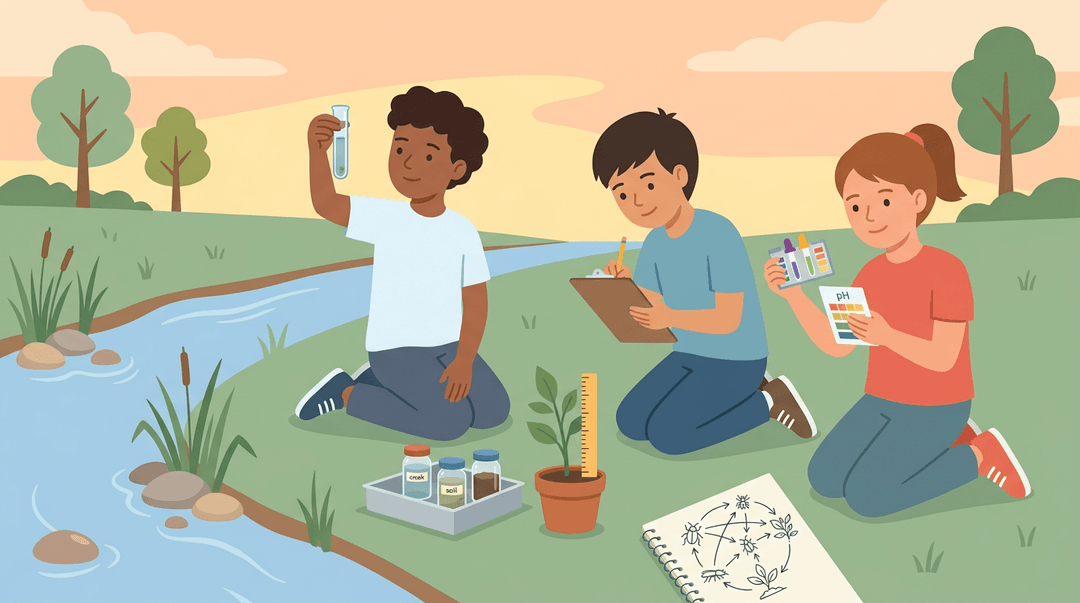
Science is a natural fit because students already want to test things. Consider a middle school teacher who hands a small group water samples from a local creek and asks, "Is this safe, and how would we know?"
The students design their own tests and compare results with what they expected. Curiosity does the heavy lifting.
- Water and soil testing: Students collect samples, choose what to measure, and explain what the numbers mean.
- Plant growth experiments: Students change one variable, such as light or water, and track results over several weeks.
- Ecosystem investigations: Students observe a schoolyard patch and map which living things depend on one another.
Social studies and history inquiry ideas
Social studies comes alive when students investigate real questions instead of memorizing dates. Students don't just learn what happened. They learn why it mattered.
- Local issue investigations: Students research a problem in their town, such as flooding on a busy street, and propose a solution.
- Primary source analysis: Students examine letters, photographs, or maps and ask who made each one and why.
- What-if historical questions: Students ask, "What if the outcome had been different?" and support their answer with evidence.
Math inquiry examples
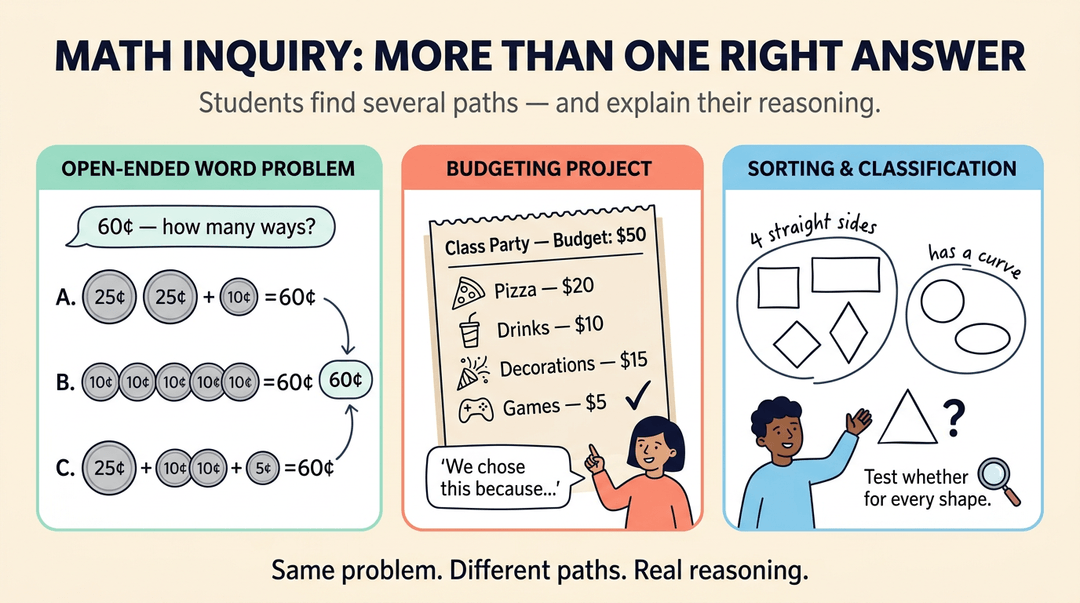
Math gets more meaningful when problems have more than one path. Instead of a single right answer, students find several and explain their reasoning. Math stops being about one answer.
- Open-ended word problems: Ask, "How many ways can you make 60 cents?" and let students compare strategies.
- Budgeting projects: Students plan a class party within a fixed amount and defend their choices.
- Sorting and classification tasks: Students group shapes or data by rules they create, then test whether those rules hold.
English and language arts inquiry ideas
Reading becomes inquiry when students weigh sources against each other.
- Comparing competing texts: Students read two accounts of the same event, such as a news article and a diary entry, and note where they disagree.
- Building evaluation criteria: Students decide together what makes a source trustworthy, then apply that checklist to new texts. That checklist becomes a tool they use long after the unit ends.
Cross-curricular community projects
Community projects give students a reason to use every subject at once.
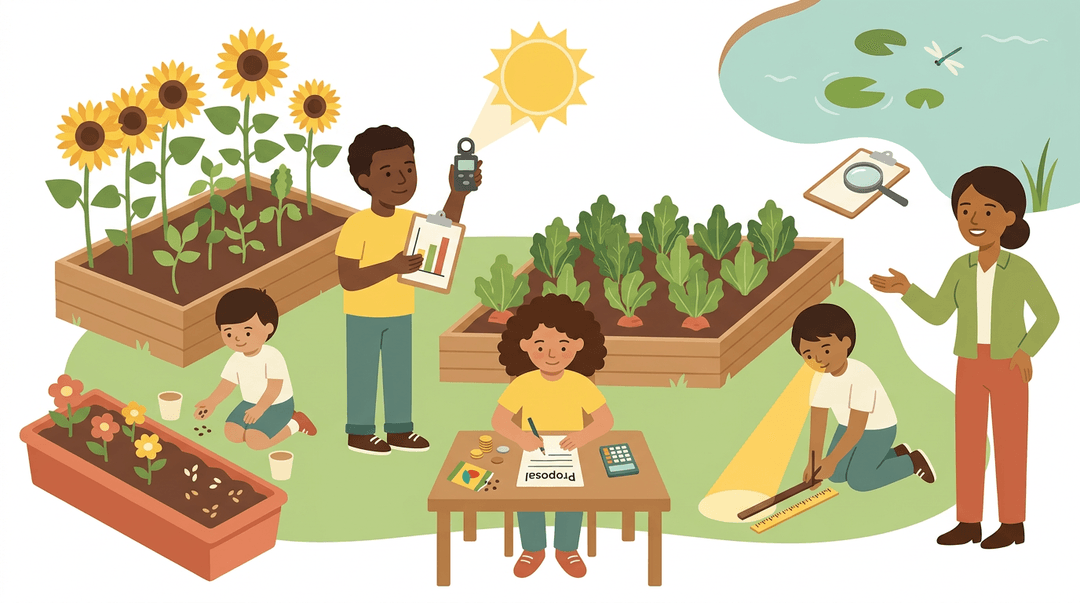
- Community garden research: Students measure sunlight, budget for seeds, and write a proposal to present to the school board.
- Habitat studies: Students document the species living in a local pond, hedgerow, or woodland edge.
- Age-differentiated investigations: The same question gets different entry points. Younger students count and sort, while older students graph and interpret.
Homeschool families and tutors can run these same investigations with one or two learners. A parent might let a child pick the creek or garden, then ask, "What would you test next?" Small groups mean more chances for feedback on every idea.
How to Assess Inquiry-Based Learning
Inquiry grading looks different from a unit test, because you're assessing the thinking as well as the answer. Here's how to measure both.
Using rubrics to assess process and product
A rubric lets you grade how students worked, not only what they produced. Include rows for:
- research quality
- collaboration
- the able-to-teach standard: could a student explain the finding to a classmate who missed the investigation?
Align each level to your school's proficiency scale, so a 3 means the same thing everywhere. For example, a fifth-grade teacher can score a data log and a final poster on the same four-level scale she uses for every other project.
Reflection journals build metacognition
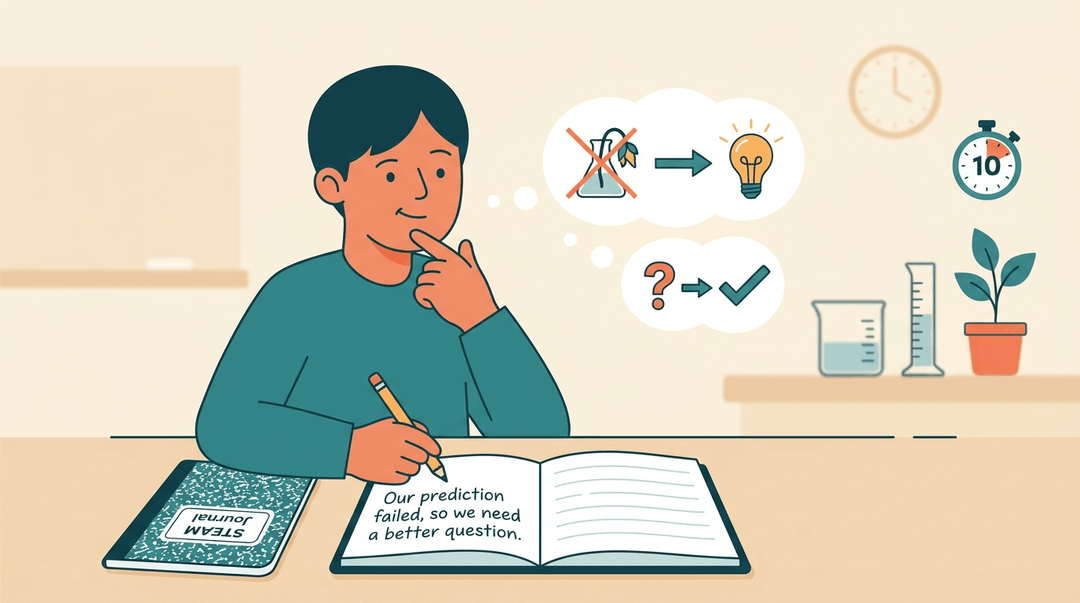
A learning journal (or STEAM journal, for science, technology, engineering, arts, and math) captures thinking about thinking. A student might write, "Our prediction failed, so we need a better question," showing you the reasoning behind the result.
Consider a high school biology teacher who ends each lab with a ten-minute debrief. Students name one thing they'd change, and that question reveals who's really working through the process. Reflection turns activity into learning.
Peer and self-assessment strategies
Peer feedback works best with a short checklist a classmate uses on a partner's claim. Self-assessment tools do the same for individuals: a prompt like "Did you test your own claim?" helps students measure progress against your criteria.
Both promote metacognition, because students must explain why their work meets a standard or falls short.
Challenges to Consider with Inquiry-based Learning
Inquiry-based learning is powerful, but it isn't a switch you flip overnight. Knowing where the friction tends to show up lets you plan for it instead of getting surprised by it.
The time investment required
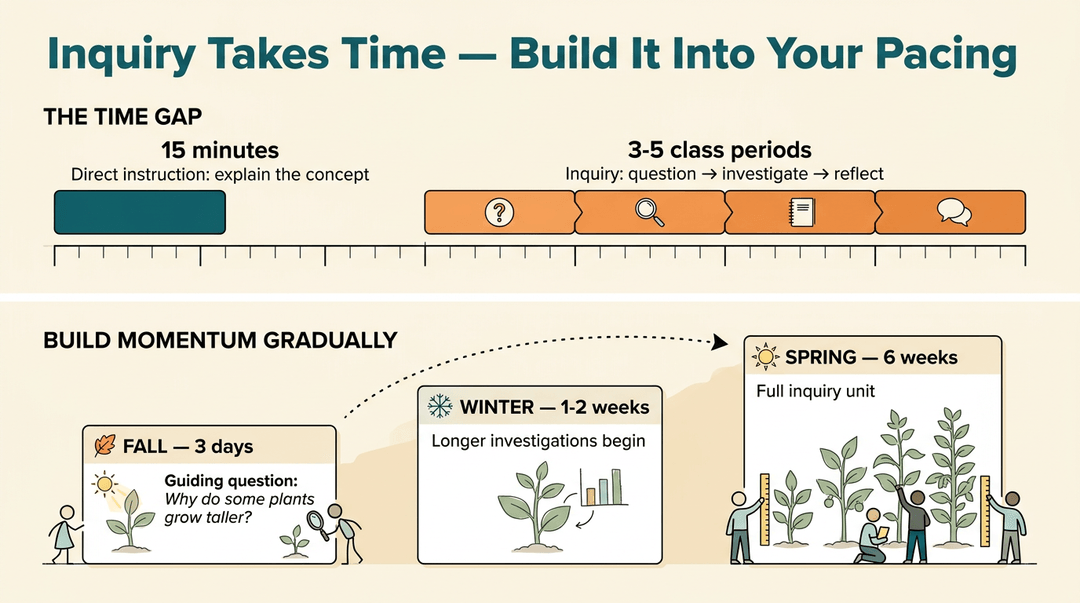
Inquiry takes more time than direct instruction. You can explain a concept in fifteen minutes, but an inquiry sequence may run several class periods as students question, investigate, and reflect. Build that gap into your pacing guide.
- Expect inquiry to run longer than direct instruction, especially in the first few units.
- Start with short inquiries, such as one guiding question answered in a couple of class periods.
- Build momentum gradually. Add longer investigations once students understand the process.
Think of a fifth-grade teacher who wants her class to explore why some plants grow taller than others. Instead of launching a month-long project, she starts with a three-day question about sunlight.
By spring, her students know the routine and are ready for a six-week unit.
Why assessment can be tricky
Inquiry often produces multiple valid outcomes. Two students can answer the same question with different evidence and both be right, which makes grading feel murky.
Traditional tests struggle here because they reward a single correct answer, not the reasoning behind it.
- Multiple valid outcomes mean your rubric should reward sound reasoning, not one "right" answer.
- Traditional tests rarely capture how a student investigated a question.
- New evaluation tools, such as portfolios, conferences, and reflection journals, show how students think.
Managing independence in the classroom
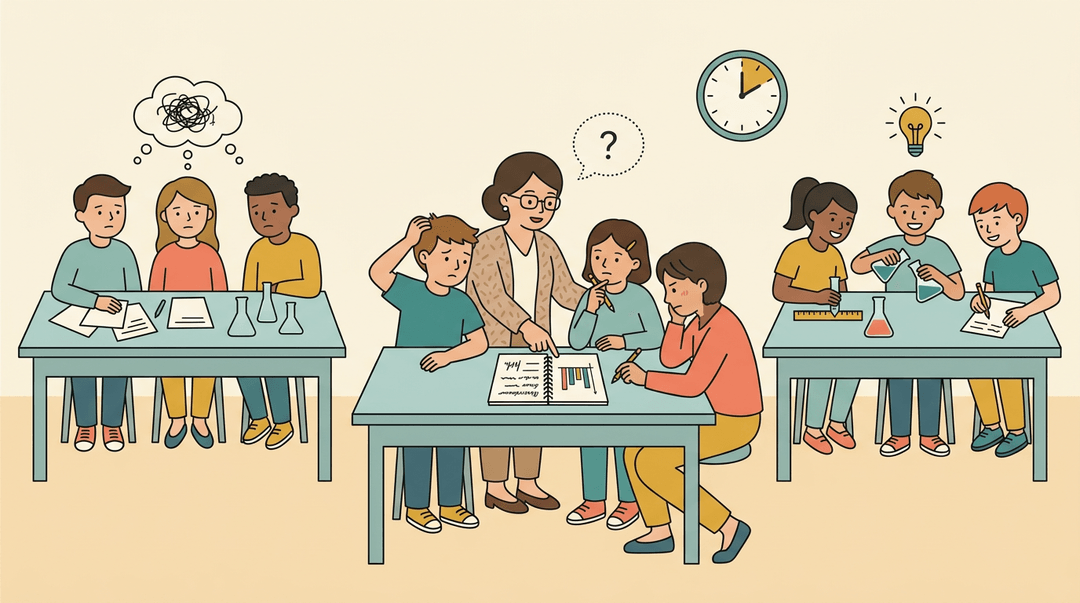
Giving students more autonomy can make the room feel harder to manage. Learners used to waiting for directions may stall, and others may drift off topic. Your role shifts from presenter to guide, which takes practice.
- Students need clear norms for working independently.
- Productive struggle is part of the process, so tolerate some confusion before you step in.
- Knowing when to intervene is a skill. Step in when a student is truly stuck, not simply uncomfortable.
Consider a middle school science teacher whose groups stall on their first investigation. Rather than handing over the answer, she asks each group one question about their evidence, then steps back.
Within ten minutes, the groups are moving again, and they've done the thinking themselves.
Resource and access limitations
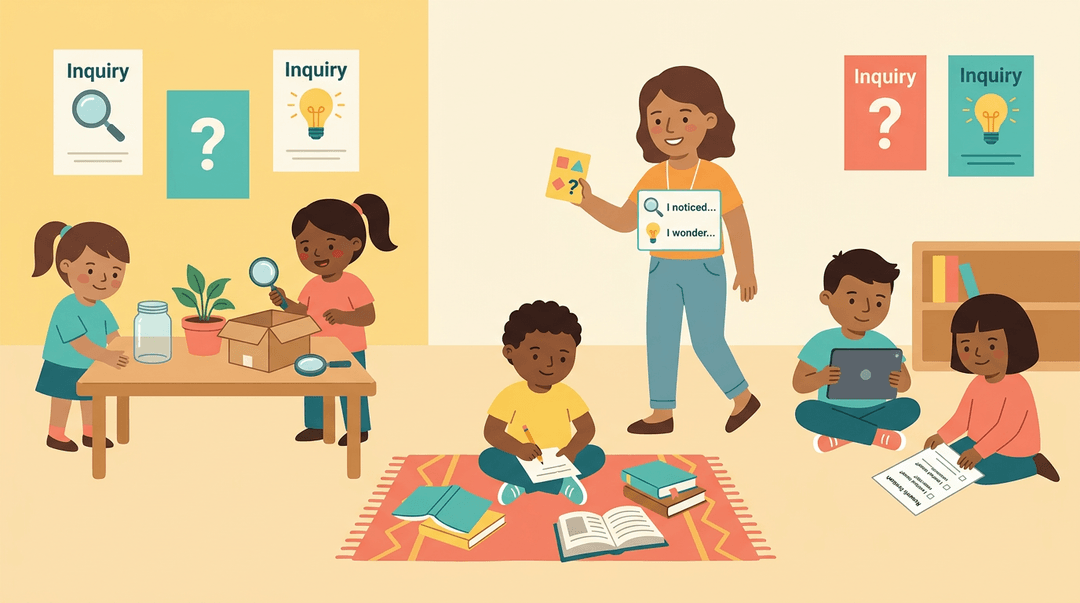
Inquiry often depends on materials, technology, and time to explore. Not every classroom has equal access, and that gap can widen quickly. Plan with what you have and build in equitable options.
- Lack of materials: use low-cost items like household objects or library books.
- Technology access gaps: offer offline versions of research tasks when devices are limited.
- Support for diverse learners: provide sentence starters, visuals, and flexible grouping so every student can take part.
Inquiry-based learning works because it turns students into active thinkers who own their discoveries. It asks more of you in planning, but the payoff is a classroom full of curious learners who can explain their reasoning.
Use the checklist to start small, then build from there.
Ready to map your next inquiry unit? Check out our Curriculum Planning feature to plan units, lessons, and standards across the whole school year.
References
- A Meta-analysis of the Effectiveness of Process-Oriented Guided Inquiry Learning on Students’ Academic Achievement — exa.ai (2025)
- The Nature and Use of Inquiry-Based Learning in Higher ... — ako.ac.nz
- John Dewey (1859-1952) — s3-eu-west-1.amazonaws.com
- WBLE Resources for Faculty/Staff: Experiential Learning and Reflection — jmu.edu
- Rethinking active learning in medical education: a comparative ... — pubmed.ncbi.nlm.nih.gov
- Meta-Analysis of Inquiry-Based Learning — journals.sagepub.com (2016)
Frequently asked questions
What is the meaning of inquiry-based learning?
Inquiry-based learning is an approach in which students begin with questions, investigate possible answers, and build understanding through evidence, discussion, and reflection. The teacher guides and scaffolds the process rather than providing every answer directly.
What is John Dewey's inquiry-based learning theory?
John Dewey’s theory emphasizes learning through experience followed by reflection. Students test ideas in real situations, consider what happened, and use that reflection to develop deeper understanding.
What is another term for inquiry-based learning?
Another term for inquiry-based learning is discovery learning or active learning. These terms emphasize that students learn through exploration and participation rather than memorizing information.
What are the 5 stages of inquiry-based learning?
The five stages are asking a question, investigating or planning an inquiry, gathering evidence, developing and communicating conclusions, and reflecting on the process. Different models use slightly different names, but each includes questioning, investigation, evidence-based conclusions, and reflection.
What are the four types of inquiry-based learning?
The four commonly recognized types are confirmation inquiry, structured inquiry, guided inquiry, and open inquiry. They range from teacher-directed activities with known answers to student-directed investigations in which learners choose the question and method.
What is an example of inquiry-based learning?
A class might investigate which paper towel absorbs the most water. Students ask the question, decide what evidence to collect, test different brands, compare their measurements, and explain their conclusion.
What are some examples of inquiry-based learning approaches?
Examples include plant-growth experiments, water or soil testing, primary-source analysis, local community investigations, open-ended math problems, budgeting projects, comparing competing texts, and community garden studies. In each case, students investigate a meaningful question and support their conclusions with evidence.