Cognitive Theory in Education: The Complete Guide

Jump to section
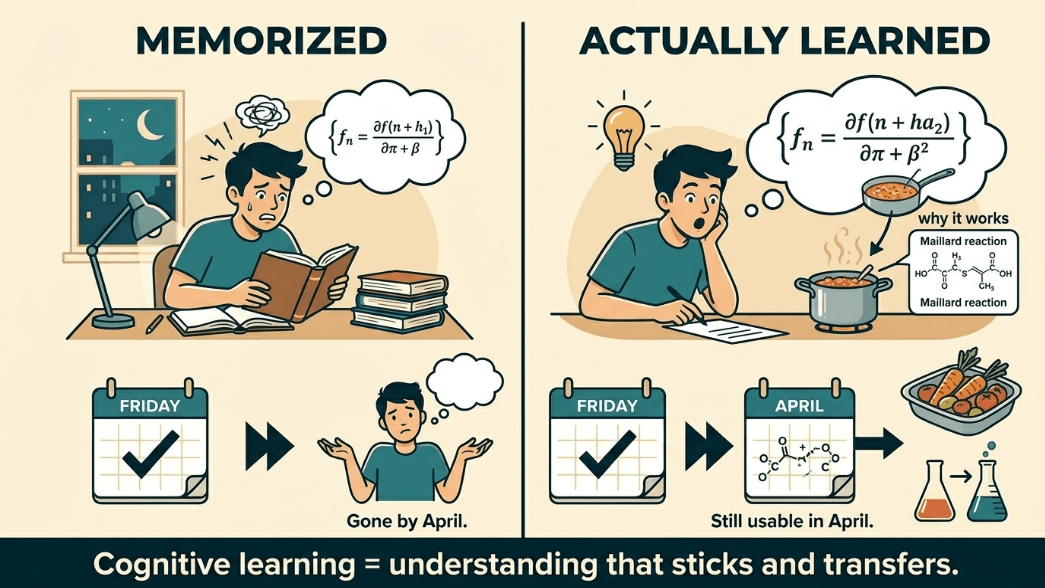
Think about the last time you really learned something, not just memorized it for a test, but actually understood it. Maybe you finally figured out why a recipe works, not just that it does.
That moment when something clicks and stays with you? That's cognitive learning in action.
Cognitive theory in education explains how the mind takes in, processes, and stores new information, and it's one of the most practical frameworks a teacher can have.
It's the difference between students who can recall a fact on Friday and students who can still use it in April.
In this post, we'll unpack the key theories and models, walk through the three types of cognitive learning, and show you concrete strategies you can bring straight into your classroom.
What Is Cognitive Theory in Education
Cognitive learning theory is built on one core idea: learning happens inside the mind. It's less about what learners do and more about how they think, process, and make sense of new information.
That shift in focus changed everything about how we understand teaching.
How cognitive learning defines active thinking
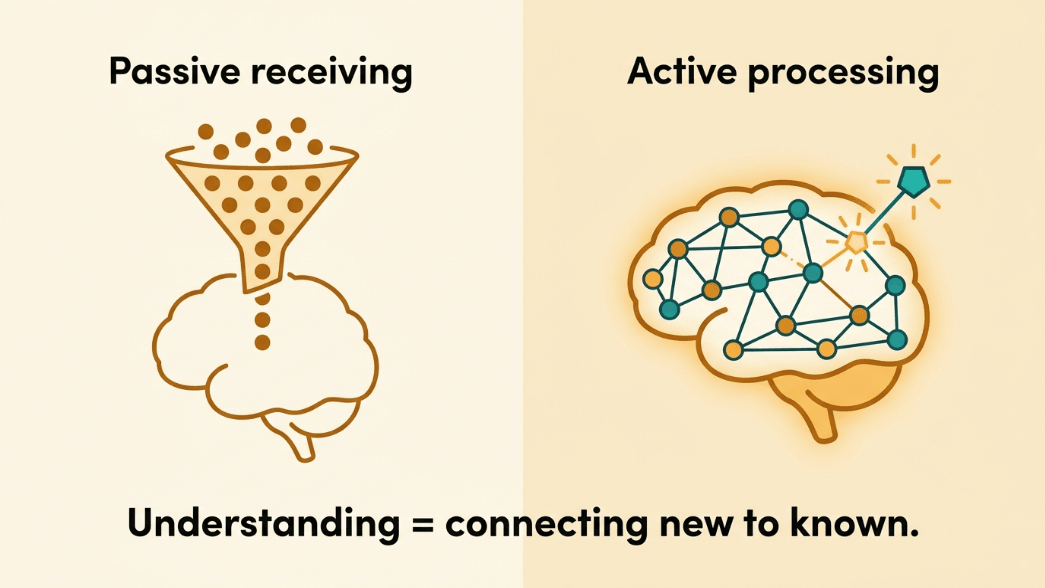
Cognitive learning treats the brain as an active processor, not a passive receiver. Instead of absorbing facts through repetition, learners build understanding by connecting new information to what they already know.
The goal is comprehension, memory, and application working together, not just getting the right answer on cue.
Where cognitive learning theory began
The theory traces back to Jean Piaget's work in the 1930s. As StatPearls on NCBI Bookshelf explains, cognitivism "states that learning occurs through the processing of information internally rather than merely responding to an external stimulus."
That was a direct response to behaviorism, which ignored what was happening in the mind entirely. Piaget also gave us a practical framework: four stages of cognitive development:
- sensorimotor
- preoperational
- concrete operational
- formal operational
each describing how thinking grows from infancy through adolescence. Metacognition, thinking about your own thinking, became central to the theory too.
How cognitivism differs from behaviorism
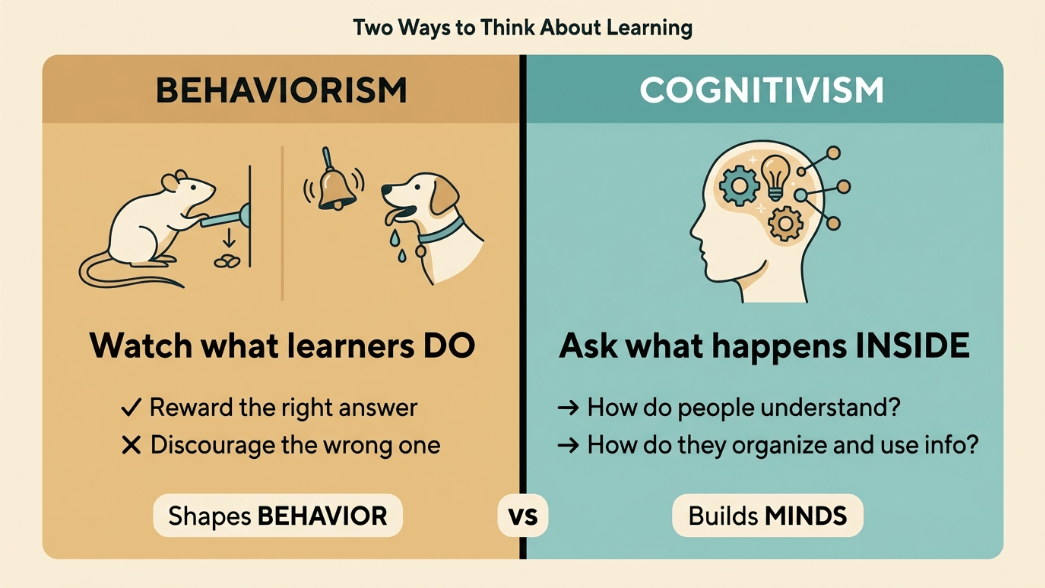
Behaviorism watches what learners do. Reward the right response, discourage the wrong one, repeat. Cognitivism asks a different question: what's happening in the learner's head? It studies internal thought processes rather than external behavior.
Where behaviorism relies on stimulus and response, cognitivism focuses on how people understand, organize, and use information. One approach shapes behavior. The other builds minds.
Major Cognitive Learning Theories and Models
Several frameworks help explain how people learn, but three carry the most weight in classroom practice: schema theory, social cognitive theory, and cognitive load theory. Each one explains a different piece of the puzzle.
Together, they give you a practical map for designing lessons that actually stick.
How schema theory organizes knowledge
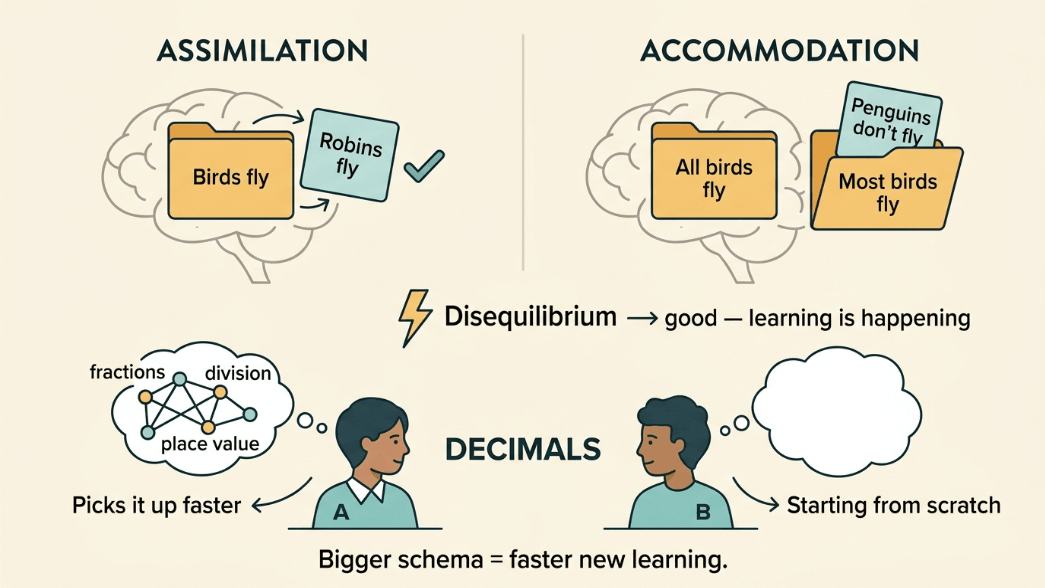
Schemata are the mental frameworks your brain uses to organize and store knowledge. When a student encounters something new, they don't process it in isolation. They fit it into a structure they already have, or they build a new one.
Piaget described two ways this happens. Assimilation is when new information slots neatly into an existing schema. Accommodation is when it doesn't fit, so the schema has to change.
That moment of tension, called disequilibrium, is actually a good sign: it means new learning is happening.
Over time, schemata grow more complex and interconnected, which is why a student who already knows fractions picks up decimals faster than one starting from scratch.
Social cognitive theory and observational learning
Albert Bandura developed the idea that people learn by watching others, not just by doing. A student who sees a classmate work through a problem out loud often picks up the strategy without being explicitly taught it.
Bandura also identified reciprocal determinism: the person, their environment, and their behavior all shape each other in an ongoing loop. A student who feels confident tries harder; trying harder leads to success; success reinforces confidence.
That's why self-efficacy, a learner's belief in their own ability, is so tightly linked to outcomes. Peer modeling and social reinforcement keep that loop going.
Vygotsky adds another dimension here. His concept of the Zone of Proximal Development (ZPD), the space between what a student can do alone and what they can do with support, sits at the heart of scaffolding.
A teacher who gradually removes support as a student gains confidence is working squarely inside both theories.
How mindset and behavior shape learning
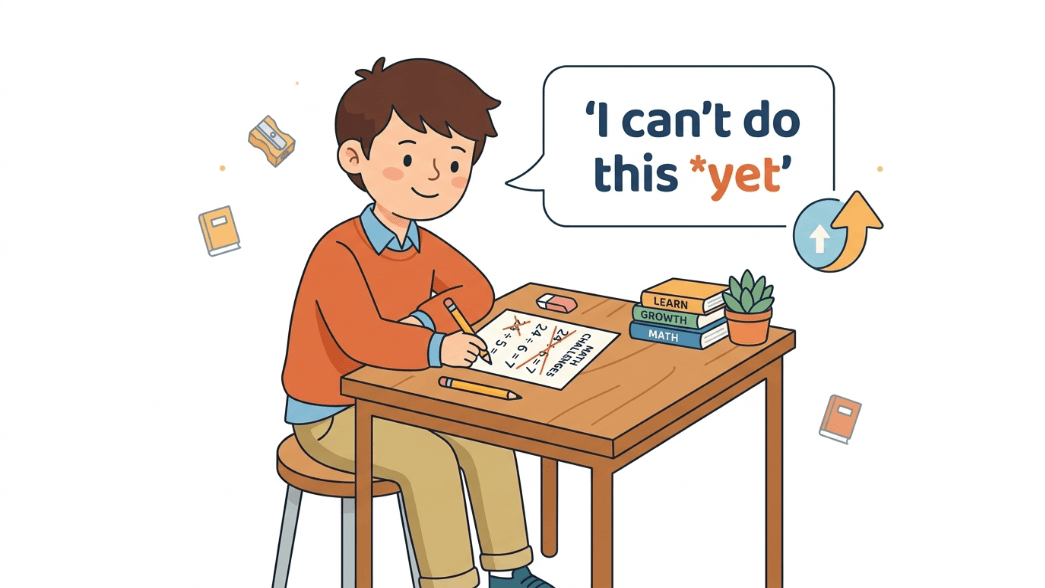
Thoughts, feelings, and behaviors are linked. A student who believes they're "bad at math" will approach problems differently than one who sees mistakes as part of the process. Mindset shapes effort, and effort shapes retention.
Reframing negative self-talk is a concrete classroom move: prompting students to say "I can't do this yet" rather than "I can't do this" shifts the internal narrative.
That small language change can nudge motivation, and motivated learners retain knowledge more deeply.
Managing cognitive load in instruction
The Australian Education Research Organisation is direct on this: working memory is always limited, and some students face additional processing constraints.
Pour too much information at once into a lesson, and the working memory bottleneck means much of it won't stick.
Chunking is one of the clearest solutions. Breaking content into smaller, connected pieces reduces load in working memory and frees up space for actual thinking.
Scenario-based tasks tend to outperform information-dense delivery for the same reason: they give students a context to hang new knowledge on.
Other learning theories worth knowing
A few others round out the picture:
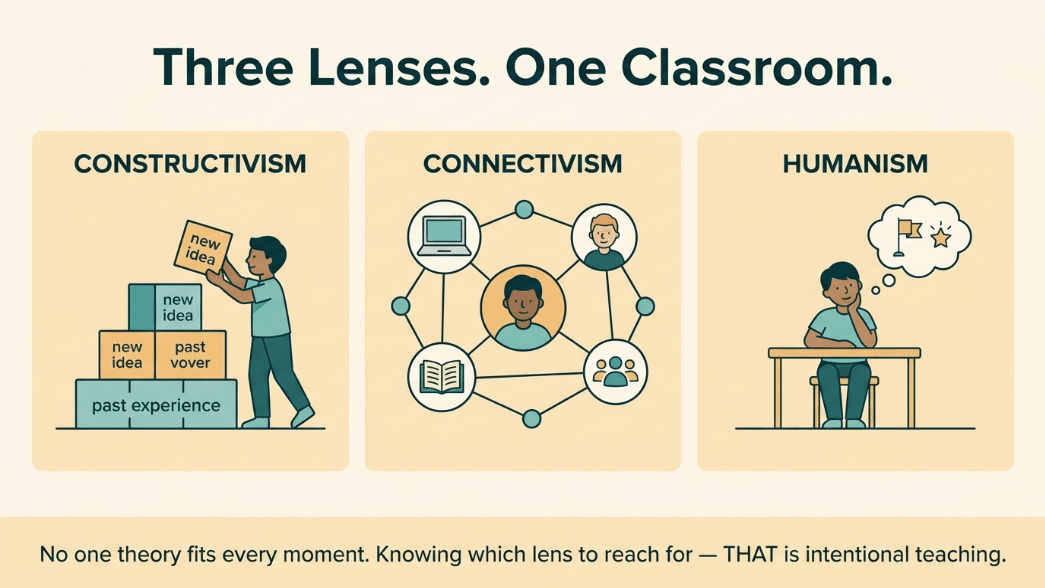
- Constructivism holds that learners build understanding from prior experience, not blank slates.
- Connectivism extends learning beyond the individual to networks, digital tools, and shared knowledge.
- Humanism centers self-actualization: learning matters most when it connects to a student's growth and sense of purpose.
No single theory covers everything. The classroom is too complex for that. But knowing which lens fits which moment is what separates reactive teaching from genuinely intentional design.
What Are the Three Types of Cognitive Learning?
Cognitive learning works on three levels:
- Assimilation (building real comprehension)
- Accommodation (connecting new knowledge to what's already there)
- Application (putting it all to use)
Each one builds on the last.
Building real comprehension beyond surface facts
The first type goes deeper than memorizing facts. Assimilation is about grasping the meaning behind information, seeing how concepts connect, and understanding why something is true, not just what it is.
A student who can explain why a historical event unfolded the way it did has assimilated it. One who simply recalls a date hasn't.
This bigger-picture thinking is what makes knowledge usable. Without it, facts stay isolated, and isolated facts don't last.
How memory connects new and prior knowledge
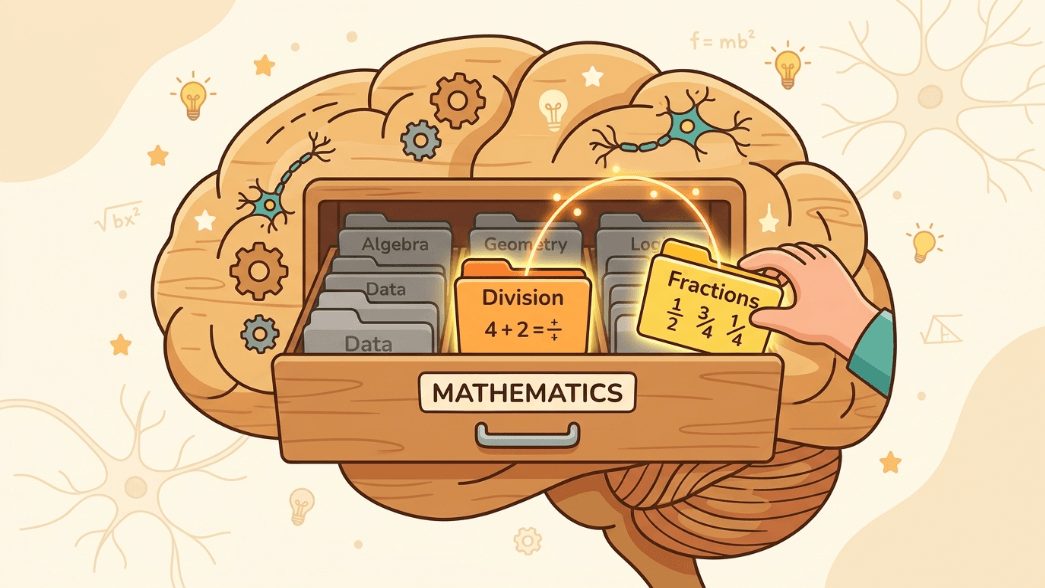
Accommodation is the brain's way of filing new information next to what it already knows. When a student links fractions to their earlier understanding of division, they're not just adding a new fact: they're strengthening an existing neural pathway.
That connection is what separates meaningful learning from rote memorization. The more hooks a new idea has to prior knowledge, the easier it is to retrieve later.
Putting learned knowledge to practical use
Application closes the loop. It's where students take what they've understood and accommodated, and use it in a real situation: solving a problem, completing a task, or explaining a concept in their own words.
For example, a student who learned about ratios doesn't just recognize the formula. They use it to scale a recipe or read a map. That transfer, whether to the next lesson or to daily life, is the real proof of learning.
Why Cognitive Learning Produces Better Results
Memorizing facts gets students through a test. Understanding why those facts are true gets them through everything else. Cognitive learning produces better outcomes across four dimensions that matter in real classrooms.
Deeper understanding leads to fewer errors
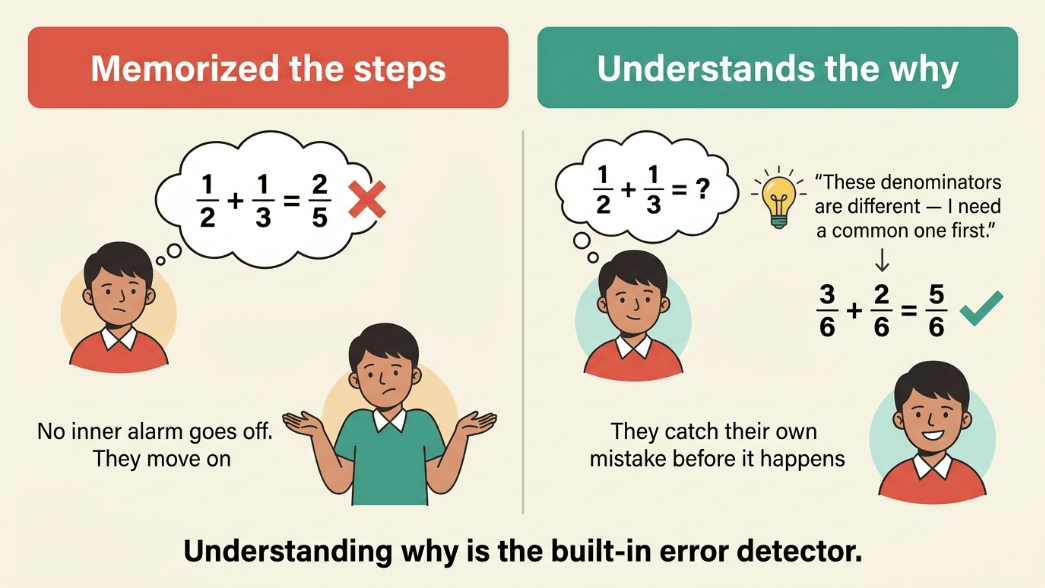
When students grasp the reasoning behind a concept, not just the surface answer, their decision-making improves and their errors drop. A student who understands why you need a common denominator before adding fractions will catch their own mistakes.
One who memorized a procedure without the logic behind it won't know when they've gone wrong.
Stronger problem-solving and critical thinking
Cognitive learning trains students to analyze a problem, anticipate what might go wrong, and transfer what they know to unfamiliar situations.
That's the real test: not whether a student can answer the question they've seen before, but whether they can handle one they haven't. Abstract and strategic thinking grow from this practice, and those skills carry into every subject, every year.
How cognitive learning builds lifelong learners
Students who understand how they learn become more independent over time. They don't wait to be told what to do next: they develop the learning agility to adapt, pick up new skills faster, and stay curious long after the lesson ends.
That's the foundation of a genuine culture of continuous development, and it starts in your classroom.
Confidence that grows from genuine understanding
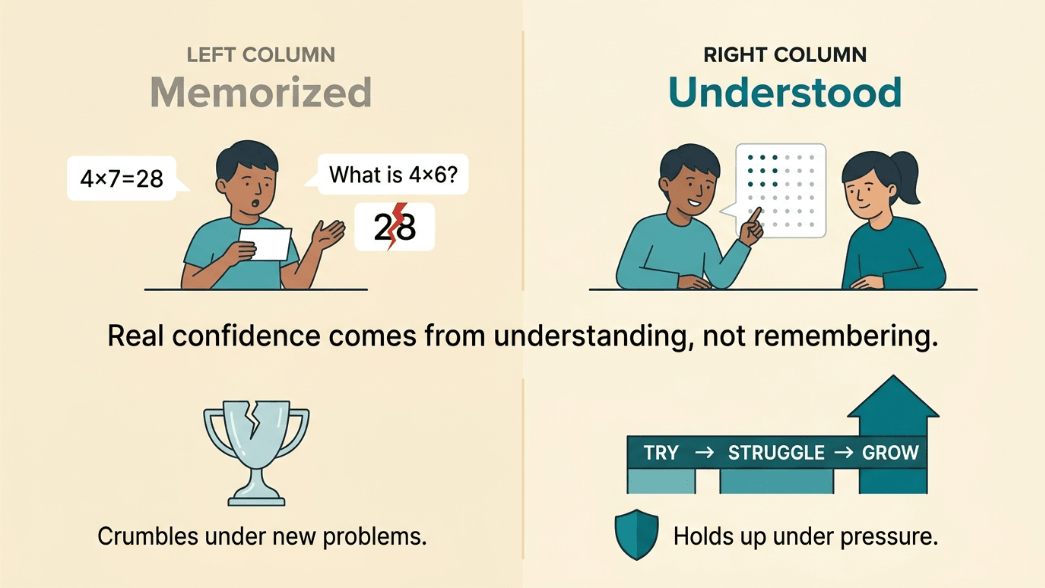
There's a real difference between confidence built on memorization and confidence built on mastery. When a student truly understands something, that understanding holds up under pressure. It builds self-efficacy: the belief that effort leads to growth.
Students who feel that way are more willing to take initiative, ask harder questions, and push through difficulty rather than give up. That's the growth mindset in practice, and cognitive learning is one of the most reliable ways to develop it.
Cognitive Learning Strategies for Educators and Trainers
Knowing how learners build understanding is one thing. Turning that knowledge into daily classroom moves is another. Here are five strategy clusters you can start using right away.
Start with what learners already know
New information sticks when it has something to attach to. Before you introduce a concept, find out what students already think. A quick warm-up question, a three-column KWL chart, or a show-of-hands poll takes two minutes and tells you where to start.
From there, use analogies to bridge the familiar and the new: a fifth-grade teacher explaining electricity might compare it to water flowing through pipes before touching a single circuit diagram.
When you know where each student stands, you can build personalized learning paths that move them forward from their actual starting point, not from a theoretical average.
Active and discovery-based learning approaches
Passive listening rarely moves ideas into long-term memory. Discovery-based learning shifts the work: instead of handing students the answer, you build conditions where they uncover it.
Problem-based tasks, structured group discussion, and open-ended Q&A all ask students to generate understanding rather than receive it.
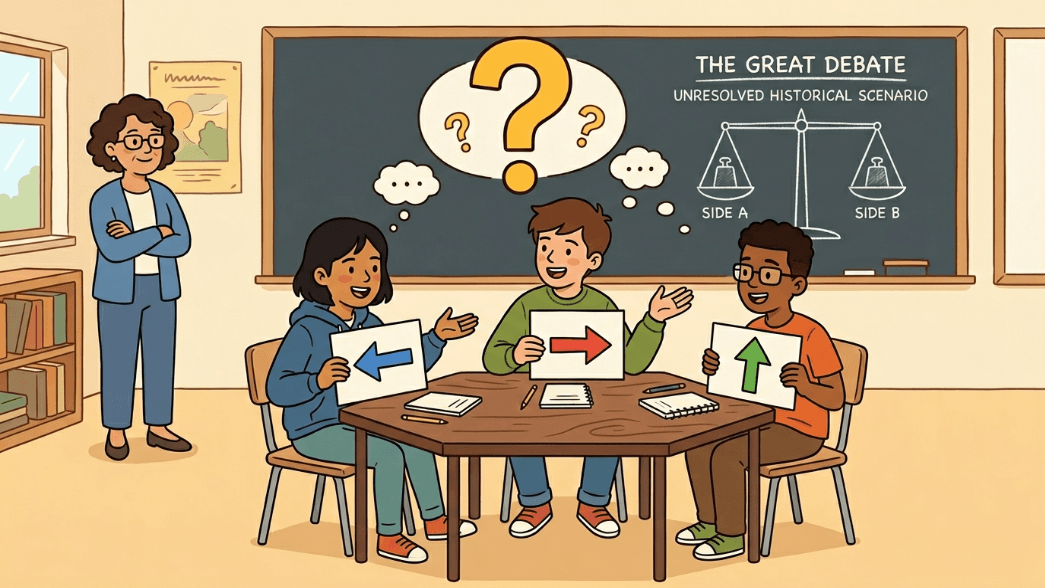
For example, a middle school history teacher might pose a real policy dilemma from the era under study and ask small groups to argue competing sides before the class ever looks at how it was resolved. Students build the reasoning; the content follows.
Teaching learners to think about their thinking
Metacognition is thinking about one's own thinking: knowing what you understand, spotting where you're stuck, and choosing a better strategy.
It's one of the highest-leverage skills you can teach, and it doesn't require extra class time if you build it into existing routines.
Reflection journals and self-explanation prompts ("Explain this in your own words, then flag what still feels fuzzy") make the thinking visible.
Strategy-awareness questions, like "Which approach helped you most on this task?", help students name and repeat what works.
Research published through SAGE Musings shows that Bloom's Taxonomy works as a metacognitive planning tool: students who use Bloom's-based prompts during study sessions practice higher-order cognitive skills and expand their learning strategies beyond simple recall.
Retrieval and spaced repetition strategies
Testing beats re-reading. Retrieval practice, pulling information from memory rather than scanning a highlighted page, strengthens retention far more than passive review.
Pair it with spaced repetition: short quizzes, bell-ringers, or exit tickets that revisit older material at regular intervals keep concepts alive across a unit.
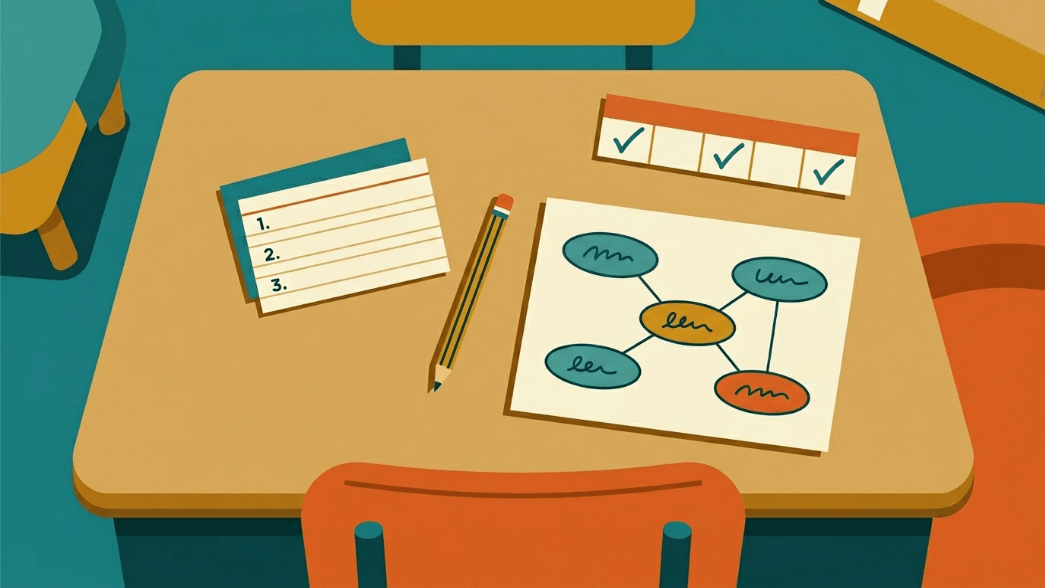
Chunking content into focused sections (rather than marathon explanations) gives working memory room to process. Graphic organizers and concept maps let students see how chunks connect, turning isolated facts into a structure.
Bell-ringers and exit tickets already exist in most classrooms. Spaced repetition fits right into those slots with almost no extra prep.
Meaningful and experiential learning activities
Context transforms content. Simulations, role-play, and real-world scenario tasks ask students to apply what they know in a situation that feels consequential.
A high school economics class running a mock budget negotiation learns supply and demand differently than one that only reads about it.
Empathic and contextual examples, ones that reflect students' own lives and communities, close the gap between "school knowledge" and knowledge that actually transfers.
Apply Cognitive Theory Directly to Your Lesson Plans
Everything above becomes useful the moment it shapes a lesson plan. This guide walks one lesson through three cognitive moves: activate, chunk, retrieve. Pin it next to your planning template.
Before new content: wake up the schema
New material sticks to old material, so spend the first three minutes surfacing what students already hold. Pick one opener:
- Pose a schema-activating prompt. Say: "Write everything you already know about erosion in 60 seconds."
- Connect to a recent unit. Try: "Last week we found perimeter. Today we'll see why area is different."
- Run a quick think-pair-share. 30 seconds silent think, 1 minute with a partner, 2 pairs share out.
⚠️ Watch out: don't correct misconceptions during activation. Jot them on the board and circle back, or students stop offering ideas.
During instruction: chunk to protect working memory
Working memory is small, so the lesson body needs deliberate portioning:
- Cut the lesson to 3 to 5 key ideas. Post them as the visible agenda.
- On the board: "Today: 1) What erosion is 2) Three causes 3) One local example."
- Model one step at a time. Narrate each decision before students try it.
- Say: "First I underline the verb, because the verb tells me the operation."
- Hand students a graphic organizer. It holds the structure so their memory doesn't have to.
- A three-column cause/effect/example chart beats a blank page of notes.
If you can't name a chunk in one short sentence, it's really two chunks: split it.
After instruction: make memory do the work
Retrieval is where learning consolidates, and it runs on a timeline, not a single moment. Find the slot, run the move:
| When | Move | What it looks like |
|---|---|---|
| Next morning's bell ringer | Low-stakes quiz | 3 ungraded questions on yesterday's chunks |
| Last 3 minutes of class | Exit ticket | "One thing I learned, one question I still have" |
| Across the week | Spaced review | Monday's chunk reappears in Wednesday's warm-up |
Example: A seventh-grade science teacher ends Tuesday's erosion lesson with the exit ticket above, then opens Thursday with a bell ringer built from the questions students wrote. The class reviews exactly what it didn't understand, and the gap between lessons does the spacing for her.
Grade-band starters you can run tomorrow
The same three moves, scaled to the learner:
- K–2: sort objects by schema category. Bins labeled "things that fly" and "things that swim."
- 3–8: concept-map a new topic. "Ecosystems" in the center, branches for producers, consumers, decomposers.
- 9–12: case study applying theory to a real problem. Use Newton's laws to explain a local fender bender.
At a glance: activate before, chunk during, retrieve after, scaled to your grade band.
If you'd rather build this once than rebuild it weekly, EMStudio's lesson planner lets you embed these cognitive strategies, from anticipatory sets to chunked objectives to exit tickets, directly into reusable lesson templates.
Cognitive Learning in Classrooms and Workplaces
Cognitive theory isn't just an idea to admire on a slide. It shapes every decision you make about how you teach, what you ask students to do, and how you check understanding.
What is an example of cognitive learning in class?
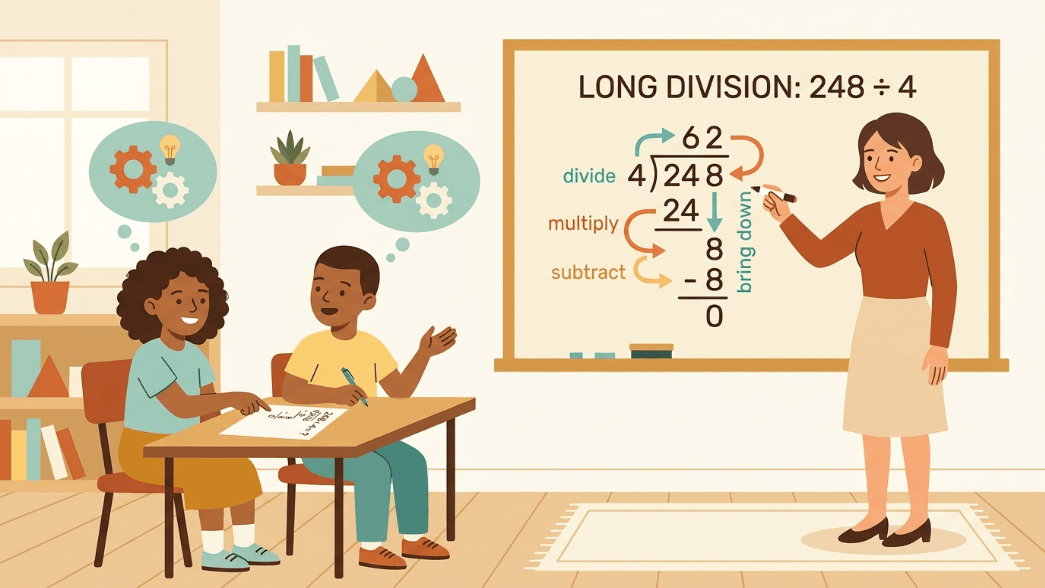
Consider a fifth-grade teacher introducing long division. She doesn't just assign problems: she opens by asking students what they already know about equal sharing, then models her thinking aloud, step by step.
Students discuss each stage with a partner before working independently. That sequence connects to prior knowledge, builds schema, and reduces cognitive overload.
An anticipatory set works the same way: a quick question or image before new content activates the mental hooks students need to hang new information on. Differentiated tasks let each learner engage at the right level of challenge.
Applying cognitive theory to workplace training
The same principles transfer to employee training. Well-designed learning management system (LMS) courses chunk content, space practice, and offer personalized paths based on what a learner already knows.
Scenario-based modules put cognitive skills to work in realistic situations, which deepens retention far more than passive video-watching.
Designing curriculum and assessments around cognition
When you design curriculum, structure content around mental processes:
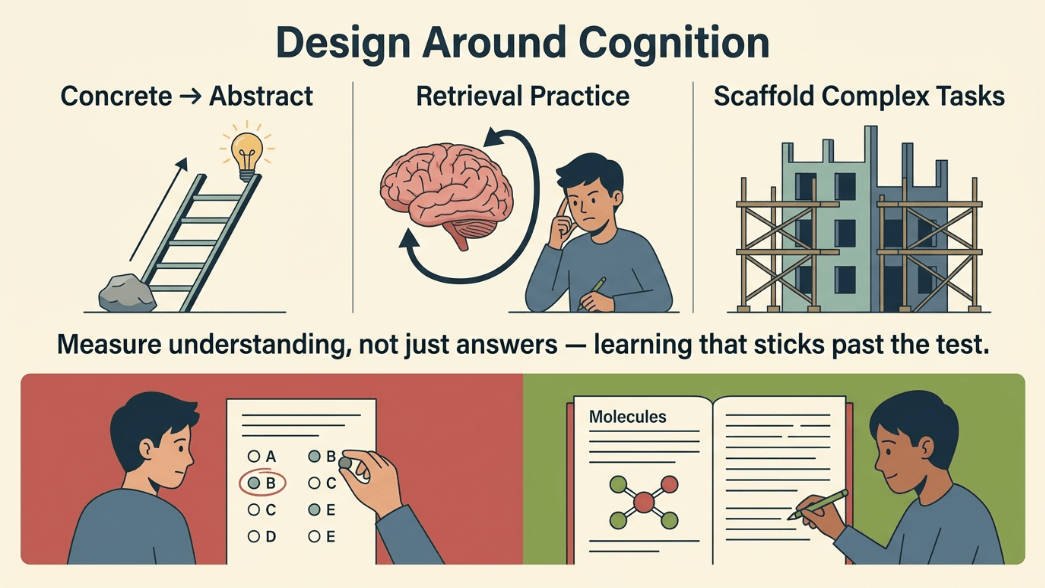
- sequencing from concrete to abstract
- building in retrieval practice
- scaffolding complex tasks
Choose instructional strategies that match the cognitive demand you want.
Critically, measure understanding, not just behavior. Align your assessments to cognitive objectives: ask students to explain, compare, or apply, not only recall.
That's the difference between knowing a student got the right answer and knowing they actually understand why.
Cognitive theory isn't just academic background reading. It's a practical lens that helps you design lessons where students actually build understanding, not just fill in blanks.
When you know how memory works, how prior knowledge opens doors, and how reflection cements ideas, you can teach in a way that sticks.
That's the real win: learning that lasts past the test and shows up when students need it most. Ready to put it into practice? Check out our Lesson Planning tool to design lessons built around how your students actually learn.
References
- Learning Theories - StatPearls — ncbi.nlm.nih.gov
- The self system in reciprocal determinism. — psycnet.apa.org
- Managing cognitive load optimises learning — edresearch.edu.au
- How does chunking help working memory? — pubmed.ncbi.nlm.nih.gov
- Vygotsky's Zone of Proximal Development: Instructional ... — files.eric.ed.gov
- SAGE Musings: Using Bloom's Taxonomy to Boost Student Metacognition — serc.carleton.edu
- Piaget's Stages: 4 Stages of Cognitive Development & Theory — positivepsychology.com
- Albert Bandura's Social Learning Theory In Psychology — simplypsychology.org
- Self-Efficacy: Bandura's Theory Of Motivation In Psychology — simplypsychology.org
Frequently asked questions
What is the cognitive theory of teaching?
The cognitive theory of teaching explains how the mind takes in, processes, and stores new information. It focuses on how learners think, process, and make sense of new information, rather than just what they do.
What is the meaning of cognitive learning?
Cognitive learning views the brain as an active processor of information, not just a passive recipient. It involves learners building understanding by connecting new information to what they already know, aiming for comprehension, memory, and application.
What are the 4 stages of cognitive learning theory?
The four stages of cognitive learning theory are: assimilation, accommodation, equilibrium, and disequilibrium. These stages describe how individuals integrate new information into their existing understanding and adapt their schemas to accommodate novel experiences.
What are the 4 theories of education?
The four prominent theories of education are progressivism, perennialism, essentialism, and reconstructivism. Each theory offers a distinct philosophical approach to the purpose, content, and methods of teaching and learning.
What are the 5 theories of cognitive development?
The five prominent theories of cognitive development include Piaget's stages of cognitive development, Vygotsky's sociocultural theory, information processing theory, cognitive neuroscience, and social cognitive theory. Each theory provides a framework for understanding how thinking and understanding evolve over time.
What is the cognitive learning theory Piaget?
The cognitive learning theory attributed to Piaget traces back to his work in the 1930s. He proposed that learning occurs through the internal processing of information and provided a framework of four stages of cognitive development: sensorimotor, preoperational, concrete operational, and formal operational.
What is an example of cognitive learning?
An example of cognitive learning is when a fifth-grade teacher introduces long division by first asking students what they know about equal sharing. The teacher then models thinking aloud, and students discuss each stage with a partner before working independently.
What are the top 5 cognitive skills?
The top five cognitive skills are: attention, memory, processing speed, logic and reasoning, and auditory processing. These skills are fundamental to learning, problem-solving, and navigating daily life effectively.