Defining Student Engagement in Plain Terms


Jump to section
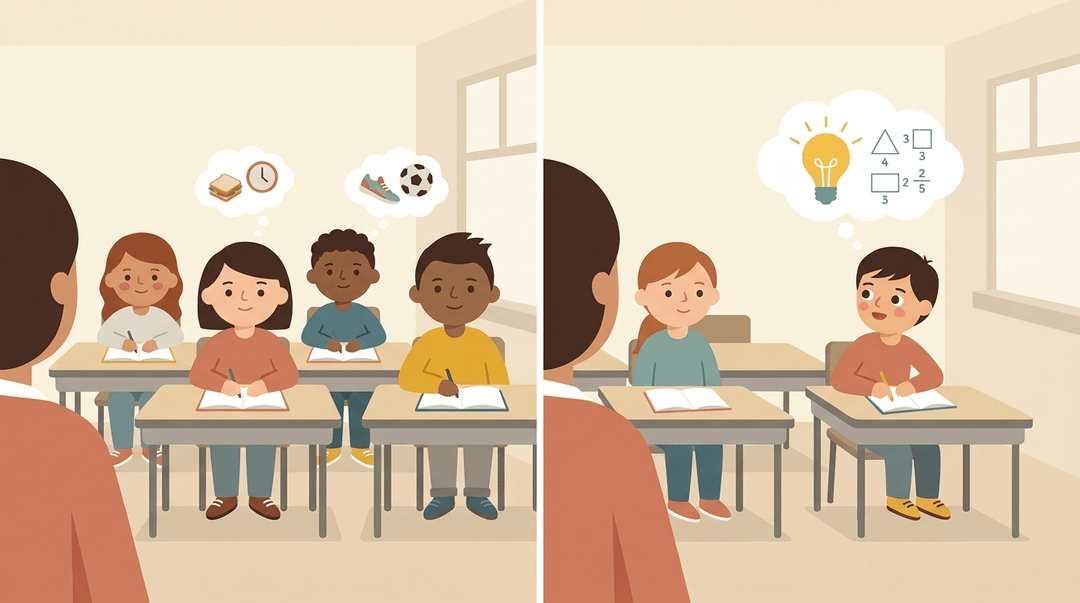
Think about a meeting that could have been an email. You were in the room, nodding at the right moments, but your mind was miles away. Students can drift the same way, and it's easy to miss from the front of the room.
So what does student engagement really mean? Put simply, it's a learner's genuine attention, investment, and thinking about the work, not just their quiet presence.
In this post, we'll define it clearly, show what it looks like in real classrooms, and give you a quick check you can use right away.
Defining Student Engagement in Plain Terms
Before you can build or measure engagement, you need a clear definition of it.
What does academic engagement mean?
Academic engagement is a mental state that combines thinking and feeling about learning. It shows up as interaction plus effort toward persistence, with attention, curiosity, interest, and passion all part of the picture.
It's more than busyness. Definitions have evolved over the decades, so expect more than one version.
Picture a middle school science teacher during a lab debrief. Two students have their hands up, eager to share. A third is quietly redoing a calculation because she wants it to make sense. The first two are involved.
The third is engaged, and spotting that difference tells you who needs a nudge and who needs a bigger challenge.

Behavior, emotion, and thinking show engagement
Engagement tends to show up in three dimensions:
- Behavioral: participation, effort, and attendance, like raised hands and sustained work.
- Emotional: belonging, interest, and attitudes, like a student who feels they fit in your room.
- Cognitive: deep learning and challenge-seeking, like choosing the harder problem.
These dimensions overlap, and some frameworks fold cognitive engagement into behavioral. Either way, focus on what you can actually observe. You'll also hear about the four or five C's, shorthand frameworks for sorting engagement into categories.
Labels vary by source, so check each author's definitions before you borrow one.
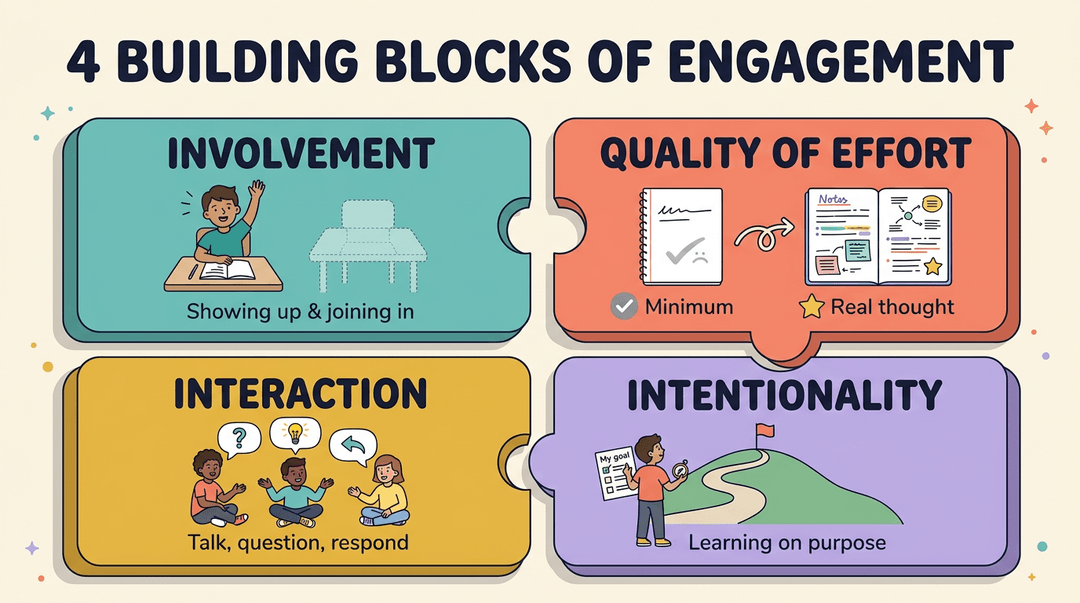
The four building blocks colleges look for
Colleges look for four building blocks:
- Involvement: students are present and taking part.
- Quality of effort: they put real thought into the task, not just the minimum.
- Interaction: they talk, question, and respond to others.
- Intentionality: they pursue learning goals on purpose.
Engagement with peers, content, and instructors
Engagement happens across three relationships:
- Student-to-student engagement is a discussion where one learner builds on another's idea.
- Student-with-content engagement is a student wrestling with a text until it clicks.
- Student-to-instructor engagement is the student who stops by your desk with a question about their draft.
Vygotsky's theory gets linked to engagement because it centers social interaction in learning. The relationships in your room are central to how students learn, not a side issue.
Tuning out versus opting out of learning
Students can be positively engaged, non-engaged, or negatively engaged. Non-engagement is often inertia, a drift that happens when nothing pulls a student in or pushes them away. That's tuning out, and it usually signals boredom.
Opting out is different. Here the student has rejected the learning itself, which calls for a different response than boredom does.
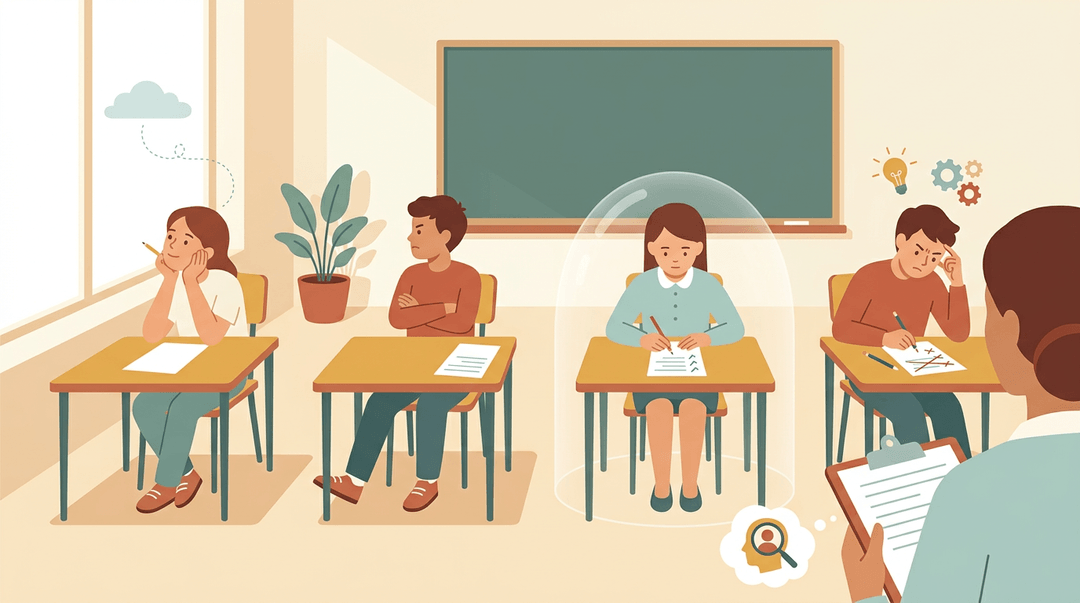
Compliance can look like engagement from across the room. A student who follows directions and finishes the worksheet may be compliant without being engaged.
When you scan the room, ask whether students are doing what's asked or thinking hard about the work.
Why the definition shifts by setting
Engagement looks different in a rural high school than in a university lecture hall. That's by design, since there's no single universal meaning intended.
The risk is vagueness: an unclear definition misdirects investment, and you'll fund activities that look busy rather than ones that build learning.
Spot and Check Engagement in Your Classroom
Use this card when you want a quick read on whether students are really with you, plus a simple routine for checking, adjusting, and remembering what you saw.
Look-fors by dimension
Confirm at least one of these while you teach:
- Behavioral: students are on task and participating, not just present.
- Emotional: you hear interest and a positive tone in their voices.
- Cognitive: students ask deeper questions, like "why" or "what if."
Compliance or engagement? Quiet and seated can fool you. What separates them is the thinking behind the behavior.
- ❌ A student copies the notes neatly and says nothing.
- ✅ A student pauses and asks, "Would this still work with negative numbers?"
The difference: the second student is working with the idea, not just finishing the task.
Run the check
Three moves happen during class, and one happens after.
- Pick one dimension to watch.
- Choose just one per lesson: "Today I'm watching participation."
- Scan the room at set intervals.
- Try every ten minutes or so, a 20-second look for your dimension.
- Adjust the activity if energy drops.
- Grab a fix from the table below instead of pushing on.
- Log notes after class.
- One line is enough: "Period 3: lively in partner talk, flat during lecture."
Example: A middle school teacher chooses to watch the emotional dimension. At the ten-minute scan, she hears flat voices during her explanation, so she moves to partner discussion. The room's tone lifts, and her note reads: "Talk beats telling for this topic."
What it looks like by setting
| Setting | Engagement move | Look for |
|---|---|---|
| Elementary | Movement, choral response | Everyone moving or answering together |
| Middle school | Partner discussion | Students talking about the content |
| High school | Debate, student choice | Students defending a position they picked |
| Tutoring or homeschool | One-on-one questioning | Answers that explain why, not just what |
When energy drops
| When you see... | Try... |
|---|---|
| Fidgeting, glazed looks | A brain break: one minute to stand and stretch |
| A few voices doing all the talking | A think-pair-share reset: "Turn to your neighbor and share one idea." |
| You can't tell who's following | An exit ticket pulse check: "One thing that clicked, one thing that didn't." |
💡 Tip: Keep the three fixes on a sticky note by your desk so you never have to invent one mid-lesson.
Track engagement notes alongside attendance and class rosters in EMStudio's classroom management tools.
Why Student Engagement Matters
Student engagement is less about compliance and more about investment. Its effects show up in grades, in how long students stay, and in how they see themselves. Here's what we know, and why it matters in your classroom.
How engagement improves grades and completion
Engagement goes hand in hand with learning. In a study of undergraduates at a medical university in western China, engagement statistically accounted for 31.93% of the cross-sectional association between perceived learning environment and learning gains.
Engagement is also linked to persistence. A study of college persistence notes that prior research has established positive links among sense of belonging, academic self-efficacy (a student's belief that they can succeed), engagement, and persistence.
Taken together, engagement is tied to success, from learning gains to retention and graduation outcomes, which measure whether students stay enrolled and finish.

How engagement shapes well-being and skills
Engagement also shapes:
- Well-being and resilience. It supports students' emotional health and their ability to bounce back from setbacks.
- Empathy and collaboration skills. Working with peers on shared tasks builds listening, perspective-taking, and teamwork.
- Career and life readiness. The habits engagement builds, like focus and follow-through, carry into work and adult life.
- Sense of connection to school. Engagement helps students feel they belong in school, not just in one class.
What low engagement can lead to
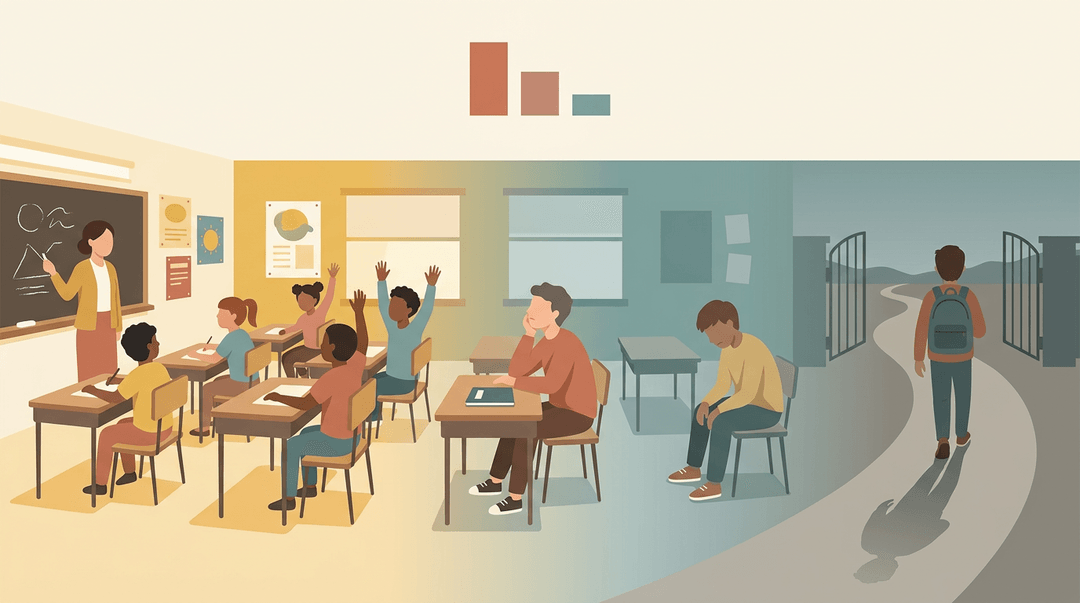
Low engagement carries serious risks. It can lead students toward dropout, and early disengagement can set a trajectory students carry forward.
It's also tied to delinquency and substance abuse. In a study of early adolescents, delinquency was associated with low school engagement, alongside antisocial peer affiliation and a lack of positive parenting.
Engagement has also been slipping. A 2021 survey, as reported by Idaho EdNews, found only 45.7% of students reported being engaged with school, down from 52.6% in 2019 and 65% the year before that. That's a sustained slide.
What engagement gives schools and teachers
Engagement pays off for teachers and schools alike. Consider a seventh-grade teacher who turns a novel's ending into a quick class debate. Within minutes, a quiet room is arguing about the characters' choices.
That's the kind of moment that makes teaching more rewarding.
Low engagement also brings financial and retention pressure, so the stakes reach beyond any one classroom. University leaders treat engagement as a priority, too.
What surveys say about engagement priority
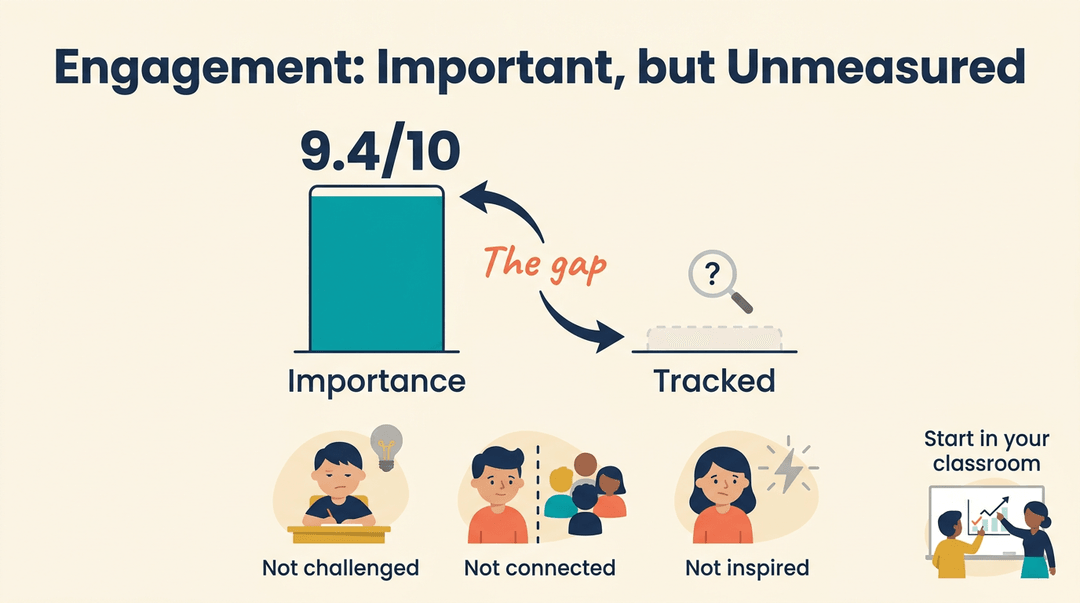
Surveys point to both the priority and the gap:
- Importance. Engagement was rated 9.4/10 for importance.
- Unchallenged students. A Gen Z report found that many students still don't feel challenged, connected, or inspired by what they're learning.
- Tracking gap. Most institutions don't track engagement.
Importance is clear. Measurement isn't. The good news is we can start closing that gap in your own classroom.
What Shapes Student Engagement
Engagement is shaped by more than the lesson. Relationships, belonging, teacher well-being, background, and expectations all play a part.
Relationships and everyday interaction
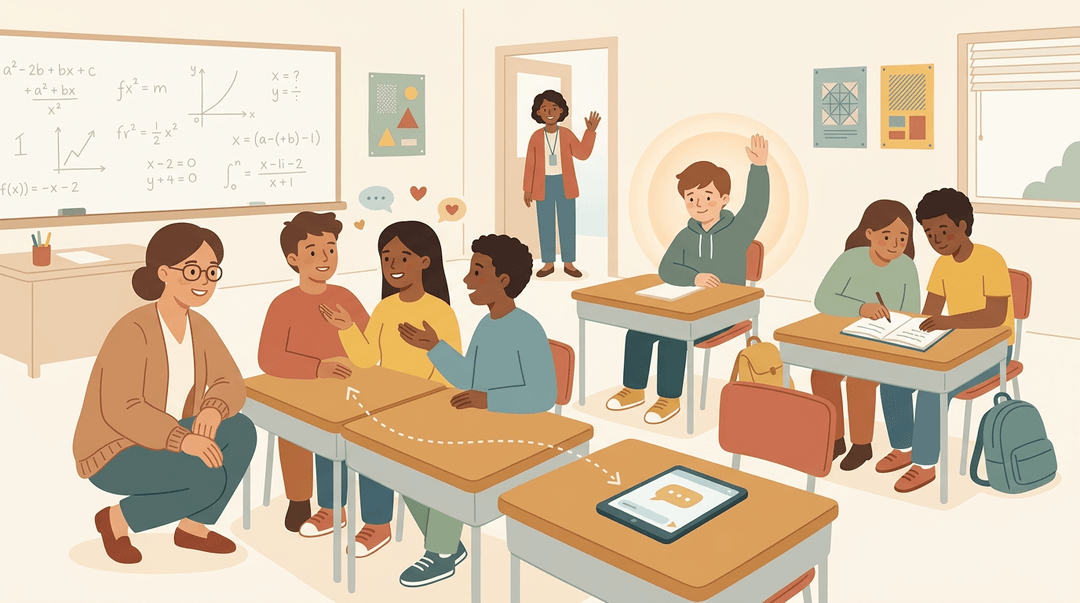
Connection is built in everyday moments. Teacher-student relationships come first: a student who trusts that you're in their corner takes more risks.
Consider a ninth-grade algebra teacher who asks three students about their weekend every Monday. Within a month, the quiet student in the back row is raising his hand, because someone finally noticed him.
Peer and faculty interaction adds more places to turn. Support comes from several places:
- Teachers and counselors who know the student well
- Classmates who study or problem-solve together
- Technology-delivered support, such as tutoring platforms or check-in tools
Technology works best as a bridge to people, not a replacement for them.
Why feeling like you belong matters
Belonging is the sense that students are accepted, respected, and part of the group. It's linked to engagement, but it isn't the same thing: a student can feel welcome and still be checked out.
Students need acceptance and respect, especially after a mistake. Social integration, or how well students connect with classmates and school life, also aids retention.
Belonging also shapes learner identity, or how students see themselves as learners. It's less about being in the room and more about believing you have a place in it.
How teacher stress and SEL affect engagement
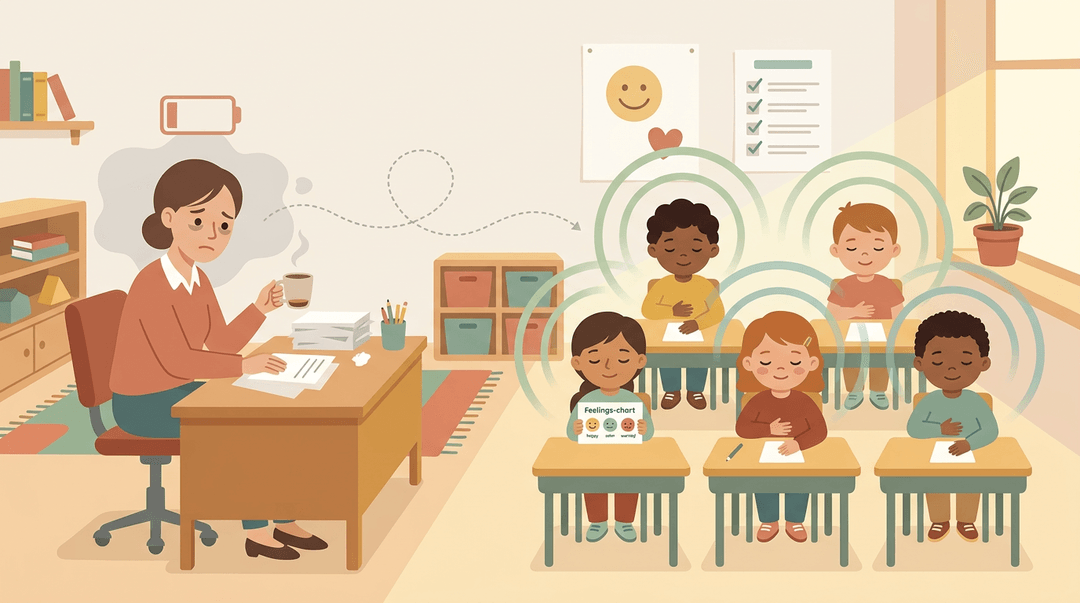
Teacher stress doesn't stay in the staff lounge. A teacher running on empty has less patience, and burnout makes everyday connection harder to sustain.
Social-emotional learning (SEL) gives students tools for managing emotions, setting goals, and working with others, like a quick morning check-in or a breathing routine before a test.
Self-regulation, the ability to manage attention, emotions, and effort, is a skill worth teaching directly. Don't assume students already have it.
How background and equity affect engagement
Engagement can differ by race and household finances, and conventional measures like grades and attendance can miss what's behind those differences.
Consider a middle school teacher who notices students who work after school rarely attend optional review sessions. She moves a short review into the school day, so those students get the same shot at the test.
Tailor your approach to student groups by asking which groups in your room lack the same access, then adjusting for them.
Expectations and barriers holding students back
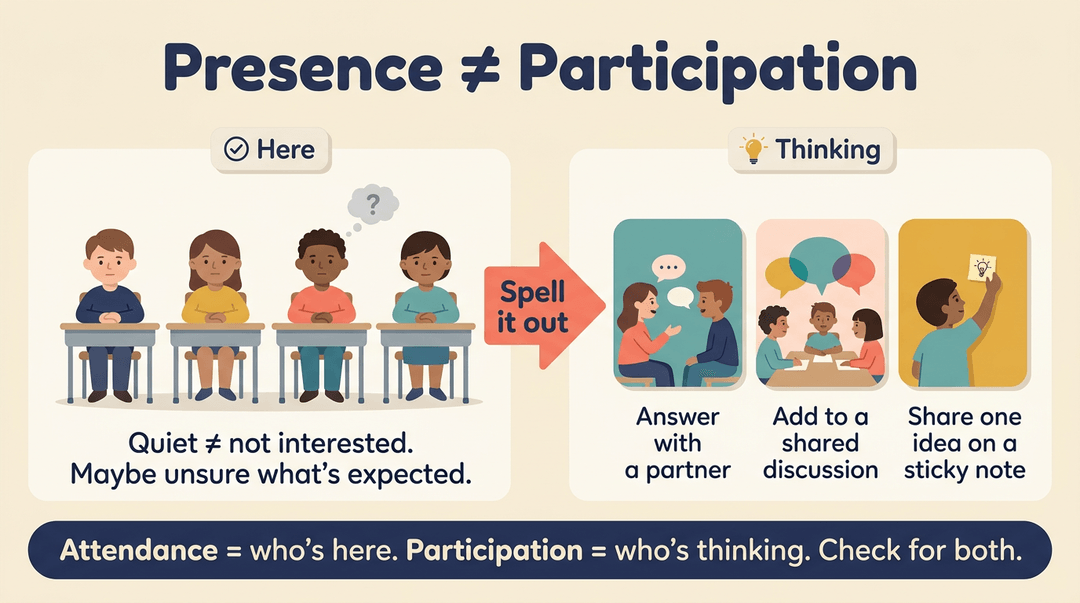
Many of us carry a preconception that learners are passive by default: they should sit quietly and absorb. When a student stays quiet, we often read it as disinterest, but they may simply be unsure what's expected.
Students can't meet expectations they can't see. Spell out what participation looks like:
- answering with a partner
- adding to a shared discussion
- sharing one idea on a sticky note
Attendance tells you who's here. Participation tells you who's thinking. Presence isn't participation, so check for both.
Ways to Boost Engagement in Class
Engagement rarely happens by accident, but it doesn't take an overhaul either. Engagement and behavior management go hand in hand, since a student doing meaningful work has less room to drift off task.
Keep students active with interactive tasks
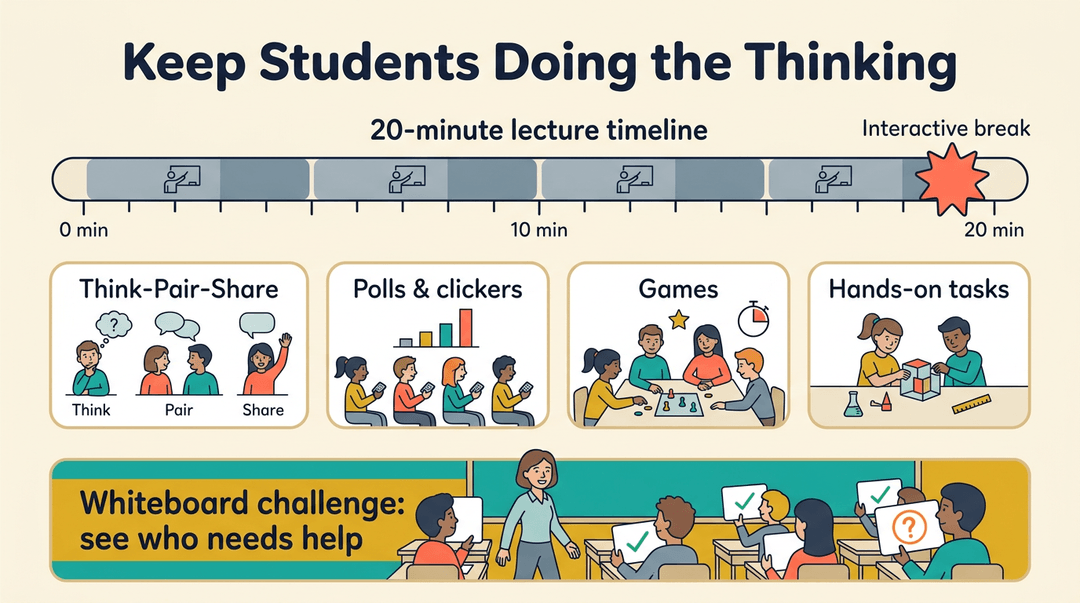
Engagement comes from students doing the thinking, not just hearing it. Try think-pair-share: pose a question, let students think alone, then compare with a partner.
Polls and clickers (handheld response devices) let everyone answer at once, while games and hands-on tasks add movement.
A study of micro-breaks in postgraduate lectures recommends an interactive break every 20 minutes as a strategy to promote engagement. Build one in before attention slips, and mix formats in short intervals. Variety keeps attention alive.
Consider a middle school science teacher who pauses for a whiteboard challenge. Students get back on task, and she sees who still needs help.
Have students learn together in groups
Small group discussion gives every student a voice. Try peer teaching, where students explain ideas to one another, or a jigsaw, where each group becomes the expert on one piece and then teaches it to the others.
Assign defined roles and accountability, such as:
- facilitator
- recorder
- timekeeper
so everyone has a job. Note-taking pairs compare and combine notes so each student leaves with a complete set.
Think of a high school history teacher whose jigsaw on the Industrial Revolution makes every student responsible for part of the answer. Nobody can tune out when the group is counting on them.
Connect lessons to student interests and goals
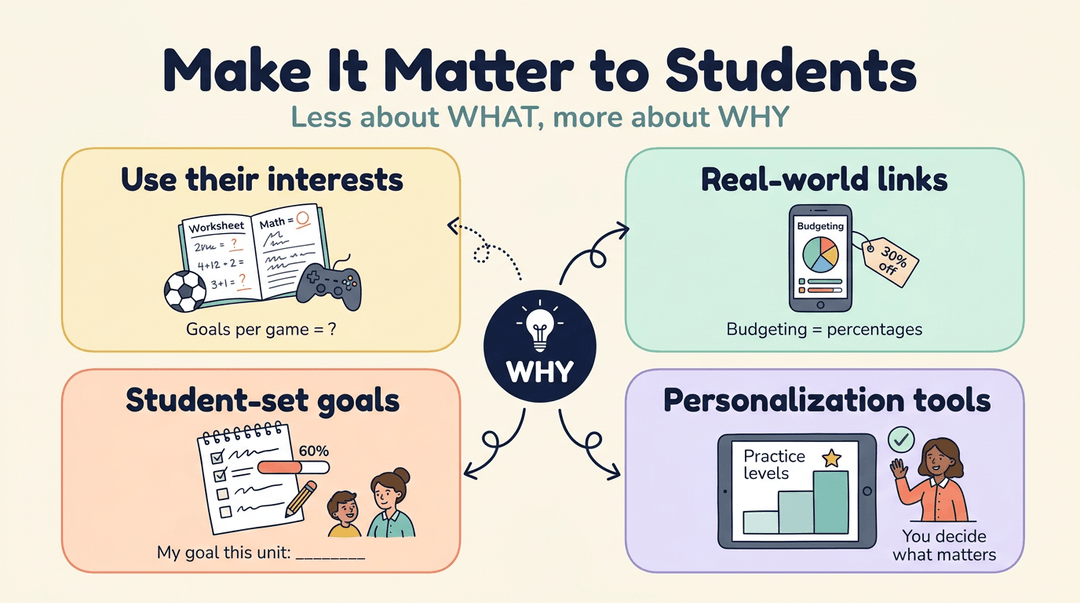
Students engage more readily when they see the connection. It's less about what students are assigned and more about why it matters to them. Start by integrating student interests into examples rather than rebuilding your unit around every trend. Focusing on why it matters to learners is the idea behind student-centered learning.
Make real-world connections, like showing how budgeting depends on percentages. Invite students to write student-set goals for each unit and check progress together.
Personalization tools (tech that adjusts practice to each learner's level) can help, though you still decide what matters most.
Build rapport and show your enthusiasm
Students engage with teachers they trust, and they notice when you're excited about what you're teaching. Share a personal story now and then, like a hobby or a mistake you learned from.
Use name cards on desks and equity cards (cards drawn at random so every student gets a turn). Rebrand office hours with a friendlier name, like "drop-in time," so students don't see them as only for struggling learners.
Build a daily routine for social-emotional learning (SEL), the skills students use to manage feelings and relationships. A quick morning check-in is an easy place to start.
Check understanding with quick reflections
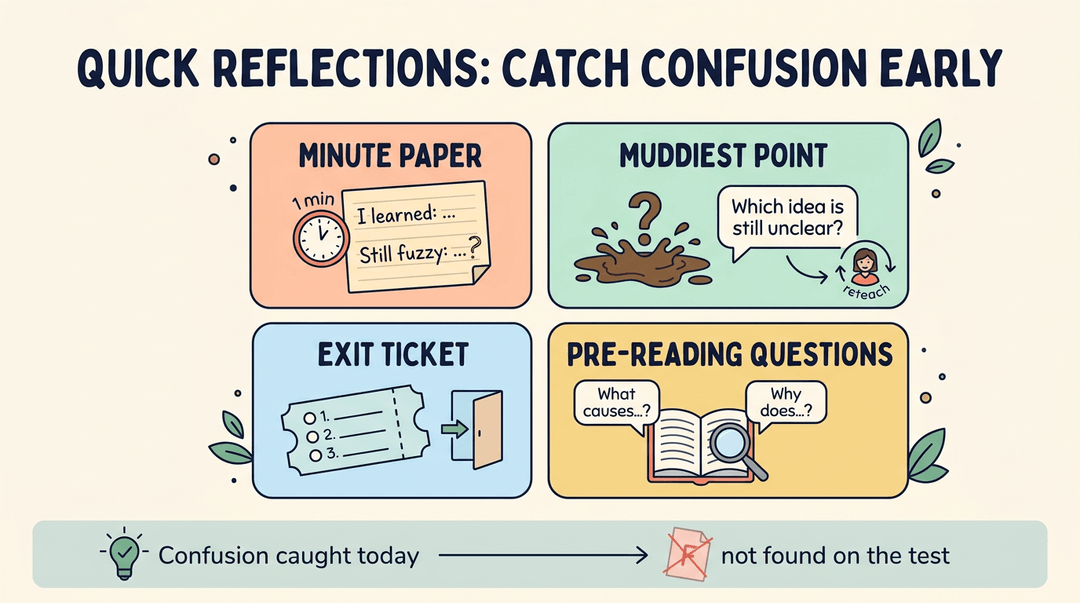
A quick reflection tells you what landed. The aim is to catch confusion early, not discover it on the test. Try these:
- Minute paper: At the end of class, students write what they learned and what's still fuzzy.
- Muddiest point: Ask students to name the one idea that's still unclear, then reteach it.
- Exit tickets: Two or three quick questions students answer on the way out.
- Pre-reading questions: Give students a few questions before they read so they know what to look for.
Campus support, mentors, and remote learning
Engagement doesn't stop at your classroom door. A mentoring or buddy system pairs students with an older peer or staff member who checks in regularly.
Volunteering and ambassador roles give students a stake in the school, and student representation on committees lets them help shape decisions.
Partnership across departments helps too, since colleagues who share strategies give students consistent expectations.
When learning moves online, plan engagement on purpose: keep sessions short, add polls or chat prompts, and schedule one-on-one check-ins.
How to Measure and Track Engagement
Engagement shows up in your data and in your classroom. Here's how to track both.
Which numbers show engagement levels
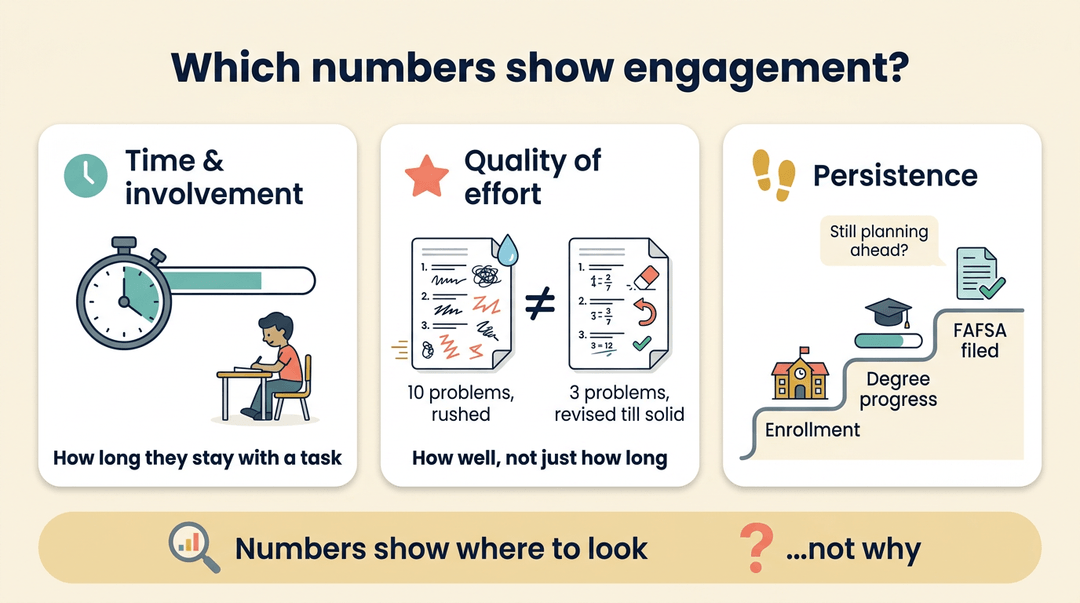
Time spent and involvement show how long students stay with a task. Quality of effort shows how well they work: rushing through ten problems isn't the same as revising three until they're solid.
Enrollment and degree progress show persistence, and non-academic tasks like the Free Application for Federal Student Aid (FAFSA) hint at whether students are still planning ahead. Numbers show you where to look. They don't explain why.
Tools and surveys for tracking engagement
Your institution likely has its own tools, like learning management system reports. Commercial surveys are another option, though any single survey is a snapshot. Measurement frequency varies, so pick a rhythm you can sustain.
If your team is exploring newer measures, bring your questions there instead of adding another form to students' plates.
How to check learning day to day
Begin with prior knowledge: a quick warm-up question shows what students bring in. Then share:
- learning intentions (what students are learning)
- success criteria (what good work looks like)
Give timely feedback while students can still act on it, and invite them to help write student-created criteria so the goal is theirs. Letting learners own the goal is a core part of student autonomy.
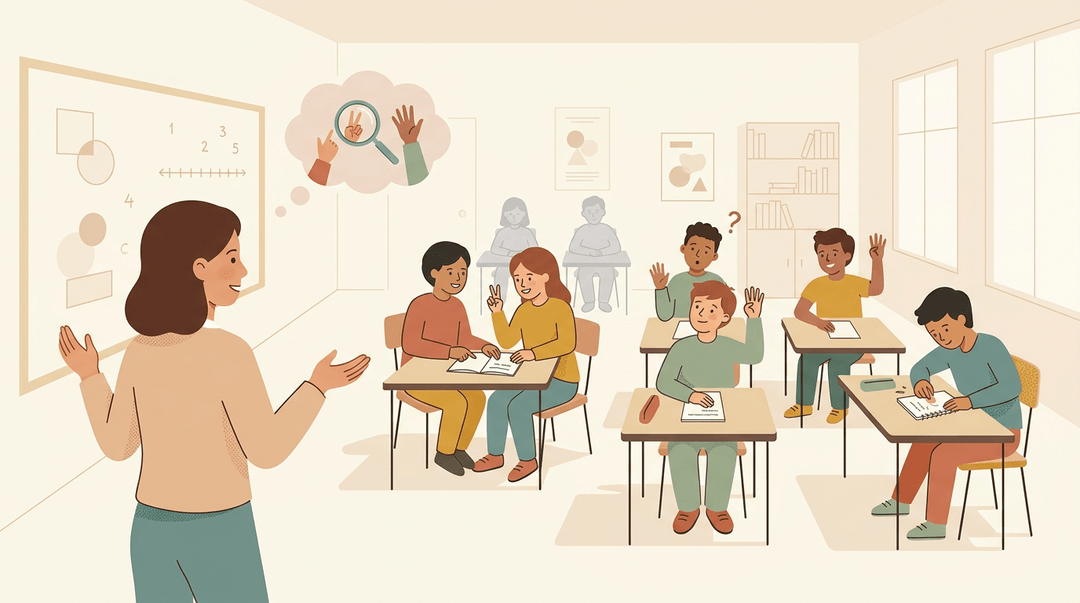
Quick engagement checks mid-lesson pay off fast. Picture a middle school math teacher who has students hold up one to five fingers after each problem. In ten seconds, she sees which group needs another example before moving on.
Look for these signs of engagement:
- Students ask "why" or "what if" questions.
- They explain ideas to a partner.
- They revise work instead of just finishing it.
Compliance looks quiet. Engagement often looks curious and a little noisy.
Engagement isn't a mood or a lucky break. It's a learner's real attention, investment, and thinking, and you can spot it once you know what to look for.
Quiet compliance can look similar from the front of the room, but the difference shows up in the thinking.
Keep the engagement check close and use it in your next lesson, so you can adjust while the learning is still happening. Ready to build that routine into your week?
Explore Classroom Management, which keeps your classes, sections, rosters, and timetables in one structured workspace.
References
- Effectiveness and Acceptability of Micro‐Breaks to Increase Engagement in Postgraduate Lectures — doi.org (2025)
- Evaluating the associations of learning environment with student engagement and learning gains among undergraduate students at a medical university in western China — pmc.ncbi.nlm.nih.gov (2026)
- Associations of sense of belonging and academic self-efficacy with college persistence through student engagement: MASEM with moderation by learning environment — pmc.ncbi.nlm.nih.gov (2026)
- Characterizing Delinquent Behavior in Early Adolescence: Results from the Adolescent Brain Cognitive Development- Social Development Study — doi.org (2025)
- Student engagement drops - again — idahoednews.org
- Gen Z report: students feel unchallenged, disconnected despite more engagement — dayton247now.com (2025)
- New Gallup Survey Shows How Human Connection in School Drives Gen Z Engagement and Future Readiness — waltonfamilyfoundation.org
Frequently asked questions
What is the importance of engagement?
Engagement matters because it is closely linked to learning gains, persistence, and students’ sense of connection to school. It also supports well-being, resilience, collaboration, and habits that help students in future work and adult life.
What is the definition of student engagement?
Student engagement is a learner’s genuine attention, investment, and thinking about learning, rather than simply being present or compliant. It can be seen through behavioral, emotional, and cognitive signs.
What are three positive words to describe a student?
Curious, persistent, and collaborative are three positive words that can describe a student. They reflect active interest, sustained effort, and constructive work with others.
What are the four C's of student engagement?
The four C’s are not a universal framework, and labels vary across sources. One common set is collaboration, communication, critical thinking, and creativity.
What are the three aspects of student engagement?
The three aspects of student engagement are behavioral, emotional, and cognitive. They involve participation and effort, interest and belonging, and deep thinking or challenge-seeking.
What is Vygotsky's theory of student engagement?
Vygotsky’s sociocultural theory emphasizes that learning develops through social interaction and support from others. In classrooms, discussion and collaboration can help students build understanding and learn from peers and teachers.
What does "academic engagement" mean?
Academic engagement is the mental state of thinking and feeling about learning. It involves interaction and effort toward persistence, along with attention, curiosity, and interest.