Student Autonomy: What It Means and Why It Matters

Jump to section
Think about the last time you let a student pick how to show what they learned. Did they run with it, or look to you for every next step? That moment is where student autonomy begins.
Put simply, it means learners have a real say in how they learn, not just what they do.
Autonomy isn't about letting students do whatever they want. It's about structured choice: options inside clear expectations, so learners take ownership without losing focus.
Here's what's ahead: what autonomy really means, why it pays off, and a routine you can start Monday.
What Student Autonomy Really Means
Student autonomy often gets mistaken for students doing whatever they want. It's really about ownership within a clear structure.
Owning what, how and when to learn
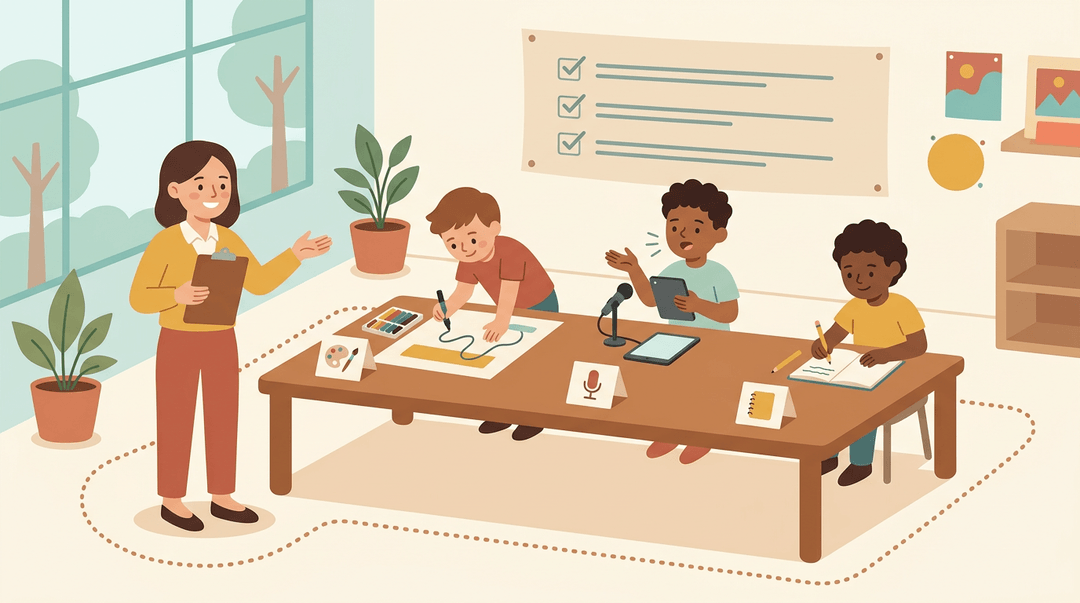
Student autonomy starts with control over learning decisions, less about following every step and more about taking charge of them. The four types of autonomy are:
- What to learn: choosing the topic within a unit.
- How to learn: choosing the method, like reading or building.
- When to learn: choosing the timing of tasks.
- Within structured goals: choosing the path to a fixed target.
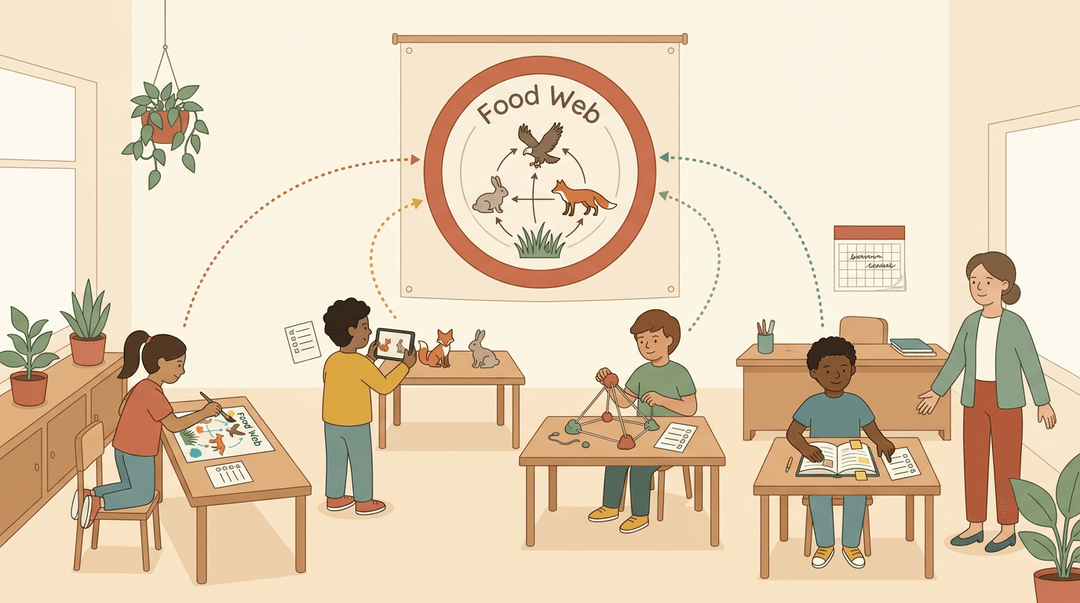
Those choices build self-direction and self-regulation, the habit of planning, checking, and adjusting your own work. Consider a seventh-grade science teacher whose students each explain a food web, some through a poster, others through a short video.
The standard never moves, yet students who usually stall start planning their next steps.
Guidance still matters when students lead
Autonomy isn't doing whatever you want, and it isn't the absence of guidance. Freedom without a frame falls apart fast.
Interdependence matters too: pairs and groups need roles so each choice supports the group.
As a facilitator, you ask good questions and offer options instead of handing out every answer. So what is teaching autonomy? It's the support you provide through choices, structure, and feedback that let students own their learning. Asking questions in place of handing out answers is the heart of student-centered learning.
The psychology of autonomy, competence and relatedness
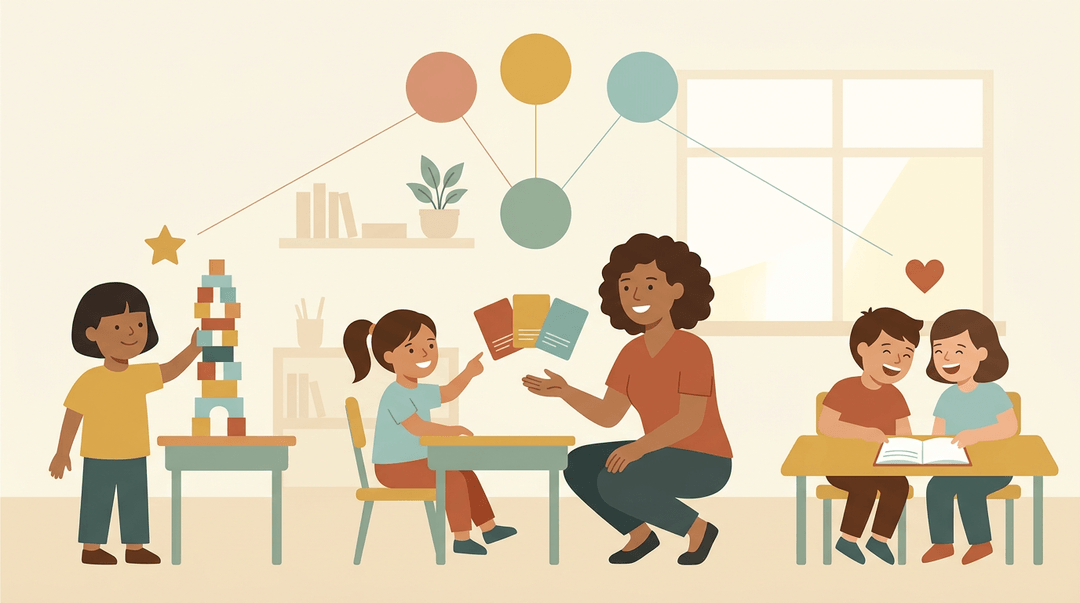
Self-Determination Theory holds that people engage most fully when three basic psychological needs are met: autonomy, competence, and relatedness. The word engage carries weight here, so start by defining student engagement in plain terms.
- Autonomy is feeling in charge,
- competence is feeling capable, and
- relatedness is feeling connected.
Autonomy support puts this into practice through moves like meaningful choices and explained purpose. Small moves send a big signal.
Why Student Autonomy Pays Off
Giving students a real say pays off beyond a single lesson.
How autonomy keeps students motivated
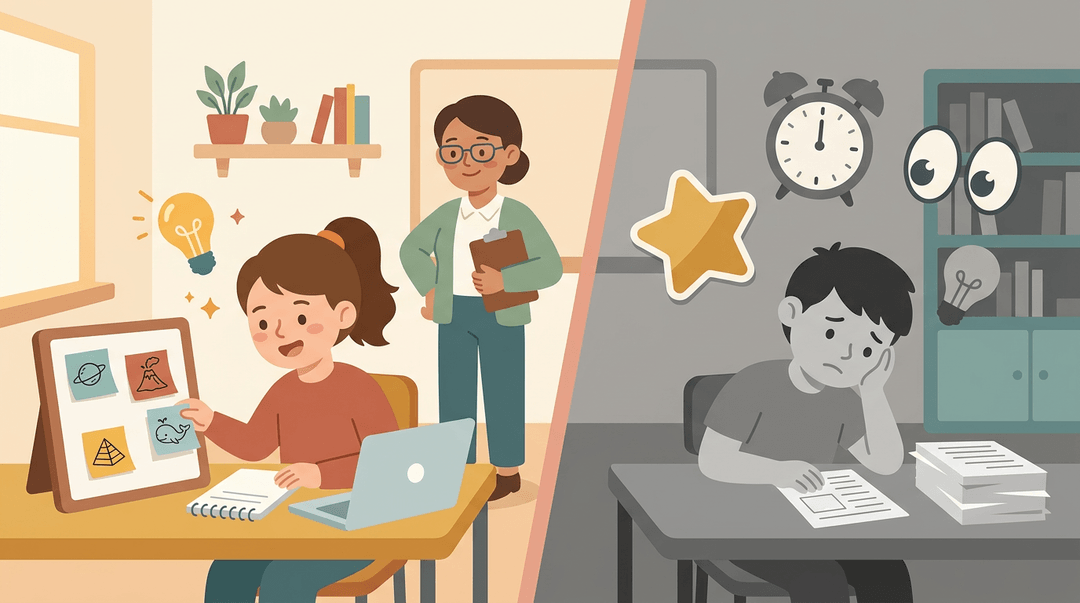
When students have some say, they engage because they want to, not just because they have to. That's intrinsic motivation: doing something because it matters to you.
A seventh-grade teacher who lets students pick their research topic gives them a reason to keep digging when a source gets confusing. Effort follows ownership.
Choice also builds responsibility, since students start to see their results as theirs.
Controlling rewards can undermine motivation. According to Self-Determination Theory, extrinsic rewards, deadlines, and close supervision tend to diminish intrinsic motivation, while providing choice points the other way.
Stronger grades and deeper thinking
Choice pushes students toward conceptual understanding, since explaining an answer requires it. Deciding what to study also builds critical thinking and deeper learning. The goal is understanding rather than completion.
Research on compulsory class attendance versus autonomy linked more autonomy with improved academic outcomes for higher-achieving students, who gained 0.07 standard deviations in high-stakes subjects.
Attendance fell by roughly four classes per year, though.
The same research also reported gains in university admission outcomes.
Less stress and stronger school connections
Stress often grows when everything happens to students. A bit of say over pacing or topics can ease that pressure, and students who feel in control may report less anxiety and higher satisfaction.
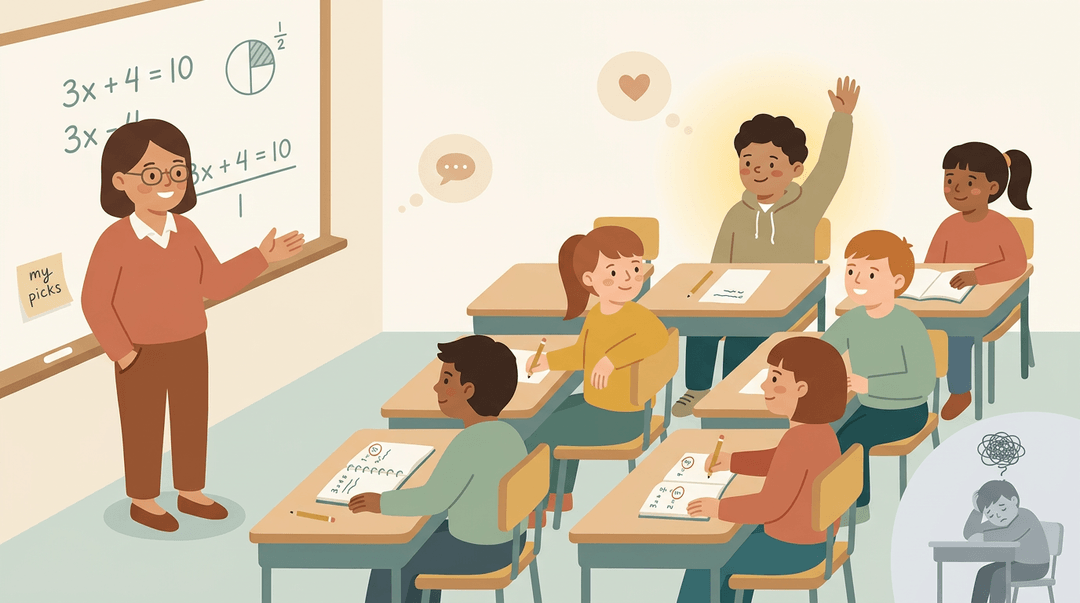
Choice also changes relationships. When you ask about students' goals and act on what they say, they'll see you as an ally, not a gatekeeper. That feeds school connectedness, the sense that students belong and their voices count.
Consider a middle school math teacher who lets each student choose two problems to share at the board. The quiet student who usually hides in the back row starts raising a hand.
Preparing for college, work and AI
Autonomy also builds habits that outlast any single class:
- Lifelong learning. Choosing, planning, and reflecting build habits that last.
- College and work. Both reward goal-setting and time management.
- Adaptability. The world changes fast, and we need learners who can adjust their approach.
- Learner agency in the age of artificial intelligence (AI). As AI takes on routine tasks, people who direct their own learning will have an edge.
Autonomy builds them early.
How Can Students Take Responsibility for Learning?
Students take responsibility for learning when they make real decisions, help shape the rules, and track their own progress. Owning their learning grows in small, deliberate steps, and the strategies below show how.
Giving students choices that actually matter
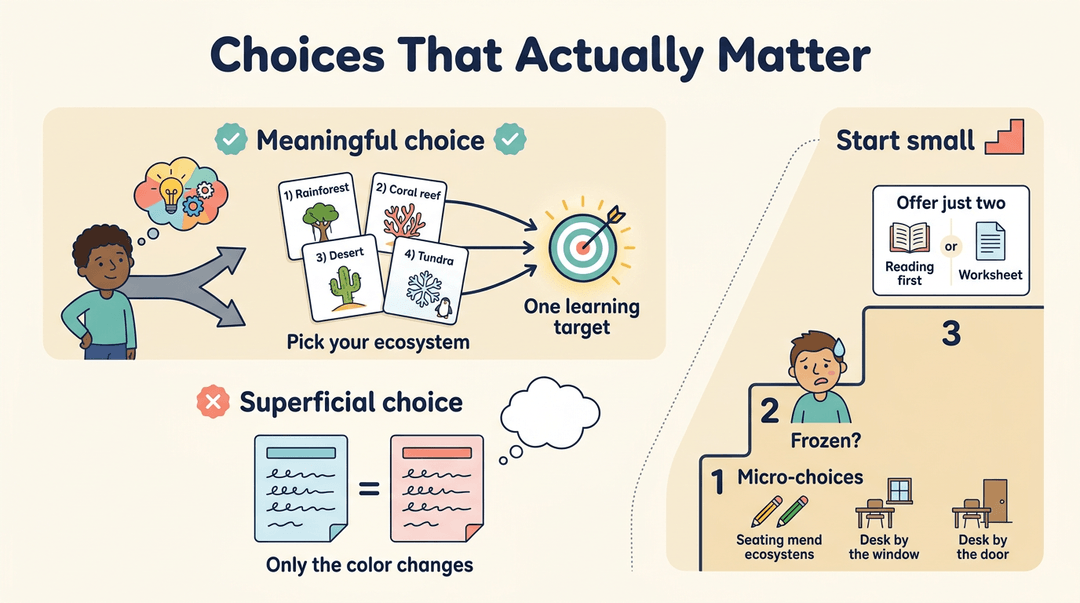
Let students choose the task or topic within a unit. A sixth-grade science teacher might let each student pick an ecosystem to research, which makes the work easier to care about.
Menus do the same job: offer three or four curated options that lead to one learning target.
Meaningful choices change how students think; superficial ones only change the handout's color.
Start with micro-choices, like which pencil to use or where to sit. If students freeze, try a two-option micro-choice: 'Reading first, or the worksheet?'
Letting students help shape the rules
Have students help co-construct rubrics and norms, then ask for their input on expectations so the rules feel like theirs.
Regular classroom dialogue keeps that agreement alive. A fifth-grade class added 'one voice at a time' after noticing interruptions made it hard to hear, and now students remind each other without the teacher stepping in.
Over time, move toward student-run governance, such as a rotating role that reviews the agreement.
Helping students plan, monitor and reflect
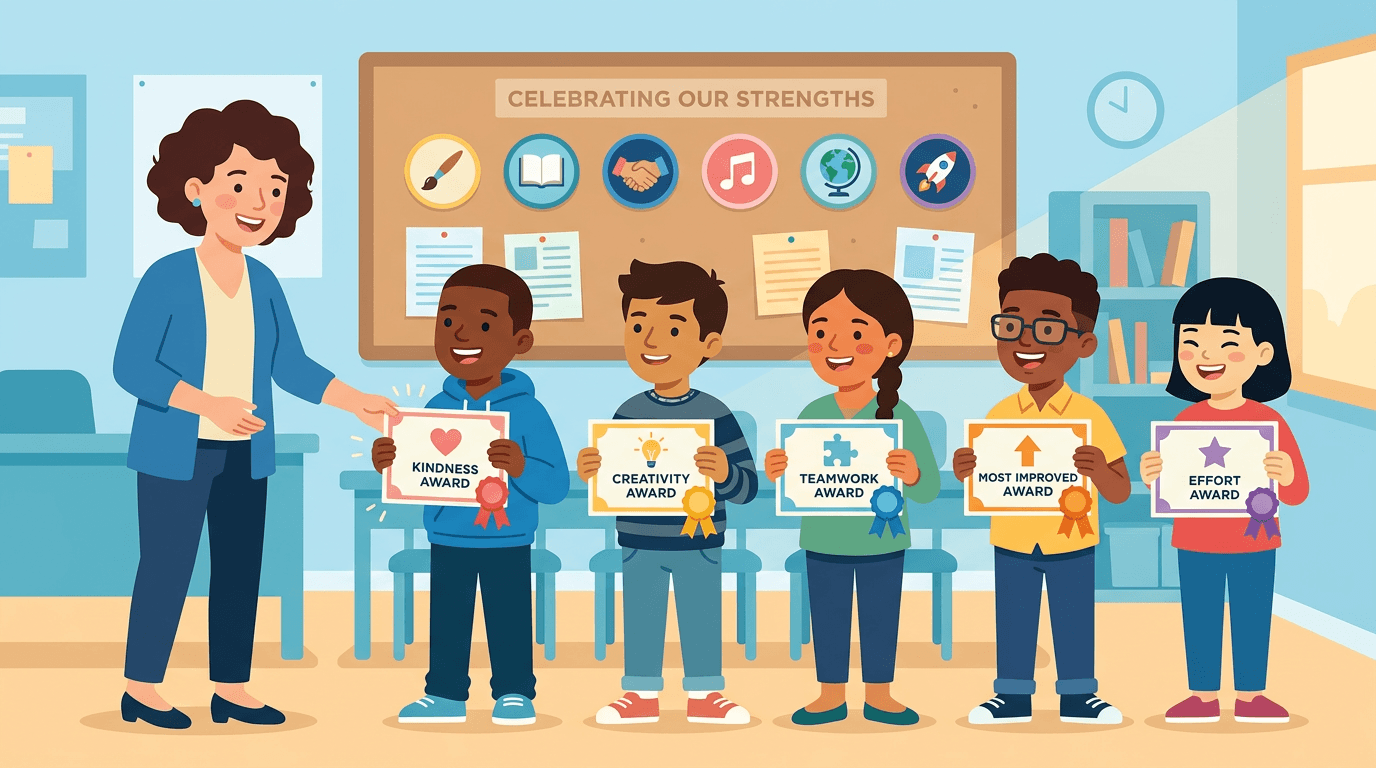
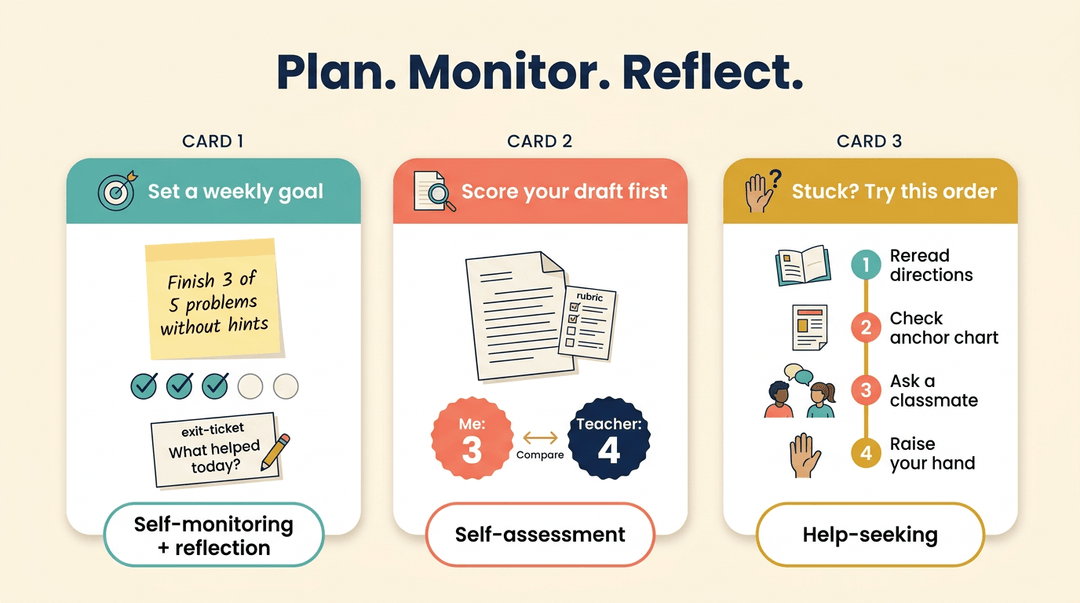
Set one specific goal each week, such as 'finish three of five problems without hints,' so success is clear. Use a quick exit check, 'What helped today?', to build self-monitoring and reflection. Once a goal is met, awards ideas for students offer a way to mark the success.
Have students score their own drafts against the rubric before you do. Comparing the two scores builds self-assessment skills.
Teach a help-seeking routine so students don't wait on you:
- Reread the directions.
- Check the anchor chart.
- Ask a classmate.
- Raise your hand if you're still stuck.
Building trust through the words teachers choose
Openness builds trust: students take risks when they believe mistakes are part of learning, so say that out loud and model it.
Watch your phrasing. Controlling language tells students what to think; non-controlling informational language gives them what they need to decide. Instead of 'Copy these steps,' try 'Which step will you start with?'
Your role shifts from answer-giver to guide, and partners who check each other's reasoning add a second source of support.
Expect pushback and keep routines steady
Expect initial resistance when you first hand over choices. It's normal, not a sign of failure.
Don't abandon scaffolding like checklists and sentence starters. Use gradual release of control: model, guide, then step back as readiness grows.
Give the shift time, and let your patience set the tone.
Keep routines steady through the transition, and keep autonomy inside your behavior system: students pick a calm-down spot or work location within existing expectations.
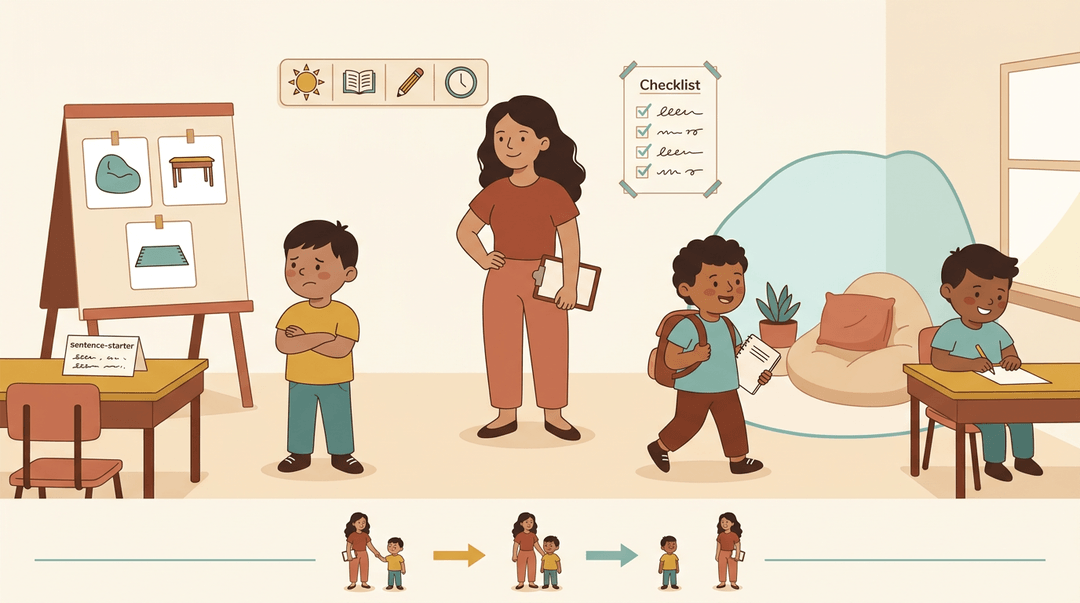
Build Autonomy with a Simple Classroom Routine
This four-step routine gives students real say in their learning while your expectations stay firm. Run it for a week or two, then widen it.
The starter routine
- Offer two-option choices
- Both options reach the same goal, and you're happy with either.
- Say: "You can start at the reading station or the writing station. Both get us to today's goal."
- Model goal setting aloud
- Let students hear you set and check a goal.
- Say: "My goal is to explain my answer in two sentences. I'll check that when I finish."
- Add exit-ticket reflection
- Students spend one minute on what they chose and how it went.
- Try: "Which choice did you make, and did it help you reach your goal?"
- Widen choices gradually
- Go from two options to three, then to open-ended, once students choose well.
- Only the number of options grows. Your routines stay the same.
Example: A first-grade teacher posts two center cards on the board. Students pick which center to visit first, and every group still visits all of them. At the door, each child points to a smiley or a neutral face for "Did my choice help me finish?" The teacher spots who needs more support by sorting the faces.
What it looks like by grade
| Grades | Choice students make | What it can look like |
|---|---|---|
| K-2 | Choose center order | Two center cards, student picks first stop |
| 3-5 | Pick project format | Two ways to show the same learning |
| 6-8 | Set weekly goals | Goal on Monday, reflection on Friday |
| 9-12 | Design inquiry project | Student drafts the question and plan, you approve |
Quick checks for supporting autonomy
Run through these when a choice isn't landing:
- Choices tied to goals. Every option leads to the same learning target.
- Informational, non-controlling language. Explain the purpose instead of pressuring.
- Clear routines remain. Transitions, materials, and expectations don't change.
- Time for reflection. Students get a minute to look back on their choice.
On the language check, the difference is whether students hear a reason or a threat:
- ✅ "Pick the format that lets you show your thinking best."
- ❌ "Pick one now, or I'll pick for you."
The first gives students information they can use to decide. The second takes the choice back while pretending to offer it.
Track student goals, choices, and reflections alongside lesson plans in EMStudio's online teacher planner.
More Say over Grading, Homework and Time
Students own their learning more when they have a say in how it's graded, what they practice, and how they use their time.
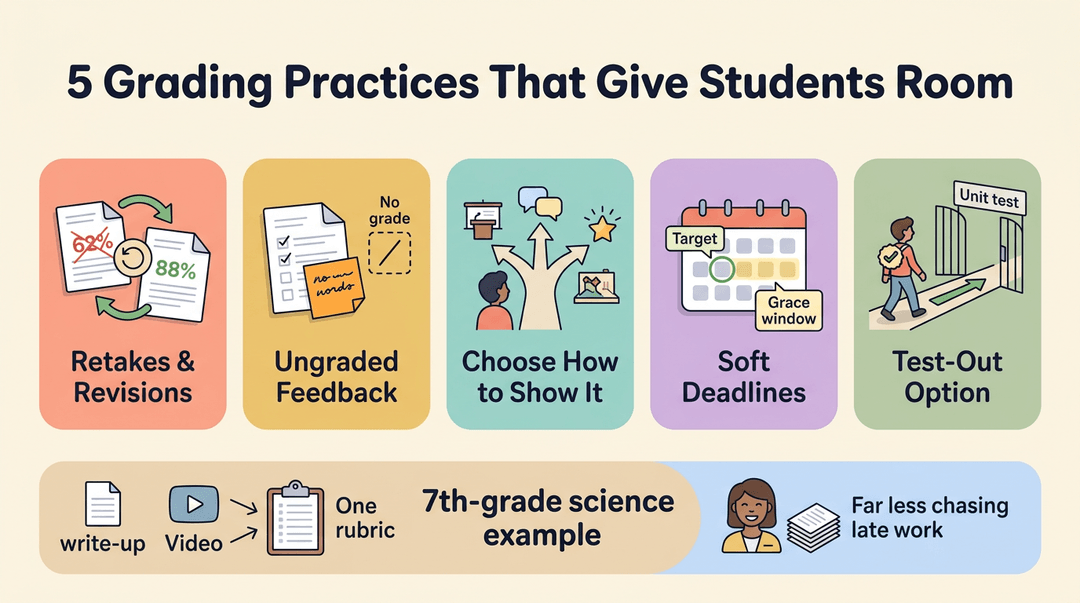
Grading practices that give students room
- Retakes and revisions: Let students redo work so grades reflect learning rather than a single attempt.
- Ungraded formative feedback: Offer comments and quick checks that don't count toward the grade.
- Alternative assessments: Let students show mastery through a presentation, explanation, or project.
- Flexible timing and soft deadlines: Set a target date with a short grace window, not a hard cutoff.
- Test-out options: Let students who already show mastery skip some or all of a unit test.
A seventh-grade science teacher lets students pick a lab write-up or video, scored on one rubric, and spends far less time chasing late work.
Homework and projects students design themselves
- Ungraded homework feedback: Return homework with comments, not points, so mistakes get fixed before the test.
- Curiosity projects: Students chase questions they genuinely wonder about, within your standards.
- Independent study courses: Older students plan their own study of a topic, with regular check-ins.
- Passion projects: Students build something they care about, guided by a clear rubric.
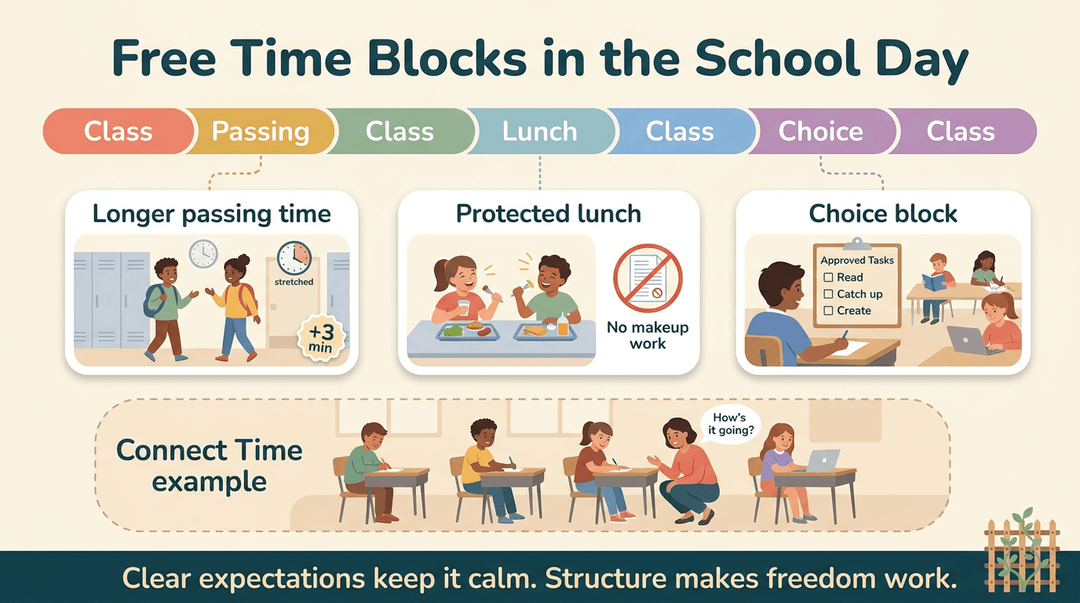
Free time blocks during the school day
- Longer passing times: Give students extra minutes between classes to reset.
- Protected lunch periods: Keep lunch free of makeup work so students get real downtime.
- Autonomous time blocks: Set a window where students pick tasks from an approved menu.
- Connect Time example: A Connect Time block might look like this: students choose approved tasks while you check in one-on-one.
Clear expectations keep these blocks calm. Structure is what makes autonomy work.
Real Examples from Schools and Classrooms
Here's how autonomy plays out, from the youngest learners to online courses:
Does a child have autonomy?
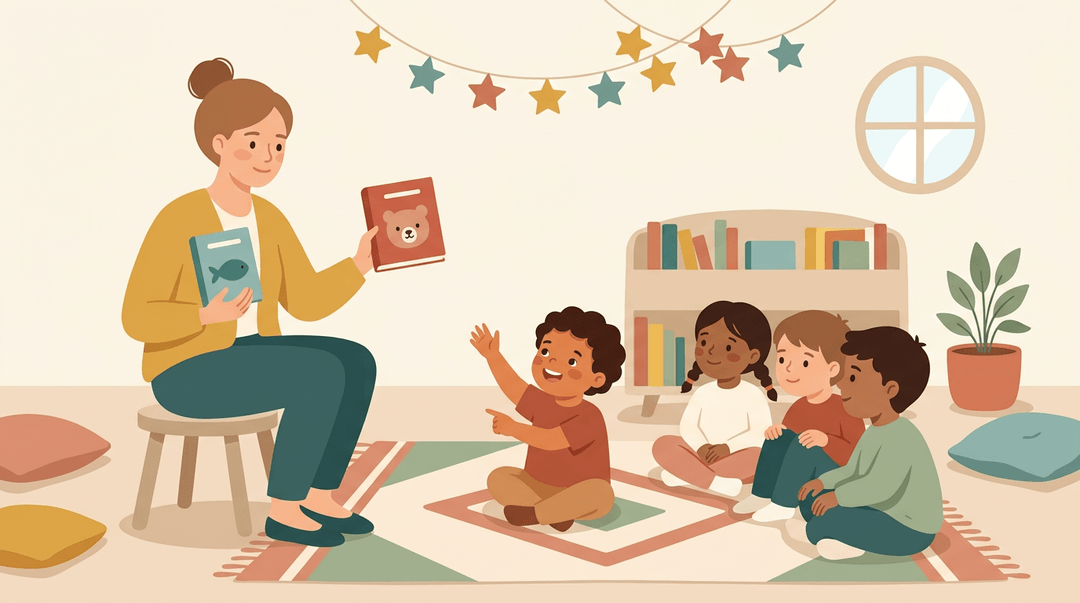
Yes, and it starts earlier than many expect. Autonomy isn't freedom from structure. It's choice within it. Think of a kindergarten teacher who lets students pick between two read-aloud books.
Those small decisions build the habit of owning a task, a habit that carries through primary school and into higher education.
In English as a second language (ESL) classrooms, choice can be a bridge: a newcomer who picks between two picture-based prompts can practice English without freezing up.
At home, parents offer the same structured choice when they ask whether homework comes before or after dinner. The options are limited, and the child still gets to decide.
Schools and programs that tried it out
Several schools have tested this in practice. Here's where to look:
- Village School, Colorado. Study how this school handles choice, then ask what it would look like in your room.
- Granville and Mason, Ohio. Compare these two Ohio districts to see how different communities put autonomy into practice.
- Learnlife Stages of Autonomy. This model helps you see where a student sits now and what the next step looks like.
- Personal learning plans. A personal learning plan lays out goals, strengths, and gaps, so choice has a clear direction.
Building autonomy in online courses
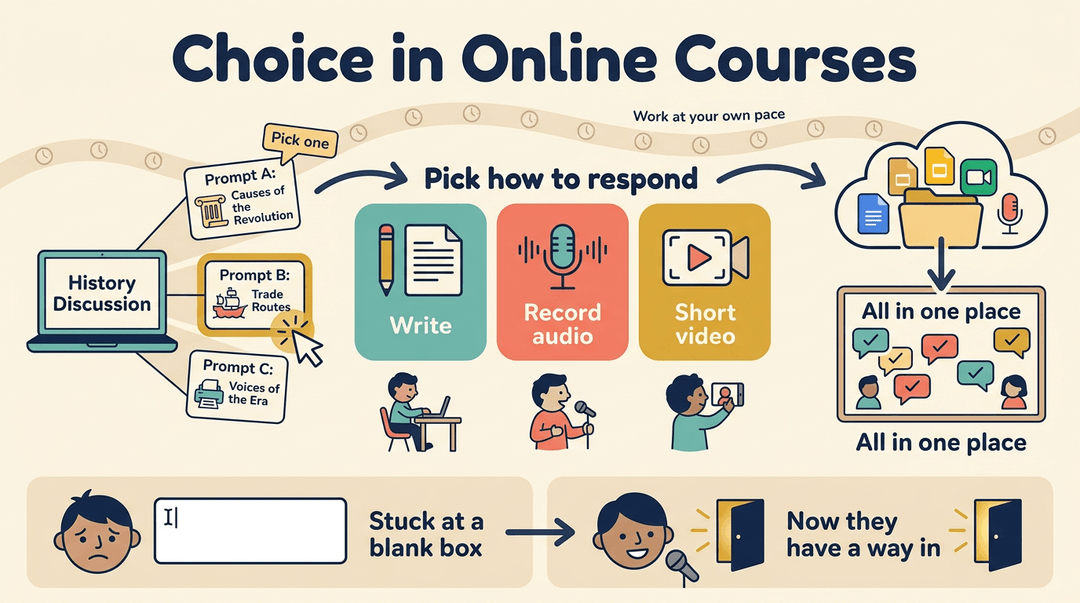
Online courses can feel rigid, but asynchronous instruction, where students work at their own pace, leaves real room for choice. Consider a high school history teacher who posts three discussion prompts and lets students pick one.
Responses can be written, audio-recorded, or short videos, so each student picks the mode that fits. Shared Google apps keep it all in one place, and students who might stall at a blank text box now have a way in.
What a Greek Study Found About Absences
What happens when students earn the right to miss class? A Greek study gives us a useful answer.
How the policy was set up
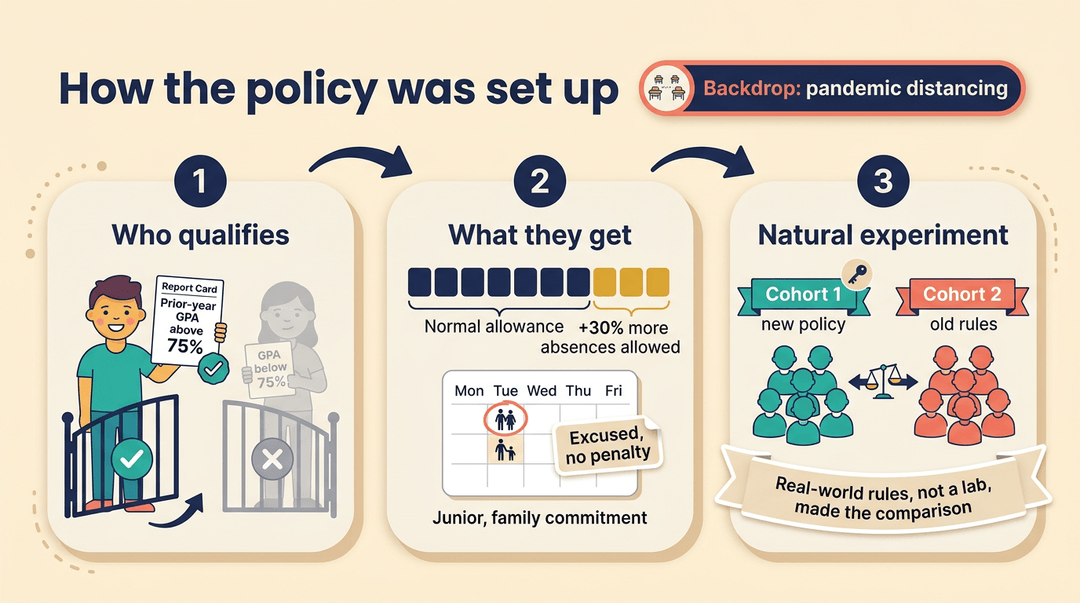
The backdrop was pandemic-era school distancing.
The core change was an extra excused absences policy, described in a study on compulsory class attendance versus autonomy: high school students with a prior-year grade point average (GPA) above 75% could miss up to 30 percent more classes without penalty.
Consider an eligible junior who needs a Tuesday off for a family commitment, excused without penalty.
The study used two cohorts of students, making it a natural experiment: real-world rules, not a lab, created the comparison.
What changed for students
What changed was less about attendance and more about trust. The first visible change was more excused absences.
According to a Centre for Economic Policy Research (CEPR) column, the policy raised targeted students' performance in high-stakes subjects (those with major consequences) by 0.07 standard deviations, a statistical measure of change, and it was associated with better university admission outcomes.
Autonomy doesn't look the same in every room, so flexibility beats a single rulebook.
Lessons for recovery, attendance and careers
If you're planning pandemic recovery, ask which students have earned more flexibility and how they'd use it. The study's framing also asks whether a fixed seat requirement is always the most efficient use of learning time.
A paper by Sofoklis Goulas on noncognitive skills (the self-management and persistence traits that don't show up on tests) finds that weaker rankings have persistent, nonlinear effects on short-run academic performance and longer-run educational trajectories.
Small choices add up, and those trajectories are where career consequences come into view.
When students have a real say in how they learn, they tend to get more invested and take real ownership of their progress. Structured choice gives them that voice while you hold onto the expectations and routines that keep your classroom on track.
Ready to keep your classes, rosters, and timetables organized as autonomy grows? Check out Classroom Management to organize everything in one workspace.
References
- The Short-and Long-Run Impact of Comparative Noncognitive Skills by Sofoklis Goulas :: SSRN — papers.ssrn.com (2026)
- Compulsory class attendance versus autonomy — doi.org (2023)
- Self-Determination Theory — selfdeterminationtheory.org
- Student autonomy and academic performance — cepr.org
Frequently asked questions
What is student autonomy in the classroom?
Student autonomy is learners having a meaningful say in how they learn and taking ownership of learning decisions. It means making choices within clear expectations and goals, not working without guidance or structure.
What is teaching autonomy?
Teaching autonomy is the support teachers provide so students can own their learning. Teachers offer meaningful choices, clear structure, guidance, and feedback while helping students make and manage their own decisions.
What are 5 learning strategies?
Five useful learning strategies are setting specific goals, planning how to reach them, monitoring progress, reflecting on what helped, and seeking help systematically. Students can also choose a topic or format for showing their learning within clear expectations.
What are the four types of autonomy?
The four types are choice over what to learn, how to learn, when to learn, and the path taken to reach a structured learning goal. Each gives students some control while keeping the intended outcome clear.
How can students take responsibility for their own learning?
Students can take responsibility by setting goals, choosing among meaningful learning options, tracking their progress, and reflecting on results. They can also help shape classroom rules, assess their own work, and follow a routine for seeking help when stuck.
Why is autonomy important for children?
Autonomy helps children build self-direction, responsibility, and self-regulation, including planning and adjusting their work. Meaningful choices can also support motivation, competence, and a sense that their voice matters, while clear structure keeps them supported.
Does a child have autonomy?
Yes. Children can exercise autonomy through age-appropriate choices within clear limits, such as choosing between two books or deciding whether to do homework before or after dinner. These small decisions help build ownership while adults maintain appropriate expectations and guidance.