21st Century Skills for Students: A Complete Guide

Jump to section
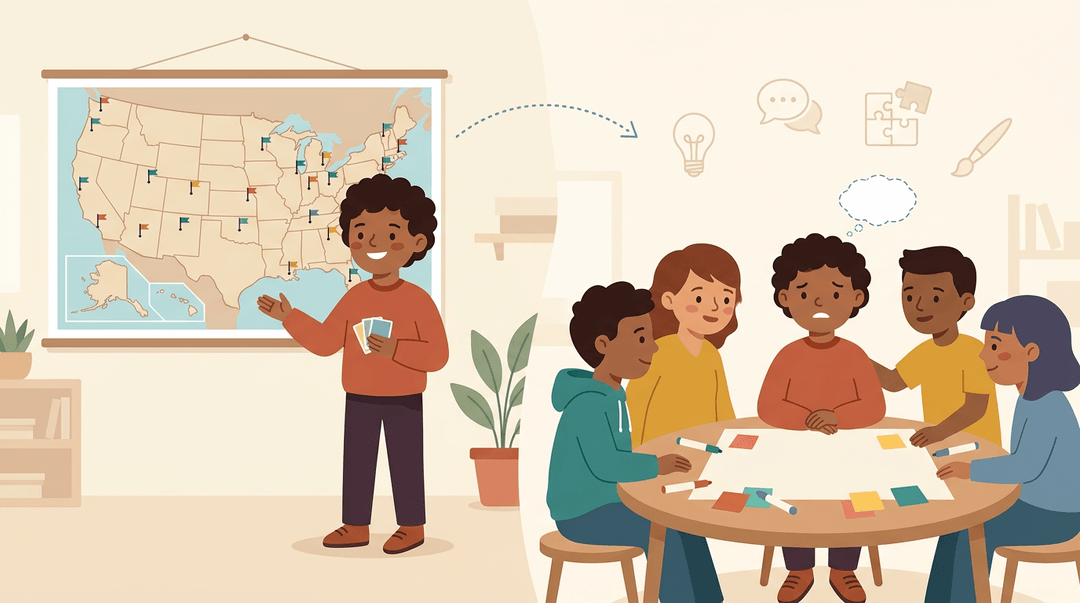
Picture a student who can recite every state capital but freezes when a group project needs a plan. Knowing facts matters, but school also has to prepare kids to think, work with others, and adapt. That's where 21st century skills come in.
In this post, we'll break down what these skills are, sort them into clear groups from the four Cs of critical thinking, communication, collaboration, and creativity to everyday life skills, and show you how to teach and track them in your classroom.
What Are 21st Century Skills for Students?
21st century success skills are the abilities students need to succeed in school, in life, and at work.
How these skills prepare students for success
These skills fall into three areas:
- Academic success for reasoning through problems in school
- Personal success for managing time and communicating clearly
- Professional success for collaborating and adapting to change
The big shift is away from rote learning: less about memorizing, more about applying. Students also need to pick up new tools quickly in a fast-changing, technology-driven world.
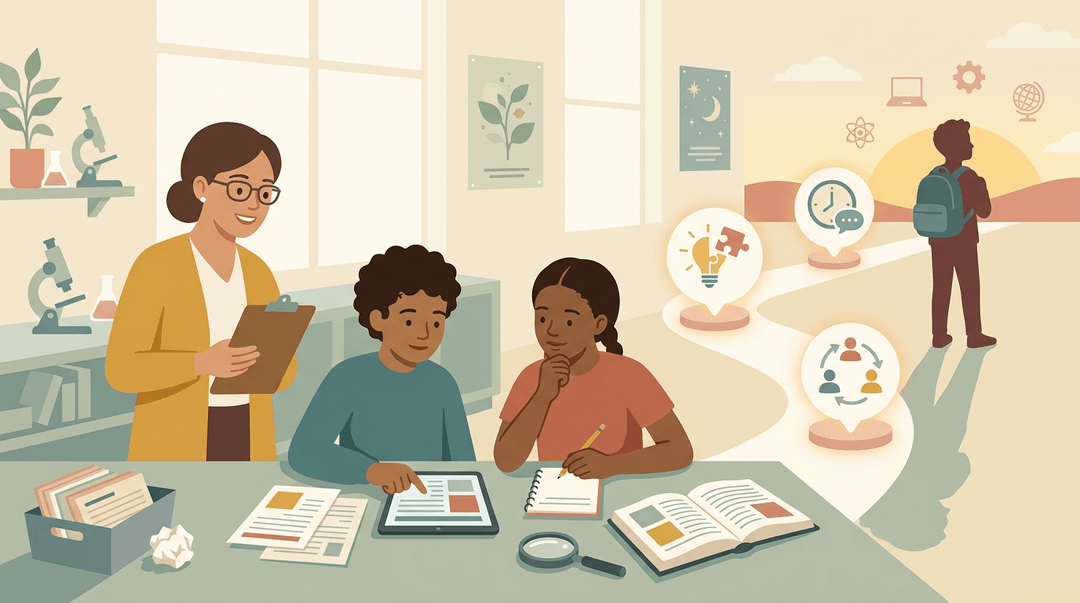
Consider a middle school science teacher whose students compare two sources before writing a lab report. Weighing evidence is a skill they'll carry into every class.
The result is a well-rounded, future-ready student who thinks, communicates, and keeps learning. That's the goal.
Changing jobs and the skills they need
New technology is creating new jobs. The Future of Jobs Report 2025 forecasts a net gain of 78 million jobs by 2030, driven by technological change, the green transition, and demographic shifts.
Some skillsets are becoming obsolete. A Deloitte Insights article notes that in technical fields, “there is constant pressure to master new technologies or risk becoming instantly obsolete.”
That's why a growth mindset matters: the belief that ability grows with effort and practice. Lifelong learning doesn't stop at graduation, so students need to keep building new skills.
Policies and frameworks shaping these skills
Several frameworks help define these skills, including the P21 Framework, a widely used model, and the ISTE Standards from the International Society for Technology in Education.
In India, the National Education Policy 2020 (NEP 2020) emphasizes these skills, and the Central Board of Secondary Education (CBSE) and National Curriculum Framework (NCF) guidelines shape classroom practice.
Frameworks give you a map, but your classroom is where the skills get built.
The Core Skills Behind the 4 Cs
The 4 Cs (critical thinking, creativity, collaboration, and communication) are the heart of 21st century learning, and they form the foundation of the broader 7 C's of lifelong skills. Each one breaks down into skills you can teach.
Thinking critically to solve real problems
Critical thinking begins with analyzing and evaluating information, which means sorting what's accurate from what's shaky.
Students then explore hypothetical situations and solutions by asking "What would happen if…?" and trace cause and effect connections to see why something happened, not just that it did.
The goal is independent, evidence-based decisions. Evidence wins the argument.
Coming up with fresh, original ideas
Out-of-the-box thinking pushes past the first answer that comes to mind, and brainstorming new possibilities gives students room to generate ideas before anyone judges them.
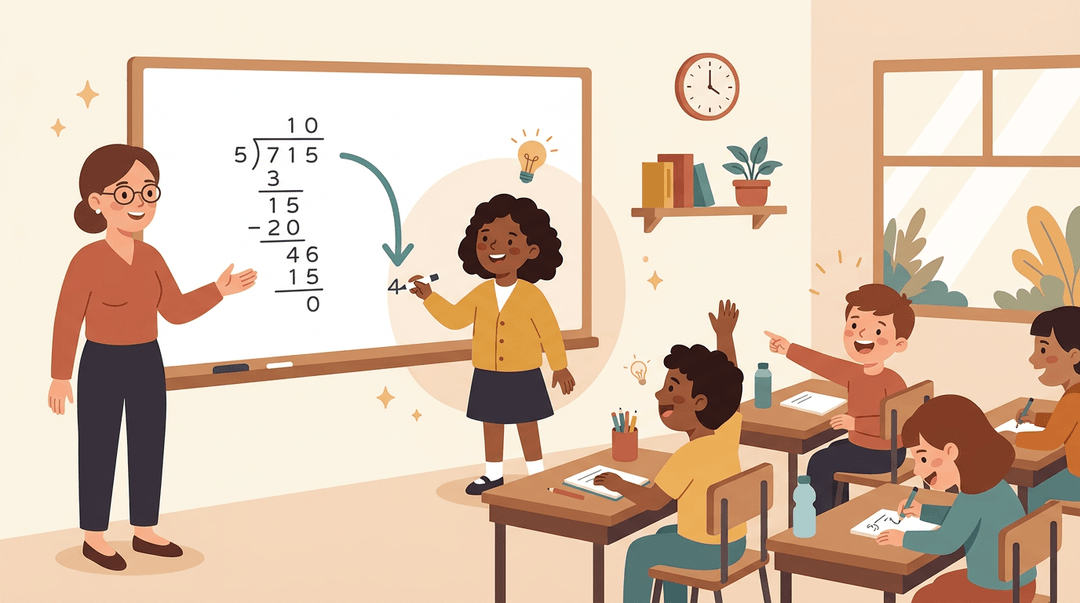
Students also practice questioning standard procedures, asking whether the usual method is still the best one. Those who do this stand out among peers, not by copying the answer on the board but by offering original thinking.
When a fourth-grader finds a shortcut nobody taught her, her teacher invites her to share it, and soon the whole class is trying the method.
Working together toward shared goals
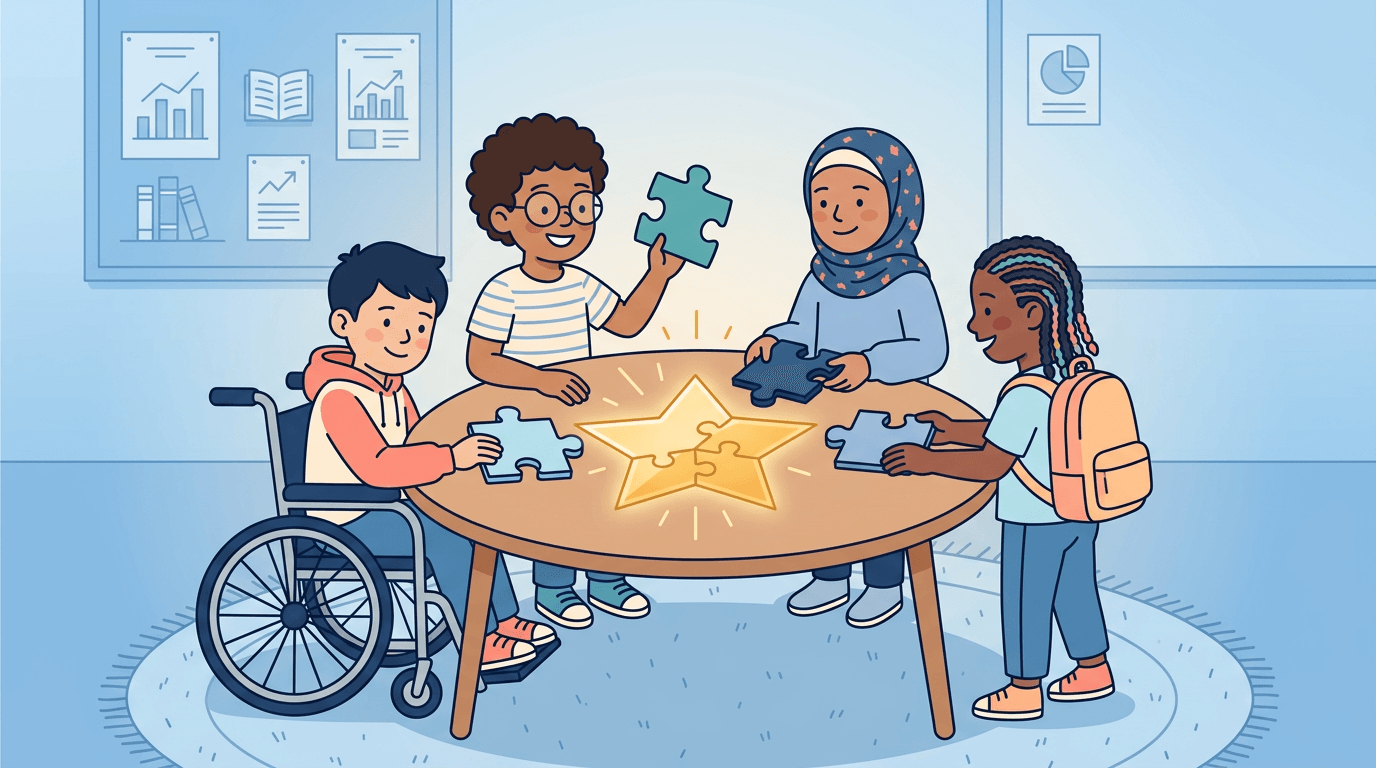
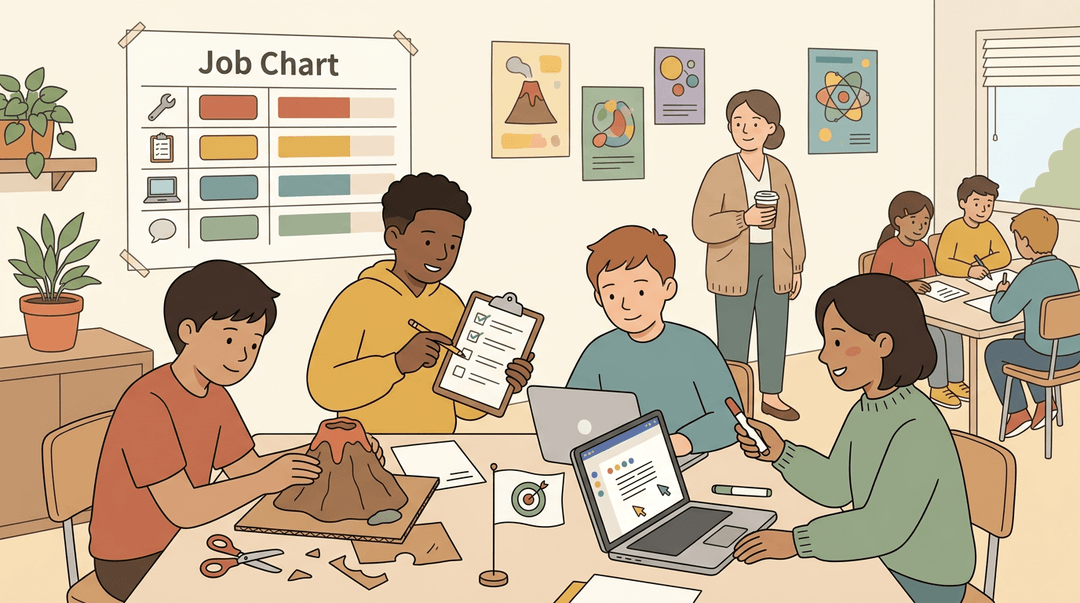
Collaboration is more than seating students in groups. Teamwork toward shared goals means everyone knows the target, and each member carries an equal share of workload.
Students also practice delegating roles and resolving conflicts, so each person has a clear job and disagreements get settled without the teacher stepping in every time.
Digital and physical teamwork both count: co-editing a shared document and building a model at a table rely on the same habits.
Consider a sixth-grade science teacher who gives every group a job chart. The payoff: fewer "that's not my job" complaints and projects every student can explain.
Communicating ideas clearly, in any setting
Clear communication includes verbal and non-verbal signals like tone, eye contact, and posture. It's less about what students say and more about how they say it.
Choosing the right medium, whether a poster, a recording, or a written report, starts with the message and the audience.
Evaluating message reliability means checking facts before passing them along, and speaking up when necessary means asking the question instead of staying silent. Clear messages get heard.
Which Life Skills Matter Most for Students?
Whether you searched for basic life skills or top student skills, the answer is everyday habits. Here's the core, in three clusters.
Managing your time and staying disciplined
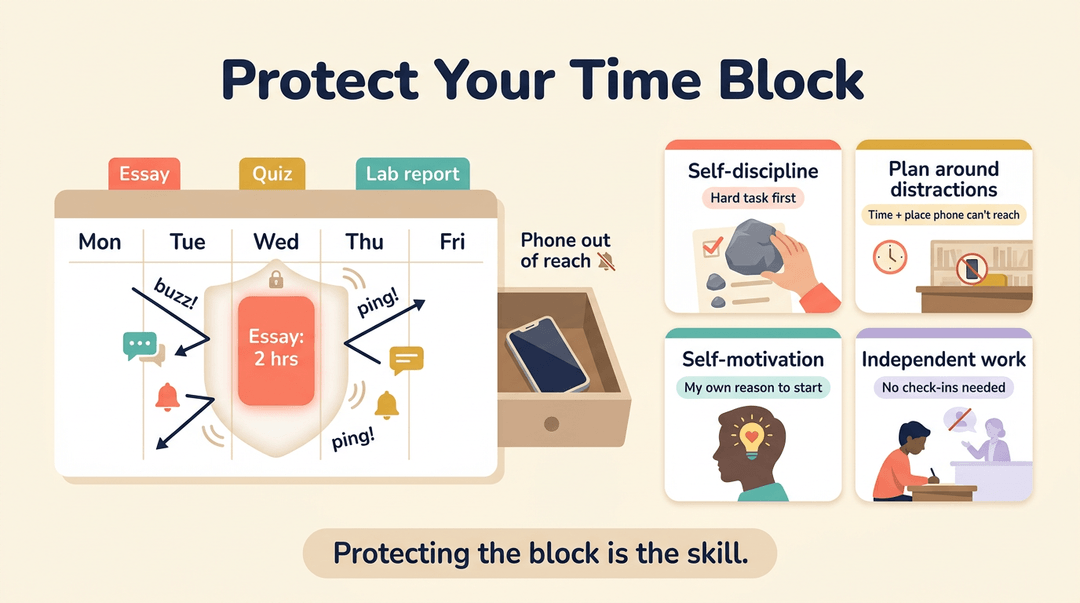
Time management is less about how much time a student has and more about how they protect it. Picture a student with an essay and two other deadlines in one week.
Blocking out a study session and silencing the phone gets the essay done. Protecting that block is the skill.
- Self-discipline. Starting the hard task first.
- Scheduling around distractions. Picking a time and place the phone can't reach.
- Self-motivation. Finding a reason to start that comes from within.
- Independent work. Finishing without someone checking in every few minutes.
Adapting to change and leading others
When a group partner moves away two days before a project is due, the student who reassigns the work still finishes on time. Adapting is less about having every answer and more about knowing how to find the next one.
- Flexibility in changing environments. Adjusting when the room, schedule, or team shifts.
- Leadership and social skills. Speaking up, listening well, and moving the group forward.
- Emotional intelligence. Noticing your own feelings and reading others' before you react.
- Learn, unlearn, relearn. Letting go of what isn't working and trying a better approach.
Setting goals and building new skills
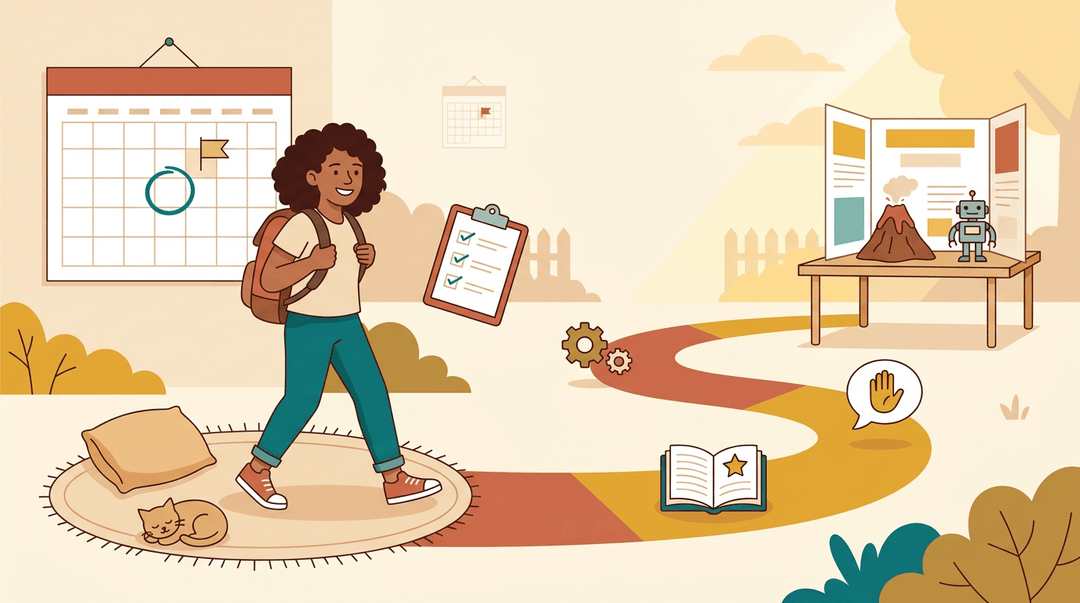
Real growth happens just outside the comfort zone. Picture a junior who enters the science fair in September, not the week it closes, and has time to revise. Early beats last-minute.
- Personal and career objectives. Setting specific targets.
- Exploring new things. Trying the robotics club or an unfamiliar elective.
- Leaving comfort zone. Choosing the harder class or volunteering to speak first.
- Seizing opportunities early. Applying before the deadline week, not during it.
Building Literacy and Technical Know-how
Reading and writing still anchor learning, but we also want students to judge screen content and handle everyday tools.
Making sense of digital media and information
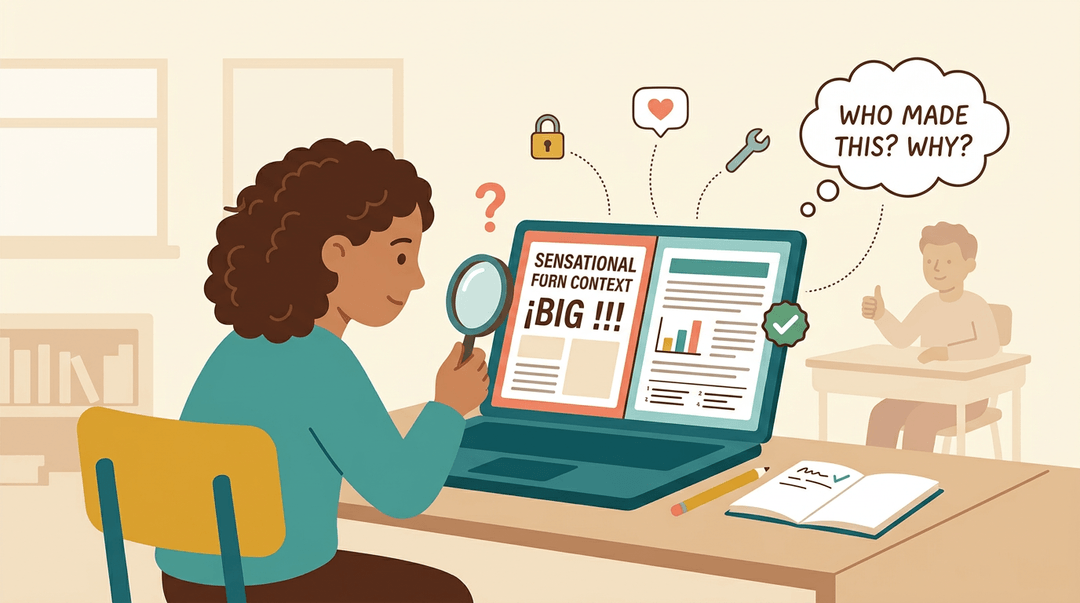
Start with information analysis: asking whether a source is accurate, current, and useful before acting on it. A sixth grader comparing two articles notices one cites evidence while the other just sounds confident, so she checks before copying a fact.
Media literacy asks the next question: who made it, why, and what's left out? The shift is from what a post says to why it was posted.
Technology literacy means knowing how to fix a simple device or app problem instead of quitting at the first error. Navigating the digital world means protecting passwords, keeping personal details private, and treating classmates respectfully.
Screens reward speed. Judgment has to be taught.
Hands-on tech skills for everyday use
The basics come first: word processors, spreadsheets, and shared documents show up in nearly every subject. A student who can format a file and share it for feedback walks into class with more confidence.
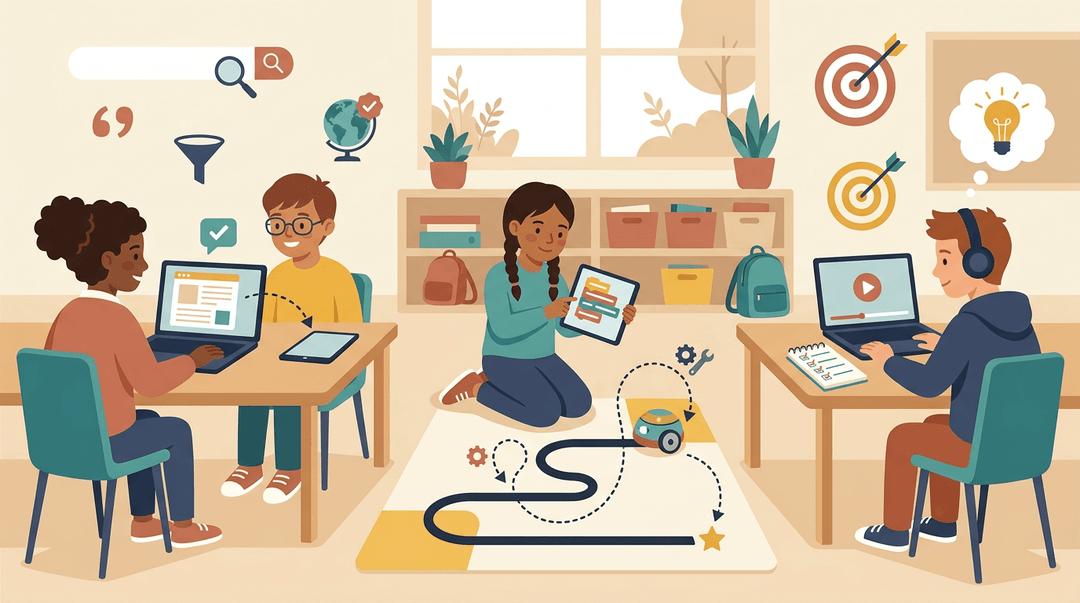
Searching the internet well takes practice. Students learn to use specific keywords, quotation marks for exact phrases, and filters, then check where each page came from.
Coding and robotics build step-by-step thinking and make it visible. A middle school teacher might start with block-based coding, where students snap instructions together.
Later, you'll see one student program a robot to follow a line, testing, fixing errors, and retrying until it works.
Learning online works only when students can set a goal, pace themselves, and check their own progress. The aim is to understand the material, not just finish the video.
Teaching These Skills in Your Classroom
Use this guide to fold one skill into your week without adding a separate course. Run the weekly cycle, adjust it by grade band, and keep a light record of growth.
The weekly skill lesson
Keep the cycle small so it actually happens every week.
- Pick one skill for the week
- Post it where students can see it: "This week: collaboration."
- Model it with examples
- Say: "Watch how I disagree politely: 'I see it differently, and here's why.'"
- Assign a short group task
- Ten minutes works: "Rank these three tools as a team and agree on one."
- Reflect with an exit ticket
- Ask: "One thing I did to help my group today was..."
Example: A fourth-grade teacher picks communication for the week. She models a clear summary on Monday and has pairs summarize a read-aloud on Wednesday. On Friday, students finish the sentence, "I made my idea clear by..."
⚠️ Watch out: Teaching three skills at once blurs all of them. One skill a week gives students time to practice and you time to notice.
What it looks like by grade band
| Grade band | Try this | What it grows |
|---|---|---|
| K-2 | Classroom jobs, sharing routines | Responsibility, cooperation |
| 3-5 | Group research posters | Collaboration, research |
| 6-8 | Debates, digital projects | Argument, technology use |
| 9-12 | Capstone projects, portfolios | Independence, reflection |
Routines that keep group work running
Skills only show up when groups run smoothly. Teach these routines early, then repeat them until they're automatic.
- Assign collaboration roles. Rotate facilitator, timekeeper, recorder, and reporter each task.
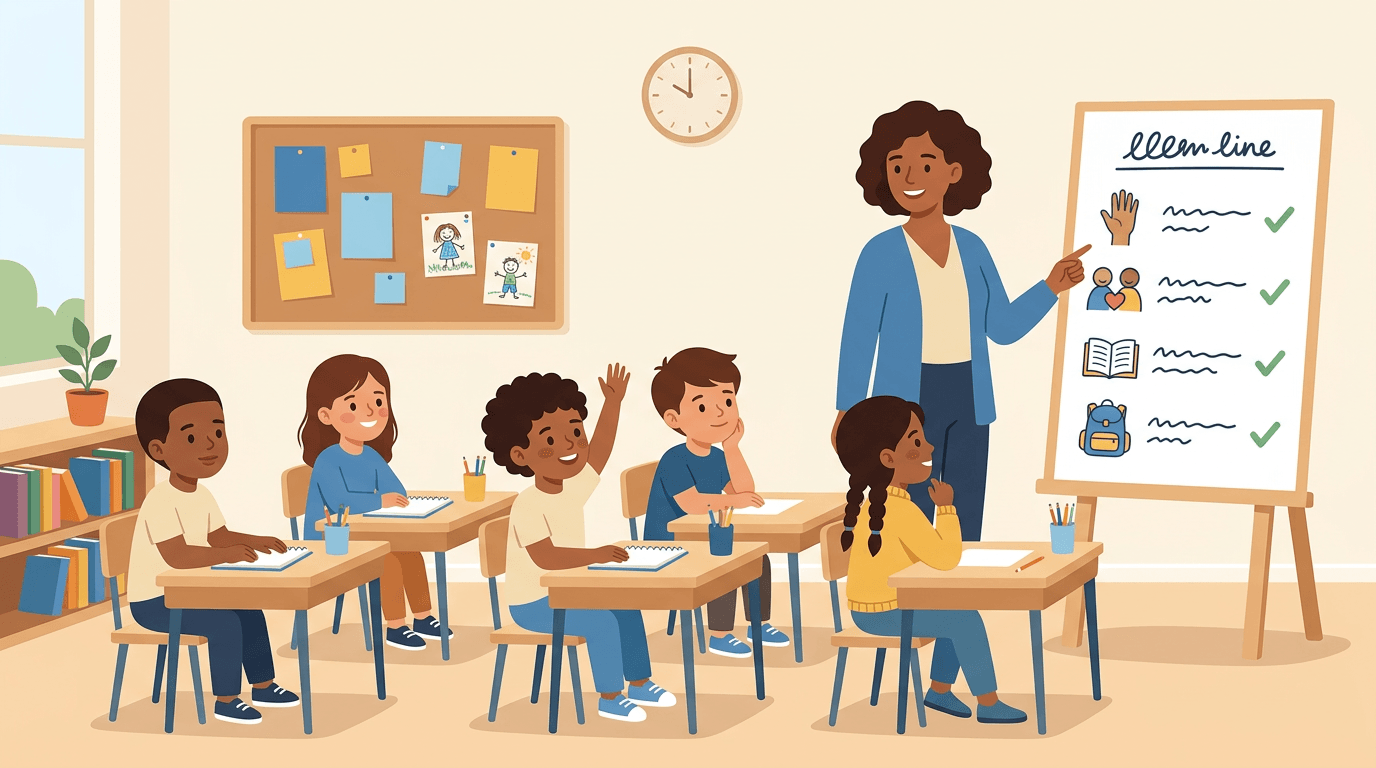
- Teach group-work norms. Co-write two or three with students: "One voice at a time. Everyone shares."
- Smooth the transitions. Use one signal, like a countdown from five, and a posted "next step" on the board.
- Run self-regulation check-ins. Ask for thumbs up, sideways, or down: "Am I focused on our task?"
Tracking progress with a quick checklist
Before you assess a skill, confirm you have these four pieces:
- Skill indicators defined. Name two or three observable behaviors, such as "listens without interrupting."
- A 4-level rubric ready. Use the same four levels for every skill so students learn the scale.
- Peer feedback collected. One prompt is enough: "One thing my partner did well was..."
- Evidence logged in portfolios. Save an exit ticket, a photo of the poster, or a short note.
Here's a sample rubric row for the indicator "listens to teammates":
| Level | Looks like |
|---|---|
| 1: Beginning | Talks over others, needs reminders |
| 2: Developing | Listens sometimes, drifts off |
| 3: Proficient | Listens and builds on ideas |
| 4: Advanced | Listens, builds, and draws in quiet voices |
Plan skill-based lessons and track student progress in EMStudio's online teacher planner.
Why Building These Skills Pays Off
Teaching these skills takes planning time, so it's fair to ask whether they earn their place. They do, and the payoff reaches well past the end of the school year.
Gains for students and their careers
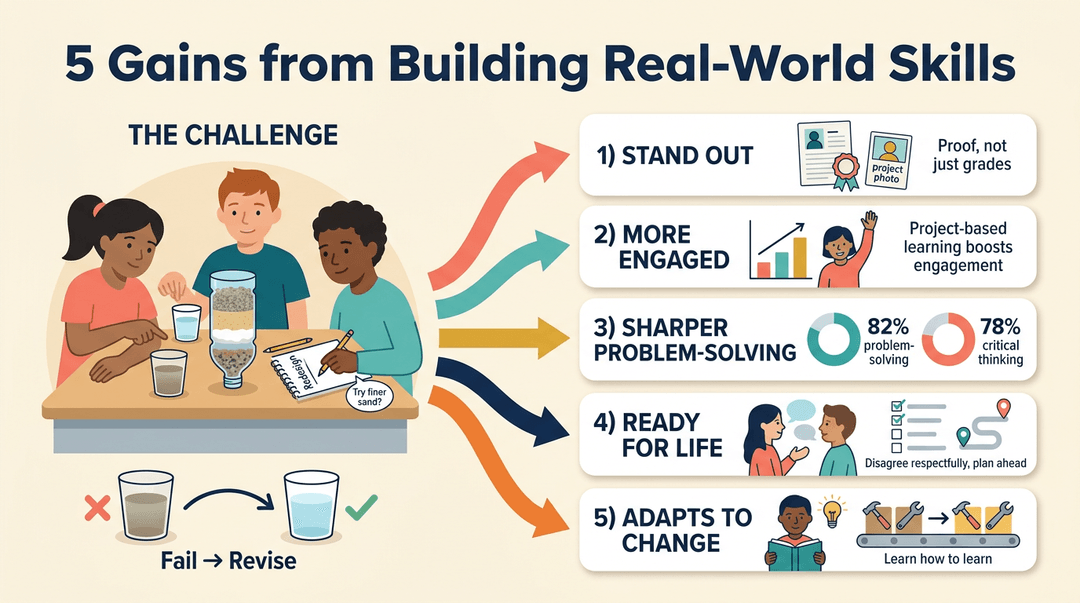
Building these skills pays off in five clear ways:
- Competitive advantage. Students who collaborate, communicate, and think critically walk into college applications, interviews, and first jobs with proof of what they can do, not just a list of grades.
- Higher engagement. A recent study on project-based learning (where students tackle extended, real-world projects) found a direct positive effect on student engagement.
- Better problem-solving. In one science education study, 82 percent of students showed improvement in problem-solving, and 78 percent improved in critical thinking.
- Preparation for life challenges. Working through a tough problem, disagreeing respectfully, or planning a multi-step task builds habits that carry well beyond the classroom.
- Adaptability to workplace change. Tools and job tasks keep shifting. Students who learn how to learn can pick up new skills without starting from scratch.
Consider a seventh-grade science teacher who turns a water filtration unit into a team challenge. Instead of a worksheet, each group designs a filter, tests it, and revises after a failed round.
The lesson is less about what the filter does and more about how students reason through a failure. The students who usually drift start debating which design works best, and they stay with it. That's engagement you can see.
Putting These Skills into Classroom Practice
Skills grow through practice, and practice happens in your daily routines.
What a 21st century classroom looks like
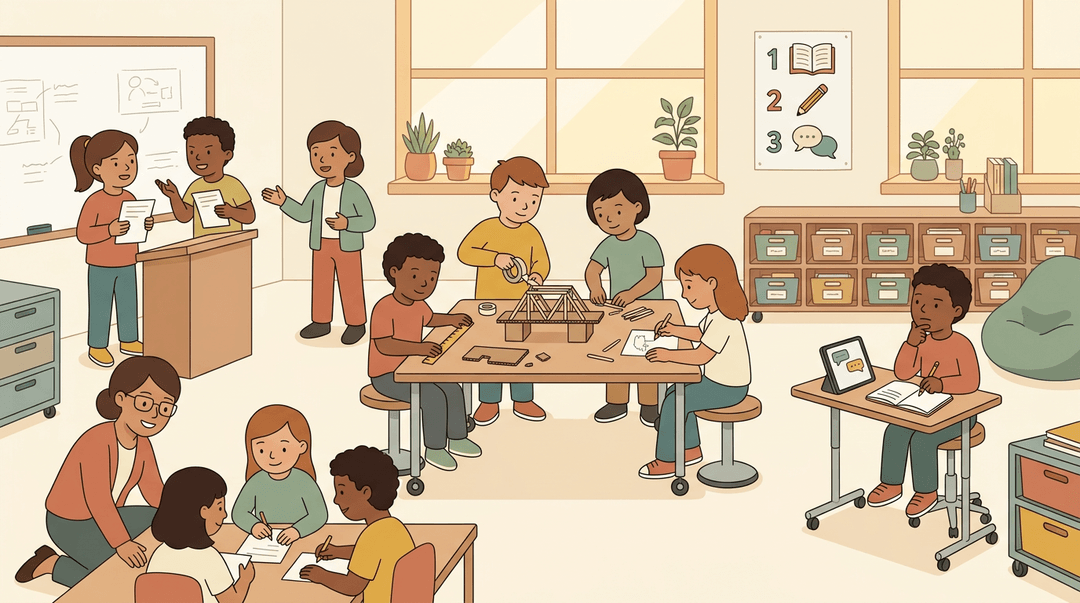
A 21st century classroom looks more like a workshop:
- Activity-based learning. Students build understanding by doing.
- Inquiry-based, student-led debates. Learners research both sides and lead the talk.
- Flexible collaborative spaces. Movable furniture supports teamwork and focus.
- Artificial intelligence (AI) and digital tools. Students get fast feedback but own the thinking.
- Routines that build student independence. Predictable steps help students know what's next.
Consider a fourth-grade teacher who posts a three-step "stuck" routine: reread, try, then ask a peer. Fewer interruptions free her for the group that needs her most. Small routines, big independence.
Teaching methods worth trying in class
These put students at the center:
- Flipped classrooms. Students watch lessons at home, then practice with you.
- Blended learning. Online tools and face-to-face teaching work together.
- Gamification. Points, badges, and levels turn practice into a challenge.
- Project-based learning. Students solve a real problem and present a solution.
- Social-emotional learning (SEL). Students build self-awareness, empathy, and teamwork.
A middle school math teacher might flip one unit, so practice happens with help, not alone. Stuck questions get answered on the spot, and you'll catch gaps early.
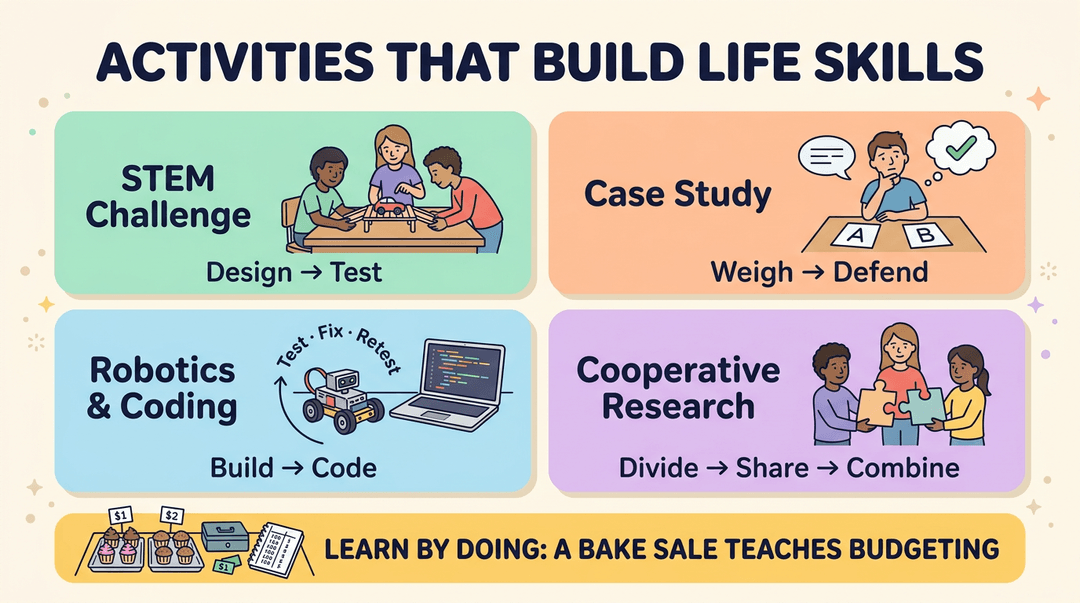
Which activities build life skills for students?
Hands-on challenges build skills alongside content:
- Science, technology, engineering, and math (STEM) challenges. Teams design and test solutions.
- Case study analysis. Students weigh options and defend a choice.
- Robotics and coding. Students test, fix, and retest their designs.
- Cooperative research. Teams divide tasks, share sources, and combine findings.
Life skills activities for students are everyday tasks, like budgeting a class fundraiser or running a mock job interview. A high school class tracking a bake sale's costs learns budgeting by doing it.
How Schools Assess and Support These Skills
Knowing which skills matter is half the job. Here's how to check growth, and how the whole school can help.
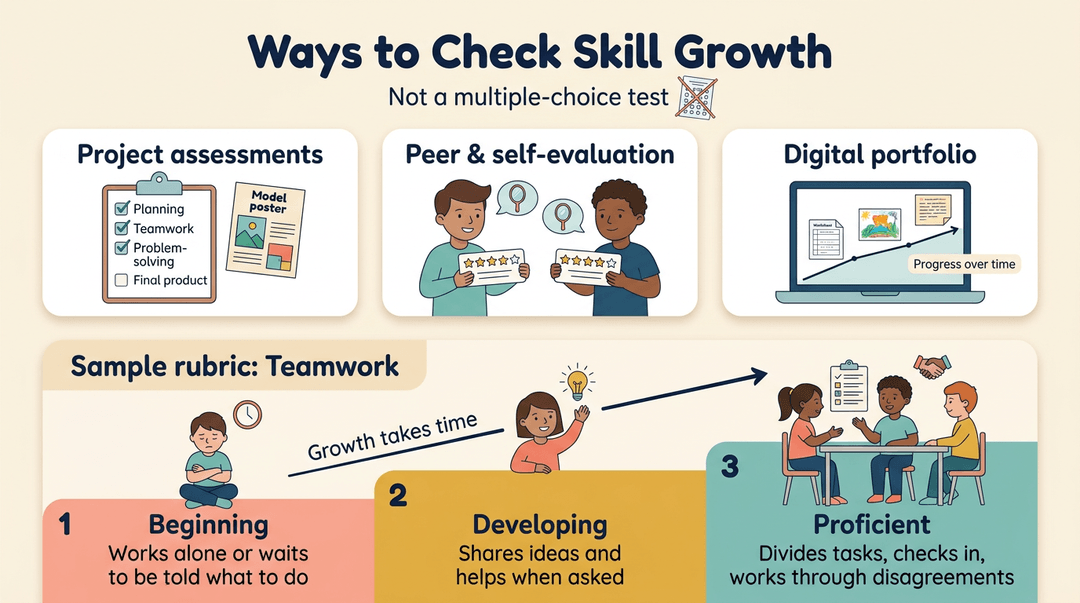
Ways to check skill growth
These skills don't show up on a multiple-choice test, so gather evidence that fits:
- Project assessments: Score the skills a project requires, not just the finished product.
- Peer and self-evaluation: Students rate their own contributions and a classmate's, which builds reflection.
- Digital portfolios: A digital portfolio collects work samples, reflections, and feedback so progress is visible over time.
Skills show up in how students work, not just in what they produce. Consider a sixth-grade teacher who shares this simple rubric before group work starts:
| Level | Teamwork looks like |
|---|---|
| Beginning | Works alone or waits to be told what to do |
| Developing | Shares ideas and helps when asked |
| Proficient | Divides tasks, checks in with peers, and works through disagreements |
Each level describes a behavior students can see and practice, so nobody has to guess at the next step. Growth takes time.
Support that whole schools can offer
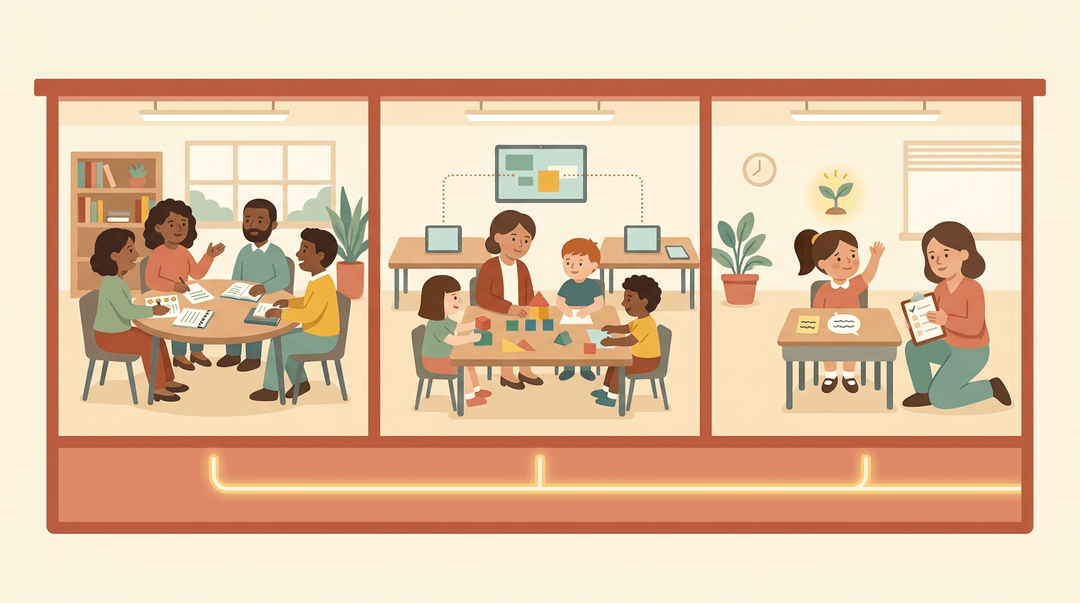
Individual classrooms can only go so far, so schools can add support that reaches every room.
- Teacher training programs: Hands-on training helps teachers design and score these skills consistently.
- Creative learning workshops: Short sessions where teachers and students tackle open-ended challenges, so creativity becomes routine.
- Smart classrooms: Rooms with connected devices and shared digital tools that make collaboration part of everyday lessons.
- Individualised learning plans: A written plan with specific skill goals for each student. Take a student who rarely speaks in discussions: her plan sets one goal, sharing one idea per class, with a sentence starter to help. Her teacher checks in weekly, and each small win builds her confidence.
The goal isn't to add more to your plate. It's to weave these skills into the lessons you already teach, one small habit at a time. When students can think critically, communicate clearly, and adapt, they're better prepared for whatever comes next.
Ready to bring your rosters and schedules into one place? Check out our Classroom Management page to see how classes, sections, rosters, and timetables come together in one structured workspace.
References
- Enhancing mathematical problem-solving and 21st-Century skills through PjBL: a structural Equation Modelling approach — doi.org (2025)
- The Development of 21st Century Skills through PSL Practicum and HOT Lab in Science Education — doi.org (2025)
- Future of Jobs Report 2025 — pact-for-skills.ec.europa.eu (2025)
- The changing nature of careers in the 21st century — www2.deloitte.com
Frequently asked questions
What are 21st century success skills?
21st century success skills are abilities students use to succeed in school, life, and work. They include critical thinking, communication, collaboration, creativity, adaptability, and lifelong learning, alongside practical and digital skills.
What are 10 basic life skills?
Ten basic life skills include communication, decision-making, problem-solving, critical thinking, self-awareness, empathy, managing emotions, managing stress, time management, and building healthy relationships.
What are the three main types of skills?
Skills are commonly grouped as cognitive or thinking skills, interpersonal or social skills, and practical or technical skills. These categories overlap: for example, completing a team project can require all three.
What do you teach in a life skills class?
A life skills class teaches practical habits for managing daily responsibilities and relationships. Topics can include communication, problem-solving, emotional regulation, time management, goal-setting, teamwork, digital literacy, and everyday tasks such as budgeting.
What are the 7 C's of lifelong skills?
One common version of the 7 C's is critical thinking, creativity, collaboration, communication, citizenship, character, and connectivity. Frameworks vary, but these seven describe ways to think, work with others, act responsibly, and engage with the wider world.
What are the top 10 skills for students?
Useful student skills include critical thinking, creativity, communication, collaboration, time management, self-discipline, adaptability, emotional intelligence, digital and information literacy, and goal-setting. Together, they support academic, personal, and professional success.
What are some examples of life skills activities for students?
Students can practice life skills by planning a class fundraiser budget, running a mock job interview, organizing a group project, or resolving a role-played disagreement. Other activities include setting weekly goals, managing a study schedule, and evaluating the reliability of online sources.
Can you give me some examples of 21st century skills?
Examples of 21st century skills include analyzing evidence, generating original ideas, communicating clearly, working toward shared goals, and adapting when plans change. Digital literacy, information evaluation, self-management, and lifelong learning are also important examples.