Why Awards Ideas for Students Matter More Than You Think

Jump to section
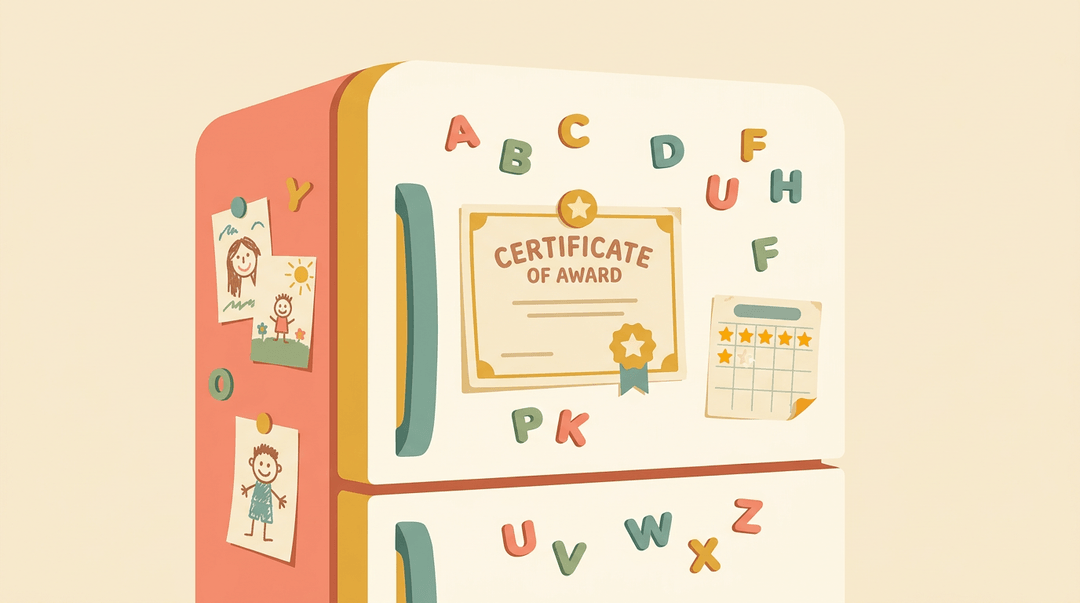
Remember the sticker chart on your own elementary classroom wall, or the certificate that somehow still hangs on a fridge years later? Recognition sticks because it tells a student that someone noticed. Awards are one of the simplest ways to do that.
This post covers why awards matter, which titles and categories work, when to hand them out, and how to present them. We'll also look at grade-band, virtual, and best-of-school ideas, then turn it all into a recognition system you can actually run.
Why Awards Ideas for Students Matter
Awards can feel like a small thing, but they shape how students see themselves and their work.
Why student awards matter
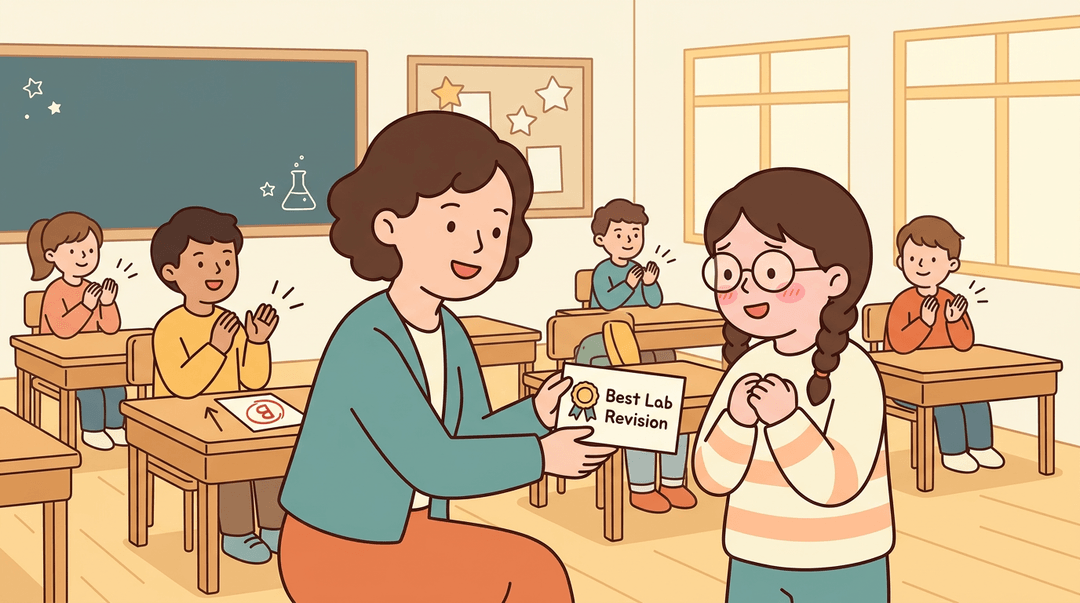
A well-timed award can boost self-confidence. When a shy student hears her name called for the best revision on a science lab, she learns her work is noticed. That moment can carry her into the next unit. Specific praise sticks.
Awards also motivate continued effort, especially when progress is slow. They build classroom culture because everyone sees what the class values.
And they recognize strengths and progress, not just top scores, so a student who climbs from a D to a B gets celebrated too.
How awards shape motivation over time
Over a school year, awards do more than give a single pat on the back. They can encourage lifelong learning by showing students that curiosity pays off. Over time, they also help build intrinsic motivation, the drive to learn for its own sake.
Daily engagement gets a boost when students know effort is noticed. Awards also reinforce good behavior, so students repeat the habits you want to see.
So what is the best student award? There's no single winner for every class. The best award matches what a student did, not who scored highest.
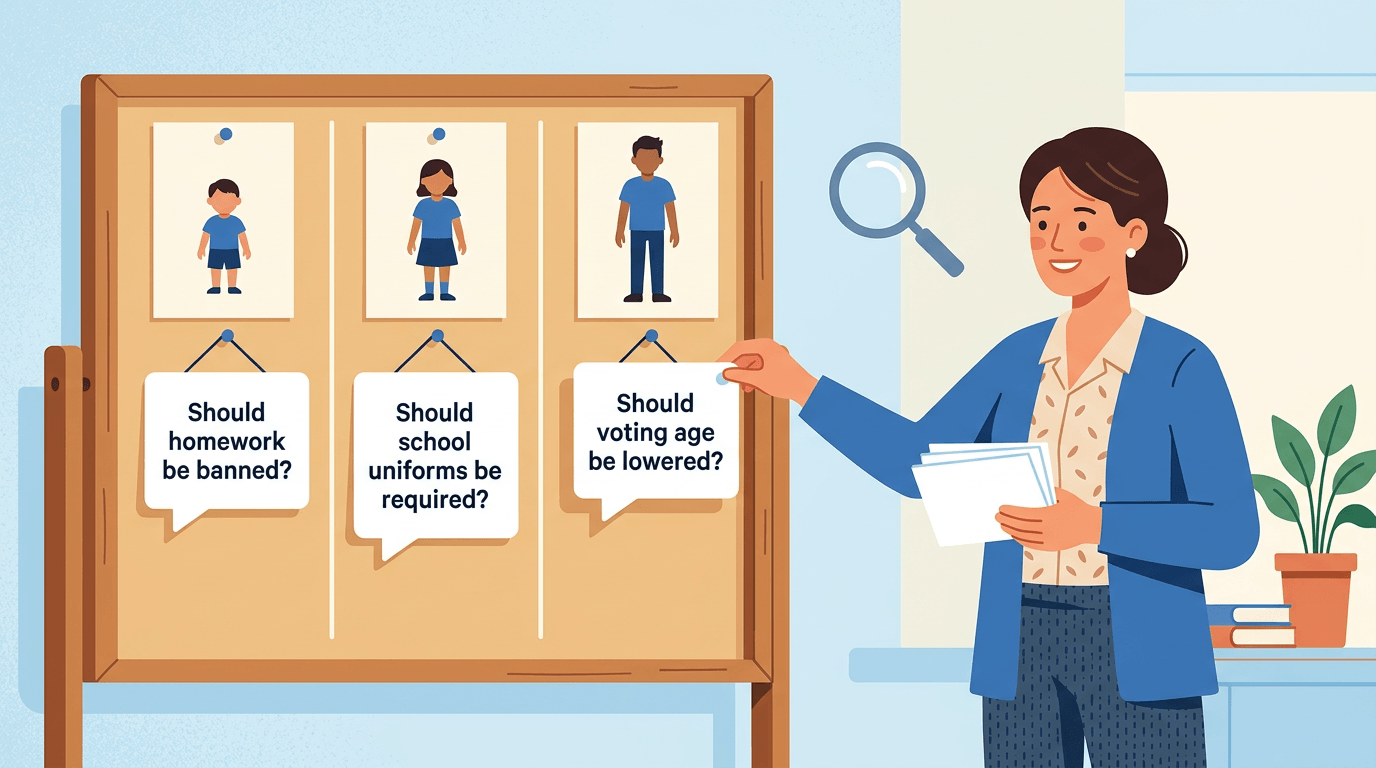
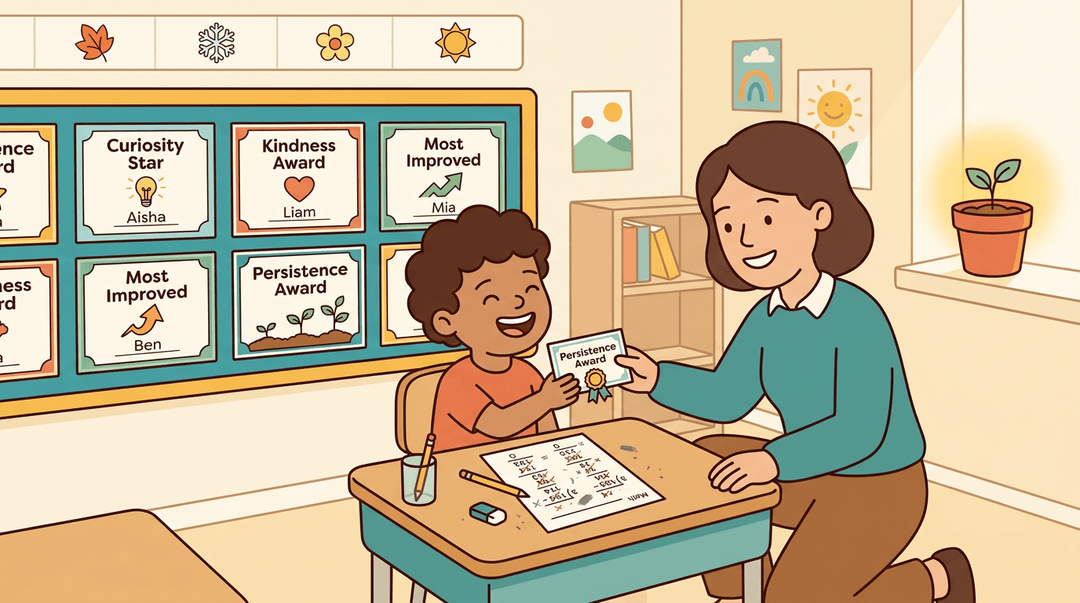
Think of a fifth-grade teacher who gives a Persistence Award to a boy who finally finished his long-division homework every night. Then make sure every student wins once across the year by rotating categories, so no one is left out of the spotlight.
What Are Some Good Student Award Titles
Awards work best when they name something specific a student did, so you can match the title to the behavior you want to see more of. Here's a practical look at the categories, with ready-to-use titles for each.
For a top overall award, try 'Student of the Year' or 'Best All-Around Learner,' and give it to a student who grows in several areas, not just the one with the highest grades.
A simple title formula helps: pair a trait with a role, like 'Problem Solver of the Month.' For K-2, keep titles short and visual. For upper grades, choose titles that feel earned.
Celebrating academic achievement and growth
Academic awards go beyond the honor roll. Subject mastery awards like 'Math Mind of the Month' or 'Scientist of the Quarter' recognize a skill a student has clearly built. Reading, math, and science stars work well in the early grades.
Growth awards such as 'Most Improved Reader' celebrate growth rather than perfection, rewarding the student who climbed the most. For older students, a research or STEM award like 'Junior Inventor' honors curiosity and inquiry.

Recognizing character and leadership
Character awards show students what good looks like. Try:
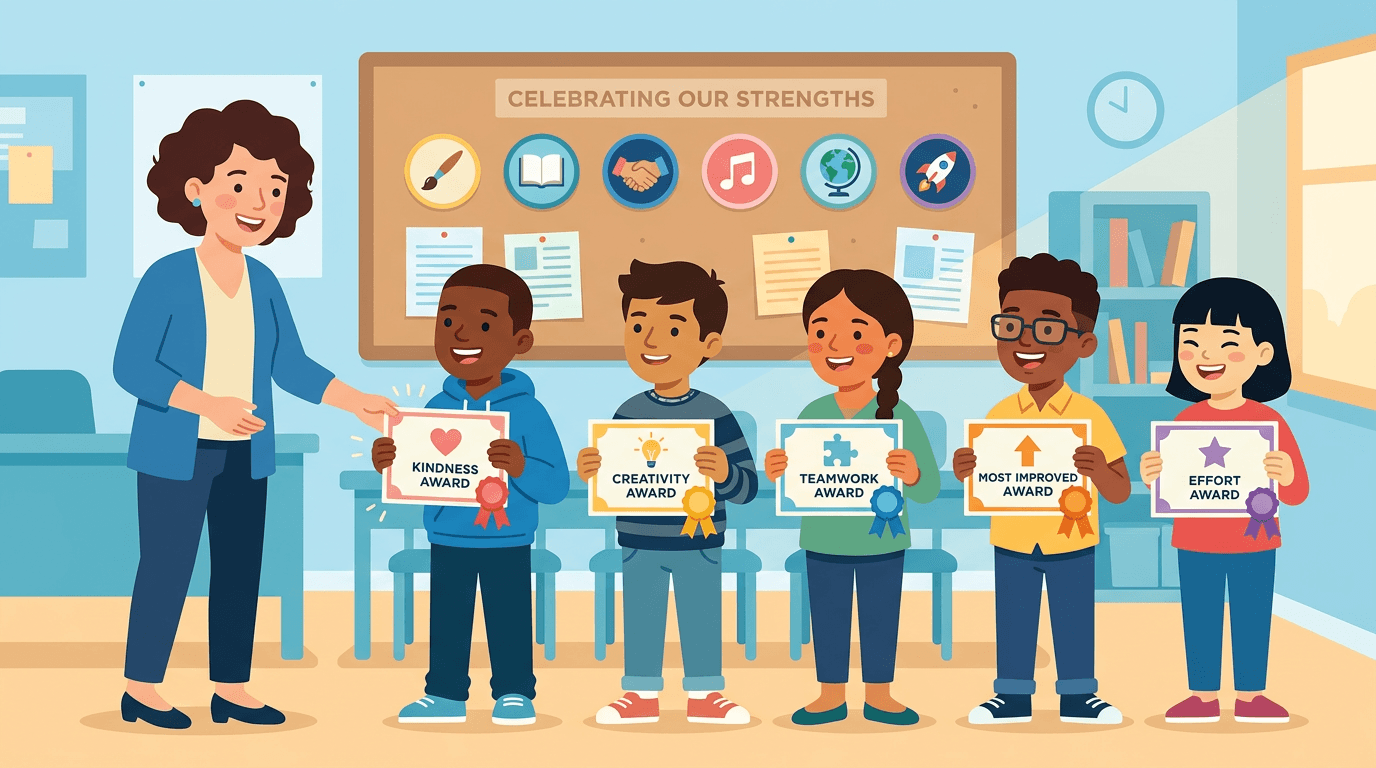
- 'Kindness Champion' for empathy
- 'Respect Ranger' for responsibility
- 'Leader in Action' for initiative
- 'Team Player' for cooperation
If your school runs a Positive Behavioral Interventions and Supports (PBIS) program or a token system, link these awards to the same expectations.
For example, a third-grade teacher who gives a 'Respect Ranger' sticker for the behavior named on her class token chart reinforces it every day. Students hear one consistent message.
Celebrating creativity and artistic talent
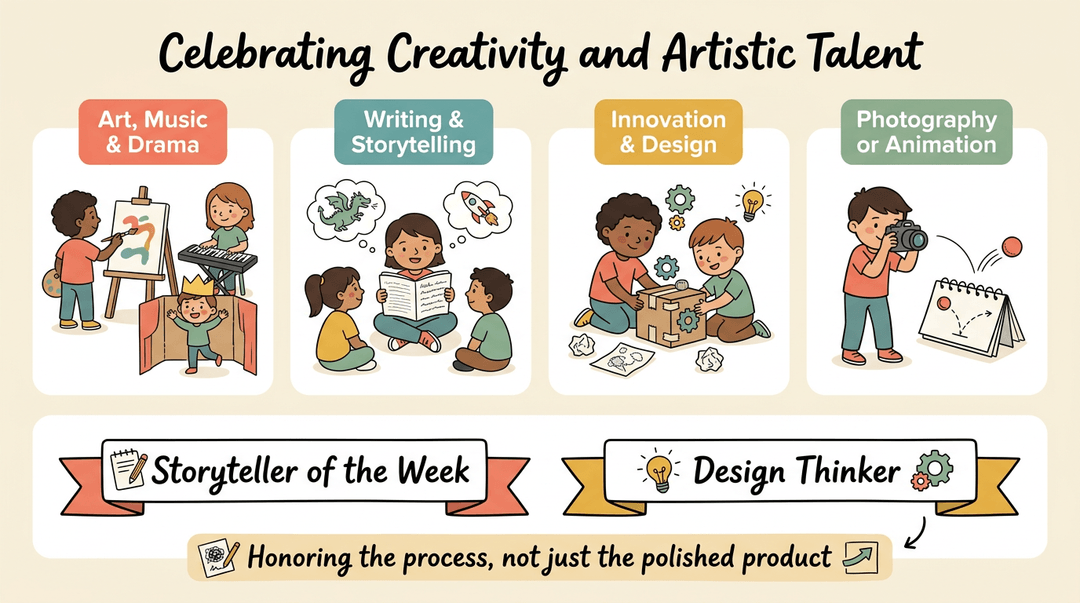
Creative awards make room for students who think differently. Categories include:
- art, music, and drama
- writing and storytelling
- innovation and design
- photography or animation
Titles like 'Storyteller of the Week' or 'Design Thinker' let you honor the process, not just the polished product.
Fun and quirky award ideas
Light, playful awards build community. Superlative-style awards like 'Most Likely to Ask Why' or 'Best Dressed for Science Day' are a hit. Pop-culture nods, such as a 'Ms. Frizzle Award' for the most adventurous learner, add a laugh.
A 'Class Jokester' or 'Quirky Genius' title can celebrate a personality trait that makes your room unique. Keep it kind, so every student can laugh along.
Recognizing effort and reliability
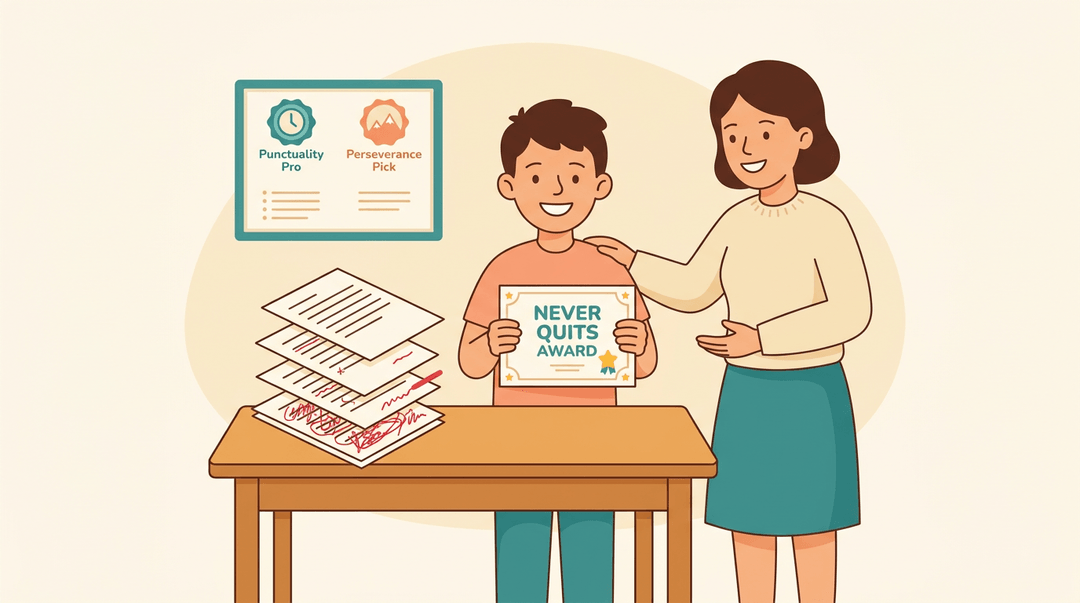
These awards reward the habits that keep a classroom running. 'Perfect Attendance,' 'Punctuality Pro,' 'Perseverance Pick,' and 'Dependable Dynamo' all work well.
Consider a high school teacher who gives a 'Never Quits' award to a student who revised an essay four times. Effort counts, and students notice when you say so.
Awards for sports and hobbies
Recognize students beyond the classroom. Athletic achievement, school spirit, hobby-specific awards, and club or activity involvement all give students a reason to shine.
Titles like 'Team Spirit Star' or 'Chess Club Strategist' connect to what students care about outside class, and you'll often see those students light up in your room too.
When to Give Student Awards
Timing can make an award feel meaningful or forgettable. Here's how to place recognition so it lands when students need it most.
Giving awards at the end-of-year ceremony
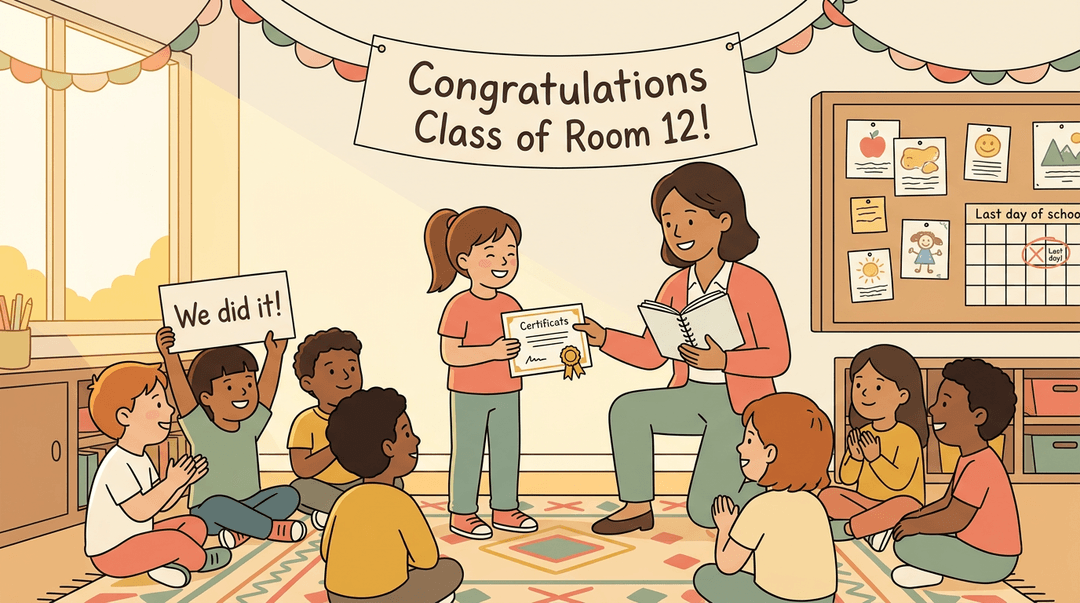
The final weeks are the right home for your biggest honors, but save them for the last day. That keeps the spotlight on the whole year instead of one moment. Use the time for closure and reflection:
- Ask each student to name one thing they learned and one goal for next year.
- Hand out graduation certificates in a quiet, personal way, reading one specific line about each student's growth.
- Close with a final celebration moment, such as a class photo or a shared cheer.
Consider a fourth-grade teacher who reads a sentence from each student's reflection before handing over the certificate. Students hear their own growth named out loud.
Setting up recurring recognition routines
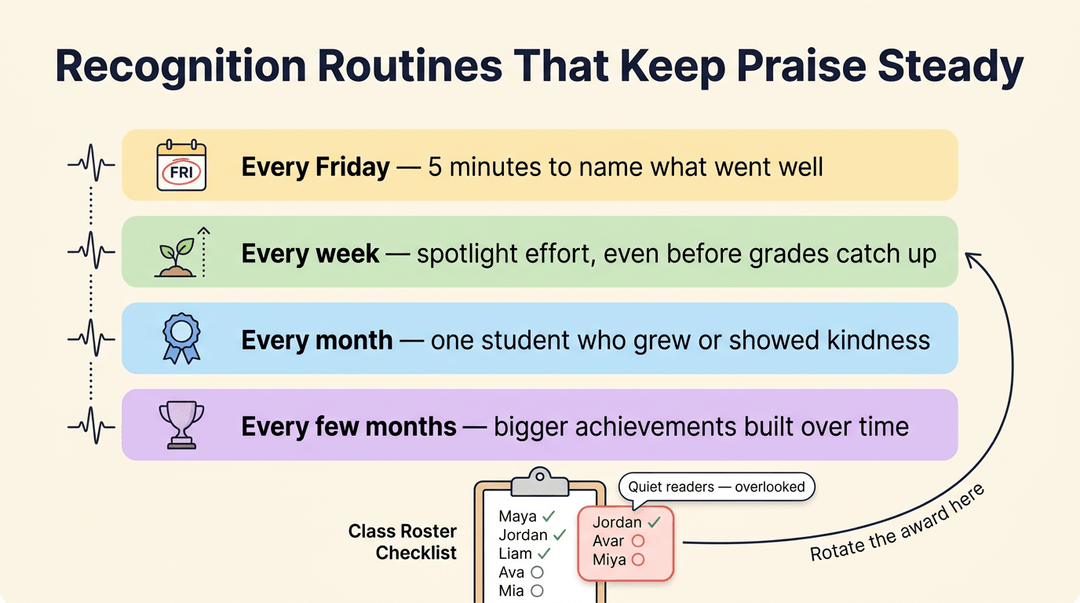
Recurring awards keep praise steady instead of saving it all for June. Build a rhythm you can actually sustain:
- Monthly student of the month honors a learner who showed growth or kindness.
- Quarterly awards recognize bigger achievements that build over several months.
- Weekly effort awards spotlight persistence, even when grades don't show it yet.
- A Friday recognition routine takes five minutes at the end of the week to name what went well.
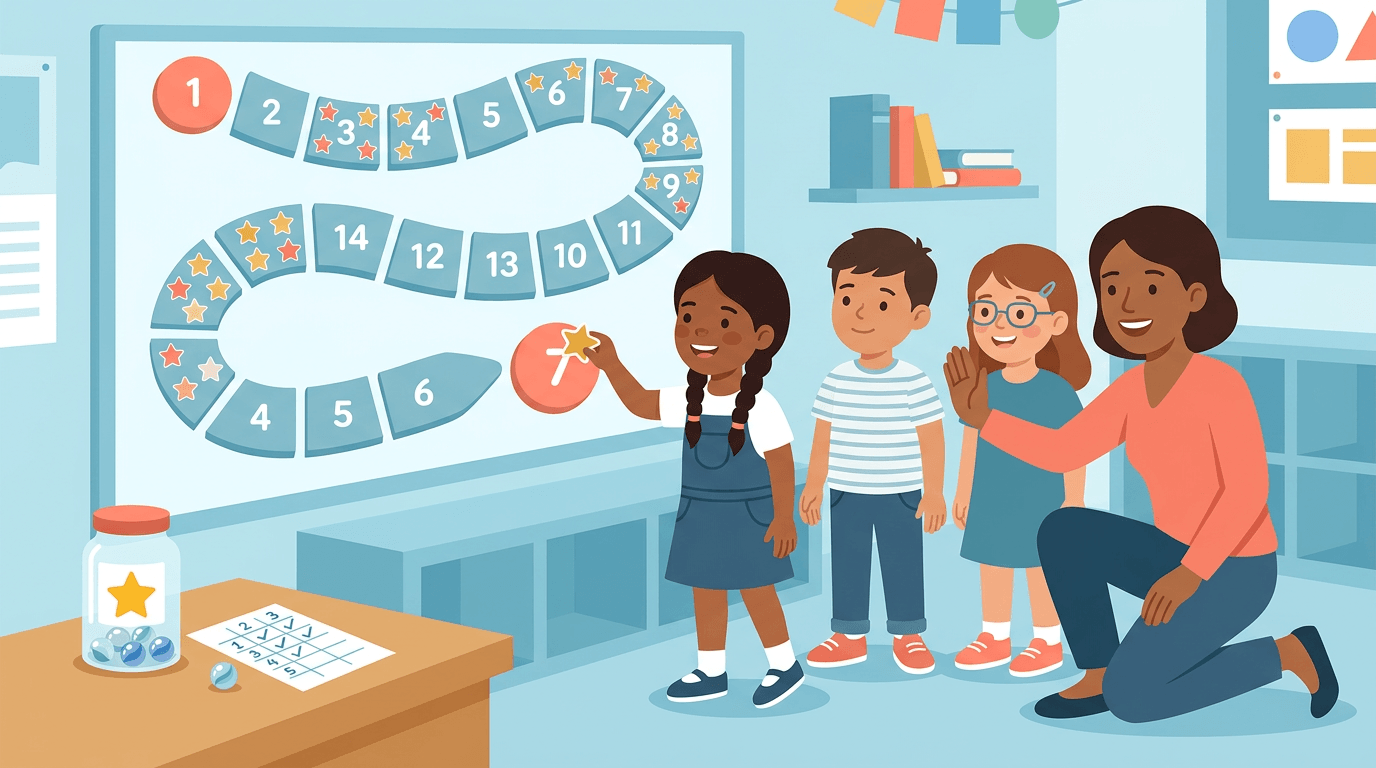
Track recognitions against your class roster so every student gets a turn. A simple checklist shows you who has been celebrated and who has been overlooked. Think of a sixth-grade teacher whose quiet readers never win anything.
Her roster check reveals the gap, and she rotates the weekly effort award so those students get their moment.
Awards tied to milestones and projects
Recognition works best when it follows real effort. Tie awards to moments students can point to:
- Celebrate right after a big project deadline, while the work is still fresh.
- Mark a class goal reached with a shared reward, like extra reading time.
- Add a published classbook award that gives each student a page in a shared book.
- Plan departmental ceremony timing so honors fall on a schedule your colleagues also follow.
Consider a middle school science teacher whose class finishes a three-week ecosystem project. She hands out project awards the next morning, while everyone still remembers the work.
Giving spontaneous recognition in the moment
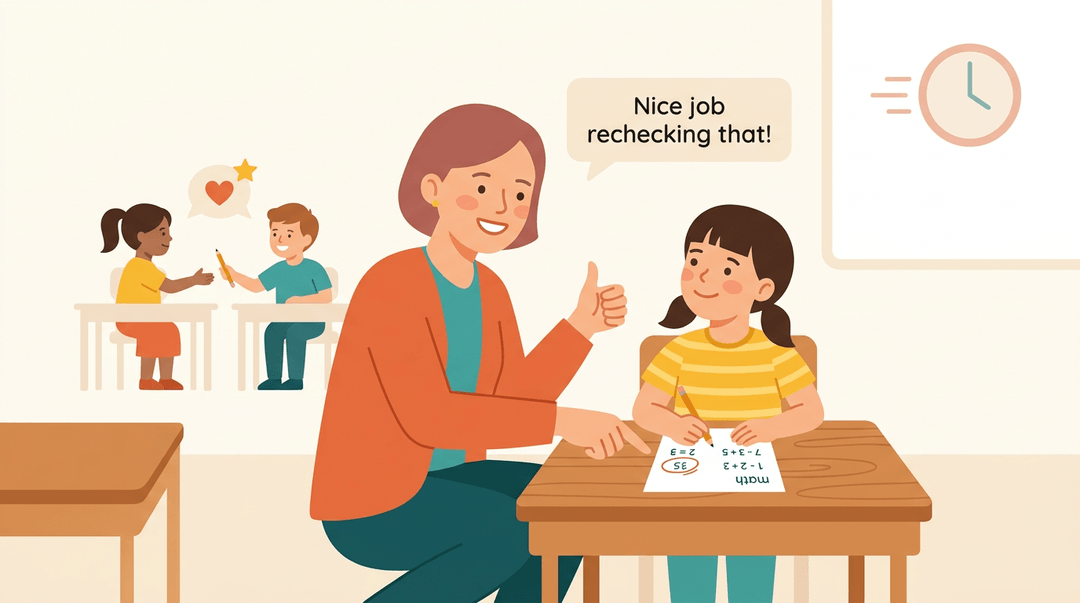
Some of the best recognition takes thirty seconds. On-the-spot praise names a specific action as it happens, like telling a student that rechecking their math paid off.
Pair that with random acts of kindness recognition, where you publicly thank a student who helped a classmate. This encourages repeat behavior, because students want to be seen doing the right thing again.
Praise specific actions rather than general talent. The goal is balance: quick daily praise plus formal awards on a schedule. If every small act earns a prize, the awards lose their weight.
Keep the big honors meaningful by keeping the small moments simple.
Build a Classroom Award System That Sticks
Awards work best when they're predictable and cheap to run. This guide gets you from zero to a working system in four moves, then covers the days when you're not in the room or not in person.
Set it up once
- Pick three to five award types
- Fewer awards stay meaningful and easy for students to remember.
- Try: Kindness Catcher, Persistence Award, Question Asker, Team Player.
- Set a weekly or monthly cadence
- Weekly keeps it fresh for younger students; monthly suits teachers with many classes.
- Lock a fixed slot, such as Friday, last five minutes.
- Prep templates in advance
- Save one blank certificate: "Awarded to ___ for ___."
- Always fill the second blank with a specific action, not "being great."
- Log who's been recognized
- Keep your roster handy and add a tally mark per award.
- Before each round, scan for names with no marks yet.
⚠️ Watch out: Without a log, awards drift toward the same confident students. The quiet ones doing steady work go unseen.
Keep recognition going on virtual and sub days
Your system shouldn't pause when the setting changes. Find your situation, then read across.
| When you see... | Try... |
|---|---|
| A live video call | A digital badge dropped in the chat or on a slide |
| No way to hand out paper | An e-certificate emailed from your saved template |
| A substitute covering your class | A shoutout note the sub leaves for you |
| Five spare minutes on a call | Screen-share praise of one student's work |
A few details make these land:
- Badges: Keep one small image per award type so students recognize them instantly.
- E-certificates: Send them the same day, while the moment is still fresh.
- Sub notes: Leave a pre-made slip: "Name / what they did / award." Read the notes aloud when you return.
- Screen-share praise: Say: "Look at how Maya labeled every step. That's our Persistence Award this week."
Example: A fifth-grade teacher is out for a day. She leaves the sub three blank shoutout slips. The sub fills in two names during group work, and the teacher reads them aloud on Monday. Then she adds both students to her log, so the streak carries on.
Keep recognition streaks tied to your rosters and weekly timetable right inside EMStudio.
How to Present and Deliver Awards
Presentation is where an award becomes a memory. Here's how to make the paperwork and the handoff work for you.
Printable templates for easy awards
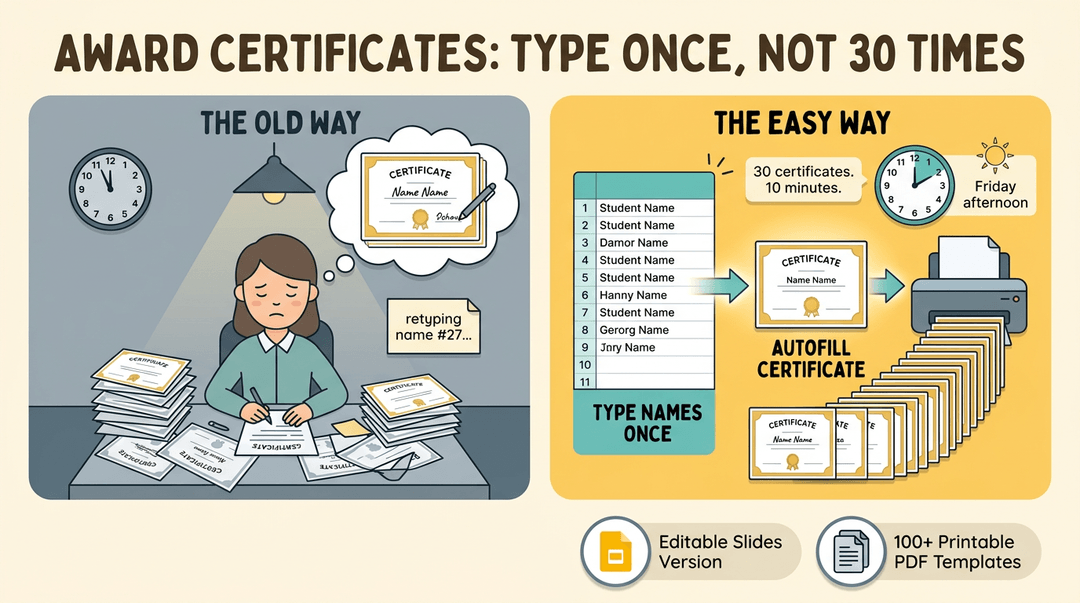
Editable autofill certificates let you type each name once, so you're not retyping at 11 p.m. Prefer slides? Google Slides versions are easy to customize and share.
For a full library, look for 100+ ready templates or printable PDF kits you can run off in one batch. Picture a fourth-grade teacher printing thirty certificates in ten minutes on Friday afternoon.
Choosing certificate design and materials
Paper matters more than most teachers expect. Themed border paper catches a kid's eye before they read a word, and foil or textured paper makes a certificate feel like a keepsake.
Color prints pop, but black-and-white works fine when the award matters more than the ink. Eco-friendly paper options let you celebrate without the waste.
A middle school art teacher might choose cream textured stock with a themed border, a small cost that gets framed at home.
Pairing awards with extra touches
A certificate is the start. A gift card add-on turns a plaque into something a student can use this week. A personal note from you, naming one specific thing they did, often means more than the prize.
Donating in the student's name shows them their effort helped someone else, and a book pairing for sendoff sends them home with a story.
Consider a reading specialist who tucks a handwritten note and a paperback into a summer bag: the student gets a book and proof that someone noticed. Keep it simple.

Other Classroom Recognition Tools
Certificates are a solid start, but they're not the only way to celebrate students. These tools add variety, from small privileges to keepsakes students can hold onto.
Rewards beyond certificates
Sometimes a privilege means more than a piece of paper. Consider a teacher who hands a homework pass to a student who worked hard all week, rewarding effort rather than perfect scores.
Other options include free computer time and gift certificates for a local bookstore or café. Pick rewards that fit your budget and your school's rules. Most cost nothing at all.
Using badges for recognition
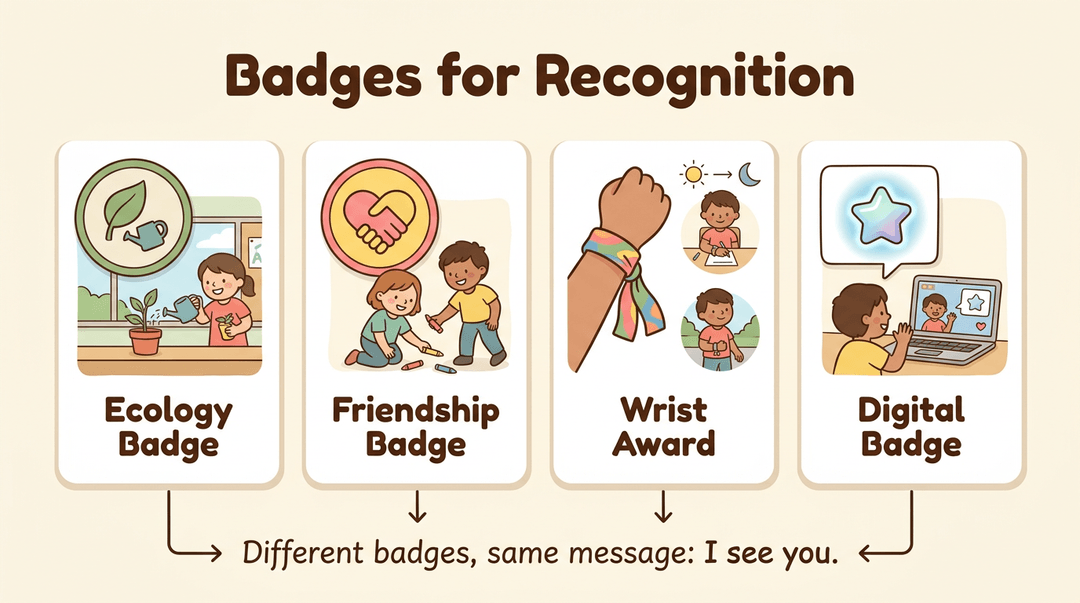
Badges give students a visible way to show what they've earned. Try:
- ecology badges for students who care for the classroom plants
- friendship badges for kindness
- wrist award badges students can wear all day
In virtual classes, digital badges shared in your learning platform or class chat work the same way, so every student has a real chance to earn one.
Publishing a class recognition book
A class book turns recognition into a keepsake. In a published author keepsake, each student contributes a page or story, and the finished book goes home with them. A class hall of fame book highlights standout achievements across the year.
For a lighter touch, a superlatives classbook idea names each student's signature strength, like "best listener" or "most creative problem solver." It's fun, and it's personal.
Award Ideas for College Students
College students do plenty worth celebrating, but awards only matter when they name the right things. Here are ideas that cover leadership, teamwork, finals week, and research.
Recognizing campus leadership and service
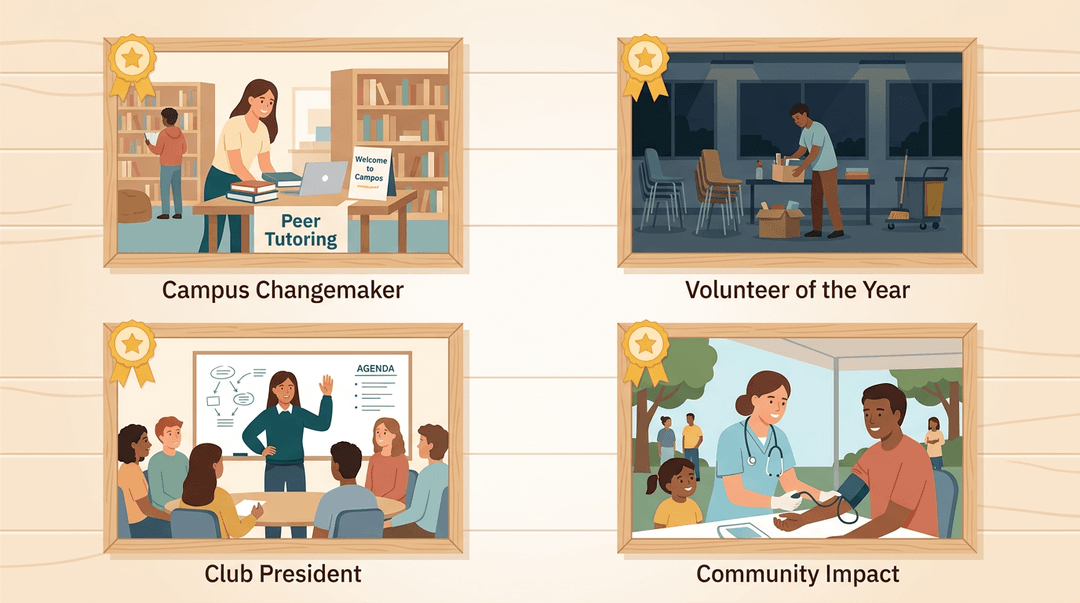
Campus life runs on students who step up. A campus changemaker award honors the student who improved something for everyone, like a new peer tutoring table in the library.
Volunteer of the year rewards steady, behind-the-scenes help, while club president honors recognize the leader who kept a group running through a rough semester.
A community impact award can celebrate work that reaches beyond campus, such as a nursing student organizing free health screenings for local families.
Celebrating study support and teamwork
Learning in college is often social, and these awards say so. A study partner award goes to the student who keeps classmates accountable and explains hard ideas without making anyone feel behind.
Group collaboration recognizes a team that split the work fairly and delivered on time. For test prep teamwork, picture a student who ran weekly review sessions before midterms, turning a crowded study room into the place everyone wanted to be.
Fun awards for finals week survival
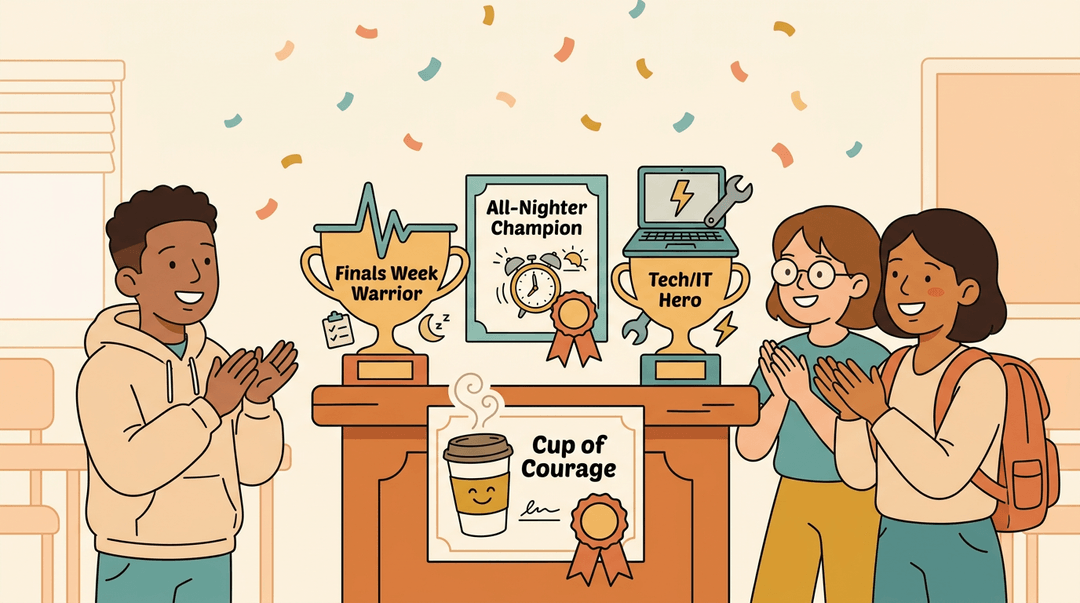
Finals week is grueling, so a little humor goes a long way. The finals week warrior honors the student who kept their routine and their sanity through the hardest stretch.
The all-nighter champion celebrates late-night grinders, but it's less about who stayed up longest and more about who still showed up sharp.
A tech/IT hero award goes to the classmate who rescued a frozen laptop at 2 a.m. For a lighter finish, coffee-themed jokes, like a "Cup of Courage" certificate, bring laughs without anyone needing to stay up to earn them.
Recognizing research and communication skills
Some strengths show up on the page or on the podium. An academic research recognition can go to a student whose capstone pushed past the assignment.
Public speaking/debate honors reward someone who argued a position clearly and fairly, even when the room pushed back.
For communication majors focus, consider an award tied to the craft itself, like a sharp podcast episode or a presentation that made a complex topic click.
Awards work best when they're intentional. Pick a few categories that reflect what you value, time them well, and present them so every student feels seen. A recognition system doesn't have to be elaborate to make a real difference.
Ready to keep track of who's earned what, and when? Check out our Classroom Management feature to organize your classes, rosters, and timetables in one place.

Frequently asked questions
What is the best student award?
There is no single best student award for every class. The best award matches a specific achievement, behavior, or area of growth, such as a Persistence Award for sustained effort or Most Improved Reader for meaningful progress. Rotate categories so every student has a chance to be recognized.
What are some good award ideas?
Good student award ideas include Kindness Champion, Team Player, Most Improved Reader, Junior Inventor, Question Asker, Persistence Award, Perfect Attendance, and Design Thinker. You can also use fun titles such as Most Likely to Ask Why or Ms. Frizzle Award, as long as the humor remains kind and inclusive.
What are some awards for best in school?
Awards for best in school can include Student of the Year, Best All-Around Learner, Academic Excellence Award, Leadership Award, Community Impact Award, School Spirit Award, Outstanding Volunteer, and Most Improved Student. Choose criteria that recognize achievement, growth, character, leadership, or service rather than grades alone.
What are some good student award titles?
Good student award titles include Student of the Year, Best All-Around Learner, Problem Solver of the Month, Math Mind of the Month, Scientist of the Quarter, Kindness Champion, Respect Ranger, Leader in Action, Team Player, Storyteller of the Week, Design Thinker, Perseverance Pick, and Dependable Dynamo. The strongest titles clearly connect to a specific action or quality.