Why Fun Things to Do in Class Matter More Than You Think

Jump to section
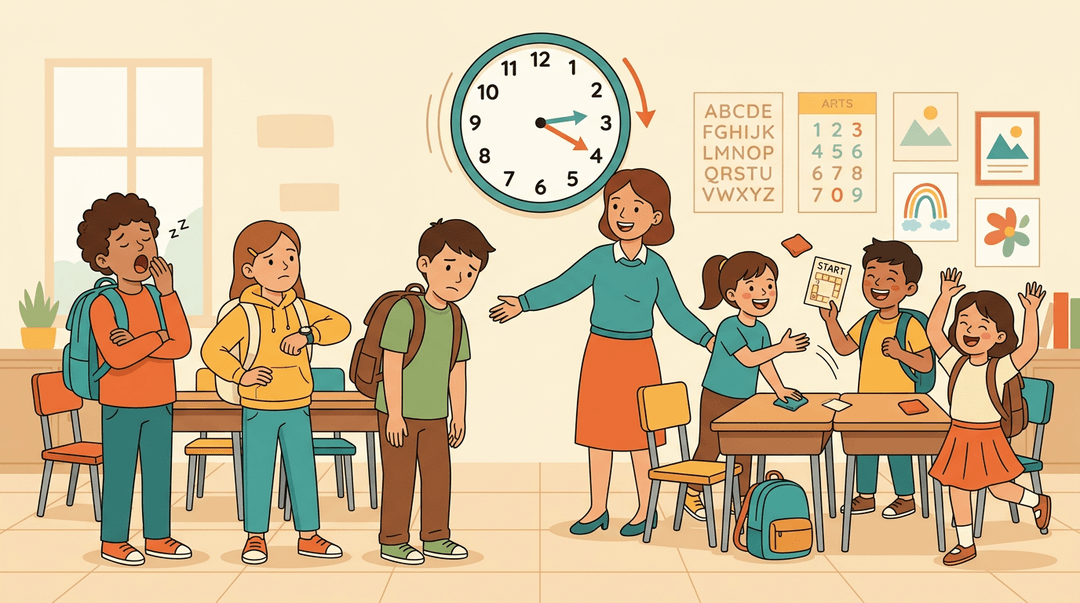
Picture the last ten minutes before the bell, when half the room is packed up and the other half is staring at the clock. That's the moment fun activities earn their keep.
They're short, low-prep games, movement breaks, tech tasks, and creative projects that keep students engaged while they learn, and you don't need a new bag of tricks to use them well.
In this post, we'll cover movement, tech, quick fillers, routines, and group games. Then we'll show you how to fit them into a weekly plan by grade band, class size, and sub-ready backups.
Fun Things to Do in Class Together
Small, repeated rituals often do the most to make students feel known. Here's where to start.
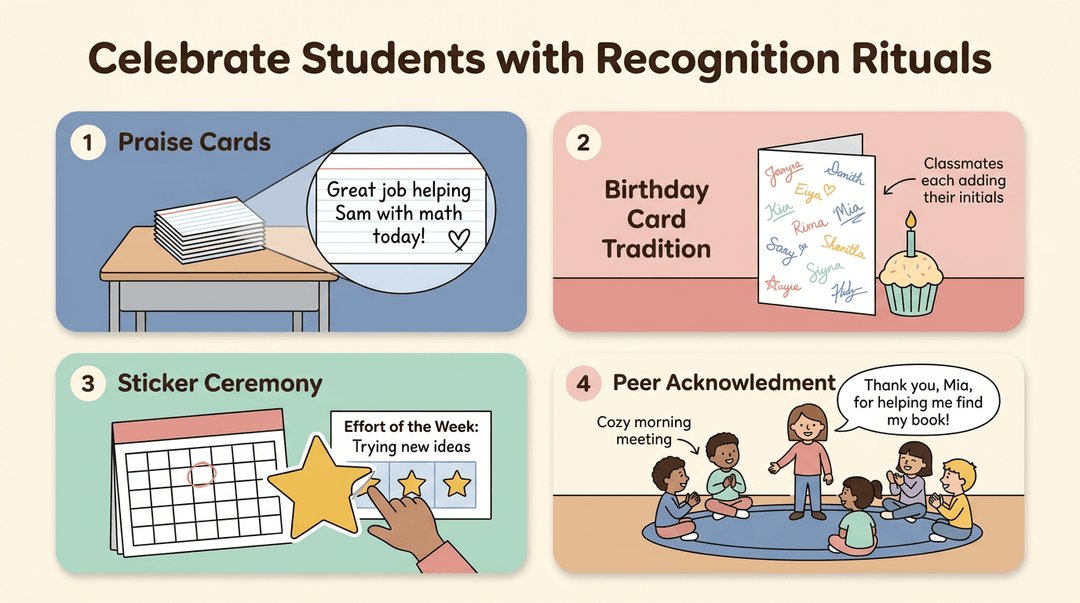
Celebrate students with recognition rituals
- Praise cards: Keep a stack at your desk and note something a student did well.
- Birthday card tradition: Have classmates sign a card for each birthday student.
- Sticker ceremony: Once a week, reward a specific effort with a sticker.
- Peer acknowledgment: Let students shout out a classmate's help in morning meeting.
Icebreakers that build classroom community
Icebreakers aren't about filling silence. They're about building trust.
- Greeting routines: Greet each student at the door with a handshake or a weekend question.
- Meme and song sharing: Students share one and explain their pick.
- Time capsule: Fill a box with notes and predictions, then open it at year's end.
- Class flag or crest: Design it together and hang it in the room.
- Human scavenger hunt: Use clues like "find someone who has visited another country."
Make time for reflection and journaling
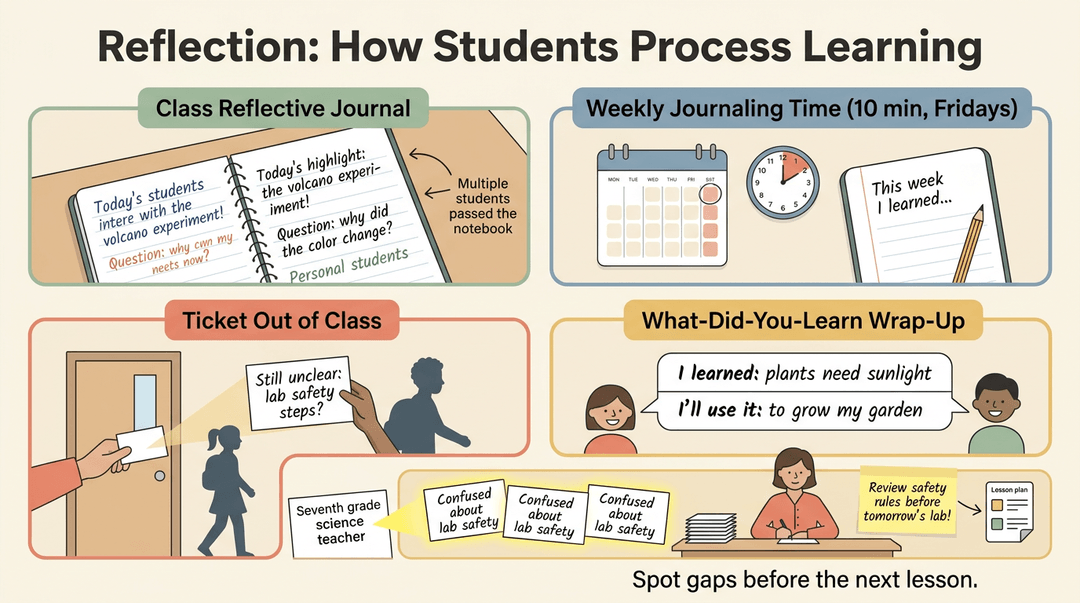
Reflection helps students process learning, not just finish it.
- Class reflective journal: Keep one shared journal for highlights and questions.
- Weekly journaling time: Set aside 10 minutes each Friday for personal entries.
- Ticket out of class: Ask one question as students leave, like "What's still unclear?"
- What-did-you-learn wrap-up: End by naming one thing learned and one way to use it.
Think of a seventh grade science teacher who reads exit tickets during planning time and spots three students stuck on lab safety before the next lesson.
Routines for Starting and Ending Class
The first and last few minutes of class shape everything in between. These routines get students settled quickly, then help them leave knowing what they learned.
Fun ways to open class
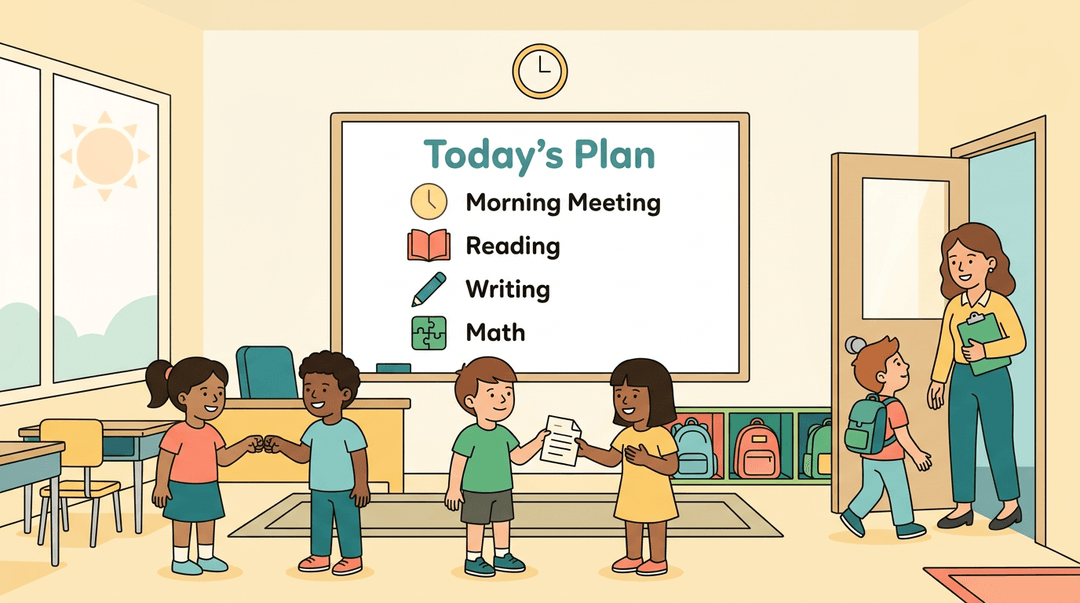
Consider a fourth-grade teacher who uses a pre-class agenda display: a board that lists the day's plan with simple icons. Students know what's coming, so the first minute goes to reading the board instead of asking "What are we doing?"
Other openers that work well:
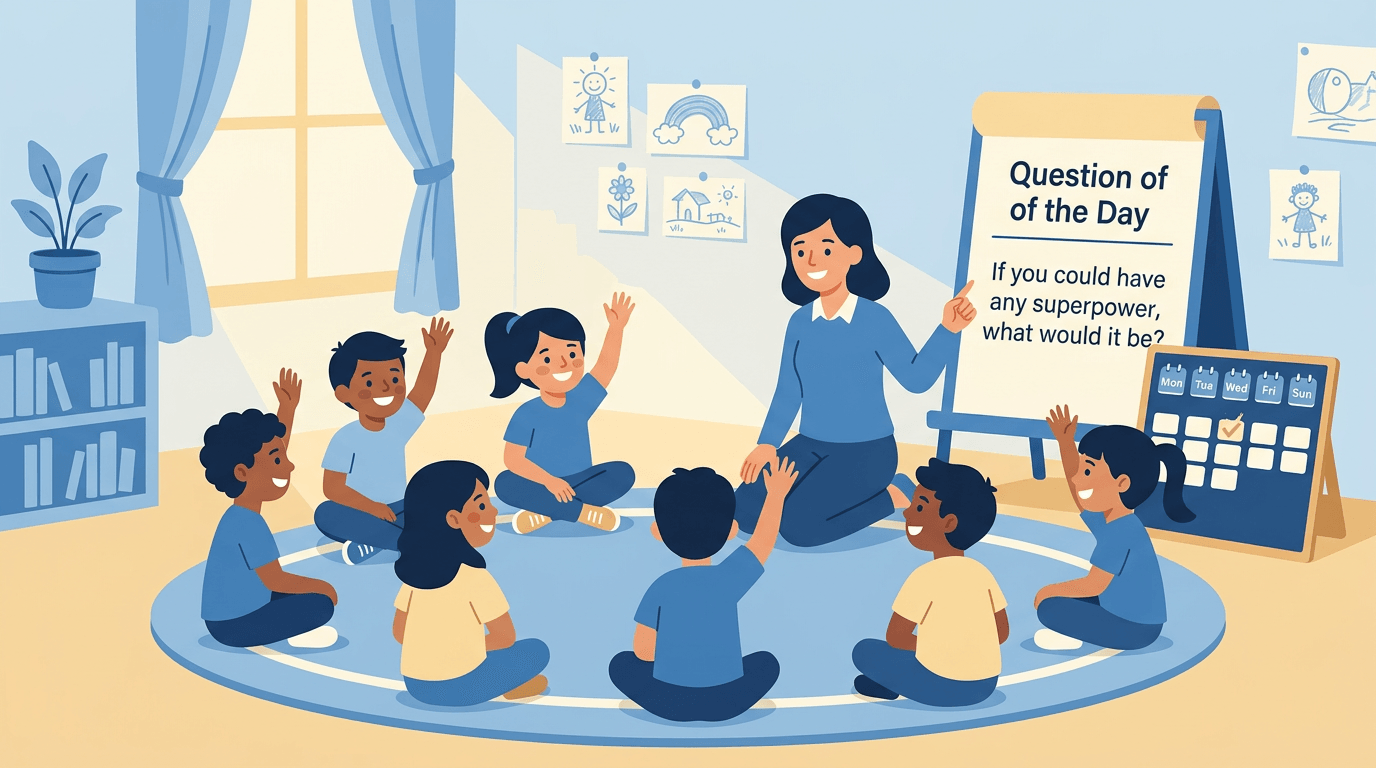
- Turn and talk pairs: Students share one thing from last night's homework with a partner before anyone speaks to the whole class.
- Roll call guessing game: Students guess a fun fact about a classmate before the name is read, turning attendance into a warm-up.
- Pairs with daily attendance check: Each student checks in with a partner, so no one slips through the cracks.
A substitute can run the roll call guessing game with no prep at all. You just need the class list and a few minutes of playful guessing.
Ways to close out class
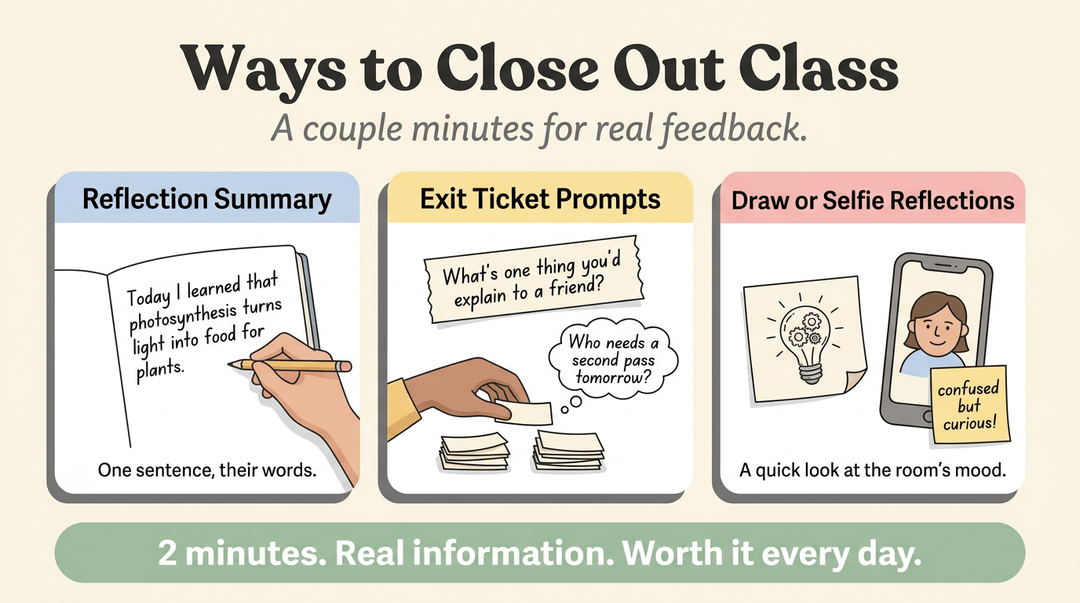
Closing matters as much as opening. Students need a moment to name what stuck, not just what they sat through.
- Reflection summary: Students write one sentence that sums up the lesson in their own words.
- Exit ticket prompts: Ask a single question on a slip of paper, such as "What's one thing you'd explain to a friend?" Read them during planning, and you'll know who needs a second pass tomorrow.
- Draw or selfie reflections: Students sketch a picture of their learning or snap a quick selfie with a sticky note about it. A high school teacher can use these as a fast, low-stakes look at the mood of the room.
These take a couple of minutes and give you real information. That's a trade worth making every day.
Build a Weekly Fun-activity Plan That Sticks
Fun sticks when it has a slot. Use this guide to put activities on your calendar by transition point, match them to your class size, and keep a backup list ready for a sub.
Slot activities into your week
Start with where the fun fits, not what it is. Tag every activity with the transition point it suits, then drop it into that gap.
- Tag each activity by transition point.
- Write the tag on the activity card or in your list, like the one below.
- Slot 5-minute fillers between periods.
- Keep two or three ready so the same one doesn't repeat daily.
- Reserve one movement break each week.
- Pick the day now, such as Wednesday, and treat it like a meeting.
Sample tag: Silent ball toss | Transition: mid-lesson lull | Time: 5 min | Type: movement
💡 Tip: Schedule the movement break first. It's the one that gets squeezed out when a lesson runs long.
Match the activity to your group
Class size decides what works, so check it before you pick.
| If your group is... | Reach for... | For example... |
|---|---|---|
| A large section | Group games | Teams of four race through review questions |
| A small group | Card or word games | Vocabulary card matching |
| Working independently | Journaling or art | "Draw or write about the best part of today." |
Keep a sub-ready backup list
A substitute can't run what they can't find. Build this once and your plan survives an absence.
Before you leave it, confirm:
- A no-prep games folder. Everything is printed and needs nothing but students.
- Include a word search, a "20 questions" topic list, and a card-game rules page.
- A laminated instructions sheet. One page, readable in under a minute.
- Say what to play, how long it runs, and how to stop it.
- A monthly rotation. The list stays fresh and students don't spot the same game.
- Swap out one or two activities on the first of each month.
Example: A sixth-grade teacher keeps a folder labeled "Sub Fun" by the door. Inside is a laminated sheet: "Word Chain, 10 minutes. Start with any word from the board. Each student adds a word that begins with the last letter. Stop when the timer rings."
At a glance:
| Part | Key move | What you get |
|---|---|---|
| Schedule | Tag by transition point | Fun with a place to land |
| Class size | Match game to group | Activities that actually work |
| Backup | Folder, sheet, monthly swap | A plan a sub can run |
Keep this activity rotation attached to each class, section, and week right inside EMStudio's class management tool.
What Can a Bored 12 Year Old Do?
So what can a bored 12 year old do? Plenty, as long as the activity feels like their idea, not another worksheet. Tweens respond best to choice and friendly competition, while younger students usually need more movement and visuals.
Drawing and coloring activities
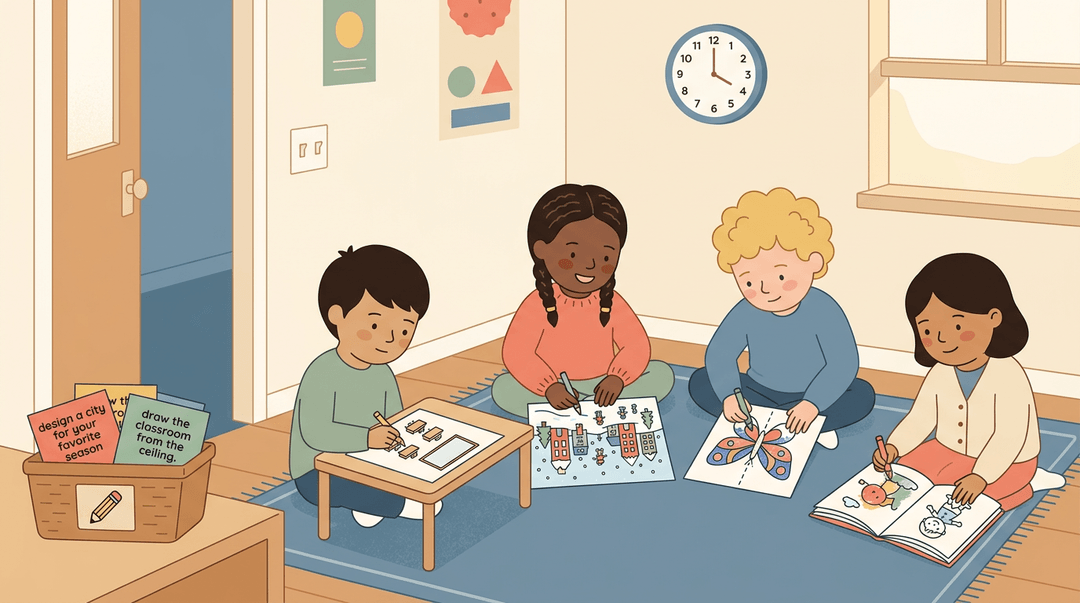
Start with blank paper drawing: hand out a sheet and one prompt, like 'draw the classroom from the ceiling.' It takes no prep. Themed prompts give direction, such as 'design a city for your favorite season.'
Save coloring pages for brain breaks, and try symmetry drawing, where students mirror a shape across a line. It's calm and precise, and it demands real focus.
Consider a sixth-grade teacher who keeps themed prompts by the door. When the last ten minutes drag, students grab one, and the room settles into quiet work instead of side conversations.
Creative writing prompts for class
Tweens love having a voice. Try story starters like 'The cafeteria freezer opened, and there was a staircase inside.' For a laugh, use mystery or funny prompts, such as 'A note in the library says, Don't open the third drawer.'
For longer work, future plans writing asks students to describe where they'll be at thirty.
Fun word and letter games
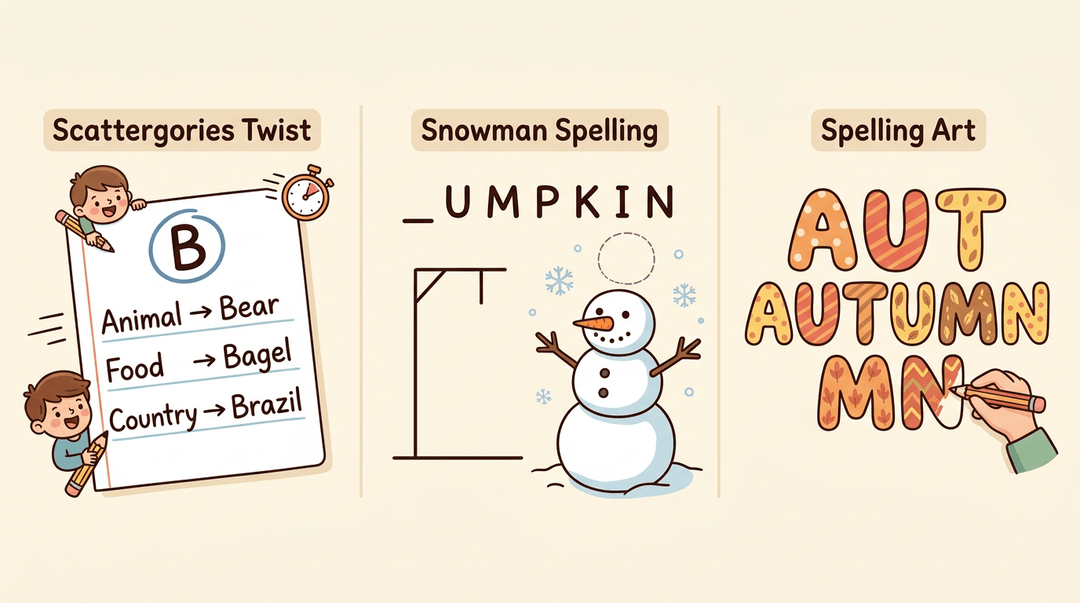
Try a Scattergories variation: call a letter and a few categories, and students race to fill them. Snowman is a hangman twist where each wrong guess adds a piece to a snowman, keeping spelling practice playful.
For spelling practice art, students decorate their words in bubble letters or patterns.
Trivia and review games to try
The review response standing game gets everyone moving: students stand if they know the answer and stay seated if they're unsure, so you see who needs reteaching at a glance.
Roll call trivia works the same way with a twist: call a name, ask a question, then move down the list. Riddles tied to your content make quick brain teasers.
I Spy is a fast classroom game: 'I spy something with a cord and a screen.' Students name the object, and you'll be surprised how much they notice. Good targets include:
- a whiteboard
- pencil sharpener
- stapler
- globe
- wall clock
- bookshelf.
Fun Group and Social Games
Group games give your class a shared reason to talk, move, and laugh together. They're also a reliable reset when energy dips midweek.
Classic playground games for groups
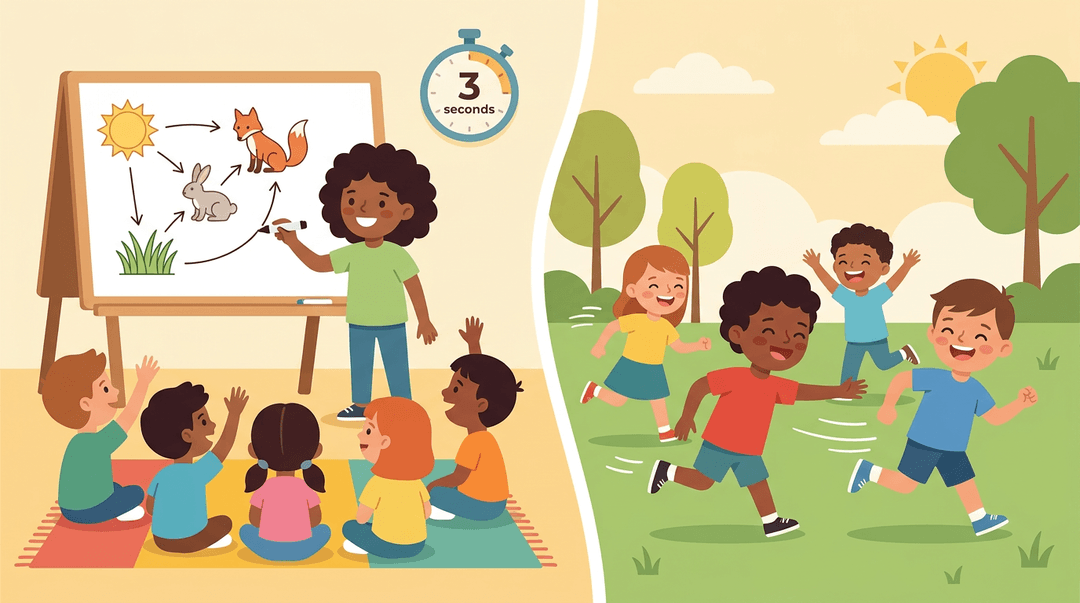
Pictionary works in almost any room. Split students into teams, have one student sketch a vocabulary word or science term, and let the others guess before the timer runs out.
For example, a fourth-grade teacher reviewing ecosystems can have students draw a food web, and the drawing does the explaining. Tag-style games like Cross Canada need more space, so save them for outdoors.
Taking group games outside when the weather allows gives students the movement they need without losing the lesson's focus.
Card games for the classroom
Matching cards pair terms with definitions, images with labels, or problems with answers. Students work in pairs to find every match, which keeps practice active. Sequencing cards ask students to put events, steps, or stages in the right order.
Picture a middle school history teacher handing each group a set of timeline cards. The room gets lively as teams argue over where each event belongs. Matching checks what students know, while sequencing checks how the pieces fit together.
Guessing games and icebreaker questions
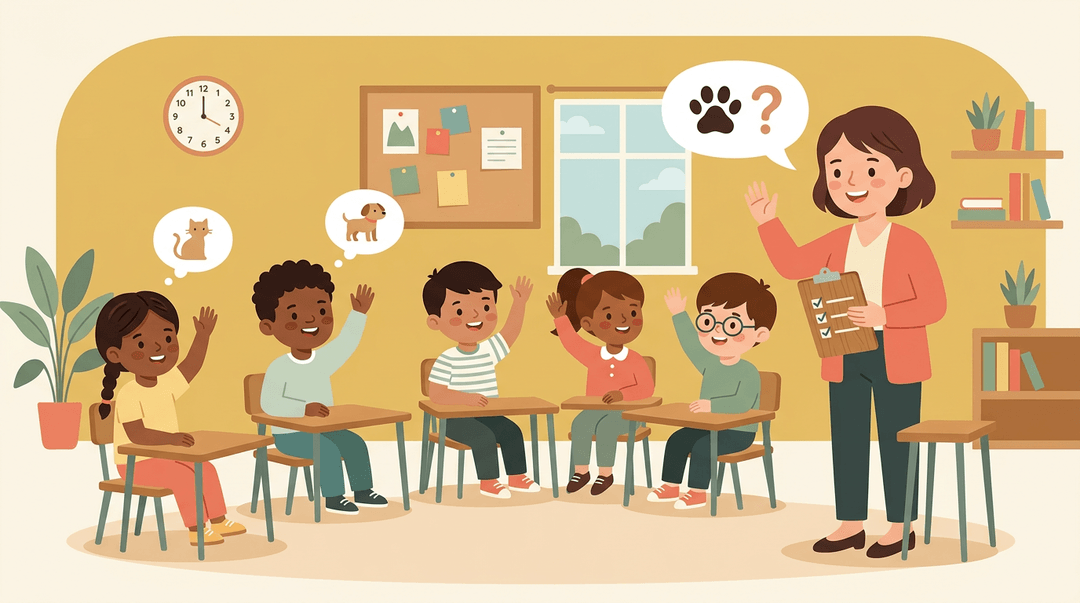
Start class with favorite thing questions like "What's your favorite animal?" to get everyone talking early. Roll call guesses turn attendance into a game: call a name, and classmates guess something about that student before they answer.
Ice breaker rounds are short, low-stakes prompts that help new groups warm up. Consider a substitute on her first morning with an unfamiliar class.
A quick roll call guess, such as "Who here has a pet?", gets students talking and helps her learn names faster.
Creative Art Projects for Class
Art is one of the easiest ways to get a room buzzing, and you don't need a full supply closet to pull it off. Here are projects that fit a normal class period.
Symmetry drawing and art projects
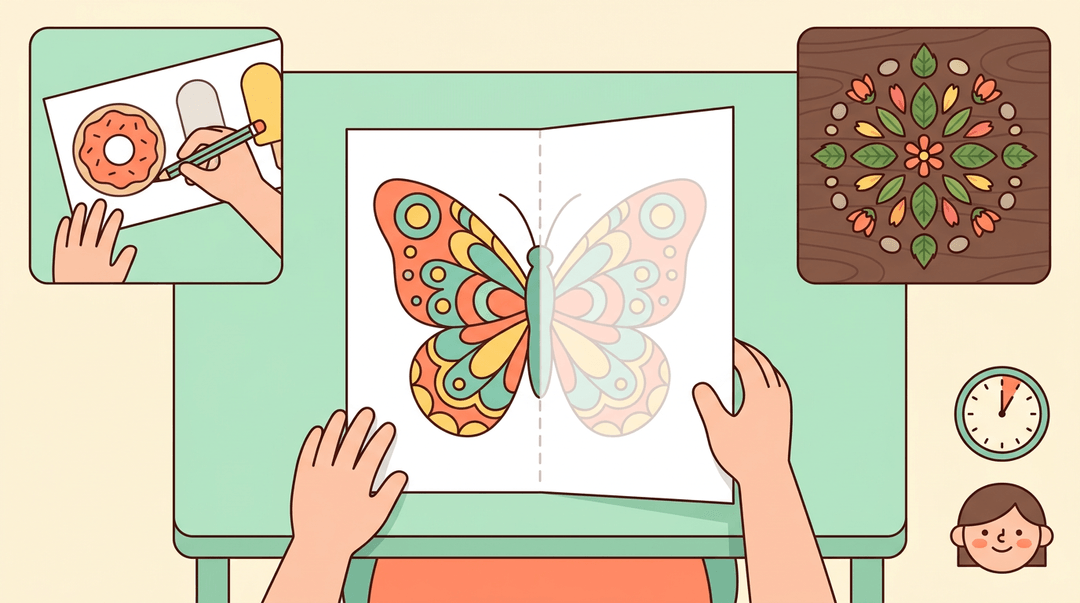
Symmetry drawing bundles are a great place to start. Students fold a sheet of paper, draw half a design, and watch the other side appear when they unfold it.
Picture a fourth-grade teacher using this as a Friday warm-up: students are focused and proud before the bell rings.
Two more quick options:
- Donut and popsicle drawing: Students trace round and stick-shaped objects to build simple, repeatable patterns.
- Nature mandala: Students arrange leaves, petals, or small stones in a circle, then sketch what they built.
Craft and design projects to try
Planner cover design gives students a project they'll actually use. Each student designs a cover for their own planner or notebook, so the work feels personal.
A class flag or crest works well as a team project: groups pick symbols that represent their class values and present them to the room. For a messier option, tie dye or seed starters add a memorable touch. Ownership matters more than perfection here.
Performances and showcase events
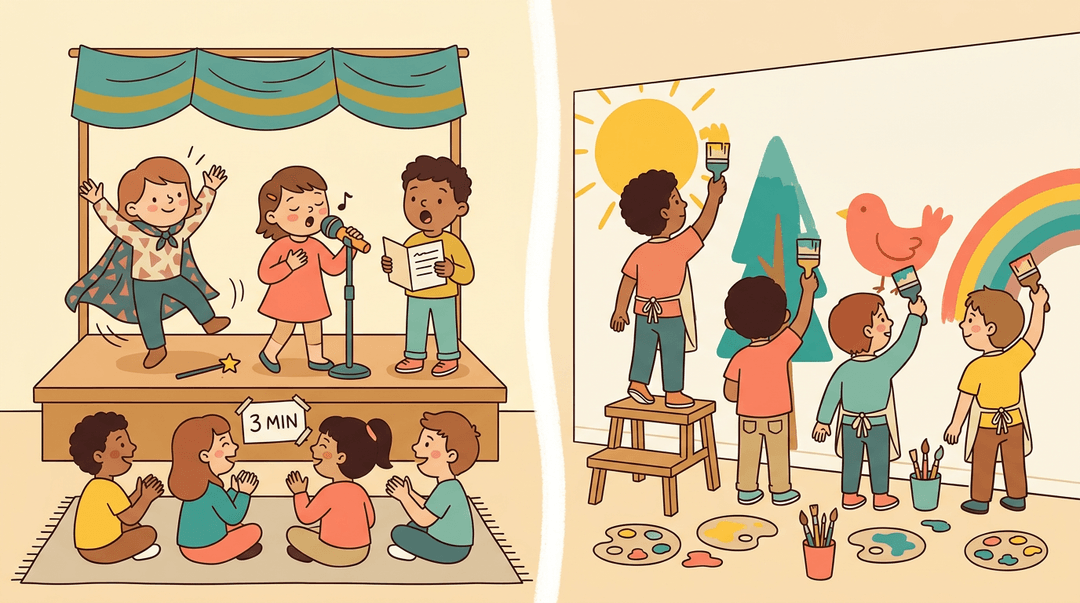
A class talent show lets students share singing, magic, poetry, or anything else they've practiced. Give each act a time limit and a rehearsal slot, and the show runs itself.
A school mural painting works the same way: one large piece that a whole grade can contribute to and that stays on display. Everyone gets a brush.
Get Students Moving While They Learn
Sitting still for a long stretch is hard on anyone, and young learners feel it most. Movement isn't a break from learning. It's often what helps learning stick. Here are games, energizers, and outdoor ideas you can use this week.
Games that get kids up and moving
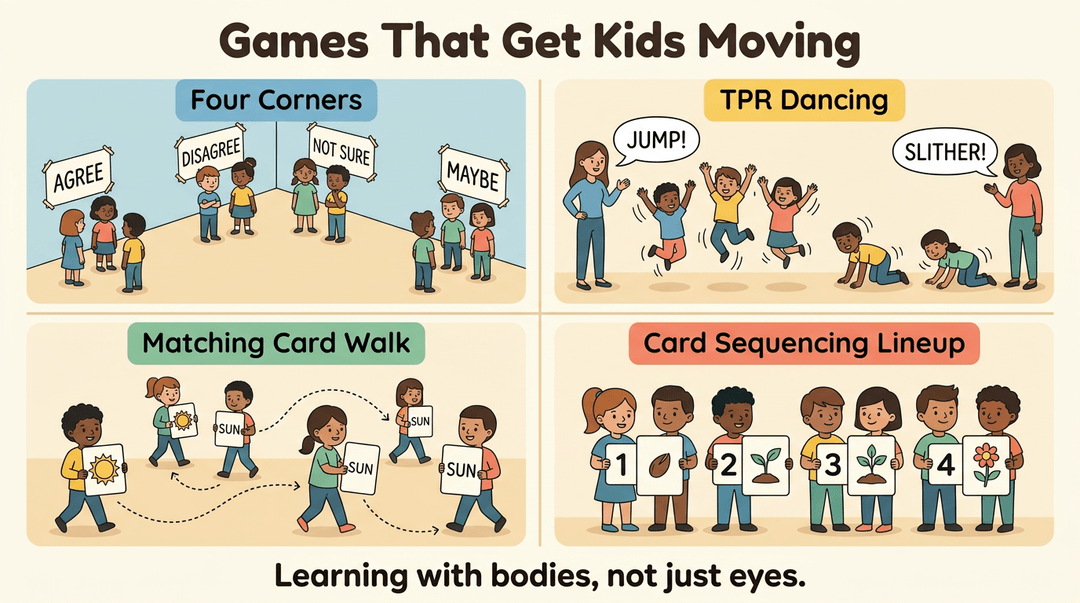
Consider a fourth-grade teacher who asks students to stand in a corner that matches their answer: agree, disagree, or not sure. That's four corners agree/disagree, and it shows you who's thinking and who's guessing.
For vocabulary, try Total Physical Response (TPR) dancing, where students act out each word as you call it.
A matching card activity gets kids walking to find their partner, and a card sequencing lineup has the whole class physically arrange events or steps in order. Students learn with their bodies, not just their eyes.
What games help you stay awake in class?
Think of the mid-afternoon slump, when the room goes quiet and eyelids droop. Alertness energizer games like four corners, a quick stand-up, or GoNoodle dancing can wake the room up fast. You can also build movement into your daily routine:
- Extended recess gives bodies room to reset before seatwork.
- Yoga and meditation help students who arrive wound up settle down.
- Daily movement breaks keep energy steady instead of waiting for it to crash.
- Transition timing works well when a short stretch or dance signals the switch to the next task, so the movement does double duty.
Outdoor and nature-based activities
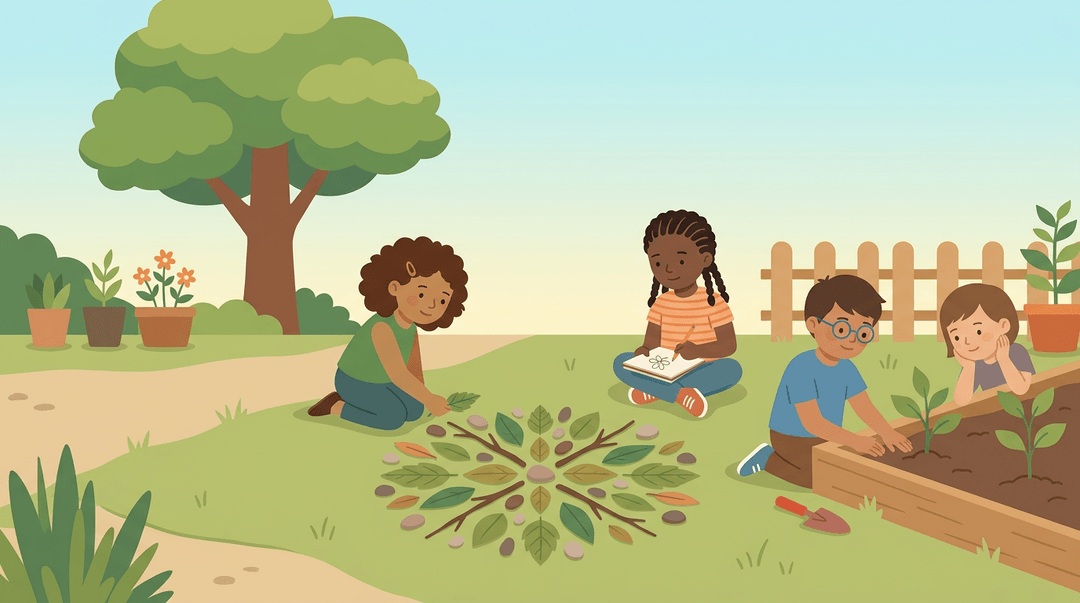
Sometimes the best energy boost is a change of scenery. Take a walk or visit a park, or have students do school garden work, where they dig, plant, and watch things grow.
For a calmer option, try nature mandalas, circles built from leaves, pebbles, and twigs. Art outside works too: students sketch what they see and bring it back to class.
Look for the spot where the outdoors meets the lesson, and your students will stay focused longer.
Fun Tech-based Classroom Activities
Technology can turn a quick check-in into something students look forward to. Here are four ways to bring it in, starting with the tools students already enjoy.
Digital polls and quiz games
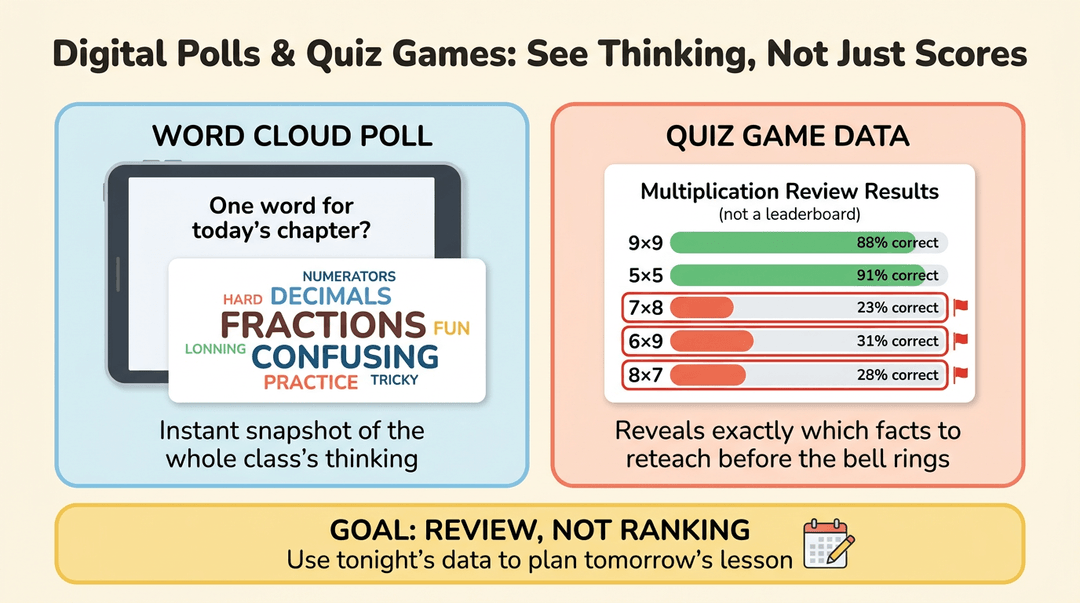
Polls get everyone involved fast. With word clouds in Mentimeter or Wooclap, a prompt like "One word for today's chapter" builds a live picture of the class's thinking.
Quiz games like Kahoot or GimKit add a race for points, but the real payoff is the data. For example, a fifth-grade teacher reviewing multiplication can spot the three facts half the class missed before the bell rings.
Keep the goal review rather than ranking, and use these live virtual engagement activities to plan tomorrow.
AI and design tools for class
Generative AI can write a poem or rap about a unit in seconds, but students should revise it, check the facts, and explain what they changed. Canva and Adobe Express let students build short videos or posters that show what they know.
Picture a middle school history teacher whose students each create a short video about a historical figure. The project isn't really about the software. It's about explaining an idea clearly, and that's the skill you're after.
Virtual field trips and experiences
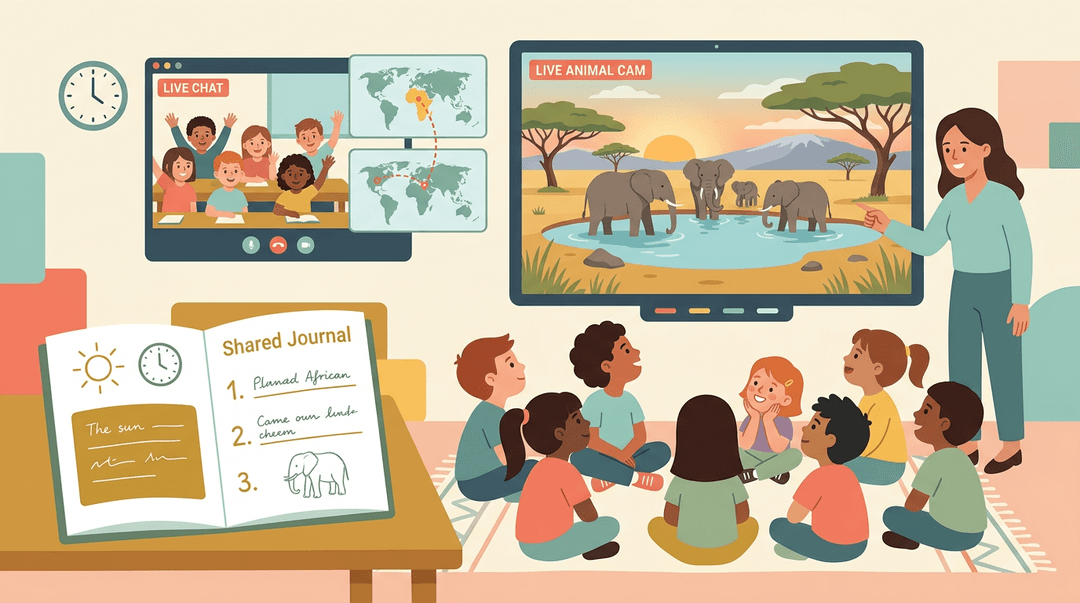
Virtual field trips take your class places a bus can't go. Pair one with a live animal cam so students can watch wildlife in real time and log what they notice.
Global classroom connections link your students with peers in another region or country to compare daily routines. Think of a second-grade teacher whose class watches a live animal cam each morning, then records three observations in a shared journal.
App-based scavenger and escape games
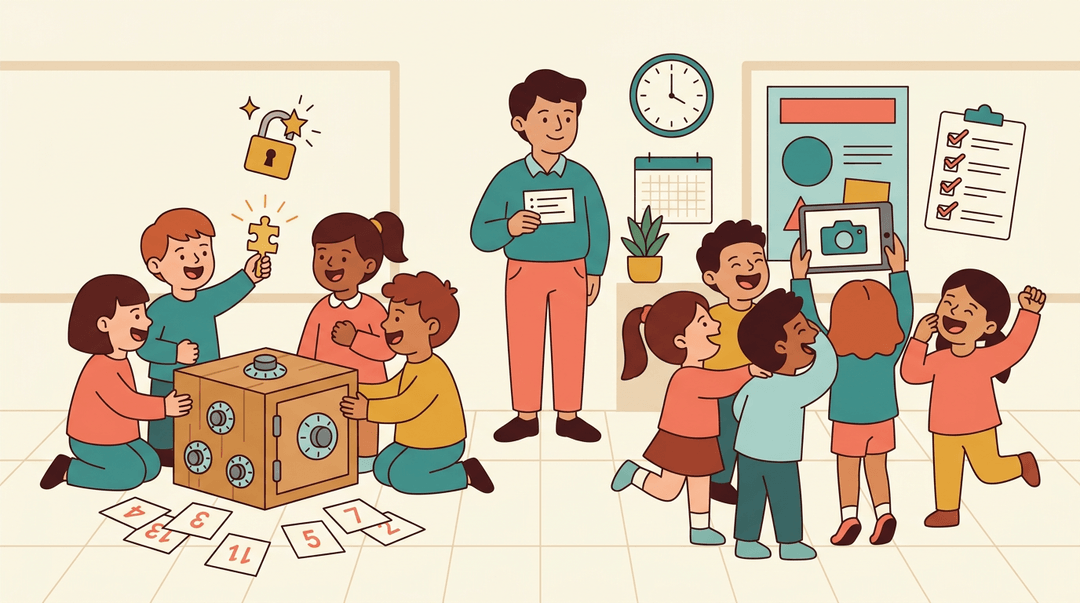
Breakout EDU turns a lesson into an escape room: teams solve puzzles to open locked boxes, and each answer reveals the next clue. GooseChase works like a scavenger hunt, with students completing photo or video challenges around the room.
Both reward teamwork, and a substitute can run either from a short set of directions. Everyone's moving, and everyone's thinking.
Fun doesn't have to mean chaos or extra prep. When you pair a few reliable activities with clear routines, students stay engaged and you get back valuable time.
Start with one routine this week, then add a movement break or a tech task once it runs smoothly. Ready to organize your whole week? Check out our Classroom Management feature to plan your classes, rosters, and timetables in one place.
Frequently asked questions
What are 20 things you commonly find in a classroom?
1. Common classroom items include desks, chairs, a teacher’s desk, a whiteboard, markers, an eraser, pencils, paper, notebooks, textbooks, a bookshelf, a clock, a calendar, a globe, a map, a pencil sharpener, a stapler, scissors, and a trash can.
What are some interactive games for students?
2. Interactive student games include Pictionary, matching cards, sequencing cards, Four Corners, roll-call guessing games, Scattergories, Snowman, riddles, I Spy, and review games such as Kahoot or GimKit. Breakout EDU and GooseChase are also engaging options when technology and preparation are available.
What are some games that can help me stay awake during class?
3. Movement-based games can help you stay alert during class. Try Four Corners, a quick stand-up activity, TPR dancing, GoNoodle dancing, stretching, yoga, or another short movement break approved by your teacher.
What can a bored 12 year old do?
4. A bored 12-year-old can draw from a creative prompt, make symmetrical art, write a funny or mysterious story, play Scattergories or Snowman, solve riddles, try I Spy, create a planner cover, or design a class flag or crest. They can also join a trivia or review game, make a nature mandala, or take a short movement break.