How Parenting Love and Logic Turns Mistakes into Lessons

Jump to section
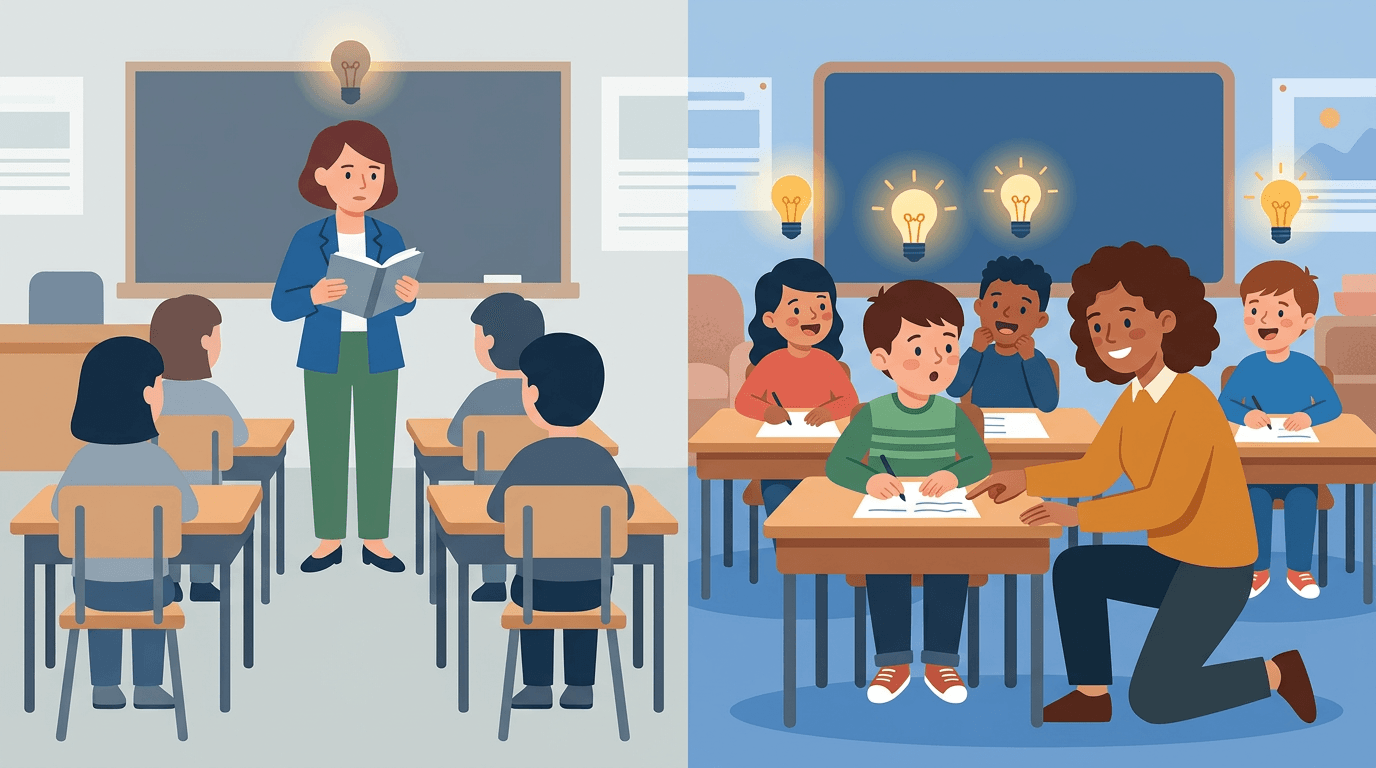
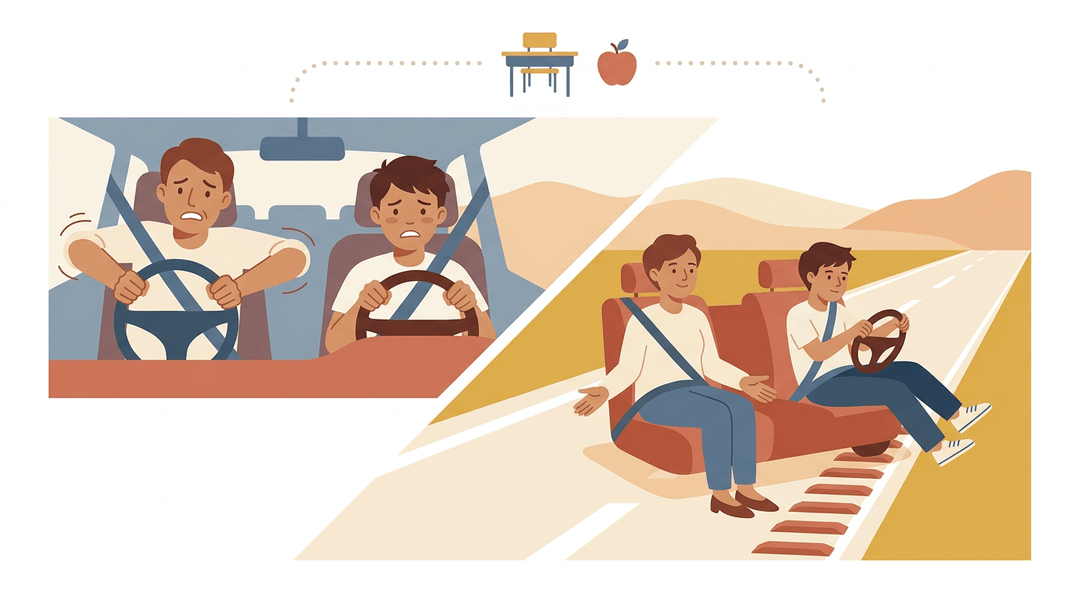
Think about teaching a teenager to drive. You can grab the wheel every time they drift, or you can let them feel the rumble strip and correct course themselves. Parenting works the same way.
Love and Logic is a philosophy that pairs warmth with real consequences, letting kids (and students) learn from their own choices instead of a parent's or teacher's panic.
This post breaks down its core principles and shows what they look like in your classroom.
The Core Philosophy Behind Parenting Love and Logic
At its heart, Love and Logic asks a simple question: what if raising a responsible kid mattered more than raising an obedient one? Everything else builds from there.
Building responsibility through love and limits
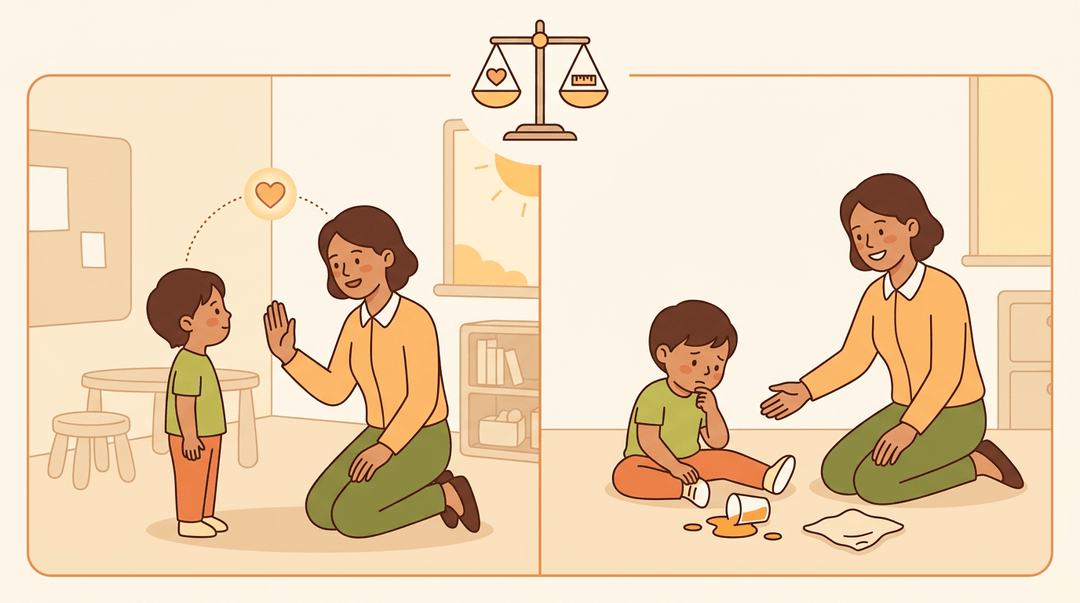
Love and Logic starts with loving, respectful relationships between adults and kids: not permissive, not harsh, but firm. Two rules anchor it: adults set limits through what they'll allow themselves to do, not through threats, and when a child causes a problem, the adult hands it back with empathy so the child owns the fix. Kids build responsibility by making real choices and living with real results, because quality of life tracks quality of choices. The goal is balance: enough love that kids feel secure, enough limits that they learn to think.
Where Love and Logic came from
The approach was developed by Jim Fay and Foster Cline, pooling more than 75 years of combined experience raising and working with kids. The Love and Logic Institute itself has been in practice for 49 years, born out of watching older discipline tactics stop working as classrooms and families changed.
Is Love and Logic gentle parenting?
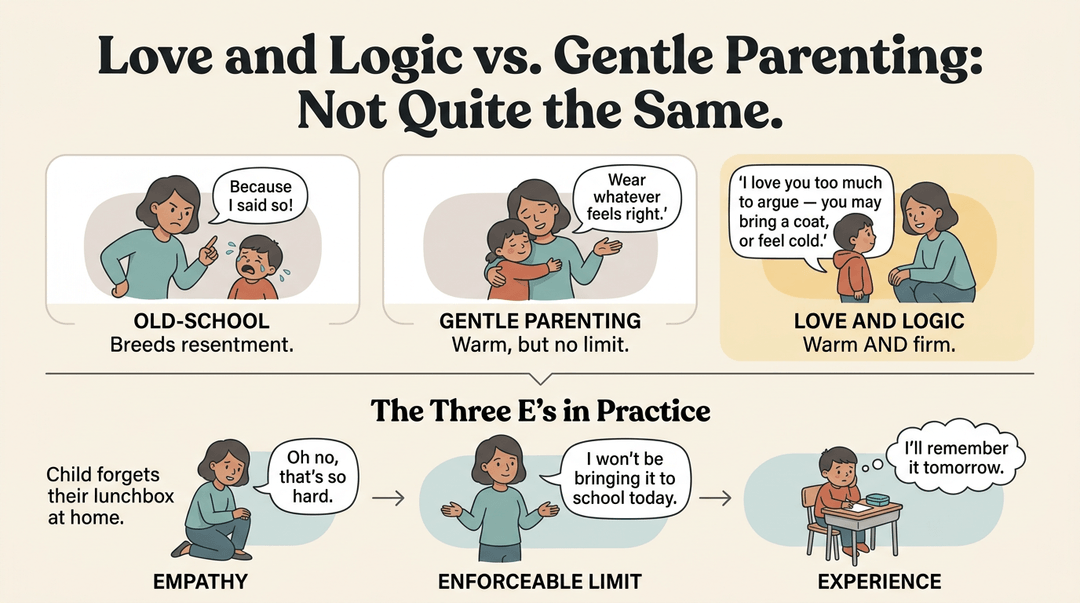
Not quite, though people ask. Love and Logic pushes back on approaches built entirely around self-esteem, arguing that constant praise doesn't build confidence: struggling through a real consequence does. That's its central critique of old-school techniques: lectures and punishments that once worked now just breed resentment. Compared with gentle parenting, Love and Logic keeps the warmth but insists on firm, enforceable limits rather than negotiation. Critics counter that its consequence-driven model can feel too hands-off for younger or more anxious kids, and that its three E's take real practice to deliver without slipping into sarcasm:
- empathy
- enforceable limits
- experience
Leading with Empathy, Not Anger
Anger feels like control in the moment, but it rarely teaches anything. The Love and Logic method flips that instinct: deliver empathy first, consequences second, and skip the lecture entirely.
Staying calm before delivering consequences
Before any consequence lands, lock in empathy. A short, genuine statement of understanding tells a child you're on their side even when you're holding a boundary.
That one move changes everything that follows: a child who feels understood can actually hear the lesson, while a child on the receiving end of a lecture just waits for it to end.
Skip the anger and skip the speech. Try phrases like "This is so sad," "I bet that feels frustrating," or the classic "I love you too much to argue about this."
Each one names the feeling without naming blame, which keeps the moment from turning into a power struggle.
This matters even in tricky, real-world moments. If your child acts up after visiting their dad, that's normal: transitions between households are hard, and big feelings often surface as big behavior.
An empathetic response ("Coming back is tough, huh?") does more than a punishment ever could.
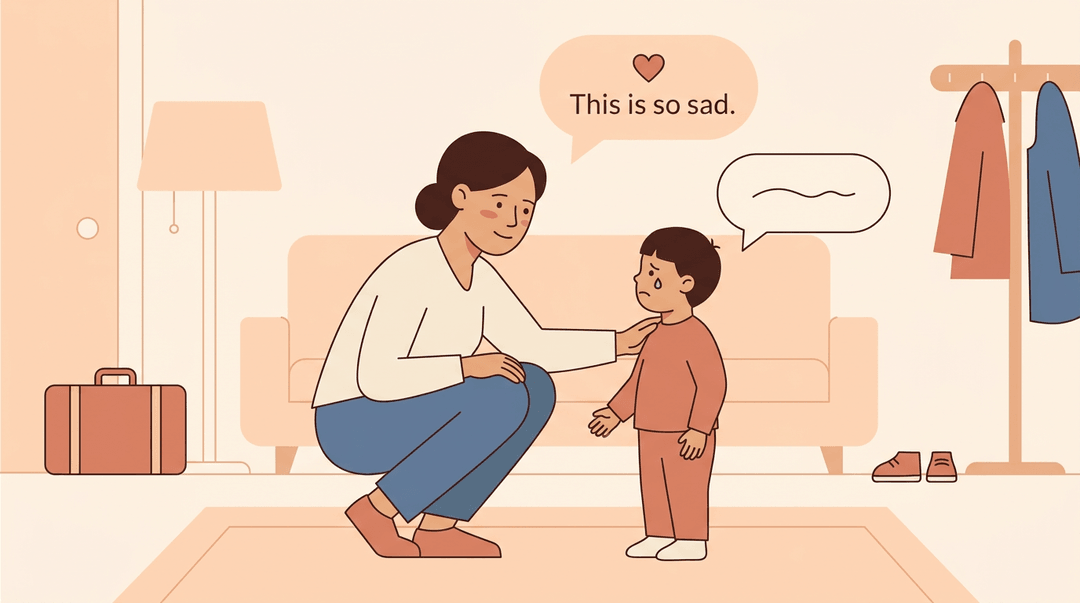
How empathy strengthens your bond with your child
Over time, this approach builds stronger relationships. Kids stop bracing for a fight and start trusting that consequences come from love, not from a parent's bad mood.
That trust makes family life less stressful for everyone, since fewer moments spiral into shouting matches.
Most importantly, the child keeps seeing you as the "good guy," even while limits stay firm. Empathy and structure aren't opposites: together, they're what makes the boundary stick.
How Logic Uses Consequences to Teach
The "logic" half of this philosophy leans on one plain idea: kids learn best from consequences they actually feel, not ones you hand down as lectures.
Letting kids learn from natural consequences
Think of a third grader who forgets their homework folder at home for the third time this month. Instead of driving it over, a Love and Logic teacher lets the folder stay put and lets the missed points land.
That's a small, affordable mistake now, before the stakes get bigger in middle school.
Letting kids experience outcomes builds something a lecture never can.
According to Parenting Young Teens: Using Consequences to Promote Responsibility, "Youth who experience natural consequences develop self-discipline and inner strength, and learn to respect order not from fear of punishment, but because they see that following rules leads to better living."
Over time, that outside consequence becomes an inside voice: the internal accountability that says pack the folder before anyone has to say it.
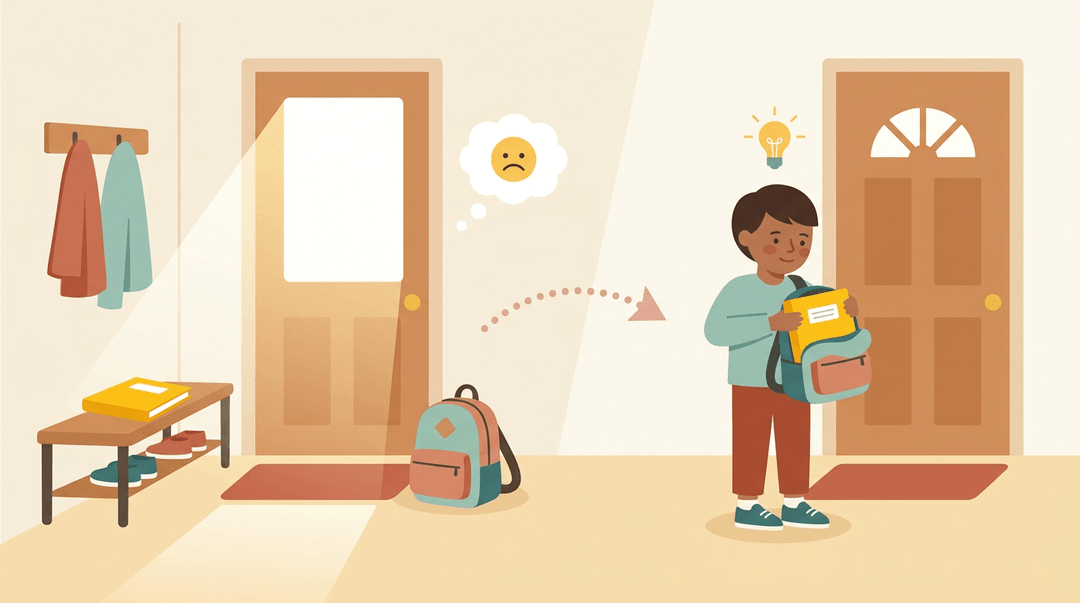
Why waiting beats immediate consequences
The myth of immediate consequences is that faster equals better. Love and Logic flips that: a beat of think time, even just "I'll deal with this later," calms the room and turns the moment into a strategic training session instead of a power struggle.
Stop rescuing kids from mistakes
Parents and teachers who rescue kids from every mistake rob them of the practice. Refusing to let a student ever fail small keeps them fragile for when it counts. Holding kids accountable now, while the mistakes are still cheap, is the whole point.
Bringing Love and Logic into Your Classroom
This is a two-part routine: rewrite your classroom language before problems start, then respond to misbehavior the same three-beat way every time. Set it up once and the in-the-moment part runs itself.
Before the first bell: set the language
- Rewrite each rule as a choice you control.
- ❌ "No talking during work time." ✅ "I help students who work quietly."
- The difference: the first commands them; the second describes what you will do.
- ❌ "No talking during work time." ✅ "I help students who work quietly."
- Rehearse a calm, neutral delivery.
- Say each line the way you'd read a lunch menu: no edge, no raised volume.
- Post a visual choice chart where students can see it.
- Two columns on the wall: "You can..." and "Or you can..."
- Pointing at the chart later replaces a lecture with a glance.
- Two columns on the wall: "You can..." and "Or you can..."
In the moment: the three-beat response
When misbehavior happens, the order of these beats matters more than the words.
- Pause before you do anything.
- Count a silent five; the pause keeps the consequence from sounding like anger.
- Lead with an empathy phrase.
- Say: "Oh no. That's a bummer."
- Use the same phrase every time so it stays warm instead of sarcastic.
- Say: "Oh no. That's a bummer."
- Assign a logical consequence, then move on.
- Logical means connected to the behavior: a mess gets cleaned, not a detention.
- Say: "Feel free to rejoin the group once your desk is cleared."
- Logical means connected to the behavior: a mess gets cleaned, not a detention.
⚠️ Watch out: empathy delivered after the consequence sounds like gloating. Lead with it, every time; the order is the technique.
The same routine at every grade
The beats don't change; the choices you offer do. Match the stakes to the age.
| Grade band | The choice you offer | Sounds like |
|---|---|---|
| Elementary | Classroom chore choices | "Would you rather wipe the tables or stack the chairs?" |
| Middle school | Homework consequences | "You're welcome to join free time once the assignment's done." |
| High school | Independence trade-offs | "Keep the phone by using it responsibly, or it lives on my desk today." |
Example: A ninth grader misuses the open-seating privilege. You pause, say "That's a bummer," and she moves to an assigned seat for the week. The consequence is the lost freedom itself, so no lecture is needed.
Patterns only show up when you track them, so log behavior incidents and consequences alongside your rosters in EMStudio's classroom management tools.
Setting Limits Without Power Struggles
Every teacher knows the moment a rule turns into a standoff. Love and Logic sidesteps that fight by changing what a limit sounds like in the first place.
Use enforceable statements instead of threats
A threat tells a child what they must do. An enforceable statement describes what you'll do, and hands the choice back to the child instead.
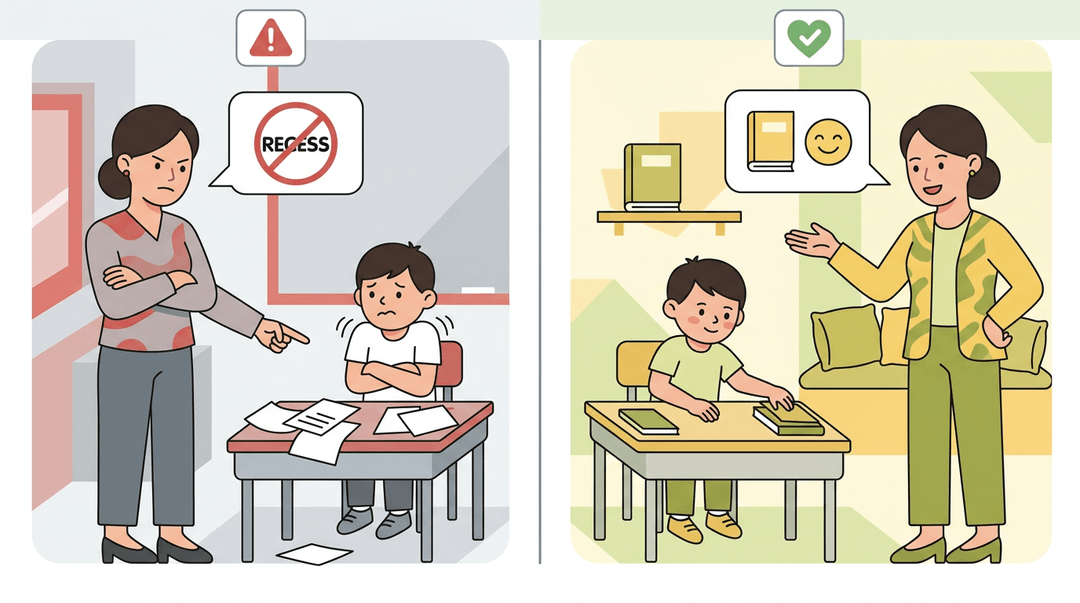
Instead of "Clear your desk or you lose recess," try "You're welcome to join us for read-aloud once your desk is clear." The same swap works at home with chores, meals, and homework: "I'll serve dinner to kids who are seated" beats "Sit down now!"
Posted as classroom rules, enforceable statements read less like commands and more like invitations, which is exactly the point.
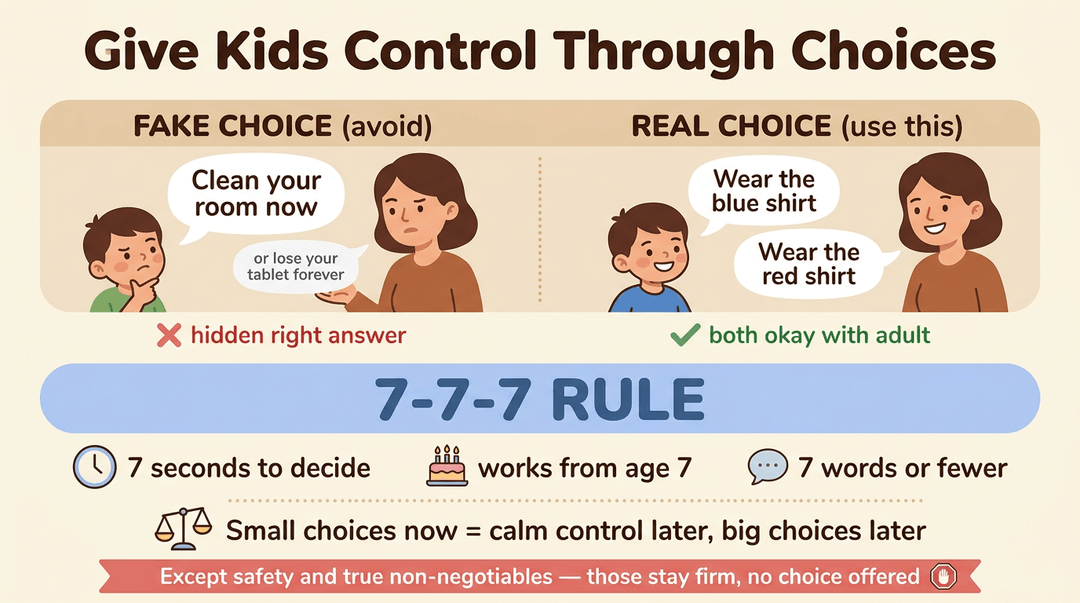
Give kids control through choices
Feeling in control is a basic human need, and kids who don't get a taste of it in the small stuff tend to fight for it in the big stuff.
Love and Logic hands control back to kids, but on the adult's terms: offer two options you can genuinely live with, never a fake choice with a hidden "right" answer.
This is where the 7-7-7 rule comes in: short, simple choices, offered to kids as young as seven, decided within about seven seconds.
As the Love and Logic approach puts it, "Give as many choices as you can while the price tag is small so you can gain control when the stakes are higher." Skip choices around safety or true non-negotiables: some limits stay firm, full stop.
End arguing and back-talk for good
Let back-talk go unanswered often enough, and kids learn it works. The fix isn't a louder voice, it's a calmer one.
One go-to move is the 'go brain dead' technique: pick one neutral phrase, like "I love you too much to argue," and repeat it until the argument runs out of fuel.
Teaching Responsibility Through Problem Solving
Love and Logic's real engine is responsibility, not compliance. It shows up first at home, in the small daily friction of chores and mistakes, long before it ever shows up as classroom management.
Get chores done without nagging or rewards
Chores work best when they're tied to a child's sense of self-esteem, not a payout.
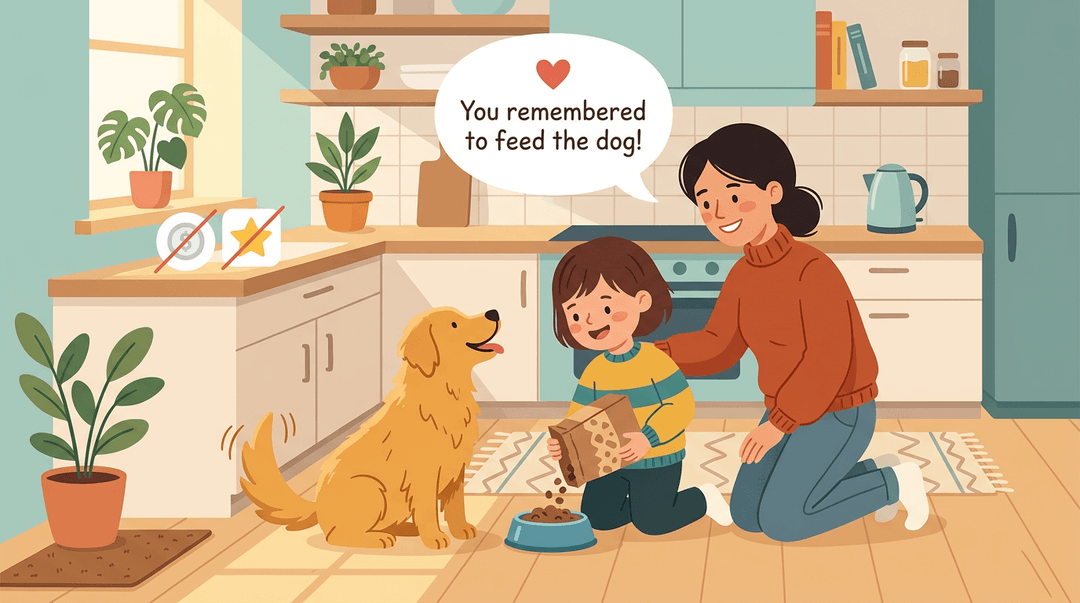
Instead of nagging or dangling a reward, parents use positive noticing: naming what a child already did well ("You remembered to feed the dog without being asked") rather than what's still undone.
Chores become family teamwork, everyone pitching in because the household runs better that way, not because a bribe or a threat is on the table.
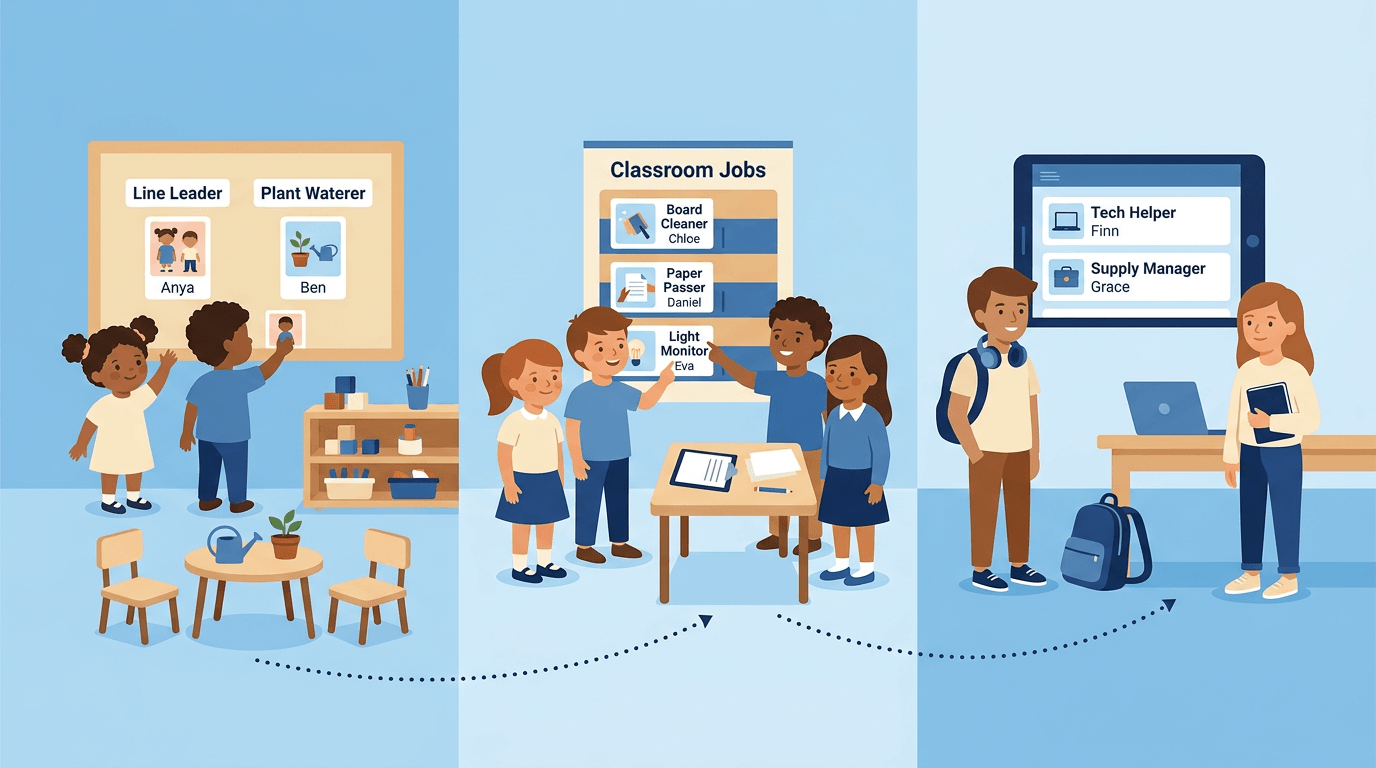
A classroom job chart works the same way: kids who feel ownership of a task rarely need a sticker to keep doing it.
Help kids solve their own problems
Love and Logic's five-step problem-solving process walks a child through:
- Naming the problem
- Brainstorming options
- Weighing consequences
- Choosing one
- Trying it out
Think of a child dealing with teasing or bullying: instead of a parent swooping in with the fix, they're asked, "What have you tried? What else could you try?" If a child refuses to engage, the process doesn't force it.
It waits, and the door stays open for next time.
Learning responsibility through mistakes
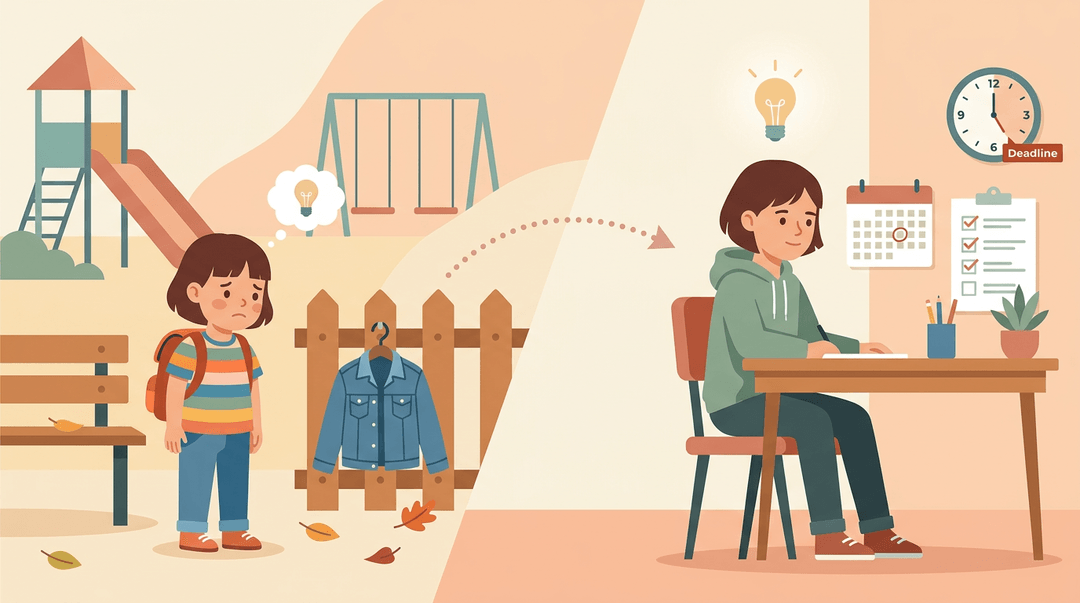
Mistakes aren't failures here. They're learning opportunities. The philosophy leans on smaller price tags early in life: a lost jacket in third grade teaches the same lesson a missed deadline does later, at a much lower cost.
Getting Started with Love and Logic Parenting
Starting small beats starting everything at once. Whether you're managing a toddler's meltdown or negotiating curfew with a teenager, Love and Logic works best when you pick one habit and let it take root before adding another.
A step-by-step approach for parents
- Pick one technique first. Choose a single tool, like offering choices or using an empathetic one-liner, and practice it until it feels automatic.
- Practice consistency. A technique only builds trust if your response stays predictable, even on the hard days.
- Reflect and adjust. Notice what worked and what didn't, and once we see that first technique stick, layer in a second.
Structured courses and training options
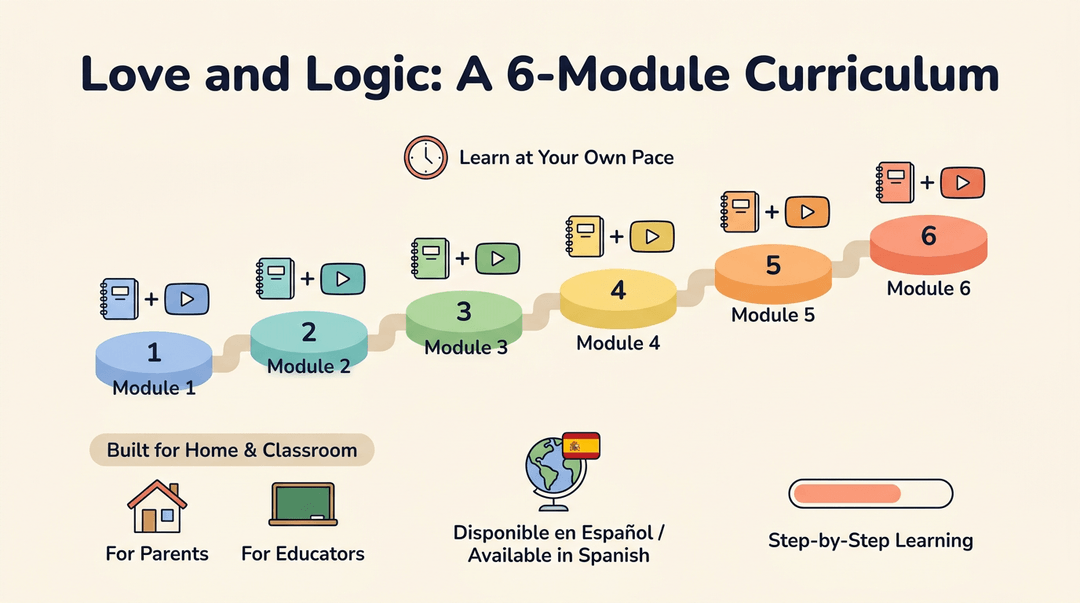
For parents who want more than a single technique, Love and Logic offers a six-module curriculum that walks through the philosophy step by step.
It pairs workbooks and videos so you can learn at your own pace, and it's built for both parents and educators, which makes it just as useful in a classroom as it is at home. The program is also available in Spanish, widening its reach.
Books, courses, and other resources
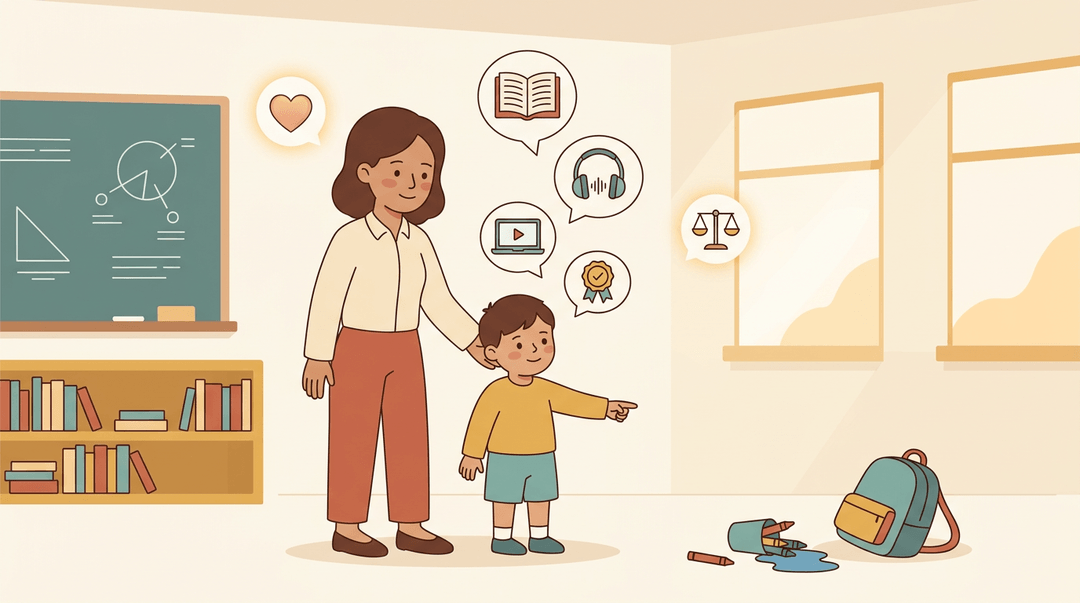
Beyond the core curriculum, Love and Logic's library includes books, audio programs, and online courses that dig into specific challenges in more depth.
Teachers can find classroom-focused resources built to translate the same principles into lesson time and hallway moments.
For those who want to pass the method on to others, there's a path to becoming a certified trainer, and for families who want the approach framed through a spiritual lens, there's even a faith-based parenting book.
Love and Logic isn't about being softer or stricter. It's about staying warm while letting consequences do the teaching, so students walk away with responsibility instead of resentment.
Handled well, it turns daily friction into real learning moments for the whole classroom.
Ready to put these ideas into practice? Check out our Classroom Management feature to organize your classes, rosters, and routines so empathy and limits work together every day.
References
- Parenting Young Teens: Using Consequences to Promote Responsibility — lib.dr.iastate.edu (2010)
- Love and Logic — exa.ai (2026)
- What is Parenting with Love and Logic? — loveandlogic.com
- What_is_Parenting_with_Love_and_Logic.pdf? — cdn.shopify.com
- Parenting with Love & Logic — aae.lewiscenter.org
Frequently asked questions
What is Love and Logic parenting?
Love and Logic parenting is a philosophy developed by Jim Fay and Foster Cline that combines warmth, empathy, and firm limits. It gives children choices, allows them to experience reasonable consequences, and helps them develop responsibility instead of relying mainly on obedience, threats, or punishment.
What is the 7-7-7 rule for parenting?
The 7-7-7 rule is a guideline for offering short, manageable choices. It generally means choices can be offered to children as young as seven, should be decided in about seven seconds, and should remain simple and low-stakes. Safety issues and non-negotiable limits are not treated as choices.
What is the book Love and Logic about?
The book *Parenting with Love and Logic* explains how parents can raise responsible children through empathy, choices, enforceable limits, and logical or natural consequences. Its central message is to let children experience manageable results of their decisions while maintaining a loving relationship and avoiding lectures or power struggles.
What are five characteristics of a good parent?
Five characteristics of a good parent are warmth, consistency, patience, clear boundaries, and willingness to listen. Good parents also model responsibility, allow age-appropriate independence, and correct behavior without withdrawing love.
What are the 5 principles of Love and Logic?
The five commonly emphasized principles are showing empathy before consequences, giving children choices, setting enforceable limits, allowing natural or logical consequences, and helping children solve their own problems. Together, these principles aim to build responsibility and internal accountability.
What are the criticisms of Love and Logic?
Critics argue that Love and Logic can place too much emphasis on consequences and may feel overly hands-off for young, anxious, or highly sensitive children. Some also worry that empathy phrases can sound scripted or sarcastic when used poorly, and that the approach requires considerable consistency and practice.
What are the two rules of Love and Logic?
The two central rules are that adults set limits through what they will allow or do themselves rather than through threats, and that adults return problems to the child who created them with empathy. This lets the child take ownership of solving the problem and experiencing its reasonable results.
My child acts up after visiting their dad. Is this normal?
Yes, it can be normal for a child to act up after returning from a visit with their dad. Moving between households can be emotionally difficult, and children may release built-up feelings through challenging behavior once they are back in a familiar place. Respond calmly, acknowledge that the transition is hard, and maintain consistent limits while watching for persistent or serious concerns.