How Hands On Learning Works Across Every Age and Subject

Jump to section
Think about the last time you learned something that actually stuck. Not a definition you memorized the night before a test, but a skill you can still use today.
Chances are, you learned it by doing it: building something, fixing something, trying and getting it wrong before you got it right.
That's the heart of hands-on learning, an approach where students engage directly with materials, problems, and ideas rather than just receiving information.
It's one of the oldest ideas in education, and the research keeps confirming what teachers already sense in the classroom.
In this post, we'll cover what hands-on learning really means, why it works, how it looks across grade levels, and how to plan a unit you can actually use Monday morning.
What Hands on Learning Actually Means
You'll see it called experiential learning, active learning, or kinesthetic learning. Whatever the label, the idea is the same: students learn by doing, not just by listening.
Learning by doing defined
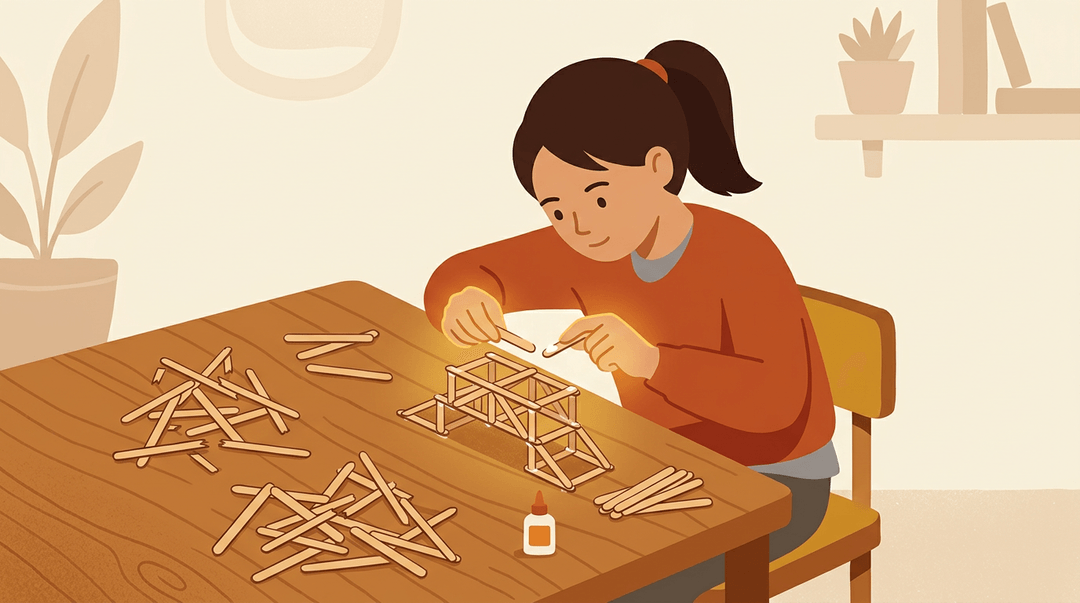
Hands-on learning puts concrete tasks and real materials at the center of a lesson. Instead of absorbing information passively, students interact with it: they build, test, measure, create, or problem-solve their way to understanding.
That direct experience is what connects theory to practice.
Theorists who shaped experiential learning
Several researchers laid the groundwork for why this works:
- John Dewey argued that genuine education comes from experience, not from sitting and receiving.
- David Kolb built on that with his experiential learning cycle: do, reflect, conceptualize, apply.
- Jean Piaget showed that younger children understand the world through physical, concrete operations before abstract thinking clicks.
- Lev Vygotsky added the social dimension: doing things with others accelerates learning.
- Jerome Bruner called the earliest stage of learning "enactive representation," meaning we first grasp ideas through physical action.

How it fits different learning styles
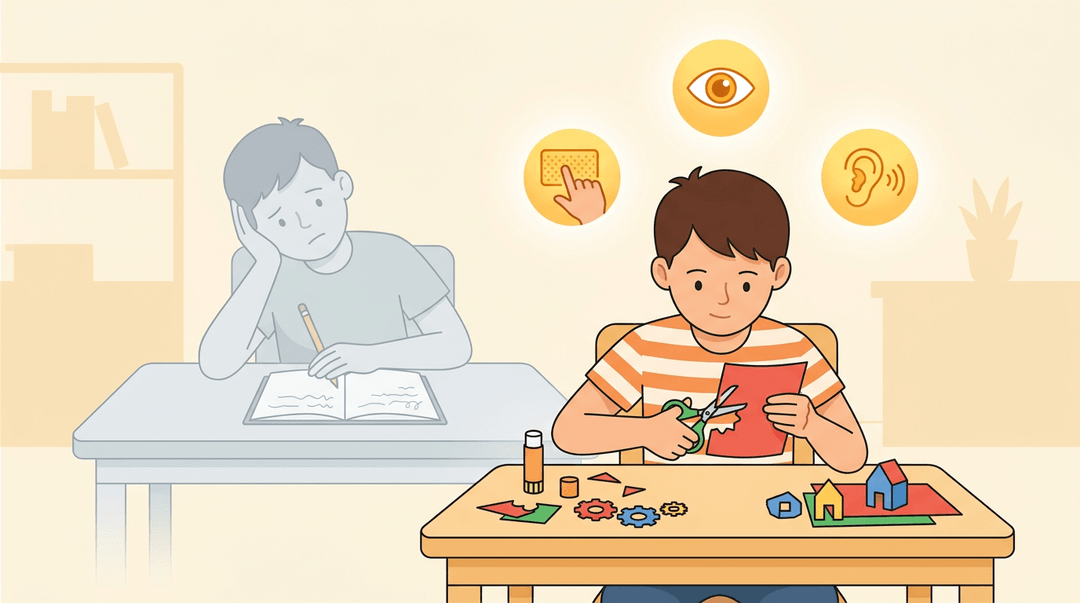
Kinesthetic learners get the most obvious benefit here, but hands-on tasks blend multiple modalities at once: a student building a model is also looking, listening to peers, and talking through what they notice.
That overlap supports visual and auditory learners too, not just the ones who need to move.
That said, hands-on learning isn't a replacement for every method. Some concepts are quicker to grasp through direct instruction first, with the doing coming after.
Why Hands-on Learning Works
There's a reason students remember the volcano they built in fifth grade but forget the chapter they read about plate tectonics. Doing something and reading about it are not the same experience, and the research backs that up.
Better engagement and stronger memory
Passive reception (sitting, listening, copying notes) asks students to receive information. Active participation asks them to use it. That shift changes what happens in the brain.
When students work with their hands and move through a task, they engage multiple senses at once.
Research published in Frontiers in Psychology confirms that embodied learning has a moderately positive effect on learning performance, and those multisensory anchors, touch, sight, sound, and movement together, give memory more to hold onto.
A student who measures, cuts, and assembles has three routes back to the concept, not just one. The experience also tends to be more enjoyable, which matters: engaged students stay in the room, mentally as well as physically.
Critical thinking and academic skills it builds
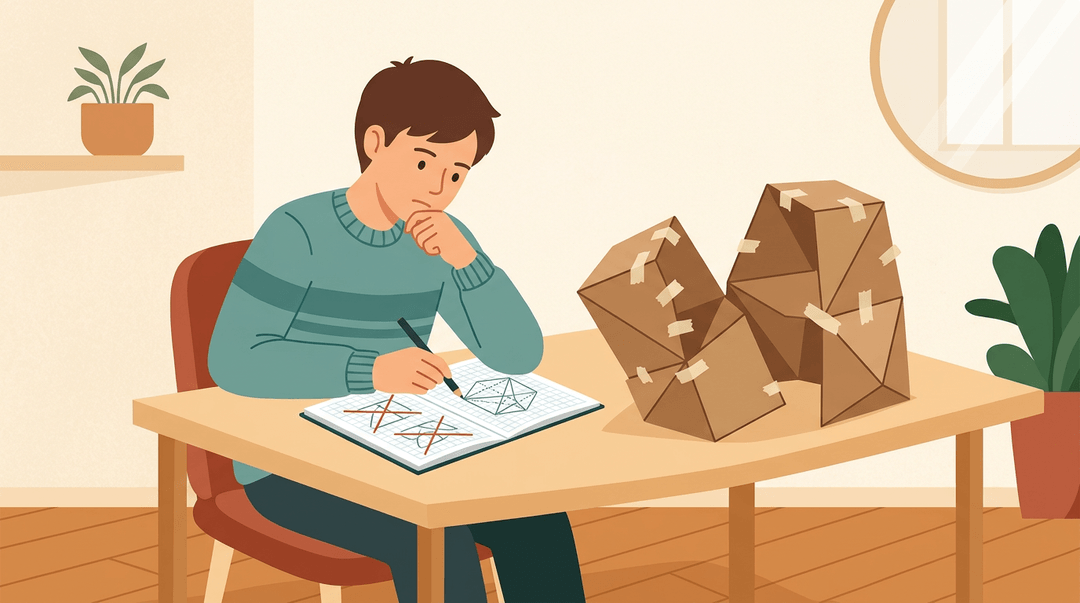
Hands-on tasks rarely have a single right answer handed to them. Students hit a snag, reconsider, try again.
That cycle is critical thinking in practice, not as an abstract skill on a rubric but as something students do because the problem in front of them demands it.
Real challenges also build deeper conceptual understanding. A study in the ERIC database found that a hands-on approach to geometry contributed directly to students' conceptual understanding and problem-solving ability.
Alongside that, Frontiers in Cognition research showed meaningful gains in working memory when students engaged in manual, skill-based tasks compared to a control group.
Social and emotional growth through doing
Most hands-on work happens alongside other people. Building something together requires students to divide tasks, listen, disagree productively, and show up for their group.
Those are communication and empathy skills, practiced in real time rather than discussed in theory.
When a project goes sideways and a student figures out how to fix it, that's confidence earned from evidence. Over time, students who navigate real challenges develop resilience and a quiet self-assurance that carries into the next hard thing.
How it prepares students for real work
The classroom is a safe place to make mistakes, which is exactly why hands-on learning is such good preparation for work that doesn't forgive sloppy habits.
A student who has timed a lab, calibrated a tool, or presented a finished product to peers has practiced the kind of precision and accountability that employers notice.
That practical experience is also something concrete students can point to, well before a formal résumé has much else on it.
What Are Some Examples of Hands-on Learning?
Examples show up in every subject and every grade. Here's what hands-on learning actually looks like in practice, from how you set up the room to the tools that support making.
Setting up your classroom for active work
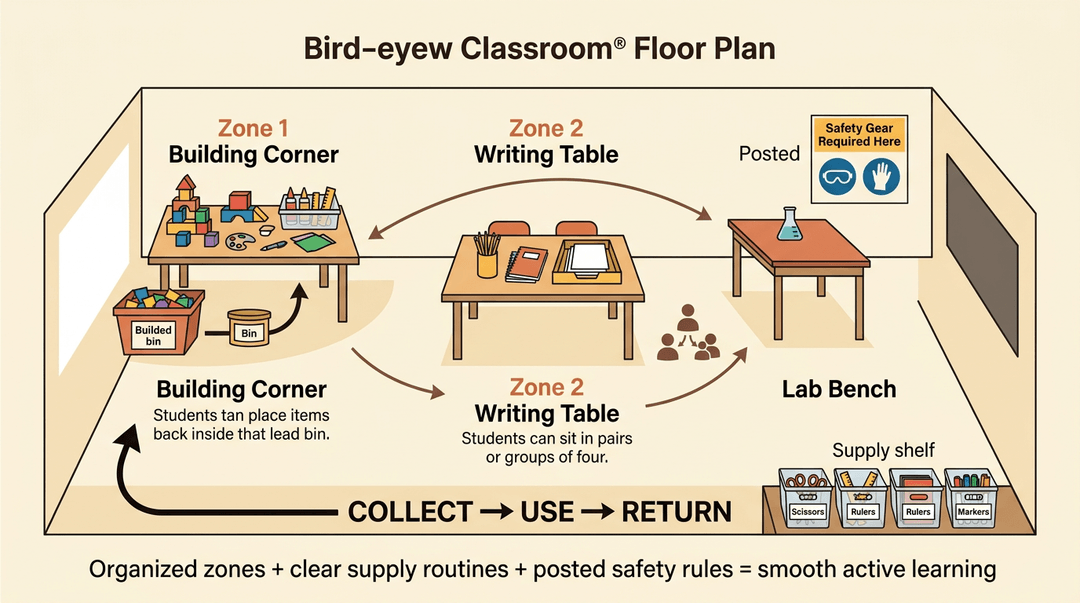
Before any activity starts, the environment does a lot of the work. Keep material management routines consistent: students know where supplies live, how to collect them, and how to return them.
Build in flexible grouping so you can shift between pairs, small groups, and whole-class quickly. Designate specific areas for different activity types (a building corner, a writing table, a lab bench) so transitions don't eat your time.
And set safety procedures early: post them, practice them, and make sure students know which tasks require PPE like goggles or gloves.
Guide students instead of lecturing them
Your role shifts here. Think of a fifth-grade teacher circling a room where students are measuring angles with protractors: she's asking questions, not explaining from the front. That's the move.
Use planned scaffolding to walk students from the concrete task toward the abstract idea it represents, and plan your debrief questions in advance so the activity doesn't end without a conceptual landing.
"What pattern did you notice?" or "Why do you think that happened?" bridges the doing to the thinking.
Observe and note what you see: a quick observation checklist during the task, plus an exit ticket at the end, tells you who made the connection and who needs another pass.
Applying it across every subject
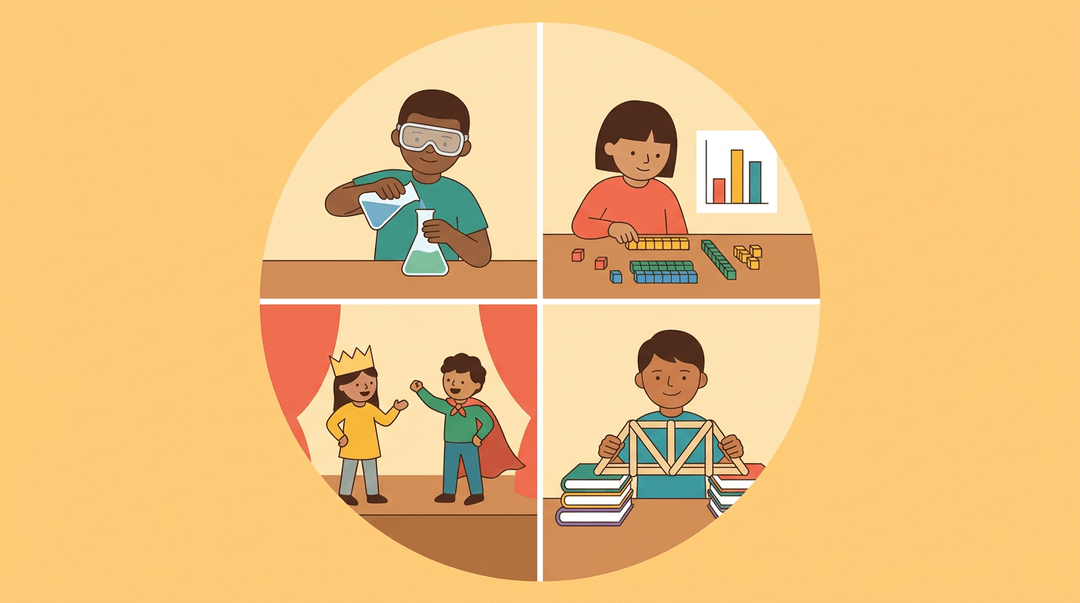
Hands-on learning fits every classroom, not just science:
- Science: experiments, dissections, and labs where students generate real data
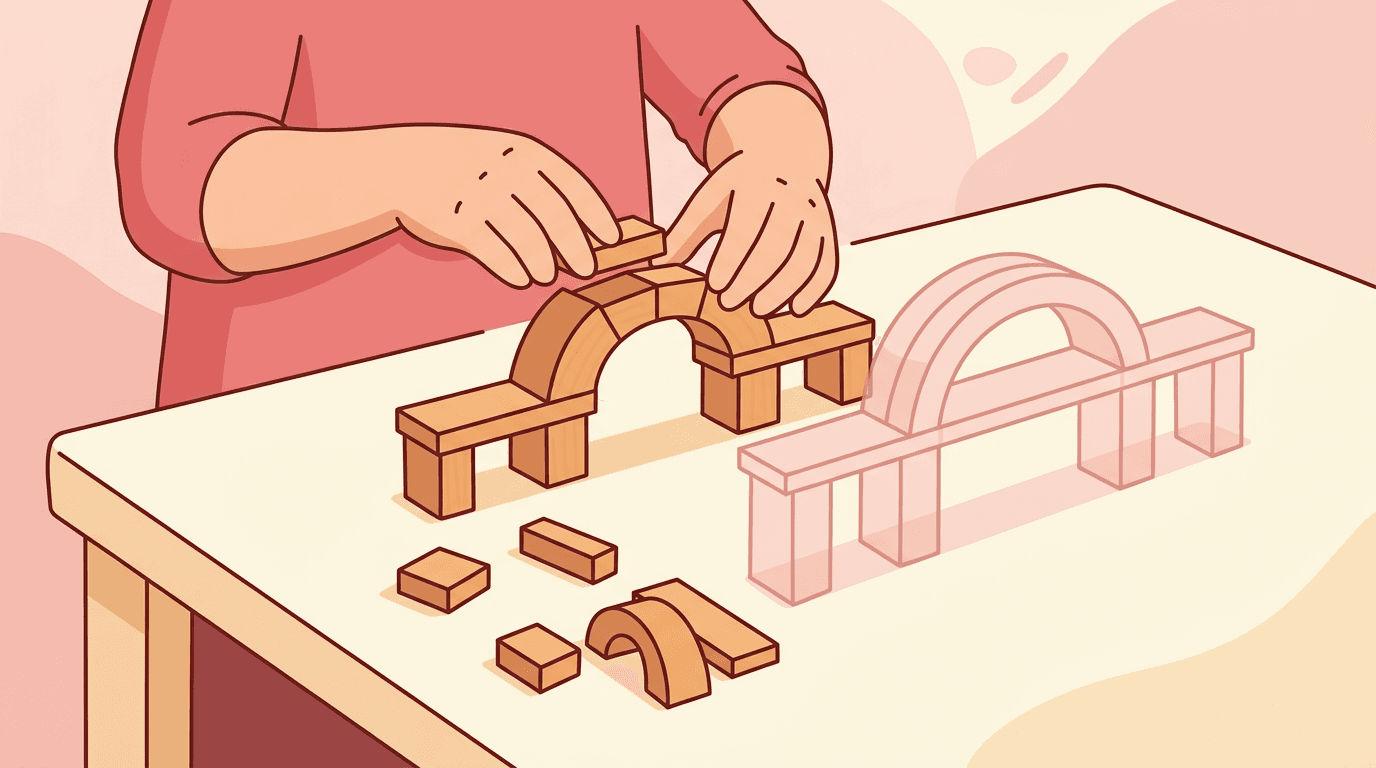
- Math: manipulatives like base-ten blocks for place value, or students collecting and graphing data from a class survey
- Humanities: drama and role-play to explore historical events or character perspective
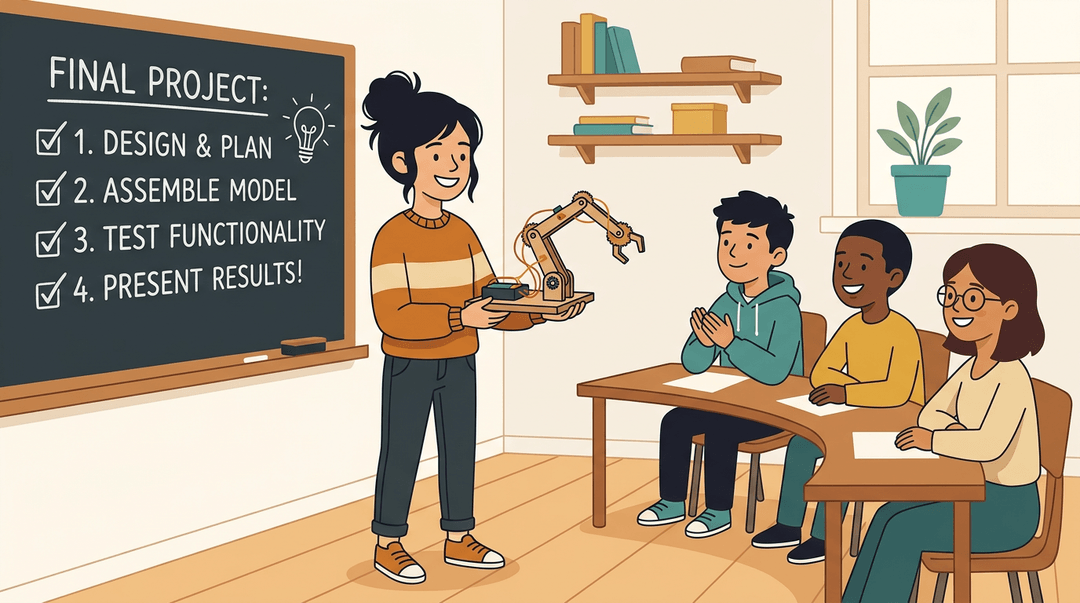
- Design and technology: project builds where students solve a real constraint, from designing a bridge to prototyping an app
Tools and technology that support making
When resources allow, makerspaces and STEAM centers give students a permanent home for building.
Specific tools that extend hands-on work include 3D printers and laser cutters for design projects, robotics kits and coding platforms for problem-solving, and adapted virtual or hybrid labs for schools where physical materials are limited.
Start with what you have: a cardboard prototype counts.
How Montessori structures concrete learning
Montessori classrooms formalize something useful for any teacher.
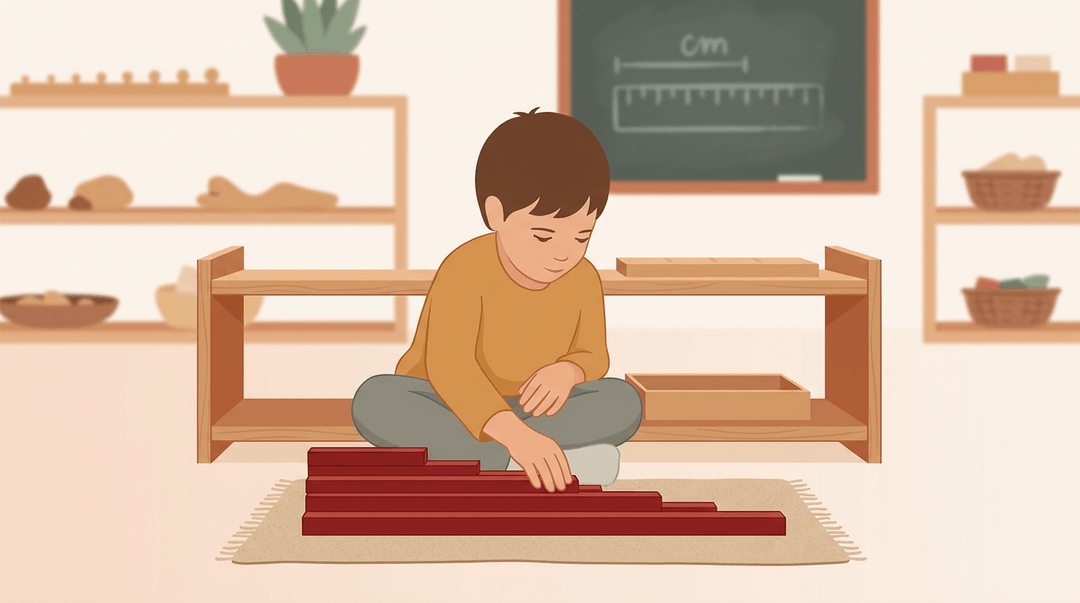
Each material isolates one concept (a set of rods for length, nothing else), is self-correcting so students find their own errors, and follows a strict concrete-before-abstract progression: students handle the physical object before they ever see the symbol.
Independent exploration is built in. You don't have to adopt the whole method to borrow this logic: introduce the object, let students work with it, then introduce the notation.
Planning a Hands-On Unit Step by Step
A hands-on activity without a clear plan is just a fun afternoon. Here's how to turn it into learning that sticks, from setup to gradebook.
Step 1: Map your activity before the unit starts
- Anchor the activity to a specific standard. Name the exact skill or concept it builds. If you can't, revise the activity first.
- Sequence concrete to abstract. Physical experience comes first, then the diagram, then the formula.
- List your materials and flag safety steps. Do this before the unit starts so nothing derails the lesson mid-session.
💡 Tip: If you can't state the standard in one sentence, that's a sign the activity needs tightening before students touch anything.
Step 2: Observe and question during the activity
- Resist the urge to explain. Let students work through confusion before you step in.
- Move through the room with an observation checklist. One column per student, one row per target skill keeps your notes fast and usable.
- Ask bridging questions instead of giving answers. Point students toward the concept without handing it to them.
- ✅ "What do you notice happening when you add more weight?"
- ❌ "Remember, force equals mass times acceleration."
- ✅ "What do you notice happening when you add more weight?"
- Log the misconceptions you see. These become your debrief agenda.
Step 3: Connect the experience to the concept after
- Give a short exit ticket. Ask students to name what they did and what it means. This surfaces whether the concrete experience connected to the abstract idea.
- Use their responses to frame the next lesson. Common gaps tell you exactly where to start tomorrow.
- Drop the exit ticket evidence straight into your gradebook as a formative mark.
Key principle: The closing move is where the learning locks in. Don't skip it or rush it.
At a glance
| Phase | Your focus | Key tool |
|---|---|---|
| Before the unit | Standard, sequence, materials | Planning checklist |
| During the activity | Observation, bridging questions | Observation checklist |
| After the activity | Exit ticket, formative mark | Gradebook entry |
Use EMStudio's Curriculum Planner to map each hands-on activity to standards and sequence it across your year at a glance.
How Group Work Fits into Hands-on Learning
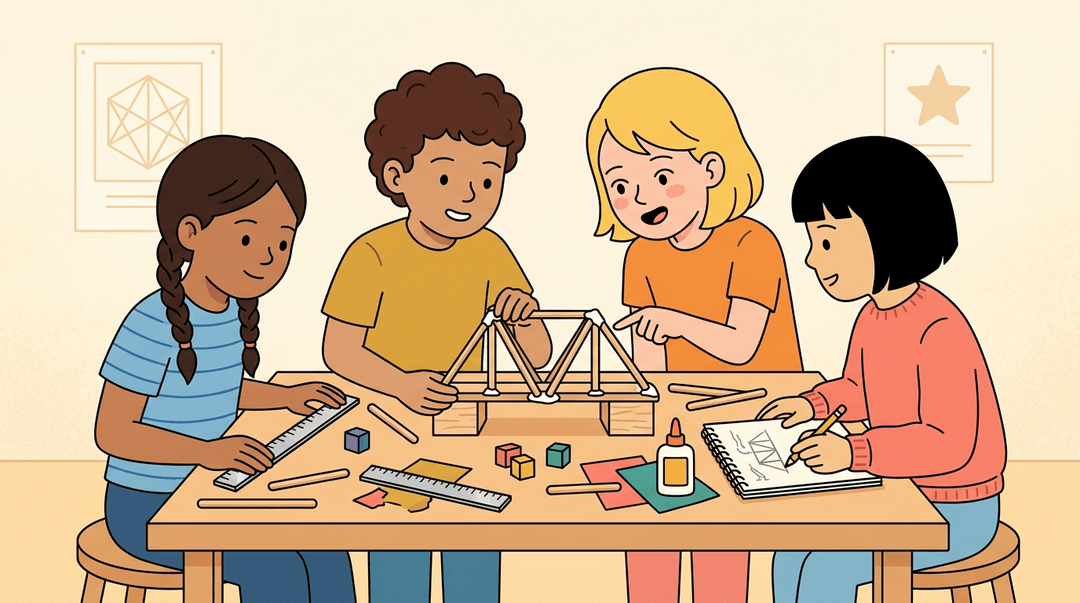
Hands-on tasks and group work are natural partners. When students build, investigate, or create together, the collaboration itself becomes part of the learning.
What students gain from doing it together
Sharing physical materials forces shared responsibility in a way that a solo worksheet never does.
When one student monopolizes the scissors or the building blocks, the group notices immediately and has to work it out. That negotiation is part of the lesson.
Students also pick up approaches they'd never have tried alone. One student reaches for the ruler first; another eyeballs the measurement and explains why.
Watching a peer's reasoning in real time is often more instructive than a teacher's explanation, because it arrives without authority and sparks genuine curiosity.
There's a bigger-picture benefit here, too. Workplace teams divide tasks, reconcile ideas, and deliver a shared result.
Group hands-on work mirrors that structure early, so students are practicing a skill they'll need long after they've forgotten the specific lesson content.
The honest challenge is participation: groups can drift toward one or two voices doing most of the work. Assigning clear roles (materials manager, recorder, presenter) keeps everyone accountable and gives quieter students a defined way in.
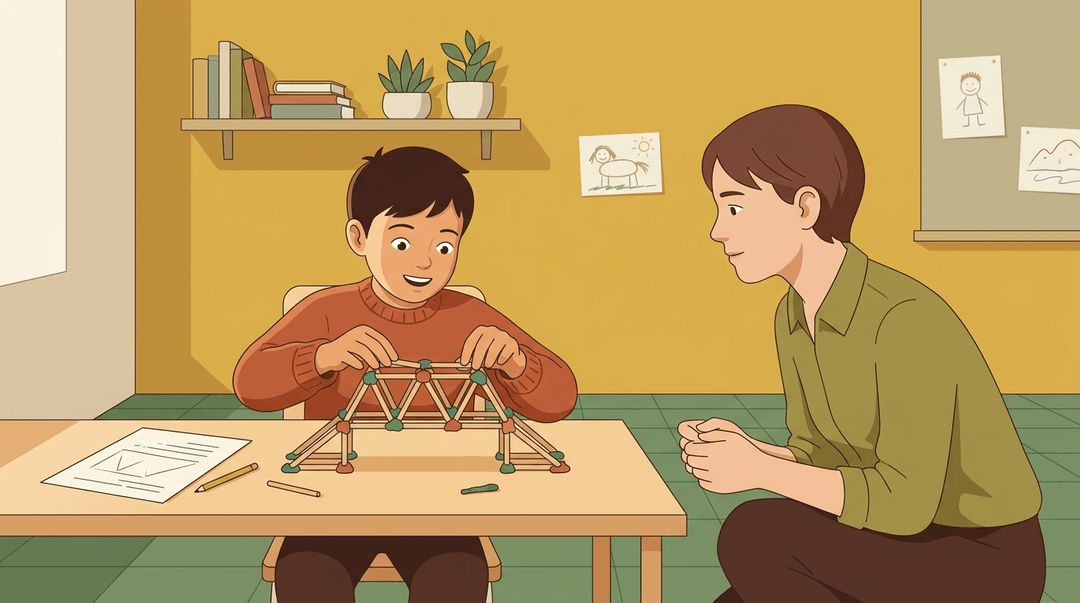
For example, a fifth-grade science teacher running a bridge-building activity might rotate roles each round, so no single student becomes the de facto engineer while others watch.
Done well, group hands-on work doesn't just reinforce content. It builds the habits of collaboration that carry students well beyond your classroom.
Hands-on Learning at Every Age
Hands-on learning doesn't look the same in kindergarten as it does in a nursing program. The approach shifts as students grow, but the core stays constant: learning by doing.
Play and exploration in early childhood
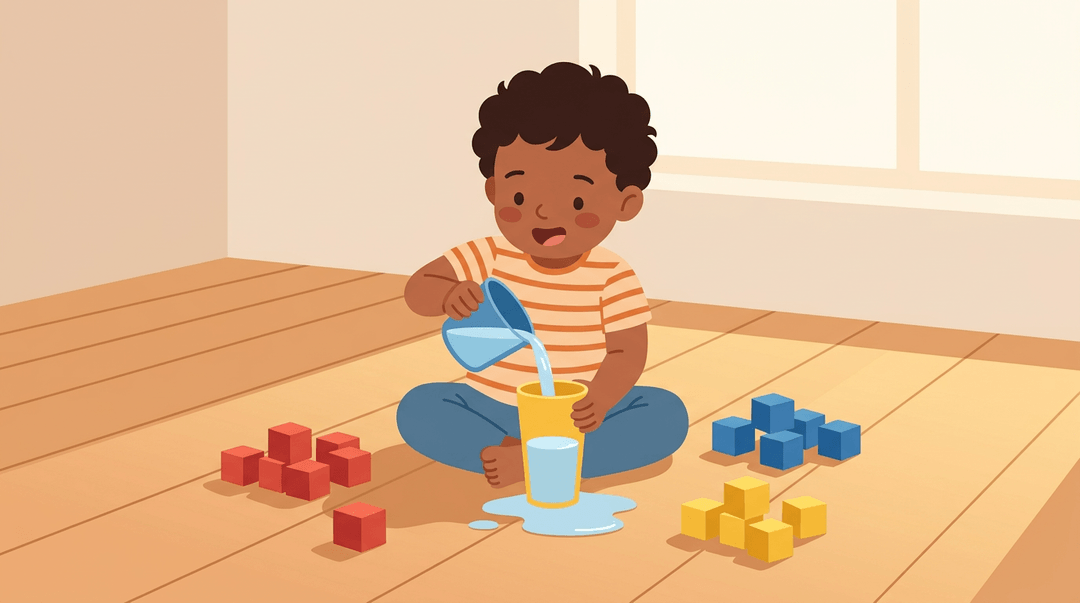
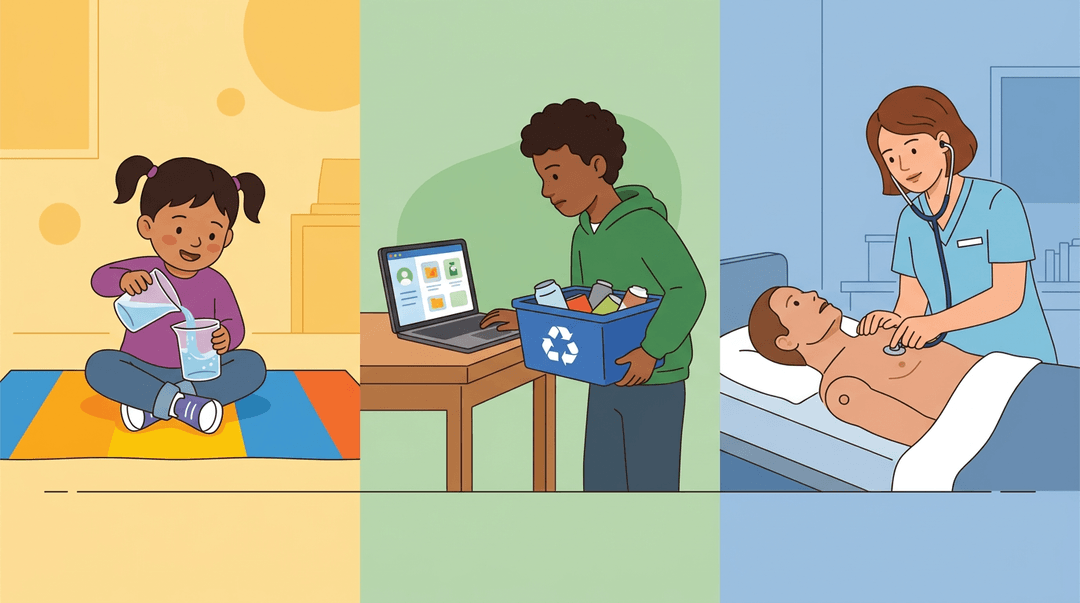
Young children learn through experience, not about it. Play-driven exploration, simple experiments, and art projects build natural curiosity before formal instruction ever begins. A child sorting blocks by color is doing early math.
One pouring water between containers is exploring volume. Concrete objects always come before abstractions: you handle the apple before you write the number.
Projects and inquiry in middle and high school
Structured project-based learning asks students to solve real problems, not just answer worksheet questions.
Think of a seventh-grader coding a simple app to track classroom recycling, or a tenth-grade biology class running soil-contamination investigations tied to local environmental standards.
These projects connect disciplines: science, math, writing, and civic awareness in one unit. Independent research and genuine inquiry push students to ask their own questions and defend their answers.
Applied learning in college and career training
At the college and career level, hands-on learning means working with industry-grade tools and real stakes.
A welding student runs actual beads; a nursing student practices IV placement on simulation mannequins; a business intern manages a live client account.
Trade and professional skill-building programs, university lab investigations, and applied capstone projects all share one goal: closing the gap between classroom knowledge and day-one job readiness.
Real Limits and Honest Critiques
Hands-on learning is genuinely powerful, but it's not a cure-all. A few real limitations are worth knowing before you build your next unit.
When too little guidance backfires
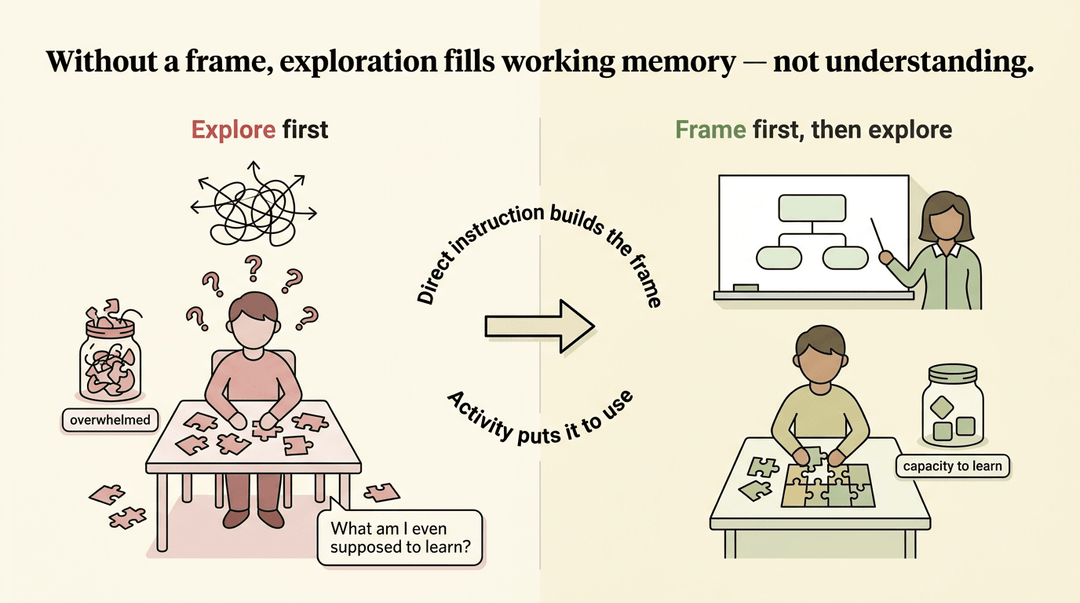
The appeal of letting students explore on their own is real, but minimal guidance can overwhelm beginners.
According to the Australian Education Research Organisation, when novices receive minimal guidance, their attention focuses on completing the task rather than on the new knowledge inside it.
That's a problem: as research on working memory and learning shows, when material lacks enough organized structure, working memory gets taxed before understanding can form. Without structured support, misconceptions can quietly take root.
A landmark paper by Kirschner et al. argued that minimally guided instruction ignores both human cognitive architecture and fifty years of empirical evidence. The fix isn't less hands-on learning.
It's a blended sequence: direct instruction first to build the frame, then activity to put it to use.
Bridging the gap between activity and concept
An activity without a conceptual bridge is just an activity. When you use a Concrete-Representational-Abstract (CRA) approach, the concrete stage only works if you've planned the scaffolding that carries students toward the abstract.
Understanding doesn't emerge automatically from touching things. The transition to formal concepts has to be intentional and taught.
Are people with ADHD hands-on learners?
Often, yes. The movement, novelty, and engagement that come with hands-on tasks can be a genuine strength for students with ADHD. But it's not that simple. Busy, multi-step activities can also tip into sensory overload for some neurodivergent learners.
Add to that the cost and time demands of hands-on setups, uneven access across schools, and cultural and methodological critiques of Piaget's framework that underpin much of the theory, and it's clear there's no one-size-fits-all answer.
Know your students, watch for overload, and adjust.
Hands-on learning isn't a trend or a novelty. It's a way of teaching that respects what students are actually capable of: thinking, making, experimenting, and growing through the process. It takes planning, and it comes with real tradeoffs worth knowing.
But when it works, students don't just remember the lesson. They own it.
Ready to build a hands-on unit that connects to your curriculum goals? Check out our Curriculum & Standards feature to keep every activity aligned from the first day to the last.
References
- Frontiers | The effect of embodied learning on students’ learning performance: A meta-analysis — frontiersin.org (2025)
- Frontiers | Effectiveness of a manual dexterity training program to improve executive functioning in preschool children: an individual difference analysis — frontiersin.org (2025)
- Multisensory integration approach, cognitive domains, meaningful learning: reflections for undergraduate nursing education — pmc.ncbi.nlm.nih.gov
- Realist hands-on learning approach and its contributions to ... — files.eric.ed.gov
- Managing cognitive load optimises learning — edresearch.edu.au
- Working Memory Underpins Cognitive Development, Learning, and Education — pmc.ncbi.nlm.nih.gov
- Why Minimal Guidance During Instruction Does Not Work — itgs.ict.usc.edu
- ERIC - EJ1274368 - Piaget's Cognitive Developmental Theory: Critical Review, Education Quarterly Reviews, 2019 — eric.ed.gov
Frequently asked questions
What is hands-on learning?
Hands-on learning is an educational method where students actively interact with materials, challenges, and concepts, rather than passively receiving information. This approach, often called experiential, active, or kinesthetic learning, emphasizes learning by direct engagement. It shifts the focus from just listening to building, testing, measuring, or problem-solving to gain understanding.
What are examples of hands-on experience?
Hands-on learning examples span various subjects: in science, students conduct experiments and dissections; in math, they use manipulatives or collect and graph data. Humanities incorporate drama and role-play to explore history, while design and technology classes involve building projects to solve real constraints. These activities place concrete tasks and real materials at the heart of the lesson.
Are people with ADHD hands-on learners?
Often, yes, students with ADHD can benefit significantly from hands-on learning due to the movement, novelty, and engagement it offers. These tasks can be a genuine strength for them. However, it's also noted that busy, multi-step activities within this approach could potentially lead to sensory overload for some neurodivergent learners.
What does hands-on mean in teaching?
In teaching, hands-on means students learn by doing, not just by listening or observing. It involves placing concrete tasks and real materials at the center of a lesson, requiring students to interact with information directly. This approach connects theory to practice by having students build, test, create, or problem-solve their way to understanding.