Marzano Classroom Instruction That Works: A Complete Guide


Jump to section
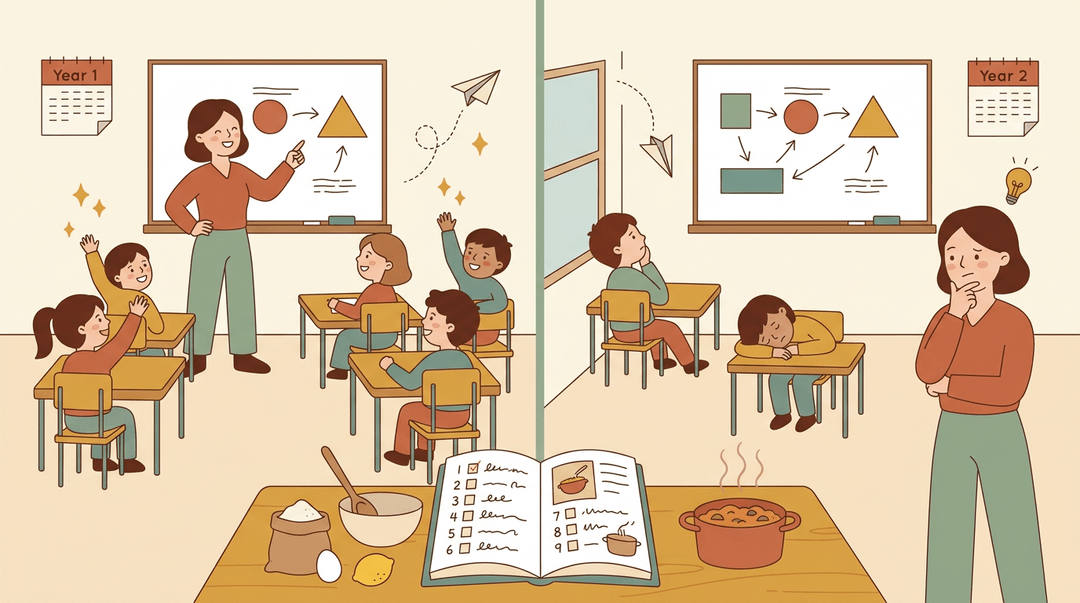
Ever had a lesson soar one year and flop the next, with the same content and the same students? Great teaching often comes down to habits you can repeat on purpose.
Think of it like a recipe: the ingredients matter, but the method is what makes the meal reliable.
Marzano's Classroom Instruction That Works turns those habits into nine research-based strategies.
Here's what this post covers: the research behind the framework, each strategy in turn, the vocabulary and homework questions many guides skip, and how to use it all in your lessons.
Research Behind Marzano Classroom Instruction That Works
Before you pick a strategy, let's look at where the framework came from.
Nine strategies drawn from over 100 studies
Marzano, Pickering, and Pollock published Classroom Instruction That Works in 2001, drawing on a meta-analysis that combines the results of more than 100 studies. So what are the elements of effective instruction?
The book's answer is nine research-based strategies, which an education database record describes as having a positive effect on student learning:
- Identifying similarities and differences
- Summarizing and note taking
- Reinforcing effort and providing recognition
- Homework and practice
- Nonlinguistic representations
- Cooperative learning
The full list also includes setting objectives, which we'll unpack later. The research points to the 2001 edition, so check which version your school uses if you spot an updated one. Should you find a newer edition, The New Art and Science of Teaching is the title to check.
A study of curricular infusion in secondary foreign language classrooms notes that the book is commonly used by public schools in the United States to bring research-based practices into all subject areas.
The strategies are presented as effective for all students across subjects and grade levels.
Think of a sixth-grade math teacher and a tenth-grade history teacher. Both can start from the same toolkit instead of building one from scratch.
That's a head start, but the strategies are a starting point, not a guarantee: you still decide how they fit your students.

Meet the authors behind the research
According to the Marzano Evaluation Center, Robert Marzano is a researcher and author with over 50 years of experience in education research, professional development, and curriculum design.
Marzano serves as chief executive officer of Marzano Research Laboratory, and his co-authors include Pickering, Pollock, and Gaddy. The Marzano team also consults on applying the book's strategies, so its ideas can move from the page into your planning.
Walking Through All Nine Strategies
Marzano's nine strategies are easier to apply once you see how they group together.
A study on curricular infusion in secondary foreign language classrooms reports each with an effect size (how much it moves learning) and a percentile gain (where a typical student would land).
Compare, sort and show ideas visually
Start with identifying similarities and differences: students name how two things match and how they don't. Then they compare, classify, and build metaphors and analogies.
A Venn diagram (two overlapping circles) or other graphic organizer keeps that thinking visible.
Nonlinguistic representations, like pictures, diagrams, and models, carry ideas that words alone can't. A math teacher might have students build fractions with paper strips, then draw them.
Hands-on manipulatives and kinesthetic activity add another route in. The aim is to show how students think, not just what they can recite.

Boiling notes down to what matters
Summaries improve when students know what to cut. Teach them to:
- delete trivial details
- substitute one broader term for a list
- keep what matters most
A seventh-grade class summarizing trade routes drops side stories and swaps a list of goods for the term trade goods.
A KWL chart (Know, Want to know, Learned) tracks what students know and what they're curious about. Journals and self-assessment let them reflect on their own understanding.
Model first, then have students write their own summaries and share them, not just read yours.
Rewarding effort, setting goals and giving feedback
Reward students by performance standards, so recognition follows a clear target. Lean toward symbolic recognition, like a shout-out or a note home, over tangible prizes.
Set specific but flexible goals, like reading two pages aloud, and let students choose the book.
Feedback should be corrective, timely, and criterion-based. A writing teacher returns a paragraph the same day with one clear note: add a detail from the text. Specific beats vague.
Aim feedback at progress rather than completion, and tie it to the behavior expectations we set together.

What does Marzano say about homework?
Marzano's homework guidance comes down to a few moves:
- Vary the amount by grade level, since a kindergartener's assignment shouldn't look like a high schooler's.
- State the purpose so students know why each task matters, and debrief assigned homework in class the next day.
- Limit parent involvement, so families can support the work without teaching the lesson.
The essential piece is homework policy communication: tell students and families your policy clearly, so homework stops being a guessing game.
Testing ideas with questions, cues and organizers
Have students generate and test hypotheses, making predictions and checking them against evidence. Mix inductive reasoning (building a rule from examples) with deductive reasoning (applying a known rule to a new case).
Cues that spotlight what's important, questions that draw out inference, and real wait time all keep thinking going.
A science teacher who asks what happens if we add more water, then waits for predictions, moves the room from guessing to evidence-based thinking. It's less about right answers and more about reasoning. If you want students reasoning past right answers, teaching for artistic behavior is worth a look.

Learning together in small groups
Set up group work on purpose. Limit ability groups rather than letting them become a standing seating chart, and keep groups small so each student has a real role. Apply the structure consistently, but don't overuse it.
Group games and collaborative tasks round it out. In a fourth-grade class, students sort vocabulary cards in trios, with one reader, one recorder, and one checker, so everyone speaks. Clear roles make groups work.
Use These Strategies in Your Lessons
Start small: one strategy, one lesson, one clear tie to your objective. This guide takes you from "that sounds useful" to a line in tomorrow's plan.
Plan one strategy per lesson
- Pick one strategy
- Choose the one you most want to see working this week.
- Match it to your objective
- Ask: which strategy helps students do what the objective says?
- Objective: "Compare two habitats." Strategy: similarities and differences.
- Write it into your plan
- Name the strategy, the task, and the minutes it gets.
- Plan line: "10 min: Venn diagram, desert vs. rainforest."
⚠️ Watch out: Resist stacking three strategies in one lesson. You won't be able to tell which one helped.
See it at each grade band
| Grade band | Strategy | What it looks like |
|---|---|---|
| K-2 | Similarities and differences | Sort animal cards into two groups |
| K-2 | Nonlinguistic representations | Draw what happened in the story |
| 3-5 | Similarities and differences | Venn diagram comparing two characters |
| 3-5 | Cues, questions, and advance organizers | KWL chart before a new unit |
| 6-12 | Summarizing | Cut a section down to three sentences |
| 6-12 | Generating and testing hypotheses | Predict, test, then record what happened |
Quick checklist for putting it into action
Run through these as you plan and teach:
- Learning goal stated. Students can say it back in their own words.
- Timely feedback given. Comment while the work is still in progress.
- Understanding checked. Use one quick question or a thumbs-up check mid-lesson.
- Reflection and adjustment done. After class, jot what worked and change one thing.
Example: A fourth-grade teacher plans a KWL chart for a unit on weather. She states the goal, checks the "W" column halfway through, and afterward notes which questions stayed unanswered. Next lesson, she builds on those gaps.
Map each Marzano strategy to your lesson plans and track results in EMStudio's online teacher planner.
See How It Looks in Real Classrooms
Marzano's strategies don't require a screen: a paper exit ticket gives feedback, and a sticky-note sort builds similarities and differences. Here's how the same ideas look when technology joins in, using Mathletics as the example.
Technology examples using Mathletics
Consider a fifth-grade teacher who assigns a Mathletics practice set as homework, a clear case of homework and practice in action.
Before class, the report shows which students need a second look, so the teacher starts the lesson with the right small group. Data, not guesswork.
- Points, credits, and gold bars. Students earn points and credits as they work, and gold bars mark milestones they can watch climb. That visible progress rewards effort, not just right answers.
- Instant feedback and reporting. Students find out right away whether an answer holds up, while the thinking is still fresh. It's less about grading mistakes and more about guiding what comes next, and the report shows patterns across the whole class.
- eBooks and rich learning tasks. Reading and practice sit in one place, so students move from explanation to application without switching tools.
- Virtual manipulatives and demonstrations. Students move digital blocks or counters while you model the thinking on the projector. These nonlinguistic representations (pictures, models, and other visual ways to show an idea) help students see a concept, even on a screen.

Where to Find More Marzano Resources
Once you've worked through the nine strategies, you'll want to go deeper. Here's where to look next.
Companion books for classroom management
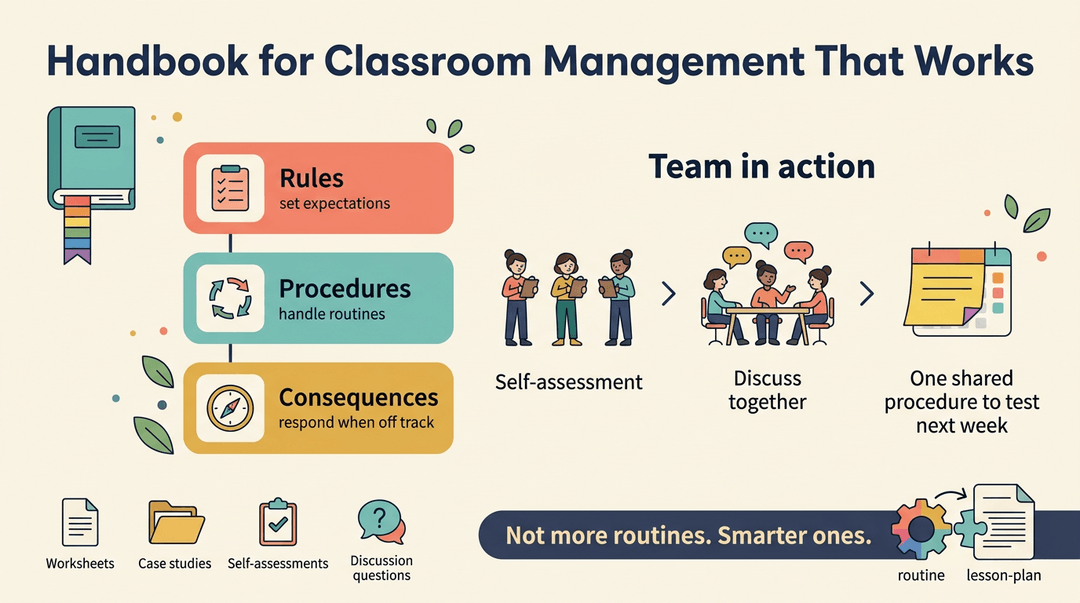
The Handbook for Classroom Management That Works is the companion to this book, and it turns research into daily routines. Its seven essentials of management let you read in order or jump to what your room needs most.
Inside, you'll find guidance on rules, procedures, and consequences. Rules set expectations, procedures handle routines, and consequences respond when things go off track.
The book also includes:
- worksheets
- case studies
- self-assessments
- discussion questions for study teams
Consider a grade-level team that agrees its behavior plan isn't working. Each teacher completes a self-assessment, then the team uses the discussion questions to agree on one shared procedure to test next week. Teams that need to agree on one shared procedure may benefit from team building activities for teachers.
The real payoff comes when you link these routines to your strategies. The goal isn't more routines. It's smarter ones that support the instruction you're already planning.
Buying the books or reading them online
Before you order, check the current e-book price and whether a member discount applies to you.
If your whole team wants a copy, ask about bulk copy orders so everyone works from the same text. Prefer a screen? Online reading and downloads let you open the book in a browser or save it to your device.
Then check which devices your access covers, so you can read on a laptop at home or a phone during planning time. Start with one chapter, and try one routine on Monday.
Marzano's framework gives you a clear set of strategies you can rely on, one lesson at a time. Start with the few that fit your students best, then build from there.
Over time, those choices become habits, and habits make your teaching steadier for every learner in the room. Ready to keep your planning as organized as your teaching?
Check out our Classroom Management page to organize classes, sections, rosters, and timetables in one structured workspace.

References
- Using Similarities and Differences: A Meta‐Analysis of Its Effects and Emergent Patterns — doi.org (2012)
- ERIC - ED450096 - Classroom Instruction That Works: Research-Based Strategies for Increasing Student Achievement., 2001 — eric.ed.gov
- Curricular Infusion in the Secondary Foreign Language Classroom: Does One Size Fit All? — doi.org (2010)
- About the Marzano Evaluation Center | Research-Based Evaluation — marzanoevaluationcenter.com (2026)
Frequently asked questions
What is the 3-2-1 reading rule?
The 3-2-1 reading rule is a response strategy in which students record three things they learned, two details they found interesting, and one question they still have. It helps students summarize and reflect on a reading.
What is differentiated instruction?
Differentiated instruction is an approach that adjusts teaching to learners’ varied readiness levels, interests, and needs. Teachers may vary content, learning activities, support, or ways students show what they know while working toward shared learning goals.
What are the elements of effective instruction?
Effective instruction typically includes clear learning goals, engaging and well-organized teaching, opportunities for practice, timely feedback, checks for understanding, and adjustments based on student needs. The right combination depends on the learning objective and the students.
What are Marzano's six steps to effective vocabulary instruction?
Marzano’s six vocabulary steps are: give students a brief explanation, description, or example; have them restate the meaning in their own words; have them create a picture or representation; engage them in activities that deepen knowledge; ask them to discuss the terms with one another; and involve them in games that review the vocabulary.
What are the six teaching strategies?
Six strategies in Marzano’s framework are identifying similarities and differences, summarizing and note-taking, reinforcing effort and providing recognition, homework and practice, nonlinguistic representations, and cooperative learning. They are part of a broader set of nine instructional strategies.
What are the different learning styles?
Commonly described learning preferences include visual, auditory, reading/writing, and kinesthetic. These categories can help teachers offer varied ways to engage with material, but they should not be treated as fixed learner types or as a reason to limit how someone is taught.
What are the different types of teaching methods?
Teaching methods include direct instruction or lectures, discussion, demonstration, inquiry- or problem-based learning, cooperative group work, project-based learning, and experiential or hands-on learning. Teachers often combine methods to suit the objective, subject, and learners.
According to Robert Marzano's view on homework, what is an essential aspect of homework policy communication to students and families?
An essential part of homework policy is communicating it clearly to both students and families. They should understand the purpose of homework and what is expected, so assignments do not become a guessing game.